Tag: Singapore

  • Amazon expands anti-counterfeit project to Singapore

    Amazon expands anti-counterfeit project to Singapore

    Amazon has expanded its anti-counterfeit program Project Zero to seven new countries, including Singapore and Australia, taking the number of operational territories to 17.

    The project combines Amazon’s technologies with brands’ knowledge of their own intellectual property to counter the trade in forged products. The system works by scanning the more than 5 billion attempted daily product listings on Amazon for suspicious products, using a machine-learning algorithm that is constantly improving.

    Project Zero also provides a self-service tool allowing brands to directly remove counterfeit goods listings from Amazon stores.

    More than 10,000 brands have already enrolled in the initiative.

    “Amazon is committed to protecting our customers and the brands we collaborate with worldwide,” said the firm’s VP of worldwide customer trust and partner support Dharmesh Mehta.

    “Project Zero has been a leap forward in protecting brands, especially for those that use all three of its components.”

    Brands currently using Project Zero that already have a trademark enrolled in one of the newly added countries can use it automatically in their additional stores.

  • SGX to Expand Equity Derivatives Shelf

    SGX to Expand Equity Derivatives Shelf

    The bourse is adding 13 Asia ex-Japan and emerging markets Asia regional and single country futures to its shelf of benchmark equity derivatives.

    The new futures are based on Net Total Return (NTR) and Price Return indices calculated by FTSE Russell, which has approximately $16 trillion in reported fund assets under management (AUM) tracking its benchmarks.

    SGX said the benchmarks of the new future, which cover Indonesia, Malaysia, Philippines, Taiwan, Thailand, and Vietnam, addresses customers’ «increasing demand for institutional-grade exchange solutions in Asia which offer superior operational and capital efficiency.»

    The new contracts are expected to be certified by the Commodity Futures Trading Commission (CFTC), enabling US investors to trade them directly from within the U.S.

    SGX currently has the largest and most liquid FTSE and MSCI equity index derivatives for Asian markets.

    Michael Syn, head of equities at SGX, said its collaboration with FTSE Russell is the «next step in further developing and advancing SGX’s Asia-access waterfront.»

    «We look forward to bringing investors even more asset-class opportunities within the pan-Asian capital structure, based on broad strategies, sectors, and themes,» Syn said.

  • SingPost Partners with Tech Startup Shippit to Fuel Small Business Growth in Asia

    SingPost Partners with Tech Startup Shippit to Fuel Small Business Growth in Asia

    Today, fast-growing logistics technology company Shippit, announced a new partnership with Singapore Post (SingPost), Singapore’s leading homegrown e-Commerce courier. The deal allows Shippit to empower small and medium-sized enterprises (SMEs) to scale by providing them with instant access to more delivery options — including packages to be delivered directly to Pick Own Parcel Station (POPStations) and letterboxes — a service typically reserved for larger companies. As part of the deal, Shippit will also offer SingPost’s Speedpost Express Service to SMEs, alongside discounted, pre-negotiated rates for next day and economy delivery services.

    SMEs on the Shippit platform will now be able to also offer end-customers parcel collection at any time by tapping into the islandwide POPStation network that SingPost currently operates. This brings added convenience to end customers, since parcels can be deposited directly at their closest available POPStation for pickup, without the need to wait for delivery at home.

    These SingPost services are integrated directly into Shippit’s existing online platform, which enables SMEs to access data-driven delivery insights that can be used to optimize shipping costs and share better customer experiences. SMEs also get access to pre-negotiated, delivery SingPost rates on the platform, enabling them to tap into SingPost’s large delivery network and fleet, at a lower cost.

    Lavneesh Arora, Director of Market Development at Shippit, said: “Shippit aims to disrupt the way legacy logistics firms operate. We are always looking for great partnerships to expand our capabilities and give clients a competitive edge. Through the latest partnership with Singapore’s largest and most prominent logistics company, SMEs can use Shippit to get direct access to SingPost’s premium, enterprise-grade delivery services at a fraction of the cost.”

    Shippit’s intelligent tracking system benefits both senders and receivers through proactive delay avoidance technology and accurate delivery estimates — SMEs will know exactly where the parcel is, ensure delivery issues are resolved before customers find out and can also send branded push emails and SMSes to keep their customers informed. On the receiver’s end, one-link tracking and smart notifications are automated, so customers can easily track their shipment, get real-time updates and access delivery support directly from the track page.

    Sara Kalle, Senior Vice President of Group Sales at SingPost, said: “We are tremendously excited to offer our last-mile services to Shippit. Customers can look forward to a hassle-free shipping experience from the moment they confirm their order on Shippit’s award-winning platform, to collecting their shipments from us at their doors or at a nearby POPStation.”

    Shippit officially launched in Singapore on 14 July, to serve as the startup’s regional headquarters. It plans to expand into Malaysia, Philippines, and Indonesia in the near future. Shippit’s existing client base currently includes Sephora, UNIQLO, CottonOn, and Harvey Norman — to name a few.


  • New retail brands join line-up at The Shoppes at Marina Bay Sands

    New retail brands join line-up at The Shoppes at Marina Bay Sands

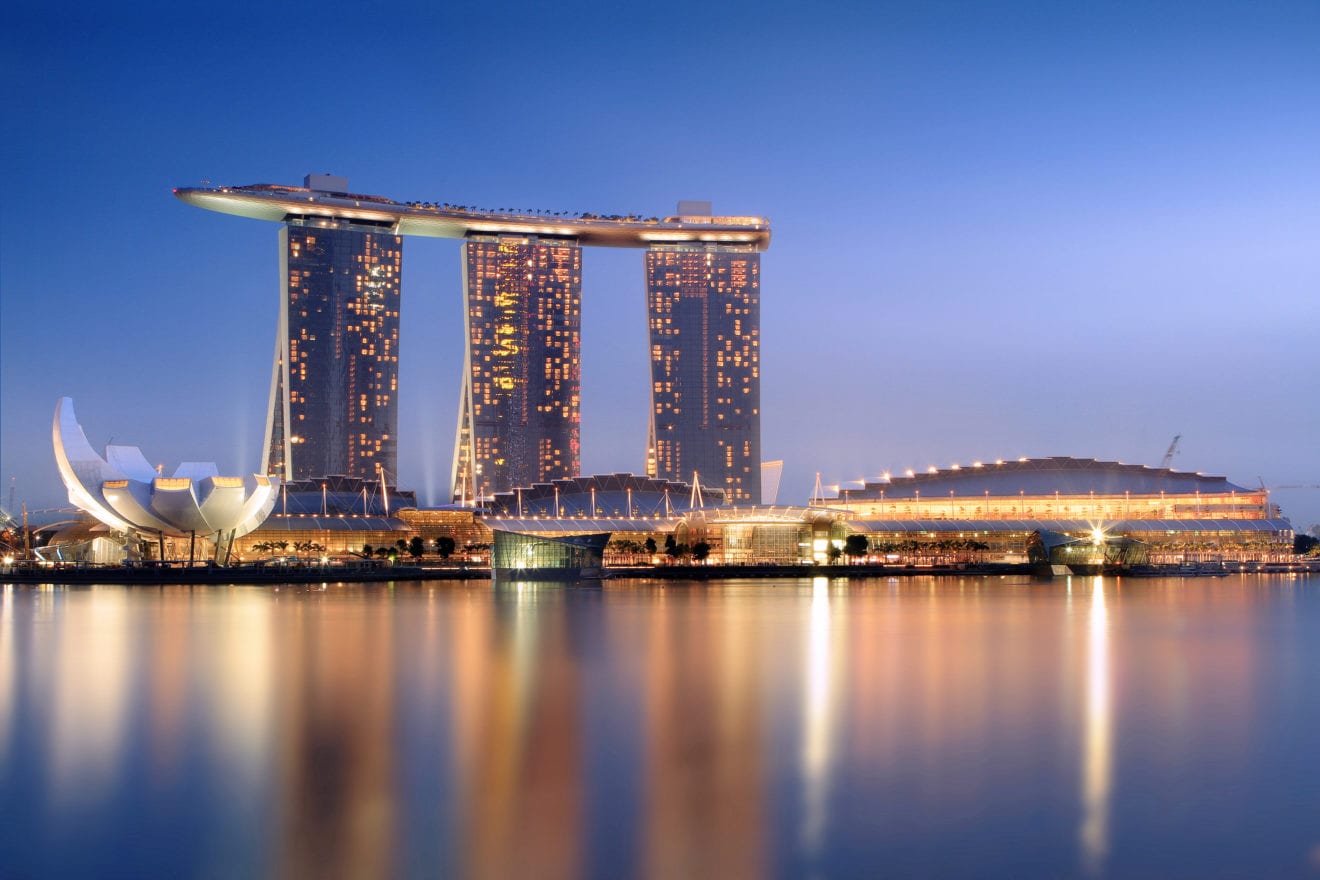
    The Shoppes at Marina Bay Sands has revealed a list of store openings and new brands for the shopping center this year.

    In the childrenswear category, Italian label Monnalisa has opened its first Southeast Asian standalone store, following the opening of Fila Kids last month.

    The Shoppes at Marina Bay Sands has also announced a plan by British luxury fashion house Alexander McQueen to refurbish its retail store. Relocated in the center, the new store will occupy a 3300sqft space, three times the size of its existing outlet, and featuring a new-generation store design. It is scheduled to re-open at the end of this year.

    Watch and jewelry brands to join The Shoppes include Japan’s Ahkah (this month) and Chinese label Qeelin whose first Singapore store will open later this year.

    High-end luxury Korean skincare brand Su:m37 will launch its first standalone kiosk and a skincare line in Singapore in the fourth quarter of this year.

    In the food & beverage category, renowned Chinese restaurant Putien is to join The Shoppes dining options early next year, taking up space previously occupied by the DC Comics SuperHeroes cafe.

  • Singapore Director Charged in Wirecard Scandal

    Singapore Director Charged in Wirecard Scandal

    A Singaporean director of Citadelle Corporate Services has been charged for falsifying letters related to Wirecard.

    R. Shanmugaratnam, a director of Citadelle, has been charged by Singapore authorities for «willfully and with intent to defraud» falsifying letters from Citadelle to Wirecard representing that it held money in an escrow account when it did not, as reported on Friday.

    The 54-year-old Singaporean is the first person to be indicted in Singapore over the collapse of Wirecard the report said, according to charge sheets filed last month, which were viewed by the news wire. He faces four charges of false statements, each of which carries a maximum 10-year jail term.

    Citadelle has been under scrutiny in the Philippines since a Filipino lawyer said he opened six euro bank accounts in the name of his law firm, MKT Law, on behalf of Citadelle. The accounts were supposedly for Wirecard.

    According to a previous report on July 3, Singapore Police Force’s (SPF) Commercial Affairs Department (CAD), which deals with white-collar crimes, launched an investigation into Citadelle, payments operator Senjo Group and its subsidiaries after scrutinizing Wirecard’s local operations.

    Wirecard is at the center of one of the region’s biggest corporate accounting scandals in recent years, having admitted that €1.9 billion is missing from its financial accounts.

  • Asian Institute of Digital Finance launched in Singapore

    Asian Institute of Digital Finance launched in Singapore

    Singapore is one of the largest financial centers of the world with a clear dominance over the Asia-Pacific region. Following the liberal economic reforms by the progressive government, this sovereign Island-State has managed to become a true leader in Asia. Today, Singapore hosts more international financial institutions from overseas than any other city within the region. Therefore, its importance in terms of the financial sector is undoubtedly big. 

    The economy of Singapore is quite completely dependent on the services industry, primarily specializing in finance. Therefore, its workforce is tailored to the country’s needs and the labor market, resulting in the ever-growing number of economists, financial advisers, and accountants. However, with the sudden rise of the forex trading sector, the workforce seems to be needing a refresh. The Singapore forex brokers list is expanding constantly and quickly due to the soaring demand for foreign currencies within the state. However, other factors such as the tolerant environment and regulation-free market are also contributing. 

    Moreover, the high rate of digitalization has brought many benefits, as well as challenges to the Singapore economy. Financial institutions benefit from faster, more efficient, and convenient services. However, Singapore, despite being highly technologically advanced, does not possess an adequate workforce with commuting abilities. Software and hardware developers are high on demand across the entire country. However, more specifically, demand is extreme for fintech specialists. This invention of the recent decade allows institutions to provide better services at lower costs. Therefore, this mega financial hub of the Asia-Pacific is taking its chances within the niche. 

    This is exactly why the Monetary Authority of Singapore (MAS) is setting up a one of a kind research facility working with the future generation of fintech learners. The work was done in cooperation with the National Research Foundation (NRF) and the National University of Singapore (NUS). Yet, the institution offering courses will be the Asian Institute of Digital Finance. This is the official name of the newly established body, bracing to work within this very specific area in an attempt to deliver highly qualified workers for the Singapore labor market. It will also feature an incubation unit in order to foster innovation and novelty in the digital finance field. 

    The joint program of these very influential and well-respected educational institutions will offer a master’s degree in digital finance. Students with outstanding records will have an opportunity to access the scholarship, allowing them to conduct research studies at a doctoral level. The institution will also train post-graduate fellows in the specific areas they choose. The NUS President, Tan Eng Chye said that the new institution will serve as a hub and kind of a ‘pipeline’ for Singapore and a general region. “Fintech is making a profound impact on financial services, and will continue to drive the transformation of the financial services industry in Singapore,” he says. “NUS’ thought leadership in digital technologies such as artificial intelligence, blockchain, cloud computing, and data science makes us perfectly positioned to address the challenges of the digital economy in Singapore and other parts of the world.”

    NUS will also conduct research in fintech and discover new areas. It will operate a so-called “fincubator” project, driving innovation and developing ideas that exist within the institution and beyond. With its extensive infrastructure and the network of influential academic stuff, NUS will certainly become a jewel of modern financial education in Singapore and a wider region. Through applied research and active collaboration with industry, AIDF will help to build strong capabilities in digital finance and fintech. The Institute will facilitate the expansion of knowledge and skills among fintech leaders in the region and support the digitalization of economies in ASEAN and beyond.” said Ravi Menon, the Managing Director of MAS. 


  • Singapore competition starts regulating food-delivery services

    Singapore competition starts regulating food-delivery services

    Singapore’s competition regulator has effectively cleared the activities of food-delivery platforms and dark kitchens in the city-state after a 10-month probe.

    The investigation by the Competition and Consumer Commission of Singapore (CCCS) began on September 30 last year after concerns were raised that food-delivery services were refusing to work with dark kitchens operated by rivals. (Dark, or virtual, kitchens are where meals are prepared for delivery or takeaway with no seating for customers.)

    CCCS says that conduct has since ceased and while it will continue to monitor online food delivery and virtual kitchens, it has no cause for concern at this time.

    “CCCS notes that competition in the virtual-kitchen sector remains dynamic, with players entering and competing for market share,” the organization said in a statement posted online.

    Singapore’s online food-delivery industry is highly competitive with three main operators battling for market share:  Deliveroo, Foodpanda and GrabFood.

    Each has started providing virtual kitchens as an additional service to food & beverage operators. Meanwhile, Smart City Kitchens (SCK) competes with them to offer virtual kitchens to F&B companies but does not operate any online food-delivery service itself, leaving it reliant on Deliveroo, FoodPanda, and GrabFood to deliver the meals.

    The CCCS launched an investigation into the sector after reports the delivery services were refusing to work with companies using SCK’s virtual kitchens.

    “Following CCCS’s investigation, GrabFood and Deliveroo have started supplying their online food delivery services to F&B operators in SCK’s virtual kitchens which already have access to FoodPanda’s online food delivery service,” said the CCCS. “As a result, F&B operators using SCK’s virtual kitchens now have the choice of using multiple online food delivery providers to expand their consumer reach.

    “There is greater competition in the virtual kitchen sector, and consumers are also able to enjoy a greater choice of food ordered online. With greater competition, businesses are incentivized to innovate to cater more efficiently to the evolving needs and preferences of their customers.”

  • New Institute to Lead Digital Finance Research in Singapore

    New Institute to Lead Digital Finance Research in Singapore

    Singapore will soon see the establishment of a research institute that will develop deep capabilities to support the needs of digital financial services in Asia.

    Expected to begin operations by the end of 2020, the Asian Institute of Digital Finance (AIDF) will provide thought leadership and strengthen synergies between education, research, and entrepreneurship in the thriving area of digital finance, a statement on Wednesday said.

    The institute, which combines education, research, innovation, and business incubation, is a joint initiative of the Monetary Authority of Singapore (MAS), the National Research Foundation (NRF) and the National University of Singapore (NUS), where it will be hosted.

    AIDF will be an important addition to Singapore’s rich and vibrant FinTech ecosystem. Through applied research and active collaboration with industry, AIDF will help to build strong capabilities in digital finance and fintech,» Ravi Menon, MAS managing director, said.

    Led by led by NUS Business School professor Duan Jin-Chuan, AIDF will offer masters and doctoral programs in digital finance and fintech, as well as train post-doctoral fellows in these fields, building a pipeline for fintech leadership development in Singapore and the region.

    A steering group comprising NUS deputy president and provost, Professor Ho Teck Hua, MAS chief fintech officer Sopnendu Mohanty and thought leaders from the financial and technology industries will provide guidance on curriculum design and align AIDF’s research direction with strategic priorities in Singapore and the region.

    The steering group will also evaluate the impact of AIDF’s research and identify opportunities for collaboration and partnerships in Asia and beyond, the announcement said.

    Potential areas of focus for research include digital assets and ledger technology, artificial intelligence and machine learning, digital finance platforms, green finance technology, and next-gen financial services on 5G networks.

    The institute will also establish a Fincubator program to drive transformation of ideas and projects by promising students and entrepreneurs into market-ready products and services.

  • Sheng Siong Group boosts sales during virus lockdown

    Sheng Siong Group boosts sales during virus lockdown

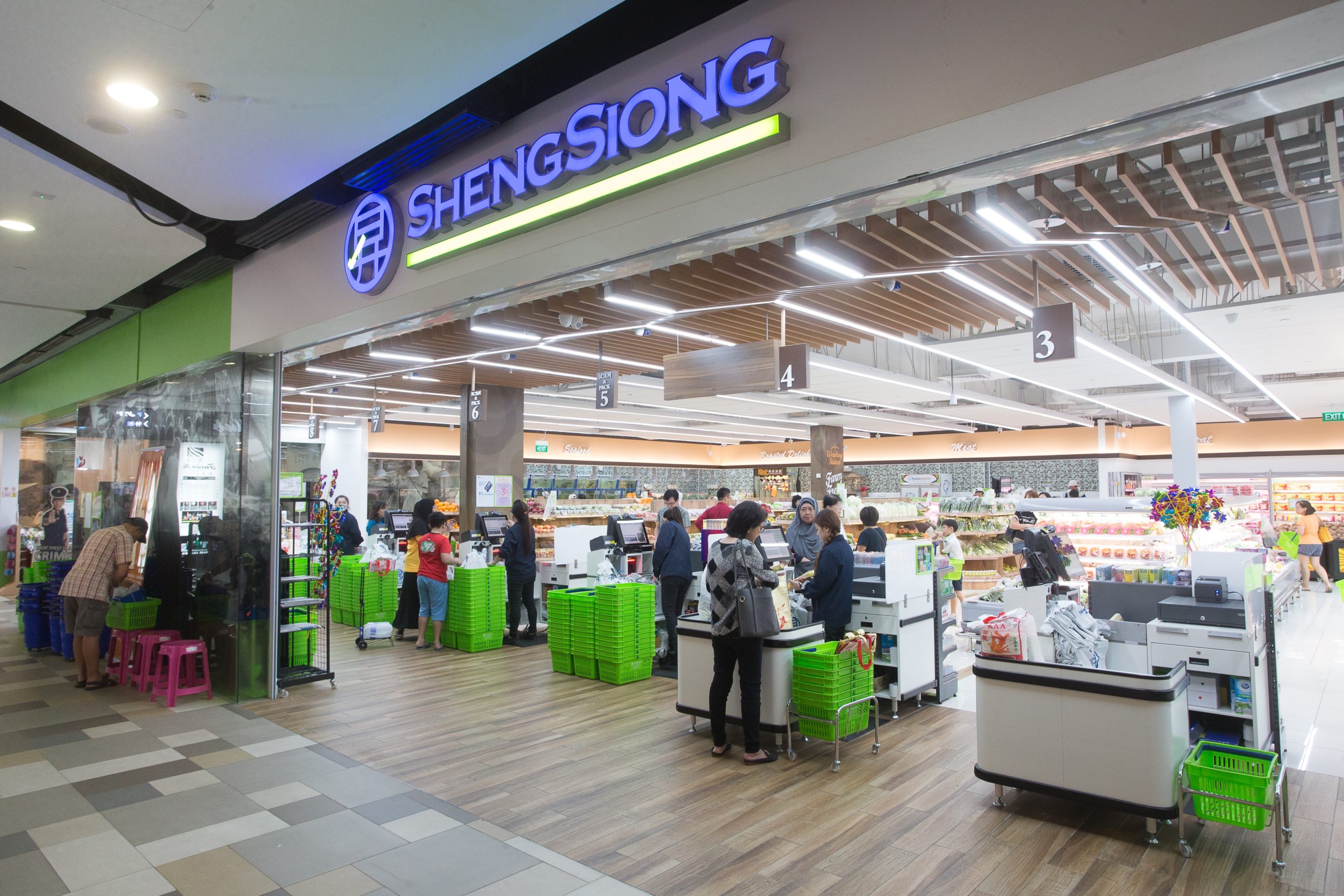
    Singapore consumers’ migration from food halls to supermarkets during the Covid-19 pandemic has proven a windfall for grocery operator Sheng Siong Group.

    Sales for the June quarter surged 75.8 percent to US$304.3 million, gross profit margin improved from 27.4 percent to 28.1 percent and net profit soared 150.7 percent year on year to $33.6 million.

    While new stores accounted for 13.3 percent of the 75.8-per-cent increase in sales the vast majority of the balance came from same-store turnover.

    “This was mainly driven by the elevated demand arising from Covid-19, as consumers stocked up to hedge against the risks of disruption to the supply chain and the implementation of the “Circuit Breaker” restricting people’s movements and forbidding eating out, thereby benefiting retailers of fresh and uncooked food,” the company said in a statement.

    However, the company has warned the gradual easing of restrictions on Singaporeans’ movements it expects the elevated demand for goods fuelled by Covid-19 will ease.

    “Competition in the supermarket industry is expected to remain keen and challenging among the traditional brick-and-mortar operators and e-commerce platforms which seem to have gained better visibility because of the Circuit Breaker,” the company said. “Demand may be affected if post-Covid-19, economic recovery is slow or remains depressed.”

  • Uniqlo goes local for Singapore’s National Day

    Uniqlo goes local for Singapore’s National Day

    Uniqlo Singapore has collaborated with local artists to celebrate the country’s 55th National Day on August 9. The Japanese apparel retailer has teamed with Singaporean embroidery patch designers, Pew Pew Patches, to give customers free iron-on transfers as a gift. Three designs featuring Sanrio’s characters will be exclusively launched by Uniqlo Singapore.

    The Sanrio patches giveaway promotion coincides with the launch of Uniqlo’s FW 2020 Sanrio characters UT Collection for women and girls, which starts on August 3.

    According to the company, one patch is redeemable per customer, with a minimum purchase of two original-priced UTs from the Sanrio character collections and US$44 spend.

    Tying in with the Singapore Food Festival, Uniqlo has also collaborated with the Singapore Tourism Board and local artist Mandy Kew to launch new food designs for its UTme! T-shirts.

    Mandy Kew has created eight designs featured on UTme! shirts, which will be included in the festival’s media packs. Themed ‘Food, With Passion’, the designs of local famous dishes consist of Laksa, Kaya Toast and Kopi, Kueh Salat, Mee Siam, Kueh Tutu, Roti Prata, Chicken Rice, and Nasi Lemak.

    “Mandy Kew carved out her niche by tapping into her passion for food to draw realistic (and yummy-looking) food using watercolors, resulting in a nostalgic look that will leave you craving for food,” the company said in a statement. “With her passion and in-depth knowledge of local food, and her unique realistic drawing style, she is a good and apt choice for this collaboration.”

    The UTme! booth is exclusively at the Uniqlo Orchard Central Flagship Store.

  • Estee Lauder Singapore unveils new Ion Orchard store

    Estee Lauder Singapore unveils new Ion Orchard store

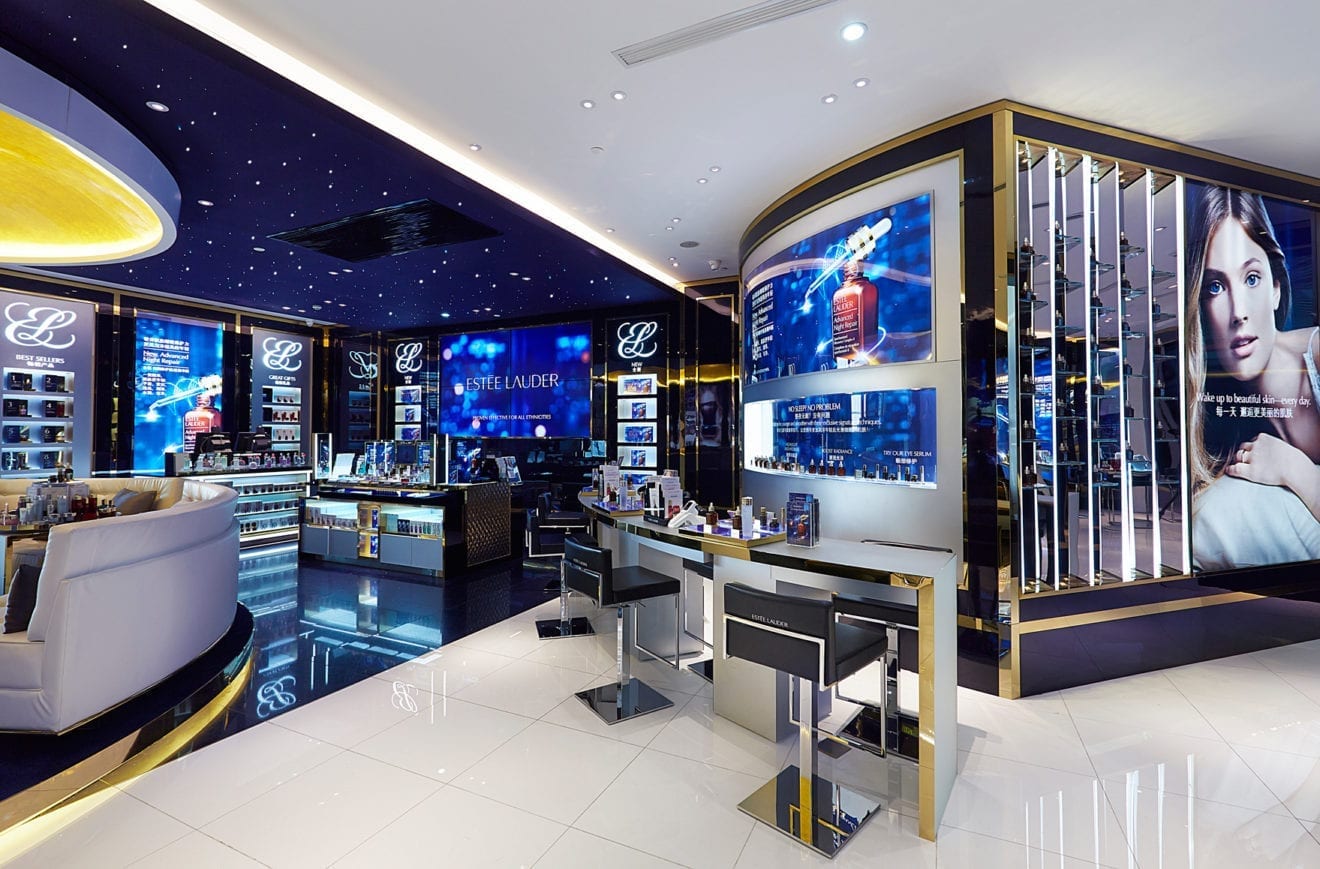
    Estee Lauder Singapore has reopened its store in the Ion Orchard shopping center with a completely new design. Located in the mall’s Basement Level 1, the Estee Lauder Ion Orchard store features a contemporary look, with blue navy wall and platinum elements.

    A digital screen is installed in front of the store, featuring images of the brand’s bestsellers, such as Advanced Night Repair or Pure Color Envy and Double Wear.

    “This new home offers a unique and elevated high-touch approach that has been paired with the latest innovations to meet our customers’ changing needs, to deliver the ultimate Estee Lauder experience,” said Christine Goh, brand GM of Estee Lauder Singapore.

    Storehouse’s interactive makeup ‘play tables’ for customers to engage while shopping.

    Customers can learn about Estee Lauder’s products by scanning QR codes or having exclusive one-on-one consultations. Personalized and gifting services are also available at the store.

  • Deutsche Bank’s New Asia Chief Picks Singapore

    Deutsche Bank’s New Asia Chief Picks Singapore

    With the move, Deutsche Bank joins rivals UBS and Credit Suisse in having their Asia chief executives based in the city-state. Deutsche Bank’s incoming Asia chief executive officer, Alexander von zur Mühlen, will be relocating to Singapore for his new role – not Hong Kong, where his predecessor sits.

    We remain committed to our dual-hub structure in Asia Pacific, a Hong Kong-based spokesperson said about the decision. The bank previously had a regional chief based in Singapore – from 2012 to 2016, Asia co-chair Gunit Chadha was based in the city-state, while his counterpart Alan Cloete sat in Hong Kong.

    Deutsche Bank’s operations in Singapore focus on commercial banking and fixed income services, while its wealth management, corporate finance and asset management desks are larger in Hong Kong. In 2019, the bank said it would be shuttering its equities sales and trading globally as part of its overall revamp.

    Von zur Mühlen, who joined Deutsche Bank in 1998, is set to take charge of the firm’s Asia Pacific business when Werner Steinmüller retires from the Management Board on July 31, after three decades at the German lender.

    Before being named Asia chief executive, he was appointed DB’s global head of group strategy, based in Frankfurt, in 2018, one year after being named co-head of global capital markets.

  • Shopmatic revenue soars 200 percent

    Shopmatic revenue soars 200 percent

    Singaporean e-commerce platform Shopmatic has registered 200-per-cent growth in revenues, transactions, and GMV during the last financial quarter in spite of the global impact of the coronavirus pandemic.

    The firm works to bring various elements of the e-commerce landscape onto its standalone platform, allowing customers to create a customized online store and sell through social and chat commerce on multiple marketplaces.

    During the pandemic, Shopmatic launched tailored solutions for India’s kirana stores and Singapore’s grocery stores, providing options to use pre-developed catalogs, among other services.

    “Going digital is not an option anymore, but an imperative,” said Shopmatic CEO & co-founder Anurag Avula, “and we have been able to contribute to our merchants’ success by launching relevant solutions like the kirana/grocery store special. In the five years since we launched, we have been driven by our vision to enable online and offline success for our merchants by creating an omnichannel experience for our customers.

    “I am delighted that it has brought significant transaction growth to our customers. This inspires us to deliver even more innovative and compelling game-changing solutions for our merchants which we will be launching in the next few months.”

    Shopmatic currently reports more than 120,000 active merchants on its platform.

  • OCBC Bank is first in Singapore to enable use of SingPass

    OCBC Bank is first in Singapore to enable use of SingPass

    Since 4 July 2020, OCBC Bank’s 1.8 million digital customers in Singapore have been able to use the SingPass Mobile app as an alternative login to access the full suite of digital banking services via the OCBC Mobile Banking app or Internet banking.

    Using SingPass Mobile as an alternate login will especially benefit customers who currently use an access code and PIN instead of fingerprint or facial biometrics to log in to OCBC Bank’s digital banking platforms. The need to remember multiple access codes and PINs is eliminated while enabling customers to securely access digital banking services. This market-leading service has been enabled for OCBC Bank customers by integrating digital banking access with Singapore’s National Digital Identity (NDI) platform.

    SingPass Mobile login will further accelerate digital banking adoption

    Since the Covid-19 outbreak in Singapore, digital transactions among OCBC Bank customers have surged as the pandemic accelerated digital adoption.

    Close to 100,000 ‘digital debutantes’ have started using digital banking for the first time this year. There has been a 40% jump in digital transactions performed by those aged 50 to 64, while those above 64 years old clocked a 48% increase in digital banking transactions from last year.

    Managed by the Government Technology Agency (GovTech), the SingPass Mobile app allows users to transact with over 60 government agencies online securely. More than 1.6 million Singapore residents today use the SingPass Mobile app to access government e-services including checking their Central Provident Fund (CPF) account balances, filing taxes and applying for public housing. Many now also use the app for SafeEntry logins at venues to facilitate contact tracing.

    Mr Aditya Gupta, OCBC Bank’s Head of Digital Business for Singapore and Malaysia, said: “Inclusion and accessibility have been core to our digital transformation narrative. I believe that offering SingPass – a trusted and widely used mode of digital authentication in Singapore – as an alternate login, will give more of our customers the confidence and convenience to bank with us digitally. We have partnered with GovTech to pioneer the co-creation of a trust ecosystem for Singapore’s banking industry using the national digital identity platform, which will radically improve how our customers access and experience our digital services.”

    Mr Kwok Quek Sin, Senior Director, National Digital Identity, GovTech, said: “OCBC Bank is known for many of its innovative efforts in leading digital transformation and has been one of the early adopters of our National Digital Identity strategic platform. This month, OCBC Bank has started to offer SingPass as an alternative login to access their digital banking services. We are happy to be able to support our Singapore companies in their exciting digitalization journeys. GovTech will continue to push out more products on the national digital identity platform to help businesses enhance digital service delivery, improve customer experience and bring about productivity gains.”

    Mr Sopnendu Mohanty, Chief FinTech Officer, Monetary Authority of Singapore (MAS), said: “The foundation of the digital economy is the seamless integration of public digital infrastructures with essential services. We are delighted that OCBC Bank has broken new ground by enabling access to financial services with SingPass Mobile. MAS has been working closely with the financial industry to foster the adoption of foundational digital infrastructures such as national digital identity for seamless integration with the growing digital economy. With the convergence of SingPass Mobile, MyInfo, and PayNow, customers can open bank accounts, access banking services and make payments online seamlessly yet safely.”

    OCBC Bank at the forefront of leveraging National Digital Identity infrastructure for digital banking services

    In June 2018, OCBC Bank became the first in Singapore to enable instant deposit account opening using MyInfo – the national data repository – integrated with the Bank’s proprietary real-time digital know-your-customer process (e-KYC).

    A year later, in May 2019, OCBC extended the use of MyInfo and OCBC Bank’s e-KYC process to online applications for cards, personal loans and lines of credits. This was then extended to home loans and car loans in Feb 2020.

    Within three months of launch, digital card applications grew 3.5 times, while online personal loan applications grew nine-fold. Three in 4 credit cards are acquired digitally, and 3 in 4 deposit accounts are opened digitally leveraging MyInfo. The integration of MyInfo in the digital product application process has enabled OCBC Bank to offer 60-second approvals for car loans, and 60-minute approvals for home loans. One in 3 home loans and 2 in 3 car loans have been approved and accepted via this process within four months of its launch.

  • Singapore Economy Contracts More Than Expected

    Singapore Economy Contracts More Than Expected

    Hit by the circuit breaker and widespread closures of businesses, Singapore has reported a 41.2-percent contraction in its economy for the second quarter of the year. Singapore has entered a technical recession, with its economy shrinking 12.6 percent year-on-year in the second quarter of 2020, following -0.3 percent growth in the first quarter, according to advance estimates by the Ministry of Trade and Industry published on Tuesday.

    A survey of economists had previously predicted a 10.5 percent contraction. MTI said the weak economic output could be attributed to the circuit breaker from April 7 to June 1, during which non-essential services and most workplaces were closed to limit the spread of Covid-19.

    Faring the worst was the construction sector, which contracted 54.7 percent from the year before and 95.6 percent from the first quarter, as a result of manpower disruptions and the closure of almost all worksites during the period. The service industry contracted by 13.6 percent from the year before (-37.7 on-quarter), with tourism-related sectors like accommodation and the air transport sector severely affected by global and domestic travel restrictions.

    The numbers clearly reflect the extent of the challenges facing our economy amid the COVID-19 pandemic and the hard work ahead of us to restore the economy, Chan Chun Sing, Minister of Trade and Industry, said in a Facebook post on Tuesday morning.

    We expect the recovery to be a slow and uneven journey, as external demand continues to be weak and countries battle the second and third waves of outbreaks by reinstating localized lockdowns or stricter safe distancing measures,» Chan said.

    In May, the Singapore government downgraded the city-state’s growth forecast for 2020 to -4 percent to -7 percent.

    The economy was one of the top issues on voters’ minds in the general election, held on Friday. Seeking a fresh five-year mandate, Prime Minister Lee Hsien Loong warned earlier in July of more retrenchments and that the worst of the economic downturn is yet to come.

    The ruling People’s Action Party kept its grip on power but fared disappointingly with 61.2 percent of the popular vote. The opposition Workers’ Party increased its representation in parliament to a record 10 seats of the 93 at stake.