Tag: Singapore

  • Singapore sports retailer Sportslink collapses

    Singapore sports retailer Sportslink collapses

    Singaporean retailer Sportslink will be closed by court order over debts of more than US$720,000 owed to supplier Adidas and more than $2.44 million including other creditors.

    The firm did not object to the ruling, with its financial difficulties tracing as far back more than two years. Previous agreements to settle debts by installments failed to eventuate.

    Sportslink once operated 24 outlets throughout the city-state, although recent Facebook posts list just nine stores.

    Adidas Singapore applied to have the firm liquidated after a statutory demand for immediate payment in November failed to settle the matter, a move that drew the support of other creditors.

    The firm advertised reopening following Singapore’s circuit breaker coronavirus lockdown barely a fortnight before the liquidation ruling was made. It has not filed recent financial statements with Singapore’s Accounting and Corporate Regulatory Authority.

  • Changi Airport and Jewel retailers resume operations

    Changi Airport and Jewel retailers resume operations

    More than 80 percent of restaurants and retail outlets have resumed operations at Singapore’s Changi Airport and colocated Jewel Changi shopping center, as the city entered phase 2 of its reopening post-Covid-19.

    Retailers and restaurants have to follow strict social-distancing safety measures as well as stringent cleaning and disinfecting regimes and stores are also offering contactless payments, takeaway services, self pick-ups to minimize the risk of Covid-19 transmission.

    Jewel will roll out a GST-Absorbed Shopping Extravaganza promotion and offer an additional US$7 cashback on purchases above US$57 to boost shopping traffic. Changi Airport and Jewel also offer delivery and drive-thru services for those who prefer to stay in their homes.

    Meanwhile, attractions at Jewel have also reopened, including the Canopy Park and the Changi Experience Studio.

  • Singapore retail sales collapsed during May due to store closing

    Singapore retail sales collapsed during May due to store closing

    Singapore retail sales plummeted 52.1 percent in May as Covid-19 lockdowns shuttered malls and the majority of retail stores across the city-state.

    May’s year-on-year decline followed a 40.3 percent drop in April and represented the biggest drop since statistics were first collected in 1986.

    After removing motor vehicles from the data, the decline was only a slightly less dramatic 45.2 percent, compared with 32.5 percent in April.

    The closure of stores across the city caused a dramatic rise in online sales which accounted for 24.5 percent of the US$1.29 billion total turnovers.

    According to Statistics Singapore, 94.3 percent of sales of computer and telecommunications equipment in May were conducted online, 93.6 percent of furniture and household goods, and 9.6 percent supermarket sales.

    Every retail category recorded a sales decline except supermarkets, hypermarkets, and convenience stores. Supermarket and hypermarket turnover soared 56.1 percent and convenience stores by 9.1 percent.

    Sales of watches and jewelry, by department stores and apparel, fell by between 89.1 percent and 96.9 percent.

    As with traditional retail, the Circuit Breaker measures introduced to curb the spread of Covid-19 resulted in huge declines in the food & beverage sector as well. A 50.1-per-cent decline in May represented a tiny improvement from April’s 52.7 percent, with vendors able to supply only delivery or takeaway.

  • Jakarta-based cafe chain Maxx Coffee launches in Singapore

    Jakarta-based cafe chain Maxx Coffee launches in Singapore

    Indonesian cafe chain Maxx Coffee has launched its first international outpost in Singapore as the first move towards expansion in Asia.

    Partnering with local operator Oue Restaurants, the new outlet opens today at Jem serving Indonesian single-origin coffee as well as a food selection and the brand’s signature beverages.

    “After 80 successful outlets in 23 cities across Indonesia, our goal remains consistent; to provide a social canvas fit for modern coffee lovers to create meaningful moments over great coffee,” said Oue Restaurant CEO Brian Riady.

    “With the burgeoning third-wave coffee culture in Indonesia and the rising global popularity of Indonesian coffee and coffee culture, Maxx Coffee is ripe for the picking.”

    “Maxx Coffee serves more than just a daily cuppa,” said PT Maxx Coffee Prima CEO Mehdi Zaidi. “Designed to cater to the modern coffee lover’s lifestyle, our outlets are a mix of co-working spaces that enable an exchange of ideas, booths to spark conversations and cosy corners for anyone who wants a quiet space to enjoy a book.”

    The new outlet’s interior features a light wood decor with an open espresso bar and food counter.

    The majority of Maxx Coffee’s specially sourced roasts are single-origin grade 1 Arabica coffee beans from Brazil Cerrado, Sumatera Lintong, Java Ciwidey, and Aceh Gayo.

  • SGX to Offer Taiwan Index Futures

    SGX to Offer Taiwan Index Futures

    The bourse said this will help global investors to gain exposure to a broad representation of large and mid-cap Taiwan stocks, while meeting fund managers’ diversification objectives.

    Singapore Exchange (SGX) will launch a futures contract based on the FTSE Taiwan RIC Capped Index (FTSE Taiwan) on July 20, it announced on Wednesday.

    The index is broad-based and diversified, and covers nearly 80 percent of Taiwan’s listed companies by market capitalization, providing strong correlation with other major Taiwan benchmark indices, SGX said.

    Michael Syn, Head of Equities at SGX, said that the future contract aims to cater to the rising demand from U.S. and European investors for access and investment exposure to Taiwan.

    Taiwan is the seventh-largest economy in Asia and occupies a key position in the global industrial and technology value chain.

    SGX expects to receive certification from the Commodity Futures Trading Commission to offer the contract in the U.S. shortly after launch.

  • Changing the Way Singapore Buys Wine

    Changing the Way Singapore Buys Wine

    With few people having wine cellars, the minimum order size required by many wine merchants in Singapore makes buying a case of each both time consuming and inconvenient. Wine. Delivery solved this issue.

    How can you replicate the pleasures of purchasing wine in a physical shop in the online space? Where can you go to get the personalized service and recommendations available from your favorite wine merchant while still having access to a vast array of diverse options?

    How can a specialized wine importer have access to a larger audience online without needing to develop expensive tech? These were the questions that Alex Caballero sought to answer in creating a specialized marketplace, where quality, user experience, and a love of wine are celebrated.

    The premise was simple: Create top-notch tech, get quality importers on board, ensure impeccable service, and improve the experience of wine and spirit drinkers everywhere. Amongst Alex Caballero’s first steps was acquiring the URL www.wine.delivery. Beautiful in its simplicity, the ultimate wine shop had just become digital.

    From the very beginning, Wine.Delivery was a tech company that sold wine and not the other way around. The goal was to build a platform that would provide seamless customer experience and make it easy for specialized merchants to sell their wine to the general public. The website launch was quickly followed by an app, making it even easier to order whenever and wherever.

    Building a marketplace from scratch was very much a learning experience. In-house developers allowed the company to quickly develop new solutions and adapt to the changing needs of both the end-user and the importers in real-time, with feedback from both sides being quickly put into practice.

    New functionalities allowed the consumer to explore different wine regions or grapes, much like in their local wine store. Recommendations were added to guide the novice wine drinker and sections were developed to steer the last-minute buyer towards wines available the next day, including weekends.

    Wine.Delivery Singapore soft-launched in 2016 with early-adopter importers keen to experiment. All saw the potential of the platform and the opportunity linked to the change in Singaporeans’ online purchasing behavior.

    Today the marketplace counts over 40 importers and showcases more than 1,500 labels from all over the world, with bottles ranging from the cheap and cheerful to exclusive collector’s pieces. Fully armed with the lessons gleaned in Singapore, the company is excited to expand its horizons.

    Today’s consumer is looking for a large variety of wines; a typical order could see a few bottles of Italian wine for a dinner party, a bottle of Champagne for a gift, some South African wine to reminisce over a past holiday, a Bordeaux for a romantic dinner and some Chilean wine for Saturday’s BBQ.

    With few people having wine cellars, the minimum order size required by many wine merchants in Singapore makes buying a case of each both time consuming and inconvenient. Wine.Delivery solved this issue, making it possible to find everything in one place, with free delivery on all orders, even for a single bottle.


  • Country Garden builds world-first robotic restaurant

    Country Garden builds world-first robotic restaurant

    Chinese property-development company Country Garden has launched the world’s first robotic restaurant, in Guangdong.

    Built by Country Garden’s subsidiary Qianxi Group, the restaurant occupies a 2000sqm area, featuring sections including Chinese food, hot pot and fast food. Diners are served by more than 20 in-house robots designed for different tasks including cooking and serving food.

    “The Qianxi robot restaurant has innovatively achieved both software-hardware integration and man-machine cooperation,” said Zhao Chunsheng, mechanical engineering specialist, and academician at the Chinese Academy of Sciences.

    “It helps to better run a smooth operation through the practical application of robots. Qianxi has the most advanced technology with a vast product lineup. It fills the market gap and will have a significant impact on benchmarking in adding value to industry development as well,” he said.

    According to the company, the Qianxi robotic restaurant can serve some 600 customers with 200 menu items thanks to fast serving time. The launch of the robotic restaurant is in line with efforts to reduce physical contact between people during the Covid-19 pandemic.

    Meanwhile, Qianxi Group says it aims to build centralized kitchens in Hong Kong and Macau.

  • Singapore startup opening ghost kitchens globally

    Singapore startup opening ghost kitchens globally

    Singaporean food tech firm TiffinLabs is creating an international network of ghost kitchens based in more than 1000 locations across the US, Europe and Asia.

    The move is designed to take advantage of the rapid global transformation and growth of the online food-delivery market, with the kitchens rolling out progressively from the last quarter of this year following 12 months of negotiations.

    According to material released by the firm, the traditional restaurant industry – largely structured for dine-in – has led to a mismatch between customer demand and the supply of cuisines due to current production capability. TiffinLabs’ solution, focused on creating cuisines linked to consumer needs, is an attempt to innovate in the food delivery and restaurant industry in reshaping the business model and tapping new growth opportunities.

    TiffinLabs currently operates nine digital-first restaurant brands out of its kitchens in Singapore, including Publico Pastabar and Hureideu – Korean Fried Chicken, as well as soon-to-be-launched Singapore Makan.

    “Singapore is known globally for its quality standards and as a food lover’s paradise, with its wide mix of local and western foods,” said Tiffin Labs founder & chairman Kishin RK, “and TiffinLabs looks forward to sharing this globally.”

    TiffinLabs will leverage its AI-driven kitchen operating and management system across its network to deliver an international menu from digital-first restaurant brands, with a potential reach of more than 15 million households. The team also harnesses data analytics to identify food trends and changing consumer preferences while optimizing its supply chains with local smart kitchens to fill gaps in delivery zones.

    “What customers get when they order food for delivery is dramatically different from a dine-in experience,” said Kishin. “By enabling over 1000 kitchens for delivery-focused operations globally, we are making food ordering relevant for the future, at scale. In the next three years, we see two very different winners in this space – the local niche specialty cuisine player that can create value through distinction for a specific segment of the market.

    “The other will be global delivery businesses which will scale brands and menus with suppliers and delivery platforms and invest in innovation specifically to create food for delivery, reinventing customers’ experience of in-home dining.

    “As someone who has been in this industry for the last 10 years, I strongly feel that the value of real estate and the monetization capability of its adjacent business models will be determined by how well it integrates into the digital economy. Our business aims to help all players in the food industry tap into the growth of this sector.”

    The online food delivery market is expected to more than double to US$200 billion by 2024.

  • Daiso Singapore app tells shoppers how busy the store is before they visit

    Daiso Singapore app tells shoppers how busy the store is before they visit

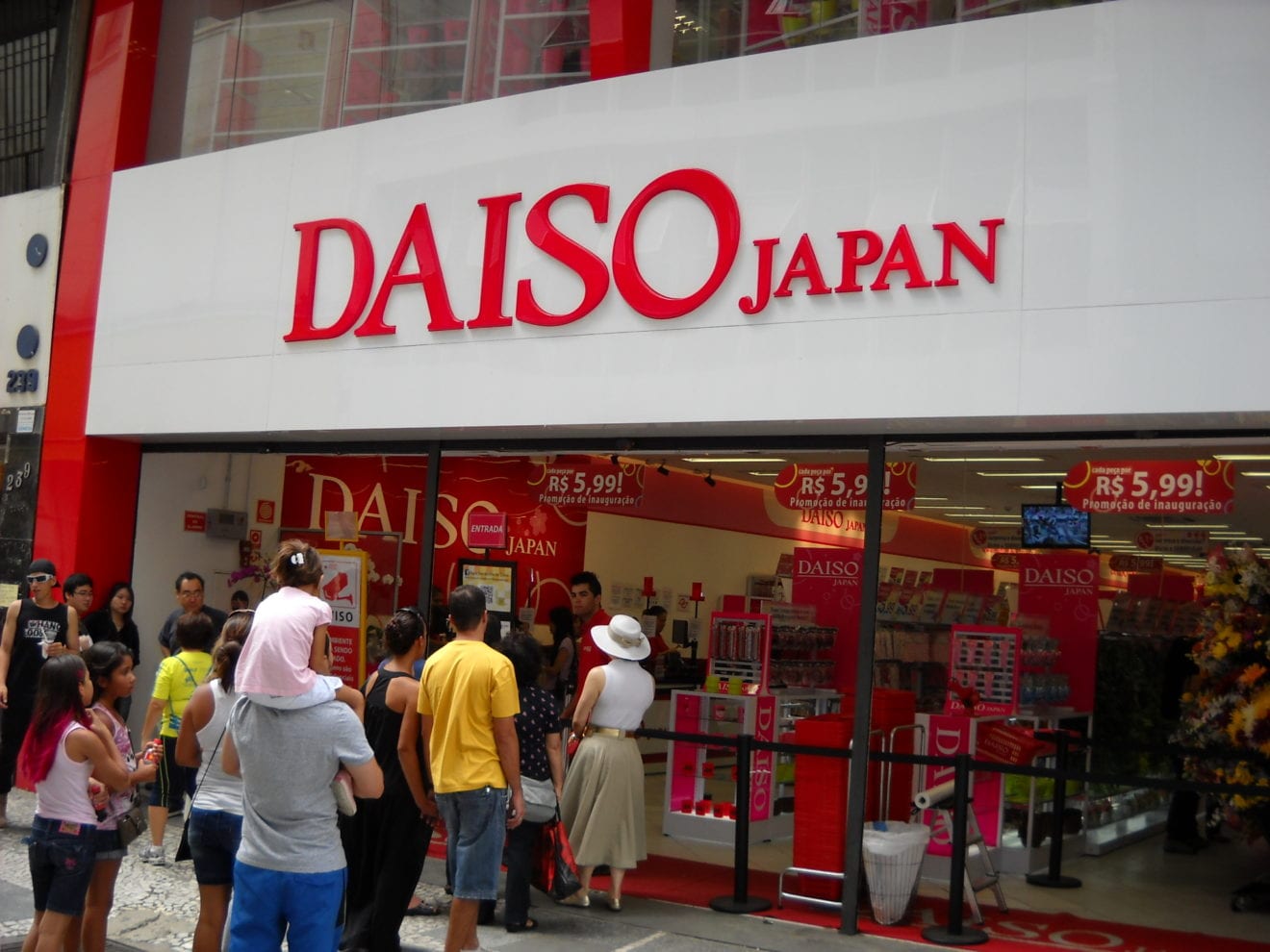
    Daiso Singapore has established an online service to let customers know in advance which of its outlets are crowded.

    The new website service – which builds on the brand’s previous crowding updates posted via Instagram – now allows customers to assess crowd levels before visiting any Daiso or Threeppy branch , allowing them to plan visits and avoid masses and queues.

    Daiso’s crowd data is posted in two-hour blocks, grading crowding levels with coloured squares to provide information at a glance. Green squares indicate no crowding, while red squares show a store has reached maximum customer capacity.

    On June 19, the $2 mega chain store attracted snaking queues upon reopening after the Singapore government’s lockdown to prevent the spread of coronavirus.

    Daiso Singapore currently operates 22 locations in Singapore.

  • Singapore fashion labels get boost from OneOrchard online store

    Singapore fashion labels get boost from OneOrchard online store

    Singaporean non-profit trade association Textile and Fashion Federation (TaFF) will launch an e-commerce platform in support of local fashion labels.

    Oneorchard.store, scheduled to go live on June 19, is designed to showcase and facilitate exposure of a range of locally-based designers from emerging to established labels. The platform is conceived of as a means to face current challenges in the industry and present an opportunity for sustenance within the Singapore retail market.

    The initiative has been borne out by a TaFF consumer survey showing the popularity of shopping on label e-commerce platforms amongst respondents in spite of the impact of Covid-19.

    A key finding of the survey was that local brands are just as popular as foreign brands within the territory, with 86 percent of respondents willing to make a repeat purchase of a local brand.

    “The launch of oneorchard.store is an essential step in the development of our long-term commitment in boosting the local fashion industry and promoting the local retail ecosystem,” said TaFF spokesperson Jiayi Wong.

    “In support of the recovery and the opening of physical retail, we hope this platform can complement those efforts and carry on working towards building a sustainable retail landscape.”

    TaFF’s portfolio of homegrown talents range from retailers in womenswear to accessories and childrenswear. Participating brands include Adrian Furstenberg, Ans.ein, Bells & Birds, Carrie K, Forbidden Hill, Ginlee Studio, Hher, Josee P, Ling Wu, Minor Miracles, Oeteo,  Plain Supplies, Quintessential, Ranee of Sarawak, R y e, Shirt Number White, The Form, Top Middle Base (Nena), Weekend Sundries and Ying The Label amongst others.

  • Singapore electronics upcycler Reebelo raises US$1.25 million

    Singapore electronics upcycler Reebelo raises US$1.25 million

    Singaporean refurbished-electronics marketplace Reebelo has raised a US$1.25 million seed round led by June Fund, with participation from Antler.

    The funds will be used to speed the firm’s expansion by supporting new marketing and operations hires as the business extends further into Asia-Pacific markets.

    “We are strong believers and investors in circular commerce,” said June managing partner David Rosskamp, who is joining Reebelo’s board. “What it ultimately stands for is a different form of consumption, with a more sustainable and often fairer way. Reebelo’s team is following this mission with passion and focus.

    “Supporting Reebelo to build up a central electronics trading infrastructure ideally mirrors our investment theses, and we are happy to invest at an earlier stage than we usually do.”

    The firm acts to reduce consumer-electronics waste and has a strong sustainability focus, selling checked and refurbished devices at prices up to 70-per-cent less than brand new models. It also purchases second-hand devices to be refurbished and resold.

  • Many Singapore stores set to reopen as restrictions are lifted

    Many Singapore stores set to reopen as restrictions are lifted

    Singapore stores are set to reopen as the country will enter the second phase of reopening on Friday, June 19.

    According to advice from the government, retailers may reopen under Phase Two of the easing of restrictions on Friday, but they must adhere to safe distancing measures.

    For F&B retailers, dine-in will be permitted with up to five diners per table. However, live music, television and video screenings are not allowed under stage 2. Stores will also have to stop liquor sales and consumption at 10.30pm.

    Larger venues with high traffic such as malls, department stores or large-scale standalone retail outlets have to restrict capacity to ensure safe distancing. Operators are required to prevent crowds or long queues from building up.

  • Suntec City to host Singapore’s first-ever mall live-streaming shopping festival

    Suntec City to host Singapore’s first-ever mall live-streaming shopping festival

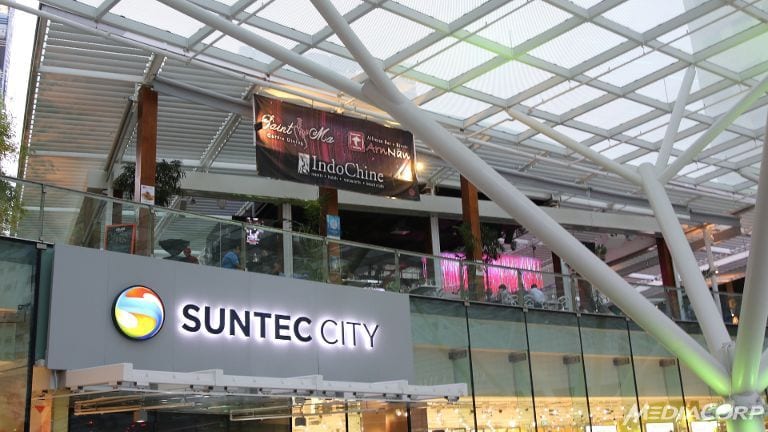
    Suntec City will host Suntec Shopfest next week, a first-of-its-kind, live-streaming shopping festival in Singapore.

    The mall operators’ interactive live stream show will be broadcast via the Suntec+ app during four-hour-long interactive sessions showcasing 16 participating Suntec City stores with more than 40 brands, including Harvey Norman, Fossil, Aldo, Royal Sporting House, W Optics, Clarks, ToTT and more to be announced in the coming days.

    Over the four days, shoppers will be offered discounts of up to 60 percent as well as more than US$28,700 worth of savings, more than $14,350 worth of prizes and products exclusive to the live stream.

    “Mall-shopping is definitely one of the favorite pastimes that Singaporeans have missed most,” said Suntec City’s property management firm APM’s deputy chairman Anthony Yip. “Taking a leaf from the rising popularity of live-stream shopping trends in China, it is the right time to launch such a concept here.

    “The Suntec Shopfest represents a mix of the best of traditional shopping with convenience and some seriously good deals.”

    Shoppers will be able to watch, comment and ‘like’ via the Shop Live platform on the Suntec+ app as hosts introduce the products. By tapping on pictures of the individual products, shoppers can view product details before proceeding to purchase items with either credit or debit cards during the live stream. The items can be picked up directly in store from the retail stores in Suntec City or via courier service from selected brands.

  • Lotte takes over concessions at Singapore’s Changi airport

    Lotte takes over concessions at Singapore’s Changi airport

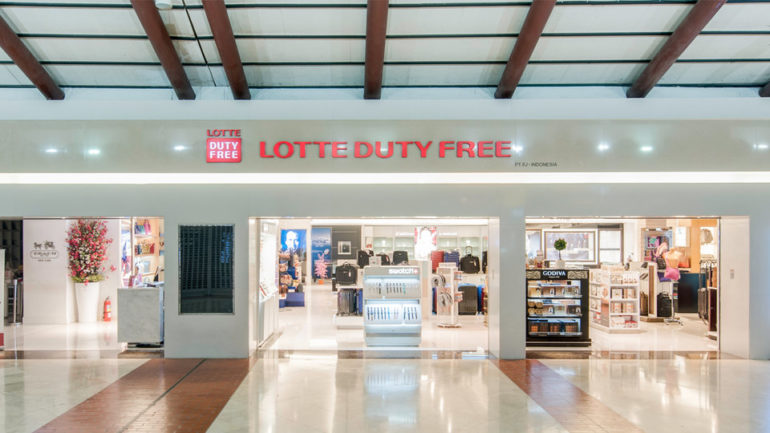
    South Korean duty-free retailer Lotte has formally taken over the liquor and tobacco concessions at Singapore’s Changi Airport from DFS Group.

    Construction of the new stores are likely to begin once the island’s current “circuit-breaker” restrictions are relaxed in the wake of the continuing coronavirus outbreak. Before this period the firm will trade via the online platform iShopChangi.com.

    Lotte won the concessions last year in a tender process following the withdrawal of LVMH-owned DFS Group after 40 years at the airport. DFS said continuing to sell alcohol and tobacco at Changi Airport was not commercially viable, but it will continue to operate fashion stores there.

    The new Lotte outlets will be operator’s largest duty-free business in Asia Pacific, offering more than 3000 choices of wines and spirits, including exclusive limited-edition whiskeys and cognacs.

    A high-tech tasting bar and immersive experience zones are likely to be features of the new stores.

    “Apart from a complete revamp of store designs, passengers can also look forward to an omnichannel experience as we integrate a seamless brick-and-mortar shopping experience with e-commerce,” said Changi Airport Group executive VP Lim Peck Hoon.

    Lotte has been awarded the concession for roughly 8000sqm of retail space at the airport for six years, ending June 8, 2026.

  • Regional Fintech Startups Open HQ in Singapore

    Regional Fintech Startups Open HQ in Singapore

    Ayannah and Equity Capital Advisors will merge their businesses in India, the Philippines and Indonesia to form Ayannah Global, headquartered in Singapore.

    Philippines-based digital financial services provider Ayannah and India-based payments company Electronic Cash and Payment Solutions (ECAPS) have announced a merger to support their goal of providing affordable and accessible digital financial services to the growing middle class in South Asia and Southeast Asia.

    The new entity will serve over 10 million customers through mobile apps and a growing network of over 60,000 retail touchpoints, Ayannah Global announced on Tuesday. The company caters to underbanked customers in the two regions using a suite of fintech solutions through agent networks for remittances, payments, insurance and loans.

    The group currently operates a rapidly growing remittance and payment business in India and the Philippines, and recently launched Kaya, a digital marketplace connecting middle-class customers and SME entrepreneurs with banks, lenders and insurers in the Philippines and will launch versions in India, Indonesia and Vietnam later this year.

    The company also appointed veteran banker Ray Ferguson as chairman of the Ayannah Global board. Ferguson has over 30 years of banking experience across five continents and has held senior roles in Standard Chartered Bank, including as CEO in Taiwan, Indonesia, the United Arab Emirates, the Americas and Singapore.

    He was also group chief banking officer at Arab Banking Corporation in Bahrain. Ferguson is based in Singapore, where he also chairs digital life insurer Singapore Life. He is also the founding partner of Caber Partners, a Singapore-based fund manager and advisory firm that focuses exclusively on the intersection of finance and technology.

    Ayannah’s new Singapore headquarters will support the company’s expansion plans, talent acquisition, and strategic partnership, the announcement said. It is also targeting $30 million to $50 million in its series B funding round to support its growth ambitions in new markets.

    Widespread smartphone usage across our target markets provides a ripe landscape for a financial inclusion revolution, while the COVID-19 pandemic has accelerated the demand for at-your-fingertips financial services, Praveen Suri, Ayannah Global co-chief executive officer, said.

    The firm is backed by venture capital firms Wavemaker Partners, Golden Gate Ventures, and 500 StartUps, as well as several large family offices across Asia.