Tag: smartphone
-

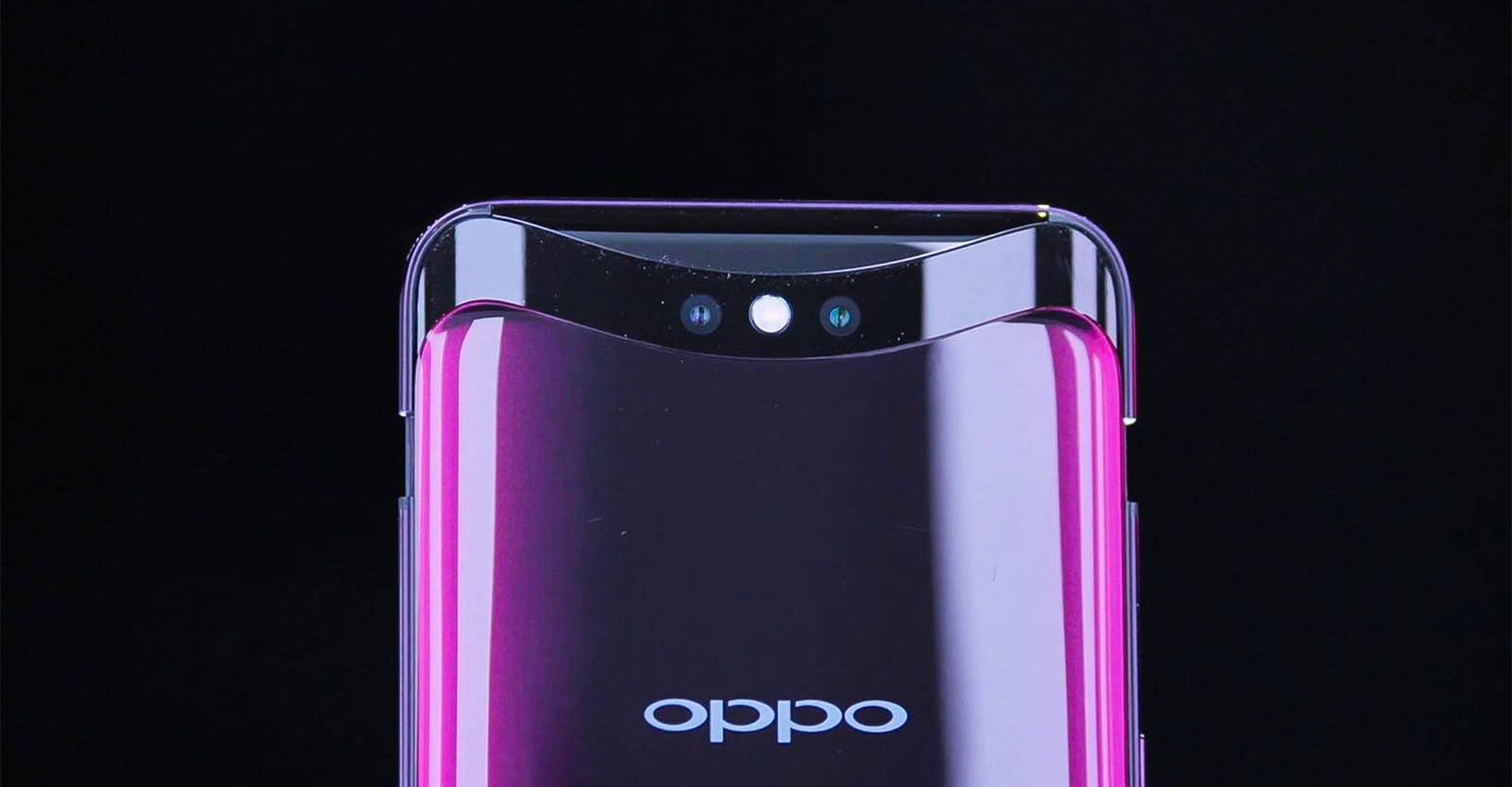
Oppo makes official the latest replacement for the notch
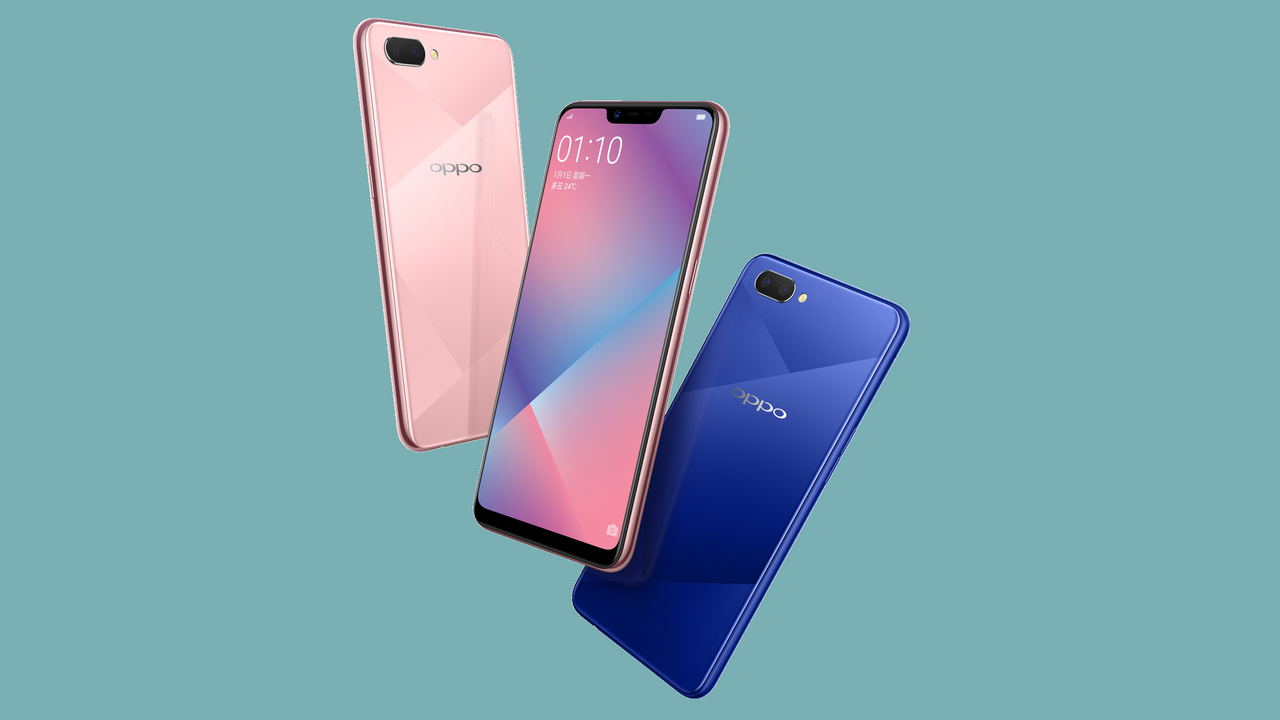
With the unveiling today of the Oppo Reno, we got to see the latest attempt by a manufacturer to replace the notch. The ultimate goal, of course, is to give the consumer a device that carries a high-screen-to-body ratio. The wedge is motorized and contains the front-facing selfie camera and the flash for both front and back cameras. There are two versions of the device, which we get to in a moment.The standard version of the Oppo Reno sports a 6.4-inch OLED display carrying a 1080p FHD+ resolution and is powered by the Snapdragon 710 Mobile Platform. The device carries 6GB or 8GB of memory. The microSD slot offers as much as 256GB of additional storage, and the handset comes with a dual-camera setup (48MP + 5MP depth sensor) on back. A 5x hybrid zoom is available. The selfie snapper that resides on the wedge weighs in at 16MP, and the lights are kept on by the 3765mAh battery that is included with the phone. The battery can be rapidly charged at 18W.For those looking for a wedge phone with higher-end specs, Oppo is offering the Reno 10x Zoom Edition. This model features a 6.6-inch OLED panel with a 1080p FHD+ resolution and is equipped with Qualcomm’s latest and greatest Snapdragon 855 Mobile Platform under the hood. 6 or 8GB of memory is inside, and this unit comes with the same capacity microSD slot as found on the standard model.This version of the Reno sports a triple-camera setup (48MP primary + 8MP super wide-angle + 13MP periscopic zoom) that together offers 10x hybrid zoom and OSI. The 16MP front-facing selfie camera appears on the pop-up wedge. Speaking of the wedge, it allows the Reno to feature a screen-to-body-ratio of 93.1%. The Oppo Reno 10x Zoom Edition comes with a larger 4,065mAh battery, which uses VOOC 3.0 to charge 23.8% faster than the previous version of the rapid charging system. The phone also features an in-display fingerprint scannerThe wedge has been designed to last over five years as long as you open it no more than 100 times a day. And thanks to a sensor built into the phone, if the device should fall with the wedge open, the part will automatically close right away. That’s a feature that could be used to protect other parts of a phone, including the screen, in the future.The standard Oppo Reno is offered in Pink, Gradient Purple, Black, and Blue, and is priced at the equivalent of $450 USD for the model with 6GB memory and 128GB of storage. The Reno 10x Zoom Edition is available in Gradient Blue and Black and costs the equivalent of $600 USD for the version carrying 6GB of memory and 128GB of storage. The unit equipped with 8GB of memory and 256GB of storage will run you about $710 USD based on today’s foreign exchange rates. More information about pricing will be revealed on April 24th at the Reno’s European unveiling in Zurich.Meanwhile, there will be a 5G version of the Oppo Reno. The device was used by carrier Swisscom today to show off its 5G network and hit a peak download speed of 1.86Gbps. The device will be offered next month by Swisscom, priced at the equivalent of $1,000 USD. Based on the Reno 10x Zoom Edition, the phone is powered by the Snapdragon 855 Mobile Platform and is equipped with a 4065mAh battery. -
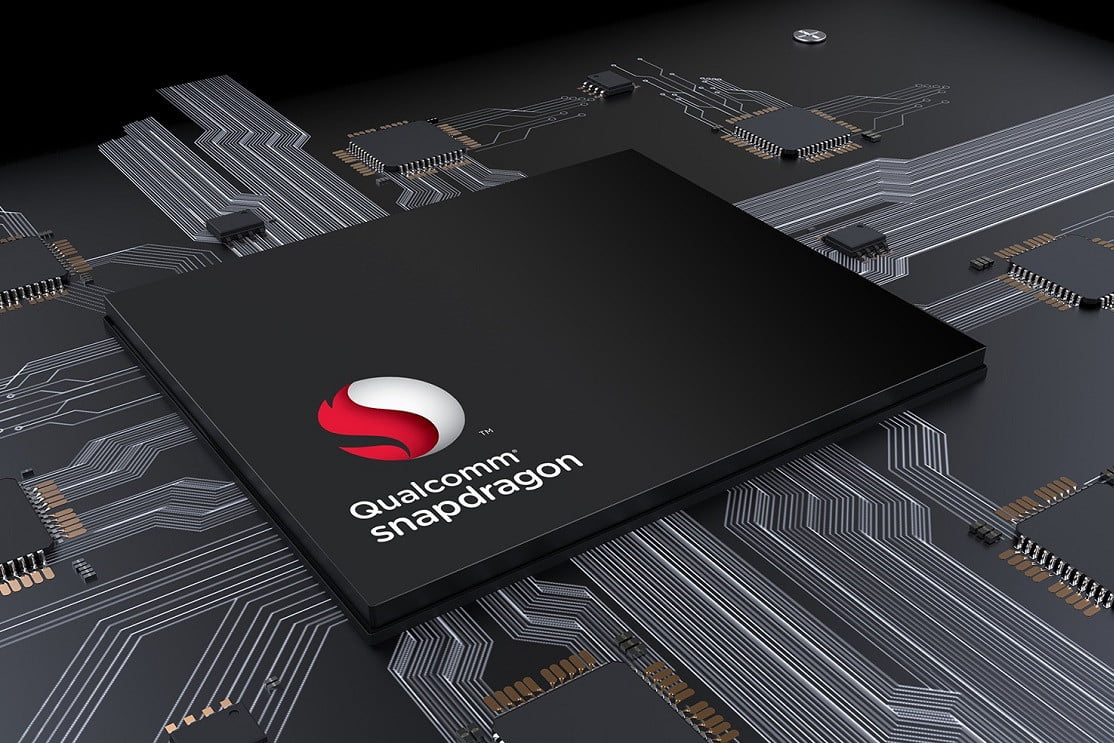
Three new Snapdragon chips unveiled today
Qualcomm unveiled today the Snapdragon 730, 730G and 665 Mobile Platforms. The chip maker says that the new chips are designed to offer customers “exciting experiences” in gaming, AI and performance. The first new devices to be powered by these chipsets will hit the market in the middle of 2019.
The Snapdragon 730 is the first 7 series SoC from Qualcomm that brings certain features previously found only on the flagship 8 series chips. Replacing the Snapdragon 710, the new SoC comes with on-device AI to provide “intuitive image capture, exceptional gaming, and optimized performance.” The Snapdragon 730 is equipped with Qualcomm’s fourth generation multi-core Qualcomm AI Engine, twice as powerful as the previous generation’s AI Engine. It also includes the Qualcomm Spectra 350 image signal processor (ISP), found for the first time ever in a 7 series chip. The ISP provides four times the power savings as its predecessor and can support a triple-camera setup made up of telephoto, ultra-wide and portrait lenses. It will record 4K HDR video in Portrait mode.
Made using the 8nm process, the Snapdragon 730 includes the Adreno 618 graphics processing unit (GPU) and a state-of-the-art graphics library that uses 20% less power than Open GL ES. This means that the chip will provide gamers with improved graphics and longer battery life. And with Qualcomm aptX Adaptive audio and Qualcomm Aqstic audio technology, gamers will be able to experience surround sound while playing mobile games.
The new chip is Wi-Fi 6 ready, and with the Kryo 470 CPU on board, each core brings as much as a 35% improvement in performance. The Snapdragon X15 LTE Modem handles LTE download speeds as fast as 800Mbps.
“With the introduction of the Snapdragon 730, 730G and 665 Mobile Platforms, we are bringing features such as sophisticated AI, exceptional gaming and advanced camera capabilities to a broad spectrum of devices at exceptional performance. Each iteration of Snapdragon drives immense innovation that will surpass customer expectations.”-Kedar Kondap, vice president, product management, Qualcomm Technologies, Inc.
The Snapdragon 730G Mobile Platform is made for gaming phones, thus the “G” tacked on to the name of the chip. With an enhanced Adreno 618 GPU, graphics are rendered up to 15% faster than seen with the Snapdragon 730. Qualcomm met with some of the top mobile game developers to optimize the Snapdragon 730G. There is a Jank Reducer feature that removes up to 90% of janks with games running at 30fps. The chip also makes sure that players aren’t cheating, and the Wi-Fi latency manager keeps gameplay running smoothly. With over 1 billion different shades of color, games won’t only play better, they will look more realistic too.
While the Snapdragon 730 and 730G will be used in handsets that are just not quite flagship material, the new Snapdragon 665 Mobile Platform is earmarked for pure mid-range models. But that doesn’t mean you won’t find some interesting features on the chip, like the third generation Qualcomm AI Engine. This provides twice the performance as the second generation AI engine. Speaking of AI, the Spectra 165 ISP found in the chipset includes AI capabilities. It also supports a triple camera setup made up of telephoto, wide-angle, and ultra-wide lenses. It also can handle images taken with today’s 48MP sensors.
For gamers, the Snapdragon 665 SoC comes with the Adreno 610 GPU for “improved and longlasting gameplay.” The chip itself features four performance cores to handle the heavy-duty tasks, and four efficiency cores to take care of the light housekeeping. The Snapdragon 665 employs the Kryo 260 CPU and the Snapdragon X12 LTE Modem. The latter handles 4G LTE download speeds up to 600Mbps.
-

5G Apple iPhone likely to appear next year
With several Android manufacturers releasing 5G enabled phones this year (and technically the Moto Z3 with the 5G Moto Mod is the first), Apple iPhone users might wonder when they will have the opportunity to buy a 5G iPhone. We don’t expect it to happen this year, and one analyst said earlier this month that it won’t happen next year either. Timothy Arcuri, who hangs his hat at the Union Bank of Switzerland (UBS), believes that Intel won’t have its 5G modem chip available in time for Apple to introduce a 5G phone in 2020.
Sure, Apple could turn to Qualcomm to provide it 5G modem chips, but the two firms have been battling each other in court over numerous issues ranging from patent infringement to anti-trust violations. A new trial will start soon in San Diego with Apple and its contract manufacturers seeking billions of dollars from the chip maker. Besides, Qualcomm reportedly refused to sell its 4G LTE modem chips to Apple for the iPhone XS and iPhone XR.
Those familiar with the situation say that Intel has been missing deadlines as it develops the XMM 8160 5G modem chip. In order for Apple to unveil a 5G iPhone next September, Intel would have to deliver sample parts to Cupertino early this summer and a final version of the chip’s design by early next year. But Intel says that it is fully capable of delivering its 5G modem chip to Apple in time for a 5G iPhone to be launched in 2020.
Last November, Intel said that it expected to start shipping the XMM 8160 5G modem chip during the second half of this year, and it would appear as though no changes have been made to those plans. In a statement emailed to Fast Company, Intel wrote, “As we said in November 2018, Intel plans to support customer device launches in 2020 with its XMM 8160 5G multimode modem.”
From 2011-2015, Apple used only Qualcomm modem chips for the iPhone. In 2016 and 2017, both Qualcomm and Intel supplied Apple with modem chips for the iPhone. Last year, with Apple and Qualcomm suing each other, Apple stuck with Intel for the part and expects to do the same this year. Apple is known to be a rather demanding customer (Intel has had three project managers handle its modem business with Apple thus far), and the profits from selling Apple these chips is not overwhelming. But Intel needs the revenue to justify the expense of building 10nm and 7nm fabrication platforms in order to keep up with TSMC. The Intel 7560 modem chips used on the 2018 iPhone models were manufactured using the 14nm process. This means that newer modem chips will contain more transistors than older versions, allowing them to have improved performance and consume less power. But this can also backfire as far as Intel is concerned. As part of its deal with Intel, Apple gets to be first in line to have its chips roll off the assembly line. That means other chip orders that might be more profitable to Intel must wait until Apple’s order is completed.
Other chip makers like Samsung and MediaTek are apparently not being considered. UBS’ Arcuri says that if Intel’s chip isn’t ready for next year as he believes, neither company would be able to fulfill the order in time to deliver the goods for 2020. Meanwhile, rumors that Apple is designing its own 5G modem chips are apparently true. The company reportedly has 1,000 to 1,200 engineers developing such a component. Additionally, Apple has allegedly hired RF engineers from both Qualcomm and Intel who are said to be toiling away in San Diego. Any modem chip designed by Apple would have to be manufactured by a company with production capabilities like TSMC or Samsung. A self-designed 5G modem chip for the iPhone would probably not be found on the device until 2021 at the earliest.
-

Samsung launches its first 5G smartphone
To coincide with Friday’s launch of commercial 5G services by South Korea’s major mobile operators, Samsung has launched its first 5G smartphone.
The Samsung Galaxy S10 5G, which is currently exclusively available for purchase in South Korea, has been designed to support speeds of up to 2Gbps download and 150Mbps upload by taking advantage of 5G features including 4X4 MIMO and up to seven-carrier aggregation.
The device also supports Wi-Fi speeds of up to 1.2Gbps symmetrical by incorporating the latest Wi-Fi standards.
It sports a 6.7-inch dynamic AMOLED display with an edge-to-edge screen, a hexa camera equipped with a neural processing unit and a 4,500mAh battery with Fast Wireless Charging 2.0 capability.
Samsung has meanwhile announced that its 5G multi-mode chipsets are now in mass production for premium mobile devices.
The three chips in the Exynos range, including a single-chip tranceiver, modem and supply modualator solution, are capable of supporting 5G new radio sub-6 GHz spectrum and legacy radio access technologies.
“Samsung has been an innovator in mobile communication technologies with a strong portfolio of market-proven solutions, and we are well-prepared to extend our leadership into 5G,” Samsung Electronics president of System LSI Business Inyup Kang said.
“Our multi-mode solutions… will together enable powerful yet energy-efficient 5G performance along with the network versatility that allows users to stay connected wherever they are.”
-

Fitbit partners with Snapchat to make Apple Watch owners jealous
Fitbit may have joined the “true” smartwatch game a bit late compared to Samsung or Apple, but after a somewhat slow start in this potential-brimming market, the Versa seems to have put the company on the right track. The world’s second-largest smartwatch vendor took quite a risk by developing its wearable software from scratch rather than adopting Google’s Wear OS, but this proprietary platform continues to grow at a healthy pace in terms of capabilities and ease of use.
Of course, everyone needs high-profile partners to boost the appeal and trendiness of today’s wearable devices, and Fitbit’s newest ally in its fight against Apple and Samsung is as high-profile as they come. We’re talking about Snap, the company behind one of the world’s most popular social networks.
Snapchat users who just so happen to own a Fitbit Versa, Versa Lite, or Ionic as well can now connect their Bitmoji account to their smartwatch to display their “personal emoji” on their wrist. For those unfamiliar with the Bitmoji app, we should probably mention the experience is very similar to what Apple offers with Memoji and Animoji on iPhones and Samsung’s own AR Emoji experiments for recent high-end Galaxy handsets.
Obviously, the main difference is you can have fun with Bitmoji on both Android and iOS, as well as on Fitbit devices starting today. Your cartoon avatar will show up on the “first-ever” Bitmoji clock face (once you download it from the Fitbit App Gallery, that is), aiming to motivate you to be more active, help you create healthier habits, and celebrate personal achievements.
While unlikely to be as expressive as its smartphone counterpart, your wrist Bitmoji promises to support more than 50 fun clock face variations, changing throughout your day to reflect your activity and progress towards your fitness goals. For instance, your personal emoji will wave hello to start your day, dance with your alarm clock to annoy help you wake up in a better mood, throw confetti after you hit your daily step objective, meditate when you’re totally relaxed and zen, carry an umbrella if there’s a chance of rain, and much more.
That definitely sounds like something Apple Watch and Samsung Galaxy Watch owners could also appreciate, but for the time being, all we can do is wait and see if there are any Memoji or AR Emoji expansions planned for the near future.
-

Google will allow Pixel owners to customize the icons
It appears that Pixel users will soon get more customization options for their phones. XDA opened the product image for the Google Pixel 3 XL in the Android Q Beta 2 update revealing that a future app called Pixel Themes will eventually be listed in the Google Play Store. The themes will allow users to change the colors, icon shapes and fonts used on Pixel handsets.
Right now, Pixel Themes is a “stub,” or an empty shell of an app already pre-installed in the Google Play Store. This is done so that when the time is right, the app can be instantly launched in the Play Store. There was some code found in the stub that contains previews of what each theme will look like. Three different themes were discovered:
- Anthony: Rounded or Squircle shaped icons, Black accent, Rubik font.
- Johanna: Filled icons, Green accent, Arvo and Lato font.
- Reiko: Circular/Teardrop shaped icons, Purple accent, Arbutus font.
These are the customization overlays that will be available from the Pixel Themes app
When the app is ready to launch, you’ll find it in the Google Play Store right here. Until that day comes, clicking on this link will show you nothing more than an error message. And we would be remiss if we didn’t point out that Pixel Themes will use overlays to make the changes based on the theme selected. It also appears that Pixel users will get a small selection of new wallpapers to choose from once this app officially is released.
With the app, users will be able to change icon shapes in additional locations related to the Settings, SystemUI, and Android framework. That can be seen from the image below.
-

Call Screen support is officially coming to Motorola One
Motorola has today announced that Google’s Call Screen feature is coming to the Moto G7 family and the Motorola One lineup. Until today, the feature was exclusively available on Google’s Pixel smartphones.
Call Screen basically lets you use the Google Assistant to screen incoming phone calls, with the idea being that it’ll help avoid any scammers or unwanted callers. If you choose to use the feature, the Google Assistant will first ask callers why they are calling and relay the ongoing conversation in real-time on the screen. If you wish to answer the call yourself, you can do so at any time. Alternatively, you can choose to hang up or select another response such as “Is it urgent?” or “Tell me more.”
Motorola says that it already “began rolling out,” although it didn’t specify when or how long it will take. Nevertheless, these things typically take a couple of weeks before everyone receives the update so if you own a Moto G7, Moto G7 Power, Moto G7 Play, Motorola One, or Motorola One Power be sure to be on the lookout.
This feature’s release was hinted at as recently as yesterday by an update to Google’s Phone app. It also contained references to support for Nokia smartphones, which means these devices will likely be the next ones to receive the feature. However, as things stand, nothing has been announced officially.
-

Google continues to improve the security and privacy
Google today released its annual security and privacy report, looking back at 2018. In the report, Google says that it has a three thronged approach to Android security. It uses layered security that all work together to protect the operating system and apps. Transparency creates openness and trust, says Google. Taking a shot at the walled gardens of iOS, the report states “closed platforms lead to distrust and a dangerous false sense of security through obscurity.” The third part of Android security is called Backed by Google and means that Android is backed by world-class professionals in computer science and security who bring expertise in AI, cloud security, identity management and more.
Android’s native defense system, called Google Play Protect, scans all apps on a device looking for Potentially Harmful Applications (PHAs). Google says that last year, only 0.08% of Android devices that exclusively use the Google Play Store to install apps were affected by PHAs. Android devices that sideloaded apps from outside of the Google Play Store were affected by PHAs more than eight times as often, or at a rate of .68% But even those phones with sideloaded apps installed saw 15% fewer issues with malware than seen in 2017. In 2018, Google says that .45% of all devices running Google Play Protect had installed a PHA compared to .56% the year before. That represents a 20% decline year-over-year, which Google calls an “improvement to the health of the Android ecosystem.”
In the five largest Android markets, Google saw PHAs installed at a lower rate year-over-year in three of them (India, Indonesia, Brazil), while one market was flat (Russia) and one had an increase (U.S.). In the biggest market for Android, India, PHA installation declined 35% as .65% of all Android devices in the country had a PHA installed. Many of these apps were pre-loaded through the supply chain, and were on affected phones right out of the box. In the U.S., the number of Android devices with a PHA installed rose 25% from 0.4% to 0.5%. Most of the malware in the states was malware that ran hidden advertising in the background. This “click fraud” enables those behind these PHAs to collect advertising revenue illegally. Click fraud wasn’t considered a PHA by Google before last year.
The inclusion of Click Fraud as a PHA led to the doubling of the PHA install rate from Google Play to 0.04% in 2018 from 0.02% in 2017. Remove this category from the data and the number of PHAs installed from the Google Play Store actually declined 31% year-over-year. And Google Play Protect also blocked 1.6 billion PHA installations from being completed last year outside of the Google Play Store.
As each new build of Android is released, Google improves the security features for its open-source operating system. Last year, .65% of devices running Android 5 Lollipop had a PHA installed compared to .55% for devices powered by Android 6 Marshmallow and .29% for devices using Android 7 Nougat. Phones and tablets running the last two builds, Android 8 Oreo and Android 9 Pie, had PHAs installed on only .19% and .18% of devices, respectively.Every day, Google Play Protect scans 50 billion apps on over 2 billion devices. The feature is now enabled by default on all new Android phones. Last year Google also added notifications that warn Android users when they are installing an app outside of the Google Play Store, and when they are about to install a harmful app. In 2018, Google also started automatically disabling apps that created issues with privacy or had deceptive behavior or content.
Google also improved its Find My Device feature last year by adding indoor maps so that lost handsets could be found in large buildings like an airport. A work profile can now be used to register for Find My Device, and if a user locks his device remotely, he is prompted to perform a security update.
Also helping to reduce security issues is Google’s monthly security update program. Working with Android manufacturers, SoC suppliers and carriers, Google has been increasing the number of devices that receive regular security updates. In fact, during the fourth quarter of last year, 84% more devices received a security update compared to the same quarter the previous year. And as of December, 95% of active Pixel 3 and Pixel 3 XL models were running a security update no older than 90 days.As Android turned 10 last year, Google continued to make strides in its efforts to improve Android security and privacy. As long as it can stay ahead of the malicious actors looking to trick users into installing apps that play hidden ads, or steal personal data, the Android ecosystem should get safer every year.
-

Huawei says half of its flagships could have foldable displays by 2021
Huawei is betting pretty heavily on foldable smartphones and in a recent interview the CEO of the company’s Consumer Business Group, Richard Yu, revealed Huawei’s short-term expectations for the new device format. Because the foldable segment is so new, Huawei’s primary focus at the moment is the recently-announced Mate X, which will go on sale in June. This device, as the company openly admits, is rather expensive but as foldable devices start to gain traction Huawei expects pricing to begin falling. In fact, in just two years’ time, Huawei’s foldable flagships should cost no more than regular smartphones.
This gradual drop in price will also result in Huawei bringing more devices to the market and, by 2021, half of the smartphone giant’s flagship offerings could sport foldable displays, with one of these being a compact device that’s smaller than both the Huawei Mate X and Huawei P30 Pro.
Obviously, foldable devices will become increasingly more important to Huawei in the years to come. The company does, however, recognize that not everyone will be interested in the new format and that some will prefer traditional smartphones. This would suggest that regular devices, like the ones in our hands today, will be sticking around for quite some time and are under no threat at the moment.
-

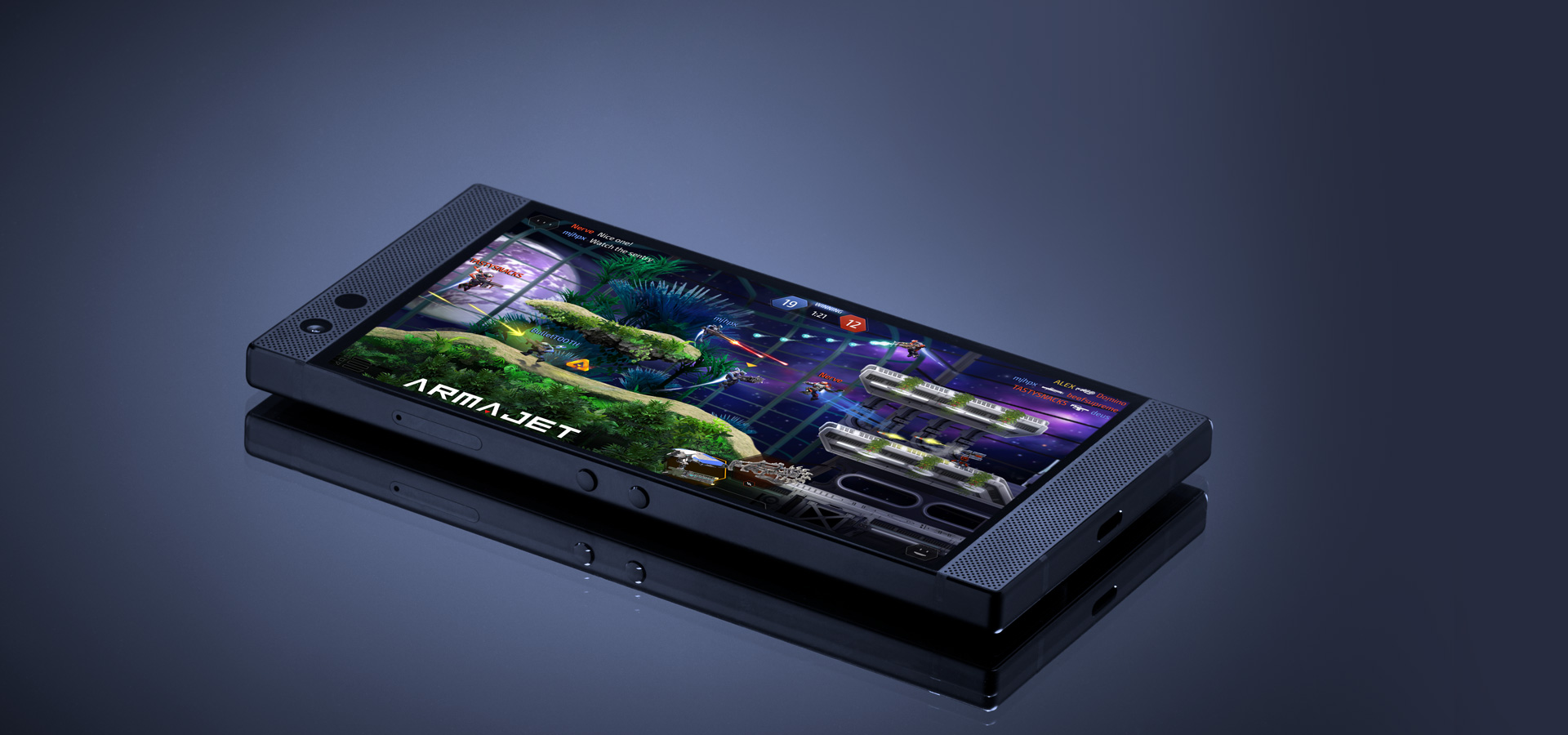
The Razer Phone 3 delayed because of 5G
Most of Razer’s mobile division staff were either relocated or laid off last month, sparking speculation that the brand’s next smartphone may have been canceled. Last week, though, a report claimed that Razer had simply delayed its next-gen device and now the reason for this may have been revealed.
In a recent interview with Engadget, Razer CEO Min-Liang Tim suggested that buying a gaming smartphone right now may not be the best idea. He believes that gamers looking to purchase a device this year will “want to buy a 5G phone,” but purchasing one now means that there’s “no network to use it on.”
In the eyes of Razer, this essentially makes the higher price that 5G smartphones command unjustifiable at the moment. It also means that there’s less demand for 4G-ready gaming smartphones because consumers are waiting for 5G alternatives to become widely available.
Like its predecessors, the Razer Phone 3 wasn’t expected to arrive until mid-October or early November. But considering Razer’s current view on 5G networks, the smartphone now probably won’t make its debut until early 2020. By then, 5G networks should be up and running across the globe and there should be sufficient demand for such a device.

Sony Mobile insists the end is not near after it closes a smartphone plant
While Sony’s fall from grace in the global mobile industry hasn’t been as dramatic as those suffered by Nokia, BlackBerry, and even HTC, it’s more than obvious the Japan-based tech and entertainment behemoth needs to do something about its smartphone division. Unfortunately, as the company’s various attempts at revising and transforming the Xperia portfolio over the last few years have failed to turn a profit, the time has come for more drastic austerity measures.
After laying off 200 employees in Europe to cut costs across a number of mobile business areas, Sony has confirmed long-rumored plans to close an entire factory in China earlier today. The Beijing plant will reportedly cease all smartphone manufacturing activities in “the next few days”, although Sony does intend to “shift production” to a different factory in Thailand in a move expected to greatly contribute to reducing expenses by around 50 percent.
The ultimate goal is to make the smartphone division profitable again as early as 2020 after years and years of bleeding serious money, but it remains to be seen how much of a mobile business Sony will be left with when that happens. According to the latest official estimates, yearly Xperia shipments are down to as little as 6.5 million units. To put that number into perspective, Samsung’s Galaxy S10 lineup was projected to hit 10 million global unit sales in just its first month of availability.
Of course, Sony has repeatedly claimed in the past year or so it has no intention to abandon the smartphone market on the eve of a 5G revolution. Once again, the company is highlighting its strategic measures are simply meant to strengthen the business rather than killing it piece by piece. And while it’s definitely not unprecedented to see a major smartphone vendor cut its Chinese costs, it remains unclear exactly how much of Sony’s Bejing operations will “shift” to Thailand.
Either way, this probably won’t impact the Xperia 1 launch or even the rumored Xperia 2. What comes next, however, is anyone’s guess.