Tag: smartphone

  • Samsung to reportedly unveil the Galaxy Note 10 line

    Samsung to reportedly unveil the Galaxy Note 10 line

    According to CNET, a source familiar with Samsung’s plans says that the unveiling of the Samsung Galaxy Note 10 and Galaxy Note 10 Pro will take place on August 7th. It will occur during Samsung’s next Unpacked event to be held at Brooklyn’s Barclays Center, home to the NBA’s Brooklyn Nets. It also is the location where Samsung introduced the Galaxy Note 9 last year. This year, we expect to see four models introduced including the 4G LTE Galaxy S10 and Galaxy S10 Pro, and the 5G versions of the same units.

    The “standard” Samsung Galaxy Note 10 (SM-N970) is expected to carry a 6.3-inch curved AMOLED display. The version sold in the states will be powered by the Snapdragon 855 Mobile Platform with the Exynos 9825 chipset under the hood almost everywhere else. A triple-camera setup is likely to be found on the rear of the device consisting of a 12MP wide-angle camera, 12MP telephoto camera, and a 16MP Ultra-wide camera. A 3400mAh battery will supply the power and there will be an ultrasonic in-display fingerprint scanner. The standard 4G LTE Galaxy Note 10 is expected to be priced in the range of $1,100-$1,200. The 5G version of this phone will be model number SM-N971.

    The Samsung Galaxy Note 10 Pro (SM-N975) will carry a curved 6.7-inch AMOLED display, and have a Time of Flight (ToS) sensor in back beside the three cameras found on the standard model. This sensor measures how long an infrared light takes to bounce off a subject and return to the phone, allowing the device to compute more accurate depth information for the bokeh effect and for face mapping. An ultrasonic in-display fingerprint scanner will be on board, and the Galaxy Note 10 Pro will be equipped with a 4500mAh battery along with a 25W fast charger. The 5G version of this phone (SM-N976) has appeared on the Geekbench benchmark site twice with one of the units apparently heading to Verizon (SM-N976V). This model was equipped with the Snapdragon 855 SoC and included 12GB of RAM. The international version (SM-N976B) had the Exynos 9825 under the hood and 8GB of RAM.

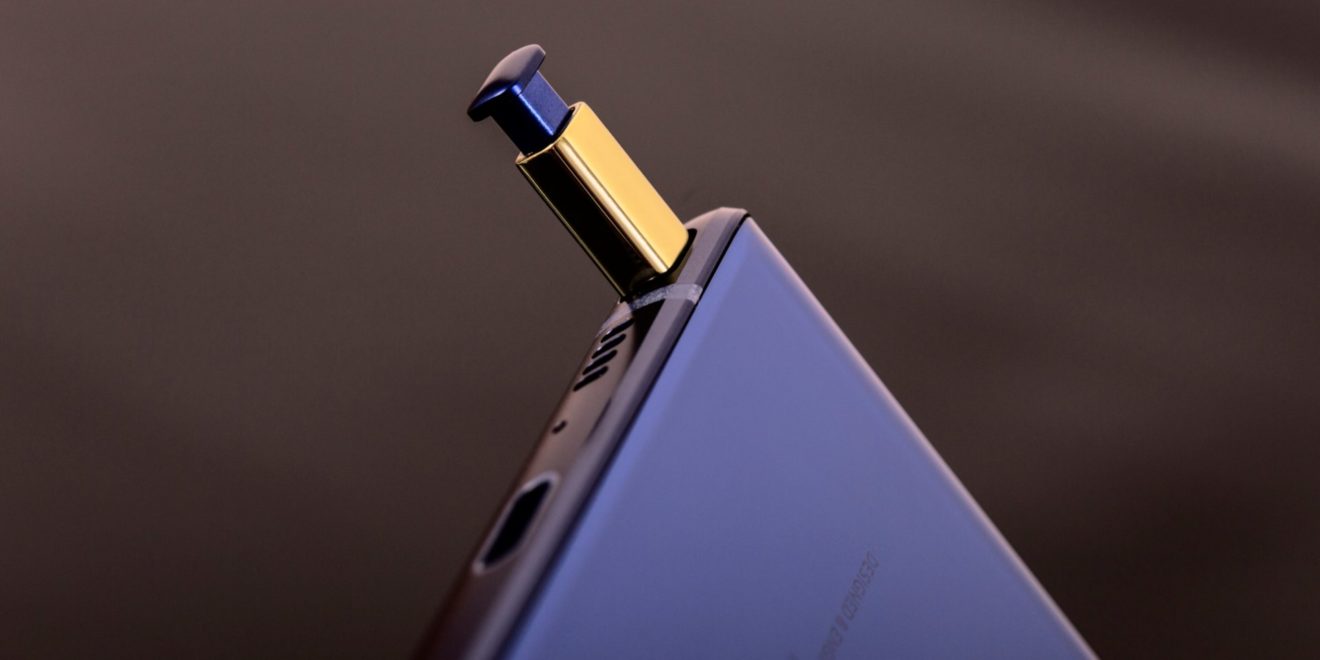
    All four models will come with the S Pen. Last year, following a number of rumors, Samsung added Bluetooth LE support to the stylus allowing it to be used as a remote shutter for the Galaxy Note 9’s camera and as a tool to remotely control streaming media. This year, things have been quiet on the S Pen front so we don’t expect to see drastic changes here. Additionally, none of the four units will have a 3.5mm earphone jack nor will they have a Bixby button. And in an interesting design, the rear cameras will be mounted vertically along the left side of the rear. Last year’s model used a camera housing that was placed horizontally on the phone’s back panel. The Galaxy Note 10 line uses Sammy’s Infinity-O display; this means that punch-holes are used for the phones’ selfie snappers.

    From the looks of things, it appears that the Galaxy Note 10 will be introduced before the release of the Galaxy Fold. Considering that the latter was due to be released on April 26th, this was not expected. AT&T and Best Buy have canceled pre-orders for the foldable device, and Samsung has too unless it was expressly told not to by its customers; some of these consumers, willing to shell out $1,980 for the Galaxy Fold, might decide to save some money and purchase a Galaxy Note 10 model instead.

    So for now, if you’ve been looking forward to the unveiling of the Galaxy Note 10, you should circle August 7th on your calendar. Last year, two weeks separated the August 9th unveiling of the Galaxy Note 9 and its launch on August 23rd. With that in mind, the Galaxy Note 10 could launch this year on August 21st.
  • The iPhone XR 2 may have the best battery life of any iPhone

    The iPhone XR 2 may have the best battery life of any iPhone

    Tucked in an electronics industry report about the supplier of batteries for the upcoming iPhone XR sequel we find the actual capacity of the pack in the tentatively named XR 2. The source muses that Apple may be done with hardware and iOS optimizations, and seems to be now betting on larger battery packs to make its phones last longer on a charge, just like Samsung or Huawei are doing.

    The iPhone XR 2 battery pack orders are reportedly granted to China’s ATL (Amperex) which are the same guys that got the order for non-exploding Galaxy Note 7 packs after the infamous Samsung SDI batteries started catching on fire. The new battery capacity is said to be 3110 mAh, which would make the iPhone XR’s successor with the largest single-cell battery pack in an iPhone ever.
    While this is just a 5% increase over the 2942 mAh capacity in the iPhone XR, the XR 2 is also expected to come with Apple’s A13 processor made with a second generation 7nm process that should reduce battery draw further.
    Coupled with the new pack and the frugal display resolution, the iPhone XR (2019) should therefore last longer on a charge than the already best in that regard iPhone XR. It scored more than 11 hours of screen-on time in our grueling test, ahead of any iPhone we have tested so far. The XR 2 may very well break the 12-hour mark which would place it in a special endurance club of its own, and not only among phones in the iOS camp.
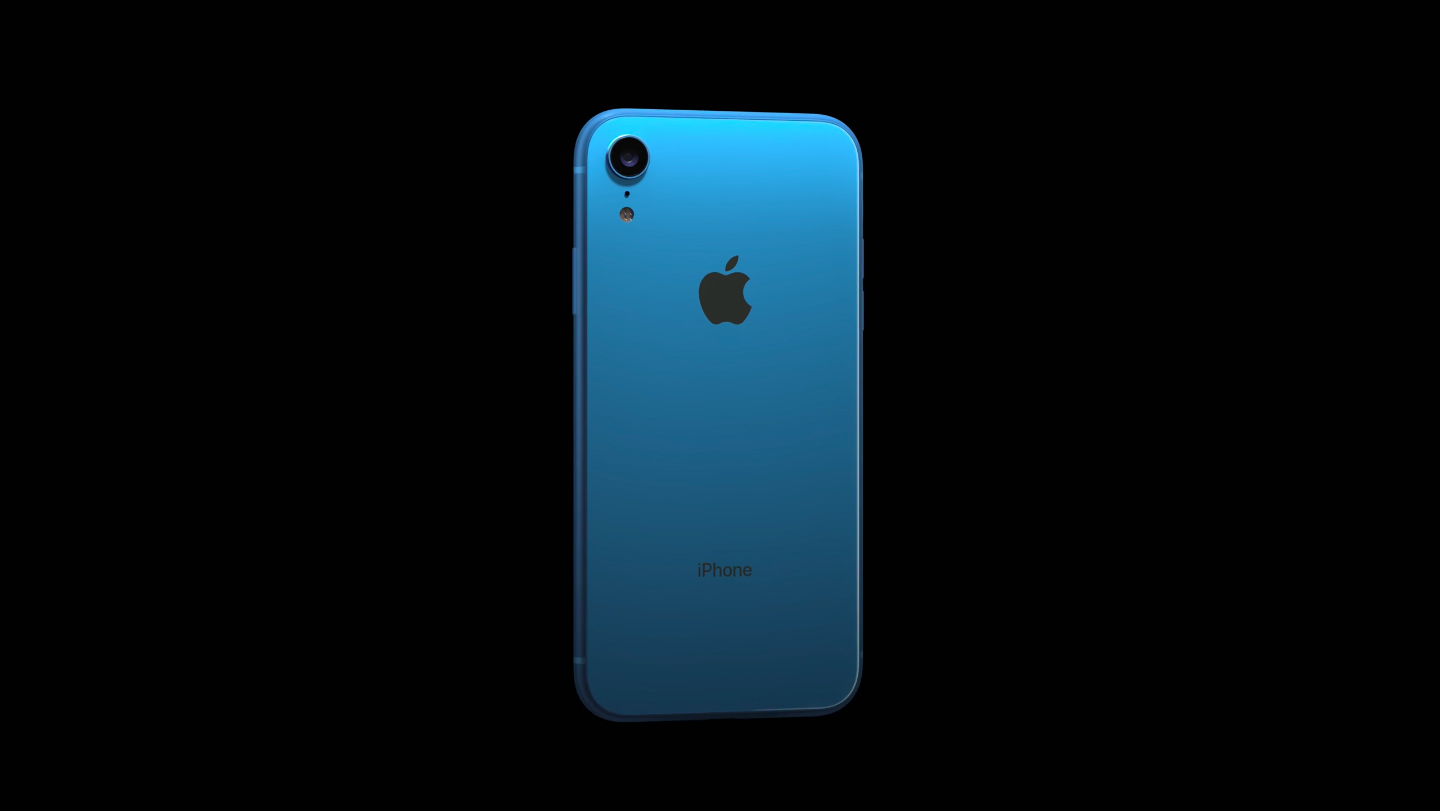
    Here’s how the iPhone XR (2019) may look like, as rendered by graphics artist Hasan Kaymak based on rumors, leaked CAD drawings, and analyst expectations.
  • Google app soon to receive dark mode

    Google app soon to receive dark mode

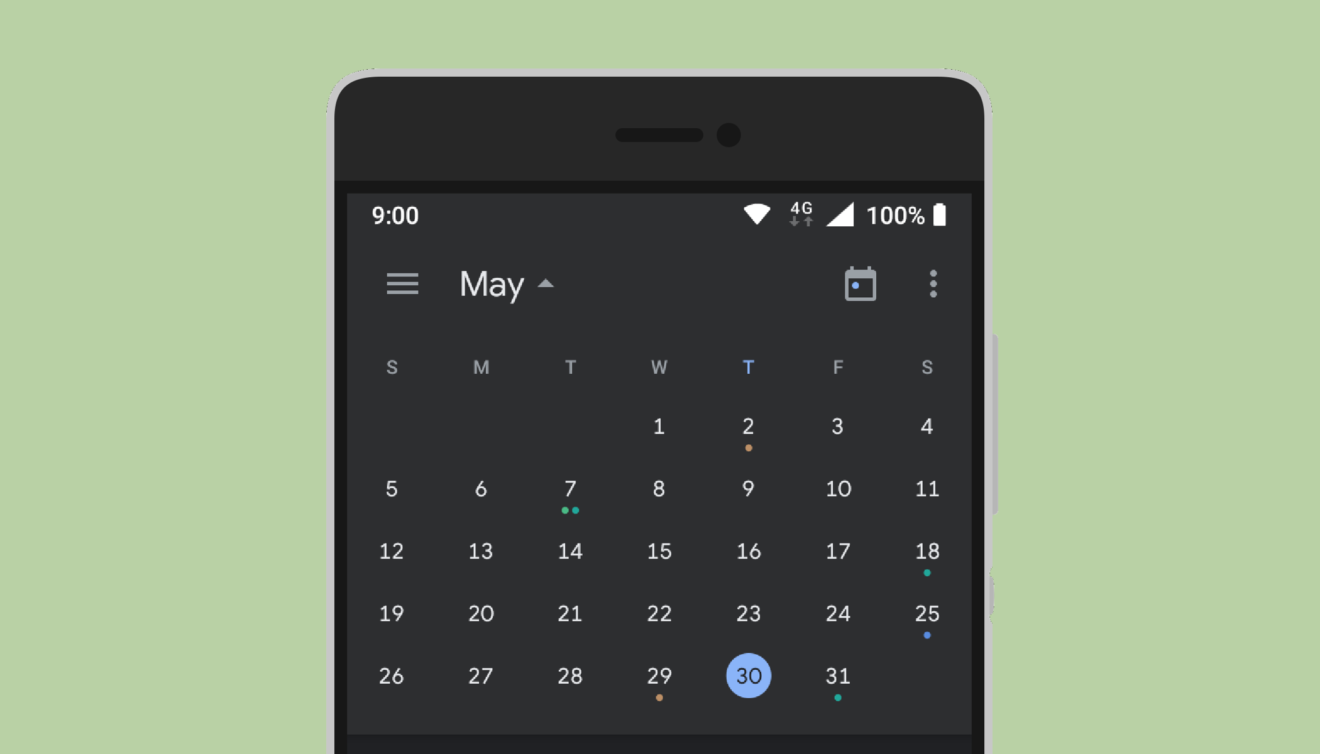
    Google is determined to bring the dark theme to all its apps by the time Android Q is officially released. A couple of Google apps such as Calendar and Keep have already been updated with a dark mode, but the Google app has yet to receive a similar function.

    The good news is the Mountain View company isn’t very far from delivering a full-fledged dark mode to the Google app.

    Google app beta v10.4.3 is the most recent version that should include the new dark theme, although it doesn’t seem that all users who have it installed are able to see it. Since this is a server-side update, the availability of the new feature is randomized among users.

    Anyway, if you have the Google app beta mentioned above, you can head to More / Settings / General and check whether or not a Dark theme option is available. If it’s there, you can choose to enable, disable or simply make it follow the system setting.

    Apparently, this is a full-fledged dark theme, which means the dark grey color will appear in searches, the in-app Discover feed, collections, recent searches, and, of course, all settings. Moreover, all Google Assistant related features benefit from the same dark mode, along with the Explore area.

    Even though the new dark mode isn’t widely available yet, the update is a clear sign that the Google app will soon get the highly-anticipated feature.

  • Facebook, Instagram, and WhatsApp will no longer be pre-loaded on Huawei phones

    Facebook, Instagram, and WhatsApp will no longer be pre-loaded on Huawei phones

    While Huawei continues to see a road ahead for its US government-threatened smartphone division, the exodus of major business partners, key components suppliers, and allies is far from over, posing new difficulties and creating bigger and bigger problems almost every single day.

    The latest bridge to be reportedly burned as a direct consequence of President Trump’s controversial executive order last month (which was since suspended for a period of 90 days) is arguably less critical than similar decisions previously made by the likes of Google, Qualcomm, Intel, and Arm. But it’s yet another thing that complicates Huawei’s existence, threatening to severely damage its Western brand image.

    Facebook is getting ready to pull out its support for future Huawei handsets, planning to no longer allow the pre-installation of the social networking giant’s crazy popular apps on the Chinese tech behemoth’s mobile devices. We’re obviously talking about the main Facebook platform first and foremost, but also WhatsApp and Instagram, all three of which are typically available for users of existing Huawei phones at first boot.

    The handsets that are already in circulation are unlikely to be affected by Facebook’s decision, as they will continue to receive any and all updates delivered to social networking and instant messaging apps. But Huawei phones that are not yet released and have not yet left factories are expected to come without the aforementioned services pre-loaded. That wouldn’t be such a big problem if Google wasn’t intent on cutting off access to the Play Store for future Huawei devices as well in compliance with the US ban expected to be enforced in a couple of months.

    Without Facebook, possibly Twitter, and other Western-leading apps and services, it seems Huawei truly needs to build its Android and Google Play alternatives from scratch. That’s probably going to take a while (if it’s even doable to begin with), during which time the company’s sales numbers could fall off a cliff. Of course, Facebook is still blocked in China, so at least there’s that.

  • Huawei insists global smartphone production levels are as Expected

    Huawei insists global smartphone production levels are as Expected

    There’s been much ado about Huawei’s tough road ahead as key US partners and major parts suppliers are prepared to turn their backs on the world’s second-largest smartphone vendor at the end of a 90-day reprieve granted shortly after President Trump’s announcement of a potentially business-ending ban.

    But although it’s pretty obvious the political tensions are already negatively impacting the Chinese company’s sales and brand image in the Western Hemisphere, Huawei reps and executives continue to insist the situation is not as bad as certain reports make it out to be. After essentially suggesting the White House didn’t do the tech giant any favors by giving it the aforementioned “stay of execution”, Huawei is adamantly denying a fresh rumor regarding current smartphone production.

    In a short statement issued to Cnet and a number of other international news outlets, the company specifically and explicitly refuted the claims made in a Chinese media report about a Foxconn manufacturing shutdown of Huawei mobile devices. Apparently, “global production levels are normal, with no notable adjustments in either direction.”

    At first glance, that may seem reassuring, but clearly, these are extremely volatile circumstances, with lots of moving parts and unpredictable future developments. Just because Huawei might be going about its business like nothing has happened or is about to happen, that doesn’t mean a production halt or at least a downgrade are not in the pipeline. If the embargo on collaborations with US companies stands, market researchers expect a significant slowdown of the Chinese tech giant’s incredible recent growth.

    For the time being, it looks like Huawei is working on the assumption the US-China trade war will somehow cool down in the next couple of months, allowing it to continue selling hundreds of millions of Android phones around the world.

  • Xiaomi wants to dominate the smartphone market

    Xiaomi wants to dominate the smartphone market

    International markets are becoming increasingly more important to Xiaomi. And in an interview with Sina Tech, the CEO of Xiaomi’s sub-brand Redmi, Lu Weibing, did nothing to hide this fact and openly detailed the company’s plans for global domination.

    Over in India, as Weibing pointed out, Xiaomi and Redmi combined have led the smartphone market for the past seven quarters. They now apparently hold a 10% lead over second place Samsung, but through further investments, Xiaomi wants to take things to a whole new level by achieving a 50% market share.

    The Chinese company and its sub-brand currently account for 29% of Indian shipments, so the goal is certainly an optimistic one. It isn’t impossible, though. After all, seven of the top 10 best-selling smartphones in India recently were made by Xiaomi. Also, just a few weeks ago it was announced that over 2 million Redmi Note 7 units had been shipped in just two months.

    Outside of Asia, Xiaomi and Redmi are also hoping to continue their expansion this year. In Europe, the company is a distant fourth behind Samsung, Apple, and Huawei, but through further Redmi investments it hopes to gradually close the gap. Also, in the hope of increasing shipments globally, 2019 will see Redmi launch in Latin America alongside East African, Central African, and West African markets. The company plans to continue its focus on e-commerce and value for money, meaning there will be no push for large profit margins.

  • Huawei’s troubles could hurt the entire smartphone market

    Huawei’s troubles could hurt the entire smartphone market

    After putting on a brave face for the last few weeks and insisting the Chinese company is prepared for whatever US President Trump might throw at it down the line, Huawei has finally acknowledged its incredible recent rise through the ranks of the world’s largest smartphone vendors is likely to slow down.

    But while Apple, Samsung, and Xiaomi are expected to derive important gains from Huawei’s global losses, Canalys is taking a look today at another big potential loser in this extremely complicated equation. The research firm thinks the entire smartphone industry will be hurt by “uncertainties surrounding the US/China trade talks, the US Executive Order signed on 15 May and subsequent developments.”

    Although it’s obviously impossible to project the long-term repercussions of current tensions between the US and Chinese governments, as “subsequent developments” remain up in the air, Canalys is already reducing its 2019 smartphone shipment forecast to 1.35 billion units. That would represent a decrease of 3.1 percent from last year’s total, which in turn marked a worrying decline for an industry that was used to steady, impressive growth until not long ago.

    That essentially stopped when manufacturers got into a rut, failing to innovate like before and convince people to upgrade from their awesome high-end handsets to eerily similar and only slightly awesomer new flagships. With the advent of 5G connectivity and increasingly bolder designs pursuing the foldable and bezelless dreams, analysts are now widely expecting a (slow) recovery of global smartphone sales.

    But if Canalys is right, we may have to wait until 2020 for a boost in shipments. Specifically, this year’s 1.35 billion units are projected to rise to 1.39 billion for a sequential growth of 3.4 percent after consecutive declines of 4.5 and 3.1 percent in 2018 and 2019 respectively.

    Of course, this year’s total is exceptionally volatile and tricky to forecast, greatly depending on whether or not Huawei will ultimately be allowed to continue doing business with US companies. The current assumption is that “restrictions will be imposed stringently” on the Chinese vendor at the end of Trump’s 90-day reprieve, hampering its overseas potential for “some time.”

  • Android Q will improve your phone’s battery life

    Android Q will improve your phone’s battery life

    Nah, we aren’t talking about Google introducing a systemwide Dark Mode in Android Q. No amount of LTE tower pinging, talking on the phone, or any other usual suspect when it comes to wireless radio battery drain can affect your mileage as much as constant Wi-Fi scanning for non-existent networks.

    This thing is a giant power hog, and you should kill it with fire if you have exhausted all the usual culprits for your battery drain. Bonus points: by default, Google tracks you even when Bluetooth and Wi-Fi are off, so if you ditch scanning, you’ll make it harder.

    Type “Improve accuracy” in the settings’ search box, then turn Wi-Fi and Bluetooth scanning off. Type “Locating method” and switch it to “Phone only,” if you need to keep GPS on at all times.

    When playing Pokemon Go, navigating, or any other scenario you need high accuracy for, turn it back on for the sesh if you are adamant to eke out every last drop of your battery juice, yet now Android manages the scanning permissions pretty well itself.

    With Android Pie, Google drastically reduced the number of scan attempts to one every 30 seconds for front apps, and one in 30 minutes for apps that are just sitting in the background. Despite the outcry from developers of indoor location or signal strength measurement apps, Google has decided that the scanning restrictions will remain an integral part of Android Q:

    Once again, thank you for submitting a request. After following up with our product and engineering teams, the request will not be considered at this time. In Q, there is a new developer option to toggle the throttling off for local testing (Needs a rooted device).

    While we feel sorry for devs of apps that can be affected, we can’t wrong Google for deciding to put an end to rogue Wi-fi scanning that drains battery like crazy and was one of the chief culprits behind standby power drains in previous Android versions. Whew.

  • Google Chrome on Android is getting a seriously useful new feature

    Google Chrome on Android is getting a seriously useful new feature

    Opening a ton of tabs in Chrome, even the mobile version, is something that many of us are all too familiar with. The current card-style interface of the Chrome app is alright when you have only a few opened tabs, but going over 10 often leads to confusion and excessive scrolling to find what you’re looking for. A new feature headed to Google Chrome on Android aims to resolve this issue by introducing tab grouping and a redesigned tabs screen.

    The long-press menu will offer a new option, “Open in new tab group,” that allows you to bunch sites together in groups. Starting a group makes a bottom navigation bar appear where the various tabs in the group are displayed as favicons for easy switching between them. Tapping the “Tab” icon next to the search bar brings you to the new tabs screen. The card stack interface is gone, and in its place is a thumbnail view that shows snapshots of where you left of on different pages in a vertical gallery style.

    Tab groups are displayed like folders, each showing the total number of tabs inside the group, alongside thumbnail previews and favicons for the first four pages. Taping on a group opens an expanded view, which is very similar to the tabs screen. This really helps when you have quite a few tabs opened in Chrome, and you want to group some of them based on topic.

    The new interface is currently a work in progress, so it’s lacking some polish, but should be ironed out in the near future. Like most other features added to Google Chrome, this one is already accessible in the Canary version on Android. As such, it is still in the testing stages and may not perform as it will in the final release. Still, if you’re eager to try it out, you can do so by typing “chrome://flags” in the URL bar in Chrome Canary, and searching for “enable-tab-groups-ui-improvements.” Enable the option, restart the browser twice, and you should be ready to go.

  • Asus ZenFone 6 first update brings important camera improvements

    Asus ZenFone 6 first update brings important camera improvements

    The ZenFone 6 hasn’t even been released in the United States and Asus is already pushing out a major update that brings important camera enhancements. If you plan on getting one when Asus will launch the ZenFone 6 in the US in July, here is what to expect from the first ZenFone 6 update.

    If you didn’t know, Asus ZenFone 6 packs a so-called motorized flip camera, which allows users to take both selfies or regular photos. It basically acts as both rear and front cameras to ensure that you take the best pictures in every scenario.

    Well, it looks like the ZenFone 6’s camera needs some adjustments, so Asus has decided to address that in the first update, which focuses exactly on this aspect. First and foremost, the camera Super Night Mode and HDR+ Enhanced mode received considerable improvements on image processing speed and image quality.

    Furthermore, the update should add volume key functions, which will allow users to control the flip camera rotation. Basically, you can set the volume key as shutter, zoom, or flip camera in the Asus Camera app settings manually.

    The smart key can now be used as a shutter to take pictures in Camera mode, and the camera rotation stability has been improved as well. Also, the default wallpaper and ringtone have been updated too, while the translation strings in Settings have been optimized.

    According to Asus, its server pushes out the update in batches, which means that it will take some days before everyone will receive the notice. However, you can manually check for it by heading to System settings in the Settings / System.

  • Huawei barred from using SD memory cards

    Huawei barred from using SD memory cards

    Although Huawei has been given a reprieve from the initial punishment imposed by the United States, it looks like the Chinese company is close to losing its smartphone business, as more US companies announce they unwillingness to continue to work with the world’s number two smartphone vendor.

    The SD Association is the latest company that bars Huawei access to its technology. Apparently, the Chinese company has been removed from the trade group as SD Association must comply with orders from the US Department of Commerce.

    Although customers who own Huawei smartphones can continue to buy SD and microSD cards to use in their devices, future Huawei phones will no longer work with the standard. It’s unclear what will happen, but Huawei has already included proprietary storage cards in some of its latest flagships, which are called Nano Memory Cards.

    Probably not as important as being banned from getting Android OS updates or chipsets from Intel, Qualcomm and AMD, SD Association’s move adds to the major issues that Huawei’s smartphone business is going to have in the coming months.

  • Samsung Galaxy S10 update adds Night mode improvements

    Samsung Galaxy S10 update adds Night mode improvements

    Samsung continues to improve the Galaxy S10 family with important new features and additional functionality. The upcoming update focuses on camera enhancements by adding a couple of nifty new features, as well as improvements to the phones’ performance when taking night shots.

    As the title says, it appears that the Galaxy S10’s decent Night mode has just been upgraded to very good. According to SamMobile, the May security update improves the Night mode by allowing users to take much cleaner pictures in low-light conditions.

    The differences are quite important as the update reduces noise that sometimes appears in night pictures. Moreover, Galaxy S10 users will now be able to use the Night mode with the ultra-wide camera, and even though noise still pops up in pictures taken with it, they are brighter and more detailed.

    Another important improvement is the fact that you can take Live Focus photos with the telephoto lens, something that was only possible with the Galaxy S10 5G. The new addition will allow users to take bokeh pictures of large objects much easier.

    Now, the update is currently being deployed in Switzerland as May 2019 security patch, but all three Galaxy S10 units should receive it worldwide in the coming days. We don’t have a release date for the United States, so you’ll just have to hope it will be rolled out sooner rather than later.

  • Japanese, Taiwanese cellcos suspend Huawei device sales

    Japanese, Taiwanese cellcos suspend Huawei device sales

    The first crop of Asian operators have responded to the US trade ban on Huawei and its implication for Huawei’s access to the Android OS by freezing sales of new Huawei devices.

    Japan’s KDDI and SoftBank have both revealed plans to postpone the planned launch of Huawei’s new range of smartphones, which had initially been scheduled to launch this month.

    Meanwhile NTT Docomo has announced it will stop taking orders for the new devices, but has not yet announced plans to suspend the scheduled launch of a new high-end Huawei handset.

    But Huawei has insisted it will continue offering services and support for its existing products in Japan without disruption despite the decision.

    Meanwhile, in Taiwan, Chunghwa Telecom and Taiwan Mobile have both revealed they plan to stop selling Huawei devices after their current stocks sell out. The operators no longer intend to launch the latest crop of Huawei devices.

    The US Commerce Department last week officially added Huawei to the list of companies covered by president Donald Trump’s executive order declaring a state of emergency. The presidential declaration gave the government powers to regulate commerce by prohibiting US companies from trading with foreign companies deemed to present a national security threat.

    This decision has prompted a number of key Huawei suppliers to announce they will stop trading with the vendor – including Google, which said it will comply with the order and cut off Huawei’s access to Android.

    The Commerce Department has subsequently issued a 90-day reprieve allowing companies to continue trading with Huawei, but only to provide products and services required to maintain existing solutions.

    But Huawei will still be prohibited from using all but the open source version of Android in new devices and risks losing access to Google’s suite of services for even its existing devices after the 90-day window.

    Huawei has contingency plans in place such as its own operating system, which it has been developing for some time and promises at least some compatibility with Android apps, as well as its own app store.

    The Chinese vendor has repeatedly denied any suggestion that the Chinese government could use its equipment to spy on foreign nationals.

  • Android Q beta now available for OnePlus 7 Owners

    Android Q beta now available for OnePlus 7 Owners

    Here is some good news for developers and risk takers who just purchased the OnePlus 7 or OnePlus 7 Pro. The latest Android Q beta (which is number 3) is now available for the phones. OnePlus announced this on its blog and pointed out that “this build of Android Q is best suited for developers and early adopters.” Why? Because beta versions of the software are often filled with more bugs than a Raid test facility. And if the OnePlus 7 or OnePlus 7 Pro is your new daily driver, who wants to deal with a problem that prevents you from using an important feature on the phone?

    Speaking of problems, there are some known issues with the third Android Q beta preview. The Ambient Display, which uses machine learning to learn how bright or dim you like the display to look under certain conditions, is not working. There are also some problems with system stability, and texts can’t be sent when the Voice over LTE setting is enabled. The gestures used to navigate the phone also don’t work, and neither does Recovery mode. OnePlus also points out that some apps might not work the way you expect them to with this beta release.

    Some warnings. While signing up to join the Android Q beta program on a Pixel is a simple and easy procedure that allows you to receive updates OTA from the first beta build you receive, signing up for the OnePlus 7 or OnePlus 7 Pro requires that you load a zip file, and then flash the necessary files. All of the directions can be found on the OnePlus blog, including how to put your phone back on track to receive stable builds OTA. Either way, you will lose all of the data stored on the device so you might want to back up your data first.

    If you’ve done this before and are very familiar with flashing a ROM on a phone, this might not be so difficult. But if you’ve never done this before, a mistake could lead you to accidentally brick your phone. If you decide to proceed, make sure that your OnePlus 7 or OnePlus 7 Pro has at least 30% battery life and 3GB of storage available or higher.

  • Android Q may have a life-saving feature exclusive to Pixel phones

    Android Q may have a life-saving feature exclusive to Pixel phones

    At Google I/O this year, the company behind Android revealed many new and exciting things coming to the next iteration of the world’s most popular mobile OS. These include native support for foldable devices, system-wide Dark Mode, Smart Replies and Suggestions, and a handful of other features.

    But aside from those, savvy developers have uncovered something else that’s coming with Android Q, and it wasn’t mentioned at this year’s I/O. The folks over at XDA have found lines of code in the Android Q Beta 3, referencing a possible automatic car crash detection feature. The beta has an app called Safety Hub, and strings of code within the app suggest that automatic car crash detection is coming to Android Q, and that it may also be a Pixel-exclusive feature.

    Google is no stranger to introducing Pixel-exclusive features, though they’ve been more on the “bonus” side of things, so to speak. Two prominent examples are the excellent Night Sight mode, baked into the Google camera app, and unlimited Google Photos storage for original quality photo backups, available only to Pixel phone owners. However, more essential features have always managed to make their way into Android skins by other OEMs, so the upcoming car crash detection may start as a Pixel-exclusive thing and become more widely available thereafter.

    It’s currently unclear how Android Q will detect car crashes, though it’s likely going to happen by gathering data from various sensors on the phone. For example, Google could use GPS data to determine whether you’re driving, use the accelerometer to detect when a violent stop occurs, and even rely on the microphone to pick up the sound of the crash. After an accident has been detected, the Safety Hub app could automatically alert emergency services and/or select contacts.

    We have our fingers crossed that future Android Q betas will reveal more about this potentially life-saving feature, and that it won’t be Pixel-exclusive forever.