Retail News CRM

Tag: smartphone

  • Luxury cellphone Vertu returns to Vietnam

    Luxury cellphone Vertu returns to Vietnam

    After a two-year hiatus, British luxury phone maker Vertu has announced resumption of sales at its Ho Chi Minh City store next month. Vertu Vietnam, a local unit of the phone maker, said genuine Vertu phones will once again be sold in Vietnam, first from an District 1 outlet in Ho Chi Minh City in October, then a Hanoi outlet the following month.

    Vertu luxury cell phones had been sold in Vietnam since 2006 by electronics distributor FPT Trading, formerly known as FPT Telecom Products Distribution Co., Ltd., through three outlets in Vietnam. In late 2017, the stores closed after Vertu ceased production in the U.K.

    The company had filed for bankruptcy in its home country, having racked up debts of some £138 million, but its business was still thriving in Vietnam.

    A representative of FPT Trading said that when Vertu’s U.K. factory was shut down, customers in Vietnam were still ordering its super-luxury phones.

    Vertu will now distribute its phones through Vertu Vietnam, a Hanoi headquartered company established in May 2019.

    Before Vertu announced its return to Vietnam, traders had observed that demand for Vertu handsets in the country had never died down.

    “Normally, we rarely see Vertu phones, but in events or places with lots of rich people, you can find 80-90 percent of them using them. For them, the latest technology is not a top priority. They use Vertu because of the phone’s anti-tapping protection features, the brand name and the fact it is crafted from luxury materials,” said Nguyen Phi Dung, a dealer in luxury hand-carried Vertu phones.

    Models that cost between VND100–150 million ($4,300 – $6,450) used to be the most popular, but customers have even bought handsets costing VND500 million to over VND1 billion ($21,500 – $43,000), Dung added.

    Vertu was founded by Finnish phone-maker Nokia in 1998, but changed hands several times later. In 2012, it was sold to Swedish investment corporation EQT; and in 2015 to Hong-Kong based investment fund Godin Holdings.

    In March 2017, Vertu was sold to Baferton Ltd., owned by Turkish businessman Hakan Uzan. However, just four months later, Uzan had to close Vertu’s U.K. factories, having failed to save it from bankruptcy.

    However, in October last year, Vertu made an unexpected return to China with a new Aster P, priced at $5,167 for black and white models, and $14,146 for its yellow model.

  • Shapeshifting smartphone cameras may be the next big thing

    Shapeshifting smartphone cameras may be the next big thing

    Over the past couple of years, we’ve been talking about how hardware innovation in smartphone cameras has taken a back seat in favor of new software developments. Despite small camera sensor sizes, limited by the slim profiles of modern phones and ever-increasing battery capacities, smartphone cameras have been able to deliver miraculously good results, almost exclusively thanks to improvements in how raw image and video dta is processed by software.

    However, during this time of amazing software developments, companies like Huawei kept pushing camera hardware innovations forward, albeit at a slower pace, by introducing larger sensors and impressive optical zoom solutions. In comparison, the likes of Samsung and Apple, who are considered leaders in their own market segments, have seemingly fallen behind in terms of bringing new camera innovations to the table. Recently, an infographic started doing rounds online, comparing camera sensors in Samsung and Huawei phones over the past couple of years. As you can see, while the sensors in Samsung phones have remained the same size since the release of the Galaxy S7 in 2016, Huawei has been upping its camera game the whole time.

    And though Samsung may seem like it’s got quite comfortable in its leading position in the premium Android market, hence less willing to introduce drastic new hardware innovations, next year’s Samsung flagship models may actually usher in a radical new camera technology that could make smartphone cameras even more versatile, with quicker focus, and even smaller optical parts.

    Samsung has been working with a company called Varioptic, since around 2005, on a liquid lens camera solution for smartphones. Actually, Varioptic is the company that created this type of lens way back in 2002, but Samsung was evidently interested in implementing it in a smartphone 14 years ago.

    Digging through news and press-releases from 2005, I stumbled across many reports that Samsung wanted to use a liquid lens to create a phone camera with optical zoom capabilities. At that time, motorized solutions were too big and too expensive for what Samsung wanted to achieve in mobile device, so Varioptic’s liquid lens—which had no moving parts, and was small and very durable—seemed like the perfect vessel to carry out the company’s vision.

    Something went wrong, however—or it must have—because, according to an official press-release from that time, Samsung phones with liquid lens cameras were supposed to be “commercially available by the last quarter of [2005].”

    But the technology wasn’t just written off. On the contrary. In 2017, Varioptic became a part of Corning, the maker of your phone’s Gorilla Glass, through an acquisition that included Varioptic and Invenios technologies for packaging and stabilizing liquid lenses. Coincidentally, Samsung has a strategic partnership with Corning.

    Recent “leaks” about the Galaxy S11 mentioned that Samsung’s next S-series flagship will bring something that’s “never been seen before” in relation to the camera. Now, this may very well be in part your usual leaker mumbo-jumbo get-on-the-hype-train-thing, but considering Samsung’s past relations with Varioptics and its current partnership with Corning, there may be something in the pipeline relating to liquid lenses on smartphones.

    Liquid lens showcase by Corning and Varioptic from 2018. This footage was slowed down thousands of times. Liquid lenses are capable of changing their shape on the order of milliseconds

    Traditional camera lenses are made from glass, while liquid lenses are, well… liquid. To be precise, they are composed of an optical liquid that is capable of changing its shape at a very rapid pace. The focal length of a glass lens is dependent on the material it’s made of, and the radius of its curvature. The same holds true for liquid lenses, though they are capable of altering the radius of their curvature, thus changing their focal length at a whim. This shape-shifting is controlled electronically and can occur extremely fast. As in, milliseconds fast.

    Imaging lenses are usually comprised of multiple optical elements because a single optical lens can rarely provide sufficient resolving power. For this same reason, using a liquid lens by itself is not likely to be done on a smartphone. However, by introducing a liquid lens to multi-element lens design, the speed and flexibility of the camera can be greatly improved. Having the ability to focus both up close and to optical infinity in milliseconds makes integrating liquid lenses an ideal choice for applications that require focusing at multiple distances where the objects are different sizes or are at different distances away from the lens.

    And herein lies the “problem” that may have deterred Samsung from using liquid lenses back in 2005. On their own, liquid lenses may be very compact and extremely quick, but they have nowhere near the imaging performance of traditional, multi-element lenses. Combining the two can, potentially, lead to some interesting developments, but 14 years ago, this wasn’t enough of an incentive. In 2020, however, the time may be ripe for the marriage between liquid and glass in smartphone cameras.

  • Motorola might drop Qualcomm’s chipsets for the Moto G8 Play

    Motorola might drop Qualcomm’s chipsets for the Moto G8 Play

    We don’t expect Motorola to announce a new lineup of mid-range smartphones until next year, but that doesn’t mean the US company is not already working on the Moto G8 series. Even though we’re still far from an official announcement, the first details about Motorola’s plans regarding some of its upcoming phones have already emerged.

    The folks over at XDA Developers report at least one of Motorola’s upcoming smartphones, the Moto G8 Play will no longer come equipped with a Qualcomm processor. Instead, Motorola plans to include either the MediaTek Helio P60 or the MediaTek Helio P70.

    On the bright side, the Moto G8 Play is rumored to pack a much larger 4,000 mAh battery, a 1,000 mAh increase over the current Moto G7 Play model. Also, the smartphone will include either 3 or 4GB RAM and 32 or 64GB of internal memory. Pretty much every part of the phone (memory, battery) seems to have been improved over the current model, although we’re not so sure about the processor.

    Furthermore, depending on the market, the Moto G8 Play will support NFC (Near Field Communication), dual SIM, both, or neither of those. For the time being, Motorola plans to launch the Moto G8 Play in Latin America, Asia Pacific countries, and Europe, so there’s no telling whether or not it will bring it to the US.

  • Official roadmap shows when your Nokia phone will receive Android 10

    Official roadmap shows when your Nokia phone will receive Android 10

    Now that we know the name of the next version of Android, the next question you have is “when will my phone receive it?” If you own a Nokia phone (made by HMD Global under license from Nokia), we can give you that information right now, straight from the manufacturer’s mouth. Nokia has released a roadmap giving us a quarter-by-quarter look at its schedule for updating its Android phones. Keep in mind that there could be changes made along the way; in the past, we’ve seen manufacturers regret that they released any type of schedule for software updates. Disappointed Android users are an angry group, but HMD Global apparently feels confident enough to release the roadmap.

    During the middle of the fourth quarter of this year (approximately sometime in November), Nokia plans on disseminating Android 10 to the Nokia 7.1, Nokia 8.1 and the Nokia 9 PureView.  That will be followed with an update to the next group of phones early in January 2020. That batch includes the Nokia 6.1, Nokia 6.1 Plus and the Nokia 7 Plus. Early in the first quarter (which runs from January through March), Android 10 will be sent out to the Nokia 2.2, Nokia 3.1 Plus, Nokia 3.2 and the Nokia 4.2. A few weeks after those phones are updated, the latest Android build will be pushed out to the Nokia 1 Plus, Nokia 5.1 Plus and the Nokia 8 Sirocco. And four phones will be updated during the second quarter of 2020 (April through June. Those models are the Nokia 2.1, Nokia 3.1, Nokia 5.1, and the Nokia 1.

    HMD Global has been pretty good about updating its phones and even kept its promise to bring Android 9 Pie to the 2017 version of the Nokia 6 back in February. The latter is powered by a Snapdragon 430 chipset and has 3GB of memory.

    Android 10 features a new gesture system for navigating through the UI, system-wide dark mode, Focus Mode for Digital Wellbeing allowing users to mute notifications from distracting apps, Live Captions, improved notification settings and more.

  • Sony to kill off Xperia Lounge app by the end of this month

    Sony to kill off Xperia Lounge app by the end of this month

    Sad news for Xperia fans, as Sony has just confirmed plans to shut down one of its older smartphone apps – Xperia Lounge. This isn’t the first nor the last app designed for Xperia phones that Sony kills off, but that’s no surprise since the Japanese company doesn’t seem to be able to make money out of its mobile business any longer.

    So, the best way to cut costs is to start killing apps that were designed for the Xperia ecosystem. The Xperia Lounge is just another app from a long list of apps that Sony has been discontinued in the last couple of years.

    The Xperia Lounge app was meant to provide loyal fans with various rewards for their Xperia smartphones, such as exclusive Xperia Themes and wallpapers, as well as competitions. Unfortunately, Xperia Lounge will be no more by the end of August 2019.

    If you open the app right now, there’s an important announcement that mentions Xperia Lounge will be “decommissioned” by the end of August 2019, so there’s no doubt that the information is accurate.

  • First smartphone equipped with a 108MP camera is “coming soon”

    First smartphone equipped with a 108MP camera is “coming soon”

    Xiaomi’s phones, like the majority of handsets designed and made in China, aren’t sold in the states. But it always is a good idea to follow what is going on with these manufacturers because many times they are ahead of the field when it comes to new features and specs. For example, back in June, we told you that hidden code found in the latest MIUI (Xiaomi’s Android UI) Camera app revealed that a Xiaomi phone would possibly be among the first to use Samsung’s 64MP ISOCELL sensor. Samsung announced the 64MP ISOCELL Bright GW1 sensor back in May.

    While Realme is reportedly about to launch a phone sporting a 64MP rear camera later this month, Xiaomi revealed today that it will release its first device with a 64MP camera in the fourth quarter. This will be found on a handset with the Redmi brand; this is Xiaomi’s budget line. The 64MP GW1 employs the pixel-merging Tetracell technology to deliver “bright” 16MP snapshots under low-light conditions. The sensor comes with the ISOCELL Plus technology which reduces noise by “minimizing optical loss and light reflection.” It also has a technology known as Dual Conversion Gain (DCG) that optimizes performance and reduces noise in bright light by allowing the use of lower ISO settings. It also hikes the ISO setting under low-light conditions but does so to optimize the signal-to-noise ratio on photos shot in less-than-optimal lighting conditions.

    Xiaomi also announced that Samsung has broken the 100MP mark with a new 108MP sensor that will debut on an upcoming Xiaomi phone. It has the highest resolution of any smartphone camera sensor and can produce photographs carrying a resolution of 12032 x 9024. With 2x digital zoom, the sensor will still capture 27MP images. The size of the sensor will be the largest available on the market and this means that its “ultra-high light input (will be used) to deliver stellar images in low-light environments.”

    Back in March, chipmaker Qualcomm hinted that 64MP and 100MP+ sensors were in the works. This brings back memories of the megapixel wars that led Nokia to include a 41MP camera on the back of the Lumia 1020 back in 2013. Up until recently, the main focus (no pun intended) has been on the use of multiple sensors to improve the photographic experience on phones. Also, the addition of ultra-wide lenses and time of flight (ToF) depth sensors has seemingly replaced the number of MP in importance as far as consumers are concerned. Google’s image processing prowess helped turn the Pixel into one of the top (if not the top) smartphone brands for those who want their phone to take outstanding pictures. Up until now, Google has fought back against the higher MP and multiple sensor trends by placing a single 12MP sensor on the Pixel line. However, it appears that the Pixel 4 will be equipped with multiple cameras on the back.

    While many Americans might not be familiar with the Xiaomi brand, the company did launch the first smartphone to feature a 48MP camera earlier this year. That was the Redmi 7. In the U.S., the OnePlus 7 Pro features a 48MP primary camera on the back. And next up will be 64MP, which might not be found on a U.S. phone until after the first quarter of 2020. As for the 108MP sensor, don’t expect to find it on a phone sold in the states until 2021-2022.

  • Huawei Battling for Chinese consumers

    Huawei Battling for Chinese consumers

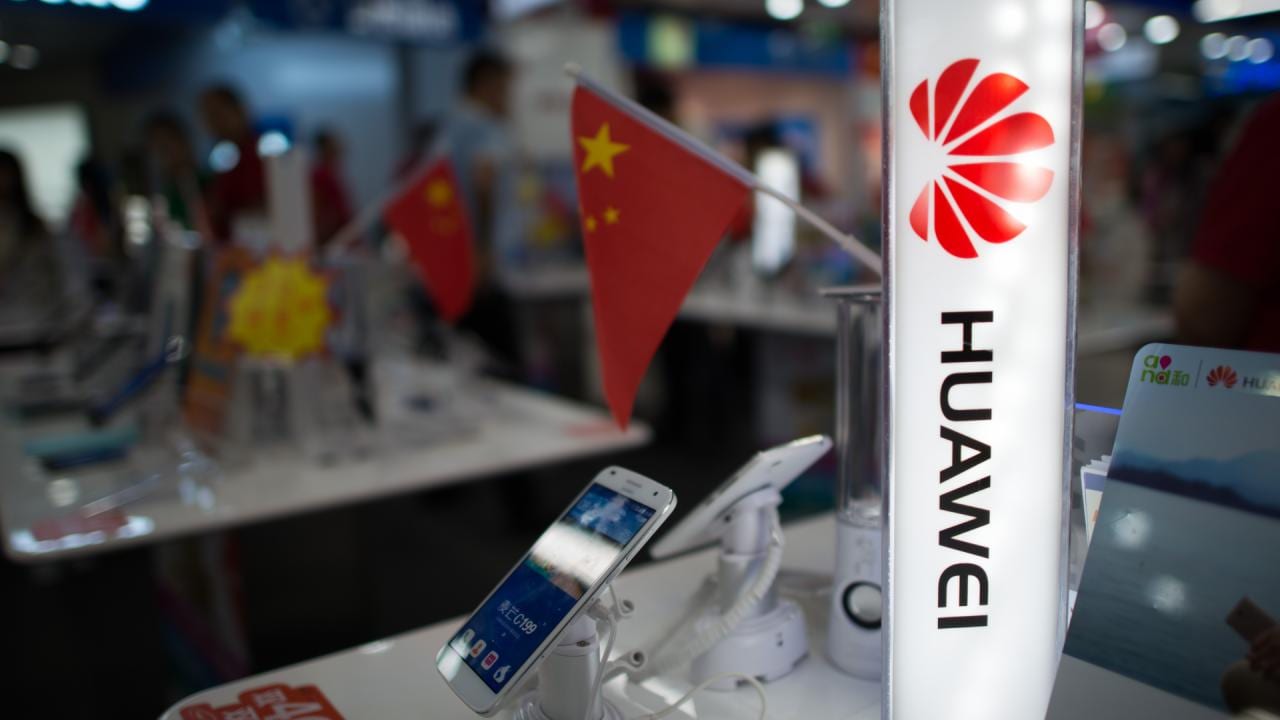
    When 23-year-old Chinese student Aaron Huang started his hunt for an Android replacement for his Apple iPhone in April this year, it was clear which brand was trying hardest to win him over.

    Promotional campaigns by Huawei Technologies and from local retailers supporting the brand were everywhere, said Huang, adding he was influenced by domestic media coverage that portrayed the US as unfairly targeting the Chinese tech giant in its trade war.

    “I felt like I should choose Huawei,” he said.

    The advertising blitz and grassroots patriotism have proven to be a potent mix, amplifying the brand’s existing broad appeal in its home market – a market it is increasingly dependent on as Washington’s ban on sales of US components and software to Huawei hammers overseas demand.

    Second-quarter China smartphone shipments for Huawei surged by a nearly a third from the same period a year earlier, with its market share rocketing 10.6 percentage points to a record 38 percent, according to research firm Canalys. Shipments for domestic rivals and Apple plummeted.

    Huawei has lifted its China sales target for its consumer business group, said a company source, who was not authorised to speak on the matter and declined to be identified.

    Within Huawei, employees refer to current strategies as ‘Battle Mode’ and it has stepped up the opening of new stores including Experience Centers in the style of Apple shops, other company sources said. One Experience Center near its South China headquarters opened last month while a bigger one in Shenzhen’s tech district of Nanshan will open next month.

    Analysts say Huawei has also been transferring unsold smartphone stock from other regions to China and even offering some rare discounting in its home and overseas markets as it seeks to offset sales declines in Europe and the US.

    Huawei declined to comment on its strategies for marketing and managing inventories, or its China sales target. It reiterated an earlier statement that it was not trying to trade on patriotic fervor.

    Lotteries and bullfrogs

    Sales promotions have included interest-free installment payment plans and lotteries for its premium P30 and Mate series. Analysts add that products from its three brands – Huawei, Nova, and Honor – outnumber those from rivals in every market segment.

    Firms like Chinese electronics retailer Gome and small businesses have been eager to lend a hand, linking Huawei phones with patriotic support.

    Fang Xia, a 38-year-old restaurant owner in Shanghai, said she was motivated by recent coverage of Huawei’s dispute with the US to offer her customers a special deal.

    “Tables that have four or more people with Huawei smartphones will get one free plate of Emperor Bullfrog,” proclaims an advertisement for her restaurant’s signature 88 yuan ($12.50) deep-fried frog dish.

    Huawei’s overseas smartphone sales tumbled 28 percent in the second quarter from the previous quarter, Canalys data showed, but the full impact of the ban is not yet known.

    Warning that Huawei products could be a vehicle for Chinese espionage, the Trump administration now requires that US corporations which conduct business with Huawei gain a special license to do so. US government responses to requests for those licenses could come this week, US Commerce Secretary Wilbur Ross said last Tuesday.

    In other measures to counter the ban which could strip its access to Google’s Android, Huawei is accelerating efforts to develop its own operating system called Hongmeng. It is looking to roll out a low-end smartphone equipped with Hongmeng in the fourth quarter, state-media outlet Global Times reported on Sunday.

    Huawei declined to comment. It has previously said Hongmeng is designed for internet-of-things products and it prefers Android for its smartphones.

    Even before the US ban, Huawei had been making big strides in China, moving upmarket into the $500-800 price range and luring customers away from the likes of Apple with improved camera quality.

    “In any segment, it has several options for consumers, that is more than any other brand has to offer,” said Canalys analyst Mo Jia, describing Huawei’s strategy as one of “bombardment”.

    Rivals are hurting. Xiaomi saw its second-quarter China shipments tumble 20 per cent from the same period a year earlier, Vivo’s slid 19 per cent while Oppo’s dropped 18 per cent. Apple’s shipments fell 14 per cent, and analysts and Chinese consumers say the US firm could be hit further amid an intensifying US-China trade war.

    Xiaomi, Apple, Oppo and Vivo declined to comment.

    While Huawei has managed a huge boost in its home market, analysts said China sales may not always stay unscathed as it could struggle to replace US components and software.

    “Without the original supply chain, we may see its speed of development start to slow down,” said James Yan, research director at Counterpoint Research.
  • Android updates don’t matter anymore

    Android updates don’t matter anymore

    There was a time when waiting for the next big Android update meant getting new and exciting features coming to the most popular and widespread mobile OS in the world, but things have cooled off in the past two or three years and Google has been coming up with some pretty forgettable Android updates.

    In my opinion, it doesn’t really matter if your Android device isn’t running on the latest major Android version at hand. I feel that Android has already peaked and the rate of software innovation has been declining for a few years now. Google is seemingly scraping the barrel as far as innovative software features are concerned. In fact, most of the “new” features that are coming to Android Q are inspired from iOS and other custom Android skins, while others are quite irrelevant. I’m sorry, but as far as my personal excitement list is concerned, Digital Wellbeing doesn’t exactly cut it.

    It doesn’t really matter if you’re running Android Nougat, Oreo, or Pie anymore – you’re not really missing any groundbreaking new feature or functionality. Actually, ever since the Android 5.0 Lollipop update, you can probably count the really important features Android has scored on your hands, with the rest being easily forgettable fluff. Let me do this real quick:

    – Doze Mode (Android Marshmallow);
    – ART runtime (Android Marshmallow);
    – Vulkan API (Android Nougat);
    – Bundled notifications (Android Nougat);
    – Picture-in-Picture (Android Oreo);

    – Project Treble (Android Oreo);
    – Gestures (Android Pie).A much, much more important thing to fluster about are the essential monthly security patches. Now, these are key for worry-free smartphone experience. I’m pretty far from the thought that once you get the latest security patch you’re effectively invulnerable to any security breach – whatever you do, you can never really be 100% certain of your digital safety while using your phone, just like your data is never secure on the Internet. Whatever security features get implemented, there always be some deep exploit that would allow wrongdoers to gain access to people’s most sensitive data. It has happened in the past, and it will most certainly happen again.  Still, having a phone that’s up-to-date in terms of monthly security patches can help achieve a certain peace of mind.

    OEM skins have long surpassed stock Android anyway

    I feel there’s another important point to be made here – custom Android skins have surpassed stock Android in terms of features and functionality a long time ago. Samsung, Huawei, and OnePlus have all developed much more useful and feature-packed Android spin-offs. In fact, most of the major new features that you see added to stock Android have debuted and thrived on custom Android versions for longer. Split-screen, gestures, dark mode, and many others were only implemented into stock Android after Samsung, Huawei, LG, OnePlus, Xiaomi, and the others had experimented with these features for some time.

    Those manufacturer updates are the ones we really should keep our collective breath for – not only do they introduce major new features, but also your manufacturer’s major software updates are a much more important thing to hold your breath for. These might have a much bigger impact on your smartphone experience – not only do these deliver full interface overhauls (like with Samsung’s OneUI), but they could also bring important improvements to the camera performance, battery optimization, and other beneficial updates. Such updates of such caliber are more often than not tied to a major Android update, but it’s not a requirement set in stone.

    Personally, I stopped caring about Android updates a couple of years ago, sometime in the Android Nougat-Oreo interim. The only software update I’ve legit been hyped about ever since has been Samsung’s OneUI update, which is the best Android skin in my humble opinion.

  • The Nokia 8.2 could land later this year with a pop-out camera system

    The Nokia 8.2 could land later this year with a pop-out camera system

    It’s been almost eight months since HMD Global first introduced the Nokia 8.1 to the world and that means a successor shouldn’t be too far away. According to MySmartPrice, the company is actively developing the smartphone right now and, if everything goes to plan, it could introduce some rather drastic changes.

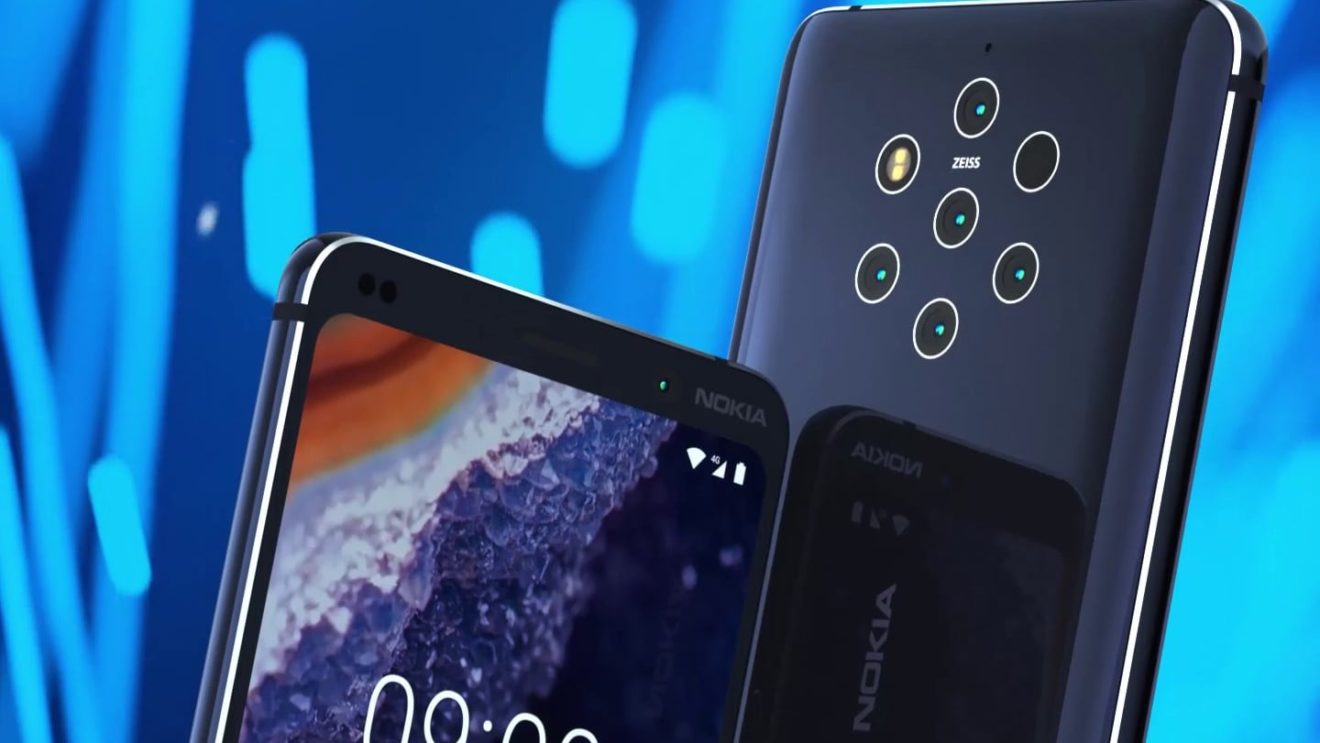
    After fully embracing the notch on last year’s model, HMD Global reportedly has plans to ditch the controversial design feature in favor of one that’s slightly less intrusive. Specifically, the Nokia 8.2 will apparently represent the company’s first smartphone with a pop-out camera system. This will house a new 32-megapixel selfie camera and ultimately remove the need for any kind of notch or cut-out on the display, thus creating an all-screen design.
    In regards to the smartphone’s internal characteristics, today’s report points towards the presence of 8GB of RAM and 256GB of storage as standard. The Nokia 8.2’s processor wasn’t mentioned but previous leaks suggest a Snapdragon 700 series chip could make the cut alongside support for next-generation wireless networks in an attempt to produce a cheaper 5G device.
    Accompanying all of this will reportedly be stock Android 10 Q straight out of the box as part of the Android One program. The final version of this software is on track for release in mid-August which suggests HMD Global’s next Nokia-branded smartphone probably won’t arrive until September at the very earliest.
  • Leaked photo shows Nokia feature phone running a special version of Android

    Leaked photo shows Nokia feature phone running a special version of Android

    Do you remember the last feature phone you owned before getting a smartphone? Once you purchased a smartphone, you figured that you would never consider buying a feature phone again. But suppose you could purchase such a device powered by Android? 9to5Google posted a photograph today that it received from an anonymous source. The image shows a device that resembles a Nokia feature phone running the Android operating system. The phone doesn’t use a touchscreen for navigation and relies instead on a d-pad, number keys and some other buttons (how could we have been so primitive back then). There is no app switcher on the device.

    The handset was created by Nokia. Some of the markings on the number keys seem to dovetail with ones used on earlier Nokia phones. The home screen features a microphone icon near the top of the display; while this is indeed Google’s microphone icon, it isn’t clear whether it will be used to make requests of Google Assistant or to ask questions to Google Search. Some app icons can be seen on the bottom of the display for the camera, Chrome Browser, and YouTube. There is also an unknown icon showing white arrows in a green circle, one pointing right and the other left. A yellow flap can be seen on the left side of the circle. The square in the middle is most likely the app drawer; navigating to that icon will show you all of the available apps on the phone

    On the upper part of the display from the center to the right corner is the status bar that shows the status of the network being used (4G in this case), a signal strength bar, battery indicator and the time. On the bottom, there are three options, “Alert,” “Select,” and “Settings.” The first option might be used instead of the non-existent pull-down notification shade to receive notifications and alerts. The photo also shows that the phone is hidden under a rubber case. Ironically, Android was originally developed for non-touchscreen handsets. The word is that when then Apple-CEO Steve Jobs unveiled the original iPhone in January 2007, developers quickly changed paths and turned Android into an operating system for touchscreen phones.
    There is no indication when (or even if) such a phone will be produced. Without having to power a large touchscreen, battery life would probably be stellar, even with a much smaller capacity battery than what you might find on what passes for a low-end Android phone these days (actually, some budget Android phones, like the Moto G7 Power, possess large batteries). And the price would most likely undercut any touchscreen Android phone available today.
    HMD Global, which has the right to use the Nokia name on mobile phones through 2024, brought back the popular Nokia 3310 feature phone in 2017. The original was one of the best-selling phones of all time with sales of 126 million units. The newer version of the phone had some updated specs including a 2.4-inch color screen, a 2MP rear camera, and a microSD slot. And while the battery sports a rather low capacity of 1200mAh battery, on a feature phone like the Nokia 3310, that is enough to keep the device running for a long time between charges.
    This might be something that will appeal to those seeking a backup phone or a cheap phone for the kids. And since it will run on Android, it should have a lot more functionality than that LG Dare you used to carry around.
  • Huawei opens flagship store outside of China

    Huawei opens flagship store outside of China

    Chinese tech firm Huawei has launched its largest international flagship store in Madrid.

    The new centrally located 1100sqm store showcases the company’s 5G and AI technologies as well as its range of smartphones and computers. More than 1000 people attended the launch.

    Huawei recently cooperated with Vodafone Espana to roll out the first commercial 5G service in Spain, which is now offering 5G roaming in four European countries. Huawei has already provided equipment for Britain’s new 5G network.

    The Chinese firm has already won 50 5G contracts around the world, but is at the centre of controversy in the US and Australia, among other markets, over allegations its systems can be used by Chinese government agencies to spy on users.

  • Vietnam’s Vingroup new factory to produce 125m smartphones

    Vietnam’s Vingroup new factory to produce 125m smartphones

    Vingroup JSC, Vietnam’s biggest listed firm by market value, said on Monday it has started work on a second smartphone factory with a capacity to produce 125 million units a year.

    The new factory in the capital, Hanoi, will vastly increase Vingroup’s current capacity of five million units at its facility in the northern city of Haiphong, the conglomerate said in a statement.

    Construction is expected to be completed by early 2020 and the jump in capacity will help the company meet orders from Europe and the United States, Vingroup CEO Nguyen Viet Quang said in the statement.

    “After a period of deploying and participating in the smartphone manufacturing industry, our products have been positively received by the market,” Quang said.

    “We received many processing orders from major partners in Europe and the United States. That’s why we have invested in a factory with 25 times the capacity of our current factory in Haiphong, to meet with domestic and international demand,” he added.

    A company spokesman declined to provide the names of the European and US partners.

    Vingroup launched its smartphone brand, Vsmart, in December last year, seeking to win market share from popular brands Samsung and Apple in Vietnam, which has a population of 95 million people.

    Vsmart phones use chips from Qualcomm and run Google’s Android operating system, and went on sale at a price of 3.39 million dong ($145) to 6.59 million dong ($282).

    In March, the company began selling Vsmart phones in Spain and planned to expand into other European markets. Its phones went on sale in regional neighbour Myanmar last month.

    It is part of a diversification strategy that has seen Vingroup, once focused on real estate and retail, become Vietnam’s first fully-fledged domestic carmaker in 2018.

    Electronics is a vital part of Vietnam’s economy as firms such as Japan’s Sony Corp and South Korea’s LG Electronics and Samsung Electronics reorganise production in the face of slumping global demand.

    Samsung said in December it will close one of its mobile phone plants in China as it focuses on low-cost countries like Vietnam, where it is the largest single foreign investor.

    In April, LG Electronics said it would stop making smartphones in South Korea and move production to Vietnam.

    South Korean chips-to-energy conglomerate SK Group said last month that it had agreed to buy 6.1% of Vingroup for $1 billion as it expands its investments in Vietnam.

  • Hidden code reveals that Xiaomi could be first to use this sensor on a phone

    Hidden code reveals that Xiaomi could be first to use this sensor on a phone

    Remember when you walked around, feeling like the King of the neighborhood because your Samsung Behold had a 5MP camera on back? While a bigger megapixel count doesn’t necessarily translate to better pictures, today we have phones like the OnePlus 7 Pro carrying around a 48MP primary sensor. And if XDA is right, Xiaomi will be the first to release a phone with a 64MP camera sensor on the back.

    Strings of code that XDA discovered on the latest version of the MIUI 10 Camera app make references to a 64MP “ultra-pixel” mode. They also allude to a 64MP Dual Camera. Right now, Samsung has the only 64MP sensor announced. That would be the ISOCELL Bright GW1 sensor with a small pixel size of 0.8μm. Samsung unveiled the sensor last month noting that under bright lighting conditions it can produce 64MP photos. When lighting conditions are not as favorable, the sensor merges four pixels into one to create a better quality 16MP image. The GW1 sensor will record video in 1080p (FHD) at 480fps allowing it to support “smooth cinematic slow-motion videos.” Samsung’s sensor also supports real-time high dynamic range (HDR) of up to 100-decibels (dB). That compares to the 60 decibels found on many handsets and the human eye’s 120 decibels.

    The code discovered by XDA dovetails with a leak from tipster Ice Universe who posted on Weibo a few days ago about a “mysterious” Redmi model (made by Xiaomi) that will be the first to use Sammy’s 64MP sensor. While the upcoming Galaxy Note 10 series will not feature it, we could see the 64MP GW1 sensor also employed on the upcoming Galaxy A70 mid-range handset.

  • Ericsson comes up with super high-tech anti-smartphone-theft solution

    Ericsson comes up with super high-tech anti-smartphone-theft solution

    Over the past few years, manufacturers have made great strides to discourage smartphone theft. These are usually locking mechanisms, which block the phone from ever being used by someone else than its user — either through biometric scanners or the good old passcode. And if a thief tries to reset your device, it will usually become a brick, which will not activate unless your personal password is entered on boot.

    But that hasn’t stopped thieves entirely. For one, they like to try their chances — some users still don’t lock their phones. And two, some phones can still be hacked into after a factory reset. So, additional solutions are always welcome. Swedish company Ericsson (remember the partnership Sony-Ericsson?) has come up with and patented a very high-tech anti-theft system. It’s called “Adaptive Friction” and currently only exists on paper, filed as a patented idea.

    Basically, the phone will use multiple sensors to maintain constant awareness of its contextual environment — whether it’s in a pocket, on a table, in a purse, et cetera. It will do this by analyzing data from its microphones, light sensor(s), camera(s), and gyroscope. Whenever a hand is laid on the device, it will quickly try to determine whether or not it’s being grabbed by its owner — it will do so by analyzing the grip (whether it’s a secure and confident grab, or a cheeky corner pinch) and even by utilizing biometric sensors to analyze the person’s heartbeat and compare it to known heartbeat patterns of the rightful owner.

    If the phone determines that it’s being nabbed by an unknown person, it will begin vibrating at ultrasonic frequencies, which should — in theory — make it super slippery and hard to pinch out of a pocket. Hence the name “Adaptive Friction” The patent does state that the technology can also be used to make the phone extra grippy and stick to the user’s hand when being used, thus making it harder to drop, which also sounds pretty interesting.

    Of course, this sounds like a whole ton of tech that needs to be tuned in order to make this work quickly and reliably. As with any patent — there’s no guarantee we’d see it in a phone any time soon (if ever), but this one definitely has some interesting “out of the box” thinking.

  • Galaxy S11’s chipsets may support fast DDR5 memory and 5G modem integration

    Galaxy S11’s chipsets may support fast DDR5 memory and 5G modem integration

    Next year, we are going to see a real competition in the world of mobile processing units, it seems, as both the next Exynos and Snapdragon 865 chipset lines will be done at Samsung’s second-gen 7nm production facilities. Currently, Snapdragon 855 that is in the Galaxy S10 for the US is done at the first-gen 7nm production node, while Exynos 9820 for the global versions is on 8nm.

    What we were wondering most about, however, is whether Qualcomm and Samsung’s venerable 5G modems will be soldered together with their processors, in a true system-on-a-chip fashion, or will they be separate entities like this year. The need for two separate components to tack on Snapdragon 855 forced many a phone maker to do “5G” versions of their flagships, often with bulkier bodies and larger batteries, and we hope that this tendency won’t stick around next year as well.

    The last thing we heard about Snapdragon 865 is that it will have two versions, with and without 5G connectivity, just like this year, but what wasn’t clear was whether the 5G variant will have the modem integrated in a chipset fashion. Well, the latest tip from Roland Quandt doesn’t really clear that up, either, as he confirms the two models codenames Kona and Hurracan, but says “one likely with, one without integrated 5G modem (SDX55)” is in store which is the same speculation we’ve heard before.

    What we do learn as a new bit of info, however, is that both will come with support for the latest DDR5 mobile memory generation, and the fastest UFS 3.0 storage standard that the OnePlus 7 Pro shipped with. Samsung already announced it is mass production-ready for LPDDR5 memory chips but we wouldn’t hold our breath to see those in phones before next spring and the Galaxy S11 season.

    Samsung recently tipped that it is planning to integrate a 5G modem into a chipset (presumably of its own Exynos making) faster than anyone, and we’d expect to hear about it before the end of the year, with the inevitable end goal to see it make a cameo in the S11 alongside the Snapdragon 865.