Tag: south korea

  • South Korean retailer CJ Olive Young to raise US$1 billion in local IPO

    South Korean retailer CJ Olive Young to raise US$1 billion in local IPO

    South Korean health and beauty chain CJ Olive Young is looking to raise around US$1 billion in an initial public offering, as the company seeks to tap a booming market for new listings.

    The listing, which two sources aware of the matter say is set to take place early next year, comes as Korean IPOs have raised $21.4 billion so far this year, almost seven times the amount raised a year earlier, according to Refinitiv data.

    CJ Olive Young has appointed Mirae Asset Securities and Morgan Stanley as the main underwriters on the transaction while KB Securities and Credit Suisse will act as co-underwriters, a spokesperson told Reuters.

    A $1 billion fundraising, slated for early next year, would be double the amount the company was expected to raise, according to some bankers.

    Mirae Asset Securities, Credit Suisse and Morgan Stanley declined to comment to Reuters. KB Securities did not immediately respond to a request for comment.

    CJ Olive Young has about 1200 stores across South Korea, and delivers its products through a global distribution platform to 150 countries, according to its website.

    It reported an operating profit of $84.4 million last year, the company’s filing showed. The largest shareholder is CJ Corp with a 55.24-per-cent stake as of December.

    So far this year, 92 companies have listed in Korea compared with 59 last year, driven by robust retail demand, Refinitiv data shows.

    E-commerce firm Coupang Inc raised $4.5 billion when it was listed in New York in March, while video-game developer Krafton Inc raised $3.7 billion in its July listing in Seoul.

  • China and South Korea boost Burberry sales

    China and South Korea boost Burberry sales

    Double-digit sales growth in China, South Korea, and the Americas underpinned a 37-per-cent lift in first-half sales for luxury fashion group Burberry to US$1.63 billion.

    The lift reflected a recovery in-store sales as Covid-related lockdowns and trading restrictions eased in the six months to September 25, compared with the same period a year earlier when a swathe of stores was closed across key markets.

    “We have made strong progress in the half,” said Burberry chair Gerry Murphy in a statement.

    “Full-price sales are growing at a double-digit percentage, driving margin expansion and strong free cash generation. We are seeing an acceleration in performance in countries less impacted by travel restrictions and we remain confident of achieving our medium-term goals.”

    The company reported an adjusted operating profit of $263 million, up 16.2 percent year on year.

    While the Americas, Korea, and China buoyed sales, the company said other regions continued to be impacted by reduced tourist levels.

    The company said its new store format – of which 15 are now complete with a target of 50 by the end of next March – was drawing higher-spending customers through the doors. Online sales were performing well with sales of goods at a full price almost doubling year on year.

    During the six months, Burberry announced its CEO Marco Gobbetti was to stand down early next year, to be replaced by Jonathan Akeroyd in April.

    Murphy paid tribute to Gobbetti’s “vision and leadership” during Burberry’s transformation and said the board expects Akeroyd will build on the strong foundations to accelerate growth and deliver further value for shareholders.

  • Italian brand Frette opens doors in Singapore

    Italian brand Frette opens doors in Singapore

    Italian home accessories and lifestyle brand, Frette, has expanded its footprint in Singapore with its first boutique in Marina Bay Sands.

    The store also marks the brand’s first mono-brand boutique in the territory. Designed by Milan-based architecture studio Archibrando, the new Frette store features elements used in the brand’s global flagship boutique on Milan’s Via Manzoni and custom furnishings crafted from natural Afara wood, “encapsulating the luxurious ambience and timeless elegance and essence of the brand”.

    Frette Singapore occupies a 65sqm area of the shopping centre, offering crafted linens and decorative home accessories, ranging from embroidery bedding, bath towels, to men’s and women’s loungewear. The Marina Bay Sands boutique also offers custom embroidery and personalisation, bedroom styling as well as installation.

    The 160-year-old brand is known for its “chic, original designs and inimitable finish and feel”. Frette operates nine retail locations in the US and 25 in Asia. The brand has flagship stores in China, South Korea, Taiwan, Vietnam and Cambodia.

  • Coupang faces probe into unfair trade practices

    Coupang faces probe into unfair trade practices

    After stoking a series of controversies, including a fire at a logistics centre and poor working conditions, South Korean e-commerce giant Coupang is now facing a government investigation into alleged unfair trading practices.

    The Korea Fair Trade Commission (KFTC) recently noted that Coupang might have violated the Fair Trade Law and carried out a field investigation at Coupang’s headquarters in Songpa-gu in Seoul late last month.

    Coupang has allegedly manipulated its search algorithm to make its private-label products more visible than the products of other suppliers.

    The company manipulated the algorithm towards prioritizing and placing its private-label products at the top of the search results while placing other products at the bottom.

    The antitrust regulator is also investigating whether Coupang conducted ‘gapjil’ against suppliers. Gapjil is a Korean term referring to power harassment and abuse of power.

    Coupang has allegedly required suppliers to offer their products at the lowest price and penalized those who refused to supply their products at a lower price than the supply price for other platforms.

    In the field investigation, the KFTC checked the allegations that Coupang forced suppliers to purchase advertising space and excluded those who refused to do so from various benefits, including the company’s rocket delivery service.

    Another allegation was that Coupang unfairly returned products to suppliers.

  • Shinsegae, Naver win bidding battle for EBay South Korea

    Shinsegae, Naver win bidding battle for EBay South Korea

    South Korean retail giants Lotte Shopping and Shinsegae Group have submitted separate letters of intent for online marketplace eBay Korea, the retailers’ spokesmen confirmed on Monday.

    It is a deal that will almost certainly shake up the country’s e-commerce retail segment, potentially propelling one of the country’s largest retailers into becoming the leading omnichannel operator in South Korea.

    SK Telecom, South Korea’s biggest mobile carrier, and private equity firm MBK Partners, the largest shareholder of discount store chain Homeplus, reportedly dropped out of the race to acquire eBay Korea, which has been up for sale since last year.

    This week’s formal bidding marks the second attempt to divest its interests by eBay Korea – which represents about 11% of global sales within the U.S.-based eBay corporation – and it wants at least $4.43 billion, a price that is looking increasingly attainable.

    South Korea’s total e-commerce transactions jumped 25% last year according to Trade Ministry estimates and eBay Korea represents about 12.8% of South Korea’s e-commerce market, just trailing Coupang at 13% and market leader Naver with 18%. Its revenue is estimated at $1.17 billion, with an operating income of $76 million.

    Coupang listed on the New York Stock Exchange in March, becoming the largest Asian company since Alibaba to go public in New York and raising $4.6 billion. Founded by billionaire Bom Kim, a Harvard business school dropout, Coupang is now the country’s most valuable start-up with a market capitalization of more than $60 billion, backed by Softbank’s Vision Fund.

    By contrast, Lotte and Shinsegae’s market shares in the country’s e-commerce sector are estimated at just 5% and 3% respectively and the takeover of eBay Korea by either could reshape the country’s online retail segment and fast-track the winning bidder into a market-leading position. Both have struggled to catch up with the major online competitors, especially after the impact of the Covid-19 pandemic.

    However, the picture is complicated. Naver could be one of the biggest beneficiaries if Shinsegae is successful as it is believed to be offering support in financing any acquisition. The retailer and portal established a strategic alliance in March and Shinsegae could switch to Naver Pay as the payment platform for three e-commerce websites operated by eBay Korea: Gmarket, Auction and G9. At present, eBay Korea uses its own online payment system called Smile Pay.

    Top South Korean cellphone carrier SK Telecom and retail group E-Mart were still among the remaining suitors as the preliminary round of bids sought by the U.S. parent closed 16 March.

    Indeed, SK Telecom had been the leading candidate. The group also operates the online platform 11Street through a subsidiary, making SK Telecom the fourth-biggest e-commerce provider. But 11Street has struggled to grow, leading SK Telecom to partner with Amazon AMZN 0.0% in November in a collaboration initially limited to 11Street hosting Amazon products, but likely to expand in scope.

    Meanwhile, Lotte will no doubt view the purchase of eBay Korea as a springboard for rebuilding the group’s online business. In April 2020, the group merged the e-commerce sites of its department stores, supermarkets, electronics shops and other physical retail affiliates under one shopping platform called LotteON but it has failed to make much headway.

    While all the potential suitors have refused to give much away, Kang Hee-tae, CEO of Lotte Shopping, admitted during a spring shareholder meeting: “We’re certainly interested.”

    Launching in 2000, eBay Korea quickly grew and last year earned around $75 million in operating profit. But eBay Korea has been squeezed by rivals in recent years, while activist investors like Elliott Management have urged eBay to shed assets with poor growth prospects.

    The U.S. parent’s hope of securing a lucrative deal initially looked ambitious but then Coupang went public successfully, boosting its hopes.

    Whoever wins the battle for eBay Korea, the fact that the rivals are both major retail players should heat up the market and could lead to an array of collaborations and partnerships to fight scale with scale. South Korea is on the brink of the biggest online shake-up since eBay announced its arrival over two decades ago.

  • UniCredit Hires from Commerzbank for Korea Coverage

    UniCredit Hires from Commerzbank for Korea Coverage

    Milan-headquartered UniCredit has bolstered its Asia business with the hire of a head of Korea coverage from Commerzbank.

    Jaeho Mike Hyun joins the Italian lender as its head of Korea coverage, according to a report from «GlobalCapital», to oversee financial institutions and corporate clients for the market.

    In his Hong Kong-based role, Hyun reports to Asia Pacific chief executive Michele Amadei.

    Hyun was most recently Commerzbank’s head of Korea coverage, capital markets, after joining the German lender in 2013. Previously, he had also worked for Deutsche Bank in Seoul and Singapore in both in asset management and debt capital markets origination.

  • Citigroup to exit consumer banking in Vietnam

    Citigroup to exit consumer banking in Vietnam

    America’s Citigroup will exit 13 international consumer banking markets, including Vietnam, to shift its focus to four wealth centers.

    The move is part of the bank’s strategic decision to direct investments and resources to businesses with the greatest scale and growth potential, it stated, adding its main markets will include Singapore, Hong Kong, the United Arab Emirates and London.

    Apart from Vietnam, 12 other markets to be affected are Australia, Bahrain, China, India, Indonesia, South Korea, Malaysia, the Philippines, Poland, Russia, Taiwan and Thailand.

    “While the other 13 markets have excellent businesses, we don’t have the scale we need to compete. We believe our capital, investment dollars and other resources are better deployed against higher returning opportunities in wealth management and our institutional businesses in Asia.”

    The bank has not specified when it would leave Vietnam.

    Citigroup in 1994 became the first U.S. financial institution licensed to open a branch in Hanoi. It opened its second branch in Ho Chi Minh City in 1998.

  • Hyundai To Suspend Production At South Korea Plant Due To Chip Shortage

    Hyundai To Suspend Production At South Korea Plant Due To Chip Shortage

    It was earlier this week when Hyundai Motor suspended production at its Asan plant because of a chip shortage. The South Korean carmaker has announced that it will again halt production at its Sonata-producing plant for two days next week due to an electric parts shortage. According to a report from IANS, the automaker will stop operation at its Asan plant on Monday and Tuesday. This Hyundai plant is located around 100 km south of Seoul that produces the Grandeur and Sonata sedans.

    Hyundai has seven plants in South Korea, of which five are located in Ulsan whereas the other two facilities are located in Asan and Jeonju. Moreover, the company has ten overseas plants wherein four facilities are in China and one each in India, Brazil, Czech Republic, Turkey, Russia, and the US. The combined capacity of these plants is around 5.5 million units.

    The carmaker expects the four-day suspension will result in over 4,000 vehicles in production losses. Moreover, the company had also suspended operations at its Ulsan plant, situated 414 km southeast of Seoul, from April 7 to April 14 due to a parts shortage. Moreover, Hyundai produces Ioniq 5 and Kona EV cars at its Ulsan plant.

    The suspension comes because of a shortage of semiconductor parts used in Kona’s front vehicle camera system, along with an issue in Hyundai Mobis Company’s production line, which rolls out the traction motor for the Ioniq 5. The carmaker expects production losses of 6,000 units of the Kona and 6,500 units of the Ioniq 5.

  • Flash Coffee to open 300 outlets after fresh funding round

    Flash Coffee to open 300 outlets after fresh funding round

    Tech-enabled coffee chain Flash Coffee has raised US$15 million in its Series A funding led by White Star Capital, aiming to launch 300 stores this year.

    The Series A round sets the total capital raised by Flash Coffee to US$20 million. Investors include Delivery Hero-backed DX Ventures, Global Founders Capital, and Conny & Co.

    The raised funds will be used for accelerating Flash Coffee’s expansion plan in Asia. According to David Brunier, CEO of Flash Coffee, the company will enter into seven new markets this year: Hong Kong, Taiwan, South Korea, Japan, Malaysia, the Philippines, and Vietnam.

    “Our dream is to have a Flash Coffee every 500 meters in all major Asian cities,” said Brunier.

    “We will also build a regional HQ in Singapore and expand our regional tech hub in Jakarta to 50 people to support our vision of fully leveraging technology to improve customer experience, proactively drive growth and significantly increase operational efficiency.”

    Launched in January last year, Flash Coffee business model focuses on grab-and-go physical storefronts that rely on technology, allowing significant cost savings. The company now operates 50 outlets across Singapore, Thailand, and Indonesia.

  • South Korea’s online food market booming due to Covid-19

    South Korea’s online food market booming due to Covid-19

    In South Korea, some of the world’s biggest food delivery firms are scrambling to surf an estimated $4 billion wave of new orders, contracting thousands of new riders in a boom triggered by the scourge of the global economy – the coronavirus pandemic.

    Koreans had already developed such an appetite for meal deliveries that the country ranked third in the world last year for food order services, according to consultancy Euromonitor. Now, tough social distancing rules and work-from-home policies to counter the pandemic have fuelled explosive growth.

    South Korea’s food delivery market is expected to jump 40% this year to around $15.4 billion from $11 billion in 2019, Euromonitor data showed, topped only by China and the United States.

    Surging coronavirus-era consumer demand has stoked orders, supported meal pricing and made the prospect of a career as a self-employed rider – earning more per hour than many other part-time jobs – an attractive option for many after the pandemic drove Korea’s jobless rate to a 10-year high earlier this year.

    Contractor jobs like delivery riders will keep growing in number amid the pandemic, predicted Kim Sung-hee, professor of labour studies at Korea University, highlighting the need for government scrutiny of “non-regular work”.

    “A lot of the contractor jobs, including riders, have minimal access to labour rights,” Kim said, “they have no access to occupational health and safety insurance and no employment safety net.”

    Responding to the demand surge, Woowa Brothers, the operator of leading food delivery service Baedal Minjok, said it expanded its pool of motorbike delivery riders this summer by nearly 50% from 2,100 previously. Smaller peer Barogo, which like Woowa Brothers doesn’t disclose details of its financial performance – said it is recruiting 5,000 more, creating openings for some otherwise unlikely riders.

    Among those is Chey Young-ah, a 37-year-old former art teacher in Seongnam, 20 km (12.43 miles) south of Seoul. After the pandemic forced classes at her day job to shut, she saw brisk delivery orders at a fried chicken restaurant where she worked part-time, opted to become a rider herself instead in mid-August.

    “I feel lucky I found this field at a time when deliveries are booming,” she said. “One of the merits of this job is that the entry barrier is low. They don’t care whether you’re a man or a woman, you don’t need a job interview.”

    Chey, who already owned a motorbike, says she earned around 1.8 million won ($1,565.22) last month while working six to eight hours a day, seven days a week – already nine times the pay as an art instructor.

    Chey rides for Baedal Minjok and Coupang Eats, operated by SoftBank-backed e-commerce firm Coupang. Like other services, delivery jobs are offered to riders on call via an app, with riders selecting which jobs to take depending on distance and payment terms.

    Riders say most orders earn them around 3,300 won per delivery – the minimum rate – with the influx of new riders creating greater competition even to secure those deliveries, and to get the job done faster.

    “The competition is getting fiercer … Some (riders) violate traffic rules to make one more delivery, putting their safety at risk,” said Chey, who herself has already been involved in a minor accident.

    Delivery companies are also offering bonuses hoping to secure faster riders. Coupang Eats said riders can earn up to 15,000 won per order, depending on order volume and weather conditions.

    Data from Rider Union, a labour union representing the new dispatch workers, showed one of its members earned as much as 585,700 won – comparable to 68 hours of work by minimum wage – on a single day in August.

    Numbers like this are a magnet in an otherwise depressed jobs market.

    You Young-sik, a 28-year-old Seoul internet cafe worker who has seen his pay halved since the coronavirus hit and now fears losing his job, recently signed up for motorbike lessons to get his licence.

    “As I was looking for new openings, I figured delivery business is in vogue these days,” said You, who currently makes below 1 million won a month. “Riders’ salary looks way higher than what I get paid now.”


  • South Korean sees jump in perfume sales despite shrinking cosmetics market

    South Korean sees jump in perfume sales despite shrinking cosmetics market

    Perfume sales in South Korea have gone up despite the suspension of perfume testing at department stores. Last December, South Korean retailers suspended all practices of testing cosmetic samples at offline vendors in accordance with government regulations, which has led to a plunge in cosmetics sales at department stores.

    Cosmetics sales at Lotte Department Store and Hyundai Department Store last month dropped by 22 percent and 8.6 percent, respectively, compared to the same month last year.

    As protective masks have become a new norm, demand for color cosmetics had already dropped before the new ban on the use of samples tightened consumption even further.

    In contrast, perfume sales at the two department stores jumped by 34 percent and 49.7 percent.

    “Consumers are replacing cosmetics with perfumes as a way of expressing themselves in the pandemic era,” Lotte Department Store said.

    Bans on testing perfumes at offline vendors have led to a sales jump among online perfume sellers.

    S.I. VILLAGE, a luxury shopping platform run by the country’s leading retailer Shinsegae Group, saw last month’s perfume sales jump by a whopping 772 percent compared to the same month in the previous year.

    Another major online shopping mall Gmarket saw a 711 percent spike in January sales of perfume, compared to the same month last year.

    “More consumers are buying perfumes as they are beginning to use them as an everyday accessory,” an industry official said.

  • South Korean online platforms face scrutiny over unfair business practices

    South Korean online platforms face scrutiny over unfair business practices

    South Korea has launched an antitrust investigation into Google over its plans to enforce commission fees for in-app purchases made through its mobile application store, a top official said Thursday.

    The U.S. tech giant has come under intense scrutiny from South Korean regulators after it updated its global policy late last month to make all apps on its Play store use its proprietary billing system.

    Under the new policy set to take effect in October next year, Google will take a 30 percent commission on all digital purchases by consumers.

    South Korean app developers have >voiced strong opposition against the move, arguing that it could be in violation of local fair trade and telecommunications laws.

    Joh Sung-wook, chairperson of the Korea Fair Trade Commission (KFTC), told lawmakers during a parliamentary audit that Google’s plan is currently being reviewed.

    “I believe that competition isn’t working properly in this industry,” she said. “In order to restore competition, we are currently investigating for anti-competitive actions.”

    Google holds a tight grip over local app store sales, with a 63.4 percent share of the total last year at 6 trillion won (US$5 billion), according to the Korea Mobile Internet Business Association.

    Han Sang-hyuk, head of the Korea Communications Commission, echoed Joh’s concerns, and called for inter-agency cooperation over the issue.

    “We need to monitor the response from other countries and also create a structure for cooperation between local agencies,” Han told lawmakers in a separate audit.

    The country’s telecommunications regulator is conducting a separate investigation into Google over its in-app payment policy.

    Google has argued that it is committed to an open system by offering other app stores on its Android platform and that it will comply with local laws.

    In response to growing frustration, Google has established a support fund worth $100 million for local app developers and users.

    On Wednesday, ICT Minister Choi Ki-young brushed off the fund, telling lawmakers that it is not enough in the long run.

    Choi said the ICT ministry will wrap up its review of fees imposed by online platform operators, primarily directed at Google, by the end of this month.

    Amid growing scrutiny over Google’s app store fees, local rival One Store, under the country’s top mobile carrier SK Telecom Co., said it would exempt in-app payment fees by 50 percent for app developers with monthly transactions of less than 5 million won until the end of next year.

    One Store already undercuts Google’s Play store, taking up to 20 percent in commission for in-app purchases.

  • How new player joined Vietnam’s food delivery battle

    How new player joined Vietnam’s food delivery battle

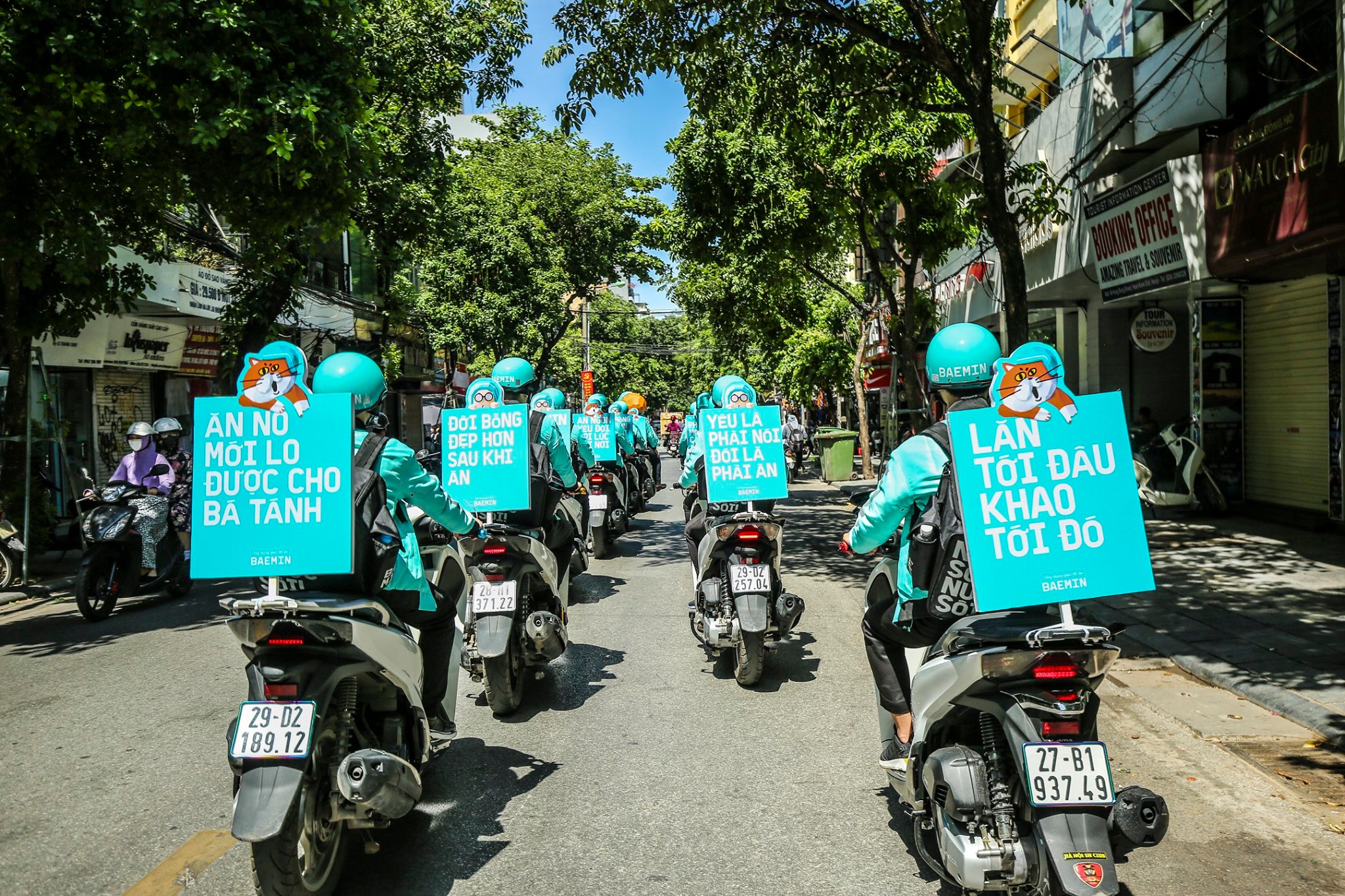
    Joining the market later than competitors, Baemin, a food delivery application of South Korean unicorn Woowa Brothers, concentrates on rider training and supporting food stores.

    Tuan, 28, from HCMC, is on his way to the headquarter of Baemin in District 3 to take part in a training course. He said, by the end of the course, he would have had to take an entrance exam before being granted an account as a Baemin rider. Before that, during the online application process, Tuan also had to undergo a pre-qualification exam before attending the intensive training.

    Most riders joining the Baemin network have to pass two entrance exams, a paradox compared to other food delivery businesses today.

    “We want to leave a good first impression on our customers with Baemin’s well-mannered and polite rider team,” said Nguyen Trung Thanh, COO of Baemin Vietnam, Woowa Brothers’ leading online food delivery service.

    Right after taking the lead in South Korea, Woowa Brothers expanded its market to Vietnam, where more than 40 percent of the population is of working age, loves technology and is quite familiar with Korean culture. However, Baemin still joined the Vietnamese market later than many other competitors.

    The boom in delivery applications has resulted in a shortage of riders and problems with service quality. Therefore, Baemin chose its own path by starting with careful training of its rider team in each market then gradually expanding within the city where the demand for food delivery is up to 90 percent (according to market research company GComm).

    Ho Chi Minh City and Hanoi are two typical examples of Baemin’s approach. “In Vietnam, FoodTech is still a very new market, so companies in this field have to invest a lot in building their own delivery team and putting them into operation,” Thanh noted.

    Baemin focuses on building professional food delivery services, its professionalism helping it succeed in a short period.

    According to a recent survey, although Baemin only appeared in Vietnam from mid-2019, it quickly caught up with Gojek, another application in food delivery, in its proportion of users (up to 46 percent). Baemin also takes up 16 percent among the most frequently used apps.

    According to the report, GrabFood is said to be popular among the old while Baemin suits younger generations.

    Investing in rider partners is not enough in Baemin’s long-term development strategy in Vietnam.

    “In Korea, where third-party logistics infrastructure is already developed, Woowa Brothers focuses on customer care, advertising and tradition,” said Thanh.

    “However, in Vietnam, it is a completely different story.”

    In addition to delivery resources, Baemin also has to pay attention to connecting with partners participating in its platform by providing flexible payment methods, with the most important being accompanying partners in the transition of the business model into an online format.

    According to Thanh, in new markets like Vietnam, restaurants, and stores, especially traditional ones, are yet to grow accustomed to online sales. Thus, during this period, the most practical thing is generating a revenue stream.

    Baemin’s strategy is to send staff to guide restaurant owners on how to achieve greater profits. At the same time, the company has also developed a department to timely respond and make payments so restaurant owners could continue to operate.

    “These are very basic steps, but they create real value from which the restaurant has the confidence to establish a closer relationship with us,” Thanh emphasized.

    In the coming time, Baemin plans to help restaurant owners create products suited to online business models. According to Thanh, this would allow transformation from a pure traditional restaurant to an online model in order to gradually expand with increasing revenue.

    “More than anyone, Baemin understands that the success or failure of a company depends greatly on its partners. Although Baemin is newly launched in Hanoi, brand awareness of customers here is much higher than in Ho Chi Minh City. It may be a new city, but the market has heard a lot about us,” Thanh said.

  • South Korean department stores refurbished to attract cashed-up MZ shoppers

    South Korean department stores refurbished to attract cashed-up MZ shoppers

    Department stores are undergoing renovations to attract the so-called MZ generation – encompassing the Millennials and Generation Z.

    After its first renovation in 11 years, Hyundai Department Store’s Jungdong branch reopened the ‘U-Plex’ Fashion House on Wednesday in Bucheon, west of Seoul.

    The storehouses 130 domestic and international fashion brands popular among the MZ generation, including the Street Fashion Zone, where the top 10 most-popular fashion brands online are located.

    The largest shopping mall dedicated to sportswear in the greater Seoul area opened on the department store’s fourth and fifth floors, featuring boutiques from Nike, Adidas, New Balance, and 34 other sports brands.

    Lotte Department Store Yeongdeungpo Branch also redesigned its floor space by filling the first and second floors with brands popular among the MZ generation. Cosmetics brands, originally located on the first floor, have been moved to the third floor.

    Shinsegae Department Store Yeongdeungpo Branch also completed renovations to attract younger customers.

  • South Korean duty-free retailers closing downtown stores

    South Korean duty-free retailers closing downtown stores

    South Korean duty-free retailers are temporarily shuttering metropolitan stores in response to a significant decline in tourist numbers caused by the coronavirus epidemic.

    Numerous outlets at prime tourist destination Jeju Island will be closed this month. A Lotte Duty-Free store that has already been operating under reduced hours since February will close pending the resolution of the crisis. Hotel Shilla’s store, which has suspended trading on weekends and holidays throughout the outbreak, will cease trading for a fixed one-month period.

    Jeju Island tourism has faltered significantly in recent months under heavily-reduced international flights, with a 99.2 percent drop in foreign tourist numbers year-on-year during April.

    The South Korean duty-free retailers shuttering stores also include Shinsegae Duty-Free’s locations in Gangnam and Busan will close on Sundays and Mondays from this month on, while airport duty-free stores under all local operators are largely closed for business at this time.