Tag: south korea

  • South Korean cafe ranks continues to grow

    South Korean cafe ranks continues to grow

    The number of South Korean cafes continues to grow at a brisk pace, according to a government recent study.

    The Korea Fair Trade Commission reported there were 15,036 coffee shops in South Korea as of 2018, an increase of 7.9 percent (1105 shops) over the previous year. The rate of increase was the highest among all types of restaurants.

    The data may be a year out of date, but anecdotal feedback from the industry suggests the trend endured into last year

    As of 2018, average annual sales for South Korean cafes amounted to 231 million won (US$190,000), which was 6.5 percent more than in 2017.

  • Coronavirus case confirmed in Samsung factory in South Korea

    Coronavirus case confirmed in Samsung factory in South Korea

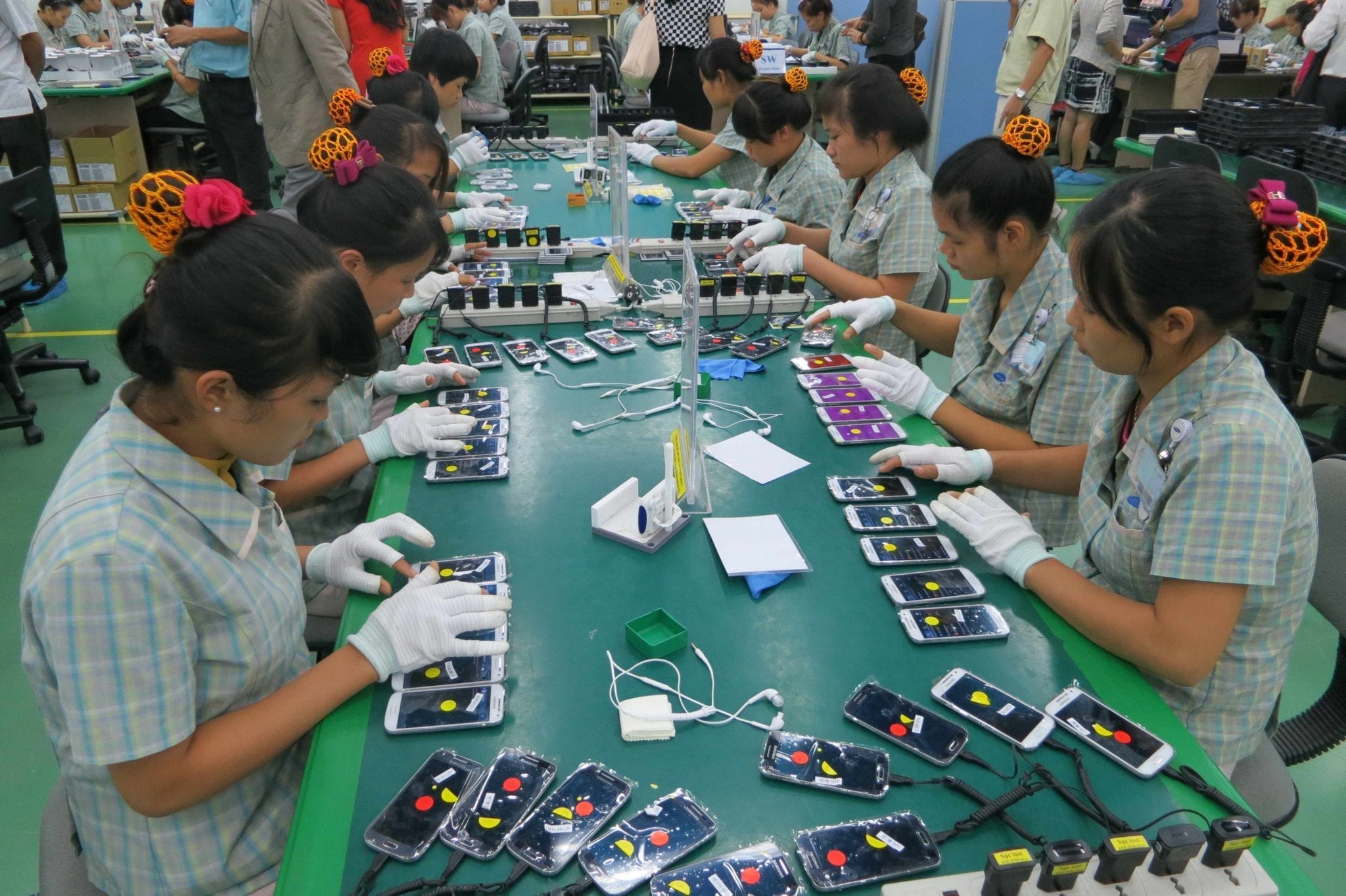
    We have been hearing news about different factories’ production struggles over the coronavirus outbreak for almost two months now. Unfortunately, on Saturday, Samsung temporarily closed one factory in South Korea over a confirmed case of the coronavirus, reports Reuters. Until now, Samsung has remained fairly unaffected by the public health crisis.

    The aforementioned factory complex is situated in the South Korean city of Gumi, close to the center of South Korea’s largest coronavirus outbreak (in the city of Daegu), where, reportedly, the cases of infected with the illness amount to around 433. However, the factory is responsible only for the production of a small portion of high-end phones, in particular the Galaxy Z Flip and the Galaxy Fold, primarily for the domestic market.

    The facility is to remain closed until Monday morning, while the floor where the infected employee worked will be shut down until February 25, Tuesday. Workers that came into contact with the employee in question are now in self-quarantine and will be tested for possible infection with the virus.

    Samsung states that production in other factories in South Korea will remain unaffected for now.

  • Bamboo Airways suspends S.Korea flights to contain coronavirus

    Bamboo Airways suspends S.Korea flights to contain coronavirus

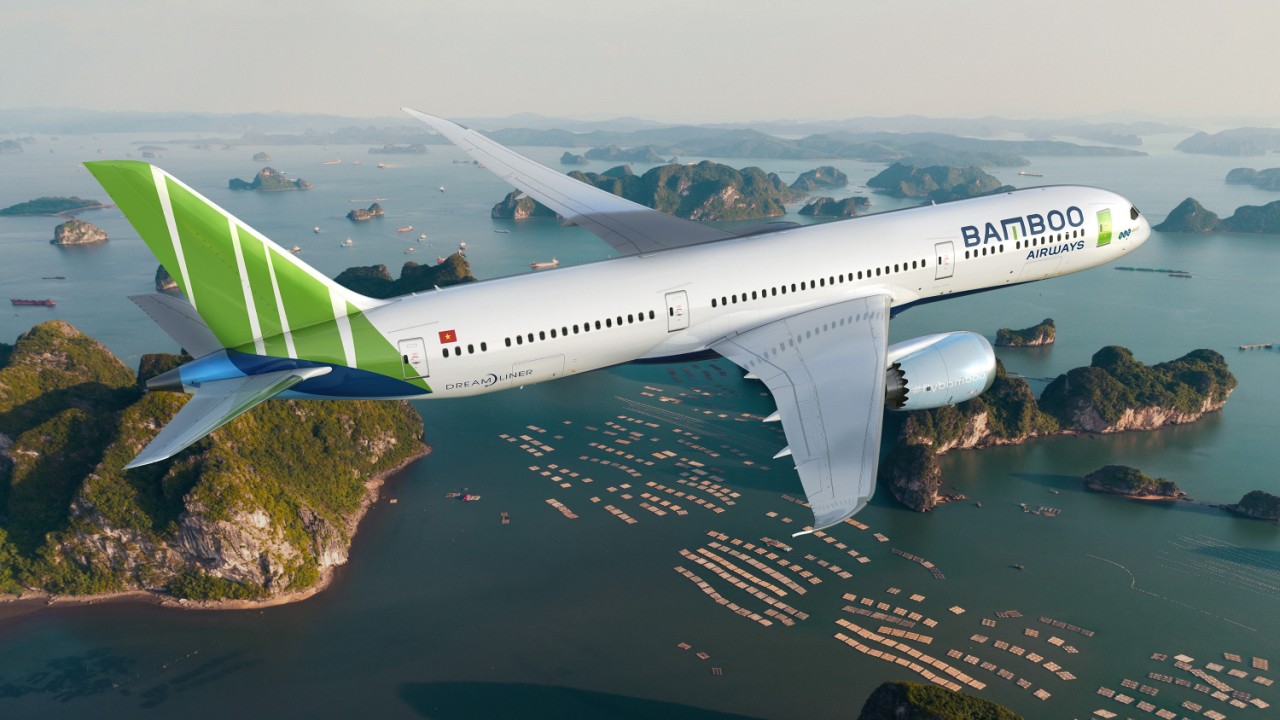
    Vietnam’s private airline Bamboo Airways will suspend all routes to and from South Korea to stem the spread of the novel coronavirus.

    Both routes from central Da Nang and Nha Trang to Seoul’s Incheon International Airport will cease operation starting February 26, it stated Monday.

    The airline is currently operating seven trips a week on each route with the narrow-body Airbus A21neo capable of carrying nearly 200 passengers.

    It stated flight suspension is vital to warding off the coronavirus from South Korea where the number of confirmed cases has reached 763, and death toll 7 as of Monday.

    Last year, South Korea was Vietnam’s second-largest tourism market behind China with 4.3 million visitors, up 23 percent year-on-year.

  • South Korea’s CU fined US$1.4 million for unfair trading

    South Korea’s CU fined US$1.4 million for unfair trading

    South Korean convenience-store operator BGF Retail has been fined for pushing exorbitant sales promotion costs onto its suppliers.

    The firm was ordered to pay KRW1.67 billion (US$1.4 million) for its breach of the Act on Fair Transactions in Large Retail Business, according to a report in The Korea Times.

    While the act forbids any retailer from forcing its supplier to shoulder more than half of any promotional cost, BGF was found to have run “two-for-one” promotional events from early 2014 to late 2016 at its CU-branded stores and passed on the majority of expenses.

    The firm pushed KRW2.39 billion ($2 million) in costs on 79 suppliers to pay for 338 promotions conducted during the period at more than 13,000 CU locations. It also failed to sign written agreements with suppliers prior to holding sales events in 76 cases.

    “This is the first time that the FTC has punished a company for forcing suppliers to shoulder more than 50 percent of the cost for two-for-one events,” said an official at Korea’s Fair Trade Commission. “The FTC will enhance monitoring and punishments for similar violations.”

    CU is currently in second place among Korea’s leading convenience store chains, with a 31.14 percent market share.

  • GS25 opens futuristic c-store concept

    GS25 opens futuristic c-store concept

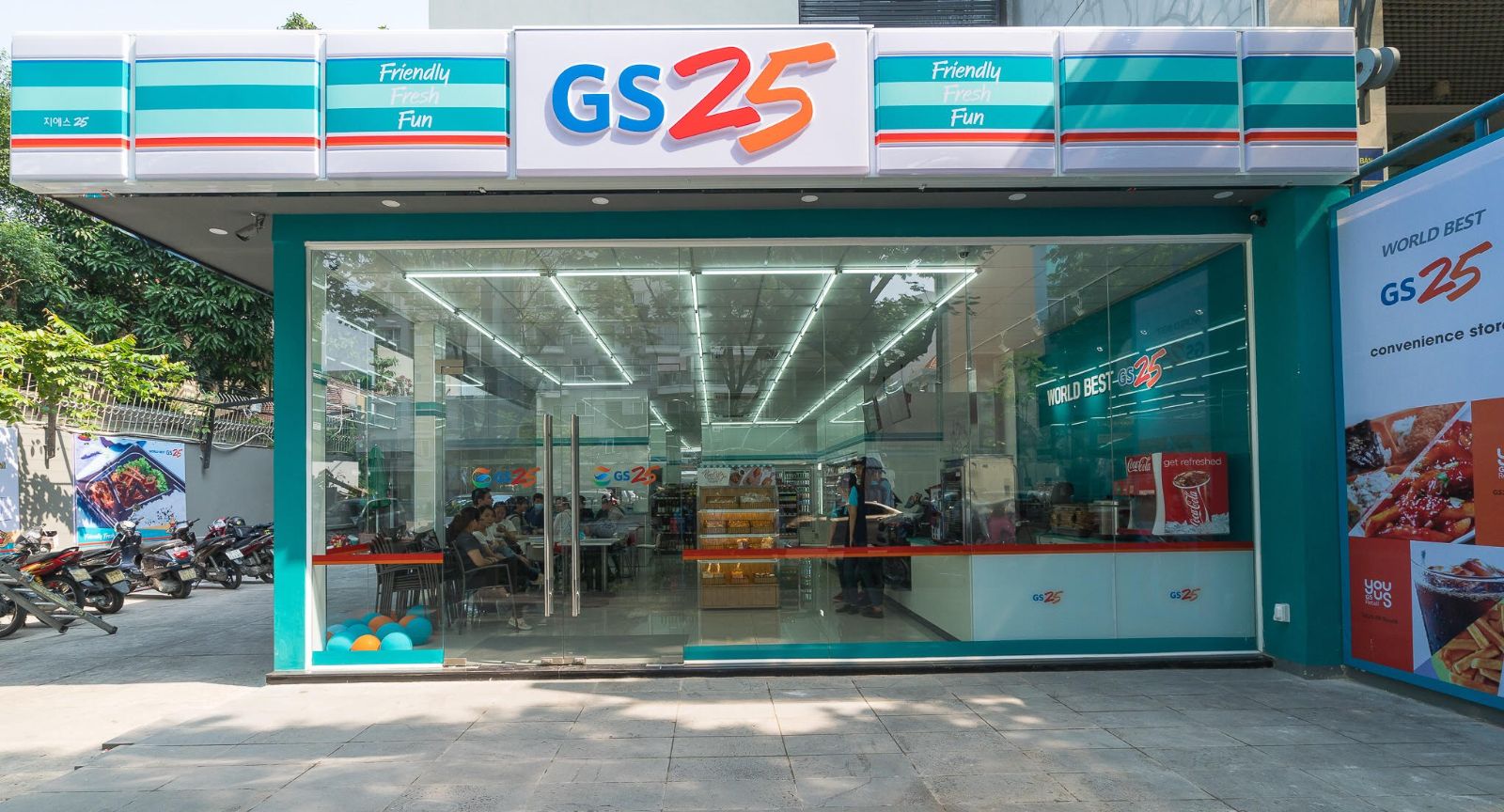
    South Korean convenience-store chain GS25, owned by GS Retail, has opened a futuristic convenience store without a checkout counter in Jung District, Seoul this week.

    The store, which is located in the headquarters building of a local credit card company BC Card, is similar to Amazon Go, checkout-free offline malls in the US.

    One can enter the convenience store by scanning a BC Paybook QR code from BC Card’s mobile payment app at the speed gate.

    When customers enter the store, 34 ‘deep-learning cameras’ will recognise their behaviour. In addition, some 300 weight sensors installed throughout the store detects the number of items that customers choose.

    When a customer chooses their purchases and exit the speed gate, all the items will be automatically paid for through a payment system using artificial intelligence (AI) technology, and a mobile receipt will be issued.

    A video-recognition speaker is also installed, where a pre-set voice will guide the customers through speakers. If customers are standing at some point or do a particular action, the speaker will provide assistance.

    In the future, the company will gradually introduce technologies that guide customers to promotions when they approach a presentation product stand.

  • South Korean convenience stores wind back 24-hour service

    South Korean convenience stores wind back 24-hour service

    South Korean convenience-store owners are canceling 24-service as minimum wage rise has eroded profits.

    Last year, president Moon Jae-in launched a campaign to raise the hourly minimum wage by 29 percent over two years. With night-shift employees earning time-and-a-half pay, franchisees have been struggling to pay part-time staff during the small hours.

    Not all stores traded around the clock when Shinsegae group launched the Emart convenience-store chan in 2014. Three Korean c-store giants, GS Retail, BGF Retail and Lotte Group, now allow its franchisees to close stores at night if the outlets lose money overnight for three months.

    In a market with the highest rate of c-stores per capita, South Korean convenience-store owners are shifting their focus to automated, unmanned stores. Emart is trialing a cashier-free store in Seoul with more than 30 cameras installed. Payments are made with credit card information stored in advance. Meanwhile, Lotte operates 17 unmanned outlets where products are scanned and identified by its shapes.

    Last year, many 7-Eleven and Familymart stores in Japan had to overturn its 24-hour operations as they were suffering from the labor shortage.

  • Ediya Coffee opens 3000th store in Korea

    Ediya Coffee opens 3000th store in Korea

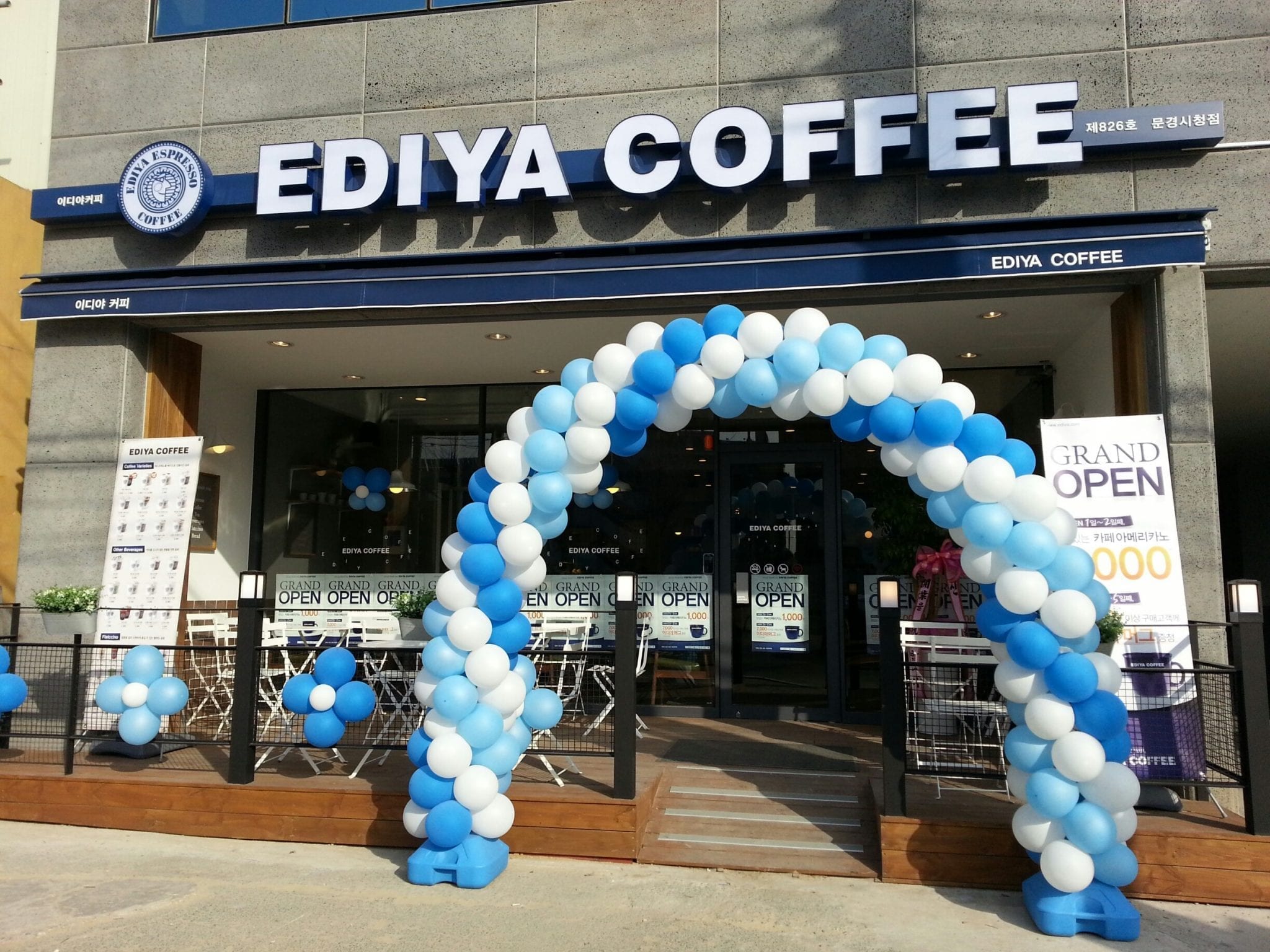
    South Korean coffee chain Ediya Coffee has opened its 3000th store.

    The new Daejeon outlet is a significant milestone for the local franchise, matched only by competing for cafe and bakery Paris Baguette. Ediya has opened 300 locations each year for the past six, and has been steadily expanding since launching in Seoul in 2001.

    The firm recently appointed two vice presidents to manage the rapid expansion: Kim Nam-yeob, previously at Hyundai, and Shin Yoo-ho, who was working for Paris Baguette owner SPC Group.

    The coffee brand is named after an Ethiopean empire where the original coffee plant was discovered.

  • South Korea’s coffee shop boom – 1 in 10 are losing money

    South Korea’s coffee shop boom – 1 in 10 are losing money

    The number of coffee shops in South Korea continues to grow. More than 71,000 coffee shops are now operating nationwide, with 14,000 openingsz last year alone.

    According to a report by KB Financial Group Management Research Institute, the increase in the number of coffee shops is because the number of new shops opening has dramatically outpaced the number of shop closures.

    In 2009, 27,000 new shops were opened and 4000 closed. On the other hand, 14,000 opened last year and 9000 closed.

    Meanwhile, 11 percent of local coffee shops were found to be operating in the red. This rate is higher than the 4.8 percent of restaurants that are also unprofitable.

  • E-Mart plans to sell several stores

    E-Mart plans to sell several stores

    South Korean big-box retailer E-mart will sell 13 store buildings and land to improve its financial situation.

    The firm will sell the properties to Mastern Investment Management for KRW952.48 billion (US$802.65 million) in the face of plummeting sales and intensifying competition from e-commerce. It will continue to operate its businesses on the properties under a lease arrangement.

    The properties constitute 5.7 percent of the Shinsegae-owned firm’s total assets.

    E-mart will use the funding to pay debt and diversify its operations into e-commerce.

    “As the current retail market is dominated by e-commerce platforms, retailers have no choice but to continue to reduce their offline business,” said Hyundai Motor Securities analyst Park Jong-ryul. “With the fresh funds, they focus on venturing into the online market.”

  • South Korea discloses number of 5G subscribers

    South Korea discloses number of 5G subscribers

    Consumers have however filed some complaints related to the coverage and speed of 5G. The main problem was that mobile devices were displaying a 5G symbol when users on LTE were near base stations compatible with 5G. The Ministry confirmed that facing such issues is very normal given that operators are still building base stations and upgrading software.

    A total of 54,202 5G base stations have been deployed so far, an increase of 7 per cent from 22 April, however coverage in the country was still restricted to urban and more populous areas.

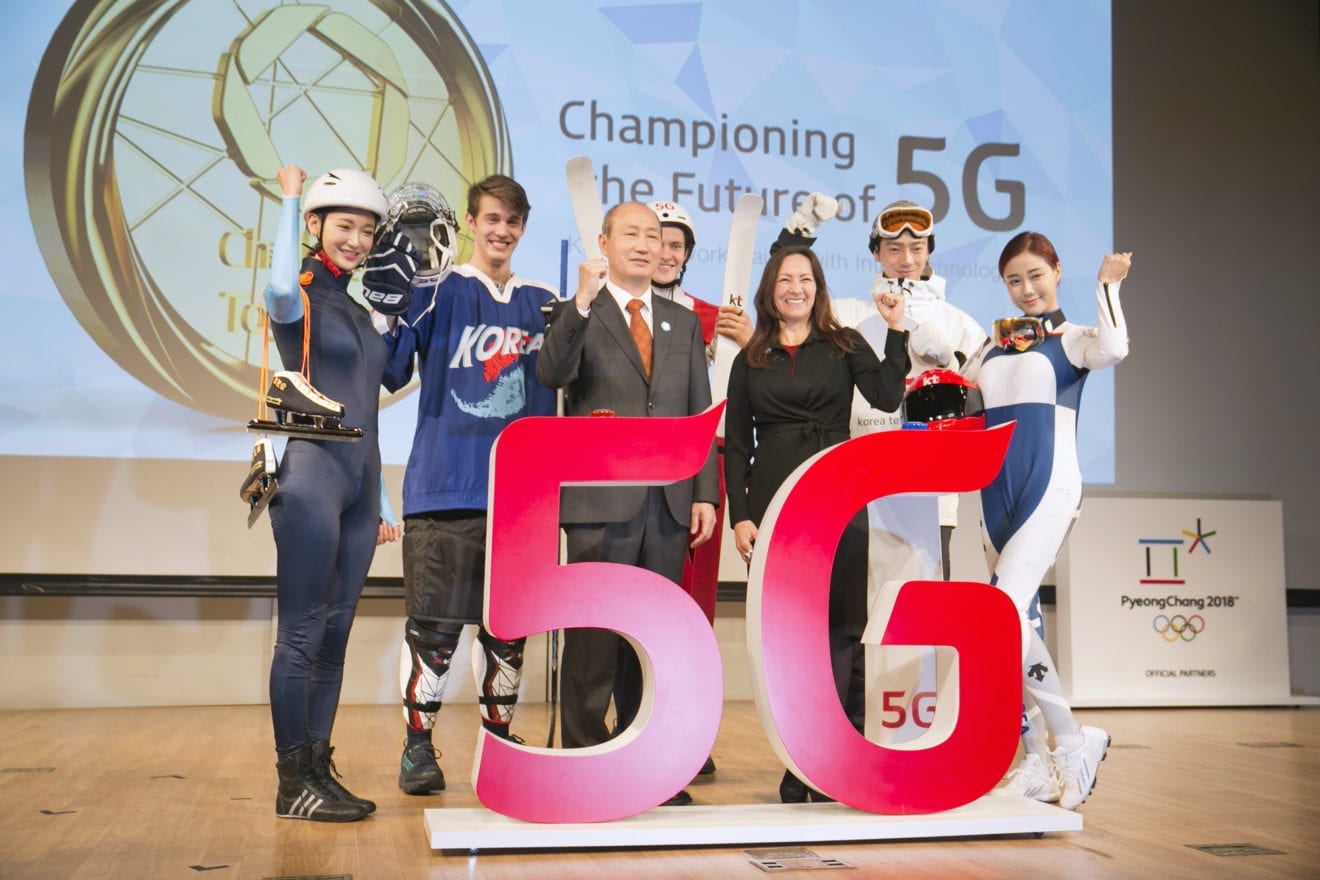
    Korea has been pioneering the journey to 5G deployment, being one of the first in the world to offer 5G to mobile consumers. Operators in the country had also launched commercial 5G services to businesses using mobile routers.

    Out of the 260,000 subscribers, KT, the country’s second largest operator, has announced it secured 100,000 subscribers so farm whereas SKT and LG Uplus are yet to reveal their figures.

  • South Korean online shoppers still see brick-and-mortar as crucial

    South Korean online shoppers still see brick-and-mortar as crucial

    South Korean online shoppers still see offline stores as a crucial part of shopping, a recent study has shown.

    Furthermore, despite the widely held belief that consumers will engage in online shopping during lunch breaks, or before they go to bed, the study has also revealed that many shop during work hours.

    DMC Media, a South Korean media lab, reported stark differences in perception between the industry and consumers.

    Among consumers with the shopping experience in the last six months, 73.2 percent collected shopping information at offline stores, ranking second after mobile shopping (81 percent).

    About three in four consumers use offline stores rather than the web, indicating shoppers still have a desire to look at products before they buy.

    While offline stores are falling behind in the competition with e-commerce, online consumers are still acquiring shopping information through offline stores, which may indicate a path towards finding a breakthrough.

    In contrast, online marketers have been underestimating the importance of offline stores at 30.7 percent.

    Online marketers’ views differ on the time frame when most consumers engage in online shopping. While many believed consumers would not engage in online shopping during working hours (9am to 6pm), the study showed consumers consistently devote time to online shopping after 9am (15.4 percent) and online shopping activity peaks between 6pm and 9pm (46.9 percent), which shows most consumers engage in shopping activities regardless of time and work.

    When choosing an online shopping mall, consumers consider the price (29.4 percent) and product quality (23.4 percent). Coupons are a factor for 9.4 percent of consumers.

    The study also found that consumers click less on the advertisements posted on Instagram, Facebook, and other social networks (50.7 percent) than those linking to a portal website (69.1 percent).

    “Making a strong impression on consumers at offline stores through special programs will not only raise short-term profits but also increase brand loyalty and encourage them to come back,” said the DMC Media research team.

  • Korea’s largest retailers forced to think about delivery services

    Korea’s largest retailers forced to think about delivery services

    South Korea’s largest retailers are having to invest in logistics to cope with rising online spending and personalized delivery services.

    South Korean online shopping malls Coupang and Market Kurly have led the paradigm shift in the delivery industry after introducing the early morning delivery service, which has led many to adjust to the new and more convenient ways to purchase goods.

    Large brick-and-mortar retailers can no longer wait for the customers to visit their store.

    Homeplus, a South Korean hypermarket chain operator, said this week it has opened two fulfillment centers, located in Anyang and Suwon, Gyeonggi Province to provide better online delivery services.

    In a 6600sqm logistics center, pickers collect products in a tray to ship them for online orders. A Digital Picking System informs the picker on which tray to use, where the product is located, and the final results of the picking process.

    Homeplus plans to improve 140 stores across the country with enhanced capabilities for online shopping and delivery by 2021.

    SSG.com, Shinsegae Group’s online marketplace, currently runs NE.O, logistics centers for online shopping located in Yongin and Gimpo. NE.O will open its third center in Gimpo later this year.

    SSG.com is also in charge of receiving orders at E-mart’s picking and packing centers as part of a two-track strategy.

    Lotte Mart plans to expand its logistics centers for online shopping to meet the rising demand from the online community.

    Lotte’s signature delivery service is same-day nighttime delivery service. If a customer places an order before 8pm, the product will be delivered before midnight on the same day.

    As such, large offline retailers are now in competition over expanding logistics centers for online shopping, which may turn out to be the only way to outlive the ‘delivery war.’

    But for South Korea’s largest retailers, building separate logistics centers for online shopping may also provide stores with a wider leeway since offline malls are subject to various restrictions, including mandatory business holidays.

  • South Korean retail sales up as summer season arrives

    South Korean retail sales up as summer season arrives

    South Korean retail sales increased by 3.4 percent year on year in May.

    Online sales reportedly surged by 18.1 percent in May, far faster than offline sales, which increased buy just 1.9 percent.

    A government spokesperson said the increase in sales for the month was driven by growing demand for seasonal products such as air conditioners, as summer arrived.

    There was also strong demand for electronics and gifts for Parents’ Day and Children’s Day.

    May’s 3.4 percent rise in South Korean retail sales was below the mean average monthly rate of 3.9 percent recorded from 1996 until this year.

  • South Korea already has 260,000 5G subs

    South Korea already has 260,000 5G subs

    South Korea’s mobile operators have already racked up over 260,000 5G subscribers since launching full-fledged services on April 3, government figures indicate. SK Telecom, KT and LG Uplus have been rapidly adding 5G customers during the first month of commercial 5G operations.

    Meanwhile the number of 5G base stations in the market has increased to over 54,200, up 7% from April 22. But coverage remains restricted to urban and dense population areas in capital city Seoul.

    But South Korean operators’ haste to be first to market with 5G for smartphones has led to some initial complaints over the coverage and speed of the 5G networks.

    According to the Ministry of Science and ICT, many of these initial complaints are being addressed, but more are expected to come to light as more people start using the networks.

  • Amore Pacific launches Etude House

    Amore Pacific launches Etude House

    Amorepacific Group, the largest global beauty company headquartered in Korea, has launched Etude House in India.

    Etude House has become the third Amorepacific brand introduced to India after Innisfree and Laneige. The brand made its debut on the Indian market on April 30th exclusively through beauty retailer Nykaa.

    Amorepacific plans to expand e-commerce channels to increase reach with millennial customers in the territory, communicating with Indian consumers through Instagram.

    “The Indian beauty market is growing by nearly 10 per cent every year, and this fast growth is driven by millennial customers with increasing disposable incomes and growing interests in global beauty,” said Amorepacific’s group strategy unit head Lee Chang-kyoo. “We see tremendous potential in India to support our goal of strengthening the experience of Asian beauty in the region.”

    “With the launch of Etude House in India, we seek to offer the best beauty experience to our Indian customers – with products that are backed by over 70 years of studies in natural ingredients and world-class innovative technology. This year, we plan to boost our brand operations through online channels.”

    Nykaa chief business officer Nihir Parikh added: “Over the last two years, Nykaa brought Korean beauty to India, introducing customers to their unique innovations and ingredients. The category has been a great success with our customers, who are keen to experience such global trends.”