Tag: Stores

  • Eres brings French style to Asia

    Eres brings French style to Asia

    French luxury brand Eres has opened its first boutique store in Asia – at the Four Seasons Hotel Singapore.

    It is the 43rd boutique worldwide for the brand, founded in 1968 and known for its graphic swimsuits in bold colours, and form-enhancing lingerie.

    In Orchard Boulevard, the 484 sqft (44.96 sqm) store is featuring the latest spring/summer swim and lingerie collection, with prices ranging from S$125 (US$90.48) to S$700.

    Eres has until now focused on markets in Europe and the US.

  • Apple Stores in India could resemble the iconic 5th Avenue Store

    Apple Stores in India could resemble the iconic 5th Avenue Store

    Apple has stepped up its efforts to tap the Indian market by seeking government approvals for opening Apple Stores and selling and manufacturing refurbished devices in India. Now Apple is already said to be looking for space in key cities such as Mumbai, Delhi-NCR, Bengaluru and Pune for its first Apple Stores in the country.

    The report further says Apple is planning to replicate its iconic Fifth Avenue Apple Store in New York City, along with smaller outlets in India. Apple’s Fifth Avenue store is popular for its unique glass cube design partly designed by the late Steve Jobs. The large cube encloses the entrance to the main store via an Apple patented glass staircase. The report points out the cube design will be for the flagship stores in India.

    According to the report, Apple is planning to set up 2,000-3,000 sqft stores in India that will also have space for tech support and small workshops — similar to the ones in the US.

    Apple stores are one of the critical elements of Apple’s business model. In fact, Apple leads the US’ retail market in terms of sales per unit area. So far it has 481 retail stores in 18 countries including neighboring China. These stores have helped Apple build itself as a luxury brand as well as giving users a premium experience before making a purchasing decision.

    With its main markets nearing saturation level, Apple has shifted its focus on emerging markets like China and India. Even as it has yet to begin its efforts in retail segment, Apple has already grown a lot bigger in China in the recent years. Apple’s sales to China market along with Hong Kong and Taiwan, grew 14 percent to $18.37 billion, in the December quarter. It now plans to increase its Apple Stores to 40 in China by the end of the summer this year.

    CEO Tim Cook has already revealed India is going to hold key for its success and is one of the most important growth areas for the next decade. It may be recalled that despite the global slowdown, Apple had recorded better figures in India, which has been long considered as a price sensitive market and is currently dominated by budget Android smartphones. According to the recent IDC figures, Apple edged past Xiaomi to grab no. 6 spot in 30 Indian cities.

    Apple Stores are likely to lay the foundation for Apple’s bigger foray into the Indian market, which it had largely ignored for several years. A Fifth Avenue-like store clearly show Apple’s intentions of company’s long-term strategy for the Indian market. We can expect Apple’s smaller outlets to be akin to the ones in the US and may initially target the urban consumers. These outlets are likely to offer uniform design and experience to the customers.

    But does Apple’s new efforts mean cheaper devices in India? Well, highly unlikely. Tim Cook recently said that the company has no intentions of launching a stripped down version of the iPhone to appease emerging markets. Cook added the company’s research indicates users in these markets are now willing to invest more for improved experience.

    But that being said, another interesting thing to watch out from Apple is its plans tosell refurbished iPhones in India. The pre-owned Apple devices are likely to attract price-sensitive consumers. This is likely to help Apple expand its foothold in the mid-range smartphone segment where Android is very huge.

  • Hugo Boss to review store growth close some China

    Hugo Boss to review store growth close some China

    German fashion house Hugo Boss is closing outlets in China and will review its global store network as it tries to revive its fortunes following the departure of its chief executive last month after a profit warning.

    Like other upmarket fashion retailers, Hugo Boss has been hit by a slowdown in luxury spending, particularly in China.

    In a strategy shift last November the German label known for its smart men’s suits said it would restrict new store openings to top global locations as it worked to expand online sales.

    On Thursday, it said it was going further. It will close around 20 of its 145 stores in greater China and make extensive renovations to others there. After a review of its entire store estate, it could close more outlets elsewhere and will open fewer than 20 stores worldwide, down from a net 72 last year.

    That marks a turnaround from a few years ago when the fashion house went on a global expansion drive after being bought in 2007 by private equity firm Permira. Under now departed Chief Executive Claus-Dietrich Lahrs, it was opening more than 100 stores a year, driving rapid growth in both sales and its share price.

    The slowdown in China’s economy and a clampdown on conspicuous consumption there has since hit luxury brands hard. However, Hugo Boss said that price cuts it made recently in China to bring them closer to European levels had boosted demand in recent weeks.

    It slashed prices for its spring collection by 20 percent in China, with another 10 percent due in the second half, Finance Chief Mark Langer told a news conference. A suit that costs 500 euros in Germany still costs 900 euros in China though, he said.

    The company also said it plans to expand its digital activities and bring the running of its online business in Europe in-house in May to better coordinate with its stores.

    Hugo Boss used to sell most of its range wholesale to outlets like department stores, but now makes more than 60 percent of sales from its own retail business.

    Brands that sell from their own retail space can boost margins and maintain more control over how their garments are presented, but the strategy can leave them exposed in a downturn due to fixed rental and staff costs.

    Total investment in 2016 would be below 200 million euros ($220 million), down from 220 million in 2015, but the company announced an unchanged dividend of 3.62 euros per share, helping send its shares up 3 percent by 1009 GMT.

    “Hugo Boss is still a healthy and growing company,” Langer said.

    Last month’s profit warning sent Hugo Boss’s share price tumbling, and the stock was still down 27 percent this year after Thursday’s gain, trading at a big discount to rivals like LVMH and Burberry.

    “We expect the dividend and free cash flow comments to be reassuring,” said UBS analysts, after the company pledged to impose “rigorous” control of stock to ensure a rise in free cash flow.

    Italy’s Marzotto family is now the biggest shareholder in Hugo Boss after Permira gradually sold down its holding.

    The company gave no update on the hunt for a successor to Lahrs, but said it had a long list of candidates.

    Lahrs took the company more upmarket and also expanded into women’s wear, a strategy Langer defended from criticism by some analysts, highlighting double-digit growth for its BOSS label for women in 2015. ($1 = 0.9107 euros)

  • Adidas to open 3000 stores in China by 2020

    Adidas to open 3000 stores in China by 2020

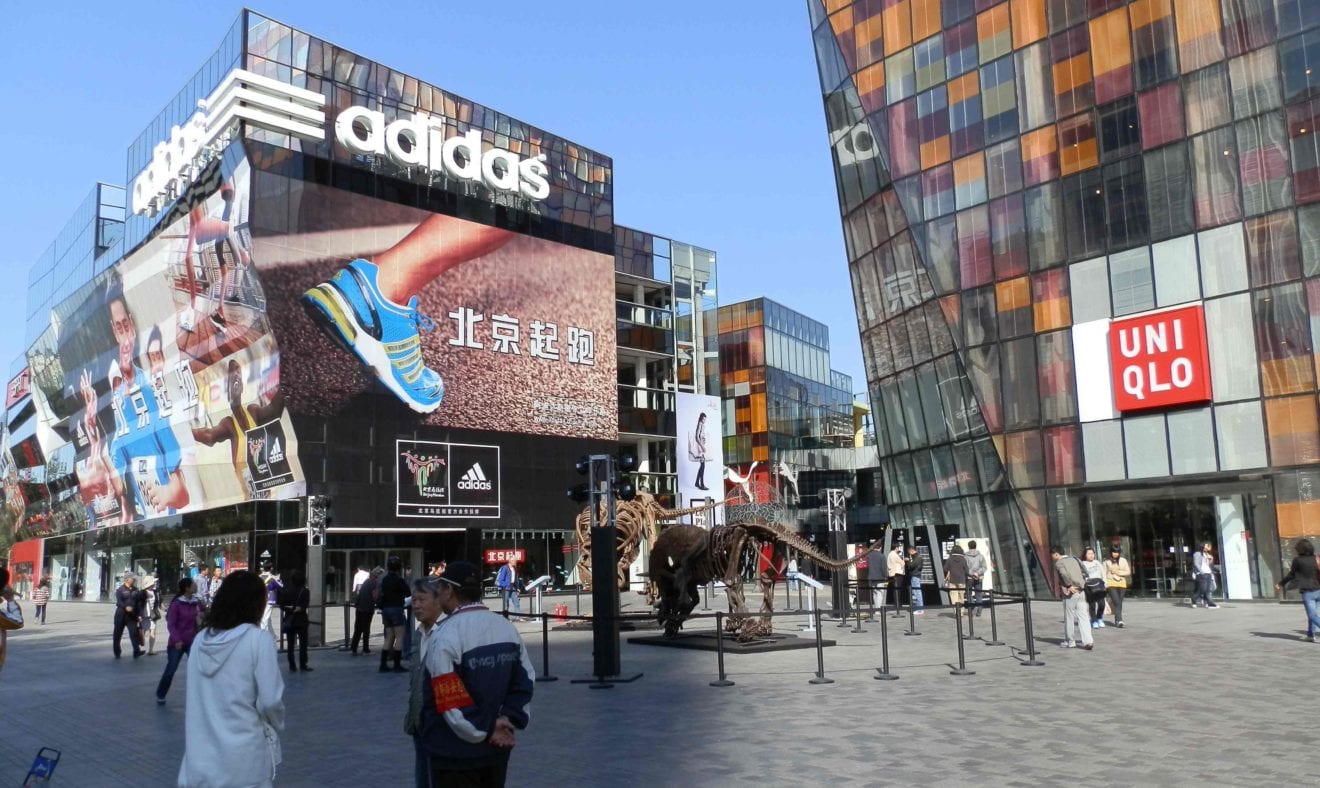
    German sporting goods giant Adidas Group has revealed plans to open 3,000 new stores in China by 2020 as it looks to become the ‘best sports brand’ in the region.

    The company, which has around 9,000 stores in its second largest market, the vast majority of them being franchise stores, announced the plans on Friday (4 March) in Shanghai.

    In a statement sent to just-style, the group said: “China is Adidas Group’s second largest market globally and we still see a lot of potential in this market.”

    The news comes less than two months after Adidas said its Greater China subsidiary achieved sales of EUR2.5bn (US$2.74bn) in 2015 – the company’s highest ever annual sales in the region.

    Adidas has strengthened its position across all key sports categories in the region over the last few years, and launched new segmented retail stores such as women’s, sportswear collective and basketball.

    The group’s new strategy themed ‘Creating the New’ aims to propel Adidas to become the ‘best sports brand’ in Greater China by 2020. The company’s new five-year game plan will serve as a blueprint to seize further growth opportunities.

    Adidas has said the plan will chart the path of the company’s continued growth as it seeks to meet the demands of China’s burgeoning middle class who are placing a higher emphasis on quality of life experiences, and the needs of a nation with an ignited interest in sports.

    The company added: “With ‘Creating the New’, our new strategic business plan, we’ll continue to focus on strengthening our position in key categories and expanding our retail footprint in both lower tier and upper tier markets.”

    Last month, Adidas raised its earnings and sales forecasts for this year, after it exceeded its targets in 2015, thanks to increased marketing investments.

  • The Body Shop Sri Lanka marks brand debut

    The Body Shop Sri Lanka marks brand debut

    The Body Shop has entered Sri Lanka, with conglomerate Softlogic Group signing up for the franchise.

    Founded by Dame Anita Roddick 40 years ago, The Body Shop introduced fair trade to the cosmetics and toiletries industry in 1987, and was the first cosmetics brand to be recognised under the Humane Cosmetics standard for its stand against animals being used for product testing. It has more than 3000 stores in 60 countries.

    Body Shop Sri Lanka 1

    While it has yet to open its first store, Body Shop Sri lanka already has a brand ambassador – Miss Sri Lanka 2006, Jacqueline Fernandez. At a launch event, she spoke about using The Body Shop products since she was a teenager.

    Body-shop

    Also at the launch, CEO Ashok Pathirage said the group had found a “kindred spirit”.

    “Thanks to the synergy of our values, vision and culture, we will have the opportunity to greatly accelerate the business in Sri Lanka.”

  • Toys’R’Us Asia Pacific chief retires

    Toys’R’Us Asia Pacific chief retires

    Toys’R’Us has announced that Monika Merz, president, Asia Pacific, will retire effective May 31. Her successor will be named later.

    Monika-Merz

    As president of Toys’R’Us Asia Pacific, Merz oversees all operations and business activities for the company’s more than 300 stores in Japan, Southeast Asia, Greater China and Australia, responsible for the continued growth, profitability and success of the company in those markets.

    Since she started working at Toys“R”Us, Merz has been instrumental in the development of new store formats and merchandising concepts that have been successfully translated to other markets, ultimately strengthening the company’s position in the global marketplace.

    Dave Brandon, chairman and CEO, described Merz as a highly regarded leader “who has inspired new ideas, demonstrated innovative thinking and unwavering passion for the business and grown our Toys’R’Us brand internationally, even through challenging times and market transitions”.

    Merz’s retirement will bring to a close a remarkable career of nearly 20 years of continuous service to the company. She joined in 1996 as VP and GM, Toys’R’Us, Canada and was promoted to president, Toys’R’Us, Canada four years later. In 2007, she assumed leadership of Toys’R’Us, Japan. Her role was expanded to include responsibility for the company’s stores in Australia in 2011, and, later that year, she gained oversight of the company’s locations and corporate offices in Southeast Asia and Greater China when the company entered a joint venture agreement with Li & Fung to operate these formerly licensed stores.

    “During my time at Toys’R’Us I’ve had many experiences and challenges, but I’ve always been supported by exceptional teams and leaders,” she reflected. “I’m proud of all that we have accomplished and confident that the work we have done to provide a fun and memorable shopping experience for customers will continue after my retirement. After more than eight years in Asia Pacific, I’m now looking forward to returning to Canada and a new stage in my life.”

  • Xiaomi to open 300 retail stores to secure top spot

    Xiaomi to open 300 retail stores to secure top spot

    Xiaomi to open 300 retail stores to secure top spot

    Lei Jun, CEO of the Beijing-based Xiaomi Corp, at the launch of Mi 5 smarthphone. ZHANG JIN/CHINA DAILY

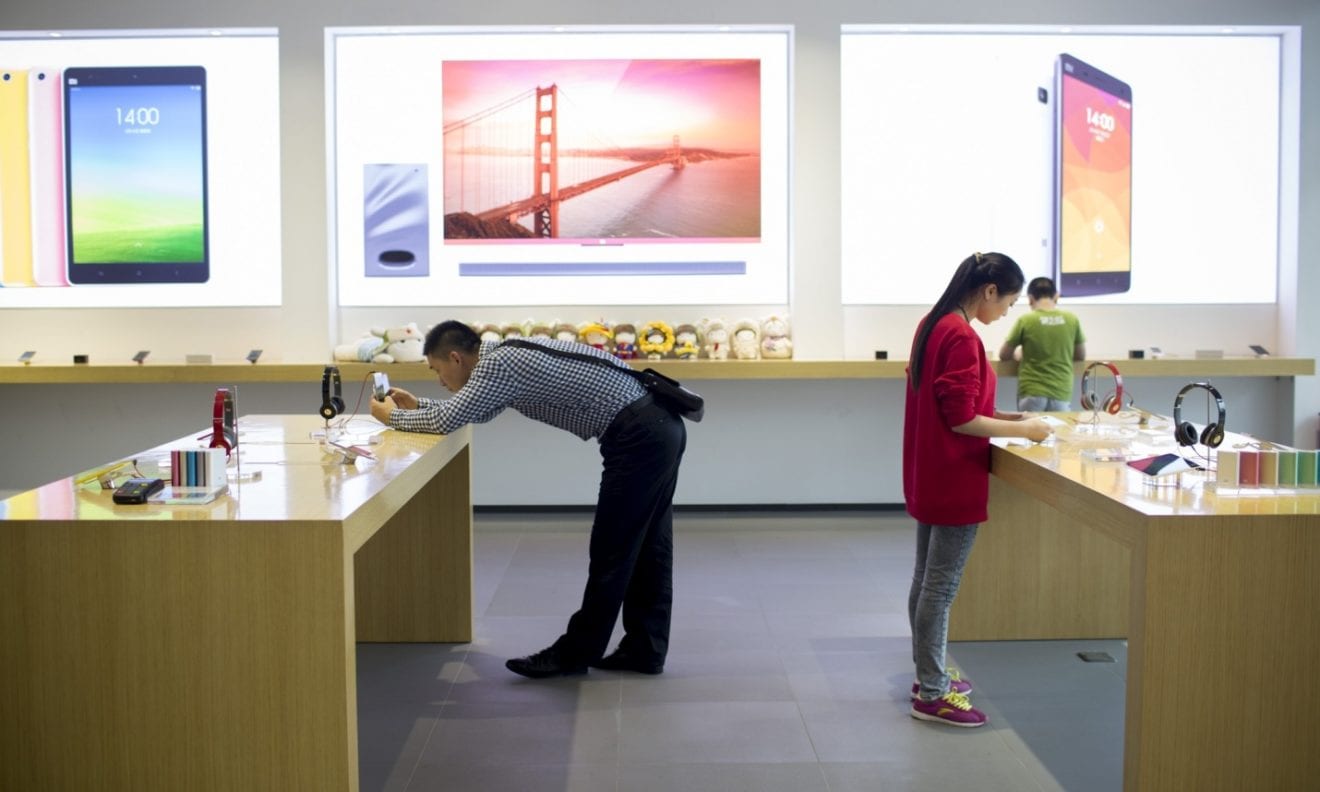
    Smartphone maker Xiaomi Corp on Wednesday debuted its flagship handset and pledged to open 300 retail stores to fight against Huawei Technologies Co Ltd, which is threatening its leading position in China.

    Lei Jun, CEO and co-founder of the Beijing-based Xiaomi, said the new device and offline sales plan will let the challengers know who is the boss on the market.

    “We are sorry other vendors were left disappointed,” Lei said on Wednesday at the launch. He was obviously mocking Huawei’s 2015 plan to get on top of Xiaomi in Chinese market by the year-end. Xiaomi ended up shipping 2 million devices more than Huawei did last year, according to research firm International Data Corp.

    “We are rolling out more top-tier products to secure the No 1 place,” said Lei.

    The company will relay on the new Mi 5 handset to achieve the target. The 5-inch-screen handset comes with a 16-megapixel back camera, a fingerprint sensor, a ceramic back, a powerful processor and a 128-gigabyte storage.

    The retail prices were set between 1,999 yuan ($306) to 2,699 yuan depending on the configurations. In comparison, Huawei’s slightly bigger flagship Mate 8 is selling from 3,199 yuan. The storage and processing power are similar to Mi 5’s cheapest option.

    The Mi 5 will be available on the Chinese mainland starting from March 1, followed by India, according to Xiaomi. However, the product will not enter the United States market although the 5-year-old Xiaomi launched an online store in the US selling power banks and mobile accessories.

    The delayed US release was largely due to lack of necessary patents. Lei said at Wednesday’s event the company is growing its patent pool and has applied about 3,600 patents over the past years.

    China, the world’s biggest smartphone market, will remain the top priority for Xiaomi in the coming years however. Lei said the company will open 200 to 300 retail stores in Chinese cities to boost sales.

    Nicole Peng, director of consultancy Canalys China, said going offline was a huge strategic change for Xiaomi as the company aims to grow sales as the market goes weak.

    Most of the Xiaomi devices were sold online currently. Internet-only sales model helped Xiaomi keep down its operational cost. The decision was made as demand for smartphones in the country stopped to grow because of high penetration rate.

    A number of vendors are also mulling over more stores in smaller cities for bigger sales.

    Apple Inc is heavily dependent on Chinese market and the company eyes to have around 40 bricks-and-mortar stores in the country. The new outlets mainly target buyers in smaller cities such as Qingdao in Shandong province.

    Tay Xiaohan, an analyst from IDC, said the market has changed significantly as telecom carriers are reducing smartphone subsidy.

    “Xiaomi entered the market at a time when the China smartphone market was still growing, and was able to capture a significant market share with its disruptive sales model,” Tay said.

    Company steps into financial services

    Xiaomi Corp has purchased a 65 percent stake in a third-party payment company, indicating that the biggest smartphone maker in China is preparing to step into the financial services sector.

    Xiaomi completed its stake purchase of Inner Mongolia-based Jiefu Ruitong in late January, according to a filing to the State Administration for Industry and Commerce. Jiefu Ruitong provides mobile and Internet payment services. The company said it handled more than $300 million in payment transactions as early as 2011.

    The performance of Jiefu Ruitong is unclear because it is a privately owned firm.

    During Mi 5’s launch, Xiaomi CEO Lei Jun said the new device would support mobile payment using near-field communication technology. The device could also work as a public transit card to pay bus and underground fares.

    Xiaomi to open 300 retail stores to secure top spot

  • Paul & Shark Korea opens first store

    Paul & Shark Korea opens first store

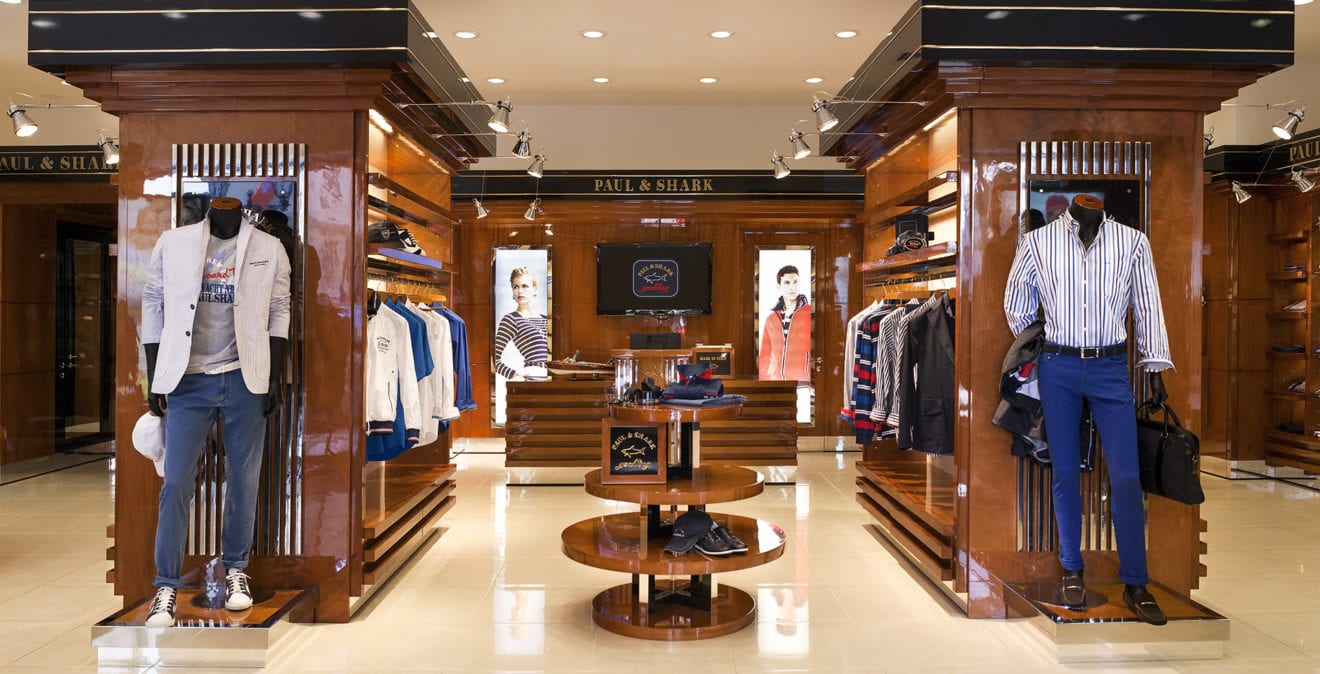
    Luxury Italian lifestyle brand Paul & Shark has opened its first boutique in South Korea, at Incheon International Airport.

    The new Paul & Shark Korea store, run in partnership with Lotte Duty Free, features the brand’s new collections.

    Another two openings are planned for Seoul in the first quarter of this year, according to Paul & Shark global travel retail director Catherine Bonelli.

    Founded in 1976 by the Dini family, Paul & Shark’s men’s, women’s, children’s and accessories collections are available in more than 60 countries.

  • Online shopping is killing department stores in Singapore

    Online shopping is killing department stores in Singapore

    Even grocery items are being bought online now.The rise of e-commerce is sounding a death knell for Singapore’s once-ubiquitous department stores and gadget shops, according to a report by property consultancy group JLL.

    The number of shoppers buying groceries and computer equipment rose around 70% in the last two years, while over 60% of shoppers already buy some clothing or footwear online. The report said that shoppers are buying lower value goods online and higher value goods over $500 in a physical store.

    “We expect online sales of groceries and electronic goods to grow exponentially in the next three years,” JLL said.

    As a result, department stores, supermarkets and houseware shops have reduced in size over the past few years, particularly in suburban malls. In contrast, food and beverage, fashion, beauty and health trades have taken up more space in the last seven years.

    “As shoppers tend to buy lower value goods online, malls are likely to attract higher-priced fashion and beauty brands, even in the suburbs. We expect to see electronics and grocery stores cutting back further in the next three years as more shoppers buy these goods online,” JLL said.

    Latest data from the InfoComm Development Authority (IDA) showed that about 1.44 million Singapore residents shopped online in 2014, 30% higher than in 2012.

    The sharp increase came from shoppers above 35 years old, as those in this group that used portable devices to access the internet rose 50% over two years. Over 70 per cent of those below 35 years old already shop online in 2012.

  • Apple seeks nod to open India stores amid concerns of slowing sales growth

    Apple seeks nod to open India stores amid concerns of slowing sales growth

    Apple sells its iPhones, iPads and Macs in India through third party resellers, and industry analysts estimate that the Cupertino, California-based company has less than a 2 percent share in India’s smartphone market, dominated by cheaper brands.

    The company has filed an application with India’s Department of Industrial Policy and Promotion to open its own stores, Amitabh Kant, secretary at the federal trade ministry unit told Reuters.

    Apple also confirmed the application filing, but declined to give details.

    Its expansion plans in India come at a time when concerns about slowing growth in the United States and China, the world’s most important market for smartphones, have weighed on the company’s stock in the last few months.

    Shares in Apple, the world’s most valuable company by market value, are down 28 percent from their peak in April last year.

    The company operates more than 450 stores in 18 countries. Chief Financial Officer Luca Maestri told Reuters in October that Apple had 25 stores in China and was opening a new one roughly every month.

    Its plans for India have been held back due to restrictions on foreign investment in the retail industry, which require single brand overseas retailers to buy close to a third of the goods sold at their stores from local producers.

    Apple representatives held talks with Indian government officials about a relaxation of the 30 percent local-sourcing norms before filing the application, said a source familiar with the company’s plans.

    Apple’s plans come against the backdrop of initiatives unveiled by Indian Prime Minister Narendra Modi, who met with Apple chief Tim Cook during his U.S. visit last year, to boost foreign investments in India.

    In November, the government eased foreign investment norms in 15 major sectors, including relaxing the mandatory local-sourcing rule for foreign single-brand retailers in the case of “cutting-edge technology” products.

    Kant said his department would examine Apple’s application in view of the changes made for local sourcing.

    For years, India has been a low priority market for Apple as spending power is weaker than in China, where the company’s iPhones swiftly became must-have devices after their 2007 launch.

    But Apple is now looking to boost its market share in India’s rapidly growing market, and the company’s recent growing spend on advertising in the country has indicated an aggressive campaign to sell more.

    India is likely to overtake the United States to become the world’s No. 2 smartphone market in 2017, according to research firm Strategy Analytics. The local smartphone segment is dominated by Samsung Electronics and India’s Micromax.

  • Walmart shuts 269 stores worldwide

    Walmart shuts 269 stores worldwide

    On Friday, Walmart announced it will close 269 stores globally as it struggles to compete with online retailers like Amazon.

    The news came as US retail figures showed lower than expected holiday sales figures across the market.

    Sales rose just 3% in November and December, falling short of the expected 3.7% growth according to the National Retail Federation.

    The Walmart closures will affect 10,000 US workers and 16,000 worldwide.

    The announcement came three months after Walmart chief executive Doug McMillon told investors the company would focus on becoming more nimble.

    “Closing stores is never an easy decision. But it is necessary to keep the company strong and positioned for the future,” Mr McMillon said in October.

    The national shortfall in holiday shopping came even as retailers offered steep discounts to attract customers.

    Online retailing did see a significant increase, rising 9% to $105bn (£73.4bn), but it was not enough lift the overall figures.

    Concerns about holiday shopping added to market concerns as stocks fell sharply. The Dow Jones fell 400 points in morning trading.

    Neil Saunders, chief executive of retail analysts Conlumino, said it was a significant move: “Walmart’s decision to scale back its store numbers in the US underlines how much the retail landscape has changed over the past few years. The blunt truth is that while stores remain a vital part of the retail mix, they are not quite as relevant as they used to be.

    “The growth of online, and especially of Amazon, has undermined that advantage and has given almost all consumers easy access to a comprehensive and relatively cheap assortment of products.”

    He added that where Walmart was going, others would follow.

    Weak

    The weak economic outlook was not confined to the service sector.

    On Friday, the Federal Reserve reported industrial production in December shank by 0.4% the second month of contractions.

    Industrial production, which includes manufacturing, mining and utilities has been hit by a strengthening dollar and global economic weakness.

    “With the dollar still rising at a rapid pace and global demand clearly pretty weak we don’t expect much from the US manufacturing sector this year,” Paul Ashworth, chief US economist at Capital Economics, wrote in a research report.

    Warm weather also hit industrial production figures.

    The unusual temperatures pushed utility output down 2% in December following a 5% decline in November.

  • Sari-sari stores in Davao City to thrive vs 7-Eleven

    Sari-sari stores in Davao City to thrive vs 7-Eleven

    Philippines’ corner stores called ‘sari-sari stores’ will be affected by growing competition from convenience stores sprouting in Davao City but they will continue to survive, according to a local government official.

    Ivan C. Cortez, officer-in-charge of Davao City Investment Promotions Center (DCIPC), said, in an interview with Sun Star Davao, that the increasing number of 7-Eleven stores in the city will affect small retailers’ sales especially those of the ‘sari-sari’ stores.

    However, Cortez said that ‘sari-sari’ stores will continue to thrive as their market is different from convenience stores.

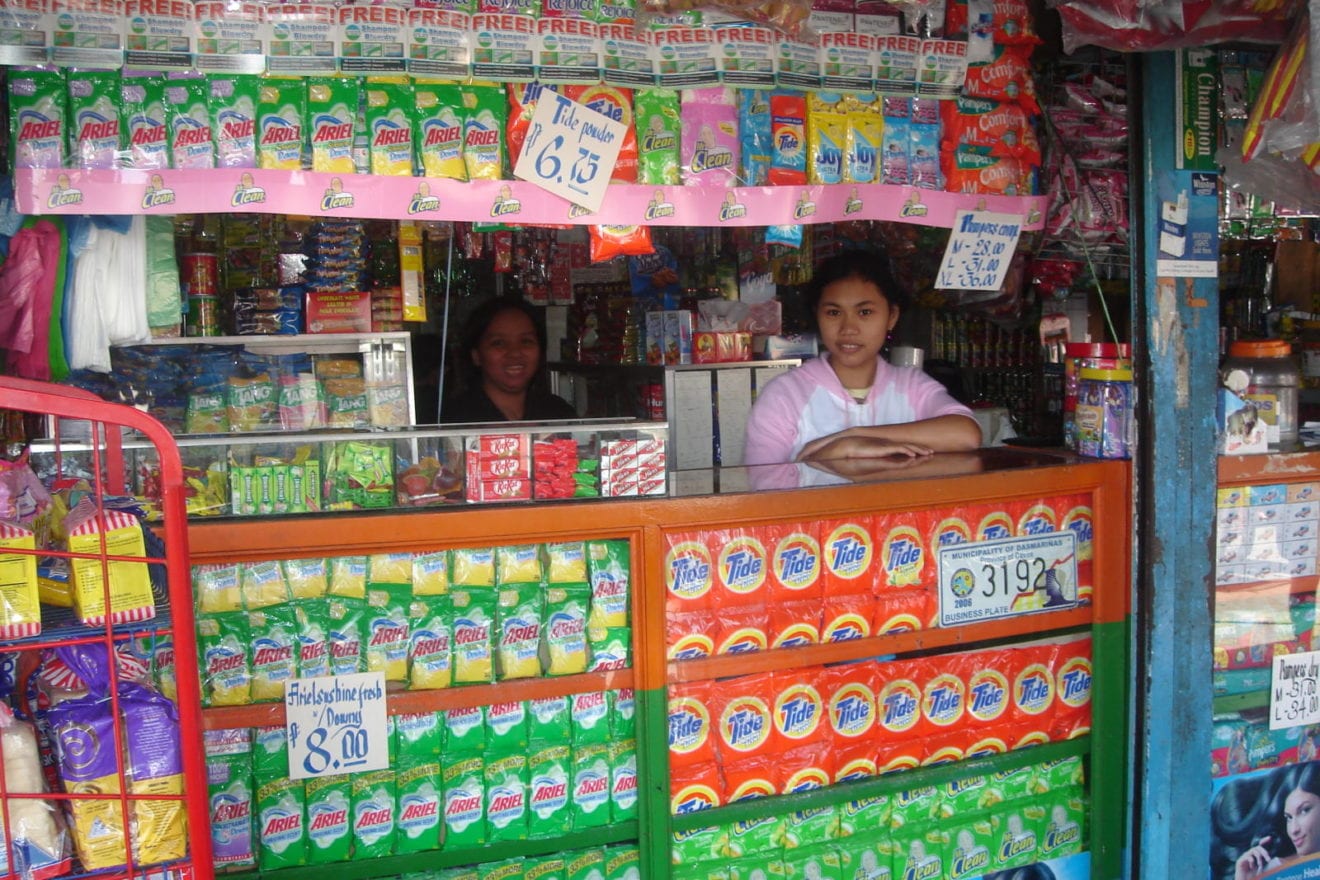
    ‘Sari-sari’ stores, considered as neighbourhood stores, sell a variety of products in retail from a cigarette stick, shampoo sachets, to a small pack of peppercorn. They are ubiquitous in residential areas and sometimes offer goods on credit.

    The market of 7-Eleven and other convenience stores, on the other hand, are mainly young professionals.

    “7-Eleven is an upscale sari-sari store with 24 hours service, this will have an effect on local sari-sari store, on the survival rate, because 7/11 is getting the bulk the sales,” added Cortez.

    7-Eleven, the largest convenience store chain in the Philippines and operated by Philippine Seven Corp. (PSC), has more than 20 stores in the city.

    PSC aims to open 70 stores in Davao City in June this year and 120 stores by 2018 in the entire region of Mindanao.

  • Are physical stores on their way out?

    Are physical stores on their way out?

    The signs are alarming for brick-and-mortar stores. Recent trends have shown shoppers here are increasingly taking care of their shopping needs online, drawn to the increasing convenience (especially during the dreaded festive seasons).

    Retailers such as Qoo10 and Lazada are a hit because of their wide variety of goods at relatively low cost and reliable delivery services. In fact, a recent survey by Blackbox Research of 800 Singaporeans and permanent residents aged 15 years and above revealed that the majority prefer shopping online.

    As far as this year’s Christmas shopping is concerned, 56 per cent of them said they preferred to do their shopping with online retailers versus the 44 per cent who opted for shopping at physical stores.

    Nevertheless, Retail News spoke to remain upbeat and confident about the value of physical stores, stressing that they have a place in the market, providing a human touch and at atmosphere that websites cannot rival.

    Katie Page, chief executive officer of Harvey Norman, agrees and scoffs at the idea of online stores eventually surpassing physical ones. “You can get information about the product online and the price, but that’s it,” she said, adding how physical contact with the product is crucial, especially with women shoppers. “Women like to see that physical aspect, they will go to the shops to see the product.”

    Stenders fills its store with colourful fresh flowers and prides itself on handcrafted body scrubs and soaps with real natural ingredients such as Lavender. — TODAY pic

    Page also stressed the importance of delivering a great shopping experience, pointing out how some retailers forget that. She added: “You need to invest in the brand, and for that, you need space. Some online stores are now opening brick-and-mortar outlets, right?”

    Agreeing, Christophe Cann, group chief executive officer of Robinsons Group (Asia), said although the company has plans to have an e-commerce function in the future, online shopping is “just another avenue for customers to make their purchase”.

    “We are not worried about the trend as we believe that brick-and-mortar business will remain relevant to customers,” he affirmed.

    “As long as Robinsons continues to entertain our customers and provide an enjoyable shopping experience … I believe we are here to stay.”

    This, he added, is achieved through initiatives such as designer trunk shows, exclusive beauty launches and meet-the-designer events that complement ongoing efforts to constantly bring in new brands and products.

    All about atmosphere and service

    Retailers are confident that nothing beats being at a physical store, as good experiences will ensure customers return.

    “We cultivate a friendly ambiance and treat our customers as friends,” said a spokesperson for skincare and cosmetics store Stenders, which prides itself on handcrafted body scrubs and soaps made with natural ingredients. “Most of our customers love coming back to test, try, and smell and feel the product, and interact with our store associates,” he continued.

    (To boot, customers will also receive a kaleidoscope, as part of its A Kaledoscopic Christmas campaign.)

    The obvious physical connection cannot be overemphasised, as much of the joy of retail, said Darellyn Lau, managing director of candy and gift store Sophisca Singapore, is in touching and feeling the merchandise.

    “The desire for instant gratification is still key with some buyers, who appreciate the ability to touch, feel and buy an item all in the same moment, which is only possible at a physical store.”

    Still, aware that online shopping is time-saving for people with busy schedules, she added that the company is offering free delivery services for purchases above S$250 (RM 760).

    Robinsons, too, said it has had to rethink its strategies to improve its services and in-store experiences.

    “It has motivated us, as brick-and-mortar retailers, to sit up and listen, to observe, learn and adapt … This new platform sheds light on what consumers are looking for, as well as the services they desire,” said Cann.

    Consequently, the company has made arrangements for delivery services with every S$200 nett spend and complimentary personal shopper services at its flagship store at The Heeren.

    “In this day and age … customers need a good reason to visit you,” he added.

    “Retail is not just about transactions but experiences. Hence, we constantly remind our staff from all departments about the company’s vision and mission to ensure that as an organisation, we always put the customer at the centre of everything we do.”

    Online complements, not threatens

    Some retailers say their online stores serve more as a complementary service to give consumers more options.

    Dominic Wong, chief operating officer of beauty-care chain Watsons, said while its new eStore (launched this year) is a quick and convenient option for busy customers, its physical stores “serve as a good platform for customers to discover and try new products, especially for make-up and beauty items”.

    Its in-house pharmacies also provide another touch point for customers who need health consultation and recommendations on supplements.

    This Christmas, it is also offering a free gift-wrapping service for purchases made.

    While the online store’s performance is “growing strongly”, the company “see(s) physical stores flourishing alongside online channels”, he continued, adding that it will continue to be on the lookout for new ways to improve and engage customers better.

    Its recently revamped Ngee Ann City and Bugis outlets, for instance, cater better to the demographics and buying patterns of customers in the area, and give clearer demarcation of the different product categories, said Wong.

    A Uniqlo spokesman, too, said the fast-fashion brand’s online store is an extension of its physical store, giving customers the option of shopping from home and on-the-go.

    However, its staff has been specially trained to provide assistance and recommendations by catering to the needs and queries its customers may have in store, she added.

    “We believe this personal touch is key to create an enhanced shopping experience and will keep customers coming back despite the convenience of online shopping.”

    Clearly, though, the advantages of both platforms remain complementary. “Shoppers are still basing their decision by checking online for reviews and information before stepping into the stores and vice versa. The relationship between off-line and online is, in fact, a symbiotic one … ,” said Publicist PR’s director, Cecilia Tan.

    Pointing out that physical retailers should focus efforts on creating a stronger in-store experience, Tan added: “As a PR and brand consultancy, we recommend that clients focus on their core group of customers … It is important to keep them close through customer perks and in-store activities.”

    She stressed that “retailers need to integrate their communication campaigns through both traditional PR and digital PR; that is the best way to ensure customers will want to visit a physical store, validate their choices, and ultimately (make a) purchase after researching about their brand online”.

    For other stores, online sales serve as a platform to reach out to more people. Men’s Grooming Store WhatHeWants has seen online sales more than double compared with three years ago. Online sales currently make up 30 per cent of its total sales.

    Its founder Tan Seng Hwee said he is excited about the online trend.

    “The online space is not limited to the space it occupies, unlike a physical store. Besides Singapore, my sales revenue comes from Malaysia, Australia and Indonesia,” he noted.

    “The trend of buying online is definitely making big waves with the increasingly tech-savvy crowd, and the widespread use of tablets and mobile phones. Coupled with lower prices and deliveries right to one’s doorstep, buying online definitely has many plus points,” he added.

    Pointing out that physical shops need to maintain a higher margin in order to cover rental and staff costs, he said prices in physical shops “can never be cheaper than online stores”.

    “In the past, retail businesses expanded by opening more physical shops.

    “However, in Singapore, the high rentals and labour crunch limits scalability. For a company to grow further, moving online is the only way to go,” he explained.

    “While retail stores are still important, the retail industry in Singapore has to learn how to adapt to the  new online world.”

  • Blackmores cuts the ribbon on Bondi store amid mad China scramble

    Blackmores cuts the ribbon on Bondi store amid mad China scramble

    Blackmores chairman Marcus Blackmore admits he had no idea just how much the opening up of China would turbocharge sales of his company’s vitamins, creams and supplements.

    The ASX-listed natural health business has been showered with awards this year while booming sales have seen the stock light up the local sharemarket.

    Around 80 per cent of our products are sold through pharmacy in Australia and they give fantastic advice.

    Christine Holgate, Blackmores

    Shares in Blackmores, of which Mr Blackmore owns 24.5 per cent, have surged from $32 in January to around $189, giving the company a market value in excess of $3 billion.

    “It has been an unbelievable year,” Mr Blackmore told Fairfax Media at the unveiling of the company’s first retail store in Australia.

    Advertisement

    “It is beyond any expectations. We’ve been in China for four years but we had no concept of what China would deliver.”

    At a recent dinner in Shanghai Mr Blackmore met a man from Guangzhou who runs three hospitals treating 20,000 people a day with traditional Chinese medicine.

    He said that China’s long history of using traditional medicines means customers in that market are much easier to win over.

    “Chinese people have a very clear understanding of the philosophical values of natural health,” he said.

    Blackmores floated on the ASX 30 years ago, and for most of that time the company sold 3000 tubs of vitamin E cream a month. In November 2015 the company sold 800,000 tubs of vitamin E cream.

    For the three months to September 30, Blackmores reported a 64.7 per cent increase in sales to $162.2 million and a 161.5 per cent increase in profit to $22.6 million.

    Mr Blackmore said “things come in threes” and the opening of Blackmore’s first Australian retail store at Bondi Junction Westfield caps off the trifecta.

    The other two things brightening the vitamin king’s mood happened last week.

    Last Thursday Blackmores boss Christine Holgate was named chief executive of the year by CEO Magazine, and on Friday federal trade minister Andrew Robb awarded Blackmores the health and biotechnology exporter of the year award.

    New store boosts connection

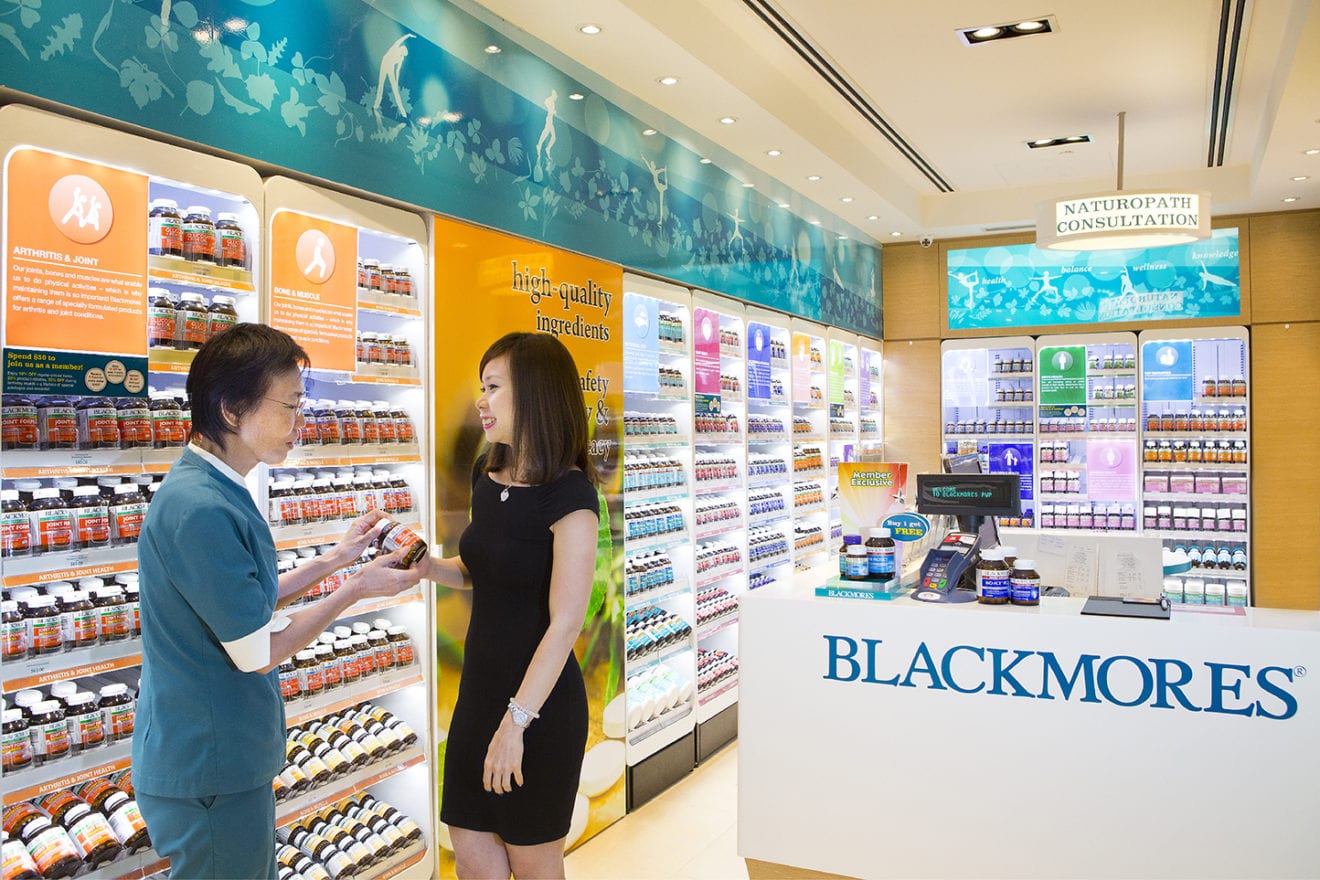
    Ms Holgate said the Bondi store is not about building a retail presence across Australia but is intended to help connect with Blackmores customers.

    “We are not going to become retailers, we partner with pharmacy. Around 80 per cent of our products are sold through pharmacy in Australia and they give fantastic advice,” she said.

    “What this allows to do is to bring our products and our therapies much closer to the consumer and enables us to listen to the consumer and better understand their health needs.”

    While Ms Holgate is trying to deepen ties with her local customers, the big issue she has is satisfying voracious Asian consumers.

    In the past six months Blackmores has increased it production capacity by 60 per cent. The company has hired 100 extra people but has now run out of office space.

    In November, which Mr Blackmore believes was “probably a record month”, Blackmores produced 2.7 million bottles of product. It will have capacity to produce 4.2 million bottles a month in April next year.

    “The things that keep me awake at night are: availability of raw materials, availability of raw materials, and availability of raw materials,” Ms Holgate said.

    In some product lines there is a natural brake on boosting production immediately. For example, evening primrose oil, a market dominated by Blackmores, comes from a plant harvested once a year.

    In other cases Blackmores is constrained by its strict quality criteria.

    Ms Holgate is loath to put the brand name at risk by compromising even slightly on quality.

    “I’m sure I could give you a lot more sales, but not at the quality levels we want,” she said.

    Last month Blackmores inked a joint-venture deal with dairy group Bega Cheese to supply infant formula and other nutritional products to Asia, opening a range of new opportunities for both companies.

    Ms Holgate said the company actually uses a dairy rival, New Zealand’s Fonterra, as a case study for an internal quality workshop.

    Fonterra has been embroiled in a number of dairy food scandals including the 2009 melamine crisis in China and the false botulism alert, which prompted a massive product recall, in 2013.

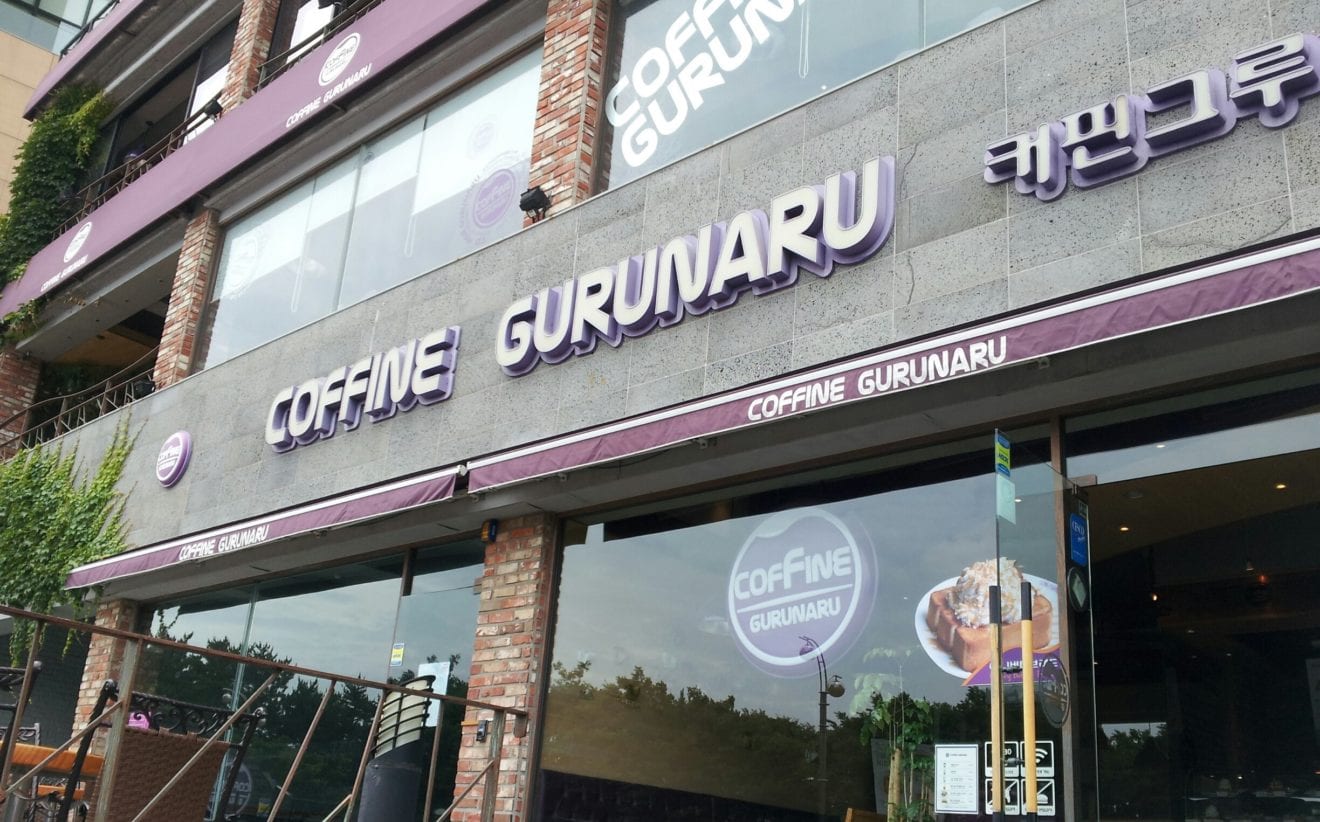
  • Korea’s Coffine Gurunaru plans China foray

    Korea’s Coffine Gurunaru plans China foray

    Korean coffee franchise Coffine Gurunaru is to open one of its largest stores in Hainan, China in the first stage of a planned China rollout.

    The new store is in the middle of Lan Kwal Fong St, the main street of Hainan, and is described as “exceptionally large in size” for a coffee franchise.

    Hainan, sometimes referred to as the ‘Hawaii of the East’, is a major holiday destination for Mainland Chinese.

    Management of Coffine Gurunaru say the extraordinary size of the cafe is relative to the size of the development where it will be located. The world’s largest resort group, Mission Hills, owns resorts, golf courses and shopping malls. It is building the world’s largest K-town in Hainan, where Coffine Gurunaru will open its Chinese flagship.

    The interior will be designed to be “modern and natural”, says a spokesman for the coffee house.

    Korea’s Coffine Gurunaru

    Coffine Gurunaru is a compound name combining coffee and wine. It was the first coffee house in Korea to offer both coffee and wine. Founded in 2007, it has about 120 stores in South Korea, including franchised stores.

    The cafes’ interiors, including the chairs and walls, are decorated in a cheerful purple, intended to refer to the color of wine.

    Besides beverages, the stores serve a range of salads, panini sandwiches, signature cupcakes and honey bread.

    Coffine Gurunaru has not disclosed how many stores it will open in China, but has confirmed it will build a network.

    Korea’s Coffine Gurunaru interior