Tag: Taiwan

  • RateX expansion plan after latest investment

    RateX expansion plan after latest investment

    Singapore-based payments startup RateX has raised S$3 million (US$2.3 million) in a pre-series A funding round.

    RateX is a free browser extension that automatically provides shoppers with the lowest exchange rate without transaction fee for overseas purchases through e-commerce platforms. It also allows users to automatically apply coupon codes upon checkout.

    RateX seamlessly integrates with such e-commerce platforms as AirAsia, Amazon, Expedia, Lazada, Singapore Airlines and TaoBao. It also works with payment processors Adyen and Alipay. It works as a browser add-on to Google Chrome and Firefox.

    RateX says its users have saved more than S$264,000 through lowered exchange rates and transaction fees, and $396,000 through discount coupons.

    “At a time when online commerce is booming, we want shoppers to pay less for their overseas purchases,” says RateX CEO/co-founder Jake Goh. “We are doing this by solving e-commerce and financial inefficiencies inherent in cross-border commerce. These include markups around transaction fees and foreign-exchange rates.”

    Research firm Frost & Sullivan says Southeast Asia is the world’s fastest-growing internet market. The gross merchandise value of e-commerce will rise to US$65.5 billion by 2021, up from $14.3 billion in 2016. Meanwhile, about 89 per cent of Singapore shoppers use websites beyond Singapore, with the average online shopper in Singapore spending around US$1066 each year on e-commerce transactions.in

    “Our users can now save up to 20 per cent on their purchases.” says Goh. “We are achieving this while bringing affiliate sales to our merchant partners – a win-win situation for all.”

    RateX is currently available for Singapore users on Firefox and Google Chrome desktop browsers. It has also just launched its mobile app (RateS).

    Its latest funding will be used to drive the launch of RateX’s mobile app in Singapore and Taiwan this month, as well as RateX’s expansion into Taiwan and Indonesia this year.

    Participating investors include Alpha JWC Ventures and Insignia Ventures Partners alongside other angel investors.

  • E-business of Giordano International looks good

    E-business of Giordano International looks good

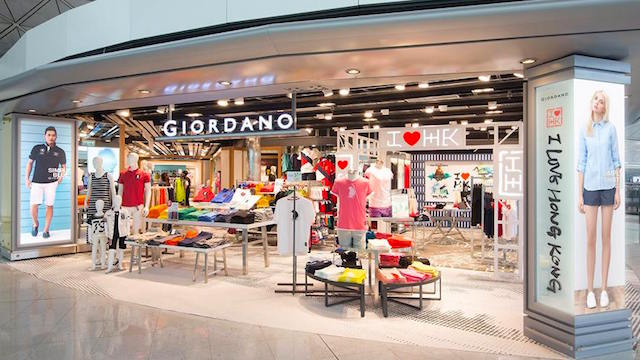
    E-business last year was particularly strong for apparel retailer Giordano International.

    Overall, consolidated sales reached HK$5.4 billion, up 5.2 per cent. Group comparable-store sales and comparable-store gross profit rose  by 5.2 and 5 per cent respectively.

    Consolidated gross margin edged up by 0.1 points to 59.5 per cent.

    Profit after income taxes attributable to shareholders of the company was $500 million,
    an increase of 15.2 per cent over 2016.

    Operating profit rose by 21.3 per cent, with most regions having double-digit growth, particularly Southeast Asia, Mainland China and Taiwan. The group’s business in Vietnam was acquired on July 1.

    With an improved merchandise assortment, Indonesia and Malaysia delivered good results.

    Operating profit increased by 18.6 and 26 per cent for Indonesia and Malaysia respectively. In Singapore, operating profit increased by 31.2 per cent, attributable mainly to the gross margin improving by 1.7 points to 63.7 per cent.

    Unusually strong sales from Thailand in 2016 resulted in an unfavourable year-on-year comparison. Operating profit declined by 20.1 per cent in local currency terms.

    A surge in net profit for South Korea – a 48.5 per cent JV under an independent management team – resulted from better cost control, closure of non-performing stores and enhancement in gross margin.

    Giordano had a network of 2414 stores at the end of December, of which 1268 were standalone outlets. Most stores were in Greater China, South Korea, Southeast Asia and the Middle East.

    Meanwhile, the group’s e-business is directly managed and derived mainly from third-party platforms as well as its own proprietary website in Greater China. This channel generated $310 million in revenue at a 31.4 per cent growth rate.

    Accounting for 93.2 per cent of the group’s e-business sales, Mainland China continued its momentum and recorded a 28.2 per cent increase in sales on various platforms combined.

    Giordano’s e-business in Taiwan was revamped during the year to become its second-largest online presence.

  • No more airport queues for overseas tax refund thanks to WeChat, Alipay

    No more airport queues for overseas tax refund thanks to WeChat, Alipay

    WeChat Pay and Alipay, China’s two biggest mobile payment platforms, have recently forged partnerships with tax refund companies to enable Chinese tourists to obtain rebates on their purchases via their respective mobile apps.

    Within this year, WeChat also plans to offer instant refunds in-store overseas as it competes for a larger share of rising Chinese tourist spending abroad.

    Their strategy is driven by how China has embraced mobile payments faster than any other country and is also the biggest source of outbound travellers. In 2016, mobile payment transactions in China reached US$5.5 trillion, making the country the largest mobile payments market in the world, according to iResearch.

    Both WeChat Pay and Alipay have been expanding their services as mobile payments are used for everything from food delivery, taxi rides and in-store purchases, both on the mainland and abroad.

    WeChat Pay, operated by Tencent Holdings, and Alipay, the payments subsidiary of Ant Financial Services Group, account for a combined 66 per cent of the third-party payments market in China, based on estimates of Analysys International.

    Ant Financial is an affiliate of New York-listed Alibaba Group Holding, which owns the South China Morning Post.

    WeChat Pay and Alipay, along with its overseas mobile payment partners, have estimated a total of 600 million and 800 million users, respectively.

    Late last month, WeChat Pay partnered up with Swiss firm Global Blue to offer an instant tax refund service for Chinese tourists leaving from Madrid airport, while Alipay rolled out a similar service for returning Chinese tourists at Singapore’s Changi airport.

    With those instant tax refund services, users can get their rebates settled in yuan and sent to their WeChat Wallet or Alipay accounts immediately once their tax refund forms are stamped and approved at the airport counter.

    The rising affluence of Chinese consumers and the boom in outbound China tourism also made it attractive for WeChat Pay and Alipay to facilitate tax rebates.

    According to a recent report by the China Tourism Academy and online travel agency Ctrip, an estimated 6.5 million outbound Chinese travellers spent this year’s week-long Lunar New Year holiday overseas. Each tourist was expected to spend an average of 9,500 yuan (US$1,500) on their trip.

    “Offering instant tax refunds is a smart strategy by both Chinese players to capture further market share beyond what is likely to be a close to saturated market within the mainland,” said Michael Yeo, research manager for financial and retail insights at IDC.

    “Many outlets across Asia, Europe and Northern America already accept both WeChat and Alipay payments. Offering instant tax refunds provide convenience and may prove to be an effective tool in luring these tourists to switch from other payment methods, such as cash or credit card, for such trips.”

    Similar to other WeChat Wallet and Alipay programmes, the tax rebate service makes use of quick response (QR) codes. The tax refund officer scans the QR code on a user’s smartphone to credit the refund to their account.

    While Alipay allows users to access the QR code in the Alipay app, WeChat Pay users will have to search for its WeChat Tax Refund feature to process the refunds.

    Global Blue and WeChat Pay are now working to offer in-store refunds, which means that Chinese travellers would no longer need to line up to get their tax refund forms processed at the airport. The service is expected to be rolled out across Europe within this year, according to a joint statement.

  • Carrefour Asia comes back strong

    Carrefour Asia comes back strong

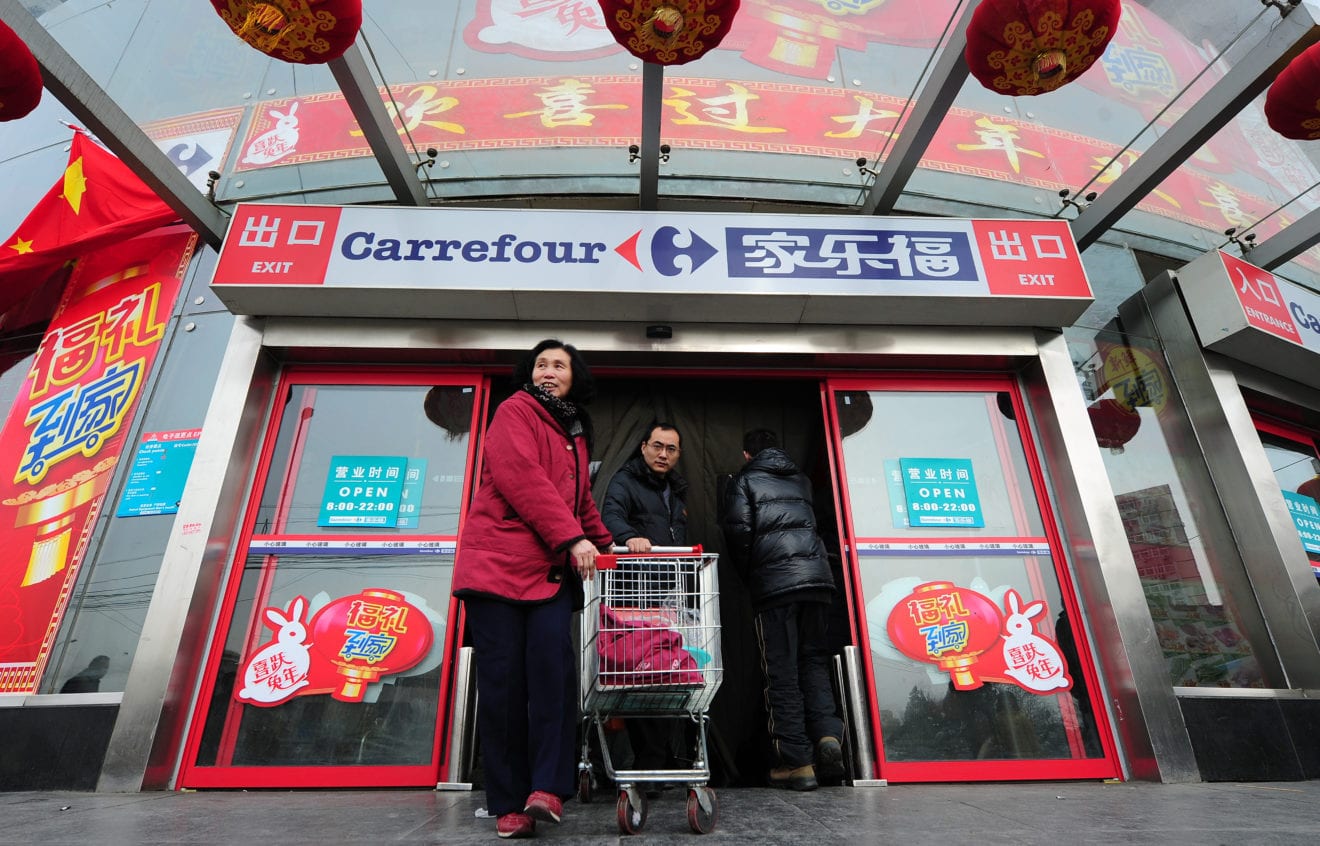
    French hypermarket retailer Carrefour is reaping the rewards of restructuring its Asian operations.

    The Carrefour Asia business has converted an operating loss of €58 million in 2016 to a return on investment of €4 million US$4.4 million) last year, according to the company’s annual results released overnight.

    “Carrefour is back on the offensive and investing to resume growth,” says chairman/CEO Alexandre Bompard.

    Carrefour says the group reaped the fruits of action plans implemented in China, in particular in cost reductions, in a market that remains highly competitive and marked by rapidly changing consumption habits.

    In Taiwan, sales growth remained strong and operating margin continued to improve.

    Globally, Carrefour experienced a slowdown in like-for-like sales at 1.6 per cent, but that is down from 3 per cent in 2016. Net sales totalled €78.8 billion.

    Group EBITDA stood at €3.6 billion, down 6.4 per cent at current exchange rates, with margin slipping to 4.6 per cent.

    This reflected strong competitive pressure, a rise in distribution costs in the group’s main markets, and an increase in depreciation after a period of significant investments.

    Gross margin stood at €18.2 billion, or 23.1 per cent of sales, down 38 points.

  • Taiwan tea brand retailer charts path to sales growth

    Taiwan tea brand retailer charts path to sales growth

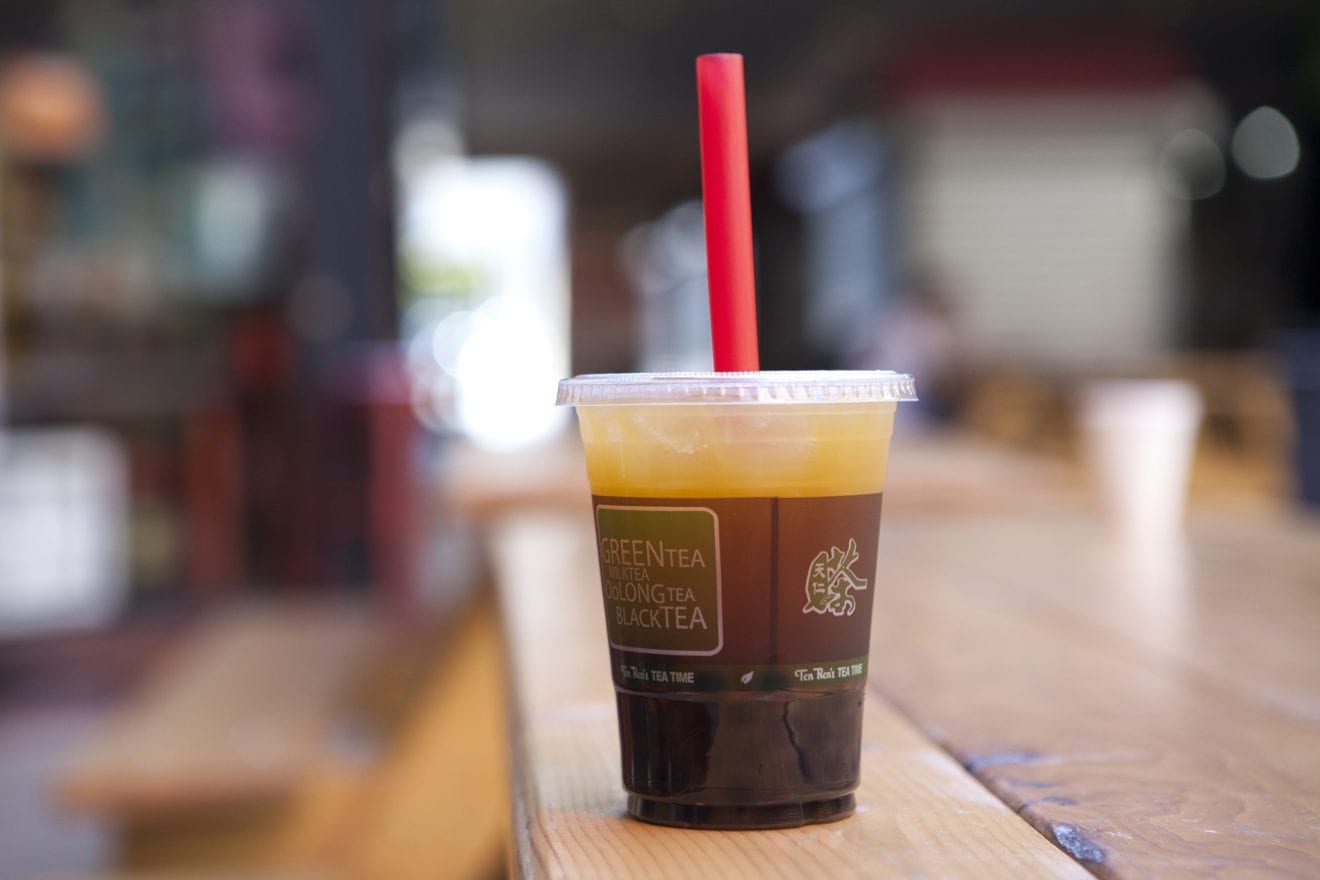
    B&S chairman and chief executive Andrew Chan Kam-chuen, said last week that a new TenRen tea outlet will be opened in Ma On Shan next month in addition to its existing 32 outlets. Another eight branches will be opened in the fiscal years of 2019 and 2020.

    Chan also said the company will assess the market before raising the price of TenRen’s menu and ensure the balance of profit and market response. The average price of TenRen tea products is HK$20.30.

    He added that although rents and staff costs are high, prices of materials and ingredients for beverages are reasonable.

    Chan said the company will focus on further developing its newly-introduced brands and look for more overseas popular brands. He said B&S will first explore Guangdong province when considering expansion.

    The retailer which has the right to self-operate the popular takeaway beverage brand TenRen in Hong Kong opened its retail book last Monday to raise up to HK$100 million by issuing a total of 100 million shares at a price range of 80 HK cents to 100 HK cents.

    The minimum investment for one board lot of 4,000 shares is HK$4,040.31.

    Capital raised through the initial public offering will also be used to lease, set up new warehouse facilities, upgrade the enterprise resource planning system, hire three more marketing sales people as well as for general working capital purposes.

    With over 27 years of operating history in Hong Kong, the food and beverage company’s business portfolio also includes distribution. Its top products include UHA and Hsin Tung Yang.

    To attract overseas brand owners and local retailers, B&S provides supply chain solutions in its distribution operation, including arranging inbound logistics, relabelling the products to comply with relevant Hong Kong food safety and labelling laws, repackaging the products to suit the needs of retailers or the consumers, and formulating marketing and sales strategies.

    TenRen, which has a presence at bookstore Eslite, is the largest revenue contributor in the retail business, which accounted for 92.2 percent of income. With a market share of 24.3 percent, the premier Taiwanese tea-based beverage brand has opened retail outlets in Taiwan, Japan, Singapore, Malaysia, Hong Kong, Canada, Australia, and North America.

    B&S International primarily offers takeaway drinks at its 32 self-operated retail “TenRen” tea outlets, including the milk tea series, the classic tea series, the fresh juicy tea series, the icy drink series and the winter decaf series.

    Other products include tea-flavored ice-cream, packaged tea leaves, packaged snacks as well as tea ware.

    Apart from TenRen, B&S also operates Japanese cheesecake retail outlets Uncle Tetsu and British luxury chocolate brand Hotel Chocolat in Hong Kong, although the latter two did not contribute significantly to its profit.

    Its three licensed Japanese cheesecake retail outletsUncle Tetsu in Hong Kong contributed up to 9.4 percent of revenue in the past several years. It mainly offers cheesecakes, cheese tarts, and panna cotta.

    Three retail shops of Hotel Chocolat, a recently set up British chocolate brand in Hong Kong, has not made a significant contribution yet.

    The company has a very high debt-to-assets ratio. The gearing ratio exceeded 109.8 percent in the past three years.

    Net profit and revenue have grown in the past three years, but B&S considers cashflow as a risk as it may be subject to a liquidity gap due to mismatch in time between receiving payments from customers and payments to suppliers. Its trade receivables turnover days are up to 103.5 days and trade payable turnover days are up to 13.1 days.

    As a result, it has to rely on internal resources and bank borrowings to maintain cashflow and to fund daily operations.

    “If we fail to manage the cashflow mismatch or if the mismatch increases, we may have higher funding requirements either from our internal resources or from bank borrowings to meet our payment obligations and our results of operations and financial condition may be materially and adversely affected,” the company says in the IPO prospectus.

    Lego Corporate Finance Limited is the sole sponsor. Lego Securities Limited is the sole global coordinator and one of the joint bookrunners. Kingsway Financial Services Group Limited is one of the joint bookrunners and one of the lead managers.

  • Hong Kong’s Sa Sa cosmetics retailer pulls out of Taiwan

    Hong Kong’s Sa Sa cosmetics retailer pulls out of Taiwan

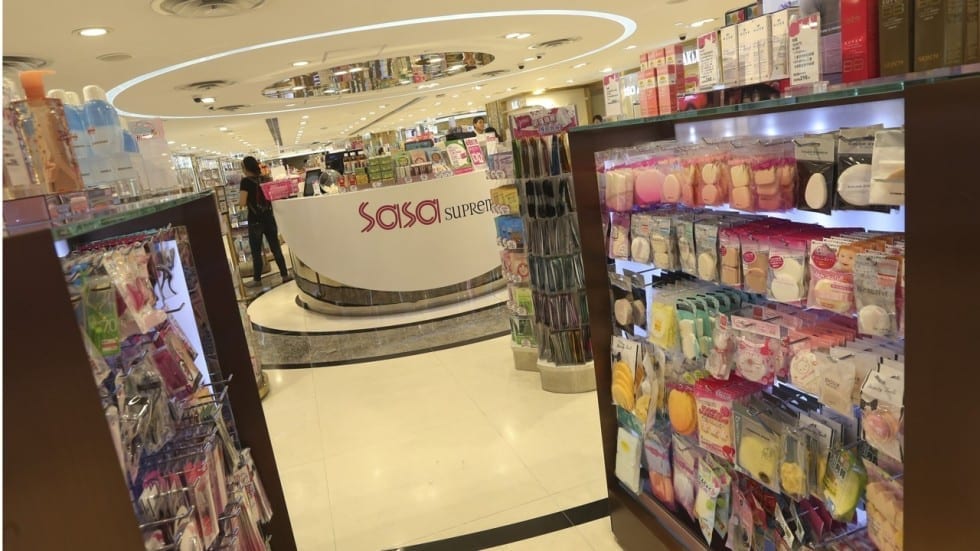
    Hong Kong’s largest cosmetics retailer Sa Sa International Holdings said Wednesday it will shut all its shops in Taiwan after losing money for six consecutive years.

    Sa Sa has 20 stores across the island according to its official website, and employs about 260 local staff. All the shops are expected to be closed by the end of March, the company said in a statement.

    The retailer’s Taiwan operation has been a drag on the group’s business, with turnover decreasing by 11.5% to 154.3 million Hong Kong dollars ($19.7 million) during the 10 months ended in January.

    “The group’s performance in Taiwan has been persistently weak, and the possibility of improvements is low into the foreseeable future,” said Simon Kwok, Sa Sa chairman and CEO.

    The Hong Kong-listed retailer operates about 280 shops — mostly in Hong Kong and mainland China — and employees about 5,000 staff. It also has operations in Singapore, Malaysia and Macau.

    Exiting the Taiwan market will allow Sa Sa to rationalize its resources to gear up for better opportunities in other markets and the development of e-commerce businesses, the statement said.

    The company said it believed the retail market in mainland China, Hong Kong and Macau would benefit from major infrastructure projects linking the mainland and the two special administrative regions, such as the Guangzhou-Shenzhen-Hong Kong Express Rail Link and the Hong Kong-Zhuhai-Macau Bridge. Both are expected to be officially rolled out this year.

    “To fully capture the opportunities that will arise from such developments, the group has decided to reorganize its business proactively by closing its loss-making operations in Taiwan,” the company said.

    While Sa Sa expects the store closures in Taiwan to result in a loss, it said the action will have limited impact on overall financial performance, as the affected stores only contribute about 2.5% of the company’s revenue.

    Sa Sa has been a popular brand with mainland tourists to Hong Kong, who contribute roughly 60% of the group’s revenue in the city. But its sales slumped in the past two to three years, as wealthy mainland shoppers traveled further afield for more diverse experiences.

    In the past few months, the company has recorded a robust performance in Hong Kong and Macau, thanks to the recovery in tourism. Sales in the two markets rose 8.1% to HK$1.89 billion in the quarter between October and December, compared with the same period last year.

    Turnover in mainland China, Singapore and Malaysia increased 13%, 3.6% and 3.9% respectively during the period.

  • Valentine’s Day : who are the big spenders in Asia-Pacific?

    Valentine’s Day : who are the big spenders in Asia-Pacific?

    People who live in Mainland China are, on average, Asia’s biggest Valentine’s Day spenders, according to the results of a MasterCard poll which tracked spending around the romantic occasion in the Asia Pacific region.

    They are prepared to spend US$274 on Valentine’s Day (February 14) presents, with Taiwan and Hong Kong following closely on US$245 and US$231 respectively.

    The survey, conducted by the American multinational financial services firm, involved more than 9,100 respondents from 18 Asia Pacific markets and began last October. Singapore, with US$180, ranked fourth and Thailand completed the top five on US$145.

    The amount Chinese couples plan to fork out has dropped slightly from last year’s US$310, due to the strengthening of the Chinese yuan against the US dollar and the fact that Chinese Lunar New Year (February 16) falls just two days later in 2018—in 2017, Chinese New Year fell at the end of January 2018.

    The run-up to Valentine’s Day has also witnessed a decrease in the sales of fresh flowers in China.

    This is because of the unusually cold weather experienced by the country this winter and the aforementioned date clash, China Daily noted.

    China has its own equivalent to Valentine’s Day known as the Double Seventh Festival, as well as the Qixi Festival.

  • Ril Creed launches in Hong Kong

    Ril Creed launches in Hong Kong

    RIL CREED’s collection of sustainable and ethical Japanese handbags opens its first flagship boutique in Hong Kong.

    Launched in 2012 in Japan and 2014 in Hong Kong, The Japanese handbag label RIL CREED is designed by Hanada Kazue, a seasoned designer who has been the design chief at the coveted Kitson Japan.

    With over two decades of experience, Kazue’s designs are made for the modern working women on the go. Using only fine genuine leather, with on-trend colours and versatile designs, each of RIL CREED’s handbags are made for every smart-casual occasion.

    Made to empower every modern women, each RIL CREED handbag is designed in Tokyo and handmade by artisans with age old craftsmanship. With a vision to revolutionize the handbag industry by using sustainable, upcycled materials and encouraging women to see beyond luxury items, RIL CREED redefines handbags as a tool to collect experiences and a companion in women’s journey to change the world.

    RIL CREED’s latest collection is inspired by owls, a spirited animal that symbolizes a deep connection, intuition, and wisdom of the soul. It represents change, transformation, and clarity. The brand aims to empower women through efforts to use sustainable materials and offcuts from factories. This season, upcycled sheepskin, faux fur and suede has been transformed into clean, elegant and effortless designs.

    Born in the 1970s, Hanada Kazue is Chief Designer of one of Japan’s most sought-after handbag brands, RIL CREED. Previously the design chief at Kitson Japan, Hanada has a deep understanding of what a woman needs when it comes to handbags. She has designed some of the bestsellers for the JAYRO, Kitson and Julia Parker labels, and brings to RIL CREED her renowned expertise.

    A seasoned handbag designer with over 20 years of experience, Hanada has created a beautiful, smart-casual collection for RIL CREED using only the finest genuine leather and horsetail in a variety of on-season, contemporary colours.

    These fashionable and practical designs from Hanada have been extremely popular amongst professional women in Japan and California, and have now set pulses racing amongst Hong Kong’s fashionistas.

  • Asia boosts Hermes international sales

    Asia boosts Hermes international sales

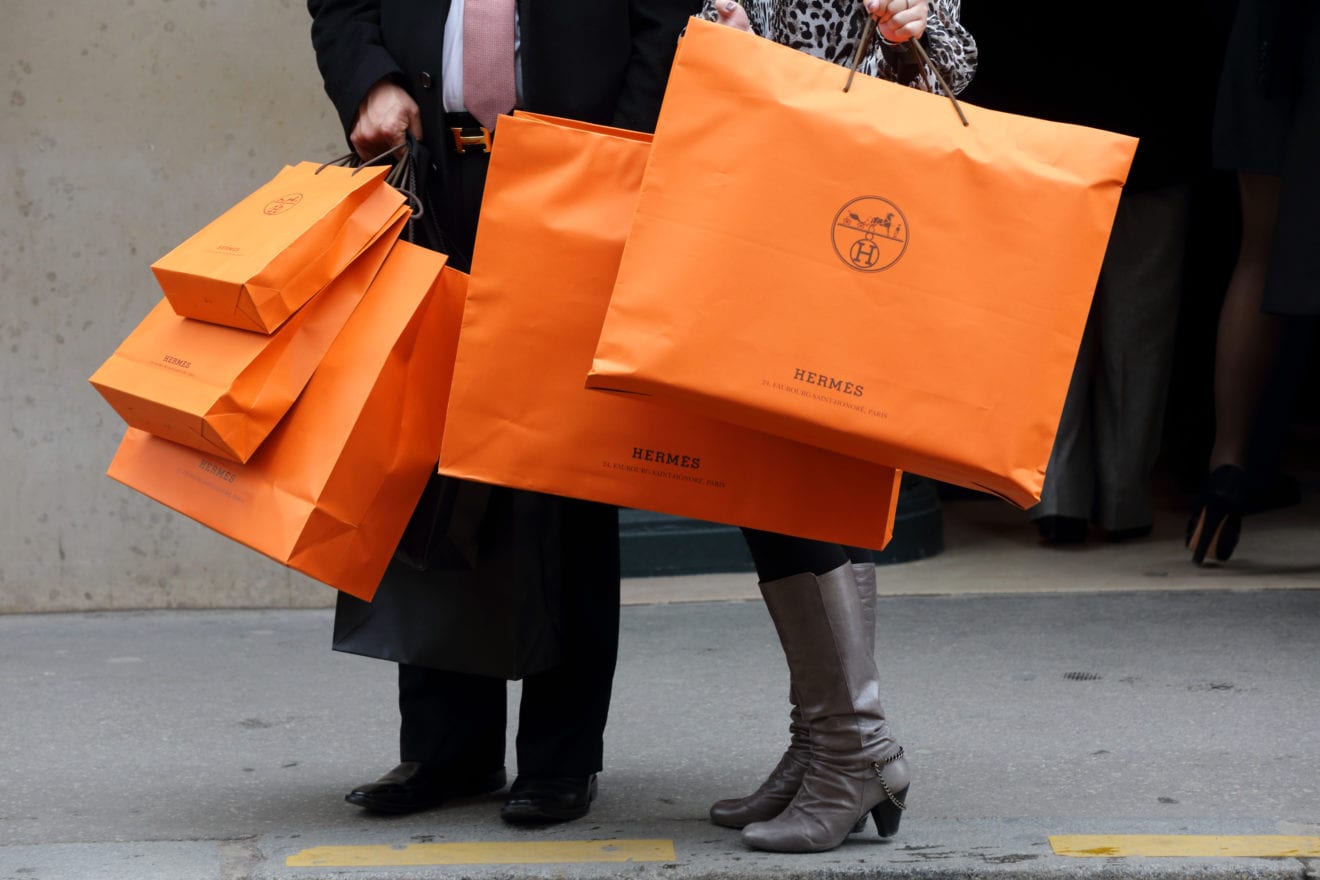
    Hermes international sales showed strong growth last year, pushed by an upward curve in Asia.

    Sales for the French fashion brand were up 9 per cent at constant exchange rates, with consolidated revenues reaching €5.5 billion (US$6.7 billion). After adjustment for the negative currency effect resulting from the year-end strengthening of the euro, the increase was 7 per cent.

    In the final quarter growth was sustained at 5 per cent at constant exchange rates.

    During the year Hermes continued to improve its distribution network, renovating and extending almost 20 stores. It launched websites in Canada and the US, to be followed by China at the end of this year.

    Asia, excluding Japan, saw sales rise 11 per cent with a positive outlook in Mainland China and South Asia.

    Hermes says the context is improving in Hong Kong and Macau. Regional stores were extended and renovated – the Sogo Fuxing store in Taiwan, Kowloon Elements in Hong Kong and the Kuala Lumpur store.

    Despite a high comparison basis, Japan recorded a sustained increase of 4 per cent thanks to its selective distribution network.

    All sectors recorded growth, with a “remarkable” performance by the ready-to-wear and accessories, perfumes and other sectors.

    Leather goods and saddlery sales grew 10 per cent to meet demand for such bags as Constance, Halzan, Lindy and Verrou. Shoes particularly boosted sales in the ready-to-wear and accessories division, up 9 per cent, silk and textiles had a  6 per cent rise, while the perfumes division posted 10 per cent growth with the launch of Twilly d’Hermes.

    There was a 1 per cent rise in watch sales, while other Hermes business lines ‒ encompassing jewellery, Art of Living and Hermes Table Arts ‒ rose 11 per cent.

    Currency fluctuations had a negative impact of €100 million on revenues.

    The company will publish its annual results next month.

  • ZALORA announces partnership with American brand J.Crew

    ZALORA announces partnership with American brand J.Crew

    Asian online fashion destination Zalora and J.Crew have announced they are forming a partnership to expand the US brand’s reach.

    From next month, a curated range of J.Crew’s women’s ready-to-wear and shoes as well as men’s apparel and accessories will be available at Zalora.

    It is J.Crew’s first online venture with a partner into Indonesia, Malaysia, Singapore, Taiwan and the Philippines, and will strengthen its store presence in Hong Kong.

    “Through our innovative platform and expansive logistics network, J.Crew will reach shoppers well beyond capital cities reaching a far wider network of potential customers than ever before,” says Zalora Group CEO Parker Gundersen.

  • Citiesocial to expand in Asia after the funding boost

    Citiesocial to expand in Asia after the funding boost

    Following series-A funding of US$2.75 million, Taiwan online retail platform Citiesocial seeks to expand into other parts of Asia.

    Its funding round was led by the Taiwan fund of Alibaba Group Holding.

    Citiesocial, which sells items such as water bottles and kitchenware from emerging brands, plans to use the funds to bolster services and technology to help rising designers grow their presence in Asia, says founder Eric Wang. This will start in the next few months with strategic partnerships with e-commerce channels in China, Japan and Korea, he says.

    Citiesocial curates branded goods as a point of difference from other platforms that offer mainstream brands. It revenue last year reached $20 million, with monthly sales valued 130 times more than at the beginning of 2014. It has 600,000 customers and a staff of 42, including Wang, who describes his customer demographic as “leaning slightly” toward a more mature, well-educated male consumer.

    “We curate goods globally to sell at least in Taiwan and Hong Kong,” he says. “A third of our revenue comes from goods that no-one else sells in Taiwan and Hong Kong.”

    One of Citiesocial’s top performing brands is British men’s accessories maker Vanacci, while it has just sold more than 1000 travel jackets from Kickstarter graduate Baubax.

    Taiwan’s fragmented e-commerce market allowed Citiesocial to be able to pivot many times in its seven and half years with only $700,000. Elsewhere he would have burned that money within the first six months, says Wang, who worked in the US for 18 years.

  • EZbuy to have more product offering

    EZbuy to have more product offering

    Singapore’s first global shopping platform EZbuy says it plans to almost double its product offering to 6 million items from brands and sellers in Korea, Taiwan and the US.

    It will bring on board a further 100,000 merchants by the end of the year.

    Its Korea Marketplace offers more than 10,000 items such as streetwear, cosmetics and personal care products. Traffic growth in Singapore for the K-beauty collection has increased more than 100-fold since its launch last year. Top-selling brands include 3CE, April Skin, Etude House, Laneige and Pony Effect.

    The Taiwan Marketplace offers the Buy-For-Me service both on the website and mobile app. Its top products include Biffido, ChiaTe, I-mei, Kiki, Kuaiche and OK Tea (food and snacks); Gracegift, OB Design and Stay Real (fashion, bags, shoes and accessories); and Hanaka Flower, Kose, MKUP and Oguma (health and beauty).

    EZbuy says demand has soared for consumer goods from the US. Best-selling brands on its USA Marketplace include Coach, Forever 21, Gap, Kate Spade and Under Armour (fashionwear and accessories); ColourPop and Sephora (cosmetics); and Mother and Kids (beauty and health supplements).

  • Taiwan to switch off 3G networks at year end

    Taiwan to switch off 3G networks at year end

    Taiwan’s telecoms regulator has revealed that the nation’s 6.4 million 3G users will need to migrate to a 4G network by the end of the year, when operators’ 3G licenses are due to expire.

    The 3G licenses are scheduled to expire on December 31 and services will terminate in 2019, as reported.

    Four operators are still offering 3G services – Chunghwa Telecom, Taiwan Mobile, Far EasTone Telecommunications and Taiwan Star. Asia Pacific Telecom switched off its 3G service in 2017.

    According to the report, officials expect the 3G switch-off to be smoother than last year’s 2G service termination, as operators have retained ownership of their 2,100-MHz spectrum holdings and will be able to use these frequencies to serve their 3G users.

    Operators are also expected to continue to use circuit-switched fallback technology to offer voice over 3G.

    But the nation’s 6.4 million 3G customers may need to switch to a 4G SIM and a new 4G plan in order to continue using services. This represents around a fifth of the market’s mobile customers and compares to roughly 22 million 4G users.

  • Taiwan tourism Bureau Partners With FOX Sportss To gear up Tourist in Taiwan

    Taiwan tourism Bureau Partners With FOX Sportss To gear up Tourist in Taiwan

    Capitalizing on travelers’ rising interest in exploring Taiwan, FOX SPORTS and the Taiwan Tourism Bureau today announce a newly launched campaign to help tourists easily research and plan a cycling trip to Taiwan. Media partner to the Taiwan Tourism Bureau for four years, this is the first time FOX SPORTS has orchestrated a digital campaign for the Bureau.

    The Taiwan on Two Wheels website is now live (www.taiwanon2wheels.com). Built by FOX SPORTS and powered by creative production house FOX Content Labs, this online hub supports the Taiwan Tourism Bureau in driving more cycle tourism to Taiwan by providing everything a cycle-happy visitor could need – including English-language bike routes, rental information and packing advice. The website highlights an influencer program curated by FOX SPORTS, featuring globally renowned celebrities on Taiwan cycle adventures including Miss Universe 2015 Pia Alonso Wurtzbach, renowned cyclist Owain Doull from Team Sky, and FOX-produced video content of the influencers.

    High-profile influencers featured in the branded video series include:

    • Team Sky rider Owain Doull, a Team Sky member who won Olympic Gold in 2016
    • Miss Universe 2015 Pia Alonso Wurtzbach who hails from the Philippines
    • German-Indian Bollywood actress and philanthropist Evelyn Sharma
    • Ollie Phillips, former captain of the England Rugby 7’s team and Guinness World Record holder for ‘Most Northerly Rugby Match’
    • Edward Russell, an Asia-syndicated travel show host and full-time FOX SPORTS presenter

    Together, these celebrities make up a unique collective of influencers capable of engaging a wide range of tourists; from leisure peddlers, to cycle enthusiasts, to nature lovers and beyond. With support from the FOX SPORTS production team, these stars are, on camera, exploring Taiwan by bike and showing tourists the astounding variety of cycle exploration on offer in the country.

    Joe Y. Chou, Director General, Tourism Bureau, said, “We’re encouraging everyone to come and explore Taiwan on two wheels; from pro cyclers to those who prefer to take it slow. Working with FOX SPORTS, they have been able to highlight the wide variety of cycle adventures on offer in Taiwan through a diverse group of people. FOX SPORTS was key to creating this group of influencers; producing content around their unique personalities and on-the-bike experiences, then bringing it all together through the new website and on social media.”

    Along with developing the Taiwan on Two Wheels website, FOX SPORTS is also partnering with the Taiwan Tourism Bureau to publicize the campaign and website via social channels such as Instagram. The campaign’s collective of influencers has a combined social media following of 18 million, further enabling the Taiwan Tourism Bureau to engage with potential visitors across the region, and the globe.

    Mike Rich, EVP, Sales and Content Partnerships, FOX Networks Group Asia said, “Taiwan is one of the world’s best places for a cycle holiday and we’re thrilled to partner with the Taiwan Tourism Bureau in showcasing what this stunning destination has to offer. By leveraging the global scale and local expertise of FOX Content Labs, FOX SPORTS can unlock exceptional value for partners like the Taiwan Tourism Bureau – producing best-in-class content, leveraging our connection to celebrity talent, and creating campaigns that stand apart from the crowd.”

    FOX SPORTS drives bespoke strategies to reach a passionate, loyal, highly attentive audience of sports fans on every relevant platform, across 14 APAC markets. With industry-leading expertise in sports storytelling, FOX SPORTS’ capabilities are further powered by FOX Content Labs – a creative production house that leverages FOX’s production capabilities and celebrity talent access to create integrated, multi-channel campaigns that uniquely resonate with consumers.

  • Modest sales rise for Bauhaus International

    Modest sales rise for Bauhaus International

    With two more shops at year’s end, apparel company Bauhaus International (Holdings) had a modest rise in same-store sales for its latest nine months.

    The quarter reverses a trend of declining sales and store closures by the streetwear retailer.

    Unaudited figures show sales growth was up 9 per cent for Hong Kong and Macau with a weighted average of 65 shops for the third quarter, while for the nine months growth was 4 per cent from 64 shops.

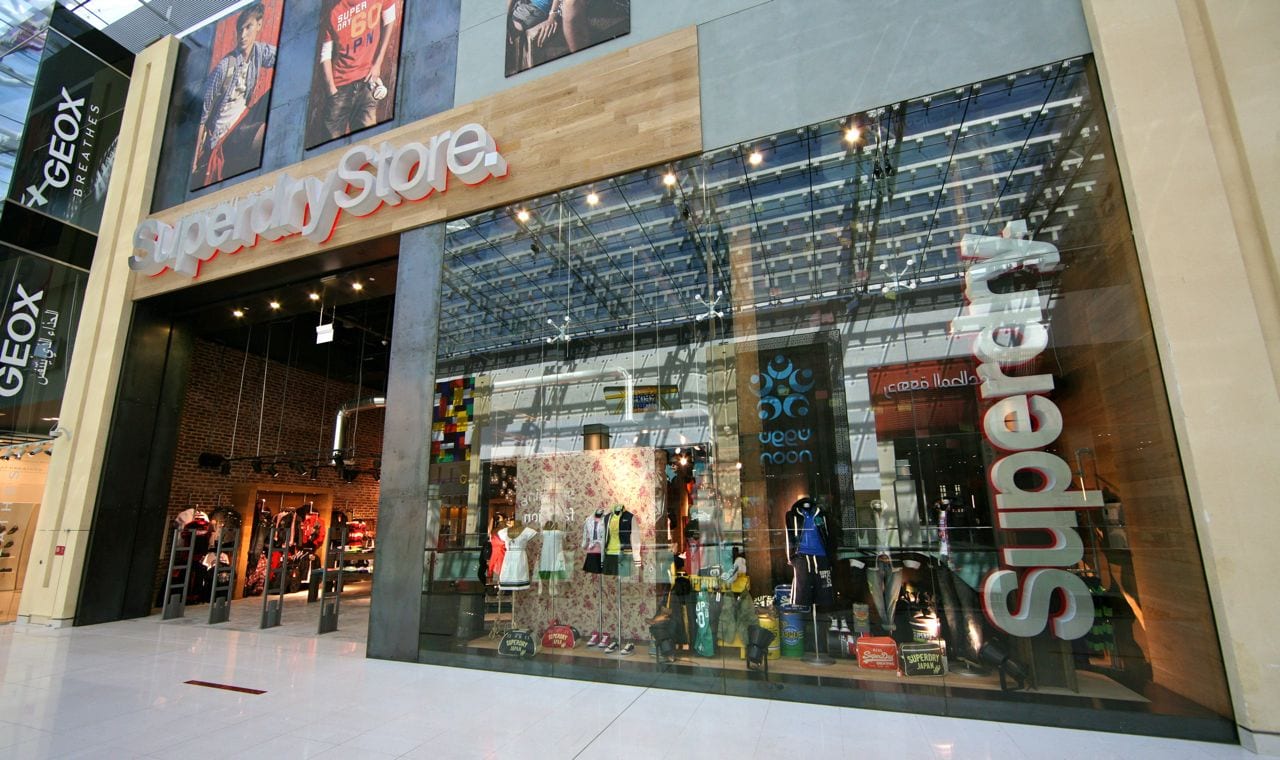
    Bauhaus designs and makes apparel and accessories which it wholesales and retails under its brand names including Bauhaus, Salad and Tough, and retails third-party labels including Superdry.

    With a constant 82 shops, Taiwan saw sales fall 8 per cent for the quarter and 16 per cent for the year to date.

    For Mainland China, 18 shops saw sales growth of 9 per cent for the quarter, while for the nine months growth was 12 per cent for 19 shops.

    Overall, group sales growth was 4 per cent for 165 shops for the quarter, with a 1 per cent sales dip for 165 shops for the nine months.

    At the end of the year the group had 198 self-managed offline shops, two fewer than nine months earlier.

    These comprised 80 outlets in Hong Kong and Macau at March 31, dropping to 77 at year end, 91 in Taiwan rising to 96 by December 31, and no change in China with 25 shops.