Tag: taxi

  • Uber selling Southeast Asian business to regional rival Grab

    Uber selling Southeast Asian business to regional rival Grab

    Ride-hailing giant Uber is selling its business in Southeast Asia to regional rival Grab while gaining a robust stake in the fast-growing ridesharing, food delivery and financial services business.

    Grab said Monday that Uber will take a 27.5 percent stake and a seat on its board as part of the deal. Financial details were not disclosed.

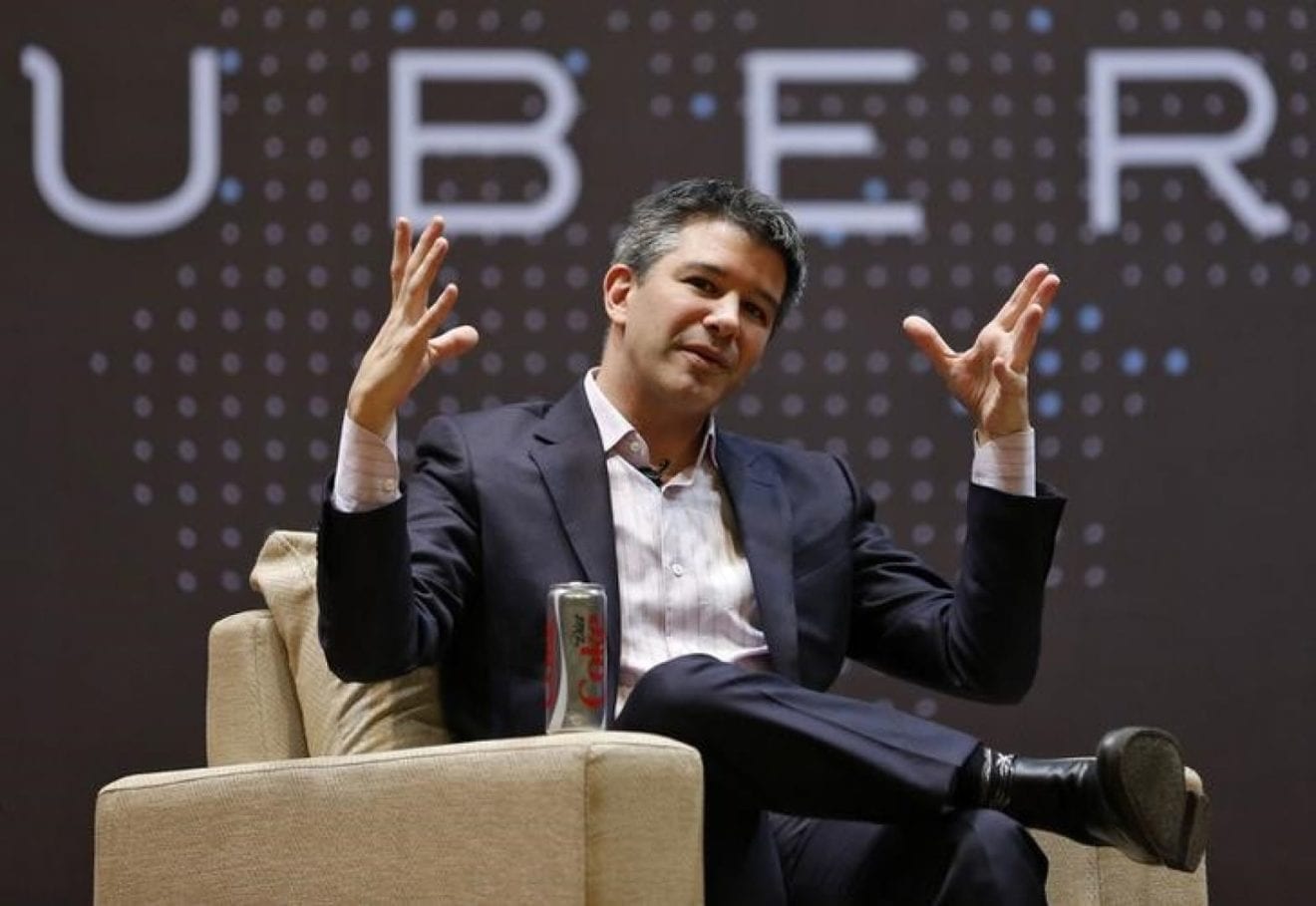
    Since becoming Uber’s CEO in September, Dara Khosrowshahi has been maneuvering to make the company profitable before a planned initial public offering expected next year.

    The company’s full-year net loss widened to $4.5 billion in 2017 as it endured multiple scandals and the departure of its co-founder and former CEO Travis Kalanick.

    The deal enables Uber to keep a foothold in the increasingly affluent market of 640 million people while cutting its losses.

    “It will help us double down on our plans for growth as we invest heavily in our products and technology to create the best customer experience on the planet,” Khosrowshahi said in a statement.

    Grab provides services in Singapore, Indonesia, the Philippines, Malaysia, Thailand, Vietnam, Myanmar and Cambodia. It says it offers access to five million drivers and agents and handles over a billion transactions a year.

    The deal was dismaying to many in Asia who have often compared the rival apps in search of the best deal.

    The Uber app will be discontinued in just two weeks, and in the meantime its drivers have to sign up to drive with Grab. Riders, likewise, will need to download the Grab app and set up accounts, although their Uber accounts will still work outside Southeast Asia.

    The companies said that Uber Eats, the food delivery business, will run in Southeast Asia through May and then shift to the GrabFood platform. Grab has been seeking to dominate the regional market for car and motorbike hailing and has expanded into other areas, recently announcing plans to partner with a Japanese credit card company to provide credit to millions of people without bank accounts.

    In Indonesia, the region’s biggest economy and most populous country with more than 250 million people, it’s in a fierce battle for customers with local app Go-Jek, which has backing from Google and Tencent.

    Grab’s CEO and co-founder Anthony Tan said the acquisition of Uber’s regional business marks the beginning of a new era in using mobile businesses to provide transport, food delivery, payments and other financial services across the region.

    Uber has withdrawn from several big overseas markets. It sold off its China business to a competitor and partner, Didi Chuxing, taking a stake in Didi. In Russia, it agreed to merge its ride-hailing business in the country with Yandex, a local search-engine leader that also runs a popular taxi-booking app.

  • Vietnam’s top taxi firm wheels out motorbike service in the race against online taxi

    Vietnam’s top taxi firm wheels out motorbike service in the race against online taxi

    Major Vietnamese taxi company Mai Linh on Monday launched its own motorbike hailing app in its latest attempt to claw back customers from Uber and Grab, the ride-hailing firms from the U.S. and Malaysia that have been outshining local cab firms.

    The app, Taxi Mai Linh, is now available in Ho Chi Minh City, Hanoi and Da Nang, and has around 5,500 drivers.

    Ho Huy, Mai Linh’s chairman, said what makes his company’s new service different from Uber and Grab is that the fare is kept constant at VND11,000 (48 cents) for the first two kilometers and then drops to VND3,800 per kilometer from the third kilometer onwards.

    Uber and Grab charge their passengers similar rates but raise fares during rush hours and bad weather.

    He also said the company will run a campaign to encourage traditional xe om drivers to join its team in an effort to avoid fights between them and tech-savvy drivers, something that both Grab and Uber have experienced.

    So far, the strategy seems to be working, and many Uber and Grab drivers have shown up at Mai Linh’s door to switch sides.

    “I applied because I heard Mai Linh is offering a better deal for its drivers,” said Cuong, who has worked as a GrabBike driver for over a year.

    “My income has fallen because Grab now deducts up to 20 percent of the fares that drivers receive from passengers instead of 15 percent as before, and more and more people are working as GrabBike drivers, which means more competition,” he said.

    Uber takes a cut of 25 percent from its drivers.

    Mai Linh’s drivers will not have to hand over any of their earnings for the first two months, after which time the company will take a 15 percent share.

    Mai Linh reported that it lost 6,000 employees in the first half of this year, or 20 percent of its total drivers.

    Its business results did not read much better during the same period, with revenue falling more than 5 percent on-year to VND1.72 trillion ($75.8 million).

    In all, Mai Linh suffered a loss of VND47.5 billion from its taxi business, twice as much as last year, the company said.

    Its rival Vinasun, the biggest taxi firm in Vietnam, lost 10,000 employees in the first nine month, and its  revenue in that period only reached 58 percent of the company’s annual target.

    They have both pointed the finger at Uber and Grab, saying the two foreign firms enjoy preferential policies as they are classed as transport software providers which, unlike traditional taxis, are not accountable for passenger and traffic safety.

    In its latest attempt to battle Uber and Grab, Vinasun has rolled out a hailing servicevia Facebook Messenger.

  • New CEO says Uber Vietnam will not be distracted by criticism

    New CEO says Uber Vietnam will not be distracted by criticism

    Traditional taxi firms have been protesting against Uber and Grab, accusing the ride-hailing apps of unfair competition. Uber Vietnam on Thursday said the company would focus on growing and serving its partners and passengers and would not be distracted by criticism, following protests and accusations of foul play by traditional taxi firms.

    Tom White, the company’s newly appointed CEO, issued the statement during a press briefing at the unveiling of Uber Vietnam’s new partner support center in Hanoi.

    “My focus would be to serve them as best as I possibly can and not be distracted by criticisms about this,” he said.

    Uber Vietnam’s key objective instead would be to further expand across the market and reach an even greater number of riders and drivers.

    “There have been millions of app downloads here in Vietnam and we’re only scratching the surface of what’s possible.”

    Stressing reputation as a precious asset for Uber, White said he would prioritize building and maintaining trust with the Vietnamese government.Regarding his appointment as the new CEO of Uber Vietnam, White said his experience working for Uber in Australia had played a role in the decision. As one of its earliest members, he helped build the company there from scratch and forged a strong and trusting relationship with the Australian government.

    While admitting he had much to learn after moving from Australia to Vietnam, White also said he hoped to be able to work with the government to make policies more open and regulations more fair across all platforms for companies to compete and allow consumers to benefit from the competition.

    Regarding Ho Chi Minh City’s demand last month for VND66.68 billion ($2.93 million) in tax arrears, White said that the company firmly believed it had met all its tax obligations and complied with government regulations.

    Tom White is an Australian who joined Uber in January 2015 and held various management positions in Uber Australia and New Zealand. He was appointed as the new CEO of Uber Vietnam earlier this month following his predecessor Dang Viet Dung’s departure.

    Dung, who had been Uber Vietnam’s CEO since the U.S.-based firm first entered the country in 2014, left the company on October 1, but no information about the reasons for his departure has been revealed.

    His departure triggered speculation that Uber Vietnam was in a crisis, especially after a recent tax scandal.

    Late last month, tax authorities in Ho Chi Minh City demanded VND66.68 billion ($2.93 million) in arrears from Uber Vietnam, including fines for faulty declarations and late payments.

    Following the incident, rumors started to spread that Uber would be leaving Vietnam. The company was quick to dismiss this.

    As of August, Uber had four million users in Vietnam, according to official company data.

  • Kakao Taxi dominates cab-hailing app in Korea

    Kakao Taxi dominates cab-hailing app in Korea

    Kakao Taxi is the most popular cab-hailing app in South Korea, dominating 98 percent of the market, while the food delivery app sector is fiercely contested by two rivals, according to a survey on Tuesday.

    Market analysis company Open Survey polled 1,500 smartphone users between 20 through 40 to find out which online-to-offline apps they use the most for specific needs.

    Kakao Taxi, run by Kakao Corp. that also operates the popular messenger service Kakao Talk, commanded 98 percent of responses for cab-calling services, while UberTaxi came in a far second with 11 percent. Multiple selections were allowed in the survey

    For food delivery, the most used app was Baedal Minjok with 80 percent. It was closely followed by Yogiyo with 72 percent. Baedaltong was third with 48 percent.

    Yanolja and Yeogi Eoddae were neck and neck for hotel booking apps, with both around 50 percent.

    Hotels Combine was second with 35 percent, and Hotels.com ranked third at 33 percent. Airbnb followed with 22 percent.

    Socar was the top choice for car rental with 78 percent. The second most popular app was Green Car with 38 percent.

    Customer satisfaction was the highest for cab apps with 83 percent. Hotel reservation apps also did well with 71 percent. Food delivery apps had 68 percent satisfaction numbers.

  • Hanoi attempts to manage app-car services like taxis

    Hanoi attempts to manage app-car services like taxis

    Hanoi will manage the operation of app-based taxi service, including Uber and Grab, in a way similar to traditional taxis to guarantee a fair business environment.

    The move followed Hanoi, HCM City and Danang taxi associations petitioning the Ministry of Transport to call for a more equal business environment for taxi services.

    Hanoi People’s Committee have completed a plan on restricting the number of private vehicles for the 2017-2020 period and a vision until 2030 which is expected to be discussed and passed by the municipal people’s council at the meeting of early next month.

    According to the plan, the city will apply more strict management regulations on cars of below nine seats which operate under app-based taxi service in terms of vehicle number, quality and operational scope.

    App-based taxis will be managed in a way similar to traditional firms to ensure equal competition.

    The city’s transport department will check the specific number of Uber and Grab and if the figure exceeds the regulated level, the firms will have to stop operations.

    Uber and Grab taxis are also required to have logo, badge or their own paint colour. Signposts banning Uber, Grab maybe be put up on Hanoi streets.

    The associations called authorities to set the same rules for Uber and Grab.

    According to Do Quoc Binh, Chairman of Hanoi Taxi Association, over the past month, almost of 90 taxi firms in the city urged the association to seek the municipal trade union federation’s approval for their drivers to march through local streets in opposition to Uber and Grab.

  • Transport Ministry denies Uber and Grab pilots ended

    Transport Ministry denies Uber and Grab pilots ended

    At the carrier’s annual shareholder meeting on Tuesday, it was said that the 191 million shares with a par value of VND10,000 (44 US cents) per share could be sold in the fourth quarter or at any other time that the management board decides.

    Current shareholders will have the right to buy the shares at a rate of 15.5 per cent, meaning that an investor will be able to one additional share for every 15.5 shares he owns at the moment.

    Among the additional shares are 164.73 million shares sold to State shareholders and 16.77 million shares issued to the firm’s Japanese strategic investor ANA Holding Inc. Other shareholders will be able to purchase 9.7 million shares.

    The share issuance is expected to raise VND1.91 trillion (nearly $85 million), which would help the aviation group cover a part of the cost of purchasing new planes and making payments for its suppliers.

    In 2017, Vietnam Airlines plans to spend VND2.1 trillion – 72 per cent of this year’s spending budget – purchasing 10 A350-900WB planes and eight Boeing 787-9 planes.

    This year’s business plan also includes VND87.9 trillion in combined revenue, an annual increase of 22.7 per cent.

    However, the combined post-tax profit of VND1.33 trillion marks a 35 per cent drop from 2016.

    The targeted post-tax profit is lower based on worries about higher fuel costs and rising global oil prices as well as rising amortisation costs generated by the purchase of new planes.

    Last year’s post-tax profit was a record high for Vietnam Airlines, supported by oil prices that hit a historical 12-year bottom in mid-January 2016. Crude prices have rebounded about 47.5 per cent since then. This year’s business plan is developed based on a $64 per barrel oil price scenario.

    The company also attributed the decline in annual post-tax profit to slow growth of market purchasing power, which is forecast at 9.5 per cent for 2017.

    The slow rise in market purchasing power means Vietnam Airlines will have to face a decline in its Revenue per Available Seat Kilometre (RASK) – a term of unit cost used in the aviation industry.

    The RASK figure in 2017 is forecast at 5 per cent lower than 2016 and 22 per cent lower than 2015.

    Meanwhile, competition is heating up n the international markets as low-cost carriers enhance their presence in Viet Nam and in the Northeast and Southeast Asian regions, traditional markets for Vietnam Airlines.

    In addition, the Noi Bai and Tan Son Nhat international airports, the biggest in Viet Nam, will undergo repairs and maintenance at the year end. This will reduce business activities in those two airports by 30 per cent and force aviation firms to cut the number of flights to and from those airports by at least 15 per cent during the day.

    Share price concerns

    Vietnam Airlines also plans to switch listing its shares from the Unlisted Public Company Market (UPCoM) to either the HCM Stock Exchange or the Ha Noi Stock Exchange.

    Shares of the company, under code HVN, debuted on UPCoM at VND39,200 per share on January 3. Its share price has lost nearly one-third of its value to close Tuesday at VND26,825.

    In comparison, the share price of low-cost carrier Vietjet has risen by 18 per cent to end Tuesday at VND126,500 per share. Vietjet shares debuted on the stock market at the end of February.

    Such decline of share price has raised some concerns among the firm’s shareholders about the company’s strength and competence.

    According to the firm’s chief accountant, Tran Thanh Hien, the share price is quite stable and reflects Vietnam Airlines as an aviation company that meets international standards and practices.

    Hien said that the movement of share prices depends on various factors, including business performance, business strategy, market conditions and liquidity.

    For some firms, the amount of floating shares is quite small, showing that the company’s stock structure is dense and making share prices low, according to Hien.

    Compared to the low-cost carrier Vietjet, Vietnam Airlines focuses on the high-class segment with provision of high-quality products and services, said general director Duong Tri Thanh.

    Low-cost carriers have developed strongly in recent years and account for 60 per cent of the domestic market. This sector is expected to grow 20-30 per cent per year in the coming years.

    Vietnam Airlines would, therefore, push harder its operation in international markets, he said.

    For the domestic market, Vietnam Airlines would concentrate its business on the low-cost segment in co-operation with Jetstar Pacific. The two firms would try to keep their market shares at least 30 per cent, Thanh said.

  • Taxi booking service via Facebook Messenger launched

    Taxi booking service via Facebook Messenger launched

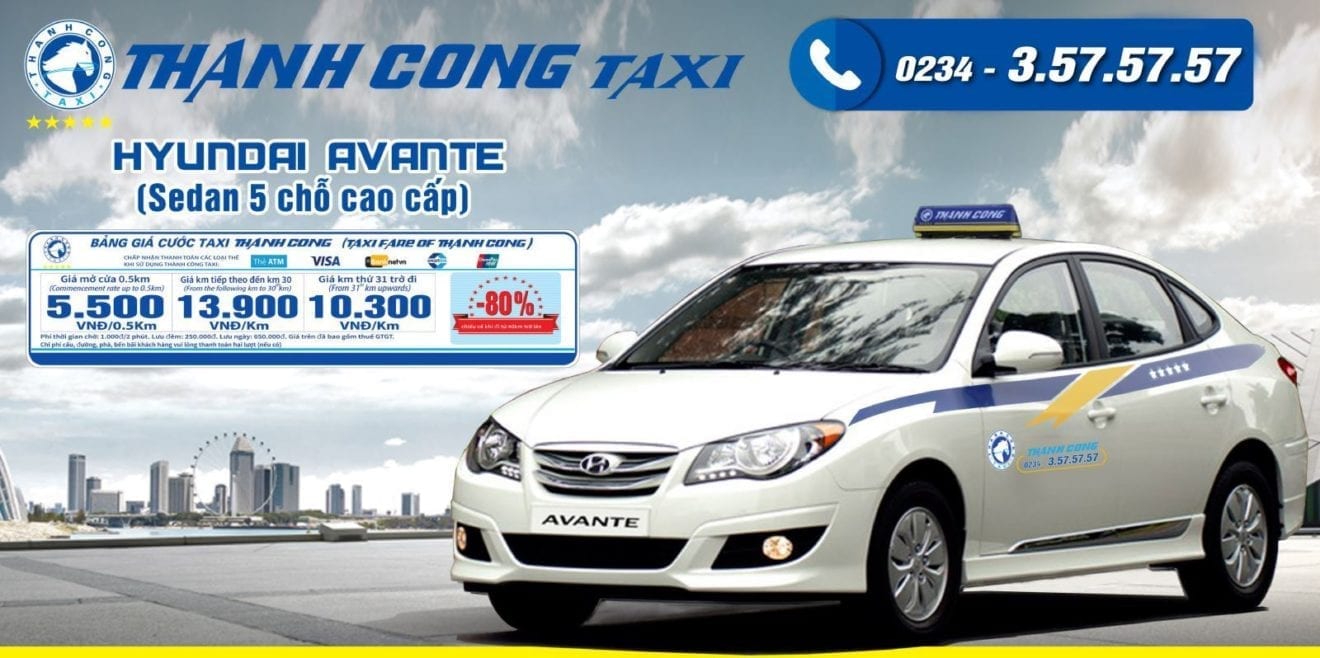
    The service launched by Thanh Cong Taxi on June 13 is the first of its kind in Vietnam, allowing people to hail a cab from the company without having to download and use a taxi-hailing app.

    Nguyen Khuong Duy, representative of Thanh Cong Taxi, said that Thanh Cong Taxi is a pioneer in Vietnam using the latest Chatbot technology of Facebook to develop the service.

    Thanh Cong company takes advantage of the Facebook Messenger application installed in mobile phones of some 40 million Vietnamese people to offer services to customers in the traditional to luxury segments.

    Besides requesting a ride, people can easily leave their comments by chatting via the messenger, Duy said.

  • Taxi boom blamed for traffic jams in HCM City

    Taxi boom blamed for traffic jams in HCM City

    The city was home to around 300 app-based taxis of less than nine seats in 2015. But the figure grew to 2,437 by the early 2016 and 22,000 by late April this year.

    Giao attempted to blame Uber and Grab for being partially responsible for HCM City’s traffic jams.

    Meanwhile, the city has more than 11,000 traditional taxis, raising the city’s total taxi number to over 33,000 against the set taxi number target of just no more than 12,700 by 2020. The mushrooming taxi development has worsened the city’s traffic jams.

    Nguyen Van Tam, deputy head of the HCM City Transport Department, suggested that app-based taxi boom has become a new problem for the city, so, the city has considered halting the transportation license for cars of below nine seats to operate under the form of app-based taxi service.

    The re-licensing will be carried out after the city finishes a plan on app-based taxi operation, Tam said.

    A representative from the Southern Airport Authority claimed the severe traffic congestion around Tan Son Nhat International Airport is also partially caused by Grab and Uber cars, many of which cruise around to wait for customers.

    Earlier, traditional taxi enterprises urged management agencies to take appropriate steps against foreign ride-hailing firms like Uber and Grab in order because they were proving far more competitive that traditional taxi services.

  • Alipay Hong Kong Taxi Payments Could Be Its Killer App

    Alipay Hong Kong Taxi Payments Could Be Its Killer App

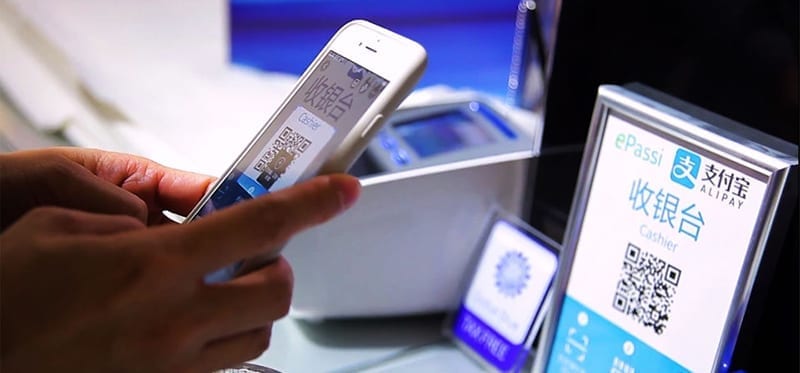
    It’s one country, two systems for Alipay as it focuses on retail payments in Hong Kong, a special administrative region of China, with a separate mobile app from the one it uses on the mainland.

    Alipay announced the launch of its Hong Kong version e-wallet Alipay HK, which is the first time for this Internet payment service provider to launch an overseas version app.

    Alipay started providing services in Hong Kong in 2007. In August 2016, they gained a third-party payment license issued by Hong Kong Monetary Authority and Alipay Hong Kong company is one of the first batch of payment license owners. Now Alipay HK has finally been launched after a few months of preparation.

    With the launch of Alipay HK, Hong Kong users will be able to use Alipay services by binding their credit cards of Hong Kong local banks or balance recharges, and they can use Hong Kong dollars to complete payment directly. Alipay HK provides three major services, including code-scanning payment, vendor offers, and stamp collection.

    Alipay HK will gradually launch more functions like mobile phone fee recharges; payment for water, electricity, and gas bills; online transfers; taxi payment; and insurance payments.

    The taxi payments are of special significance. Currently the Octopus payment card in Hong Kong is ubiquitous and can be used for both public transportation and retail payments. But Octopus cannot be used for paying of taxi trips. Octopus had a small, brief test of taxi payments a few years ago, but it failed to launch the service in Hong Kong. If Alipay could overcome the taxi payment obstacle, it could grab a new, underserved market.

    For global expansion, Alipay’s parent company Ant Financial has realized e-wallet cooperation with partners in India, Thailand, South Korea, Philippines, and Indonesia. With the launch of Alipay HK, Ant Financial’s services now reach six overseas countries and regions.

  • Vietnam’s biggest taxi firms blame Uber, Grab for losing business

    Vietnam’s biggest taxi firms blame Uber, Grab for losing business

    The traditional taxi companies describe the competition as ‘harsh’ and ‘unfair’. Vietnam’s major taxi company Mai Linh has reported the worst business in five years while another big player Vinasun projected a 50-percent drop in profit this year, and the two blamed competition with ride-hailing apps.

    Despite arriving late in Vietnam’s taxi market, Uber and Grab have been winning significant footholds for their fare transparency, quality of service and fashionable technology.

    The unlisted Ho Chi Minh City-based Mai Linh said its transport business lost nearly VND84 billion ($3.7 million) last year, after making a profit of VND325 million in 2015.

    The company’s net profit last year, plunged nearly 70 percent in the same period to VND43 billion, the firm’s financial report showed.

    Ho Huy, chairman of the company’s management board, said Uber and Grab were key reasons to have made 2016 a difficult year for Mai Linh and other traditional taxi firms.

    He said the market has seen “harsh competition”, with unfair taxation. Uber, for example, was paying a 3-percent value added tax, while taxi firms said they have to pay a 10-percent VAT and 20 percent corporate income tax. Uber now keeps 20 percent revenue of a ride and sends 80 percent to the driver.

    Huy also blamed Uber and Grab for worsening traffic in Ho Chi Minh City by adding 25,000 cars to the streets in recent years.

    Vinasun, also based in Ho Chi Minh City, said competition with ride-hailing apps has made it lower the profit target for 2017, the third cut in a row.

    Vinasun’s gross profit is now projected at VND205 billion, down 48 percent from 2016, based on the company’s plan to be submitted to the shareholder meeting scheduled late this month.

    But the blaming has received little support from the public, as many people said they were unhappy with poor and unreliable services provided by taxi firms, such as drivers refusing to serve short distance or failing to show up regardless of clients’ booking.

  • Uber’s ride hailing service is finally legal in Vietnam

    Uber’s ride hailing service is finally legal in Vietnam

    The ride-hailing firm has now secured approval from local authorities after two previous rejections. The Vietnamese government has finally approved Uber’s application to trial its ride hailing services, a minister said, after having rejected requests from the company twice since 2015.

    Deputy Transport Minister Nguyen Hong Truong said on Monday that Uber Vietnam has fulfilled all necessary conditions to pilot its online ride-hailing application. However, the company will still need approval from local authorities before it starts operating, Truong added.

    The main obstacle facing Uber’s quest to legally offer its services in Vietnam was mainly its failure to register Uber Vietnam as a ride service provider since its arrival in June 2014 as the company expanded into Southeast Asia.

    Previously, Uber Vietnam was only registered to offer “consulting and management” and “market research and public opinion polling”. Now, it’s also registered to offer “information technology services and other computer related services.”

    The Transport Ministry previously said that Uber Vietnam’s authorization given by its parent company – the Netherlands-based Uber International Holding BV – which provides the smartphone application for Uber services, was insufficient.

    Market regulators said the parent company should be held responsible for the application rather than its Vietnamese business unit.

    Local regulators outlawed Uber’s smartphone app-based services in November 2015 after they flagged the company for tax avoidance.

    In an attempt to regulate ride-sharing services, Vietnamese regulators have allowed companies to run pilot programs through IT applications under 3-year contracts. Vietnam’s transport authorities earlier approved a pilot scheme for Grab Vietnam, Uber’s main rival, that also entered Vietnam in 2014.

    The Malaysia-based Grab was previously the only foreign-run transport service allowed to operate in five cities across Vietnam using registered private vehicles between 2016 and 2018.

  • Kudo to Grab in battle for Indonesian market

    Kudo to Grab in battle for Indonesian market

    South-east Asia’s largest ride-hailing company Grab has bought Indonesian online payment start-up, Kudo, as the company kicks off a battle with rivals Uber and Go-Jek for market share with the first investment of a US$700 million (S$978 million) pledge in its largest market over the next four years.

    Grab did not disclose the value of the deal announced yesterday, but Reuters put the figure at over US$100 million.

    In a statement, Grab said the acquisition “solidifies (its) leadership in digital payments” with Kudo’s team and platform being integrated with its online mobile payment service, GrabPay.

    Founded in 2014, Kudo allows less tech-savvy consumers and those without bank accounts to shop online and pay for bills such as utilities and phone credits through its network of “agents”, who help to make those payments to merchants and suppliers on their behalf.

    It currently has 400,000 “agents” in 500 towns and cities across Indonesia.

    Combining Kudo’s presence in smaller cities and rural areas through these agents, GrabPay’s customer base will provide “millions of people across Indonesia with increased access to convenient cashless payments and new income opportunities, while also unlocking compelling new ways to boost online spending”, Grab’s president Ming Maa said.

    Grab said it plans to support and accelerate the expansion of Kudo’s network of agents while leveraging on its reach to bring in more riders, drivers and GrabPay users onto the Grab platform.

    Kudo also plans to explore opportunities to grow its financial services offering, including insurance and consumer loans. Its chief executive, Mr Albert Lucius, a former analyst at Goldman Sachs and product engineer at Apple, said in the same statement that the acquisition “creates immediate synergies with our existing business”.

    “We are excited to work together to bring the ease and convenience of cashless payments to more Indonesians than ever before,” he added.

    SPH Media Fund, the corporate venture capital arm of Singapore Press Holdings, was among the investors who sold their stake in Kudo. SPH Media Fund first invested in the Indonesia-based e-commerce platform in April 2015 and participated in another funding round in December 2015.

    Singapore-based Grab offers car and motorcycle ride-hailing services in South-east Asian countries such as Singapore, Indonesia, the Philippines, Malaysia, Thailand and Vietnam. Go-Jek is a market leader in motorbike taxi services in Indonesia. Uber remains a small player, introducing motorcycle-taxi services only in April last year.

    Transport analysts in Jakarta told The Straits Times the acquisition illustrates how ride-hailing providers were extending their businesses beyond transportation.

    The rivalry has been particularly intense between Go-Jek and Grab.

    Since its launch in 2015, Go-Jek has been setting itself apart from its two other rivals by diversifying into various services, allowing its customers to buy food and groceries, hire beauticians and masseusses, and book cleaners.

    Mr Yoga Adiwinarto, a director at the Institute of Transportation and Development Policy, said: “Grab doesn’t want to lose out. But since building an e-payment system takes time, the easiest way is to buy a company that has already established itself in this area.”

    “After this, I’m sure there will be huge innovations and Grab will expand into service sectors such as mini-markets and the selling of train tickets and flights too,” he added.

    Dr Ellen Tangkudung, lecturer at the University of Indonesia, noted that customers would only stand to gain from the competition.

  • Saigon cab firm takes on Uber with unexpected weapon: grapefruit

    Saigon cab firm takes on Uber with unexpected weapon: grapefruit

    With Uber and other app-based car-hailing services becoming increasingly popular in Vietnam, one local taxi firm has decided to improvise in order to give its drivers a competitive edge.

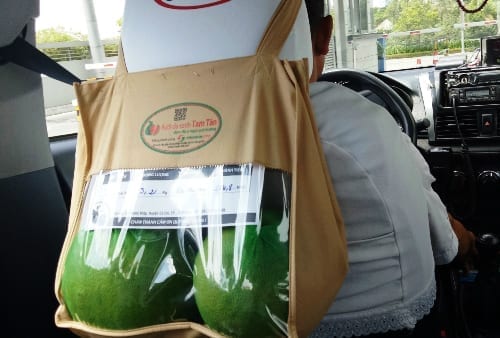
    Vinasun, the country’s second biggest taxi firm, has found a way to boost its drivers’ incomes by turning 800 cabs in Ho Chi Minh City into mobile grapefruit stalls.

    A kilogram of pomelo, a green-skin grapefruit, sells for VND64,000 ($2.81)

    “Drivers receive a bonus for selling large quantities of fruit,” a driver said.

    The taxi operator typically keeps 80 percent of the revenue from its grapefruit business and awards the remaining 20 percent to the drivers, said executive officer Ta Long Hy.

    Vinasun drivers are making on average between $2 and $4 a day from selling grapefruit, he estimated, adding that the best sellers can add up to $17 to their daily incomes.

    Since ride-hailing companies like Uber and Grab appeared on the scene, traditional taxi drivers have seen their incomes rapidly plunging.

    Traditional taxi companies have been lobbying the government for a lower VAT levy to allow them to compete with cab-hailing apps. The government has, however, turned down the request saying there’s no grounding to claim traditional taxi companies have to pay higher taxes and fees than their ride-hailing competitors.

    Uber and Grab cut into at least 10 percent taxi operators’ revenue last year in Ho Chi Minh City, the local association of taxi companies estimated.

    The number of private minicabs, mostly offering transportation services via car-hailing apps, has reached 20,000 in Ho Chi Minh City, twice as many as the number of traditional taxis.

    Last year Vinasun, which has around 6,000 cabs and operates chiefly in Ho Chi Minh City, launched a counteroffensive against the ride-hailing menace: its own app.

    Passengers using Vinasun’s ride-hailing app can easily recognize their minicabs with a ‘Vcar’ logo, Vinasun’s luxury version. They will be offered the option to fix the price at the beginning of a journey rather than rely on the taxi meter, according to Vinasun.

    Vinasun Group, which has been listed on the Ho Chi Minh City Stock Exchange since 2008, made VND4.3 trillion in revenue ($189 million) last year, down 6 percent from 2015.

  • Grab launches carpool services & GrabShare in Indonesia

    Grab launches carpool services & GrabShare in Indonesia

    GRAB on March 13 launched GrabShare in Indonesia, making it the fourth Asean country to offer the service after Singapore, Malaysia, and the Philippines. It was launched in the three countries in December 2016.

    GrabShare will pair two different passenger orders with similar routes in a single trip. This feature allows for a maximum two stops and each passenger may only bring one person with them. There will then be four people in one car and drivers will wait up to three minutes for each passenger at pick-up points.

    “We seek the chance to optimise the use of cars to address Indonesia’s heavy traffic congestion. After it was launched in Singapore, Malaysia, and the Philippines, GrabShare has been effective in attracting more new riders to the Grab platform. We tailored GrabShare to suit drivers and passengers’ needs and made it a seamless and responsive experiences,” says Grab Indonesia managing director Ridzki Kramadibrata.

    Conceptualised, designed and engineered across Grab’s three research and development centres in Singapore, Seattle and Beijing, GrabShare’s matching algorithm ensures that passengers get to their destinations in the shortest possible time.

    The algorithm calculates and determines a match by factoring in the closest available drivers, travel time, overlap of trip routes, detour distance and current traffic conditions before intuitively sequencing pick-ups and drop-offs.

    “Commuters in Jakarta indicated that they are open to carpooling as it offers a more pocket-friendly fare and enables them to socialise with new friends. Drivers had the same feedback and wanted the option of taking short breaks between trips,” adds Ridzki.

    This launch in Indonesia will impact Grab users and drivers. For drivers, GrabShare has the potential to double their income since they will earn the fare for two trips at one go as well as saving on costs and time.

    For passengers, GrabShare will be priced up to 50% cheaper than GrabCar Economy fares and users can bring a friend on the rides at no additional cost, as long as both share the same pick-up and drop-off locations. Grab also provides insurance for drivers and users.

    Local market strategy

    Every city’s traffic conditions and transportation patterns are different. Grab came up with a strategy where all their features have to provide specific solutions for particular cities.

    “At Grab, we embrace and implement a hyperlocal approach to every single aspect of our business. We value the genuine meaning behind local Indonesian words therefore the name of our service, GrabShare, comes from careful consideration as the word ‘share’ holds a deep cultural meaning for Indonesians.

    “Indonesians are known to be very sociable and friendly with smiley greetings and mutual assistance as part of their core values and identity, as well as common etiquette. Through this campaign, we want to rejuvenate this cultural value and evoke the simple joy of sharing stories as well as rides with others,” explains Grab Indonesia marketing director Mediko Azwar.

    GrabShare is currently available in Jakarta, Bogor, Depok, Tangerang and Bekasi.

  • Taxis claim unfair competition

    Taxis claim unfair competition

    Ta Long Hy, chairman of HCM City Taxi Association, told a conference on Thursday that the taxi market has seen unfair competition between traditional firms and foreign companies with strong financial potential and state-of-the-art technologies.

    Hy said the number of licenced traditional taxis with less than nine seats in HCM was reduced from 20,000 in 2010 to 11,000 this year. The rapid development of Uber and Grab has quickly narrowed the traditional taxi market share, hurting cabs in their own playground due to decreasing number of passengers and incomes.

    Tax policies are also causing concern for traditional taxi firms, including a 10 per cent value added tax and 20 per cent corporate income tax. “The Ministry of Finance (MoF) levies 3 per cent VAT for Uber. We urge authorities to impose a common tax policy for both traditional and tech-based taxis of 5 per cent,” he said.

    Do Quoc Binh, chairman of Ha Noi Taxi Association, said taxi companies are bound by strict business conditions regarding parking areas, registration licences, logos, price lists, uniform and price registration, while Grab and Uber are not subject to any conditions.

    “The Government’s policies seem to be tightening the operation of traditional taxis while loosening management of Grab and Uber,” Binh said.

    He said Uber and Grab should be managed as regular taxi firms to create fair competition.

    Truong Dinh Quy, Vinasun Corp’s deputy general director, claimed Uber and Grab had broken the law to enjoy low tax rates, hurting the State budget.

    Figures from the General Taxation Department showed that the total tax collection from 15,000 Uber and Grab taxis in 2014-15 was VND19 billion (US$832,000), while Vinasun contributed VND692 billion from its 6,000 taxis.

    “We can see that the State budget has lost a big tax amount. This has been unfair to traditional taxi firms,” Quy added.

    Nguyen Van Thanh, chairman of the Viet Nam Automobile Association, said the association would work with the MoF’s agencies to review tax calculation and ensure their fairness.

    “We should ask legal agencies to resolve the issue. We should prevent Uber from conducting tax evasion. We will not ask to stop Uber operations in Viet Nam but require that they complete their business registration,” he added.

    In addition, he urged taxi companies to update their business systems, improve service quality and thus enhance their competitiveness.