Tag: tea

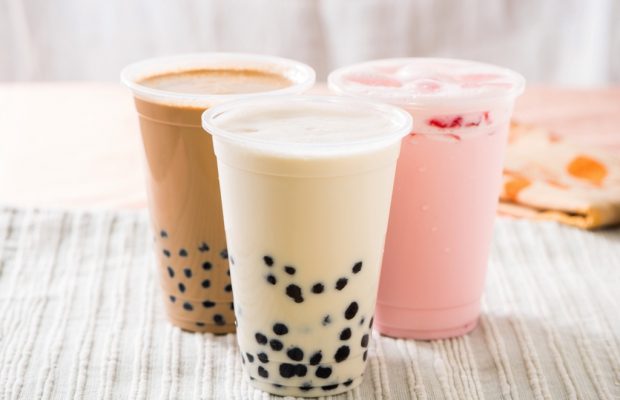
  • Tea chain Ten Ren Vietnam to close down

    Tea chain Ten Ren Vietnam to close down

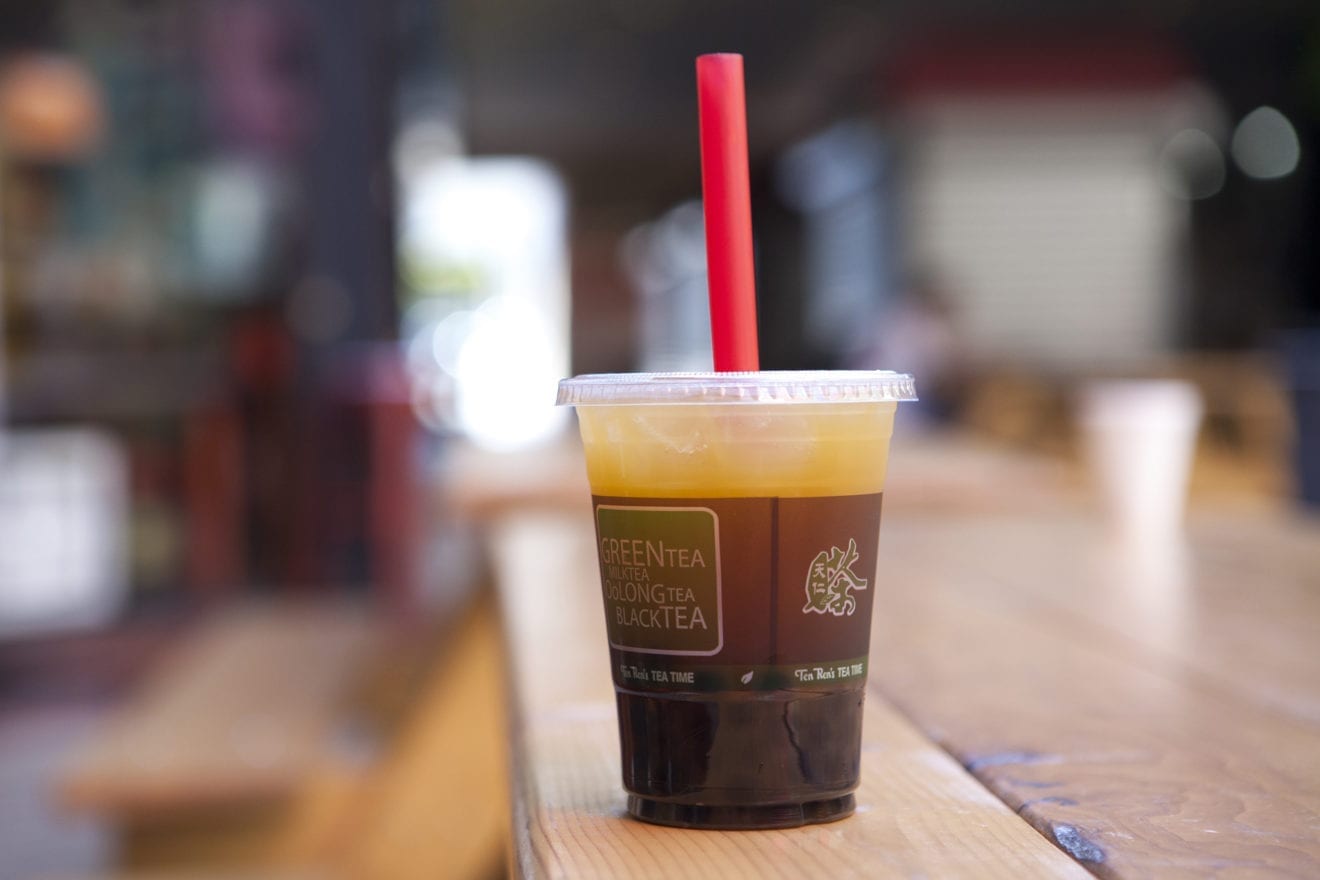
    Ten Ren Vietnam will close all of its 23 stores on August 15, local franchise holder Vietnam Coffee Trading Service has announced.

    The company, whose main business is the fast-growing The Coffee House chain, said the current business model does not conform to the needs of the customer. It will close the chain and plan an “appropriate strategy” for the sector.

    The company wants to focus more on its Coffee House brand.

    All employees and partners of the Ten Ren chain will be offered the chance to transfer to The Coffee House.

    Ten Ren entered Vietnam in November 2017 initially planning 40 stores by the end of last year, but has fallen well short of that target. Its primary lines are milk tea and packaged teas.

    Given the brand is operated under a franchise it is likely the Taiwanese parent will seek a new operator for the market

  • Crimson Cup opens fourth cafe in Dhaka, Bangladesh

    Crimson Cup opens fourth cafe in Dhaka, Bangladesh

    US coffee roaster Crimson Cup Coffee & Tea has opened its fourth international coffee shop in Dhaka, Bangladesh.

    The new Rangs Fortune Square venue joins Crimson Cup Coffee Houses in the Banani and Dhanmondi neighborhoods.

    “Dhanmondi is a huge residential area with a multicultural population,” said MD Mohaimin Mostafa, “and our existing shop in Dhanmondi 27 was not sufficient to keep up with demand. Our second outlet in Dhanmondi makes it much easier for customers to reach us.”

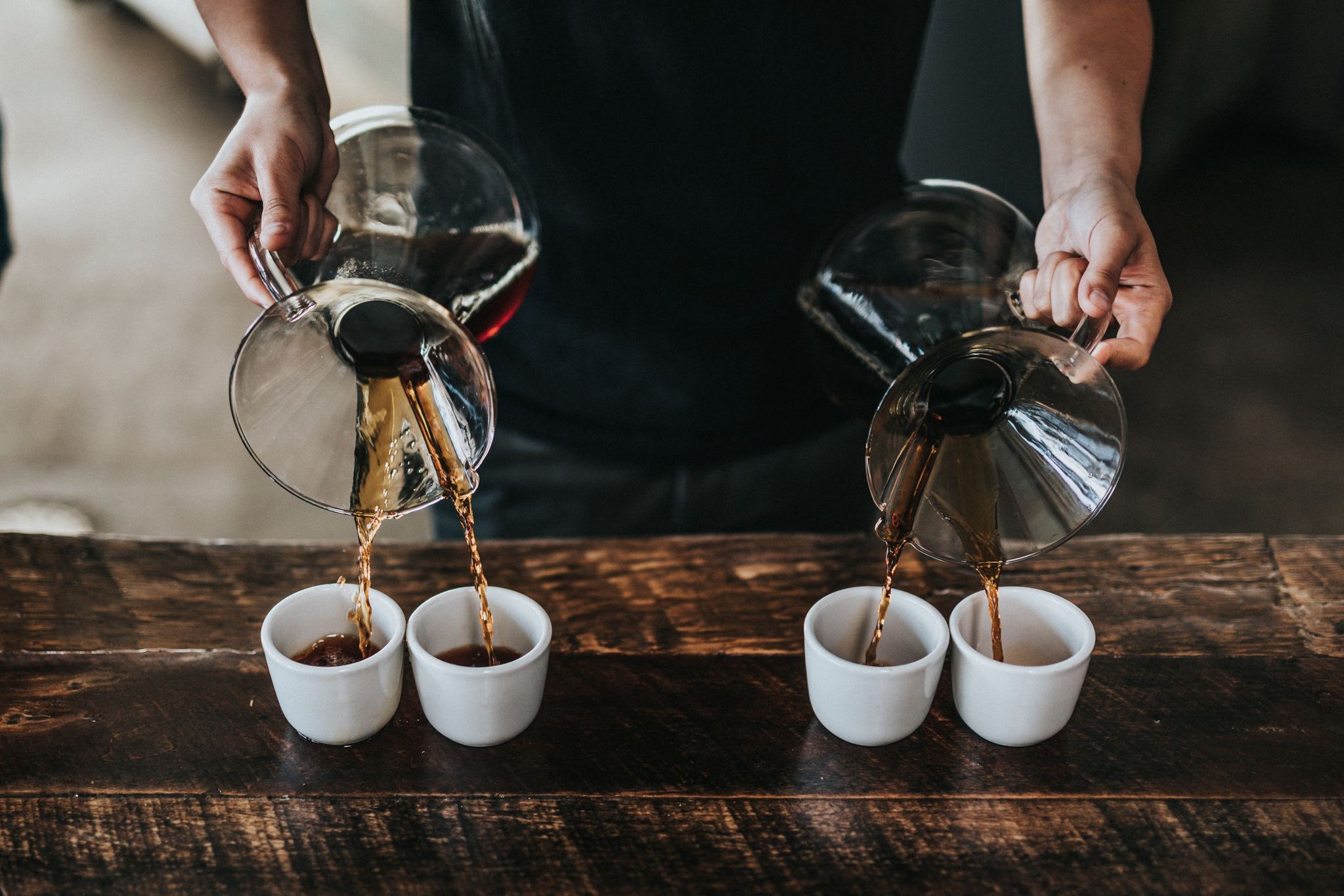
    The brand features a brew bar where baristas hand-pour craft coffees discovered during Crimson Cup’s sourcing trips all over the world.

    After opening four coffee houses since 2015, the Crimson Cup Bangladesh team is continuing its plans for expansion. Managers are looking for locations in Sylhet and Chittagong as well as the resort city of Cox Bazar. They are also exploring development opportunities in India, Nepal and Thailand.

  • Arabica Singapore Opens

    Arabica Singapore Opens

    Coffee chain % Arabica Singapore is to open three stores initially, the first at 56 Arab Street on June 28.

    After many delays due to construction and interior works, the Arab Street outlet of the Japanese coffee house will opened with seating for 20 and featuring a minimalist white design.

    Two other stores will follow at Chip Bee Gardens at Holland Village, and 313@Somerset on Orchard Road.

    There are plans to serve food at the Chip Bee Gardens outlet.

    Established in 2011, % Arabica has 16 stores in Hong Kong, Japan, Kuwait, the UAE, Oman, the Philippines and China.

  • Australian barista Paul Bassett Expanding Coffee Bussiness

    Australian barista Paul Bassett Expanding Coffee Bussiness

    A decade after launching in South Korea, Australian Paul Bassett plans to make the most of a “positive evolution” in the local coffee culture, expanding his brand partnership with a local dairy company.

    Paul Bassett teamed with Maeil Dairies Co to launch a coffee brand named after him in 2009 – just at the time local consumers were starting to embrace specialty coffee. Their vision was to target the growing high-end coffee market.

    “Driven by a lot of curiosity for specialty coffee, the overall (Korean coffee) market has grown in the past 10 years and specialty components within the market showed some real healthy growth,” the 2003 World Barista Champion said in a recent interview.

    “I think it was the timing when we opened the (first) store and the location of the store was quite important. Had we been here 20 years ago, I am not sure.”

    South Korean’s craze for coffee has been described as dramatic in recent years. Starbucks and other premium coffee brands have sprawled into every corner of the nation’s big cities.

    South Korea’s coffee market was estimated at US$9.85 billion last year, and the specialty sector of the market is still growing.

    When Paul Bassett opened its first location in a department store in the affluent Gangnam district in 2009, it made a splash in the sector with a differentiated product lineup beyond typical Americanos and lattes.

    The brand made a name for itself with lungos, an Italian-style short black coffee with more water, a rather nascent item at the time. Lungos are weaker than espressos with additional hot water but more bitter than Americanos.

    Paul Bassett outlets, operated by M’s Seed Co, a wholly owned unit of Maeil Holdings, have also proven popular due to a variety of latte items and ice creams, with milk provided by Maeil Dairies.

    For example, its ice cream latte, similar to Italian espresso-based affugatos, is also a hit at the coffee house.

    Bassett said he has been deeply involved in selecting beans, deciding on the blending ratio and roasting profile, quality checks and product development. Baristas at Paul Bassett stores extract espresso and make drinks according to his manual.

    The 41-year-old barista says he works as a “gatekeeper of quality” to maintain quality and consistency of beans and other drinks at 96 stores, mostly located in the Seoul metropolitan area.

    “We can go into one store in one location and have the same result and same experience in all of the locations,” he said. “It’s a challenge, but it’s one of the things that is really important to us.”

    Starting with 500 million won in sales in the first year, Paul Bassett posted 93.8 billion won in sales in 2018 and aims to double the number of outlets to 200 by next year.

    Without a doubt, local coffee brands like Paul Bassett still lag far behind Starbucks. The US coffee giant generated 1.5 trillion won in sales last year and currently runs 1290 stores in Korea.

    Still, Bassett is optimistic about his brand’s further expansion on the back of a rising appetite for specialty coffee and its royal customers. To fuel growth, the barista, who makes regular visits to Korea to check the menu and train baristas, said he will work with the M’s Seed to educate South Koreans about the origin of beans and the chemistry behind coffee.

    Once consumers know every cup of coffee can tell a story from farms from Ethiopia, Guatemala and Brazil, they will crave specialty coffee more than blended coffee, he said.

    Growing up in a family that runs a restaurant in Australia and having found his true passion for coffee during his trip to Italy 20 years ago, Bassett says he wants to contribute to the Korean coffee culture.

    “I have a very intimate and personal relationship with coffee. I’ve been able to develop an understanding of coffee through so much experimentation that I understand all the little inputs and how they can impact taste,” Bassett said.

    “I feel like the journey has brought me to where I am now.”

  • Japanese-born Pronto Caffe & Bar is opening in Singapore

    Japanese-born Pronto Caffe & Bar is opening in Singapore

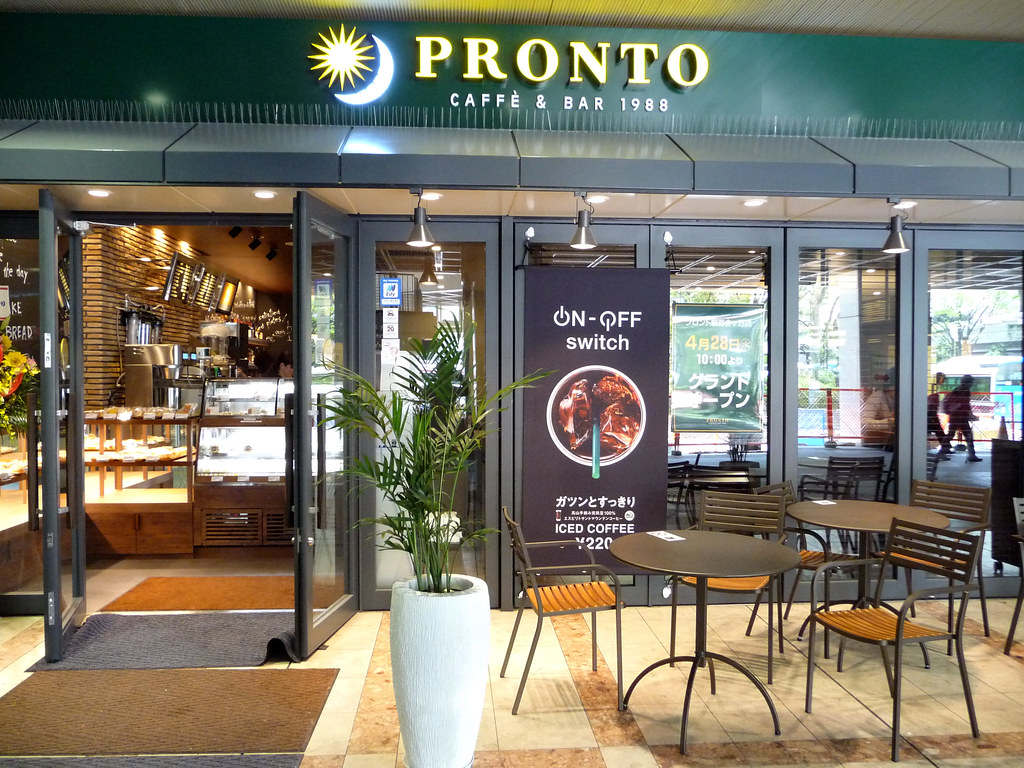
    Japanese-Italian cafe chain Pronto Caffe & Bar is opening in Singapore this week.

    Set to open on Thursday (June 13) at Capital Square, the outlet will serve breakfast sets, pastas, pizzas, desserts and coffee by day; and alcohol and bar food by night.

    The menu features a mixture of Japanese-influenced dishes, including Japanese Style of Pork and Spicy Greens, along with more traditional western fare, such as Eggplant with Bacon in Tomato Sauce pasta.

    Green tea beverages are available as well as coffee.

    First opened in 1988, and jointly owned by Suntory and UCC, Pronto now has more than 260 outlets in Japan.

    There are plans to open more outlets in Singapore next year.

  • Bubble-tea chain Milksha opening Stores in Singapore

    Bubble-tea chain Milksha opening Stores in Singapore

    Taiwanese bubble-tea chain Milksha is opening two outlets in Singapore by the end of this month.

    The first flagship outlet will open at Suntec City Mall, and a second in Funan mall, which is scheduled to open on the 28th.

    Known as Milkshop in Taiwan, and Milksha outside of Taiwan, the chain has five signature products: Azuki Matcha Milk, Fresh Taro Milk, Refreshing Orange Green Tea, Earl Grey Latte with Honey Pearl and Valrhona 100% Cocoa Milk.

    The brand is also known for its honey pearls, which are made in Taiwan and frozen using ‘quick-freeze’ technology to maintain the texture of the pearls, before being flown to Singapore.

    The local outlets will offer four varieties: Fresh Milk Series, Fresh Milk Tea Latte Series, Premium Tea Series and Special Concoctions.

    Milksha currently has more than 230 outlets in Taiwan, 20 in China and two in Hong Kong.

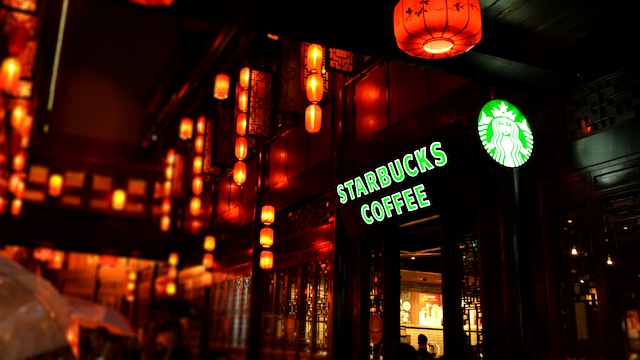
  • Starbucks China Reshuffles Management

    Starbucks China Reshuffles Management

    Starbucks China management has been restructured as the company gears up for a more intense focus on its digital business. From June 1, CEO Belinda Wong, becomes chairman and CEO of Starbucks China.

    Two distinct business units will be created – Starbucks Retail and Digital Ventures – the heads of which will report directly to the newly created office of the chairman and CEO, Starbucks China.

    Leo Tsoi has been appointed SVP, COO & president of Starbucks Retail and Molly Liu has been appointed VP & GM of Digital Ventures.

    Wong will oversee new business development in China and focus on long-term sustainable growth.

    “The new team structure is for the next phase of growth and managing resources to balance the short-term needs of the business and the long-term strategic priorities in China,” said Starbucks group president, international, channel development and global coffee and tea, John Culver.

    “While paying more attention to customers and partners, we will accelerate the pace of innovation to capture the new opportunities in the third-place experience and digital innovation,” he said.

    Wong has headed the China business since 2011 and under her leadership, the company has grown at a rate faster than any other of the brand’s global markets. Among her achievements were setting up the New Retail partnership with Alibaba, integrating the East China business in 2017 and creating the “Coffee Wonderland” experience with the Starbucks Reserve Roastery in Shanghai.

    After 20 years in China, the company has grown to 3800 stores in 165 cities, serving 9 million customers every week.

    “For 20 years, we have worked steadily to achieve a long-term and healthy development in China,” said Wong. “For the next chapter of growth, we will stay true to our mission, values and guiding principles. About 53,000 Starbucks partners in China will work together to continue our innovation ventures and bring our passion of coffee to our customers to enhance the third-place experience.

    “We will also support our partners in their professional development to realise their full potential and give back to the community where we live in. ‘In China, for China’, we will continue to fulfill our commitment in developing a long-term and healthy development in China, making Starbucks as a faster, stronger and more loving company,” she said.

  • Cafe Amazon Opens in Singapore

    Cafe Amazon Opens in Singapore

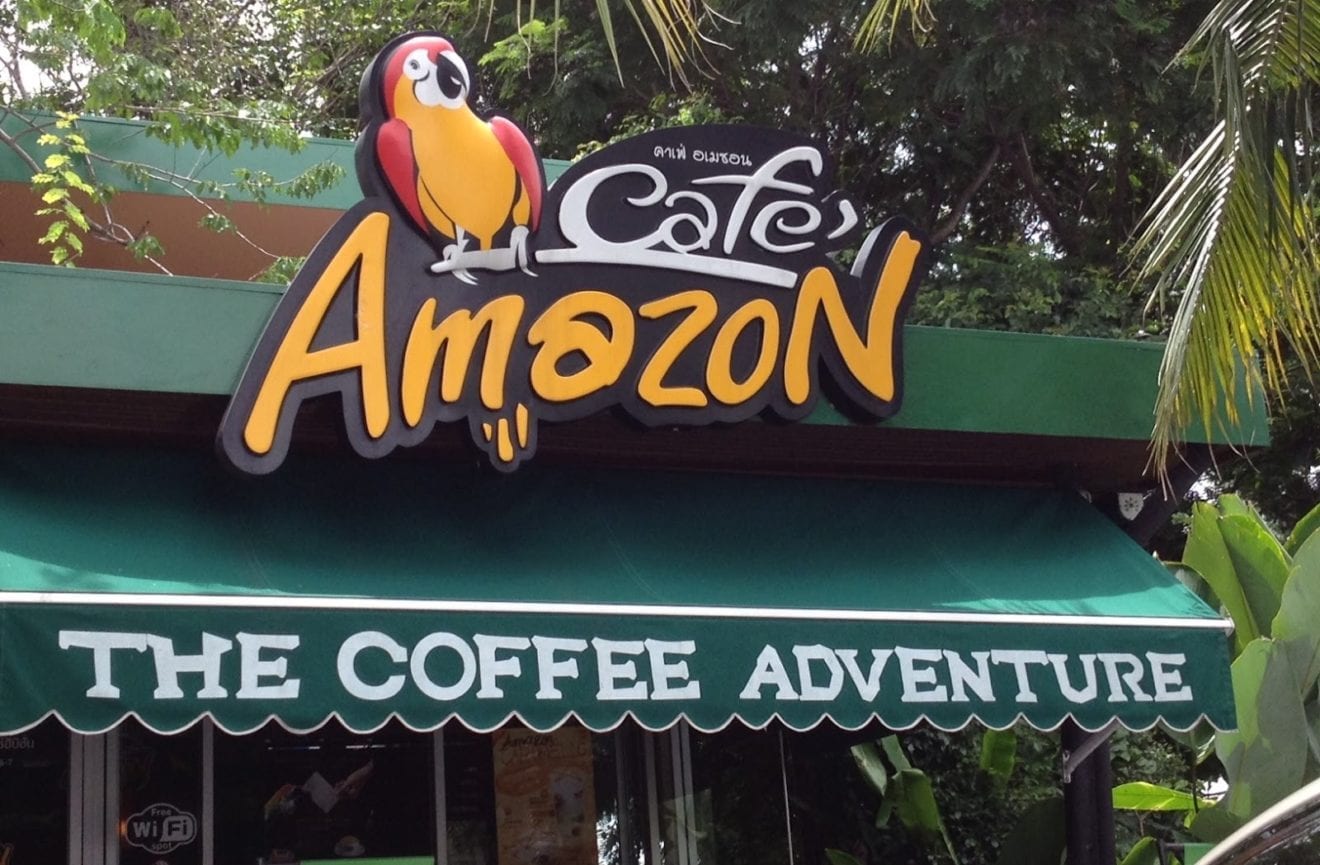
    Thai coffee chain Cafe Amazon has opened its first outlets in Singapore.

    One store is located at Jewel Changi, the other at Jurong Point shopping center.

    An opening ceremony was held at Cafe Amazon Jewel Changi, which marked the 2750th branch of the franchised chain worldwide. The chain was founded in 2002 to provide beverages and food to travelers refueling at the company’s gas stations.

    PTT Oil and Retail Business Public Company Limited (PTTOR) chairman Auttapol Rerkpiboon said the company was pleased to open in the Lion City.

    “Throughout 15 years of business, we’re proud to say that Cafe Amazon has received an overwhelming response in every country it operates.”

    Singapore joins Laos, Cambodia, Myanmar, the Philippines, Japan and Oman on the list of countries Cafe Amazon has entered. It has about 2500 stores in Thailand and nearly 200 abroad.

    To adapt to Singaporean taste, Cafe Amazon has adjusted its snack and beverage menu, making Yin Yang, a premium matcha latte its signature drink.

    PTTOR plans to invest US$1.3 billion to open 20,000 branches of Cafe Amazon over the next five years under a franchise business model.

  • Starbucks launches Starbucks Now cashless in China

    Starbucks launches Starbucks Now cashless in China

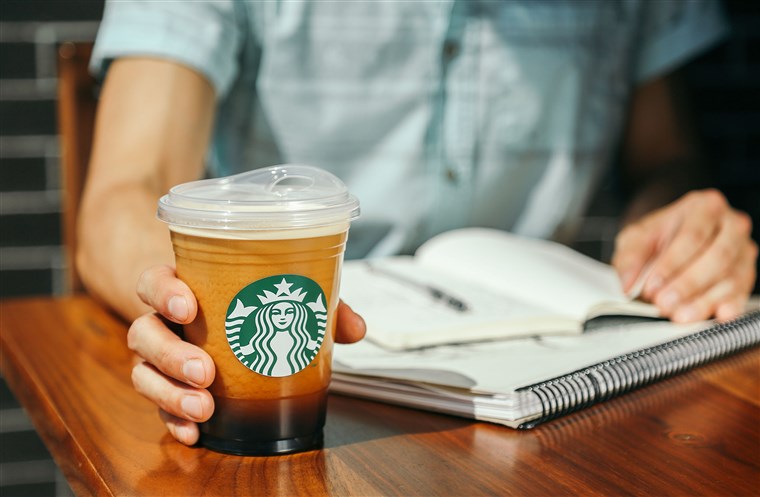
    Starbucks China has launched its new mobile order & pay experience Starbucks Now to 300 selected stores in Beijing and Shanghai.

    The firm is planning to introduce this feature across China over the course of the next year.

    Starbucks Now allows customers to place an order in advance of their visit and pick up their beverage and food at a Starbucks store. The new feature is exclusively available to the cafe chain’s loyalty program members through the Starbucks China mobile app.

    “Starbucks Now represents a significant opportunity for Starbucks China to drive new innovative customer experiences,” said Starbucks China CEO Belinda Wong.

    “This builds on the latest of several digital initiatives in China, including Starbucks Delivers and locally relevant gifting and e-commerce experiences. We are excited to offer this special mobile order & pay service exclusively to our Starbucks Rewards members to provide convenience and speed to suit their on-the-go lifestyle and seamlessly integrate Starbucks into their daily lives.”

    The rollout of Starbucks Now builds on the digital capabilities and infrastructure of the recently introduced Starbucks Delivers program last year. Starbucks Now will provide customers in China a unique and convenient way to order, pay and pick up their favourite Starbucks beverage and food item without the wait.

    The service allows customers to choose a store location based on their GPS location to browse, customise a beverage, select a food offering, view order time, and pay – wherever they may be. Following confirmation of the order, baristas prepare each beverage and ensure the order is ready to hand to the customer when they arrive at the store.

    Starbucks Now is curated to enable customisation as part of the mobile order experience. Through the feature, customers can modify the beverage size, select the number of espresso shots and select their dairy preferences. In a first-ever mobile order feature for Starbucks, beverage options have been expanded to include: type of espresso shot, amount of whipped cream, and room for milk.

  • Starbucks China opens First Signing Coffee Store in Guangdong

    Starbucks China opens First Signing Coffee Store in Guangdong

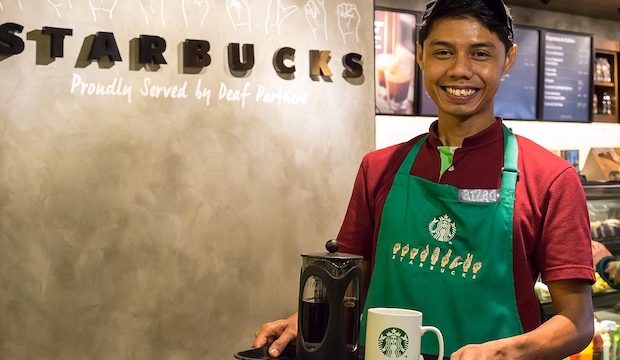
    Starbucks China has opened its first Signing Store, staffed entirely by deaf or hearing-impaired people.

    The store is in Guangzhou, in Guangdong Province which is home to about 4 percent of China’s deaf population. It is Starbucks’ third Signing Store, following outlets in Washington DC and Malaysia.

    Sign language symbols are printed on umbrellas in front of the store, and there are indicators throughout the store. Deaf baristas will wear aprons with the word “Starbucks” embroidered in sign language.

    The store is equipped with a customized ordering system. Customers and partners will be able to communicate using notepads and two-way digital displays. For customers new to sign language, there will be a dedicated area for customers to write down their orders on an electronic board and wireless vibrating pagers will notify customers when their orders are ready.

    The cafe also features exclusive artwork and unique merchandise designed by deaf artists.

    The initiative aims to offer employment and career-advancement opportunities for the deaf and hard-of-hearing community as well as “a welcoming hub for those passionate about improving accessibility and experiences for all”. It is located near the Guangdong Disabled Association and Guangdong Deaf People Association.

    “Starbucks is committed to creating equal opportunities for everyone, as well as a unique third-place experience that addresses a wide range of community needs,” said Belinda Wong, CEO of Starbucks China. “The new Signing Store is an example of how we are building inclusive environments and careers for our partners.”

    Store staff, who have been recruited from across China, are fluent in Chinese sign language.

    To create an inclusive environment and encourage customers to learn more about the deaf community, the store will also offer sign-language lessons and coffee workshops in sign language.

    “The Guangdong Deaf People Association is proud to partner with Starbucks to provide training and opportunities for the deaf and hard of hearing community,” said Yitao Fan, vice chairman, China’s Deaf People Association and president of Guangdong Deaf People Association. “Thanks to Starbucks, deaf partners are empowered to develop their careers in a vibrant and supportive environment, while the store provides a strong platform to drive societal awareness around deaf culture and the needs of the community.”

  • Basao delivers ‘sineculture’ at Star Street

    Basao delivers ‘sineculture’ at Star Street

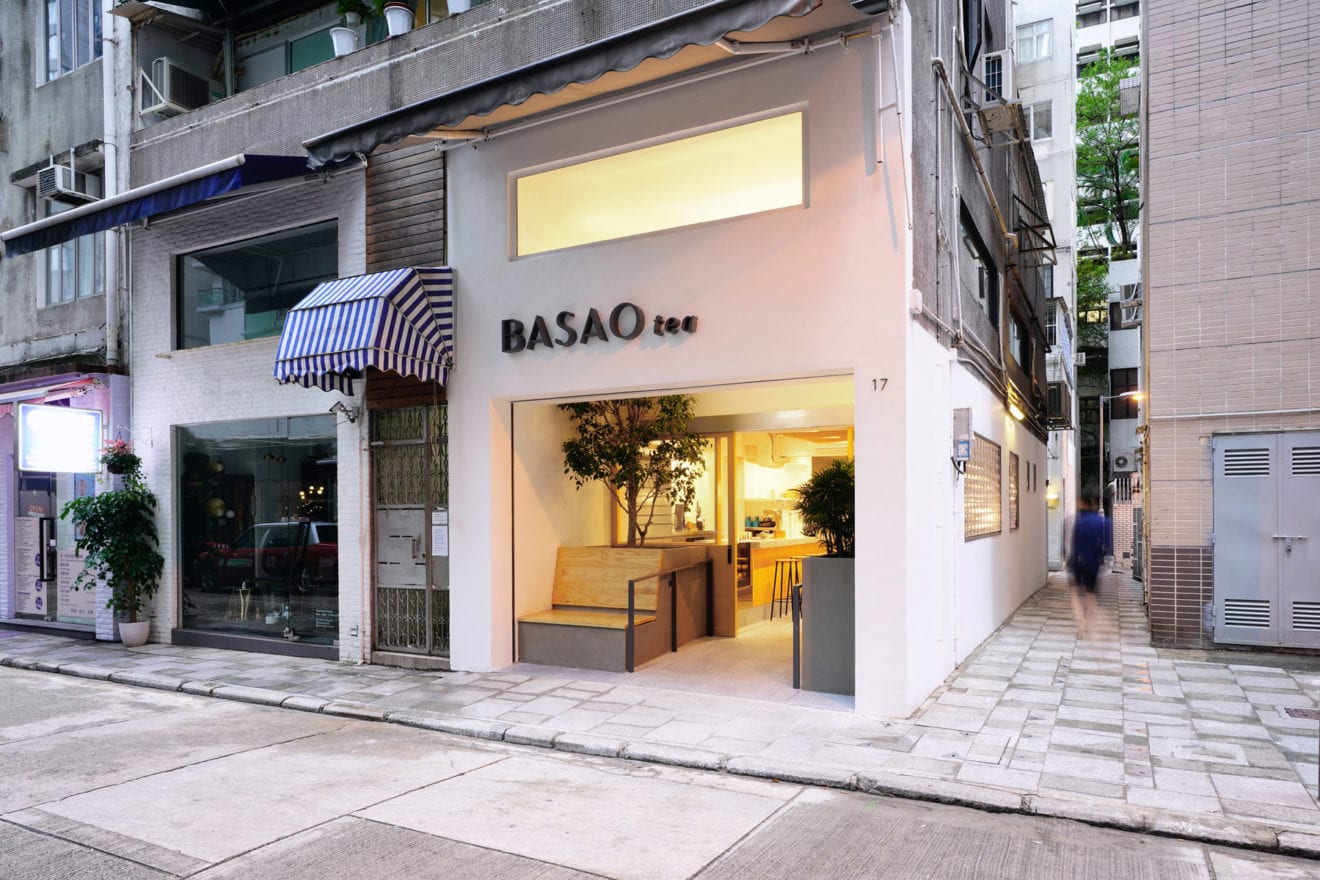
    Homegrown Hong Kong fine-tea brand Basao was launched online four years ago. Now the fast-growing brand has opened its first physical retail outlet on Moon Street, in Wanchai’s hip Star Street foodie precinct.

    Since 2015, Basao has been attracting a growing following for its teas, which appeal for not only their fine taste, but their holistic health benefits. The teas are handpicked by partner growers in Mainland China, Taiwan, Nepal, India and Japan.

    “We believe tea appreciation will evolve in the same way as drinks like coffee, wine and craft beer,” explains founder COO Oliver Ma. “They have all started reaching a new generation of discerning enthusiasts in recent years and I think tea is ready for a very similar experience. Interesting times are brewing for long overdue respect and admiration of this ancient craft.”

    Basao tea is named in honour of an 18th century Japanese Buddhist monk with the slightly different nickname of Baisao, or “old tea seller”, who became famous for travelling around Kyoto selling tea.

    Ma says Basao is now similarly admired for pioneering a “modern holistic era of sineculture,” (the science of everything relating to tea), working closely with small artisan growers across Asia, promoting sustainable, eco-friendly cultivation and production of highest-quality tea without chemical pesticides.

    “Our tea engineers advocate the holistic ecology and craft of tea as an art, not just a mere commodity, connecting personally with our partner growers from cultivation and picking to brewing, packaging and fair trade,” he says.

    A diverse tea range extends from Basao’s collection of black tea, green tea and oolong brewed by experienced tea masters, through to chilled bottled tea, Japanese matcha, traditional blends and Chajito specialties.

    Hitherto sold only online, now these brews can be tried and purchased at the new Basao tearbar. Visitors to the store are greeted by a bright white and warm-wood interior in a laid-back venue with a bar where tea masters explain their brews.

    Workshops are held at the cafe, conducted by renowned Hong Kong tea master Katherine Yu Man-sum, a protege of tea pioneer Master Yeung Chi-sum in the 1980s, and founder a tea appreciation course called Teaism, teaching Cha Tao (The Way of Tea), at the Jockey Club Creative Arts Centre.

    Basao’s single-origin, clean-grown signature authentic loose leaves are highlighted by black teas including Lingia Second Flush, a coppery summer tea from Darjeeling’s Golden Valley in the Himalayan foothills of India, with a spicy mineral flavour and hints of tangerine and waffle cone; sweet and refreshing Seaside Honey from the Kararuan Coast of southeastern Taiwan; and Traditional Smoky Bohea from the home of China’s Wuyi Mountain smoked black teas located in the highlands of northern Fujian in China.

    Among the oolongs are sweet, crisp and floral Gardenia Dancong from Phoenix Mountain, Guangdong; and slightly sweet Red Heart Tieguanyin from Anxi, Fujian China Spring, with a hint of daisy, lily and dry-wood aroma; and honey and jasmine flavour.

    Headlining the Japanese green tea offer is sweet and savoury Wazuka Sencha green tea with a unique fresh spinach flavour and light, delicate finish from the legendary plantations of Wazuka, near Kyoto.

    Cold brew teas also include Nitro Cold Brew, Cold Brew and Fruit-Infused Nitro Cold Brew, steeped in cold water, rather than brewed, for a sweeter, milder, low-caffeine, low-tannin option high in vitamin C.

    Also launched is First Crush Kombucha, an ancient, refreshing cure-all elixir that is naturally bubbly and deliciously sweet and tart, crafted from Lingia First Flush in a new partnership with local Kombucha brewery Taboocha.

    Basao’s teabar also serves desserts incorporating its signature teas, with a menu including Homemade Tea Cake Roll, Basao Tea Ice Cream, Tea Crystal, and Belgium Waffle, with Basao homemade tea syrup.

    The Basao teabar is located on the ground floor of 17 Moon Street, open daily from 11am to 8pm.
  • Chicha San Chen opens in Singapore

    Chicha San Chen opens in Singapore

    Taiwanese bubble-tea chain Chicha San Chen has opened its first outlet in Singapore.

    Located in 313@Somerset, the flagship store has modern design with an open kitchen.

    Customers can make their own tea and watch as it brews in a Teapresso machine.

    They can choose from milk-tea, fruit-tea or pure-tea bases including Green Tea, Osmanthus Oolong Tea, High Mountain Pouchong Tea, Black Tea, Dong Ding Oolong Tea and Cassia Black Tea.

    The store also features a tea appreciation counter where tea connoisseurs can learn more about teas and sample the special Taiwanese Lishan Qingxin Oolong Tea.

    Established in Taichung 20 years ago, Chicha now has more than 200 stores in Taiwan and China.

    Chicha has its own tea plantations in Taiwan, where they harvest their tea leaves and other ingredients.

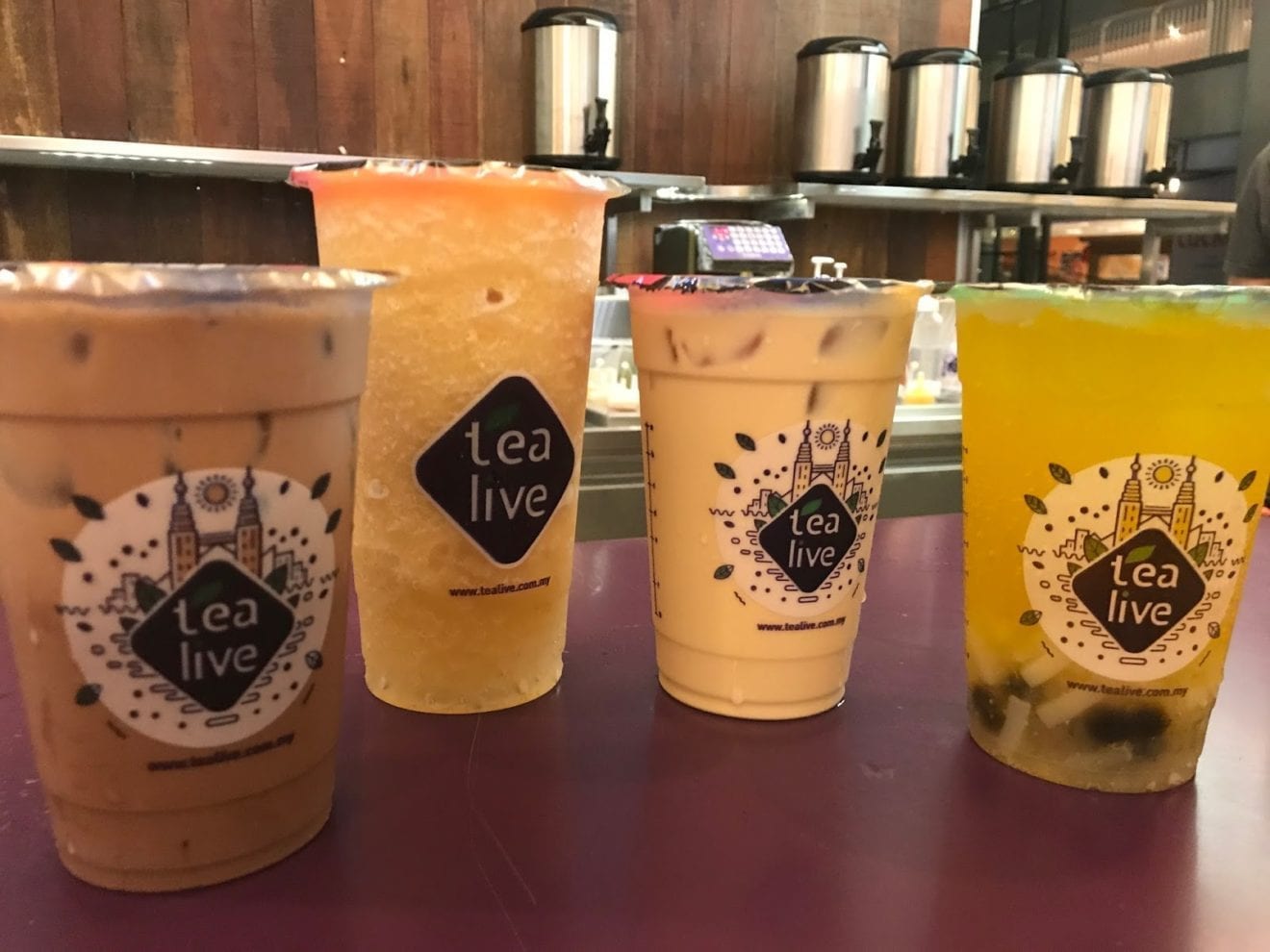
  • Malaysian bubble-tea chain Tealive Eying IPO

    Malaysian bubble-tea chain Tealive Eying IPO

    Loob Holding, parent of Malaysian bubble-tea chain Tealive, is preparing an IPO in Malaysia with a view to raising MYR300 million (US$72 million).

    The firm, which operates more than 200 food-and-beverage outlets in the territory, has reportedly hired advisors to facilitate the process and is seeking a valuation of up to MYR1 billion.

    “We have engaged corporate advisers for this exercise,” said Loo’s CEO Bryan Loo. “We cannot confirm the valuation sought nor the IPO portion, pending final recommendations from our advisers.”

    New listings have been slow off the mark this year, with only $9.4 million in first-time sales so far compared to $47.8 million during the same period last year. Several retail businesses are expected to list shortly, including Malaysia KFC operator QSR Brands and home improvement chain Mr DIY.

  • Dome Cafe Singapore Closing Doors

    Dome Cafe Singapore Closing Doors

    The last Dome Cafe Singapore cafe is to close next month. The Australian casual-bistro concept which specializes in light meals and coffee will exit Singapore after 20 years on June 23 when the last outlet, at Parkway Parade, shuts its doors.

    Opened in 1993, under a Singaporean joint venture called Dome Holding, it was one of the first cafes serving specialty coffee on the island.

    A second outlet opened five months later, and by 1996, there were five Dome Singapore cafes.

    In the same year, Suntec Investment acquired a 51 percent stake in Dome Holding, forming Suntec Dome Holding and by 2009 the chain had grown to 10.

    “The food and beverage scene has evolved tremendously since the first Dome Cafe opened in Singapore more than 20 years ago,” said Rebecca Lim, Suntec F&B Holdings MD in a statement.

    “As a group, we have to progress with the times to stay relevant in this competitive industry. We will be channeling our resources to concepts that are aligned with the interests and welfare of the customers we serve.”

    Dome Cafe has more than 100 outlets internationally.

  • Urban Tea to roll out More China Stores

    Urban Tea to roll out More China Stores

    Chinese beverage and baked-goods retailer Urban Tea says it plans expansion from the middle of this year.

    The company will expand its network to 28 stores initially, through a combination of franchise partnerships and opening its own stores, with plans to speed up the rollout next year.

    Last October, Urban Tea set up a subsidiary company Shanghai Ming Yun Tang Tea, which controls Hunan Ming Yun Tang Brand Management Co (Hunan MYT), to focus on catering, along with health, training, retail and wholesale. Headquartered in the Changsha Xingingmen Fanchen International Center, Hunan MYT will integrate strategic brand positioning, offline operations, store management and brand marketing – all which will be used to expand the planned retail cafe network.

    Hunan MYT will operate stores under three brands: Buoyance Manor, Your Ladyship Tea (pictured) and Meet Honey. Buoyance Manor mainly features bakery products and coffee. Your Ladyship Tea sells specialty teas and light snacks and Meet Honey will primarily sell snacks and kitchen goods such as coffee mugs and tea cups.

    Currently, the company operates seven stores itself in Hunan province branded Buoyance Manor, along with a tea shop in Changsha Youyou Township.

    Urban Tea plans to focus on health and nutrition, using fresh, green, high-quality ingredients, positioning itself as an “all-natural baker”. Beverages offered include milk teas, fresh fruit teas and coffee.

    Light meals include salads, sandwiches, tacos, pizza, pastas and other meals primarily drawing from French cuisine and other western cuisines, and emphasising healthy meals and fresh ingredients.

    The company says it has established a research-and-development centre and will place an emphasis on seasonal research and product development, by picking fresh fruits, using seasonal tea, and using in season grains.

    “By offering seasonal menus we ensure fresh delivery to meet customers health and dietary needs to cultivate long term customers,” the company said in a statement.

    Urban Tea CFO Kan Lu said: “Our professional operations and R&D teams have many years of industry experience. We desire to make every product uniquely impressive to our customers, and bring consumers fresh, healthy and beautiful food and beverages.”