Retail News CRM

Tag: tea

  • Shanghai Tang and the Ritz-Carlton hotel collaborate on tea set

    Shanghai Tang and the Ritz-Carlton hotel collaborate on tea set

    Luxury fashion label Shanghai Tang and the Ritz-Carlton hotel are collaborating on an afternoon tea set inspired by the Ritz-Carlton hotel’s rich heritage with a modern twist.

    Celebrating Shanghai Tang’s 25th anniversary this year, the afternoon tea set transforms the brand’s aesthetics and craftsmanship into edible works of art. The Chinese-inspired afternoon tea set boasts a combination of both savoury and sweet delicacies.

    “I incorporated more Chinese elements into the Shanghai Tang afternoon tea,” said the firm’s executive pastry chef. “Ingredients such as red dates and lychee that are often seen in Chinese desserts were used, for example, to highlight Shanghai Tang’s Chinese legacy.”

    As part of the label’s 25th anniversary celebration this year, Shanghai Tang and the Ritz-Carlton hotel are thrilled to team up, said Shanghai Tang’s creative director Victoria Tang-Owen.

    “The Silver Jubilee tea set pays tribute to the brand’s 25 years of heritage and serves up a delicious taste of Shanghai Tang’s authentic and disruptive spirit with every bite.”

    The three-tiered afternoon tea stand is shaped to mimic the birdcage – an iconic collectable in Chinese culture. The four savory bites and six desserts are especially designed to highlight modern Chinese aesthetics and Shanghai Tang’s signature motifs.

    Shanghai Tang’s Silver Jubilee Capsule Limited Edition is a key source of inspiration for the afternoon tea sets.

  • Tea chain Heytea opening outlets in Singapore

    Tea chain Heytea opening outlets in Singapore

    Chinese tea chain Heytea will open a new store at Westgate, Singapore on Saturday.

    The minimalist store design is inspired by the traditional Chinese handscroll and attempts a “Zen” vibe intended to provide customers with an immersive store experience to enhance inspiration and creativity.

    The Westgate store introduces two newly launched items in its Oreo Series, including the Orea Boboshake and the Oreo Sundae.

    The tea chain Heytea operates 268 stores in more than 35 cities in China and abroad. Its first overseas store launched in Singapore last year, since which time it has opened three more locations.

  • Starbucks Reserve Riverside 66 Tianjin opens doors

    Starbucks Reserve Riverside 66 Tianjin opens doors

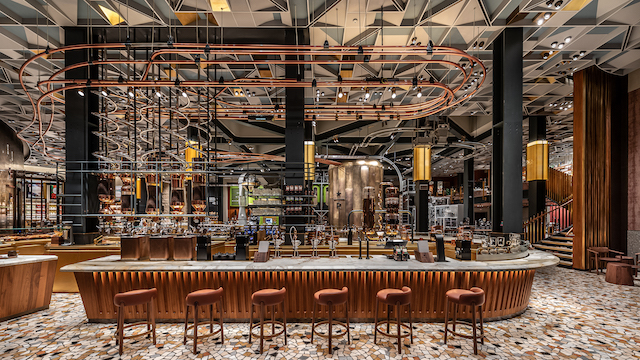
    Starbucks opened a flagship Reserve store in Tianjin, China, today which was built inside a Renaissance-era heritage building dating back to 1921.

    The Starbucks Reserve Riverside 66 Tianjin flagship store combines history with an entirely modern ‘third-place experience’ for the brand’s customers.

    “Over the past 20 years in China, Starbucks has constantly pushed to innovate and reimagine the third-place experience, to bring people and communities closer together,” said Leo Tsoi, senior VP, COO, and president at Starbucks China – retail. “We are immensely proud and privileged to preserve a revered piece of history that binds together four generations of Tianjin residents, and to share this rich cultural inheritance with more people, passing it on to future generations.”

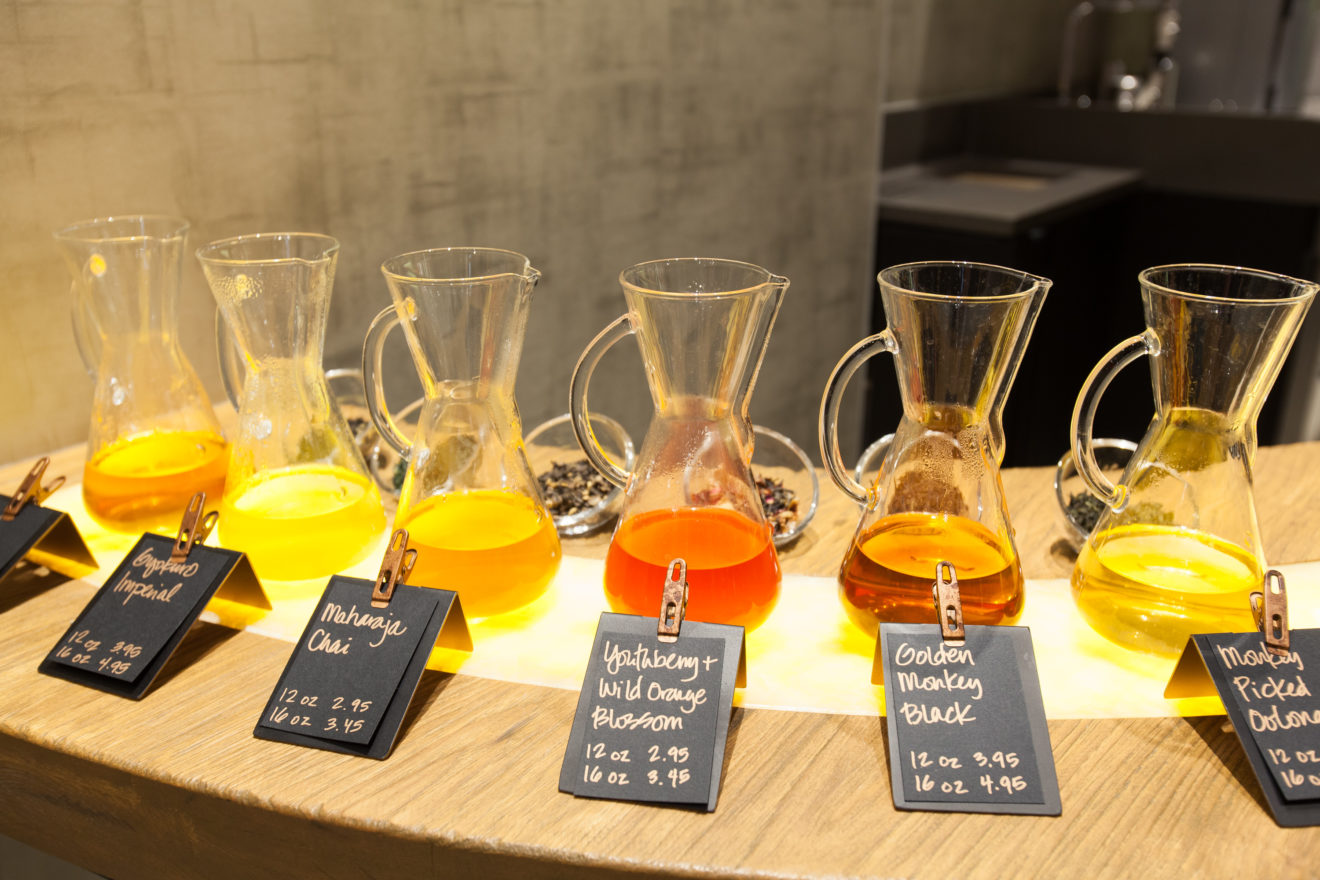
    The new store marks the first in the city to feature a Starbucks Bar Mixato and Starbucks Teavana tea bar, in addition to its Starbucks Reserve offer.

    The building, located on the city’s main commercial street, was designed by Shen Liyuan, who was among the first Chinese architects to study overseas. It housed the Zhejiang Xinye Bank until the early 1950s, a symbol of the city’s economic prosperity and development.

    In the 1980s, the early days of China’s economic transformation, it reopened as the high-end Yongzheng Tailor Shop before being converted into the Xinye Foreign Trade Mall. The location was officially designated as a city heritage site in 1997 and has been vacant for the past 20 years.

    Working with local historic preservation experts, it took Starbucks three years to navigate technical complexities and realize the vision for a modern restaurant space in a preserved building.

    Features of the building, such as the majestic Greek-style exterior facade, glass dome, imported marble columns, and marble carvings, have all been preserved, along with the original bank counters. The architects specified bronze tubes to avoid using nails in the columns when the lighting was installed. Lighting and air conditioning systems were embedded into the glass dome.

    “Beyond preserving the century-old architecture in its fullest form, the Starbucks flagship store has also made creative use of its unique features,” said Luo Shuwei, historian and senior researcher from the Tianjin Academy of Social Sciences. “Starbucks partners have shown great passion and dedication to ensure that every design detail is in harmony with the original architectural style, to create a warm and welcoming ambiance that is also filled with history.”

  • Travellers Can Now Order Boba Milk Tea On AirAsia Flights

    Travellers Can Now Order Boba Milk Tea On AirAsia Flights

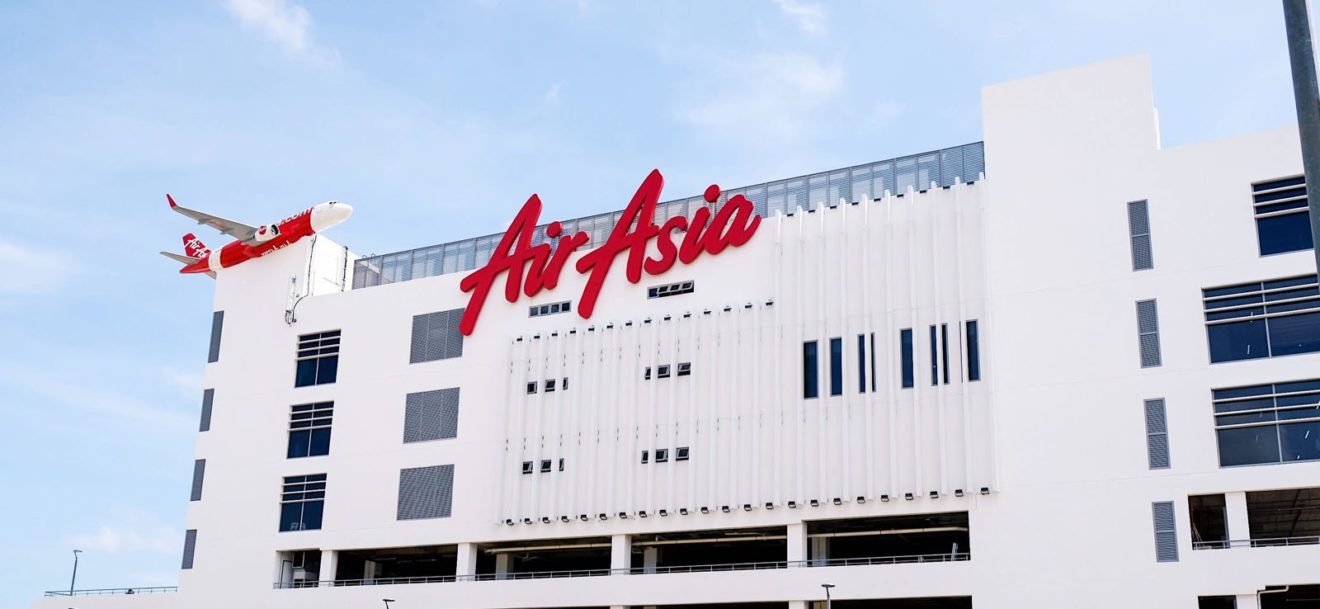
    AirAsia Thailand recently introduced bubble milk tea in their in-flight menu – much to the delight of customers. There’s even a poster that says that passengers can now enjoy Boba milk tea 35,000 feet in the air.

    You’ve probably come across articles on how unhealthy bubble tea drinks can be, due to its sugar intake, sweeteners and artificial flavourings. To combat that, AirAsia Thailand has come up with a healthier option flyers.

    Enter AirAsia’s milk tea with konjac bubbles. According to Google, konjac (also known as konnyaku and devil’s tongue) “is high in fiber and has almost no calories”. Made from the root of a plant, some of its alleged health benefits include helping people to lose weight.

    Its boba also come in diamond shapes. There is only 1 flavoured bubble tea on the menu for the time being though.

    Priced at ฿75 (RM10), it is available on AirAsia Thailand and AirAsiaX Thailand flights.

  • Starbucks Korea profit up with 28 percent

    Starbucks Korea profit up with 28 percent

    Starbucks Korea has reported a 28-per-cent year-on-year jump in its operating profit in the first half of the year amid rising appetite for premium coffee, discount store chain E-Mart said Tuesday.

    From January to June, the US coffee giant posted an operating profit of 74.7 billion won (US$61 million) in Korea, up from 58.3 billion won in the year-ago period, according to E-Mart’s first-half earnings results.

    E-Mart, the country’s biggest discount store chain operated by Shinsegae Group, holds a 50-per-cent stake in Starbucks Korea, with the other 50 per cent controlled by Starbucks US.

    South Korea is one of the fastest-growing premium coffee markets, and Starbucks expects further growth in this country.

    Sales also jumped 25 per cent to 887.7 billion won in the first half from 709 billion won a year earlier, the data showed. Net earnings were not available.

    Starbucks, which entered Korea in 1999, currently operates 1308 stores, including 50 upscale Starbucks Reserve outlets, in Asia’s fourth-largest economy.

    Starbucks Korea earned 1.5 trillion won in sales last year, up 20 per cent from 1.28 trillion won a year earlier.

  • Blue Bottle Coffee’s industrial-style flagship opens in Seoul

    Blue Bottle Coffee’s industrial-style flagship opens in Seoul

    Blue Bottle Coffee’s first South Korean cafe which opened in Seoul’s artsy Seongsu neighborhood earlier this year, features an industrial-style design with steel surfaces and red-brick fixtures.

    The cafe was designed by Schemata Architects, which has already created several of the brand’s branches in Tokyo, Japan.

    South Korea is the second international market for the US coffee company, which opened its first Tokyo cafe in 2015, inspired by the hospitality of traditional Japanese kissaten (coffee house) culture.

    In the new three-floor, 14,000sqft Seongsu location, each level is dedicated to a different use. The cafe has been designated to the basement – a decision made by the practice after seeing that the ground floor overlooked a busy road often blocked with traffic.

    “Having the cafe in the basement provides a calm and peaceful space away from the bustle on the ground,” the design team explained to Dezeen.

    At its centre is a huge stainless-steel service counter, above which a section of the ceiling has been cut away to provide views to the upper floor.

    Large stacks of red bricks – a material typically used to clad the facades of buildings in Seongsu – have been dotted throughout the space, where brand merchandise like packets of coffee and mugs can be displayed.

    “As a mark of respect for [Seongsu’s] history, we decided to also use brick inside the building,” explained the practice.

    A short set of stairs leads down to a lowered seating area that’s dressed with timber tables and chairs, as well as a couple of long beige sofas.

    The ground level hosts a roastery, a storage room for coffee beans and an area dedicated to cupping: the practice of observing the taste and aroma of brewed coffee. It is all fronted by glass allowing pedestrians outside to see the coffee-making process.

    “The basic design rules for Blue Bottle Coffee cafes remained the same in this project, which is to use a limited number of materials to create a space with a sense of unity and to create a flat relationship between the customers and the staff over the counter,” the practice’s founder, Jo Nagasaka said.

  • Nestle starts selling Starbucks-branded coffee in China

    Nestle starts selling Starbucks-branded coffee in China

    FMCG giant Nestle started selling Starbucks-branded coffee in Mainland China today, seeking to tap growth in a market where it says coffee consumption per capita remains low compared to global standards.

    Nestle last year paid US$7.15 billion for exclusive rights to sell the US chain’s coffees and teas globally and began selling Starbucks-labelled products in Europe, Asia and Latin America in February.

    The world’s largest food company will start selling 21 Starbucks-branded capsule and instant-coffee products on Chinese e-commerce platforms like Alibaba’s Tmall and JD, as well as to offices and hotels in tier-1 cities, both companies said.

    “We believe China is the most exciting market in general but especially for coffee because… per capita cup consumption is quite low as compared to Asia,” said Rashid Aleem Qureshi, Nestle’s CEO for the Greater China region.

    “Right now the overall soluble coffee [market] in China is growing between 3 to 5 percent a year and we believe that by bringing this exciting new business opportunity we should be able to grow faster than that,” he said, referring to a category that includes capsule and instant coffee.

    Nestle’s move comes as the Swiss company experienced slower first-half growth in China, its second-largest market, where other categories like mainstream baby foods have struggled compared to pricier options.

    China’s per capita coffee consumption is about six cups a year, compared to 400 in Japan and 300 in South Korea, Nestle said.

    The partnership with Starbucks would help Nestle add a premium coffee option to the range of products it already sells in China, such as Nescafe instant coffee range and Nespresso capsule coffees, Qureshi said.

    Starbucks China CEO Belinda Wong said the Nestle deal would open two new avenues to sell its products in China, where it has been investing heavily in its store network and delivery amid tougher competition from local startups.

  • Taiwanese bubble-tea brands caught in Hong Kong protest backlash

    Taiwanese bubble-tea brands caught in Hong Kong protest backlash

    Internet users on the Chinese mainland have blacklisted popular Taiwanese bubble-tea brands after a Hong Kong franchise urged solidarity with street protesters in the Asian financial hub.

    The online furore began when Yifang Fruit Tea, a maker of the tea-based drink, closed one of its Hong Kong shops for a day and put up a sign that said in Chinese: “Stand together with Hong Kongers”.

    Photos of the sign circulated on mainland social media this week, angering users who accused the firm of backing Hong Kong independence. Calls for a boycott spread to other Taiwanese bubble tea brands like Gong Cha, HeyTea, CoCo and A Little Tea.

    Yifang and the others were blacklisted by users of China’s microblog Weibo. A white list promoted “good” brands.

    “Rest assured, I won’t spend another cent on you. Yifang is rubbish,” a Weibo user named ProfiteroleK wrote in a comment that received more than 1500 likes.

    Hong Kong is facing its worst crisis since returning to China from British rule in 1997, as sometimes violent protests since June against a now-suspended extradition law have become a direct challenge to the city’s government and Beijing.

    Bubble tea was invented by Taiwan, a self-ruled island considered by Beijing as a renegade province. On the mainland, Weibo posts containing the hashtag “Taiwanese bubble tea shops” were read 350 million times in recent days.

    The run-in with Chinese social media users is another example of how companies can get caught in political issues.

    In January, Apple and Amazon were called out by a mainland state think-tank for “incorrect” Taiwan and Hong Kong references.

    The mainland franchisee of Yifang Fruit Tea said in social-media posts the company fired the part-time staff who put up the notice and permanently closed the outlet.

    However, Amigo Cheung, the brand manager of the Yifang franchise in Hong Kong, told Reuters by phone that nobody had been dismissed yet and no outlet had been shut.

    HeyTea and Gong Cha, on their social media accounts, affirmed their support for “One Country, Two Systems” or “One China”, in hopes of distancing themselves from the backlash.

    Fellow Taiwanese bubble-tea brands CoCo and A Little Tea could not be reached for comment.

    Taiwan President Tsai Ing-wen wrote in a Facebook post this week that “China’s political power has invaded into various nonpolitical areas,” citing tea as an example.

    “For people living in a society with freedom and democracy, we need to stay on high alert for issues like this,” Tsai wrote, along with a picture of a cup of ice fruit tea.

    Jennie, a mainland student studying at a Hong Kong university, said she had sympathy for protesting students but also felt caught in the middle.

    “Seeing the locals around disliking mainland people so much, I fear I’ll be driven out (from Hong Kong) by them in the future,” she told Reuters.

  • Hoshino Coffee chains eye Asian expansion

    Hoshino Coffee chains eye Asian expansion

    Upmarket Japanese coffee businesses are expanding into other Asian markets in an attempt to win over customers from global leaders such as Starbucks.

    Specialty brands Sarutahiko Coffee and Hoshino Coffee are among those reaching into major Asian markets, with Sarutahiko entering Thailand and Hong Kong, and Hoshino moving to Taiwan.

    “Consumers who frequent Starbucks are ready to embrace Japanese-style service,” said president and CEO of Sarutahiko Tomoyuki Otsuka.

    Mitsubishi has taken a 15 percent holding of Sarutahiko for around 500 million yen ($4.6 million), with a view to expanding the brands’ network from the current 16 stores (including three in Taiwan) to 30 outlets.

    Hoshino Coffee already trades well in Singapore, Malaysia, and Indonesia and will launch in Taiwan in the next fiscal year.

  • Jollibee bought The Coffee Bean & Tea Leaf

    Jollibee bought The Coffee Bean & Tea Leaf

    Philippine restaurant operator Jollibee Foods is to buy US cafe brand The Coffee Bean & Tea Leaf outright for US$350 million.

    The acquisition is Jollibee’s largest to date, and will involve a $100 million investment in a new Singaporean holding firm to handle the process, constituting an 80 percent equity of the business. The $250 million balance is to be regarded as an advance to the firm, which will issue preferred shares within six to nine months to repay it. The takeover will be financed initially through a bridge loan.

    The remaining 20 percent equity in the new firm will be taken by members of the family operating Jollibee partner Viet Thai International Joint Stock Company, which runs the Highlands Coffee and Pho 24 franchises, primarily within Vietnam.

    An IPO for the new holding company is expected to be made within three-to-five years.

    The Coffee Bean & Tea Leaf is owned by California-based International Coffee and Tea. It recorded revenue of $313 million last year, however, analysts estimate it lost about $21 million.

    “The deal will bring international business’ contribution to 36 percent of worldwide sales and will bring Jollibee closer to its vision to be one of the top five restaurant companies in the world in terms of market capitalization,” said Jollibee Foods Corporation chairman Tan Caktiong.

    “Our priority is to accelerate the growth of The Coffee Bean & Tea Leaf brand particularly in Asia, by strengthening its brand development, marketing, and franchise support system.”

    The Coffee Bean & Tea Leaf operated 1189 locations as of the end of last year, around a third of which are in Southeast Asia.

  • Teavana Bar and Kiosk open in Hong Kong this week

    Teavana Bar and Kiosk open in Hong Kong this week

    Three years after making its Hong Kong debut, Starbucks’ Teavana brand is opening two new outlets this week.

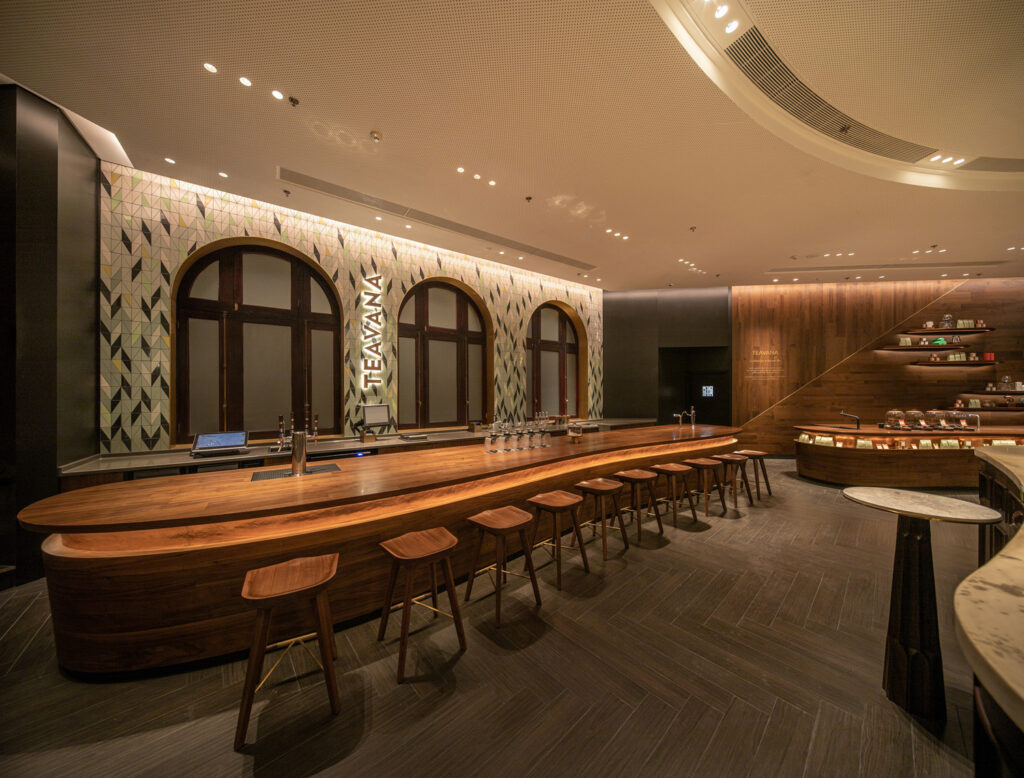
    A Teavana Bar opens today inside Starbucks’ revamped store at APM in Kwun Tong, the brand’s first bar in Kowloon.

    The Kwun Tong bar features an open design allowing customers to watch their beverages being made by employees.

    The Teavana Bar is lined with white 3D tiles and copper accents that trace the outline of hibiscus flowers, coffee and tea leaves and botanicals, shining through an arched opening in a terracotta-toned facade.

    Meanwhile, Hong Kong’s first Teavana Kiosk opens at Starbucks’ ISquare outlet tomorrow (July 25). The new retail model offers a grab-and-go service. Designed with a grey terrazzo bar adorned with rose gold accent, set against a pink wall, the decor is aimed at shifting customers “out of work mode” even if only for a quick break.

  • Starbucks China launches world-first Starbucks Now store

    Starbucks China launches world-first Starbucks Now store

    Starbucks China has opened its first Starbucks Now store – an express retail experience that integrates Starbucks physical and digital customer touch points.

    Centered in Beijing’s financial district, the Starbucks Now store is the company’s first express-retail format location. The service combines the signature Starbucks cafe environment with mobile order and pay and Starbucks Delivers customer experiences.

    “The Starbucks Now store is a testament to our unwavering commitment to delivering innovative customer experiences through new retail formats,” said Starbucks China Retail president and COO Leo Tsoi. “This new retail format and design approach provides us with a platform to offer customers a fast and convenient retail experience to suit their on-the-go lifestyle.”

    Customers entering the store are greeted by a Starbucks barista at an elevated concierge counter to assist with ordering or order pickup. They can choose from a menu of handcrafted beverage options tailored for the on-the-go customer along with an assortment of popular food items. Limited seating is available for customers who choose to stay and relax with their favorite food and beverages in the store.

    For delivery riders, a dedicated area for Starbucks Delivers orders enables fast pickup supported by baristas. Fulfilled Starbucks Now and Starbucks Delivers online orders will be placed in a secure in-wall system with a designated pickup portal associated with each order.

    The store will also have the ability to serve as a centralised dispatch centre for delivery orders within a certain radius, so Starbucks baristas at neighbouring cafes can focus on delivering service to in-store customers at those locations. During peak times, Starbucks Delivers beverage orders will be prepared by baristas from a central kitchen that is part of the Starbucks Now store.

    The company plans to open new Starbucks Now stores across high-traffic areas including business and transportation hubs as well as to new cities in China.

  • Dean & DeLuca chief bullish about Asia

    Dean & DeLuca chief bullish about Asia

    The CEO of embattled food retailer Dean & DeLuca is promising a massive store rollout in Asia at the same time as unpaid suppliers suspend deliveries to the brand’s remaining US stores.

    Sorapoj Techakraisri, CEO of Dean & DeLuca’s Thai owner Pace Development, said this week US losses will stop by the end of this year, but it is hard to see the iconic New York-founded delicatessen brand surviving.

    The brand is being operated in three completely different formats currently: an upscale, gourmet deli-cafe concept in the US where its store count is now down to just four; a restaurant-cafe concept in Asian cities such as Bangkok and Manila; and a trimmed-down takeaway or dine-in format in airports, most through a joint venture with Lagardere Travel Retail announced last October, selling coffee, drinks and takeaway food for consumption on planes from tiny footprints like the one at Hong Kong International Airport.

    There is no similarity beyond the brand name between the New York stores and the Asian businesses, which are now operated as separate units.

    Techakraisri admitted in a phone interview that there were delays in payments to suppliers.

    “The lack of financial resources makes it very difficult for us to maintain the necessary investments to improve and keep our franchise competitive and attractive,” he said. He promised creditors would be paid and that he planned to invest more capital.

    Later, in Bangkok, he said: “We are adjusting the Dean & DeLuca [US] business to a more appropriate size by controlling expenditures both at its office and stores.” These measures have cut costs by 25 per cent he said, and would see overall losses halted by the end of this year.

    Techakraisri said the US stores would be revamped to improve sales.

    Visitors to the New York flagship store on Tuesday of this week were greeted by the sight of empty shelves and a sign apologising to customers for the store’s appearance and inconvenience to customers. Fresh-food shelves were mostly empty, covered in long black sheets made of cloth, according to Bloomberg.

    The company has also closed its futuristic Stage fast-food concept in Manhattan opened in 2017.

    Pace bought the company for US$140 million in 2014, including a network which at one point reached more than 30 stores in the US, and licensing agreements in 31 countries including South Korea, the Philippines, Singapore, Thailand and Middle Eastern markets. By May last year the US network was down to just nine stores and there are now just four remaining.

    The original store opened in Soho in 1977, earned the nickname “museum of fine food” It claimed to be the first retailer in the US to sell radicchio, balsamic vinegar and sun-dried tomatoes. But over time its exclusivity has waned – as one food writer observed this month: “You can buy extra virgin olive oil on Amazon now”.

    Suppliers were chasing large debts. New York bakery Elenis claimed it was owed $86,000 for the custom-designed cookies shipped to Dean & Deluca over the holiday period. It ended a 15 years of supplies in December 2017 over unpaid bills and after suing settled on a 50 cents in the dollar payment.

    “They told me repeatedly that the funds would be in my account the next day or that the check was in the mail and I was never paid,” said owner Eleni Gianopulos. “As a small vendor, it’s crushing.”

    Another creditor, Ceci Cela Patisserie of Manhattan, was offered settlement of 50 cents in the dollar before deciding to sue for more than $70,000 it claimed was owed.

    Many suppliers this month have shared documents with US journalists showing they are owed hundreds of thousands of dollars collectively and some have not been paid since February.

    An Asian renaissance?

    In Bangkok this week, Techakraisri was painting a very different picture of Dean & DeLuca’s prospects despite the ongoing challenges in the US.

    “We [have] set plans for Dean & DeLuca’s expansion in Thailand over the next three-to-five years, when about 100 stores will be opened, up from 11 currently,” he said in a press conference for Thai media, reported by The Nation. “About five new Dean & DeLuca stores will be opened locally this year.”

    The Dean & DeLuca Asia operations now comprise 65 per cent of the brand’s total turnover, the four remaining US stores accounting for just 35 per cent.

    Dean & DeLuca Asia (Thailand) reported sales of  Bt630 million (US$21 million) in the year to May, and Bt115.23 million ($3.84 million) in profit before interest, taxes, depreciation and amortisation. That was an improvement of 13.3 per cent over the previous year. Those sales figures, however, appear to be a mix of company-owned store sales (in Thailand) and franchise revenues from overseas operators.

    Dean & DeLuca Inc (which runs the US business) has been losing an estimated $1.3 million a month – far more than the Asian business profits can cover.

    Techakraisri says despite the US woes, the company has boosted its global store network from 42 store in six markets at the time of the purchase in 2014 to 77 today in 11 markets outside the US.

    He says the company plans to launch Dean & DeLuca stores in five more “major Asian markets” during the next two years or so: China, India, Indonesia, Hong Kong and Taiwan.

    It is not clear how many of those will be airport stores operated under the Lagardere partnership, which at the time of the announcement promised 150 stores within five years.
  • China·Chengdu Panda Cafe opens in Naples

    China·Chengdu Panda Cafe opens in Naples

    China·Chengdu Panda Cafe, a coffee house featuring panda elements, officially debuted in Naples, Italy last weekend.

    The cafe, presents Chengdu-themed performances to guests, quickly attracted local customers curious to try the brand’s unique “Chengdu Flavour” coffee. It also features a number of interactive events, including panda painting, calligraphy, and Chengdu-themed postcard writing.

    “Baby pandas” in the cafe warmly invite all Italians to “drink coffee today in Naples, and in 2021 drink Panda covered-bowl tea in Chengdu”. The activity serves as an invitation to the 31st Summer Universiade, to be hosted in Chengdu. Naples was the previous host of the sports event.

    To promote the opening, a Panda-themed flash mob performed the “Panda Swing Dance” at many famous scenic spots across Naples.

  • Tea chain Ten Ren Vietnam to close down

    Tea chain Ten Ren Vietnam to close down

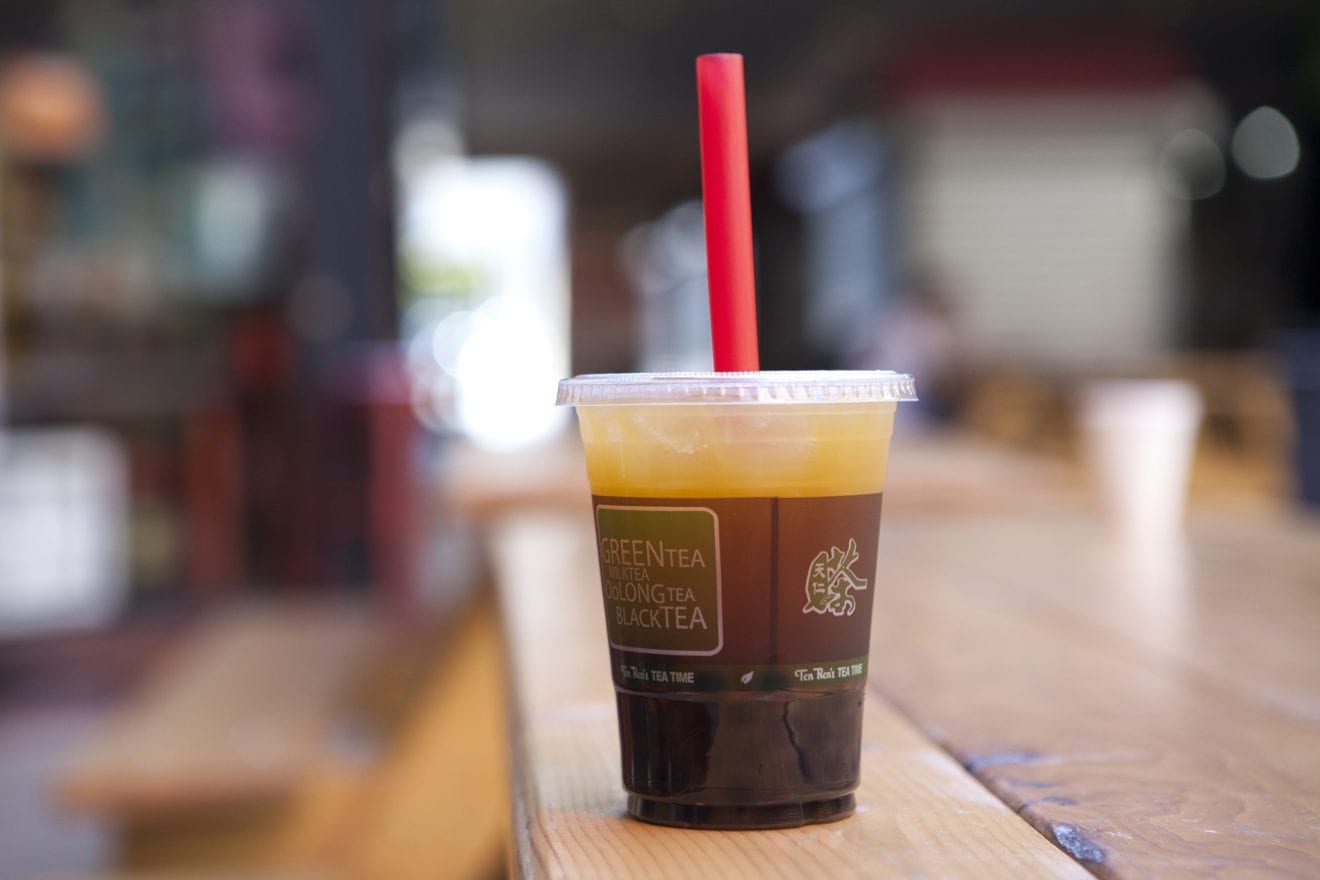
    Ten Ren Vietnam will close all of its 23 stores on August 15, local franchise holder Vietnam Coffee Trading Service has announced.

    The company, whose main business is the fast-growing The Coffee House chain, said the current business model does not conform to the needs of the customer. It will close the chain and plan an “appropriate strategy” for the sector.

    The company wants to focus more on its Coffee House brand.

    All employees and partners of the Ten Ren chain will be offered the chance to transfer to The Coffee House.

    Ten Ren entered Vietnam in November 2017 initially planning 40 stores by the end of last year, but has fallen well short of that target. Its primary lines are milk tea and packaged teas.

    Given the brand is operated under a franchise it is likely the Taiwanese parent will seek a new operator for the market