Retail News CRM

Tag: tea

  • Teafolia closing down, Singapore’s latest victim of the virus outbreak

    Teafolia closing down, Singapore’s latest victim of the virus outbreak

    Singaporean bubble tea brand Teafolia has permanently ceased operations in the territory.

    A Facebook post announcing the closure cited the “current economic situation” as the reason for shuttering its outlets. The brand had traded in Singapore for the past three years.

    Teafolia temporarily closed two of its three outlets during Singapore’s circuit breaker period, a lockdown imposed to counter the spread of the coronavirus pandemic on the island. It permanently closed its Bedok Mall outlet for reasons of “economic circumstances” a fortnight ago.

    Teafolia was popular amongst locals for fruit teas, milk-based drinks, and slushies as well as bubble tea. Its website lists one store in Los Angeles, USA, although it remains unclear whether or not the brand’s sole international location remains in business.

  • Starbucks expands Teavana in Korea

    Starbucks expands Teavana in Korea

    Starbucks is expanding Teavana in South Korea. According to the Korea Herald, The number of Starbucks’ premium Reserve-branded coffee houses serving Teavana drinks has expanded from 13 to 52.

    The tea has grown in popularity within the territory since it was introduced in 2016, with Teavana sales growing 20 percent annually. One tea blend is now the chain’s third most frequently ordered beverage among younger customers, perhaps due to a heightened awareness of health consciousness in that demographic.

    During the first three months of this year, sales of green tea-based drinks rose 35 percent compared with the same period last year.

    Starbucks acquired US-based Teavana Holdings in December 2012, a “super-premium tea” product it said brought “exotic blends, great flavors, wellness and innovation” to customers globally. At that time it was a standalone retailer, however, Starbucks closed all of the stores and integrated the brand and its products into selected coffee stores.

  • Singapore coffee chain Kimly boosts profit, despite Covid-19

    Singapore coffee chain Kimly boosts profit, despite Covid-19

    Singaporean traditional coffee shop operator Kimly has recorded a 5.3-per-cent year-on-year boost in half-year profit to SG$10.5 million (US$7.4 million).

    The result was achieved on a more modest 1-per-cent increase in sales to $107.4 million ($75.74 million) in the half-year ended March 31.

    The improved revenue was largely due to the brand’s five new coffee shops and eight food stalls opened since November.

    While the Covid-19 pandemic seriously and adversely impacted economic growth prospects in Singapore, Kimly’s coffee shops, canteens and food courts remain open for takeaway and delivery services throughout. Since the nation’s circuit breaker was introduced on April 7 footfall has fallen at these locations, the company said.

    “In line with the further tightening of circuit breaker measures recently, the group has suspended operations at its six Rive Gauche outlets and Cake Central Kitchen facility but the group does not expect the suspension to have any material impact on the group’s revenue.”

    The Kimly board said that besides placing focus on enhancing food offerings and operational efficiency in the upcoming year, “we remain committed to secure more long-term direct ownership of food outlets and food stalls in matured estates which is in line with our asset ownership strategy”.

    “We believe that there are still acquisition opportunities in the local market where we can tap on to further expand our presence in Singapore as well as enhance our profitability.”

  • Tea WG opens fourth Hong Kong store

    Tea WG opens fourth Hong Kong store

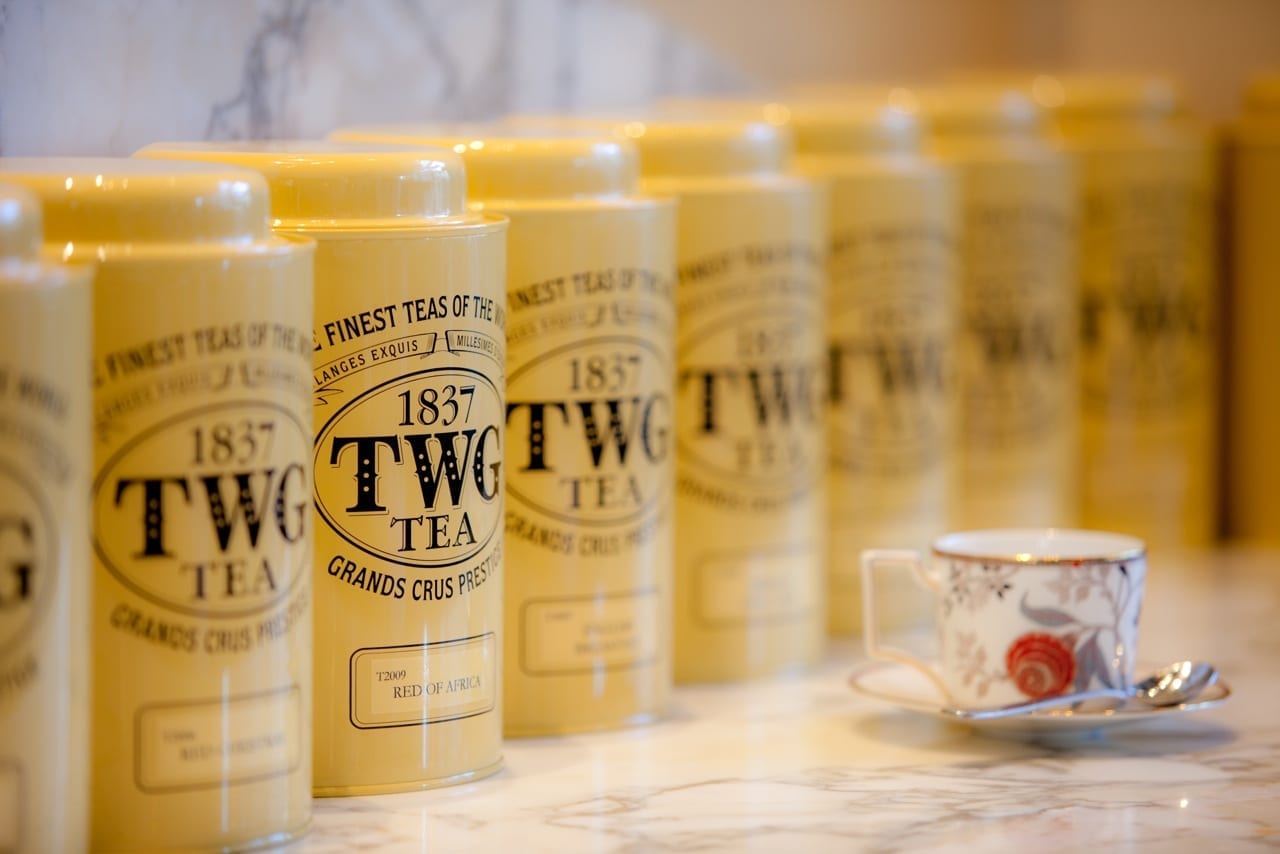
    Singaporean luxury tea brand Tea WG has expanded its Hong Kong footprint, adding a fourth boutique at Sha Tin’s New Town Plaza, its first in the New Territories.

    The retailer, which trades as TWG Tea in other markets, opened two boutiques in Festival Walk and Elements last year following its growing popularity in the territory.

    The teahouse was founded in 2008 by Taha Bouqdib, Maranda Barnes and Rith Aum-Stievenard who conceptualized luxury tea rooms with over 800 types of tea and inspired gastronomy, loved by both locals and tourists in more than 20 countries. Starting out in Singapore, the artisanal tea trend in Asia found success in the luxury market for the modern-day aspirational customer.

    The brand developed a sommelier-training facility to help its staff build an extensive knowledge through tea-tastings, training and exams to better serve customers.

    Although Tea WG’s clientele is mainly women enjoying their afternoon tea set over a cup of the company’s ‘Silver Moon’ green-tea blend, each global boutique serves different types of customers. From “tai tai’s” (wealthy ladies of the house) to Instagramming millennials, the brand is seeing a surprising increase in the number of affluent men splurging on upscale tea accessories and gold tea cups. Tea appreciation workshops (similar to wine tastings) are also held for its VIPs, offering a ‘fine-tea’ experience.

    Tea WG has built a luxury reputation that has drawn five-star establishments from Marriott Hotels to Singapore Airlines to serve the brand – even creating exclusive blends for their own clientele.

    From a Singapore brand to more than 70 locations in the world, including Paris, Tokyo, Dubai, the brand has even won over British and Chinese nationals with its exquisite blends.

    After opening a London salon and boutique flagship, Tea WG aims to expand to the US and Australia – but in the meantime, customers there can buy packaged tea through the brand’s mobile app and online store.

  • Chinese tea chain Heytea leaving Hong Kong

    Chinese tea chain Heytea leaving Hong Kong

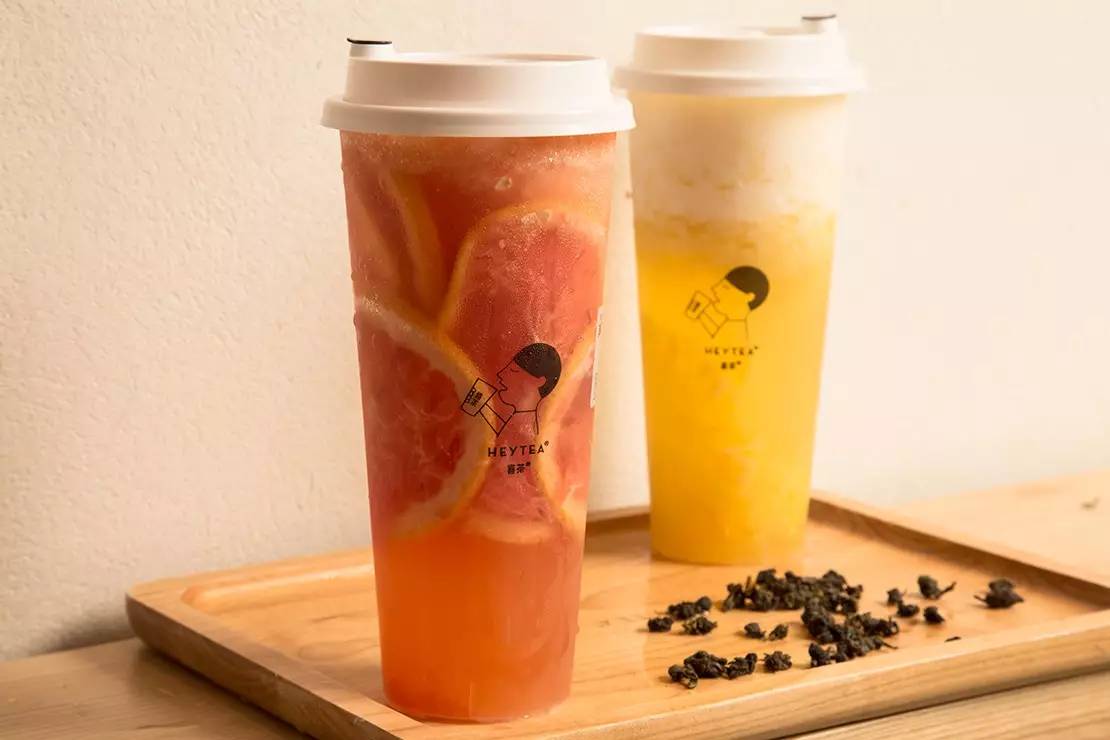
    Chinese tea chain Heytea has closed three-quarters of its Hong Kong network, leaving just two stores operating, at Causeway Bay’s Times Square and Sha Tin’s New Town Plaza.

    Three of Heytea’s outlets in Tsim Tsa Tsui – at The Sun Arcade and New World Development’s two K11 malls – have been boarded up. A K11 representative shared with Apple Daily that Heytea had rescinded its tenancy at the end of April. The tea chain had entered K11 Art Mall and K11 Musea in March and September last year, respectively. The K11 Musea flagship dubbed the ‘Heytea Lab’ spanned 4000sqft, offering patrons views overlooking Victoria Harbor and featuring the brand’s first tea-cocktail bar. It lasted less than one year.

    Heytea entered Hong Kong in late 2018, with customers queueing for up to four hours at the opening of the inaugural store at New Town Plaza. However, since the protests from June last year, many pro-democratic locals had boycotted the once-hyped tea brand due to its mainland Chinese origins.

    With Hong Kong now divided along political lines, locals initiated their own ‘Hong Kong 5.1 Golden Week’ protest action over the recent long weekend, a reference to the “Five Demands, Not One Less” slogan at the core of last year’s protests. The protest actively supported ‘yellow economy’ businesses that openly support Hong Kong protestors.

    More than 300 Heytea stores continue to operate in Mainland China and the brand made its first international foray into Singapore in 2018. The company sourced its initial funding from He Boquan, an angel investor from IDG Capital, and has just completed another round of financing led by Hillhouse Capital and Coatue Management, valuing the business at RMB16 billion (US$2.3 billion) post-investment.

  • Starbucks disclosing financial support for its staff in Asia

    Starbucks disclosing financial support for its staff in Asia

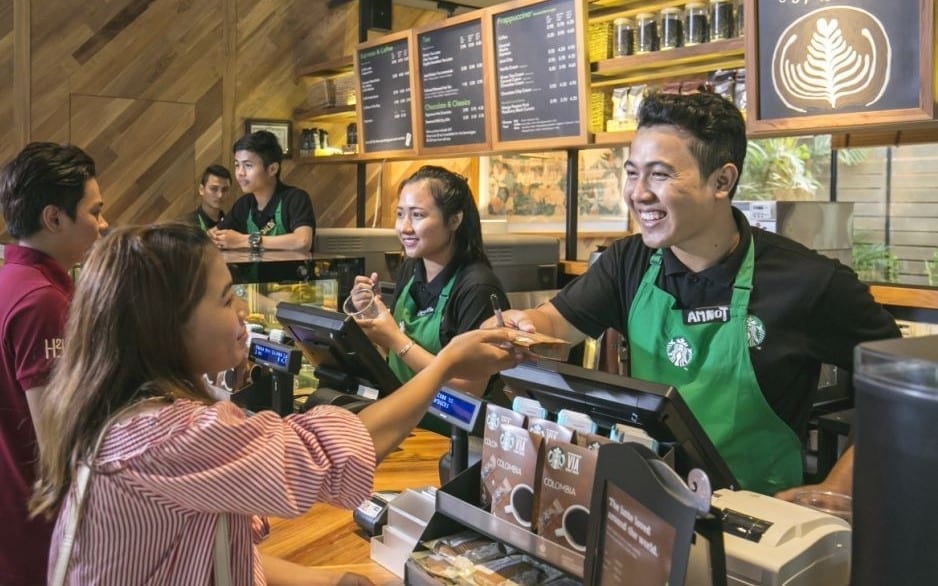
    Global coffee giant Starbucks has announced a US$10 million fund to support its partners (employees) around the world impacted by the coronavirus outbreak.

    The Starbucks Global Partner Emergency Relief Programme marks the first time both company-operated and international licensed market store partners across Starbucks will be able to access hardship grants.

    In company-operated markets such as China and Japan, the grants will be made available to partners through the existing Caring Unites Partners Fund – while in the rest of Asia, where Starbucks operates with local licensed businesses, they will be available to partners through the Emergency Assistance Foundation.

    “During this very difficult time, we believe it is our responsibility to create additional support for partners facing unexpected financial hardship wherever they are,” said Starbucks’ chief partner officer Lucy Helm. “We are proud to be a catalyst for a first-of-its-kind global funding initiative to further demonstrate to our Starbucks partners that we are in this together.”

    Starbucks’ commitment will also create a pathway for international licensed markets to set up their own funds, with Starbucks contributing an initial investment – a first for the company.

    Qualified categories for fund grants include (but are not limited to) housing and utilities, sudden loss of home, death of a family member or partner, and related funeral expenses.

  • Starbucks Korea expands social-distancing plan

    Starbucks Korea expands social-distancing plan

    Starbucks Korea will expand social-distancing measures across its branches nationwide from Thursday, after a successful trial at some stores in Daegu and North Gyeongsang Province.

    The company plans to ensure a safe distance between customers and employees is maintained when ordering by placing safety line stickers in front of checkout counters.

    Furthermore, for a limited time, customers will not be able to bring their own reusable mugs.

    When ordering drinks using individual multi-use cups, customers will still get benefits for being eco-friendly, such as discounts or points, by showing personal cups. However, customers will be provided the drink in a disposable cup. This strategy was introduced in the US a fortnight ago and has since been implemented in many markets across Asia.

    Meanwhile, Starbucks will also conduct campaigns such as asking people to wear masks when ordering, and to dispose of paper straws in trash cans.

  • Starbucks Japan launches Smart Lounge railway station concept

    Starbucks Japan launches Smart Lounge railway station concept

    Starbucks Japan has launched a new concept store in collaboration with railway operator JR East.

    The “Starbucks Coffee Takanawa Gateway Station” opened yesterday, introducing its Smart Lounge concept – a store space focused on business use. The store features numerous semi-private and single-seat seats to meet the needs of using a cafe for work purposes as well as a large table used for meetings with multiple people.

    Two fully-private booth-style share offices are provided within the store. Power outlets are available for all seats, and the store also operates a mobile battery sharing service. Wifi is available throughout the premises.

    The cafe also specializes in speedy cashless payment via Starbucks Card and Suica, among other e-payment platforms. Via a dedicated app, it allows customers to settle orders in advance and receive products smoothly at stores, designed to allow more effective use of time and reduction of waiting time at cash registers.

    “Starbucks has more than 1500 stores nationwide and connects with 800,000 customers a day,” said Starbucks Japan head of store development Kazuhiro Ishihara. “Each store has its own personality and expression that reflects the locality and needs of each individual.

    “At the Takanawa Gateway Station, we provide a smart and comfortable experience that suits its location and purpose, and integrates with people’s lives to create a future city that no one has yet seen. We aim to be a store and base that can be created with people.”

    Takanawa Gateway Station is situated in Shinagawa town, a new urban area under development that aims to be a new gateway to Tokyo.

    JR East aims to operate 30 shared office spaces by the end of the financial year.

  • Starbucks teams with Royal Selangor in merchandise range

    Starbucks teams with Royal Selangor in merchandise range

    Starbucks Malaysia has collaborated with iconic local pewter manufacturer and retailer Royal Selangor to produce a collection of handcrafted merchandise exclusively for coffee lovers in Malaysia.

    The collection includes a coffee stirrer, collar pin, shot glass, keychains, glass mug, and an ID tag.

    Sydney Quays, group CEO of Berjaya Food Berhad and MD of Starbucks Malaysia and Brunei, said the company is excited to offer a collection that celebrates Malaysia, and elevates Malaysian resources through the partnership.

    “Just as our customers are always looking out for meaningful trends and styles, we seek out some of the most coveted home-grown brands from across Malaysia to explore ways we can collaborate and curate a line of locally-made products through the Starbucks X Royal Selangor series,” said Quays.

    Meanwhile, Chen Tien Yue, Royal Selangor International executive director said designing the range was a fun project for both designers and crafts, developing not only coffee accessories but also personal accessories that would appeal to the Starbucks fan.

    Royal Selangor was founded in 1885 by Yong Koon. It was first named as Selangor Pewter but later changed to Royal Selangor in 1992. The company produces tableware and gift items including tankards, tea sets, photo frames, desk accessories and wine accessories distributed worldwide from its Kuala Lumpur base.

    “After 20 years in Malaysia, the Starbucks siren is now immortalised in pewter”, Yue added.

  • Starbucks opening signing store in Tokyo

    Starbucks opening signing store in Tokyo

    Starbucks Japan is to open its first signing store in early Summer 2020 in Kunitachi City, Tokyo.

    Launched for the convenience of the deaf and hard of hearing, the new Starbucks outlet will provide service to customers in Japanese Sign Language. Signing stores have previously opened in Malaysia, Washington DC, and China. The store will be the first of its kind in Japan and the fifth globally.

    Deaf and hard-of-hearing staff will work alongside hearing partners to provide service to customers. The store is located close to a school for the deaf.

    A statement from the firm read “Starbucks aspires to become a people positive company where we uplift each other, our customers, and the communities we serve. Since 2018, Starbucks Japan has taken a ‘no filter’ approach to diversity and inclusion to create a place of belonging where partners can bring their best selves to work, without prejudice, assumption or bias toward race, age, gender, position, employment status, disability, personal values, or any other basis.”

  • Taiwan’s Chun Fun How opens new outlet in Singapore

    Taiwan’s Chun Fun How opens new outlet in Singapore

    Taiwanese bubble-tea chain Chun Fun How is preparing to launch a flagship store at the Esplanade in Singapore this month.

    The floral-themed store will offer takeaway drinks only in its new outlet – mostly premium fruit tea blends in attractively designed “Instagrammable” cups – with a heavy emphasis on sanitization as the coronavirus outbreak continues. The brand is expected to be offering new drinks and menu items exclusive to the Singapore market.

    The brand is known for its low profile in Taiwan, with the majority of its stores targeting students and local business people rather than tourists.

    Chu Fun How has 14 outlets within Taiwan, a franchise outlet in both Hong Kong and Canada, and plans to expand in Indonesia as well as Singapore.

  • Starbucks Japan to open greenhouse store in theme park

    Starbucks Japan to open greenhouse store in theme park

    Starbucks Japan is to open a greenhouse store in western Tokyo this month, set in a theme park celebrating flora and fauna.

    Located inside the Hana Biyori greenhouse operated by Yomiuriland park, the Starbuck greenhouse cafe occupies a 1500sqm area, featuring colorful flower chandeliers and abundant greenery including begonia, fuchsia, petunia, geranium and bellflower.

    As can be seen from the artist’s impressions, large aquarium tanks will also be a central feature of the store.

    With 20 projectors and 18 speakers, the cafe will present an audio-visual experience filled with digital and real flora several times a day.

    Starbucks Hana Biyori will open its doors to the public on March 14.

  • Chinese bubble-tea chain Naixue Tea eyes IPO

    Chinese bubble-tea chain Naixue Tea eyes IPO

    Chinese bubble tea chain Naixue Tea – also known as Nayuki – is eyeing a listing in the US.

    The move could raise around US$400 million in capital, although many important details of the potential offering remain in flux as private discussions continue between the firm and its advisors.

    Naixue, which sells fresh fruit tea, cold-brew tea and cheese-tea blends as well as bakery items, operates more than 230 locations within China. The firm was launched in 2010 by Shenzhen Pindao Restaurant Management.

    Sources familiar with the transaction asked not to be identified, as the potential listing is still being discussed in private. Any plans may be impacted by the current coronavirus outbreak, which is still having a major effect on business within the country.

  • Vietnam’s Coffee Queen abdicates Trung Nguyen throne

    Vietnam’s Coffee Queen abdicates Trung Nguyen throne

    Le Hoang Diep Thao has transferred all shares in the Trung Nguyen empire she ran with her ex-husband, pursuant to their final divorce ruling.

    Thao, former deputy director of Trung Nguyen Group (TNG), is no longer on the company’s list of shareholders, TNG announced in a statement Wednesday.

    She and her ex-husband were referred to in the media as the King and Queen of Vietnamese coffee.

    Her ex-husband, Dang Le Nguyen Vu, founder, chairman and CEO of TNG, now owns all shares in the coffee giant and its subsidiaries and has full control of the group. He has also completed a VND1.19 trillion ($51.1 million) “difference in assets” payment to Thao following their divorce ruling on December 5 last year, TNG said.

    On January 13, the Ho Chi Minh City Civil Judgment Execution Department had confirmed that it received Vu’s payment of the above VND1.19 trillion ($51.1 million) in full. The same day, the department also received a written request from the Supreme People’s Procuracy to postpone the execution of the ruling, to give it time to “consider a cassation request Thao had submitted on the judgment.”

    But because Vu had already fulfilled his obligations in accordance with the judgment in question, the City Civil Judgment Execution Department went ahead with the execution and notified the Supreme People’s Procuracy of its action on January 16.

    Vu and Thao, who got married in 1998, differed on how the group, which had developed one of the biggest brands in the country, should be run. In 2015, Thao filed for divorce.

    In March, the court of the first instance had ruled that the stocks and cash of TNG shared by Vu and Thao, as well as the couple’s cash deposits, would be split 60:40 in Vu’s favor.

    Both Thao and Vu had appealed against the entire verdict. The HCMC People’s Appellate Court on December 5 quashed both appeals, finalized the divorce, and upheld the previous judgment.

    Vu will receive all of his and Thao’s stocks in the Trung Nguyen Group, estimated at over VND5.7 trillion ($244.74 million), and have sole management rights over the Trung Nguyen coffee empire, the court had ruled.

    Vu would also receive six properties worth VND350 billion ($15.03 million) that were jointly owned by the couple, while Thao would get the remaining seven worth over VND376 billion ($16.48 million).

    Thao would also receive cash and cash equivalents, gold and foreign currency belonging to TNG that have been deposited at banks totaling VND1.76 trillion ($75.57 million). Vu was liable to pay the difference in assets to Thao, valued at VND1.22 trillion ($52.38 million), the court had ruled.

    Trung Nguyen Group, founded in 2006, is the leading coffee brand in Vietnam. The group began experiencing difficulties six years ago when Vu and Thao fell out on how the corporation should be run.

  • Indian tea chain Chaayos raises capital for expansion

    Indian tea chain Chaayos raises capital for expansion

    The fundraising, led by US firm Think Investments and including $3 million of venture debt from InnoVen Capital, will assist the firm to increase its store count to 300 within three to four years.

    “We will deploy the capital to expand our store network, hire a few more senior people, and invest more in technology,” Chaayos founder and CEO Nitin Saluja said in an article published by Livemint.

    Tea chain Chaayos is noted for its use of an IoT-enabled teamaker, called Chai Monk.

    “We have structured ourselves as a neo-retail business, which is a traditional retail business heavily leveraged on technology,” said Saluja. “The entire technology stack that Chaayos runs on has been developed in-house and we have filed for multiple patents as well”.