Tag: Thailand

  • An Overview of E-commerce in South East Asian Countries

    An Overview of E-commerce in South East Asian Countries

    Electric commerce or e-commerce is the activity of buying and selling online. Typical e-commerce transaction includes purchase of online books, music purchase and purchase and sales of many other items.  Three known major areas of e-commerce include online retailing, electric market and online auction. Technologies such as mobile commerce, internet market, electronic funds transfer, and electronic data interchange (EDI), online transaction process and many others.

    The practice of e-commerce in Southeast Asia started during the dot.com era in the 90’s just like in many parts of the world. The dot.com era refers to the period where companies started using doing for most of their businesses on the internet, usually through a website that uses the popular domain “.com”. During the dot com era southeastern Asia mainly purchased items from American and European companies that would be delivered in their countries. During this era companies with electronic commerce had shown great prospect with their fast growth and promising profits. Companies’ stock prices skyrocketed and Asia was pretty happy because the rise had resulted to a bubbling economy through electronic commerce.

    Asia then began to attract nearly half of the total capital inflow from developing countries appealing them with high interest rates. Countries like Malaysia, Singapore, Thailand and Indonesia experienced an increase in their GDP rates. Around the year 2000, the e-commerce market was mainly involved in a business to business (B2B) transaction due to customers mistrust after going through the 1997’s financial crises and the bubble burst in southeast Asia – bubble burst is often identified only in retrospect once a sudden drop in price has occurred – The burst is usually profitable for buyers and not sellers. In the 90’s a lot came up as hindrances to the upspring of electronic commerce

    – In those days, aside mistrust e-companies had other issues of which Southeast Asian countries were also affected. As a result of its structural shortcomings, a much more diverse range of payment solutions have become common in the region. The average internet penetration around southeastern Asia with the exception of Singapore was 38% while leading countries have an internet penetration of 70-80%, this made cash on delivery offered by 80% of the players in both Vietnam and Philippines, though bank transfer is another very popular payment method across the SEA. With each of the countries having 94%, 86% and 79% of merchants in Indonesia, Vietnam and Thailand respectively offering it.

    – In addition to a lack of uniformity in payment methods, there is also significant market fragmentation the Southeast Asian consumers have so many platforms to choose for their daily need.

    – Culture also was an inhibiting factor –the influence of Traditions in the Asian region overtime had made people have low trust in bank system and electronic payment, for example; credit card owners and other means used in payment other than in cash is small – government in those times pushed for a cashless policy in their society by trying to implement laws to suit online transactions.

    – Fraud and high level of corruption was another setback to the growth of electronic commerce in the region.

    The prospects and thrive; the battle for supremacy

    The gold rush in the online ecommerce of the as left traditional offline retailers in the Asia region like Thailand and Indonesia scramble for an online business move.

    Over the years until this day the massive growth in e-commerce around southeastern Asian has attracted big name investors into the region. In 2016 the release of the Google Temasek SEA Economy spotlight highlighted Southeast Asia as the world’s fastest growing internet region.  With an existing internet user of 260M which was projected to grow to 480m users by 2020. In the research they predicted that southeast Asia’s internet economy will grow to 200B by 2025 and that $40 – 50bn in investment will be required over a decade to achieve that goal, fast tracking to 2017 they observed that the southeast Asia’s internet user base continues to grow rapidly. there will be 330m monthly active internet users by end of 2017 adding over 70m new users since 2015 13% CAGR.  They estimate that Southeast Asia’s internet economy will reach $50b in 2017, meaning it will Grow at a rate of 27% CAGR outpacing their 20% 10year CAGR projection.

    Asia as a continent had an increase in of around 4.5  billion in the GMV ( gross  merchandise value ) of first hand goods and has had a 41% compound annual growth rate ( CAGR ) in the past couple of years- 2015 to 2017- as given by Google –Temasek’s economy southeastern spotlight 2017 report. The Temasek report went further to predict that CAGR will rise from $5.5bn of 2015 to $88bn by 2026. 2017 witnessed events which proved high results are expected from the e-market in southeastern Asia.  The explosive growth in E commerce as lured china’s two e-commerce giants Alibaba and sd.com to the southeast online market. Amazon much awaited  recent entrance into the E-market of a southeastern nation ( Singapore to be specific) to fast track its online market expansion in southeast Asia also proved there was an attractive raw material in the cyber space of the region.

    The record breaking 1billion dollar sales of shares of Lazadas to Alibaba with alibaba also putting its grip on Tokopedia; arguably a future competitor in Indonesia. The resilience of another China based heavy weight company; Tencent. Tencent has also kicked start investments in companies like SEA (previously Garena) predominantly a gaming powerhouse that runs Shopee, Go-jek, Traveloka, Tiki.nn and Pomelo. The US based KKR  in a bid not to be left out of this massive growth phase through emerald media put US$65million into e-commerce arms dealer Acommerce. This trends of acquiring more shares and grabbing more local companies across the Asian borders by these online giants  is expected in coming years as all stated above points to the fact that the riches in online space of these Asian nations is worth risking for.

    Currently, predictions have given that the home based Asian companies will have to pick sides with either of or stand their ground against the foreign forces from both the western and eastern part of the world.  Predictions went further  to specify that  foreign based companies like Alibaba, Amazon and Tencent is  likely to have a bloodbath battle for the monopoly of the regions  electronic commerce  or share the  Asian online customers, some term this head to head of the western state and eastern state as the clash of the online titans.  It is hope that this clash will result to a much needed gold-shed To Help in the growth of the developing region

    Joe Tsai, Alibaba vice chairman, in speaking with Retail News was quoted as saying “is there a land grab right now for these kind of assets? I think in the land grab they [Tencent] are following us. They are seeing that we have positioned ourselves very well, and they are sort of playing a catch up game. So what we want to do is to work with local entrepreneurs. ”

    Experienced, grown and growing

    Marc woo, Google head of ecommerce , travel and financial services was quoted to have said “Asia pacific (APAC) accounted for 40% of global ecommerce sales in the 1st quarter in 2017, but vast majority of those sales went to larger or more mature markets in the region, particularly china, but also japan, Australia, South Korea, and India. That leaves Southeast Asia as the next frontier for ecommerce in the region.  “

    A steady increase in the advantages of electronic commerce in the region resulted to a 50% growth last year and now totals 200 million individuals across southeastern Asian’s top six economies. The southeastern Asian nation Singapore takes a top spot in Asia with an average of 14.04 sessions per person per year visiting amazon.com. It is rumored and expected that by the end of the year the ecommerce companies should erect physical stores in their resident southeastern nations. This will make a great boost in the economy of this regions.  This huge development in ecommerce have led southeast Asian governments to launch a bid to introduce taxes on ecommerce sales as they look to claim their dollar-and-cents take from one of their most promising engine towards  economic and  financial buoyancy.

    This though might increase the cost price of goods and services offered by the online companies but cannot override nor underestimate its advantage as compared to import and shipping processes. Taxing online sales will align practice with those of world leading countries. It puts online retailers on a leveled playing ground with brick-and-mortar counterpart. This growing market has also initiated an online network process between the Chinese and the Asian region as Alibaba is working to set up a digital free-trade zone in Malaysia and has signed a memorandum of understanding with the government of the Asian country and the authorities of china to simplify cross-border trade between the two regions.

    If this deal falls through under the current government of china a long term mutual profit making relationship is expected to last for a very long time between the Asian nations and the Chinese government  giving that  the china parliament are rumored to have kick started plans in keeping their president more longer in office than usual.  The critical factors responsible or observed to needed for the spontaneous growth of ecommerce in the southeastern region of the continent are

    • A growing middle class – knowing that the middle class contains the highest number of mobile phone users and also the highest number of common goods purchasing.
    • Rapidly expanding internet access are positive indicators for fast paced e commerce growth in coming years. Internet access needs to be at its best for the effective running of electric commerce in a state

    The middle class population of the Asian region is expected to reach a 400million in 2020 from its 190 million of 2012, according to Nielsen project.

    Internet access in the region as not only being expanding at a high pace but has also improved strongly over the years like stated in the research of Google Temasek SEA economy spotlight report stated above.

    The electric commerce has also shown to be of disadvantage though not significant as compared to the many fruit yielded by the online market.

    • The desire for local business owners and the nation’s mobile phone user population to switch online results to more cases of fraud because this system isn’t used to them.
    • Competition between locals and foreigners which should encourage an healthy business environment is not observed as the big guns will slowly silently phase out the local brands
    • The preference of foreign products to locally made products by locals isn’t favorable for the country’s economy.
    • Owing to the creation of a good relationship with certain world leading countries, good tides with others could be altered.
    • If not properly monitored, foreign companies might have a full grip of the southeastern nation economy.

    One major benefit that has been observed to have taken the front line in the advantage of electronic commerce in the southeastern Asian region is the quest for each nation to outperform each other. Especially between Thailand, Vietnam and Indonesia, this healthy beef has led to varying developments in these nations as none wants to be left behind in the development and modernization of their country. These alongside the introduction of big time investors, the rise in economy growth, job creation in nations, strengthening diplomatic tides and many other advantages.

    Stakeholders and experts have advised to government of these Asian nations to support the region to grow by fixing reasonable tax levies in other not to discourage foreign and local investors, encourage a competitive market, improve online network and provide adequate education to ease communication with foreign partners. With the huge wealth emanating from the electric commerce sector, if properly managed these nations can get a massive boost in their nations wealth and reputation. The potentials possessed to build a nations revenue by employing electric commerce cannot and should not be undermined.


     

  • Some Insights about Central Group – Thailand

    Some Insights about Central Group – Thailand

    The Central Group, first opened as a small family-run shop by Mr. Chirathivat, in the city of Bangkok during the early 1950s. Expanded later on in 1956 by his son, Smarit Chirathivat, establishing the first Central Department Store in Bangkok.  They were the first to import international cosmetic brands; the first to focus on impeccable customer services; and the first to implement innovative marketing communications.

    One of the smartest tactics of the Central Group is that its work consists of a variety of diverse investments in various corporations, each of which has become the leader in the retail, property development, brand management, hospitality and food and beverage industries. What brings complimentary businesses to the Central Group and strengthen their position in the marketplace, both domestically and internationally.

    Central Group Operational Highlights:

    • 2016 Total Sales – US$ 10.4 billion
    • 2016 Investment – US$ 1.2 billion
    • Store Network – More than 4,400 locations/branches
    • Employees – Over 80,000 employees

    The last two years of 2016 and 2017 were significant for Central Group with the following changes:

    2016:

    1. Central Group and Nguyen Kim Group officially announced the acquisition of Big C Vietnam.
    2. Took over Zalora Thailand and Vietnam.

    2017:

    1. Launched Park Hyatt Bangkok Hotel
    2. Launched Rinascente Rome
    3. Central Group and JD.com form a joint Venture.
    4. Launch of Tops Plaza.

    Central Group is counting on online growth to help drive sales. The company first announced its $500 million joint venture with JD in September, teaming up with China’s second-largest e-commerce operator. Central Group announced a new strategy in March 2018, a strategy called “New Central, New E-conomy” with which Central is aiming to become the first Market Leader in Digi-Lifestyle Platform. The company is aiming to become the first Market Leader in Digi-Lifestyle Platform.

    Along with this strategy, the company also partnered with leading global companies to strengthen its business and has developed people and communities to grow sustainably with Central Group.

    According to the Executive Chairman and CEO of Central Group, Tos Chirathivat, the three strategic Foundations used by Central Group to operate its business for many years are:

    1. Be Retail Leader in Lifestyle and Services.
    2. Expand Businesses beyond Thailand.
    3. Strengthen Businesses by Merger & Acquisition.

    This strategy has served Central Group for years and helped achieve a significant average growth of 11% over the last five years from 2013-2017, while the revenue mix of 2017 beaks down to 72% in Thailand, 15% in Europe and 13% in Vietnam.

    For continued strong growth, Central Group President Yol Phokasub has emphasized a new 5-year strategy for 2018- 2022 to make a New Central, New E-conomy. The group will be the first Digi-Lifestyle Platform leader in Thailand delivering superior customer experiences to inspire lifetime loyalty. The Digi-Lifestyle Platform will be developed as a best in class common e-Commerce platform across businesses, as well as assisting the creation of new businesses through three Building Blocks:

    1. Data: Put all extended data from all business units into a Data lake on the Cloud to create a single view of customer for deep insight into customer behaviour, able to give a superior experience to customers.
      2. Loyalty & Personalized experience: Through The1 New Lifestyle Platform to tighten customer relationships, which are more deeply personalized.
      3. Omni channel Platform: Developing Central Group’s businesses with a true Omni channel Platform to seamlessly connect offline and online shopping, anywhere, any time.

    Central Group has also formed a joint venture with Chinese e-commerce giant JD.Com to establish JD Central. The new Marketplace at JD.co.th is a new shopping channel for Central Group’s customers to facilitate Digi-Lifestyle platform more quickly and comprehensively. The website JD.th.com will be ready to provide service in May, as a platform to bring Thai products and SMEs to the World.

    To develop the Digi-Lifestyle platform, Central Group gives priority to four main components to and achieve the target of the New Central:

    1. Alliance: Central Group has partnered with world-leading companies such as Dusit Thani, JD.com, Hongkong Bank, Ikea and many other leading partners in the near future.
      2. Technology: Central Group aims to become a top Technology Company, led by technology in every aspect to serve customers and stimulate the national economy.
      3. People: Central Group is the largest job creator in Thailand, generating over-220,000 jobs including over 700 disabled people. The company promotes talent and ability to fuel its digital ambitions. Leadership and culture are rebooted with programs like Life Reimagined to support “No Hierarchy”, Coaching and Reverse Coaching, where ambition never sleeps, creating inspiration and good experiences at work, and redesigning workspaces for work-life harmony to thrive.
      4. Community: Central Group gives priority to Creating Shared Value (CSV) under the project CENTRAL Tham that has four main pillars of people, communities, Environment, Peace and culture.

    This year, the company has a sales target of 397,308 MB, representing growth of 14% on 2017, and plans investment of 47,500 MB (27.8% growth from 2017), to expand investment in both Thailand and overseas. The company will develop its new business model to meet every customer demand, with plans to open new shopping malls and hotels.
    Central Group has also achieved success with strategic partnerships with world class partners who have trusted Central Group, such as Dusit Thani with the mixed-use project on Rama IV Road and JD.com.

    The plan of expansion of the Central Group for the next five is mainly concentrated around expansion of the business locally, and globally with a high focus on Europe.

    In recent years, Central opened and acquired new operations in Indonesia, Vietnam and Malaysia. Among the most important activities currently ongoing in Southeast Asia within the business of Central Group is their recent joint venture with JD. Which is not only a major merging for the market but also a notable change as the two giants are focusing on the e-commerce world. JD is China’s leading  e-commerce operator. Central Group is the number one retail brand in Thailand. Its subsidiaries own shopping malls, department stores, hotels, supermarkets and restaurants. The partnership will deliver a new online shopping platform JD.co.th.

    Central Group will open multiple flagship stores on the platform. The partnership with JD is intended to help Central Group compete in Southeast Asia’s booming e-commerce market and also open business opportunities in China.

  • OneSiam Bangkok teamed up with Air Asia to lure Chinese shoppers

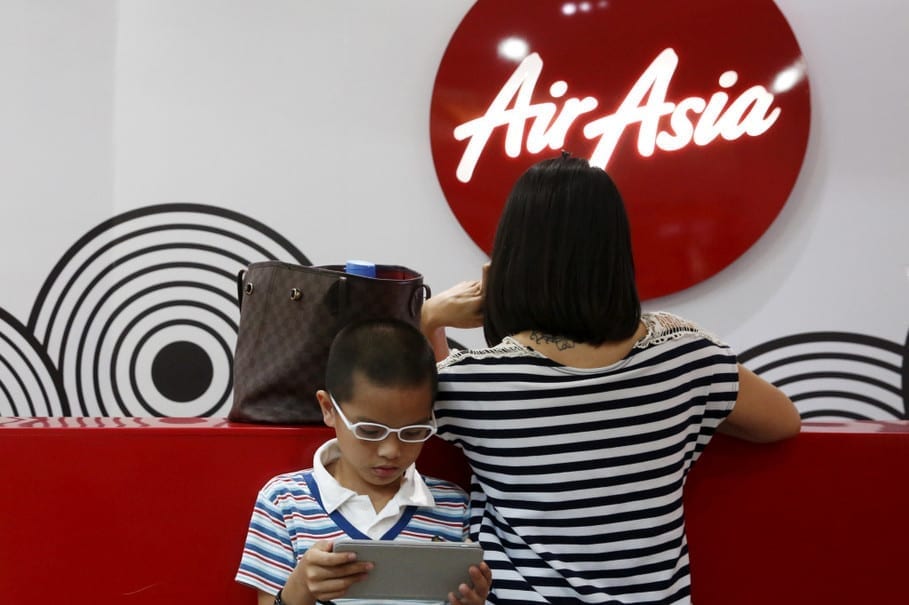
    OneSiam Bangkok teamed up with Air Asia to lure Chinese shoppers

    Bangkok’s three shopping centres grouped under the OneSiam brand, are collaborating with Air Asia to encourage more Chinese tourists to Thailand. The malls – Siam Paragon, Siam Center, and Siam Discovery – have received backing from the Tourism Authority of Thailand (TAT)’s Chengdu office to launch a campaign called Air Asia x OneSiam present Thailand Shopping Festival. It will run from now through to the end of the Lunar New Year celebration early next year.

    The partners believe the campaign will help achieve an anticipated 15 per cent increase in Mainland Chinese tourists visiting Thailand next year.

    Chinese remain the largest demographic group of tourists visiting Thailand, according to Charun Chuennaitom, director of the TAT Chengdu Office. TAT data shows that between January and August this year, an estimated 25.8 million tourists travelled to Thailand, 10 per cent more than during the same period last year. Chinese accounted for 7.7 million of those, up by 16.5 per cent.

    Tanavan Arkaleephan, director of tourism department at Siam Piwat, said OneSiam is a popular destination for Chinese travellers.

    “Each day there is an estimate of 150,000 to 200,000 shoppers in Siam Paragon, 120,000 to 150,000 in Siam Center and Siam Discover, separately. The ratio of Thai visitors to Chinese visitors is 60 to 40.”

    He said the top five tourist sources to regularly visit OneSiam are China, Hong Kong, South Korea, Malaysia and Singapore, but Chinese remain the majority group.

    Tourists who between now and February 28 present an Air Asia boarding pass to One Siam staff at the Siam Paragon tourist lounge, and who follow the OneSiam WeChat account, can receive privileges and promotions from partnering brands, including vouchers from OneSiam, product samples from Pralyn, 30 per cent discounts on body massage therapy from The Beauty Art, and discount offers from Thai designer brands.

    Tourists can enter to win tickets from Air Asia and shopping vouchers at OneSiam.

    Air Asia offers direct flights from Bangkok to 15 destinations in China.

    Nattinee Tawanchulee, director of commercial at Thai AirAsia, said as part of the collaboration, Air Asia has a surprise in store for travellers on some flights from Chongqing to Bangkok, with an in-flight fashion show showcasing special collections from Thai brands including Fri27Nov, Iconic, Kloset, Rotsaniyom, and Theatre.

  • Airasia To Launch Colombo-Bangkok Direct Flights Soon

    Airasia To Launch Colombo-Bangkok Direct Flights Soon

    AirAsia will launch four-time weekly direct flights between Colombo and Bangkok from December 14, with a special promotional fare, an airline press release said. Operated by Thai AirAsia (flight code FD), this direct route to Bangkok in Thailand will be the airline group’s second connection from Colombo’s Bandaranaike International Airport which includes direct route to Kuala Lumpur, Malaysia (flight code AK).

    Santisuk Klongchaiya, Chief Executive Officer of Thai AirAsia said, “Sri Lanka has always been a promising destination for AirAsia as we have connected the country to a wider network via Kuala Lumpur for nearly a decade. To This time we are relaunching the flight from Colombo to Bangkok to provide the people of Sri Lanka with even greater connectivity that comes with attractive low fares to create more demand. We are strongly confident that our return to the market will stimulate travel appetite and demonstrate our commitment to generating more traffic to Sri Lanka to fuel tourism and economic growth for the country. Sri Lanka is such a hidden gem in South Asia with undiscovered potential. We therefore have high expectation for a healthy market reception for this new route.”

    Thai AirAsia operates the widest network in domestic Thailand and offers several international connections to other prominent cities in Asia. Travellers from Sri Lanka who wish to explore beyond Bangkok can enjoy a convenient Fly-Thru service with just a single-time baggage check-in from Colombo and make a brief transit in Bangkok to continue seamlessly to other destinations in Thailand and beyond. Sri Lankan travellers can take advantage of the convenient flight schedule that gives them more time to spend abroad by arriving in Bangkok in the early morning and depart in the evening.

  • Shopee Sellers in China to use DHL to Delivery across Thailand

    Shopee Sellers in China to use DHL to Delivery across Thailand

    DHL eCommerce, a division of logistics company, Deutsche Post DHL Group (DPDHL), has announced a partnership in China with Shopee, a leading e-commerce platform in Southeast Asia and Taiwan. The partnership enables sellers in China to access consumers nationwide in Thailand, with an expansion of the partnership to other Southeast Asian markets in the pipeline. According to Statista, the e-commerce gross merchandise revenue in Thailand will exceed US$5 billion by 2022, making it the second largest e-commerce market in Southeast Asia.

    “Direct selling to overseas consumers has never been easier and has become a key growth driver for many businesses, with e-commerce as an easy platform to enable international expansion. With logistics as a key enabler for cross-border retailing, we want to empower our customers to tap into this huge growth opportunity,” says Zhi Zheng, Managing Director, DHL eCommerce Greater China & North Asia.

    “Over the past few years, we have witnessed extremely strong growth of B2C parcels from China, mainly powered by e-commerce. We are pleased to partner Shopee to enable Chinese sellers to easily sell and deliver in Thailand, whether it’s doorstep delivery or for consumers to collect their orders from our growing network of easily accessible ServicePoints — which is set to reach over 1,000 in Thailand by end-2018.”

    With DHL eCommerce integrated on Shopee in China, sellers can easily sell and deliver on one single platform and keep track of all shipments directly on the app.

    “In recent years, we have witnessed the rapid development of Southeast Asia’s e-commerce market, and a growing number of Chinese brands and sellers are staking a claim in this e-commerce goldmine. However, the geographical complexity of this region has created some logistical challenges. As a leading e-commerce platform in Southeast Asia, Shopee has built its Shopee Logistics Servcies (SLS), a highly efficient logistics delivery network that links China with Southeast Asia. We are delighted to work with DHL, the world’s leading logistics service provider, to grow SLS from strength to strength. Our collaboration will make Shopee the e-commerce platform of choice for cross-border sellers in China who aspire to sell into Southeast Asia,” said Jianghong Liu, Head of Shopee Cross Border eCommerce.

    Currently, Shopee’s SLS is operational in seven markets in Southeast Asia and Taiwan. With shipping costs 20% to 30% lower than typical market rates and better transit times, SLS makes cross border logistics a breeze for Chinese sellers. The collaboration between Shopee and DHL eCommerce will further enhance the capabilities of SLS. DHL will provide Shopee sellers with door-to-door logistics services, ensuring products will reach consumers in Thailand safely and quickly.

  • Apple is opening its first flagship store in Bangkok soon

    Apple is opening its first flagship store in Bangkok soon

    Various Thai media outlets are reporting that not one but two Apple Bangkok stores are under construction. The US tech giant is notorious about not commenting on its store plans anywhere in the world, even when branding appears on barriers covering its construction sites. However, the first Apple Bangkok store is scheduled to open at IconSiam, the massive retail and entertainment destination being built on the banks of the Chao Phraya River, which will officially begin trading on November 9.

    Thai business magazine Positioning Magmeanwhile, is reporting a second Apple Bangkok store is being developed outside the giant CentralWorld shopping centre in the heart of the city.

    This will be constructed underground, in similar style to the Apple store near New York’s Central Park, with a glass canopy above the courtyard through which customers can enter, before descending down a curved staircase.

    The Icon Siam store will bear more of a resemblance to the Apple store on Singapore’s Orchard Road, featuring a two-story high glass frontage and most likely overlooking the river.

    Both stores were probably designed by Foster + Partners which has a long pipeline of unique Apple store designs around the globe. Its most recent work was Apple Macau.

    Apple now operates about 500 of its own stores in 24 countries.

  • AirAsia offers up to 70% discount on Almost All Flights

    AirAsia offers up to 70% discount on Almost All Flights

    AirAsia has come up with a new offer to woo flyers in this festive season. AirAsia is offering up to 70% off on all its destinations. AirAsia’s latest offer started on 15 October and will continue till 28 October 2018, the carrier has mentioned on its website. This offer is valid for immediate travel until 30 June 2019. Bookings for this offer can be made on airasia.com or through the AirAsia mobile app.

    Air passengers can book tickets to over 130 destinations across the airline’s network under the new offer. There are some extra perks for AirAsia Big members, such as instant discounts on bookings through the mobile app.

    In order to enjoy the benefits of the discount, passengers are required to book their flight tickets in advance. The discount is applicable on the base fare of the flight ticket and is available only on select fare classes, during non-peak periods, the airline says.

    AirAsia, a low-cost air carrier, will introduce flight services from Visakhapatnam to Bangkok four times a week from 8 December 2018, with a one-way promotional fare of Rs 2,999. Passengers can book tickets up to 21 October to avail the offer.

    AirAsia Group operates scheduled domestic and international flights to more than 165 destinations spanning 25 countries.

    AirAsia is a joint venture between Tata Sons Ltd and low-cost Malaysian airline AirAsia Berhad

  • A.S. Watson Group’s Number of Loyalty Members Reached 130million

    A.S. Watson Group’s Number of Loyalty Members Reached 130million

    In a world where customer preferences are ever-changing and they always want to try out something new, loyalty is everything to retailers. That is why A.S. Watson Group, the world’s largest international health and beauty retailer, is further investing in its loyal customers to give them unparalleled levels of rewards. Last month, the Group announced it is rolling out new VIP loyalty programmes worldwide to enhance customer connectivity and plans to extend to all of its 24 markets by early 2019.

    With 130 million loyalty members across the globe currently, the new VIP programme is an additional and invitation-only tier of membership which aims to reward and retain top customers. Malina Ngai, Group Chief Operating Officer of A.S. Watson Group, says, “We appreciate our customers, no matter how much they spend in our stores, and we know they love to feel valued. Our existing loyalty programmes reward everyone with great offers, but our VIP programmes thank our most loyal customers for shopping with us with amazing benefits and even more tailored rewards.” Getting Closer with Customers Since 2010, A.S. Watson Group has invested in CRM programmes in all of its key operating markets in Asia and Europe. Since that time, the Group has grown incredibly fast to an amazing 130 million members worldwide.

    The Group understands that great products, prices and service are not enough to remain close to customers. Customers are increasingly making decisions based on how retailers connect with them and make them feel. Data insights and analysis of existing CRM programmes show that around two thirds of customers who qualify as “VIP members” in a year continue as such the following year.

    These VIP members spend up to eight times more than average members each year, and this year the newly qualified VIP members’ spending saw a year-on-year double-digit increase. Now, the Group is launching VIP programmes around the globe to connect with its VIP members more closely and reward these highly valuable customers, offering an extra layer of advantages, many of which are personalised to the individual, such as exclusive invitations to product previews, members only Zumba dance events, family movie days, early access to sales and promotions and more bonus points.

    Moreover, there are a variety of additional benefits that are tailored to what’s valuable to the lifestyle of the local customer. Examples of this can be seen with free health and wellbeing classes offered to some VIP customers, such as invitations to fitness training classes for Watsons China and invitations to yoga in the sky and cooking classes for Watsons Malaysia VIP members.

    Other additional benefits include free movie tickets with Watsons Thailand, free exclusive gifts with purchases and sample boxes with The Perfume Shop in the UK and opportunities to be brand ambassadors and invitation to exclusive beauty workshops and shopping nights with ICI PARIS XL. Using Data Technology to Enhance Customer Connectivity In line with the launch of the Group’s CRM programmes in 2010, A.S. Watson has established a CRM function and focus on building CRM capabilities.

    This year, the Group launched DataLab which unites over 100 CRM experts around the world to share insights and best practices. With four billion customers each year and 30 million items sold every day around the world, A.S. Watson Group collects on average 4,300 terabytes of customer data every three years.

    To convert such enormous amounts of data to a useful tool which helps build closer relationships with customers, DataLab is using the latest technology to extract vital customer insights. This will help A.S. Watson better understands its VIP members, and provide more personalised, exclusive offers; all of this is done to achieve even stronger customer connectivity. Malina added, “We’re continuously investing into data technology and in doing so have launched DataLab, which does not only help us generate customer insights that are useful in enhancing retention and increase customer spending, but also enables the Group to make smarter decisions, blending science, experience and intuition. With cutting-edge data technology, we are turning transactions to interaction and that is how we are staying connected with our customers.”

  • KBank-Visa to pilot blockchain based B2B payments

    KBank-Visa to pilot blockchain based B2B payments

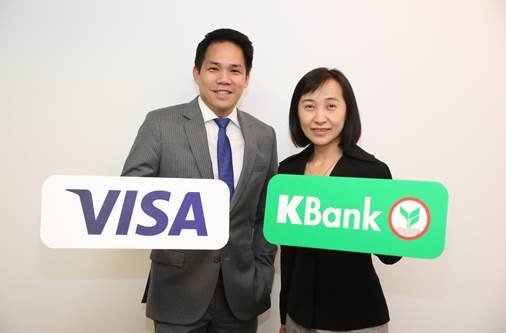
    Visa announced Kasikornbank is the first Thai financial institution to join the Visa B2B Connect pilot program. Visa B2B Connect is a new platform that Visa is developing to give financial institutions a simple, fast and secure way to process cross-border business-to-business payments.  The pilot is currently in the Bank of Thailand Regulatory Sandbox.

    Kasikornbank is the first Thai bank to be included in the pilot designed to simplify the cross-border payments.  Globally, Visa has partnered with several other financial institutions on the pilot.

    Suripong Tantiyanon, Country Manager, Visa Thailand said, “Visa is proud that we have a representation from a Thai financial institution in the pilot program.  Building on the enterprise blockchain technology, Visa B2B Connect is a new transaction platform designed for the exchange of high-value international payments between participating banks on behalf of their corporate clients. Managed by Visa end-to-end, Visa B2B Connect combines Visa’s core capabilities in security, governance and distributed ledger technology.”

    Siriporn Wongtriphop, First Senior Vice President, Kasikornbank said, “Kasikornbank is dedicated to delivering new and innovative solutions for our customers. Through our relationship with Visa, we are excited to be participating in the Visa B2B Connect pilot which is the first step of new paradigm in                               reimagining cross-border payment transactions. As the first mover in Thailand, we believe that KBank will be a leader in the industry which benefits for KBank’s enterprise clients in terms of more secured payment.”

    “Visa’s focus is to provide our financial institution partner with access to our products, tools and expertise that will enable their growth and success.  With our technological capability and network, we are pleased to partner with Kasikornbank to create a more efficient, transparent way for business-to-business payments to be made across the world,” Mr. Suripong added.

    With Visa B2B Connect, Visa aims to significantly improve the way international B2B payments are made by offering improved processing time and visibility into the transaction process – ultimately reducing the investment and resources required by banks and their corporate clients to send and receive business payments around the world.

  • Go-Jek launches fuel delivery service

    Go-Jek launches fuel delivery service

    Go-Jek, in partnership with Indonesia’s oil major Pertamina, has launched an on-demand fuel-delivery service. Called Go-Pertamina, it brings fuel to users from the nearest Pertamina gas station. The service is available in South and Central Jakarta from 8 a.m. to 8 p.m. daily. It does not serve orders on toll roads, basements, or other enclosed areas. Given that Go-Jek has a large network of drivers who need to top up their fuel regularly, they could become some of Go-Pertamina’s biggest users.

    Go-Pertamina is part of the Indonesian ride-hailer’s Go-Life app, which offers on-demand massages, cleaning, haircare, and more. Go-Jek also recently launched a daily deals marketplace.

    Go-Jek has been expanding regionally. It has launched in Thailand and Vietnam and is set to launch in Singapore within a month. Its expansion into the Philippines, however, has hit a regulatory snag.

    It has raised about US$2.1 billion from investors, even as Grab has claimed to have outpaced Go-Jek in Indonesia’s ride-hailing market.

  • Dunkin’ Donuts Thailand expects growth after rebranding

    Dunkin’ Donuts Thailand expects growth after rebranding

    Dunkin’ Donuts Thailand operator Mudman will revise branding next year in line with the preferences of white-collar workers and millennials.

    The change follows the rebranding of the US master business, which will be shortened to “Dunkin’” next year. The brand is commonly referred to by its abbreviated name amongst customers.

    Mudman’s CEO Nadim Xavier Salhani said the new branding signals there is something new there in term of products, store design and a new way to serve our customers.

    Prior to the rebranding exercise, the firm will modernise its stores and expand its menu. The brand has already shifted focus to the coffee business this year, resulting in an overall sales increase of 10 per cent.

    Dunkin’ Donuts Thailand strategy is for coffee to make up 30 per cent of its takings in the near future, with 12 new Dunkin’s stores planned to open next year. There are currently 290 branches throughout Thailand.

    The coffee market is widely expected to have the potential for massive growth in Thailand.

    According to Salhani, the future of the doughnut business in Thailand may not be as positive as in the past because people are more concerned about health and the market is very competitive. “This is why we are offering more coffee products.

    “With our offensive business plan, we want to become a serious coffee player in Thailand,” he said. “When people think of Dunkin’, we hope they think of coffee.”

  • Visa and Fitbit launch Fitbit Pay in Thailand

    Visa and Fitbit launch Fitbit Pay in Thailand

    Visa, the world’s leader in digital payments and Fitbit, the leading global wearables brand, today announced that Fitbit Pay™ will be available to its customers in Thailand on Fitbit Ionic or Fitbit Versa and starting November 2018, on  its newest tracker, Fitbit Charge 3. Customers of Kasikornbank, KTC and Siam Commercial Bank can add their Visa credit or debit card to their device, enabling them to make payments on the go directly from their wrist.

    The continuous rise in mobile connectivity has led to the proliferation of digital payments, with Visa helping to offer more ways to pay through devices such as phones, watches and now fitness trackers. According to Visa’s Consumer Payment Attitudes Study, seven in ten Thais (67%) said they preferred using electronic payments, including cards, mobile devices and wearables, more often than cash, deliberately moving away from notes and coins.

    Suripong Tantiyanon, Country Manager, Visa Thailand said: “At Visa, we continue to provide payment experiences across a wide range of form factors and are pleased to partner with Fitbit as well as our financial partners.  There is much potential and opportunity for such wearables to create convenient and relevant payment experiences that truly change the way people make their day-to-day payments, particularly at places that are traditionally heavy on cash.  This is another step forward in the growth of Internet of Things and shows how Visa is enabling companies across the technology industry to help us all move towards a cashless future.”

    Fitbit Pay can be easily set-up on Fitbit Ionic or Fitbit Versa by following simple steps in the Fitbit mobile app on Android or iOS devices to add a credit or debit card to the Fitbit Wallet. Fitbit Pay brings convenience and freedom to users to leave their smartphone and wallet at home, and easily make purchases at thousands of stores where contactless payments are already accepted.

    Fitbit Pay provides secure payments through the Visa Token Service. Tokenization is a payment security technology that replaces card account information, such as account numbers and expiration dates, with a unique digital identifier (“token”) that is used for payment without exposing a cardholder’s more sensitive account information.  A user’s card information is never revealed or shared with merchants. Plus, a protected PIN is chosen by the user during device set-up for an added layer of protection.  Users can leave their wallet at home and pay with a touch of their wrist.

  • KBank to launch USD100-million sustainability bonds to finance green and social projects

    KBank to launch USD100-million sustainability bonds to finance green and social projects

    KASIKORNBANK (KBank) is the first Thai and ASEAN bank to issue sustainability bonds totaling USD100 million, where the proceeds will be used to finance green and social projects. Such bond issuance is aimed at supporting the development of Thai and regional capital markets and promoting investments that generate returns in parallel with driving sustainable growth of Thailand and global communities.

    Mr. Banthoon Lamsam, Chairman of the Board of KBank, said KBank has adhered to the Sustainable Development concept in relation to the economic, social and environmental aspects as a foundation of its operations, to create maximum benefits for all stakeholders. Recently, KBank issued sustainability bonds totaling USD100 million for foreign investors, which has made KBank the first bank in Thailand and Southeast Asia to offer such bonds. The proceeds of bond issuance will be used to finance projects that will bring about environmental and social benefits in accordance with international standards set up by the International Capital Market Association (ICMA) and the ASEAN Capital Markets Forum (ACMF).

    Sustainability bonds of KBank are senior, unsecured bonds, with floating interest rate based on LIBOR plus 0.95 percent. Under a five-year term, the maturity will be in 2023. The entire amount was offered to foreign institutional investors via KBank’s Hong Kong Branch. Related parties include BNP Paribas that acts as the Sustainability Bond Framework Structuring Advisor and Sole Lead Manager, and Sustianalytics – an independent global provider of ESG and corporate governance research – that has provided a second party opinion on the sustainability bond framework.

    Mr. Banthoon added that the success in the sustainability bond sale reinforces KBank’s core concept of sustainable development. The fact that the bonds were fully subscribed within only one day reflects KBank’s ability to create a balance between the return and the policy of the bond which is up to international standards, thus being widely accepted by institutional investors who have placed their trust in KBank. KBank is strongly confident that the issuance of the sustainability bonds – the first time in Thailand and in ASEAN – will set a new benchmark for domestic and regional capital markets. The initiative will be a prelude for the launch of capital products offering attractive returns to investors while also driving sustainable growth for the nation and the world.

    KBank’s business operations are based on being a bank of sustainability under appropriate risk management, good governance and balance in economic, social and environmental dimensions. Given the adherence to the Sustainable Development concept, KBank is the first bank in Thailand and ASEAN that has been granted membership of the Dow Jones Sustainability Indices (DJSI) in both their DJSI World Index and DJSI Emerging Markets 2018 for the third consecutive year. In addition, KBank has been selected as a member of the FTSE4Good Emerging Index for three straight years.

    At the national level, the Stock Exchange of Thailand has included KBank in the Thailand Sustainability Investment List 2018 (THSI List) and the SET THSI Index, the first-of-its-kind index in Thailand, among other 45 companies. In addition, KBank is the first and only commercial bank in the country that has been granted the Carbon Neutral Certification by Thailand Greenhouse Gas Management Organization (Public Organization).

  • Thai Airways extends partnership with WFS in France

    Thai Airways extends partnership with WFS in France

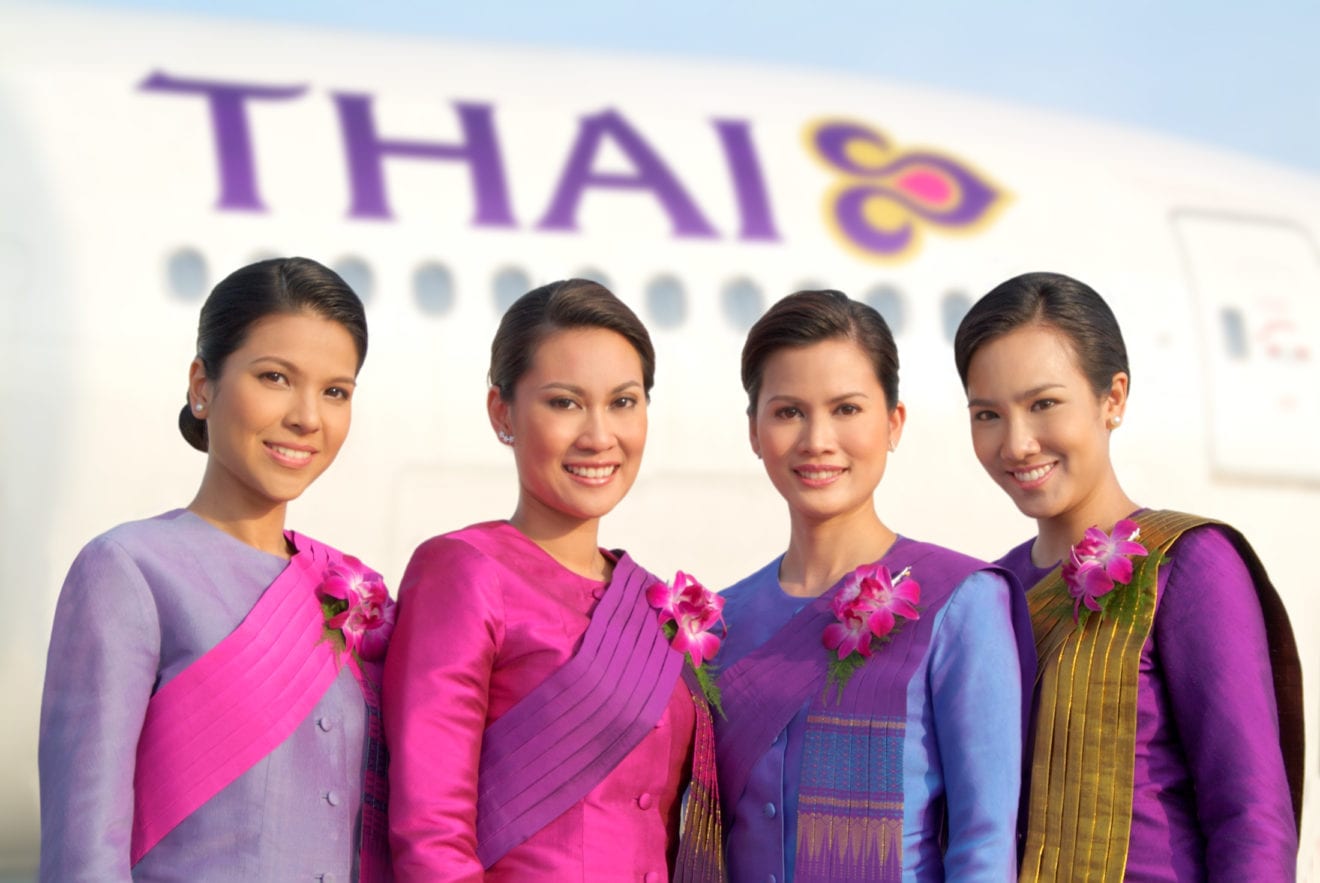
    Thai Airways has extended its long-standing cargo handling contract with Worldwide Flight Services (WFS) in France.

    The new agreement covers cargo, mail and express handling at airports across France and extends the business relationship between the two companies to 35 years.

    WFS will also provide cargo security services and trucking operations between regional airports and Paris CDG for the south east Asia carrier.

    In addition to handling cargo carried onboard the airline’s daily Airbus A380 flights between Paris and Bangkok, WFS will also provide offline handling at a further 12 airports in France; Orly, Lyon, Marseille, Bordeaux, Nantes, Lille, Toulouse, Strasbourg, Mulhouse, Nice,  Montpellier and Rennes.

  • Crown celebrates 40 years of its operational anniversary

    Crown celebrates 40 years of its operational anniversary

    Crown Equipment Corporation, one of the world’s largest material handling companies, is celebrating 40 years as a leading provider in the Asian market. With the region rapidly rising to become a manufacturing and logistics powerhouse, Crown is helping its customers manage market demands and meet industry challenges through its flexible product range and innovative, customised solutions.

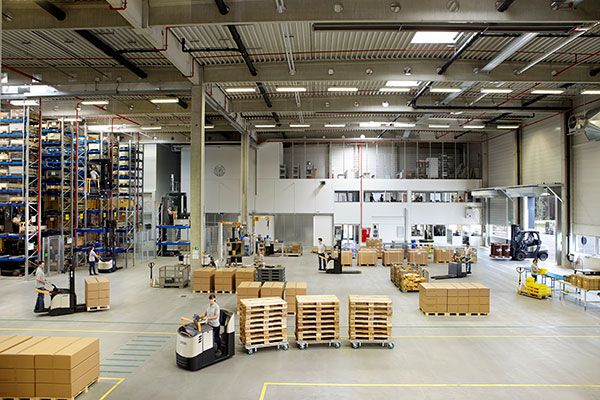
    Pallet management is one of the major issues for emerging distribution companies and small to medium-sized enterprises lacking the knowledge to deal with the challenge. Within Asia, the two most popular pallet sizes are the square 1,100mm x 1,100mm pallet and the 1,200mm x 1,000mm pallet. The U.S., Europe, and Australia, however, use different International Organization for Standardization (ISO) approved pallet sizes, and these diverse pallet types can create challenging problems if not handled correctly.

    Crown’s global approach to research, design, engineering and manufacturing means that it produces a range of lift trucks that offer the best fit to the pallets relevant to the warehouse facilities in multiple regions globally. While the company builds a range of lift trucks to cover all aspects of material handling work, from the dock to the top space of a high bay rack, Crown also customises its standard designs to help solve specific problems, such as modifying the width and position of the legs so that it would work effectively according to the required pallet size.

    With a focus on providing end-to-end material handling solutions, Crown can also identify other areas of the warehouse that can add efficiency when dealing with a range of pallet sizes. Crown consultation includes a detailed review of customers’ operations to help decide the most appropriate material handling equipment and provide inputs to improve productivity, such as enhancing warehouse design and safety culture.

    “When you work with Crown, you are working with people in possession of great product knowledge and a thorough understanding of warehouse supply chain requirements. Knowledge is a major factor that separates Crown from the competition in the Asia Pacific region and the ability to provide customers with an end to end total material handling solution partnership,” said Steven Hill, the Managing Director of Crown Equipment for Southeast Asia.

    Crown set up operations in Southeast Asia in 1978 with the Southeast Asia regional headquarters now located in Singapore. The Asia Pacific region is serviced through an extensive retail branch network, which includes locations across Australia, New Zealand, Singapore, Thailand, South Korea, the Philippines, Indonesia, Malaysia, Vietnam, Taiwan and China.

    Crown has recently launched in a number of new locations with branches in the growth hubs of Johor, Malaysia; Rayong, Thailand; Clark, the Philippines; Incheon, South Korea; and Ho Chi Minh City in Vietnam.