Tag: Thailand

  • Thailand is top destination for Holidays

    Thailand is top destination for Holidays

    Just more than a year ago, I ate at Nahm, in Bangkok and walked out after paying barely US$60 for a tasting menu that currently ranks 49th on the World’s 50 Best Restaurants list.

    My grand, five-star hotel, the Anantara Siam, with its gilded murals and landscaped courtyards, cost US$150 a night, including a breakfast buffet that was truly fit for royalty. Even the most expensive souvenir I bought in town, an elephant figurine with inlaid mother of pearl, cost less than a typical outing to McDonald’s back home in New York.

    Yet, according to a visualisation of recent UN World Tourism Organ-isation (WTO) data by HowMuch, a financial literacy and infographics agency, Thailand outranks every other nation in Asia when it comes to tourism spend.

    Globally, the only countries that out-earn Thailand in terms of tourism dollars are France (US$61bil), Spain (US$68bil), and the United States-which handily takes the gold medal, at US$211bil.

    It all comes down to volume. Foreign arrivals could hit 40 million next year, which is more than half the country’s population.

    “In Thailand, you’ve got something for everybody,” says Rebecca Mazzaro, a specialist for bespoke outfitter ATJ.

    “From the private island with the private villa to amazing street food meals that only cost a couple bucks, it has a diversity and variety that exists in few other markets. It’s no surprise lots of people are going-and spending,” she says.

    Though gaps in the WTO’s data make it difficult to ascertain the per-visitor spend in each of these countries, given recent and forthcoming developments, that number is likely to be rising.

    “There’s no question that historically Bangkok – and Thailand in general – has always been perceived as a value destination,” says John Blanco, general manager of the forthcoming five-star Capella Bangkok, opening next spring with 101 suites facing the Chao Phraya River.

    “But there has been a real effort to shift that perception.”

    Mastercard’s annual Global Destination Cities Index recently ranked Bangkok as the most-visited city in 2017 for the third year in a row. The study, based on undisclosed public data sources, rather than cardholder transactions, indicates that travellers shell out US$173 for a day in the Thai capital, compared to US$537 in Dubai or US$286 in Singapore. This year, it forecasts travellers will spend an additional 14% more.

    By next year, the city will have gained even more opportunities to spend, such as superlative new resorts from Four Seasons, Rosewood, Mandarin Oriental, and Waldorf Astoria, plus a US$1.6bil Bal Harbour-esque mixed-use retail development called Icon Siam. When it opens in November, the latter will claim restaurants from top-tier chefs, including Alain Ducasse and an outpost of Tokyo department store Takashimaya. The Capella hotel will house Mauro Colagreco restaurant, whose Mirazur in Menton, France, has two Michelin stars.

    “There’s a lot more meat on the bone now,” Blanco says of luxury offerings in the capital.

    Dino Michael, global head of Waldorf Astoria Hotels and Resorts, agrees. “We’ve been noticing the upscaling of Bangkok for a few years,” he tells Bloomberg. “The consumer has become more sophisticated; the dining scene has become more sophisticated.”

    And yet the timeless appeal is what led him to open the brand’s first South-East Asia property in Bangkok in August – a glassy tower with dramatic skyline views from nearly every angle. Among Bangkok’s selling points, he says, are strong infrastructure and airlift, a “depth and breadth of tourists”, and an ingrained culture of hospitality. For tourists and brands thinking about charting the region, Michael adds, “It’s world renown and an obvious starting point.”

    There may be a price to pay for popularity, particularly on Thailand’s beaches and islands. Already, throngs of partygoers on commercial yachts have done so much damage to the pristine marine ecosystem of Maya Bay-the picturesque backdrop to Leonardo DiCaprio’s 2000 film The Beach –that the area closed for four months earlier this year to recover. Unable to bounce back fast enough, it’s now being closed indefinitely. That follows similar measures in nearby Koh Khai and Koh Tachai islands, where coral was being destroyed at devastating rates.

    In Phuket, Mastercard’s 12th-most-visited destination in the world, there’s been a sharp decline in the local turtle population, correlated with the rise in beachside pollution. It’s led 70 hoteliers to band together to promote sustainability and encourage better etiquette among travellers. — Bloomberg

    And in Thailand’s north, the dramatic growth of tourism has led to a sobering spike in unethical wildlife tourism, often centering around elephants and tigers.

    The capital, meanwhile, has stayed largely out of the way of these visitor-related troubles-perhaps because it’s hard(er) to justify bad behaviour in a city with 40,000 Buddhist temples. “Of course, red light tourism is alive and well-like it or not,” says Catherine Heald, founder and chief executive of Asia outfitter Remote Lands. “But ultimately, tourism has really lifted the local economy.” At $57 billion a year, there’s no denying that.

    Read more at https://www.thestar.com.my/business/business-news/2018/10/11/thailand-is-top-destination/#zi8mAJb1KF44VojD.99


  • A’pieu opens first store in Thailand

    A’pieu opens first store in Thailand

    A’pieu, a cosmetics label owned by South Korea’s Able C&C, opened its first store in Thailand last month and will speed up its plan to open more stores in the country.

    Its first stand-alone store, opened on September 29, is housed at Central Plaza Pinklao, a shopping mall located in Noi District in Bangkok and one of the most sought-after places by young visitors as it hosts many famous fashion brands, restaurants, and a cinema.

    A’pieu plans to open three more independent stores in the country by next month. It is also scheduled to open another store at Siam Square, the largest shopping and entertainment area in Bangkok, in January 2019.

    Its products are also available at five outlets of Eve and Boy, a local drugstore chain selling premium cosmetics labels such as Estee Lauder and Clinique. The Korean beauty brand plans to provide its products to total 12 Eve and Boy outlets across the nation by the end of this month.

    “We have put forward the opening schedules of A’pieu stores in Thailand as its products have drawn better-than-expected responses from Thai customers after the soft-launching event,” said an official from Able C&C. “We will take the label available at more health and beauty stores in Thailand and open more independent outlets.”

    Outbound shipments of Korean cosmetics products to the 10-member Association of Southeast Asian Nations market reached US$406 million in 2016, up 31.6 percent from the previous year, according to a report by the Korea Trade-Investment Promotion Agency.

    Thailand’s cosmetics market is the largest among them and has posted an annual growth rate of 8 percent in recent years, the company said, citing data from market researcher Euromonitor International.

    The size of the Thai beauty market was estimated at around $2.6 billion in 2016 and is expected to top $3 billion this year, it added.

  • Thai Lion Air launches Dhaka-Bangkok direct flights

    Thai Lion Air launches Dhaka-Bangkok direct flights

    Budget airline Thai Lion Air launched direct flights between Dhaka and Bangkok, in an event at Lakeshore hotel on Saturday.

    They will be flying from Bangkok’s Don Mueang Airport to Dhaka’s Hazrat Shahjalal International Airport.

    At the event, Malindo General Manager (Commercial Strategy) Saravanan Ramasamy said: “The company will play a pivotal role in connecting Bangladesh with Bangkok, China, Nepal, Vietnam, India, and Myanmar.

    “As the second largest Low cost carrier in Thailand, we have already conquered the South East Asian and South Asian market. Soon we will be offering flights to Japan.”

    The airline is offering round trips from Dhaka to Bangkok at a starting price of Tk16,083.

    At the event, the head of sales delivered a presentation on the journey and future expansion plans of the company.

    Thai Ambassador to Bangladesh Panpimon Suwannapongse and Thai Lion Air Managing Director Phillip Pang cut a cake at the launch ceremony.

    In a press statement, chairman of the Board of Thai Lion Air Captain Darsito Hendro Seputro said they will be launching their inaugural flight from Bangkok to Dhaka on October 1 this year.

    “Travelers will be attracted by amazing architectural marvels such as the Ahsan Manjil,” said Capt Septuro. “They will also be able to experience the handicrafts, spices, herbs, gift shops, and local food of the country.”

    The company currently operates aircraft including the Boeing 737-900 ER, with 215 seats, Boeing 737-800, with 189 seats, Boeing 737 MAX 9, with 215 seats, and the Airbus A330-300, with 392 seats.

    Passengers choosing to fly with Thai Lion Air will also be able to enjoy free baggage allowance of 10kg and free allowance for sports equipments of 10kg on domestic flights.

    As per the international flight policy of Thai Lion Air, Dhaka-Bangkok round trips will have free baggage allowance of 20kg.

    Currently, the airlines are offering a new service called Lion Seat Selection, which will let passengers choose their preferred seat locations, either beside a window or the aisle. For passengers who do not use the Lion Seat Selection service, the system will automatically assign a random seat number at check-in.

    Using this service, bookings can be made at least four hours prior to departure via the call centre or through the company’s official website.

    Thai Lion Air is a low cost carrier of Lion Group, founded in 2013, with 12 domestic flights, 2 cross region flights and more than 20 international flights. The airline will provide an alternative travel option for passengers travelling to Bangkok and beyond at very affordable price.

  • Dtac welcomes extension of 900-MHz bid decision deadline

    Dtac welcomes extension of 900-MHz bid decision deadline

    Thailand’s Dtac has welcomed the decision by regulator NBTC to extend the submission deadline for applying to participate in an upcoming 900-MHz auction if no bids come in today.

    The deadline extension will allow Dtac to complete its feasibility study before making a final decision on whether to participate.

    Dtac is the only operator to pick up bid documents for the upcoming auction by the deadline yesterday, and rivals AIS and True Corp have already indicating that they will not be participating.

    Dtac was expected to use the spectrum to replace its expiring 850-MHz spectrum and ensure continuity of service for customers still using the spectrum. The feasibility study is evaluating whether the 900-MHz spectrum is required, as well as the criteria and procedures of the license being auctioned.

    The operator will now have until October 16 to decide whether to participate in the bid, which will be held later in the month. The date will be October 20 if there are multiple participants, and October 28 if there is only one bidder.

    The NBTC recently rejected a request from Dtac for a remedy period allowing it to use its expiring spectrum now its license has expired, but the court had issued an emergency injunction while a hearing on the matter was before the courts.

  • Adidas Thailand Enjoys 40% Growth Online Thanks to DHL E-Commerce

    Adidas Thailand Enjoys 40% Growth Online Thanks to DHL E-Commerce

    DHL eCommerce, a division of the world’s leading logistics company Deustche Post DHL Group, has facilitated growth of over 40% for adidas Thailand’s retail revenue by enabling deliveries for the adidas.co.th site.

    The e-commerce channel launched in June 2015 and since co-operating with DHL in May 2017, Thai consumers are able to have their purchases delivered same-day or next-day within greater Bangkok and 2-3 days to other remote areas.

    adidas.co.th offers a wide range of adidas products including limited edition items which may not be available in the physical stores. Customers can browse online and shop for unique styles and sizes without having to hop from store to store. With 18 physical stores across Thailand, DHL eCommerce will begin to leverage adidas’ retail footprint for e-commerce fulfilment by picking up orders from adidas stores and delivering to customers by Q2 2019.

    Jirot Paowisit, adidas’ Senior Manager of Operations for Thailand said, “E-Commerce is making a true impact not only in the way we sell and deliver our products, but also in how we engage our consumers. We are pleased to make adidas products more easily and conveniently available and we are excited to work with a strong logistics partner like DHL. Besides the excellent delivery service to our customers, their solutions have enabled us to fulfil more orders a day by optimizing our operations for fast e-commerce fulfillment.”

    “E-Commerce is a growing channel for adidas and with Thailand’s increasing e-commerce adoption with the total share of e-commerce expected to more than double in the coming years, we are certain that there will be more adidas fans choosing to shop on our online store. We are pleased with DHL eCommerce’s high quality delivery performance which plays an important role in our e-commerce strategy.” said Suphalada Chalitpattanangkune, E-Commerce Manager for adidas Thailand.

    “Over 57% of shoppers will likely not shop with a retailer again if they had a bad delivery experience, showing how important the quality of delivery is for a retailer’s brand image and customer loyalty. We are proud to enable adidas to deliver quickly and conveniently to their consumers with a successful delivery performance of 99% consistently since we started shipping for them in 2017,” said Kiattichai Pitpreecha, Managing Director, Southeast Asia, DHL eCommerce.

    “With DHL’s fully-owned domestic delivery network with full nationwide coverage across Thailand, adidas fans from anywhere in Thailand will be able to shop online easily with the assurance of a great delivery experience.”

  • Electric vehicles on the fast track in Thailand

    Electric vehicles on the fast track in Thailand

    Experts see bright prospects for electric vehicles (EV) in Thailand with all concerned agencies pursuing the government’s goal of getting 1.2 million units on the road by 2036.

    There are many reasons and data behind the confidence of success, a seminar was told yesterday. The rising number of registered EVs, the development of a locally made EVs, as well as research and development of some EV parts are indications that it could have a major role in Thai society, said Amonrat Kaewpradap, a committee member of the Electric Vehicle Association of Thailand (EVAT), at a panel discussion yesterday titled “The future of Electric Vehicle in Thailand”.

    The discussion was held as part of the Delta Future Industry Summit, organised by Delta Electronics (Thailand), as a venue for exchanging innovative ideas for a sustainable future.

    Amornrat said the number of EVs in use in Thailand was gradually increasing, leading to the continuous growth of infrastructure of charging stations.

    “More stations will boost the confidence for consumers in using EVs and so far, there are 500 charging stations in the country, she said. In 2016, there were 80,194 registrations but the number surged to 102,700 in 2017, or an increase of 20,000 units.She pointed out that the accumulated number of EV registrations in Thailand for Battery Electric Vehicles [BEV] and Plug-in Hybrid Electric Vehicles (PHEV) sharply increased from 2016 to 2017.Incentives will bring down priceAnother indication is the higher imports of EVs, she said, adding that more BEV motorcycles were sold these days, pointing to its popularity.

    Moreover, EV manufacturers are hiking production amid increasing demand from buyers. Also, educational institutions have launched development projects for EV battery, motors and the structure of a light-weight car.She believes the price of EVs could come down in the future as the government will support its usage with incentives.

    Jumpote Himacharoen, director of research and development, Metropolitan Electricity Authority [MEA], said the power agency would provide sufficient electricity to serve the targeted number of EVs. MEA has recently launched an online application on the locations of EV charging stations for the convenience of drivers.

    In a separate panel discussion titled “A Decade into the Future: Predictions for Thai Cities”, participants said smart cities would be the cornerstone of the country’s future urban landscape, with significant investment from the government and private sector.

    Pansak Siriruchatapong, the vice minister of the Ministry of Digital Economy and Society, said the government would expand its smart city project to three more provinces – Chon Buri, Rayong and Chaochengsao – on the Eastern Economic Corridor this year.Currently, Phuket, Chiang Mai, Khon Kaen and Bangkok are the cities earmarked for the pilot program.

    “Within the next five years, Thailand will develop smart cities in all 77 provinces,” he said.He added the two factors driving the development of smart cities are the engagement of community and local government and the connectivity and sharing information with technology solutions.However, Piyapan Tayanithi, Bangkok Bank’s executive vice president, warned that smart or high-technology is a double-edged sword, and back-up measures were needed in the event of malfunctions.

    Piyapan cited an incident late last month when banks’ electronic money transfers, withdrawals and payment services crashed for several hours. The banks attributed the cause to heavy interbank money transfers at the end of the month at large banks.“Simplicity or convenience of a group of people could come along with difficulty or complexity for another group [of people],” he said.

    Hsieh Shen-yen, president of Delta Electronics (Thailand), said: “We are currently witnessing the decline of old technologies such as gasoline cars and the gradual shift to smarter, cleaner technologies to power our lives and manage our cities.“But the shift to the future will only gain real momentum when the public and private sectors work together and get serious about action for climate change and managing urbanization,” he said.

  • AirAsia to launch Vizag-Bangkok flights from Dec 8

    AirAsia to launch Vizag-Bangkok flights from Dec 8

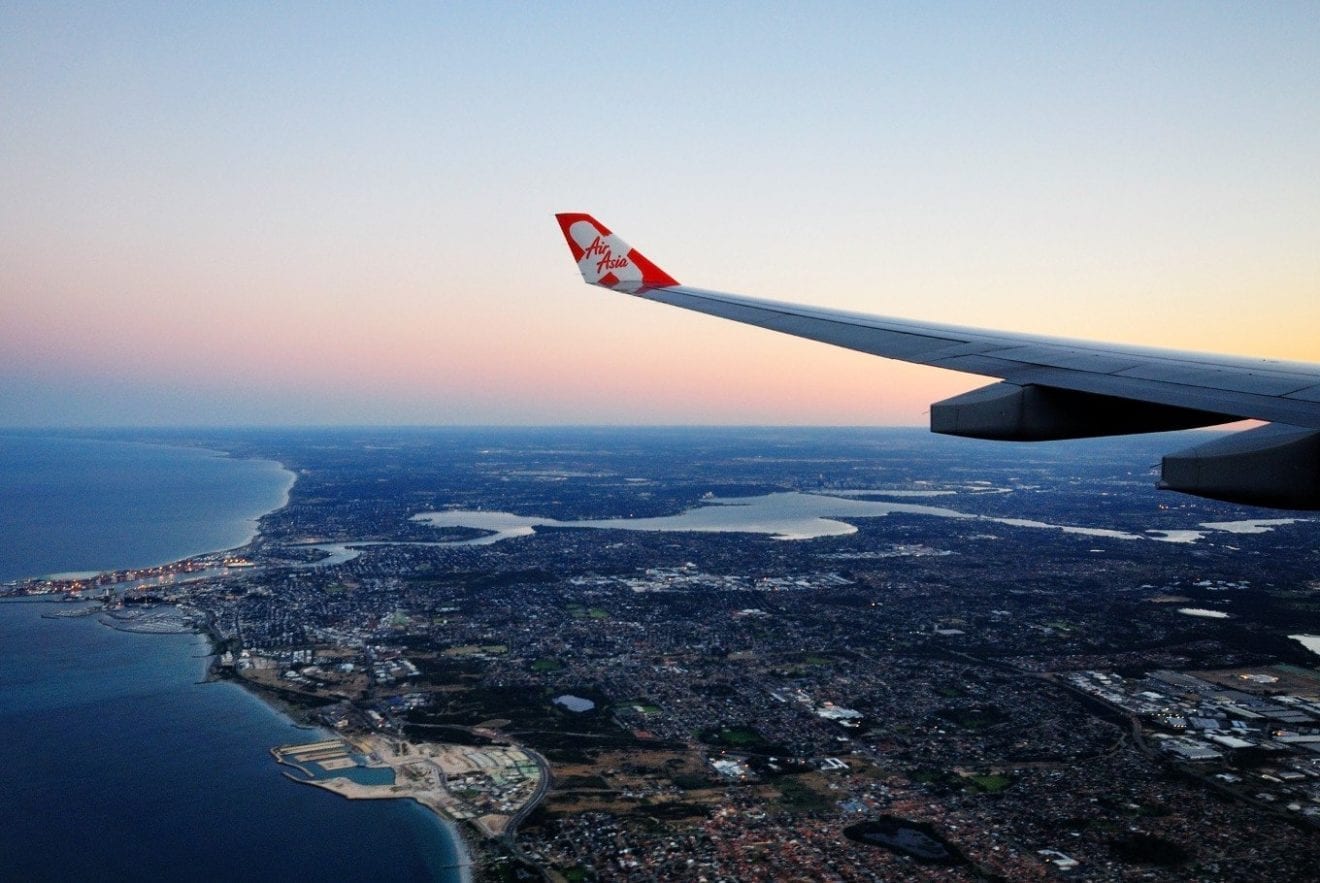
    AirAsia, a low-cost air carrier, is linking Visakhapatnam and Bangkok and the flights would begin from Dec 8.

    Making the announcement at a media conference here on Monday, Rajkumar Paranthaman, the head of marketing, said there would be flights on four weekdays from here to Bangkok (Monday, Tuesday, Thursday and Saturday) and the return flights from Bangkok to Vizag would be on Monday, Wednesday. Friday and Sunday.

    He said the travel to Bangkok would be hassle-free and visa on arrival would be given to tourists at Bangkok. Further, the airlines has air-connection from Bangkok to 21 destinations within that country. It is also a major hub with international flights to different destinations in the country.

    He said the promotional fare to Bangkok would be Rs 2,999 one way and the tourists and visitors to Thailand could book the tickets up to Oct. 21 to avail themselves of the promotional offer. Visa on arrival would be arranged for Indians, for a fee of roughly Rs 4,000 or so.

    He said, “AirAsia is operating flights to Bangkok from five Indian cities – Chennai, Bengaluru, Kolkata, Jaipur and Kochi – and Vizag would be added to the list in December.

    Cholada Siddhivarn, the Director of the Tourism Authority of Thailand, said India was very important for Thailand. “Last year, 1.2 tourists from India visited Thailand and the number is likely to go up to 1.4 million this year,” she said and added that Indians should go to different parts of Thailand and not merely confine themselves to Bangkok. “Thailand is a friendly country to tourists, specially Indians,” she added.

  • Reckitt Benckiser partners up with Shopee to hold “Super Brand Day” event

    Reckitt Benckiser partners up with Shopee to hold “Super Brand Day” event

    Reckitt Benckiser and Shopee have joined hands organizing the ‘Super Brand Day’ event, offering up-to-70% discounts on products from 10 famous brands, including Enfagrow, Durex, Dettol, Veet, Scholl, Finish, Vanish, Airwick, Shieldtox, and Brasso. The promotion also includes 10% cashback and Apple iPad giveaway (worth 11,290THB) for the top spender. The campaign, which will be held under the concept “Healthier Lives, Happier Homes,” will be live from 3rd – 9th October 2018.

    Mr. Faraz Siddiqui, E-Commerce Director, Marketplace, of Reckitt Benckiser Healthcare Manufacturing (Thailand) Co., Ltd., stated that Reckitt Benckiser, the world’s leading manufacturer and distributor of consumer and health products, has partnered up with Shopee, the leading eCommerce marketplace in Southeast Asia and Taiwan, to introduce the campaign “Super Brand Day” which includes more than 10 leading brands such as Enfagrow, Durex, Dettol, Veet and Scholl listed online with up-to 70% discounts, 10% cashback, and a chance to win an Apple iPad as a biz price for the top spender. Moreover, the campaign includes getting free shipping for all orders to fit the lifestyle of new-generation online shoppers.

    Mr. Siwakorn Siriwongpanupong, Business Development Division Chief of Shopee (Thailand) Co. Ltd., said, “Shopee is delighted to be a partner of Reckitt Benckiser to launch the Super Brand Day campaign. This collaboration brings online shopping experience to a whole new level by transforming the whole Shopee application into Reckitt Benckiser’s theme for 24 hours on the 9th of October. Special promotions and deals will the available to users through Reckitt Benckiser official shops in Shopee Mall.We believe this partnership will truly enhance the online shopping experience for Thai shoppers.”

    Additionally, Reckitt Benckiser has teamed up with the leading e-commerce provider, N-SQUARED eCommerce Co. Ltd., led by Nuttapon Boonpinon, Managing Director, to ensure campaign success and deliver the greatest online shopping experience to customers.

    The Super Brand Day special campaign will be held under the concept of “Healthier Lives, Happier Homes” with discounts up to 70% as a special gift to online shoppers.

    The collaboration strengthens Shopee’s position as the leader of eCommerce marketplaces in Southeast Asia and Taiwan. Shopee’s user-friendly platform, which has amassed more than 23 million app downloads in Thailand, is trusted by consumers as a source of quality products with competitive prices. Numerous worldwide brands have listed their products on Shopee. Reckitt Benckiser’s Super Brand Day, which will be held this 3-9 October, is certainly a remarkable campaign that online shoppers must not miss.

  • JD Central plans unmanned retail shop debut in 2020 for Thailand

    JD Central plans unmanned retail shop debut in 2020 for Thailand

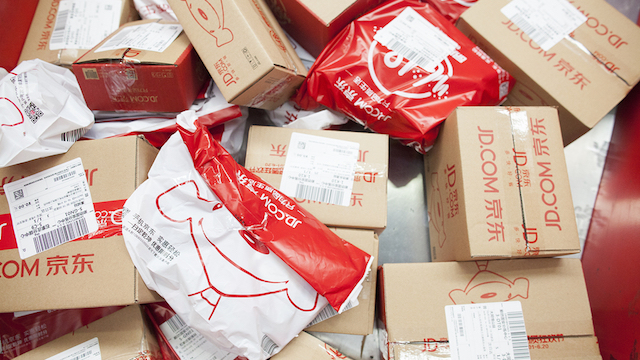
    JD Central – the new joint venture between Chinese online specialist JD and Thailand’s Central Group – has revealed plans to open automated stores, starting next year in Bangkok.

    Vincent Yang, JD Central’s CEO, said the company is evaluating a location where it could test an unmanned store format. Customers would enter the store and transact using facial recognition software.

    The move would be one of several initiatives the company is evaluating using new-generation technology. Another is the use of autonomous warehouse robots to replace humans in warehouses to reduce overheads.

    “We need to get approval to use robots and autonomous delivery vehicles in Thailand,” Yang said.
    Speaking after the official launch of JD Central, which has been operating in pre-launch mode for three months, Yang said the company plans to be Thailand’s largest online retailer by 2020.

    “E-commerce in Thailand will increase to 10 per cent of the total retail market in three years, up from 3-5 per cent today, thanks to competition and user experience,” he said.

    During the three-month trial, orders on the new platform increased 15-fold. Yang claims just 2 per cent of orders were returned and there was a 50 per cent repurchase rate by customers. Four out of every five customers accessed the site via mobile.

    JD Central offers products from 4000 brands, the most popular to date being mobile phones, food, home accessories and apparel.

    The company also has a strong focus on authenticity, guaranteeing no fake goods are on sale on its platform.

    “We are positioned to be the most trusted online platform brand by focusing on customer experience with authentic products. If customers find any fake products on our website, they will be refunded three times the original price,” he said.

  • Tesco Lotus Thailand profits down

    Tesco Lotus Thailand profits down

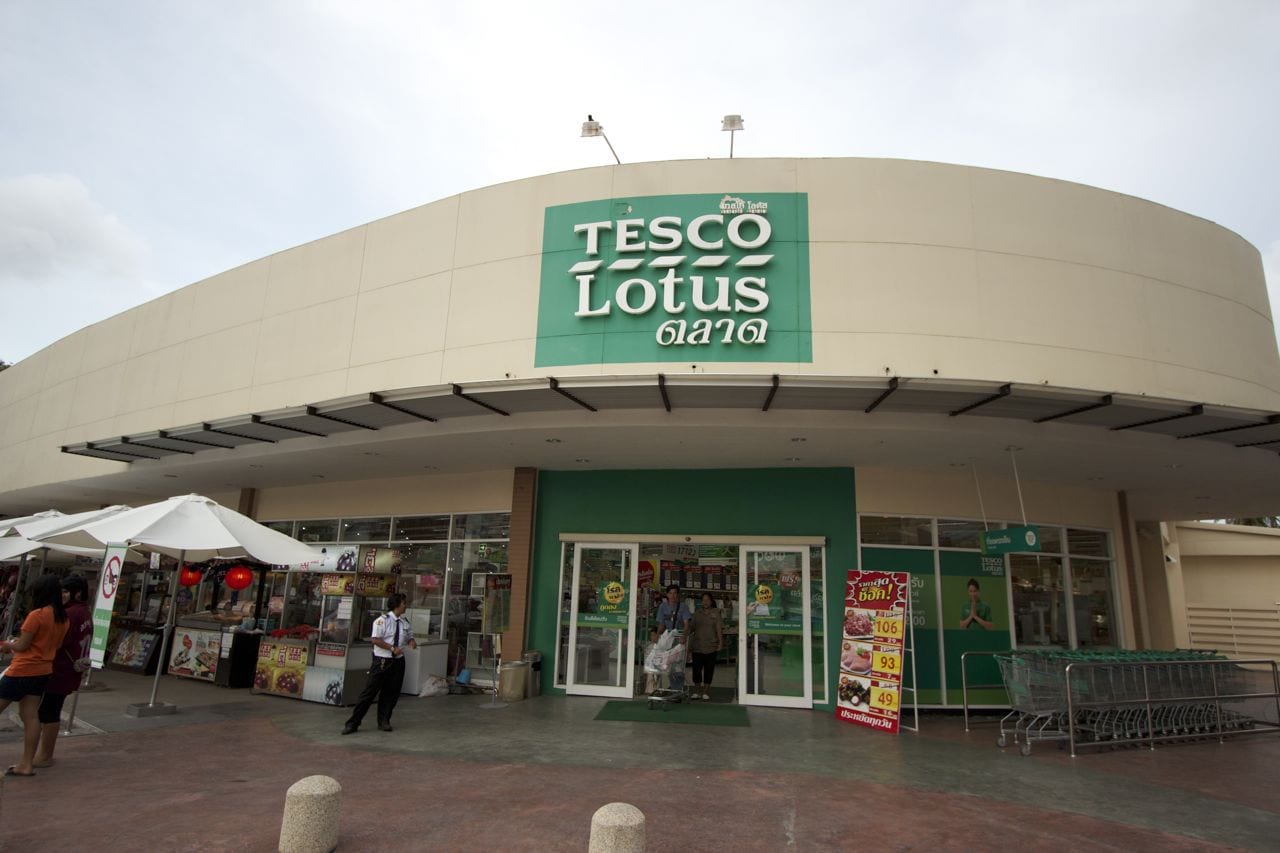
    Falling sales by Tesco Thailand impacted the UK parent company’s first half results released overnight.

    Like-for-like sales across Asia – which also includes the neighbouring Malaysia stores – fell by 4.8 per cent, explained by the company’s decision to exit its unprofitable Tesco Thailand cash-and-carry business.

    But the company’s profit in Asia fell by 29.1 per cent.

    Despite the disappointing numbers, Tesco CEO David Lewis moved to reassure investors that tesco Thailand was still an important focus.

    “In Thailand we’re market leader, it’s still the most profitable part of the group and there’s still significant growth to be had,” he said.

    Tesco reported an operating profit before one-off items of £933 million, which has 24 per cent ahead of the same time last year, but missed analyst expectations of £978 million.

    “I don’t think the market had fully factored in the Asian [business] but we’re really encouraged by the UK,” said Tesco CFO Alan Stewart.

  • JD.com e-commerce joint venture launches officially in Thailand

    JD.com e-commerce joint venture launches officially in Thailand

    The JD Thai JV with Central Group has been formally launched this week under the brand JD Central.

    “Our partnership with Central Group – a one-of-a-kind union between China’s biggest retailer and Thailand’s strongest retail player – will provide Thai customers with a truly world-class e-commerce experience and guarantee 100 per cent product authenticity,” said Vincent Yang, CEO at JD Central.

    The new online platform officially debuts today, September 28, and will further extend JD’s footprint in the Southeast Asia region, which already includes an established e-commerce platform in Indonesia and a strategic investment in Tiki, Vietnam’s leading B2C e-commerce business.

    Central Group, Thailand’s largest retail conglomerate, offers JD instant critical mass through customer loyalty program and brand recognition, as well as merchandise. The site has been in testing mode since June 18, offering both direct sales and marketplace models. Pre-launch sales were described as having “exceeded expectations”.

    The JD Thai JV site includes categories for electronics, digital products, fashion, home appliances, books and music through to groceries, cosmetics, toiletries, beverages and processed foods.

    During the pre-launch phase, about 80 per cent of shopper accessed the site via phones, with FMCG products, mobile phones and fashion the most popular items purchased. Products from Chinese companies have proved especially popular, with leading brands including Xiaomi, Huawei, OnePlus and Lenovo.

    Yang said the JD Thai JV will “transform the local market and unlock the boundless consumer potential of the nation’s large population, with the ultimate goal of becoming the most trusted brand in Thailand”.

  • Off-White is opening a store in Siam Paragon

    Off-White is opening a store in Siam Paragon

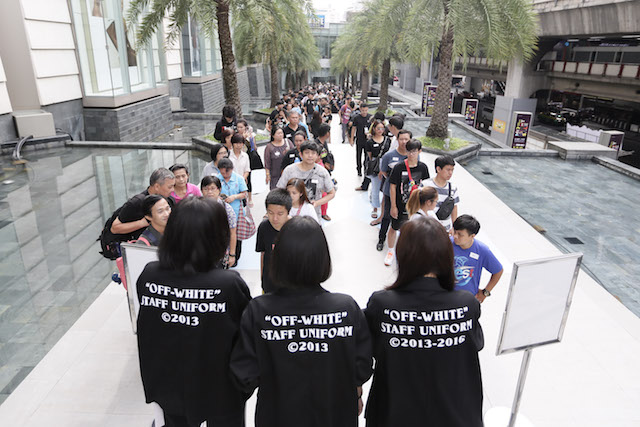
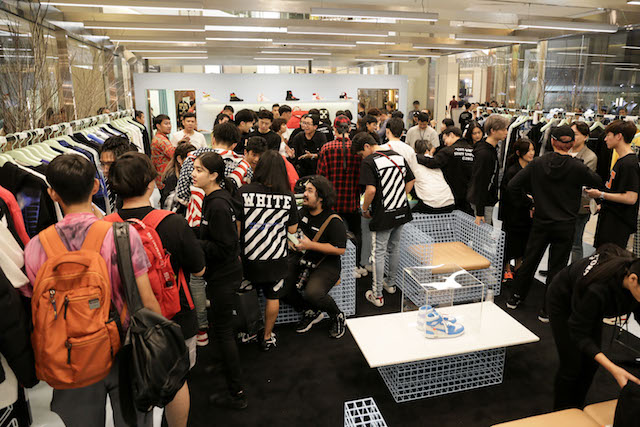
    The first Off-White Thailand store has opened in Bangkok.

    The high-end street-fashion label has chosen Siam Paragon for its first store in the market.

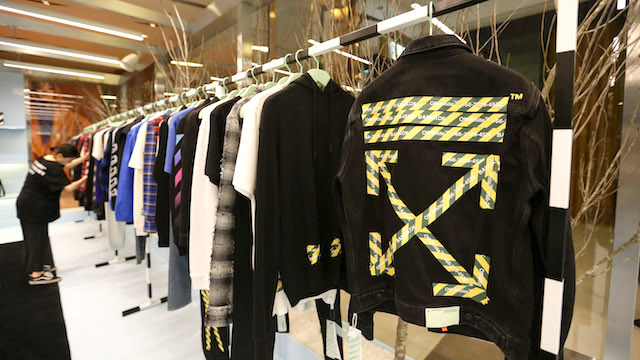
    The store opened last weekend, drawing a queue of more than 300 fans of the brand, drawn by exclusive offers for early customers and the availability of limited-edition items.

    Off-White Thailand has been launched in partnership with local retail operator PP Group.

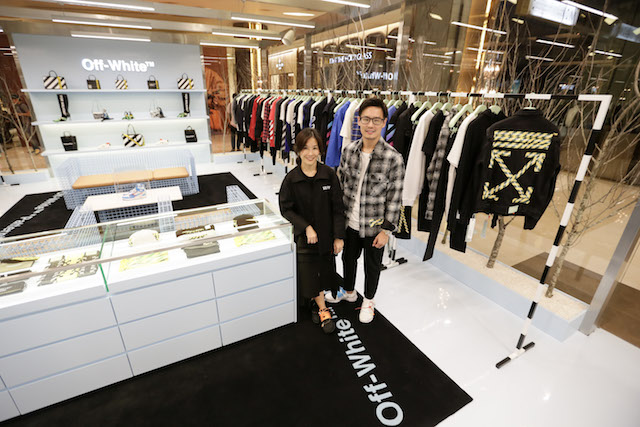
    The boutique is located on the upmarket Bangkok shopping mall’s M floor.

    PP Group executives Olarn Puipunthavong and Suwadee Puengbunpra at the Siam Paragon Off-White store opening.

    Off-White is an Italian streetwear and luxury fashion label founded by American creative designer Virgil Abloh in Milan, Italy in 2012. The brand specialises in seasonal men’s and women’s lifestyle and streetwear and has more than 25 stores globally. Off-White products are also stocked by internationally renowned department stores including Barneys in the US, Selfridges and Harrods in the UK and Le Bon Marche in France.

  • AirAsia begins first direct flight between Taipei and Chiang Mai

    AirAsia begins first direct flight between Taipei and Chiang Mai

    Malaysian low-cost airline launched its first direct flight between Taipei and Chiang Mai on September 30th, the only budget airline route available in Taiwan connecting to the city in northern Thailand, reports said Monday.

    As a promotion, individuals will be able to book a ticket for a single trip between Oc.t 2, 2018 and Mar. 30, 2019, at NT$930 (US$30) before tax from midnight Oct. 2 through Oct. 7.

    The Taipei-Chiang Mai route marks the seventh international route operated by the airline in Taiwan, in addition to Taipei/Kaohsiung-Kuala Lumpur, Taipei-Sabah, Taipei-Manila, Taipei-Cebu, and Taipei-Clark.

    According to Al Chen, AirAsia’s sales manager of in Taiwan, Thailand has always been one of the most popular Southeast Asian tourist destinations for people in Taiwan. Chiang Mai, crowned the Best City in Asia 2017 by Travel and Leisure magazine, caters to the various needs of tourists seeking a laid-back, adventurous, cultural, or nature-filled travel.

  • Polish Active Wear and Lifestyle Brand “4F” Opening its First Store In Thailand

    Polish Active Wear and Lifestyle Brand “4F” Opening its First Store In Thailand

    Polish activewear and lifestyle brand 4F has launched in Thailand.

    The brand, recognised globally for its functional, contemporary design approach, opened its first retail store in the country at Siam Discovery.

    Local agent Sport Lifestyle Lab owner Hidekazu Fujii said: “Health and fitness is becoming increasingly popular in Thailand, as people look to eat healthier diets, gets more exercise or dress for it. We’re seeing more and more Thais embracing the athleisure trend by mixing and matching sportswear pieces into their everyday look. We saw an opportunity to introduce 4F to the market and Siam Discovery is a perfect central location for young Thais to shop. It gives tremendous exposure and opportunity for the brand to grow.”

    The firm is expected to open pop-up stores throughout Bangkok to make the brand more accessible to the local market.

    4F currently operates more than 200 retail and wholesale outlets in 35 countries.

  • US-China trade war dims Asia’s 2019 growth outlook: ADB

    US-China trade war dims Asia’s 2019 growth outlook: ADB

    Developing Asia could grow more slowly than previously thought next year as the US-China trade war inflicts damage on the region’s export-reliant economies, the Asian Development Bank (ADB) said.

    Tightening global liquidity could also weigh on business activity by pushing up borrowing costs, while capital outflows are also a risk.

    The Manila-based institution kept its 2018 economic growth estimate for the region at 6.0% in an update of its Asian Development Outlook. But it trimmed next year’s forecast to 5.8% from 5.9%.

    “Downside risks to the outlook are intensifying,” said ADB chief economist Yasuyuki Sawada, pointing to the potential impact of US-Sino trade tensions on regional supply chains and the risk of sudden capital outflows if the Federal Reserve raises interest rates even more quickly.

    The ADB’s 5.8% growth estimate for 2019 would be the slowest for the region since 2001, when it expanded 4.9%.
    The report covers 45 countries in the Asia-Pacific.

    The ADB’s latest forecasts did not reflect fresh tariffs that the US and China imposed on each other’s goods on Monday.

    Sawada said the additional duties would not significantly change ADB’s growth forecasts, but added the “escalating” trade conflict must be closely monitored.

    China’s economy is expected to grow 6.3% in 2019, the ADB said, slower than its 6.4% forecast in July and weaker than its 6.6% growth estimate for 2018, which was unchanged from its previous projection.

    Domestic consumption in China “seems to be quite robust and supporting 6.6% growth this year”, Sawada said.

    “But admittedly we don’t know (how) the further escalation of the trade dispute may directly affect consumer sentiment,” he added.

    Beijing has set a growth target of around 6.5% this year, the same as last year, which it handily beat with an expansion of 6.9%.

    Chinese authorities have pledged they can still meet the 2018 target, and have started to roll out growth boosting measures as the trade war threatens to put further pressure on the already cooling economy.

    For Southeast Asia, moderating export growth, quickening inflation, net capital outflows and a worsening balance of payments have dimmed the outlook, with growth this year projected to slow to 5.1% from the July forecast of 5.2%.

    “Policy makers have at their disposal an array of policy tools with which to manage pockets of vulnerability and maintain stability, but they must be applied carefully,” Sawada said.

    Inflation across the region is expected to remain under control, helped by country-specific factors like moderate food price inflation in India and China and fuel subsidies in Indonesia and Malaysia, the ADB said.

    Sawada said Asian governments have “enough policy space to handle” shocks and pressure from currency depreciations.

    The ADB lowered its 2018 economic growth forecast for Vietnam to 6.9% from 7.1% projected previously, partly due to the ongoing trade friction between the US and China.

    Vietnam, one of the fastest growing economies in Asia, has an open economy that is heavily reliant on exports, while the US and China are among its biggest trade partners.

    ADB lowered its growth forecast as the ongoing trade tension between the US and China could have a spillover impact on Vietnam. However, the ADB outlook is still higher than the Vietnamese government’s target of 6.7%.