Retail News CRM

Tag: tmall

  • El Corte Ingles inked global distribution deal with Alibaba

    El Corte Ingles inked global distribution deal with Alibaba

    Spanish department store operator El Corte Ingles is to open a flagship store on Alibaba’s Tmall as part of a broad collaborative approach to reaching Chinese consumers. In a wide-ranging agreement, El Corte Ingles and Alibaba will enable a raft of Spanish and international brands commonly sold in El Corte Ingles department stores, to be sold worldwide via both AliExpress and Tmall.

    AliExpress will consider opening a number of physical stores at El Corte Ingles shopping centres in Spain to create a unique and engaging shopping experience while promoting some of its latest products available to Spanish shoppers. This follows a trial pop-up store in the El Corte Ingles Sanchinarro shopping centre in Madrid earlier this month during Alibaba’s 11.11 Global Shopping Festival.

    El Corte Ingles and Alibaba say they will also explore closer cooperation in delivery and supply-chain infrastructure and channels, allowing Alibaba to benefit from the Spanish company’s logistics knowledge and capabilities in the country, and explore the use of its distribution centres as collection points for online purchases made through AliExpress.

    Smart payments

    El Corte Ingles signed an agreement with Alibaba’s Alipay in March to bring seamless payment experience to Chinese tourists visiting Spain. This may now be expanded, as El Corte Ingles and Alibaba will work on creating new shopping experiences for Chinese visitors.

    El Corte Ingles CEO Victor del Pozo said the agreement will allow the two companies to combine both the physical and online worlds to offer the best shopping experience to its customers.

    “Together, we are writing the future and placing ourselves at the forefront of trade and technology. El Corte Ingles owns department stores in the best locations of the main cities of Spain and Portugal, and is granted with the confidence and trust of national and international customers. All of this, joined to Alibaba’s technology, will allow us to offer a proposal of unbeatable value.”

    Alibaba Group MD for Italy, Spain, Portugal and Greece, and BDM for Tmall in Europe, Rodrigo Cipriani Foresio, said digital transformation and innovation in all fields are fundamental drivers of Alibaba’s mission of making it easy to do business anywhere, with the ultimate goal of better serving consumers and stakeholders worldwide.

    “Hence, we are confident that the expertise and skills brought by both companies will generate incredible value and opportunities as the cooperation takes shape.”

    El Corte Ingles, which opened in 1940, is Europe’s largest chain of department stores.
  • Korean brands stars on China’s Singles’ Day

    Korean brands stars on China’s Singles’ Day

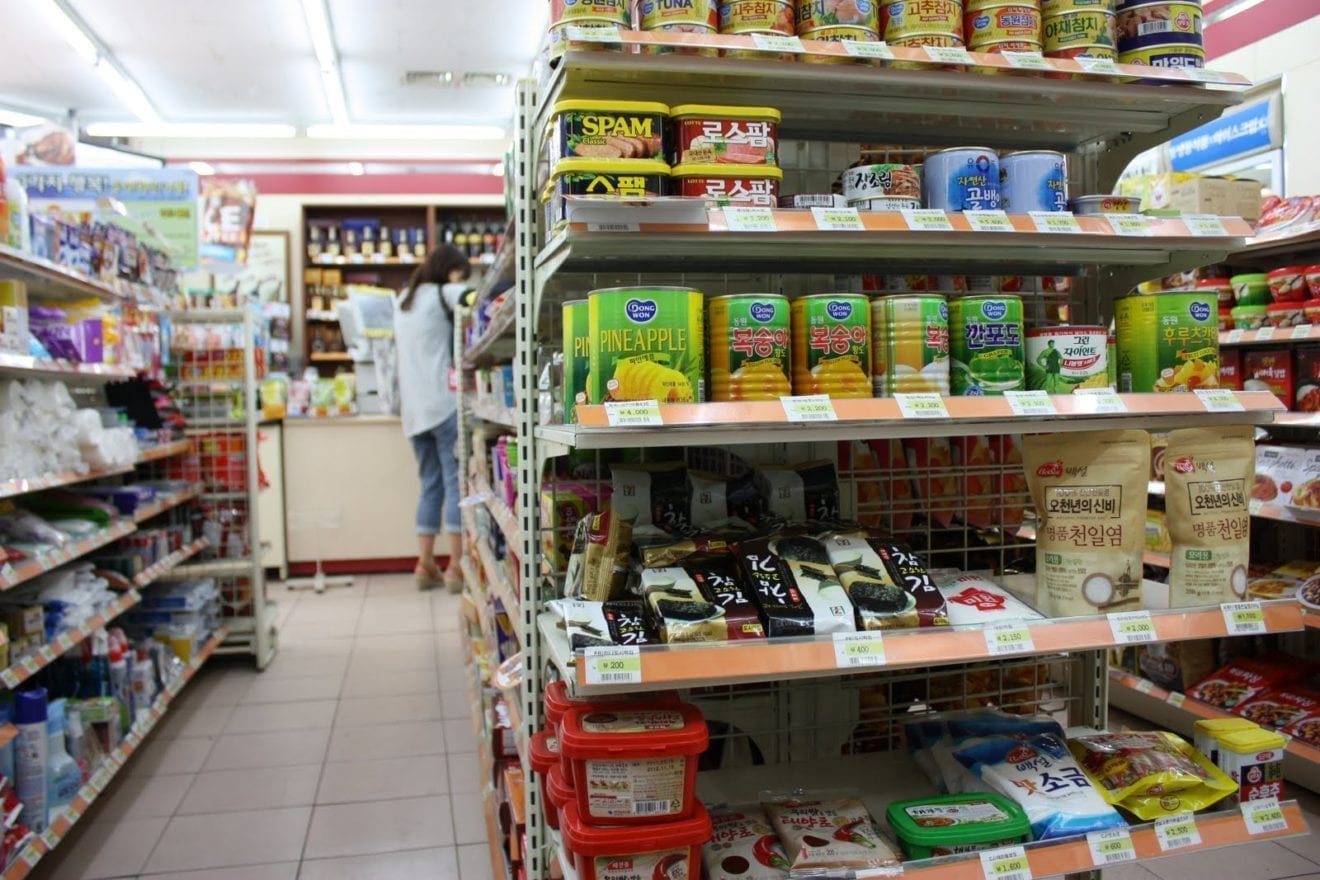
    South Korean retailers benefited from another record-setting Nov. 11 Singles Day shopping extravaganza led by Alibaba Group of China. Since 2009, Chinese retail giant Alibaba Group has transformed Singles’ Day, which falls on Nov. 11, into an online shopping festival with large discounts offered for 24 hours.

    Over 40 percent of shoppers made purchases from international brands, said Alibaba.

    Among the countries that sold products to Chinese customers on Sunday, Korea ranked third after Japan and the United States.

    Korea placed at No. 3 on the list in 2016, but fell two ranks last year after the deployment of the U.S.-led terminal high altitude area defense (Thaad) antimissile system.

    The incident soured relations between the two countries and provoked a boycott movement against domestic brands in China.

    The exact volume of Korean goods purchased on Sunday was not disclosed, but it was evident that the shopping spree had an impact on local companies, as some of them reported record-breaking figures on Monday.

    Korea’s top beauty and personal care brand LG Household & Health Care Ltd. said on Monday that overall cosmetics sales during this year’s around-the-clock shopping gala rose 50 percent from a year ago at Tmall Global, a major e-commerce platform managed by China’s Alibaba Group.

    Sales of household items also jumped 73 percent during the same period.

    LG Household & Health Care raised 23 billion won (US$20.3 million) in sales of its flagship cosmetics label the History of Whoo during this year’s Singles Day event, up 72 percent from last year.

    Sales of luxury cosmetics brand su:m37 also jumped 82 percent during the same period mainly driven by increased demand for its Water-Full skin-care product line.

    The brand sold 26,500 sets of Water-Full line on November 11, up 208 percent from a year ago. It sold 24,400 sets of its Time Energy skin moisturizing solution, up 48 percent during the same period.

    Korea’s largest cosmetics company AmorePacific Corp. also scooped up sales on Sunday event.

    Sales of Yoonjo Essence, an activating serum of its premium cosmetics brand Sulwhasoo, hit 10,000 in just 60 seconds after launching sales at Tmall.

    Pre-order sales of Hera’s Rouge Holic lipstick also quintupled this year from last year.

    Korea’s fashion and retail conglomerate E-Land Group that manages 19 brands on Tmall raised 72.3 billion won in revenue on November 11 alone.

    Korea’s largest manufacturer of instant noodles Nongshim Co. also raked in record sales of 800 million won at Alibaba’s online shopping mall Taobao on the event day, more than tenfold from its daily average sales and up 25 percent from last year.

    The company attributed record sales to its top-sellers Shin Ramyun and Kimchi Ramyun.

    Alibaba clocked in sales of US$30.8 billion in the 24-hour shopping gala that began at 12 a.m. Sunday, beating last year’s US$25.3 billion.

  • Alibaba promises US$200 billion global sourcing plan

    Alibaba promises US$200 billion global sourcing plan

    Alibaba has committed to help import US$200 billion worth of goods from more than 120 countries over the next five years. The company says the move underscores its long-term commitment to globalisation and boosting its efforts to meet the rising demand of Chinese consumers for high-quality international products.

    However, it could also be construed as a move to shore up alternative supply chains in the wake of growing trade tensions between the US Trump administration and China.

    “Globalisation is one of Alibaba’s most critical long-term growth strategies,” said Alibaba CEO Daniel Zhang in a statement. “We are building the future infrastructure of commerce to realize a globalised digital economy where trade is possible for every country around the world.”

    He said using Alibaba’s innovative technology and robust ecosystem, the company is positioned to make global trade more inclusive and fulfil its mission “to make it easy to do business anywhere in the digital era.”

    Zhang outlined Alibaba’s plan at its Global Import Leadership Summit held at the first-ever China International Import Expo in Shanghai. Between 2019 and 2023, Alibaba forecasts it will help import international goods from businesses of all sizes in top countries such as Germany, Japan, Australia, the US, South Korea and Singapore. Several top global brands including P&G, Nestle, JBS, and Refa, have confirmed their holistic partnership with the Alibaba ecosystem.

    By collaborating with various Alibaba businesses units, these brands have been able to effectively engage with China’s massive middle class, a primary engine powering China’s consumption growth.

    Alvin Liu, GM of Tmall import and export, said China’s middle class is booming. “As incomes are rising in China, consumers want faster access to and a wider variety of high-quality products from around the world. Tmall is uniquely positioned to help international brands tap into the growing China market as consumers seek to upgrade their lifestyle.”

    According to a joint report by Deloitte China, the China Chamber of International Commerce, and AliResearch, China’s robust economic growth in recent years has increased the number of middle-to-high income Chinese consumers, who are fuelling the demand for imported, quality goods.

    The report notes that China’s cross-border e-commerce market has grown remarkably, with the proportion of imports to total e-commerce sales growing from 1.6 per cent in 2014 to 10.2 per cent last year. The report also highlights that, between 2014 and 2017, the number of shoppers on Alibaba’s dedicated platform for cross-border shopping, Tmall Global, has grown 10-fold.

  • Tmall, Swire Properties launch New Retail initiative

    Tmall, Swire Properties launch New Retail initiative

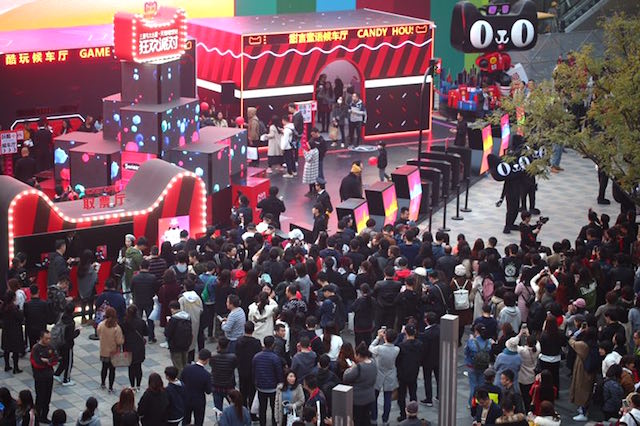
    Alibaba Group’s Tmall and Swire Properties are launching a New Retail initiative creating tailored retail experiences at Swire Properties’ five shopping malls in Mainland China. The partnership will bring benefits to customers in time for Alibaba’s 11.11 Global Shopping Festival on Sunday with Taikoo Li Sanlitun in Beijing the first brick-and-mortar shopping mall in Mainland China to experience this year’s 11.11 “red packet rain” this week.

    Swire Properties will introduce Tmall’s New Retail technologies at five of its developments: Taikoo Li Sanlitun and Indigo in Beijing; HKRI Taikoo Hui in Shanghai; Taikoo Hui in Guangzhou and Sino-Ocean Taikoo Li in Chengdu. The five New Retail initiatives include Tmall Smart Stores, a Tmall Pop-Up Store, Interactive Idol Engagement Photo Booths, Smart Nursery Rooms and a Smart Parking Service.

    Tmall Smart Stores: Shoppers will enjoy a seamless online and offline shopping experience from order to delivery (for participating physical stores). By signing up as members of selected brands, customers can instantly receive details on the latest promotions, and enjoy a return service by simply using their digital devices.

    Tmall Pop-Up Store: Tmall will open an interactive pop-up store featuring cutting-edge technology at Taikoo Li Sanlitun. This nine-day promotion during the Festival will offer shoppers in-depth and enhanced experiences.

    Interactive Idol Engagement Photo Booth: Fans will have a chance to ‘virtually interact with’ and snap a photo with their idol. This is the first-of-its-kind check-in hot spot in Mainland China.

    Smart Nursery Rooms: These offer mothers a relaxing and private space where they can nurse their babies at shopping malls. Vending machines will also offer essential nursing necessities.

    Smart Parking Service: By linking Alipay with their car license plates, drivers can pay parking fees with ease. This service will save drivers 80 per cent of the time usually spent on paying the parking charge and exiting the car park.

    “At Swire Properties, we are always looking for new ways to innovate and integrate the latest technologies into our business, so that we can bring unique experiences to our customers,” said Han Zhi, director, retail at Swire Properties. “Our collaboration with Tmall is a powerful example of digitisation. By harnessing rapidly developing online technologies and big data, our goal is to define the New Retail shopping experience.

    “This year marks the 10th anniversary of Taikoo Li Sanlitun and Alibaba’s 11.11 Global Shopping Festival, both of which have grown in leaps and bounds the past decade. We’re confident that our partnership, which also celebrates this milestone, will set a new benchmark in our respective industries and in the digital space.”

  • Alibaba’s second-quarter revenue jumps high

    Alibaba’s second-quarter revenue jumps high

    Alibaba’s second-quarter revenue grew 54 per cent year on year, reaching RMB 85.1 billion ($US12.3 billion). Net income attributable to shareholders was RMB 20 billion ($2.9 billion), a 13 per cent year-on-year increase. “Alibaba had another strong quarter of rapid growth,” said Alibaba Group CEO Daniel Zhang.

    “Annual active customers increased by 25 million to reach 601 million in the year ended September 30.”

    “Annual active customers increased by 25 million to reach 601 million in the year ended September 30.”

    Alibaba’s cloud-computing arm saw 90 per cent year-on-year growth to RMB 5.6 billion, launching more than 600 products and features during the quarter ranging from big data analytics, AI application innovation, security and internet-of-things enhancements.

    The business’s online Tmall operations saw a 30 per cent increase in gross merchandise value, driven by improved conversion rates and increased traffic in the fast-moving consumer goods, home furnishings and apparel categories.

    Alibaba’s New Retail strategy has continued to pay off across its Hema supermarkets network, with stores that have been in operation for at least 1.5 years seeing online sales account for 60 per cent of turnover for the September quarter. By the end of the quarter, 77 Hema stores had been opened in China.

    The group has dropped its forecast revenue guidance for the full year by 4 to 6 per cent to between RMB 375 billion and RMB 383 billion. As it stands, the group expects revenue to grow by 54 to 56 per cent.

  • Alibaba Group Puts Spotlight on Indonesian Brands

    Alibaba Group Puts Spotlight on Indonesian Brands

    Chinese e-commerce giant Alibaba launched a special section for Indonesian products on its platform on Friday to promote the country’s best products to more than a billion Chinese consumers. The section, known as the Indonesian Pavilion, debuted on Alibaba’s Tmall Global, a platform dedicated to helping international retail brands and entrepreneurs reach out to the Chinese market despite not having a presence in the country.

    Indonesian Ambassador Djauhari Oratmangun and Ryan Wang, general manager of public affairs at Tmall, inaugurated the special section during an event in Shanghai.

    The Indonesian Pavilion was launched in time for Alibaba’s 2018 11.11 Global Shopping Festival, the world’s largest one-day shopping event, which takes place on Nov. 11 every year.

    The section will initially offer five leading Indonesian food and beverage brands: Indomie instant noodles, Kapal Api packaged coffee, Richeese biscuits, Yan Ty Ty swallow’s nests and Papatonk shrimp crackers.

    Through Tmall’s integrated service center, brands can increase consumer awareness of their products ahead of the upcoming shopping festival.

    Chinese consumers will also have a chance to learn about Indonesia’s cultural richness and exotic tourist destination, which will also be featured on the platform.

    This forms part of Alibaba’s ongoing initiatives over the past few years to support Indonesian startups and small and medium enterprises.

    Jack Ma, Alibaba chairman and co-founder, serves on Indonesia’s digital economy board, advising the government on how to best nurture and implement digital technology to drive development.

    The government and Alibaba are also discussing ways to help Indonesia train local talent in the digital field and increase innovations in financial technology.

  • Singles Day 2018 faces delivery challenges

    Singles Day 2018 faces delivery challenges

    Alibaba and its partner retailers will face a massive challenge ensuring flawless delivery of millions of parcels all over China and beyond given the expectations of further growth on Singles Day 2018 next week.

    “As the event grows, the logistics challenge becomes bigger and bigger,” observes retail analyst Pascal Martin, partner at OC&C Strategy Consultants.

    “During last year’s event 812 million parcels were delivered just on Tmall. Observers are betting that this year’s milestone might be more than 1 billion parcels.”

    And, says Martin, although brands don’t like to talk about it, there is also a huge challenge in taking care of large quantities of returned goods.

    “11.11 is a massive test bed for Alibaba’s backbone infrastructure: the network of partners that make it all possible, from payment to delivery to data management, as well as AI and cloud technologies that are put to work to ensure a successful event.”

    Alibaba’s Cainiao Smart Logistics Network says it has upgraded its technology to cope with the expected increased volumes from 11.11 this year. The company boasts more than 30 million sqm of warehousing worldwide and a logistics field force of more than 3 million people.

    Domestically, Cainiao has opened a new robotic warehouse, expanded its Internet of Things (IoT) systems and built out its platform’s last-mile reach. For cross-border deliveries, more than 1000 shipping containers and 51 charter planes are booked, ready to speed orders across the world.

    Cainiao VP Ben Wang says while nobody knows how many orders Singles Day 2018 will generate, the logistics company needs to keep upgrading systems, anticipating growth and seeking higher efficiency, because of customer expectations.

    “It was only five years ago that parcel orders surpassed 100 million for the first time. Back then it took nine days to deliver the first 100 million parcels,” said Wang. “Last year, it took less than three days (2.8 days) to deliver the same number of parcels. Consumers increasingly want faster, better delivery, so that’s what we’re doing. This year, we’re striving to achieve a new high, leveraging the beauty of scale and technology.”

    Delivery “within minutes”

    Cainiao’s preparations this year also reflect the changing demands of logistics in the New Retail era. For the first time, goods ordered during 11.11 will be delivered directly from stores to customers during the Festival – sometimes within minutes. Short-distance delivery services will be available in more than 280 cities.

    “Cainiao is the logistics backbone of Alibaba’s New Retail strategy,” Wang said. “We are providing an online and offline, cross-platform supply-chain solution to merchants and enabling them to cut inventory costs, while increasing operating efficiency, especially around 11.11 ­– the busiest season of the year. Ultimately, consumers will enjoy a brand-new shopping experience, as delivery service will always be on-demand.”

    Martin expects Singles Day 2018 to include more partners, not only online but also offline, leveraging Alibaba’s New Retail ecosystem. For example, Tmall 3000+ convenience stores, Hema and RT Mart supermarkets, Suning and Auchan, will be fully integrated into the event.

    The event will also be expanding beyond China through Lazada, the Southeast Asia online platform owned by Alibaba.

    “We expect to see participation of an increasing number of international brands that are taking advantage of the Tmall Global platform – number one by far among Chinese cross-border platforms – to get introduced to Chinese consumers without any direct presence in China for many of them.”

    And diversification will be another key factor in this year’s event, he says.

    “It’s not just about purchasing products, it’s also increasingly about purchasing a variety of services, from videos on Youku to mobile games on UC, theatre tickets on Taopiaopiao, music on Xiami music, travel on Feizhu, etc… All of this will not happen without challenges.”

    Yet another test, says Martin, is for Alibaba to expand the event beyond its group companies.

    “Right now, most of the non-Tmall companies participating in the 11.11 event are Alibaba Group companies. Getting non-group companies to embark on the 11.11 band wagon will be the next step to sustain continued growth of the event in future years.

    “Finally, to keep the event fresh and exciting, Alibaba will need to continue to surprise increasingly demanding Chinese consumers with entertainment and festivals to delight them around the event. 11.11 has become much more than a commercial fair, it is now a major annual milestone in China’s cultural calendar.”

    Last year’s 11.11 event saw GMV reach 254 billion RMB (US$36.6 billion) including 168 billion RMB on Tmall alone. That turnover represented a 43.5 per cent increase over the 2016 GMV.

    Singles Day 2018 will mark the event’s 10th anniversary.

  • Alibaba, Richemont ink deal to bring YNAP to China

    Alibaba, Richemont ink deal to bring YNAP to China

    The partnership will use YNAP’s strong relationship with leading luxury brands, some 950 of them being currently distributed through YNAP in China, and launch the brands on Alibaba’s Tmall Luxury Pavilion.

    “Chinese customers at home and abroad are an increasingly important customer base for Richemont and for the broader luxury industry,” said Richemont chairman Johann Rupert.

    “Our digital offering in China is in its infancy and we believe that partnering with Alibaba will enable us to become a significant and sustainable online player in this market. Alibaba has become the preferred online destination in China, with world-class teams in technology, logistics and marketing.”

    Rupert said the company would work with Alibaba to ensure Net-A-Porter and Mr Porter continued to expand “as neutral, open and sophisticated platforms”.

    YNAP group CEO Federico Marchetti said Alibaba provided “a neutral and powerful platform to maximise China’s immense potential” for the group.

    Daniel Zhang, CEO of Alibaba Group, added: “We believe this announcement is just the beginning of a long-term partnership, and together we are committed to exploring many more opportunities to collaborate in the future.”

  • Tmall’s “See Now, BuyNow” Show Kicks Off 2018 11.11 Global Shopping Festival

    Tmall’s “See Now, BuyNow” Show Kicks Off 2018 11.11 Global Shopping Festival

    Tmall, the largest B2C ecommerce platform for global and domestic brands and retailers in China, hosted its “See Now, Buy Now” Tmall Collection Fashion Show during the weekend in Beijing, kicking off the month-long lead-up celebration to Alibaba Group’s 2018 11.11 Global Shopping Festival.

    This year – the festival’s 10th anniversary – its fashion show added a new interactive element. In addition to popular “See Now” and “Buy Now” features that allow viewers to purchase items shown on the runway instantly from their mobile phones, this year’s fashion show also introduced an innovative feature, “Play Now”. “Play Now” gives viewers the chance to vote for their favorite outfits to create a trend report that would provide insights and instant feedback to participating brands.

    “Tmall Collection is our annual extravaganza to showcase the hottest trends in fashion. We created the ‘See Now, Buy Now’ concept two years ago, and we are excited to boost consumer engagement to a new level with the ‘Play Now’ feature, enabling viewers to share their views with brands real-time,” said Jessica Liu, President of Tmall Fashion and Luxury.  “The ‘See Now, Buy Now’ show provides a powerful sales channel for the world’s leading brands and also has the potential to reshape the fashion industry with the interactive component tailored for the always-online Chinese millennials.”

    The four-hour “See Now, Buy Now” show featured an impressive lineup of more than 60 international and domestic brands showcasing their latest collections, including Estée Lauder, Levi’s, Adidas, Guess, I.T, M.A.C.., G-Star Raw, and Swatch. More top luxury brands participated in the event than ever before, including Stella McCartney, Burberry, MCM, La Perla, Giuseppe Zanotti, and Stuart Weitzman.

    To celebrate the 10th anniversary of the 11.11 Global Shopping Festival, the fashion show also featured a special segment highlighting crossover products that are specifically designed for the Festival. Celebrities participating in the show this year included American fashion designers Anna Sui and Jason Wu, American singer Jaden Smith, and Chinese singer Chris Lee.

    The live runway show had attracted over 57 million online viewership, more than tripling that of last year. It was broadcast live on 10 platforms, including the Taobao app, Alibaba’s video platform Youku, social media platform Weibo, and short video app Tik Tok.

  • Tmall and L’Oréal China Deepen Partnership

    Tmall and L’Oréal China Deepen Partnership

    Alibaba Group’s Tmall, and L’Oréal China said today they’ll work closely together to find new ways for the beauty group to tap into the Chinese market, leveraging data-driven consumer analytics and a new value chain that better connects consumers, products and channels.

    Tmall Innovation Center (TMIC), the retail innovation arm of Tmall, will work closely with L’Oréal China to catalyze the consumer-to-business (C2B) approach, based on insights and trends generated from the 600 million-plus customer base across Alibaba’s marketplaces.

    “We have been very happy to ride the wave of the digital transformation together with Alibaba Group’s Tmall. As the number-one beauty company in the China market, L’Oréal China will continue to deepen collaboration with innovation partners locally to unleash the value of data insights and create value for our consumers,” said Stéphane Rinderknech, CEO of L’Oréal China. “With our ‘Beauty for All’ mission and consumer centric strategy, our ultimate goal is to bring personalized products, services and experiences to each and every Chinese consumer.”

    The partnership’s first initiative will focus on China’s male-grooming industry. According to a white paper co-developed by TMIC and L’Oréal China Consumer Intelligence Team, online sales of men’s grooming products have increased by more than 50% in each of the past two years. In the past year, 62% of the male consumer pool between the ages of 15 and 50 said they used male-specific facial skincare products, showing a massive addressable market for male grooming products.

    “With Tmall’s unparalleled customer insight, we are committed to helping L’Oréal China offer its customers best-in-class personalized product experiences. Tmall has transformed product development in every area, from product innovation and brand building to consumer assets and channel management. We help brands discover new demand and markets as well as offer completely new customer experiences,” said Jet Jing, President of Tmall.

    TMIC and L’Oréal China precisely identify five profile groups of customers with specific preferences, such as those who go for men-only personal care products; those who need a full range of products and those only seeking face, hair and basic products.

    Based on the findings of the white paper, L’Oréal China and Tmall will co-host a consumer-oriented marketing campaign, “Super U Carnival,” both online and offline from September 25-30. Male consumers will be able to discover suitable grooming products with the help of data insights. At a pop-up store in Hangzhou, five immersive show rooms are tailored to customers’ unique styles and preferences.

    L’Oreal China is one of the international groups that has benefited from these consumer insights generated by TMIC. Established in April 2017, TMIC’s mission is to

    help brands explore new ways to tap into the Chinese market by using precise market analysis, real-time consumer insights and test models. Including L’Oreal China, TMIC has already collaborated with 62 companies.

    Earlier this week, L’Oréal China launched House99 flagship store on Tmall, together with David Beckham, the founder of House99. A full range of high-end male grooming products, including skin and body care, hair and shaving products, are now available on House 99’s Tmall store.

  • New Product Debuts on Tmall to Reach 20million in 2018

    New Product Debuts on Tmall to Reach 20million in 2018

    Alibaba Group’s Tmall, China’s largest B2C marketplace for brands, has fast become the “go-to” platform for Chinese consumers who want access to new gadgets and products from around the world.

    In 2017, 12 million products debuted on Tmall, a number expected to exceed 20 million this year, as global brands respond to the array of innovation capabilities available to them.

    “Inspiring millions of Chinese consumers to pursue better lives, Tmall aims to help every brand speed up its product R&D, innovation process and time-to-market, reducing the risks faced by introducing a new product. This also allows more new categories and products to feature in Chinese consumers’ lives at a much faster pace,” said Tmall President Jet Jing.

    By marrying the platform’s valuable consumer insights with analytical and research capabilities, Tmall Innovation Centre (TMIC), the dedicated retail innovation arm of Tmall, is focused on improving the effectiveness and efficiencies around launching new products. TMIC has collaborated with 81 leading enterprises over the past year, covering 600 individual brands. The household names which have already benefited include P&G, Unilever, L’Oréal, Estee Lauder, Shiseido, Mars and Samsung.

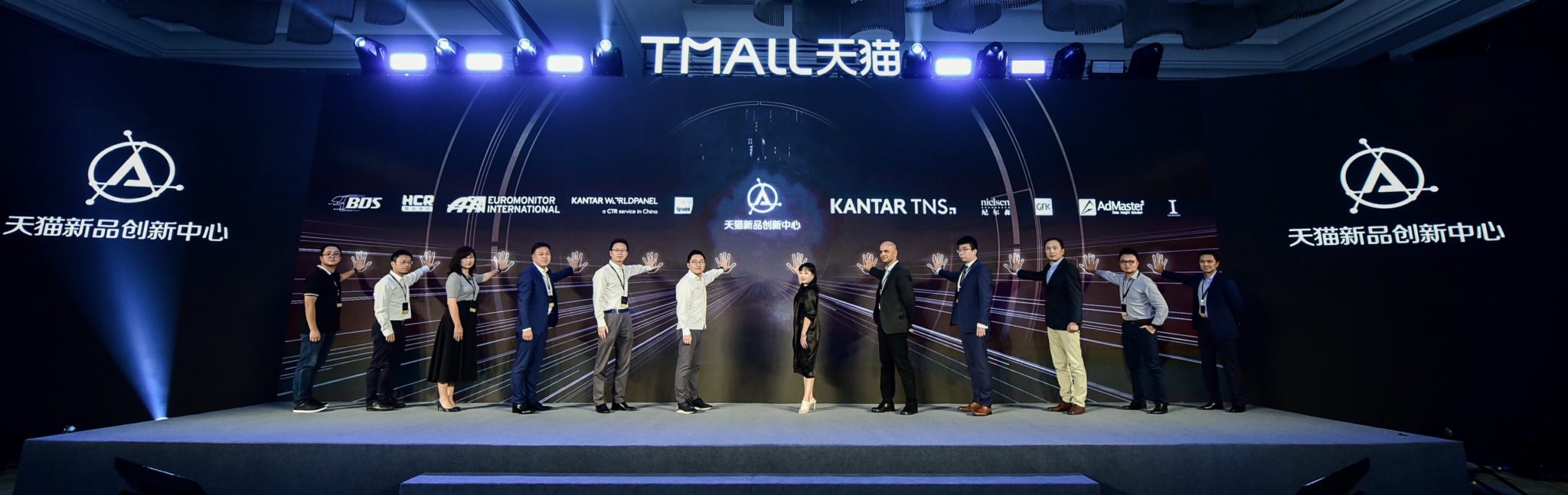
    TMIC has announced an alliance with 10 leading research and data technology firms to extend the capabilities of the ecosystem. Through this, TMIC is now joining with the industry to provide brands the necessary insights and analysis to supplement their research and development around new products, which will shape their China strategy. Partners include global market-research firms, The Nielsen Company, Ipsos, Kantar TNS, GFK and Euromonitor International, along with Kantar Worldpanel, which specializes in consumer panels and insight, and AdMaster, a Chinese marketing data technology company.

    This alliance pairs TMIC’s consumer reach and insights with the methodology and knowledge of its partners. Solid models will be built that cover the end-to-end process of product development, from R&D to precision marketing.

    Statistics from Alibaba have shown that brands working with TMIC have managed to cut the length of their product development cycle in half, at the same time mitigating the risks of misjudging consumer tastes and preferences.

    For example, with TMIC’s discovery of younger women’s preference for mouthwash products with flower and fruit flavors, Listerine, Johnson & Johnson’s oral care brand, will launch two mouthwash products in China during this year’s 11.11 Global Shopping Festival targeting women. Using the insights from TMIC, Listerine have only needed around five months to complete the “idea-to-shelf” journey.

  • Theory Expands Footprint in China with Tmall Debut |

    Theory Expands Footprint in China with Tmall Debut |

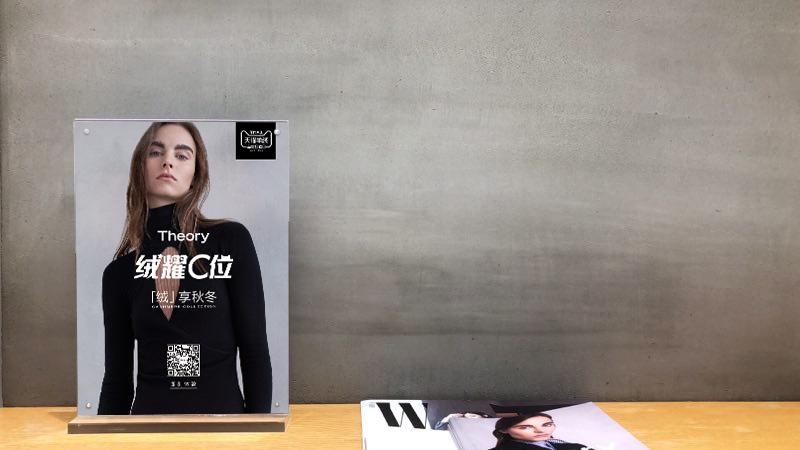
    New York-based clothing label, Theory, known for its minimalist, precisely tailored wardrobe essentials, has opened its first online store in China on Alibaba’s Tmall e-commerce platform and its dedicated site for high-end shoppers, Tmall Luxury Pavilion. The stores offer all items in Theory’s womenswear and menswear collections available in its brick-and-mortar stores, including its newest Good Wool and autumn-winter 2018 lines. Offline, the brand currently counts 33 stores across 17 cities in China, a number it expects to double in three years.

    “Tmall’s partnership with Theory is a milestone in our continued market leadership in China as the premier B2C platform for fashion. We will empower Theory through our unparalleled data-driven consumer insight and New Retail technology to serve and discover fashion consumers across China, as well as build lasting relationship with customers,” said Jessica Liu, president of Tmall Fashion and Luxury.

    As part of the partnership agreement, Theory and Tmall will work more closely to leverage consumer insights and offer personalized New Retail experiences, starting with providing the same bonus points, sales benefits and exclusive birthday perks to Theory’s hundreds of thousands of VIP loyalty club members, both online and offline, for a more-seamless shopping experience across all channels.

    Tmall also provided the brand with marketing support, such as promoting its popular merino wool and cashmere clothing on Tmall Cashmere Category Day, an online-to-offline, multi-brand marketing event that ran from Sept. 24 to 26. The category is specially highlighted because of growing popularity of cashmere goods among the 30-40 age group on the platform, with the most rapid sales growth coming from younger consumers under 30 years old, the e-commerce platform said.

    “We will continue to roll out similar campaigns with Theory. At the same time, the brand has already merged its online and offline membership system to ensure the most complete set of rewards and services for its customers across all its online and offline channels,” said Anita Lyu, vice president of Tmall Fashion.

    Owned by Japan’s apparel giant Fast Retailing, Theory has pioneered a new category in the market now known as contemporary fashion — garments and accessories with designer aesthetics and premium quality, but sold at more-affordable price points. Contemporary fashion labels include Massimo Dutti, Charles & Keith and H&M Group’s COS.

    Aside from Theory, Fast Retailing also owns fashion brands, including Austrian contemporary label Helmut Lang, Los Angeles-based demim brand, J Brand and French lingerie brand, Princesse tam.tam, as well as premium fashion brand Comptoir Des Cotonniers. Two of its brands, Uniqlo and GU, have already opened flagship stores on the Tmall platform.

  • Alibaba invests in clothes sharing platform Ycloset

    Alibaba invests in clothes sharing platform Ycloset

    Alibaba has invested an undisclosed figure in Chinese garment-sharing platform YCloset.

    The site’s strategic fundraising round that secured the Alibaba funding will be used to expand its data analysis functions and physical operations centres.

    The Beijing-based service allows users to rent clothes and accessories for a monthly subscription fee. It has more than 15 million registered users and provides a range of subscription plans and options to purchase garments.

    YCloset CEO Liu Mengyuan said wearing fashionable clothes will “always top the agenda of almost every woman”.

    “Compared with buying items in a store, clothes rental services will allow women to update their looks more frequently and wear more dresses that they could not afford to buy.”

    He added that the company will cooperate with a number of e-commerce platforms including Xianyu, Taobao, Tmall and Alipay.

    Alibaba Innovation Ventures was among the investors who raised $50 million for YCloset last year in a series C fundraising round.

  • Tmall and L’Oréal China strengthen partnership

    Tmall and L’Oréal China strengthen partnership

    Alibaba Group’s Tmall, and L’Oréal China said today they’ll work closely together to find new ways for the beauty group to tap into the Chinese market, leveraging data-driven consumer analytics and a new value chain that better connects consumers, products and channels.

    Tmall Innovation Center (TMIC), the retail innovation arm of Tmall, will work closely with L’Oréal China to catalyze the consumer-to-business (C2B) approach, based on insights and trends generated from the 600 million-plus customer base across Alibaba’s marketplaces.

    The partnership’s first initiative will focus on China’s male-grooming industry. According to a white paper co-developed by TMIC and L’Oréal China Consumer Intelligence Team, online sales of men’s grooming products have increased by more than 50% in each of the past two years. In the past year, 62% of the male consumer pool between the ages of 15 and 50 said they used male-specific facial skincare products, showing a massive addressable market for male grooming products.

    “With Tmall’s unparalleled customer insight, we are committed to helping L’Oréal China offer its customers best-in-class personalized product experiences. Tmall has transformed product development in every area, from product innovation and brand building to consumer assets and channel management. We help brands discover new demand and markets as well as offer completely new customer experiences,” said Jet Jing, President of Tmall.

  • Tao Heung sales improved as visitors increases

    Corporate restaurateur Tao Heung is reporting improved sales in both its core Hong Kong market and on the mainland as people dine out more often and the average tab increases.

    Tao Heung operates 60 restaurants under its own brand, two RingerHut eateries focused on non-Chinese cuisine, and 18 Tai Cheong Bakery stores.

    In the half-year to June 30, consumption sentiment improved both in Hong Kong and Mainland China, the company said. Its strategy to strengthen its culinary portfolio to attract a more diversified customer base, and right-size its operations led to a 5.4 per cent increase in year-on-year sales to HK$2.08 billion.

    “The increase was principally driven by same-store sales growth, in turn the result of the rise in per-head spending particularly for seafood and including late night dining – “all you can eat hotpot”,” the company said in its results commentary.

    Profit attributable to shareholders rose to $51.3 million (from $40.8 million in the same period last year) and would have been up by 53.7 per cent to $62.7 million had it not been for a one-off expense relating to the government-enforced closure of the company’s pig farm during the period.

    In Hong Kong, which accounted for 61.7 per cent of the company’s sales, the company says it faced “fierce competition” rebuffed by several seasonal marketing strategies. “All these helped to further drive same-store sales growth as well as increase per-head spending.”

    Eight Hong Kong restaurants were renovated during the six months, including Tao Heung – The Pier Market Store in Mong Kok which opened in June, specialising in seafood. It is targeted towards affluent customers – “a segment that not only appreciates fine Chinese cuisine but also a suitably sophisticated ambience”. Other restaurants were either closed or right-sized, leaving a net reduction of six outlets since the end of last year.

    As the company looks to diversify its restaurant portfolio, several collaborations were realised, with more partnerships in the pipeline. Du Hsiao Yueh, which specialises in Taiwanese cuisine, which opened its first Hong Kong branch in Tsim Sha Tsui in June last year, now has a sister restaurant in Causeway Bay. Another collaboration involves Flamingo Bloom, a modern, chic Chinese tea salon that opened at IFC mall in July.

    “Management trusts that such collaborations will not only broaden the group’s portfolio, but also provide it with greater flexibility in terms of business development,” the company said.

    Tao Heung is also exploring overseas partnership opportunities for its Tai Cheong Bakery, after achieving success in Singapore.

    “Besides consolidating its bakery network, further efforts will be made at increasing distribution channels through collaboration with different brands and supermarkets.”

    Mainland China operations

    On the mainland, the group operates an integrated complex business model, comprising Chinese restaurant, self-owned supermarket, indoor playground, museum, shops and parking facilities covering over 22,000sqm. The company said the three family-oriented complexes it operates continued to deliver stable income during the period, attracting the patronage of middle-to high-income families.

    The company’s packaged food business on the mainland also experienced strong growth. Sales of frozen food increased by 26.3 per cent, largely due to e-commerce partnerships with online platforms such as Tmall.com and JD, which give the group access to customers nationwide. Takeout services like Dianping.com, Meituan and ele.me also boosted sales.

    As at June 30, Tao Heung operated 46 restaurants in Mainland China, along with 26 Bakerz 180 outlets during the period.