Tag: tmall

  • Aldi China opening store on Tmall

    Aldi China opening store on Tmall

    Aldi China plans to open a flagship store on Tmall, Alibaba’s B2C marketplace platform, within the next few months.

    The German supermarket chain has just launched a corporate website in China to signal its upcoming entry into Asia. This features a market-specific logo and Chinese name 奥乐奇, with the slogan “Handpicked for you”.

    Aldi shares which product categories it will offer the Chinese market: breakfast, snacking, wine, organic and cooking. Some of these products will be directly imported from Aldi’s suppliers in Australia.

    It was initially thought Aldi would launch its own independent website, reports Retail Analysis. Other grocery retailers that sell through Tmall include Sainsbury’s and Waitrose from the UK. Waitrose sells through Royal Mail’s Tmall site.

    While China’s online market is competitive, Aldi’s approach will give it time to understand Chinese shoppers and adapt its offer if necessary. And though many products will come from Australia, Aldi has a strong focus on local sourcing in many of its other markets.

  • Closing shop on China’s e-commerce platforms

    Closing shop on China’s e-commerce platforms

    The closures of a number of retail and luxury brand giants on China’s e-commerce platforms indicate that retail competition is no less fierce online than offline.

    It is old news that the Chinese market is highly competitive and unlike any other market in the world. What may sell on the high street in London is not guaranteed to sell in China. The rainbow-lensed promises of e-commerce seem to be an easy way to access China’s 770.4 million working population, 0.2 per cent or over 1.5 million of which have an average income of US$500,000.

    Political concerns and falling sales: Lotte

    In 2015, Lotte Group Retail opened a Tmall store, hoping to widen its reach in China, where over 60 per cent of its overseas stores are located. The large South Korean multinational conglomerate has had a presence in China for over 20 years, with 115 supermarkets and five shopping malls.

    But on January 12 this year, Lotte closed its Tmall store – along with three brick-and-mortar stores in Beijing – after rising political tension between China and South Korea. In December, Lotte’s China headquarters admitted that the company was facing investigations for tax, fire control and safety issues. However, the closure of its Tmall store seems to have stemmed also from the fact that China is Lotte’s only international market where growth is stymying. Sales fell during the last three months of 2016, year-on-year.

    While Lotte remains in the market through its physical shopping malls and supermarkets, and on the JD.com website, the company has not announced whether it will be reopening its Tmall store at any future date.

    Heavy local competition: Asos

    Asos, the UK’s largest online fashion retailer, entered China in 2013 with high expectations. The company announced it was investing RMB 100 million (US$14.5 million) towards the market, importing British styles and developing a sales force. Its business model relied exclusively on e-commerce, with its own website, as well as a Tmall store.

    However, Asos failed to attract enough customers and was running a loss of GBP 4 million (US$5 million) by April of 2016, when it announced that it was shutting down its China operations.

    Asos faced a number of problems in the Chinese market, from operations to marketing. When it first started, the company encountered issues with shipping though China Post, with customers paying import taxes on clothes. Eventually, Asos obtained a local warehouse, but then it encountered complex clothing trade regulations in China, particularly in regards to correct labelling. As a result, Asos had to spend additional funds on restitching to comply with local code, contributing to higher than expected start-up costs.

    Effective marketing was also a major issue for Asos, with the company failing to distinguish itself from local, more affordable brands. While it may be a major player in the US and Europe, Asos was relatively unknown to Chinese millennials, its target consumer base.

    Tmall concerns for luxury brands: Coach

    Coach was one of the first US luxury handbag brands to launch a Tmall store, creating a pop-up store from December 2011 to January 2012, and then an official one in 2015. However, citing a shifting operational strategy, Coach announced that it was leaving the platform just one year later in September 2016.

    China is a critical market for luxury goods, as sales in the US and Europe steadily decline. Many brands see e-commerce as a way to directly access customers and receive greater exposure, which is why many have moved onto online platforms en masse. Despite this, online platforms have always been a concern for luxury brands, who fear appearing too mass market. Moreover, Alibaba has been criticised by brands for not doing enough to remove fake goods, despite a counterfeit removal program. In 2016, Gucci and Michael Kors quit the anti-counterfeit coalition as protest against the program’s inefficacy.

    Coach still remains in the Chinese market through its WeChat account, an avenue that is growing in popularity amongst luxury brands. Cartier, Longchamp, and Montblanc all have WeChat shops with WePay functions. Some companies believe that WeChat offers a more personalised shopping experience, as well as greater control over its brand.

    For many luxury brands, online platforms are more for marketing and building brand image, rather than sales. However, official Tmall flagship stores do not receive priority listing on searches. In fact, according to a 2016 study by L2, only 12 per cent of first page Tmall search results were through the official Coach shop. The only luxury brands that controlled more than 80 per cent of first page search results were Ports 1961, Burberry, Tommy Hilfiger, Calvin Klein, and Tumi.

    Key Takeaways

    E-commerce is a high-growth sector, with online retail sales totaling US$581.61 billion in 2015, and it is estimated to grow 20 per cent annually by 2020. China is now the biggest online retail market in the world, and Chinese consumers make up almost half of all online sales globally.

    Companies looking to take advantage of China’s market size and sell to Chinese consumers often mistakenly believe that e-commerce offers a shortcut to success. While a misconception, this idea is understandable. There are fewer licensing requirements to operate through e-commerce, and customs clearance is faster.

    However, as has been demonstrated through high-profile store closures in 2016, e-commerce requires extensive pre-entry knowledge of current regulations, a realistic logistics plan, and a local marketing strategy. Those who enter the market blindly do so at the risk of expensive learning curves and wasted efforts.

    • This article was first published on dezshira.com.  Since its establishment in 1992, Dezan Shira & Associates has been guiding foreign clients through Asia’s complex regulatory environment and assisting them with all aspects of legal, accounting, tax, internal control, HR, payroll, and audit matters. For inquiries, email [email protected].
  • Samsonite Asia heightens focus on China

    Samsonite Asia heightens focus on China

    Branded luggage-maker Samsonite Asia aims to make China its biggest market within five years, pinning its hopes on eCommerce and social media to fuel growth.

    While sales in China now account for more than 10 per cent of its total revenue, Samsonite CEO Ramesh Tainwala says they are likely to double by 2022, thanks to the explosion in online shopping and a wealthier population keen to travel.

    “Now that 20 per cent of our Chinese businesses come from online, we expect the number to grow by about a third in a couple of years,” he says.

    Global net sales in 2015 reached US$2.43 billion for the Indian company.

    Virtual stores on B2C sites JD and Tmall have claimed 60 per cent of Samsonite’s online business in China. Its luggage is also sold through the digital outlets of shopping malls and department stores.

    Samsonite will open its own direct online shopping portal this year aimed at more sophisticated buyers who want bigger-ticket items via the brand rather than a third party.

    First-half sales last year remained flat for Samsonite, according to its interim report, partly because of sluggish performance in China as consumers forsake department stores for online retail.

    Samsonite president for China and the Philippines Frank Ma says the company spares no effort in using social media campaigns to guide traffic to brick-and-mortar stores. For example, followers of Samsonite’s official WeChat account are given a discount coupon when they sign up for promotional events in shopping centres.

    Ma says content marketing helps attracts customers and adds to another 5 per cent to its offline sales.

    Seven of Samsonite’s nine brands have been introduced to China, ranging from the entry-level American Tourister to the newly acquired Tumi, which targets high-end business travellers.

  • Esprit Holdings moves out of the red

    Esprit Holdings moves out of the red

    Fashion group Esprit Holdings says it has made a “significant recovery”, turning around its HK$238 million (US$30.6 million) loss to record a net profit of HK$61 million for its first half.

    While the improvement was driven by retail sales, the group says two other major developments were a vital element of the growth in overall profitability for the half-year, to December 31:

    • The ongoing downsizing of the scale of the business, including the closure of unprofitable stores and low-performing wholesale locations.
    • Management moves increased the group’s gross profit margin, including fewer promotional activities, price markdowns and discounts for wholesale partners.

    As a result, the first-half unaudited figures show a 9.9 per cent drop in revenue to $8.323 billion. However, the measures produced the intended improvement in profitability, with gross profit margin increasing by 2 per cent .

    During the period, the group closed 9412 sqm of retail space, with coupled with the closure of 25,806 sqm in the previous six months represented a 11.1 per cent year-on-year reduction.

    Asia Pacific retail, excluding online sales, at HK$951 million, fell by 21.5 per cent. Retail space was reduced by 18.5 per cent.

    “It is important to note that in APAC we had the most drastic reduction of promotional activities and price markdowns,” says the company.

    Esprit’s Eshop brought in 24 per cent of total group revenue, generating HK$1.993 billion, down by 2.4 per cent. However, there was a 58.7 per cent leap in revenue for Eshop APAC to HK$119 million.

    China represented more than 80 per cent of the Eshop sales in the region. It recorded revenue growth of 54.9 per cent, fuelled by the integration of the Esprit Friends loyalty program, the strengthening of activities with Tmall, the expansion of its online presence through platforms such as WeChat and Weibo, and collaborations with celebrities and opinion leaders to enhance brand equity through social media.

  • Tag Heuer on Tmall

    Tag Heuer on Tmall

    Swiss watchmaker Tag Heuer has launched a flagship store on Tmall.

    The opening of Tag Heuer on Tmall takes to five the number of LVMH units to have a presence on the Alibaba-owned site.

    The launch is the latest sign of luxury goods makers, faced with slower sales in the once-hot China market, embracing new sales channels and digital marketing in an attempt to reach the country’s internet savvy younger generation.

    Leo Poon, Tag Heuer’s GM for Greater China, called the move “a right decision, since Tmall is the largest B2C platform in China and can help us to reach our target customers.” More than 75 per cent of Alibaba users are 35 years old or younger. The company’s China retail marketplaces had a total of 443 million annual active buyers as of December 31.

    China’s share of the global luxury goods market declined slightly from 31 per cent to 30 per cent in 2016, according to a recent report released by consulting firm Bain. But the country remains an engine of growth for luxury goods as China’s middle class continues to increase in size and purchasing power. Tighter government controls on “grey market” imports are bolstering domestic consumption through legitimate sales channels; meanwhile, online shopping in China grew a brisk 26 per cent last year, according to China’s National Bureau of Statistics.

    Against this backdrop, luxury good makers are targeting a younger demographic through digital sales and marketing strategies.

    “If you want to win the future, you should establish a relationship with the young generation early,” said Liu Xiuyun, general manager of Tmall’s apparel division. “Confronted with the internet and e-commerce, conservative luxury brands will lose the future in China.”

    Tmall is not only a sales channel, Liu added. Because it is part of Alibaba’s online ecosystem, which includes mobile apps, social media and entertainment portals, merchants can engage consumers where they live online. Alibaba also has a wealth of data allowing merchants to more precisely target and cultivate individual customers as well as predict general consumption trends, “and this is exactly what luxury brands are looking for,” Liu said.

    In addition to Tag Heuer, other LVMH flagship stores on Tmall are cosmetics brands Make Up For Ever and Guerlain, beauty brands retailer Sephora and premium luggage brand Rimowa.

    LVMH’s venerable Louis Vuitton label has also partnered with Alibaba. Last year, Louis Vuitton invited members of Alibaba’s exclusive Apass Club – online shoppers who spend an average of $45,000 a year in Alibaba marketplaces – to visit the company’s headquarters in France. In addition, Louis Vuitton became one of the first international brands to join Alibaba’s recently launched Big Data Anti-Counterfeiting Alliance, an organisation set up to share industry and technical know-how in order to combat the online sale of counterfeit goods.

    At a February 13 ceremony marking the opening of their Tmall store, Tag Heuer unveiled a pair of his-and-her watches, priced at $,852 for both, as a special Valentine’s Day promotion in China. The launch ceremony, broadcast via Tmall’s mobile app, featured a livestream of Chinese actress Song Jia.

    -Susan Wang

  • French fashion labels to establish joint online presence in China

    French fashion labels to establish joint online presence in China

    Twenty French fashion labels are taking their business to China, through the ‘French Boutique’ launched by the French Federation of women’s ready-to-wear apparel (FFPAPF) on Alibaba’s Tmall Global website. Participating labels include Teddy Smith, IKKS, Ateliers de la Maille, Ollygan and Bensimon.

    Labels Prêt pour Partir, Nathalie Chaize, Groupe Mado, Mât de Misaine, Urbahia, Daniel Faret, Zyga Lin’n Laundry, Les Petites Bombes, Lab Dip, Europann and Rica Lewis will also take part in the initiative. They will all be featured on a website that claims it draws 439 million active Chinese customers per year. The market is expected to grow even further, given that only 50% of Chinese consumers currently have internet access.

    The online ’boutique’ will be launched next March, with the support of DEFI. The brands featured on ‘French Boutique’ will be assisted locally by the FFPAPF’s Chinese office, established at the end of 2015 in Hangzhou, also home to the Alibaba Group‘s headquarters.

    FFPAPF President Pierre-François Le Louët underlined how the objective is to introduce a “French multi-brand” presence, presenting Chinese consumers with “the best that French ready-to-wear [labels] can offer.” “The FFPAPF has carried out research work to simplify logistics, and handling social media presence,” said Marion Bayle, Asia business representative for IKKS, which established a foothold in China five years ago through a local partner. The French label is planning to expand internationally, and the initiative is expected to allow IKKS to learn more about its Chinese customers through the information on consumer preferences yielded by the online presence.

  • Four strategies of China’s top 10 e-commerce apps

    Four strategies of China’s top 10 e-commerce apps

    Pushing advertisement online and offline has been the typical strategy of China’s e-commerce giants to bring in customers, explaining why e-commerce sector is one of the toughest battlegrounds for freshly born startups since they have little money to spend on advertising. However, the trend is changing.

    As startups like Bolome, combining live streaming into cross-border e-commerce, and Yitiao, a WeChat public account-based e-commerce platform with high-quality content and storytelling around their handmade products, even the e-commerce behemoths are following the trend of live streaming and content marketing. Of course, Chinese e-commerce giants were not lazy on their investment and M&A to consolidate the market.

    Seeing the ranking, Alibaba stayed competitive in its forte, e-commerce sector. Alibaba’s C2C e-commerce platform Taobao ranked first, its B2C e-commerce platform Tmall ranked second, its second-hand retailer ranked seventh, and its electronics retailer Suning ranked the eighth. The report was jointly published by Cheetah Global Lab, Cheetah’s big data platform libra and 36kr.

    China’s e-commerce market will get even bigger, with a boost from the Chinese government. Online retail sales could reach 10 trillion yuan in 2020 as the country’s online population will pass 1 billion, growing by 7.8 percent a year from 2015, according to the 2016-2020 e-commerce development plan released by the Ministry of Commerce and other government departments. The e-commerce market will employ over 50 million people by the end of 2020, according to the plan.

    Screen Shot 2017-01-26 at 10.01.45 AM

     1. Live Streaming

    Taobao, JD and Mogujie added live streaming to their platform. Online celebrities live stream and recommend products on the video, and shoppers can click on the link while watching the video to buy the featured product.

    Online celebrities, mainly female broadcasters in their 20s and 30s, try on brand cosmetics and clothing at home. Online celebrities in overseas countries visit the local supermarket and explain each product while putting them in the cart and visit the local cosmetic shop to get further explanation of the cosmetic product from the clerk.

    2. Content is king

    Some e-commerce platforms added content-reading features to their apps, such as Taobao Headlines (淘宝头条) and JD Findings. Since Alibaba’s content cannot go on WeChat public accounts, Alibaba had no option but to come up with a content service on its e-commerce platform to encourage their customers to get to know more about their products.

    Vipshop is a Guangzhou-based online discount retailer for brands in China. After listing on New York Stock Exchange, the company reported its revenue up 38.4% YoY to 12 billion RMB (1.8 billion USD) in the third quarter of 2016.

    3. Consolidating the market using M&A and investment

    Some e-commerce companies showed consolidation. Hangzhou-based Mogujie now takes control of its previous rival Meilishuo (ranking 20th in the list) through a stock swap in January last year. Ranking 5th in the list, Mogujie was founded in 2011 by a former Alibaba engineer.

    Suning is an electronic product focused retailer in China. The company invested in Eight Days, an e-commerce startup targeting university students to get a grip of post-95 consumers in April 2016.

    4. Focusing on the second-hand market

    Xian Yu (meaning Idle Fish), a second-hand e-commerce has risen from no.10 to no.7. Alibaba spent 15 million USD to acquire Xianyu in March 2016. The customers can use their smartphones to run their stores, and add promotional voice recordings to sell their products, which makes the app more like a social app.

    Other e-commerce companies include Zhe800 and Juanpi. Pinduoduo is an e-commerce company invested by James Mi, the co-founder and managing director of Lightspeed China Partners.

  • Stadium Goods finds growth in China

    Stadium Goods finds growth in China

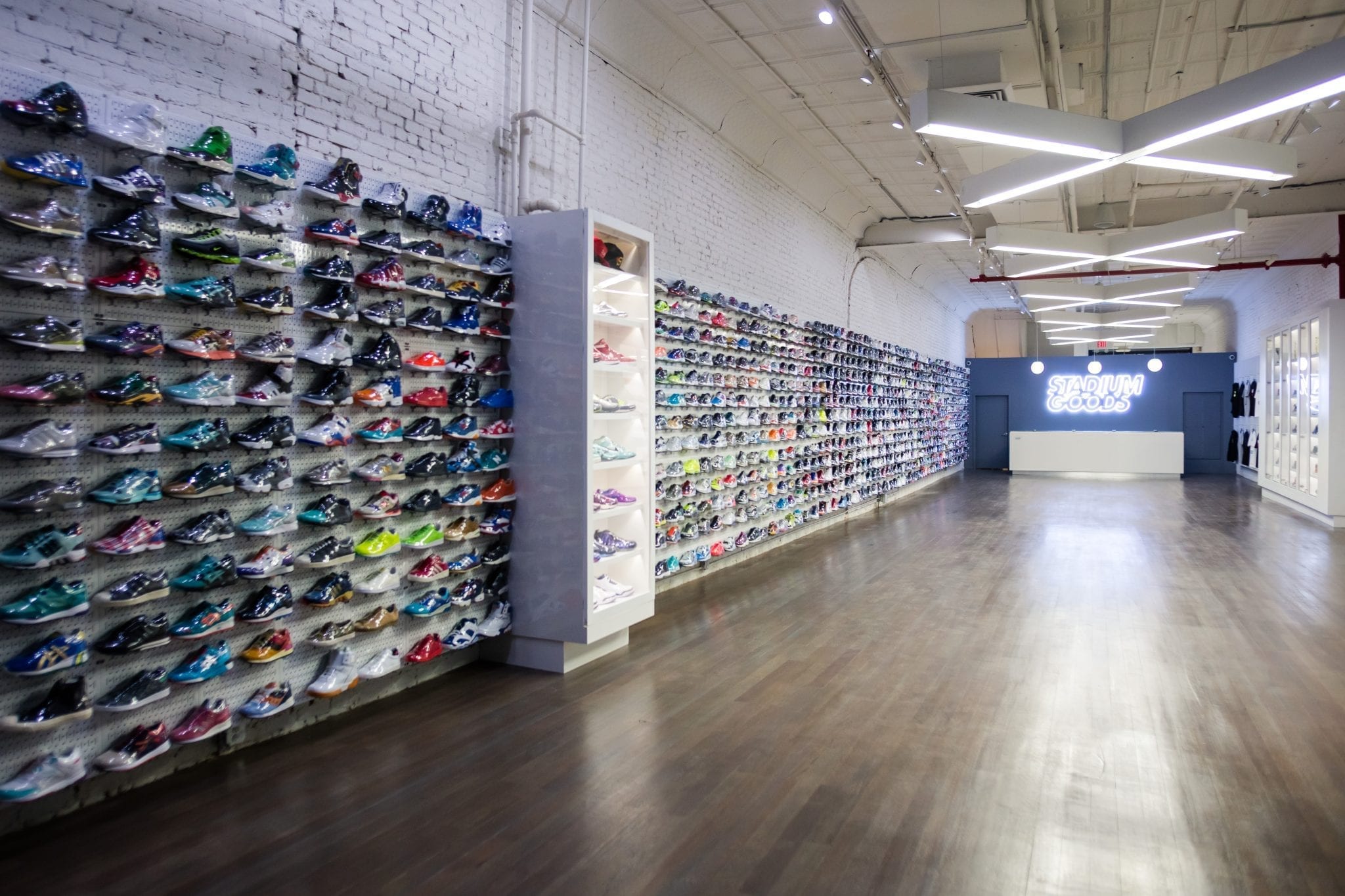
    With ambitions to “scale rapidly”, US sneaker and apparel marketplace Stadium Goods has expanded into China through an exclusive partnership with Tmall Global, an extension of Alibaba Group’s B2C Tmall.com business.

    Stadium Goods co-founder/MD Jed Stiller says the company had already had “tremendous growth” in China.“More importantly, we have helped legitimise the resale model by making it more relevant and accessible to all types of consumers.

    “We’re thrilled to have found the perfect partners in Forerunner Ventures and The Chernin Group, among others, to build on our successes to date as we look to innovate and scale rapidly.”

    Meanwhile, Stadium Goods has just raised more than $4.6 million in fresh equity funding. This will help fuel its expansion into the mainstream footwear market.

    Founded by Still and John McPheters in late 2015, Stadium Goods unveiled StadiumGoods.com and its Soho retail location in New York City, offering sneaker consumers around the world a service-focussed approach to buying and selling collectible footwear, apparel and lifestyle goods.

    “Stadium Goods has transcended a seemingly niche market, proving it can be a critical player in the larger global athletic footwear retail market,” says Forerunner Ventures founder Kristen Green. “There hasn’t been a company of its kind offering this level of aesthetic, product mix or services to date, so we’re very excited to partner with it.”

  • Alibaba joins forces with counterfeited brands

    Alibaba joins forces with counterfeited brands

    Chinese eCommerce giant Alibaba has teamed up with some of the world’s most-counterfeited brands to fight against copycats.

    Collaborating with such global brands as Louis Vuitton, Samsung and Swarovski, Alibaba will provide its members with big data and other support to help them block, identify and even take down listings from its marketplaces such as Taobao and Tmall. Those two sites boast 1 billion product listings at any given time.

    In return, the brands have committed to share their anti-counterfeiting data with Alibaba.

    The move follows a lawsuit filed by the internet powerhouse against two vendors selling knock-off Swarovski watches from their online shopping bazaars on Taobao, claiming 1.4 million yuan (US$202,950) in losses. Taobao is the retail platform for smaller merchants.

    “The most powerful weapon against counterfeiting today is data and analytics, and the only way we can win this war is to unite,” says Alibaba’s chief platform governance officer Jessie Zheng.

    “Alibaba welcomes brands and other organisations to join us in what we believe is the world’s first ‘big-data anti-counterfeiting alliance’.”

    Taobao was returned to the US government blacklist of “notorious markets” last month for hosting fake items, four years after Alibaba lobbied American trade officials to drop the platform from the list.

    Listings removed

    Alibaba says it is disappointed by the decision, noting it has “proactively removed more than double the number of infringing product listings than in 2015”. The company employs 2000 permanent staff and 5000 volunteers devoted to spotting fake goods.

    According to the International Anti-Counterfeiting Coalition, a nonprofit watchdog overseeing piracy concerns, China is the biggest market for knockoffs globally with handbags, footwear, watches and iPhones topping the list of most-faked items.

    Louis Vuitton, Nike, Ray Ban and Rolex are among the labels that seem to be more intensely targeted by counterfeiters, says a report by the Organisation for Economic Co-operation and Development (OECD).

    Domestic brands also have fallen victim. Chinese liquor maker Kweichou Moutai has confiscated 300 tonnes of fake Moutai in a three-year drive against bootleggers, whose products can feature packaging identical to genuine products.

    Chinese authorities have also stepped up efforts to root out people involved in marketing fake goods, staging raids and arresting thousands of suspected offenders.

  • How to grow for Luxury brands

    How to grow for Luxury brands

    Luxury brands need to use new technologies and offer experiences for their customers, the second Luxury Society keynote event in Shanghai has been told.

    UCO Cosmetics CEO Arthur Zhang told the event that the early-stage eCommerce model of simply providing a platform for selling products online is dead.

    He said key technologies being experimented and improved upon in China include augmented reality, virtual reality and live-streaming.

    “The millennial generation in China, which already numbers about 300 million people, seeks experiences and emotional connection – they are not just bystanders,” DLG China partner/MD Pablo Mauron told the audience of more than 150 luxury-industry brand executives. “As a result, live-streaming has become a medium for them to express themselves.”

    He told how brands such as Maybelline, Montblanc and Swarovski are taking advantage of these new opportunities.

    Underlining the key message of the event that eCommerce is changing, CEO Thibault Villet of luxury fashion eCommerce platform Mei.com told how a live-streamed show in collaboration with TMall resulted in 65 per cent of the products featured quickly selling out.

    Meaningful data

    Social customer-relationship management (CRM) makes highly targeted messaging and engagement possible, the event was told by Four Seasons Hotels Asia Pacific director of marketing communications John Hamilton. He said the luxury hotel chain has been gaining meaningful data about its customers, which in turn has driven growth. In the past year, through trial-and-error and optimisation, the group has defined a CRM-led content strategy on WeChat.

    Celebrity and key-opinion-leader partnerships can make a big impact in China, said East Entertainment commercial director Qing Dai, who spoke of her experience of partnering luxury brands with appropriate celebrities. One of Easy Entertainment’s most successful was in linking up Cartier with singer/actor Lu Han.

    Baidu GM for East China Wan (Grace) Zhang said Cartier was the most-searched luxury watch brand among the generation born between 1990 and 2000, linked to Cartier’s collaboration with Lu Han.

    Other speakers at the event included Four Seasons Hotel Pudong (Shanghai) GM Arthur Ho, writer Casey Hall of Women’s Wear Daily, Digital Luxury Group founder/CEO David Sadigh and MD for China Pablo Mauron, Baidu senior project manager Di Fu and Sephora China digital manager Vanessa Qian.

    Attendees included representatives of Alexandre de Paris, Baume & Mercier, Bottega Veneta, Bulgari, Cartier, Chanel, Chaumet, Conde Nast, De Beers, Dior, Hublot, Loewe, LVMH, Marc Jacobs, Massimo Dutti, Michael Kors, Montblanc, Nars, Net-a-Porter, Nike, Sephora, Shiseido, Swarovski, TAG Heuer, Tiffany & Co and Vacheron Constantin.

    Luxury Society, published by Digital Luxury Group, is an online destination for luxury-brand executives covering digital and technology matters and with more than 40,000 members across 150 countries.

  • Alarm for ‘fake’ Singles’ Day discounts

    Alarm for ‘fake’ Singles’ Day discounts

    About 17 per cent of discounts offered during China’s multi-billion-dollar Singles’ Day online sale event were not real, claims a state-backed consumer group.

    It is calling on the government to intervene and punish platforms and merchants for promoting fake Singles’ Day discounts.

    Alibaba and Amazon are among companies the Chinese Consumers Association (CCA) alleges are guilty of hiking prices before the annual November 11 shopping festival in an effort to lure customers with sharp “discounts”.

    “There is a large number of false discounts and other misleading behaviour about prices,” says the CCA, which has referred the cases to relevant government departments, recommending “severe punishment for price violations and price dishonesty”.

    Ahead of the shopping event, China’s top business regulator last month warned firms including Alibaba, Amazon and JD.com against falsifying figures and selling counterfeit goods.

    Alibaba recorded 120.7 billion yuan ($US17.4 billion) in Singles’ Day sales this year, and is being investigated by the US Securities and Exchange Commission over accounting practices related to its figures for the event last year. The US-listed firm has denied any wrongdoing.

    “We have strict measures in place to crack down on false sales discounting,” says an Alibaba spokeswoman. She claims the company penalises merchants, depending on the severity of the falsified discount.

    The CCA study recorded price changes on 12 platforms between October 20 and November 25. Of all the “discounted” products surveyed, 35 per cent of them on Amazon still cost more than regular retail prices, the highest of any platform. JD.com followed at 26.8 per cent, then Alibaba’s Tmall at nearly 19 per cent.

  • China’s wine imports forecast to grow 25% in 2016

    China’s wine imports forecast to grow 25% in 2016

    The country imported 505 million litres of wines, worth about US$1.9 billion in the first 10 months of the year, a year-on-year increase of 18.01% in value, according to data released earlier by the China Association for Imports and Export of Wine & Spirits.

    The fourth quarter, as forecasted by industry insiders, is expected to continue to grow in both volume and value terms as consumers are likely to stock up on wines for the upcoming Chinese Spring Festival on January 28, as reported.

    A commentator on China’s food industry Zhu Danpeng, however, noted that the growth seen in the third quarter in particular was largely due to importers and retailers underselling their stocks, citing massive price cuts that have been rolled out by retailers, e-commerce shops and restaurants across China since the mid-autumn festival in September.

    A Sichuan-based retailer, 1919 Wines & Spirits, which topped Tmall.com’s top selling wine shop list during its 9 September Wine & Spirits Festival, saw its gross profit drop by about 5% compared with 2015, despite massive increase in sales volumes, Zhu told the newspaper, explaining how the sales increase have driven down profit margins.

    “Sales growth gained by massive price cuts are vicious growth,” he said.

    One company that has reportedly been suffering of late is Dynasty Fine Wines, which, late last month, began selling off vast quantities of top Bordeaux.

  • L’Occitane International profit jumps

    L’Occitane International profit jumps

    French skincare brand L’Occitane International’s interim net profit has jumped 33.9 per cent for its latest six months.

    Earnings for the period to September 30 climbed to €25.99 million (US$27.5 million) from €19.41 million year-on-year, while net sales edged up by 1.3 per cent to €551.7 million.

    Emerging economies Brazil, China and Russia were singled out as the top performing markets for the Provence-based company.

    “We are seeing accelerating store traffic in China and a tremendous growth in our sales on the Tmall market platform,” says L’Occitane Asia-Pacific president Andre Hoffmann.

    The mainland has become the company’s second-largest market after the US in terms of the number of outlets. Eight locations were launched in China in the first nine months of the year – the largest number across the brand’s nine major markets.

    Total sales from the mainland gained 5.4 per cent to €50.8 million from a year ago, accounting for 9.2 per cent of L’Occitane’s net revenue.

    More shops were opened in Japan and South Korea, but in Hong Kong sales plunged by as much as 11.2 per cent.

    Same-store sales overall fell 2.5 per cent, which the company blames on global economic political uncertainties. However, more positive signs included a strong performance on Tmall, as well as in the Black Friday sale, says CFO Thomas Levilion.

    L’Occitane eCommerce business grew by 6.8 per cent during the first half, making up 10 per cent of global retail sales.

  • Moiselle International losses mount

    Moiselle International losses mount

    Fashion group Moiselle International has strengthened its margins but still posted a loss in the last half year.

    While its loss of about HK$35 million (US$4.5 million) was about 10 per cent more than its loss of about HK$32 million for the same period last year, Moiselle International had a healthier gross profit margin of 79 per cent, up from 76 per cent.

    Revenue declined 18 per cent to $132 million, its unaudited interim results to the end of September show.

    Moiselle says it was hit hard by the harsh operating environment as it derived about 55 per cent of its revenue from Hong Kong and 18 per cent from China. Its retail sales in Hong Kong were affected by the fall in the number of mainland tourists as well as exorbitant rents. In China, the economic slowdown dampened the consumer sentiment.

    The remaining 27 per cent of the revenue was made up by sales in Macau, Singapore and Taiwan.

    To cope with the difficult market, the group rationalised its retail network, introduced stringent cost-control measures, continued cost-effective sales and marketing initiatives such as adopting an online-to-offline business model, introduced exclusive services for high-end customers with a VIP club, and introduced products of a wider price range to broaden its customer base and cater for young Hong Kong customers.

    Meanwhile, the group stepped up its multi-brand strategy by launching fashionable loungewear under a new brand, promoted in the group’s two fashion shows in Hong Kong and Beijing.

    Hong Kong sales fell 18 per cent year-on-year to about $72.3 million. The group continued to negotiate for lower rents for shop spaces, opened shops at prime locations with reasonable rents and closed down underperforming outlets.

    Online initiatives

    Sales in China fell by 31 per cent to about $23.4 million. The group closed some shops and relocated others. It also stepped up its initiatives in eCommerce, such as opening an online store under the Moiselle brand at Tmall this month.

    To reinforce its online marketing efforts, the group worked with key opinion leaders on social media such as WeChat and Weibo.

    China’s measures to advocate frugality spilled over into Macau’s retail market. The group continued to run five shops at the Venetian Macao Resort Hotel and opened a store at the Parisian Macao Hotel. It had two concept stores and four other outlets in the city which generated a combined revenue of about $17.97 million, or about 14 per cent of the group’s revenue.

    Taiwan’s 20 retail stores generated about $13.7 million, about 10 per cent of the group’s total revenue. It opened three more outlets and counters during the half-year.

    Operations in Singapore

    In Singapore, sales fell 22 per cent to about $4.14 million. The group has retained seven stores there.

    At the end of September, the group had 84 stores and counters in China (first- and
    second-tier cities), Hong Kong, Macau, Singapore and Taiwan, down from 90 at the end of March.

  • Sa Sa profits dive

    Sa Sa profits dive

    Sa Sa profits took a hit of 37.3 per cent for the six months to September 30.

    The Hong Kong-listed beauty products retailer’s interim results show turnover easing by 4 per cent to HK$3.628 billion (US$467.7 million) for the period, with retail sales in Hong Kong/Macau decreasing by 3.6 per cent to HK$2.9032 billion.

    Profit fell from $153 million to $96 million with its gross profit margin dropping from 42.9 to 41.2 per cent.

    During the six months, the group rationalised its retail network from 291 to 283 – six fewer Sasa stores and two fewer single-brand stores/counters.

    While sales fell in Hong Kong/Macau, the number of transactions rose by 0.2 per cent for local customers and 4.4 per cent for Mainland Chinese tourists. The value of each transaction, however, fell by 6.3 and 6.6 per cent respectively.

    Retail sales in Hong Kong continued to be weak, mainly because of average transaction values being lower. The company says the underlying reasons were a change in consumer preferences, a strong Hong Kong dollar and a depreciating yuan. Also, the policy change limiting Shenzhen residents’ multiple-entry permits to one visit a week has had a “significant” impact.

    However, Sa Sa reports an uptick toward positive growth in July as the company adapted with faster product launches, shorter product cycles and cheaper trendy products.

    Korean swing

    As an indication of market change, Sa Sa’s Korean product mix grew from 16.7 per cent of total sales to 23.5 per cent, and the parallel-imported product mix increased from 29.1 to 31.7 per cent. Sales for house brands dropped from 41.5 to 38.5 per cent.

    Overall turnover for Mainland China decreased by 4.3 per cent to $135 million, while same-store sales fell 5.1 per cent. The loss for the period amounted to $13.7 million. Profitability was impacted by the relocation of warehouses.

    Turnover for Singapore at $101.3 million was a drop of 11.1 per cent. As well as weaker sales, management issues impacted performance. While turnover was high, this created difficulties in retaining the knowledge base. However, a restructuring process has drawn on the resources of the relatively strong Malaysian management team.

    Malaysia’s turnover was down 19.1 per cent to $163.4 million, though same-store sales rose 11.2 per cent. Retail sales growth exceeded other markets thanks to the group’s strong retail network and effective marketing campaigns.

    Turnover in Taiwan fell by 23.1 per cent to $98.3 million, with same-store sales tumbling 19.5 per cent because of weak consumer sentiment and ongoing restructuring of the management team.

    Logistics problem

    In eCommerce, Sasa.com turnover reached $193 million, a dip of 0.1 per cent. Sales were affected by the appointment of a new logistics provider in April with the aim of increasing scalability. However, changeover difficulties resulted in a decision to return to the original service provider.

    “Significant numbers of orders had to be cancelled, and further costs were incurred by moving inventory back and forth as well as the running of two warehouses in parallel during the period,” says the company.

    Building on the growth of mobile internet use, the company launched a mobile app and started a collaboration with eCommerce platform Kaola in addition to its partnership with JD.com, Suning.com and T-Mall.

    On the mainland, the dynamics of the cosmetics market are changing with internet retailing growing at a rapid pace, says the company. Because of these challenges, it is continuing to strengthen management and recruit staff.

    “We are also seconding experienced staff from Hong Kong to improve the attractiveness of our product offerings and strengthen inventory management.”