Retail News CRM

Tag: tmall

  • What Will the Giorgio Armani-TMall Partnership Bring About?

    What Will the Giorgio Armani-TMall Partnership Bring About?

    Giorgio Armani will launch a flagship e-tail store on TMall to sell its high-end cosmetic products in China, the company announced at the end of December last year. It will also partner with Luxury Pavilion, a subsidiary of TMall featuring luxury brands, to provide customers with first-hand, exclusive sales called “TMall Super Brand Days” this month. It seems that in recent years, Western luxury brands have become increasingly eager to join China’s e-commerce platforms.

    So what will the Giorgio Armani-TMall partnership bring about this time? Here are some Jing Daily’s concerns and takeaways:

    More exclusivity?

    In August when the Luxury Pavilion was first launched, only 17 brands, including LVMH’s Zenith, Guerlain and Rimowa; La Mer; Burberry; Hugo Boss; and Maserati, were invited to participate in the platform’s first-phase sales. As for consumers, the access to the Luxury Pavilion was also invitation-only, which means Alibaba has filtered out customers in advance based on their previous transactions on Taobao. The more one has spent on Taobao, the more likely one will be invited to the Luxury Pavilion. Therefore, even though joining TMall may help Giorgio Armani expand its presence in China, the effort might be limited, given that such an e-tail store will only be available to select luxury consumers. Of course, differentiating individual shoppers is the best way to maximize profits and is in fact quite popular in the industry. But doesn’t this also indicate routine profiling and discrimination from the retailer? Will it be a good policy in the long run?

    More convenience?

    Western high-end cosmetics brands usually cost more in China due to import tariffs, and sometimes certain brands are not even available in local brick-and-mortar stores, which forces many Chinese customers to turn to daigou (shopping agents), who go abroad to buy goods to resell in China, for cheaper deals and purchases. By launching a flagship store on TMall, Giorgio Armani will make it easier for Chinese customers to order products directly from its authorized e-retail website – otherwise, these Chinese customers might step up their purchases through daigou in other countries or from other platforms. However, it’s still not clear the pricing Giorgio Armani will offer to TMall customers. If prices are not competitive compared to the price that a daigou can offer, customers may very well avoid using the platform.

    More anti-counterfeiting efforts?

    Despite e-commerce platforms’ relentless efforts to fight against counterfeit goods, it is impossible to make each e-commerce site completely fake-free. Hence, selling products through a flagship store directly from the brand will help provide a quality local resource for Chinese fashionistas – in this case, the Giorgio Armani fans. However, even if Giorgio Armani manages to deal with the fake goods issue, it may still face another challenge: how to combat against counterfeit goods. Look-alike goods are often hard to examine and can exist in all corners of the e-commerce world. For example, Kering, which owns brands including Gucci and Yves Saint Laurent, has filed law suits against Alibaba for allegedly selling counterfeit (note: not fake) goods on the platform.

    More consumers?

    The post-90 generation, who have grown up and matured with mobile technology, is now a driving force for the online luxury purchase industry, according to the latest report on China’s e-luxury market by Secoo and Tencent. Giorgio Armani’s e-tail will certainly cater to such groups, but will it appeal to all customers? Many consumers from older generations still prefer visiting brick-and-mortar stores, especially when it comes to luxury cosmetics shopping. In all fairness, most consumers still want to try on lipsticks or find the perfect foundation color match before any expensive purchase.

  • H&M will start selling on China’s Tmall in spring 2018

    H&M will start selling on China’s Tmall in spring 2018

    H&M China will open on Alibaba’s Tmall during spring next year.

    “We are very happy to be able to make H&M even more accessible in mainland China,” said  Karl-Johan Persson, CEO of the Swedish fast-fashion retailer.

    “Tmall is an important complement to our existing physical and digital stores. We see great potential for substantial future growth and Tmall will be an important part of this.”

    After opening its first store in mainland China 10 years ago H&M China sales now amount to SEK 11 billion (approximately US$1.3 billion) in over 500 physical stores and online.

    H&M said subsidiary brand Monki has had strong development in China since its launch on Tmall and the collaboration between the two groups is now being extended to include both the H&M brand and H&M Home.

    There are also far advanced discussions regarding the launch of the remaining brands in the H&M group on Tmall.

    “As one of the world’s most innovative fashion companies, H&M is a perfect fit for Alibaba’s Tmall platform,” said Michael Evans, president of Alibaba Group.

    “We are honoured to expand our cooperation with H&M and host their flagship store, enabling H&M brands to engage with our half a billion consumers.”

    However it’s not been all positive news for H&M recently, after the fast fashion giant saw sales slow over the last three months, sending its shares down 13 per cent to its lowest level since 2009.

    In the fourth quarter of 2017, sales excluding VAT amounted to SEK 50,390m (52,720), a decrease of 4 per cent compared to the corresponding quarter last year. In local currencies, sales decreased by 2 per cent.

    Persson said although the group continued to grow during the year, “growth was dampened by the fact that the sales development in the fourth quarter was significantly below the company’s own expectations.”

    “The H&M brand’s online sales and sales of the group’s other brands continued to develop well,” he said.

    “Meanwhile, the quarter was weak for the H&M brand’s physical stores, which were negatively affected by a continued challenging market situation with reduced footfall to stores due to the ongoing shift in the industry. In addition, there have been imbalances in parts of the H&M brand’s assortment composition.

    “In order to respond even quicker to customers’ fast-changing behaviour the company’s ongoing transformation journey is being accelerated. Among other things, this includes continued integration of the physical and digital stores, and intensifying the optimisation of the H&M brand’s store portfolio – leading to more store closures and fewer openings.”

  • Ford Looks to ‘Auto Vending Machine’ in China During Talks with Tmall

    Ford Looks to ‘Auto Vending Machine’ in China During Talks with Tmall

    Ford Motor Company in China is in talks with Alibaba’s Tmall that could see itmay soon be selling cars through Tmall and an “Automotive Vending Machine” concept.

    The “Automotive Vending Machine” is a multi-storey parking garage that partly resembles a giant vending machine which allows consumer to use their phones to browse through the cars and choose to either test drive or buy a vehicle.

    Once they’ve made their choice, the vehicle is delivered to them on the ground floor.

    According to the Detroit News, the US automaker has signed a three-year agreement signed with Alibaba Group to expand its footprint in China, following a visit to Alibaba headquarters by Ford CEO Jim Hackett and executive chairman Bill Ford Jr.

    Just last month Ford inked a $756 million partnership with Anhui Zotye Automobile Co to build electric vehicles, and more recently Hackett and Ford announced plans to bring 50 new vehicles to market in China by 2025 – including five new models in China.

    This plays well with Alibaba’s efforts to “redefine” the retail experience.

    Their first priority is to come up with new ways for people to buy, maintain and own vehicles using the internet, computers or other technology.

  • T2 opens Alibaba Tmall store

    T2 opens Alibaba Tmall store

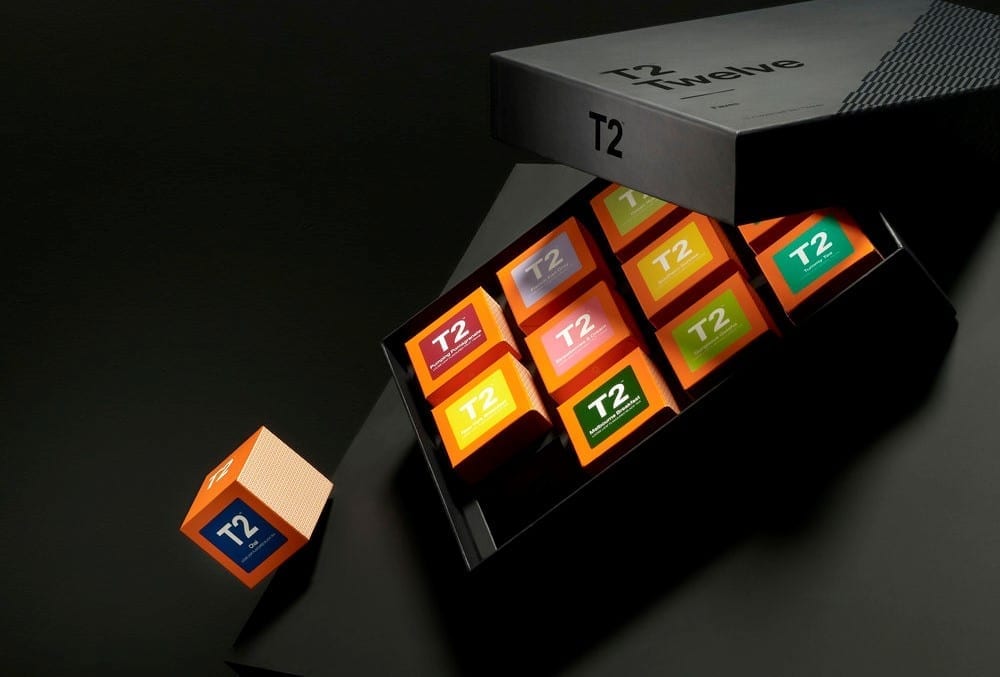
    Australian tea retailer T2 Tea has opened an online storefront on Alibaba’s Tmall Global marketplace to cash in on Chinese demand for Australian products.

    Tmall Global enables international brands to sell to Chinese consumers online, simplifying the export and retail process.

    A curated range of products will be available to Chinese shoppers at t2tea.tmall.hk including homegrown tea blends such as T2 Tea’s Bondi tea, which includes lemon myrtle and native berries.

    “It’s T2’s curiosity for taking the ancient tradition of tea culture in China and giving it a modern twist that we think is both intriguing and exciting for the Chinese consumer,” said Nicole Sparshott, T2 Global CEO.

    First launched in Melbourne 20 years ago, T2 now has 100 stores across five markets. It entered the Asia market in January 2017 and now has four stores in Singapore.

    “For a company that came from humble beginnings in Melbourne, launching on Tmall Global marks a key milestone in our mission to build a generation of tea lovers on every continent,” Sparshott said.

    According to Alibaba, more than 14,500 international brands from 63 countries and regions sell on Tmall Global. For more than 80 per cent of those brands, their Tmall Global virtual store was their first foray into the China market.

    The number of imported product categories on Tmall Global climbed nearly 50 per cent to 3,700 this year.

    “The opening of T2 Tea’s Tmall Global store reflects the growing diversity in demand for premium Australian products,” said Maggie Zhou. “We’re excited to be working with such an iconic Australian brand to help them expand on the success they’ve already seen in Australia.”

    So far there are 1,300 Australian and 400 New Zealand brands on Tmall and Tmall Global. The Chinese demand for Australian products was demonstrated during the company’s 11.11 sale last month.

    Australia recorded its best performance to date ranking as the third highest selling country (outside of China) behind the United States and Japan. Last year, Australia ranked fourth, and fifth in 2015.

  • Ford China partnership possibility with Tmall

    Ford China partnership possibility with Tmall

    Ford Motor China may soon be selling cars through Alibaba’s Tmall and via an “auto vending-machine” concept.

    The US automaker yesterday signed a three-year agreement signed with Alibaba Group to expand its footprint in China. It is the latest partnership in a series in China in recent months, and follows a visit to Hangzhou, where Alibaba has its headquarters, by Ford CEO Jim Hackett and executive chairman Bill Ford Jr.

    Last month the company announced a $756 million partnership with Anhui Zotye Automobile Co to build electric vehicles, and earlier this week Hackett and Ford announced plans to bring 50 new vehicles to market in China by 2025, and to build five new models in China.

    Hackett says Ford is collaborating with technology leaders to build on its vision for smart vehicles in a smart world.

    Meanwhile, the Alibaba partnership is based on the companies jointly finding new ways to sell vehicles, which could include an online component. They aim to “redefine” the retail experience and explore sustainability concepts, working together in the fields of mobility, connectivity, cloud computing, AI and digital marketing.

    Their first priority is to come up with new ways for people to buy, maintain and own vehicles using the internet, computers or other technology.

    The partnership will be part of Ford’s efforts to overhaul its China strategy to revive the growth momentum it has lost in recent months, Reuters reports. The agreement could mean that cars bought online are delivered to buyers by franchised Ford retail stores, which would maintain and repair the vehicles.

    Ford could also use Tmall’s new retail concept, the “Automotive Vending Machine”, a multi-storey parking garage that partly resembles a giant vending machine. Alibaba says buyers can use their phones to browse through the cars and choose to either immediately test drive or buy a vehicle, which would be delivered to them on the ground floor.

    Shoppers with good credit would be able to drive away after a 10 per cent down payment, then make monthly payments through Alibaba’s affiliate Alipay.

  • L Catterton Asia to form JV sportswear

    L Catterton Asia to form JV sportswear

    LVMH-backed private-equity firm L Catterton Asia has launched a JV between two of its portfolio companies, Chinese menswear fashion group GXG, and Australian compression activewear company 2XU.

    The strategic partnership will enable both companies to capitalise on the growing fitness and sportswear market in China.

    Established in 2007, GXG has a portfolio of four brands – GXG, gxg.jeans, gxg.kids and Yatlas. Its lines are available in more than 2100 stores across China, as well as online through third-party platforms such as Tmall and VIPshop. Its e-commerce GMV is expected to surpass RMB2.5 billion (US$378.5 million) this year, an increase of more than 50 per cent over last year. The company also achieved record sales of RMB485 million in this year’s Tmall 11.11 shopping festival.

    Since acquiring a controlling stake in GXG last year, L Catterton Asia has been working with the company’s management team to expand into new categories. It has supported GXG by offering extra collaboration opportunities and helping with global expansion.

    “GXG and 2XU are led by seasoned management teams with deep understanding and complementary knowledge of the fashion and retail industries, and we look forward to continuing to work alongside and support both teams,” says L Catterton Asia chairman/managing partner Ravi Thakran.

    Founded in 2005, 2XU produces technical athletic wear that is endorsed by elite athletes internationally.

    “Since L Catterton Asia’s investment in 2013, 2XU has experienced significant growth and I am grateful for their partnership as we continue to expand into attractive markets around the world,” says 2XU CEO Paul Higgins.

    With more than $14 billion of equity capital across six fund strategies in 17 offices globally, L Catterton has a team of more than 140 investment and management professionals. L Catterton Asia (previously L Capital Asia) was launched in 2009 and manages more than $ 1.6 billion across two private equity funds, and more than $2 billion including co-investments. It has offices in Singapore and Mauritius, with a regional advisory presence in Hong Kong, Mumbai and Shanghai.

    L Catterton Asia draws on its strategic relationship with Groupe Arnault and LVMH across the investment process. Its investments include Jorya Group, Marubi, Pepe Jeans, Sasseur, Trendy International and YG Entertainment.

  • Danone links with JD to grow west China business

    Danone links with JD to grow west China business

    Danone Waters China, a subsidiary of Danone Group, is tapping into the distribution network of China’s largest retailer and e-commerce giant JD.com as the French company expands its coverage of Southwest China.

    A shared warehouse will be built in Chengdu, the capital of China’s southwestern Sichuan province, that will store and manage inventory, merging Danone’s online and offline operations.

    “China is a market with both huge opportunities and major challenges when it comes to managing distribution across our many sales channels,” said Hanbin Lyu, vice president of Danone Waters China. The company has seven factories in China across six regions.

    Lyu said JD.com’s in-house logistics network and supply chain management technology would help Danone improve demand planning, inventory placement, warehouse and transportation management to increase efficiency across different sales channels.

    The Danone tie-up furthers JD Group’s push into the logistics business following the creation of JD Logistics earlier this year as a stand-alone business unit. JD operates China’s largest in-house fulfillment and last-mile delivery network with 405 warehouses.

    As part of the joint effort, JD will leverage its big data capabilities through the analyzing of billions of data points. The technology enables JD to help suppliers more accurately predict the ebb and flow of demand, and more efficiently manage stock. JD’s expertise in the area can help limit stock outs, waste, and higher logistics costs for last-minute replenishment that have traditionally plagued retail as a result of multiple layers of handling by a mix of third-party providers.

    “We believe our infrastructure and technology will benefit shippers and industries, including those that don’t sell directly on our platform,” said Wei Tang, vice president of logistics at JD. “Online retailers like JD can lead the way to more efficiency, transparency and reliability in commerce, benefitting both customers and suppliers.”

    A rapidly developing trend in China is the fast-growing demand for fresh products. During its Single’s Day promotion, JD.com sold over 20,000 tons of fresh products that included highly perishable items such as 500,000 tiger shrimp from Thailand and 2 million hairy crabs. There was also huge demand for Australian sirloin, Chilean frozen salmon, and Vietnamese base fish.

    The efforts in logistics are part of JD’s broader “retail as a service” strategy. As changing consumer demands force changes throughout global retail models, large-scale e-commerce companies are working on the development of an efficient and advanced supply chain.

    The need for efficiency is crucial to facilitate the growing cross-border e-commerce sales in China that are expected to reach $100.17 billion by the end of 2017, with the average spend per cross-border digital buyer at $882, according to eMarketer research. Average spend per buyer has increased because of growing awareness of overseas brands in China, as well as better logistics and the perception that foreign goods are of better quality.

    “The factors fueling the trend toward greater cross-border shopping are nothing new, as the average Chinese consumer is now more tech savvy, more exposed to foreign brands through overseas travel and the internet and, crucially, more willing to spend,” said Shelleen Shum, senior forecasting analyst at eMarketer.

    “With shopping sites such as TMall Global, JD Worldwide, and Kaola adding more brands to their offerings and improving cross-border logistics and processing times, there is an opportunity for foreign brands to tap into the demand for high-quality products, especially in categories like baby, maternity, health, and beauty.”

  • Dooney & Bourke launches on Tmall Global

    Dooney & Bourke launches on Tmall Global

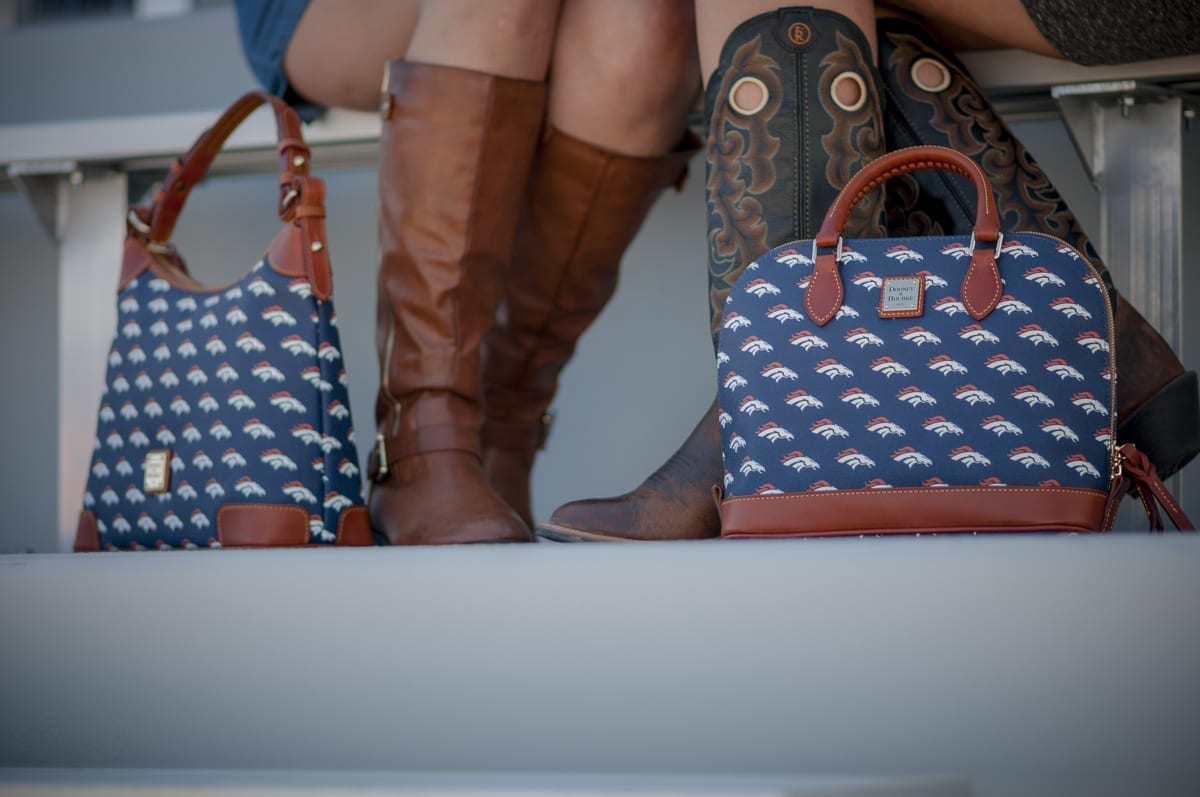
    American heritage handbag and fine leather-goods brand Dooney & Bourke has launched into China via Tmall Global.

    With more than 1000 retail stores throughout the US and 60-plus boutiques internationally, its foray online in China could be a hint at a physical presence to come.

    Dooney & Bourke is known for its designs, materials and craftsmanship, says director of advertising and PR Liz Kane.

    She describes the Tmall Global opening as a major milestone for the company.

    In its new online store, the brand will offer Chinese shoppers a range of handbags and leather accessories such as wallets, phone cases and wristbands.

    Founded in Connecticut in 1975, the brand has a client list including celebrities Indian actress Freida Pinto, singer Lady Gaga and actress Zooey Deschanel.

    Formerly Taobao Mall, Tmall Global was launched by Alibaba in February 2014 as a crossborder marketplace for foreign brands and merchants to sell directly to Chinese consumers.

  • Abercrombie launches on Alibaba’s Tmall

    Abercrombie launches on Alibaba’s Tmall

    Abercrombie & Fitch has announced it is launching both its Abercrombie & Fitch and Abercrombie Kids brands on Alibaba Group’s Tmall this month. Abercrombie & Fitch Tmall is China’s largest platform for brands and consumers.

    Through Tmall, Alibaba reports reaching 454 million annual buyers. The core consumer is under 35 and shops primarily on their mobile devices. Abercrombie’s target customer is in their 20s and shops digitally.

    Pairing up with Tmall is a data driven move that should result in much needed financial success for Abercrombie as it continues to rebrand.

    Moving onto Tmall reveals insight into Abercrombie’s plans for chasing the Chinese consumer. Abercrombie recently opened a new retail concept flagship in Hong Kong’s Harbour City. Additionally, Abercrombie operates 10 retail stores across China.

    Abercrombie’s rebranding began with a revitalization of its retail concept. The brand describes its new retail concept as intimate and service oriented. To that end, Tmall offers the capabilities to make online shopping more individualized through marketing tools.

    Tmall offers live streaming options and big data options designed to personalize and streamline the shopping experience.

    “Alibaba Group places a strong emphasis on consumer engagement, which aligns with our focus on creating a unique online brand experience for our customers, as well as facilitating a seamless and frictionless shopping experience” said Fran Horowitz, Chief Executive Officer of Abercrombie & Fitch Co.

    Tmall has sold the Hollister brand since 2014. This month is the first time Abercrombie has put its namesake brands on the platform.

    Jessica Liu, President of Tmall Fashion, Alibaba Group said consumers both online and in China have “sought [the brand] out for some time.”

    Abercrombie will begin selling a full assortment of men’s, women’s and kid’s product on Tmall starting July 26.

  • Grana expands into Mainland China, opens store on Alibaba’s Tmall

    Grana expands into Mainland China, opens store on Alibaba’s Tmall

    Today Grana, one of Asia’s fastest growing eCommerce disruptors in the apparel industry, with US $16 million in funding, announced its official launch into mainland China opening an online store on Alibaba’s Tmall – the largest business-to-consumer (B2C) retail platform in Asia.

    The Hong Kong-based startup has also announced global shipping, adding more than 50 new countries across Asia Pacific, Southeast Asia and Europe to introduce its obsession with high-quality fabrics and bring affordable luxury basics to millennial consumers. This expansion comes from direct consumer demand to ship Grana’s modern essentials cross-border into their countries.

    With today’s official entry into the Chinese market, the young startup aims to meet demand from the emerging middle-class seeking trusted quality goods at a lower price-point from online luxury and fast-fashion retail brands currently in the market.

    To drive its market penetration, Grana’s increasing brand awareness in the US – it’s biggest growth market and traction with celebrities including Gigi Hadid, Jessica Alba and Lily Collins, wearing its products for everyday looks to red carpet appearances, will be important factors to attract the Chinese consumer.

    “We appreciate the strong and strategic partnership with Alibaba supporting our expansion plans onto Tmall. It’s a pinnacle time for the company right now and it’s promising to see Chinese millennial consumers and online shoppers around the world becoming more sophisticated in how they shop, encouraging brands to disrupt the cost of quality goods across all sectors.

    It’s great, since this is our sweet spot. We now ship cross-border to over 60 countries and are well positioned to further drive the projected total revenue of eCommerce in Asia to double, over the next five years to US $1.4 trillion”, said Luke Grana, CEO & Founder at Grana.

    Grana’s flagship store on Tmall has been localised to provide the Chinese consumer with detailed information on product description pages that focus on its trusted and best-selling fabrics, garment production and key styles.

    Given the consumer preference for more guidance on size and fit, online shoppers will soon have access to customised size guides with measurement details sharing recommended sizing to purchase its modern essentials. This customised size guide is different to the size guide available on grana.com and more tailored for Chinese consumers.

    “We’ll be introducing our unique value proposition to Chinese consumers focused on sourcing the finest luxury fabrics from around the world, affordable pricing and direct shipping from Hong Kong.

    This will be crucial to break out amongst fast-fashion and luxury brands. On the Hong Kong front, our team can now introduce Grana to Chinese tourists who already visit our showroom and communicate that we ship to their city. It means they can try items offline, place an order and have it delivered by the time they get home – the aim is to bring these offline customers, online for their second purchase”, says Grana.

  • Alibaba’s Tmall expands in Hong Kong and Southeast Asia to non-Chinese speaking consumers

    Alibaba’s Tmall expands in Hong Kong and Southeast Asia to non-Chinese speaking consumers

    Alibaba Group, the world’s largest e-commerce operator, is beefing up its presence in online shopping by further expanding in Hong Kong and tapping more English and non-Chinese speaking consumers in Southeast Asia.

    The group has officially launched its Tmall online supermarket in Hong Kong this week, and teamed up since March with Southeast Asian e-commerce operator Lazada – which it acquired last year – to sell selected Taobao products under the “Taobao Collection” direct to shoppers in Singapore.

    The English-language Lazada site also operates local sites in Indonesia, Malaysia, the Philippines, Thailand and Vietnam, where some of them are in local languages.

    The Malaysian platform will be launched on June 13, where shoppers will be able to take advantage of lower prices from Chinese sellers, said Elaine Hu, director of Tmall World on Monday.

    In Hong Kong, Tmall sells daily necessities from food to household products imported from the mainland to local Hong Kong consumers. With its warehouse in Shenzhen – the group’s largest in South China region – consumers will be able to receive the products within the next day after placing the order on the Hong Kong supermarket, Hu said.

    She said mainland foodstuff and snacks not easily available in Hong Kong were the most popular products.

    Household supplies, especially paper products were also selling well as consumers look for cost-saving products from the mainland, Hu said, based on data obtained from the trial run of the platform in the city since late April.

    “The average value of orders on Tmall HK’s supermarket is surprisingly high so far. It is the highest compared to any other regions in China and shows the strong spending power of local Hong Kong consumers,” Hu said, without giving specific figures.

    The variety of goods available to Hong Kong consumers pales in comparison to those on the mainland platform as fresh products and heavy goods are generally not included. Products imported to Hong Kong are also subject to rules of local regulations.

    Unlike on the mainland where the group faces fierce competition from rivals including the Tencent-backed JD.com, Hu said Alibaba was a dominant e-commerce player in the Hong Kong market.

    In 2012, the group said it had 1.4 million registered users in Hong Kong. Hu said the figure was higher now but she didn’t give any figures.

    According a survey released by Mastercard in April this year, topping the most popular category list for Hong Kong online consumers is clothing and accessories, with 41.7 per cent out of more than 8,000 consumers surveyed. Supermarket products came second, with 37.5 per cent. Other popular categories: airlines – 36.7 per cent; travel – 36.2 per cent; and hotels – 36.0 per cent.

    The strengthening of retail business in Hong Kong and other overseas markets is seen to serve as a part of Alibaba long-term plan that aims to provide services to as many as 2 billion consumers worldwide by the year of 2036, Alibaba founder Jack Ma Yun told the investors in Hangzhou last week.

    In response to the recent dispute between Alibaba and logistics firm SF Express, Hu said SF remained a partner of Tmall and for overseas transactions, downplaying the impact.

  • Bad record for Bonjour Holdings

    Bad record for Bonjour Holdings

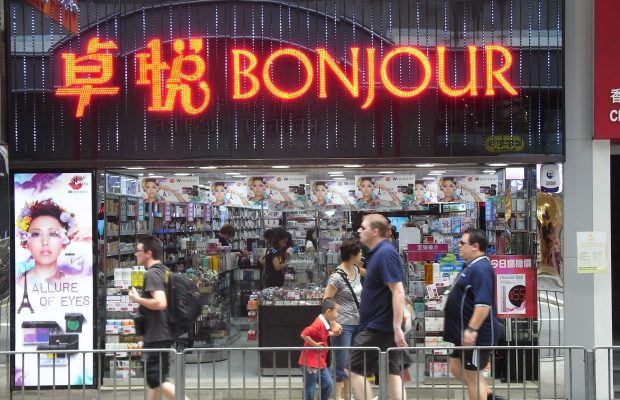
    Tumbling turnover and gross profit margin have flipped an operating profit to a loss for beauty and healthcare retailer Bonjour Holdings.

    Its turnover for last year fell 12.8 per cent to HK$1.995 billion (US$256.8 million), while its gross profit margin dropped from 41.8 to 38.1 per cent. This gave the group a loss of HK$77.9 million compared to a profit of HK$50.7 million in 2015.

    During the year, the group rationalised its retail network from 47 to 42 outlets.

    Hong Kong and Macau retail sales fell for the second straight year, the company’s audited results show.

    Same-store sales fell 10.1 per cent despite the average sales value per transaction for mainland tourists rising by 7 per cent. However, the total number of mainland customers dropped by double digits last year. The company says the drop in its total number of customers contributed about 9 per cent of the overall retail decline during the year.

    Bonjour says an enormous demand continued for Korean beauty and skincare products in Hong Kong’s retail market. Because of this, the group has formed dedicated procurement team to explore this trend.

    During the year, Bonjour continued to introduce a variety of mass Korean beauty products to keep the market competitive and to offset the negative impacts of the falling sales of Western and Japanese premium brands.

    Meanwhile, the group has been increasing awareness of its brand through online platforms. It partnered with Tmall and WeChat during the year to broaden its touch points with target consumers.

    “Additionally, with the rapid rise of live-streaming and photo-sharing apps, video and photo content and key opinion leaders (KOL), partnerships has taken up a significant role in our marketing campaigns,” says Bonjour. “Online image sharing has become a critical element for us to communicate with our target consumers.”

    Delivery service

    The group partnered with Alipay in two one-day events during the year, “2016 Carnival All the Way” and “Double Eleven”. The group also cooperated with China Post Cross-border eCommerce (CPCBE) to launch the cross-border shopping platform www.bonjourO2O.com (BonjourO2O). With its direct delivery service, customers can buy overseas items not available in Bonjour’s mainland stores.

    Online retail sales last year reached HK$40.1 million, up 7.4 per cent from 2015.

    At the end of the year, the group had 42 stores in Hong Kong, Macau and Guangzhou. During the year, sales continued to decline in the face of “sky-high” rents. While rents have been adjusting over the past two years, the reduction has not been fully reflected in the company’s income statements as it is usually locked into leases with a three-year term. The company is able to renew only about a third of its agreements each year.

    “We believe that stabilising sales along with falling rents should help improve our profitability gradually,” says the group.

    Bonjour currently distributes 180 international cosmetic, skincare and healthcare products including Dr Schafter, Suisse Reborn, WowWow and Yumei. During the year the company adjusted the product mix, increasing international parallel-import products and mid-to-lower-priced trendy products while cutting back on higher-priced exclusive products.

  • Alibaba Group Investments in Delivery Start Ups

    Alibaba Group Investments in Delivery Start Ups

    Alibaba and main rival JD.com will enjoy fast growth in the fast moving consumer goods (FMCG) market, according to research from Goldman Sachs, as more people in China turn to online shopping for daily grocery items like food snacks, body care products and soft drinks.

    The online grocery retail market is currently substantial and will continue to grow and support the two major e-commerce platforms in China, as they take away business from offline Chinese stores in the coming years and invest in a new type of courier service, according to a report published by investment bank Goldman Sachs.

    Alibaba will use start-ups courier businesses, which works much like Uber for delivery, and similar to Instacart. The start-ups run lean, with little infrastructure. When a customer logs onto the Alibaba website or app and purchases groceries, they will send contractor couriers, many of who ride electric bikes, to supermarkets, convenience stores and local groceries as well, where store employees bag the orders for the courier to pick up.

    While delivery start-ups like this have existed for the last couple years, they have gained position since a boost of funding from Alibaba and JD.com.

    In hundreds of cities around China, consumers can order their groceries on the Alibaba or JD.com app and have them delivered to their door within an hour.

    The company is still looking for the better ways to bring perishables like fresh seafood, meat and vegetables to its customers, according to Goldman Sachs analysts led by Ronald Keung. Last year both companies finished building its nationwide fulfilment centres, enabling more than 200 cities in China to enjoy same or next day delivery for groceries ordered online.

    “We expect Tmall and JD’s new supermarket initiatives to drive further online growth in the supermarket segment,” said Keung in the report.

    “These will be enabled by their logistics improvements, wider FMCG brand participation and ongoing new user adoption. We see the FMCG market big enough for two online winners.”

    FMCG currently accounts for 37 percent of all retail spending in China and the market is expected to increase on average by 6 percent annually to reach $2.6 trillion in 2020.

  • Alibaba plans technology boost

    Alibaba plans technology boost

    Alibaba plans to form independent research and development teams to build up core technologies that support its vision of serving 2 billion people in the future.

    The giant e-commerce and technology company unveiled its grand plan at its inaugural tech summit, “New Technology, New Future”, at its Hangzhou headquarters in China. About 5000 engineers attended, plus thousands of other staff members, technical and otherwise, watched via live stream.

    “Alibaba’s success in commerce has outshone its light of technology over the past 18 years,” Alibaba Group chief technology officer Jeff Zhang told the summit, describing it as “a tech-driven company that seamlessly combines business and technology”.

    Over the past several years, Alibaba has rolled out a wide range technologies for an array events and business areas, including Alibaba’s 11.11 Global Shopping Festival, payments, cloud computing and logistics. Zhang said Alibaba had reached “a critical point in technology innovation” and should gear up to develop more core technologies for future success.

    Executive chairman Jack Ma said he expected Alibaba to become the world’s fifth-largest economy in the next 20 years, serving 2 billion customers, creating 100 million job opportunities and enabling 10 million businesses to make profits. To hit that goal, he said the new economy he envisioned should be built on the continuing development of technological infrastructure.

    “An economy that serves 2 billion people must be backed by solid technological capacity. To shoulder the future responsibility, we will build Alibaba’s own ‘NASA”, Ma said, referring to the National Aeronautics and Space Administration, an organisation he admires for what it has contributed to mankind through technological advances.

    “We will establish new teams to develop the core technologies of machine learning, chips, the Internet of Things, operating systems and biometric identification.”

    He said Alibaba once developed figurative “hand grenades”, but the new R&D-focussed team and mechanisms would allow it to develop “missiles”.

    Ma said Alibaba needed to have a discerning, independent eye when judging technology trends. Technology developed by Alibaba should empower people in the virtual economy, making it more inclusive and creating opportunities. Technology needed to ensure the new economy would be sustainable and lead to its participants having happy and healthy lives.

    Speaking about computers and robots, and the possibility they might one day replace or displace humans, Ma said machine learning should help humans do things that otherwise could not be done. Machines should serve as assistants to humans, rather than robbing them of human pleasure or becoming rivals.

    Alibaba has more than 20,000 engineers on staff, including more than 500 with doctoral degrees. Among its 36 partners — the group’s powerful decision-making body — nine come from a technology background.

    Alibaba has been investing in new technologies for many years, and has developed many key technologies of its own. These include…

    Cloud computing

    Apsara: A super computational engine developed by Alibaba Cloud. It offers clients powerful computing capability, robust technology services and software that can affect broader society.

    Database systems

    OceanBase: The first applied large-scale financial database system in China, developed by Alibaba Group and Ant Financial.

    Artificial intelligence

    ET: Artificial intelligence services that can be broadly applied to different areas in society. Cases include the Hangzhou City Brain master plan, which has enhanced the city transportation department’s efforts to ease traffic congestion. It has also helped Guangzhou International Airport with flight management.

    Personal recommendations: Tailored shopping pages on Taobao/Tmall with a most-suitable product recommendation for each buyer. About 6.7 billion personalised shopping pages were created during Alibaba’s 11.11 Global Shopping Festival last year.

    Ali Xiaomi: A smart personal shopping assistant on Alibaba’s e-commerce sites. About 95 per cent of daily inquiries can be handled by Ali Xiaomi.

    Ant Financial’s smart customer service: This can answer about 97 per cent of daily inquiries.

    Quantum computing/communications

    The Chinese Academy of Sciences -­ Alibaba Quantum Computing Laboratory was established in 2015. Quantum cryptographic data-transfer services became available on Alibaba Cloud this year.

    Virtual reality

    Buy+: Offers the world’s first end-to-end VR shopping experience, in which the entire transaction can be completed, from browsing, to order, to payment.

    Biometric recognition

    Facial recognition payment: Alipay enables facial-recognition payment with an accuracy of more than 99 per cent. It is listed among the top 10 technology breakthroughs this year by the MIT Technology Review.

    Alibaba is also using biometrics to recognise eye patterns, irises, palm prints and handwriting.

    Geolocation technology

    QianXun location network technology: Using BeiDou satellite technology, this can achieve a positioning accuracy of 1 millimetre.

    Operating systems

    YunOS: The world’s third-largest mobile operating system works in mobile phones, cars, TVs, tablets and other Internet of Things items.

    Blockchain

    Ant Financial has started deploying this technology for charitable donations. Blockchains are a database — an open ledger that records transactions between two parties in an immediate, secure, verifiable and permanent way.

    Smart logistics

    Alibaba’s smart-logistics technology includes last-mile delivery robot and its intelligent warehousing system.

    -Susan Wang

  • China main market for Korean online industry

    China main market for Korean online industry

    Sales of South Korea’s online shopping malls rose dramatically in recent months helped by the growing number of Chinese customers.

    Data released this week shows the Korean online industry growth is happening amid China’s retaliation against South Korea over Seoul’s plans to deploy an advanced US missile defense system on its soil.

    WeMakePrice, a major online shopping mall, said its sales on Alibaba Group’s Tmall rose 100 per cent in January compared with the same period last year. The comparable figure was 50 per cent for February.

    “We don’t expect any drastic decline in the sales in Tmall, one of the biggest online shopping sites in China, unless Chinese consumers stage a boycott of South Korean products,” a WeMakePrice official said.

    GMarket, another online shopping mall, said its sales to Chinese consumers surged 18 per cent in 2016 from a year earlier, and the trend is similar for the first two months of this year.

    A possible decline in the number of Chinese tourists visiting South Korea, however, may adversely affect the South Korea online industry as many Chinese tourists place orders at South Korean duty-free shops online before picking up goods in person while touring South Korea, industry sources said.

    China has been retaliating against Seoul’s decision reached in July to have the Terminal High Altitude Area Defense (THAAD) system deployed on South Korean soil later this year. South Korea says the missile system will not target China but only counter threats from North Korea.

    In the latest retaliation, Chinese travel agencies suspended sales of tour packages to South Korea last week.