Tag: tokyo

  • Belstaff Japan opens in Hankyu Men’s Tokyo

    Belstaff Japan opens in Hankyu Men’s Tokyo

    Belstaff Japan has opened its fifth store, in Hankyu Men’s Tokyo, 18 months after the British fashion brand’s arrival in the nation.

    As well as the men’s AW 17 collection, the new outlet features a limited-edition leather jacket, and from next month will offer a limited-edition capsule collection in collaboration with Japanese street label Sophnet.

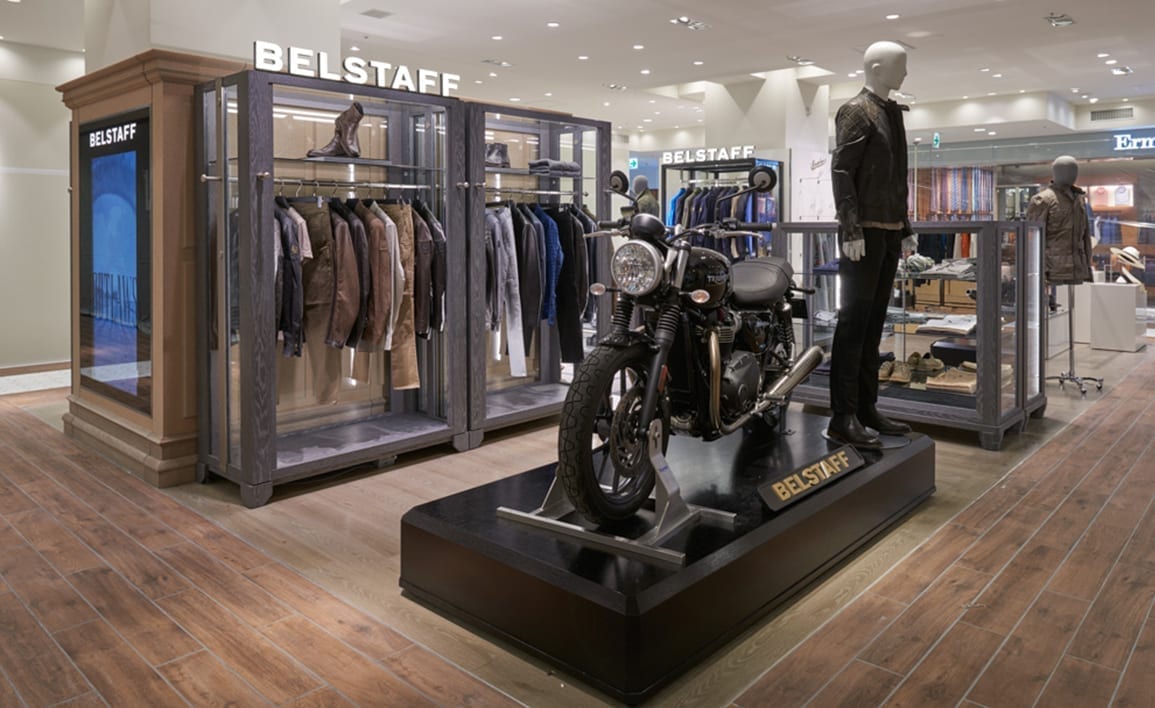
    The new store’s interior features black raw-steel rails offset by a brighter light concept that highlights products and materials.

    Belstaff will launch a men’s pop-up store in Hankyu Men’s Osaka from October to November.

  • Things to know about Bitcoin

    Things to know about Bitcoin

    Bitcoin is the world’s most widely used crypto currency. Mark Karpeles, the former CEO of collapsed Bitcoin exchange MtGox, went on trial in Tokyo on charges stemming from the disappearance of hundreds of millions of dollars worth of the virtual currency from its digital vaults.

    Here are some key facts about the world’s most widely used crypto currency:

    What is Bitcoin?

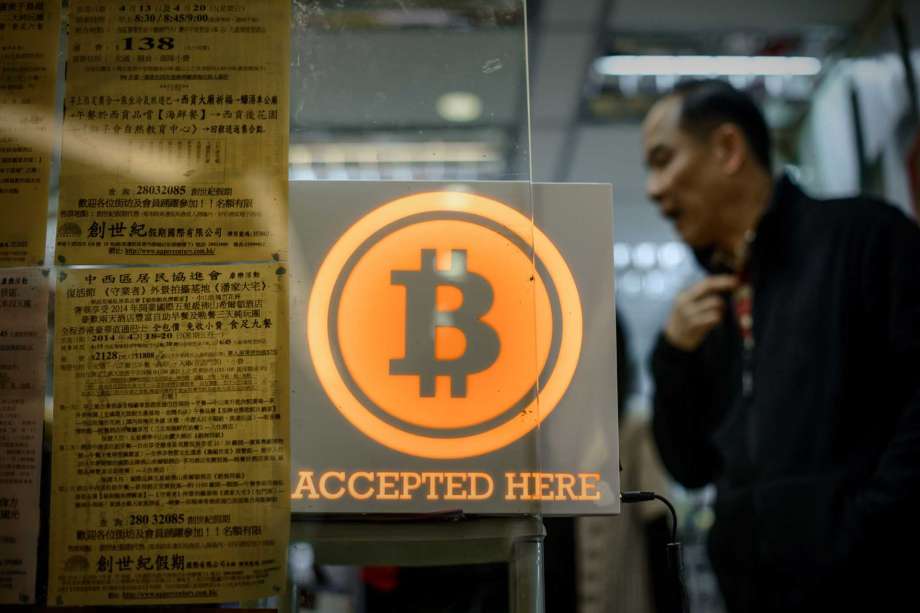
    Bitcoin is a virtual currency created from computer code. Unlike a real-world unit such as the US dollar or euro, it has no central bank and is not backed by any government.

    Instead, Bitcoin’s community of users control and regulate it. Advocates say this makes it an efficient alternative to traditional currencies because it is not subject to the whims of a state that may devalue its money to boost exports, for example.

    Just like other currencies, Bitcoins can be exchanged for goods and services — or for other currencies — provided the other party is willing to accept them.

    Where does it come from?

    Bitcoin was launched in 2009 as a bit of encrypted software written by someone using the Japanese-sounding name Satoshi Nakamoto.

    Last year secretive Australian entrepreneur Craig Wright said he was the creator of Bitcoin, but some have raised doubts over his claim.

    Hundreds of other digital currencies followed but Bitcoin is by far the most popular, with an increasing number of merchants accepting digital currencies for payments.

    Transactions happen when heavily encrypted codes are passed across a computer network. The network as a whole monitors and verifies the transaction in a process that is intended to ensure no single Bitcoin can be spent in more than one place simultaneously.

    Users can “mine” Bitcoins — bring new ones into being — by having their computers run complicated and increasingly difficult processes.

    However, the model is limited and only 21 million units will ever be created.

    What’s it worth?

    Like any other currency, it fluctuates. But unlike most real-world units, Bitcoin’s value has swung wildly in a short period.

    When it first came into existence it was worth a few US cents. Several years later Bitcoin topped $1,000. It’s now worth more than $2,300, with commentators suggesting some are buying it as an alternative bet in times of global economic uncertainty.

    The chaotic withdrawal of high-value notes in India, and Chinese controls on the purchase of foreign currency have also been cited for its meteoric rise.

    There are presently more than 16 million units in circulation. Some economists say the limited number of Bitcoins mean its price will increase over the long run, making it less useful as a currency and more a vehicle to store value, like gold.

    But detractors point to Bitcoin’s volatility, security issues and other weaknesses as flaws that will eventually undermine it.

    What’s the future?

    Some commentators say that like many technological developments, the first iteration of a product will encounter difficulties, possibly terminal ones. But the trail it blazes might smooth the way for the next crypto currency.

    Problems include an apparent vulnerability to theft when Bitcoins are stored in digital wallets.

    A major Hong Kong-based Bitcoin exchange suspended trading last year after $65 million in the virtual unit was reportedly stolen by hackers.

    The virtual currency movement also faces legitimacy issues because of the way it allows for anonymous transactions — the very thing that libertarian adopters like about it.

    Detractors say bitcoin’s use on the underground Silk Road website, where users could buy drugs and guns with it, is proof that it is a bad thing.

    If Bitcoin does become more widely accepted, experts say, it could lead to more government regulations, which would negate the very attraction of the concept.

  • Fendi to open a pop-up store in Tokyo

    Fendi to open a pop-up store in Tokyo

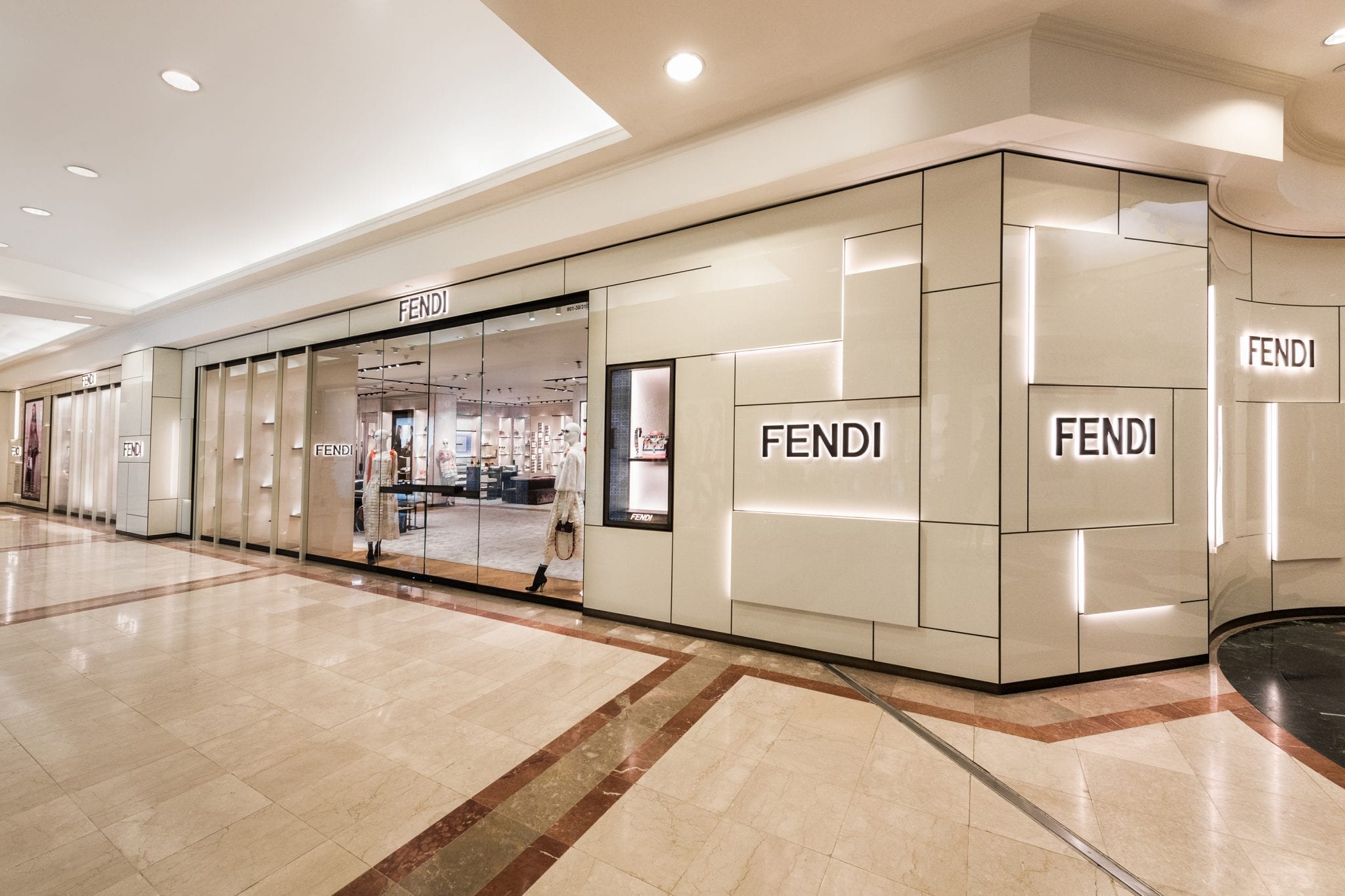
    Fendi is opening a pop-up store in Tokyo at Dover Street Market, as it rolls out a capsule collection that is specific to the Japanese retailer.

    As well as landing in Dover Street’s London and New York store, the Elephant Room pop-up in Ginza will highlight products of the “Fendi Vocabulary”, the key theme of the men’s fall/winter 2017-18 collection designed by Silvia Venturini Fendi.

    The essential words of this vocabulary including Yes, Love, Fantastic, Trust, Hope, Think, were inspired by Ernest Hemingway, according to the house.

    In an interview with WWD, Venturini Fendi said that the collection vocabulary includes “very simple and common words that yet in their simplicity have a very important meaning that is going to be forever and that can help us in difficult moments. There are so many changes going on and things are moving faster and faster in the world, that is why I think that we have to evolve and look at the future with an optimistic attitude that can help us facing all these changes and challenges. Yet, we have to look forward without forgetting the fundamental values of the past. That is why I have chosen to use and print these universal key words on clothes, bags and accessories.”

    Exclusive products from the Italian luxury brand will be featured within each pop-up, and will be unique to each pop-up location. The capsule collection includes a t-shirt, a hat and a scarf emblazoned with Fendi, Love and DSM and London, New York or Tokyo, depending on the boutique. Each location also has a site-specific limited-edition collection with dedicated colours: pink for London, grey for Tokyo and blue for New York.

    The items will be available in-store at Dover Street Market and at fendi.com.

  • MCM offers made-to-order designs at Tokyo pop-up

    MCM offers made-to-order designs at Tokyo pop-up

    Global fashion brand MCM said that it offered made-to-order designs of its most popular products for the first time at its pop-up store in Isetan department store in Tokyo.

    The store, located in the luxury Isetan Shinjuku department store in Tokyo, Japan, allowed customers to pick up customized items they had designed through the brand‘s mobile app. Customizations included being able to change the color of the leather, handle or studs on MCM’s most popular products, as well as monogramming.

    The digital MTO service is expected to attract great interest in the twenties and thirties with a strong desire to express their individuality in fashion.
    Sungjoo Group, which holds global accessories brand MCM, has gone through a hard time. Since the Korean firm acquired the German brand in 2005, MCM’s sales revenue increased from 61.4 billion won in 2005 to 121.9 billion won in 2007. It posted 370 billion won in 2012, 450 billion won in 2013 and 589.9 billion won in 2014.
    However, the trend began to move downward after 2014. MCM posted 579.1 billion won in sales last year. The luxury brand has gone through a hard time in Japan as well. Its two subsidiaries there have suffered net losses for four consecutive years, recording 17.6 billion won in cumulative losses.

    “The result is because of our initial investment in the country. We do not worry about the result, as we are positive of successfully entering the fiercely competitive Japanese market,” a Sungjoo official said.

    Recently, MCM is strengthening its global business in order to make a second leap.

    Starting in July, the MTO service will be available at the brand‘s two stores in Ginza in Tokyo. The service will be expanded globally to cover MCM’s 35 markets in the second half of 2017.

  • Jimmy Choo Tokyo Omotesando Hills by Christian Lahoude Studio

    Jimmy Choo Tokyo Omotesando Hills by Christian Lahoude Studio

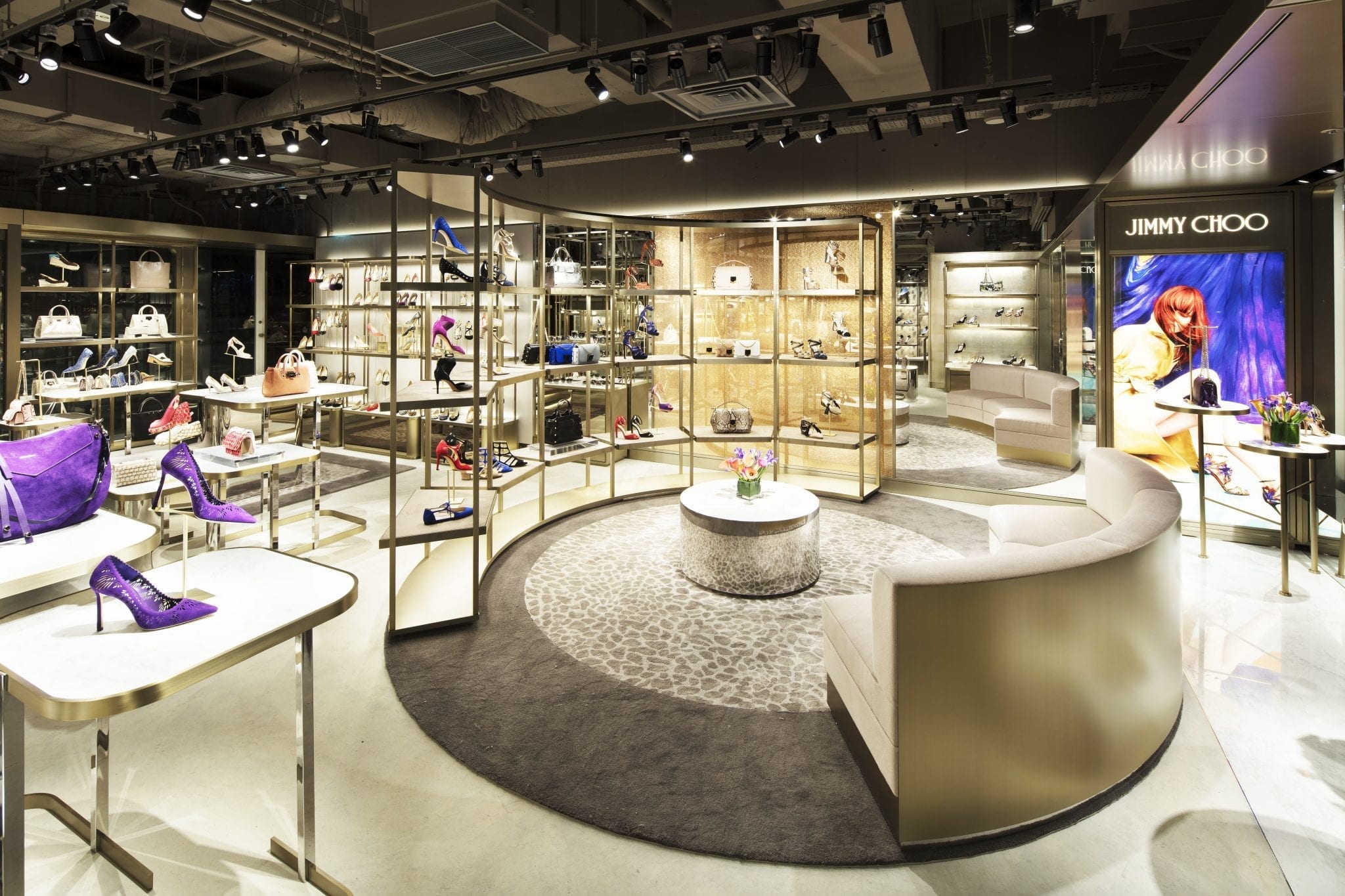
    Jimmy Choo’s 140 square-meter flagship dual gender store in Omotesando Hills Mall, Tokyo, Japan introduces its open floor plan with 2 grand facades. The main façade invites people from the street to enter the luxury store to experience a unique design combining industrial elements with the luxury materials Jimmy Choo is known for. Two entrances – one for men’s and one for women’s – from the mall’s interior are framed in gold metal and invite with lit signage and campaign images.

    Project manager Katharina Hoerath created a continuous flow between the multilevel spaces by designing dynamic curve inspired fixtures. The luxurious environment is warm and welcoming, featuring gold mesh panels on light washed walls juxtaposing the grey painted exposed ductwork ceiling. The marble floors with gold accents and light implemented in the steps are adorned with rich grey carpeting.

  • Los Angeles’ Dita opens second store in Tokyo

    Los Angeles’ Dita opens second store in Tokyo

    Los Angeles eyewear brand Dita has opened its latest Tokyo store this week, marking its second Japanese and global location.

    Located in the capital’s Minami Aoyama 5-chome, the Dita store covers 69 square metres andrepresents Dita’s latest retail concept, combining “the focus of a design showroom with the attentive service of an optical laboratory,” according to the company.

    Dita stores have been conceptualised by Mandi and Mehdi Rafaty of West Hollywood’s Tag Front. Italian stone mingles with plated aluminium, for a contemporary simplicity known to the America design dup. The Aoyama store also boasts a window on the south-facing facade extending from the floor to the ceiling.

    “We focused on materials and techniques that combine the warmth of turn-of-the-century design movements, like the Vienna Secession, rendered with contemporary technology and materials,” Dustin Edward Arnold, creative director of Dita Group, said in a statement.

    As well as Dita’s premium sunglasses, the store offers a range of technical services as part of its specialised ‘Dita Lab,’ including the provision of lens and frame prescriptions. Collections from Thom Browne Eyewear and Christian Roth, which Dita acquired last year, will also be on sale.

    Dita first entered the international retail space with a store opening in Daikanyama, Tokyo, in 2003.

  • Colt optimizes routes between Tokyo, Chicago exchanges

    Colt optimizes routes between Tokyo, Chicago exchanges

    Colt Technology Services has launched newly optimized low-latency network routes linking stock exchanges in Tokyo and the Chicago Mercantile Exchange.

    The enhancements aim to benefit traders in Chicago who require fast connectivity to Tokyo, or exchange venues in Tokyo that require low-latency connectivity to Chicago.

    Connectivity will be provided through the company’s private Ethernet-based Colt IQ Network. Latency between Tokyo and Chicago is expected to reach a mere 121.07ms between each endpoint after network optimization.

    Exchange venues across the globe will be able to utilize Colt’s ultra-low-latency network that links financial markets in Japan and America. Enterprises in other industries that require leased bandwidth, advanced security, and low-latency Ethernet services are also expected to benefit from these optimizations.

    Bandwidth is selectable from a range of 1Mbps to 10Gbps, and offers optional protection and redundancy.

    Colt has also commenced optimization of other key routes in the Asia-Pacific region.

    The company said its network is configured to be fully redundant, from the infrastructure and backbone to the local loop. Point-to-Point, Point-to-Multipoint, and Multipoint-to-Multipoint topology options are available. Colt’s services are based on MEF9 and MEF14.

  • Japan April exports rise for fifth straight month

    Japan April exports rise for fifth straight month

    Japan‘s exports rose in April to mark the fifth straight month of gains, an encouraging sign that more robust overseas demand could underpin a steady economic recovery.

    Exports rose 7.5 percent in April from a year ago, below the median estimate of 7.8 percent annual growth, finance ministry data showed on Monday. It followed a 12.0 percent rise in March.

    The data also showed Japan’s trade surplus with the United States narrowed.
    Japan’s exports are expected to continue rising as global economic growth gains momentum, but concerns about U.S. President Donald Trump’s pledges to adopt protectionist trade policies cloud the outlook for export-reliant Japan.

    The drop in Japan’s trade surplus with the United States, however, could take some pressure off Japan as it makes it more difficult for Trump to justify criticising Japan for its trade practices.

    Exports to the United States increased 2.6 percent in April from a year ago, rising for the third straight month. But Japan’s trade surplus with the United States fell 4.2 percent in April from a year ago to 586.7 billion yen ($5.27 billion).

    Imports surged 15.1 percent versus the median estimate for a 14.8 percent increase.

  • New Balance opens Tokyo concept store

    New Balance opens Tokyo concept store

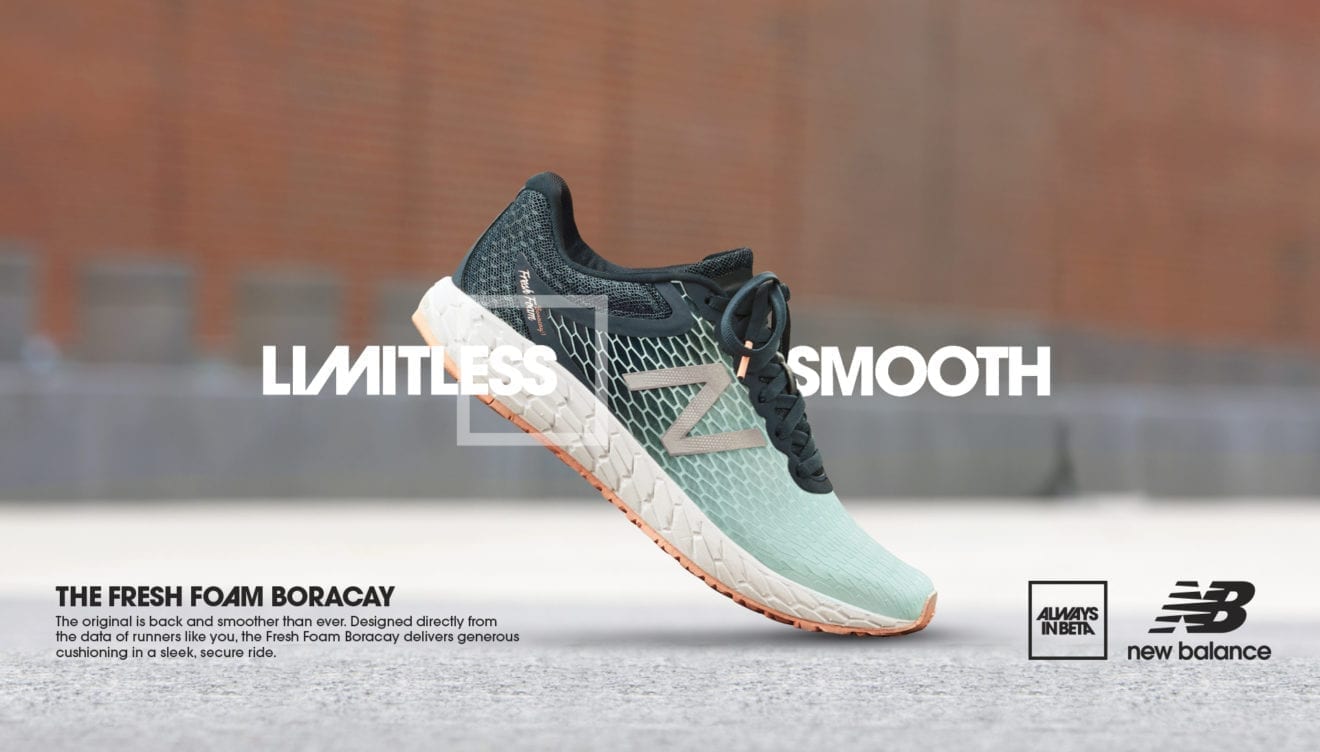
    Located in Roppongi in Tokyo’s Midtown area, the store is named after the area it is situated – Roppongi, and the year 1906, when New Balance was born. Written as ‘19: 06’, the motif is meant to look like a digital clock to express the American footwear firm’s 111-year history and how it has modernised.

    Inside, the store features warm wood panelling to create a ‘stadium’ atmosphere, and industrial concrete material construction to reflect the ‘coexistence of sports and lifestyle,’ according to the brand in a press release.

    The Roppongi 19:06 store will also offer state-of-the-art apparel and footwear, with a range of limited-edition and collaborative items.

    This includes 44 pairs of the limited edition 3D-printed MS066 shoes will be available to purchase for ¥38,000 JPY (US$335 USD). Dubbed the “Zante Generate”, the running shoes were sold ahead of the Boston marathon last year and boast a shoe upper made of a high-quality Japanese-manufactured knit, with a portion of the sole 3D-printed.

    A men’s and women’s Japanese Wholegarment apparel collection, made of an innovative seamless knit technology, will also be available at the store at a price range of ¥14,000 JPY to ¥20,000 JPY (US$123 to US$176).

    According to New Balance, the brand manufactures 4 million U.S.-made pairs of sneakers per year. Since it was founded in Boston in 1906, New Balance has made it a priority to make a certain portion of its sneakers in the U.S., giving it a point of difference of American rival Nike.

  • Manolo Blahnik opens Tokyo Ginza Six store

    Manolo Blahnik opens Tokyo Ginza Six store

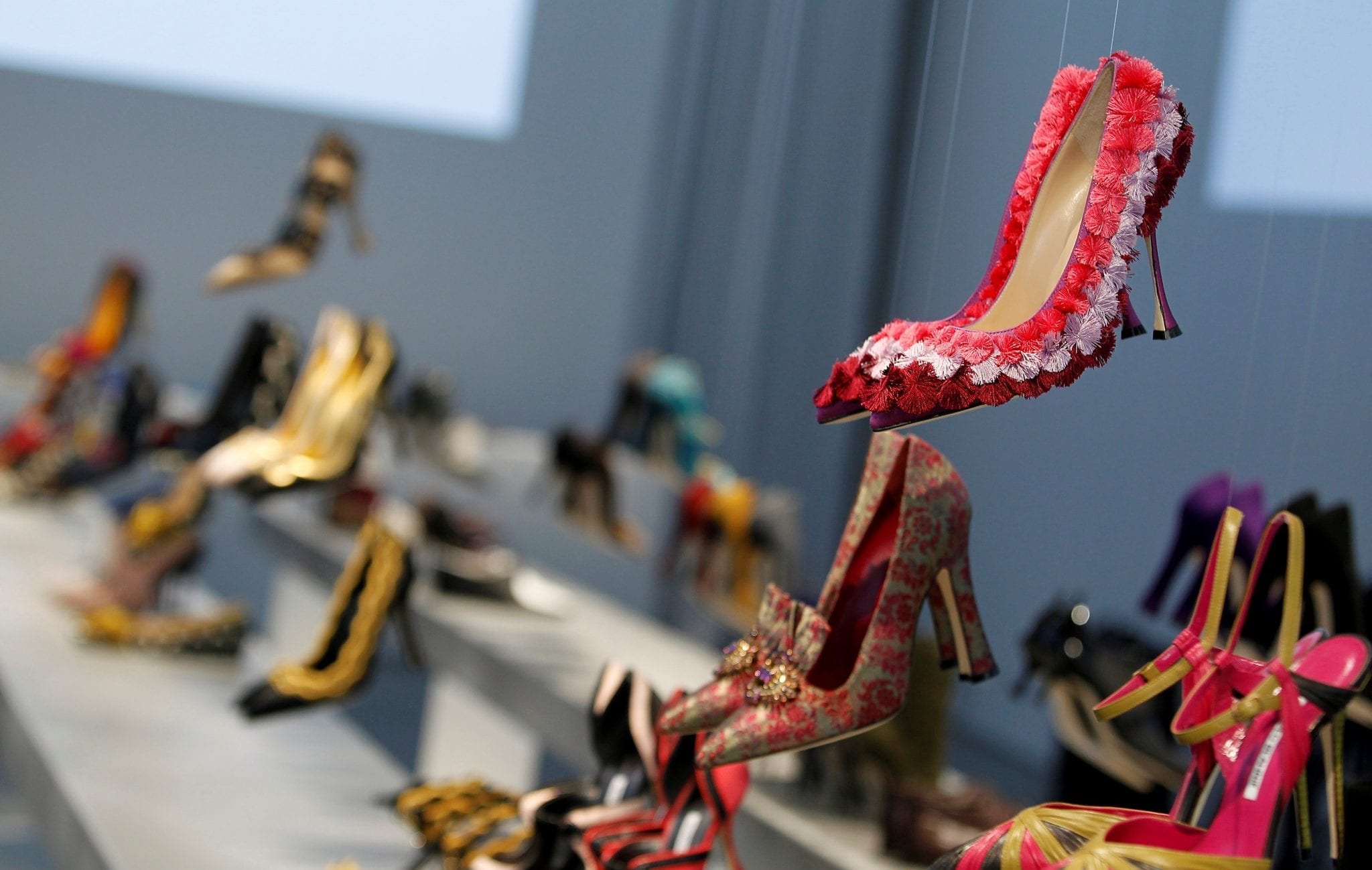
    Luxury footwear brand Manolo Blahnik has opened a new store in Tokyo at the new Ginza Six luxury shopping mall.

    Artfully designed by architect Nick Leith-Smith, and covering 60 square metres, the retail boutique’s interior design emulates that of Japanese tradition and culture, but in a modern form.

    The focal element is the wall installation. Reflective of timber and bamboo scaffold structures, the new Ginza Six store boasts contemporary crisscrossed and folded wooden slats, which interlace and connect the walls and
    ceilings, acting as shelves and hanging places for shoes and accessories.

    Fusing the industrial with the elegant, opposing walls are cast concrete reliefs with a curve pattern inspired by the gingko leaf. The back wall is painted in a striking blue, inspired by the traditional Japanese indigo plant dye.

    The complete Manolo Blahnik collections and products will be available at the new Tokyo flagship.

    Manolo Blahnik has seen recent success in Asia. The Spain-born, UK-based designer has launched three new retail spaces in Japan in the last 12 months in partnership with local luxury specialist Bluebell Group.

    The Ginza Six store is the third Japan location to open for Manolo Blahnik. It follows the opening of a store in the Matsuya Ginza department store in Tokyo and a second space in Umeda Hankyu department store in Osaka, late last year.

    In November, Bluebell Group also partnered with Manolo Blahnik to bring the brand to Malaysia, opening a new 1,022 square foot store in Pavilion Kuala Lumpur in Malaysia.

  • Timex opens first worldwide monobrand store in Tokyo

    Timex opens first worldwide monobrand store in Tokyo

    “Timex Tokyo” is set to open in Jingumae 6th street, near the Jingumae intersection. The store will be located on the 2nd floor of the building. The store will also feature a ‘strap bar’ for leather maintenance and engraving, and will also feature exhibition pieces.

    Timex was established by the Waterbury Clock Company in Connecticut in 1854. In the 1890s it launched the first edition of the pocket watch, Yankee, which sold 4 million units in 20 years. The label’s timepieces were also said to have been worn by the writer Mark Twain.

    The brand later released its first military-issue watch, dubbed ‘Midget.’ By the 1960s the company occupied a 50% share of the US watch market as the nation’s most popular brand, and is perhaps best known for the appearance of the ‘Ironman’ model on the wrist of Bill Clinton at his 1993 inaugural speech.

    The brand has gained visibility in Japan of late due to Timex’s Japan-exclusive collaborations, including a partnership between Engineered Garments and Japanese retailer Beams. Relaunches of classic models such as the Camper, updated last year by Timex Japan in stainless steel and limited to 1500 pieces, have also been a hit.

  • Dior launched new Tokyo store

    Dior launched new Tokyo store

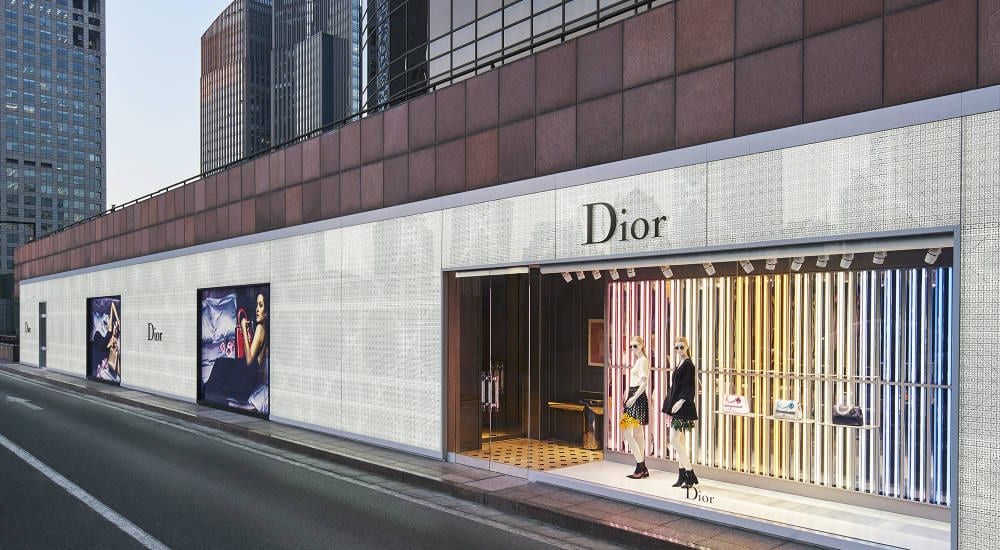
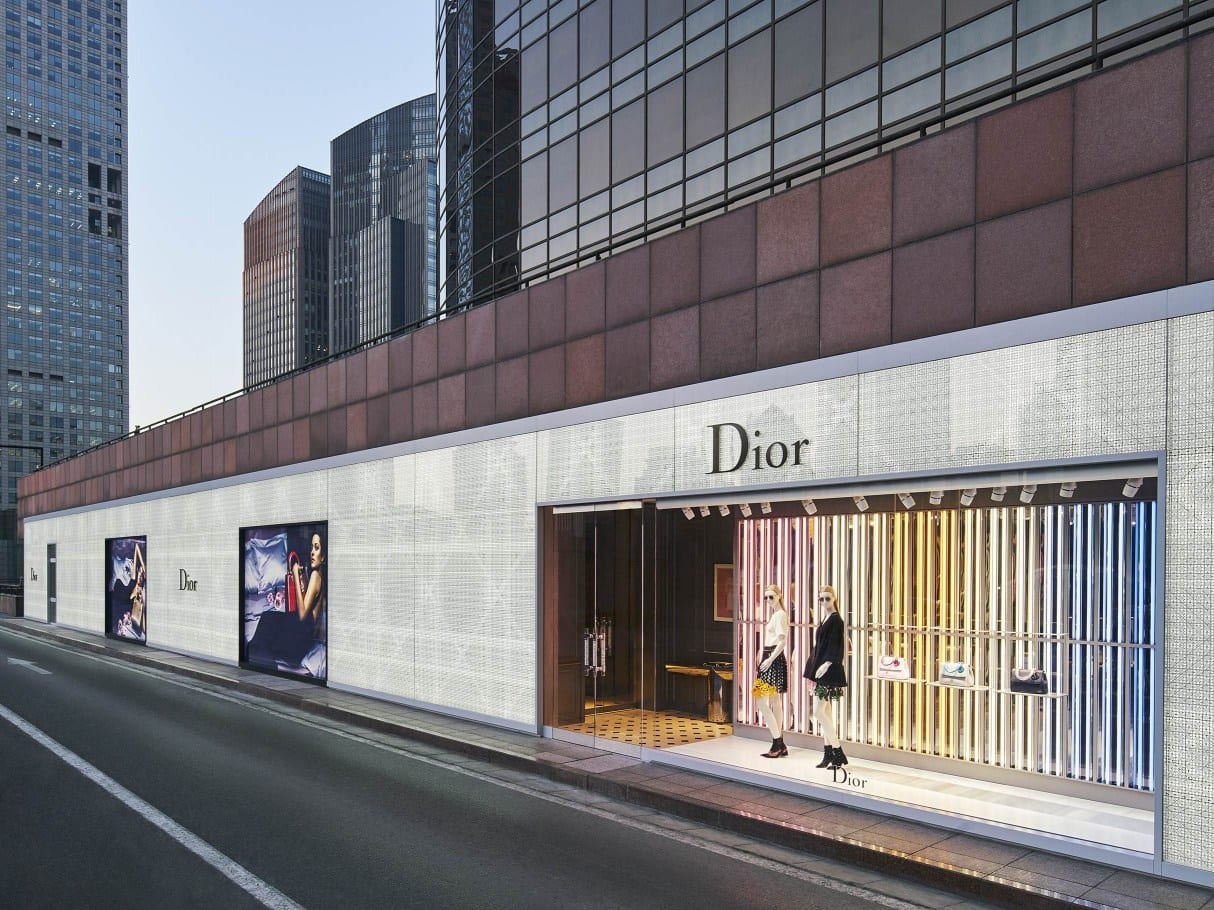
    Christian Dior launched its new Tokyo store with a fashion show in the rooftop gardens of a luxury mall, where models showed new looks from its creative director Maria Grazia Chiuri.

    Underlining Dior’s connection with Japan, which is an “important market” for the fashion brand, Chiuri drew her inspiration from cherry blossoms and Christian Dior’s 1953 “Jardin japonais” dress for her latest creations.
    Dior Ginza’s champagne-fuelled opening on Wednesday came as spending by visitors to Japan reached record levels, but growth has slowed due partly to Chinese tourists buying less.

    But Sidney Toledano, chief executive of Christian Dior Couture, said on Wednesday he was not concerned about cycles in tourism, which he has seen go through many phases during two decades running the French fashion house.

    “What we want to do in Japan is look for the local market. We look for the Japanese customers,” who have long been “super customers for luxury and high fashion,” he said.

    “Our business is not based on the tourist business … my objective always in a country is to have a very strong local plan,” said Toledano, who is also CEO of Christian Dior SE, the holding company for luxury group LVMH.

    As well as revealing the eight new lines from Chiuri, Dior used the occasion to present the autumn 2017 collection from Dior Homme for the first time.

    The new boutique occupies five floors in Ginza Six, the largest retail facility in the popular Tokyo shopping district with 241 stores, half of which are flagships. Other luxury brands’ stores include Celine, Saint Laurent and Valentino.

    Ginza Six sees tourists as a key target as the Japanese government aims to nearly double the number of overseas visitors to an annual 40 million by 2020, when Tokyo hosts the Olympics.

    Japan‘s market for personal luxury goods was worth €22 billion ($23 billion) in 2016, ranked second after the United States, with tourists accounting for 30% of revenue, according to Bain & Company.

  • Luxury spenders defy Japan’s tight-fisted reputation

    Luxury spenders defy Japan’s tight-fisted reputation

    Tight-fisted shoppers, unsteady economic growth and a shrinking population: Japan doesn’t exactly fit the image of a spending powerhouse these days.

    But you would never know it in Ginza — Tokyo’s answer to the Champs-Elysees or Fifth Avenue — where a new 13-storey upscale mall is proving that Japan is still a whale in the luxury business. The country logs some $22.7 billion in annual spending on top-end goods made by brands including Chanel, Dior, and Prada, ranking it as the world’s number two luxury market behind the United States.

    “Luxury products may be more expensive, but they are very well-made,” said 79-year-old Toshiko Obu, carrying her longtime Fendi bag outside the Ginza Six building, which has been drawing big crowds since last week’s opening.

    Japan is renowned among the world’s priciest retailers for its discriminating clientele — Chanel tries to keep local customers physically separated from tourists packing more cash than class.

    “You shouldn’t forget that a big portion of the luxury clientele is here in Japan,” Sidney Toledano, chairman and CEO of Christian Dior Couture, told at the opening of the 241-store building.

    “It remains a strategic market for luxury and, I’d say, true luxury.”

    – ‘Biting their fingernails’ –

    Dior is counting on Japan’s luxury market to rise this year, while rival Chanel is also expecting an upbeat 2017, after global sales of personal luxury goods barely grew last year.

    “We did not lose our character,” said Richard Collasse, head of Chanel in Japan. “There are brands that are suffering — the ones that at some stage stopped investing in Japan because China was the new El Dorado. And today they are biting their fingernails.”

    Few brands predicted that deep-pocketed Chinese shoppers visiting Japan would support its luxury market — tourists account for about one-third of top-end spending.

    Japan is hoping to land 40 million visitors in 2020, the year that Tokyo hosts the Olympics. Last year, some six million Chinese visited, compared with 2.4 million in 2014.

    “Historically, (Japan has) been a very insular luxury market where 90 to 95 percent of the spending was by locals,” said Joëlle de Montgolfier, Paris-based director of consumer and luxury product research at consultancy Bain & Company.

    But now some 30 percent of sales are generated by foreign visitors owing to tourism, she added. A stronger yen dented visitors’ purchasing power last year, with luxury sales down one percent, after a 9.0 percent rise in 2015.

    Dior’s Toledano said it is an opportunity to refocus on Japanese clientele. “We don’t ignore tourists, of course, but we’re not a duty-free shop,” he added.

    – ‘Touching everything’ –

    Some other Chanel shops in Tokyo have a separate cosmetics and perfume section reserved for top Japanese customers, in a bid to keep them away from the nouveau riche crowd.

    It also tips off local clientele about the expected arrival time of tourist buses so they can avoid them.

    “The loyal Japanese clients tend to run away from customers who were not very well raised and are wearing whatever or lying all over the sofa, touching everything,” said Chanel’s Collasse.

    Dior’s haute couture show at the new mall’s opening featured Japanese-inspired dresses, underscoring a focus on the local market. But warning signs lurk behind smiling clerks and glitzy interiors at the new property on one of the world’s priciest shopping streets.

    Japan has struggled to reverse a decades-long economic slump while a falling population continues to shrink its labour force — and the pool of future luxury consumers.

    Younger people, many on tenuous work contracts, don’t have the money or the same interest in luxury brands anymore, especially since top-end goods can now be rented online instead, said Naoko Kuga, a consumer lifestyle analyst at Tokyo’s NLI Research Institute.

    “When you look at consumer purchasing behaviour, younger people put less value on luxury brand products” than previous generations, she said.
  • Laguarda.Low Architects Designs Grandberry Lifestyle Centre in Machida

    Laguarda.Low Architects Designs Grandberry Lifestyle Centre in Machida

    New York City-based architecture and urban planning firm, LAGUARDA.LOW ARCHITECTS, has unveiled the design for Grandberry Center, a new 750,000-square-foot transit-oriented development in Machida, Tokyo. Set on the city’s Tokyu Denen-tonshi train line, Laguarda.Low designed Grandberry Center to be the center of commerce and activity for Machida – a city in the west section of the Tokyo Metropolis.

    The new Grandberry Center development replaces an existing mall and train station and creates a modern, landscaped shopping village with a direct connection to the newly-designed Tsuruma Park. The new train depot, with its undulating roof, tiered gardens, and waterfall create a dramaticsense of arrival. From the platform, a grand stair leads visitors to the multi-level shopping center experience, inclusive of a local food market, retail stores and a cinema. The retail village is organized as a simple loop, referencing a European town typology, with parking positioned in the center. Throughout the loop, visitors traverse a series of open and covered plazas that provide dynamic spaces for socializing, leisure and entertainment.

    The buildings are composed of a mix of stone, steel, wood, glass and green walls. The form, scale, and materiality of the buildings were designed to create variation within the development and to blend with the surrounding residential neighborhood.

    “Grandberry Center provides a warm and modern ambience with sophisticated design that enlivens the surrounding neighborhood for local residents and visitors,” said Pablo Laguarda, Principal of LAGUARDA.LOW. “Its location as an entertainment and lifestyle destination is unique and we look forward to showcasing this development to the Machida community.”

    Situated amidst Tsuruma Park, Laguarda.Low’s design removes an existing street to unify Grandberry Center with nature.  To combine the two parcels, a new park entrance transforms the natural slope in grade into a dramatic stair, with the ground rising to create a green roof for a new restaurant at the threshold of the park. The firm also designed the main promenade, which features lush Cherry Blossom trees, and a designed new landscape plan with designated spaces for a skate park, urban farm, sculpture garden, children’s playground, expansive lawn and library.

    Construction of Grandberry Center will begin in May 2017, with an estimated completion of September 2019.  Grandberry Center is expected to officially open in November 2019. Granberry is one of seven Laguarda.Low-designed developments in Japan. Most recently, the firm was the silver award winner of International Council of Shopping Centers (ICSC) New Development category for their design of AEON Mall Okinawa Rycom, the largest multi-story commercial facility in Western Japan.

  • Umami Burger Japan launches in Tokyo

    Umami Burger Japan launches in Tokyo

    American-style dining has again crossed the Pacific, with the latest offering, Umami Burger Japan, having a distinct local slant.

    While conceived in the US, the fast-food chain takes its names from the Japanese concept of umami, one of the basic tastes as distinct from sweet, salty, bitter and sour.

    It follows such brands as Carl’s Jr, Shake Shack and Taco Bell to Japan, and on its opening day in Tokyo drew a queue of more than 100 people. It is just a few minutes’ walk from Omotesando Station.

    Umami Burger Japan - Aoyama Tokyo

    Rocket News 24 sent in writer PK to check out the store on opening day. Umami Burger dates back to 2009 has has been included in Time Magazine’s list of 17 “most influential” burgers. While he arrived an hour before the 11am opening time, already more than 50 people were lined up. By the time the doors opened, the queue had doubled in size.

    Umami Burger Japan - Aoyama Tokyo.1

    PK says he was finally seated around noon, and to gain a more rounded perspective, ordered two burgers – the namesake umami burger and the Japan-original teriyaki burger at ¥1380 (US$12.50) each, and a side order of truffle fries for ¥800.

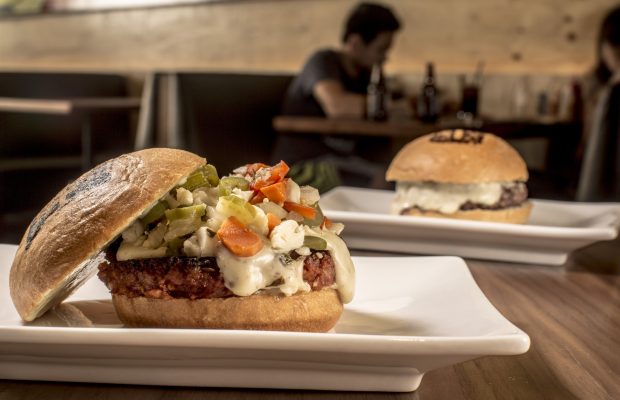
    With its house ketchup, roasted tomatoes, shiitake mushrooms and crispy Parmesan cheese chip, plus a medium-rare beef patty, PK writes that the umami burger tickled his taste buds. “Each flavour complemented the others for an overall perfect combination.”

    The teriyaki burger came topped with red onions, perilla leaves, fried lotus root, cabbage and a wasabi aioli sauce.