Tag: tokyo

  • KDDI Launches Paid Consumer AI Assistant Buffmee in Japan

    KDDI Launches Paid Consumer AI Assistant Buffmee in Japan

    Japanese telecom operator KDDI launched Buffmee, a consumer artificial intelligence assistant that charges JPY 980 a month for verified search and study tools. The service runs on Google Cloud and restricts query answers exclusively to curated materials from licensed book publishers, magazines and specialized databases.

    Unlike general-purpose chatbots that scrape the open internet, Buffmee functions as a closed ecosystem where users can cross-check answers directly against partner citations. The platform targets daily consumer queries across education, cooking, sports, parenting, business and personal finance.

    Curated data over open web searches

    KDDI designed the app to address rising consumer frustration with unverified AI search results and hallucinations. Partner publishers provide copyrighted and premium texts to the platform, gaining a controlled digital distribution channel while KDDI secures proprietary content for its model.

    Users interact through structured shortcuts and dedicated buttons designed to reduce prompt writing. The software includes tools for text summarisation, data analysis, image generation, daily planning, test problem creation and digital flashcards.

    Freemium tiers and study tools

    The service operates on a two-tier pricing structure. The free tier caps usage at 100 chat sessions and 10 image generation requests per day, while the JPY 980 (USD 6.50) monthly subscription removes all volume limits. KDDI is offering the premium tier free for the first year to build initial consumer adoption.

    Asian telecom operators are increasingly shifting from commodity network access into branded consumer digital services to defend average revenue per user. While regional peers in Southeast Asia and South Korea have focused primarily on enterprise AI contracts and customer care automation, KDDI is taking subscription software directly to retail mobile subscribers through curated publisher partnerships.

    KDDI will track conversion rates as early adopters reach the end of their 12-month free promotional period and transition onto the standard monthly billing cycle.

  • KKR Agrees to Buy Japanese Beauty Platform Ci Flavours

    KKR Agrees to Buy Japanese Beauty Platform Ci Flavours

    KKR has agreed to acquire Japanese personal care platform Ci Flavours from existing shareholders, including consumer buyout specialist L Catterton.

    The buyout firm will take full ownership from all current equity holders, which include founder Yusaku Horiuchi, Ebeauty Group and Yanagi Capital Partners. Financial terms were not disclosed.

    Horiuchi and Ci Flavours chief executive Yoshiaki Okura will reinvest alongside KKR to retain management stakes in the company. Founded in 2011, the Tokyo-based firm built a retail footprint across Japan and expanded overseas distribution into Asia and North America.

    Brand roster and overseas distribution

    Ci Flavours operates a portfolio spanning haircare, skincare, body care and lifestyle goods. Its primary labels include &Honey, 8 The Thalasso, Unlabel, Theratis and Moroccan Beauty.

    The business handles product lines through multiple channels, including original equipment manufacturing, direct-to-consumer digital storefronts, department store counters and international ingredient sourcing. Mass-market and premium haircare lines in domestic drugstores provided the company with steady cash flow to push into regional export markets.

    Private equity shifts in Japanese consumer assets

    L Catterton backed Ci Flavours in 2022, completing an exit four years later as global private equity funds continue trading established Japanese consumer brands. KKR has actively adjusted its regional consumer portfolio, having completed the sale of supermarket chain Seiyu to Trial Holdings for US$2.55 billion.

    Okura and his executive team plan to deploy fresh capital into foreign market distribution, recruitment and targeted add-on acquisitions in personal care.

  • More Japanese Merchants Leave Rakuten Marketplace over Drone Logistics Alliance

    More Japanese Merchants Leave Rakuten Marketplace over Drone Logistics Alliance

    Japanese merchants are leaving Rakuten Group’s e-commerce marketplace following the company’s latest drone logistics alliance. Seller departures have increased as platform operators adjust delivery requirements across the domestic network.

    Merchant relations on the platform face renewed strain over fulfillment and distribution integration. Store operators running storefronts on Rakuten Ichiba must balance rising platform costs against competing fulfillment channels.

    Merchant Friction Over Delivery Strategy

    The marketplace has pushed deeper into automated logistics and aerial transport to solve driver shortages in regional Japan. That shift requires store owners to adapt packaging, inventory management and dispatch schedules to automated logistics hubs.

    Sellers unwilling or unable to meet those fulfillment rules are closing their accounts. For smaller Japanese brands, direct-to-consumer websites and rival channels now offer cheaper operational alternatives.

    Pressure Across Japanese E-Commerce

    Competition among Japan’s digital marketplaces has tightened sharply. Amazon Japan and LY Corporation’s Yahoo Shopping continue to court independent merchants with flexible shipping terms and lower platform fees. Rakuten has spent heavily to defend its merchant base, yet policy shifts around shipping rates and fulfillment standards historically triggered seller pushback across the country.

    Merchant retention numbers for the current quarter will show how many storefronts follow through on closing their marketplace accounts.

  • Panpuri Opens First Mainland China Store in Shanghai in 16-Outlet Asian Push

    Panpuri Opens First Mainland China Store in Shanghai in 16-Outlet Asian Push

    Thai niche fragrance brand Panpuri opened its first Mainland China store at Shanghai’s HKRI Taikoo Hui shopping centre, anchoring a 16-store regional expansion across Asia this year.

    The Bangkok-based label is entering high-end retail developments in China and Japan to build scale outside Southeast Asia. At the Shanghai boutique, Panpuri is selling its full range of perfumes, home ambience goods and body care products, supported by custom fragrance blending and bespoke gift-wrapping stations.

    Expanding From Shanghai to Tokyo

    Thai entrepreneur Vorravit Siripark founded the business in 2003, pairing traditional Thai herbal and oil treatments with modern skincare formulations. The Shanghai debut follows an Asian expansion plan outlined in May that aims to establish footprint in prime shopping destinations.

    In China, Panpuri is focusing its initial store pipeline on Shanghai and Beijing. In Japan, the company plans to launch its first boutique in Tokyo before adding locations across other major metropolitan areas.

    Southeast Asian beauty and wellness operators have increasingly looked north to East Asian department stores and malls, where consumer spending on niche perfumery and premium personal care remains resilient. Entering prime properties such as Swire Properties’ HKRI Taikoo Hui places the Thai label in direct competition with established European and domestic Chinese fragrance houses fighting for department-store foot traffic.

    Targeting Top-Tier Asian Capitals

    Siripark stated that shoppers in both Japan and China place heavy value on product craftsmanship, atmospheric retail design and emotional brand resonance, making them natural priorities for international growth.

    Attention now turns to the delivery of the remaining pipeline locations across Beijing and Tokyo as the brand works to complete its 16-store regional target before year-end.

  • Japan Caps Gasoline at ¥170 as Middle East Tensions Drain Subsidy Fund

    Japan Caps Gasoline at ¥170 as Middle East Tensions Drain Subsidy Fund

    Japan will keep regular gasoline pump prices capped at around ¥170 per liter to shield household spending and transport operators from Middle East oil disruptions, Prime Minister Sanae Takaichi said on Tuesday.

    The decision freezes an earlier plan to raise the price ceiling, committing the government to fund fuel market interventions that have already cost ¥9 trillion since January 2022.

    Tapping the emergency reserve

    Takaichi instructed Industry Minister Ryosei Akazawa to negotiate funding with Finance Minister Satsuki Katayama. Tokyo plans to draw money from a ¥2.5 trillion reserve fund created under the fiscal 2026 supplementary budget enacted in June.

    Fresh money is required quickly. The existing subsidy balance fell to approximately ¥210 billion at the end of July, leaving little room to absorb crude price swings without direct state cash.

    The program has proved difficult to unwind. Tokyo paused the subsidy at the end of December following the abolition of the provisional gasoline tax rate, only to reinstate pump relief in March as global oil markets tightened.

    Pressure on freight and fleet operators

    For retailers, logistics fleets and consumer delivery networks across Japan, the cap provides short-term pricing certainty on last-mile freight. Fuel surcharges remain a persistent drag on supply chain margins throughout the domestic retail sector.

    Akazawa and Katayama will now finalize the exact allocation from the June reserve fund before the current ¥210 billion balance runs out.

  • Japan Plans Blockchain Settlement System for Instant Stock and Bond Trades

    Japan Plans Blockchain Settlement System for Instant Stock and Bond Trades

    Japan is preparing a new financial infrastructure to settle transactions in equities and government bonds instantly using blockchain technology. Japanese authorities plan to launch a formal working group this summer, targeting an initial technical blueprint by early 2027.

    The project brings together the Financial Services Agency, the Ministry of Finance, the Bank of Japan, and commercial financial institutions. Under the current regime, stock trades in Tokyo take two business days to settle in cash, while Japanese government bonds settle on a next-day schedule. Eliminating that lag allows institutional and retail investors to reinvest capital immediately after execution.

    Roadmap to 2030 Operations

    Working group members will determine the underlying distributed-ledger architecture, assign operational roles between public agencies and private clearing houses, and establish a multi-year development schedule. If authorities approve the final blueprint in 2027, initial operations could begin within several years, with the full platform operational in the early 2030s.

    Planners also aim to expand the network architecture beyond domestic securities to support real-time cross-border remittances. Faster wholesale settlement addresses long-standing liquidity friction in Tokyo, where trading desks must maintain substantial collateral buffers to cover multi-day counterparty exposure during high-volume sessions.

    Shifting Asia-Pacific Market Plumbing

    Across Asia-Pacific, regional bourses have tested distributed ledger technology to compress settlement cycles and lower clearing fees. Australia’s stock exchange spent years attempting a blockchain replacement for its equity clearing platform before resetting the initiative, while financial hubs in Singapore and Hong Kong have focused on wholesale tokenised deposits and digital debt issuance.

    The first milestone to watch is the formal constitution of the working group in Tokyo over the coming weeks, followed by the release of its initial structural recommendations ahead of the 2027 development plan.

  • Japan Plans Fiscal 2027 Condo Tax Overhaul to Curb Urban Speculation

    Japan Plans Fiscal 2027 Condo Tax Overhaul to Curb Urban Speculation

    Japan’s land ministry plans to seek tax code changes for fiscal 2027 to curb speculative condominium flipping that drove central Tokyo apartment prices to record highs. Average prices for new units in the capital reached unprecedented levels during the first half of 2026, pricing regular domestic buyers out of urban districts.

    The Ministry of Land, Infrastructure, Transport and Tourism will target short-term resale transactions that exploit current tax rates on residential assets. Urban developers have focused heavily on high-end luxury high-rises in Tokyo and Osaka, where penthouses and upper floors frequently trade in cash to absentee owners.

    Curbing cash buys in Tokyo and Osaka

    Tokyo-area condominium prices passed the 100 million yen threshold during the January to June period for the first time. Inflows of private capital from Taiwan and other regional wealth hubs have accelerated this surge, replacing mainland Chinese buyers who pulled back from cross-border deals.

    Local buyers face steep barriers as wage growth lags property appreciation across central wards. Japanese megabanks have responded by raising interest rates on large deposits, attempting to capture proceeds from high-value property disposals while standard mortgage borrowers take on longer repayment terms.

    Regional playbooks for property cooling

    Across major Asian markets, regulators have routinely turned to transaction taxes when speculative momentum broke local affordability limits. Singapore and Hong Kong deployed targeted stamp duties and higher holding penalties to choke off luxury flipping, and Tokyo is now adopting a comparable fiscal approach instead of relying purely on central bank monetary policy.

    The land ministry will submit its detailed tax proposals to the ruling coalition for inclusion in the annual fiscal 2027 tax reform outline scheduled for review late this year.

  • Brands Step up Fandom Marketing as Gaming and BookTok Spur Billions in Retail Sales

    Brands Step up Fandom Marketing as Gaming and BookTok Spur Billions in Retail Sales

    Non-endemic consumer brands now account for 60 per cent of esports partnerships worldwide as corporate marketers redirect budgets toward gaming and social media subcultures across Asia and the West. Research conducted by Amazon Ads and Twitch Ads across 12 countries, including Japan and South Korea, found that 70 per cent of fans view these communities as part of daily life.

    The shift comes as consumer spending linked to online interest groups expands beyond traditional merchandise. In the gaming sector, a 2025 global study of more than 24,000 active players across 21 markets, including China, India, Japan and South Korea, established that the average player is 41 years old. The demographic splits evenly at 51 per cent male and 48 per cent female, dismantling long-held media assumptions about youth-only audiences.

    Brands outside the technology sector are buying into this scale. McDonald’s integrated Pokemon Trading Card Game products into Happy Meals, Lacoste launched a physical and digital line with Minecraft, and Elf Cosmetics constructed an interactive world inside Roblox. McKinsey research confirms that non-gaming companies now drive six in ten competitive gaming sponsorships.

    Publishing and Travel Ride Social Momentum

    A parallel surge is lifting physical book sales and related hospitality services. Analysis from NielsenIQ BookData and Media Control recorded more than 50 million book purchases across European retail markets in 2025 linked to TikTok’s #BookTok community, generating 800 million euros in revenue. In the United States, research group Circana tracked a 20 per cent annual rise in BookTok-driven book sales during 2024 to approximately 60 million units.

    The literary trend has bled directly into tourism and apparel. Travel platform Skyscanner reported that global hotel bookings using its library filter rose 70 per cent year-on-year in 2026. In late 2025, American leathergoods label Coach partnered with Reese Witherspoon’s Sunnie Reads club to operate reading pop-ups and sell book charms co-developed with Penguin Random House.

    Authenticity Determines Campaign Returns

    For retailers across the Asia-Pacific region, commercial tie-ins to niche communities offer far higher conversion rates than general broadcast advertising. While mainstream digital ad placements suffer from rising ad-fatigue, Amazon’s data shows 61 per cent of dedicated fans actively welcome brand-sponsored content. Another 64 per cent rely on digital platforms to source and purchase interest-specific products.

    Execution remains delicate. The Amazon study revealed that 54 per cent of respondents immediately detect insincere corporate messaging within their spaces. Marketers now track whether beauty and apparel brands can scale influencer partnerships among Asian creators before community engagement metrics normalize across major video platforms later this year.

  • Nomura Real Estate Master Fund Buys Tokyo Best Western for $55 Million

    Nomura Real Estate Master Fund Buys Tokyo Best Western for $55 Million

    Nomura Real Estate Master Fund has agreed to acquire the Best Western Hotel Fino Tokyo Akasaka from developer Ichiken for JPY 8.7 billion ($55 million). That prices the 87-key property at JPY 100 million ($626,000) per room. The price represents a 20 percent discount to its July appraisal value of JPY 10.9 billion.

    Settlement will take place on 1 September following signing on Thursday, funded with cash on hand. Ichiken carries the asset at JPY 5.3 billion on its books. The sale delivers a gross spread of JPY 3.4 billion before transaction expenses.

    Property Cash Flow and Operator

    Completed in March 2020, the 13-storey building spans 2,385 square metres in Minato ward. It sits three minutes on foot from Akasaka and Akasaka-mitsuke subway stations. Double rooms make up 86 percent of the inventory. That space includes 22 moderate doubles, 53 superior doubles, 11 superior twins and one accessible deluxe twin.

    Polaris Holdings operates the property under a lease where rent is calculated as a fixed percentage of gross operating profit. Foreign visitors represent 95 percent of all guests and stay an average of 3.7 days. Based on an appraisal net operating income of JPY 385 million, the asset yields 4.4 percent on the purchase price.

    Portfolio Shift Toward Hospitality

    The acquisition expands the trust’s hotel holdings by 31 percent to JPY 37 billion across nine properties. Hospitality now accounts for 3.3 percent of total portfolio assets, up from 2.6 percent. Greater Tokyo hotel exposure increases to JPY 11.1 billion from JPY 2.4 billion. Master Fund holds JPY 1.1 trillion across commercial, logistics, residential and lodging assets.

    Recent portfolio moves include Master Fund’s sale of eight residential buildings to Integral Real Estate for JPY 10.8 billion in March 2025 and its March purchase of two Tokyo properties for JPY 8.9 billion. Looking ahead, Minato ward is targeting more than 9 million overnight stays in 2026, up from 8 million in 2024.

  • Chiikawa Film Surpasses ¥10 Billion at Japanese Box Office

    Chiikawa Film Surpasses ¥10 Billion at Japanese Box Office

    Japan’s animated feature “Chiikawa the Movie: The Secret of Mermaid Island” surpassed ¥10 billion ($63 million) in domestic box-office receipts within 30 days of its July 24 debut.

    The release drew 7.66 million cinema admissions through August 23 across 447 theaters nationwide, including 65 IMAX screens. That run puts the title among the highest-earning theatrical releases in the country this year.

    Opening-day records and theatrical reach

    Directed by Kei Oikawa, the production is adapted from the character franchise created by the artist Nagano, which started on social media platform X in 2020. The story follows the title character alongside companions Hachiware and Usagi as an island camp excursion leads to an encounter with a sea creature named Siren.

    Commercial momentum built immediately on release. The film collected ¥990 million on its opening day alone, registering the seventh-largest first-day gross recorded at the Japanese box office. Revenue across the opening three-day weekend reached ¥2.24 billion.

    Expansion into interactive screening formats

    Character merchandise and spin-off media remain significant drivers of consumer spending across East Asian retail markets. For Japanese entertainment operators, converting short-form web comic properties into multi-billion-yen cinema franchises delivers substantial downstream demand for licensed goods, retail pop-ups, and brand collaborations.

    Exhibitors are now widening screening formats to sustain attendance into the autumn. The picture enters 4DX motion-seat auditoriums on September 5. Participating cinemas will then host singalong screenings in five prefectures on September 11, followed by synchronized light-stick events scheduled for September 23.

  • Asian Shares Hold Flat as Investors Await Nvidia Earnings and US Sanctions Plan

    Asian Shares Hold Flat as Investors Await Nvidia Earnings and US Sanctions Plan

    Asian stock benchmarks traded flat on August 24 as investors held back ahead of Nvidia’s earnings and impending US sanctions on Iran. Regional tech exporters stayed cautious after sharp swings last week.

    Tokyo’s Nikkei index held steady following a 4 per cent drop the previous week, while South Korean shares fell 0.8 per cent and Taiwan slipped 0.5 per cent. The broader MSCI Asia-Pacific index outside Japan declined 0.2 per cent in morning trading.

    Tech Earnings and Jackson Hole Outlook

    Consumer electronics supply chains and semiconductor manufacturers across Asia are focused on chipmaker Nvidia, which reports earnings on August 26. Analysts expect quarterly revenue to double to roughly US$92 billion, with full-year revenue guidance projected between US$103 billion and US$105 billion.

    Regional equity markets are also tracking the outlook for US monetary policy. Federal Reserve Chairman Kevin Warsh will address the Jackson Hole economic symposium on August 28, with money markets pricing a 40 per cent probability of a rate increase on September 16 and a full move by December.

    US Treasury yields have continued to pressure equity valuations across the Pacific. Yields on 30-year US debt hovered at 5.2760 per cent, close to a 19-year peak of 5.3371 per cent, despite Treasury Secretary Scott Bessent announcing plans to double government bond buybacks.

    For Asian manufacturers and retail supply chains, high borrowing costs in the US and volatile currency markets keep export financing and inventory management under pressure. When long-term yields remain near multi-decade highs, valuations across Asian tech suppliers face tighter scrutiny from international funds.

    Trade Disputes and Commodity Pressures

    Energy and shipping corridors remain volatile as Bessent prepares to outline fresh sanctions on Iran, which maintains naval control over the Strait of Hormuz. Brent crude slipped 1.0 per cent to US$93.43 a barrel after climbing 6.6 per cent last week, while US crude fell 1.1 per cent to US$86.14.

    Cross-border retail trade faces additional frictions following a breakdown in US-Canada trade negotiations. Canadian Prime Minister Mark Carney confirmed reciprocal tariffs on US imports, covering electronics, appliances, dairy, steel, agricultural equipment, and pulp and paper.

    Gold prices advanced 0.4 per cent to US$4,623 an ounce, positioning bullion for a monthly gain exceeding 14 per cent. Attention now shifts to upcoming US core inflation figures, expected to hold at 3.3 per cent for July.

  • Japan Bond Yields Jump on Budget Doubts and US Concerns

    Japan Bond Yields Jump on Budget Doubts and US Concerns

    Japanese government bond yields have seen a notable increase, driven by financial market jitters surrounding budget proposals from a prominent political figure and broader anxieties about the future direction of US monetary policy. The rise reflects investor apprehension regarding Japan’s fiscal health and the global interest rate environment.

    The yield on the benchmark 10-year Japanese government bond, which moves inversely to price, has climbed in recent trading. This upward trend suggests investors are demanding higher returns for holding Japanese debt, indicating a perceived increase in risk or inflation expectations. Such movements in sovereign bond markets can influence borrowing costs for businesses and consumers across the region.

    Fiscal Policy Under Scrutiny

    A key factor contributing to the yield spike is the ongoing discussion around budget reforms championed by Sanae Takaichi, a powerful executive within Japan’s ruling Liberal Democratic Party. Investors are closely scrutinizing her proposals, which some interpret as potentially leading to increased government spending or shifts in fiscal priorities. Any significant change in Japan’s fiscal trajectory could have wide-ranging implications for the national debt and the Bank of Japan’s monetary policy stance.

    The Bank of Japan has maintained an ultra-loose monetary policy for an extended period, which has kept bond yields suppressed. However, market participants are now watching for any signs of divergence from this policy, especially if fiscal expansion accelerates. This uncertainty introduces volatility into the bond market, affecting long-term investment strategies.

    Global Economic Pressures

    Adding to domestic concerns are broader worries about the United States’ economic outlook and its potential impact on global financial markets. Anticipation of possible shifts in US interest rates or economic policy can reverberate across Asia, influencing investor sentiment and capital flows. A stronger dollar or higher US yields often put upward pressure on yields in other developed markets, including Japan.

    For retailers and consumer brands operating in Asia, rising bond yields can signal an increase in the cost of capital, potentially affecting expansion plans, inventory financing, and consumer lending rates. RetailNews Asia has observed similar pressures in other regional markets when major economies like the US signal policy changes, prompting businesses to reassess their financial strategies.

  • Yen Weakness Persists Despite Intervention, Raising Concerns for Asia-Pacific Businesses

    Yen Weakness Persists Despite Intervention, Raising Concerns for Asia-Pacific Businesses

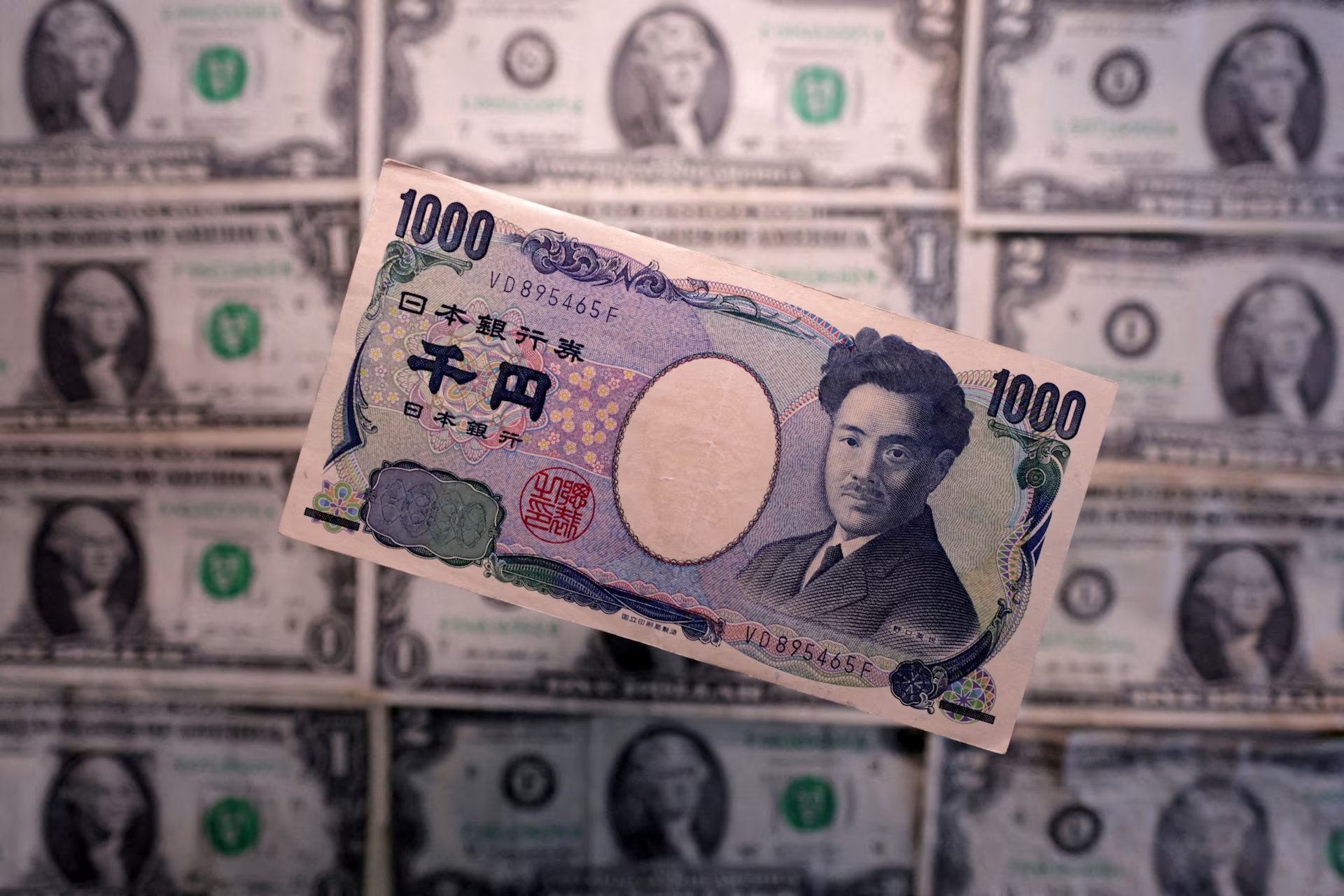
    The Japanese yen continues to face significant downward pressure, with a historic joint intervention by the United States and Japan failing to provide lasting relief. Weeks after the coordinated effort, the currency has reversed half its brief gains and is approaching the 160 yen per US dollar mark, having previously hit a 40-year low above 163 yen in late July.

    This persistent weakness is largely attributed to the widening interest rate differential between the US and Japan. US Treasury yields have reached multi-year highs, making dollar-denominated assets more attractive and fueling the yen carry trade. Despite a more hawkish stance from the Bank of Japan, investors continue to prioritize higher US yields, according to market observers.

    Intervention’s Limited Impact

    Market analysts suggest that while currency interventions can temporarily shift market positioning and disrupt momentum, they do not address underlying fundamental drivers such as interest rate differentials. Gary Dugan, CEO of The Global CIO Office, noted that the yen’s continued decline despite direct intervention indicates that US yields remain the primary factor influencing its value.

    The 30-year US Treasury yield recently reached 5.285 percent, while the rate for 30-year Japanese government bonds closed at 4.141 percent. This substantial gap incentivizes investors to borrow in yen at lower rates and invest in higher-yielding US assets, contributing to the yen’s depreciation.

    Implications for Asia-Pacific Retail

    The continued weakness of the yen has direct consequences for businesses operating across the Asia-Pacific region. Japanese companies, from luxury brands to electronics manufacturers, face higher import costs for raw materials and components, potentially impacting their pricing strategies and profitability. Conversely, the weaker yen can make Japanese exports more competitive, which could boost sales for some retailers and manufacturers focusing on international markets.

    For global retailers with a presence in Japan, purchasing power for Japanese consumers may diminish, affecting sales of imported goods. This situation mirrors challenges seen in other Asian markets where local currency depreciation against the dollar has driven up operational costs and consumer prices, requiring careful strategic adjustments from brands and retailers across the region.

  • SoftBank Plans Record $6.3 Billion Retail Bond Issue for AI Acquisitions

    SoftBank Plans Record $6.3 Billion Retail Bond Issue for AI Acquisitions

    Japanese technology conglomerate SoftBank Group is set to issue around 1 trillion yen, or approximately $6.26 billion, in corporate bonds targeting retail investors within Japan. This planned offering would represent the largest ever retail bond issue by a Japanese company, signaling a bold move by the firm to secure capital for its strategic investments.

    The substantial funds generated from this bond sale are earmarked for an aggressive expansion into the ‘physical AI’ sector. SoftBank’s Chairman and CEO, Masayoshi Son, has consistently championed AI as a critical area for future growth, and this financing move aligns with his vision to bolster the company’s position in advanced technological fields.

    Funding Strategic AI Expansion

    SoftBank’s focus on ‘physical AI’ indicates an interest in artificial intelligence applications that interact directly with the real world, potentially through robotics, autonomous systems, or smart infrastructure. This investment direction could see the company acquiring firms specializing in these areas, deepening its technological capabilities and market presence. The retail bond structure allows SoftBank to tap into domestic Japanese savings, diversifying its funding sources beyond institutional investors or venture capital rounds.

    The strategy reflects a broader trend among major Asian tech players to aggressively fund and acquire innovative technologies, particularly in the AI space. RetailNews Asia has observed similar capital-raising efforts and strategic investments from other regional giants, all vying for leadership in emerging tech markets that promise to reshape consumer experiences and business operations across the continent.

    Boosting Investment in Physical AI

    Masayoshi Son has been a vocal advocate for significant investment in artificial intelligence, previously stating that the AI boom would necessitate trillions in annual investment. This record bond issuance underscores SoftBank’s commitment to transforming that vision into reality. The company’s prior investments in various tech startups globally have positioned it as a key influencer in the digital economy, and this latest move reinforces its determination to lead the next wave of technological innovation.

    For retail investors in Japan, these bonds represent an opportunity to participate in the growth of a prominent domestic tech firm while potentially seeking more attractive returns than traditional savings options. The success of this large-scale offering will be closely watched as an indicator of both investor appetite and SoftBank’s ability to finance its ambitious AI-driven future.

  • Japan Households Brace for Further Price Hikes Amid Weak Consumer Spending

    Japan Households Brace for Further Price Hikes Amid Weak Consumer Spending

    Japanese households are expected to face increasing financial strain as companies across the nation plan to raise prices for goods and services. These hikes, set to begin this summer, are a direct response to persistently high crude oil prices and other rising operational costs. This development is likely to further dampen consumer spending and could impede economic growth.

    Inflationary Pressures Mount

    The impending price adjustments come at a challenging time for Japan’s economy. The gross domestic product (GDP) for April-June recorded a modest 0.3% quarter-on-quarter growth, translating to an annualised rate of 1.1% after price and seasonal adjustments. However, this growth was not fueled by domestic strength. Both private consumption and corporate capital investment declined during the period, highlighting a significant weakness in Japan’s internal demand. The economy’s expansion was primarily supported by external factors.

    Impact On Retail And Consumer Sectors

    The anticipated price increases are poised to directly affect the purchasing power of Japanese consumers. With households already managing existing cost pressures, new price hikes on essential goods and services will likely lead to a further tightening of budgets. This situation poses a challenge for retailers and consumer brands operating in Japan, as cautious consumers may reduce discretionary spending. Companies will need to strategize carefully to navigate this environment of rising costs and potentially constrained consumer demand.