Tag: Vietnam

  • Rivalry heats up in Vietnam’s food delivery market

    Rivalry heats up in Vietnam’s food delivery market

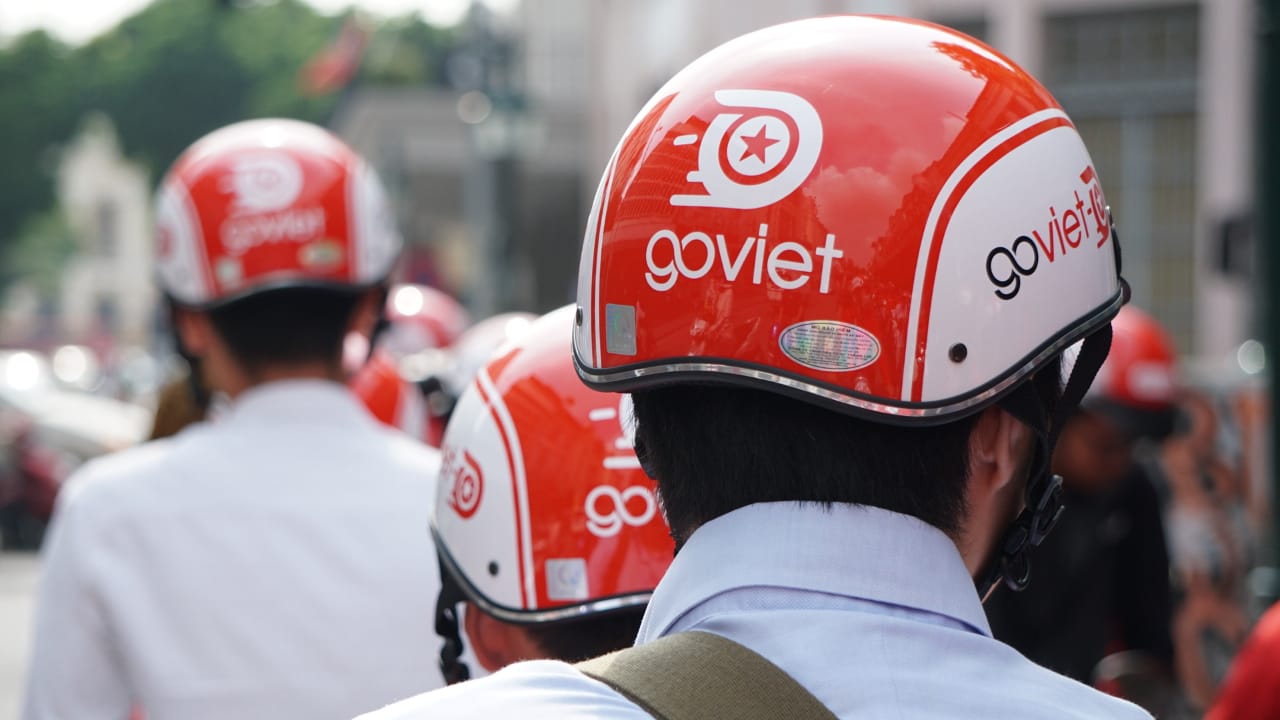
    Last week, a sea of red filled the inside of a milk tea shop in Ho Chi Minh City instead of regular young customers usually found in such places. GoViet drivers were queuing up to purchase food ordered by customers over its online delivery app Go Food, which was running a 50-percent discount program along with free delivery within 5 kilometers.

    The very next morning, the shop was filled with green shirts of Grab drivers. Grab had launched a free delivery promotion for the first 999 cups of milk tea ordered.

    Gradually, the green shirt – red shirt war is becoming visible on the streets.

    Despite being new entrants in the online food delivery market, both Go Viet and Grab are using various measures to attract and capture customer habits. Everyday, these two tech companies spend big on promotions across a wide range of food and drinks.

    They are also recruiting stars from the entertainment industry to endorse their service.

    From the get go, Go Viet had announced a partnership with singer Son Tung M-TP, who broke the record of Asia’s most viewed music video in 24 hours last May, as the company’s brand ambassador.

    Similarly, Grab’s start-studded ads feature diva My Tam, goalkeeper Bui Tien Dung and striker Nguyen Quang Hai of the national football team.

    While having large financial and technological capabilities, both Grab and Go Viet face many challenges after entering the market later than competitors like Delivery Now by Foody, Vietnammm, and Lala, which are apps well known to many customers.

    Delivery Now offers a wider range of food on its menu than Grab and Go Viet, had has a dense network of partners from large restaurants to small pavement stalls, industry insiders say.

    Delivery Now is a product of Foody Corporation, a Vietnamese food service startup that was acquired by Singapore-based internet firm Sea LTD last year; Vietnammm.com is a subsidiary of Takeaway.com, one of the world’s largest online food ordering websites based in the Netherlands; and Lala is invested by Ho Chi Minh City-based Scommerce Group, an information technology and services firm.

    Many experts believe that the race for market share between Go Viet and Grab will resemble that of Grab and Uber when they first entered Vietnam.

    Both Grab and Go Viet are aspiring to become super apps, for which food delivery is an indispensable keystone. In addition to attracting users with incentives and advertising, the two companies are spending a lot of money on reward policies to incentive drivers and expand their network of partner restaurants.

    Grab Vietnam CEO Jerry Lim claimed GrabFood’s growth has been very impressive, with the number of its contractors increasing eight-fold in just a month of testing in Hanoi. GrabFood was released in the city early last month, after a period of testing.

    In Vietnam, Grab is reaching delivery speeds of under 25 minutes and aims for a further reduction to 20 minutes per order, the fastest in regional markets.

    Grab Food is available in both Hanoi and Ho Chi Minh City, while Go Food is only present in the latter.

    Go Viet, however, remains confident that it will meet the needs of customers, aiming to partner up with thousands more restaurants nationwide in casual dining, fast food or luxury dining.

    “Food delivery and e-wallets are promising market segments,” GO Viet CEO Nguyen Vu Duc said after a few months of competing against Grab.

    However, these delivery apps also have certain limitations. For some items on their menu, drivers have to pay up front when ordering for customers in non-partner restaurants.

    Not all drivers are happy to buy food this way as waiting is time consuming, they have to make advance payments and risk the customer not accepting delivery.

    Do Xuan Quang, deputy head of Vietnam Logistics Business Association, said Vietnam was the fastest growing e-commerce market in Southeast Asia, and along with the strong growth of the logistics industry at 15-20 percent, a similar movement in the delivery market was not surprising.

    In 5-10 years, the delivery market in Vietnam will be valued at around $10 billion, he said.

    U.K.-based market research firm EuroMonitor International values the food delivery market in Vietnam at around $33 million this year and at more than $38 million in 2020. It also puts the annual growth rate of the market at 11 percent.
  • Vietnam needs more hotels as tourism blooms

    Vietnam needs more hotels as tourism blooms

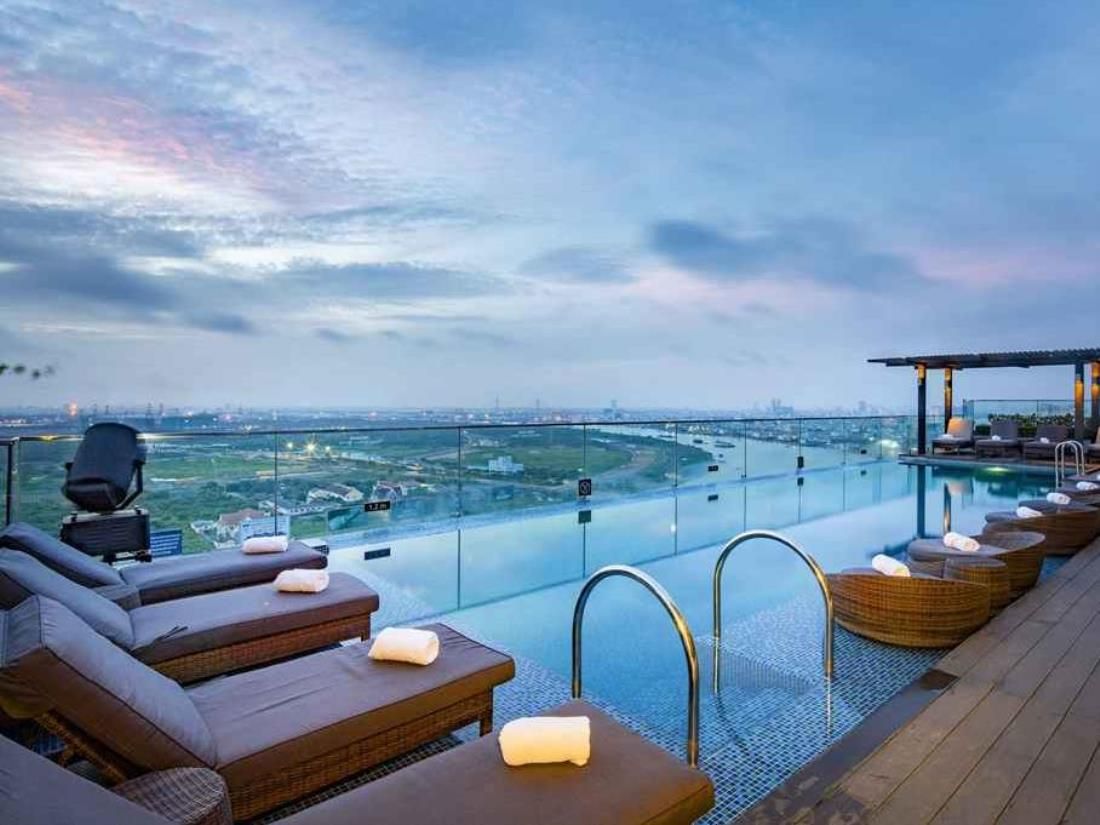
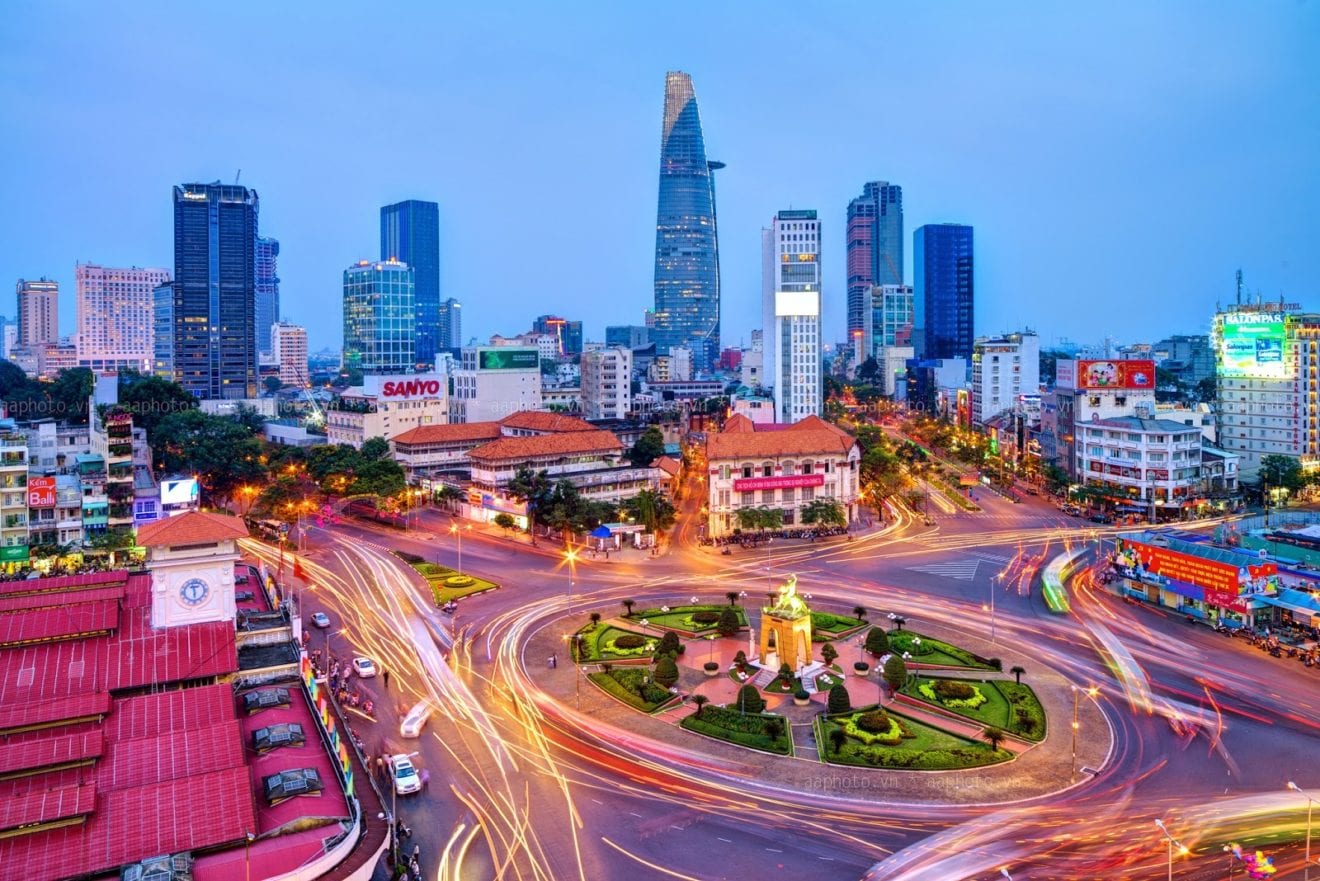
    The “golden age of tourism” in Vietnam presents robust hotel development opportunities in Vietnam’s biggest cities. Troy Griffiths, deputy managing director of real estate consultant Savills, said Ho Chi Minh and Hanoi are “under-hoteled per population, per travel and per airlift capacity”.

    “Hotel is a particularly dynamic sector at the moment as Vietnam is experiencing a golden age of tourism, with international tourism rising 20-30 percent year-on-year and more Vietnamese travelling than any time before,” Griffiths said.

    “There’s a demand for five-star hotels which will be really a strong asset class for the future,” he added.

    As of November, 14.12 million foreigners visited the country, up 21.3 per cent year-on-year and exceeding last year’s 12.9 million, according to the General Statistics Office.

    South Koreans dominated the surge at 46.5 percent, followed by Hong Kong (32.8 percent), Finland (29.6 percent), mainland China (26.9 percent), Taiwan (15.6 percent), and Denmark (15.4 percent).

    In the same period, domestic travelers rose 20.91 percent.

    “Hanoi and HCMC had been pretty quiet in the past as they went through a bit of a bad phase, when international visitors would pass and go straight to Da Nang, Phu Quoc and Nha Trang.

    “Now we see they are actually coming to Hanoi and HCMC because they are both very charming cities for international tourists,” Griffiths said.

    “And their stay is lengthening. That means more five-star demand.”

    Vo Quoc Phuong Trang, head of hotel investment consultancy at real estate service firm Jones Lang LaSalle (JLL), also said that Hanoi and HCMC, with their steady economic and tourism growth, would continue to draw foreign investors in the high-end hotel segment, which Trang said has low risk but offers steady revenue.

    A report released in July this year by global consulting firm Grant Thornton stated that increasing numbers of well-to-do Vietnamese citizens are choosing to stay in five-star hotels and spend lavishly when they travel within the country.

    Vietnamese citizens accounted for 19.2 percent of 4-star and 5-star hotels guests in 2017, according to the report. Although this is a slight decrease from last year’s figure of 20.8 percent, the number of domestic guests staying at upscale hotels had increased for three consecutive years from 2014 to 2016.

    The country has seen a strong influx of international hotel brands and hotel management companies in the last few years. From 30 hotels with international brand names in 2010, the number had increased to 79 at the end of last year, according to Savills.

    There has been a particularly big jump this year with recent announcements by Mandarin Oriental and Movenpick in HCMC and Best Western Premier in the central province of Quang Binh, it said.

    The emergence of Vietnamese hotel operators is also a highlight in the local hospitality landscape.

    “Vietnamese hotel developers are also getting mature. They are acquiring international knowledge and becoming a really strong force in their own right as we have already seen across the resort cities with Vingroup, FLC, BIM and Sun Group,” Griffiths noted.

    Savills’ third-quarter report shows that the 5-star segment in Hanoi continued its strong performance in Q3 though the high travel season for foreign tourists lasts from the beginning of Q4 to April.

    Occupancy rate of five-star hotels in the capital city was highest, at about 80 percent, followed by four-star hotels (65 percent) and three-star hotels (59 percent).

    Average revenue of five-star hotels was $100/room/night, double that of four-star and three times that of three-star properties, the report said.

    Data said, ten out of 19 high-end hotels in the best locations in HCMC have foreign owners. These include Sheraton, Caravelle, InterContinental, Asiana Saigon, and Sofitel.

    In Hanoi, nine of 16 high-end hotels have foreign firms as major owners such as Melia, Sheraton, Sofitel Metropole, Nikko, and Pan Pacific being the major names.

  • BBQ, hotpot dining blooms in Vietnam

    BBQ, hotpot dining blooms in Vietnam

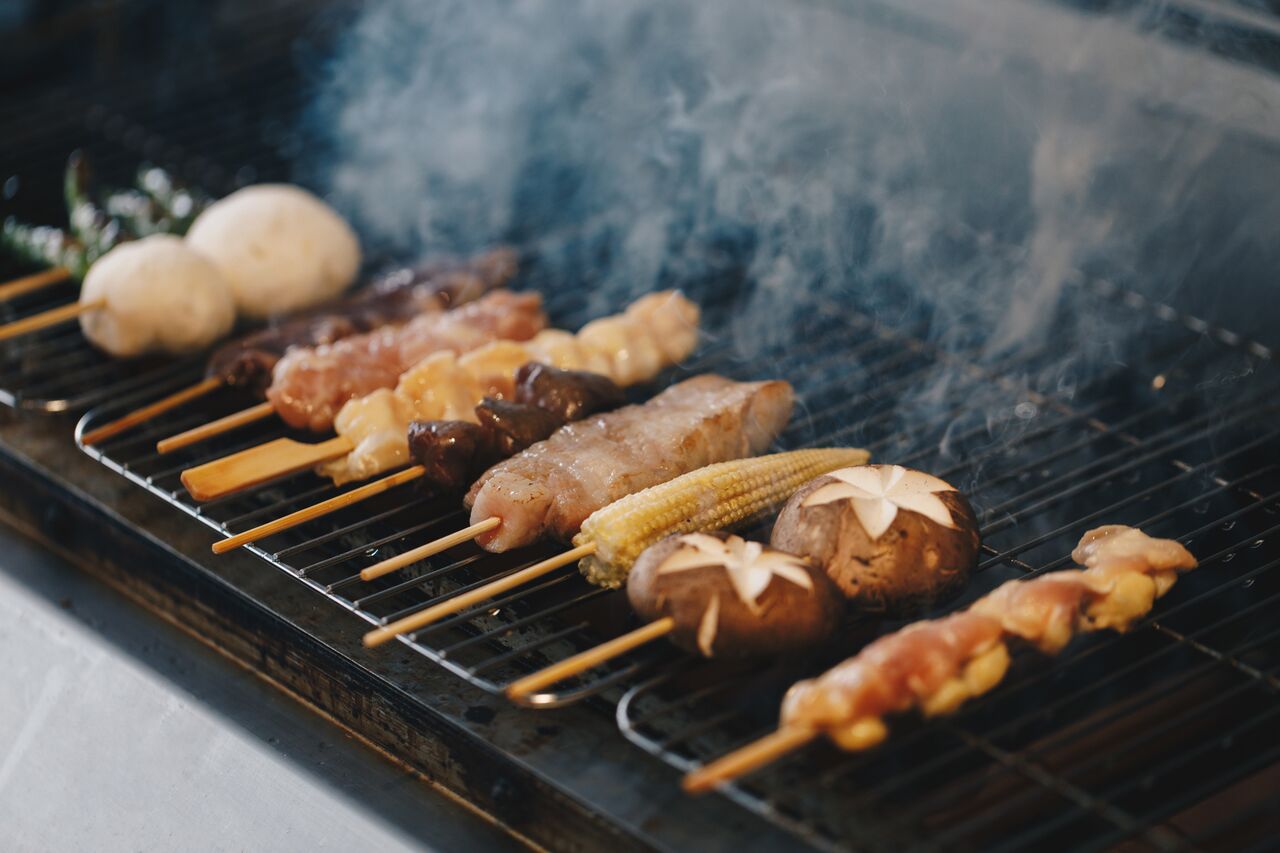
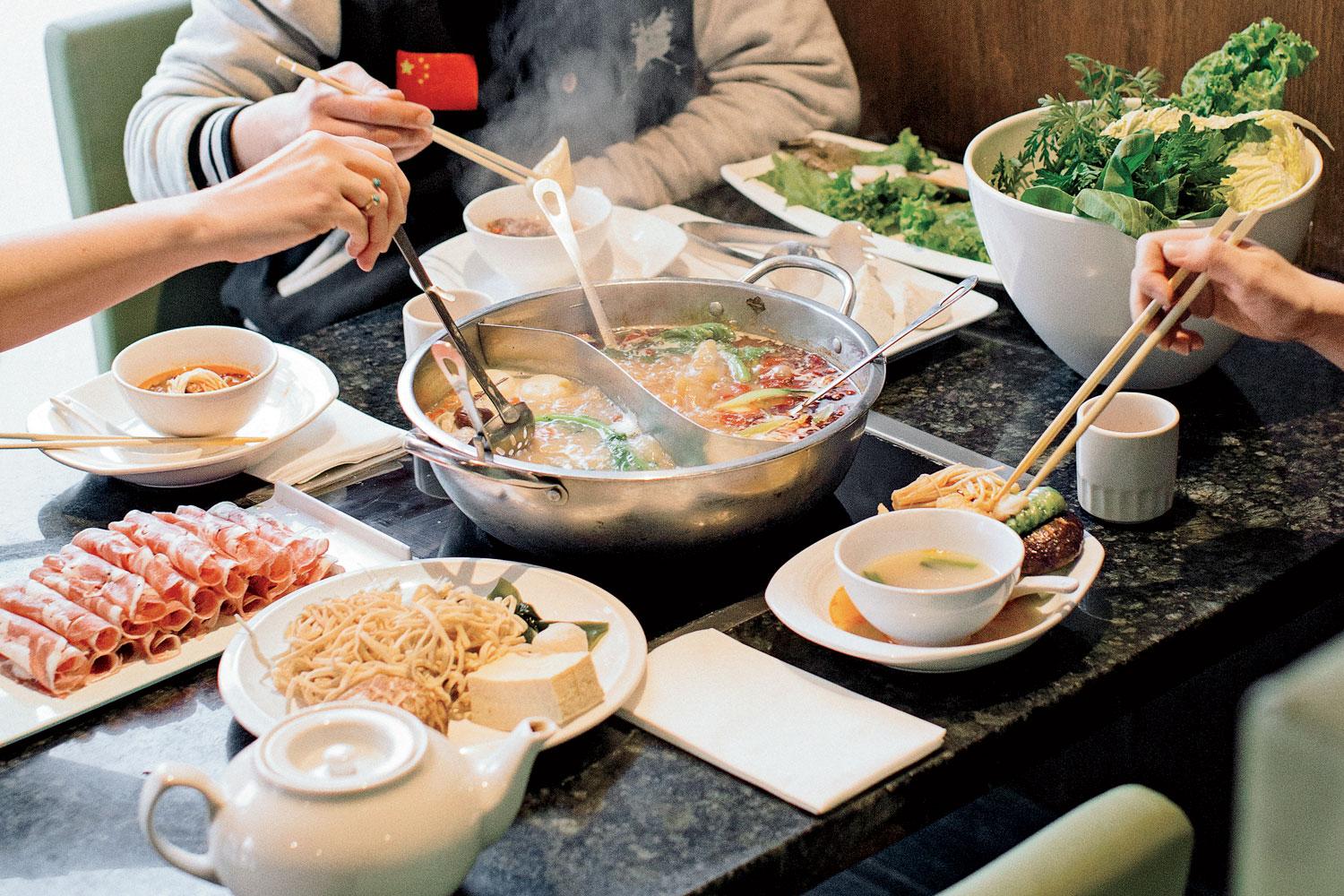
    Among non-Vietnamese cuisine channels, BBQ and hotpot are leading eating out options, and establishments offering these are growing bigger. From last year’s fourth quarter to this year’s third quarter, these two segments have posted the strongest growth in terms of diners’ visits – 46 percent for BBQ and 37 percent for hotpot, according to data compiled by HCMC-based market research firm Decision Lab.

    In terms of international cuisines, Japanese food and other Asian food grew the strongest in terms of diners’ visits – 49 percent and 23 percent respectively.

    The firm tracked all food and drink consumed out of home on a daily basis with an annual sample size of 15,000 completed interviews, and respondents were Vietnamese consumers aged above 15, who also reported on consumption by children (under 15 years) present when eating out.

    According to the survey, which covered the out-of-home eating and drinking market in Hanoi, Ho Chi Minh City and Da Nang, Vietnam’s three biggest cities since April 2016, the drivers of consumer choice for these cuisines may differ, but all hint at Vietnamese’s underlying expectations toward a dining destination.

    They choose BBQ places for celebration, quality of food and friendly service, and prefer hotpots because it is good for socializing, is suitable for celebrating special occasions, and provides a clean environment.

    Such customer preference has helped these service providers to register robust growth.

    For Vietnamese dining out in big cities, especially Hanoi and HCMC, Kichi-kichi, Gogihouse, SumoBBQ, ThaiExpress, Seoul Garden, KingBBQ and Hotpot Story are no strange names.

    Run by two Vietnamese operators Golden Gate Restaurant Group and Red Sun ITI Corporation, these are among most popular grill and hotpot restaurant brands in the country.

    Le Vu Minh, vice president of franchising, research and development and international relations for Redsun ITI said back in September that the company has maintained annual growth rates between 40 and 60 percent since 2015.

    The company increased its charter capital to VND150 billion ($6.6 million) from VND70 billion ($3.1 million) early this year.

    Redsun aims at setting up 400 restaurants in the next three years, half of them franchisees.

    Golden Gate’s revenues hit topped VND3.3 trillion ($142 million) last year, up 30 percent over 2016 and seven times that of 2013.

    Its pre-tax profit stayed at over VND250 billion ($10.75 million), while the company has a charter capital of VND64 billion ($2.73 million) last year.

    This year, it has targeted VND4.4 trillion ($190 billion) in revenue and VND326 billion ($13.93 million) in pre-tax profits and raising the number of outlets from 227 to 316.

    Vietnamese spend more than a third of their income on food and beverages, topping education and utilities, according to market research firm Vietnam Report.

  • Saigon apartment sales dip to lowest in 18 months

    Saigon apartment sales dip to lowest in 18 months

    The third quarter of 2018 saw apartment liquidity in Saigon fall to the lowest level in six consecutive quarters. According to property services provider Savills Vietnam, only 10,000 apartments were traded in Saigon in the third quarter of this year. The apartment sales were down 30 percent from last quarter and down 13 percent year-on-year.

    Grace C apartments took up 54 percent of total sales.

    Savills forecasts that by 2020, more than 124,000 apartments will be offered in the market, with Districts 2 and 9 in the eastern part of the city accounting for 55 percent of total supply.

    Meanwhile, another recent report compiled by property services provider CBRE Vietnam has reported even lower sales than Savills, at only 6,568 apartments sold in Q3. According to CBRE, sales fell 7 percent from the previous quarter, and was down 16 percent over the same period in 2017.

    Large disparities between real estate reports have existed between these two companies and are attributed to differences in statistical methodology.

    Recently, the Ho Chi Minh City Real Estate Association (HoREA) released a report on the housing market saying that as of October 31, 2018, there has been a continuous downwards momentum in apartment supply from the beginning of the year.

    During this period, total housing supply in the Saigon market fell 39.2 percent. The supply of high-end luxury apartments fell 9.6 percent, and that of midrange apartments by 37.5 percent. But the biggest decrease in supply was in the low-priced apartment segment, which was down 68 percent.

    The association warned that the structure of real estate supply showed a serious disequilibrium in the market, with low priced apartments taking up only 19.3 percent of total supply while luxury apartments take up a third.

    This showed a mismatch between demand and supply, posing a risk to sustainable development and social welfare, it said.

  • Vietnam’s peer-to-peer shopping and delivery platform gets South Korea license

    Vietnam’s peer-to-peer shopping and delivery platform gets South Korea license

    Vietnamese peer-to-peer delivery service XTayPro has been licensed in South Korea and expects this to be a stepping stone into East Asia. The app is a platform connecting people travelling by air with those who wish to buy or send products overseas.

    It creates a community of travelers who can make a little extra cash by buying and carrying stuff for others.

    Less than four months ago XTayPro had participated in the K-Startup Grand Challenge, a start-up accelerator program supported by the South Korean government.

    It has since signed 10 memoranda of understanding and letters of intent with funds and technology investment companies in South Korea.

    The K-Startup Grand Challenge has been held annually since 2016 to help start-ups grow and expand into Asian markets. It has so far supported 40 startups and solicited $26 million for them.

    At this year’s event Vietnam had 8 representatives who overcame 1,700 other start-ups from 100 countries to join a group of 80 in the 4-month Acceleration Program.

  • Trade war refugees race to relocate to Vietnam, Thailand

    Trade war refugees race to relocate to Vietnam, Thailand

    Experts say this is the biggest shift in cross-border supply chains since China joined the World Trade Organisation in 2001. Fred Perrotta spent four years building a network of Chinese suppliers for his line of trendy backpacks, but as soon as the United States announced tariffs on almost half of its Chinese imports, he started looking for suppliers in other countries.

    That process is now so far advanced it would be too late to reverse it even if U.S. President Donald Trump and his Chinese counterpart Xi Jinping call a truce in their growing trade war at this week’s G20 summit, the 33-year-old said.

    Perrotta’s company, Tortuga, is joining what industry experts say is the biggest shift in cross-border supply chains since China joined the World Trade Organisation in 2001.

    The shift is creating stiff competition to secure new facilities in neighboring countries and rebuild supply chains outside of China, home to a fifth of global manufacturing.

    “Everyone is nervous and scrambling around,” Perrotta said by phone from Oakland, California, where he recently took delivery of the first samples from a potential new supplier in Vietnam.

    “Long-term, we will probably shift everything.”

    The scramble is driven by the risk of more, and higher, U.S. tariffs on China, and fears that nearby emerging economies can only accommodate new businesses on a “first come, first served” basis.

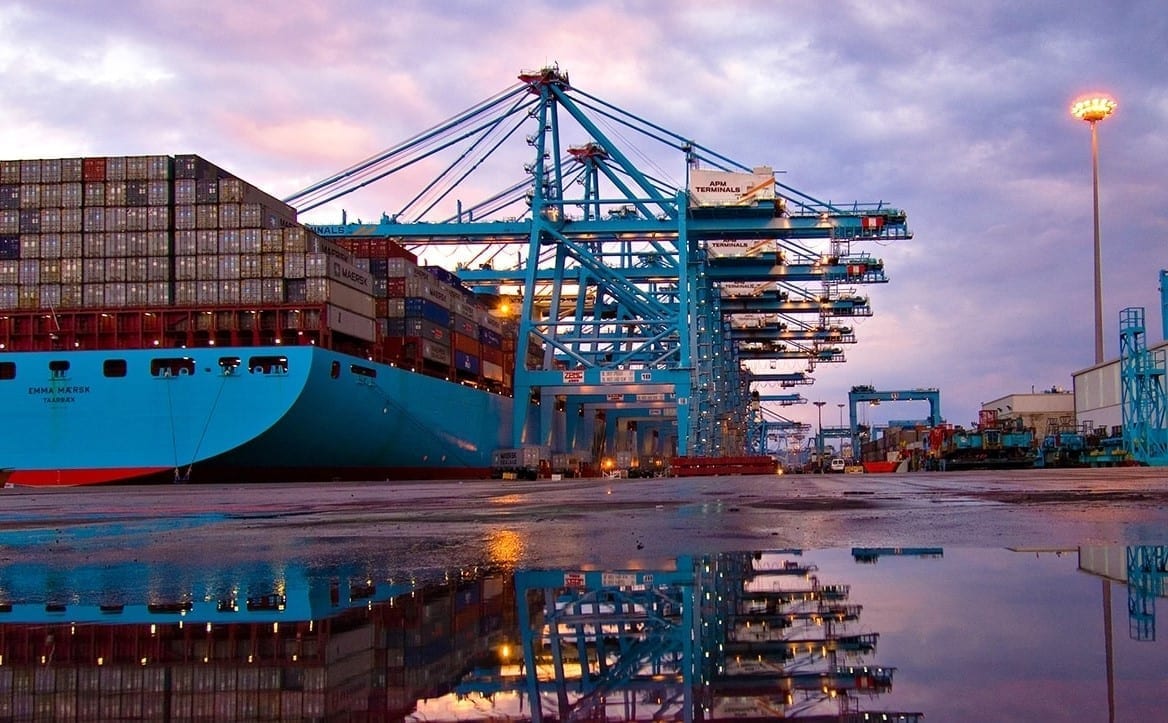
    Vietnam and Thailand are emerging as preferred destinations, but they still face capacity constraints ranging from red-tape to skilled labor and limited infrastructure.

    Frenzied activity 

    In an interview with more than a dozen company executives, trade lawyers and lobby groups in various industries revealed a frenzy of activity across Asia in recent months: executives are requesting product samples, touring industrial parks, hiring lawyers and meeting with officials.

    In June, Hong Kong-listed furniture maker Man Wah Holdings bought a factory in Vietnam for $68 million and said earlier this month it plans to almost triple its capacity to 373,000 square meters by the end of 2019.

    “The acquisition is to mitigate the risks posed by tariffs,” Man Wah said in a statement.

    Vietnam-based industrial real estate developer BW Industrial says inquiries have surged since October, and all its factories are now leased out.

    “The manufacturers are from all over the world but they all have production plants in China and need to start production ASAP,” Chris Truong, a sales manager at BW Industrial said.

    In Thailand, SVI Pcl, which provides electronics and manufacturing solutions, said it has just selected four new deals worth about $100 million with existing customers who have operations in China.

    “The trade war is good for us,” CEO Pongsak Lothongkam said. “We have been approached by so many companies that we have to prioritize.”

    KCE Electronics, Southeast Asia’s biggest maker of printed circuit boards (PCBs), has been contacted by U.S. companies who want to seek a new supplier to replace one in China, CEO Pitharn Ongkosit said.

    “It’s a good opportunity. Many customers have contacted us to ask about our products and prices. But there are no sales yet as it will take time,” he said.

    Stars Microelectronics Pcl, another Thai electronics manufacturing services provider, is also getting new business.

    “Two (or) three companies will start moving their production base (out of China) to us soon,” CEO Peerapol Wilaiwongstien said.

    Cambodia is also attracting interest, with Parsippany, NJ-based bicycle maker Kent International Inc shifting Chinese production to the Southeast Asian country.

    “We have a big business in the United States,” Arnold Kamler, the company’s majority owner and chief executive said. “There is no choice but to as rapidly as possible look to move production away from China.”

    Disruption 

    The re-sourcing and relocation efforts mark an acceleration of an already established trend as China’s economy shifts towards services, consumption and high-tech production.

    “We are on the cusp of the biggest sourcing disruption that we have seen in a generation,” said Stephen Lamar, executive vice-president of the American Apparel&Footwear Association, whose more than 1,000 members contribute over $400 billion annually to U.S. retail sales.

    “The No. 1 thing I hear from companies is along the lines of: ‘For years we have been talking about diversifying from China and now we have to actually do it’.”

    Shifting production can take years to complete: firms need to secure funding, find the right suppliers, sort out new logistics – all while dealing with new legal and accounting issues in a country they may not know well.

    “Any relocation away from China is going to be very slow and very uncertain,” said Aidan Yao, senior Asia EM economist at AXA Investment Managers.

    Low tech goods and low value manufacturing would be the quickest to migrate while higher value-added exports in the machinery, transport and IT category would likely take decades to relocate due to high R&D costs and competitive Chinese labor costs, UBS said in a note earlier this month.

    Yet a regional client poll by Citi conducted in the last month showed more than half of them already adjusting their supply chain to limit upheaval to their business.

    China’s sophistication in areas such as automation means no one country can replace China, said trade lawyer Sally Peng of Sandler, Travis&Rosenberg.

    “So everyone is looking for that China Plus One, Plus Two, Plus Three country strategy, all the way to Africa,” she said.

    Companies hold out little hope for a truce in the trade dispute when Trump and Xi are due to meet on the sidelines of the G20 summit in Buenos Aires this week.

    Indeed, Trump said on Monday he expected to move ahead with raising tariffs on $200 billion in Chinese imports to 25 percent from the current 10 percent.

    While Chinese export data shows little sign yet of an impact from the trade war, some economists say that is because companies are rushing to get shipments out ahead of more tariffs.

    Collateral victims 

    To be sure, smaller emerging Asian economies are not necessarily licking their lips about the prospect of the trade war between the world’s top two economies worsening.

    Growth has slowed in the third quarter across Southeast Asia, as well as in Taiwan, Japan and South Korea, with officials partly blaming the trade war for it.

    Thailand’s exports of electronic integrated circuits, for instance, rose 4 percent to the United States in October but fell 38 percent to China. Vietnam’s manufacturing sentiment indicator is the highest in Asia but is well off its peak.

    A lack of infrastructure is also a problem for countries seeking to pick up business.

    Thailand is 41st in World Bank infrastructure quality rankings, Vietnam is 47th, compared to China’s 20th ranking.

    Bangkok is seeking to address that with its Eastern Economic Corridor, an ambitious $45 billion development project which plans improvements to deep water ports, airports and railways.

    Beyond infrastructure bottlenecks, red tape – particularly in Vietnam – remains hard to navigate and skilled labor is not easily available.

    Vietnam’s unemployment rate is 2.2 percent. Thailand’s is even lower.

    “The proportion of unskilled labor in Vietnam remains large and there hasn’t been any effective plan to improve this issue, and I don’t see any significant change in five or even 10 years,” said the vice chairman of the Vietnam Electronic Industries Association, Nguyen Phuoc Hai.

    “Whether cheap labor will remain one of Vietnam’s advantages in the face of the fourth industrial revolution is questionable.”

  • Hana Bank reveals Vietnam expansion plan

    Hana Bank reveals Vietnam expansion plan

    South Korean banks are setting themselves up to score big in Vietnam as foreign ownership limits would be loosened. South Korea’s second-largest lender by assets, KEB Hana Bank, is interested in buying a 17.65 percent stake in the Bank for Investment and Development of Vietnam (BIDV), a source said. BIDV is currently the second-largest state-owned lender in Vietnam by assets. 95.28 percent of its equity belongs to the country’s central bank, the State Bank of Vietnam (SBV).

    The SBV has “proposed to sell” the stake to KEB Hana for 30 billion won ($26.6 million), said the source, who requested anonymity.

    Last year, Shinhan Bank, a commercial banking unit under Seoul-based Shinhan Financial Group, acquired ANZ Vietnam’s retail unit, bringing along the Australian bank’s 95,000 credit card customers.

    Shinhan Bank has recently become the largest foreign bank in Vietnam with $3.3 billion in assets, surpassing HSBC.

    Vietnam presented a draft securities law in Hanoi earlier this month that would remove the current 49 percent foreign ownership cap in many sectors, allowing majority or even 100 percent ownership of a company.

    Although the limit for banks remains at 30 percent, government economic advisor Can Van Luc said at the draft presentation forum on November 7 that authorities would consider raising this limit for banks on a case-by-case basis, Reuters reported.

    Analysts say Vietnam’s growth potential and deregulation plans make it an attractive market for South Korean banks.

    “Vietnam is the most desirable market among emerging countries,” said Seo Young-soo, an analyst at Kiwoom Securities.

    “It has more advanced urbanization, and its market is more concentrated compared to Indonesia. Its government-driven economic development model is also familiar to South Korean banks, which have grown under the same strategy,” Seo said.

    Data from the Seoul-based regulator Financial Supervisory Service (FSS) show that total assets held by South Korean banks in Vietnam increased 18.9 percent last year to $5.7 billion.

    This ratio is higher than that of foreign lenders overall, whose combined total assets increased 12.9 percent to $42 billion during the same period, FSS said. South Korean lenders’ combined net profit in Vietnam also jumped 28.9 percent last year to $61 million.

    Vietnam has nine wholly-owned foreign banks, four state-owned banks and 31 domestic joint-stock banks.

  • China could use Vietnam to avoid US tariffs: experts

    China could use Vietnam to avoid US tariffs: experts

    Experts said the U.S.-China trade war puts Vietnam at risk of fraud as capital moves into the country to avoid U.S. sanctions. Vietnamese products would face tough competition from China in both the domestic and overseas markets, Nguyen Thi Thu Trang, director of the Vietnam Chamber of Commerce and Industry’s (VCCI) WTO Center, said at a recent conference on the impact of the Sino-American trade spat.

    In the domestic market, China might seek to dump its goods on Vietnam to avoid Donald Trump’s tariffs. Cheaper Chinese goods competing with Vietnamese goods will not benefit Vietnam’s economy.

    In overseas market, China might borrow the “made in Vietnam” label to dodge U.S. tariffs.

    If this cannot be controlled, there could be grave consequences for Vietnamese firms since the U.S. might apply the same tariffs as they have done on China, according to industry insiders.

    Ho Duc Lam, chairman of the Vietnam Plastics Association, said his industry has been impacted by having to compete directly with Chinese companies as China might borrow the “made in Vietnam” label to dodge U.S. tariffs.

    Tran Dinh Thien, an economist and member of the Prime Minister’s Economic Advisory Group, noted that the trade war brings both opportunities and challenges for Vietnam, but it is up to local companies to identify the opportunities.

    He said the trade war has hit investors’ confidence causing them to pull out of emerging markets including Vietnam. The global supply chain is badly disrupted as a result, and the investment environment has become uncertain, he said.

    Lam argued that to protect domestic companies the government should consider import taxes if there are signs of a safeguard action.

    It should not issue licenses if there is no guarantee that more than two thirds of the production chain would be in Vietnam, and should promote free trade agreements with Europe and others to reduce Vietnam’s dependence on the U.S. and China, he added.

    Trang of the VCCI said since the trade war shows no signs of ending soon production enterprises should monitor the situation to respond nimbly to changes and should know where and how to take advantage of potential opportunities.

    It is known which goods face sanctions, so businesses should research about customers for those goods and offer them a better deal, she said.

    The U.S.-China trade war escalated in September with the U.S. levying an additional 10 percent tariff on about $200 billion worth of Chinese products. Washington is set to raise the tariffs to 25 percent in January if there is no agreement between the both sides.

    China retaliated with 5 and 10 percent tariffs on $60 billion worth of U.S. products.

  • Online Black Friday runs lackluster campaign in Vietnam

    Online Black Friday runs lackluster campaign in Vietnam

    Online Black Friday retailers failed to enthuse customers with usual discounts, while brick and mortar stores saw heavy traffic. E-commerce giant Lazada combined its Black Friday and Cyber Monday into a four-day promotional event, offering discounts of up to 70 percent, mostly on cosmetics and fashion items.

    New items were discounted by 15 percent, and the strongest price reductions were offered on low-value items of unpopular brands.

    Other e-commerce services claimed to offer bigger discounts, of up to 91 percent on Tiki and 99 percent on Shopee, but these were restricted to a particular time frame after which the discounts passed on to other items.

    However, such “flash sales” are familiar to online shoppers as daily offerings made by most e-commerce services.

    Thus, retailers failed to enthuse customers with the discounts.

    Minh Tien, an office worker in Ho Chi Minh City’s District 1, said that he regularly checks flash sale items on these websites. “It’s the same method this time, and I’m in no rush as the event will last three to seven days.”

    Market observers said another reason that Black Friday online sales in Vietnam failed to catch fire was the Chinese Singles’ Day promotional event held earlier this month and the upcoming Online Friday hosted by the Vietnam E-commerce and Digital Economy Agency (iDEA), under the Ministry of Industry and Trade, on December 7.

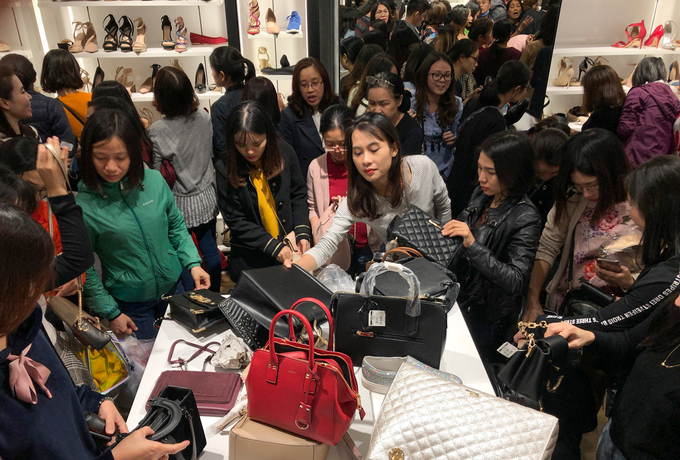
    But in contrast to the online market, the shopping atmosphere was vibrant at brick-and-mortar stores. People started to queue up at large shopping centers in Hanoi and HCMC early Friday.

    A large fashion store on Ba Trieu street in Hanoi offered a discount on all items for five hours, attracting a large number of customers.

    In other stores, customers had to wait for up to two hours to buy household items. Office workers joined the shopping frenzy at lunch time, only to find out they were late because shops stopped letting new customers after 11 a.m.

    As of 10 p.m. Friday night, customers were still queuing up at major shopping malls in Hanoi.

  • HCMC to not build high-rise apartment until 2020

    HCMC to not build high-rise apartment until 2020

    The Ho Chi Minh City administration has decided that no high-rise apartment projects in the dowtown will be approved until 2020. Instead, priority will be given to repair and renovation of old apartment buildings. According to the housing development plan for 2016-2020 with orientation until 2025, that was approved by the HCMC People’s Committee on November 19, the city will not approve construction of new high-rise apartments in inner city areas (District 1 and 3) until 2020.

    Projects already approved and under construction will continue as usual.

    The city will also prioritize projects repairing or renovating 50 percent of 474 old apartment complexes constructed before 1975.

    It will continue to relocate households living along canals; construct new or renovate old, degraded condominiums; upgrade existing residential areas; continue developing new urban centres, and prioritize the development of social housing.

    The city will also focus on completing unfinished projects in some uptown districts and refrain from approving new housing projects if there are no plans to build adequate technical and social infrastructure in the area.

    The focus on completing existing projects will also apply to outlying districts. Housing in rural communes will be prioritized and high-rise apartments will be focused along major transport corridors or where technical infrastructure can support new housing.

    In particular, Ho Chi Minh City will invest in and prioritise the development of social housing projects to meet the needs of eligible residents, and for those who are resettled by urban beatification projects.

    The plan aims to free up more land for social housing projects in the 2021-2025 period.

    It envisages raising total living space in the city by 40 million square meters and per capita housing area to 19.8 square meters by 2020.

    To implement the housing development plan, the city estimates a budget of over VND310 trillion ($13.27 billion), of which investment capital for commercial real estate will amount to VND82 trillion ($3.51 billion), residential housing VND210 trillion ($8.99 billion), and rest for social housing.

  • ‘In startup world, being seen as crazy is normal’: Grab co-founder

    ‘In startup world, being seen as crazy is normal’: Grab co-founder

    Startup entrepreneurs need passion and should take risks and make sacrifices to succeed, says Tan Hooi Ling, co-founder of Grab. She said passion and commitment, not money making, should drive a startup, and that it was okay to be considered crazy. The co-founder of Grab was speaking at the closing ceremony of the 2018 Startup Vietnam contest in Ho Chi Minh City on November 15,

    She traced Grab’s journey to becoming one of the major ride-sharing services in the world. It all started seven years ago when she and co-founder Anthony Tan spoke about deploying a mobile call service. But no one could imagine what the application would be like and some even called the idea crazy.

    The skepticism and protestations did not dissuade the Grab team, which continued to plow ahead on its difficult journey.”When we shared our idea, they raised their eyebrows and asked, ‘What? What exactly do you want to do? How does this work?’”

    One of the big difficulties she and her colleagues faced frequently was finding partners and building a team with a vision and belief in the future of the startup.

    “At first, not many people understood our model, so we had to look around the world for engineers, scientists.”

    Grab is now present in 235 cities in eight Southeast Asian countries. Its application has been downloaded 125 million times, meaning every fourth smartphone user is a Grab user. Its annual revenue now tops a billion dollars.

    “It was the result of a grueling seven-year journey where we tried, failed, and stood up again so many times. This is an experience most startups would encounter.”

    A new idea could be considered crazy today, but make a tremendous impact on the world tomorrow; that is the key to innovation, Tan Hooi Ling said.

    She said another lesson to be learned from Grab is to know how to stop and ask questions whenever there is trouble or a stumble, instead of continuing with the same strategy.

    After each spill, the startup needs to calmly reflect on what has happened, why the failure, what is not going in the right direction, and how to change, she said.

    After drawing lessons, the entrepreneurs must pull themselves up and continue with their journey, she said. But that perseverance should be accompanied by a passion and the courage to take risks and sacrifice time, effort, money, and energy to realize the dream.

    “Do not start a business just because you want to make more money or you will lose a lot before seeing the light. Do it when and only when your heart races every day and when you think you have to achieve it completely and at any cost.”

    “If someone says you are crazy, let it go and move on. In startup world, being seen as crazy is normal.”

  • Indian rice rates gain for third week; markets eye Philippine order

    Indian rice rates gain for third week; markets eye Philippine order

    Rice export prices rose for a third straight week in India while an Philippine order did little to infuse activity in Thailand and Vietnam. India’s 5 percent broken parboiled variety was quoted around $367-$375 per tonne this week, from $363-$371 the last week. The top exporter’s rupee currency rose to its highest level in more than two months, trimming exporters’ margins.

    “Paddy rice prices have jumped in Chhattisgarh and other neighbouring states and accordingly export prices are going up,” said an exporter based in Kakinada in the southern state of Andhra Pradesh.

    In July, the government raised prices paid to local farmers for common grade paddy rice by 13 percent from a year earlier to 1,750 rupees per 100 kg for the new season crop.

    Meanwhile, neighbouring Bangladesh will procure 600,000 tons of rice at 36 taka ($0.40) per kg from local farmers in the current harvesting season to boost reserves, a food ministry official said.

    In Vietnam, rates for 5 percent broken rice fell to about $410 a ton from $415-$420 last week.

    “Though prices are lower, trade remains very quiet as domestic supplies are empty. Prices will fall further in the coming weeks, closer to the levels offered by Thailand and India,” a trader based in Ho Chi Minh City said.

    “The Tan Long Group offered 118,000 tonnes in a Philippines import tender for 500,000 tons earlier this week, but the firm hasn’t been seen buying rice from the local market, and it’s not clear where its source will be.”

    The Philippines is on a rice-buying spree this year in a bid to tame prices that surged as stocks at government warehouses nearly ran out.

    Singapore-based commodity trader Olam International offered to supply the Philippines with 210,000 tons and Vietnam’s Tan Long Group Joint Stock Co offered 118,000 tons.

    Traders said the Vietnamese market will remain quiet until early next year when supplies of the winter-spring crop become available.

    Meanwhile in Thailand, benchmark 5 percent broken rice prices were quoted at $382-$395 per ton, free on board (FOB) Bangkok, narrowed from $380-$398 last week.

    Thailand will only supply part of the Philippines deal so there has been no immediate impact yet, but there is a chance that domestic price could rise later this week because of it, a Bangkok-based rice trader said.

  • Long Thanh Airport could host long haul or beyond-ASEAN flights

    Long Thanh Airport could host long haul or beyond-ASEAN flights

    Several options, including exclusive servicing of long-haul flights, have been proposed for the Long Thanh Airport planned in southern Vietnam. The Civil Aviation Authority of Vietnam (CAAV) has recommended two broad options for dividing traffic between the existing Tan Son Nhat International Airport in Ho Chi Minh City and the Long Thanh Airport that will built in the neighboring province of Dong Nai.

    The first option that it has suggested to the Transport Ministry is that Long Thanh will handle all international flights of more than 1,000 km, with the rest flying into Tan Son Nhat.

    For domestic flights, carriers can choose where they want to be based.

    The second option is to allocate all flights from outside Southeast Asia to Long Thanh.

    The allocation criteria can be reconsidered after five years of actual operation, the CAAV proposed.

    Carriers Jetstar Pacific and Vietjet have supported the second option.

    Vietnam Airlines wants to use Long Thanh for all international flights and certain domestic flights and Tan Son Nhat only for domestic flights.

    The preliminary feasibility report on the Long Thanh airport by a joint venture between firms from Japan, France and Vietnam had suggested that all budget carriers could fly into Tan Son Nhat, and all full-service airlines use Long Thanh.

    But CAAV executives said the law does not distinguish between full-service and low-cost airlines, making the suggestion impractical.

    In the communication it sent recently to the Transport Ministry, the CAAV suggested operating international and domestic flights from both airports, ensuring their equal and non-discriminatory use.

    An aviation specialist who did not want to be named pointed out that airlines would prefer to operate from Tan Son Nhat because of its high capacity and proximity to downtown Ho Chi Minh City.

    The ministry needs to allocate flights in such a way as to ensure both airports benefit equally and the load on Tan Son Nhat eases. The allocation of domestic flights to Tan Son Nhat and international flights to Long Thanh is not feasible since airlines fly the same aircraft on both international and domestic routes, meaning they would often have to fly empty between the two airports, the specialist noted.

    He said the distribution of routes should also depend on the growth of the aviation market.

    Situated 40 kilometers east of Ho Chi Minh City, the Long Thanh airport is expected to take up the overflow from the largest existing airport in the country, the Tan Son Nhat International Airport.

    The Tan Son Nhat International Airport now receives 32 million passengers a year, far beyond its designed capacity of 25 million.

    Long Thanh, to be built in three phases over three decades, was recently listed as one of the world’s 16 most exciting airport projects.

    The first phase is scheduled for completion in 2025 when it will be able to handle 25 million passengers a year. The next two phases will be built in 2030-2035 and 2040-2050.

    It will have a capacity of 100 million passengers and five million tons of cargo when completed.

    The Airports Corporation of Vietnam said airports had handled 87 million passengers in the first 10 months of this year, up 12 percent year-on-year.

    The number of international passengers rose by 23 percent and domestic passengers by 7 percent.

  • Food firms hope to feast on snack sales in Vietnam

    Food firms hope to feast on snack sales in Vietnam

    Vietnamese companies are hoping to make big bucks selling popular foods like fried chicken and crispy pork skin. Nguyen Ngoc An, general director of Vietnam Livestock Industry Company (Vissan), sees great potential in the snacks market. He is not referring to potato chips, but to fresh food made with chicken and pork.

    “Deep-fried pork skin, seaweed dried chicken and pha lau (pork meat and offal braised in a spiced stock) are favorite dishes among young people,” he said.

    “Such snacks will be a good source of revenue for the company in the near future.”

    Already in the market, Saigon Food JSC has released more than 10 fresh snack products, including rice paper pancakes, corn fried shrimps, and tamarind fried balut eggs, which are selling very well.

    Le Thi Thanh Lam, deputy general director of Saigon Food, said that the company’s products are sold at 7-Eleven convenience stores in Ho Chi Minh City.

    “In the near future, we will be exploring new product lines that fit the tastes of consumers to expand the snacks segment,” she said.

    A leading producer of poultry eggs, Ba Huan JSC has also latched on to this trend, launching a group of snack products including spicy chicken legs, skewers, sausages, and omega 3 flan.

    Pham Thanh Hung, deputy general director of the company, said these snacks are new to the market, but sales are quite high. Most of the products are sold in supermarkets or convenience stores. Spicy chicken legs are most liked, he said.

    Vinh Dat Food JSC, which introduced fresh snacks into the market before any of the above companies, said that initially, processed egg products such as balut egg stew, preserved black eggs and braised eggs saw slow consumption.

    But by 2017, explosive growth of this segment forced the company to invest in more production facilities to meet demand. In the coming months, the company will develop more soft-boiled egg products and wholesale various types of braised eggs to restaurants.

    The latest survey carried out by market research firm Decision La shows that on average Vietnamese youth spends VND13 trillion ($556.53 million) on snacks every month.

    And according to statistics by London-based market research firm Euromonitor, by the end of 2016, Vietnam had about 149,000 food kiosks on the streets, including mobile vans or fixed in front of houses, which earn about VND46.9 trillion ($2.01 billion) per year.

  • Vietnam ratifies Trans-Pacific Partnership

    Vietnam ratifies Trans-Pacific Partnership

    Solidifying its commitment to the Trans-Pacific Partnership that was redrafted and signed in March, Vietnam is the latest member nation to ratify the trade agreement. Vietnam’s lawmaking body approved the Comprehensive and Progressive Agreement for Trans-Pacific Partnership (CPTPP) on November 12, following Australia’s ratification on October 31.

    Other countries to have now ratified the deal include Japan, Canada, Mexico, Singapore and New Zealand, taking the member count to seven.

    Originally a 12-country trade deal, the CPTPP – also known as TPP-11 – had to be redesigned in March to facilitate 11 members, after US president Donald Trump pulled Washington out of the deal shortly after taking office in early 2017.

    At its first creation, the CPTPP represented some 30% of global trade, but without the US, that figure has dropped to 13%. Still, it is expected to reduce tariffs between the 11 participating nations that together add up to US$10 trillion.

    As for Vietnam, the deal comes at a time when the Southeast Asian nation looks to rid its dependency on its two major trading partners – the US and China, amid the recent tensions between the two.

    Some 25% of Vietnam’s total trade is with China, which is is in a tariff battle on all of its exports to the US.

    The new CPTPP gives Vietnam the chance to limit its reliance on China for things such as yarns and textiles for its garment industry, meaning it will source from member countries to receive tariff-free components.

    “This is an important political decision, affirming our country’s active role in international integration,” Nguyen Van Giau, head of the National Assembly’s external relations department said this week.

    Up close, the deal sees taxes on nearly 43% of Vietnam’s apparel exports to Canada removed immediately after the agreement takes effect, and 100 percent after four years, the government said.

    The garment sector is Vietnam’s second largest export-earner after smartphones, while footwear products and seafood will also benefit.

    The pact, which includes specific requirements on labour rights and conditions of work, is also expected to help Vietnam advance in labour reforms, the International Labour Organization said.

    Brunei, Chile, Malaysia and Peru are the four remaining members yet to ratify the pact.