Tag: Vietnam

  • Transport giant to withdraw capital from leading HCMC taxi firm

    Transport giant to withdraw capital from leading HCMC taxi firm

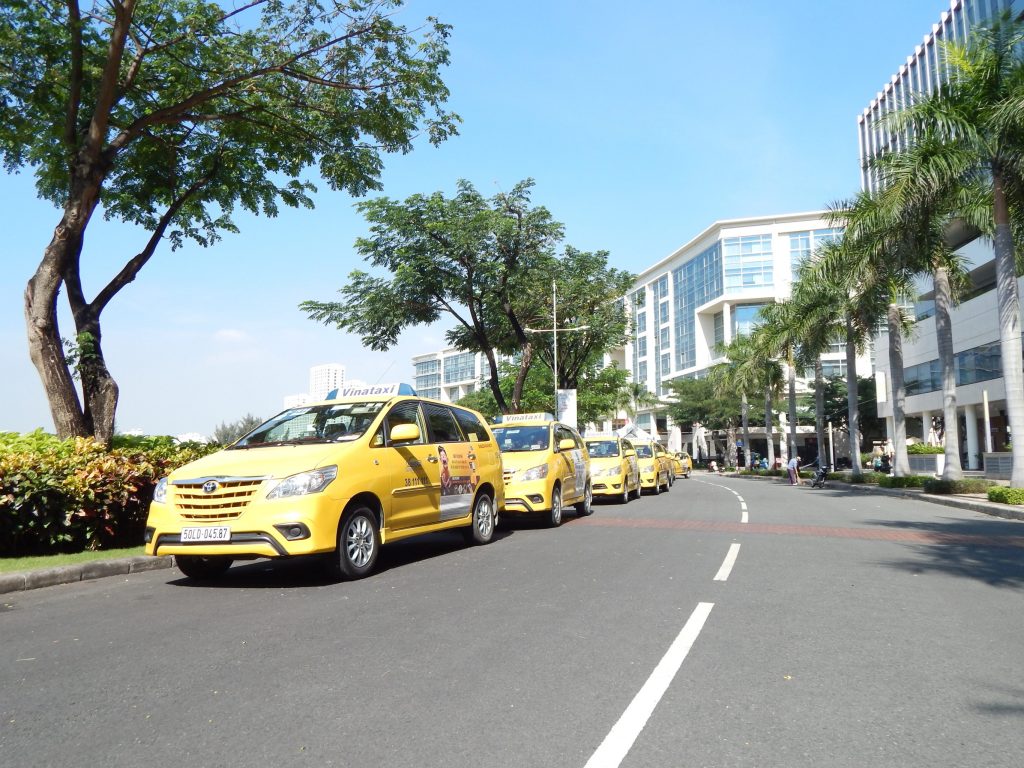
    In an apparent u-turn, transport giant Tracodi has approved divestment of its 30 percent stake in Vinataxi. Just months after saying it intends to increase its stake in Vinataxi, renew its fleet and install driver software, the Transport and Industry Development Investment Corporation (Tracodi) has decided to pull out.

    Tracodi has authorized Nguyen Thanh Hung, its general director and vice chairman, to seek investors and negotiate a transfer price not lower than the net present value of Vinataxi shares calculated according to book value.

    Vinataxi is a joint venture between Tracodi and electronic component distributor Tecobest Hong Kong, established in 1992. In 2003, Tecobest transferred capital management rights to ComfortDelGro, the leading public passenger transport operator in Singapore.

    According to the consolidated financial statement of the third quarter, Vinataxi occupied the third largest market share in Ho Chi Minh City with a chartered capital of VND113 billion ($4.84 million). Tracodi’s initial investment value was approximately VND34 billion ($1.46 million) in the joint venture.

    Tracodi’s capital withdrawal is in stark contrast to the plan announced by its board at its annual general meeting mid-June. Then, the corporation announced it wanted to negotiate raising its ownership ratio in Vinataxi to 49 percent, and coordinate with ComfortDelgro Savico Taxi, a joint venture between ComfortDelgro and Saigon General Service Corporation, to renew their fleets and install driver software.

    Tracodi’s management board estimates the firm will reap net profit of VND8 billion ($342,916) from its taxi business line this year with its combined fleet of over 300 cars.

    In 2017, revenues and after tax profit of Vinataxi reached over VND47 billion ($2.01 million) and VND1.2 billion ($51,431) respectively.

  • Vietnamese banks report Jan-Sept rise in bad debts

    Vietnamese banks report Jan-Sept rise in bad debts

    Thirteen of 17 listed banks have seen their bad debts rise in the first 9 months of this year, according to banks’ financial reports. Experts blame this on recent credit growth, loose lending practices and accumulated old non-performing loans.

    Bad debts of VietinBank, the country’s second largest lender by assets, rose by 34.5 percent to nearly VND12.13 trillion ($519.82 million) in the first 9 months of this year.

    Group 5 debt, the worst category for potential loan losses, accounted for the largest proportion at 72 percent of the bank’s total bad debts. Group 5 debt was also the category with the biggest increase in the last 9 months, rising 68 percent to nearly VND8.74 trillion ($374.57 million).

    At BIDV, Vietnam’s biggest bank by assets, bad debts had totaled VND17 trillion ($728.65 million), a 21.1 percent increase over late 2017. However the bank’s bad debt ratio stood at 1.76 percent, well below the 3 percent danger limit set by the State Bank of Vietnam.

    The bad debt ratio of VPBank, meanwhile, rose to 4.7 percent by Q3, compared to 2017’s year-end figure of 3.39 percent. At the end of Q3, VPBank’s bad debt had increased by 52 percent compared to the beginning of the year, reaching VND9.4 trillion ($402.9 million)

    At Techcombank, total bad debt rose 33 percent between January and September, with Group 5 bad debt rising by 31 percent. Overall, the bad debt ratio on the bank’s loans rose to 2.05 percent from 1.61 percent at the beginning of the year. The bank’s bad debt is currently at VND3.43 trillion ($146.82 million).

    trillion VNDVietnamese banks’ bad debtas of September 201812.112.117179.49.43.43.4VietinbankBIDVVPBankTechcombank05101520BIDV● Bad debt: 17

    Banking expert Nguyen Tri Hieu said that the increase in bad debt was related to credit growth. New bad debt rises as banks increase lending and adopt looser lending practices, he said.

    The country’s credit growth in the first nine months of this year was 9.52 percent.

    Pham Hong Hai, CEO of HSBC Vietnam, said that from 2019 onwards, bad debt may re-emerge as a problem for banks after the recent credit growth and instability in global financial markets.

    State Bank of Vietnam Governor Le Minh Hung said recently that bad debts and potential bad debts of the sector amounted to 8.61 percent of total credit by the end of September.

    Vietnam’s banking sector posted an estimated 18.17 percent credit growth in 2017, according to the Ministry of Finance. It has targeted a credit growth of 17 percent this year.

  • Vietnam brewer Sabeco lifts foreign ownership cap

    Vietnam brewer Sabeco lifts foreign ownership cap

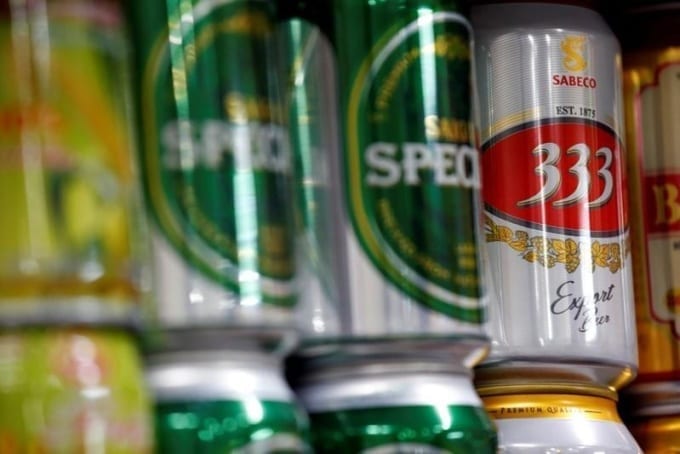
    Vietnam’s largest brewer Sabeco says it has removed its foreign ownership limit, in a statement on its website Monday. The company, known for its Bia Saigon and 333 brand, said that its board of directors had issued a resolution on Oct. 30 that approves “unrestricted foreign ownership percentage in Sabeco.”

    Last December, Thai Beverage acquired a 53.59 percent stake in Sabeco from Vietnam’s Ministry of Industry and Trade for $4.84 billion through a local entity, Viet Beverage (VietBev).

    Under the government’s Decree 60 dated June 26, 2015, listed companies, except those working in conditional business fields like banking, are allowed to determine their foreign ownership cap. They just need to register the limit with the State Securities Commission.

    The Ministry of Finance last week presented a draft securities law that would remove the current 49 percent foreign ownership cap in many sectors, except some conditional sectors.

    However, the draft has not been finalized and submitted to the National Assembly for approval.

    In Vietnam, conditional sectors refer to industries subject to additional regulations that would override limits set out by the securities law.

    Sabeco, formally known as Saigon Beer Alcohol Beverage Corp, recorded revenues of VND25.5 trillion ($1.1 billion) in the first nine months of this year, meeting 70 percent of its annual target.

    It occupies approximately 42.8 percent of the domestic beer market, according to the Ho Chi Minh City Securities Corporation. Last year, it produced nearly 1.8 trillion litres of beer.

  • Bamboo Airways gets license, to start flying before year end

    Bamboo Airways gets license, to start flying before year end

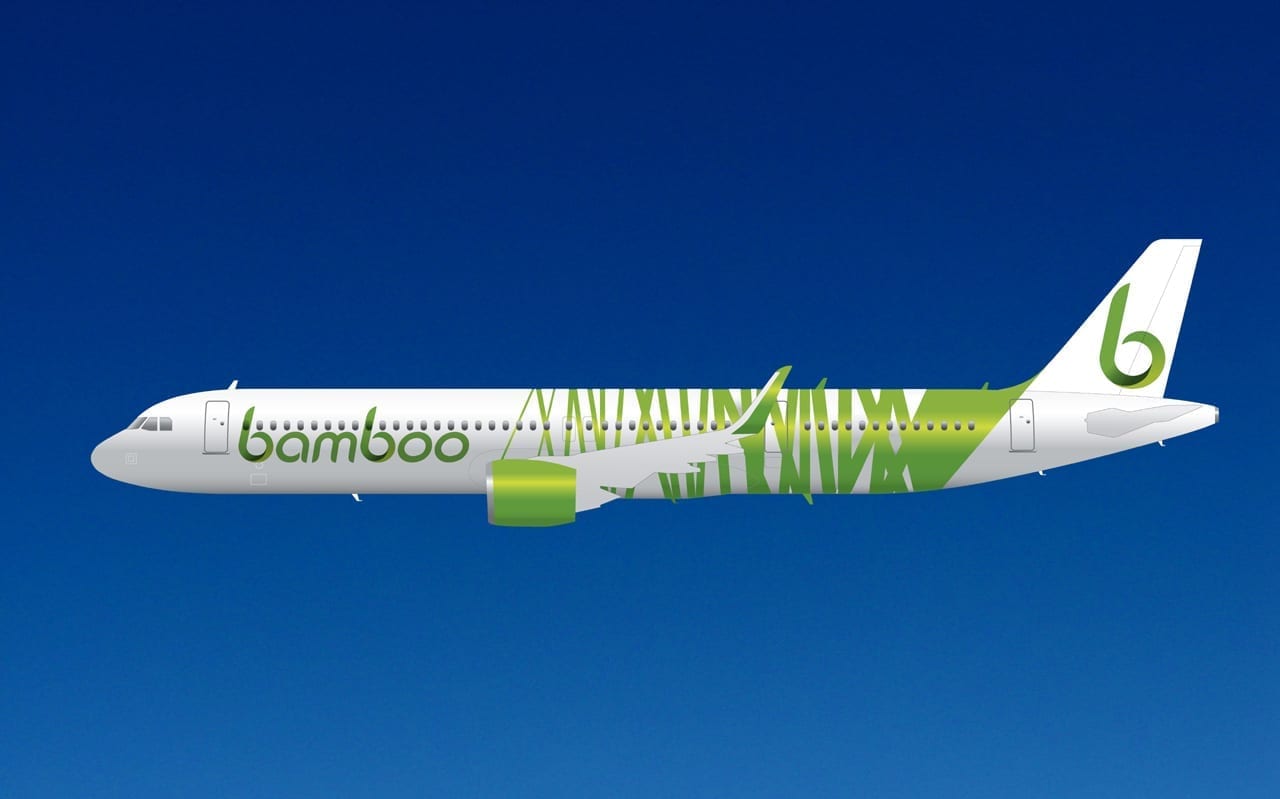
    Vietnam’s newest airline, Bamboo Airways, has received its long-awaited aviation license and plans to launch its first flight within the next 45 days. The carrier, the country’s fifth, is allowed to operate 10 aircraft on both domestic and international routes and to carry passengers and cargo on its flights.

    It plans to fly on 100 routes, connecting Vietnam’s major cities with popular domestic and international tourist destinations.

    But initially it is likely to only operate on certain sectors like Hanoi-Quy Nhon and Ho Chi Minh City-Quy Nhon. Quy Nhon is a city on the central coast.

    According to Bamboo Airways general director Dang Tat Thang, most of the preparatory works have been completed for the maiden flight to take off before the end of the year.

    It needs to obtain an aircraft operator certificate and obtain permission for parking and selling tickets, which are expected to take 30-45 days from the date of license issuance.

    Bamboo Airways was founded by Vietnamese private firm FLC in mid-2017 with a charter capital of VND700 billion ($30 million), which it increased to VND1.3 trillion ($55.68 million) recently.

    The airline has signed deals to buy 24 Airbus A320neo and 20 Boeing B787-9 Dreamliner aircraft worth a total of about $8.6 billion.

  • Vietnam’s Vietjet valued second in Southeast Asia

    Vietnam’s Vietjet valued second in Southeast Asia

    Vietnam’s largest private airline, Vietjet Aviation, is the second most valuable airline in Southeast Asia by market capitalization. Vietjet’s value is only behind Singapore Airlines, as reported last Thursday. Last Friday, the airline was valued at $3.02 billion while Singapore Airlines topped the region at $8.29 billion.

    On Thursday, Vietjet Air launched a new international route between Hanoi and Japan’s Osaka. It plans to open two more routes to Japan in December and January.

    Earlier this month, Vietjet signed a $6.5 billion agreement to buy 50 Airbus A321neo jets.

    The airline said that the order was in line with its growth strategies and will enhance its operational efficiency and capacity, especially on international routes.

    In Vietnam, Vietjet only has to contend with two domestic rivals: the state-run Vietnam Airlines and its low-cost arm, Jetstar Pacific Airlines.

    “There are only three airlines in Vietnam, and that arrangement facilitates profit generation domestically,” a representative at an international brokerage told the Nikkei Asia Review.

    In March last year, Vietjet’s market capitalization surpassed that of state-owned Vietnam Airlines only a week after it was listed.

    Vietjet currently operates 60 Airbus jets with more than 385 flights daily within Vietnam and to countries and territories such as mainland China, Hong Kong, Japan, Malaysia, Myanmar, South Korea, Singapore, Taiwan and Thailand.

  • SK Korea keeps building Vietnam ties

    SK Korea keeps building Vietnam ties

    SK Chairman Chey Tae-won met with Vietnam Prime Minister Nguyen Xuan Phuc in Hanoi Thursday to discuss the conglomerate’s plans to invest more in both private and public companies and introduce measures to ease environmental problems there.

    They met for the second time in a year. As a result of the previous meeting, SK purchased a 9.5 percent stake in the holding company of Masan Group, one of Vietnam’s largest private enterprises, for $470 million in September.

    “We are pursuing further cooperation with private companies after our first meeting beginning with investment in Masan Group,” said the chairman of Korea’s third-largest conglomerate. “We expect cooperation in other areas such as privatization of state-owned companies to speed up.”

    Nguyen explained Vietnam’s privatization plans to Chey while asking SK to help develop the country’s growing industries.

    “Chairman Chey is the only foreign company chief that I meet every year, my interest in SK is special,” said Nguyen.

    Chey also said the group will help Vietnam combat environmental problems that stem from industrial development. SK Group currently supports the reforestation of a mangrove forest in Vietnam.

    Mangrove forests used to cover 4,400 square kilometers (1.08 million acres) of Vietnam, but only 30 percent remains. Since last May, SK Innovation has provided support to reforestation efforts in a mangrove forest in Tra Vinh province and reforestation research by Ho Chi Minh City University of Technology.

    SK’s relationship with Vietnam has grown over the years. Energy subsidiary SK Innovation has taken part in oil exploration and crude oil production from the country’s offshore oil fields since 1998. SK’s construction unit, SK E&C, has helped build petroleum complex projects in the country.

    Chey also participated in the Hanoi Forum Friday and Saturday.

    The Korea Foundation for Advanced Studies, an academic non-profit organization, and Vietnam National University in Hanoi jointly launched the forum this year to encourage academic cooperation between the two allies.

    Korea Inc. has been paying increasing attention to Vietnam as an alternative investment destination to China. Vietnam is expediting privatization amid a difficult fiscal situation, putting on sale several government-owned companies.

    In late October, Samsung Electronics Vice Chairman Lee Jae-yong paid a visit to Vietnam and vowed to increase investment during a meeting with the Vietnamese prime minister. Samsung Electronics operates major phone manufacturing lines in Vietnam, which has helped Vietnam become the second-largest exporter of mobile phones after China. As a manufacturing location, Vietnam serves as an important strategic partner for many Korean companies’ global supply chain.

    LG Display and textile giant Hyosung are also Korean companies with manufacturing units in Vietnam.

    During President Moon Jae-in’s visit to the country earlier this year, senior executives from SK and Samsung were in the president’s entourage in an effort to establish stronger business relations.

    In 2017, Korea placed second in terms of direct foreign investment in Vietnam, following Japan. Vietnam is currently Korea’s fourth-largest export partner.

  • Vietnam ratifies Asia-Pacific trade pact

    Vietnam ratifies Asia-Pacific trade pact

    Vietnam became the seventh country to ratify the Comprehensive and Progressive Agreement for Trans-Pacific Partnership (CPTPP) Monday afternoon. With its ratification, the National Assembly (NA) has assigned the task of reviewing related bills and legal enactments to the Government, the Supreme People’s Court, the Supreme People’s Procuracy and other relevant bodies.

    Once reviewed, the government agencies shall request that competent authorities amend, supplement or enact new laws in a timely manner to ensure uniformity and adherence to the roadmap for implementing commitments contained in the CPTPP.

    The Prime Minister will be responsible for approving and directing the relevant central or local agencies in implementing the CPTPP pact.

    The CPTPP is a major trade pact between Vietnam and 10 other countries that seeks to boost trade by reducing tariffs.

    Speaking at a recent NA session, Deputy Prime Minister Pham Binh Minh said that the CPTPP “will benefit Vietnam overall.”

    Because the trade pact will cover 13.5 percent of global GDP, Vietnam’s GDP will be able to grow by 1.32 percent, and its exports 4.04 percent by 2035, he added, citing a report by the Ministry of Planning and Investment.

    However, the Deputy PM also enumerated challenges that Vietnam would face when joining the CPTPP.

    Domestic products such as pork and chicken might face strong competition from imported products. Other products that can have trouble competing include paper, steel and cars, Minh said.

    The other six countries to ratify the pact are Australia, New Zealand, Canada, Japan, Mexico and Singapore.

    The four countries still to ratify it are Brunei, Chile, Malaysia and Peru.

    Originally a 12-member agreement known as the Trans-Pacific Partnership (TPP), the pact was thrown into limbo when U.S. President Donald Trump withdrew his country from the deal in January 2017.

    Following the U.S. withdrawal, the remaining 11 countries renegotiated parts of the TPP, removing some of Washington’s demands. In March, they signed the revised CPTPP, also known as TPP-11.

  • Automaker Mitsubishi eyes full-scale production in Vietnam

    Automaker Mitsubishi eyes full-scale production in Vietnam

    Japanese automaker Mitsubishi Motors plans to expand its Vietnam operations by moving to full-scale production of parts within the country. The company’s CEO Osamu Masuko said at the global launching ceremony of the Mitsubishi Triton pickup truck in Bangkok that sourcing materials in Vietnam would let the company handle more upstream processes for components.

    “To be a true winner, we must develop production and exports to certain levels in each country,” Masuko said.

    He added that the Vietnamese operations will not simply be limited to assembling modules in a “knock-down kit” production method, referring to the method of manufacturing parts in one country and shipping them to another.

    The ASEAN region is the largest and most profitable market for Mitsubishi Motors, the company said in its annual report for fiscal 2017. Sales in the region went up by 33 percent last year to 275,000 units, while revenue from the region jumped 45 percent for the year to 506.2 billion yen ($4.45 billion).

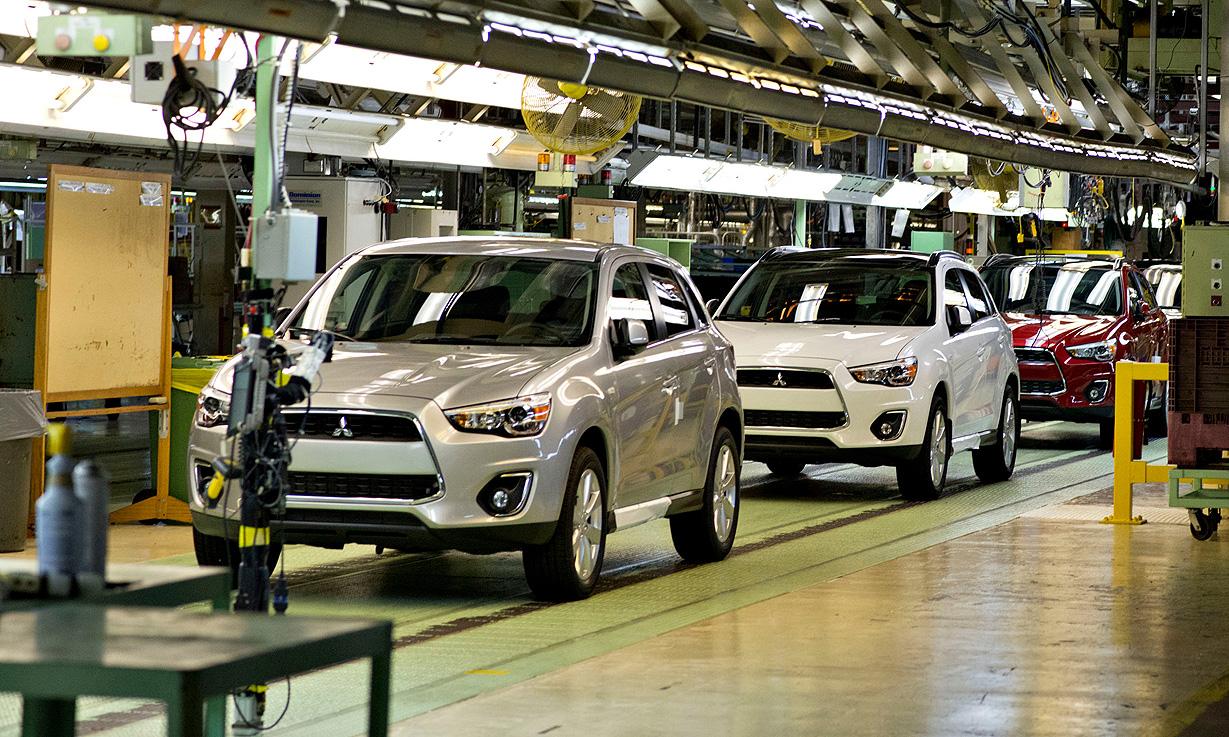
    In Vietnam, Mitsubishi currently has an assembly plant in the southern province of Binh Duong with a capacity of 5,000 vehicles per year.

    It plans to increase production by having a second plant in the country by 2020, with a capacity of 30,000-50,000 vehicles per year.

    In the first nine months this year, a total of 230,958 automobiles were sold in Vietnam, according to Vietnam Customs. This figure could reach 300,000 by the end of this year, it added.

  • Chinese Singles’ Day courts Vietnamese consumers

    Chinese Singles’ Day courts Vietnamese consumers

    Promoted by Alibaba in China for more than 10 years, Singles’ Day is now courting Vietnam with great fervor. More than a week before “Singles’ Day’ which falls on Nov. 11, major shopping firms in Vietnam had begun to update their mobile applications with a range of games designed to ‘hype up’ consumers.

    These included shaking the phone to earn coins (shopping vouchers), discount lotteries and ‘easter eggs’ giving specific discounts, and many more.

    Few retailers explain why Nov. 11 was chosen as the date for this promotional event, which some hail as “the biggest discount of the year.”

    Consumers and online businesses both acknowledge, however, that the marketing race building up to the day has been very fierce.

    The most boisterous claims came from Singapore based e-commerce group Lazada, which announced that it will gift 110,000 vouchers worth $10 million.

    General manager of Lazada Vietnam, Zhang YiXing, said he had spent the last three months fine-tuning Lazada’s app and working with vendors for the Nov. 11 event.

    Although they have no reason or specific connection with Alibaba, other e-commerce sites are not missing the opportunity to profit from Singles’ Day. Industry insiders remark that with competition so fierce, the ‘big players’ are implementing emulation strategies to grab whatever advantage they can get at.

    In particular, businesses do not want to stand idle during an event which increases the traffic and revenue of its rivals. So they’ve all jumped on the Singles’ Day bandwagon and made it spread further.

    “E-commerce is the most developed industry in Vietnam and also the most competitive,” said Tran Ngoc Thai Son, founder and CEO of e-commerce company Tiki.

    On the Tiki website, the company hails Nov. 11 as the “legendary sales season”, introducing a lottery to win laptops, phones and shopping vouchers with a total value of up to VND10 billion ($431,980).

    Meanwhile, Shopee, a consumer Internet platform provider based in Singapore, has called this day the “Super Sale.” The company has also launched a game consumers can play to earn rewards and has been promoting a different product line each day to attract attention before the official event.

    Lotte.vn has also jumped into the fray in dramatic fashion, calling the event the “Nov. 11 shopping war”, while Adayroi, run by Vietnam’s biggest private conglomerate Vingroup, has launched a full week of promotions from Nov. 1-11 with its “Sale Season”.

    Experts say that in addition to price, this years’ competing retailers have also focused more on branded goods and after-sales service.

    “Technology is no longer a challenge for Vietnam’s e-commerce sector but consumer confidence. Now choosing products and discounts from a trusted retailer is also important, not just price,” said Le Hai Binh, vice president of the Vietnam E-commerce Association.

    “Delivery and after-sales services are competitive advantages that cannot be ignored in this race.”

    Lucrative day

    Although not as fierce as this year, last Nov. 11 had made ‘a killing’ for retailers, encouraging them to step up promotions this year.

    According to data released by France-based commerce marketing company Criteo, retail sales of online shopping sites in Vietnam during the last Single’s Day campaign increased 245 percent, compared with ordinary days in the year, and marked a 70 percent increase in traffic.

    Last Nov. 11, traffic increased the most in the evening, from about 9 p.m. onwards. Shopping time “peaked” at 11 p.m., which is one hour before promotions end, so consumers were rushing to finish their shopping.

    The two most popular items last year were home appliances and electronics, with sales soaring by over 276 percent and 266 percent respectively compared to ordinary days.

    Silvia Siow, Criteo’s chief customer strategy manager for Southeast Asia, Hong Kong and Taiwan, said that these two categories were best sellers because of their high value. People tended to wait for promotions to cash in on significant discounts in absolute terms. Siow also said that Nov. 11 was playing a growing role in Southeast Asia, not just Vietnam.

    He said the real gains from Nov. 11 were not in sales but an expanded customer base and increased market share.

    “Sales are important, but traffic is more important. Increased traffic may represent newcomers who arrive and discover or rediscover products. “

    The heat of the Nov. 11 race in Vietnam is expected to last many years as it is the second most dynamic e-commerce market in Southeast Asia, behind Indonesia.

    Economist Simon Baptis, CEO of Asia region for the Economist Intelligence Unit (Economist Group) said: “Vietnam will be one of the fastest growing economies in the region with real growth constant at a high level between 2019 and 2023.

    “Reinforcing consumer confidence in e-commerce and electronic payment systems is also a need of the period.”
  • Robust demand for robusta to boost Vietnam’s coffee exports

    Robust demand for robusta to boost Vietnam’s coffee exports

    Vietnam’s coffee exports can hit a record high this year because of high global demand for the robusta variety. Coffee exports this year could top over 1.8 million tons, said Do Ha Nam, deputy chairman of the Vietnam Coffee and Cocoa Association.

    “The world market has consumed all the coffee shipments from Vietnam. Supply has been insufficient to meet demand,” Nam said.

    The shortage comes as global’s demand for instant coffee is expected to rise this year, especially in developing markets.

    Global consumption of robusta, mainly used by big companies including Nestle SA to make instant coffee, is forecast to climb to a record high this season.

    The worldwide market for instant coffee is set to expand 4.7 percent a year through 2023 to $14 billion from $10.4 billion in 2017, market research firm IMARC said in a recent report.

    Higher demand has boosted domestic coffee prices.

    The price of coffee in the Central Highlands, Vietnam’s major coffee-growing belt, hit VND35,300-36,100 ($1.51-1.54) per kilogram in early October, higher than that VND32,500-33,300 ($1.39-$1.43) per kilogram in early September.

    Coffee exports from Vietnam grew at an estimated 21.5 percent between January and October from a year ago to 1.58 million tons, according to the General Statistics Office.

    Coffee export revenues for Vietnam, the world’s biggest producer of the robusta beans, rose 1.1 percent to $2.98 billion in this year’s 10-month period, the office said.

  • Businesses in Vietnam close down at increasing rate

    Businesses in Vietnam close down at increasing rate

    The number of enterprises closing down in the year to date hit 67,000, double the number in the same period last year. Chu Tien Dung, chairman of the HCM City Business Association said that this number is unusually high but can be explained by problems that have existed for years.

    The government’s target of having 1 million enterprises by 2020 is to blame in no small measure since it has led to policies that encourage quantity rather than quality, he said.

    Typically, this has seen sole traders registered as one-man limited companies and a big start-up movement in major cities such as HCM City and Hanoi.

    “The procedures for setting up a limited company have been greatly simplified so that anyone can become a boss. If within a few years or even months the owner finds the business line to be unsuitable or does not like the company name, it is not difficult to dissolve and establish a new business.”

    Statistics from the Department of Business Registration show that of the enterprises closing down each month the rate of those with charter capital of below VND10 billion ($426,350) is overwhelming.

    The reason lies primarily in the fact that small and medium- sized enterprises (SMEs) lack resources and also have difficulty accessing credit.

    The liberalization of the law on investment is being used by some to profit illegally, he said. Many enterprises have announced insolvency due to heavy losses.

    According to the World Bank, starting up in Vietnam now involves only eight steps which can be completed in 17 days while it takes 26 days on average in East Asia and the Pacific to complete formalities and enter the market.

    Tran Thi Hong Minh, director of the Department of Business Registration, said: “Dissolution and bankruptcy is the natural, objective law of the economy. The market will eliminate and purge weak businesses to replace them with those of better quality.

    “Vietnam is considered a dynamic economy with rapidly developing science and technology and so the pressure on businesses is of an equivalent magnitude.”

    Pham Chi Lan, former chairwoman of the Vietnam Chamber of Commerce and Industry (VCCI), said business owners had expressed concern the business climate had not improved much.

    Even in the case of single-door administrative procedures, where all documents are meant to be submitted and received at one office, an applicant has to go through many other doors, she said.

    “While we are talking about creating new tools and policies, old, defunct procedures are still not scrapped. As such, Vietnamese businesses are very worried about their future.”

  • Viettel’s foreign market earnings up in Q3

    Viettel’s foreign market earnings up in Q3

    Viettel earned gross profits of $57.25 million from overseas markets in Q3, a year-on-year increase of 8 percent. Its overseas investment arm, Viettel Global, reaped net revenues of nearly VND4.43 billion ($188.71) in the third quarter, up 5 percent over the same period last year.

    Accumulated net revenues reached VND12.43 trillion ($529.7 million) between January and September.

    The revenues include nearly VND5.61 trillion ($238.94 million) from African countries, including Cameroon, Tanzania, Mozambique and Burudi, VND4.54 trillion ($193.68 million) from Southeast Asia countries, including Cambodia and East Timor, and VND1.69 trillion ($71.82 million) from Latin America.

    The company’s revenues from its three continents rose 3-11 percent, with Latin America registering the greatest increase.

    The increase is attributed to the company’s development of 4G services, digital wallet and other information technology projects serving overseas businesses and governments.

    Viettel Global is providing 4G services in 9 overseas markets, and digital wallet services in 8 markets.

    Also, Viettel Global’s sales expense and management costs reduced 4 percent and 12 percent respectively in the first 9 months of this year, compared to the same period last year.

    Viettel Global was established in 2006 to spread Viettel Group’s presence in foreign markets. Eight out of Viettel Global’s 10 overseas markets have begun earning profits. It has taken up the largest market share of the telecommunications sectors in Laos, Cambodia, and Timor Leste.

    It plans to expand its overseas operations in the Southeast Asian region and foreign markets that share similar population sizes as Vietnam this year. The company also aims to achieve a 10-15 percent year-on-year increase in terms of the number of subscribers by the end of 2018.

  • Vietnam 19th best country in the world for expats: HSBC survey

    Vietnam 19th best country in the world for expats: HSBC survey

    Vietnam has climbed four places to 19th in the list of best countries for expats to work and live, an HSBC survey found. With an average annual income of $90,408, nine out of 10 expats said in Vietnam they are as happy as or happier than at home, according to the 11th annual Expat Explorer issued by HSBC on Wednesday.

    Foreigners enjoy working in Vietnam for many benefits: 55 percent of respondents said they take more holidays, 41 percent live in a better home and 39 percent have more household staff compared to their home country.

    Fifty-seven percent said their employment contracts include an annual allowance to fly home or to another place, higher than the global average of 17 percent.

    Forty-two percent get an accommodation allowance while the global average is 18 percent, and 73 percent receive health and medical allowances compared to 43 percent elsewhere.

    Vietnam ranks first in the world with 72 percent saying moving to Vietnam helps them save more and 72 percent also saying they have more disposable income than they did in their home country.

    Both are higher than the global average: 52 percent for savings and 56 percent for disposable income.

    There are also some downsides for foreigners living in the country, respondents said. While more than half of expats across the world said they enjoy the better overall quality of life, only four out of ten foreigners in Vietnam said so.

    Organizing finances is difficult for expats, with only 27 percent of foreigners saying it is easy to open a bank account, buy insurance or pay taxes, while the global average is 43 percent.

    Just more than a third had no difficulty in experiencing healthcare services, but this figure is 46 percent globally.

    Raising a child in Vietnam poses challenges, with just 18 percent saying the quality of child care is better than in their home country, compared to the global average of 38 percent.

    Forty-seven said Vietnam is a good place for expats who want to progress their career, while the global average is 56 percent.

    There are financial issues that concern expats in Vietnam, with 37 percent being worried about restrictions on moving money out of the country and 22 percent each concerned about less favorable exchange rates and job security.

    Sabbir Ahmed, head of retail banking and wealth management at HSBC Vietnam, said: “The survey shows Vietnam is a promising host country for expats who are seeking both opportunities and challenges to boost and develop their careers.

    “We expect Vietnam to improve several areas to enhance the experience of expats and their families by developing further the environment, educational programs and financial services.”

    The ranking listed Singapore as the best place in the world for expats for the fourth year in a row, followed by New Zealand, Germany, Canada, and Bahrain.

    The survey polled 22,318 people from 163 countries and territories through an online questionnaire.

  • Vingroup acquires mobile phone retailer Vien Thong A

    Vingroup acquires mobile phone retailer Vien Thong A

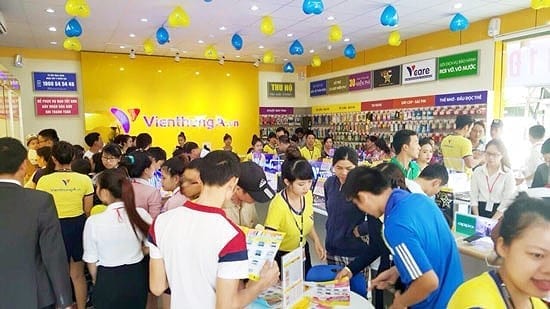
    Vietnam’s biggest private conglomerate Vingroup has officially confirmed its acquisition of major tech products retailer Vien Thong A.

    In its financial statement for the third quarter of 2018, Vingroup lists Vien Thong A Import Export Trading Production Corporation as a fully-owned subsidiary.

    On September 14, Mai Thu Thuy, board member of the Vincom Retail Joint Stock Company and Chairwoman of the Vincom Mega Mall Royal City, was appointed legal representative of the acquired company.

    Established in November 1997 in Ho Chi Minh City, Vien Thong A is the oldest retail technology chain in Vietnam. It has nearly 200 stores, including independent shops and a “shop-in-shop” model in BigC supermarket, CoopMart, and 100 service centers.

    In early 2017, Vien Thong A CEO Hoang Ngoc Vy revealed plans to restructure the company and seek investors to expand its business.

    Last month, VinCommerce, a member of Vingroup, bought Fivimart from domestic company Nhat Nam JSC and Japanese retailer AEON, which held 70 percent and 30 percent stakes, respectively.

    In the first nine months of this year, retail sales of Vingroup reached VND12.89 trillion (nearly $555 million), a 41 percent year-on-year surge.

    Vingroup, Vietnam’s biggest property conglomerate, dominates the housing and property markets with Vinhomes.

    It has also entered the healthcare market with Vinmec, runs a chain of supermarkets called Vinmart, and entertains tourists at Vinpearl resorts.

  • Which are Vietnam’s most successful coffee chains?

    Which are Vietnam’s most successful coffee chains?

    Highlands Coffee reported sales of VND1.24 trillion ($53.23 million) last year making it Vietnam’s largest coffee chain in terms of revenues. The figure was four times that of Phuc Long’s, eight times that of The Coffee House’s and thrice that of Starbucks’.

    Founded in 2002 by a Vietnamese-American and sold to Philippine fast food giant Jollibee in 2012, Highlands Coffee now has 230 stores mostly in well-known buildings and malls.

    Local chain The Coffee House saw revenues double last year. Nguyen Hai Ninh, its founder, said the chain received over 20 million visitors.

    It now has over 100 stores nationwide, and Ninh said each store can serve 500 – 1,000 visitors on average daily. “We expect to double the number this year, and are looking to open 700 more across Vietnam in the next five years, at an average of 10 per month.”

    The chain’s differentiating factor is that the emphasis is not renting the best locations; rather, it seeks to attract clientele with a modern, striking shop design that appeals to younger customers.

    Its drinks are priced moderately, which helps it attract a wide range of customers.

    It recently bought the coffee business of Da Lat-based Cau Dat Farm and simultaneously launched a flagship store in downtown Saigon, The Coffee House Signature.

    Local brand Trung Nguyen’s highest revenue from any store is VND2-3 billion ($86,200-129,300) per month, while most make an average of VND400-500 million ($17,200-21,500).

    By the end of this year Trung Nguyen is expected to have a total of 100 outlets.

    Phuc Long, though a coffee chain associated with milk tea, has seen annual revenues grow at 7 percent in recent years, predominantly from the latter drink.

    With the rapid growth of coffee chains, coffee consumption by Vietnamese has also risen sharply.

    According to a study by BMI Research, a subsidiary of ratings firm Fitch, consumption grew from 0.43 kg per person in 2005 to 1.38 kg in 2015. This is the highest growth rate of any global coffee exporter, and the figure is forecast to reach 2.6 kg by 2021.