Tag: Vietnam

  • Casino investors counting on a full house in Vietnam’s fledgling gaming industry

    Casino investors counting on a full house in Vietnam’s fledgling gaming industry

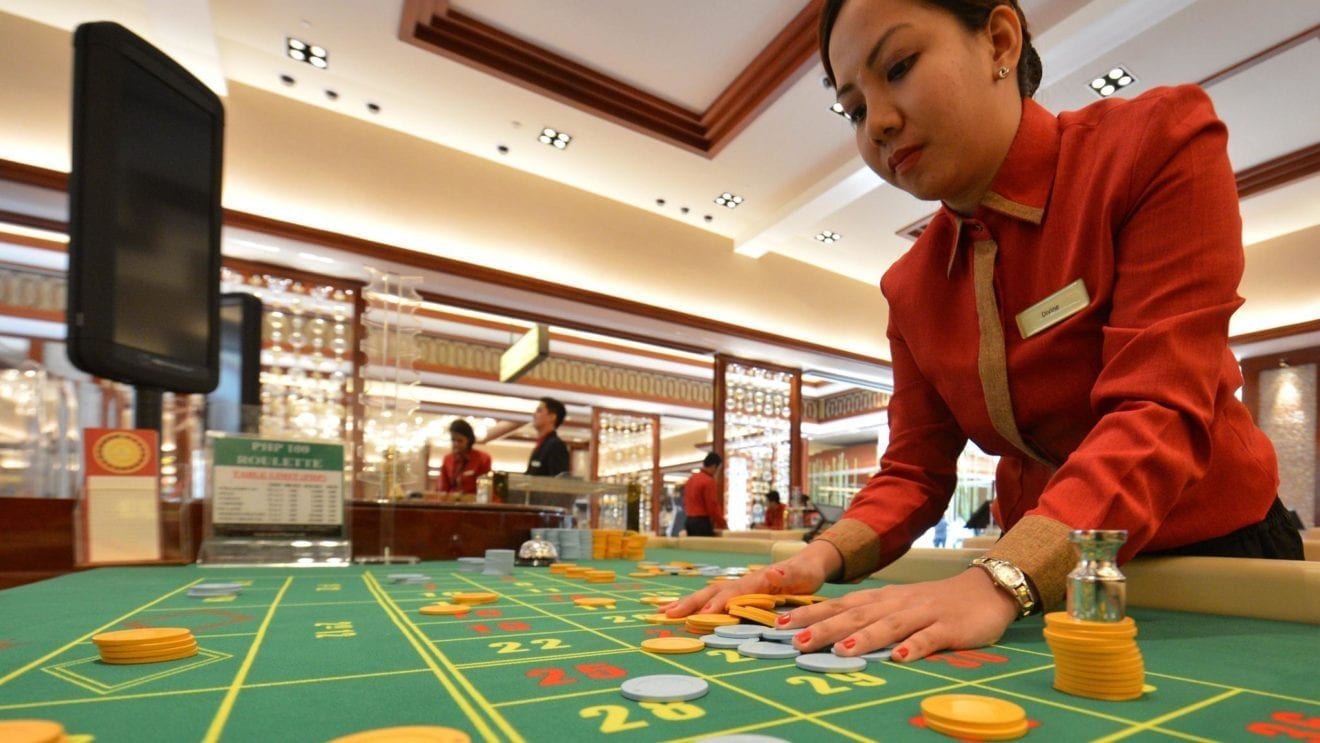
    Macau’s biggest junket operator Suncity Group plans to pour billions of dollars into building a resort in Vietnam’s popular resort town of Hoi An, Bloomberg reported.

    The group has teamed up with Vietnam-based closed end fund VinaCapital and Hong Kong-based conglomerate Chow Tai Fook to build the $4 billion integrated resort and casino in the coastal town, which is scheduled to open in 2019.

    Suncity owns 34 percent of the coastal project through its Hong Kong-listed subsidiary and has a management contract to operate the casino.

    The group is one of a number of companies that have been eying Vietnam’s gaming business expansion, especially now the country has loosened regulations on gambling.

    Singaporean resort developer Banyan Tree Holdings has also asked the government to license a casino at the Laguna Lang Co resort development.

    The resort, located about an hour by road north of Da Nang International Airport, has more than 300 hotel rooms and villas plus a golf course, spas, residences and a conference center. The second phase of development at the complex will include more hotel rooms, residences and a casino, if permission is granted.

    Vietnam’s decision to allow locals to roll the dice in casinos for the first time is one of the reasons for the surge in gaming investment. Before the law was changed only foreigners were allowed in casinos.

    Earlier this year, the Vietnamese government announced that from mid-March and for a three-year trial period, citizens aged over 21 with a monthly income of at least VND10 million ($445) will be allowed to gamble in local casinos. Similar to rules governing gambling in Singapore, Vietnamese people are charged VND1 million per day or VND25 million per month as an entry fee.

    The country’s average annual income was around $2,200 last year.

    Vietnamese people are big fans of gambling, so the new regulation was expected to help casinos attract more customers.

    A study by Augustine Ha Ton Vinh, an academic who has researched Vietnam’s gaming industry extensively, showed Vietnamese spend an estimated $800 million each year gambling abroad in places such as Macau, Singapore and just across the border in Cambodia.

    Hoping to tap tourists and possibly domestic gamblers, local property conglomerate FLC Group has plans to build a casino resort in the Van Don Special Economic Zone in northern Vietnam. Quang Ninh Province’s People’s Committee has recently given the firm the go-ahead to build the 4,000-ha complex, including a casino, five-star hotel, convention center and golf course on the islands of Ngoc Vung and Van Canh at a cost of $2 billion.

    Gaming companies are interested in the casino business in Vietnam because the industry is still new and there’s little competition, said Nguyen Ngoc Thanh, vice chairman of the Vietnam Property Association.

    Those that arrive here first could easily dominate the market and maximize their profits, he added.

    In addition, the Vietnamese government has recently reduced obstacles for would-be casino developers. Hanoi used to require a minimum investment threshold of $4 billion, but that figure has been revised down to $2 billion as part of a recent decree.

    With about 30 gaming facilities, Vietnam could generate as much as $1.2 billion in gross gaming revenue each year, according to a Grant Govertsen, an analyst with Macau-based Union Gaming Securities Asia.

    Vietnam’s eight recently-licensed casinos, mostly small, generate an estimated $300 million in gaming revenue, according to Forbes magazine.

    Vietnam unwavering on casino ban for locals

    Motorists ride past a sign for Do Son Casino, made of images of playing cards, in Vietnam’s northern port city of Hai Phong.

    Not a surefire bet

    Despite investors’ eagerness to open casinos in Vietnam, it has not been that easy to attract gamblers, and many casinos have been performing below expectations.

    The Grand Ho Tram Strip is an example.

    In 2016, the Ba Ria-Vung Tau-based resort, which opened in July 2013 with 541 hotel rooms and a casino with 90 tables and about 500 gaming machines, was losing up to $3 million a month, Nikkei Asian Review quoted Ben Lee, who acted as a consultant for Ho Tram in its early stages, as saying.

    Former head of the Foreign Investment Agency under the Ministry of Planning and Investment Phan Huu Thang said casino complexes have failed to attract gamblers because of poor services.

    Most casino complexes in Vietnam are small-scale and only offer gaming. They do not provide entertainment or shopping services, he said.

    Meanwhile, some casino managers have blamed their losses for a lack of Chinese gamblers, the main clientele for most casinos in Vietnam, citing the case of the Royal International Corporation.

    The firm, which runs the only casino in Vietnam’s famous Ha Long Bay, said in a new financial report that its losses in the third quarter had jumped 23 times from a year ago to more than VND69 billion ($3.04 million).

    That added to a VND100 billion ($4.4 million) loss in the first nine months, a fourfold increase from 2016, the company said.

    Most of the losses were incurred by its casino operation, but its villa business also played a small part, it said.

    Some experts have warned that Vietnam needs to carefully consider licensing more new casinos as they could saturate the market.

  • Vietnam to tighten credit for high-end property developments

    Vietnam to tighten credit for high-end property developments

     Vietnam’s central bank plans to issue a circular to the country’s commercial banks instructing them to prioritize credit for low-cost housing and social housing projects while slashing loans for high-end and mid-level developments.

    Governor of the State Bank of Vietnam Le Minh Hung made the remark at a National Assembly Q&A session on Friday.

    Banks will be allowed to use no more than 50 percent of their short-term funds for medium- to long-term purposes including mortgages until the end of this year. The ratio will be slashed to 45 percent in 2018 and 40 percent in 2019, according to the draft circular revised by the central bank.

    According to the central bank, long and medium-term credit accounts for 53-55 percent of the total loans offered by commercial banks, while long and medium-term funds make up only 13-15 percent of their total mobilized capital. The unbalance in using short-term funds for medium-to long-term purposes could pose huge risks to banks, said experts.

    The central bank has also raised the risk ratio of property loans at commercial banks to 200 percent from 150 percent.

    Property loans have reached VND400 trillion ($176.12 million), accounting for 6.5 percent of total outstanding loans in the country, Hung said.

    Some legislatures have expressed concerns that banks could offer more property loans in a bid to reach the credit growth target for this year. Governor Hung quashed these remarks, saying the target was set by the government and banks are not under pressure to reach it at all costs.

    Credit growth reached 10.6 percent in the first nine months of this year, leaving the annual growth target of 18-20 percent seemingly out of reach.

  • In search of Arabica in Vietnam’s war-scarred soil

    In search of Arabica in Vietnam’s war-scarred soil

    Quang Tri is one of the poorest provinces in Vietnam. Straddling the D.M.Z. that cut Vietnam in half during the American War, the province was pounded by one of the heaviest bombardments in history, and 80 percent of its soil was poisoned with landmines.

    Much has changed over the decades, but Quang Tri’s residents continue to fight the legacy of the war as well as the poverty that overshadows the lives of many.

    Bordered by the sea on one side and the Sepon River separating Vietnam and Laos on the other, Quang Tri’s driving force for economic development is agriculture. But farmers here frequently bear the brunt of the harsh monsoon season, and the rugged terrain only makes it harder to grow crops.

    Up in the highland district of Huong Hoa, which witnessed some of the deadliest days of the war during the battle of Khe Sanh, hundreds of farmers are joining forces to produce premium arabica beans, a surprisingly rare move in a country widely seen as a coffee giant.

    Growing arabica in Vietnam

    Coffee production has contributed greatly to Vietnam’s economic transformation in the post Doi Moi (renovation) period since 1986. Vietnam is now the second largest coffee exporter in the world after Brazil.

    But statistics from Vietnam’s General Customs Department last year showed that robusta accounted for nearly 80 percent of exports, while arabica staggered to less than 5 percent.

    Robusta beans, though considered cheaper and of lower quality than arabica, are hardier and can still thrive in difficult conditions, making them ideal for cultivation in Vietnam. But robusta beans, mainly ground to make instant coffee, are not often found in high-end chains across the world, which favor the high-quality arabica.

    In the world’s second biggest robusta producer, arabica can only be found in the northern and central highlands due to the tough requirements in terms of altitude, soil and temperature required to cultivate the variety.

    Will Frith, a coffee specialist who has done much research on Vietnamese arabica coffee, said robusta dominates Vietnam’s exports as it is much easier to grow at low elevations, has higher disease and pest resistance and has much higher crop yield.

    “Robusta has easier requirements on the market, so defects are more tolerated by buyers, who are usually buying for large commodity companies not looking for high quality,” he said.

    “Arabica is more susceptible to disease and pests, and as the highlands begin to warm up, these pests will travel up to higher elevations and make it more difficult to manage good quality arabica plants. Only the most quality-oriented growers who have good buyers will continue to grow quality arabica,” Will added.

    In Vietnam, unskilled and fragmented labor are major hurdles to growing coffee that meets international requirements. At the same time, shifting cultivation can also be a problem in Vietnam’s rural areas, as it takes an average of three years to harvest coffee, which can prompt poor farmers to abandon it for other short-term alternatives.

    According to an annual coffee country report released last May by the USDA’s Foreign Agriculture Service, as coffee prices fall, more Vietnamese coffee farmers will switch to cash crops such as black pepper, avocado or passion fruit to generate higher incomes.

    Smallholdings are also struggling to reach out to buyers. Many coffee roasters have strict requirements about the quality of the coffee beans, and traders can reject deliveries if they do not meet the 4C standard, which is a baseline level aimed at sustainable coffee production and sourcing. While most 4C robusta beans come from Vietnam, 4C arabica beans are mainly sourced from Brazil or Columbia.

    Land of arabica

    In Quang Tri, coffee accounts for a third of the province’s total plantations at nearly 5,000 hectares, according to a report released last April by the provincial People’s Committee. In just a decade, Quang Tri has been transformed into a hub for arabica coffee, accounting for one seventh of the country’s total arabica production.

    In Huong Hoa District alone, 90 percent of families rely on coffee to make a living.

    Coffee plants were originally brought to Quang Tri by the French, said Nguyen Nhat An, project team leader of the Vietnam branch of the Mekong Institute. “In the beginning, they grew liberica, then residents here switched to robusta. Liberica has a low value yield, while robusta cannot thrive in this soil. Out of the three beans, arabica has proven to be the most suitable.”

    The Mekong Institute (MI), an intergovernmental organization that supports sustainable economic and social development in the Greater Mekong Sub-region, came up with an initiative to support coffee farmers in Quang Tri under the Regional and Local Economic Development – East West Economic Corridor project (RLED-EWEC), by building a model that connects farmers with a fertilizer company, a processing company and an agricultural bank in order to produce coffee that reaches the 4C standard.

    The goal is to bring “systemic and sustainable changes in the coffee sector” in Quang Tri, the MI says, as the project targets poor provinces along the economic corridor under a masterplan to help them integrate into the ASEAN Economic Community.

    An said the group’s focus on coffee is based on its potential to transform local economic development. At the same time, “sustainable coffee production” is part of Quang Tri’s strategic agricultural plan, drawing a state budget of up to $11 million within the period from 2017 to 2025.

    After a few years of research in the area, the MI decided to launch the project that promises to transform the lives of Quang Tri’s coffee farmers. It started off with 40 farmers in 2014, and later expanded to 470 in 2017, with around 22 percent of its members coming from poor families and nearly one third from the Pacoh and Bru-Van Kieu ethnic minorities.

    Ho La Ngang, a Pacoh farmer in Huong Phung Commune, Huong Hoa, said some of the difficulties that farmers often face are capital and fertilizer, which can account for up to 35 percent of total production costs.

    “Just five or six years ago, I was working in the field and only making enough for a subsistent living,” he added. “But then in 2002, after being employed at another plantation, I followed other families and started growing coffee on my own 10 hectares of land.”

    Smallholding farmers often relied on loans to buy fertilizer, which can be harmful due to the high interest rates.

    The MI’s model helps farmers access loans from an agricultural bank at low interest rates that enable them to buy the fertilizer they need from a partner company. These companies are also providing training on the proper use of fertilizer.

    Le Tuan Dung, director of Binh Dien Fertilizer JSC, said his company delivers fertilizer directly to farmers in remote areas, selling for around $417 per ton, while the market price stands at $456/ton. “But it’s more like a win-win model,” he said. “The distribution chain used to be very cumbersome, and farmers suffered. The MI’s intervention helps them cut indirect costs.”

    “Traders used to come to us directly but would only offer below market price for our coffee,” said 58-year-old farmer Nguyen Huu Xao. Xao said the MI is encouraging smallholders in his commune to work in groups while offering training to produce clean coffee cherries and helping farmers to sell them directly to processors rather than traders.

    The initiative may be new as it only started in 2014, but farmers have been reporting certain changes to their coffee output and practices. “I’m able to sell my coffee for 5-8 percent more now,” Xao said, adding that he had no experience of growing coffee before he moved to Huong Hoa.

    “After joining the farmers group, I was trained about market prices and fertilizer costs, and was able to get a loan from the bank,” he added.

    According to the MI’s 2016 report, the initiative to establish a four-party cooperative model capitalizes on the interdependencies between actors in the value chain, enabling 99 farmers to take out bank loans and increasing incomes for both farmers and processors.

    But more importantly, by aiming at a sustainable sourcing and production chain, the ultimate objective is to ensure food security in the region.

    “In 2015 we suffered major losses. The coffee cherries were threatened by pests and there were a lot of droughts, so productivity was low and the coffee price fluctuated,” said Tran Ngoc Vu, 42, a coffee plantation owner.

    A viable option? 

    In reality, it might take years to see more radical transformations to the lives of farmers in Huong Hoa, as most still struggle to make ends meet growing arabica in a robusta-dominated country.

    “The reasons could be that the quality of the coffee here only stops at being acceptable, mainly due to the low altitude,” An said. “Additionally, the arabica we grow here is the catimor strain, which is the lowest quality variety of arabica.”

    As part of the coffee value chain, Dung’s fertilizer company also relies on farmers’ coffee output to protect his company’s profits. “Unlike other countries in the region, our farmers are not supported by protectionist policies, and as a result, Vietnamese farmers often have to sell their crops at really low prices.”

    “Not to mention how climate change can also have a huge impact on productivity,” he added.

    In 2015, Vietnam’s coffee farmers suffered major losses as exports dropped by 40 percent due to rising temperatures and drought. Intensive pesticide use, deforestation and monocropping have also left coffee crops more vulnerable to climate change, land degradation and depleted water resources, according to the Guardian.

    The prolonged drought had a major impact on provinces across the Central Highlands, which produces 60 percent of Vietnam’s coffee exports.

    Quang Tri’s farmers did not escape the fall-out, Nguyen Huu Hao shared, and many growers in Huong Hoa fell into debt and were forced to switch to turmeric, ginger or black pepper.

    “Most farmers are still in debt with the banks, and many do not know if they’ll be able to take out more loans due to the losses from previous crops ,” An said. “So what the MI wants to achieve is to support sustainable development by making the market work for the poor.”

    Yet within the market, Quang Tri coffee is still traded at lower prices in compared with arabica in Da Lat or Son La, experts say.

    Will, the coffee specialist, said Quang Tri has favorable conditions to grow coffee but has not yet been as developed in terms of quality compared with Da Lat or Son La, and it is also more difficult to access. But there is “good quality arabica from Quang Tri,” he emphasized. “4C standards are nearly impossible to achieve at the prices that buyers are willing to pay, so it’s not worth it to the majority of growers.”

    “Until price corrections are made in the market, this problem will remain for all growing areas. Training is lacking and inconsistent, so it’s difficult to collect a consistent supply of high quality arabica, thus compounding the problem in a vicious cycle,” Will said.

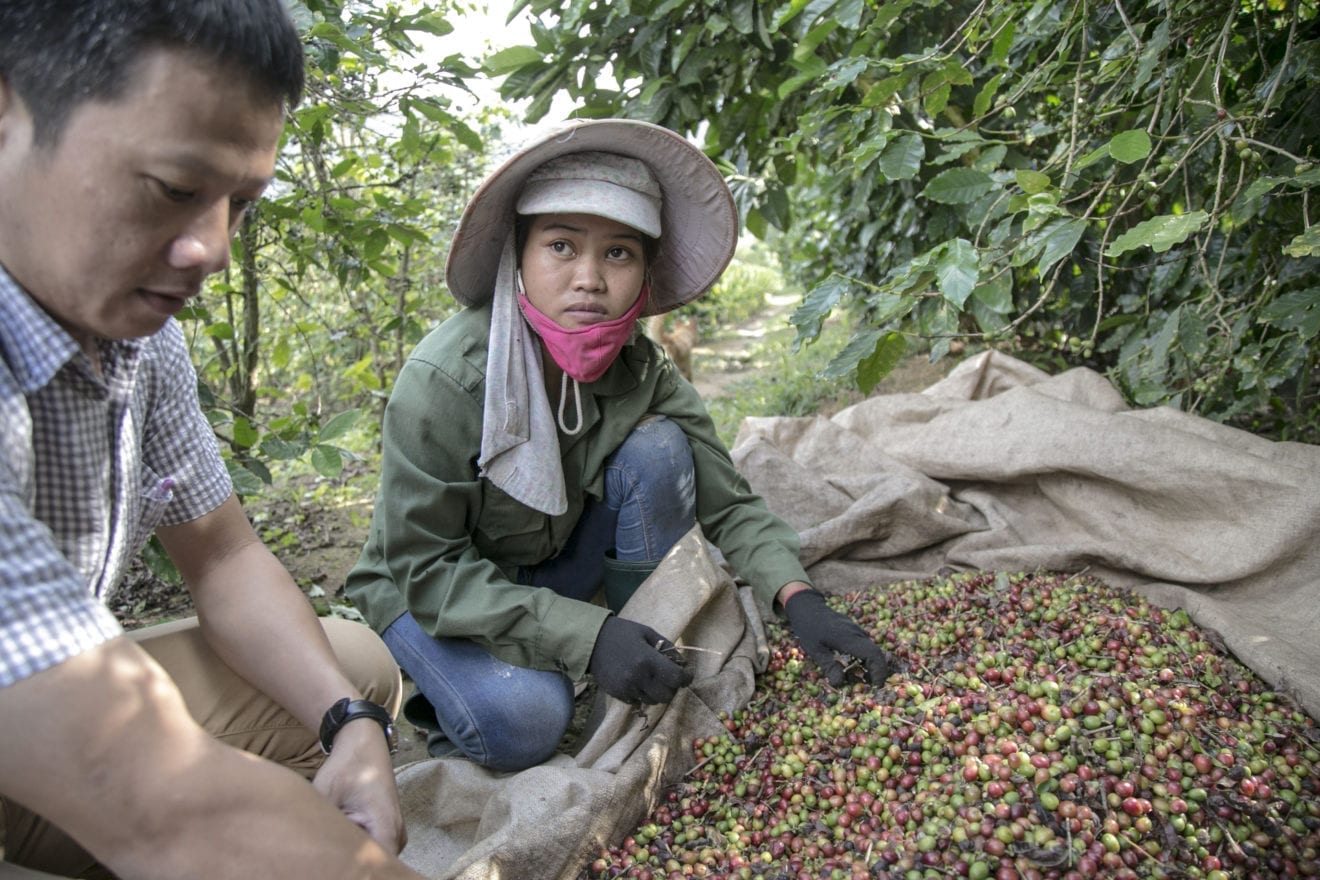
    “I earn VND4 mln/month ($176) harvesting coffee cherries. But normally, I’m a farmer in the plains,” said Nguyen Thi Lien, 59.

    Huong Phung farmers are being taught how to produce “clean coffee” that reaches the 4C standard, which includes avoiding soaking or mixing foreign matters to increase the weight, practices that can affect the quality of the coffee beans, and explain why Vietnamese coffee beans are sold at low prices internationally.

    Nearly half of the families in Huong Hoa District come from ethnic minority groups including the Pacoh and Bru-Van Kieu. Most are poor or extremely poor and, for a long time, have been accustomed to switching crops. But Ho La Ngang, a Pacoh coffee farmer, says 70 percent of the Pacoh here are now growing coffee thanks to encouragement from local authorities.

    Trucks are sent to collect harvested cherries and deliver them to processors, which saves the farmers time and money.

    One of the reasons why Quang Tri coffee only fetches a low price is because there are only a few local processing factories. An said the Mekong Institute’s long-term goal is to boost trade and investment in the region to help farmers gain access to regional and international markets.

    Inside a coffee processing factory in Quang Tri. The coffee cherries will later be transported to Hanoi for roasting and packaging.
  • Dairy Farm sales stagnate

    Dairy Farm sales stagnate

    Dairy Farm sales were described as “flat” in the third quarter to September 30.

    The Hong Kong-headquartered company said improved performances in health and beauty, Ikea, restaurants and Yonghui were offset by lower sales in the food and grocery division.

    “The lower food division sales, together with new store pre-opening costs in home furnishings, (Ikea) led to underlying profits being marginally below the same period in the prior year,” the company said in a statement issued in London, where it has a secondary listing. “Similar trading conditions are expected to continue for the remainder of the year.”

    Dairy Farm said the weakness seen in food and grocery sales was principally driven by difficult trading for the hypermarket and supermarket operations in Southeast Asia, where it operates Giant hypermarkets and Cold Storage supermarkets. It says reviews of “a number of the businesses” are being undertaken.

    The results from greater China (including its Hong Kong Wellcome supermarkets) showed improvement over the same period last year. Convenience store operations (including 7-Eleven stores in Hong Kong and Singapore) produced improved sales and profitability.

    Yonghui reported a strong 20 per cent  growth in revenue and 131 per cent increase in profit in the quarter.

    Improved sales in the health and beauty division (Manning’s, Guardian and Rose Pharmacy) were driven principally by a strong performance in Hong Kong and Macau. Home Furnishings (Dairy Farm has the Ikea franchises in Hong Kong and Taiwan) traded well, although profitability was reduced due to pre-opening expenses for the new store in Hong Kong.

    Maxim’s (which also includes Starbucks operations in Hong Kong, Vietnam and Cambodia) had a seasonally strong quarter in both sales and profit, benefiting from record mooncake sales during the Mid-Autumn Festival period. In September, Maxim’s acquired the existing business and exclusive rights to operate and develop Starbucks franchise stores in Singapore.

    In August, the group completed the acquisition of the remaining 34 per cent interest in Rustan’s in the Philippines from its joint venture partner.

  • Parkson Retail Asia 1Q Net Loss Widens On Year As Sales Decline

    Parkson Retail Asia 1Q Net Loss Widens On Year As Sales Decline

    Parkson Retail Asia has had a lacklustre start to its fiscal year, its unaudited first-quarter figures show.

    Gross sales proceeds fell by 8.3 per cent year on year to S$202.4 million (US$148.9 million) for the quarter.

    Total merchandise sales generated $198.1 million, with concessionaire sales contributing 74.2 per cent, down from 77.9 per cent for the same period last year, and direct sales contributing the balance of 25.8 per cent.

    Attributable net losses to the owners of the company for the period, to September 30, reached $12.9 million. The group also had net current liabilities of $67.9 million at the end of September, the result of investments in new stores and ventures yet to reach optimal level. This was an increase of 22.5 per cent from its June 30 position.

    Same-store sales in Indonesia and Malaysia were impacted during the quarter by the absence of Lebaran/Hari Raya festival buying following a shift in the calendar.

    Malaysia remained challenging, with the country’s consumer sentiment index, at 77.1, continuing to register below the 100-point confidence threshold for the 13th consecutive quarter.

    Consumer spending appears to have also softened in Indonesia, where retail spending has been declining, while Parkson’s same-store sales in Vietnam dropped by 7.8 per cent. This is attributed to the “fading of novelty effects” arising from the entry into the market of such international players as H&M, Takashimaya and Zara.

    “Competition in Vietnam’s retail market remained intense,” says Parkson.

    In Myanmar, the group closed its store at FMI Centre, Yangon, in January with a new store at Junction Square in the city opening two months later.

    Parkson says its performance in the next quarter is expected to benefit from year-end school holidays and festive buying. However, it expects challenges with fragile consumer sentiment and stiff competition.

  • Vietnam’s corruption-prone public sector to receive 7 pct pay rise next year

    Vietnam’s corruption-prone public sector to receive 7 pct pay rise next year

    Vietnamese lawmakers have approved a 7 percent pay rise for workers in the public sector, an area critics say is prone to corruption due to low official salaries.

    The basic wage in the sector will be raised to VND1.39 million ($61.20) a month from July next year from the current VND1.3 million.

    In Vietnam, the minimum monthly pay for civil servants and public employees is calculated by multiplying the basic wage with a coefficient determined by qualifications and experience. The coefficient for a new subdistrict-level civil servant with a bachelor’s degree, for example, is 2.34.

    Vietnam’s government has 2.8 million people on its payroll, according to local media.

    Many in the public sector have been complaining for years that their earnings are too low. In May last year, Vietnam raised the minimum wage in the sector by 5 percent, the first hike in three years. It received another 7.4 percent bump last July.

    Economists have blamed low wages in the sector for increasing levels of corruption.

    At a conference last year, experts also said the current wages for many officials only cover 60 percent of basic living costs at best, but most still manage to afford nice houses and cars.

  • Facebook’s Mark Zuckerberg to visit Vietnam

    Facebook’s Mark Zuckerberg to visit Vietnam

    Founder and CEO of Facebook Mark Zuckerberg is expected to arrive in Vietnam on Saturday.

    Zuckerberg is scheduled to visit world heritage site Ha Long Bay in northern Vietnam and take a seaplane tour around the bay on Saturday morning.

    This will be his second visit to Vietnam after his first trip in 2011, when he toured the country with his then-girlfriend-now-wife Priscilla Chan for a Christmas vacation.

    On this visit, the world’s fifth richest person according to Forbes magazine, will be accompanied by colleagues.

    In March, Vu Tien Loc, chairman of the Vietnam Chamber of Commerce and Industry (VCCI), said Vietnam had invited Facebook leaders, including Zuckerberg, to attend the Asia Pacific Economic Cooperation (APEC) Summit that concludes Saturday in the central city of Da Nang.

    “We want Facebook leaders to join hands with Vietnam to support startups, and we hope Zuckerberg will accept the invitation,” he said.

    Facebook COO Sheryl Sandberg has been in Da Nang since Wednesday and delivered a speech at the APEC CEO Summit on Friday morning.

    She is scheduled to appear on a talk show to discuss equality in the workplace on Sunday in Hanoi.

    Vietnam is in the top 10 countries for Facebook users, and Google’s YouTube is also a popular platform.

    Last week, a draft law on internet security that would require foreign companies such as Google and Facebook to have offices and servers in Vietnam was met with strong opposition from experts and industry insiders.

    The VCCI said it went against commitments that Vietnam signed up to when it joined the World Trade Organization (WTO) and the EU-Vietnam Free Trade Agreement (EVFTA), as well as the Trans-Pacific Partnership Agreement (TPP).

    Insiders said if the bill is passed, Google, Facebook, Skype and Viber would have to invest in giant servers in Vietnam to legally operate in the country.

    In that case, local internet providers said there is a high possibility that they would drop out of the Vietnamese market.

  • Mystery foreign investor buys $396 million stake in dairy giant Vinamilk

    Mystery foreign investor buys $396 million stake in dairy giant Vinamilk

    Vietnamese dairy giant Vinamilk sold a 3.33 percent to an unnamed foreign investor for VND8.99 trillion ($396 million) on Friday.

    The investor bought the 48.3 million shares on offer for VND186,000 ($8.20) apiece, 24 percent higher than the asking price.

    The share sale, which attracted 19 investors including six foreign firms, reduced the state ownership in Vinamilk, Vietnam’s biggest listed firm, to 36 percent, still enough to retain veto rights.

    Vietnam’s State Capital Investment Corporation had forecast the sale would fetch VND6.5 trillion to VND7 trillion ($286.3 million to $308.4 million).

    In December, the state investor put on offer a 9 percent stake in Vinamilk, but was only able to offload 5.4 percent to two investors – both units of existing shareholder Fraser and Neave Ltd.

    Investors looking to gain a degree of control over Vinamilk were deterred by the size of the stake on offer. The government had initially planned to sell its entire 44.7 percent stake.

    The government is trying to divest from hundreds of state-owned enterprises, including brewers Hanoi Beer Alcohol and Beverage JSC (Habeco) and Saigon Beer Alcohol Beverage Corp (Sabeco) in which it owns a combined $7.8 billion worth of shares by market value.

  • Vietnam’s ‘Little Paris’ tells tourists to be ‘decent’ and ‘civilized’

    Vietnam’s ‘Little Paris’ tells tourists to be ‘decent’ and ‘civilized’

    Lam Dong Province, home to the popular highlands resort town of Da Lat, has issued a list of rules for tourists that includes a dress code and shopping guidelines.

    The code of etiquette, drawn up by the province’s tourism department, asks visitors to be “civilized, decent and responsible”, Tuoi Tre newspaper reported.

    They should wear suitable clothing, respect cultural differences, avoid littering and stealing, and queue in line when they are shopping or buying tickets.

    The purchase of undocumented goods and wildlife products is deemed “inappropriate” behavior, the rules state.

    Hotels, restaurants and other services are also warned not to overcharge, sell copycat or low quality products, or pester customers.

    The code of conduct is based on a national set issued by the tourism ministry in March this year, and will be printed in Vietnamese and English in time for the annual Da Lat Flower Festival in late December.

    Lam Dong received around three million visitors in the first half of this year, of which foreign travelers increased 44.3 percent from a year ago to more than 204,400.

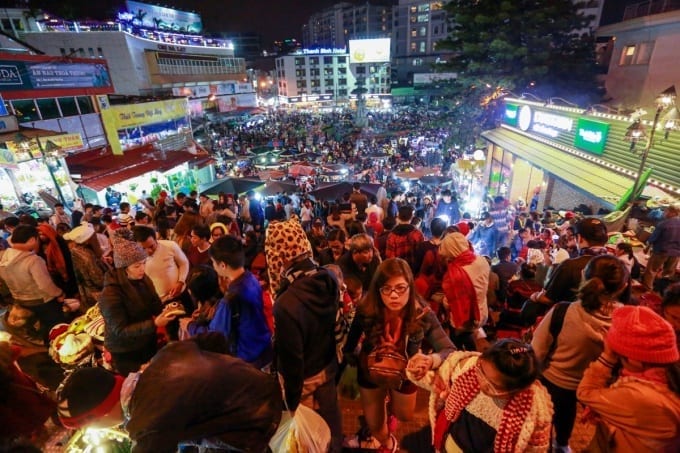
    The Central Highlands province is best known for Da Lat, which is often dubbed “Little Paris” due to its colonial history.

    But like many places across Vietnam, Da Lat has both benefited and lost out to the recent travel boom.The mostly quiet and charming town, surrounded by pine trees, flowers and vegetables farms, is famous for its cool climate and has gained in popularity both as a romantic getaway for lovers and an oasis in a country that usually sweats all year round.

    Its center is covered in garbage on big holidays, when complaints of thefts and rip-offs are not uncommon.

    This year, Da Lat has reported multiple cases of local gangsters and racketeering gangs colluding with businesses to scam travelers, usually on strawberry farms or in souvenir shops.

    The gangs have reportedly threatened to assault tour guides and drivers from several travel companies who have refused to lure tourists into their traps.

    The issue got physical in May when a tourist was beaten after trying to return a product, prompting the government to order immediate measures be taken to protect visitors from these new groups of gangsters.

  • Saigon says delayed first river bus will launch in late November

    Saigon says delayed first river bus will launch in late November

    Saigon’s first river bus service will hopefully be up and running later this month, according to local authorities.

    The service will cruise 10.8 kilometers (6.7 miles) from Bach Dang Wharf in District 1 to Linh Dong Station in Thu Duc District, passing through District 2 and Binh Thanh District.

    With 12 stops in total, the entire trip will take half an hour, cutting a third off the time it would take to travel by road and costing just VND15,000 (66 U.S. cents).

    The first river bus was due to launch this summer, but the city has kept passengers waiting on the dock. In August, it said that construction delays would not allow the first river bus to set sail until October.

    The city’s transport department explained that as it is the city’s first river bus, it wants to make sure the service is as user-friendly and convenient for passengers as possible.

    However, the only passengers to have experienced the service thus far are those recruited by the city for two test runs.

    Saigon has more than 1,000km of inland waterways, so the river bus service should ease traffic and attract more tourists, director of the city’s transport department Bui Xuan Cuong told local media in August.

    A second route from Bach Dang Wharf to District 8 is scheduled to open in early 2018. The two routes are said to have cost an estimated VND120 billion ($5.28 million).

    In April, the city’s municipal administration approved two more routes connecting the downtown with new urban areas in District 7.

    In September, the city also agreed to a plan tabled by a private firm to add three more routes connecting the city’s downtown with the outlying districts of Can Gio and Cu Chi, as well as the stunning Con Dao Island, which is administered by the southern province of Ba Ria-Vung Tau and lies 230 kilometers (143 miles) away from Saigon.

  • Vietjet evolving as a Consumer Airline in its next phase development

    Vietjet evolving as a Consumer Airline in its next phase development

    Fast growing Vietjet is evolving to become a “Consumer Airline” in its next phase of development, according to its President and CEO, Nguyen Thi Phuong Thao, at the APEC CEO Summit 2017 in Danang, Vietnam.
    Speaking at the session themed “Connecting for Growth,” Nguyen said Vietjet is heading to build up the airline that serves consumption demands, using e-commerce platform and logistics and consumption product distribution system.

    “We are leading a digitalization and automation trend in the 4.0 technology revolution. I believe that direction plays a very important role to fulfill the target of – connecting for growth,” she said.

    Sharing the Vietjet success story, Nguyen said “our pride named Vietjet” is a typical corporate culture trait which is the key of success for all our plans, all strategies and all ambitions.

    “Each of us is proud of being a member of our organization. We do strongly believe that with the connection of civilizations and nations and cultures, trading sectors which create ecological systems for human development and economic growth, there is a prosperous and brighter future in the sky. We are dedicated to realizing that future soon.”

    She also presented the Vietjet vision with a global development plan that comes with efforts to build up the airline into a multi-national company and multi-cultural environment homing staff from more than 30 countries.

    Defined by our motto “Sky Connection,” Vietjet international routes now account for more than two-third of our operating network, she said.

    “We are heading our international network via interlines with credited airlines in the world. We successfully did it with Qatar Airways, doing it with Japan Airlines and will do it with Asiana soon. We are also working with one carrier in the US and one carrier in EU for possible co-operations. Other than standard low-cost carriers which can only fly around with a radius of less than three hours, in a very near future, our passengers can fly to many destinations around the world,” she added.

    At the helm of Vietjet’s rapid expansion, Nguyen Thi Phuong Thao has been named by Forbes as one of the world’s top 10 power women in business. It is her ambition to grow Vietjet, which she founded in 2011 into an international airline. Vietjet, the first airline in Vietnam to operate as a new-age airline with low-cost and diversified services, was listed in the country’s largest IPO on the Ho Chi Minh City Stock Exchange last February.

    After only five years of operation, Vietjet has captured the biggest share of the Vietnam local market and become the country’s largest domestic carrier.

    The APEC CEO Summit 2017, held in Da Nang between 8 – 10 November, 2017 is Asia-Pacific’s premier business event. It provides unparalleled opportunities for global business executives to engage in dialogue with APEC Leaders, high-level government officials and influential thought leaders.

  • Vietjet Bags Best Ultra Low Cost Airline Award 2018

    Vietjet Bags Best Ultra Low Cost Airline Award 2018

    New age airline Vietjet is certainly no stranger in the aviation arena, making headlines for its innovative campaign executions and exponential growth in recent years.

    It comes as no surprise that the airline was recently bestowed the inaugural Best Ultra Low Cost Airline Award 2018 title by AirlineRatings.com – the world’s only air safety and product rating review website. Joining the likes of Air New Zealand and Singapore Airlines, Vietjet was named a winner of the Airline Excellence Awards by the website which promotes excellence in the airline industry.

    Geoffrey Thomas, Editor-in-chief of AirlineRatings,com said, “Vietjet is a real innovator bringing very affordable, safe and enjoyable travel with an outstanding product to millions across Asia and Vietnam. The airline has done the impossible – bringing top class travel to the region at amazing prices and ultimate flight experiences.”

    “The new award, taken out by Vietjet, celebrates a new breed of airlines that offer extraordinary value to passengers, while not compromising on product or service,” added Thomas.

    Since its debut in December 2011, Vietjet has rapidly grown its fleet and expanded its route networks to include a number of local and international destinations, opening up affordable travel to all across the region.

    To date, the airline has flown over 40 million passengers, and been presented with numerous awards including 32 domestic and nine international accolades such as being named ‘The Pioneer Airline’ by The Guide Awards 2017 at the annual festival of national tourism 2017 Vietnam and the ‘The Best Asian Low-Cost Carrier 2015’ at the TTG Travel Awards 2015.

    At the helm of Vietjet’s success is its Founder and CEO, Nguyen Thi Phuong Thao who was recently listed in Forbes World’s 100 Most Powerful Women list.

    “I have always aimed big and done big deals. I have never done anything on a small scale and this is the same driving force behind the growth of Vietjet. It is my goal to continue propelling Vietjet forward and leading it to its highest point of success,” said Thao. Vietjet plans to open six new routes in the fourth quarter, increasing its total new routes by 19 for the year 2017.

    The AirlineRatings.com Airline Excellence Awards, judged by six editors with over 180 years’ industry experience, combines major safety and government audits, with 12 key criteria – up from nine last year – that include: fleet age, passenger reviews profitability, investment rating, product offerings, and staff relations.

  • Miniso Vietnam to open more stores

    Miniso Vietnam to open more stores

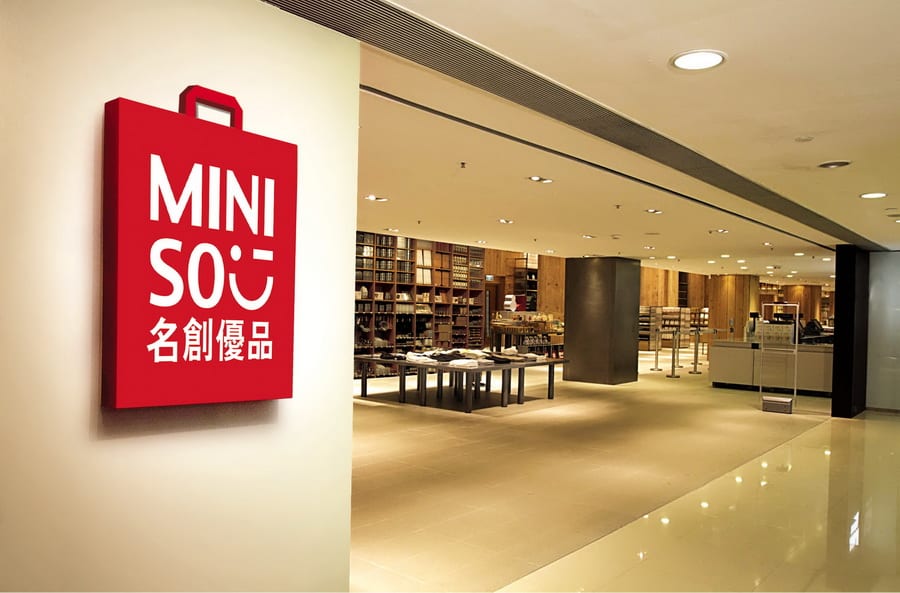
    Miniso Vietnam plans to open 500 more stores in the next two years, adding to the 30 outlets already established.

    Co-founder/chief designer Miyake Junya says he has signed a strategic co-operation agreement with Vietnamese developers, including Vincom, which includes plans for 300 stores next year.

    He says Miniso will open 10,000 stores in 100 countries by 2019, with expectations of global revenue reaching US$15 billion.

    In its four years, the Chinese discount chain already has 2000-plus stores in more than 60 countries and regions.

    Miniso Vietnam launched in August last year.

  • Vietnam’s richest man leapfrogs Donald Trump on Forbes’ billionaires list

    Vietnam’s richest man leapfrogs Donald Trump on Forbes’ billionaires list

    Vietnam’s richest man and first billionaire has climbed past U.S. President Donald Trump on Forbes magazine’s real time list of the world’s billionaires.

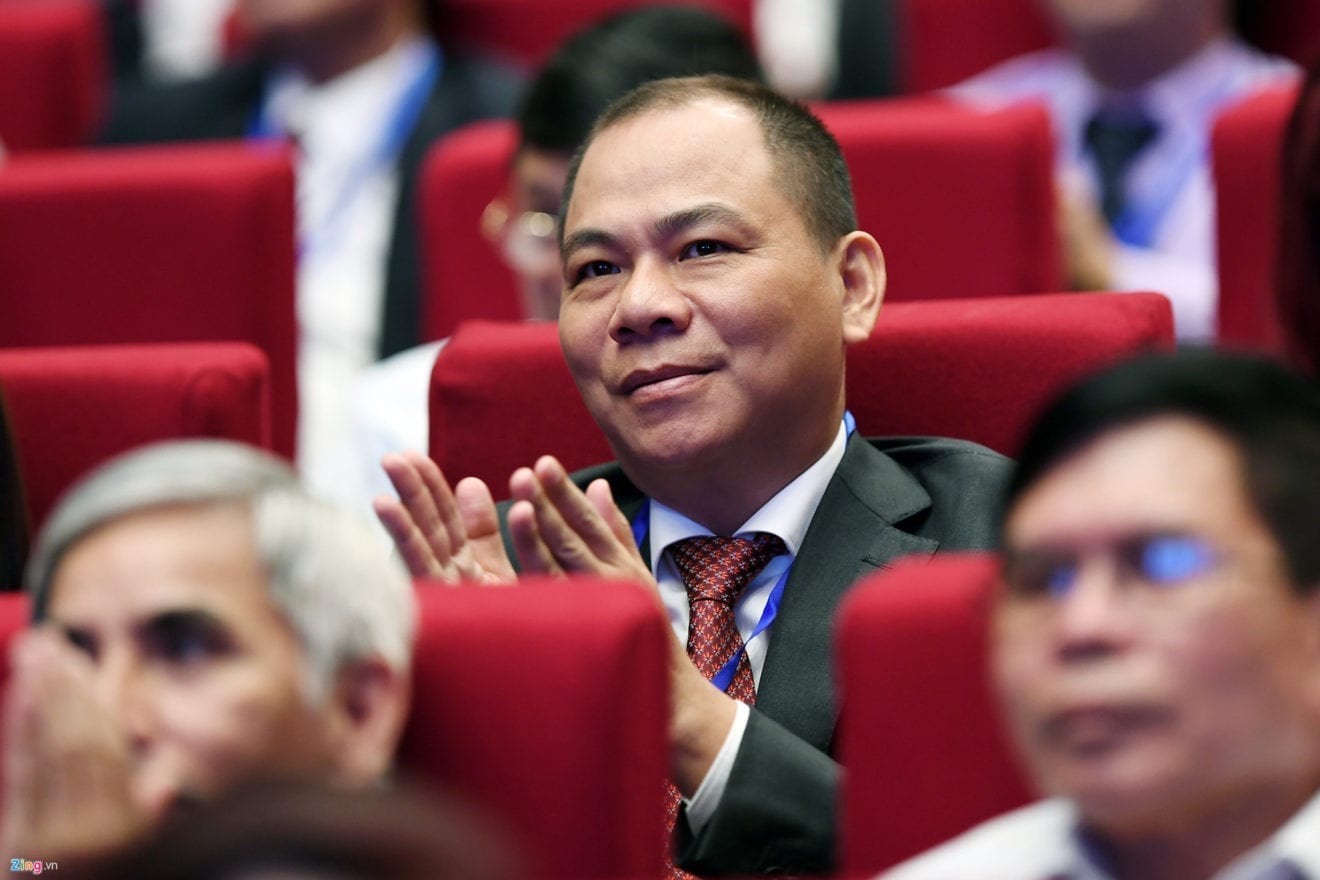
    Pham Nhat Vuong, founder and chairman of Vingroup JSC., was the world’s 640th richest person with a net worth of $3.5 billion as of 5 p.m. GMT on November 8.

    Since the release of Forbes‘ 2017 billionaires list in March, when Vuong was ranked 867th, his net worth has increased by over $1 billion. This gain is largely attributed to Vingroup’s shares gaining nearly 50 percent in the last six months and the IPO of Vingroup subsidiary Vincom Retail earlier this week.

    Meanwhile, the U.S. president and real estate mogul dropped from 544th to 734th with a net worth of $3.1 billion. His fortune has been declining over the past year due to a tough New York real estate market, a costly lawsuit and an expensive presidential campaign, according to Forbes.

    Meanwhile Nguyen Thi Phuong Thao, founder of budget airline Vietjet Air and Vietnam’s second billionaire, was ranked 1246th with a net worth of $1.9 billion.

    At the top of the billionaires list was Amazon’s founder Jeff Bezos with a net worth of $94.9 billion, followed by Microsoft co-founder Bill Gates at number two with $89.5 billion.

    Vingroup is one of Vietnam’s largest real estate conglomerates, and has also been expanding rapidly into retail, logistics, agriculture, education and healthcare. As of the end of September, its subsidiary Vincom Retail was managing, operating and renting 41 shopping malls with a total area of over 1.1 million square meters (272 acres). It also has 22 projects under construction and another 50 in early development.

  • Vietnam stock hits fresh near 10 years high

    Vietnam stock hits fresh near 10 years high

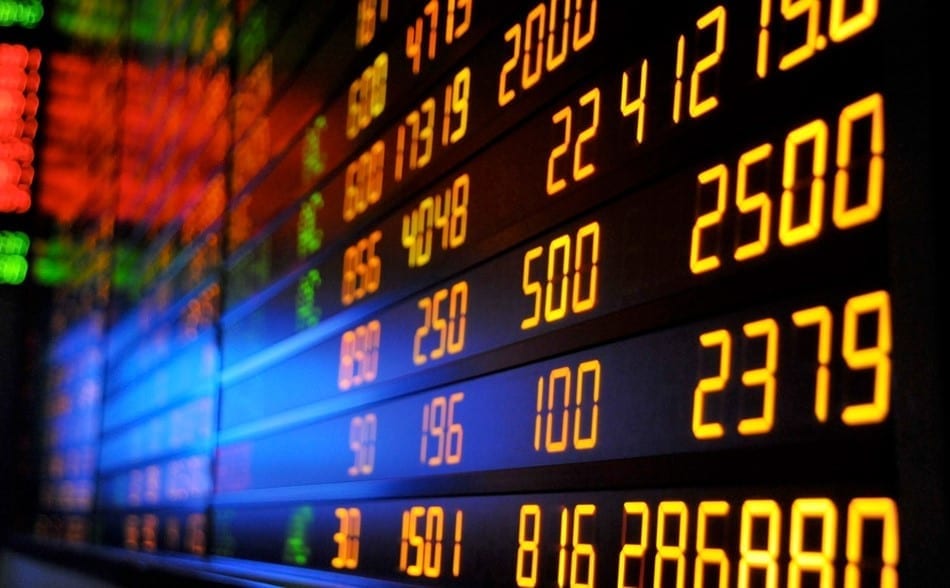
    Vietnam shares gained 0.9 percent, with real estate developer Vingroup Joint Stock Company climbing 4.7 percent to an all-time peak.

    Global equities were largely muted as concerns of a delay in U.S. tax reform proposal and apprehension over Saudi Arabia’s rising tensions with Iran soured investor sentiment.

    “Markets seem unsure which way to go next – equity markets are largely becalmed…,” ING analysts said in a note.

    Most Southeast Asian stock markets were muted today, with Indonesia slipping from a record close, as investors took a breather in the absence of market-moving data.

    Indonesian stocks slumped 0.3 percent from a record close, dragged by the telecommunications sector, with Perusahaan Perseroan (Persero) PT Telekomunikasi Indonesia Tbk, down 1.7 percent.

    Singapore index was largely flat, with real estate giant CapitaLand Ltd down 1.1 percent and Keppel Corp Ltd giving up 0.9 percent.

    Philippine stocks edged 0.3 percent lower, with industrial stocks accounting for majority of the losses, as SM Investments Corp slumped 2.8 percent, and food processor JG Summit HoldingS dropped 1.2 percent.

    Real estate stock Ayala Land was the biggest drag on the index, declining 2 percent. Manila-based RCBC Securities analyst Fio De Jesus attributed the stock’s move to profit-taking after it rose 1.3 percent in its previous session on strong nine-month earnings.

    Thai shares pared early gains in the session to trade down 0.1 percent ahead of the Bank of Thailand’s rate decision due later in the day. The central bank is expected to leave its benchmark interest rate near record lows again, with the current level seen supporting the country’s economic recovery while inflation stays benign.