Tag: Vietnam

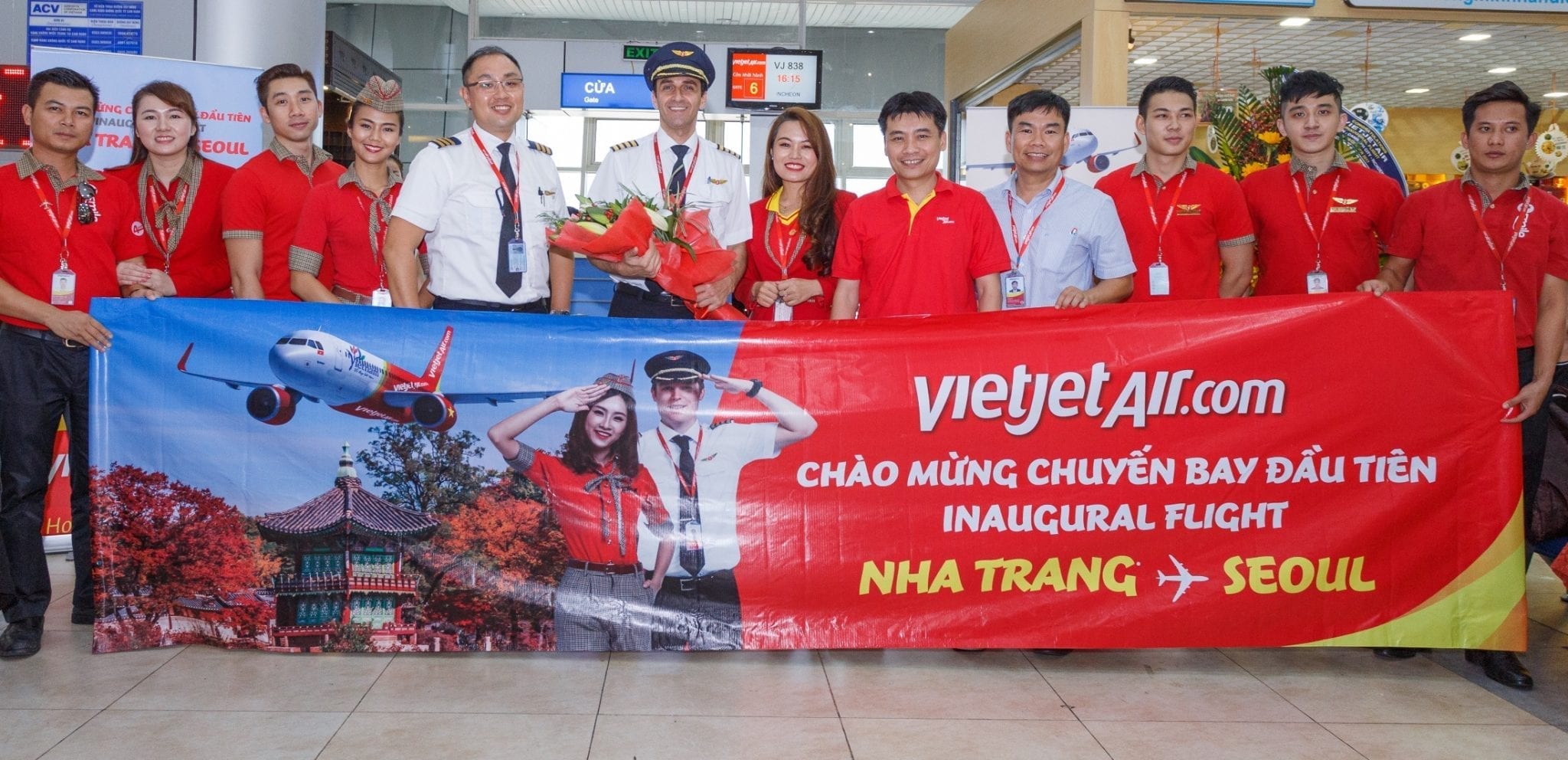
  • Vietjet inaugurates Nha Trang – Seoul route

    Vietjet inaugurates Nha Trang – Seoul route

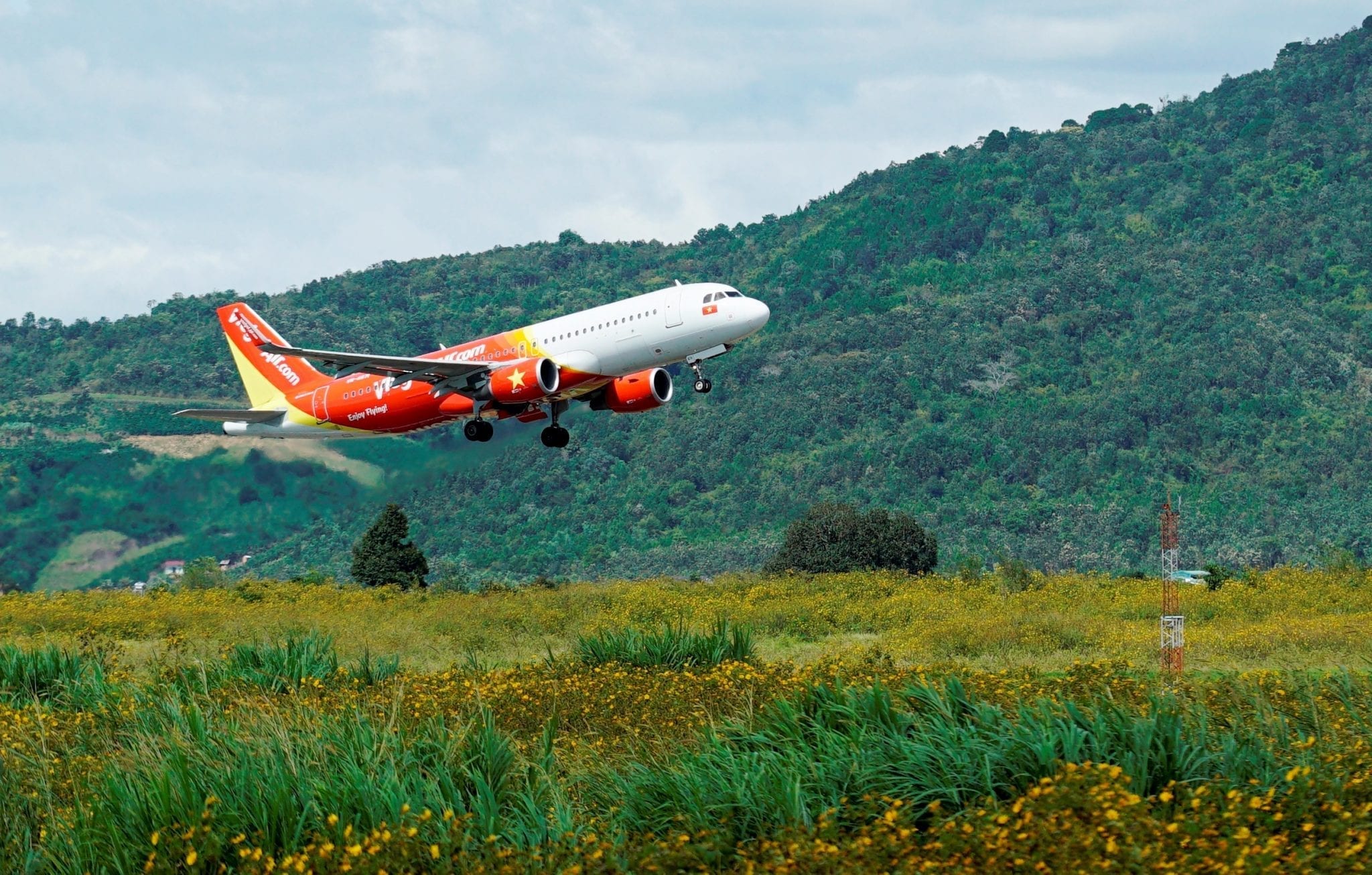
    Vietjet yesterday celebrated the inauguration of its Nha Trang – Seoul route launch at the Cam Ranh International Airport (Khanh Hoa Province). This new route will serve the traveling demands of both the local people and tourists, connect the two famous travel destinations and contribute to the promotion of trade and integration in the region.

    The Nha Trang – Seoul route is operated with a daily return flight at around 5 hours per leg. The flight will depart Nha Trang at 16:15 and arrive in Seoul at 22:45 (local time). The return flight takes off in Seoul at 01:50 (local time) and lands in Nha Trang at 05:25.

    South Korea is always a popular tourist travel destination because of its beautiful natural sceneries, exciting entertainment industry, traditional cultural features and many shopping centers etc. With the inauguration of this new route, Vietjet now operates a total of six international routes connecting Vietnam and South Korea with the offer of more travel saving opportunities for travelers.

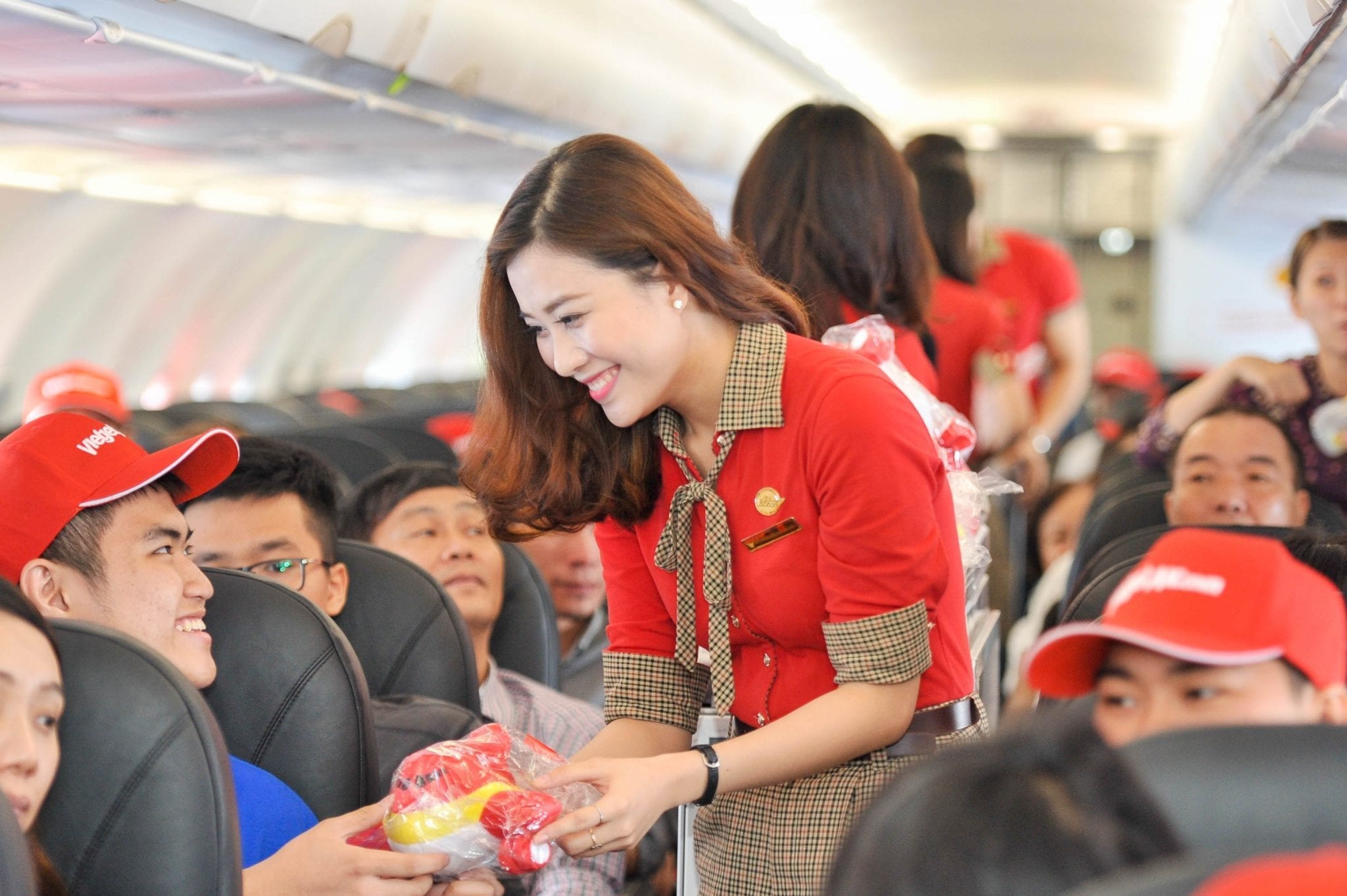
    With high-quality services, diverse ticket classes, special low-fare tickets, Vietjet offers its passengers flying experiences on new aircrafts, comfy seats, delicious hot meals, beautiful and friendly flight attendants and other interesting added-on services.

  • Vietnam’s PM demands answer on rubber firm sprung for stretching financial legality

    Vietnam’s PM demands answer on rubber firm sprung for stretching financial legality

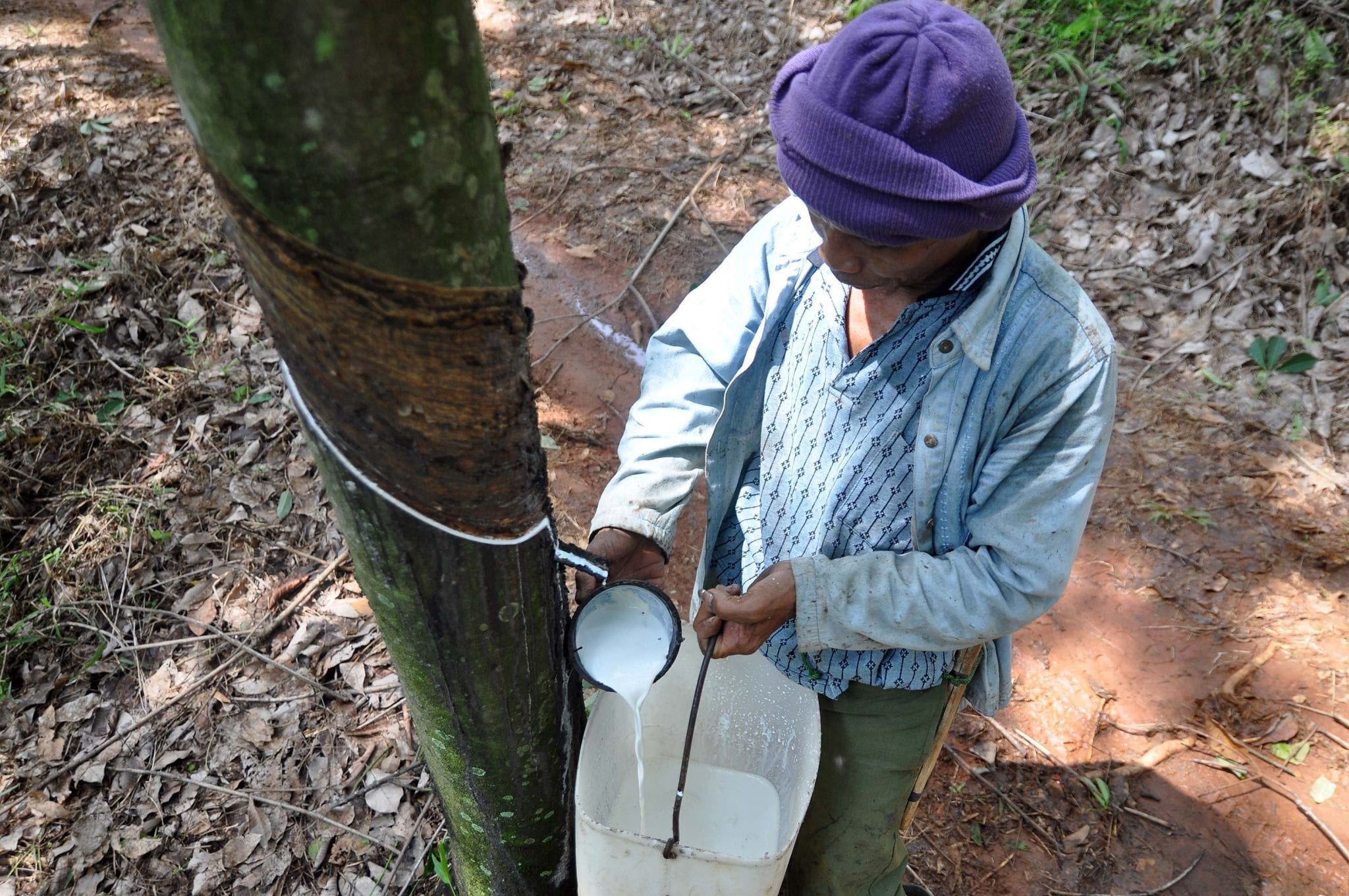
    Prime Minister Nguyen Xuan Phuc has called for a report on potential fraudulent activity at the state-owned Vietnam Rubber Group (VRG) after government inspectors discovered misuse of state capital and assets at the group three years ago.

    The Ministry of Public Security has been instructed to submit the report by December 31.

    VRG, in which the Vietnamese government currently owns a 95 percent stake, has allegedly committed fraud worth up to VND8.4 trillion ($370 million).

    Between 2006 and 2011, the group spent over VND2.42 trillion, or 13 percent of its charter capital, on non-core businesses, such as cement, hotels, steel, hydropower projects and the stock market.

    Most of the investment came from the state budget, but the group reported that it did not generate any profits.

    Some VRG leaders have also been accused of contributing capital to establish and run a seafood import-export firm in the southern province of Dong Thap.

    VRG also raised its charter capital in 2010 and 2011, without government approval, by VND1.84 trillion.

    And although the inspection, completed back in 2014, was aimed at handling individuals and groups that committed fraud, VRG has yet to be held accountable.

    Thanh Nien (Young People) newspaper reported last month that where the money had gone, and how the group would make up for the massive sum, remained a questions that the public still has no answer to.

    In September, VRG rolled out a privatization plan, in which it declared a charter capital of VND40.7 trillion and 244,000 hectares (593,052) of lands in 18 cities and provinces across the country.

    The rubber giant, which has 103 subsidiaries, expects to earn VND13 trillion from selling one billion shares in its initial public offering.

    It also has a target of earning more than VND3 trillion in net profit this year, up 9 percent from last year.

    “There is a sense of urgency in Vietnam to privatize state-owned enterprises (SOEs) and use the money raised from public offerings to alleviate the government’s fiscal burden,” HSBC said in a report in August.

    Late last year, PM Phuc signed off on a decision which pushes for further divestment of state capital in existing SOEs by eliminating or reducing the minimum level of ownership that the government holds in certain industries.

    The decision provided a clearer roadmap for equitization by saying that the state will equitize 137 SOEs and sell its entire stakes in 103 firms. Equitization is the term Vietnam uses to describe the process of issuing shares to partially privatize state-owned businesses in which the government will still hold the majority stake.

    The Ministry of Finance said in June that the country’s public debt, which includes central government debt, government-backed loans and local government debt, may reach the ceiling set by the legislative National Assembly of 65 percent of gross domestic product from 2017-2018.
  • Vietnamese equities lead Asia-Pacific price gains in November

    Vietnamese equities lead Asia-Pacific price gains in November

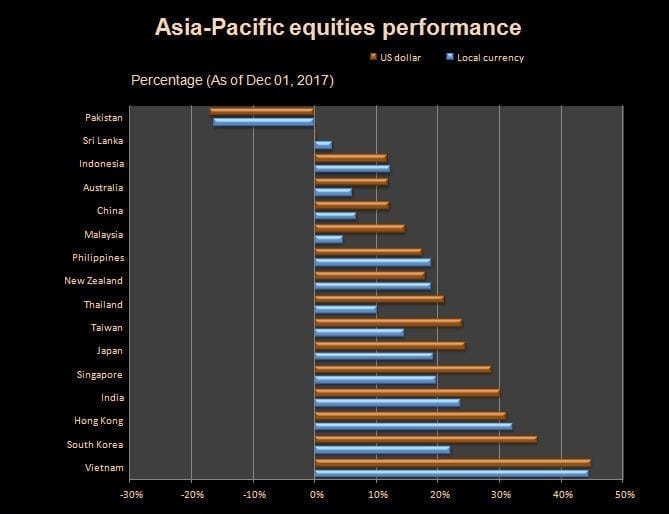
    Vietnamese shares reached decade-highs and topped Asia-Pacific with the highest price gains in November, bolstered by rising foreign interest during the month.

    Foreigners were net buyers of about $500 million of shares in the country’s stock market in November, the highest monthly purchases in at least seven years.


    Vietnam will also kick off the sale of a majority stake in Sabeco, the country’s biggest brewer, in December.Singapore-listed Jardine Cycle & Carriage Ltd’s purchases of about $900 million in Vinamilk’s shares was seen as a positive for Vietnamese markets, with government aiming to trim its stakes in more state-owned firms.

    The Vietnam index rose more than 13 percent in November.

    Hong Kong and Japanese shares rose more than 3 percent each in November.

    Sri Lankan stocks led the losers with a fall of 3.11 percent, followed by China and Taiwan shares with declines of more than 2 percent.

    South Korean, Malaysian, Thai, Philippine and Indian equities fell between 1 to 2 percent.

  • Vietnam’s PV Oil hoping to strike it rich with $92 million share sale in January

    Vietnam’s PV Oil hoping to strike it rich with $92 million share sale in January

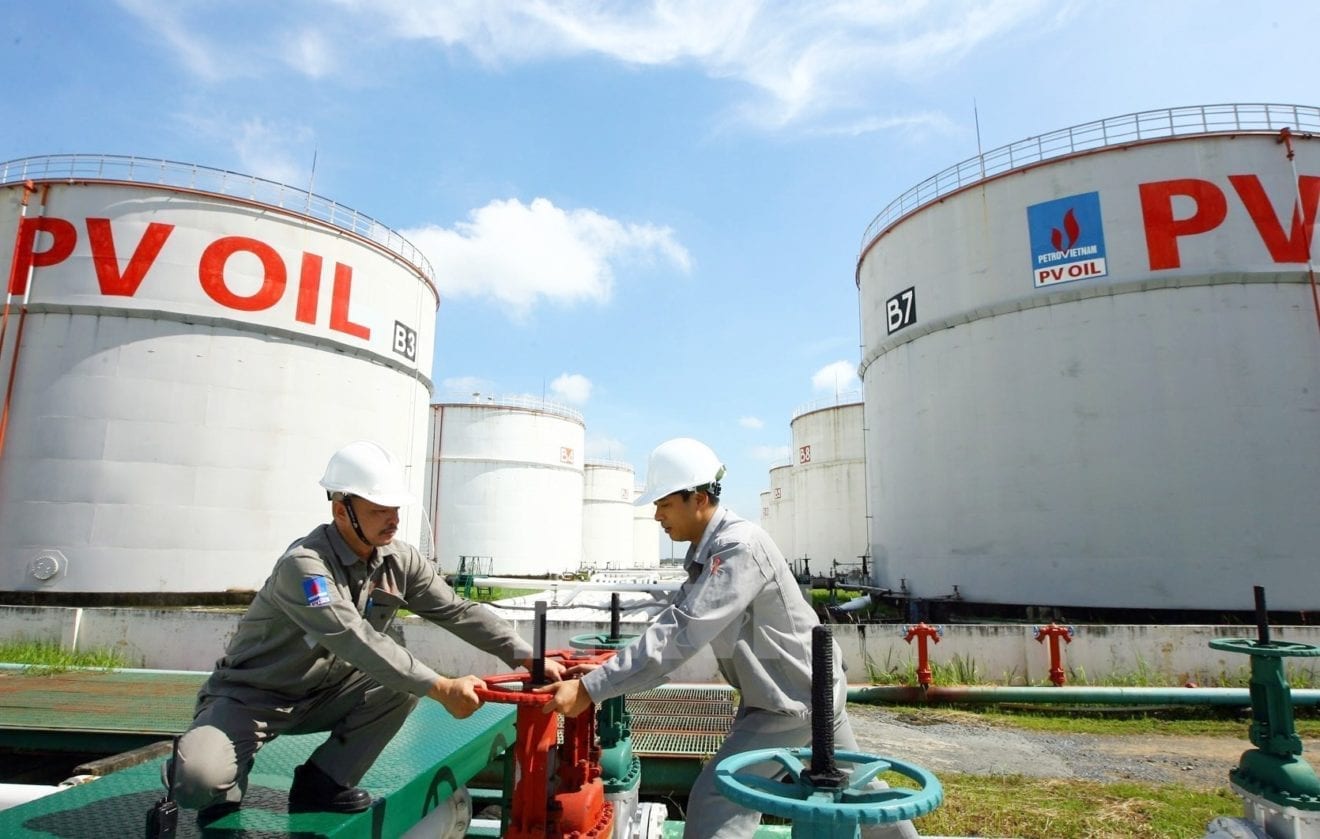
    Vietnamese state oil distribution firm PetroVietnam Oil Corp (PV Oil) plans to offer 20 percent of its shares in an initial public offering (IPO) in January that aims to raise at least $92 million, its parent firm said on Friday.

    PV Oil will also offer up to an additional 44.72 percent to strategic investors and another 0.18 percent to employees, state oil and gas group PetroVietnam said on its website.

    The sale is part of Vietnam’s broader privatization program that seeks to divest from hundreds of state-owned enterprises to improve their performance and to help raise funds for the tight state budget that is struggling to support growth.

    The government plans to reduce its stake in PV Oil to 35.1 percent, PetroVietnam said. Nineteen companies have submitted applications to become strategic investors, three quarters of which are foreign, the firm added.

    PV Oil is Vietnam’s sole crude oil exporter and among the country’s top oil products retailers with a 22 percent market share, the company said on its website.

    PV Oil is one of several state energy firms earmarked for privatization, along with PetroVietnam Power Co and refinery operator Binh Son Refining and Petrochemical Corp (BSR), whose IPO is also targeted for January at the latest.

    PV Oil said earlier this year its first half pre-tax profits reached an estimated VND202 billion ($8.89 million), down 6 percent from the same period in 2016, while its revenue rose 43 percent on-year to VND23.4 trillion.

  • Vietnam’s central bank to provide small change to all toll gate

    Vietnam’s central bank to provide small change to all toll gate

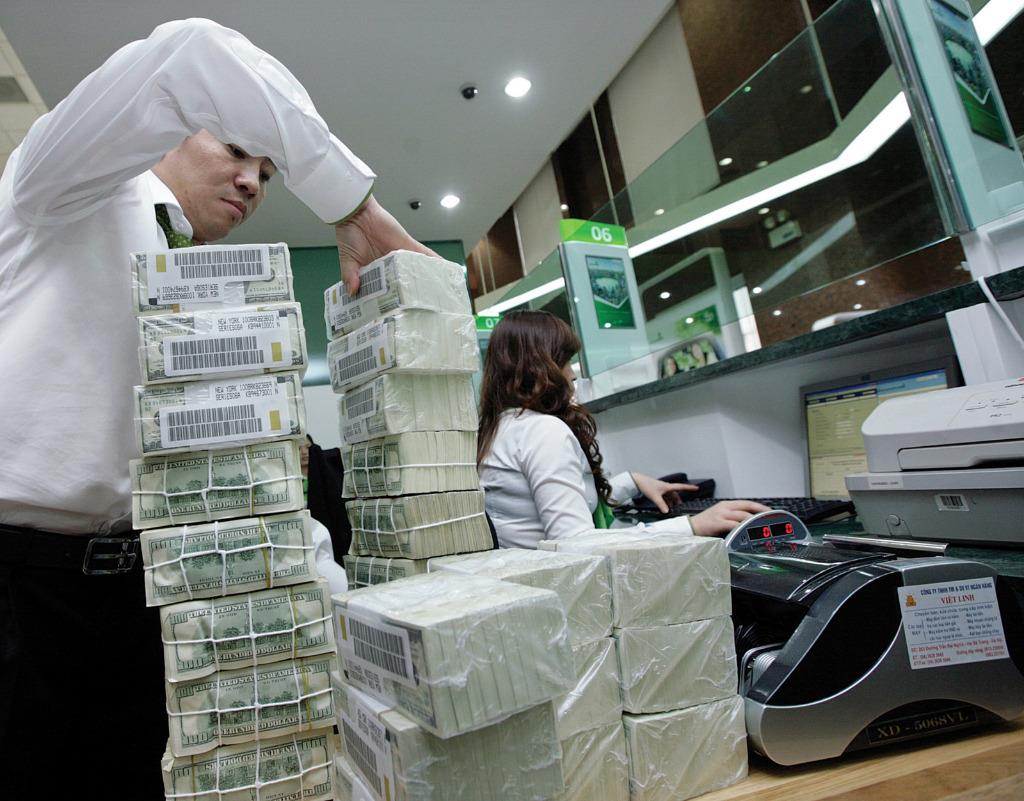
    The smallest denomination banknotes in Vietnam, VND100 and VND200 ($0.01), are both available at the central bank to any individuals or organizations that have a demand for them, a senior official from the bank said.

    Nguyen Thi Dam, director of the State Bank of Vietnam’s branch in Tien Giang Province, said the two notes are still in circulation and the central bank always makes sure they are available to customers.

    Those in need can ask for small notes at any commercial bank or come to the central bank, she said on Friday.

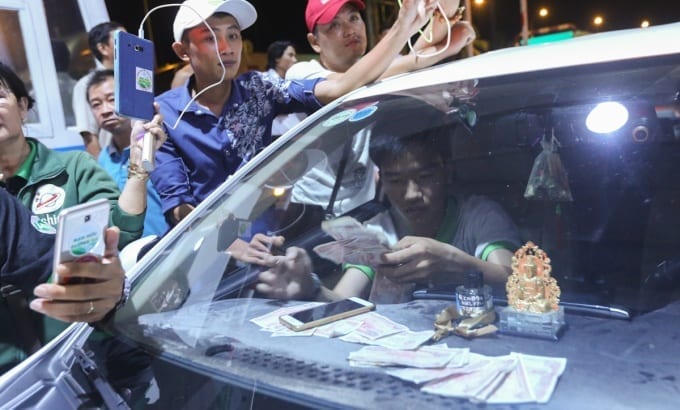
    Her statement follows a renewed dispute at a reopened toll station in Tien Giang where drivers have been protesting by demanding VND100 in change after paying VND25,100 for the VND25,000 toll.

    The situation led to a massive tailback on Thursday running up to the Cai Lay station, forcing staff to give in and allow drivers through free of charge.

    The station had only reopened that morning after disgruntled drivers forced it to close three months ago, but they were quick to pick up from where they left off.

    Their previous tactic was to pay the toll with stacks of VND200 and VND500 notes, forcing staff to spend extra time counting them. This eventually resulted in heavy traffic jams which forced the station’s staff to let cars pass.

    “We’re protesting because this station is in the wrong location, not because of the toll fees,” driver Vo Thanh Hao said. “We drivers will continue to fight against the investor behind the station.”

    The branch in Tien Giang has asked the central bank to provide more VND100 notes, given the high demand for the small denomination at the moment.

    In reality it’s a real challenge to find a VND100 note on the market these days, and they’re often kept as souvenirs now.

    The VND100 note was issued in 1991, and the biggest denomination in Vietnam now is VND500,000 ($22). A cup of iced tea costs around VND2,000 at streetside stands.

    The Cai Lay toll station was opened along National Highway 1 on August 1 for investors to recover the money spent on a project to resurface the highway and build a new bypass around a local town. However, drivers soon started using small change to pay the tolls in protest against the station, claiming it should have been placed along the new bypass instead of on the main road.

    The protests resulted in heavy traffic for days, forcing the station’s operator to temporarily close it on August 15.

    The Transport Ministry disagreed with the drivers’ claim that the station should have been placed along the new bypass, but agreed to cut the toll fees and let locals living near the station pass through for free.

    Luu Van Hao, deputy chairman of the company investing in the BOT (Build-Operate-Transfer) project, also stressed that the toll station is operating in accordance with regulations.

    “Cutting the toll fees is the last resort. We cannot relocate the station like the drivers have asked,” he said.

    There are toll stations every 62 kilometers (39 miles) along the highway, according to a report released by the legislative National Assembly last year. The standard distance set by the government is 70 kilometers.

  • Hanoi gets its first McDonald’s as influx of western fast food chains continues

    Hanoi gets its first McDonald’s as influx of western fast food chains continues

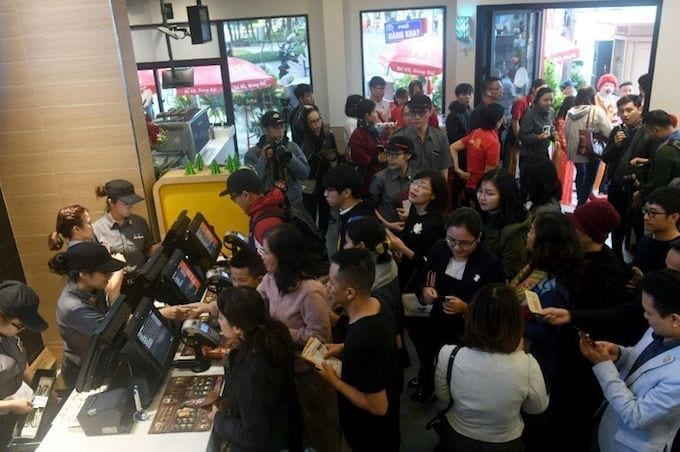
    Global burger behemoth McDonald’s opened its first branch on Saturday in the historic heart of Hanoi, a conservative city renowned for its traditional — and cheap — Vietnamese staples beloved by food-obsessed locals.

    Hungry customers lined up for Big Macs and Chicken McNuggets at the Vietnamese capital’s first location overlooking the tree-lined Hoan Kiem Lake, which draws millions of tourists annually to see French-era colonial buildings and sample street-food favorites like pho noodle soup and banh mi sandwiches.

    The restaurant is the first outside of the southern commercial hub Ho Chi Minh City, where 16 branches have opened since McDonald’s first came to Vietnam in 2014 to much fanfare, especially among the rapidly-growing middle class and American-obsessed youth.

    The global fast food chain received a similarly warm welcome in Hanoi on Saturday, as hungry diners crammed into the two-storey eatery for a first taste of the Golden Arches.

    For 84-year-old Tran Dinh Luyen, who fought against the U.S. in the Vietnam War, the restaurant was a sign of warming ties with a former enemy.

    “I am happy that McDonald’s has opened a restaurant in Hanoi. It’s a very famous American brand, so it shows how far U.S.-Vietnam relations have come,” he said after mowing down on a Big Mac with his daughter and granddaughter.

    But not everyone agreed.

    “It’s a rip-off … this fast food is for kids only, it’s not good at all,” 90-year-old Ta Xuan Huong said, espousing his love for traditional cuisine.

    Some curious tourists stopped to see what all the fuss was about, perplexed that a brand ubiquitous in the West would draw so much attention.

    “It’s kind of random to see McDonald’s opening… it’s an interesting cultural experience to see how important it is that the store is opening here,” American Dan Moore said, after his wife remarked she might not have expected to find one of the most salient symbols of capitalism in the country.

    Vietnam has seen dizzying economic growth in recent years as it has opened its doors to foreign investment — which has included an influx of western chains like Starbucks, KFC and Burger King.

    Growth in the fast food sector has been buoyed by rapidly rising incomes — annual per capita income has more than doubled in the past decade to about $2,200 today — especially among under-30s, who make up half of Vietnam’s population of 93 million people.

    The fast food industry in Vietnam has seen double-digit growth annually for the past five years, and the country has the highest 2017 growth in Asia-Pacific for fast food chains, according to market research firm Euromonitor International.

    Though meals can cost as much as three times the local fare, customers are still showing strong appetite.

    “Young people like to hang out in fast food restaurants as they are seen as a cool and nice place … and these customers also like the taste of the food,” Euromonitor analyst Samuel Huynh said.

  • Vietnam makes power price hike ahead of year-end production rush

    Vietnam makes power price hike ahead of year-end production rush

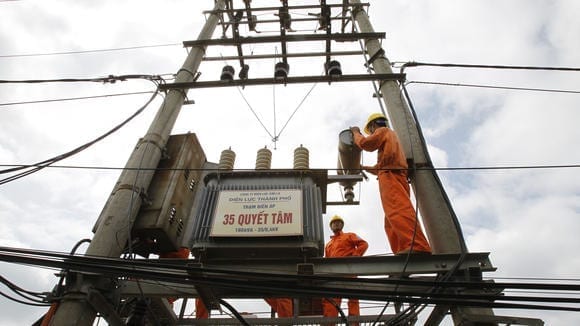
    Vietnam raised retail power prices by 6 percent on Friday, a decision that comes amid the peak year-end production season with little advanced notice.

    The Ministry of Industry of Trade issued an announcement late on Thursday that prices would be raised to VND1,721 (7.6 U.S. cents) per kWh. It said the first increase in three years was set based on “independent” audits of the power industry’s production costs and trade in 2016 and 2017.

    The ministry said earlier this year that the government would “carefully” consider any power price hikes because they could stand in the way of the country’s economic growth target of 6.7 percent this year.

    The decision has been described as a “surprise” by several media outlets, as no relevant plans or proposals have been reported in recent months.

    Vietnam Electricity (EVN), the state-owned power monopoly which also invests in power facilities, finance and labor training, reported a VND2.66 trillion ($117 million) profit in 2016, but said it lost nearly VND594 billion ($26 million) from electricity sales.

    EVN often claims losses when asking for permission to raise prices, and did so for the last increase of 7.5 percent to VND1,622 (currently 7.1 U.S. cents) per kWh in March 2015.

    Retail prices have stayed unchanged since then, but wholesale prices were lifted 2-5 percent in May last year.

    At a meeting in June, Vietnamese officials said that it’s not entirely convincing for EVN to keep justifying price hikes by claiming it is operating at a loss, given the fact that the company is also the country’s biggest debtor.

    It owed nearly VND487 trillion ($21.5 billion) at the end of last year, according to a government report issued in October.

    Deputy Minister of Home Affairs Nguyen Trong Thua has said the giant debt “definitely keeps prices high”.

  • Vietjet seeks shareholders opinion on dividend payout increase for 2017

    Vietjet seeks shareholders opinion on dividend payout increase for 2017

    he Board of Directors of Vietjet Aviation Joint Stock Company (stock code HoSE: VJC) approved on November 29, 2017 a resolution finalizing the shareholders list to collect shareholder opinion on increasing the 2017 estimated dividend payout ratio from 50% to 60%, including a maximum 40% cash dividend payment.

    If being approved, the 2017 estimated dividend payout ratio would be 60%, of which the cash dividend would rise from 30% to 40%. The purpose of this opinion collection exercise is to make necessary arrangements for the second dividend advanced payment in 2017.

    In addition, Vietjet will also collect the opinion of shareholders on the change of its business lines and the address of its headquarters to No. 302/3 Kim Ma Street, Ngoc Khanh Ward, Ba Dinh District, Hanoi City. The registration deadline for submitting opinion in writing is December 19, 2017.

    In mid-August this year, Vietjet advanced VND 645 billion (around USD 28.5 million) as 20% cash dividend payment for 2017. Before that, Vietjet also paid a 40% bonus share dividend and finalized the 2016 cash and bonus share dividend payment at the rate of 119%.

  • Vietnam’s Jan-Nov FDI rises 11.9 pct on-year

    Vietnam’s Jan-Nov FDI rises 11.9 pct on-year

    Vietnam received an estimated $16 billion in foreign direct investment (FDI) in the first 11 months of this year, up 11.9 percent from the same period in 2016, the government said on Monday.

    FDI pledges for new projects, increased capital and stake acquisitions jumped 82.8 percent from a year ago to $33.09 billion, the investment ministry said in a report published on its website.

    The manufacturing and processing industry received the most foreign funds as of November, followed by the electricity and air production and distribution sector.

    South Korea, Japan and Singapore were the biggest investors in Vietnam.

    Vietnam’s FDI inflows hit a record high of $15.8 billion in 2016.

  • Philippines’ San Miguel says looking to bid for Vietnam’s Sabeco

    Philippines’ San Miguel says looking to bid for Vietnam’s Sabeco

    The Philippines’ San Miguel Corp (SMC.PS) is looking to bid for Vietnam’s largest brewer Sabeco (SAB.HM), the conglomerate’s president said on Wednesday.

    “Yes,” Ramon Ang said when asked if San Miguel is looking to join the bidding for the Vietnamese brewer.

    Vietnam said earlier on Wednesday it is open to selling a 54-percent stake in Saigon Beer Alcohol Beverage Corp, but capped foreign ownership at about 49 percent.

    Sabeco received a strong response from potential suitors at an investors’ roadshow in Singapore last week, its chairman Vo Thanh Ha said, as the government moves closer to finalizing a stake sale in the $9 billion maker of Bia Saigon and 333 brews.

    Ha said the government is due shortly to publish details of a divestment plan for its nearly 90 percent stake in Sabeco as part of a lengthy fund-raising exercise.

    The sale has attracted interest from brewers seeking access to one of Asia’s most-promising beer markets, which is already the second-most profitable for Dutch brewer Heineken NV (HEIN.AS).

    Vietnam is shaping up as a battleground for global brewers thanks to a youthful population and beer-drinking culture.

  • Vietnam’s biggest brewer to sell majority stake

    Vietnam’s biggest brewer to sell majority stake

    Vietnam said Wednesday it would sell a majority stake in the country’s largest state-owned brewer next month but limit foreign ownership to 49 percent, as the government seeks to pay off public debt.

    The long-delayed sale shares in Sabeco, the leading brewer in the beer-obsessed nation, will take place in December and aims to raise $4.8 billion, according to a statement on the company’s website.

    More than 340 million shares – amounting to 54 percent of the company – are up for grabs, but foreign ownership will be capped to safeguard the local brand, the firm said.

    “Foreign investors are allowed to own a maximum of 49 percent of the registered capital of Sabeco,” the statement said.

    Some 10 percent of Sabeco is already foreign owned, with the rest belonging to the government.

    Prices will be set at a minimum of $14 a share at the sale scheduled for December 18, the company added.

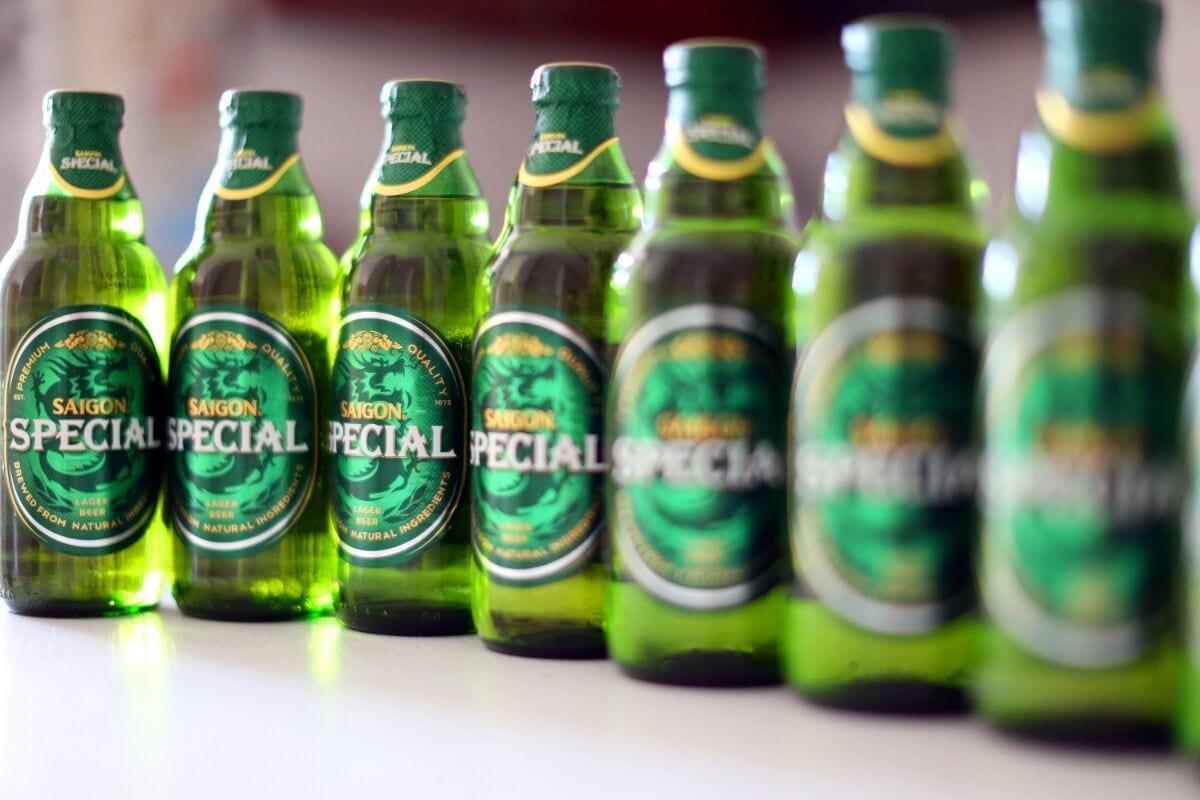
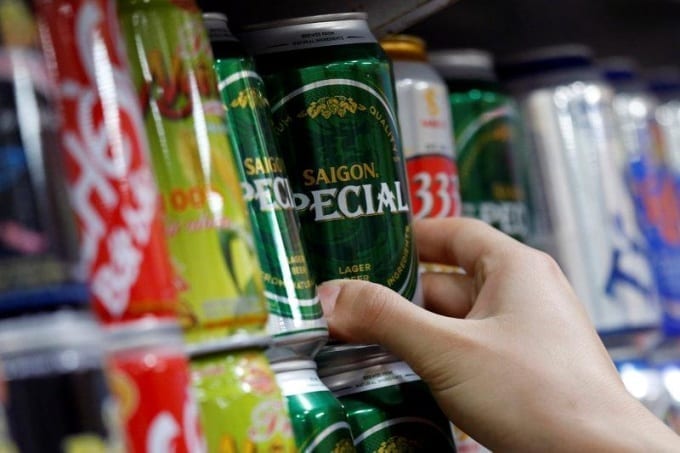
    The brewer, which owns household beer names Saigon Special and 333, said it was committed to “maintaining and developing Vietnam’s beer trademark” in limiting foreign control of the company.

    The sale, which officials originally hinted might happen at the beginning of this year, is part of the government’s privatization push as it seeks to rein in mounting public debt.

    As part of the promised reform, shares of several state-owned enterprises are to be sold off, though plans have repeatedly stalled.

    Vietnam’s public debt hit 63.7 percent of GDP at the end of last year, and is predicted to inch up to 64.8 percent by the end of this year, according to official figures.

    The government-sanctioned debt ceiling is 65 percent of GDP.

    With a population of 93 million people, Vietnam is one of Asia’s leading per capita beer drinkers, including in Hanoi where ubiquitous “bia hoi” streetside beer markets fill daily with thirsty patrons.

    Crown jewels Sabeco and fellow state-owned firm Habeco are the country’s leading brewers, though some foreign players such as Heineken, Carlsberg and Sapporo also have a foothold in the market.

    Dizzying economic growth has seen per capita incomes in Vietnam more than double in the past decade to over $2,200 today, with newfound disposable incomes largely spent on consumable goods.

  • Positive trend for Vietnam retail sales

    Positive trend for Vietnam retail sales

    Vietnam retail sales will exceed US$484.58 billion annually by 2025 and nearly $1.938 trillion by 2035 according to figures from the Ministry of Industry and Trade.

    In a draft strategy document released for public comment, the ministry expects an annual increase in sales of 13 per cent between now and 2020, rising to 14 per cent between 2012 and 2025. The figures were calculated after examining sales trends between 2011 and 2015.

    The paper predicts that domestic retail organisations will account for 80 per cent of the nation’s retail trade by 2020 but foreign direct investment will grow its share beyond 50 per cent as consumers move away from traditional retail models and shop in so-called ‘modern trade models’.

    Modern trade, which now accounts for 30 per cent of retailing, will grow to 35 per cent by 2025 and reach 50 per cent by 2035, the ministry predicts.

    AT Kearney last year ranked Vietnam in the world’s top 30 retail markets and with the best opportunities for multinational retailers.

  • Vinacas Golden Cashew Rendezvous in Vietnam

    Vinacas Golden Cashew Rendezvous in Vietnam

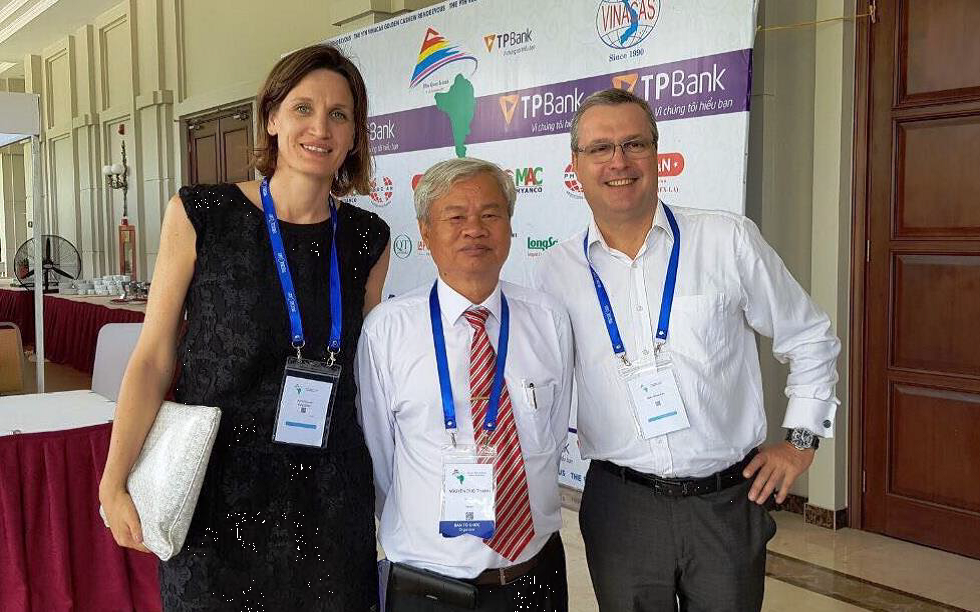
    Last September, Bolloré Logistics organized a conference gathering approximately 50 members from Vinacas – Vietnam Cashew Association – in its Ho Chi Minh Head Office, to share about the upcoming Cashew Campaign 2017 in Tanzania.

    Then, and in order to reinforce its partnership with Vinacas members in Vietnam and promote its expertise in Cashew Nut supply chain worldwide, Bolloré Logistics Vietnam attended the 9th Vinacas Golden Cashew Rendezvous on November 13-15, 2017, in Phu Quoc, Vietnam.

    This event is held every year to promote the international cashew trade. On average, 400 domestic and international delegates are present from over 40 countries.

    As a leader with the largest integrated logistics network in Africa, Bolloré Logistics seized this opportunity to promote its logistics services in Africa to all cashew-related companies in Vietnam and globally. The B2B networking events, conversations and the conference allowed us to refine our knowledge on what can be done for raw cashew importers and cashew kernel exporters in Vietnam in terms of logistics services such as warehousing & fobbing at the country of origin, sea freight from Africa to Vietnam or from Vietnam towards the USA, Europe, and Middle East-South Asia.

    “This was the perfect occasion to gather more information about the soft commodity market trends – especially regarding food safety and regulations, and to further develop our trade lanes to create new opportunities,” mentioned Marc MOESCHLIN, Managing Director at Bolloré Logistics Vietnam.

    Bolloré Logistics’ team consisted of Marc MOESCHLIN, Managing Director at Bolloré Logistics Vietnam; Astrid VANIER, General Manager – Sales and Development at Bolloré Logistics Vietnam and Nhat-Minh NGUYEN, Africa Route Manager at Bolloré Logistics Vietnam. Those mentioned also act as points of contact in Vietnam.

  • Mitsubishi Materials units falsified product data

    Mitsubishi Materials units falsified product data

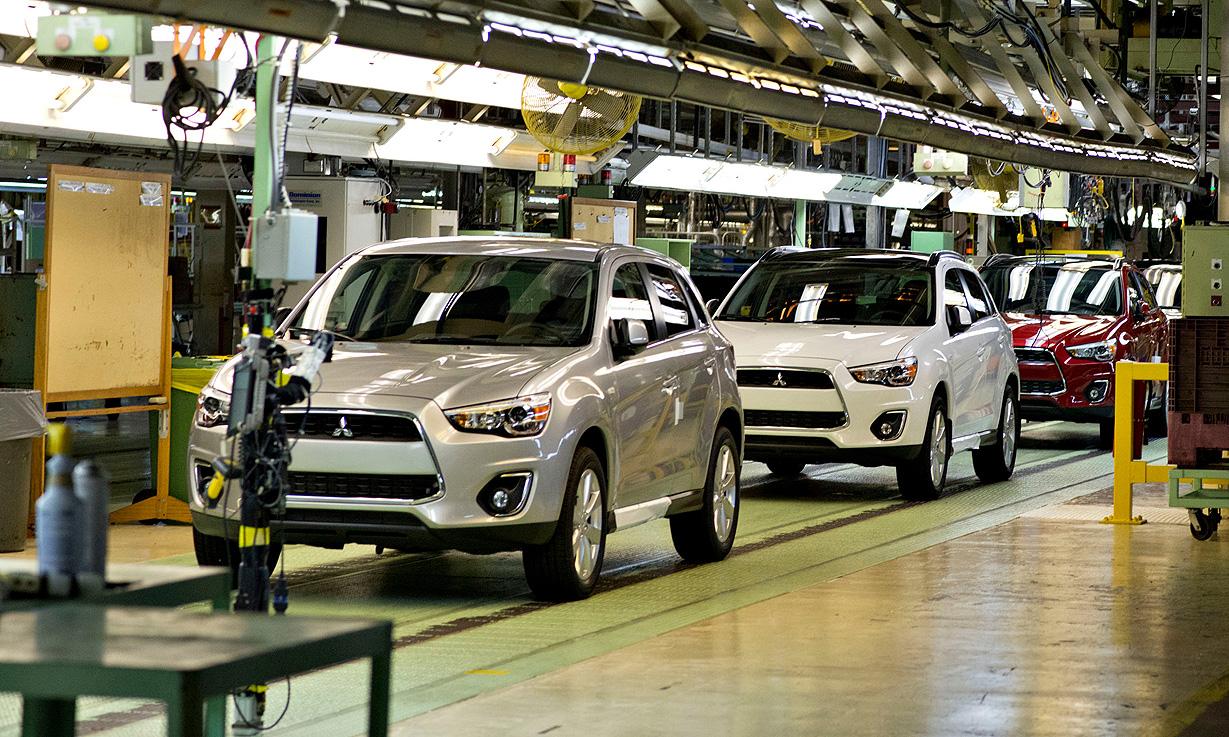
    Subsidiaries of Mitsubishi Materials have falsified product data, the company said Thursday, becoming the latest major Japanese firm to admit problems with quality control.

    Affected products included rubber sealing materials used for packing and gaskets, often used to prevent leaks of liquid or gas from pipes in a wide variety of industries including aerospace and automobiles, the company said in a statement.

    The scandal also affected brass strip products for cars and other products, it said.

    Mitsubishi Materials said its subsidiaries falsified specification data before shipping some of its products to clients.

    It added the company is working with affected clients to ensure the safety of their products.

    The admission came after Japanese consumers saw a series of quality control and governance lapses at major firms including Kobe Steel, Nissan and Subaru.

    Kobe Steel has admitted falsifying strength and quality data for a string of products shipped to hundreds of clients, from automakers to plane manufacturers.

    Nissan recalled some 1.2 million vehicles after admitting in October that staff without proper authorisation had conducted final inspections on some vehicles intended for the domestic market before they were shipped to dealers.

    Subaru also recalled nearly 400,000 vehicles from its domestic market after admitting that it also allowed uncertified staff to conduct vehicle inspections.

  • Speed Lotte shopping app, Lotte Mart’s next move

    Speed Lotte shopping app, Lotte Mart’s next move

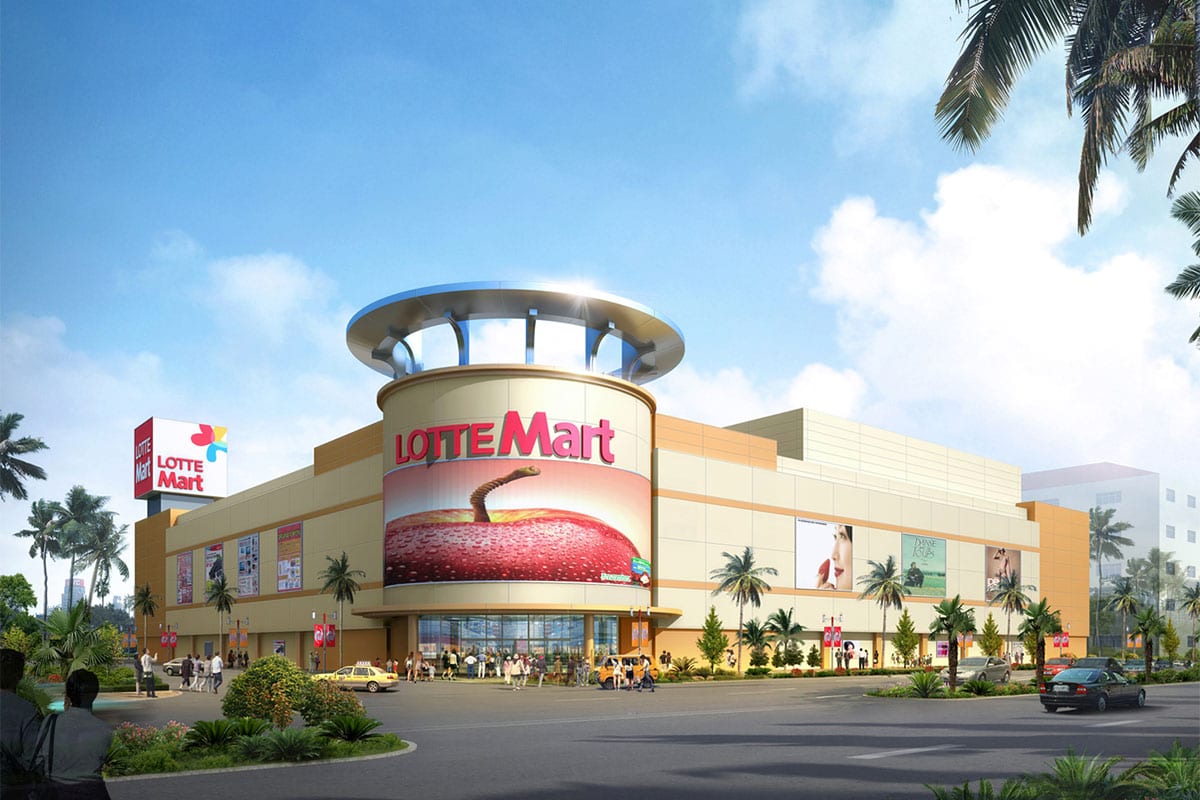
    Korean retailer Lotte Mart has launched its Speed Lotte shopping app in Vietnam.

    The app allows smartphone users to buy more than 1000 items from categories including fresh food, lunch boxes and Korean products as well as Lotte Mart’s Choice L home-brand products.

    Free delivery within a radius of 10km will apply for purchases over VND100,000.

    Both Lotte Mart members and non-members can shop through the app, although registered members can enjoy frequent promotions from the retailer.

    The first 1000 customers to spend more than VND200,000 via the app will get vouchers worth up to VND100,000.

    The app is being tested at Lotte Mart District 7 and Go Vap, in greater Ho Chi Minh City before being launched nationwide.