Tag: Vietnam

  • Xiaomi opens first authorised Mi store in Vietnam

    Xiaomi opens first authorised Mi store in Vietnam

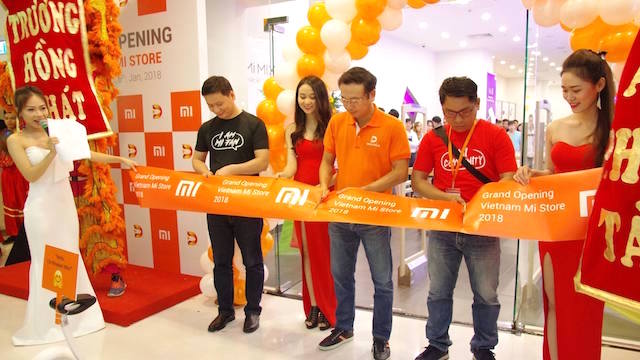
    Xiaomi has officially opened its first Mi Store Vietnam, 10 months after entering the market.

    The authorised store is located in Ho Chi Minh City’s Crescent Mall and is operated in partnership between Xiaomi and local company DigiWorld.

    The partnership was signed in March, which allows DigiWorld to distribute Xiaomi products to other retailers such as Mobile World, Aeon and FPT, both online and offline.

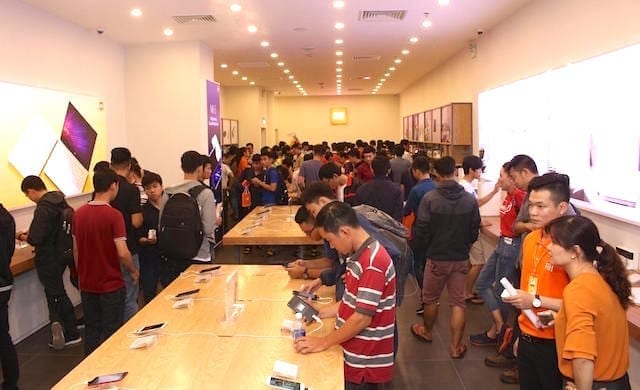
    On opening day, the Mi Store attracted long queues of the Chinese brand’s fans thanks to new product launches and promotions.

    Apart from smartphones and accessories, the store also offers laptops and household items such as vacuum robots, smart scales, bedside lamps and air purifiers.

  • Economists predict bright outlook for Vietnam in 2018

    Economists predict bright outlook for Vietnam in 2018

    Vietnam’s economy has the potential to thrive this year with more foreign direct investment (FDI) and export revenue, but low productivity remains a concern, economists said.

    Last month, the Asian Development Bank (ADB) lifted its economic growth forecast for Vietnam to 6.7 percent in 2018 from its previous projections of 6.3 to 6.5 percent. The World Bank gave a more conservative forecast of 6.5 percent.

    After a 10-year high GDP growth of 6.81 percent in 2017, the government expects the economy to expand 6.5-6.7 percent this year.

    Being an export oriented economy, Vietnam’s somewhat surprisingly fast growth last year owed a lot to the recovering global economy, which expanded 3 percent in 2017, the highest rate since 2011.

    This trend will continue, said economist Vo Tri Thanh.

    Vietnam’s export revenue expanded by 21 percent last year against 2016 to $213.7 billion, the highest in the past five years. Following what Prime Minister Nguyen Xuan Phuc called a “year of records”, the country is targeting export growth of 7-8 percent this year.

    Favorable investment climate

    Investors are positive too, and the sentiment is forecast to continue in 2018 stemmed from confidence in Vietnam’s economic prospects, economist Nguyen Tri Hieu told VnExpress International.

    The favorable investment climate will be aided by projected stable foreign currency, inflation and interest rates in 2018, Hieu said.

    Following 10-year highs in the third quarter of 2017, the VN-Index, a capitalization-weighted index of all the companies listed on the Ho Chi Minh City Stock Exchange, surpassed 1,000 points on January 3 for the first time since the global financial crisis in 2007.

    RongViet Securities Corporation in Saigon said in a report that the VN-Index will increase at least 17 percent this year or even 67 percent in its best scenario, meaning it could end the year somewhere between 1,170 and 1,640.

    The market will be boosted by interests from the foreign sector, said Nguyen The Minh, a senior analyst at Saigon Securities Incorporation. Foreign investors made more than $1 billion of net purchases last year, the highest amount in five years, and they will continue to stick around for more privatization of public giants.

    Foreign direct investment inflow in 2017 also fared well by reaching $35.88 billion, up 44 percent against 2016, according to the Ministry of Planning and Investment – another 10 year high.

    “The FDI scene in the economy continues to thrive,” Forbes quoted Dustin Daugherty, senior associate in business intelligence with consultancy firm Dezan Shira & Associates in Ho Chi Minh City, as saying. “While a lot of attention is paid to big name deals, the number of small to medium-sized enterprises and smaller multinational company investors continues to tick up, and enthusiasm is very high.”

    Foreign investors in the likes of electronics and polyester yarn factories still love Vietnam for its low costs, abundance of labor and matter-of-fact permitting process, analysts on the ground said.

    “I think next year will be as good or better than this,” Daugherty said. “We are not yet at peak for the growth rate.”

    A recent report by auditing firm PricewaterhouseCoopers (PwC) echoed the enthusiasm, saying: “Vietnam is at a tipping point in its economic development led by free trade agreements (FTAs) such as the EU-Viet Nam FTA and an increasingly deregulated business environment.”

    Vietnam’s Greenfield FDI Performance Index has also topped emerging economies, surpassing Malaysia and Thailand on attracting foreign capital, the report found.

    Structural challenges

    However, Vietnam still faces many challenges in boosting economic growth, as the economy still depends on low-cost labor force, outdated technology, and exhausting natural resources, said Hoang Quang Phong, vice chairman of the Vietnam Chamber of Commerce and Industry.

    Most local enterprises remain small and uncompetitive, he added. Vietnam now houses some 700,000 operational firms, but 60 percent of them are not profitable.

    There may also be a slow-down in structural reforms as the government is trying to cut down on spending and investment for a leaner budget deficit and to contain public debt, the World Bank has warned.

    Public investment fell to 16 percent of total spending in the first nine months of 2017, compared with an average of 25 percent in recent years.

    “Structural reform remains a central priority in view of tepid productivity growth” said Sebastian Eckardt, the World Bank Lead Economist for Vietnam, “Building on progress already made, Vietnam can further lift productivity growth through investments in needed infrastructure and skills as well as deeper reforms of the business environment, SOE [state owned enterprise] and banking sector.”

  • VIMO to provide Wechat payment at Airport outlets in Vietnam

    VIMO to provide Wechat payment at Airport outlets in Vietnam

    Dealers are now turning their attention to the release later in the day of key U.S. jobs data, which is expected to show the world’s top economy continuing to improve.

    A forecast-smashing reading Thursday on private take-ups boosted optimism, which had already been bolstered by U.S. tax cuts, healthy corporate profits and strong manufacturing figures from around the world.

    Global markets powered ahead in 2017 as economies showed long-running improvements after years of faltering.

    Greg McKenna, chief market strategist at AxiTrader, said in a note that data from the manufacturing and services sectors “suggests economic strength across the globe remains robust”.

    He noted that an index of world factory activity was at its highest level in seven years.

    On Wall Street the Dow ended above 25,000 for the first time, leading records across Wall Street.

    In Tokyo the Nikkei ended up 0.9 percent at a 26-year high following its more than three percent jump Thursday, while Sydney added 0.7 percent.

    Seoul rose 1.3 percent, with dealers buoyed by news that North Korea had accepted the South’s offer of talks next week, further easing geopolitical tensions in the region.

    Shanghai closed 0.2 percent higher but Hong Kong lost 0.1 percent and Singapore eased 0.2 percent.

    Pause in oil?

    While oil prices inched down in Asia they remain elevated after recent rises to around three-year highs thanks to Middle East tensions, while the U.S. sees stockpiles fall as it is hit by a severe cold snap.

    The latest gains have given impetus to petroleum-linked firms, sending them rallying this week. In Hong Kong Sinopec was up two percent while CNOOC was also higher. Woodside Petroleum in Sydney was up along with Santos, though Tokyo-listed Inpex eased.

    However, Ric Spooner, a Sydney-based analyst at CMC Markets, said: “There’s been a one-way, very steep and uninterrupted rally off the last minor low in mid-December near $56, so it won’t be surprising to see a pause here.”

    On forex markets the dollar rose slightly against the euro, but the single currency remains buoyant with the eurozone continuing to improve, which raises the chances of a reduction in the region’s massive stimulus programme, bringing monetary policy in line with the Federal Reserve.

    McKenna added: “It’s again the story of a weaker U.S. dollar as the fact its data is solid and improving is lost on traders focused on expectations that the EU strength will drive the European Central Bank to chase the Fed, and that synchronised global growth will, in fact, drag most central banks along the tightening path.”

  • HCMC court drops Uber’s lawsuit against tax demand

    HCMC court drops Uber’s lawsuit against tax demand

    A court in Ho Chi Minh City has dismissed a lawsuit against the city’s tax department by Uber after the ride-hailing firm asked the court to stop the department from charging it with a million-dollar sum of tax.

    The HCMC’s tax department earlier asked five local commercial banks to help collect more than VND53 billion ($2.34 million) of what it believed was back taxes from Uber between January 1 and 10 of 2017.

    Instead, Uber Vietnam, a subsidiary of Uber International Services Holding B.V. based in the Netherlands, then filed a lawsuit against the department.

    On December 29, the department received an emergency notice from the court, saying that its collection of tax from Uber would be put on hold.

    The court has since dropped the lawsuit because Uber Vietnam “does not have the required legal status for such a case.”

    At the same time, it has also removed the suspension on tax collection, a source from the department said on Wednesday.

    “With this new decision from the court, the HCMC’s Tax Department will continue to force Uber to pay tax by asking for help from commercial banks,” said an official from the department who wished to remain anonymous.

    Specifically, Uber will have to transfer its income into the bank accounts of the tax department instead of handing it over to its headquarters in the Netherlands as it has been doing so far.

    This process will last until the tax authorities collect enough $2.34 million in tax from the company.

    In September, the department ordered Uber to pay VND66.7 billion of back taxes and tax evasion penalties by December 23.

    But the company has only paid VND13.3 billion. It has complained to Vietnam’s Ministry of Finance that it is not subject to paying taxes according to Vietnam’s agreement on double taxation avoidance with the Netherlands, where it is based.

    Uber International Services Holding B.V. has been repeatedly accused of tax evasion since bringing its ride-hailing business to Vietnam in mid-2014.

    Yet Vietnam’s finance ministry said the company has to pay taxes for the income it generates in Vietnam.

    Traditional taxi companies in Vietnam have used the tax issues to accuse Uber and Grab for putting up unhealthy competition.

  • Bullish investors can bring Vietnam’s stock market to record high in 2018

    Bullish investors can bring Vietnam’s stock market to record high in 2018

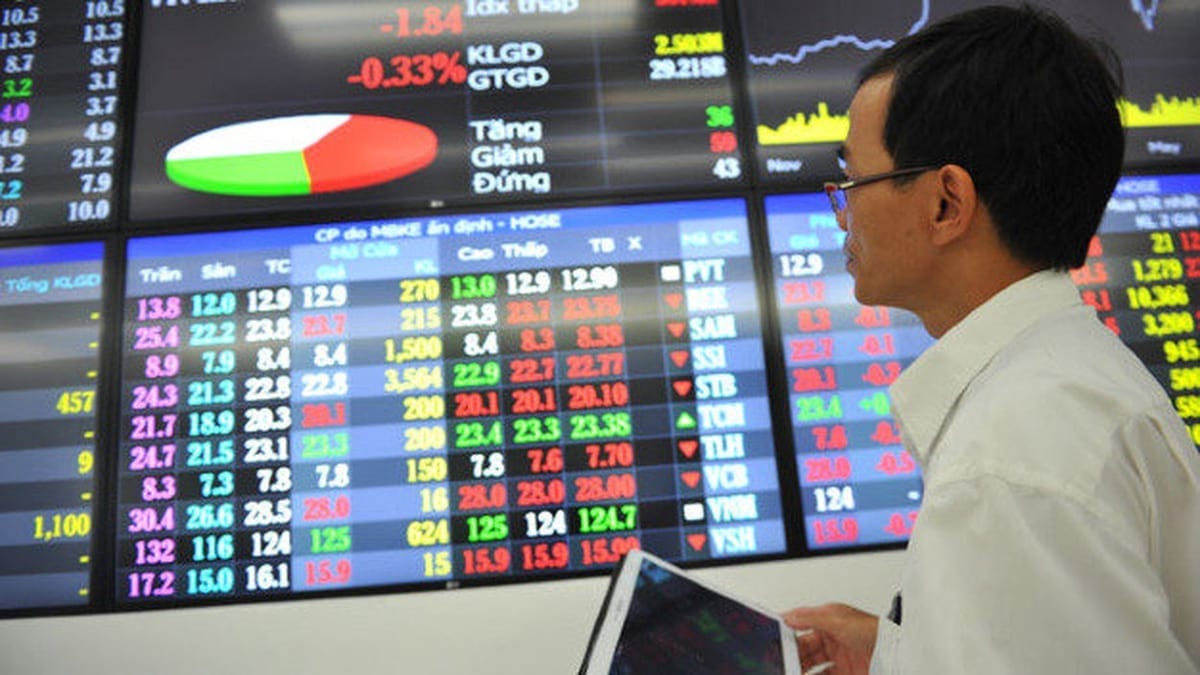
    Vietnam’s stock market is expected to keep its upbeat sentiment of 2017 and drive the benchmark VN-Index to an all-time high at year end, analysts said.

    The Vietnam Stock Index (VN-Index), a capitalization-weighted index of all the companies listed on the Ho Chi Minh City Stock Exchange, already reached 1,000 points on Wednesday, the highest since the global financial crisis in 2007.

    It closed at 984.24 on the last working day of 2017, wrapping a bullish week and setting a 10-year high.

    Analysts believe the momentum will continue and bring the index to surpass the record 1,178 points in 2007.

    The market is seeing very low risks, and high confidence for growth, they said.

    RongViet Securities Corporation in Saigon said in a report that VN-Index will increase at least 17 percent this year or even 67 percent in its best scenario, meaning it could end the year somewhere between 1,170 and 1,640.

    Nguyen The Minh, a senior analyst at Saigon Securities Incorporation, was more specific.

    “VN-Index can reach 1,050 points in the short term and 1,300 at year end,” he said.

    Minh said stocks that have not received much attention last year should create big potentials now.

    The market in 2017 was driven by consumer goods stocks, but banking and energy will take the lead this year, he said.

    Minh said the market will be boosted by interest from the foreign sector. Foreign investors made more than $1 billion of net purchase last year, the biggest in five years, and they will continue to stick around for more privatization at public giants.

    Bloomberg called Vietnam a “frontier market” in Asia last year, as it was the biggest gainer in percentage terms: a 47 percent gain in the VN-Index. The market capitalization increased almost double to nearly $150 billion, fueled by state-owned company sales and listings, it said.

    Vietnam’s economy grew 6.8 percent in 2017, breaking its own 6.7 percent target which both government officials and economists had considered ambitious.

    The country remains one of the fastest growing economies in the world and has set the goal to expand another 6.7 percent this year.

  • Vietnam confirms plan to fly non-stop to California in 2018

    Vietnam confirms plan to fly non-stop to California in 2018

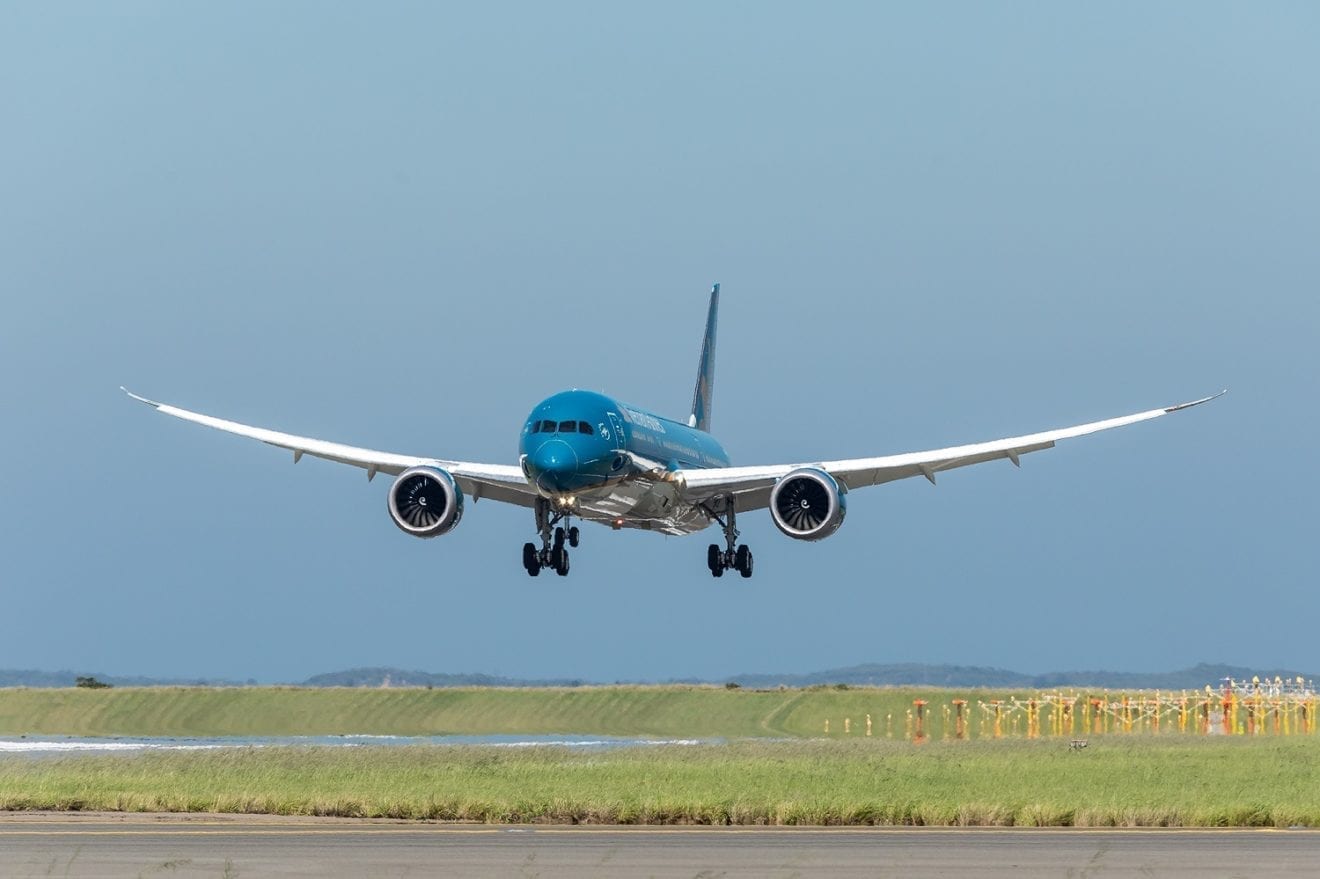
    Vietnam’s government has approved plans to expand its air network to major markets including Australia, China, Europe and the United States starting from this year.

    According to the plan, Vietnam Airlines will go through with its proposal to open non-stop services to the U.S., starting with direct flights to the west coast in 2018. The national carrier is considering between San Francisco and Los Angeles.

    The U.S. proposal was revealed a couple of years ago and received much excitement, given busy travel between the countries. The U.S. is the fourth largest source of foreign visitors to Vietnam, with more than 614,000 people coming in 2017, up 11 percent from the previous year, according to the General Statistics Office.

    Aircraft manufacturer Airbus said in September 2016 that it had signed an MoU with Vietnam Airlines to deliver 10 A350-900 aircraft, which will be used for non-stop flights to the U.S.

    But the giant economy across the Pacific is just part Vietnam’s sky plan.

    For its neighbor China, Vietnam is set to open dozens of new flights by 2020.

    The new routes will connect Can Tho, Da Lat, Da Nang, Hai Phong, Hue, Nha Trang and Phu Quoc Island of Vietnam with at least 17 Chinese destinations: Changchun, Chongqing, Dalian, Fuzhou, Guilin, Guiyang, Haikou, Hainan, Harbin, Lanzhou, Ningbo, Shenyang, Wuhan, Xi’an, Xiamen, Xishuangbanna and Zhengzhou.

    Current flights to Beijing, Chengdu, Guangzhou and Shanghai will increase passenger load by adding to their frequency and using bigger aircraft, according to the development plan which has been approved by Prime Minister Nguyen Xuan Phuc.

    Chinese passengers to Vietnam surged nearly 50 percent to more than 4 million in 2017, accounting for nearly a third of foreign arrivals to the country.

    Vietnam’s aviation development plan also involves new flights to Australia, France, India, Japan, Malaysia, Russia, South Korea, Thailand, and the U.K., all of which now benefit from Vietnam’s e-visa and visa waiver programs.

    The country welcomed nearly 13 million foreign visitors and raked in nearly VND515 trillion ($22.7 billion) from tourism in 2017. It hopes the new air routes will bring the number of visitors up to 17-20 million in the next two years, when tourism money will contribute 10-12 percent to the economy, compared to the current 7 percent.

  • Hurom Juice Cafe expansion plan in Vietnam

    Hurom Juice Cafe expansion plan in Vietnam

    Vietnam’s eighth Hurom Juice Cafe has opened in the central coastal city of Danang.

    Close to the tourism hotspot My Khe Beach, the cafe serves Korean desserts, tropical fruit bingsu (ice flakes), paninis, sandwiches and brunch as well as juices.

    A second Danang outlet will open close to the Dragon Bridge near the end of this month.

    A Korean manufacturer of juicers and kitchen gadgets, Hurom entered Vietnam in 2014 and has established its cafes in Ho Chi Minh City and Hanoi.

    It also has cafes in Australia, China, Europe, Malaysia, Singapore, Thailand and the US. The company advocates fresh fruits and vegetables for healthier eating.

  • Vietnam’s economic growth to accelerate in 2018

    Vietnam’s economic growth to accelerate in 2018

    The forecasts are in and Vietnam can gloat again after a scare in early 2017.

    Economic growth next year will reach as high as 6.7% in 2018, better than in 2017, the prime minister predicted in October 2017.

    The Asian Development Bank forecasts 6.5%, but higher than 2017 and stronger than developing Asia overall. Even the more cautious World Bank estimates more growth next year than this year.

    As of early 2017, drought had afflicted farming while mining faced high production costs and declining sales prices abroad. U.S. President Donald Trumps decision in January to withdraw his country from the Trans Pacific Partnership trade pact further stood to whack Vietnam as a signatory and major exporter. Policymakers fretted that the country would miss growth targets.

    But those setbacks registered as blips at best for Vietnam’s overall $202 billion GDP. The nominally communist Southeast Asian country that opened to foreign investment in 1986 is still seeing a buildup of that capital from offshore.

    Foreign investors in the likes of electronics and polyester yarn factories still love Vietnam for its low costs, abundance of labor and matter-of-fact permitting process, analysts on the ground say. Growth has also helped make people wealthier, leaving just 13.5% in poverty, a boon to investors who sell locally.

    “We can reasonably infer that high registered foreign direct investment (FDI) in 2017 will result in high disbursed FDI in 2018, yet another year to post double-digit growth in FDI disbursement,” financial services firm SSI Research says in a note this month.

    Registered foreign direct investment increased 44% year-on-year through Dec. 20 to $29.68 billion, according to the Ministry of Planning and Investment.

    Foreign-operated factories make goods mainly for export and exports had risen 23% to $155.24 billion over the bulk of 2017, SSI Research says. Most offshore investment comes from South Korea, Singapore, Japan and Taiwan, all places where manufacturing costs more than in Vietnam.

    Investors come for a labor force that’s famously young, trainable and willing to work for a minimum wage of $172 per month. About 60% of the 93 million Vietnamese are of working age. Starting a business is getting more efficient permit-wise and most industries allow foreign investment of 100%, according to this guide by PwC (Vietnam) Ltd.

    It’s little wonder that Samsung Display made an “additional investment” of $2.5 billion this year, per SSI Research data. The display unit of of South Korean multinational Samsung Electronics will have parked $6.5 billion in Vietnam with the new outlay. In another major foreign investment move, Taiwanese-owned Polytex Far Eastern registered a $490 million factory for polyester yarn production.

    Thai Beverage’s proposed investment of 25% to 51% in the major Vietnamese brewery Sabeco, though not a direct factory sort of deal, points to further keenness on Vietnam itself.

    “The FDI scene in the economy continues to thrive,” says Dustin Daugherty, senior associate in business intelligence with the consultancy Dezan Shira & Associates in Ho Chi Minh City. “While a lot of attention is paid to big name deals, the number of small to medium-sized enterprises and smaller multinational company investors continues to tick up, and enthusiasm is very high.”

    “I think next year will be as good or better than this,” Daugherty says. “We are not yet at peak for the growth rate.”

  • RoK’s GS25 to open convenience stores in Vietnam

    RoK’s GS25 to open convenience stores in Vietnam

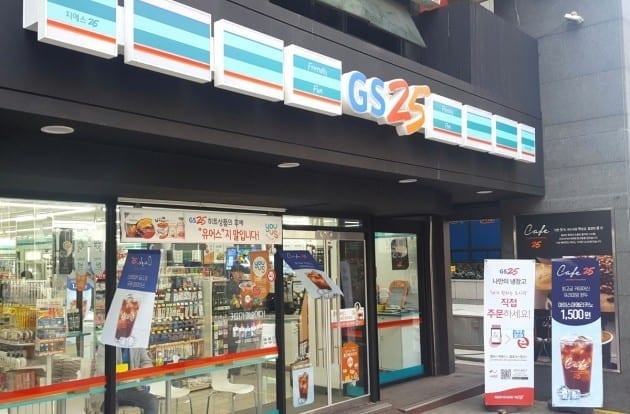
    GS25 Vietnam says it will open its first store in Ho Chi Minh City in mid-January, after a two-month delay.

    Three more stores will open soon afterwards.

    Last July, GS25’s parent company GS Retail signed a JV agreement with Vietnam’s Son Kim group to open 2500 GS25 Vietnam stores during the next 10 years.

    Vietnam will be GS Retail’s first foreign market.

    After its Vietnam launch, GS Retail plans to seek opportunities in other markets.

    Vietnam’s convenience store industry is currently experiencing annual growth of 70 per cent, fuelled by a youthful population.

    Last June, 7-Eleven opened its first Vietnam store, and now operates 11 in Ho Chi Minh City, with plans for 100 within 10 years.

  • Japanese, Thai goods reach every corner of Vietnamese market

    Japanese, Thai goods reach every corner of Vietnamese market

    Several years ago, fans of Thai and Japanese goods had only several choices – either buying the products carried across border gates, or going to a few select shops. But now, they can freely choose products at many specialized stores. Specialized shops are mushrooming

    A report from MOIT (Ministry of Industry and Trade) shows that the deficit in trade with Thailand in the first eight months of the year reached $3.5 billion.

    Thai products are available at 9,000 traditional markets, supermarkets and home appliance distribution centers. In large cities, Thai goods account for 30-50 percent of the market share.

    The others are run by world giants such as Lotte, Aeon and Emart. Metro alone has 19 retail points, while Big C has 32.There are about 100 retail points belonging to foreign invested supermarkets in Vietnam, half of which belong to Thai investors.

    Meanwhile, Japanese have been penetrating deep into Vietnam through big retail chains such as Aeon, Ministop, Family Mart, Tokyo Deli, Gyu Kaku, Oshaka Ohsho and 7-Eleven.

    The Sakura chain has opened 10 shops after six years in Vietnam, while Tokyo Life has 18 shops in Hanoi, two in HCMC and 35 in other provinces.

    Pham Chi Lan, a renowned economist, said Thai firms had been following a strategy to enter the Vietnamese market for a long time.

    Thai businesses understand that Vietnam, with high economic growth rate, young population and increasingly high consumption, will be a vast market once tariff barriers are removed.

    They have spent time studying Vietnamese consumer psychology and followed professional methods to win over customers.

    Vietnam imports a wide range of products from Thailand, from household electrical appliances to vegetable and fruits, and CBU cars and cosmetics.

    Vietnam also imports products which are locally made, such as household-use products, computers and plastics.

    Minister of Industry and Trade Tran Tuan Anh once asked why Thais could bring their products to the Vietnamese market but do not do this with other ASEAN countries, including Indonesia and the Philippines.

    Analysts believe the most important reason is the large distribution networks that Thais have set up in Vietnam.

    Thai corporations like Central Group and TCC Group have spent big money to take over the largest distribution chains in Vietnam, paving the way for Thai products to enter Vietnam.

    Meanwhile, a branding expert commented that Thai and Japanese goods can thrive in Vietnam because manufacturers receive support from their government agencies.

    “Japanese agencies have set up dedicated divisions to support small and medium enterprises in their country,” he said.


  • Saigon cafés, restaurants facing the heat for accepting Bitcoin payments

    Saigon cafés, restaurants facing the heat for accepting Bitcoin payments

    Authorities in Ho Chi Minh City will be working with the country’s central bank to “handle violations” at several restaurants and coffee shops in the city that have been accepting Bitcoin as payment, an official from the bank said on Tuesday.

    Nguyen Hoang Minh, deputy director of the State Bank of Vietnam’s Ho Chi Minh City branch, maintained that virtual currencies such as Bitcoin are illegal, and the issuance, provision and use of Bitcoin violates the rules.

    Several coffee shops and restaurants in the city have been accepting Bitcoin as payment so the municipal administration has agreed to cooperate with the central bank to deal with these violations, Minh told a meeting with the central bank’s deputy governor Dao Minh Tu.

    “We have also asked the city’s police department to work with us.”

    The heaviest punishment for using cryptocurrencies in Vietnam is a fine of VND200 million ($8,800).

    However, we found a restaurant in District 1 that allows customers to pay for their drinks and pizzas using Bitcoin.

    A staff there said customers only need a Bitcoin code to pay for their meals, adding that this method is more beneficial for the restaurant because Bitcoin payments do not appear on tax declarations.

    Prices at the restaurant follow the current value of Bitcoin on the world market, which was $16,500 on Wednesday.

    The value of the cryptocurrency has been rising rapidly this year, reaching an all-time high of $19,783 on Sunday, an increase of 20 times compared to January.

    The heat that Bitcoin has created globally has been felt in Vietnam, and 1,478 pieces of hardware were imported into the country to “mine” for the currency in the first ten months of this year, according to official government data.

    As explained by Business Insider and Investopedia, the process of mining Bitcoins involves miners solving complex mathematical problems, and the reward is more Bitcoins generated and awarded to them.

    The participant who solves the puzzle first gets to place the next block on the block chain, a public ledger that records all Bitcoin transactions, eliminating the need for a third party to process payments, and claim the rewards.

    Miners verify transactions and prevent fraud, so more miners equals faster, more reliable and more secure transactions. According to current Bitcoin protocol, 21 million coins is the cap and no more will be mined after that number has been reached.

    Yet as currently regulated, the hardware imported into Vietnam for Bitcoin mining is not prohibited.

    In October, the central bank issued a statement saying that “from January 1, 2018, the act of issuing, supplying or using illegal means of payment may be subject to prosecution in accordance with the provisions of Article 206 of the Penal Code 2015.”

    The only payment methods allowed in the country are issued or controlled by the State Bank.

    The central bank has warned organizations and individuals in Vietnam not to invest in Bitcoins or conduct transactions in the currency, saying they would be taking a huge risk with no legal protection.

    “Bitcoin transactions are anonymous and can be used for money laundering, drug trafficking, tax evasion and illegal payments,” the bank said.

    Also in October, Vietnam’s top technology university FPT said it was looking at ways to let its students pay their tuition fees using Bitcoin.

  • NBA Teams for Online Stores in APAC

    NBA Teams for Online Stores in APAC

    In partnership with the US National Basketball Association (NBA), sports merchandise e-commerce company Fanatics has launched official NBA online stores across Asia Pacific.

    Fanatics already runs the flagship NBA Store in New York City, the league’s global e-commerce site and its official online store for Europe.

    It has now opened official online stores in Cambodia, Japan, Laos, Malaysia, Singapore, Thailand and Vietnam, as well as Australia and New Zealand. These offer a range of men’s, women’s and youth products from all 30 NBA teams, including oncourt apparel from official outfitter Nike and products from a range of NBA merchandise partners including Mitchell & Ness and New Era.

    There are also exclusive products, including personalised team jerseys.

    As well as paying in local currency, online shoppers will benefit from quicker deliveries and cheaper shipping thanks to Fanatics’ centralised distribution point in Asia.

    “The NBA is becoming an increasingly global league, and we’ve seen a significant uptick in fandom across several regions throughout Asia,” says Fanatics International president Steve Davis.

    With the launch of the new online stores, the league now has 20 international e-commerce sites.

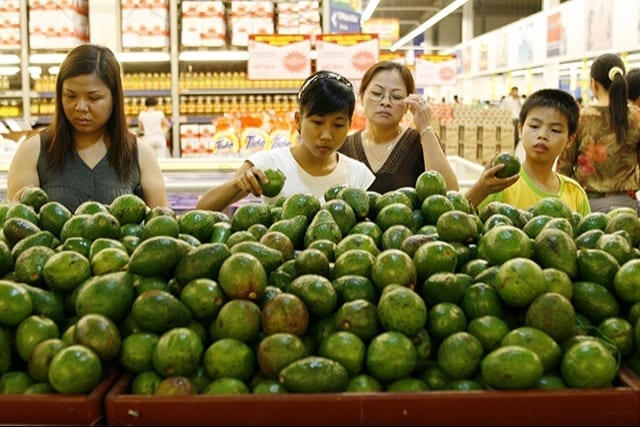
  • Vietnamese fruits struggle to gain foothold in international markets

    Vietnamese fruits struggle to gain foothold in international markets

    Vietnam is struggling to find international buyers for its tropical fruit, despite having been licensed to export by demanding markets such as the U.S, Australia, Canada and Japan.

    Starting December 29, the U.S. Department of Agriculture will allow imports of fresh mangoes from Vietnam, following in the footsteps of dragon fruit, rambutan, lychees, longan and star apple.

    Earlier this year, Australia also opened its doors to fresh dragon fruit imports from Vietnam after nine years of negotiations. Vietnam delivered its first dragon fruit shipment to the market in September, becoming the sole country allowed to ship the fruit to Australia to date.

    But despite these breakthroughs, strict requirements still make it difficult for fresh fruit to enter these markets.

    Mango exports to the U.S. are a prime example. Fresh mangoes from Vietnam will be subject to regulations that include orchard requirements, irradiation treatment and port of entry inspections.

    The fruit must also be imported in commercial consignments accompanied by a phytosanitary certificate issued by Vietnam’s Plant Protection Department.

    Even if these requirements are met, sales of Vietnamese mangoes are not guaranteed as they depend on consumer tastes and distribution, said Dam Quang Thang, CEO of fruit exporter Agricare Vietnam.

    In addition, local mangoes may find it hard to compete with those from Mexico, which has the biggest mango output in the Americas at over 1.5 million tons each year. Mexican mangoes are good quality and meet U.S. import requirements, he added.

    It’s too early to say if Vietnam will be able to export 3,000 tons of fresh mangoes to the U.S. each year as planned, equivalent to one percent of U.S. import volume and its total domestic output, Thang said.

    Another obstacle to fruit exports is high transport fees that raise retail costs in overseas markets.

    For example, Vietnamese dragon fruit is sold for $8 per kilogram in the U.S., 10 times higher than prices in the local market, while Vietnamese lychees are sold for $16 per kilogram in Australia, 16 times higher than at home, according to some fruit exporters.

    Vuong Dinh Khoat, director of local fruit exporter Hugo, said aviation fees often account for more than half of Vietnamese fruit export prices.

    A representative from a fruit exporter in the southern province of Binh Duong said her firm had to temporarily halt shipments of mangoes to Japan because of high transport fees that made the product uncompetitive.

    She said her firm had to pay an aviation transport fee of $1.8 per kilogram of mangoes shipped to Japan, 50 percent higher than that paid by Thai exporters despite the shorter distance.

    Explaining the issue, she said many countries like Australia and Thailand offer transport subsidies to domestic traders to boost exports.

    Together with high aviation fees, poor trade promotions have limited Vietnam’s fruit export expansion. Despite infiltrating the U.S., local fruits are only sold in a limited number of places, such as California and New York, due to inefficient promotional activities, according to the Vietnam Fruit and Vegetable Association.

    To boost exports, the Vietnamese government should subsidize transport fees for local fruit exporters without violating its international commitments, according to industry insiders.

    Meanwhile, producers should try to apply new cultivation models and set global food safety standards as their top priority, they added.

    Major foreign currency earner

    Vietnam’s total fruit and vegetable exports hit $3.2 billion in the first 11 months of this year, marking a jump of 43.1 percent on-year and leaving other key agricultural exports far behind.

    A growing appetite among foreign consumers for Vietnamese fruit is expected to reduce the country’s reliance on China, which accounted for 70 percent of Vietnam’s fruit and vegetable exports in 2016. Local fruits are now exported to 60 countries and territories.

    At a recent session of the legislative National Assembly, Nguyen Thien Nhan, the chief of Ho Chi Minh City’s Communist Party, called for the government to focus on helping farmers grow fruit and vegetables for export to combat rural poverty.

    Last year, total export revenue from fruit and vegetables surpassed that of crude oil, Vietnam’s key export, for the first time, he said, citing that Vietnam earned $2.4 billion from shipping crude oil and $2.45 billion from fruit and vegetable exports.

    The growth of crude oil exports has slowed over the past five years, while fruit and vegetable export revenue has increased 30 percent each year, he added.

    “Fruit and vegetable export value will reach an estimated $9-10 billion by 2020, higher than crude oil even at its peak,” Nhan told legislators.

    Minister of Agriculture and Rural Development Nguyen Xuan Cuong said his ministry is reviewing farming production to help rural areas make the most of their local conditions.

    Each commune should focus on certain products for export, he said.

    “We have nearly 9,000 communes nationwide with different climate conditions and the potential to grow specialty fruit and vegetables that would create huge export earnings,” he added.

  • Thai beer magnate extends SE Asia push with $4.8 billion Sabeco deal

    Thai beer magnate extends SE Asia push with $4.8 billion Sabeco deal

    Thai Beverage has won an auction to buy a majority stake worth $4.84 billion in Vietnam’s top brewer Sabeco SAB.HM, a lofty deal that adds a major asset to the beer-to-property empire of Thai magnate Charoen Sirivadhanabhakdi.

    The deal is a big step for Charoen, the son of a Bangkok street vendor, who is emerging as one of Asia’s biggest power players in brewing. He dominates his home market with Chang beer and owns Singapore’s Fraser and Neave Ltd. The Sabeco stake will give him control of brands like Saigon Beer and 333.

    The Sabeco deal will also help Thai Beverage (Thai Bev) tap into Vietnam’s beer market, worth about $6.48 billion last year, where a young population and booming economy are an attractive lure, despite political resistance, a high minimum bid price and a cap on foreign ownership.

    Thai Bev’s local unit, Vietnam Beverage Co Ltd, was named winner of the 54 percent Sabeco stake on offer at the auction on Monday after global brewing groups stayed away. It barely had any competition as the other investor, a Vietnamese individual, bid for only 0.003 percent.

    Late on Sunday, Singapore-listed Thai Bev had said that the Vietnamese unit had submitted the registration form to participate in the bidding.

    Vietnam Beverage is owned by Vietnam F&B Alliance Investment Company, which is 49-percent owned by BeerCo Limited – an indirect but wholly-owned unit of Thai Bev, official documents about the companies showed.

    “We are very grateful for the opportunity to participate in the future of Sabeco,” a legal representative for Vietnam Beverage told reporters after the auction.The government had set a minimum sale price of 320,000 dong or $14.1 per share for Sabeco, formally known as Saigon Beer Alcohol Beverage Corp, whose shares have jumped almost three fold to 309,200 dong since its listing a year ago.

    That priced the target at about 36 times core earnings, more than double the trading multiples for global peers, indicating Charoen had to pay a hefty premium to secure the prize.

    “We see this as an example of a successful equitization process,” said Fiachra Mac Cana, head of research at Ho Chi Minh City Securities. “The sums involved are huge and this is also good news for government coffers at the end of the year.”

    Thai Bev, controlled by Charoen, was keen to buy Sabeco in a bid to expand outside its home market.

    Sabeco’s foreign ownership is capped at 49 percent. With 10 percent already in foreign hands, only 39 percent was on the table for overseas buyers at Monday’s auction. Local bidders could bid for a majority stake of up to 54 percent. Heineken holds a 5 percent stake.

    ‘Disconnect’

    It was previously reported the auction was drawing interest from brewing groups such as Anheuser-Busch InBev, Kirin Holdings, Asahi Group Holdings and San Miguel, but in the end they all stayed away.

    “There’s a disconnect between what the government wants to achieve and how international brewers view this auction,” said one person familiar with the matter.

    “In a normal auction, bidders are fully aware of what stake they’ll end up owning and bid for it accordingly,” said the person, who was not authorized to speak to the media.

    Unlike similar sales in developed markets, where investors are whittled down over several rounds and offers can be adjusted, Sabeco bidders needed to submit a single offer for a specific number of shares in a sealed envelope in one round.

    Truong Thanh Hoai, an official at Vietnam’s trade ministry, said there was a level playing field for bidders in the auction, but added the price on offer was not attractive for everyone.

    “Some investors see Sabeco fitting with their business philosophy and they can exploit its potential, while some others don’t see it as a fit and feel they can’t make a profit from the amount of capital they’re paying, so they don’t participate. ”

    Charoen, who has shown an adept hand at cultivating ties with governments, started trading and supplying distilleries in the 1960s and was able obtain concessions to produce liquor at a time when production was under strict state control.

    The Thai King bestowed a royal name on the family in 1988, recognizing service to the country.

    In Vietnam, Charoen already owns nearly 20 percent of the country’s biggest-listed firm Vinamilk VNM.HM through Fraser & Neave. He has also acquired the Metro supermarket chain as well as other consumer goods and convenient stores in the country.

    The current deal, however, looks expensive, a Singapore-based financial source said, but could bear fruit if Thai Bev had come to certain agreements with its Vietnamese partners.

    “These multiples only make sense if there is a concession available,” said the source, adding there would likely be job cuts and re-allocation of employees from Sabeco to other state firms, helping Thai Bev improve efficiencies.

    Still, getting the firm in line with rivals’ valuations would be tough, said the person, who did not want to be named due to rules on talking to media.

    “He would have to double EBITDA to get the multiple below 20 times. That’s where the highest global peers are trading.”

  • Vietjet launches two routes from Ho Chi Minh City  to Phuket and Chiang Mai in Thailand

    Vietjet launches two routes from Ho Chi Minh City to Phuket and Chiang Mai in Thailand

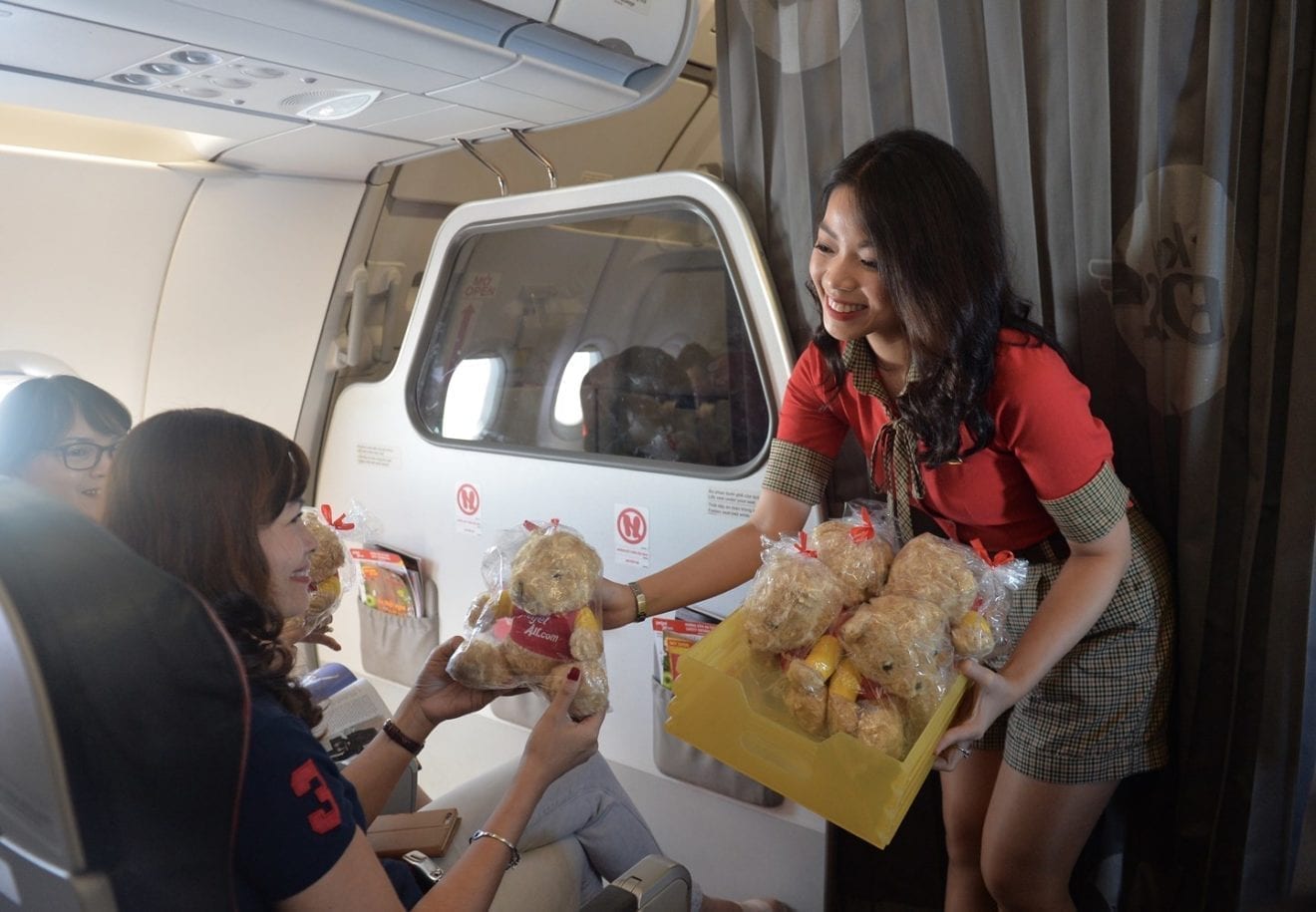
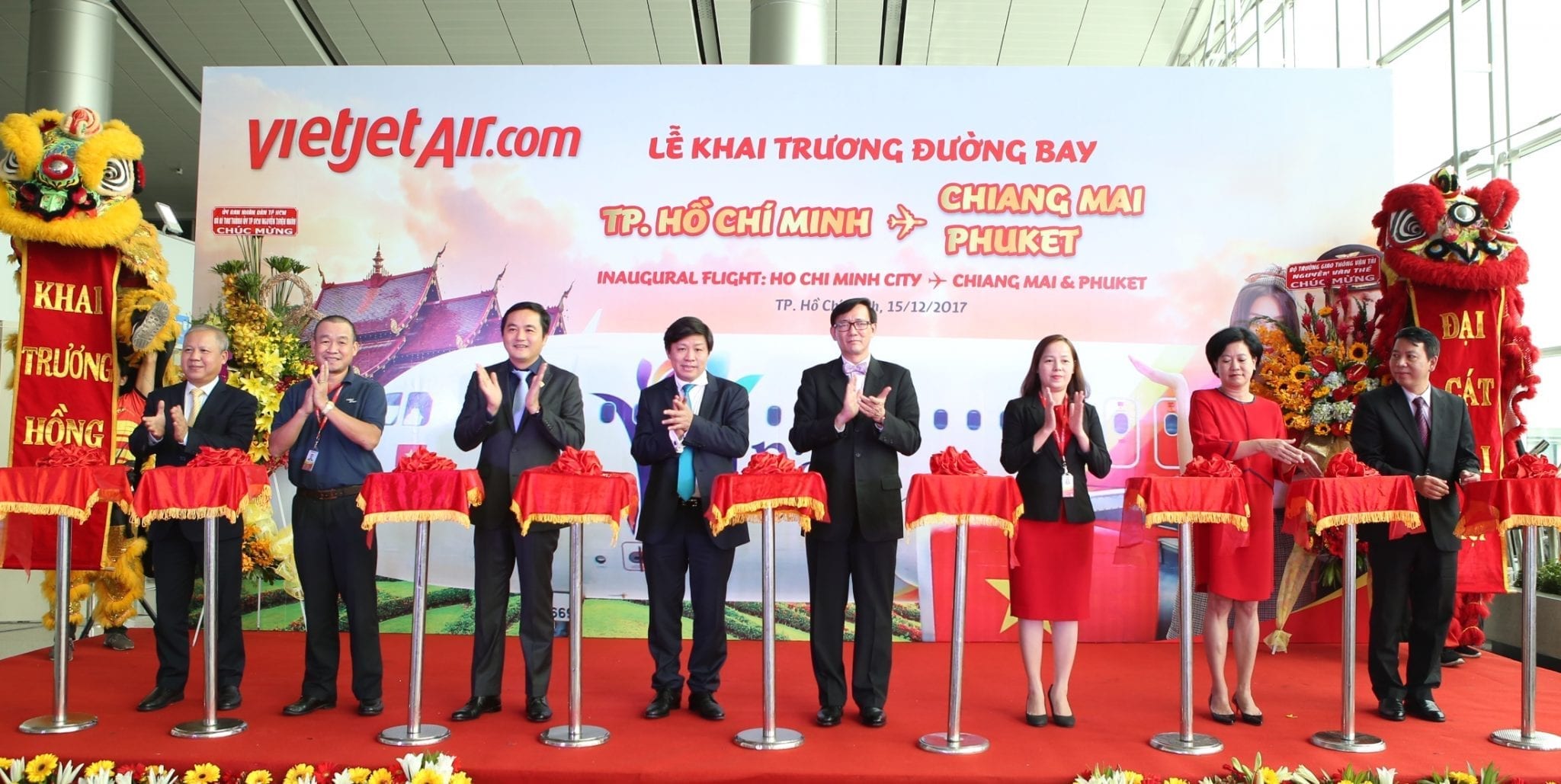
    Today, at Tan Son Nhat Airport (Ho Chi Minh City), Vietjet held a jubilant inaugural ceremony to celebrate the debut of the airline’s Ho Chi Minh City – Phuket (Thailand) route. On the inaugural flight, passengers were thrilled to receive lovely, surprise gifts from Vietjet.

    Prior to that, Vietjet also welcomed the first flight of the Ho Chi Minh City – Chiang Mai (Thailand) route, which arrived to great excitement of both passengers and onlookers. Both these new routes serve the transportation and travel demands of locals and tourists while contributing to the promotion of trading and integration in the region. With the two new routes, Vietjet now operates six flights to “the Land of Smiles” from Vietnam.

    The ceremony was witnessed by Mr. Manopchai Vongphakdi – Ambassador of the Kingdom of Thailand to Vietnam, leader of Aviation Administration of Vietnam, Culture, Sport and Tourism Department of Ho Chi Minh City and leaders of industries of Vietnam and Thailand.

    The Ho Chi Minh City – Phuket route operates a return flight every Monday, Wednesday, Friday and Sunday involving about two hours per leg. Flights depart Ho Chi Minh City at 10.15 am and arrive in Phuket at 12.10 pm. Return flights take off at 1.05 pm from Phuket and land in Ho Chi Minh City at 3.10 pm.

    The Ho Chi Minh City – Chiang Mai route operates a return flight every Tuesday, Thursday, Friday and Sunday with a flight time of just under two hours per leg. Flights depart Ho Chi Minh City at 11.35 am and arrive in Chiang Mai at 1.30 pm. Return flights take off at 2.20 pm from Chiang Mai and land in Ho Chi Minh City at 4.25 pm.

    Customers can also call the Vietjet hotline +84 19001886 or visit any authorized domestic or international ticketing office/agent.  Payment can be made immediately with debit or credit cards Visa/ MasterCard/ AMEX/ JCB/ KCP or an ATM card issued by one of 32 Vietnamese banks that have been registered for internet banking.

    Aiming to become a leading consumer airline, Vietjet has continually opened new routes while adding brand-new aircraft to its fleet, investing in modern technology and offering more added-on services and products to serve all customers’ demands. Since its establishment just a few years ago, Vietjet has continuously contributed to the community and created flying opportunities for tens of millions of domestic and international passengers.