Tag: Vietnam

  • Tourism expected to drive Hải Phòng forward

    Tourism expected to drive Hải Phòng forward

    Favourable transport infrastructure and the beautiful landscape are expected to boost tourism in the northern port city of Hải Phòng.

    Cát Bi International Airport and the Hà Nội-Hải Phòng expressway, which were put into service in early 2016, have helped reduce travel time from Hà Nội to Hải Phòng.

    Direct flights between Hải Phòng and countries such as Thailand and the Republic of Korea, localities such as HCM City and Phú Quốc Island District in Kiên Giang Province in the south, Đà Lạt City in the Central Highlands province of Lâm Đồng and Nha Trang City in the central coastal province of Khánh Hoà have been launched.

    Along with favourable transport infrastructure, efforts made by agencies to promote tourism and the involvement of large investors have turned Hải Phòng into a popular tourist destination.

    At a workshop on Hải Phòng tourism held by the municipal Department of Tourism, leading experts in this field from across the country discussed ways to boost local tourism through social communication and developing standard tourism products.

    Various tourism promotion activities have been conducted in Cát Hải District, which is the administrative management unit of the Cát Bà Archipelago, an attractive tourist site with leisure, exploration and ecological tourism in the Cát Bà National Park in the island commune of Việt Hải.

    Firms such as Vingroup, Sungroup and Him Lam have invested in luxurious resorts in Cát Bà and Đồ Sơn. Once operational, the projects are expected to become ideal destinations for both domestic and foreign holidaymakers.

    According to the Vietnam National Administration of Tourism (VNAT), Hải Phòng, particularly Đồ Sơn beach town, has experience in tourism development.

    The northern port city welcomes a large number of visitors every year. In 2017 the locality is expected to greet 5.7 million tourists, the agency said, noting that the target is within reach as about 5.6 million tourists visited Hải Phòng last year.

    Nguyễn Quý Phương, head of VNAT’s Travel Department, at a recent workshop on tourism development in Hải Phòng said the city should make a breakthrough in tourism and consider the sector a driving force for local economic development.

    He also suggested the city step up State management to synchronously conduct tourism activities.

    To that end, Hải Phòng should revamp the municipal Tourism Department, ensuring it has enough human resources capable of implementing the city’s guidelines and plans, Phương said.

    At the same time, it is necessary to develop spearhead tourism products, such as leisure tourism on Cát Bà Island in a sustainable manner, he added.

    Nguyễn Thị Hà, director of Viettravel Hải Phòng, described tourism products as decisive to tourism promotion, saying Hải Phòng should connect with other localities to promote tourism products for the northern coastal region.

    Travel companies will introduce products for their customers, she said, underlining the need for Hải Phòng to turn into an attractive and safe destination, different from others in culture and landscape.

    Channels should be built and updated with new mechanisms, policies and information about tourist attractions and Hải Phòng’s connection with foreign and domestic localities, Hà suggested.

    In particular, information about Cát Bi International Airport needs to be updated more regularly for partners and tourists, she added.

    Trần Thị Kim Quy, deputy director of Hùng Vương Investment JSC, investor of international brand names such as Cát Bà Resort and Flamingo Đại Lải in the northern province of Vĩnh Phúc, said the Cát Bà Archipelago has advantages for tourism development, with the most noteworthy being its biodiversity and Cái Bèo, the most ancient fishing village in Việt Nam.

    However, Cát Bà has failed to fully tap its potential, she said, suggesting Hải Phòng extend the duration of tourism projects on the islands to 70 years and shorten the time for administrative procedures while upgrading infrastructure in Cát Bà.

  • Vietnam’s notorious internet cable AAG finally back up to full speed

    Vietnam’s notorious internet cable AAG finally back up to full speed

    Out of the three undersea internet cables that crashed in January, one still remains adrift. The repair work on the notorious Asia America Gateway (AAG) undersea cable system was completed on Thursday, quoting service provider CMC Telecom.

    The same day, another service provider VNPT Telecom confirmed that the rupture-prone AAG is back up to 100 percent of its capacity, just in time before the Lunar New Year holiday.

    In early January, the AAG and two other internet cables, the Intra Asia (IA) and the newly launched Asia Pacific Gateway (APG), all experienced problems and were subsequently shut down.

    The APG was fully recovered on January 23 while the other is expected to be fixed by February 5.

    The AAG is well known to internet users in Vietnam for its frequent ruptures, which even inspired internet memes blaming the issues on “sharks.”

    In 2016 alone, it ruptured three times – in March, June and August – heavily affecting outbound traffic.

    Vietnam has five submarine cable systems. The AAG was connected in November 2009 with a length of over 20,000 kilometers and a design capacity of 2 terabit/second, directly connecting Southeast Asia with America.

    The latest addition is the recently broken and now fixed APG Submarine Cable. It began operations in late December and was officially launched on January 3. The cable cost $450 million and has a design capacity of more than 54 Tbps.

    In addition to submarine cable systems, Vietnam has a land-based system with a capacity of 120 gigabit/second that goes through China, and there are plans to build another one.

  • Vietnam targets vegetable, fruit export value at $3b

    Vietnam targets vegetable, fruit export value at $3b

    Việt Nam expects to achieve US$3 billion as its total export value of vegetables and fruits this year, exceeding the vegetable and fruit industry’s target of $2.4 billion.

    “After many years of export value under $1 billion, in recent years, the export value has made a breakthrough, which is why it was able to exceed the target this year, although there were many difficulties,” Huỳnh Quang Đấu, deputy chairman of the Việt Nam Vegetable and Fruit Association told.

    This year and beyond, the vegetable and fruit industry will face long-term difficulties, including climate change, which would result in a reduction of vegetable and fruit output and quality, and land accumulation for the industry, Đấu said.

    Meanwhile, most enterprises of the industry are small- and medium-sized units with less capital, said Đấu, adding that technical barriers in vegetable and fruit importing countries have also increased further.

    However, in recent years, Việt Nam’s vegetable and fruits have entered markets with strict ruless, such as the United States, Japan, South Korea and Taiwan, as well as Australia, New Zealand and Chile, following 4-5 years of successful negotiation by the Ministry of Agriculture and Rural Development. Further, farms and enterprises have produced vegetable and fruit products meeting the quality and food safety standards in those countries, he said.

    “That would be the basis for promoting exports this year and beyond,” Đấu said.

    Nguyễn Đỗ Anh Tuấn, head of the ministry’s Institute of Policy and Strategy for Agriculture and Rural Development, said this year, enterprises and farmers would pour in investment into fruit, cashew and shrimp because those products have great potential in production and business.

    In particular, they would invest in high-technological and clean agriculture to create leading brands for the global market, he said. The enterprises would focus on processing farming, forestry and fishery products to create new value and improve the level of Việt Nam’s products in the international market.

    Fruit has great potential as people’s income increases, so does the demand for high-quality fruit, he said.

    Last year, the nation’s total export value of vegetables and fruits was $2.4 billion, $200 million higher than the yearly target.

    Solutions

    Meanwhile, Mai Văn Trị, director of the Southern Fruit Research Institute (SOFRI), said export value of the vegetable and fruit industry has not met the industry’s potential because there are many kinds of fruits with low prices that do not have high export volume despite the high output.

    For instance, Việt Nam mainly exported dried jackfruit or material of fresh jackfruit. Trị said local enterprises could process soft dried jackfruit to reduce the import of this product, Some other kinds of vegetables and fruits such as pomelo and purple sweet potato have output which just meets local demand, but not high enough to export.

    Enterprises have not diversified their fruit processing and not seen sustainable development in material region for export processing, he said.

    Đinh Cao Khuê, general director of Đồng Giao Export Food Joint Stock Company, said, so far, there are a small number of vegetable and fruit material regions nationwide that meet the demand of the processing industry.

    In the north, there are pineapple regions in Đồng Giao, Ninh Bình and Lao Cai provinces, which produce a total of 70,000 tonnes per year, of which 50 per cent is used for local consumption and 50 per cent is for export processing.

    Lục Ngạn District in Bắc Giang Province and Thanh Hà District in Hải Dương Province have high longan output, but the period for harvesting and processing this product is just one-and-a-half months. Meanwhile, other special fruit products, including orange in Hà Giang Province, Hàm Yên-Tuyên Quang Province, Cao Phong-Hòa Bình Province and Lục Ngạn-Bắc Giang Province, have output that is enough to meet domestic consumption requirements.

    In fact, Việt Nam has many areas that can be used develop material regions of vegetable and fruit for export processing, bringing higher economic efficiency to provinces, Khuê said.

    Central highlands provinces such as Đắk Nông and Gia Lai could develop material regions of passion fruit, Japanese sweet potato, sweet corn, spinach and pepper because there is high demand for these products in the global market. Meanwhile, the northern provinces of Lào Cai, Sơn La and Lai Châu are suitable to grow pineapple instead of rubber trees, which have a low level of development in these provinces.

    The state needs to plan and develop material regions connecting with the development of processing factories and expanding the regions to neighbouring provinces, Khuê said. Đồng Giao Export Food JSC has enough material of pineapple for export processing because along with material regions in Ninh Bình Province, the company must combine with regions in the neighbouring provinces of Thanh Hóa, Thái Bình, Hải Dương and Bắc Giang, as well as Hà Giang and Tuyên Quang.

    Additionally, Khuê said Việt Nam should promote advertising at international fairs for farming products to study and expand export markets, including fairs in Germany, France, Russia and Japan.

    Phạm Công Dũng from the Department of Agricultural Forestry and Fishery Processing and Salt Industry said the Ministry of Agriculture and Rural Development has promoted restructuring of agriculture and planned material regions with advantages.

    For export activities, the ministry has cooperated with relevant state offices to enhance trade promotion activities for Vietnamese fruit products to increase market share, he said.

    Each trade office of Việt Nam in foreign countries would conduct marketing activities for local fruits for the Vietnamese community living abroad and the locals.

    The ministry would control further import of fruits through technical barriers under international rules to protect local fruits in a legal manner and stop illegal fruit imports, he said.

  • The stars of 2016’s Year of Startups

    The stars of 2016’s Year of Startups

    Vietnam’s hottest buzzword for 2016 must have been startups, as never before have millions of young Vietnamese been so warmly encouraged to innovate and start their own business. To show its commitment to young entrepreneurs, the Vietnamese government named 2016 as “the year of startups”.

    Under the spotlight, the passion young Vietnamese have for innovation is more evident than ever. In just a few years, these ambitious minds have come up with creative solutions for various industries within Vietnam, and brought some fresh ideas to seemingly “boring” sectors.

    Take financial technology (fintech) as an example. According to the World Bank, 70 per cent of the Vietnamese population remains unbanked, while the rising middle-class has more sophisticated financial needs than ever before. Vietnam Banking Forum also estimates that 38 per cent of the Vietnamese population owns a smartphone.

    Young entrepreneurs have immediately identified opportunities regarding these trends, and 30 fintech startups have been launched within the last four years. Unlike banks, which tend to be conservative and formal, fintech startups are user-friendly and trendy in design.

    Among them is MoMo, which implements the novel idea of making cashless payments via point-of-sale terminals in urban and rural areas. Via mobile technology, the startup aims to make e-payments easier, even for those living in remote areas without a bank account.

    “To gain customers’ trust, MoMo has built a two-level security system for e-wallet users. We launched fingerprint identification and acquired the PCI DSS security certificate. 2016 has been a wildly successful year for us, as we currently have 4.5 million users, 2.5 million of whom have registered for the e-wallet,” MoMo deputy chairman Nguyen Ba Diep told VIR.

    Besides fintech, Vietnamese entrepreneurs have used their creativity to tap into other traditional sectors such as agriculture and medical care, although returns may take longer. For example, Le Anh Duc, the owner of Lee Farm, beamed with excitement when talking about his 10,000sq.m organic farm in Binh Phuoc province.

    “I realised that as Vietnamese customers become more health-conscious, the demand for organic produce will surpass supply. As a fruit and vegetable lover myself, I’ve seized this opportunity by adopting a Thai-based greenhouse farming module and a drip irrigation system from Israel. This combination for organic farming is the first of its kind in Vietnam,” Duc said. In 2017, he plans to double the size of his farm and apply for a business licence.

    In medical care technology, eDoctor is a mobile app that allows people to access healthcare information and connect with doctors, hospitals, and pharmacies via smartphones. And it all started with a simple observation: the founders noted that people in the countryside have to travel long distances to get medical care in the city, which is costly and time-consuming.

    “Using eDoctor, people can find and connect with their doctors through calls and in-app messages. If they need to see a specialist, they can even use the app to book a visit to the closest clinic. People are also able to save and track their own health records, as well as records of family members and dependents,” said the firm’s CEO Vu Thanh Long. As of December 2016, eDoctor had reached 210,000 users. A target of one million users is set for the end of 2017.

    The legal roadblock

    With the wide range of examples above, it is not hard to see that Vietnamese entrepreneurs are bursting with creativity. However, just like a young bird that is excited to fly, Vietnamese startups still need more assistance to reach the distant horizon.

    One of the major issues is Vietnam’s legal system, which lags behind the fast-changing world of startups, and creates confusion that frustrates entrepreneurs. In July 2016, controversy broke out over Article 292 of the revised Criminal Law, which stated that all businesses must acquire permission before offering online services.

    As processing paperwork in Vietnam can take longer than in countries like Singapore, many startups have called on the government to install more progressive rules. In response to the uproar, last October lawmakers proposed to eliminate Article 292 and assured that it would not hurt startups’ activities.

    Diep of MoMo hoped that the legal framework would be more responsive to new services and products made by startups. For instance, the State Bank of Vietnam has released guidelines on intermediary payment but not peer-to-peer lending or crowdfunding.

    “The government has paid due attention to creating a startup ecosystem on a national scale, to attract investors as well as entrepreneurs. The legal procedures, however, are somehow much more complicated than in neighbouring places like Singapore or Hong Kong, posing a major hurdle for investors who want to reach out to local startups,” said CEO of Liti Florist Krystine Nguyen.

    Meanwhile, Long of eDoctor acknowledged recent efforts made by the Ho Chi Minh City People’s Committee to promote entrepreneurship, but called for more detailed rules on preferential taxes and bank credits for startups. He also feels a stronger startup ecosystem in Vietnam is necessary.

    Vu Tuan Anh, head of the Community Startup Division at Hoa Sen Group and founder of Vietnam Institute of Management, suggested that the government dedicates a certain amount of seed money for startups and provide training for entrepreneurs – essentially acting as an angel investor. He called this “a startup value chain” that can groom young students into business-savvy entrepreneurs within five years.

    Helping from outside and in

    The government is indeed listening to the suggestions of startups as part of its master plan to turn Vietnam into a startup nation. Prime Minister Nguyen Xuan Phuc, during a meeting with university students in Hanoi last November, remarked on his belief that Vietnam must do everything it can to push the entrepreneurial spirit in young people.

    “The young generation in Vietnam is very creative, and yet among 90 million Vietnamese, there are only 600,000 businesses. I request relevant ministries, the Youth Association and universities to help young entrepreneurs create new value for society and move the country forward,” he said.

    In response to the prime minister’s request, the authorities have rolled out various programmes to assist startups. Last month, the Ho Chi Minh City Department of Science and Technology commenced Speedup 2017, under which entrepreneurs can receive up to VND2 billion ($88,500) in capital from the department and participating investors. Startups will receive training and networking opportunities as well.

    The Ho Chi Minh City People’s Committee has also launched a Business Startup Support Centre as an incubator for startups to raise capital, learn management skills, and network. Similarly, the Hanoi People’s Committee established an incubator for IT startups last November.

    Besides clarifying the issue with Article 292 of the revised Criminal Law, lawmakers are pushing the entrepreneurship agenda in their meetings. The National Assembly has added startups into the proposed Law on Supporting Small- and Medium-sized Enterprises, which will be up for further debate in 2017.

    Various companies such as FPT Corporation, Hoa Sen Group, Lotte Group, and AIA have announced plans to support Vietnamese startups, in the form of capital or knowledge sharing.

    However, it is vital that startups themselves have enough confidence, drive, and talent to serve their community. In his meeting with university students, the prime minister reminded aspiring entrepreneurs that their innovations do not have to be grand or exotic – it can begin with a need to solve a common, everyday problem.

    “Sometimes new ideas aren’t accepted by the market yet, but that’s fine – young startups should not let failures block their way to success,” Phuc said.

    “Please remember that as long as you follow your dream, you’re contributing to the future of Vietnam. I suggest that you focus on your studies, participate in community activities, and intern at companies to understand what Vietnamese society needs and build your product offerings around that.”

    Similarly, CEO of FPT Corporation Truong Gia Binh advised young entrepreneurs to start small and focus on serving the needs of their community. Binh himself built FPT Corporation in 1988 to give Vietnamese people access to technological breakthroughs, such as internet, TV, and computer software.

    “When we started FPT Corporation we struggled a lot. It’s true that nine out of 10 startups will fail, but it also means one chance of success – and I think young entrepreneurs should go for that. I believe this is a great time to start a business in Vietnam as the country is growing, the majority of the population is young, and the average income level is rising,” said Binh at a recent startup event in Ho Chi Minh City.

    Anh from Hoa Sen Group noted that new startups should also reach out to a wider variety of sectors, such as education, tourism, niche e-commerce, or the overseas export of Vietnamese traditional specialities.

    Of course, as Vietnam is new to the startup landscape, more debates will follow. For now however, Vietnam will enjoy a young generation full of innovative ideas, a drive to succeed, and a national campaign to push them forward. And hopefully, this spirit will bring on a new chapter for Vietnam.


  • Vietnam may export chicken to choosy markets

    Vietnam may export chicken to choosy markets

    Hoang Thanh Van, director of the Ministry of Agriculture and Rural Development’s (MARD) Animal Husbandry Department, said MARD plans to boost trade promotion to export chicken.

    In 2016, Dong Nai provincial authorities sent a delegation of businessmen to Hanoi to work with MARD and agencies on the plan to export chicken to Japan.

    If implemented, this will be the first time Vietnam has exported chicken products through official channels to choosy markets.

    Some enterprises in Dong Nai are following necessary procedures to export chicken to the countries. After negotiations, if Japan agrees to accept Vietnam’s exports, it will take next steps to examine farming conditions in Vietnam and ensure the fulfillment of the two parties’ commitments.

    As the activities are being carried out promptly, Vietnam may see the first consignments of chicken exports in 2017.The Binh Phuoc provincial authorities have also been organizing trade promotion activities in an effort to export chicken, targeting the Japanese, the EU and some Asian markets.

    Exporting Vietnam chicken was also the goal set by MARD in Decision No 4377 released recently.

    Under the decision, the chicken exports would be in two stages. The first stage, from 2016 to 2018, Vietnam would strive to export processed chicken to Japan. The products of at least one Vietnamese enterprise will be shipped to the market in 2017.

    In the second stage, which begins after 2018, Vietnam will export processed meat of some enterprises to other potential markets, including Hong Kong, Singapore, Malaysia, Myanmar and South Korea.

    In the immediate time, if approved by the government, the Department of Animal Health and foreign investors, Vietnam will export the first consignment of processed chicken to Japan. Koyu & Unitek Ltd will be the first company to join the project, while it is completing the building of a processing factory that meets the standards set by the country.

    According to MARD, Vietnam’s livestock and poultry processing industry can produce 500,000-700,000 tons of meat and 8 billion eggs. Despite the high production capacity, only Vietnam’s salted eggs are exported to Hong Kong and Singapore, while the other products are consumed in the domestic market only.

    Van, talking to the local press, was optimistic about the possibility of exporting livestock products and animal feed.

    Vietnam is a big animal feed importer, but it exported 500,000 tons of animal feed in 2016. As for pork, 2016 witnessed a sharp increase of 40 percent in suckling pigs  compared to 2015 to 100,000 tons.

  • Lack of timber threatens wood industry

    Lack of timber threatens wood industry

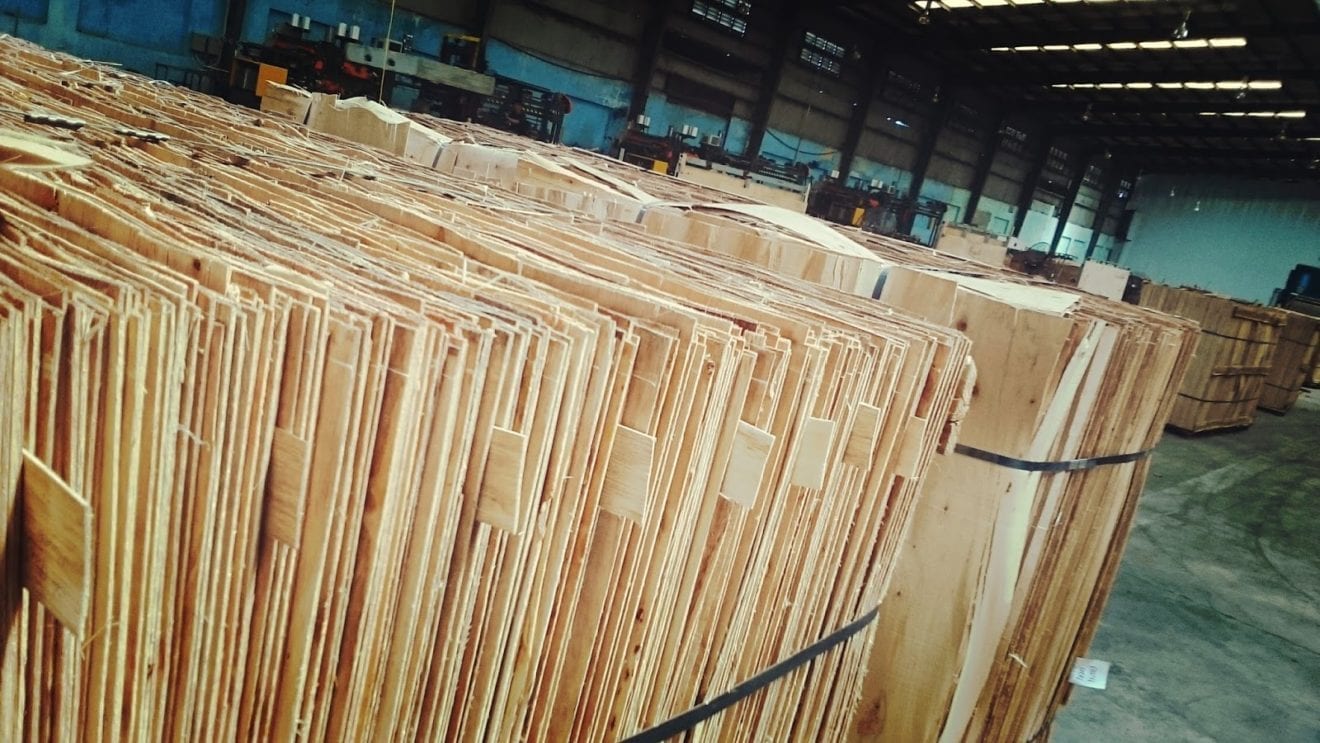
    This was stated by Bui Chinh Nghia, deputy head of the Ministry of Agriculture and Rural Development’s (MARD) Forestry Department. Nghia said this would result in a cut of some 40,000 cu.m. of raw material this year. Ensuring timber supply for domestic manufacturing is a problem in Vietnam as a large amount of raw timber is exported despite many domestic producers lacking raw material.

    To have enough material for processing and exports, many businesses have proposed that the government prohibit the export of raw material to other countries.

    If the quantity of exported wood is retained in the country, it would help local businesses take the initiative in signing orders with their partners in Europe and the United States.
    Sharing his opinion on this proposal, Huynh Kim Bau, assistant to the director of Saigon Furniture Co. Ltd, said the government should levy a tariff of 30-35 per cent on raw timber exports, the same level as applied by some regional countries, such as Cambodia and Thailand, to lower exports. In addition, enterprises need to plant high-quality tree species that grow in a short period of time to meet the industry’s increasing demand.

    Huynh Van Hanh, deputy chairman of the Handicraft and Wood Industry Association of HCM City, said small- and medium-sized enterprises (SMEs) needed to co-operate with each other if they wanted to compete with foreign firms globally.

    The association should make decisions based on three criteria — they are in real need of co-operation with other, they should trust their partners, and their rights and interests should be based on fairness as the work will be divided equally based on production and supply for each participant.

    As for those enterprises which are capable of expanding their business, they should invest in advanced technology to raise capacity and quality to overcome difficulties and access large orders.

    Hanh said Vietnam had more than 4,000 timber processing and export businesses but only seven per cent of them were large and could easily access huge orders from clients from the United States, Japan and the European Union. The remainder, which was small and medium enterprises, had weak competition capacity and small investment capital, hence they faced more difficulties while seeking orders.

    Meanwhile, the number of foreign investment businesses in the country was few, but they retained more than 50 per cent of the market share. Vietnamese SMEs mostly did outsourcing work of foreign investment businesses.

    Duong Phuong Thao, deputy director of the Import-Export Department under the Ministry of Industry and Trade, said Vietnam exported processed wood worth US$7 billion in 2016, while global demand stood at $400 billion for wood products. Vietnam’s wood industry, he said, must grow further to capitalise on the huge global demand.

    In 2017, MARD will switch the use of 200,000ha under small tree forests to growing large trees and issue sustainable forest certificate to those land areas. The total area under large trees granted sustainable forest certificates is expected to reach 500,000ha by 2020, promising a high-quality and certified source of timber for processing and exporting.

    Thao added that the Vietnamese Government planned to negotiate with its Lao and Cambodian counterparts to create better conditions for Vietnamese firms to source timber from forests in these countries to increase the supply of raw material.

    The local wood industry uses 30 million cu.m. of raw timber for manufacturing every year and has shipped products to more than 100 countries and territories. Only two-thirds of the timber is sourced domestically while the rest has to be imported.

  • Luxury cars flooding Vietnamese market

    Luxury cars flooding Vietnamese market

    From now to 2020, Mercedes Benz Vietnam plans to double its sales agent network, an important step for the luxury car manufacturer to cement its position in the Vietnamese market.

    Speaking to local mass media on December 3, Choi Duk Jun, CEO of Mercedes Benz Vietnam, said together with the expansion of product items, the enlargement of sales agents will be a strategic move that helps Mercedes increase its market share in Vietnam.

    Mercedes Benz has the highest number of sales agents in Vietnam with 12 centers throughout the country.

    Sources said Rolls-Royce, a brand of German BMW, which also owns two other strong brands – BMW and Mini — is also preparing to enter the Vietnamese market.

    Toyota Vietnam has opened an authorized agent in the central region, raising the number of total sale agents in Vietnam to 44.

    Ford Vietnam has opened an authorized agent in Binh Duong province, while it has upgraded Pho Quang branch of Sai Gon Ford into a 3S branch. It is preparing to open another showroom, belonging to Sai Gon Ford, in the central business district 1 in HCMC.

    The new centers are reported as having investment capital of VND120 billion. The number of Ford’s sales agents and service centers in Vietnam has increased to 27.

    The Vietnamese market had its highest sale growth rate of 60,000 cars in 2016 compared to 2015.

    The sale of luxury cars and sports cars also increased sharply. Mercedes led the market segment with 4,401 cars sold in 2016, an increase of 22 percent over the year before.

    Meanwhile, Lexus sold 1,665 cars, up by 73 percent. Audi, Porsche and BMW  have not revealed the sales, but reported growth.

    A source said Porsche had fulfilled its yearly sales plan in Vietnam by mid-2016.

    The sales surprised many analysts, because prices had increased sharply.

    Lexus LX570, for example, saw the price increasing from VND5.7 billion to VND8 billion, while Maybach S600 was from VND10 billion to VND14 billion. Rolls Royce Phantom price soared from VND54 billion to VND84 billion.

    Oxfarm, a non-government organization, on January 12 released a report on inequality in Vietnam, pointing out that the income gap between the richest and poorest Vietnamese people is very large. The richest Vietnamese has the daily income higher than the 10 year-income of the poorest.

    In related news, Marquardt from Germany had a working session with Da Nang authorities on its plan to set up an automobile part factory in the city.

  • Vietnam E-commerce well placed to meet growth targets

    Vietnam E-commerce well placed to meet growth targets

    Last year, e-commerce revenues increased to $5 billion, accounting for about three per cent of the total retail trade and services revenue.

    It has become an indispensable extension for businesses as a rapidly growing country with growing Internet connectivity deepens its global integration process.

    The development of multi-channel businesses that combines physical stores with an online presence has become an inevitable trend.

    Viet Nam has a gross domestic product (GDP) growth rate of more than six per cent per year. Internet connectivity is growing by 50 per cent plus every year. Online marketing revenues in the country increased from US$26 million to nearly $330 million in the 2010-2015 period.

    It is not surprising that with these advantages, the nation’s e-commerce market has witnessed the entrance of large players in the last few years.

    The Vingroup officially stepped into e-commerce in 2015 with its Adayroi trading floor. Earlier, several savvy entrepreneurs had launched online shopping websites that became popular, like sendo.vn, nguyenkim.com, tiki.vn, zalora.vn and lazada.vn.

    The South Korean Lotte Group also entered e-commerce market in Viet Nam last year with its lotte.vn website. It was followed soon by Japan’s largest retailer Aeon, which launched aeoneshop.com at the beginning of this month.

    Given their brand prominence and their large story systems, aeoneshop.com and lotte.vn are expected to offer stiff competition to sites like lazada.vn and tiki.vn that currently dominate the domestic market.

    Tran Trong Tuyen, general secretary of the Viet Nam E-commerce Association, told the Hai Quan (Customs) online newspaper recently that in the past, it was important for businesses to open their stores at a good location, but the situation has changed with 40 million Internet users having the option to buy things online.

    “If retail companies do not invest properly in e-commerce, they will gradually lose customers,” Tuyen said.

    The newspaper also quoted Trinh Van Hoa, director of the Nguyen Kim E-commerce Centre, as saying that the centre studied customer’s shopping habits and understood that they were looking for multi-business shopping facilities.

    Its focus on providing the most convenient shopping solutions for customers has seen the company grow rapidly in recent years, she said.

    The growth of the company, accordingly, also increased several times compared to the previous years, she said.

    Impressive figures

    E-commerce revenues in Viet Nam reached $4.07 billion in 2015, a 37 per cent year-on-year increase. It also accounted for about 2.8 per cent of total retail trade and services revenue.

    Last year, e-commerce revenues increased to $5 billion, accounting for about three per cent of the total retail trade and services revenue.

    The popularity of Online Friday, a mega sales event held every December, has soared, with last year’s sales of VND664 billion, triple that of the previous year.

    These figures show that the nation is well placed to meet its e-commerce targets. The 2016-2020 e-commerce master plan envisages $10 billion in business-to-consumner (B2C) turnover by 2020, accounting for five per cent the country’s total retail sales.

    Despite the rapid growth and enormous potential, the e-commerce market share of Vietnamese enterprises was still modest, Tuyen remarked.

    He said that even though famous names like Tiki and Sendo had millions of users and tens of thousands of orders per day, they were limited to the national scale, and although e-commerce revenue in 2015 was five times that of 2012, the Vietnamese market, had yet to match world leaders.

    In the US, e-commerce transactions accounted for five per cent of total retail sales, and it was 9-10 per cent in China, and about three per cent in Viet Nam.

    Shopping trends

    Market research firm Nielsen recently released the results of an online survey covering 63 countries

    It found more than six out of ten (64 per cent) Vietnamese consumers purchased fashion products online.

    More than half the Vietnamese respondents said they purchased books, music and stationery products (51 per cent) and 47 per cent said they bought travel products or services online.

    Four in 10 respondents (40 per cent) said they purchased personal-care and beauty products online.

    About one-fourth (26 per cent) said they placed online orders for babies and infants; an equal number ordered meal-kits or restaurant deliveries and one-fifth ordered packaged groceries online.

  • Vietnam’s bank CEOs receive sky-high salaries

    Vietnam’s bank CEOs receive sky-high salaries

    Meanwhile, the managers at VP Bank receive twice as much as Vietcombank’s managers, about VND3.6 billion if the bank can fulfill the business plan. At ACB, the average level for key personnel is VND530 million a year.

    Vietnamese banks are more generous, accepting to pay billions of dong a year to their key personnel.

    VP Bank is believed to lead the banks in pay to members of the board of directors and supervisory board. Shareholders agreed to pay one percent of pretax profit, or VND32 billion to the members if the bank can make the pretax profit of VND3.2 trillion in 2016.

    There are nine members on the boards, which means that if the business plan can be fulfilled, each of the members can receive VND3.6 billion a year.

    Techcombank also promises attractive awards to the managers. Its shareholders approved the pay of VND29.54 billion in 2016 to the board of directors and supervisory board. With 11 members, each of them expects to receive VND2.6 billion this year.

    With satisfactory business result, Vietcombank’s shareholders approved the pay of VND1.9 billion for every member of the boards in 2015.

    The bank has consulted with shareholders about the pay equivalent to 0.35 percent of post-tax profit to the members of the boards in 2016, while the bank plans the pretax profit of VND7.5 trillion. This means that if the business plan is fulfilled, the pay would be VND2.3 billion.

    Meanwhile, Maritime Bank plans a little bit lower pay for the members of the boards, at VND16 billion. Every of nine members expects to get VND1.7 billion in 2016.

    Orient Bank plans a relatively modest pay to its key personnel with the budget of VND8.2 billion only for the members of the board. However, the figure is still higher by VND1.2 billion than the last year.

    Nam A Bank plans to pay VND18 billion to 18 members of the boards in 2016, the level which some shareholders think is too high icompared with the dividend of 5 percent paid to shareholders in 2015.

    Banking is the business field which offers high pay to staff.

    A report of Navigos Search showed that the two positions which received the highest pay in the first three months of the year were the senior executive of a joint stock bank and a service company. Each of them got over VND200 million a month.

    The following positions were ones in the fields of healthcare, service, trade and bank.

    Meanwhile, the managers of state-owned conglomerates, keep complaining that the pay is unreasonably low which cannot reflect the effective business performance of the enterprises.

  • Vietnamese furniture makers hit by dwindling timber supplies

    Vietnamese furniture makers hit by dwindling timber supplies

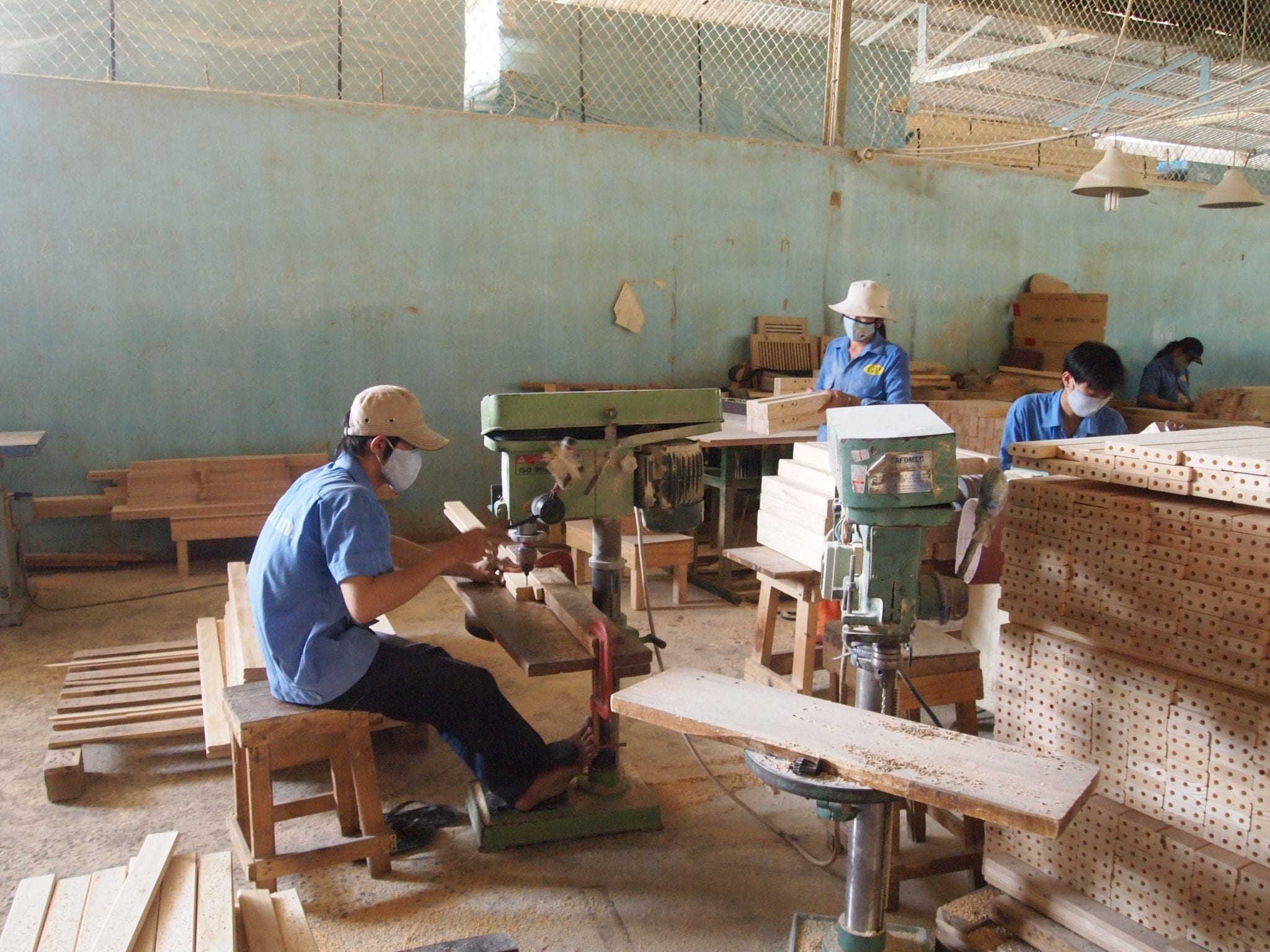
    Valuable wood that could be used by local carpenters is being shipped overseas. Many Vietnamese furniture makers are struggling to win large orders from global retailers due to a significant shortage of wood.

    It is estimated that local furniture firms use about 30 million cubic meters of solid wood and wood-based board materials each year, which translates as about 2.2 percent of all wood used commercially around the world.

    About 67 percent of wood used in Vietnamese products is domestically sourced, mainly from defunct rubber plantations, while the remaining 33 percent, translating into around 10 million cubic meters, must be sourced from overseas.

    In the meantime, data released by the Agriculture Ministry showed that last year Vietnam exported 8 million cubic meters of solid wood to neighboring China.

    This clearly presents a supply problem.

    Vietnam’s furniture exports have been growing steadily by 10-15 percent in recent years, said To Xuan Phuc, an industry expert from non-profit organization Forest Trends.

    “Last year, Vietnam exported more than $7 billion worth of wood products, while global demand was estimated at $400 billion. There is potential for more growth,” said Duong Phuong Thao, a senior official from the trade ministry.

    However, given the continuing high demand for timber, local furniture companies are faced with a significant shortage of materials.

    Vietnam currently has 4,000 furniture makers and exporters and 93 percent of them are small-and medium-sized companies. These companies have struggled to fulfill large orders from retailers in the United States, the European Union and Japan,” said Huynh Van Hanh, vice chairman of Ho Chi Minh City’s Association of Handicraft and Wood Businesses.

    Only 7 percent of Vietnamese furniture makers have managed to win large orders from global retailers, Hanh added.

    Local companies believe that the government should throw its considerable weight behind a plan to develop a sustainable forestry system that can be expanded as demand for wood continues to grow.

    Vietnam may hike tariffs on solid wood exports to 30–35 percent, the same level Cambodia and Thailand apply, to promote better forest management, end deforestation and help with timber supplies, said Huynh Kim Bau, assistant to the general manager of Saigon Furniture.

    The Agriculture Ministry plans to develop 200,000 hectares of certified sustainable forests this year, and it is forecast that Vietnam will have 500,000 hectares of certified forests by 2020.

    Dominance of Chinese furniture makers

    A shortage of solid wood and wood-based materials is not the only problem facing Vietnamese furniture exporters.

    Local firms mainly do outsourcing works for foreign furniture suppliers, most of which are Chinese, Hanh said.

    Official statistics show that a third of foreign-invested companies in Vietnam’s furniture industry are Chinese.

    In an attempt to dodge anti-dumping tariffs imposed by the U.S., Chinese furniture companies are flooding into Vietnam, relocating their manufacturing facilities and exporting to the U.S. from here.

    Since 2015 the U.S. has imposed import tariffs on Chinese-made furniture including beds, nightstands and other wooden wares in an attempt to protect its domestic manufacturers from Chinese “dumping”, or the export of goods at unfairly low prices.

    Ngo Sy Hoai, vice chairman of the Professional Association of Timber and Wood Products (Vifores), said the U.S. is currently imposing a tariff of between 55 and 120 percent on Chinese furniture, but there is no tariff on furniture imports from Vietnam.

    Local woodwork factories in Vietnam are concerned that their businesses will suffer if they act as a shield for Chinese furniture companies from U.S. anti-dumping actions.

    The fact that Vietnamese manufacturers may come under the radar of American anti-dumping investigators is obviously unwelcome as the U.S. has become Vietnam’s largest buyer. Vietnam’s furniture exports to the U.S. have reached more than $2 billion per year, equivalent to 30 percent of all exports.

  • Lunar New Year surge pricing enrages GrabBike users

    Lunar New Year surge pricing enrages GrabBike users

    Treble fares and heavy traffic add up to the Tet holiday stress in Vietnam. The week before Vietnamese people ring in the Year of the Rooster has been the busiest time of the year for ride-sharing services.

    Due to the rising demand, GrabBike, a mobile hailing app for motorcycle taxi services, has applied what is known as “surge pricing”, meaning that fares have more than tripled over the past week. The company says the move is aimed at ensuring there are enough drivers on the road, but customers are not impressed.

    Long, an office worker in Ho Chi Minh City’s financial district, headed home for the Lunar New Year holidays on a late night coach trip, leaving the city at 9 p.m. It usually costs him only $2.6 to travel the 7 kilometers by motorbike taxi from his apartment to the coach station. However, this time he was shocked to find that GrabBike had nearly tripled the fare to $7.1.

    The inflated cost annoyed Long who felt like he was getting fleeced by the service when he needed it the most.

    He decided to return to traditional motorcycle taxi drivers who pick up passengers on every corner in the city.

    “After negotiating, the driver agreed to take me for $3.5,” said Long, who had ditched old-fashioned motorcycle taxis for GrabBike thanks to its convenient booking service and lower fares offered by the app.

    The arrival of hailing mobile apps like Uber and Grab to Vietnam in recent years has put traditional motorcycle taxi drivers under great pressure with a rapidly shrinking market share.

    Many traditional motorcycle taxi drivers who are usually unable to compete with Grab have suddenly made a strong comeback over the past week as Grab’s surge pricing scares away customers.

    It usually costs Phuong, a resident in District 7, only $3 to get to Tan Son Nhat Airport. The price surged to $8 last Saturday despite her effort to avoid the rush hour by booking the trip at noon. Phuong agreed to the inflated fare, but after more than 30 minutes, there were still no GrabBike drivers in sight. She had no choice but take a cab to the airport.

    Higher prices are supposed to keep more drivers on the road during the busiest times. However, Long, a GrabBike driver, said the higher fares had made little difference to his income due mainly to heavy traffic that slows journey times.

    “A pick-up point was just 1.5 kilometers away but it took me more than 25 minutes to get there the other day,” said Long, adding that when he arrived at the pick-up point the passenger had already cancelled the trip.

    Ngo Nguyen Hoang, chief executive of Grab, said despite the higher fares leading up to Tet, the company has been unable to meet the demand.

    “We simply can’t reach our customers,” he said. “Before passengers book their trips, they will see the total cost of the rides in advance with upfront fares.”

    He confirmed that there will be no more unwelcome surprises heading into the holidays.

    “We are still offering discount coupons. There is no way we are fleecing our customers in the week leading up to Tet,” Hoang continued.

  • Small banks avoid being merged or acquired

    Small banks avoid being merged or acquired

    Small-sized banks are making great efforts to grow and avoid being merged or acquired, however, it is not easy, according to the Đầu tư chứng khoán (Securities Investment) newspaper.

    VietA Bank, for example, plans to promote retail sales and focus on individual customers and small- and medium-sized enterprises (SMEs).

    Although VietA Bank’s non-performing loan ratio in late September 2016 reduced to 1.17 per cent from 2.25 per cent in early 2016, its provisions for risky loans rose by 82 per cent to VNĐ71 billion (US$3.12 million), strongly affecting the profit result. Following the first three quarters of 2016, VietA Bank posted pre-tax profit of only VNĐ101 billion.

    Another case is Kienlongbank, which was transformed from a rural bank to an urban bank. The bank aims to become a retail bank targeting SMEs operating in agriculture and rural areas. However, Kienlongbank is also facing difficulties like other small banks in the banking system.

    The bank failed to complete its 2016 profit plan, with pre-tax profit of only VNĐ19.8 billion recorded in the first nine months of 2016, a decline of 90 per cent compared with the same period of 2015. Kienlongbank’s bad debts increased from 1.12 per cent in the beginning of 2016 to 1.46 per cent by late September 2016.

    Financial expert Trần Du Lịch said the more important task for small banks, at present, is to find solutions to successfully carry out restructuring and improve financial capacity, thereby avoiding being merged or acquired.

    In an attempt to avoid M&As, small banks also plan to raise capital and have conducted self-restructuring in recent years through internal resources, however, many have repeatedly been unsuccessful.

    Saigonbank, for example, has not fulfilled its plan to increase charter capital to VNĐ4 trillion following its refusal to merge with Vietcombank.

    VietA Bank also managed to raise its capital to just VNĐ3.5 trillion in early 2016 and no further progress has been recorded since then.

    Following the failure of the merger deal with Export Import Commercial Joint Stock Bank (Eximbank), according to insiders, NamA Bank has also been unable to increase capital as expected. The current charter capital of the bank is just more than VNĐ3 trillion.

    The central bank recently also allowed VietBank to increase charter capital from VNĐ3 trillion to VNĐ3.249 trillion. With this level of charter capital, VietBank remains at the top of banks with the lowest charter capital in the market, along with other banks whose legal capital has reached only VNĐ3 trillion, such as Kienlongbank, VietCapital Bank, NCB and Saigonbank.

    Experts said small banks which wanted to survive without conducting M&As, must raise their financial capacity.

    However, foreign investors are not interested in weak domestic banks if the controlling regulations are not relaxed. As long as the ownership limit of foreign investors is still less than 51 per cent, foreign shareholders cannot take control of the bank.

    According to economist Lê Xuân Nghĩa, since weak and small banks are finding it difficult to increase financial capacity to accelerate the settlement of bad debts and restructuring, it is in their interests to find potential partners to conduct M&As.

  • Vietjet awarded as “My Favorite New LCC” in Hong Kong

    Vietjet awarded as “My Favorite New LCC” in Hong Kong

    Vietjet has become an instant hit among travelers by winning the “My Favorite New LCC Award” organized by the popular online travel platform, Flyagain.la. The newly launched Ho Chi Minh City and Hong Kong service last December has been very popular with travelers as its daily afternoon flights provide them with convenient and comfortable trips between the two cities. 

    The award presentation, now in its third year, was held last week to commend travel-related companies for their good performance and their prospect for future growth. Flyagain.la is one of Hong Kong’s leading travel websites, which boasts a Facebook fans group of over 480,000, providing them with the latest travel and ticketing information. Vietjet was named “My Favorite New Low Cost Carrier” in the ceremony attended by leading travel writers, bloggers and journalists as well as representatives of leading airlines and travel-related companies.

    The Ho Chi Minh City – Hong Kong route, which is operated daily with a flight time of 2 hours 45 minutes per leg, departs daily from Ho Chi Minh City at 14.35 (local time) and arrives at Hong Kong at 18:20. The return flight takes off at 19:20 (local time) and lands at 21:05. Tickets can be booked at www.vietjetair.com or at www.facebook.com/vietjetvietnam.

    Vietjet took off in the sky in 2011 as a new-age airline with low-cost and diversified services. It has been expanding quickly and currently boasts a fleet of 42 aircraft, including A320s and A321s, providing services for 60 domestic and international routes.


    To keep pace with its rapid development and route expansion programs, Vietjet is currently recruiting cabin crew in its Ho Chi Minh City Training Centre. Successful candidates will attend intensive training courses in Vietnam and other foreign countries and enjoy an attractive income and many other benefits as well as unlimited promotion opportunities within the group.  

  • Vietnam franchise rules under pressure to change

    Vietnam franchise rules under pressure to change

    At the end of the 1990s, franchise was still a strange concept to most people in Việt Nam. There were no opportunities to enjoy or even see the products and services of the world’s well-known brands in Việt Nam.

    KFC, McDonald, Starbucks and Lotteria were not familiar names for Vietnamese youth. However, this has changed.

    Now, you can start a beautiful morning with friends at a Starbucks or enjoy lunch with family at a KFC or Lotteria outlet. You could also purchase the latest Nike or Adidas products as well as those of other world famous brands at stores in Việt Nam.

    This change has been the result of a very effective business model – franchise.  After 40 years of  Đổi mới (Renewal) and more than 19 years since its entry into the World Trade Organization (WTO), Việt Nam has emerged as one of the most attractive countries for investors and franchisors, with a population of over 90 million, 65 per cent of whom are under 35 years old, and a very dynamic consumer class with a strong preference for foreign brands.

    Despite the global economic slowdown, thanks to its advantageous location, population size, and consumer habits, Việt Nam is now an ideal destination for many investors as well as franchisors.

    According to the Vietnamese Ministry of Industry and Trade (MoIT), around 160 franchises have entered Việt Nam so far. This is just the franchises that are required to register with MoIT before officially commencing their operation pursuant to the 2005 Commercial Law.

    The dominant business sectors for franchises are food services, retail, education, and entertainment. Food and beverage franchises account for 30 per cent of the registered franchises. The primary reason for the sustained increase in franchise activities in Việt Nam is the adoption of the 2005 Commercial Law and Decree 35/2006/NĐ-CP (later amended by Decree 120/2011/NĐ-CP), which, for the first time, provided a legal framework for franchising.

    Foreign franchisors are required to register their franchising activities before granting franchises in Việt Nam. If they carry out their franchise activities in the country without a certificate of franchise registration, they will face administrative sanctions, including fines ranging from VNĐ10 million to 20 million (approximately US$439-878).

    The franchisors must also consider the following conditions before registering their activities: The franchise network must have been in operation for at least one year.

    As regards Vietnamese sub-franchisors:

    – They must have operated the franchise business for at least one year before they initiate sub-franchising.

    – The goods or services that are the subject of a franchise agreement must not be on the Government’s list of banned goods and services.

    If they are on the list of goods and services subject to business restrictions, a special business license must be obtained before franchising is deployed.

    A franchise registration dossier must comprise:

    – An introduction of the franchise business containing the information as required by Circular 09/2006/TT-BTM guiding the commercial franchising registration;

    – A copy of the certificate of business registration or a legally equivalent document;

    – A copy of the certificate of protection of industrial property rights in Việt Nam or in foreign countries if the franchise includes a license of industrial property rights;

    – Approval from the primary franchisor to the sub-franchisee in case of a sub-franchisor;

    – Other documents required by the competent authority (including the franchise agreement or form of agreement).All documents issued in a foreign language must be notarized and legalized. The Vietnamese versions of such documents must also be notarized.

    According to Decree 35, the franchisor has an obligation to provide the franchisee with the information regarding the franchise system, namely a copy of a form of franchise agreement and an introduction of the franchise business, at least 15 days before signing the agreement. The franchisor must also notify the franchisee of all substantial changes in the franchise system.

    In case of a master franchise, in addition to providing the aforementioned information, the secondary franchisor must also provide a proposed franchisee with the following information in writing: (a) information about the franchisor which has granted the franchise; (b) contents of the master franchise contract; and (c) the manner in which secondary franchise contracts will be dealt with in the event of termination of the master franchise contract.

    If the parties select application of the law of Việt Nam, the franchise contract may contain the following main items:

    i. Contents of franchising;

    ii. Rights and obligations of the franchisor;

    iii. Rights and obligations of the franchisee;

    iv. Price and periodic franchising fee, and payment method;

    v. Term of the contract; and,

    vi. Extension and termination of the contract, and dispute resolution.

    The franchise contract must be made in Vietnamese. In the case of a franchise from Việt Nam to overseas, the parties must agree on the language of the franchise contract. Once registered, a franchisor must report any changes in the general information about the franchisor and/or changes affecting the relevant industrial property rights (i.e., changes in Part a) to the competent authority within 30 days after the date of change.

    In addition, by January 15 every year, a franchisor must send an annual report to the competent authority on the matters contained in the disclosure document.

    The above regulations regarding franchise activities in Việt Nam are provided in the 2005 Commercial Law. However, such regulations were issued in 2005 and there are some defects in this law: the definition of franchising is not clear for distinguishing between a trademark licence agreement or a technology transfer agreement; the conditions on franchisee and sub-franchisee do not offer sufficient protection for the rights of the sub-franchisees.

    In addition, the method and measures for controlling and checking the franchisee’s activities by the franchisor are not clear.

    Furthermore, numerous changes in the legal system, such as adoption of new investment and enterprise laws, the civil code, changes in the legislative mindset of lawmakers, have occurred in order to protect and ensure the freedom of enterprises as well as actual business conditions at a time Việt Nam is deepening its international integration.

    Therefore, the need to revise the said regulations should be taken into account. In fact, the drafting of a new commercial law is underway and, according to MoIT, the draft will be submitted to the Government in 2017 and publicised to collect feedback before it is submitted to the National Assembly for passage in 2018.

    The franchise business in Việt Nam has developed in a stable manner thus far. With a new commercial law to be adopted soon, this business will hopefully prosper further.
    Read more at https://vietnamnews.vn/economy/350237/vn-franchise-rules-under-pressure-to-change.html#wg0kz4K4qwK39BXg.99

  • International Tourism fair to take place in Hà Nội

    International Tourism fair to take place in Hà Nội

    The Việt Nam International Travel Mart (VITM) 2017 will take place from April 6-9 at the International Exhibition Centre in Hà Nội, the Việt Nam Tourism Association announced on Monday.

    Themed “Hà Nội– Vietnamese tourism’s destination,” VITM 2017 is expected to feature 600 enterprises, tourism management and promotion agencies from 43 provinces and cities and 25 countries and territories.

    The fair hopes to attract about 60,000 visitors.

    Last year, Việt Nam welcomed more than 10 million international arrivals, up 26 per cent year-on-year, according to the Việt Nam Aministration of Tourism.