Tag: Vietnam

  • Telecom giants must develop equitisation plans

    Telecom giants must develop equitisation plans

    The three telecommunication groups under direct management of the Information and Communications Ministry (MIC) will have to develop their equitisation plans in 2017, according to the Minister of Information and Communications, Trương Minh Tuấn.

    The three groups are the Việt Nam Post and Telecommunications Group (VNPT), Việt Nam Multimedia Corporation (VTC) and MobiFone Telecommunications Corporation (MobiFone).

    The equitisation of the three telecom giants has to be speeded up in accordance with a December 2016 decision by the Prime Minister on criteria to differentiate State-owned enterprises (SOEs) and State-invested companies, he added, speaking at a meeting on January 23.

    Along with the decision, the PM also published the list of 240 SOEs that have to be equitised by 2020. On the list of 240 SOEs to be equitised, VNPT and MobiFone are the two among 27 firms in which the Government will hold 50-65 per cent ownership. VTC is among 106 SOEs in which the State’s stake will be reduced to below 50 per cent.

    Among the rest of the 240 SOEs, the State’s ownership will remain 100 per cent in 103 SOEs while its stake will stay over 65 per cent in four others.

    VNPT in 2016 recorded revenues of VNĐ135 trillion (US$6.09 billion), up 7 per cent from 2015, whereas income rose by 20 per cent to VNĐ4.16 trillion.

    MobiFone reported revenues of VNĐ38.4 trillion, up 14.5 per cent from 2015 with 19 million subscriptions. VTC surpassed their goal for 2016, with total revenues reaching VNĐ5.2 trillion, up 39 per cent compared to 2015.

    The Government has enhanced divestment from SOEs, ranging from breweries to dairy producers. Those deals have attracted intense attention from foreign investors given that Việt Nam is one of the fastest growing economies due to its young population and rapidly increasing export turnover, the Wall Street Journal reported last week.

    In the past 15 years the number of SOEs has fallen from around 6,000 to over 700. Between 2011 and 2015 almost 600 SOEs were equitised, 96 per cent of the targeted number.
    Read more at https://vietnamnews.vn/economy/350276/telecom-giants-must-develop-equitisation-plans-mic.html#0TOutqLCIzMYb4Ew.99

  • Vietnam rice exports set to face another tough year

    Vietnam rice exports set to face another tough year

    Despite facing difficulties, Việt Nam will strive to achieve rice exports of more than 5 million tonnes this year, the Việt Nam Food Association has said.

    Speaking at a meeting to review the VFA’s performance last year in HCM City on Monday, its secretary, Huỳnh Minh Huệ, said last year only 4.89 million tonnes were exported for $2.12 billion, a 25.5 per cent fall in volume and 20.57 per cent decline in value.

    There was excessive supply in the global market last year, and there has been a recent trend of major importing countries increasing domestic production to reduce imports, he said.

    Việt Nam’s rice exports are likely to face another difficult year as supply outstrips demand and global competition intensifies, he said.

    He quoted the US Department of Agriculture as saying global rice output in 2016/17 is estimated to increase by 1.6 per cent from last year to 480 million tonnes due to an expansion in the area under rice in many countries including Australia, Myanmar, Brazil, India, Indonesia, North Korea, Pakistan, Thailand, and the US, he said.

    Global exports are expected to rise by one million tonnes or 2.6 per cent to 40.6 million tonnes, he said.

    Stockpiles have been increasing for the last three years and are expected to reach the highest levels since 2001/02 crop, he said.

    Huỳnh Thế Năng, VFA chairman, said despite the hurdles, rice businesses would strive to export higher volumes than last year to ensure farmers can sell off as much of their outputs as possible.

    In the long term the domestic rice sector targets exports of high-value rice to affluent markets, he said.

    He said the Plant Protection Department and other relevant agencies should take measures to improve the hygiene and food safety of Vietnamese rice to enable more exports to choosy markets.

    The association said rice exporters should meet hygiene and food safety standards and strengthen linkages with farmers to ensure a steady source of the grain to meet market demand.

    Huệ called on the Ministry of Agriculture and Rural Development to build an international standard laboratory in Cần Thơ to help exporters check their rice quality, especially look for plant protection chemical residues, instead of sending to other countries for analysis as is done now.

    Năng said authorities in rice growing localities need to do more to instruct farmers in producing rice meeting safety standards, encourage them to use more certified rice seedlings and improve technical and financial support systems.

    Đỗ Hà Nam, chairman and general director of Intimex Group Joint Stock Company — one of the country’s 10 largest rice exporters — said while exports of other kinds were down, exports of Japonica and sticky rice went up by 136.95 per cent and 96.59 per cent.

    “But farmers have since rushed to grow more sticky rice, which [poses a] risk.”

    He said the Government should work with China to facilitate exports of Vietnamese rice to that country.

    “We face severe competition in terms of price from Pakistan and India.

    “There may be difficulties but if we choose to invest in varieties like fragrant rice and sticky rice, there will be opportunities.”

    Lê Thanh Tùng of the Crop Production Department said Việt Nam has the potential to boost exports of sticky, fragrant, Japonica and high-quality rice varieties.

    Besides improving quality, Vietnamese firms should also focus on building brands, he said.

    Rice stockpile

    The association on Monday called on the Government to approve a programme to stockpile rice temporarily from the winter-spring crop to ensure farmers do not lose.

    Tùng said the Ministry of Agriculture and Rural Development, based on rice production and consumption in February and March, would make specific recommendations for it.

    The quality in the 2016/17 winter-spring crop would be better than last year’s, he added.

  • Vingroup to invest in HCM City sports complex

    Vingroup to invest in HCM City sports complex

    HCM City’s People’s Committee had given Vingroup Joint Stock Company (Vingroup JSC) the go-ahead to invest in a sports and entertainment complex in District 2’s new Thủ Thiêm urban area.

    The complex would be located on 31.39 hectares, and the People’s Committee has approved a district planning scale of 1/2,000, the city’s department of planning and architecture (DPA) said on Monday.

    The project would require an estimated total capital of VNĐ6.77 trillion (US$305.1 million), excluding compensation for site clearance.

    So far, 99 per cent of the land in Thủ Thiêm urban area had been cleared, with 382 hectares set aside for residential purpose and another 334 hectares for commercial purpose. Once Thủ Thiêm had been developed, it would be able to house 150,000 residents and attract 220,000 workers.

    Vingroup JSC had acquired approval to build the complex as part of the second functional area in Thủ Thiêm and An Lợi Đông wards, Disctrict 2. The total construction is expected to take 36 months; the project utility period would be 50 years.

    Vingroup JSC’s sports complex would have infrastructure so it could be used as a multifunctional sporting halt and an amusement park. It is considered to be one of the key high-value projects in the planning of Thủ Thiêm urban area.

    Recently, many domestic and foreign investors had expressed interest in putting money into housing, commercial and office projects in Thủ Thiêm.

  • Dolce & Gabbana pop-up opens in Vietnam

    Dolce & Gabbana pop-up opens in Vietnam

    Italian luxury fashion brand Dolce & Gabbana has opened its first Vietnam pop-up store at Rex Hotel, Ho Chi Minh City.

    dolce-gabbana-vietnam-3

    Designed by Milan-based designers Giovanni Bressana, with red as the theme colour, the Dolce & Gabbana pop-up offers the label’s latest women’s collections to Vietnamese shoppers.

    dolce-gabbana-vietnam-2

    The brand has been brought to Vietnam by the IPP Group that also distributes other luxury brands there, including Burberry, Chanel, CK, Salvatore Ferragamo.

    dg-ho-chi-minh

    According to Le Hong Thuy Tien, CEO of IPP, the pop-up store will precede an official flagship scheduled to open in May.

    dolce-gabbana-vietnam-1

  • Economy Vietnam Airlines’ NASCO to list on UPCoM

    Economy Vietnam Airlines’ NASCO to list on UPCoM

    The Nội Bài Airport Services Company (NASCO) will list its 8.3 million shares on the Unlisted Public Company Market (UPCoM) under the code NAS, according to the Hà Nội Stock Exchange.

    NASCO, an affiliate of Vietnam Airlines, the country’s largest aviation corporation, has a chartered capital of VNĐ83 billion (US$3.7 million). Currently, its parent company Vietnam Airlines holds 51 per cent of NASCO’s capital and Saigon Thương Tín Commercial Joint Stock Bank (Sacombank) holds another 10 per cent.

    The company, which is headquartered at Nội Bài airport in Hà Nội, offers various services at airports such as duty-free shops, restaurants, VIP lounge, and travel and transport services.

    In the first nine months of 2016, NASCO’s revenue touched around VNĐ400 billion, down 8 per cent year-on-year. Its post-tax profit was around VNĐ24.5 billion, roughly the same as in 2015.

    Of its total revenue, the income earned from the transport service segment was the highest at VNĐ200 billion. Though the revenue gained from restaurants was lower, its profit accounted for half of the company’s total profit.

    NASCO is currently the only firm at Nội Bài airport that offers a business-class lounge with its interiors meeting 4-5 star standards.

    In 2016, NASCO faced business challenges after Terminal 2 became operational at Nội Bài airport as it affected the number of tourists using its services. The restructuring and upgradation of T1 has narrowed NASCO’s spaces at the airport, as well as thrown up fierce competition from new rivals.

    Two other companies that operate in Việt Nam’s airport service sector are Tân Sơn Nhất Airport Services Joint Stock Company (SASCO) and Đà Nẵng Airport Service Joint Stock Company (MASCO), both subsidiaries of Vietnam Airlines.

  • Online Tết shopping a boon for busy pros

    Online Tết shopping a boon for busy pros

    Lan Anh, an accountant living in District 3, HCM City, is over-worked as the Lunar Year draws to a close.

    She has plenty of reports to finish and very little time to spare for shopping, even for the most traditional, must-have food items for Tết (Lunar New Year), the most important festival celebrated in the country.

    For professionals like her, online shopping is a boon. Ordering and paying have become easy and convenient, although problems of quality and authenticity have also surfaced.

    Many consumers have said that the hectic year-end schedule keeps them so busy that they can’t go shopping, but the development of e-commerce and e-payment is helping them avoid going to stores or supermarkets by themselves. Now, without leaving their office or home, they can place orders online and wait for goods to be delivered at home.

    “To prepare for the New Year, I have ordered some traditional dishes from the central region, like pickled scallion, salted figs and papaya shrimp sauce,” Lan Anh said.

    With Việt Nam boasting a large Internet community and a young, digital-savvy population, the domestic e-commerce market is buzzing with activity ahead of the upcoming festival.

    Xuân Hòa, a resident in HCM City’s Bình Thạnh District, said he had purchased some products via Facebook after seeing many sellers advertise their goods on the social network.

    “I bought green grapefruit and bánh chưng cake for the upcoming holiday. Thanks to Facebook, I can shop and complete my work at the same time as all the transactions are conducted online. I just wait for the bills and goods brought to my house,” Hòa said.

    As the nation pushes its way to modernisation and deeper international integration, online shopping is set to become a habit for many. This is facilitated by several factors including diversified services and products, fast transaction speeds, quick payment and attractive promotions.

    Many large e-supermarkets and social networking sites have announced that they have carefully prepared to ship a large quantity of goods to serve a huge, growing demand, apart from launching various promotions to attract more buyers.

    Hotdeal.vn, one of Việt Nam’s largest e-commerce sites, has launched special shopping programmes for the holiday, providing customers with a wide range of selection of tasty and delicious Tết dishes from common foods to specialities like natural dried dates, pasteurised pennywort powder and hand-made meat pies.

    At e-commerce site adayroi.vn, customers can choose diverse food products, from confectionery, snacks, dried food, beverage and soft drinks to vegetables, fruits as well as provisions like rice, sugar and groceries.

    A representative of an e-commerce business said that with much lower overheads than traditional shopping channels, online shopping centres are able to offer multiple promotions and discounts.

    Some popular sites like sendo.vn, lazada.vn, chodientu.vn, hotdeal.vn, tiki.vn and zalora.vn are offering discounts up to 50 per cent on all types of products, especially those related to fashion and beauty, like shoes, handbags, watches and eyeglasses.

    With foodstuff is most in demand for this holiday, these items are advertised widely on the Internet with many discount programmes. Although the percentage discounts are not high compared to other consumer goods, people can still buy some items like confectionary, soft drinks and noodles for discounts of up to 39 per cent.

    Meanwhile, big supermarket chains in the country, are only accepting delivery orders by phone, while a prominent wholesaler allows only registered business owners to make online purchases.

    Quality question

    While online buying has grown significantly, consumers aren’t completely convinced of the benefits because the platform presents a number of risks and problems for users. Many e-commerce businesses have exploited legal loopholes in e-commerce transactions to swindle customers.

    Thanh Hà, a resident of HCM City’s Tân Phú District, said a very attractive spicy dried chicken has appeared on the e-market this year. After researching social networks, she chose a seller who seemed trustworthy and ordered a small amount to taste the product first.

    After checking and liking the dish, she ordered a larger amount to present to her relatives as Tết gifts. However, the second order turned out to be of bad quality. Hà still had to pay for the goods as it was the very last days of the year and the return process required many complicated steps, she said.

    Several websites are selling what they claim Nike and Adidas brand sports shoes for around VNĐ350,000, much lower than the official prices listed on the brands’ original websites. A pair of Converse brand shoes are being advertised online for just VNĐ100,000- 200,000, while the price of a pair on the official website is between VNĐ1 and 2 million.

    Lawyer Nguyễn Văn Viễn, Chairman of the Intellectual Property Association of HCM City, said punishing violations relating to counterfeit goods would be easier if the affected brand belongs to Vietnamese firms as they can confirm whether the goods are authentic or not.

    It is difficult to get confirmation of pirated products from overseas brand owners, Viễn said, adding that the Government and relevant agencies have to tighten management of online goods. The unprofessional and disreputable behaviour of some e-commerce businesses have badly affected the reputation of authentic companies, he said.

    Nguyễn Thanh Hưng, chairman of Việt Nam E-commerce Association (VECOM), also said that as the country’s e-commerce sector developed rapidly, legal issues were posing a big challenge.

    He said Việt Nam still did not have specific guidelines on the operation of the e-commerce market, thus there is no basis to determine the operational model and management direction for this potential growing market.


  • Cash payment declines by 2% in 6 year

    Cash payment declines by 2% in 6 year

    Cash as a mode of payment has declined in the country by 2 per cent in the past six years, from 14.02 per cent in 2010 to the current 12 per cent.

    As per the State Bank of Việt Nam’s report released this week, the country currently has around 67.4 million bank accounts compared to 16.8 million accounts in 2010.

    Modern infrastructure and technology to facilitate non-cash payments, especially online payments, have developed significantly. The number of bank cards has increased by 11.36 per cent against the end of 2015, to around 111 million now.

    There are around 254,000 points of sales (POS) and 17,380 automatic teller machines (ATMs), up 13.77 per cent and 5.39 per cent, respectively, compared to end of 2015.

    The central bank has issued many policies relating to modern infrastructure and technology to boost non-cash payments, to protect customer interests, and ensure quality of service.

    It has instructed commercial banks to quickly carry out a plan to convert all magnetic cards into chip cards to prevent fraud. Under the plan, all ATM cards will become EMV-standard chip cards by 2020, to reduce risks in e-commerce for both buyers and sellers.

    To protect the interests of customers, in October 2016, the central bank issued Circular 30/2016/TT-NHNN, which requires credit card service providers to compensate card owners for loss not caused by the owners, starting November 28, 2016.

    The Government also recently approved a policy encouraging cashless transactions in Việt Nam in order to reduce the number of cash-based deals, improve electronic payment methods and control tax evasion.

    Under the plan, by 2020, cash transactions in the country will be account for less than 10 per cent of total market transactions. As per the plan, all supermarkets, shopping malls and distributors will accept credit cards; 70 per cent of water, electronics and telecommunication service providers will accept cash-free payments from households and individuals; and 50 per cent of the total urban households will use electronic payment for daily transactions.

    The policy also proposes the development of new payment methods for rural and remote areas in order to encourage financial inclusion and increase overall access to services. At least 70 per cent of Vietnamese citizens over the age of 15 will have bank accounts by the end of 2020. Social welfare and pensions will be paid through electronic payment methods.

  • Power tariff likely to keep unchanged this year

    Power tariff likely to keep unchanged this year

    The Ministry of Industry and Trade (MoIT) has not yet decided to adjust power tariffs this year and has been calculating basic prices, the ministry yesterday announced at an electricity production cost conference in Hà Nội.

    The ministry said that EVN is required to build a basic price for the year of 2017 based on calculation of 2015 and estimates of 2016.

    Concerning those numbers, Electricity of Việt Nam’s (EVN) 2015 power turnover reached more than VNĐ234.3 trillion (US$10.32 billion) or equivalent to electricity retail price of VNĐ1,630 per kWh.

    Turnover from activities relating to power production and trading in 2015 was VNĐ2.5 trillion.

    According to Deloitte Việt Nam’s independent audit report, the losses which have not been calculated into EVN’s electricity production and trading in 2015 were up to VNĐ8.5 trillion. The losses came from the foreign exchange rate differences throughout the group’s wholly invested companies. Its foreign exchange rate difference at companies which EVN holding shares was over VNĐ1.3 trillion.

    EVN in 2015 therefore posted a slight loss in power production and continued to sell electricity lower than the production cost.

    Nguyễn Anh Tuấn, director of the ministry’s Electricity Regulatory Authority, said that in 2015 the prices of main fuels including coal, oil and gas affected the electricity production. The Ministry of Science and Technology in the same year promulgated a decision to increase gas prices sold to electricity production by 2 per cent while keeping coal prices stable.

    “The important factor in 2015 was that hydropower plants did not reach the set productivity due to unfavourable hydrological conditions. The power output from hydropower plants was reduced and EVN had to mobilise electricity from coal-fired and gas-power plants. This affected to production costs,” Tuấn added.

    He added that according to current regulations, construction costs of villas and tennis courts have not been calculated into power production cost. The construction has come from the EVN’s welfare fund, of which, turnover from EVN’s financial activities was around VNĐ1.01 trillion and those from its corporations was VNĐ194.3 billion. Turnover from dividend and profit was VNĐ60.95 billion.

    He said the losses from the foreign exchange difference would be gradually accounted into power tariffs.

    Đinh Quang Tri, EVN’s deputy general director said in 2015 that the group has itself avoided roughly VNĐ3.5 trillion in foreign exchange difference losses thanks to maximising costs and increasing profit. The remaining losses will be gradually accounted for.

    “Normally, the foreign exchange difference losses must be accounted in a year according to the accounting mechanism. However, the EVN asked the ministry and finance ministry to gradually handle the losses over five years due to its special characteristics. If the loss was accounted all at once, power tariffs would surge. The losses would be taken into account of power tariff or reducing production costs,” Tri said.

    “The ministry would review the basic prices. If there is a change of input prices such as fuel, foreign exchange and rates of power resources higher than 7 per cent, the power tariff would be adjusted,” he added.

  • Seafood exports to grow by 5%

    Seafood exports to grow by 5%

    Seafood exports are expected to increase by 5 per cent this year to around US$7.5 billion despite many possible hurdles, according to the Việt Nam Association of Seafood Producers and Exporters (Vasep).

    Speaking at a review meeting held in HCM City on Thursday, Ngô Văn Ích, Vasep chairman, said early last year many difficulties plagued exports before increased global demand enabled a recovery.

    Exports for the full year grew by 7.4 per cent to $7.05 billion, or 24 per cent of the country’s total agricultural, forestry and fisheries exports, he said.

    Shrimp and tra fish exports both rose by 7 per cent to $3.13 billion and $1.67 billion.

    The exports went to 161 countries and territories last year, with the US, EU, Japan, South Korea and China being the largest buyers.

    Trương Đình Hòe, Vasep’s general secretary, said this year the seafood sector would continue to face difficulties, including a fall in fisheries output due to the impacts of climate change.

    Import markets like the US, EU, Australia, and Japan are tightening hygiene and food safety norms for shrimp and applying regulations related to product origin, corporate social responsibility and others, he said.

    Vietnamese exporters are also expected to face fiercer competition from seafood exporters in India, Indonesia, and Thailand, and the increase in minimum wage and a labour shortage are causing difficulties to seafood processors and exporters, he said.

    “Despite difficulties, we believe seafood exports would increase by 5 per cent this year to $7.4 billion.”

    Exports to the US is expected to top $1.5 billion, an increase of 5 per cent, much less than last year’s 11 per cent growth.

    Due to political changes, the devaluation of the euro and slow market recovery in the EU, exports to the market would remain at last year’s level of $1.2 billion, he said.

    Exports to Japan would increase by around 4 per cent to more than $1 billion since the yen is appreciating, he said.

    With an increase in income, demand for seafood products, especially sugpo prawn, has increased in China, but its domestic shrimp production has not increased, he said.

    “China’s demand for imported seafood, especially shrimp, increased strongly last year and the trend would continue,” he said.

    Việt Nam’s exports to the market are expected to cross $1 billion this year compared to $829 million last year, he said.

    Deputy Minister of Agriculture and Rural Development Vũ Văn Tám said some countries tend to erect technical barriers to limit imports to protect their domestic production.

    Vietnamese businesses need to carefully study their target export markets to avoid risks, he added.

    Nguyễn Ngô Vi Tâm, general director of Vĩnh Hoàn Co., Ltd, said to enhance competitiveness, seafood firms need comprehensive policy support with markets, funding, and developing reliable raw material sources.

    Businesses at the meeting agreed that enhancing linkages from breeding to processing and export for both shrimps and tra fish is imperative to cut costs.

  • Microsoft and FPT develop strategic partnership

    Microsoft and FPT develop strategic partnership

    Microsoft and FPT last week signed an Enterprise Agreement focusing on digital transformations and cloud deployments. The agreement tightens the long-term strategic partnership that has been in place for almost 20 years between the two leading IT corporations.

    Specifically, FPT will be the first and largest business in Việt Nam to put in place Microsoft’s cloud computing for all operations of the corporation, in a bid to optimise operational efficiencies and improve competitiveness. FPT will also promote Microsoft’s advanced cloud services to the corporation’s clients.

    “As two global and local IT corporations, Microsoft and FPT want to continuously strengthen this long-term, sustainable relationship via cooperation in technology. The move to the cloud by Microsoft technology will surely help FPT further develop, complete its mission to adapt technology, and develop the knowledge to enable Việt Nam to reach its potential and partly address socio-economic issues,” stressed Vũ Minh Trí, CEO of Microsoft Việt Nam.

    In the first phase, FPT will adopt Microsoft Office 365 and move its entire system and all data to the cloud, at the same time deploying One Drive for Business and Skype for Business to optimise operating performances. In the next phase, FPT and Microsoft will develop the cloud to digitally transform their clients in Việt Nam.

    Nowadays, most of the world’s large tech companies have adopted cloud computing. However, in Việt Nam the majority of businesses are still reluctant to move their system and data to the cloud, particularly large companies.

    Such a large tech corporation as FPT, as it becomes a pioneer in adopting Microsoft Office 365 advanced cloud services for a large number of users, will contribute to encouraging other businesses to adopt cloud technologies. With the strength of Việt Nam’s leading provider of IT services, FPT and Microsoft will jointly develop the cloud market segment in Việt Nam and other countries.

  • Bright prospects seen for digital banking

    Bright prospects seen for digital banking

    Nguyễn Thanh Trúc in District 1 has just paid her monthly electricity bills via internet banking.

    “I have used the service for more than one year. This is a very convenient service and helps me save time from going to electricity bill collection points,” she said.

    In fact, more and more Vietnamese consumers are turning to computers, smartphones and tablets to do business with their banks. They have opted to make deposits online or online payments of electricity and water bills and even buy gold on their smartphones, according to experts.

    There is huge potential to develop digital banking in Việt Nam.

    According to a report discussed at a workshop held recently in HCM City, Việt Nam posts an internet growth rate of 9 per cent a year, ranking 15th in the world. The number of internet users accounts for 52 per cent of the country’s population.

    About 44 per cent of customers at commercial banks have used digital services.

    The fourth industrial revolution and Government policy to encourage credit card payment instead of cash have enlarged digital banking potential in the country.

    In the past, along with growth in internet and mobile device use, commercial banks in Việt Nam have been expanding and developing internet banking on mobile devices to offer better services to customers.

    To attract customers to use the Internet and mobile banking services, banks have launched promotions.

    LienVietPostBank, for instance, discounts 30 per cent of the transaction value to customers who pay bills for TV services or discounts VNĐ20,000 to customers who pay electricity or water bills using Ví Việt app until January 31.

    Similarity, at Viet Capital Bank, customers using the Payoo app to pay their TV bills of HanoiCab and MyTV Cần Thơ will be given back 30 per cent of the transaction value until January 31.

    Many banks, including VietinBank and VPBank, are offering bonus interest rates to customers who make online deposits.

    Banking finance expert Cấn Văn Lực said technology is the key to shorten the distance between banks and customers as well as help save big costs compared to traditional transaction methods.

    “Banks themselves also understand that if they do not invest in digital technology, they will be left behind. Customers today can actively perform transactions anytime, anywhere, via computer or smartphone with all types of products and services that they can conduct at a traditional banking branch,” Lực said.

    A general director of a joint stock bank, who did not want to be named, said: “A digital banking project can cost some millions of US dollars, but in the long-term, this investment is still cheaper than expanding branch networks.”

    Faster, more convenient and more secure electronic payment transactions were the targets that commercial banks were aiming for in the digital banking competition, he said.

    Lực said digital banking was certainly going to be a new way of banking for all banks.

    Transactions using digital technology would contribute 40 per cent of banking revenue in 2018, up 32 per cent compared to 2014, he said.

    “One of the factors in developing digital banking is to build trust and confidence among consumers about the security of online transactions,” he added.

    Online shopping boom

    Online shopping has been popular worldwide and Việt Nam is keeping up with the trend thanks to its active Internet use, according to a recent KPMG International’s survey.

    Chong Kwang Puay, managing partner and consumer markets lead of KPMG in Việt Nam and Cambodia, said with its high Internet penetration rate, Việt Nam would see online shopping surge soon.

    According to the survey, 18 per cent of consumers in Việt Nam and Cambodia purchased goods from an online-only retailer, such as Amazon, Lazada and Nhommua. Some 10 per cent purchased from the website of a retail shop, and only 3 per cent purchased directly from a manufacturer or brand’s website.

    The number one reason consumers gave for shopping online is the convenience of shopping. This is followed by having the ability to compare prices, or to find online sales or better deals.

    To gain consumer trust, companies and brands are recommended to improve online security and privacy protection. Most respondents (26.5 per cent) consider customer data and information protection to be of utmost importance, and 20.4 per cent consider food and product safety as the most important attributes.

  • This is what Hanoi’s first subway train may look like

    This is what Hanoi’s first subway train may look like

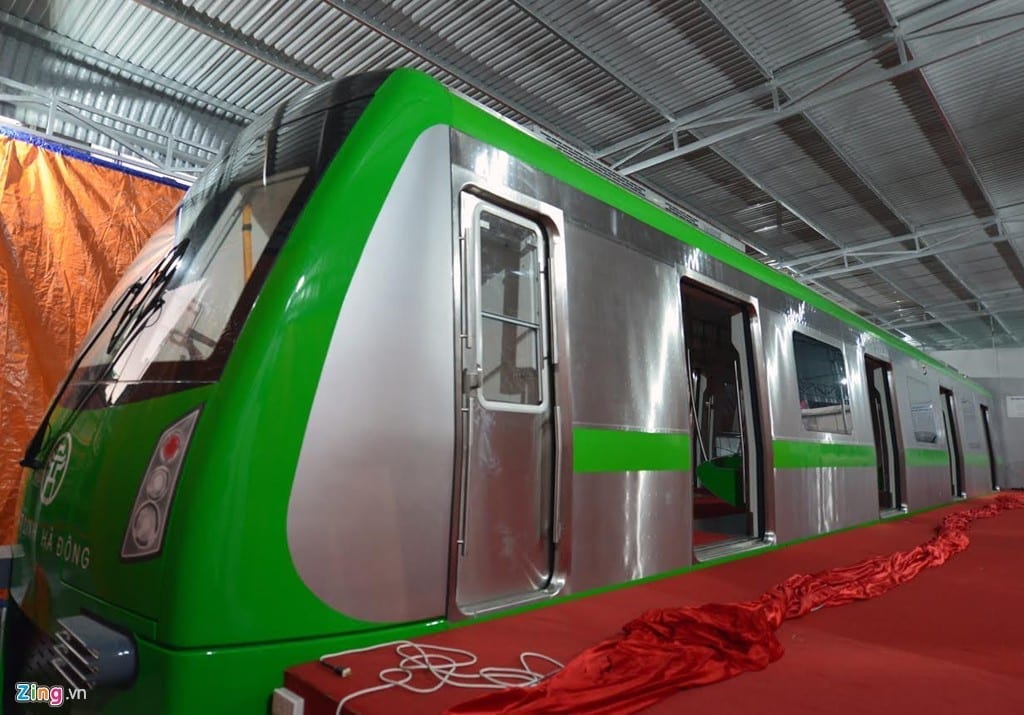
    French company Alstom has signed a $340 million contract to provide 10 modern train sets and build 12 stations. Hanoi Metropolitan Railway Management Board has signed a $340 million contract with French company Alstom for a metro system.

    Under the contract, the French urban mobility supplier will supply and integrate 10 train sets, each with a capacity for 900 passengers, for the city’s Metro Line 3, linking Nhon and Hanoi Station.

    It will also build 12 stations and one depot for maintenance.

    The contract is sponsored by the French government and will be carried out in four years.

    The 12.5-kilometer line is designed to carry 8,600 people per hour for each direction. It is one of several planned for the capital’s metropolitan area. Together they will form a rail network that is hoped to help ease traffic congestion and reduce emissions.

    Work on the line began in 2010, with the cost estimate originally set at $1.2 billion and operation scheduled in 2017. But funding delays may stretch the deadline to 2021.

    Hanoi officials said the city will need billions of dollars to develop transport infrastructure over the next five years, but funding is tight and this could affect the city’s growth prospects.

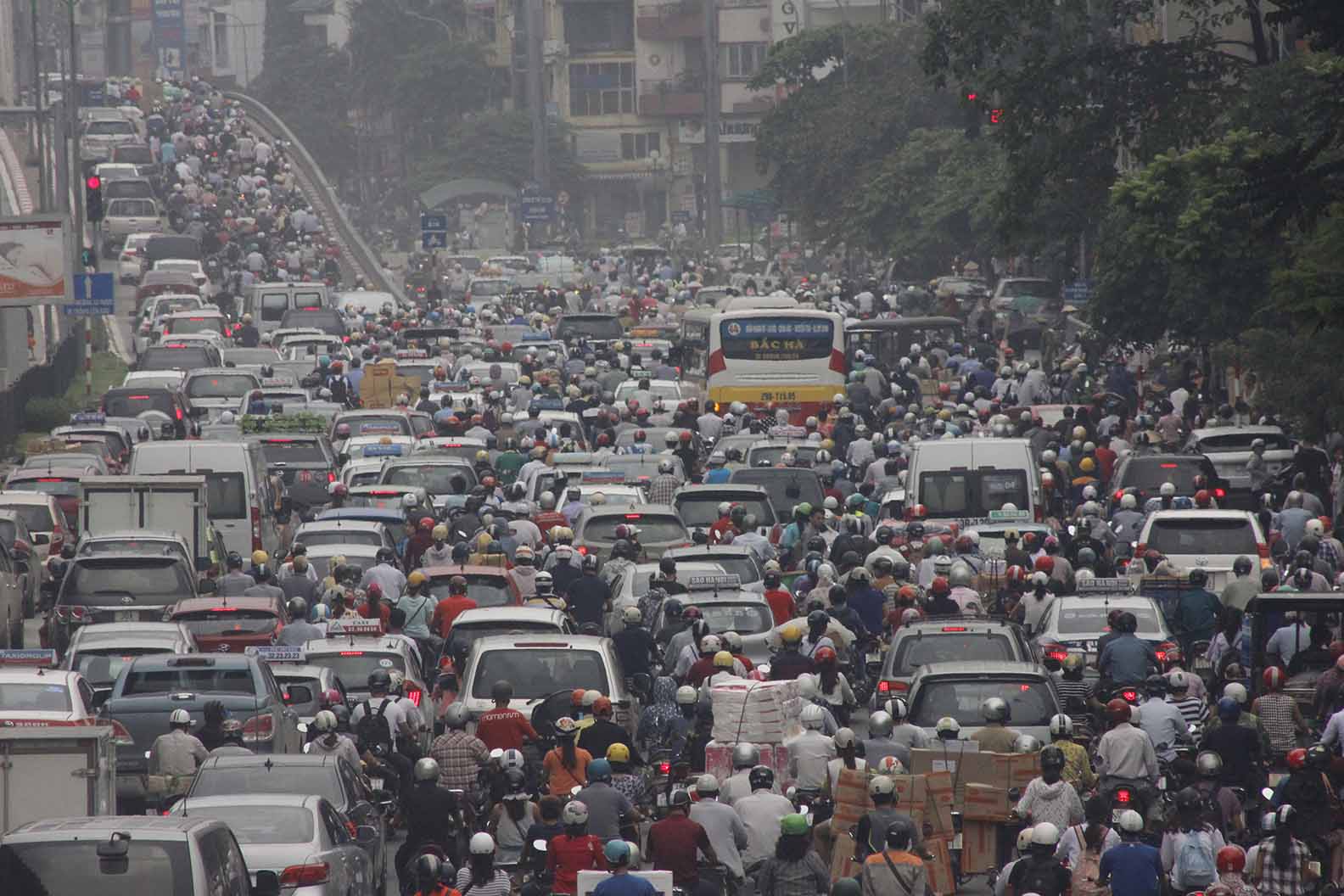
    There are more than five million motorbikes on Hanoi’s roads and the city is adding as many as 19,000 newly registered vehicles each month.

    With the number of vehicles growing 10 percent and road space at only 2 percent a year, traffic in Hanoi is on course for crippling gridlocks, experts say.

  • One person, one car in Hanoi as it considers a new traffic plan

    One person, one car in Hanoi as it considers a new traffic plan

    Hanoi is considering limiting individuals to one car and one license plate to ease pressure on its roads due to the continuing rise of newly-registered vehicles.

    Colonel Dao Vinh Thang, the chief of the Hanoi traffic police force, made the proposal at a meeting on Friday, urging municipal leaders to consider the new regulation.“If people want to get a new vehicle, they must use the old license plate,” he added.

    16,000 new motorbikes and 500 new cars are registered in the city every month, official figures show. Five years ago, Hanoi’s traffic infrastructure could support 5 million vehicles, but now it has to cope with two or three times that amount, which authorities are really struggling to control, Thang said.

    Major General Tran The Quan from the Ministry of Public Security shared the same view, saying this type of restriction on vehicle ownership has been applied in other countries, and that transferring license plates from old cars to new vehicles could help lower registration costs.

    However, Quan said that since Vietnam’s current law doesn’t impose any limit on the number of vehicles citizens are allowed to own, the regulation would require a lot of amendments to existing decrees and government circulars.

    But the proposal has raised some eyebrows.

    Attorney Pham Thanh Binh, director of Bao Ngoc Law Company, warned that restricting vehicle ownership would risk violating the Constitution.

    “Vietnam’s Constitution says that all citizens have the right to buy or sell any assets that are not prohibited by the state,” said Binh.

    The attorney, however, supports the idea that each person should only be allowed one license plate which they can use for life.

    Statistics show that Hanoi has more than 5.5 million personal vehicles (nearly 500,000 cars and more than five million motorcycles). The numbers are expected to increase to more than 7.3 million motorbikes and 1.3 million cars by 2025.

    Hanoi recently launched a competition seeking solutions from the public to solve its serious congestion problems, with a first prize of $200,000.

    The capital has been trying to ease traffic by constructing more highways and overpasses and launching the city’s first bus rapid transit route, in addition to more normal buses. To ease congestion, the city previously suggested banning motorbikes from inner-city streets over the next four years. However, experts said the proposal was unfeasible due to undeveloped and insufficient public transport.

    Last September, the city’s top leader Hoang Trung Hai also put forward another plan to make vehicles park only on one side of the road, depending on whether it’s an odd or even day. To date, no additional details of the plan have been unveiled.

  • Malaysian retailer leaves Hanoi after two stormy years

    Malaysian retailer leaves Hanoi after two stormy years

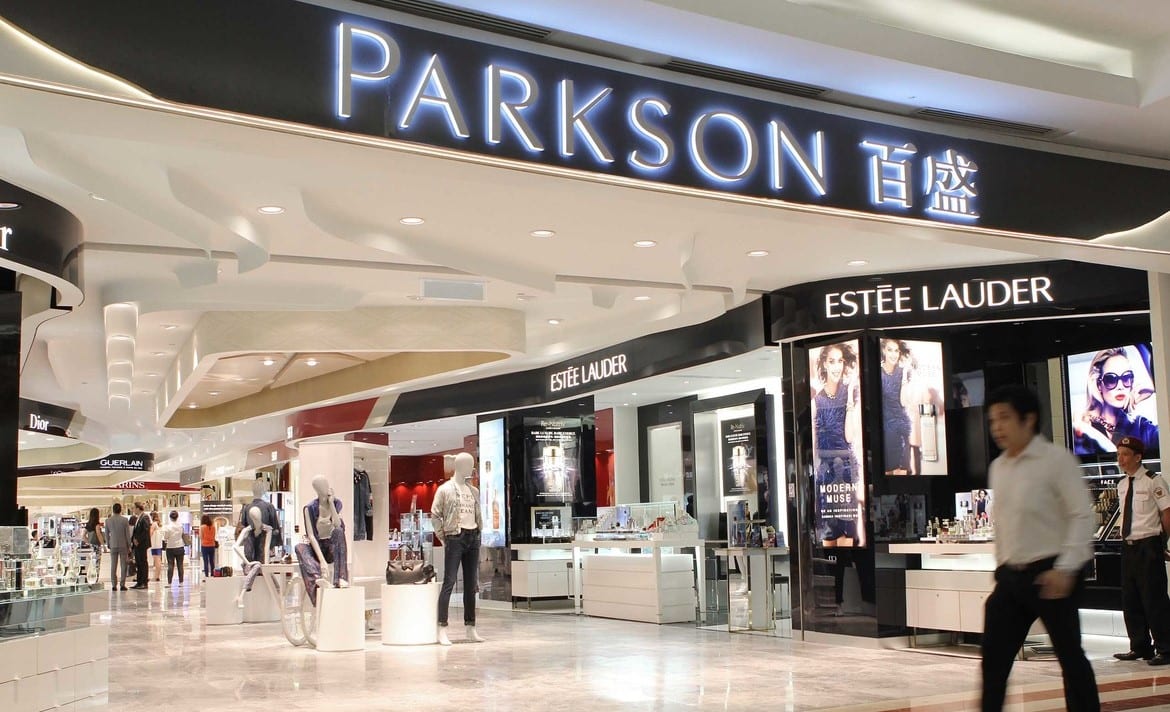
    After closing some of its department stores in Hanoi within a two-year period, Parkson, a retail giant from Malaysia, has officially decided to leave the capital. Parkson Viet Tower on Thai Ha street will close on December 15. Meanwhile, Vincom, just opened Vincom Pham Ngoc Thach in early November.

    In early 2015, Parkson closed Parkson Keangnam Hanoi Landmark. The closure produced a big stir as the owners of the shops were asked to move at night.

    In May 2016, Parkson shut down Parkson Paragon in Phu My Hung Urban Area in district 7 in HCM City.

    Located outside the central area of the city, Parkson Paragon was prominent in Phu My Hung new urban area, on Nguyen Luong Bang street, the financial heart of the area.
    However, the advantageous position could not help Parkson Paragon, especially when it had to share the pieces of the market cake with many other retailers with similar business models in HCM City.

    Parkson still maintains seven malls in three cities, including five in HCM City: Parkson Saigontourist in district 1, Parkson Hung Vuong Plaza in district 5, Parkson C.T Plaza in Tan Binh district, Parkson Cantavil Premier in district 2 and Parkson The Flemington in district 11. The latter has not had good customer traffic.

    It also has Parkson TD Plaza in Hai Phong City and Parkson Vinh Trung Plaza in Da Nang. Sources said the business in Da Nang has not been satisfactory.

    Parkson is a brand of Lion Group from Malaysia. Analysts believe that the insistence on the ‘department store’ model put Parkson at a disadvantage in comparison with the ‘shopping mall’ model applied by other big brands such as Vincom, Aeon, Mipec and Crescent Mall.

    Parkson has also had to share the branded-goods market with new rivals. And a series of counterfeit goods scandals also contributed to Parkson’s unsatisfactory business results.

    In 2010, when many retail brands appeared in Vietnam and the shopping mall model joined the market, Parkson became entangled in some scandals on counterfeit goods.

    Topics like ‘be cautious when buying goods at Parkson’ or ‘Parkson sells fake goods’ were shared on forums. Many customers also made complaints about the service quality at Parkson centers.

    Parkson admitted that it will face big problems in the last quarter of the 2016 fiscal year. The retailer has not mentioned the opening of more stores in Vietnam in its strategy to expand its network in SE Asia.

  • Vietnam set to send first workers to Australia, Thailand in 2017

    Vietnam set to send first workers to Australia, Thailand in 2017

    The country is focusing more on improving its workers’ skills to meet high demands from developed markets. Vietnam plans to send workers to Australia, Laos and Thailand for the first time this year in a bid to expand and improve its overseas labor force.

    Vietnam sent a record 126,000 workers overseas in 2016.

    Pham Viet Huong, the deputy director of the central Deparment of Overseas Labor, told that the plan is more about improving workers’s skills rather than increasing the number of them.

    The government has set a target of sending 105,000 workers abroad in 2017. Japan, South Korea and Taiwan will continue to be the core markets.

    Huong said the labor ministry is going to implement agreements that have been signed with Australia and Southeast Asian neighbors Laos and Thailand this year.

    The Vietnamese and Australian governments signed an agreement in March 2015 to provide up to 200 multiple entry visas to citizens of both countries per year and allow them to stay for 12 months for travel and work.

    Vietnam and Thailand signed an MoU on labor cooperation and a labor export agreement in July 2015 and a similar agreement was signed with Laos in January that same year.

    Huong said Vietnam has successfully increased the number of workers it sends abroad over the past three years.

    But a bigger goal is to meet the strict demands of overseas markets, especially developed countries where salaries and labor benefits are good, he said.

    He said labor exporters should invest more in training while local workers, notorious for their low productivity compared to others in the region, should also better prepare themselves with skills and language competence.

    “There’s a huge demand in many countries for workers with high professional skills. We should get ready with a good labor pool,” Huong said, as cited in the report.

    He said the ministry has built an action plan to improve local labor skills by 2020.