Tag: Vietnam

  • Banks post higher performance for 2016

    Banks post higher performance for 2016

    Several commercial banks have in the early days of 2017 posted positive business performance for 2016, with profits much higher than the previous year.

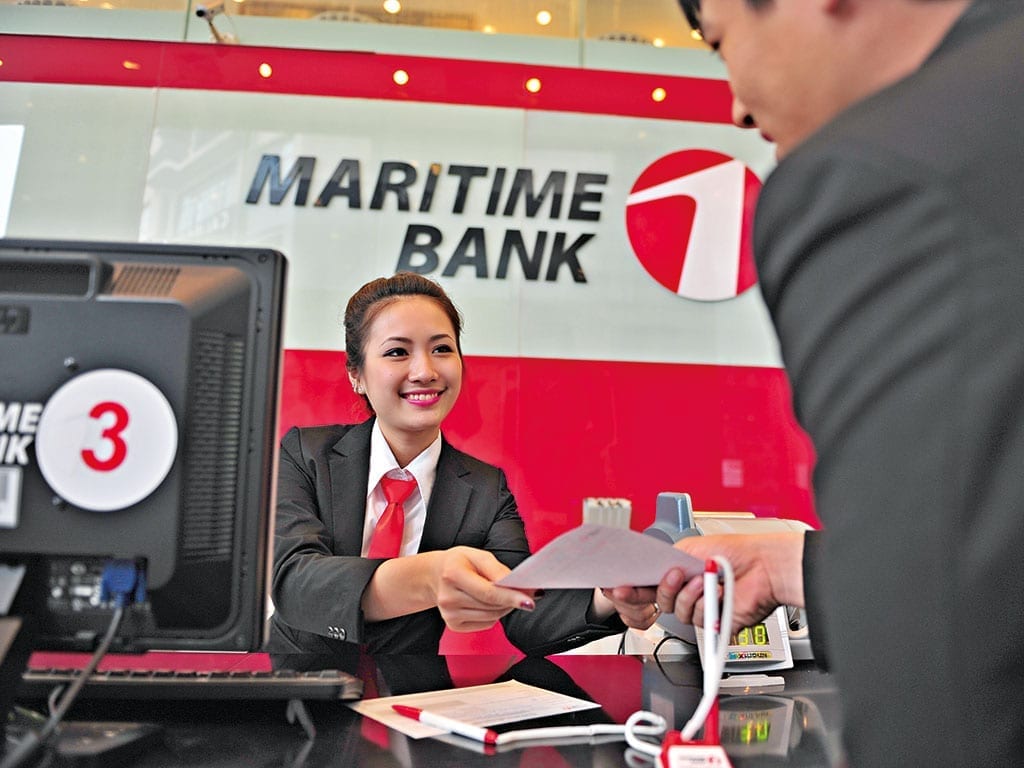
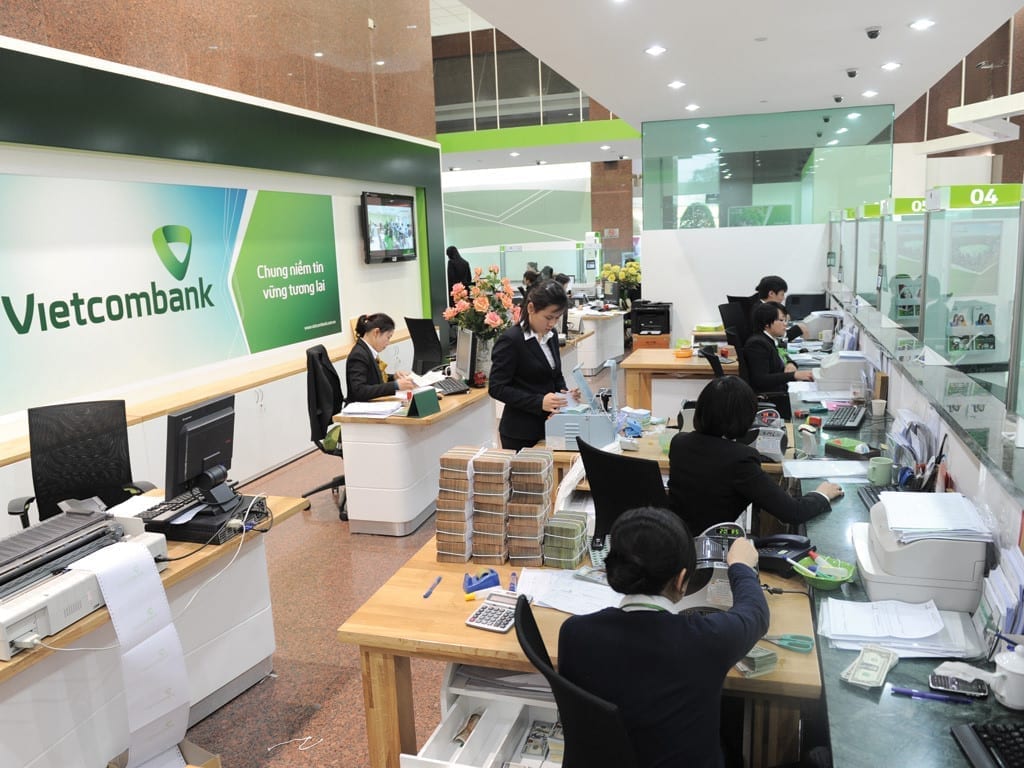
    The Bank for Foreign Trade of Vietnam (Vietcombank) was the first bank to report pre-tax profit in 2016, which hit a record high of 8.2 trillion VND (362 million USD). Its profit surged by 23.4 percent against 2015 and also exceeded the bank’s target for the year by 2.7 percent.

    In 2016, Vietcombank mobilised nearly 600 trillion VND from its depositors, up 19.4 percent from the previous year, while lending an estimated 470 trillion VND, up 18.9 percent.

    Vietcombank Chairman Nghiem Xuan Thanh said in 2016 the bank brought its rate of non-performing loans (NPLs) to 1.44 percent, down four basis points compared with the end of 2015.

    The bank’s capital adequacy ratio, which measures its capital to its risk, was 10.29 percent, higher than the minimum of 9 percent set by the State Bank of Vietnam.

    On solid ground in 2016, Vietcombank has targeted a pre-profit figure of 9.2 trillion VND in 2017, 12 percent higher than last year.

    The bank also expects its total assets to rise by 11 percent in 2017, while it has forecast that its credit growth and capital mobilisation will be 18 percent and 15 percent, respectively. The bank aims to keep its NPLs under 1.5 percent.

    The Vietnam Joint Stock Commercial Bank for Industry and Trade (Vietinbank) also reported a high profit of 8.25 trillion VND in 2016, 4 percent higher than the plan set by the bank’s general meeting of shareholders.

    Nguyen Van Thang, Vietinbank Chairman, said that as of December 31, 2016, the bank’s total merged assets were estimated at 947 trillion VND, up 22 percent from the previous year; while total mobilised capital reached 862 trillion VND, up 21 percent.

    Also in 2016, the bank’s total outstanding loans posted 720 trillion VND, a year-on-year rise of 18 percent, fulfilling the set target. Credit structure witnessed positive transfer with credit for prioritised industries growing 22.4 percent, higher than the common credit growth of the whole system.

    By the end of 2016, the bank continued to effectively manage the quality of assets with bad debt ratio of less than 1 percent.

    Le Duc Tho, General Director of Vietinbank, said in 2017, the bank set a target of a 15-17 percent rise in total assets and an 18 percent increase in outstanding credit.

    In addition, it strives to control the quality of debts, manage the bad debt ratio and ensure profit growth to achieve or exceed the year’s plan set by the general meeting of shareholders.

    The Bank for Investment and Development of Vietnam (BIDV) also estimated a pre-tax profit of 7.5 trillion VND in 2016, a rise of 7 percent against the previous year despite its deduction for the risk provision fund being quite high. In the first nine months of 2016, BIDV spared nearly 7 trillion VND for the fund, jumping 80 percent year-on-year.

    Positive results of BIDV in 2016 came from optimistic credit growth. Its total loans reached over 935 trillion VND, in which 758 trillion VND was offered to economic institutions and individuals, up 17.85 percent compared with 2015, while its deposits totalled 939 trillion VND, up 20.45 percent. The bank could control its bad debt ratio to 1.47 percent of total outstanding loans over the past year.

    Meanwhile, many other banks also surpassed their 2016 pre-tax profit targets, such as ACB, VPBank, Techcombank and VIB.

  • Vinatex and Itochu sign strategic co-operation agreement

    Vinatex and Itochu sign strategic co-operation agreement

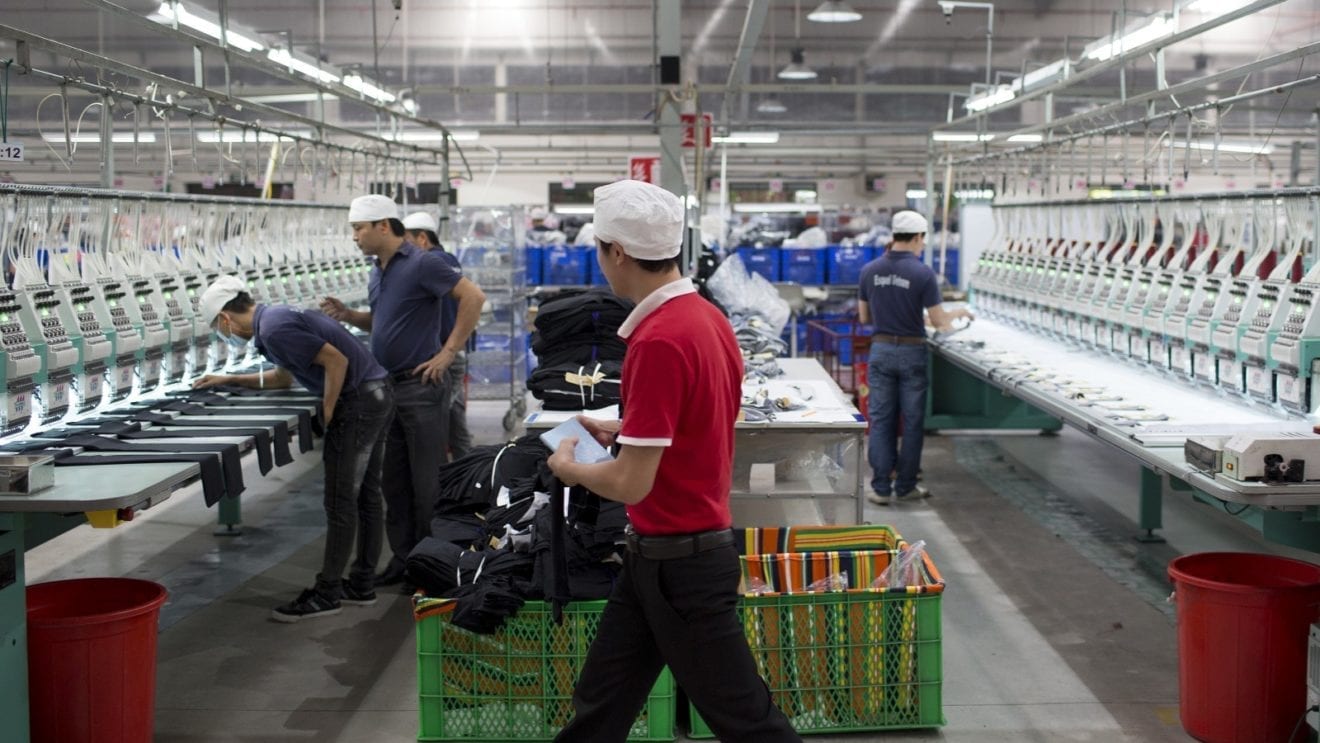
    Viet Nam Textile and Garment Group (Vinatex) on Monday signed a strategic co-operation agreement with Japanese firm Itochu, witnessed by PM Nguyen Xuan Phuc and his Japanese counterpart Shinzo Abe in Ha Noi.

    Itochu is expected to help Vinatex make a change in textiles and garment production and business method from Cut—Make—Trim to Free on Board, developing a sustainable retail distribution network to enjoy long-term benefits.

    Under the agreement, trading firm Itochu will assume the role of a consulting partner for Vinatex and its member companies in developing the textiles and garment supply chain from fibre to thread, fabric and sewing, retail distribution, co-operation and introducing domestic and foreign partners.

    Shuichi Koseki, senior managing executive officer, manager of CP·CITIC Strategy Office, president of Textile Company and representative director, said Viet Nam’s textiles and garment were an important part of Itochu, therefore it wanted to develop this area with Viet Nam, so that Vinatex could become its number one partner.

    In the near future, he said Itochu would boost co-operation between the two sides to develop textiles and garment products and supply them globally.

    Speaking at the signing ceremony, Le Tien Truong, general director of Vinatex, said the two sides would discuss in detail the co-operation plan and implement actions immediately to make a change in Vinatex’s textiles and garment production and business method from Cut—Make—Trim to Free on Board, developing a sustainable retail distribution network to enjoy long-term benefits.

    Itochu signed a framework agreement to support several projects in dyeing and materials production in Viet Nam, training in the country’s dyeing sector and utilising the capacity of Vinatex’s dyeing factories in the central region in 2015.

    At that time, Itochu owned five per cent stake in Vinatex through a subsidiary company.

    Itochu, one of the leading economic groups in Japan operating in various areas, including textiles and garment, has co-operated with some 100 textiles and garment companies of Viet Nam.

  • Online marketing essential for enterprises in digital era

    Online marketing essential for enterprises in digital era

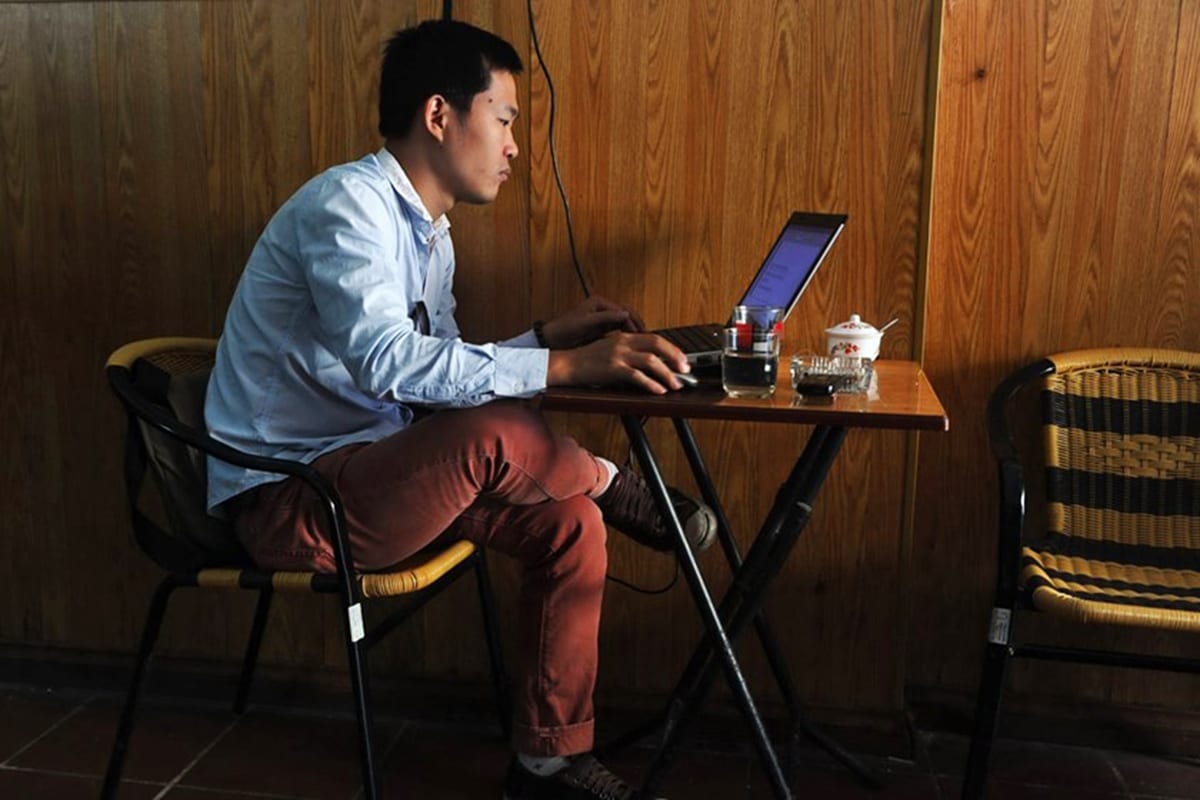
    Despite a large number of Internet users, investment for online advertisement in Việt Nam remains modest, a conference heard on Thursday.

    The Institute for Brand and Competitiveness strategy co-ordinated with the Việt Nam Internet Association and Việt Nam Digital Communication Association to organise a conference on building enterprise branding in the digital era in Hà Nội.

    Over the past decade, the Internet boom has had a significant impact on marketing activities, as well as the building and positioning of brands in the market.

    Internet has also created stronger brand awareness than ever before and increased the number of people who know brands. According to the Institute for Brand and Competitiveness strategy, Việt Nam ranks 16th among the top 20 countries with the highest number of Internet users, with nearly 50 million people, of which, 60 per cent are young.

    The Internet has become a popular source of advertising to users who want to search for product information. Seventy-three per cent of Vietnamese consumers seek out information on the Internet before making purchase decisions.

    Most consumers in Việt Nam choose products and services based on brand identities.

    Therefore, experts advised businesses to make changes to their business operations, adjusting brand identity to avoid falling behind compared to rivals.

    To build brands in the digital era, businesses need to increase interaction in different environments, including the online environment, said Nguyễn Quốc Thịnh, an advisor for the National Trademark Programme.

    “Businesses should not skip electronic branding, a strong interactive environment with low associated costs,” said Thịnh.

    Enterprises need to rethink the way they build their brands, not just their logos or advertising in the media, he said.

    Currently, the application of the Internet in general, and digital technology in particular, to create and develop brands is still limited.

    Data from Cimigo, a market research firm, showed that investment for online advertising in Việt Nam was only US$15 million in the past year.

    Meanwhile, according to statistics from TNS Media Vietnam, the cost of online advertising accounts for less than 5 per cent of the total advertising costs, while 95 per cent of advertising spending is still through television, newspapers, magazines, even though these forms are more expensive.

    Vũ Xuân Trường from the Institute for Brand and Competitiveness strategy said that many businesses were paying attention to profits and business strategy, while their strategies for branding remained “vague”.

    Therefore, businesses need a better strategy in branding in the digital era. In particular, businesses should focus on social networks due to their widespread use.

    Experts said that businesses need to take advantage of opportunities afforded by the Internet to build their brands. Enterprises also need to increase connections with consumers, while ensuring the quality of goods and services.

  • As Vietnamese banks digitise, customer service key

    As Vietnamese banks digitise, customer service key

    Customers must be at the centre of banks’ attention as they make a move towards digital transformation in an effort to adapt to a changing landscape of financial innovation and disruptive technologies.

    This was said by head of Retail Banking at VP Bank, Sandeep Deobhakta, at a conference held in Hà Nội on Thursday, titled, ‘The Future of Finance in Việt Nam 2017.’

    Deobhakta, who has been holding this position since May 2015, said customers in Việt Nam are very open to new technologies and the nascent retail banking industry in Việt Nam can also adopt these technologies faster than other markets if they put customers first.

    In the future, traditional banks might lose business to companies that employ disruptive innovations if they failed to deliver better, simpler and faster solutions to customers, Deobhakta cautioned.

    VP Bank has been working with Timo, Việt Nam’s first mobile-only bank, giving customers better solutions to manage their money, bills and the ability to top up their mobile cards through the Timo app. At Timo Hangouts, one can forget about a typical bank branch and instead enjoy a coffee as one opens an account and uses bank services.

    Timo has about 4,000 customers in the HCM City and opened a Timo Hangout in Hà Nội last October, looking to attract more than 100,000 users by next year.

    Việt Nam has a huge untapped market for financial innovation, with only 20 per cent of the population having bank accounts and 3 per cent owning credit cards, Foo Boon Ping, managing editor of The Asian Banker, said at the conference.

    “The stable GDP growth of around 6 to 7 per cent, low wages, a large population with a high savings and strong innovative approach are crucial factors that will accelerate the financial and industrial development in the Vietnamese market,” he said.

    “Digital transformation is driven by real business needs to transform to become more cost efficient and to serve your customers as their behavior and preferences change,” he added.

    There are only about 36 fin-tech companies in Việt Nam, with most focusing on providing consumers and merchants with online and digital payment solutions.

  • 200 Vietnamese firms in Samsung chain

    200 Vietnamese firms in Samsung chain

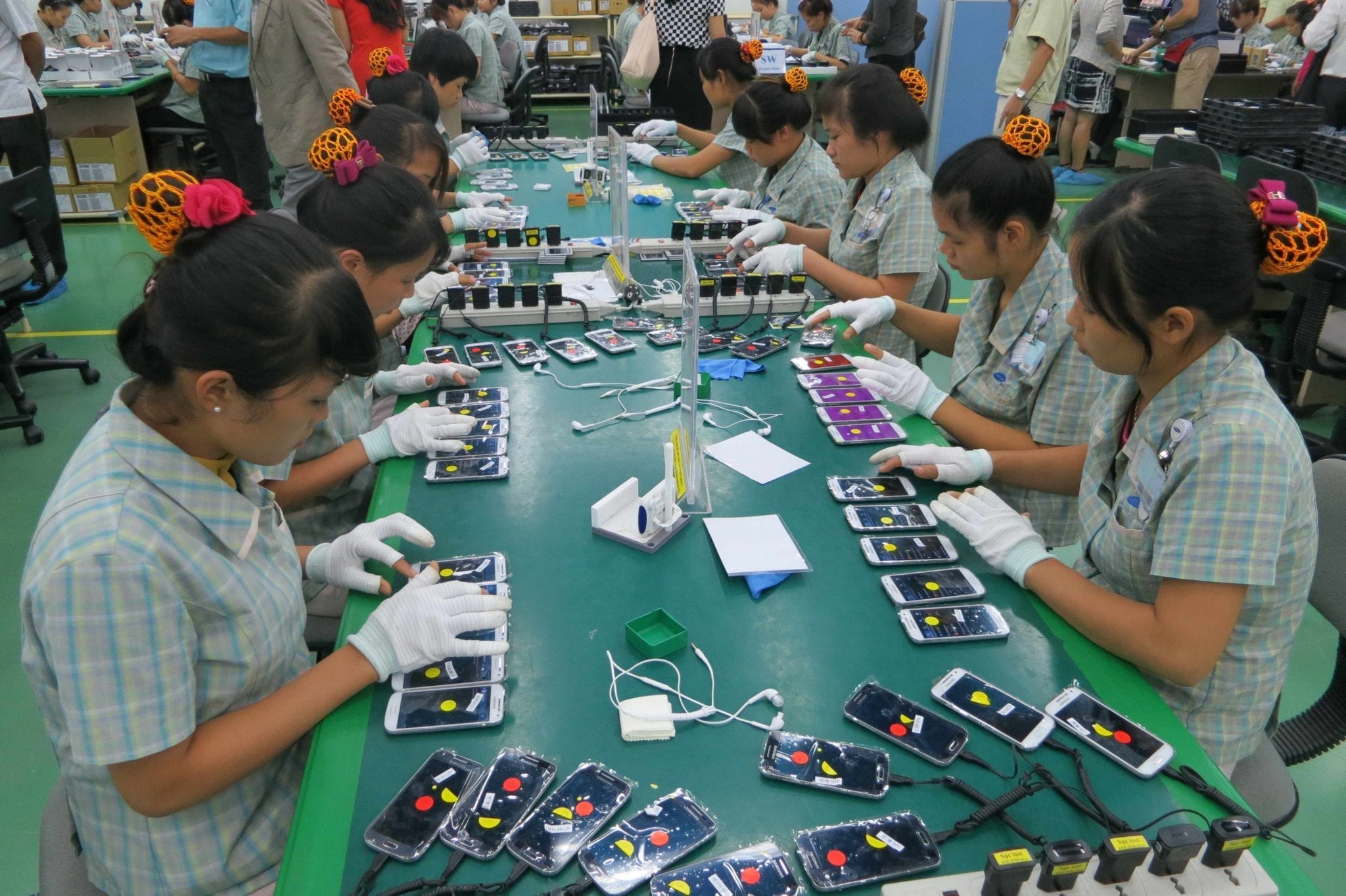
    Nearly 200 Vietnamese enterprises are participating in the component supply chain used by three Samsung plants in Việt Nam, including 20 tier-1 vendors and 178 tier-2 vendors.

    Also, Samsung plans to raise the number of level-1 suppliers in Việt Nam to 29 this year, said Han Myoungsup, President of Samsung Complex Việt Nam.

    Several local companies were able to join Samsung’s production chain, showing that Việt Nam’s support industry could be developed if domestic firms know how to take advantage of the opportunities provided by large enterprises.

    Samsung Việt Nam’s management board last week visited and surveyed the two companies, An Lập Plastic Co Ltd in Hà Nội’s Long Biên District and Việt Hưng Plastic Co Ltd in Hưng Yên Province. It also worked directly with three other suppliers, including PTE Company, Minh Nguyên Company and Việt Hưng Plastic Co Ltd in HCM City.

    This field survey is part of Samsung’s programme to provide experts to help Vietnamese vendors improve their capacity to join Samsung’s supply chain.

    “Samsung Việt Nam has also recorded a significant breakthrough in raising the localisation rate of products, from 35 per cent in 2014 to 51 per cent in 2016. This is a great contribution that helps made-in-Việt Nam products become popular worldwide,” Han said.

    Samsung’s five-vendor visit is part of the supporting programme of Samsung’s experts for Vietnamese businesses. Accordingly, Samsung’s experienced experts from South Korea have directly assisted the five enterprises in the past three months to improve their production process to assure they meet Samsung’s criteria. They are also five of 14 Vietnamese vendors who have received Samsung’s direct assistance since September 2015.

    This supporting programme has also confirmed a strong commitment of Samsung, in response to a call by the Government of Việt Nam, which is increasing the localisation rate and the presence of Vietnamese enterprises in Samsung’s component supply chain.

    “I do hope that, through Samsung’s supporting programme, Vietnamese enterprises could gain the knowledge and experience to enhance their capacities. Samsung believes that if a product can be localised, we will maximize its localised content,” Han added.

    Hoàng Anh Tuân, President of Việt Hưng Plastic Company, said their turnover has seen rapid growth since they have been supplying packaging to Samsung. Last year, their sales to Samsung accounted for half of their total VNĐ2 trillion (US$88.9 million) turnover.

    “Our largest advantage from Samsung’s supporting programme is the change in mindset. We commit to always learning and changing in order to apply experience from Samsung in the best way,” Tuân added.

    “Being suppliers to Samsung could be a quality measurement to help local firms easily participate into other value chains. We are also a packaging supplier to LG and Canon,” he noted.

    He emphasised that joining the supply chain for Samsung has been transparent and open to all businesses. Those seek to participate in the chain without sufficient capacity would be immediately removed.

    Trương Quang Khởi, An Lập’s director, said they have opportunities to modernise their company after joining the Samsung production chain.

    “We have received support from Samsung to upgrade our workshops, equipment and technology, as well as to learn effective management models,” he added.

    Samsung Electronics is one of the largest foreign investors in Việt Nam, with three manufacturing plants in Bắc Ninh (SEV), Thái Nguyên (SEVT) and HCM City (SEHC). With an export turnover of over $37 billion in 2016, Samsung Electronics in Việt Nam contributed 20 per cent to Việt Nam’s exports.

    This year, Samsung Electronics in Việt Nam has set a target of 7-10 per cent growth in export turnovers. Samsung aims to not only turn Việt Nam into the world’s smartphones and electronic appliance production base, but also create more opportunities for Vietnamese enterprises in the field of supporting industries to become involved in Samsung’s global supply chain.

  • Viettel-led consortium gets Myanmar telecoms license

    Viettel-led consortium gets Myanmar telecoms license

    Myanmar has formally awarded its fourth and final nationwide telecoms license to a joint venture consisting of Vietnamese military-run operator Viettel and local ICT companies.

    The consortium has been awarded a 15-year license to offer nationwide services in a move sure to heat up competition in the burgeoning market.

    The joint venture will be named Myanmar National Tele & Communications, and will compete against existing operators Telenor Myanmar, Ooredoo Myanmar and the joint venture between Myanmar Post and Telecom and Japan’s KDDI.

    Viettel was selected as the foreign partner for the new telecoms consortium in March last year, but the license has only now been allocated.

    Under the terms of the consortium agreement, Viettel will hold a 49% stake, while local companies Myanmar National Telecom Holding Public and Star High Public Company will own 23% and 28% respectively. Viettel has committing to investing around $1.5 billion in Myanmar’s telecoms sector.

    The report cites Myanmar’s Minister for Transport and Communications Thant Sin Maung as stating that the new operator “will help advance telecommunication in townships, rural mountain towns and will contribute to improving transportation, healthcare and education necessary for the people living in rural areas.”

  • Sharetea bubble tea arrives in Vietnam

    Sharetea bubble tea arrives in Vietnam

    Taiwanese bubble-tea brand Sharetea has launched into Vietnam with a store on the walking street of Nguyen Hue in central Ho Chi Minh City.

    Sharetea has more than 450 stores in more than 18 countries. Its drinks are made from tea leaves and ingredients shipped directly from Taiwan.

    It says its customers’ favourite drinks include coffee milk tea, kiwifruit tea, whole-lemon green tea and pearl black milk tea.

    Vietnam’s bubble-tea market has yet to reach its potential, say business owners in the sector. Sharetea is competing with other overseas brands like Chatime, Gong Cha and Koi.

  • Pilot shortage puts Vietnamese airlines on standby

    Pilot shortage puts Vietnamese airlines on standby

    Big bonuses are being offered by airlines to woo more pilots. Vietnamese airlines are grappling with what they believe to be a serious shortage of professional pilots, so to keep the pilots they currently have on their payrolls and to lure new ones, they are offering hefty bonuses.

    “Vietnam’s airline market is growing rapidly, so there’s a huge demand for qualified professional pilots,” Lai Xuan Thanh, the director of the Civil Aviation Administration of Vietnam, said at a recent meeting of transport authorities.

    He added although salaries in the airline industry have increased significantly in recent years and many airlines have even offered fat bonuses to attract and retain professionals, the supply remains below the demand. According to the aviation administration, that demand is growing at 5 percent per year.

    The CAAV has mainly blamed the shortage on the fast-growing airline market.

    Vietnam’s airline industry is growing at the third-fastest pace in the Asia-Pacific region with the number people traveling by air in 2016 jumping by 29 percent from 2015 to about 52 million.

    To meet the demand, local carriers have expanded in recent years, buying more planes, opening new routes and increasing the number of flights.

    “At present, the shortage of pilots is endemic throughout the airline industry,” Thanh said. “For example, only 30 percent of national flagship Vietnam Airlines’ pilots are Vietnamese. The figures at low-cost carriers Vietjet Air and Jetstar are much lower.” he said, implying that domestic airlines are having difficulties hiring enough pilots to replace retirees and to support expansion.

    The aviation administration suggested that airlines could offer more bonuses and even set up partnerships with flight centers.

    “The CAAV will not issue executive orders to help ease the shortage. Airlines will have to transform themselves to retain workers,” said Thanh.

  • Habeco to debut on Hose in Jan

    Habeco to debut on Hose in Jan

    Hà Nội Beer Alcohol and Beverage Joint Stock Corporation (Habeco) will start trading with code BHN on the HCM Stock Exchange (HOSE) on January 19, the southern bourse announced on Wednesday.

    Habeco will list its entire 231.8 million shares, equivalent to the total listing value of nearly VNĐ2.32 trillion (US$103 million), at the reference price of VNĐ127,600 ($5.65) per share, the bourse said in a statement. The share price is allowed to fluctuate +/-20 per cent on the first trading day.

    Shares of the North’s largest brewer are trading at some VNĐ128,000 per share on the Unlisted Public Company Market (UPCoM), which is under the management of the Hà Nội Stock Exchange.

    HCM City’s exchange on December 30, 2016, approved the company’s filing to move its listing from the UPCoM to HOSE.

    By changing its listing to HOSE, which is the main bourse in Việt Nam, with total market capitalisation of some $68 billion, Habeco is expected to improve its reputation and draw more investments.

    The company has become a ‘phenomenon’ on the UPCoM since its debut on October 28 last year, when its price shot from an initial VNĐ39,000 per share to a peak of VNĐ225,800 per share on December 16.

    Headquartered in Hà Nội, it is the largest beer producer in the North and the third-largest beer company in Việt Nam, with popular brands such as Hanoi Beer and Truc Bach Beer. It owns 17 subsidiaries and six affiliated companies, with total production capacity of over 800 million litres of beer per year.

    Ending September 2016, Habeco reported total combined revenues of nearly VNĐ7.65 trillion, down 5 per cent year-on-year. Its net profit declined by a steeper 23.5 per cent year-on-year to VNĐ960.5 trillion.

    The company has not increased its charter capital from the 2008 initial public offering, which remains at over VND2.3 trillion. Its cumulative annual profits are mainly distributed to its investment and development fund, which amounted to VNĐ2.54 trillion until September 30, 2016.

  • Central province boosts tourism

    Central province boosts tourism

    The central province of Thừa Thiên-Huế expects to see a surge of investment in tourism this year in light of interest expressed by investors last year.

    Lê Văn Thu, director of the investment promotion and support centre of Thừa Thiên-Huế, said the province will conduct  more investment promotion to attract investors in 2017.

    In 2015, the province granted only nine Foreign Direct Investment (FDI) projects for a total of $451 million. In all, the province attracted 88 foreign direct investment projects with total investment capital of US$2.1 billion from 2000 to 2016.

    Thu said the PSH Group from Spain is eyeing development of a resort in Vinh Thanh with a registered capital of $145 million, while the BRG Group has approached authorities with plans to develop a resort and golf course complex in Vinh Thanh-Vinh Xuân with an investment of VNĐ2 trillion ($88.5 million).

    Bitexco also plans to invest VNĐ545 billion ($24.1 million) in the hot-spring resort in Mỹ An.

    According to the centre, Bitexco Group was granted an investment license for an eco-resort and an urban project in Lập An lagoon with a registered capital of VNĐ3.3 trillion ($146 million).

    The My Way Hospitality company also plans to invest in Bạch Mã resort with an estimated investment of VNĐ1.5 trillion ($66.4 million).

    Thu said the province is seeking investment in high-tech, tourism, logistics, health care and high-tech agriculture, offering competitive labour and land costs.

    Several financial incentives have been provided to attract investors, such as tax exemptions for the first four years of operation, a 50-per cent tax reduction for the next nine years, and a 50-per cent tax rate reduction for high-income employees, according to Thu.

    He said one of the largest planned tourism projects is a $875-million complex being financed by the Banyan Tree Group of Singapore.

    The Huế City area has 128km of coast and 22,000ha of lagoon for tourism development in connection with UNESCO-recognised world heritage sites in the central region.

    The province has developed six industrial zones to attract garment, industry, food processing and mining, projects and create nearly 14,000 jobs.

  • Internet in Việt Nam expected to be slow until Tết

    Internet in Việt Nam expected to be slow until Tết

    Internet connectivity in Việt Nam will remain slow for the next two weeks. The Asia-America Gateway (AAG) submarine cable broke once again on Sunday, causing bandwidth loss from Việt Nam to Hong Kong, Singapore and the US.

    The line that snapped on Sunday was 98 kilometres off the coast of southern Bà Rịa-Vũng Tàu Province.

    The repair ship will not be able to access the waters where the damaged cable is located till January 23, VietnamPlus reports.

    Welding is expected to start on January 25 and last until January 28.

    The cable will be buried and the connection will recover by January 29. However, the repairs may last longer if the weather is bad.

    In 2016, the 20,000km-long AAG cable was disrupted four times and maintenance work had to be undertaken in March, June, August and September.

    The AAG, one of the four intercontinental internet cable systems of Việt Nam and the largest, is used by major local providers, namely, FPT Telecom, VNPT, Viettel and SPT.

    The AAG cable came into use in November 2009, directly connecting Southeast Asia and the United States. It also links Southeast Asia with Europe, Australia and Africa.

    Previously, the Intra Asia cable system snapped and the damage was spotted near Hong Kong on Tuesday. However, the issue was resolved the same day.

    However, the system faced trouble again on Wednesday causing discontinuation in connection from Việt Nam to Hong Kong, Singapore and the US, affecting Internet speed in Việt Nam.

    Network providers will expand transmission channels to ensure connectivity this year. The Asia-Pacific Gateway undersea cable system is expected to help double the country’s internet traffic to other countries.

    The Asia Africa Euro 1, connecting Asian countries to Europe and Africa, is also under construction and is expected to become operational this year.


  • Vietnam’s low-skilled labor force threatened by robots

    Vietnam’s low-skilled labor force threatened by robots

    86 percent of garment workers could lose their jobs in the coming decades, according to the International Labor Organization. Vietnam’s workforce is made up largely of untrained and low-skilled workers who are at high risk of being replaced by automation and robots in the near future, labor experts said at a conference in Hanoi on Tuesday.

    Dao Hong Lan, vice minister of labor, said Vietnam currently has 54.36 million workers but nearly 80 percent of them have not received any training or degrees for their jobs.

    The country’s labor force is expected to grow to 62 million in 2025, posing a very difficult task for the country to create more than 700,000 thousand jobs every year.

    “Globalization and technological revolution are posing increasingly greater challenges for Vietnam’s economy,” Lan said.

    Skill enhancement must be a priority to secure Vietnam’s labor market ahead of the time when low-cost labor will no longer be competitive, officials said at the National Policy Dialogue on Future of Work held by the labor ministry and the International Labor Organization (ILO).

    David Lamotte, ILO deputy director for Asia and the Pacific, said: “It will certainly shift in the coming years as technology costs decline while labor costs increase.”

    A recent ILO study found that workers in Vietnam’s two major and growing production sectors – garments and electronics – are at risk.

    In the garments sector, 86 percent of workers face increased automation, while about 75 percent of workers in the electronics sector could be replaced by robots in the coming decades, it found.

    The sectors provide the country’s key exports and account for around 40 percent of the nation’s manufacturing jobs, but productivity and the application of technology in the workplace are much lower than in other Southeast Asian countries.

    Productivity in Vietnam’s garments sector, for example, is only 20 percent of Thailand’s and nearly the same as Cambodia.

    Garment production in Vietnam currently relies on a large number of workers rather than highly-skilled employees while the electronics sector targets low-value production and low-skilled assembly work, according to the ILO.

    The ILO said young people in Vietnam should pursue courses in science, technology, engineering and mathematics to meet employment demands in the age of technology.

    “This is important, particularly among girls and young women who are more susceptible to job loss than men, when automation becomes more popular in manufacturing industries,” said Lamotte.

    A recent survey by the Institute of Labor Sciences and Social Affairs at the ministry also named creativity, foreign languages, teamwork and problem solving as the core competencies needed to survive the modern workplace.

    Both the ILO and the institute called for better connections between Vietnam’s policymakers, employers and training institutions to adapt to the changing workplace and technological innovations.

    The current link between businesses and training institutes mainly comes in the form of internships while their cooperation remains weak when it comes to training and planning for skilled workers.

  • Sun Group’s resort property projects come with special gifts, privileges

    Sun Group’s resort property projects come with special gifts, privileges

    Sun Group will launch 20 resort villas and condotels next week and buyers will be given valuable gifts and have a chance of winning up to VND1 billion ($44,000).

    The two resort projects, Premier Village Phu Quoc Resort and Condotel Premier Residences Phu Quoc Emerald Bay, will be unveiled at the launch event at JW Marriott Phu Quoc Emerald Bay Resort & Spa between Wednesday and Sunday next week.

    polyad

    Sun Group will launch 20 resort villas and condotels next week.

    Buyers of the Premier Village Phu Quoc Resort project will receive 2.5 ounces of gold worth around VND90 million ($4,000) and a lucky draw ticket for a $44,000 prize.

    Meanwhile, buyers of Premier Residences Phu Quoc Emerald Bay condotels will receive VND50 million and a chance to win five ounces of gold. The promotions are available for deposits made in the first quarter of 2017.

    Customers of the projects will also benefit from attractive perks and benefits.

    polyad

    Customers of the projects will benefit from many attractive perks and benefits.

    Sun Group, in collaboration with Techcombank, offers financing of up to 70 percent, zero-percent interest loans, and a grace period of up to 24 months on the principle. Loans will have terms of 15 years for the Premier Village Phu Quoc Resort and 25 years for the Phu Quoc Emerald Bay. The bank also provides support if customers repay their debt early.

    Real estate experts estimated that thanks to the preferential credit support, people will only need to have around VND1 billion to start living at the luxury Premier Residences Phu Quoc Emerald Bay at Khem Beach. And with the initial investment of just around VND6-7 billion ($270,000), they can own a Premier Village Phu Quoc Resort villa worth as much as $1 million at Ong Doi Cape, facing the sea on both sides.

    A Techcombank representative said it adopts flexible measures to assess customers’ financial capacity. Properties, saving books, stocks and other assets can all be used as collateral.

    polyad

    The projects are developed on prime locations with beautiful scenery.

    According to the developer, customers can expect a profit rate of 9 percent a year in nine years at Premier Residences Phu Quoc Emerald Bay and 10 years at Premier Village Phu Quoc Resort from leasing back the condotels and villas.

    They will receive 15 free night stays during the lease time at the very projects they invest in, or one of many Sun Group hotels or resorts around Vietnam, including InterContinental Danang Sun Peninsula Resort, which is the only resort to have won the prestigious World’s Most Luxury Resort from the World Travel Awards for the past three years.

    Other resorts on the list are Premier Village Danang Resort, one of the most beautiful beachside resorts in the world, Novotel Danang Premier Han River and JW Marriott Phu Quoc Emerald Bay Resort & Spa. They also have the chance to become a member of SOL Club to receive privileges at Sun Group’s parks and golf courses.

    polyad
  • Free trade deal boosts South Korea’s exports to Vietnam

    Free trade deal boosts South Korea’s exports to Vietnam

    Vietnam was the world’s third largest importer of South Korean products during January-October, data show. The Korea-Vietnam Free Trade Agreement, which took effect a year ago, has largely expanded exports from South Korea to Vietnam.

    South Korea’s shipments to Vietnam in the first 10 months climbed 12 percent from the same period last year to $26.4 billion, citing reports from the trade ministry and the Korea Trade-Investment Promotion Agency.

    South Korea’s trade ministry said the rising exports made Vietnam the world’s third-largest importer of South Korean products during the January-October period, after China and the U.S.

    Vietnam’s General Statistics Office on Friday released trade data for the first 11 months, putting South Korea among the top exporters to Vietnam in a wide range of products from iron and steel and garment materials to phones and consumer goods.

    In particular South Korea was the biggest seller of computers and electronics to Vietnam, with a total value of $7.94 billion, up 26.3 percent from the year-ago period. It was also the second biggest supplier of machinery to Vietnam, with exports of $5.12 billion, up 9.5 percent.

    Fuel shipments from South Korea increased fivefold to 1.6 million tons, the biggest expansion from all suppliers.

    Statistics showed that Vietnam has been recording a larger trade deficit with South Korea since 2010. The decifit hit nearly $19 billion last year.

    A survey by the Korea investment promotion agency found 42 percent of 60 South Korean exporters increased their shipments to Vietnam following the enactment of the Korea-Vietnam FTA in December 2015. A majority expected the free trade deal to continue helping their business in 2017.

    For years, South Korea has been the biggest foreign investor in Vietnam, driven by major projects of electronics giants LG and Samsung.

  • Vietnam telecom giant to scrap roaming fees with Laos, Cambodia from 2017

    Vietnam telecom giant to scrap roaming fees with Laos, Cambodia from 2017

    The company expects to lose $1 million a month but hopes to boost connections in Indochina. Vietnam’s biggest telecom firm Viettel has announced it will abolish roaming charges between Vietnam and neighboring Cambodia and Laos, where it has also developed strong networks.

    Nguyen Manh Hung, general director of the company, said that starting from next year its subscribers in the three countries will be able to phone each other at domestic call rates, local media reported. Viettel has developed the Metfone network in Cambodia and Unitel in Laos.

    Hung said the initiative is to facilitate cultural and trade connections in Indochina, but the company will lose around $1 million a month.

    In October last year, members of the European parliament also voted to scrap mobile roaming charges from mid-2017 to save holidaymakers among member countries from racking up massive phone bills.

    ASEAN ministers of communications raised the idea of abolishing roaming fees thoughout the bloc back in 2013, but no agreement was finalized.

    Besides Vietnam, Viettel operates mobile networks in ten countries in Southeast Asia, South America and Africa.

    Its brand value has been estimated at $973 million by UK-based intangible asset valuation consultancy organization Brand Finance. It is ranked seventh in Southeast Asia and 93rd globally.