Tag: Vietnam

  • Vietnamese investors turn to Bitcoin as it crosses psychological $100,000 mark

    Vietnamese investors turn to Bitcoin as it crosses psychological $100,000 mark

    As Bitcoin hovers around the US$100,000 mark, many investors are embracing cryptocurrency to diversify their portfolios.

    Lam Vu, inspired by a friend’s success in Bitcoin investments, recently sought his advice. The friend had bought Bitcoin at US$36,000 in June 2021, sold at over US$60,000 four months later to earn a profit of VND33 million (US$1,299). Vu was encouraged to act before Bitcoin’s “big wave” of growth. However, his friend suggested waiting for a potential correction to below US$95,000.

    Ngoc Anh is also exploring Bitcoin. An investor for the past year she is diversifying her portfolio and sees cryptocurrency as a promising option. “I believe Bitcoin will soon become a primary and widely accepted global currency,” she says. She plans to adopt a systematic investment plan (SIP) strategy, investing consistently each month, to average out costs in the long term.

    She says this approach, which she has applied to mutual fund investments over the past two years, will suit her by reducing the stress caused by Bitcoin’s price volatility. She believes Bitcoin will recover from any dips and steadily increase in value over time.

    Bitcoin’s value has surged by 130% this year to around US$100,000, with a market capitalization of US$2 trillion. It is now the seventh largest global asset by market cap, trailing gold and tech giants Apple, Nvidia, Microsoft, Amazon, and Alphabet.

    In an interview with VnExpress, Le Sy Nguyen, Vietnam country manager at the cryptocurrency exchange Bitget, says Bitcoin’s milestone has boosted trading volumes for both Bitcoin and altcoins on the world’s third largest derivatives exchange.

    Nguyen advises investors to proceed cautiously and do thorough research, citing risks such as market volatility, regulatory uncertainty and management challenges. He adds that an SIP is a practical way to accumulate Bitcoin while mitigating volatility. He also advises new investors to focus on consistent investments, avoid emotional trading and regularly monitor market developments.

    Global asset manager BlackRock Investment Institute recommends allocating 1-2% of portfolios to Bitcoin, likening its risk profile to that of the “Magnificent Seven,” which includes major tech stocks like Alphabet, Amazon, Apple, Meta, Microsoft, Nvidia, and Tesla. However, BlackRock warns that allocations exceeding 2% significantly increase risk, noting Bitcoin’s history of steep declines, including losses of 70-80% since its inception in 2009.

    Many investors have faced severe losses during Bitcoin’s downturns. Trung Tin, initially a casual cryptocurrency investor during the pandemic, became addicted to trading as his profits surged. At his peak, he invested over VND1 billion, depleting his savings and borrowing from friends. The November 2021 market crash wiped out his funds.

    Refusing to accept the reality of his losses, the HCMC-based startup owner borrowed more from family, friends, colleagues, and business partners in a desperate attempt to recover his investments. “I dug my own grave when I borrowed money to trade derivatives with 125x leverage,” he laments. “Within two weeks I had to sell my car and land to repay debts. It was a horrifying experience, especially as it happened just weeks before Lunar New Year.” He says to this day he feels anxious whenever cryptocurrency is mentioned.

    According to The Washington Post, therapist Aaron Sternlicht observes that crypto trading can be more addictive than gambling, largely because of its 24/7 market access. While cryptocurrency addiction is not officially recognized as a mental health disorder, researchers at Rutgers University in New Jersey have noted a rise in addicted traders. Excessive trading, driven by the prospect of massive returns, often mirrors gambling behavior.

    A 2024 survey by Coin68 platform involving over 2,700 Vietnamese found that nearly 44% reported losses in cryptocurrency investments. Of the 56% making a profit, those avoiding derivatives and focusing on long-term strategies earned 10% more on average than their counterparts.

    The derivatives market remains a source of significant losses. This trading method allows investors to speculate on cryptocurrency price movements without owning the asset, and incorrect bets often lead to a wipeout. During the recent Bitcoin price peaks hundreds of millions of dollars were lost. Experts strongly advise new investors to avoid derivatives trading.

    Cryptocurrencies remain unregulated in Vietnam, which experts say hampers sustainable growth and transparency. The lack of a clear legal framework, and the resultant absence of adequate protections unlike in traditional financial markets, exposes investors to risks such as fraud and market instability, complicating the development of this asset class.


  • Vietnam becomes top banana supplier to China

    Vietnam becomes top banana supplier to China

    Vietnam has surpassed the Philippines to become the largest banana supplier to China with a 40.7% market share in the first eight months.

    China increased its imports from Vietnam by 19.6%, according to data from its customs department, while cutting its imports from the Philippines by 39.2%. Unfavorable weather and diseases reduced the Philippines’ banana output this year and pushed up prices, according to its Ministry of Industry and Trade.

    This allowed Vietnamese exporters to claim a bigger share.

    Aeon supermarkets in China earlier this year began selling only Vietnamese bananas and stopped stocking imports from the Philippines and Taiwan.

    Some other retailers have also followed suit.

    Exporters say Vietnamese bananas have reliable quality and quantity and competitive prices, with the country’s proximity to China helping reduce logistics costs.

    Vietnamese companies have been trying to meet China’s strict quarantine standards, resulting in higher exports.

    But there are also challenges in selling in China.

    Vo Quan Huy, CEO of agriculture export firm Huy Long An, said banana prices there sometimes fluctuate hugely, with local produce flooding the market during harvest season and sending prices tumbling.

  • Vietnam needs $14B to develop EV charging stations

    Vietnam needs $14B to develop EV charging stations

    Vietnam will need nearly US$14 billion to develop a network of charging stations to develop a green transport system, said insiders.

    This is expected to reduce greenhouse gas emissions, and create great tremendous opportunities for the electric vehicles (EV) market.The transition to EVs is a huge effort toward Vietnam’s net zero goal and environmental protection, and it will also boost the national economy, especially in reducing oil import costs and creating millions of jobs.

    According to a report from the World Bank, for EVs to become mainstream, especially among first-time car buyers, the charging station system plays a key role. It is estimated that Vietnam needs $2.2 billion by 2030 to build a network of public charging stations, and this figure will increase to $13.9 billion by 2040, and $32.6 billion by 2050 to meet most of the population’s EV demand.

    With the rapid development of EV technology and the trend towards green transportation, the demand for this type of vehicles is expected to increase strongly in the near future. It is predicted that more than 2.8 million EVs will be consumed from 2024 to 2035, and another 3 million in the 2036 – 2050 period if the development of the charging station network is accelerated.

    Major manufacturers such as VinFast have pioneered in this field, not only investing themselves but also implementing the franchise model that enables businesses and people to participate in developing the charging network. This model helps promote not only the use of EVs but also the sustainability of the EV industry in Vietnam.

    Public-private partnership models are also evaluated as a key for luring investment in charging stations. Electricity companies, fuel distributors, and specialized charging service providers can also contribute to the scheme.

    Insiders said to further promote the scheme, the Vietnamese Government needs to have favorable and clear policies that facilitate the engagement of the private sector. This can be achieved through financial and non-financial incentives and the formation of a clear roadmap for EV adoption with strict technical standards for charging infrastructure.

    International studies have shown that subsidies for developing charging infrastructure are 5-6 times more effective than subsidies for purchasing EVs. This demonstrates that if the Government focuses on building charging stations, Vietnam can accelerate the transition to EVs while reducing the dependence on fossil fuel energy sources.

    Assoc. Prof. Dr. Dam Hoang Phuc from Hanoi University of Science and Technology said a clear mechanism will attract investors, thereby driving the development of Vietnam’s charging station network.

    Meanwhile, Nguyen Thi Phuong Hien, Deputy Director of the Institute of Transport Strategy and Development, said strong policies on energy transition are now available, but there is still a shortage of support policies for charging infrastructure development. Given this, investing in charging stations is an essential step for the Government to effectively boost the transition to EVs and green transport.

  • Chinese kiwi prices in Vietnam start at $0.8/kg

    Chinese kiwi prices in Vietnam start at $0.8/kg

    Chinese green kiwi is being sold at VND20,000 (US$0.79) per kilogram onwards by wholesalers in Vietnam, a third of the prices of imports from Australia and New Zealand.

    Australian and New Zealand wholesale prices start at VND60,000 and go up to VND120,000. But the VND20,000 price is unusually low for a fruit considered an upmarket item in Vietnam.

    Thanh Hoa, a fruit wholesaler in HCMC, said these are the lowest prices in years. “I import thousands of boxes at a time to get the best prices.”

    Retailers are selling the fruit at VND50,000-80,000 per kilogram. In China, green kiwi is primarily grown in provinces with a temperate climate such as Sichuan, Shaanxi and Henan.

    Thanks to advanced breeding technologies and large scale of production, China is able to produce large quantities of the fruit and maintain low prices.

    Vietnamese importers say Chinese kiwi is able to enter Vietnam at current rates because logistic costs have been optimized.

    Dang Phuc Nguyen, general secretary of the Vietnam Fruits & Vegetables Association, said China has acquired kiwi varieties from other countries and breeds them with low labor costs.

    Vietnam’s imports of Chinese agriculture produce in the first 10 months were worth $800 million, a 24% increase year-on-year, according to the customs department. The main fruits it imported were apple, grape, persimmon, and kiwi.

  • Gold price gains in Vietnam, drops globally

    Gold price gains in Vietnam, drops globally

    Gold price went up marginally in Vietnam but fell globally as investors took profit Tuesday morning.

    Saigon Jewelry Company gold bar increased by 0.23% to VND87.1 million (US$3,430.49) per tael.

    Gold ring price went up 0.23% to VND85.9 million per tael.

    Globally gold slipped as investors booked profits after prices hit more than one-month high earlier in the day on increased expectations of an interest rate cut by the Federal Reserve next week.

    Spot gold shed 0.5% to $2,704.41 per ounce. It hit the highest since Nov. 6 earlier in the session.

    U.S. gold futures fell 0.5% to $2,744.60.

    “It’s just profit booking because we’ve seen a good rally in gold due to various factors this week, including geopolitical tensions, China resuming gold purchases and the inflation number yesterday being in line with expectation,” said Ajay Kedia, director at Kedia Commodities, Mumbai.

  • Nvidia looking to hire engineers and managers in Hanoi

    Nvidia looking to hire engineers and managers in Hanoi

    Chipmaker Nvidia is recruiting engineers and managers for its operations in Hanoi, where it seems set to design and produce graphic processing units.

    It is seeking to fill nine positions, including those of IT, senior production support and system test design engineers and two senior managers, according to job posts on recruitment platform LinkedIn.

    One position is in a factory in Bac Ninh, an industrial province next to Hanoi. The senior manager for manufacturing operations requires the candidate to “spearhead the development of an impactful team in Vietnam from the ground up.”

    Applicants for this position need a bachelor’s or master’s degree in engineering, business or equivalent experience along with 15 years of overall experience and five years of specific management experience.

    Hanoi HR professional Dam Trang said Nvidia’s moves indicate that it is in the process of starting operations in Hanoi.

    As Nvidia is a chip designer and does not own factories, the fact that it is looking for manufacturing personnel shows it wants its own people to supervise suppliers’ production, she said.

    Though most of the requirements for the candidates are typical for a large company, finding individuals with more than 10 years’ experience in semiconductors would be challenging as the industry has only seen significant growth in Vietnam in the last few years, she said.

    During his visit to Vietnam on Dec. 5, Nvidia CEO Jensen Huang signed an agreement with the government to establish an AI research and development center and an AI data center.

    He praised Vietnam’s strengths in STEM and its potential to produce AI talent.

    He also vowed to promote the local AI industry through infrastructure development, training and fostering an AI startup ecosystem.

  • Vietnam IT graduates face unreasonable job experience requirements

    Vietnam IT graduates face unreasonable job experience requirements

    Many companies demand prior experience from their recruits but fail to provide opportunities for newcomers to gain it—creating a vicious cycle that exacerbates recruitment challenges.

    Vietnam produces a significant number of IT graduates annually, along with professionals from other fields transitioning into IT through short-term courses or training centers. Despite this, tech companies often face manpower shortages because they prioritize hiring experienced professionals and dismiss fresh graduates who fail to meet stringent requirements.

    Highlighting this paradox, a reader named Hanuan commented: “Every company demands employees with experience, expertise, and compatibility with their work culture, yet they offer very low salaries. Where does that leave fresh graduates? For someone to gain experience, companies must provide opportunities. Without offering jobs, how do they expect these graduates to acquire the required experience?

    “This approach complicates recruitment as the high standards are nearly impossible to meet. Meanwhile, the experienced professionals they prefer often pursue their own career paths, leaving businesses passively reliant on a limited talent pool.”

    Another reader, Hai Nam Trinh, described the situation as increasingly unreasonable: “How do employers define ‘skilled workers’? Do they expect candidates to master all programming languages, networks, and systems? How many people in Vietnam actually fit that description? Such expectations are unrealistic for fresh graduates. If someone does meet these demands, companies then brand them as overconfident for asking for higher salaries.

    “This year, with fewer job openings and employers holding all the cards, workers have little choice but to accept unfair conditions.”

    Similarly, reader Thainv said: “The truth is that companies today set the bar too high. My company only hires senior or mid-level staff. Applicants must demonstrate strong English proficiency, evidenced by a TOEIC score of at least 700 or being able to hold basic English conversations. They also need solid technical expertise, a strong foundation, and advanced skills. For senior roles, candidates must additionally be equipped with management and operational skills, akin to a project manager. Realistically, how many people with 3-4 years of experience meet all these criteria?”

    Reader Minhtrungpham echoed these concerns: “Companies now mainly seek technical staff with at least one year of experience. How can fresh graduates meet this requirement? IT is a field that relies heavily on self-learning and mentorship from senior colleagues when challenges arise. Businesses could assign senior staff to guide newcomers. Implementing such a system could partially alleviate the shortage of IT professionals while also creating more job opportunities. However, if companies insist on requiring specific years of experience, this issue will persist indefinitely.”

  • Vietnam high-speed railroad to cost $500M annually to operate

    Vietnam high-speed railroad to cost $500M annually to operate

    Vietnam’s north-south high-speed rail is expected to cost US$500 million a year to operate in the initial time, with the government footing a substantial part of the bill.

    According to the Ministry of Transport, in the first four years revenues are expected to cover only operational and rolling stock maintenance costs, and the government will need to provide funds for infrastructure maintenance.

    The 1,541 km line, running between Hanoi and Ho Chi Minh City, is estimated to cost $67.3 billion, with construction expected to last from 2027 to 2035.

    In 2037 the annual operating costs are estimated at $477 million, with the government providing $238 million.

    They are projected to rise to $524 million and $213 million, $571 million and $187 million and $618 million and $140 million in the next three years. Vietnam’s GDP last year was $430 billion, according to the General Statistics Office.

    The project is expected to take 33.61 years to break even if infrastructure costs are not considered, the ministry said in a new report addressing feedback from National Assembly deputies regarding the railway project.

    During the feasibility study phase, detailed calculations of financial indicators would be done based on investment plans, operational strategies and the conditions obtaining at the time the railroad begins operation, it said.

    The ministry was confident of the project’s economic viability, citing quantifiable benefits such as reduced travel time, lower logistics costs, fewer accidents, and reduced CO2 emissions.

    The economic internal rate of return is estimated at 12%, the benefit-cost ratio at 1.06 and net present value at $9.15 billion.

    The ministry said while economic and indirect benefits had been carefully considered, they could not be included in the financial calculations.

    In addition to measurable benefits, the railroad is also expected to enhance Vietnam’s competitiveness, restructure its transportation and create new economic opportunities through effective land use.

    The construction is projected to boost the country’s GDP by an average of 0.97 percentage points annually.

    Addressing legislators’ concerns about prioritizing the high-speed railway over other infrastructure projects, the ministry explained that the funding would be spread over 12 years, averaging $5.6 billion annually, or 16.2% of the medium-term public investment plan for 2026-30, and only account for 1% of GDP in 2027, when construction is expected to begin.

    Besides, investment for 3,000 km of expressways has been arranged, and another 1,700 km are being built, meaning reaching 5,000 km of expressways by 2030 should not be difficult, it said.

    Allaying concerns about increasing public debts and potential cost overruns, it said public debt indicators are projected to remain within acceptable limits through 2030.

    While external debt obligations and budget deficits may see slight increases, these are manageable and considered reasonable compared to scenarios without the high-speed rail.

    The railroad is designed to integrate with regional and international networks, linking up with China through routes from Hanoi via Lao Cai and Lang Son, with Laos through the Vung Ang–Vientiane route and with Cambodia through Trang Bom.

    By 2050, even with significant investments in aviation and road transport, the north-south corridor is projected to have unmet passenger demand of 122.7 million trips annually.

    The high-speed railroad is expected to address this, the ministry said.

    It will have a double track with a 1,435 mm gauge, electrified for a designed speed of 350 kph and a load capacity of 22.5 tons per axle.

    The existing north-south railroad will continue to handle freight and short-distance passenger transport.

  • Honda Vietnam recalls nearly 2,700 CR-V Hybrid

    Honda Vietnam recalls nearly 2,700 CR-V Hybrid

    Honda Vietnam announced that it will recall 2,695 CR-V e:HEV RS hybrid SUVs (CR-V Hybrid) from Nov. 25 to examine and replace defective high-pressure fuel pumps.

    The affected vehicles were manufactured in Thailand between August 24, 2023, and September 11, 2024. Honda Vietnam imported and distributed those vehicles in Vietnam.

    Honda Vietnam has urged car owners to bring their vehicles to authorised dealerships for inspection and repairs. The replacement process expected to take approximately 30 minutes per vehicle.

    Although there have been no recorded cases of safety issues due to high-pressure fuel pump defects occurring in the Vietnamese market, Honda Vietnam recommends that for the benefit and safety of customers and passengers, customers should quickly bring their vehicles to Honda Automobile Distributors for inspection. The cost of inspection or replacement of affected parts will be paid by Honda Vietnam.

    The Honda CR-V e:HEV RS is a popular hybrid SUV in Vietnam. It was first available in Vietnam on October 25, 2023 and sold at VND1.26 billion (US$49,557). In the first ten months of 2024, Honda Vietnam sold 1,359 CR-V Hybrid.

  • Fruit, vegetable exports soar 27%

    Fruit, vegetable exports soar 27%

    Exports of fruits and vegetables were worth an estimated US$6.6 billion in the first 11 months of 2024, a 27% increase from a year earlier.

    The Vietnam Fruit and Vegetable Association came up with the estimate based on customs data, which shows exports to major markets growing at double-digit rates.

    In the first 10 months, for which official data is available, shipments to China rose by 30% year-on-year to $4.1 billion, while exports to the U.S., South Korea and Thailand jumped by 35%, 41% and 70%.

    Durian was the best-selling item, making up more than $3 billion worth of fruit and vegetable exports in the period, with China accounting for $3 billion.

    Vietnam has been the second largest supplier with a 39% market share, trailing Thailand’s 60.2%.

    Dang Phuc Nguyen, general secretary of the association, said China has very high demand for fruits and vegetables, especially Vietnamese durian.

    If exports to the country continue to grow at current rates, Vietnam could surpass Thailand as China’s top durian supplier in the next year or two, he said.

    He expected fruit and vegetable exports to touch a record $7 billion this year.

    Vietnam gained approval to export frozen durian and fresh coconut to China in August,and many exporters have since reported signing large contracts to supply them. One company said it has a deal to ship up to 1,500 containers of coconut.

    Coconut, passion fruit and some other agricultural products are growing in popularity in the U.S, while Thailand has increased imports of fruits from Vietnam this year as its own production has been hit by unfavorable weather.

  • Vietnam gold price’s rally continues as global rates jump

    Vietnam gold price’s rally continues as global rates jump

    Gold prices in Vietnam continued to rise Tuesday as global rates surged to a one-week high.

    Saigon Jewelry Company gold bar price went up 1.19% to VND85 million (US$3,345.80) per tael.

    Gold ring gained 1.08% to VND84 million per tael. A tael equals 37.5 grams or 1.2 ounces.

    Globally gold prices climbed to a one-week high on Tuesday, buoyed by a softer U.S. dollar, while the market awaited comments from Federal Reserve officials for cues on the U.S. interest rate outlook, Reuters reported.

    Spot gold rose 0.4% to $2,623.54 per ounce, the highest since Nov. 12. Prices rose 2% on Monday.

    U.S. gold futures gained 0.5% to $2,627.60.

  • Vietnam spends $1.4B on meat imports

    Vietnam spends $1.4B on meat imports

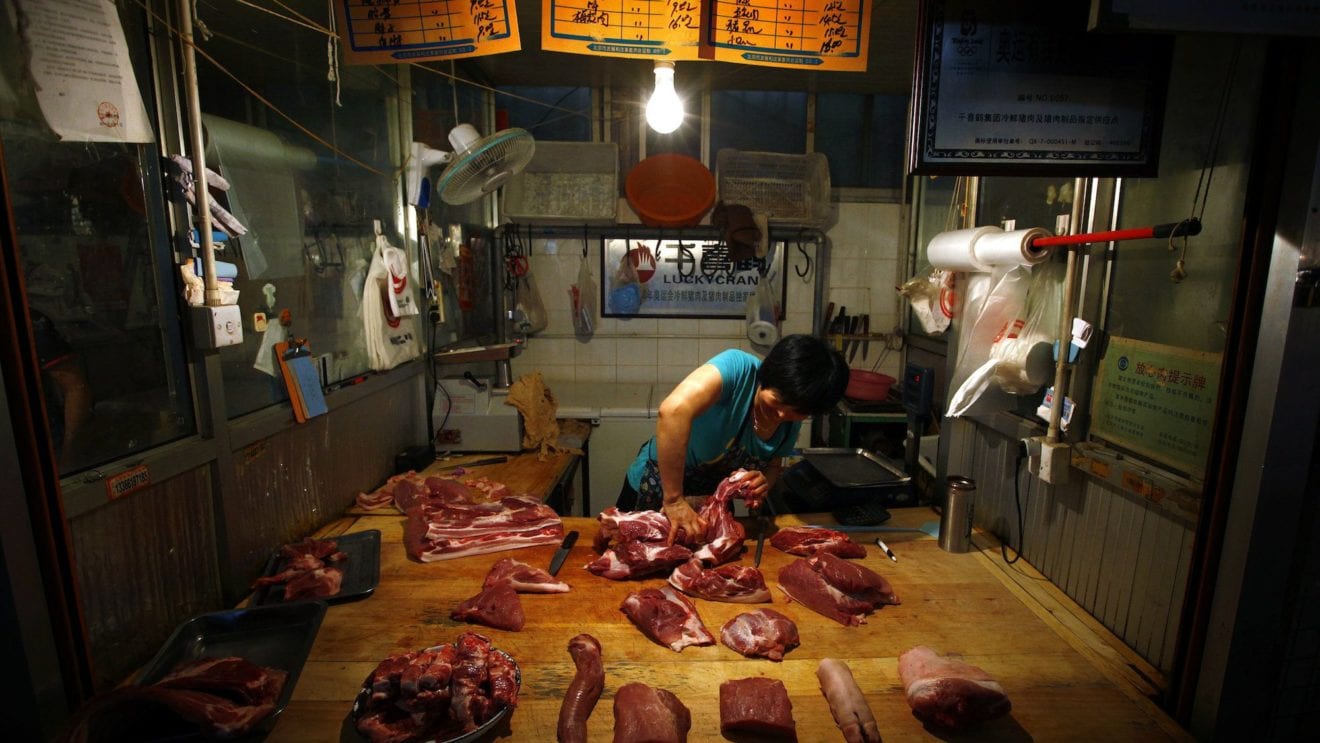
    Vietnam imported nearly US$1.4 billion worth of meat and meat products in the first 10 months of 2024, up 14% from a year earlier.

    Most of the imports came from India, the U.S., Russia, and Germany, customs data shows. They are much cheaper than local products, making them highly attractive to consumers.

    Imported pork costs around VND52,000-62,000 (US$2-2.5) per kilogram on the retail market while domestic varieties are priced at VND80,000-180,000.

    The Dong Nai Livestock Association said the influx of cheap imported meat is putting further pressure on the domestic livestock industry, which has already been struggling with reduced supply due to African swine fever.

    If strict controls are not implemented, low-priced imports could hamper the industry’s growth and pose food safety risks, they warned.

    According to the Department of Animal Health, of the 6,679 batches of imported meats inspected between May and September this year, over 1% contained salmonella and was disposed of.

    The department is working with exporting countries to monitor quality, but experts want the government to tighten quarantine measures to protect public health and prevent disease outbreaks from contaminated food.

    In response to the sharp increase in meat imports, market regulators have also strengthened control measures to get rid of substandard products.

    In August HCMC authorities seized 400 kilograms of imported frozen pork intestines and udder meat that lacked documentation.

  • Vietnam stocks gain little as global markets steady

    Vietnam stocks gain little as global markets steady

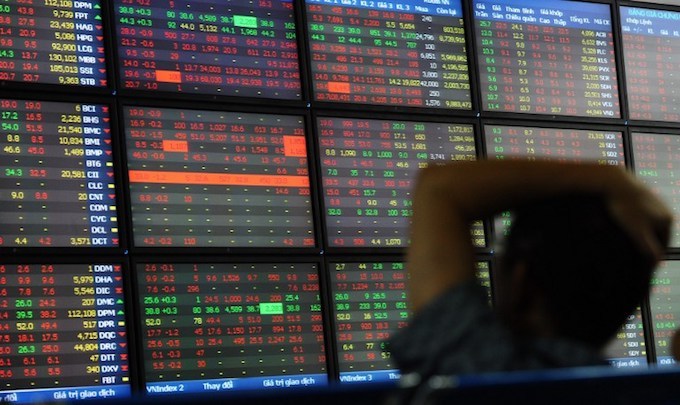
    Vietnam’s benchmark VN-Index rose 0.08% to 1,245.76 points while global markets showed stability as investors waited for the result of the U.S. election. The index closed 1.05 points higher after dropping 10.18 points in the previous session.

    Trading on the Ho Chi Minh Stock Exchange decreased by 31% to VND10.982 trillion.

    The VN-30 basket, comprising the 30 largest capped stocks, saw 11 tickers gained.

    GVR of Vietnam Rubber Group led with a 1.7% rise, followed by SHB of Saigon Hanoi Commercial Bank, up 1%.

    POW of electricity producer Petrovietnam Power Corporation went up 0.9% and HPG of steelmaker Hoa Phat Group closed 0.8% higher.

    Nine blue chips fell. CTG of state-owned lender VietinBank dropped 1.8% and BID of state-owned lender BIDV declined by 0.6%.

    Foreign investors were net sellers to the tune of VND854 billion. They have been net selling non-stop for the last eight weeks.

    They mainly net sold MSN of conglomerate Masan Group and VHM of property giant Vinhomes.

    The HNX-Index for stocks on the Hanoi Stock Exchange, home to mid and small caps, rose 0.18%, while the UPCoM-Index for the Unlisted Public Companies Market went up 0.30%.

    Globally stocks were steady on Tuesday but implied volatility ratcheted up in currency markets in an early indication of the market frenzy to come, as the world awaits the outcome of a knife-edge U.S. election, Reuters reported.

    Europe’s benchmark STOXX index edged down 0.2% while MSCI’s broadest index of Asia-Pacific shares outside Japan inched 0.7% higher, as stock markets held their breath ahead of Wednesday’s open.

    China’s blue chip CSI300 jumped 2.5% and Hong Kong’s Hang Seng rose 1.4%.

  • Vietnam extends trial program for local casino players

    Vietnam extends trial program for local casino players

    A trial program which allows Vietnamese to play at a casino on the southern island of Phu Quoc has been extended until the end of the year, according to a recent government decree.

    Corona Casino began operation in 2019 in a trial program that allows locals to gamble. The trial ended in 2022 but was extended to the beginning of this year and has now been extended one more time.

    Of the country’s nine casinos, Corona remains the only one where Vietnamese can play if they meet income requirements. Other casinos only serve foreigners.

    The government has also approved for Van Don Casino, which has been earmarked in the China-bordering province of Quang Ninh, to begin the same trial program for three years after it receives operation permit.

    Casino development in Vietnam is considered a special business which requires a location approval from the Vietnam Communist Party’s Politburo and a policy approval from the Prime Minister.

    A developer needs to disburse at least 50% of projected capital on a casino project before commercial operation can begin.

    A Vietnamese player needs to be 21 years of age or older with a minimum income of VND10 million (US$395) a month.

    Corona Casino posted VND6.4 trillion in revenue between 2019 and 2023, with a third of it recorded in 2023 alone, according to the Ministry of Finance.

    It posted an accumulated loss of VND3.7 trillion by the end of last year.

  • Chinese online seller Temu not registered in Vietnam as required by law

    Chinese online seller Temu not registered in Vietnam as required by law

    Chinese e-commerce platform Temu is not registered in Vietnam but still allows local consumers to shop on it.

    We have asked the Vietnam e-Commerce and Digital Economy Agency about it and the latter confirmed the news Wednesday.

    The law requires cross-border e-commerce platforms to register in the country if it has a Vietnamese domain, uses Vietnamese as a display language or has over 100,000 transactions a year in Vietnam.

    Temu started allowing users in Vietnam to shop last month, and Vietnamese is among the four languages it offers them.

    The agency is studying the impact of Temu on the local market, especially its discount policy, to prevent sale of counterfeits, Deputy Minister of Industry and Trade Nguyen Sinh Nhat Tan told reporters recently.

    Temu, owned by Chinese e-commerce giant PDD Holdings, launched the U.S. in September 2022 and is now present in 82 countries and territories, according to Singapore-based consultancy Momentum Works.

    It recorded gross merchandise value of US$20 billion in the first half of this year, up from $18 billion of last year’s total, it added.

    Indonesia earlier this month banned the platform to prevent an influx of cheap Chinese goods.

    Other countries have made moves to limit the platform to protect their small and medium-sized businesses.