Tag: Vietnam

  • Fintech startup GIMO completes $17M fund-raising round

    Fintech startup GIMO completes $17M fund-raising round

    Vietnam-based fintech startup GIMO, which seeks to provide flexible salary payments to blue-collar workers, has completed its Series A funding round, raising $17.1 million.

    The final closing, comprised of a mixture of equity and debt financing, is led by venture fund TNB Aura, with participation from the company’s existing backers including Integra Partners, Resolution Ventures, Blauwpark Partners, ThinkZone Ventures, and Y Combinator, according to a press release of the company.

    “We look forward to working closely with the GIMO team in breaking down barriers to financial inclusion for millions of blue-collar workers across Vietnam,” said Charles Wong, founding partner of TNB Aura.

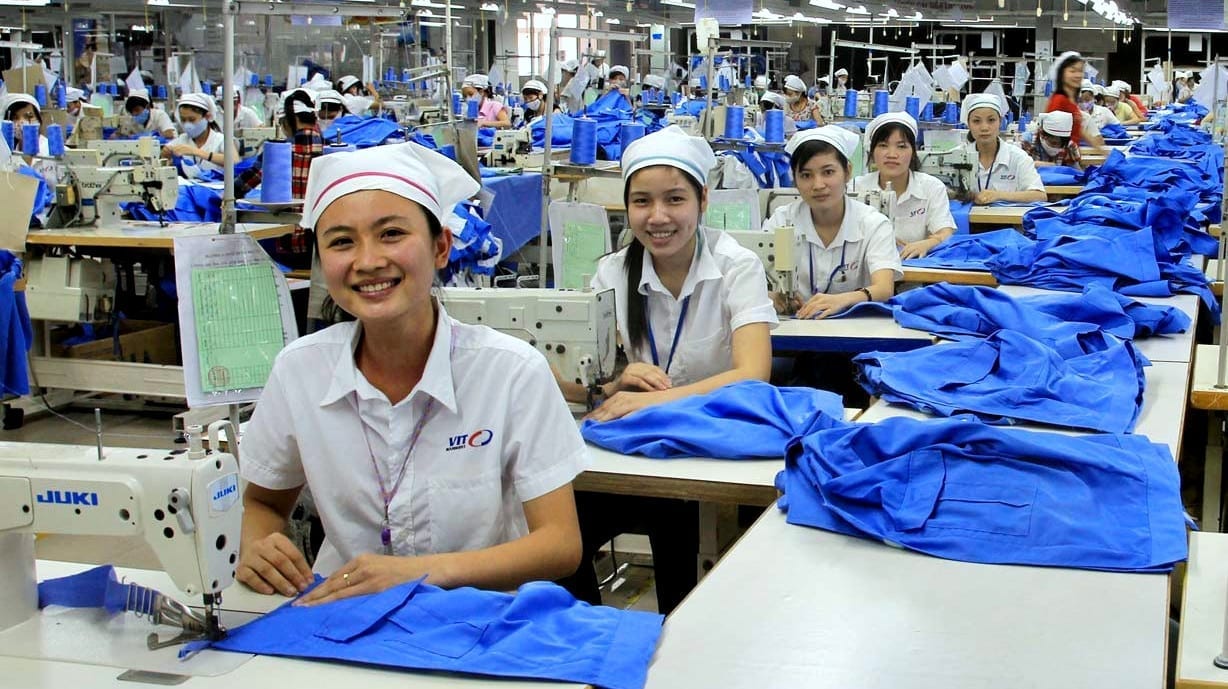
    GIMO offers near-instant payroll to blue-collar workers whenever they need it.

    It allows employees to access their earned salary via a mobile app integrated with the company’s payroll system. Users can also keep track of their workdays and daily earnings.

    GIMO currently serves 500,000 workers from medium to large-sized multinational manufacturing companies across Vietnam.

    Despite the economic slowdown in 2023, the company has demonstrated a solid growth rate of 15% and is on track to reach 2.5 million underbanked employees by 2025.

    The funding will be used to develop its products, increase customer experience, and establish strategic partnerships.

    Research by professional services firm KPMG in 2022 showed that an average user draws their earned pay two to three times per month, almost simulating bi-weekly and weekly pay.

    A flexible pay cycle takes the burden off blue-collar workers’ shoulders by helping them pay for financial emergencies and everyday bills.

  • Catfish export decline slows down

    Catfish export decline slows down

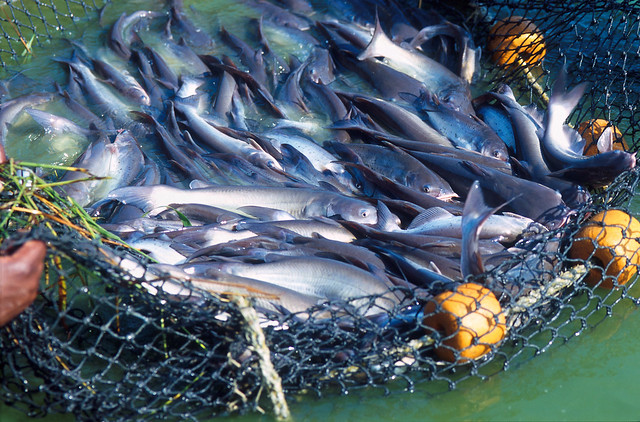
    According to the Vietnam Association of Seafood Exporters and Producers, the decline in pangasius fish exports has started to reverse.

    Exports to mainland China and Hong were worth US$48 million in June, down 15% from the same period last year. They had declined by 66% and 30% in April and May.

    Similarly exports to the U.S. last month were down by only 51% to $23 million compared to 66% and 53% in April and May.

    In the first half of the year, overall exports were 38% lower at $885 million due to weak demand in major export markets such as China, the U.S. and Europe due to high inflation.

    The prospects of higher demand for pangasius in the U.S. and China in the second half are still uncertain due to the slow economic recovery and large inventories in those markets, SSI Securities Corporation said.

    But Vietnamese exporters will start to see profits improve thanks to lower input and transport costs.

  • Vietnamese export containers worth $517,000 go missing at Dubai port

    Vietnamese export containers worth $517,000 go missing at Dubai port

    Four Vietnamese companies could lose five containers of spices and cashew worth US$517,000 they shipped to Dubai under what seem mysterious circumstances.

    According to the Vietnam Pepper Association, they had sold pepper, cashew, cinnamon, and anise to Bab Al Rehab Foodstuff Trading Llc.

    But four of the containers have been claimed by unidentified parties at Jebel Ali Dubai Port without paying the Vietnamese companies.

    The export was done under the documents against payment method, which requires the buyer to show proof of payment before collecting the goods.

    The documents had been sent by banks in Vietnam to UAE’s Ajman Bank, which confirmed receipt.

    But apparently it no longer has them, and has yet to explain why, the exporters said.

    They are concerned the remaining container, set to land on July 26, will also be misappropriated.

    They have repeatedly asked the buyer to make payments, but the company has yet to respond.

    The Vietnam Pepper Association, representing the four companies, has reported to Vietnamese authorities and the UAE embassy in Vietnam.

    The Vietnam Trade Office is working with Ajman Bank, Jebel Ali Dubai port and the Dubai police to investigate possible fraud.

  • HCMC hotel business gloomy as foreign tourists keep away

    HCMC hotel business gloomy as foreign tourists keep away

    Hotels in Ho Chi Minh City are suffering from low occupancy rates due to a sharp drop in international visitor arrivals and domestic tourists’ preference for traveling to beaches.

    In May, amid a wave of hotel closures and conversions into office buildings, the Norfolk Hotel in District 1 with over 100 rooms stopped operating.

    In mid-June many hotels in tourist areas such as Bui Vien Street, Bui Thi Xuan Street and Le Thanh Ton – Ly Tu Trong in District 1 temporarily closed due to lack of customers.

    The latest accommodation market report by real estate consultancy Savills Vietnam said hotel occupancy rates in the second quarter were down 8 percentage points quarter-on-quarter.

    All segments suffered as foreign visitor arrivals to the city fell by 13% quarter-on-quarter. The rate of overnight guests in the city was only 19%, the lowest in the country.

    Hotels are currently relying on business guests since the city is a transit point between various provinces and cities.

    Troy Griffiths, deputy general director of Savills, said recovery in international tourism has been slower in Vietnam than other countries in the region.

    He pointed out that the number of visitors from China, the second biggest market, was 78% down in the first half from 2019, the year before Covid.

    Trang Minh Ha, chairman of investment firm North Stars Asia, said the third quarter, when it is the rainy season, is the low tourist season in HCMC, and so occupancy and room rates would continue to be low.

    The number of hotels that close permanently or temporarily could rise sharply, he said.

    The economic difficulties post-pandemic, boring and monotonous tourism products and Vietnam’s difficult visa policies have kept tourists away, he said.

    The city needs to strengthen programs on attracting visitors to compete with countries such as Thailand, Singapore and Indonesia, he said.

    “HCMC’s hotel industry is waiting for an optimistic signal from the economy for recovery. However, the market may have to wait until the end of 2024 for a solid positive signal.”

  • Online platforms pay $166M in tax in Vietnam

    Online platforms pay $166M in tax in Vietnam

    Vietnam collected VND3.94 trillion (US$166.5 million) in taxes from 57 foreign online platforms including Google, Apple, Facebook, Netflix, and TikTok in the first half of this year.

    Of the sum, VND3.4 trillion was paid directly via the portal of the General Department of Taxation (GDT), which was established last March to make it easier for cross-border giants to pay their taxes in Vietnam.

    Their representatives in Vietnam paid the remaining sum.

    The GDT also said that tax revenue from e-commerce platforms in the first five months of this year reached VND246 billion, equal to 34% of 2022’s revenue.

    It said the tax revenue collected from e-commerce providers in 2022 and 2021 was VND716 billion and VND261 billion, respectively.

    The tax authority has recorded data from over 330 e-commerce platforms through the e-commerce portal operating since the end of last year.

    Particularly in the first quarter of this year, 64,300 individuals and 22,840 organizations traded on those platforms with 9 billion transactions registering a total value of VND11.5 trillion.

    The GDT said it is working on setting up rules on exploiting information from e-commerce platforms’ databases to manage taxes more effectively.

    This agency is checking and comparing information of several taxpayers who are e-commerce platform owners, payment intermediaries, partners of foreign companies in Vietnam, and foreign suppliers that do not have a fixed business establishment in Vietnam.

    So far, it has inspected 15 enterprises and handled, fined, or collected tax arrears of VND129 billion, reducing tax loss by VND986 billion and reducing VAT deduction by VND114 billion.

  • Luxury car dealer allegedly sells customer’s $1M Brabus 800

    Luxury car dealer allegedly sells customer’s $1M Brabus 800

    Without his knowledge, luxury car dealer Phan Cong Khanh has been accused of selling a customer’s luxury car for VND24.5 billion ($1.04 million).

    A person named Manh from the southern province of Kien Giang has complained to the police that he had lent his Brabus 800 to Khanh in early June to put on display at the launch of his dealership in Ho Chi Minh City.

    But a few weeks later he found out that Khanh had sold the car to a buyer in HCMC for VND24.5 billion.

    Brabus is a German high-performance automotive aftermarket tuning company.

    The Brabus 800 is the upgraded version of the Mercedes AMG G63, and costs around VND30 billion in Vietnam.

    Some vendors have also complained that Khanh owes them money for services they provided for the launch of K Supper, his luxury car dealership in District 1.

    They include VND100 million for bouquets, VND25 million for renting a crane and some money for construction.

    Mohamach Da Pha’s employee has also been accused of mortgaging a person’s car without consent.

    The police said that in April Pha borrowed a VND1.8-billion BMW from a man named Son and offered to sell it.

    But Son found out recently he had mortgaged his car for VND1 billion.

    The HCMC police are investigating.

    Khanh, a native of the Mekong Delta province of Ben Tre, has the reputation of selling the most luxurious cars in Vietnam.

    In June, he entered the car dealership business in 2017 and opened his K Supper showroom in HCMC’s District 1.

    He regularly posts photos of himself standing next to Rolls-Royce, McLaren, Lamborghini, Ferrari, and Porsche cars on social media, and writes about how young people can start a business and make money.

  • India’s rice export ban gives Vietnam golden y

    India’s rice export ban gives Vietnam golden y

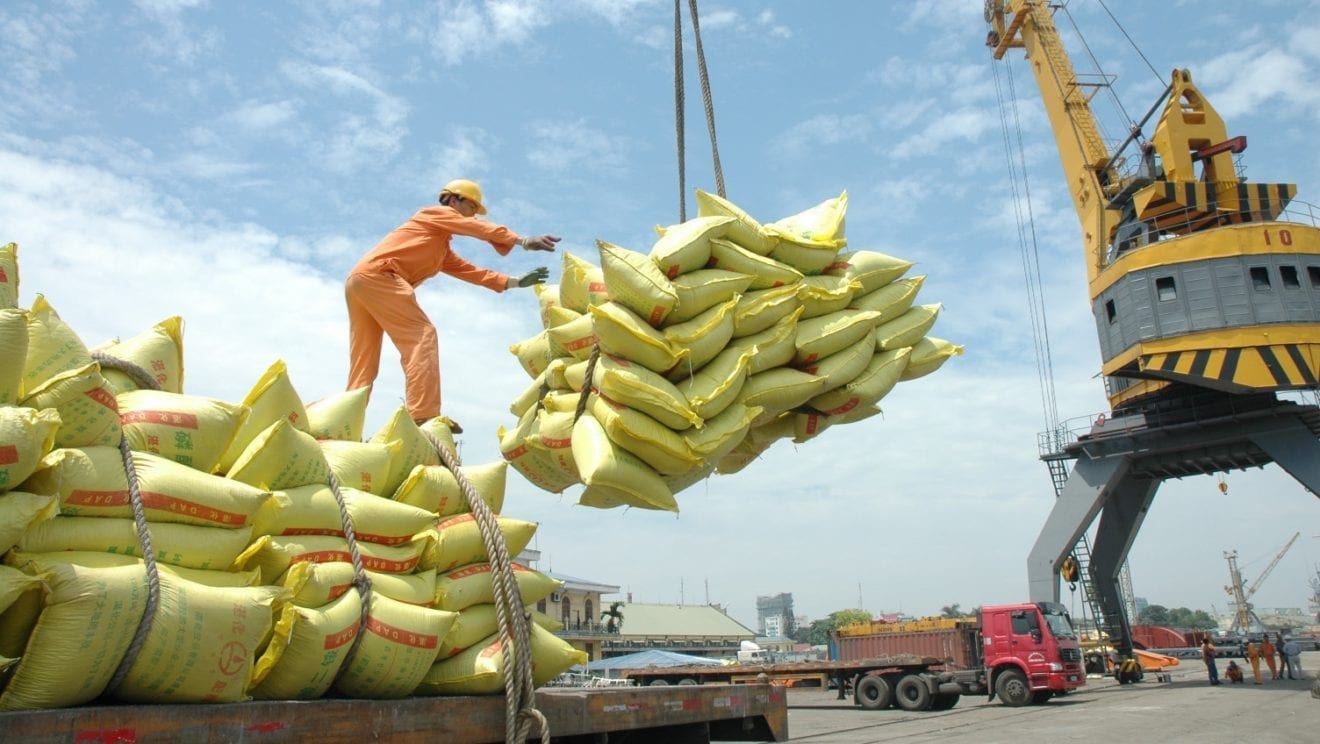
    Vietnam’s rice exporters could raise prices and sign long-term contracts with buyers now that India, the world’s largest supplier, has ordered an export halt.

    Indian government on July 20 announced a ban on non-basmati white rice as retail rice prices climbed 3% in a month after heavy monsoon rains caused significant damage to crops.

    India accounts for more than 40% of world rice exports, and non-basmati white and broken rice accounted for around 10 million tons of a total of 22 million tons of Indian rice exports last year, according to the U.S. Department of Agriculture. With the ban taking effect, global insiders have raised concerns about food price rises.

    Professor Vo Tong Xuan, an economist and expert in rice farming, said given the situation, the second half of the year will offer a golden opportunity for Vietnamese rice exports.

    In the first half of the year, the average export price of Vietnamese rice increased by 11% to US$539 a ton.

    After this ban, Xuan thinks the price could be as high as $600 per ton on average and high-quality varieties that can be sold at $700 a ton.

    The professor said India’s sudden export ban will “create big impacts” on importing countries because they cannot find replacing rice shipments from countries with small supply.

    Therefore, Vietnam and Thailand will be their next destinations. He forecast that Vietnam’s export turnover in the second half of this year could increase dramatically.

    The director of a rice export company in Can Tho said that in July, the company’s rice export orders increased by 20% from the previous month and by 30% compared to the same period last year.

    “Two days after the news that India banned rice exports, many buyers have asked us to sign them long-term contracts to ensure supply, but we’re still considering the offer,” said the director.

    He added that in the first half of this year, the company’s rice export price increased by 22% over the same period last year.

    After the ban, he forecasted that export prices could increase by 30-40% compared to last year.

    The Rice Exporters Association says that rice is a staple for more than 3 billion people, and nearly 90% of the water-intensive crop is produced in Asia, where the El Nino weather pattern usually brings lower rainfall. Global prices are already hovering at their highest level in 11 years.

    According to official data, India’s rice shipments reached a record 22.2 million tons in 2022, more than the combined shipments of the world’s next four biggest exporters of the grain – Thailand, Vietnam, Pakistan and the U.S. India exports rice to more than 140 countries.

    Nguyen Duy Thuan, CEO of Loc Troi Group, agrees that India’s ban on rice exports is an opportunity for rice-exporting countries and that Vietnam can take advantage of this opportunity to act as a sustainable rice supply source for the international food market.

    However, he noted that Vietnamese rice still has many challenges to face in terms of quality and export scale.

    “In particular, farmers are yet to have access to high-quality varieties and therefore the rice yield has not reached the optimal level,” Thuan said.

    Meanwhile, their farming techniques are still limited, resulting in many fertilizers and pesticides, affecting the rice’s quality and the environment.

    In addition, the large-scale management capacity of Vietnam’s rice industry is still limited, Thuan added.

    Thuan suggested that Vietnamese rice needs to improve quality and traceability in the supply chain to gain trust from consumers and regulators.

    Professor Xuan said the government needs to take specific actions to monitor planting areas and create favorable legal corridors to support businesses.

    “At the moment, in order to secure a large rice output for export, businesses need to associate long-term cooperation with traders and farmers, and ensure benefits for them,” Xuan said.

    With import partners, businesses should ask them to sign long-term contracts to ensure stable export activities and also help farmers feel more secure in production.

    Forecasting for this year’s supply, Xuan said that Vietnam has quite favorable weather and the yield could be high. He said that Vietnam can produce nine million tons of rice this year.

    Data from the Ministry of Agriculture and Rural Development shows that rice exports in the first six months reached 4.27 million tons in volume and $2.3 billion in value, up 22.2% and 34.7%, respectively against the same period last year.

    The U.S. Department of Agriculture has raised its forecast for Vietnam’s rice exports 2023 to 7.2 million tons, up from 7.05 million tons in 2022. Vietnam will rank third in the world in rice exports this year, after India and Thailand.

  • Aeon Vietnam secures $41 million loan to fuel expansion

    Aeon Vietnam secures $41 million loan to fuel expansion

    DHL Supply Chain has announced a landmark investment of €500 million into Latin America over the next years (until 2028) as part of a strategy to strengthen its capabilities in high-demand sectors like healthcare, automotive, technology, retail and e-commerce.

    Projects in the pipeline include decarbonizing the domestic fleet through greener alternatives; building, developing and retrofitting real estate assets and warehouses in the market; as well as significant investments into new technologies, robotics and automation solutions.

    DHL Supply Chain is confident in its plans for the region, citing its proximity to large consumer markets in North America as well as booming sales markets which make it attractive for industries to invest and therewith request additional logistics support.

    The company has been growing its operations in Latin America with more than 240 locations. In Mexico last year, it acquired NTA, a company focused on logistics services for the pharmaceutical industry.

    In Brazil, it recently announced the expansion and modernization of its distribution centre located in Goiás, while expanding its operations and presence in Extrema Minas Gerais for various clients in pharmaceuticals and retail fashion. It also opened a new distribution centre in Pudahuel, Chile, and expanded its presence in Mexico with new warehouses in Tijuana and Monterrey, including a new campus in the State of Mexico, which will serve the e-commerce, retail, fashion, consumer, medical devices, aerospace, electronics, and automotive sectors.

    Following the announcement of the investment, DHL Supply Chain Mexico inaugurated a new center of excellence for electric vehicles to provide synergy to the automotive industry in the region.

  • Fish exports expected to recover from late Q3

    Fish exports expected to recover from late Q3

    The Ministry of Agriculture and Rural Development (MARD) forecast that aquatic product exports will bounce back at the end of the third quarter and reach the yearly revenue target of $10 billion.

    It reported that in the first six months of this year, the export value of aquatic products hit nearly $4.2 billion, down over 27% year-on-year.

    To achieve the yearly target, many businesses have diversified products, focused on intensive processing, and invested in value chains.

    Meanwhile, the MARD and localities will further provide fishermen with market information and guide them to implement solutions to deal with the European Commission (EC)’s “yellow card” warning against Vietnamese seafood, and step up inspections and handling of cases of illegal, unreported and unregulated (IUU) fishing, towards a sustainable fishery sector.

    Competent agencies will also work to remove obstacles relating to the Chinese and US markets, diversify export markets, and coordinate with banks to support businesses.

  • Vietnam eyes sustainable development for coconut industry

    Vietnam eyes sustainable development for coconut industry

    The coconut industry is playing a very important role in the socio-economic development of Vietnam and should be considered an indispensable part of the country’s development strategies, said officials.

    Vietnam has more than 188,000 hectares of coconut, accounting for 1.67% of that of the world, according to the Institute of Agricultural Planning and Economics.

    Coconut trees are a source of income for about 389,530 farmer households and the export value of coconut and coconut products has reached over $900 million. Vietnam is in fourth place in the world in terms of coconut value.

    Currently, there are about 854 enterprises that specialize in producing and processing coconut products, along with over 90 companies exporting coconut products. They create jobs for more than 15,000 employees.

    Huynh Quang Duc, Deputy Director of the Department of Agriculture and Rural Development of Ben Tre province, which has the largest coconut area in the country, said that coconut trees play an important role in the socio-economic life of the province. More than 70% of its population relies on coconut growing for their livelihood and the province has more than 163,000 households engaged in coconut farming.

    The production value of coconut products accounts for 20.69% of the province’s total industrial production value; making up 42.51% of its total export turnover and creating jobs for tens of thousands of workers.

    Ben Tre now has 78,000ha under coconut cultivation. Its coconut products have present in nearly 100 countries and territories and access choosy markets such as Europe, U.S. and the Middle East.

    However, there remain shortcomings in the industry, according to Nguyen Quang Dung, Director of the Institute of Agricultural Planning and Projection (NIAPP). They include a loose linkage in the value chain and low processing capacity, he went on.

  • Middle-aged workers struggle finding new jobs after layoffs

    Middle-aged workers struggle finding new jobs after layoffs

    Thanh Tung thought his job interview went well and his unemployment would finally end, but he was eventually turned down for the position because he was “too old.”

    The 37-year-old game artist in Go Vap District, HCMC was laid off at the beginning of the year, only a few months after he started working for a game design company.

    He was disappointed, but he didn’t feel rushed and pressured because he still had savings and income from his freelancing jobs, which he thought would be enough to cover his living expenses until he found a new job.

    But finding work was not as easy as he thought.

    After three months of job searching, he’d been able to land only a few screening calls and no potential employer had wanted to make an interview appointment with him. Compared to that, around 60% of the companies he applied to last year scheduled interviews with him.

    When he eventually got an interview with a game company, he was turned down because of his age. The chief marketing officer of the company, who was 27, said people of Tung’s age might “be stubborn and find it hard to adapt.”

    He disagreed with this comment, explaining that he was always willing to improve himself, and he could prove that during a probationary period, to which the interviewer said: “You seem to disagree with a lot of things we have discussed throughout our interview. I’m afraid that if we work together, you will not follow my orders.”

    Tung gave up. He now believed in age discrimination at the workplace. And future experience only confirmed things further.

    “Then I got a phone call from a friend of mine who was working as a headhunter,” he says. “That friend saw my profile and confirmed that my age was preventing me from getting called for interviews.”

    Many middle-aged workers are struggling to find jobs. Tra My, a former construction engineer, said she felt hopeless as she had been unemployed for over six months and had to attend a job fair as one of her many efforts to find a career opportunity. She also said she was learning a foreign language and studying software at age 45, hoping that doing so would increase her chances of finding a job.

    Van Quang, 53, was working as a delivery man for a third the salary of his previous job as a warehouse supervisor at a Hanoi-based supermarket. He chose the path after repeated failed attempts looking for vacancies similar to his former positions.

    Thanh Hien, 45, said that all of the job announcements she came across were looking for applicants under 35 only.

    Hien had never thought she would have to search for a job, as she had always worked at a state-owned company. But in March, her employer’s business problems forced Hien to get laid off.

    Hien tried to bargain by offering to cut her salary down to VND5.6 million (around $237), a third of what it had been.

    “But the company insisted on cutting down on middle-aged workers,” she recalls. “They asked me to sign another contract, in which my position was changed from an accountant to housekeeping staff.”

    Hien told the company she would consider the offer. She hadn’t even given her final decision yet when the company informed her they would lower her salary from VND5.6 million to VND4.9 million. She had no other choice than to quit.

    Age is one of the strongest barriers for those working in Vietnam. Among the job announcements by the 36 companies at the fair, 41% of them targeted the 18-25 age group and 35% targeted the 26-35 age group, compared to 24% targeting the 36 and over age group.

    There have been ongoing factory workers layoff in southern Vietnam, starting late-2022. According to data, the majority of the workers laid off were middle-aged females. For example, over 50% of those laid off at the HCMC-based company Pouyuen were over 40 and around 60% of them had worked at the company for at least 10 years.

    Responding to a survey conducted late-June, as many as 90% of the respondents answered “Yes” to the question: “Do you think workers aged between 35 and 40 in Vietnam struggle to get a job?”

    Pham Minh Huan, former deputy minister of Labor, Invalids and Social Affairs, considers age discrimination at workplaces a downside of the market-oriented economy, in which businesses have to optimize their human resources to maximize their productivity and minimize their costs, which in turn makes aged low-skilled workers the first target to be laid off.

    “Aged workers tend to have lower productivity while requiring higher salaries,” Huan explains. “Businesses that revolve around financial reward are likely to lay this group of workers off, even if they have contributed to the company for a long time.”

    Nguyen Phuong Mai, former CEO of Navigos Search, a recruiting service in Vietnam, says employing middle-aged workers has both strengths and challenges. On the one hand, employers don’t have to spend too much on training costs and could be able to make use of these workers’ experience. On the other hand, middle-aged employees may be less creative, less flexible, less familiar with technologies, and less likely to blend in with co-workers of younger generations.

    Mai says a story which she will never forget: “I once worked with an outstanding applicant who met all of the requirements that the company was looking for.”

    “But he still got turned down, as throughout his whole career up until that moment, he had worked for one company only, which was considered a sign that it may be hard for him to adjust and adapt.”

    Experts suggest that workers have to constantly improve their skills and be ready for every possible scenario regardless of their age, in order to be able to grab opportunities that come to them.

    Huan also says the government should create a varied labor market, so that middle-aged people could change their jobs more easily if they are laid off.

    He suggests businesses appreciate workers that have dedicated their youths to the companies and treat them with respect, including avoiding sudden layoffs without any kind of compensation.

    “Middle-aged people may find it challenging to start over, but that doesn’t mean it’s impossible,” he says.

    Tung’s recruiter friend pointed out things he needed to change in his Curriculum Vitae, including removing his year of birth and irrelevant degrees while emphasizing more his practical skills.

    He was also suggested to reply “I want to be an employee till I retire” when interviewers asked about his career goal, instead of showing his determination to achieve a leading position.

    Tung indeed got more calls for interviews after adapting his application documents based on his friend’s suggestions. His unemployment period ended in May. He now works for a foreign company that he says “values skills over age.”

    Hien is still looking for a new job. She says if things do not work out, she will consider lowering her requirements regarding salaries and benefits.
  • Singapore company to buy out Vietnam’s FV Hospital

    Singapore company to buy out Vietnam’s FV Hospital

    Singapore-based Thomson Medical Group has agreed to buy FV Hospital in Ho Chi Minh City for US$381.4 million in what will be Vietnam’s biggest ever healthcare industry deal.

    The company, which has operations in Singapore and Malaysia, said in a press release Wednesday that it would acquire 100% of Far East Medical Vietnam Ltd, which owns the hospital.

    “The acquisition of FV Hospital deepens our commitment to the Southeast Asian healthcare sector, expanding our group’s presence across three of the region’s most important geographies in healthcare,” Kiat Lim, TMG’s executive vice chairman, said.

    FV Hospital provides the group with a strategic foothold in Vietnam and a gateway to future investments in the fast-growing market, he added.

    FV was founded by Dr Jean-Marcel Guillon in 2003 with a group of French physicians.

    Located in District 7, it has evolved into a full-service, one-stop provider of healthcare, including for people from Cambodia.

    It offers over 30 specialties and has over 1,600 staff, who include more than 200 Vietnamese and expatriate doctors.

    It also operates the FV Saigon Clinic in District 1.

    TMG said that the accelerating healthcare demand in Vietnam is fueled by a rising middle class, an aging population and growing expatriate numbers.

    It also sees Vietnam as a potential medical tourism destination, thanks to solid demand from neighboring countries like Cambodia, Laos and Myanmar.

    Thomson Medical Group was established in 1979 and is one of the largest private providers of healthcare services for women and children in Singapore.

  • Vietnam Electricity owes Petrovietnam $971M

    Vietnam Electricity owes Petrovietnam $971M

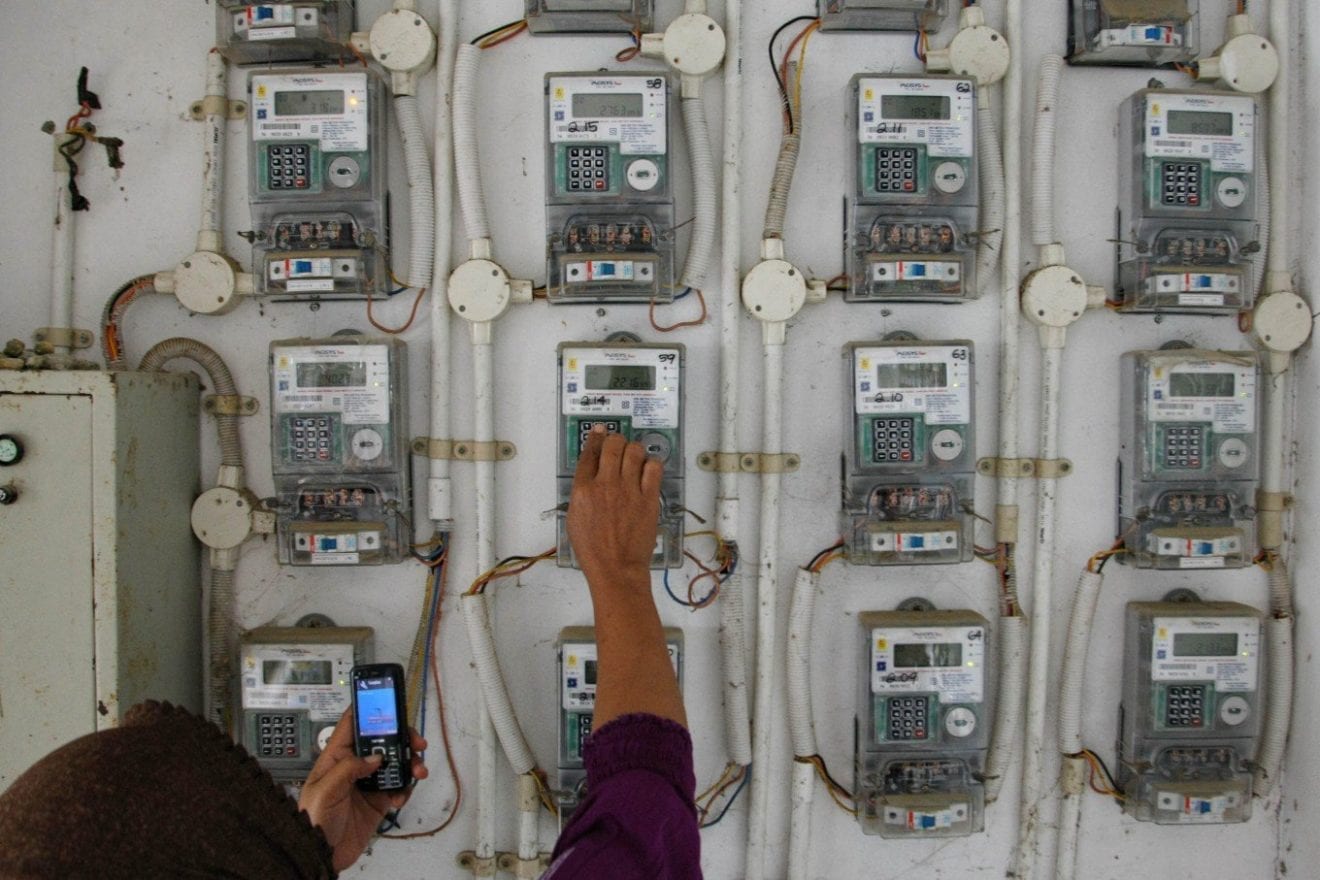
    Oil and gas giant Petrovietnam has liquidity issues because it has not been able to collect payables of VND23 trillion ($971 million) from state-owned utility Vietnam Electricity.

    Over VND14 trillion of the amount is past due, and this is having a major impact on its own business, the oil company said in its first-half financial report.

    EVN has financial problems after making a loss of VND19.5 trillion last year.

    Petrovietnam also said that the oil and gas industry has been hit by plunging prices amid economic challenges.

    In the first six months Petrovietnam produced nearly 12.7 billion kilowatt-hours of electricity, 4.5% higher than the target.

    Its crude oil output was 5.3 million tons of which it sold 83% domestically.

  • Intel to pour more investment in Vietnam

    Intel to pour more investment in Vietnam

    Intel Corporation will continue to invest in Vietnam, Kim Huat Ooi, Vice President in Manufacturing, Supply Chain and Operations, and General Manager of Intel Products Vietnam told Tuoi Tre (Youth) Newspaper.

    The year 2022 has affirmed the importance of Vietnam to the U.S. semiconductor giant and vice versa, he said, adding that these performance and efficiency results underpin the need to inject more capital into the Southeast Asian country.

    By the end of 2021, the Intel Corporation had injected a total of $1.5 billion in Vietnam and it wants to keep investing and that is certainly what Intel will do, he said.

    Intel Products Vietnam (IPV) is now the largest of the four factories in terms of assembly and testing, he noted.

    Regarding the possibility that IPV will be upgraded to participate in more stages of the chip production process, he said that their current plan is to focus on packaging and testing.

    To attract more investors, it is necessary for the Vietnamese government to review the current business support programmes, especially the preferential tax rates, he said, elaborating that other countries such as the Philippines, Malaysia and Indonesia are making similar moves.

    These countries and Vietnam have focused on using corporate income tax programmes to support and attract investors. He cited the U.S. and European chip laws that have been approved as typical examples.

    The modernisation of incentive programmes to support businesses will be an essential action that the Government of Vietnam needs to adopt to assist businesses, along with the advantages of labour costs and political stability.

    According to Kim, the number of foreign companies in the Southeast Asian country will increase in the future. He also highlighted the necessity of solving such problems as government incentives and streamlining administrative procedures.

    The current model that businesses are moving towards must be resilient and geographically balanced, he added.

  • Vietnam Airlines to auction three narrow-body aircraft

    Vietnam Airlines to auction three narrow-body aircraft

    Vietnam Airlines is set to auction three narrow-body aircraft Airbus A321CEO at a starting price of $5 million apiece in this quarter.

    The three jets were made in 2007 and are currently at Noi Bai International Airport and Tan Son Nhat International Airport.

    In 2020 the state-owned carrier sold five Airbus A321 aircraft for $7.4 million apiece.

    Selling jets was part of the airline’s plan to restructure its fleet and increase post-pandemic income.

    The airline now has a fleet of 94 jets, including 65 A321 jets with an average age of just over 9 years, according to aircraft data provider Planespotters.

    Vietnam Airlines served over 10 million passengers in the first half of this year, up 23.6% year-on-year.

    Its revenue rose by nearly half to over $1.91 billion, almost the same as in 2019.