Tag: Vietnam

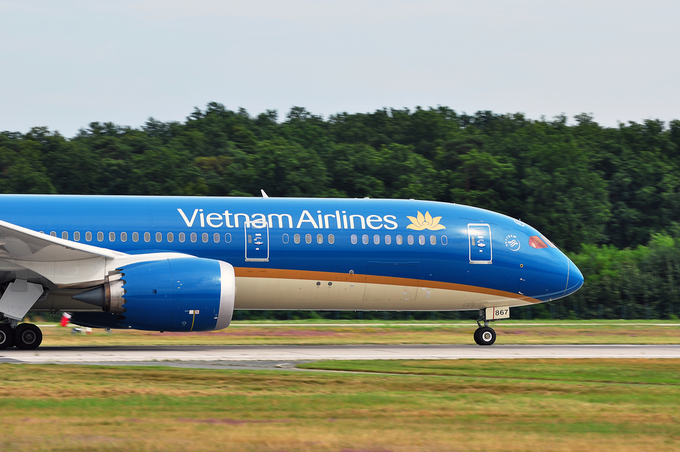
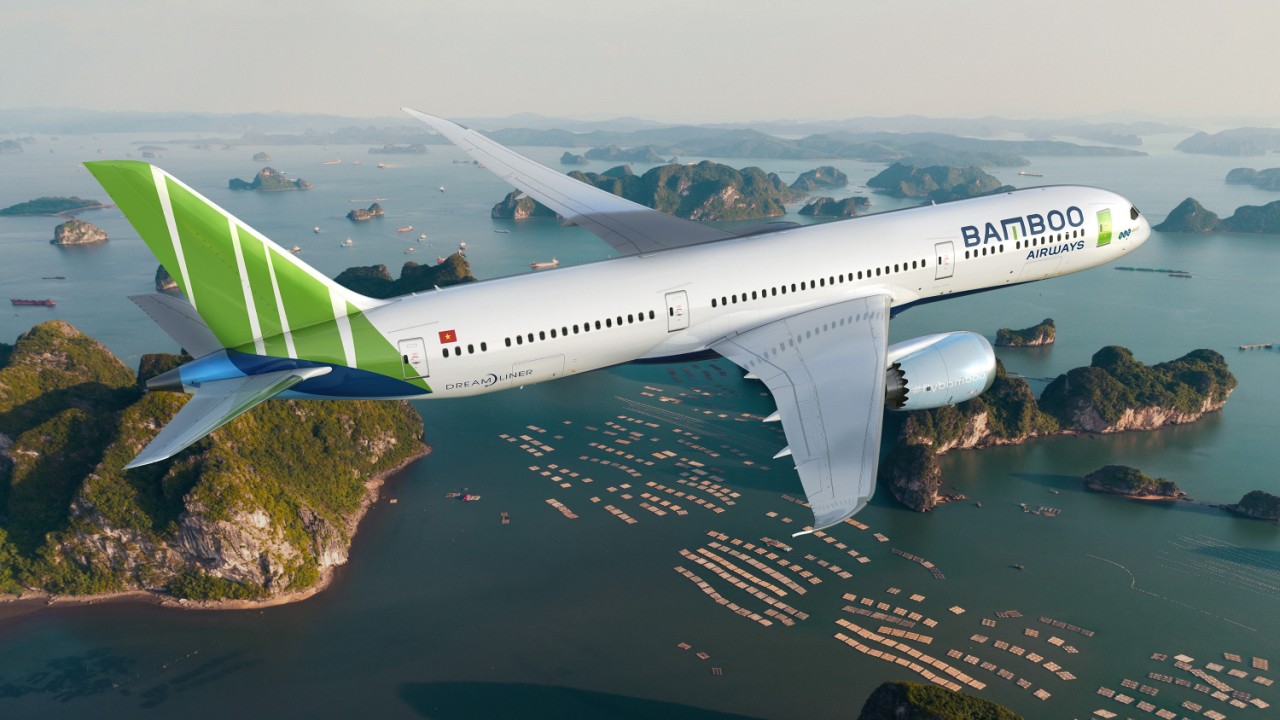
  • Bamboo Airways’ 9-month loss exceeds last year’s total

    Bamboo Airways’ 9-month loss exceeds last year’s total

    Bamboo Airways posted a loss of VND3.54 trillion ($142.38 million) in the first nine months, exceeding the total loss it recorded last year by 54%.

    Its loss has been increasing this year, from VND691 billion in the first quarter to VND1.39 trillion in the second and almost VND1.45 trillion in the third, according to calculations from a financial report of FLC, which owns a 21.7% stake in the airline.

    Bamboo Airways went through major restructuring in the second and third quarter after its chairman was arrested in March for alleged stock manipulation.

    Nguyen Ngoc Trong, who has been with the airline since its establishment in 2018, became its chairman in August, while Nguyen Manh Quan, who joined the airline in 2020, took over the CEO chair from Dang Tat Thang.

    The airline in October moved its Ho Chi Minh City office from FLC’s building in District 3 to a Novaland building in District 1 after the property developer signed a strategic partnership with the airline.

    Bamboo Airways said in July that it planned to triple its fleet size to 100 by 2028. The airline at the time operated 29 jets, comprising 21 narrowbody aircraft, three Boeing B787s and five Embraer 190 regional aircraft, according to aviation data website Planespotters.

  • First made-in-Vietnam flying car to hit market in 2024

    First made-in-Vietnam flying car to hit market in 2024

    Hanoi company Airlios has demonstrated a flying electric car which it plans to sell commercially in 2024.

    The single seater, also called Airlios, could fly vertically to reach 10 meters within 10 seconds and then fly at speeds of 100 kilometers per hour, the company said at a recent exhibition.

    It can rise to as high as 120 meters, the same height as a 44-story building. It has eight batteries that are fully charged in seven to nine minutes at 30-kilowatt charging stations.

    It is mostly made of aluminum alloy and carbon fiber, and can fly both automatically and manually.

    A prototype has successfully flown 33 kilometers in 20 minutes at a height of below 120 meters. It has been tested for 100 hours and 1,000 kilometers.

    “The project is now 70-80% complete,” Mai Thien Vu, the company’s chief technology officer, told VnExpress.

    “We plan to launch the maiden flight of the commercial version of Airlios by the end of 2023.”

    Managers and engineers at Airlios began thinking about making flying cars five years ago, he added.

    If it is launched as scheduled, Airlios could become the first flying car in Southeast Asia.

    The standard version will cost around $81,000 compared to, for instance, $92,000 for Swedish brand Jetson.

    Airlios will also offer other models costing up to $99,000.

    Many startups in a number of countries have started working on flying cars though there have been few commercial launches yet.

    Singapore, Malaysia and Indonesia plan to launch flying taxi services in future.

  • Bonchon stays in the Korean fried chicken game in Vietnam

    Bonchon stays in the Korean fried chicken game in Vietnam

    Bonchon, the global restaurant concept known for its Korean fried chicken, celebrates a year with market expansion, sales growth, and a new fast-casual model.

    Despite continued industry challenges due to the pandemic, Bonchon retained its strong year-to-date sales performance. In October, the company registered a 76% same-store sales increase compared to 2021. Bonchon has 15% same-store sales as of Dec. 25, 2021.

    “Sales growth has steadily increased due to strategic enhancements in operations, supply chain, and technological innovation. These strategic shifts have not only allowed Bonchon to build our revenue even further, but also to continue expanding our footprint with new openings across Vietnam,” said Bonchon Vietnam CEO, Mark Kim.

    Innovation of the store design and fine-tuning of the operating system also greatly contributed to Bonchon Vietnam’s performance.

    The store’s innovation in terms of design boasts advantages in brand identity and introduces the image of our Bonchon stores to a younger, trendier customer base. In addition, simplified adjustment and focus on important factors in the operating system have enhanced service quality and customer experience across Bonchon stores nationwide.

    Moreover, with the ability to enter the zeitgeist and respond quickly to market sensitivities, Bonchon Vietnam stayed in the game of the door-to-door delivery era by working closely with home delivery units. This particular delivery service adjustment brought about a significant source of revenue, accounting for 40% of Bonchon Vietnam’s monthly revenue in 2022.

    Additional franchise support has been driven by the integration of newly acquired experienced team members and field business consultants who guide best practices, customer service, food quality, and menu strategy.

    “In the next five years, we will be implementing ongoing strategic shifts in operations, the supply chain, and technological innovation to remain on the current growth trajectory,” Kim added.

    Bonchon is known for its signature made-to-order Korean fried chicken that is hand battered and double-fried to achieve its signature, crave-worthy crunch, and proprietary sauces crafted in the Bonchon global kitchen in Busan. Every piece of chicken is hand brushed to make each bite perfectly flavorful. Bonchon also offers an authentic Korean fusion menu with Bibimbap, Japchae, Bulgogi, and more.

    Born in Busan, South Korea in 2002, Bonchon’s founder, Jinduk Seo, dreamed of sharing his favorite flavors with the world. Just four short years later, in 2006, Bonchon went on to establish itself in the U.S. The global franchise has been spreading its reach around the world ever since with a notable presence spanning nine countries with more than 400 locations. With no indication of slowing down, Bonchon has recently confirmed new development agreements in France and Australia.

    In 2019, the brand continued to expand to Vietnam. In April 2022, Bonchon celebrated the opening of its ninth store and is preparing to welcome its 10th and 11th this November.

  • Vingroup revenues down 5%

    Vingroup revenues down 5%

    Vingroup, Vietnam’s biggest private conglomerate, made total consolidated net revenues of VND88.191 trillion ($3.56 billion) in the first nine months, posting a year-on-year decline of nearly 5%.

    Vingroup gained after-tax profits of VND1.571 trillion, according to its latest consolidated financial statements.

    By the end of September, the firm’s total assets stood at VND555.571 trillion, up 30% against late last year, mainly due to successful transactions among new real estate projects.

    Vingroup said its property segment will continue to grow in the last quarter and next year, and its vehicle sales will rise in the last quarter. Its other segments, including trade center business, tourism, recreation, healthcare and education are also expected to recover.

    Since the beginning of this year, Vingroup has mobilized $760 million from the international capital market, including $625 million worth of international bonds and $135 million from an anti-climate change financial package from the Asian Development Bank.

  • Vietnam digital economy growth expected to be highest in Southeast Asia

    Vietnam digital economy growth expected to be highest in Southeast Asia

    Vietnam will achieve the highest growth in the digital economy in Southeast Asia between 2022 and 2025, a report by Google, Temasek and Bain & Company has forecast.

    It will grow at 31% followed by the Philippines with 20% and Indonesia with 19%, according to e-Conomy SEA 2022.

    Vietnam’s digital gross merchandise volume is likely to reach US$23 billion this year, third highest in the region behind Indonesia’s $77 billion and Thailand’s $33 billion.

    But with the rapid growth projected, it is expected to double by 2025 to $49 billion.

    The main contributors to Vietnam’s digital economy this year are e-commerce ($14 billion) online media ($4.3 billion) and transport and food ($3 billion).

    Vietnam’s high-quality workforce in the technology sector and the increasing penetration of digital services in urban and rural areas promise a strong foundation for the digital growth of the country, Stephanie Davis, vice president of Google Southeast Asia, said.

    billion USDVietnam’s digital economy size1313181823234949Gross merchandise value2019202120222025102030405060

    Vietnam is likely to attract the most investors in the 2025-30 period, according to a survey of venture capital investors in the third quarter by Bain & Company, with 83% of them expecting an increase in deal activity compared to now.

    In a report earlier Meta said eight out of 10 of Vietnamese are digital consumers.

    Vietnam is also among the top countries in future technology adoption such as fintech and metaverse.

    Virtual reality adoption in Vietnam is 29%, the highest in Southeast Asia, it said.

  • Vietnam contributes to Apple’s sales boom

    Vietnam contributes to Apple’s sales boom

    Apple’s chief financial officer said iPhone sales was particularly impressive in several large emerging markets, including Vietnam.

    Luca Maestri as saying Saturday: “We set September quarter records in the vast majority of markets we tracked. And our performance was particularly impressive in several large emerging markets, with India setting a new all-time revenue record and Thailand, Vietnam, Indonesia and Mexico more than doubling yearly.”

    Apple’s fourth financial quarter ended when iPhone 14 was just launched. Strong growth in iPhone sales in large emerging markets contributed to the company’s revenues of US$90.1 billion and profit of $20.7 billion during the quarter.

    For the full fiscal year revenues were $394.3 billion, up 8% from the previous year.

    Apple CEO Tim Cook said: “Across nearly every geographic segment, we reached a new revenue record for the quarter.”

    Recently Vietnamese retailers reported a boom in iPhone sales, with FPT Shop, The Gioi Di Dong, and CellphoneS seeing huge sales of the 13 Pro Max, which costs more than VND30 million ($1,200).

    The manger of a retail chain said the second and third quarters are usually the slowest in the smartphone market, but the discount and other promotions to clear stocks to prepare for the iPhone 14 have helped older models achieve bigger sales.

    Experts predicted strong growth for Apple in the last quarter, with the iPhone 14 continuing to sell well.

    However, the management acknowledged it is difficult to buy the 14 Pro and Pro Max models because production speed has not caught up with demand in many markets.

  • Airfares double as Tet holiday approaches

    Airfares double as Tet holiday approaches

    Air ticket prices for Vietnam’s upcoming biggest holiday Tet has doubled year-on-year as tourism demand resumed after a Covid-19 induced hiatus.

    A return trip from Ho Chi Minh City to Hanoi from Jan. 19 to 26, when most people return to their hometown to celebrate Vietnam’s Lunar New Year, which costs at least VND5.5 million ($222.51), double that of last year and the same as 2019.

    Vietravel Airlines charges VND6.2 million on the route during the same period. Bamboo Airways charges VND6.9 million and Pacific Airlines, VND7.1 million.

    Earlier this year, before Tet, passengers could get the same tickets for half the price at VND2.5-4 million

    Air tickets from HCMC to central and northern provinces are also at a high level.

    From HCMC to Thanh Hoa Province, return tickets are priced from VND7 million at Vietjet and VND7.1 million at Vietnam Airlines.

    From HCMC to Da Nang prices start from VND4.6 million and to Vinh, from VND7 million.-

    Some passengers are considering changing their travel plans to either later or before the high demand Tet holiday.

    Minh Trang, a communications employee in HCMC, will return to Vinh four days after Lunar New Year’s Eve, as ticket prices for her family will be 50% cheaper at VND8 million.

    Quang Anh, who works for a foreign company in HCMC, will request an early holiday break to travel to Bangkok and then to Hanoi, as ticket prices for both trips are lower than flying directly from HCMC to Hanoi.

    The Hanoi–HCMC route is among the world’s five busiest domestic air routes.

    “I will get more days off in Thailand and won’t have to queue for hours at Tan Son Nhat International Airport,” Anh said.

    Even with the surging prices, airlines are expecting an increase in travel demand.

    Vietnam Airlines has seen bookings for the upcoming Tet, which runs from Jan. 20-26, 2023, rising 23% from Tet 2020 when Covid-19 had yet to have a major impact on Vietnam tourism.

    The airline said that major bookings are on the Hanoi–HCMC route, and from HCMC to Da Nang and Hai Phong.

    Bamboo Airways plans to increase its capacity by 15-20% for the upcoming holiday and could offer up to one million seats.

    Vietravel Airlines said that its flights from Jan. 7 to Feb. 2 next year are 60% booked. It is working with authorities to increase the number of flights.

  • TSMC suspends production of powerful GPU chip for Chinese tech firm

    TSMC suspends production of powerful GPU chip for Chinese tech firm

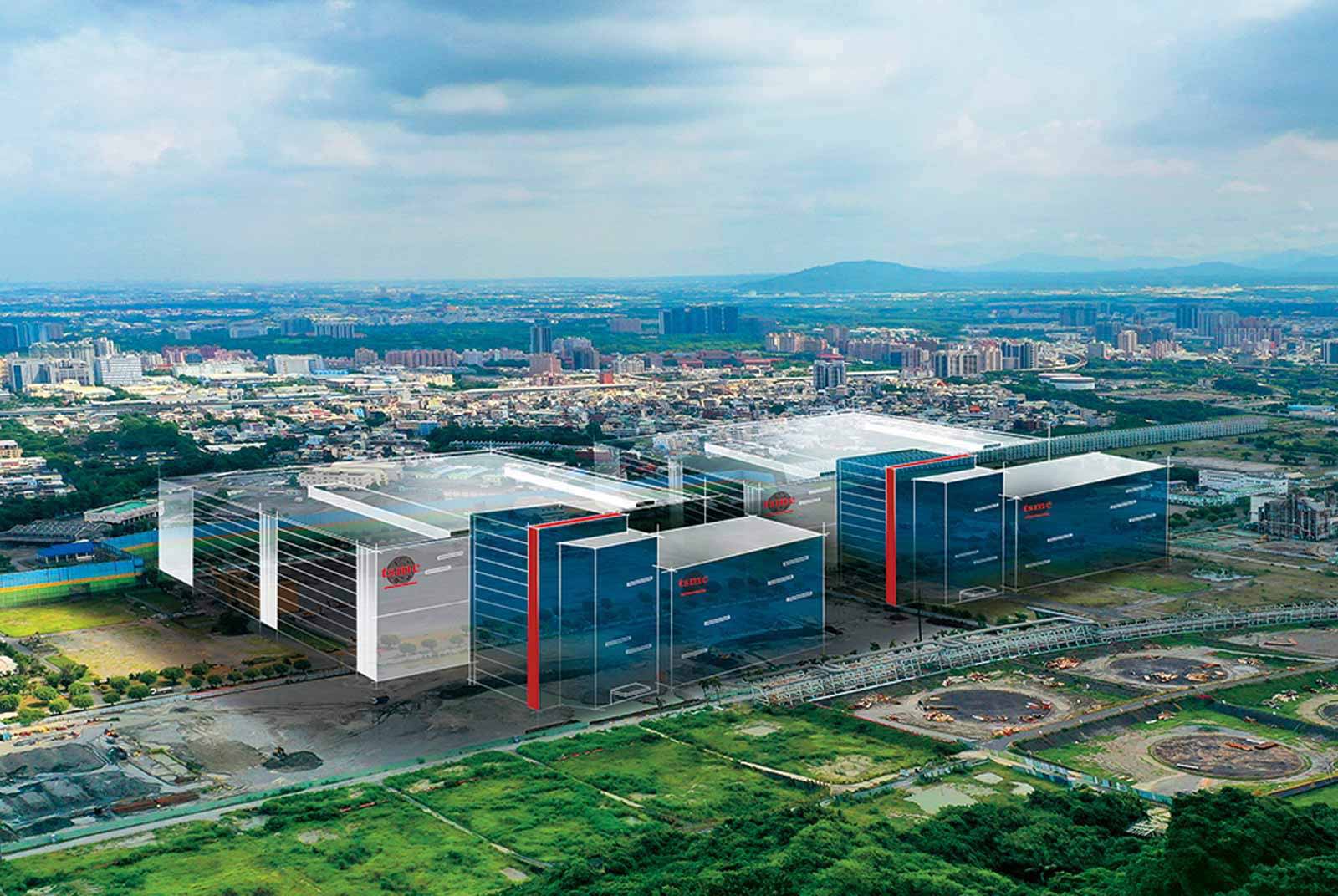
    Taiwan Semiconductor Manufacturing Company Ltd. is known throughout the planet as TSMC. The largest foundry in the world produces chips based on the designs presented to it by companies like Apple, Qualcomm, Nvidia, MediaTek, and more. In fact, Apple is TSMC’s largest customer and accounts for approximately 25% of the company’s revenue.
    TSMC currently produces powerful and energy-efficient chips such as the Apple A16 Bionic found inside the iPhone 14 Pro series, and the Qualcomm Snapdragon 8+ Gen 1 found in newer high-end Android phones including the Samsung Galaxy Z Fold 4, Galaxy Z Flip 4, and the Motorola Edge 30 Ultra. TSMC has suspended production for Chinese start-up Biren Technology.
    The reason for halting production for this company is that TSMC is following U.S. regulations that prevent it from making chips for the Chinese-based firm. Part of the reason for this is that Biren’s products outperform Nvidia’s A100 Graphics Processing Unit (GPU) silicon based on what the English language South China Morning Post calls “information in the public domain.” The U.S. is trying to keep cutting-edge chips away from China.
    This past September, the U.S. ordered that Nvidia stop shipping the A100 chip to China to “…address the risk that products may be used in, or diverted to, a ‘military end use’ or ‘military end user’ in China.” The A100, according to Nvidia, is used to “power the world’s highest performing elastic data centers for AI, data analytics, and high-performance computing (HPC) applications.”
    The U.S. Commerce Department last month expressed a goal to “keep advanced technologies out of the wrong hands.” China called it a “tech blockade.” At the same time, commerce ministry spokesperson Shu Jieting said that “the U.S. continues to abuse export control measures to restrict exports of semiconductor-related items to China, which China firmly opposes.”
    Biren was trying to raise funds earlier this year at a valuation of $2.7 billion. The company designs its BR100 and BR104 processors to be competitive with GPUs designed by Nvidia and AMD that work with AI and Machine Learning models and algorithms.
    TSMC itself isn’t sure that Biren’s chips are covered by U.S. regulations but has decided to halt their production anyway. Biren, of course, says that its AI chips are not covered by U.S. export restrictions. A TSMC spokesperson made a limited statement noting that the foundry complies with all relevant rules. The U.S. Commerce Department’s Bureau of Industry and Security (BIS) announced new semiconductor restrictions on October 7th.
    A spokesperson for the U.S. Commerce Department said, “While BIS cannot comment on company-specific actions, we expect all companies to comply with export controls. Since the rule’s release on October 7, BIS has been undertaking a vigorous outreach effort to educate those impacted by it to aid compliance efforts.”
    One of the Biren GPU chips that TSMC was going to produce for the company was the BR100 GPU which was manufactured using TSMC’s 7nm process node and features 77 billion transistors in each chipset. This particular component was said to be 2.8 times faster than Nvidia’s A100.
    Export rule changes have been used before to restrict the distribution of silicon to China. A restriction announced by the U.S. Commerce Department in 2020 prevents foundries using American technology to manufacture advanced chips from shipping these chips to Huawei. The latter is considered a national security risk by both major political parties and the restriction has forced Huawei to abandon its own Kirin 5G Application Processor (AP) chips. Its current flagship Mate 50 and Mate 50 Pro handsets are powered by the Snapdragon 8+ Gen 1. While this is Qualcomm’s current top-of-the-line mobile AP chipset, the chip sold to Huawei is tweaked to prevent it from working with 5G networks.
  • YouTube removes 2,000 animated Vietnamese videos for copyright violation

    YouTube removes 2,000 animated Vietnamese videos for copyright violation

    Nearly 2,000 Wolfoo videos about the animated wolf and his family have been removed by YouTube for copyright violation, causing losses of around US$2 million for their Vietnamese producer.

    Between June and October the three YouTube channels, Wolfoo Family, Wolfoo Channel and Wolfoo’s Story potentially each lost 2-3 billion views, according to social media data provider Social Blade. This caused the company losses of $2 million, and “The damage is increasing every hour,” it said.

    Sconnect said YouTube removed the videos following a demand by the UK’s Entertainment One, the producer of Peppa Pig, an animated series about a pig and his family.

    “Entertainment One has falsely identified our videos as a product derived from Peppa Pig and filed their complaints to YouTube, which accepted all their copyright claims and deleted Wolfoo videos.”

    YouTube allows users to seek the removal of videos they deem a violation of its policies.

    The fact that YouTube removed the videos showed that its request was “per the procedures as prescribed” by the platform, eOne said.

    YouTube said Saturday it never acts as an intermediary to resolve conflicts between two parties and only provides a tool for users to protect themselves.

    Content owners are provided with a tool to protect their videos while users are provided with a tool to report copyright violations, it added.

    Sconnect said 195 Wolfoo videos are no longer restricted, but nearly 2,000 others remain flagged and restricted.

    Nguyen Xuan Cuong, deputy chairman of the Vietnam Digital Communications Association, said YouTube’s removal of nearly 2,000 Wolfoo videos has caused great damage to Sconnect.

    All parties involved should contribute to the case so that it could be a learning experience for other Vietnamese businesses of cross-border services. Sconnect was launched in 2014 as a social media video platform. It has a total of 56 million subscribers to its 19 channels and 18 billion views. Peppa Pig debuted in 2004 on TV before being uploaded on social media platforms.

    Sconnect recently filed a lawsuit against the British company for unfair competition, claiming losses of nearly $292,000 as a result.

    It had been sued by the latter in January in Russian and British courts for intellectual property infringement, claiming Wolfoo is a “reworked” version of the Peppa Pig characters. But the Moscow City Court ruled against eOne. Immediately the company withdrew all claims.

    Sconnect said during the legal battle eONE had used the unresolved lawsuit to copyright “Wolfoo” videos on YouTube.

  • Mobile virtual network operators hold 1% market share

    Mobile virtual network operators hold 1% market share

    With over one million subscribers, the country’s three mobile virtual network operators, who piggyback on large telecom companies, have a market share of 1%.

    iTel, Reddi and Local do not have their own infrastructure or radio frequencies and instead pay to use VinaPhone, Viettel, MobiFone, Vietnamobile, or Gtel’s.

    iTel, which depends on VinaPhone’s infrastructure and frequencies, has one million subscribers, according to the Ministry of Information and Communications.

    It reported revenues of VND442 billion ($18.4 million) this year, 4.5 times the whole of last year’s, and profits of VND28 billion.

    Reddi, which has nearly 50,000 subscribers, saw sales of VND15 billion. It had losses of VND27.8 billion and VND55.9 billion in 2020 and 2021.

    Local, which launched its services in mid-2022, focuses on providing low-cost data packages, which are preferred by young people.

    In April Digilife Vietnam Digital Services Company received a mobile virtual network operator’s license but has yet to begin offering services.

    Such companies focus on attracting customers interested in large data packages at reasonable charges such as workers, students and foreign tourists.

    Vietnam had nearly 120 million mobile phone subscribers, including some 93.7 million using smartphones, according to the ministry.

  • Brewer Sabeco profits up 75% in 9 months

    Brewer Sabeco profits up 75% in 9 months

    Vietnam’s biggest brewer Sabeco gained after-tax profits exceeding VND4.42 trillion ($1=VND24,800) in the first nine months of 2022, a year-on-year surge of 75%.

    Sabeco’s revenues surpassed VND25.1 trillion, up 44% on-year, according to its latest financial statements. Meanwhile, the firm spent over VND1.8 trillion on advertisements and promotions.

    In the third quarter, Sabeco made revenues of over VND8.635 trillion, doubling last year’s figures, and after-tax profits of more than VND1.3 trillion, nearly treble the previous amount.

    Bao Viet Securities said the brewer’ beer selling prices would increase 10% this year against 2021, amid room for Vietnam’s beer industry to grow.

    The country produced over 4.3 billion liters of beer in the first nine months, up nearly 36% against the same period last year, and up 15.5% against the same period of 2019, the pre-Covid period, according to the General Statistics Office.

    Vietnam is the biggest beer consumer in Southeast Asia and the ninth biggest in the world, according to Japanese drinks company Kirin Holdings, with demand likely to grow further as a large young population reaches adulthood, Nikkei reported.

  • Vietnamese currency falls to record low against dollar

    Vietnamese currency falls to record low against dollar

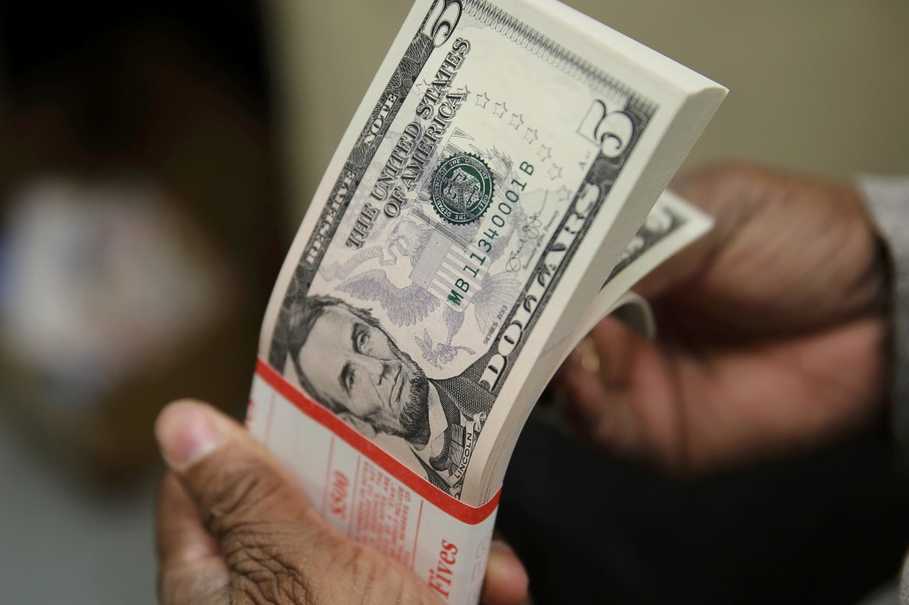
    The dong depreciated to a new low against the U.S. dollar Wednesday morning, with state-owned Vietcombank selling the greenback at VND24,620 at 11.30 a.m.

    The Vietnamese currency fell 0.12% from Tuesday and 7.24% since the beginning of the year. Eximbank sold the dollar at VND24,620, 0.24% higher than Tuesday, and Techcombank at VND24,680, 0.33% higher.

    The U.S. Dollar Index, which measures the currency’s strength against six major currencies, is at the highest level since 2002 of around 112.

    Analysts expect the dong to come under more pressure from a surging dollar in the remaining months of this year since the State Bank of Vietnam does not have much reserves left to defend the dong after selling around 20% on it so far this year.

    As up to 70% of all trade contracts in Vietnam are paid in dollars, its continuing strength is bad news for businesses.

  • Electricity shortage likely as gas supply disruption looms

    Electricity shortage likely as gas supply disruption looms

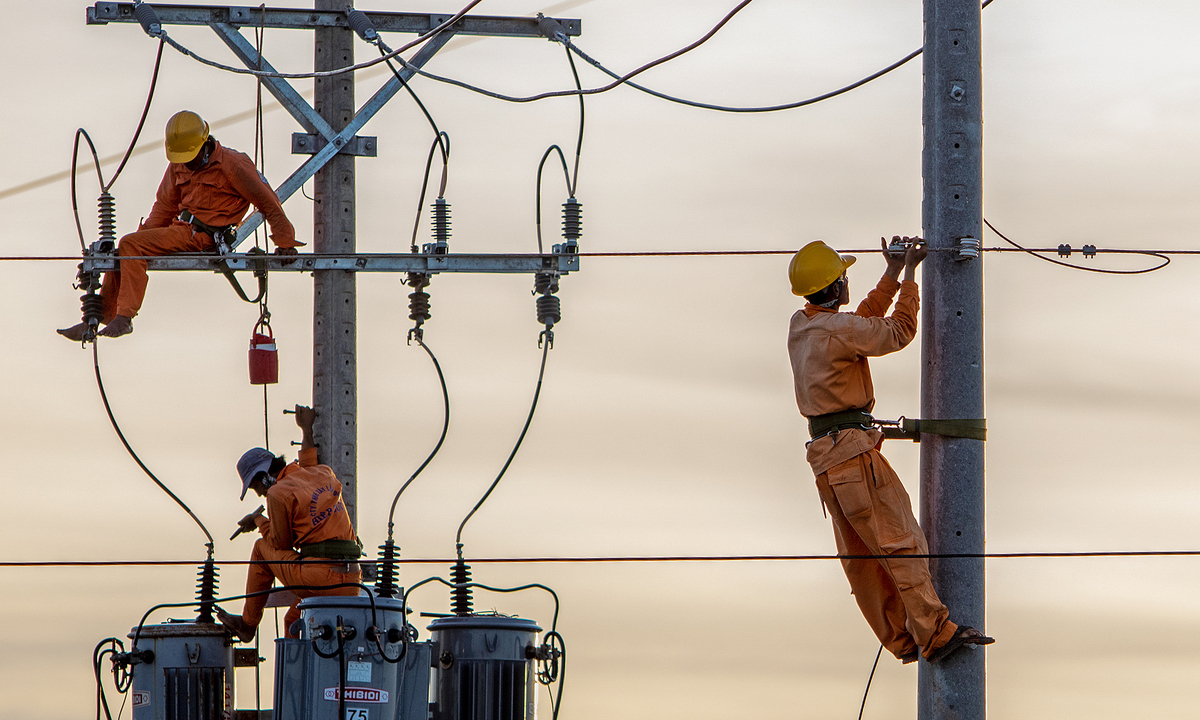
    There could be electricity shortages in the offing since a leading gas firm has to reduce supply to thermal power plants to relocate a rig.

    PetroVietnam Gas Joint Stock Corporation (PVGas) announced that its contractor, Hibiscus of Malaysia, would stop gas supply to the Ca Mau power plant for three days from Oct. 17.

    They are weekdays, when power demand is high, and so to preclude a shortage in the southern region, Vietnam Electricity’s National Load Dispatch Center has urged PVGas not to move the rig on weekdays, but on Sunday when electricity demand is low.

    Otherwise it should reduce supply to other major gas consumers like urea production plants and prioritize supply to power plants, it said.

    The output of gas-fired power plants was nearly 19.7 billion kWh in the first eight months of this year, or around 11% of total production.

  • Vietnam collects $231 mln in taxes from online platforms

    Vietnam collects $231 mln in taxes from online platforms

    The Finance Ministry said online platforms including Facebook and Google have paid VND5.59 trillion (US$231.6 million) in taxes from 2018 to August this year.

    In a report sent to the National Assembly, the ministry said the tax was paid by cross-border and e-commerce platforms, with Facebook and Google contributing the most, at VND2.099 trillion and VND2.115 trillion, respectively.

    They were followed by Microsoft with VND714 billion.

    Last year’s collection of VND1.591 trillion was 39% more than in 2020.

    From the beginning of 2018 until the end of this August, tax authorities collected VND1.082 trillion in taxes from organizations and individuals earning income from doing business online, including VND261 billion collected last year and almost VND521 billion in the first eight months of this year.

    The ministry launched an electronic portal and a mobile application (eTax Mobile) in March for foreign suppliers to declare, register and pay taxes.

    So far, there have been nearly 70,000 transactions made through the portal and app, with more than VND308 billion of tax collected.

    Of this, $22.2 million was paid by 30 major foreign suppliers including Microsoft, Facebook, Netflix, Samsung, TikTok and eBay.

    In order to manage and avoid tax revenue losses in the digital platform business, the finance ministry is working to complete relevant legislation.

    At the end of August, the ministry submitted amendments to Decree 126 issued in 2020, stipulating that e-commerce platforms have to provide information, declare and paying taxes on behalf of sellers.

    The ministry also proposed amending a number of special regulations to ensure a consistent legal basis for the management of e-commerce platforms.

  • Tra fish exports to ASEAN rise by 83%

    Tra fish exports to ASEAN rise by 83%

    Vietnam’s tra fish exports to Southeast Asia exceeded US$152 million in the first nine months of this year, a year-on-year increase of over 83%.

    Higher transport costs due to rising fuel prices caused exporters to opt for closer destinations, the Vietnam Association of Seafood Exporters and Producers (VASEP) said, adding that Thailand, Singapore, Malaysia, and the Philippines are the biggest markets for Vietnamese tra fish among the ASEAN nations.

    Shipments to Thailand, Singapore, Malaysia, and the Philippines increased by 81%, 56%, 114%, and 92%.

    Exports to Laos, Cambodia, Myanmar, and Indonesia rose by two to four times.

    ASEAN countries would import more tra fish and become fish and become than the EU soon, VASEP predicted.

    Overall tra fish exports were worth nearly US$1.97 billion in the first nine months, up 83.3%, according to the General Department of Vietnam Customs.

    Its biggest markets were the U.S., China and the EU.