Tag: Vietnam

  • Shipping firms sail past annual profit target in 9 months

    Shipping firms sail past annual profit target in 9 months

    Many shipping firms have earned profits surpassing their annual target in the first nine months of the year, riding a wave of high demand and high freight rates.

    The Petrovietnam Transportation Corporation recorded after-tax profits of nearly VND390 billion ($15.7 million) in the third quarter, more than 2.5 times year-on-year. Its pre-tax profits of over VND1.035 trillion in the first nine months exceeded 72% of its annual plan.

    The Hai An Transport and Stevedoring Joint Stock Company saw its Q3 after-tax profit increase by over 2.7 times year-on-year to VND270 billion. The firm’s profit in the first nine months was 1.5 times bigger than its yearly plan.

    Similarly, Gemadept Corporation’s profit in the third quarter surged by over 76% to nearly VND290 billion. Its after-tax profit rose nearly 84%, realizing 94% of the annual plan.

    The Vietnam Ocean Shipping Jsc Earned gained pre-tax profits of VND566 billion in the first nine months, a 38% year-on-year increase, and exceeding the annual plan by 45%.

    While it saw a fall in Q3 profit, the Vietnam National Shipping Lines posted profits of over VND2.77 trillion in the first nine months, a year-on-year increase of more than 30% and more than 10% of the annual plan.

    Many shipping firms attribute the bigger profits to high demand and high freight charges. A manager with the Petrovietnam Transportation Corporation said freight charges had increased in the third quarter, resulting in bigger revenues.

    Over 77.8 million tons of cargo was transported by sea in the first nine months, up 27.5% over the same period last year, according to the General Statistics Office.

    According to data from Freightos, one of the world’s largest freight booking platforms, Feightos Baltic Index, the global container shipping index, fell from $6,577 to $4,060 in the third quarter. However, the rate was still 2-3 times higher than the average of $1,800-2,000 in the same period last year. Compared with the third quarter of 2019, the rate was nearly 3.5 times higher.

    In Vietnam, the sea freight index increased nearly 5% in the third quarter, and rose over 11% in the first nine months.

    Brokerage firm SSI Securities has predicted that the global index will gradually return to normal due to weaker demand and bigger supply of container ships in the last months of this year. Freight charges may decrease sharply next year if supply chain disruptions die down and China reopens to the outside world, it said.

    In Vietnam, charges may remain at their peak in 2023 as the market is still undersupplied as most of the Vietnamese fleet is leased to foreign markets under long-term contracts, according to SSI Securities.

  • Government mulls 250 kph transnational railway

    Government mulls 250 kph transnational railway

    The Ministries of Planning and Investment and Transport will study the possibility of building high-speed rail across Vietnam to transport both passengers and cargo.

    The dual-gauge railway, with design speeds of 250 kilometers per hour and operational speeds of 180-225 kph, is required as rail only carries 6% of passengers and 1.4% of cargo on the north-south route, the planning ministry said.

    When completed it would be a key means of transport capable of carrying large volumes of cargo, connect major economic centers and boost growth, it said.

    It suggested that the railroad be built under a public-private partnership and funded partly by auctioning lands near the 50 stations along the route.

    The 250-kph option has been suggested by a consultancy consortium over a 350-kph option which can only transport passengers.

    Though costing more to build, it would have a higher chance of recouping the investment thanks to cargo transport, the consortium comprising the University of Transport and Communications Consultancy and Construction, Germany’s Evo mc, Ove Arup & Partners Hong Kong, and Hung Phu Trading and Construction Consultant said.

    They will respectively cost US$62.7-64.8 billion and $58.7 billion.

    Since 2019 officials have been considering the transnational rail since roads and airports are becoming increasingly overloaded.

  • Gold prices hit 3-month high

    Gold prices hit 3-month high

    The Saigon Jewelry Company (SJC) hiked the price of gold by VND400,000 ($16.08) per tael to VND67.7 million Saturday morning.

    This is the biggest increase by the state-owned firm since the beginning of August. A tael equals 37.5 grams or 1.2 ounces.

    Jewelers sold gold rings for VND53.3 million per tael.

    After a lengthy period of fluctuating within a restricted range, the domestic gold price has risen on the momentum of an increase in the global market.

    The global gold price closed November 4 at US$1,682 an ounce, up $52 from the previous day.

    The increase in gold prices happened on hopes that the U.S. Federal Reserve (Fed) would delay the pace of interest rate hikes after a jobs report indicated American businesses had employed more workers, although the overall unemployment rate had risen.

    Domestic gold prices have risen by around VND700,000 per tael since the beginning of the month.

    However, the owner of a gold shop in HCMC’s District 8 said that demand has not increased because “gold is losing its appeal while banks’ deposit interest rates have continued to rise.”

    In contrast to gold, there are signs that the dollar’s surge is cooling down.

    State-owned Vietcombank sold the dollar at VND24,877 Sunday, down roughly VND5 from the beginning of the week.

    At the moment, Vietnam’s gold price per tael is around VND17.2 million dong greater than the global price.

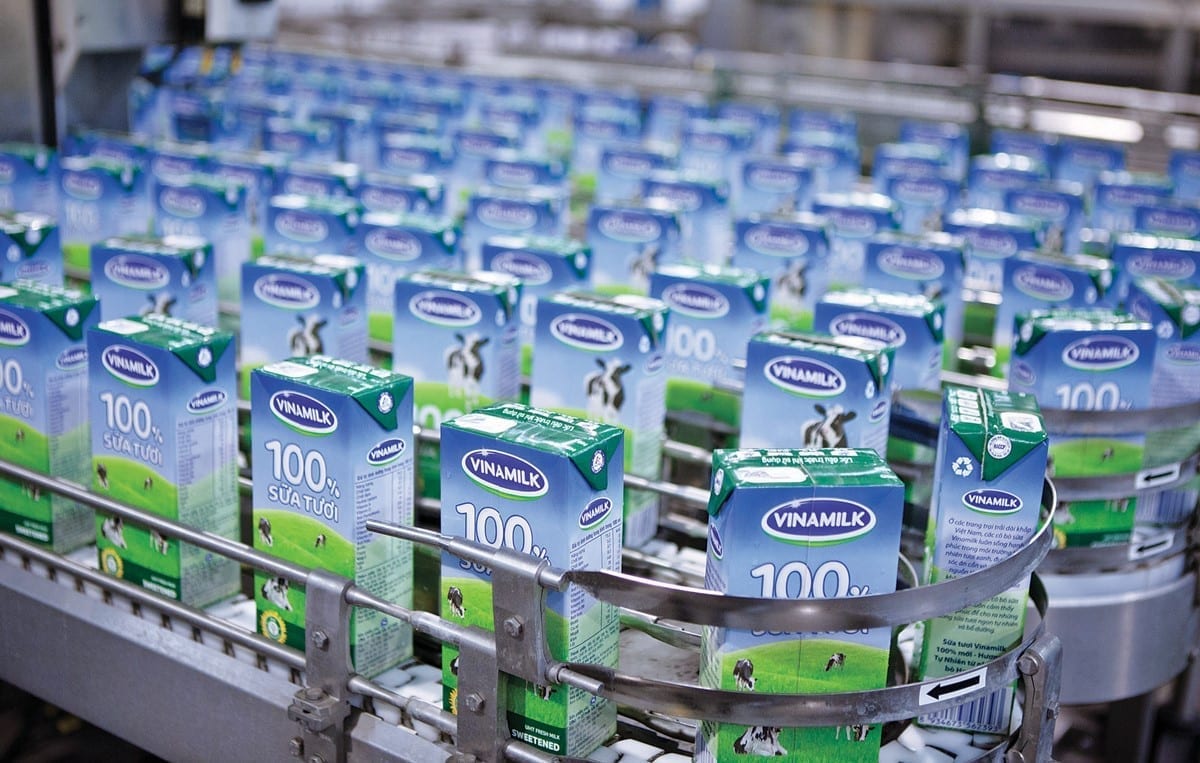
  • Vinamilk shares experience in exploring powdered milk market

    Vinamilk shares experience in exploring powdered milk market

    Dielac powdered milk has changed the habit of Vietnamese consumers who used to prefer foreign goods by well addressing the nutritional needs of children.

    Nguyen Quang Tri, Vinamilk’s executive director of marketing, brought the success story of Dielac powdered milk to the 6th Global Dairy Congress Asia 2022, taking place on October 27-28 in Singapore.

    Vietnam’s dairy industry has an estimated net worth of nearly $6 billion, led by Vinamilk for decades. Dielac – a popular mass formula brand for children has contributed significantly to the development journey of the dairy giant.

    In the 33 years since the production of the first batch, Dielac has consistently led the market, despite stiff competition from many foreign and domestic brands. The company focuses on three criteria to win consumers’ hearts: quality, innovation, and love.

    The main point of Dielac’s story is its attempt to satisfy consumers’ needs.

    According to Tri, Vietnamese people are inherently not confident about domestically produced products and tend to be more appreciative toward imported brands which leads them to pay a premium price.

    Even in the low-income group, buyers always assume that higher price dairy products signal higher quality due to the mentality that cheaper products are not good.

    On the other hand, there is competition between dairy companies in adding ingredients with a variety of benefits, from physical to mental growth.

    Dielac recognized the challenging competition while positioning itself as a low-cost domestic brand in a market that was becoming more upscale. To establish its position, the company addressed consumers’ fundamental demand: nutrition for children.

    The founders have always had a goal in mind: infant formula should contain ingredients and nutrients that are as close to breast milk as possible.

    To create a product that is appropriate for the physical needs and specialized nutritional needs of Vietnamese children, Vinamilk cooperates with international organizations that specialize in micronutrients and microbiology.

    Over three decades, Vinamilk has faced many challenges.

    The most notable milestone was in 1976 when Vinamilk took over old, “good for nothing” factories with outdated equipment that required full repair and reassembling.

    At that time, Vietnam was also lack of a dairy sector that left Vinamilk no choice but to maximize internal capabilities for production

    In 2009, the company collaborated with the National Institute of Nutrition (NIN) to conduct a large-scale clinical study with 50,000 children, proving the quality of Dielac products.

    Another research conducted by Vinamilk that year revealed that 96% of Dielac consumers were satisfied with the milk quality.

    In 2022, the company continued to affirm its position in providing parents with a long-term nutritional solution to support their children’s growth and development.

    Dielac has adopted new modern technology in production, applying advanced formulas in its products to compete with imported brands fairly.

    The manufacturer is keen on innovating and upgrading product quality, developing new brands, and expanding the categories to meet consumers’ demands, as well as providing diverse solutions for children’s nutritional needs.

    Taking advantage of its farms, factories, and across-the-country supply chain system, Vinamilk is able to price its products to be affordable for consumers from different backgrounds.

    These strategies have contributed significantly to the formation of “Dielac brand love” and made the milk brand trusted by generations. Babies who were fed with Dielac milk in 1989 now continue to provide the younger generations with the same beloved products.

    According to Mai Kieu Lien, Vinamilk’s general director, “the affection towards the brand is nurtured by the enthusiasm of the development team.”

    Dielac is built upon three key factors: the love of a mother – providing the child’s basic needs; the heart of a Vietnamese – wanting to contribute to reducing children’s malnutrition rate and enhancing their physical and intellectual conditions, and the entrepreneur’s enthusiasm – building the dairy industry as advanced as in other developed countries.

    The Global Dairy Congress Asia 2022 attracted more than 250 participants, and more than 30 speakers from organizations, and dairy enterprises of more than 10 Asian countries.

    The program had five discussion sessions focused on the latest trends in the dairy industry, new business models, advanced technologies and equipment as well as applicability in the industry value chain (farm management, milk processing, product innovation, and so on).

    The event also offered an opportunity to explore the dairy market’s prospects in Asia. Vinamilk was the only Vietnamese dairy company invited to present at the Congress

    Caroline Emond, Director General of the International Dairy Federation (IDF), said she was inspired by Dielac’s 33 years of journey.

    According to the IDF representative, after recognizing its main challenge, Vinamilk has found a way to tackle it and deliver what customers want and build a strong organization from there.

    Caroline stressed the significance of the approach in enhancing consumers’ affection for a brand. Only when convinced by the product’s value, the strong reputation and trustworthiness of brand, they will make the buying decision.

    The global dairy industry is experiencing rapid growth due to the rising population, increasing nutritional needs, and higher average income.

    With a population of more than 4.5 billion, emerging Asia plays a significant role in global milk production and consumption, according to experts at the conference.

    In 2021, Asia led in production with 33% of the global number. The amount of milk produced last year, which was 749 billion kilograms, will see a marginal rise this year as a result of socioeconomic development, healthy lifestyle initiatives, consumer health concerns, and changes in daily diet.

    According to Euromonitor International, the dairy market in Vietnam would grow by 12.8% from 2023 to 2025. The high-end market will continue to expand since this group has not been much affected by the pandemic in term of income, hence their consumption habit remains the same as before.


  • E-commerce platforms free from filing tax on vendor behalf

    E-commerce platforms free from filing tax on vendor behalf

    E-commerce platforms like Shopee, Tiki or Lazada will not have to file tax on vendors’ behalf and instead only provide authorities with their revenue and other details.

    Every quarter the platforms will need to submit vendor details including name, tax ID, personal ID, address, phone number and revenue, according to a new decree.

    This means a previous proposal by tax authorities to make these platforms pay tax on behalf of their vendors was not approved, with vendors instead responsible for their own tax payments.

    Insiders since last year have voiced concern over the proposal, saying that taxing vendors’ behalf will increase costs, and that they do not have enough resources to fulfill this task.

    Around 100 e-commerce platforms are operating in Vietnam with hundreds of thousands of vendors. In 2020, Shopee had 210,000 vendors and Tiki 8,800, according to tax authorities.

  • Vietnamese rice prices surpass Thailand’s in global markets

    Vietnamese rice prices surpass Thailand’s in global markets

    Vietnamese 5% broken rice, which usually costs less than its Thai peers in export markets, raced past them in October to reach record levels. It fetched $425-430 per ton, $48-51, and $18-25 higher than similar varieties from India and Thailand, according to the Ministry of Agriculture and Rural Development.

    Vietnam exported over six million tons of various kinds of rice for nearly $3 billion in the first ten months, up 17% and 7% year-on-year.

    According to local businesses, this is not the first time Vietnamese rice has fetched higher prices than Thailand’s, but its brand recognition is growing in the world market.

    “Vietnamese fragrant rice is still behind Thailand, but it is becoming increasingly popular with foreign consumers,” Pham Thai Binh, general director of Trung An Hi-tech Farming Joint Stock Company based in the southern city of Can Tho, said.

    His company exports some 30 containers of rice to Europe every month at $700-1,250 per ton, he said.

    Australia recently registered the ‘Gao Ong Cua Vietnam’ trademark for ST24 and ST25 rice varieties developed by agricultural engineer Ho Quang Cua.

    ST25 won the World’s Best Rice Contest in 2019 and ST24 came second in 2017.

    Loc Troi Group’s rice with the trademark ‘Com Vietnam Rice’ is sold at 4,000 supermarkets in France.

    Local firms expect rice exports to remain big and fetch high prices for the next three years since the world is facing climate change and the food supply is falling.

    Thailand’s rice production is declining.

    Vietnam is the world’s third-biggest rice exporter after India and Thailand and accounts for 7.8% of the global rice trade.

    Its rice is sold in 28 countries and territories worldwide, mainly in Asia and Europe.

  • Bamboo Airways’ 9-month loss exceeds last year’s total

    Bamboo Airways’ 9-month loss exceeds last year’s total

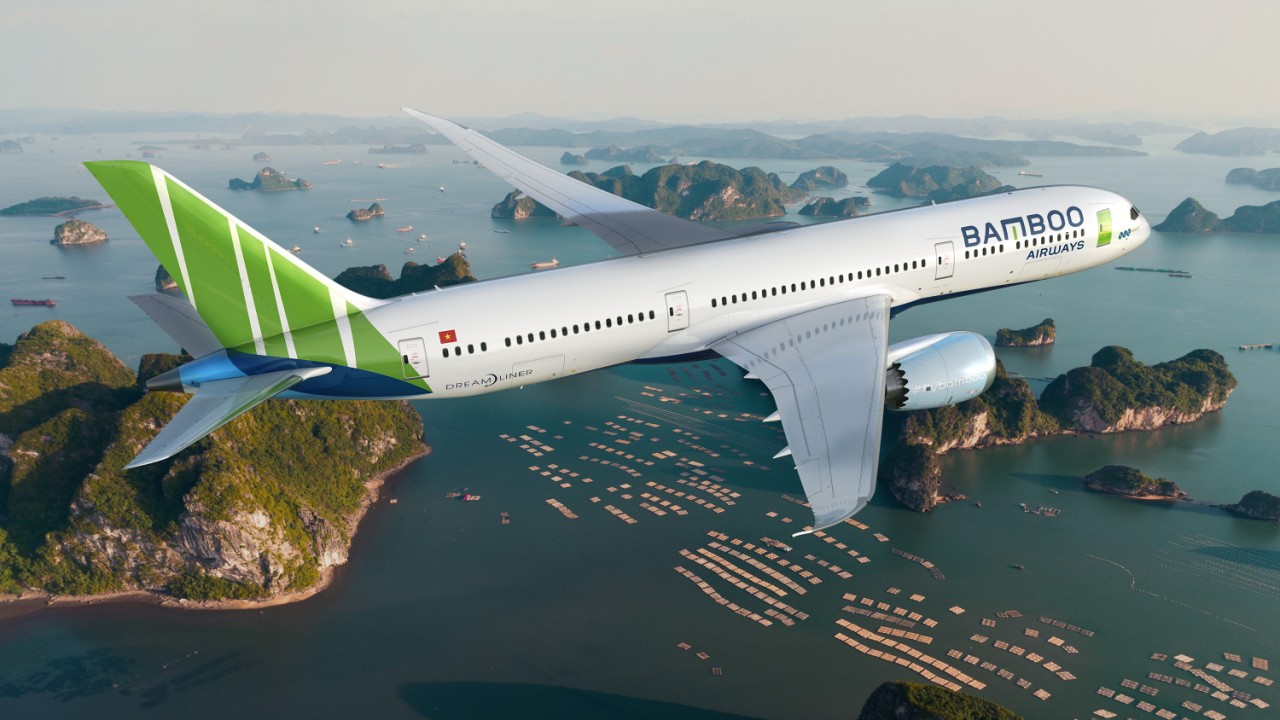
    Bamboo Airways posted a loss of VND3.54 trillion ($142.38 million) in the first nine months, exceeding the total loss it recorded last year by 54%.

    Its loss has been increasing this year, from VND691 billion in the first quarter to VND1.39 trillion in the second and almost VND1.45 trillion in the third, according to calculations from a financial report of FLC, which owns a 21.7% stake in the airline.

    Bamboo Airways went through major restructuring in the second and third quarter after its chairman was arrested in March for alleged stock manipulation.

    Nguyen Ngoc Trong, who has been with the airline since its establishment in 2018, became its chairman in August, while Nguyen Manh Quan, who joined the airline in 2020, took over the CEO chair from Dang Tat Thang.

    The airline in October moved its Ho Chi Minh City office from FLC’s building in District 3 to a Novaland building in District 1 after the property developer signed a strategic partnership with the airline.

    Bamboo Airways said in July that it planned to triple its fleet size to 100 by 2028. The airline at the time operated 29 jets, comprising 21 narrowbody aircraft, three Boeing B787s and five Embraer 190 regional aircraft, according to aviation data website Planespotters.

  • First made-in-Vietnam flying car to hit market in 2024

    First made-in-Vietnam flying car to hit market in 2024

    Hanoi company Airlios has demonstrated a flying electric car which it plans to sell commercially in 2024.

    The single seater, also called Airlios, could fly vertically to reach 10 meters within 10 seconds and then fly at speeds of 100 kilometers per hour, the company said at a recent exhibition.

    It can rise to as high as 120 meters, the same height as a 44-story building. It has eight batteries that are fully charged in seven to nine minutes at 30-kilowatt charging stations.

    It is mostly made of aluminum alloy and carbon fiber, and can fly both automatically and manually.

    A prototype has successfully flown 33 kilometers in 20 minutes at a height of below 120 meters. It has been tested for 100 hours and 1,000 kilometers.

    “The project is now 70-80% complete,” Mai Thien Vu, the company’s chief technology officer, told VnExpress.

    “We plan to launch the maiden flight of the commercial version of Airlios by the end of 2023.”

    Managers and engineers at Airlios began thinking about making flying cars five years ago, he added.

    If it is launched as scheduled, Airlios could become the first flying car in Southeast Asia.

    The standard version will cost around $81,000 compared to, for instance, $92,000 for Swedish brand Jetson.

    Airlios will also offer other models costing up to $99,000.

    Many startups in a number of countries have started working on flying cars though there have been few commercial launches yet.

    Singapore, Malaysia and Indonesia plan to launch flying taxi services in future.

  • Bonchon stays in the Korean fried chicken game in Vietnam

    Bonchon stays in the Korean fried chicken game in Vietnam

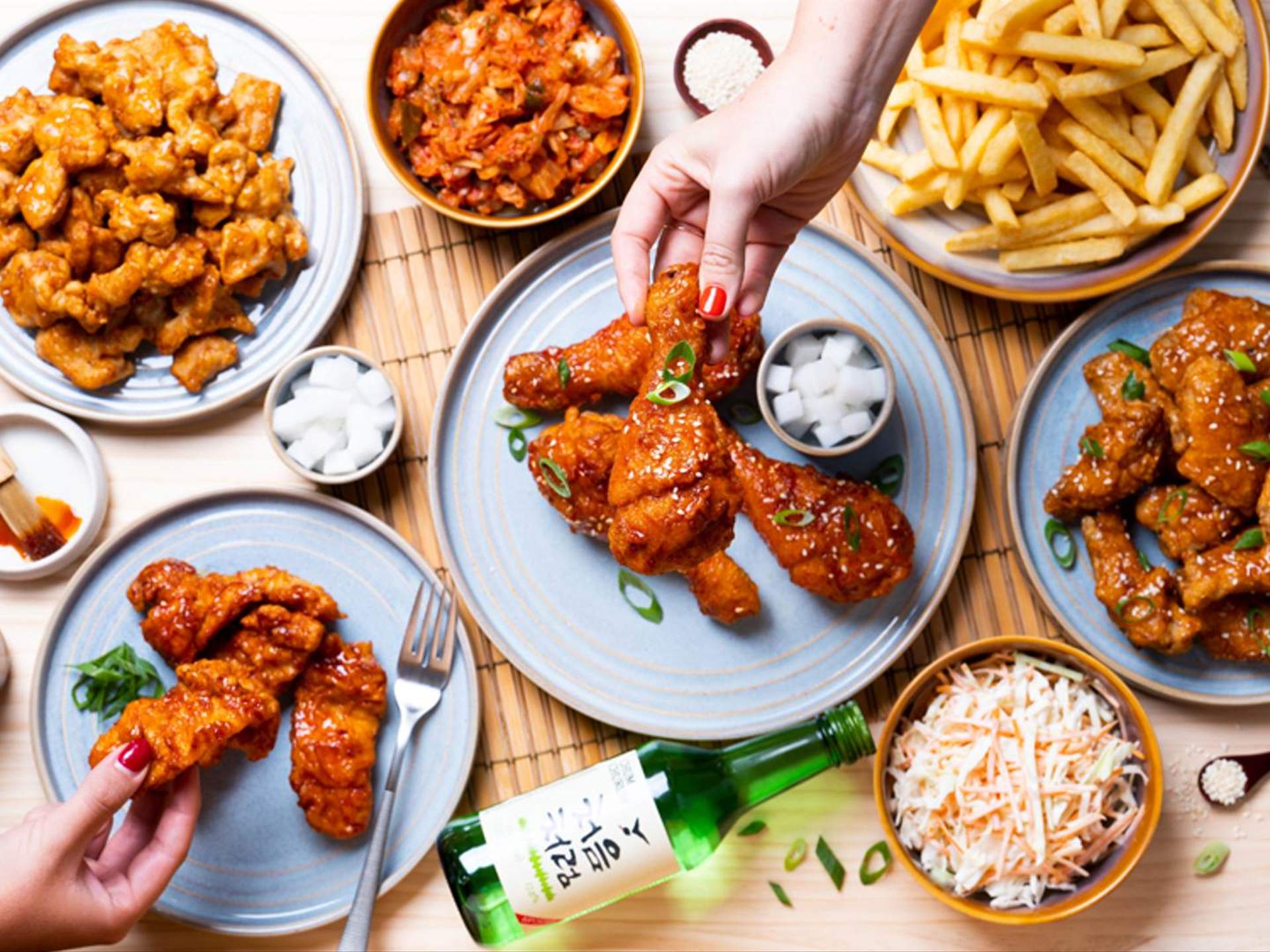
    Bonchon, the global restaurant concept known for its Korean fried chicken, celebrates a year with market expansion, sales growth, and a new fast-casual model.

    Despite continued industry challenges due to the pandemic, Bonchon retained its strong year-to-date sales performance. In October, the company registered a 76% same-store sales increase compared to 2021. Bonchon has 15% same-store sales as of Dec. 25, 2021.

    “Sales growth has steadily increased due to strategic enhancements in operations, supply chain, and technological innovation. These strategic shifts have not only allowed Bonchon to build our revenue even further, but also to continue expanding our footprint with new openings across Vietnam,” said Bonchon Vietnam CEO, Mark Kim.

    Innovation of the store design and fine-tuning of the operating system also greatly contributed to Bonchon Vietnam’s performance.

    The store’s innovation in terms of design boasts advantages in brand identity and introduces the image of our Bonchon stores to a younger, trendier customer base. In addition, simplified adjustment and focus on important factors in the operating system have enhanced service quality and customer experience across Bonchon stores nationwide.

    Moreover, with the ability to enter the zeitgeist and respond quickly to market sensitivities, Bonchon Vietnam stayed in the game of the door-to-door delivery era by working closely with home delivery units. This particular delivery service adjustment brought about a significant source of revenue, accounting for 40% of Bonchon Vietnam’s monthly revenue in 2022.

    Additional franchise support has been driven by the integration of newly acquired experienced team members and field business consultants who guide best practices, customer service, food quality, and menu strategy.

    “In the next five years, we will be implementing ongoing strategic shifts in operations, the supply chain, and technological innovation to remain on the current growth trajectory,” Kim added.

    Bonchon is known for its signature made-to-order Korean fried chicken that is hand battered and double-fried to achieve its signature, crave-worthy crunch, and proprietary sauces crafted in the Bonchon global kitchen in Busan. Every piece of chicken is hand brushed to make each bite perfectly flavorful. Bonchon also offers an authentic Korean fusion menu with Bibimbap, Japchae, Bulgogi, and more.

    Born in Busan, South Korea in 2002, Bonchon’s founder, Jinduk Seo, dreamed of sharing his favorite flavors with the world. Just four short years later, in 2006, Bonchon went on to establish itself in the U.S. The global franchise has been spreading its reach around the world ever since with a notable presence spanning nine countries with more than 400 locations. With no indication of slowing down, Bonchon has recently confirmed new development agreements in France and Australia.

    In 2019, the brand continued to expand to Vietnam. In April 2022, Bonchon celebrated the opening of its ninth store and is preparing to welcome its 10th and 11th this November.

  • Vingroup revenues down 5%

    Vingroup revenues down 5%

    Vingroup, Vietnam’s biggest private conglomerate, made total consolidated net revenues of VND88.191 trillion ($3.56 billion) in the first nine months, posting a year-on-year decline of nearly 5%.

    Vingroup gained after-tax profits of VND1.571 trillion, according to its latest consolidated financial statements.

    By the end of September, the firm’s total assets stood at VND555.571 trillion, up 30% against late last year, mainly due to successful transactions among new real estate projects.

    Vingroup said its property segment will continue to grow in the last quarter and next year, and its vehicle sales will rise in the last quarter. Its other segments, including trade center business, tourism, recreation, healthcare and education are also expected to recover.

    Since the beginning of this year, Vingroup has mobilized $760 million from the international capital market, including $625 million worth of international bonds and $135 million from an anti-climate change financial package from the Asian Development Bank.

  • Vietnam digital economy growth expected to be highest in Southeast Asia

    Vietnam digital economy growth expected to be highest in Southeast Asia

    Vietnam will achieve the highest growth in the digital economy in Southeast Asia between 2022 and 2025, a report by Google, Temasek and Bain & Company has forecast.

    It will grow at 31% followed by the Philippines with 20% and Indonesia with 19%, according to e-Conomy SEA 2022.

    Vietnam’s digital gross merchandise volume is likely to reach US$23 billion this year, third highest in the region behind Indonesia’s $77 billion and Thailand’s $33 billion.

    But with the rapid growth projected, it is expected to double by 2025 to $49 billion.

    The main contributors to Vietnam’s digital economy this year are e-commerce ($14 billion) online media ($4.3 billion) and transport and food ($3 billion).

    Vietnam’s high-quality workforce in the technology sector and the increasing penetration of digital services in urban and rural areas promise a strong foundation for the digital growth of the country, Stephanie Davis, vice president of Google Southeast Asia, said.

    billion USDVietnam’s digital economy size1313181823234949Gross merchandise value2019202120222025102030405060

    Vietnam is likely to attract the most investors in the 2025-30 period, according to a survey of venture capital investors in the third quarter by Bain & Company, with 83% of them expecting an increase in deal activity compared to now.

    In a report earlier Meta said eight out of 10 of Vietnamese are digital consumers.

    Vietnam is also among the top countries in future technology adoption such as fintech and metaverse.

    Virtual reality adoption in Vietnam is 29%, the highest in Southeast Asia, it said.

  • Vietnam contributes to Apple’s sales boom

    Vietnam contributes to Apple’s sales boom

    Apple’s chief financial officer said iPhone sales was particularly impressive in several large emerging markets, including Vietnam.

    Luca Maestri as saying Saturday: “We set September quarter records in the vast majority of markets we tracked. And our performance was particularly impressive in several large emerging markets, with India setting a new all-time revenue record and Thailand, Vietnam, Indonesia and Mexico more than doubling yearly.”

    Apple’s fourth financial quarter ended when iPhone 14 was just launched. Strong growth in iPhone sales in large emerging markets contributed to the company’s revenues of US$90.1 billion and profit of $20.7 billion during the quarter.

    For the full fiscal year revenues were $394.3 billion, up 8% from the previous year.

    Apple CEO Tim Cook said: “Across nearly every geographic segment, we reached a new revenue record for the quarter.”

    Recently Vietnamese retailers reported a boom in iPhone sales, with FPT Shop, The Gioi Di Dong, and CellphoneS seeing huge sales of the 13 Pro Max, which costs more than VND30 million ($1,200).

    The manger of a retail chain said the second and third quarters are usually the slowest in the smartphone market, but the discount and other promotions to clear stocks to prepare for the iPhone 14 have helped older models achieve bigger sales.

    Experts predicted strong growth for Apple in the last quarter, with the iPhone 14 continuing to sell well.

    However, the management acknowledged it is difficult to buy the 14 Pro and Pro Max models because production speed has not caught up with demand in many markets.

  • Airfares double as Tet holiday approaches

    Airfares double as Tet holiday approaches

    Air ticket prices for Vietnam’s upcoming biggest holiday Tet has doubled year-on-year as tourism demand resumed after a Covid-19 induced hiatus.

    A return trip from Ho Chi Minh City to Hanoi from Jan. 19 to 26, when most people return to their hometown to celebrate Vietnam’s Lunar New Year, which costs at least VND5.5 million ($222.51), double that of last year and the same as 2019.

    Vietravel Airlines charges VND6.2 million on the route during the same period. Bamboo Airways charges VND6.9 million and Pacific Airlines, VND7.1 million.

    Earlier this year, before Tet, passengers could get the same tickets for half the price at VND2.5-4 million

    Air tickets from HCMC to central and northern provinces are also at a high level.

    From HCMC to Thanh Hoa Province, return tickets are priced from VND7 million at Vietjet and VND7.1 million at Vietnam Airlines.

    From HCMC to Da Nang prices start from VND4.6 million and to Vinh, from VND7 million.-

    Some passengers are considering changing their travel plans to either later or before the high demand Tet holiday.

    Minh Trang, a communications employee in HCMC, will return to Vinh four days after Lunar New Year’s Eve, as ticket prices for her family will be 50% cheaper at VND8 million.

    Quang Anh, who works for a foreign company in HCMC, will request an early holiday break to travel to Bangkok and then to Hanoi, as ticket prices for both trips are lower than flying directly from HCMC to Hanoi.

    The Hanoi–HCMC route is among the world’s five busiest domestic air routes.

    “I will get more days off in Thailand and won’t have to queue for hours at Tan Son Nhat International Airport,” Anh said.

    Even with the surging prices, airlines are expecting an increase in travel demand.

    Vietnam Airlines has seen bookings for the upcoming Tet, which runs from Jan. 20-26, 2023, rising 23% from Tet 2020 when Covid-19 had yet to have a major impact on Vietnam tourism.

    The airline said that major bookings are on the Hanoi–HCMC route, and from HCMC to Da Nang and Hai Phong.

    Bamboo Airways plans to increase its capacity by 15-20% for the upcoming holiday and could offer up to one million seats.

    Vietravel Airlines said that its flights from Jan. 7 to Feb. 2 next year are 60% booked. It is working with authorities to increase the number of flights.

  • TSMC suspends production of powerful GPU chip for Chinese tech firm

    TSMC suspends production of powerful GPU chip for Chinese tech firm

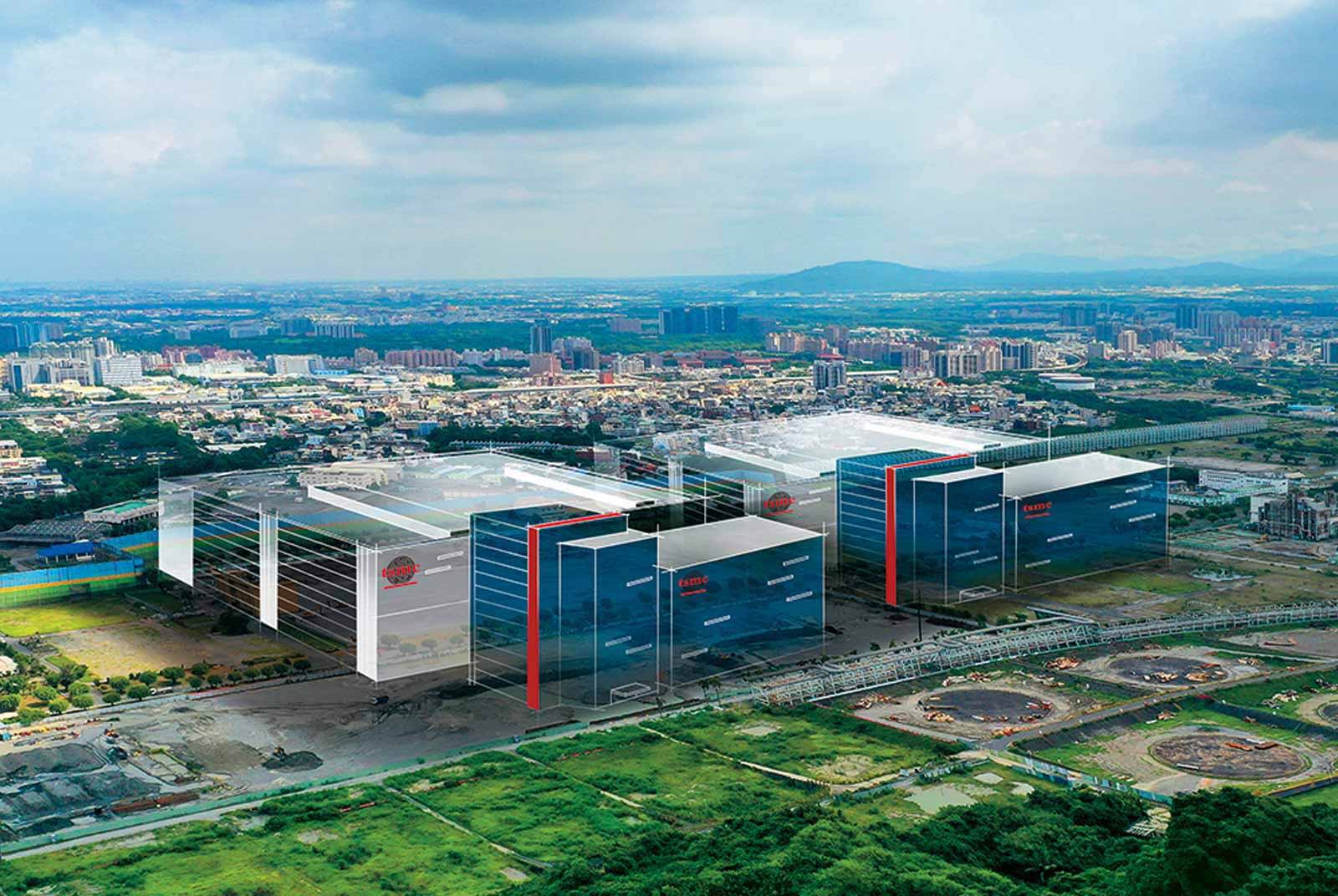
    Taiwan Semiconductor Manufacturing Company Ltd. is known throughout the planet as TSMC. The largest foundry in the world produces chips based on the designs presented to it by companies like Apple, Qualcomm, Nvidia, MediaTek, and more. In fact, Apple is TSMC’s largest customer and accounts for approximately 25% of the company’s revenue.
    TSMC currently produces powerful and energy-efficient chips such as the Apple A16 Bionic found inside the iPhone 14 Pro series, and the Qualcomm Snapdragon 8+ Gen 1 found in newer high-end Android phones including the Samsung Galaxy Z Fold 4, Galaxy Z Flip 4, and the Motorola Edge 30 Ultra. TSMC has suspended production for Chinese start-up Biren Technology.
    The reason for halting production for this company is that TSMC is following U.S. regulations that prevent it from making chips for the Chinese-based firm. Part of the reason for this is that Biren’s products outperform Nvidia’s A100 Graphics Processing Unit (GPU) silicon based on what the English language South China Morning Post calls “information in the public domain.” The U.S. is trying to keep cutting-edge chips away from China.
    This past September, the U.S. ordered that Nvidia stop shipping the A100 chip to China to “…address the risk that products may be used in, or diverted to, a ‘military end use’ or ‘military end user’ in China.” The A100, according to Nvidia, is used to “power the world’s highest performing elastic data centers for AI, data analytics, and high-performance computing (HPC) applications.”
    The U.S. Commerce Department last month expressed a goal to “keep advanced technologies out of the wrong hands.” China called it a “tech blockade.” At the same time, commerce ministry spokesperson Shu Jieting said that “the U.S. continues to abuse export control measures to restrict exports of semiconductor-related items to China, which China firmly opposes.”
    Biren was trying to raise funds earlier this year at a valuation of $2.7 billion. The company designs its BR100 and BR104 processors to be competitive with GPUs designed by Nvidia and AMD that work with AI and Machine Learning models and algorithms.
    TSMC itself isn’t sure that Biren’s chips are covered by U.S. regulations but has decided to halt their production anyway. Biren, of course, says that its AI chips are not covered by U.S. export restrictions. A TSMC spokesperson made a limited statement noting that the foundry complies with all relevant rules. The U.S. Commerce Department’s Bureau of Industry and Security (BIS) announced new semiconductor restrictions on October 7th.
    A spokesperson for the U.S. Commerce Department said, “While BIS cannot comment on company-specific actions, we expect all companies to comply with export controls. Since the rule’s release on October 7, BIS has been undertaking a vigorous outreach effort to educate those impacted by it to aid compliance efforts.”
    One of the Biren GPU chips that TSMC was going to produce for the company was the BR100 GPU which was manufactured using TSMC’s 7nm process node and features 77 billion transistors in each chipset. This particular component was said to be 2.8 times faster than Nvidia’s A100.
    Export rule changes have been used before to restrict the distribution of silicon to China. A restriction announced by the U.S. Commerce Department in 2020 prevents foundries using American technology to manufacture advanced chips from shipping these chips to Huawei. The latter is considered a national security risk by both major political parties and the restriction has forced Huawei to abandon its own Kirin 5G Application Processor (AP) chips. Its current flagship Mate 50 and Mate 50 Pro handsets are powered by the Snapdragon 8+ Gen 1. While this is Qualcomm’s current top-of-the-line mobile AP chipset, the chip sold to Huawei is tweaked to prevent it from working with 5G networks.
  • YouTube removes 2,000 animated Vietnamese videos for copyright violation

    YouTube removes 2,000 animated Vietnamese videos for copyright violation

    Nearly 2,000 Wolfoo videos about the animated wolf and his family have been removed by YouTube for copyright violation, causing losses of around US$2 million for their Vietnamese producer.

    Between June and October the three YouTube channels, Wolfoo Family, Wolfoo Channel and Wolfoo’s Story potentially each lost 2-3 billion views, according to social media data provider Social Blade. This caused the company losses of $2 million, and “The damage is increasing every hour,” it said.

    Sconnect said YouTube removed the videos following a demand by the UK’s Entertainment One, the producer of Peppa Pig, an animated series about a pig and his family.

    “Entertainment One has falsely identified our videos as a product derived from Peppa Pig and filed their complaints to YouTube, which accepted all their copyright claims and deleted Wolfoo videos.”

    YouTube allows users to seek the removal of videos they deem a violation of its policies.

    The fact that YouTube removed the videos showed that its request was “per the procedures as prescribed” by the platform, eOne said.

    YouTube said Saturday it never acts as an intermediary to resolve conflicts between two parties and only provides a tool for users to protect themselves.

    Content owners are provided with a tool to protect their videos while users are provided with a tool to report copyright violations, it added.

    Sconnect said 195 Wolfoo videos are no longer restricted, but nearly 2,000 others remain flagged and restricted.

    Nguyen Xuan Cuong, deputy chairman of the Vietnam Digital Communications Association, said YouTube’s removal of nearly 2,000 Wolfoo videos has caused great damage to Sconnect.

    All parties involved should contribute to the case so that it could be a learning experience for other Vietnamese businesses of cross-border services. Sconnect was launched in 2014 as a social media video platform. It has a total of 56 million subscribers to its 19 channels and 18 billion views. Peppa Pig debuted in 2004 on TV before being uploaded on social media platforms.

    Sconnect recently filed a lawsuit against the British company for unfair competition, claiming losses of nearly $292,000 as a result.

    It had been sued by the latter in January in Russian and British courts for intellectual property infringement, claiming Wolfoo is a “reworked” version of the Peppa Pig characters. But the Moscow City Court ruled against eOne. Immediately the company withdrew all claims.

    Sconnect said during the legal battle eONE had used the unresolved lawsuit to copyright “Wolfoo” videos on YouTube.