Tag: Vietnam

  • Vietnam to become one of Apple’s main manufacturing hubs

    Vietnam to become one of Apple’s main manufacturing hubs

    India, Vietnam and Brazil could account for as much as 30% of Apple supplier’s Foxconn production in upcoming years as Apple seeks to diversify its supply chain out of China.

    Key electronics manufacturers are moving faster to diversify their capacity globally, taking advantage of local incentive policies, according to Counterpoint Research analysts Ivan Lam and Shenghao Bai as cited.

    “Led by Foxconn and Pegatron, companies have already invested in factories, production lines, relatively advanced manufacturing processes, and personnel training in India,” they wrote.

    The country’s vast population and high birth rate make it an attractive market for end-products as well as a manufacturing base, while Vietnam’s workforce offers lower labor costs than in China, they added.

    According to the report, Vietnam has attracted 21 Apple suppliers to operate in the country, though it lacks the ability to produce the all-important iPhone handset.

    Apple has reportedly tapped its top supplier, Taiwan’s Foxconn, to start making MacBooks in Vietnam as early as around May next year.

    The company has been working on plans to move some MacBook manufacturing to Vietnam for nearly two years, and has set up a test production line in the country.

    Vietnam will make 65% of Apple wireless AirPods by 2025 as the U.S. tech giant continues to shift its production away from China, JP Morgan analysts have forecast.

    The country would also reportedly account for 20% of iPad and Apple Watch output and 5% of MacBook.

    Foxconn, a key supplier, in August leased 50.5 hectares of land in Bac Giang Province and plans to build a $300-million factory there, employing 30,000 workers.

  • Gold prices inch up

    Gold prices inch up

    SJC gold prices went up 0.22% to VND67.15 million per tael Tueday. Gold ring prices fell 0.09% to VND53.95 million. A tael equals 37.5 grams or 1.2 ounces.

    Global spot gold increased by 0.3% at $1,791.91 per ounce as the dollar dipped, although lingering worries about further interest rate hikes from the U.S. Federal Reserve kept the non-yielding bullion’s gains in check.

    European Central Bank Vice-President Luis de Guindos signaled the bank was determined to keep raising interest rates.

    Investors also took stock of news that in top bullion consumer China, Covid-19 is sweeping through trading floors in Beijing and spreading fast in the financial hub of Shanghai. The country reported five new Covid deaths for December 19.

    “If China brings back restrictions and if that were to happen over the holiday period, it is the perfect catalyst for large moves (in gold) to the downside,” Simpson added.

  • Gold prices edge up

    Gold prices edge up

    SJC gold prices 0.3% to VND67 million ($2,841.39) per tael Friday morning.

    But gold ring prices declined by 0.37% to VND53.7 million per tael. A tael equals 37.5 grams or 1.2 ounces.

    Global gold prices inched up but were bound for a weekly loss as the U.S. Federal Reserve projected higher interest rates for a longer period.

    Spot gold rose 0.2% to $1,780.63 per ounce.

    “Gold’s fall this week is in the aftermath of the Fed meet. Also, with recession risks rising, the U.S. dollar will emerge as the preferred safe haven,” said Ilya Spivak, head of global macro at Tastytlive.

    The Fed on Wednesday raised interest rates by 50 basis points as expected, but Chair Jerome Powell said the central bank would deliver more hikes next year even as the economy slips towards a recession.

    Although gold is traditionally known as a hedge against inflation and economic uncertainties, higher interest rates tend to dim bullion’s appeal by increasing the opportunity cost of holding the non-yielding metal.

    Central banks in Europe followed the Fed in slowing the pace of interest rate increases but offered a similar stark message that financial conditions will continue to tighten even as economic performance deteriorates.

  • Vietnam collects $146M from online platforms such as Facebook, Google

    Vietnam collects $146M from online platforms such as Facebook, Google

    Forty-two foreign suppliers, including Facebook, Google and TikTok, have paid VND3.44 trillion ($146.40 million) in taxes to Vietnam this year, according to the new portal of the General Department of Taxation.

    The portal was established in March to make it easier for cross-border giants to pay their taxes in Vietnam, the department said in a report released Thursday.

    Vietnam is forecast to collect VND1,460 trillion in taxes and fees this year, exceeding its earlier estimate by 24.3%. This is an 8.5% increase from 2021.

    Sixteen out of 19 tax areas recorded growth for the year, such as state-owned companies (up 8.7% year-on-year), foreign direct investment (2.5%), and the private economy (1.4%).

    Hanoi and Ho Chi Minh City each collected over VND300 trillion in taxes and fees for the year.

  • Vietnamese firm sues Amazon for $280M

    Vietnamese firm sues Amazon for $280M

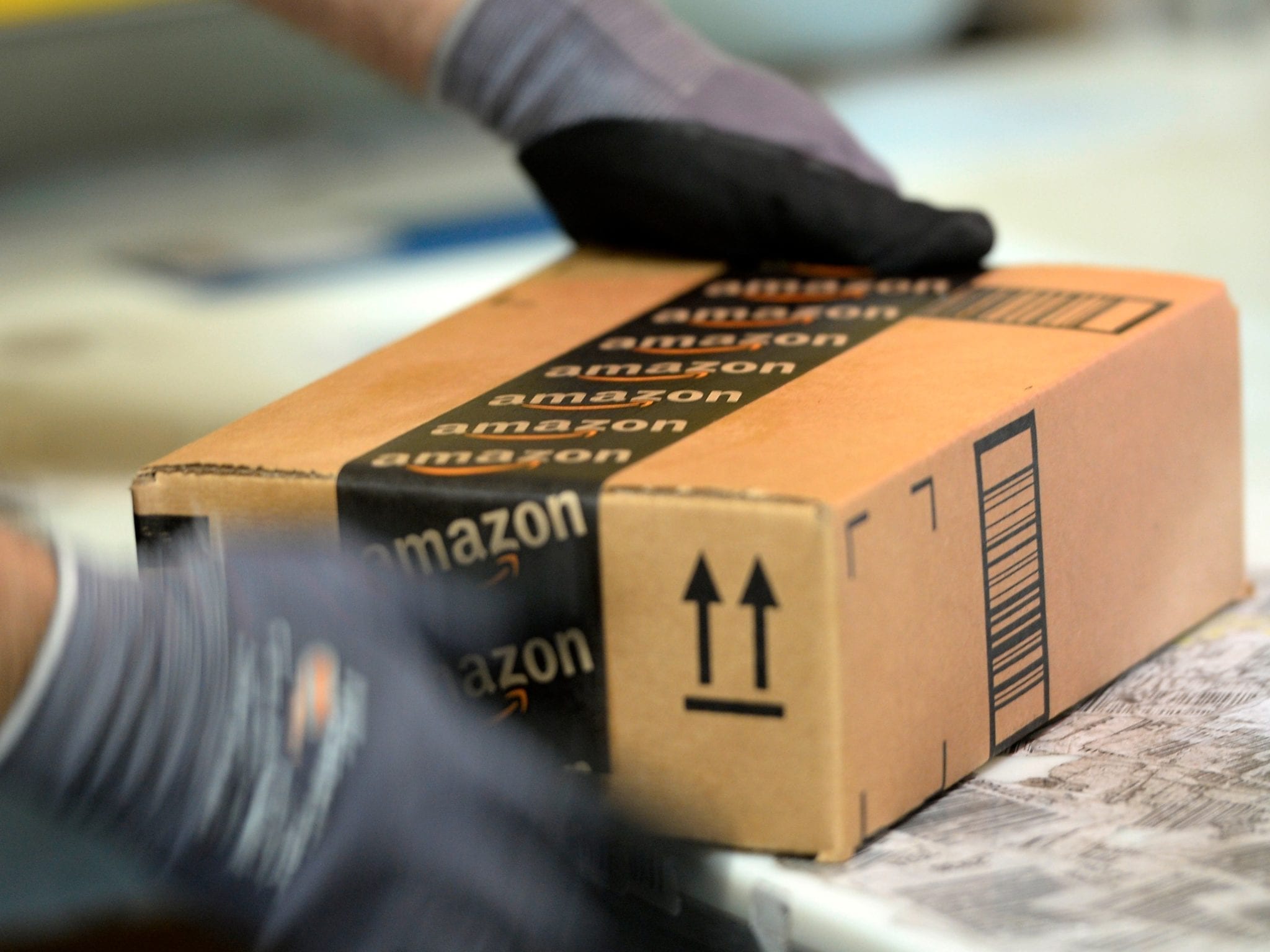
    Vietnamese company Gilimex Inc. is suing e-commerce giant Amazon for $280 million for allegedly cutting back on orders, leaving it with an excess inventory.

    Gilimex, a manufacturer of textile and other products based in Ho Chi Minh City, said in a filling in a New York state court on Monday that it has been partnering with Amazon from 2014 to 2022 and has invested tens of millions of dollars in manufacturing facilities to build the steel-and-cloth storage pods used to organize inventory in Amazon warehouses.

    Gilimex said the partnership was built on “trust,” with Gilimex relying on the accuracy of Amazon forecasts to make adequate investments to meet demand, including procuring materials and arranging factory capacity and manpower to meet the American company’s needs.

    But beginning in April, Amazon “immediately changed and reduced the projected demand” for the remainder of 2022 and 2023 to a small fraction of previous forecasts, according to the lawsuit.

    “Thus, while Amazon enjoyed unprecedented increases in revenue during the pandemic due in large part to the explosion of online ordering by consumers from the safety and comfort of their homes,” said the legal complaint, “Gilimex management and laborers literally risked their lives on a daily basis to make such record growth a reality.”

    The Vietnamese company said it employs 7,000 employees in multiple factories to produce more than 1 million warehouse storage units annually, adding that production for Amazon increased 20-fold during the eight-year relationship.

    Gilimex was established in 1982. Its main products include fabric storage organization, home textiles, laundry baskets, duffel bags, backpacks, and outdoor textile products.

    Around 85% of Gilimex’s export revenue has come from Amazon, which ordered $146.6 million worth of products from the company last year, according to Mirae Asset Vietnam Research.

    Gilimex earned a record revenue of VND4 trillion ($170.03 million) last year, up nearly 16% from 2020.

  • Retailers expand operations, sales see steady recovery

    Retailers expand operations, sales see steady recovery

    Many retail chains opened new stores this year even as retail sales of consumer goods and services saw a year-on-year rise of 20.5% in the first 11 months.

    Despite weakening external factors, continued domestic demand brought some relief, according to a report by HSBC.

    But though the pace started to slow down, retail sales remained a strong pillar of growth in November, the lender said.

    Total retail sales of consumer goods and services grew by 17.5% over November 2021.

    In recent months, while many factories laid off, furloughed or gave workers an early Tet (Lunar New Year holidays) service businesses such as F&B, retail and tourism expanded their operations.

    GS25 Vietnam, a joint venture between South Korea’s GS25 and local retailer Son Kim Group, has opened 200 franchised stores.

    Conglomerate Masan Group has bought another 34% in beverage chain Phuc Long Heritage to increase its ownership to 85%.

    “The two years of the Covid pandemic can be compared to a market research period and this year is the right time to launch expansion plans as well as to make a breakthrough in the retail race,” Trang Do, head of the retail services department at property consultancy Colliers, said.

    Tourism is reviving gradually, and contributing to the growth of retail services.

    The number of foreign arrivals was nearly three million in the first 11 months.

    Securities brokerage SSI said domestic consumption has recovered though not to pre-Covid levels, partly because of inflation.

    Inflation began to accelerate at the end of the second quarter, notably with a 17% increase in housing rents in September and October, and then 2% in November. This has affected domestic consumption.

    Last month headline inflation was 4.4% while core inflation was close to 5% due to a rapid recovery in demand.

    According to HSBC, rising inflation is a matter of concern and would increase in the next few quarters, forcing the central bank to take monetary measures.

    SSI said inflation would gradually rise in the first half of 2023, especially when the government considers adjusting prices of goods and services it manages such as electricity, healthcare and education.

    Do said large retailers are very interested in the Vietnamese retail market after the pandemic. However, the biggest difficulties for foreign investors in the retail sector are to find suitable premises in terms of location and area, and carrying out investment and license procedures.

  • Vietnam poised for record trade

    Vietnam poised for record trade

    Vietnam’s foreign trade is set to exceed US$700 billion this year, the highest ever, the customs department said.

    It has risen steadily from $500 billion in 2020 and $600 billion last year.

    In the first 11 months exports rose bviy 13.4% from a year earlier to $342.2 billion, and imports were up 10% to $331.6 billion, resulting in a surplus of $10.6 billion.

    Exports to the U.S. alone, the largest export market, were worth $101.5 billion. Imports from China, the
    country’s biggest source, topped $109.9 billion.

    According to the General Department of Vietnam Customs, the country’s global import-export ranking
    will go up this year.

    In 2021 the World Trade Organization had ranked Vietnam 23rd in terms of exports and 20th in imports.

    In the 10-member ASEAN, Vietnam ranked second behind only Singapore.

  • Vietnam Electricity wants power prices to be dynamic, based on production cost

    Vietnam Electricity wants power prices to be dynamic, based on production cost

    Vietnam Electricity wants power prices to be managed in the same way as fuel by taking into account the changing costs of production and not fixed at certain levels.

    Input costs surged to high this year, with oil and gas prices rising by double-digits and coal by 600%, EVN CEO Tran Dinh Nhan said at a meeting on December 12.

    Yet electricity prices remained the same as in 2019, he said.

    He blamed this for his company’s severe financial challenges and the risk of not paying its partners.

    “Eventually EVN’s credit ratings will be lowered. The company will have difficulty accessing loans and this will affect national security.”

    EVN said last month it faced losses of VND31 trillion this year and called for increasing retail prices.

    The government allows EVN to adjust prices by up to 5% a year, a 5-10% change needs approval from the Ministry of Industry and Trade and anything more than 10% requires the Cabinet’s green light.

    EVN also wants Power Development Plan 8 to be approved quickly so that it can start building new plants and grids to keep up with demand.

  • Aviation stocks rise amid expected industry recovery

    Aviation stocks rise amid expected industry recovery

    Stocks of Vietnam Airlines, Vietjet and other companies in the aviation industries have surged as the resumption of flights to China amid its relaxed Covid-19 policy boosted investors’ sentiment.

    HVN of state-owned Vietnam Airlines closed last week at a ceiling price in its third session in the green and returned to the mid-October price range of around VND11,750 ($0.50).

    Meanwhile, VJC of budget airline Vietjet, the only airline blue chip, gained 5% to close at VND111,500.

    SAS of Tan Son Nhat Airports Services and AST of Taseco Airs, which mostly provide services at Noi Bai International Airport, all gained three sessions to close at VND22,000 and VND54,000, respectively.

    These stocks gained after China relaxed its Covid-19 restrictions and several Vietnamese airlines, such as Vietnam Airlines and Bamboo Airways, announced a flight resumption to Chinese cities.

    Analysts of brokerage VNDirect said earlier this month that the most damaging factor for Vietnam’s tourism and aviation recovery is China’s zero-Covid policy which has been strictly imposed in most of the last three years.

    Chinese tourists accounted for 35% of total foreign tourists in Vietnam before the pandemic, and the figure is forecast to reach 20% in early next year before returning to the old level in early 2024, they added.

    “As the earnings of Vietnamese aviation companies have a high dependency on international traffic, we believe that their figures will surge starting next year.”

    Another reason for the surge in aviation stocks is an increasing number of investors buying the dip after the plunges.

    It also warned that risks such as high oil prices, heavy competition and weakening travel demand due to a global economic slowdown might have impact on the recovery of aviation stocks.

  • Dollar weakens against dong

    Dollar weakens against dong

    The U.S. dollar continued to depreciate against the dong on the black market Monday.

    It plunged 0.86% to VND24,220 at unofficial exchange points.

    The greenback fell 0.19% to VND23,825 at TPBank, and dropped 0.32% to VND23,713 at Vietinbank.

    Eximbank sold the dollar at VND23,740, up 0.17%.

    The rate at Techcombank was VND23,750, up 0.04%. It stayed unchanged at Vietcombank.

    The State Bank of Vietnam (SBV)’s set the reference rate is at VND23,655, down 0.01%.

    The dollar has gained 3.40% against the dong since the beginning of the year.

    The U.S. Dollar Index, which measures the greenback’s strength against major currencies, hovered around a three-month low of 105 points.

  • Employees twiddle thumbs after being overworked earlier this year

    Employees twiddle thumbs after being overworked earlier this year

    Roughly one year ago, when the Covid pandemic hard hit southern factories, Trinh and many other garment workers in the southern province of Binh Duong covered a distance of nearly 2,000 km to return to their hometown, the central province of Thanh Hoa.

    After Tet (Lunar New Year holiday) in early 2022, she intended to seek a job in the hometown to have conditions to take care of her little daughter. But her garment factory phoned her, telling her back to work because it was receiving more orders and facing a labor shortage.

    Many such a call were made as businesses started to resume full operation after the pandemic was put under control. Employers were afraid of encountering severe shortages of labor because a large number of workers had returned to their native provinces, and been reluctant to back to work.

    Nong Van Dung, deputy director of the Dong Nai Department of Labor, Invalids and Social Affairs, said the department’s officers went to the Central Highlands region and the Mekong Delta to persuade workers to come back to work in the southern province. At that time, factories in Dong Nai needed some 60,000 workers.

    Phi Ngoc Trinh, general director of Ho Guom Garment Company, said garment firms, which created 3 million jobs, received increasing orders, and they could choose the most suitable ones.

    Garment 10 Company even prepared materials for production slated for the next six months to serve big markets.

    However, some months later, everything suddenly changed.

    Garment 10 Company’s general director Than Duc Viet said 10-15% of foreign clients told his company to delay production, explaining that they had big inventories till Christmas, while the firm had already prepared materials for production.

    “Returning to this land (Binh Duong), I have never thought that we would be underemployed in the year-end like this,” garment worker Trinh said in late November, sitting in a boarding house in the province’s Di An City.

    After six months of working overtime, she and over 100 colleagues in the garment factory are now working only five days a week.

    Receiving fewer orders, a plethora of garment factories have had to scale down production. The number of orders, mainly from Japan’s Uniqlo and the U.S.’s Nike and Adidas, a garment firm in the northern province of Hai Duong received in October decreased 30% against October 2021, so it told workers to stop working overtime.

    In September, the firm planned to open a new factory, but now it has stopped the plan on hiring more workers, and tried to maintain the current workforce of 17,000 after laying off some 4,000 people.

    Truong Van Cam, president of the Vietnam Textile and Apparel Association, forecasted the order shortage will last till mid-2023 at the earliest.

    Like garment makers, footwear and construction materials firms faced the same gloomy situation.

    “We, footwear producers, have never seen such a strange market over the past 40 years. Orders have dropped en masse in a short period of time,” said a Vietnam Leather, Footwear and Handbag Association official.

    The official said that in June factories still received orders and hired more workers, but only one month later, orders started to decrease gradually. Most factories encountered order shortages of 50-70%, even some got no orders, he recalled.

    Dinh Hong Ky, vice president of the Vietnam Association for Building Materials, told VnExpress that construction material firms have recently laid off more workers than in early 2021 when the pandemic situation was serious.

    In April 2021, the firms also reduced their workforce and working hours, but mainly to follow pandemic prevention rules, while market demands remained stable, he explained.

    Ky’s firm, Secoin, whose nine factories produce bricks and tiles for export to 60 countries, has had to cut jobs. One of the factories has recently reduced its workforce by 40%.

    “In October, the first time in our company’s history, clients in Japan told us to stop production for new orders. They will only receive products for orders placed earlier,” he said, noting that even in the 2008-2009 Asian financial crisis, his company’s export to Japan did not decrease.

    “No one in the building materials industry, neither Vietnamese factories nor foreign customers, can confidently predict when the difficulties will end,” Ky said.

    According to Ky, unfavorable conditions for production include the uncertainties of geopolitical tensions, China’s unpredictability with anti-pandemic policies and high inflation, and Vietnam’s sluggish real estate market and tightened credit growth.

    Massive layoffs

    According to statistics from the Vietnam General Confederation of Labor, 472,000 workers have recently been fired or underemployed, with 41,500 people having their labor contracts terminated. Most of them worked in such labor-intensive industries as garment and textile, footwear, wood processing, seafood, electronic component and mechanics.

    Shrunken working hours and salaries have happened at not only blue-collar workers but also white-collar ones.

    In late November, a leading construction firm with a workforce of more than 5,000 asked office clerks to work only 40 hours a week, from Monday to Friday, and lowered salary-based allowances of managerial post holders.

    Hoai Anh, a communication staff of an advertisement company in Hanoi, was shocked last weekend when she was informed that her income would decrease by 30% starting in December due to the company’s receiving fewer customers. Smaller salary means smaller social insurance premium.


  • Gold prices drop marginally

    Gold prices drop marginally

    SJC gold prices fell 0.15% to VND67 million ($2,805.70) per tael Thursday morning.

    Gold ring prices gained 0.19% to VND54 million. A tael equals 37.5 grams or 1.2 ounces.

    Gold prices were little changed in early Asian trade on Thursday, after bullion jumped more than 1% in the previous session following a retreat in the U.S. dollar and yields.

    Spot gold held its ground at $1,786.92 per ounce.

    Higher interest rates tend to increase the opportunity cost of holding gold as it yields no interest.

    Market participants mostly expect a 50-basis point rate hike at the Fed’s final meeting of 2022 scheduled on December 13-14.

  • Vietnam’s EV maker Vinfast files for US IPO to fuel global expansio

    Vietnam’s EV maker Vinfast files for US IPO to fuel global expansio

    Vietnam’s electric-vehicle maker VinFast said on Tuesday it has filed for an initial public offering (IPO) in the United States to list on the Nasdaq under ticker symbol “VFS” to fund its expansion with a planned plant in North Carolina.

    VinFast, which began operations in 2019, is gearing up to expand in the U.S. market, where it hopes to compete with legacy automakers and startups with its two all-electric SUVs, the VF8 and VF9, including battery leasing to reduce the purchase price.

    For the IPO, the company said it will convert to a Singapore public limited company and will be known as VinFast Auto Ltd, while the number of shares to be offered and the price range for the proposed offering have not yet been determined.

    Tuesday’s filing follows VinFast’s confidential submission to the U.S. Securities and Exchange Commission (SEC) in April, a month after it said it would build a production plant in North Carolina with an initial projected capacity of 150,000 EVs a year.

    A unit of Vietnam’s biggest conglomerate Vingroup, VinFast first flagged its U.S. IPO in April last year, eyeing to raise $2 billion with valuation of about $60 billion.

    The market valuation for EV startups has drastically cooled for the past year after some companies with sky-high valuation face scrutiny, together with the current gloomy global economy.

    “Valuation or the size of our IPO will be subject, in part, to market conditions,” VinFast Chief Executive Le Thi Thu Thuy said in a separate statement released on Wednesday.

    “VinFast will continue to monitor opportunities for future fundraises, as the market becomes more familiar with the VinFast brand and story,” she said.

    The company had said IPO was just one of the options to raise fund. In July it tapped banks to raise at least $4 billion to fuel its aggressive expansion.

    No time frame was specified for the offering on Tuesday although the company had said it aimed for an IPO in the fourth quarter of this year.

    But in May, its parent company Vingroup warned the IPO may be delayed to 2023 due to market uncertainty.

    “VinFast intends to conduct an IPO after the SEC declares the registration statement effective, market conditions permitting,” Thuy said on Wednesday, noting the company’s primary objective was to successfully list VinFast on a U.S. stock exchange.

    The EV maker in late November shipped its first batch of 999 vehicles to the United States, capping a five-year bid to develop an auto production hub in Vietnam for markets in North America and Europe.

    VinFast has said it has almost 65,000 orders globally in total and expects to sell 750,000 EVs annually by 2026.

  • Smartphone exports drop in November

    Smartphone exports drop in November

    Smartphone exports fell nearly 10% in volume and 7.4% in value in November after the country’s largest manufacturer, Samsung Vietnam, lowered production the second time this year.

    According to the General Statistics Office, Vietnam produced 20.6 million phones in November, and export of phones and phone components was worth $5 billion. This is the third month the export value of phone and components has dropped.

    Smartphone production in the first 11 months decreased by over 7% year-on-year. Most of the smartphones produced in Vietnam are exported to the western market.

    Typically, phone output increases before Christmas, but it has dropped this year because inflation pressures have prompted companies to limit production.

    Of the total smartphone output in Vietnam, Samsung Vietnam contributes half. The tech giant recorded an export turnover of over $34 billion in the first half of this year, accounting for more than 18% of the country’s total.

    Samsung Vietnam has reduced smartphone production twice this year, the first time in the first half of the year over Covid-19 impacts and the second early November.

    Vietnam recorded a total export turnover of $342.21 billion in the first 11 months, while import turnover was $331.61 billion, resulting in a trade surplus of $0.78 billion, according to the General Statistics Office. The surplus in the same period last year was $0.6 billion.

  • LG promises $4B investment in Vietnam

    LG promises $4B investment in Vietnam

    South Korean electronics giant LG will invest US$4 billion in Vietnam as it seeks to make the country a future smartphone manufacturing hub.

    Its chief operating officer Kwon Bong-seok made this commitment at a meeting with visiting Vietnamese President Nguyen Xuan Phuc Monday.

    LG has invested $5.3 billion in Vietnam since 1995 in sectors such as electronics, household equipment and auto parts, and employs 27,000 workers, Kwon added.

    Phuc said he valued LG’s investment in Vietnam, recalling he had attended the groundbreaking ceremony at its $2-billion factory in Hai Phong Province in 2016.

    He invited further investment, especially in auto and smartphone parts, adding further training is also needed in information technology.