Tag: Vietnam

  • Dollar weakens against dong

    Dollar weakens against dong

    The U.S. dollar continued to depreciate against the dong on the black market Monday.

    It plunged 0.86% to VND24,220 at unofficial exchange points.

    The greenback fell 0.19% to VND23,825 at TPBank, and dropped 0.32% to VND23,713 at Vietinbank.

    Eximbank sold the dollar at VND23,740, up 0.17%.

    The rate at Techcombank was VND23,750, up 0.04%. It stayed unchanged at Vietcombank.

    The State Bank of Vietnam (SBV)’s set the reference rate is at VND23,655, down 0.01%.

    The dollar has gained 3.40% against the dong since the beginning of the year.

    The U.S. Dollar Index, which measures the greenback’s strength against major currencies, hovered around a three-month low of 105 points.

  • Employees twiddle thumbs after being overworked earlier this year

    Employees twiddle thumbs after being overworked earlier this year

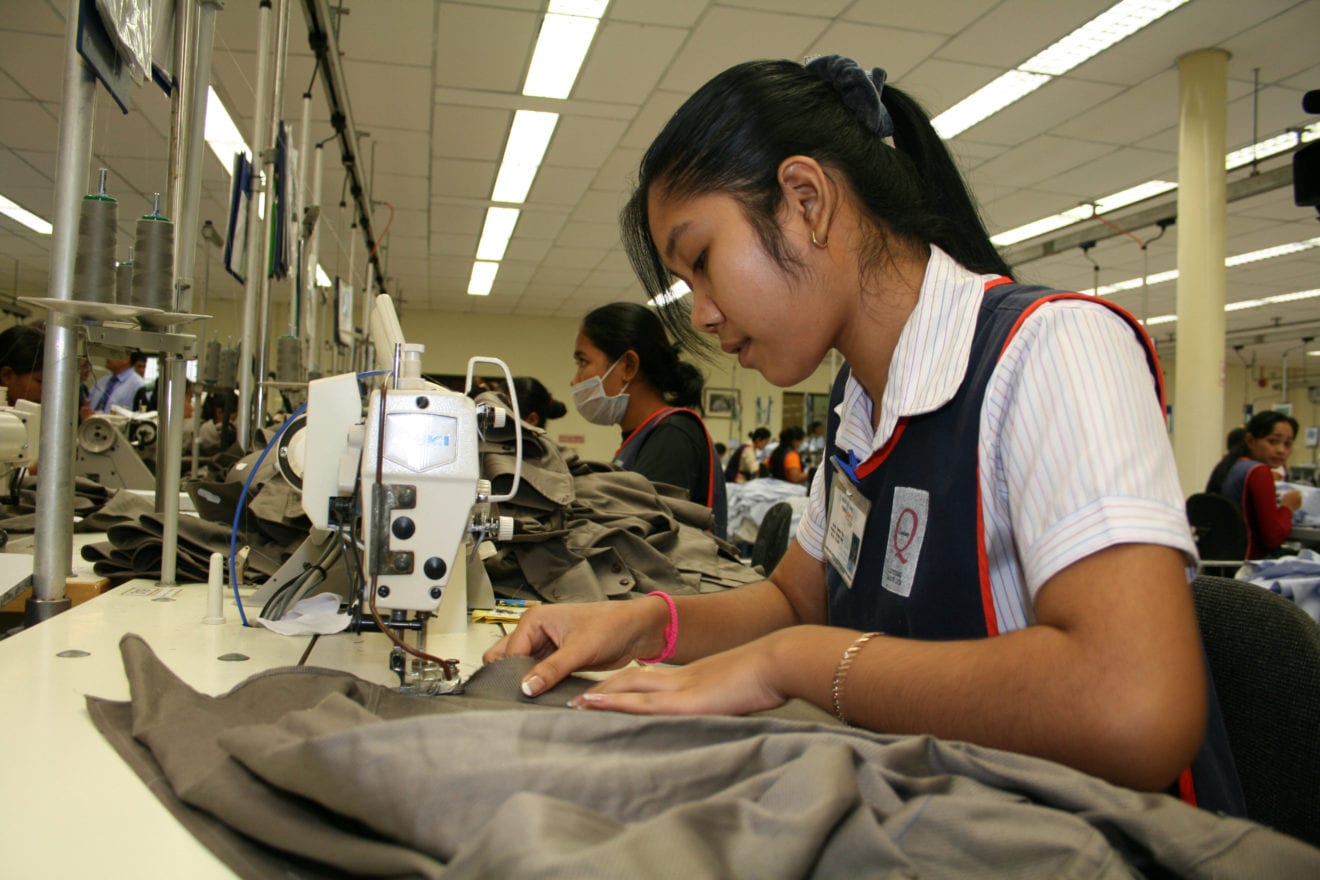
    Roughly one year ago, when the Covid pandemic hard hit southern factories, Trinh and many other garment workers in the southern province of Binh Duong covered a distance of nearly 2,000 km to return to their hometown, the central province of Thanh Hoa.

    After Tet (Lunar New Year holiday) in early 2022, she intended to seek a job in the hometown to have conditions to take care of her little daughter. But her garment factory phoned her, telling her back to work because it was receiving more orders and facing a labor shortage.

    Many such a call were made as businesses started to resume full operation after the pandemic was put under control. Employers were afraid of encountering severe shortages of labor because a large number of workers had returned to their native provinces, and been reluctant to back to work.

    Nong Van Dung, deputy director of the Dong Nai Department of Labor, Invalids and Social Affairs, said the department’s officers went to the Central Highlands region and the Mekong Delta to persuade workers to come back to work in the southern province. At that time, factories in Dong Nai needed some 60,000 workers.

    Phi Ngoc Trinh, general director of Ho Guom Garment Company, said garment firms, which created 3 million jobs, received increasing orders, and they could choose the most suitable ones.

    Garment 10 Company even prepared materials for production slated for the next six months to serve big markets.

    However, some months later, everything suddenly changed.

    Garment 10 Company’s general director Than Duc Viet said 10-15% of foreign clients told his company to delay production, explaining that they had big inventories till Christmas, while the firm had already prepared materials for production.

    “Returning to this land (Binh Duong), I have never thought that we would be underemployed in the year-end like this,” garment worker Trinh said in late November, sitting in a boarding house in the province’s Di An City.

    After six months of working overtime, she and over 100 colleagues in the garment factory are now working only five days a week.

    Receiving fewer orders, a plethora of garment factories have had to scale down production. The number of orders, mainly from Japan’s Uniqlo and the U.S.’s Nike and Adidas, a garment firm in the northern province of Hai Duong received in October decreased 30% against October 2021, so it told workers to stop working overtime.

    In September, the firm planned to open a new factory, but now it has stopped the plan on hiring more workers, and tried to maintain the current workforce of 17,000 after laying off some 4,000 people.

    Truong Van Cam, president of the Vietnam Textile and Apparel Association, forecasted the order shortage will last till mid-2023 at the earliest.

    Like garment makers, footwear and construction materials firms faced the same gloomy situation.

    “We, footwear producers, have never seen such a strange market over the past 40 years. Orders have dropped en masse in a short period of time,” said a Vietnam Leather, Footwear and Handbag Association official.

    The official said that in June factories still received orders and hired more workers, but only one month later, orders started to decrease gradually. Most factories encountered order shortages of 50-70%, even some got no orders, he recalled.

    Dinh Hong Ky, vice president of the Vietnam Association for Building Materials, told VnExpress that construction material firms have recently laid off more workers than in early 2021 when the pandemic situation was serious.

    In April 2021, the firms also reduced their workforce and working hours, but mainly to follow pandemic prevention rules, while market demands remained stable, he explained.

    Ky’s firm, Secoin, whose nine factories produce bricks and tiles for export to 60 countries, has had to cut jobs. One of the factories has recently reduced its workforce by 40%.

    “In October, the first time in our company’s history, clients in Japan told us to stop production for new orders. They will only receive products for orders placed earlier,” he said, noting that even in the 2008-2009 Asian financial crisis, his company’s export to Japan did not decrease.

    “No one in the building materials industry, neither Vietnamese factories nor foreign customers, can confidently predict when the difficulties will end,” Ky said.

    According to Ky, unfavorable conditions for production include the uncertainties of geopolitical tensions, China’s unpredictability with anti-pandemic policies and high inflation, and Vietnam’s sluggish real estate market and tightened credit growth.

    Massive layoffs

    According to statistics from the Vietnam General Confederation of Labor, 472,000 workers have recently been fired or underemployed, with 41,500 people having their labor contracts terminated. Most of them worked in such labor-intensive industries as garment and textile, footwear, wood processing, seafood, electronic component and mechanics.

    Shrunken working hours and salaries have happened at not only blue-collar workers but also white-collar ones.

    In late November, a leading construction firm with a workforce of more than 5,000 asked office clerks to work only 40 hours a week, from Monday to Friday, and lowered salary-based allowances of managerial post holders.

    Hoai Anh, a communication staff of an advertisement company in Hanoi, was shocked last weekend when she was informed that her income would decrease by 30% starting in December due to the company’s receiving fewer customers. Smaller salary means smaller social insurance premium.

  • Gold prices drop marginally

    Gold prices drop marginally

    SJC gold prices fell 0.15% to VND67 million ($2,805.70) per tael Thursday morning.

    Gold ring prices gained 0.19% to VND54 million. A tael equals 37.5 grams or 1.2 ounces.

    Gold prices were little changed in early Asian trade on Thursday, after bullion jumped more than 1% in the previous session following a retreat in the U.S. dollar and yields.

    Spot gold held its ground at $1,786.92 per ounce.

    Higher interest rates tend to increase the opportunity cost of holding gold as it yields no interest.

    Market participants mostly expect a 50-basis point rate hike at the Fed’s final meeting of 2022 scheduled on December 13-14.

  • Vietnam’s EV maker Vinfast files for US IPO to fuel global expansio

    Vietnam’s EV maker Vinfast files for US IPO to fuel global expansio

    Vietnam’s electric-vehicle maker VinFast said on Tuesday it has filed for an initial public offering (IPO) in the United States to list on the Nasdaq under ticker symbol “VFS” to fund its expansion with a planned plant in North Carolina.

    VinFast, which began operations in 2019, is gearing up to expand in the U.S. market, where it hopes to compete with legacy automakers and startups with its two all-electric SUVs, the VF8 and VF9, including battery leasing to reduce the purchase price.

    For the IPO, the company said it will convert to a Singapore public limited company and will be known as VinFast Auto Ltd, while the number of shares to be offered and the price range for the proposed offering have not yet been determined.

    Tuesday’s filing follows VinFast’s confidential submission to the U.S. Securities and Exchange Commission (SEC) in April, a month after it said it would build a production plant in North Carolina with an initial projected capacity of 150,000 EVs a year.

    A unit of Vietnam’s biggest conglomerate Vingroup, VinFast first flagged its U.S. IPO in April last year, eyeing to raise $2 billion with valuation of about $60 billion.

    The market valuation for EV startups has drastically cooled for the past year after some companies with sky-high valuation face scrutiny, together with the current gloomy global economy.

    “Valuation or the size of our IPO will be subject, in part, to market conditions,” VinFast Chief Executive Le Thi Thu Thuy said in a separate statement released on Wednesday.

    “VinFast will continue to monitor opportunities for future fundraises, as the market becomes more familiar with the VinFast brand and story,” she said.

    The company had said IPO was just one of the options to raise fund. In July it tapped banks to raise at least $4 billion to fuel its aggressive expansion.

    No time frame was specified for the offering on Tuesday although the company had said it aimed for an IPO in the fourth quarter of this year.

    But in May, its parent company Vingroup warned the IPO may be delayed to 2023 due to market uncertainty.

    “VinFast intends to conduct an IPO after the SEC declares the registration statement effective, market conditions permitting,” Thuy said on Wednesday, noting the company’s primary objective was to successfully list VinFast on a U.S. stock exchange.

    The EV maker in late November shipped its first batch of 999 vehicles to the United States, capping a five-year bid to develop an auto production hub in Vietnam for markets in North America and Europe.

    VinFast has said it has almost 65,000 orders globally in total and expects to sell 750,000 EVs annually by 2026.

  • Smartphone exports drop in November

    Smartphone exports drop in November

    Smartphone exports fell nearly 10% in volume and 7.4% in value in November after the country’s largest manufacturer, Samsung Vietnam, lowered production the second time this year.

    According to the General Statistics Office, Vietnam produced 20.6 million phones in November, and export of phones and phone components was worth $5 billion. This is the third month the export value of phone and components has dropped.

    Smartphone production in the first 11 months decreased by over 7% year-on-year. Most of the smartphones produced in Vietnam are exported to the western market.

    Typically, phone output increases before Christmas, but it has dropped this year because inflation pressures have prompted companies to limit production.

    Of the total smartphone output in Vietnam, Samsung Vietnam contributes half. The tech giant recorded an export turnover of over $34 billion in the first half of this year, accounting for more than 18% of the country’s total.

    Samsung Vietnam has reduced smartphone production twice this year, the first time in the first half of the year over Covid-19 impacts and the second early November.

    Vietnam recorded a total export turnover of $342.21 billion in the first 11 months, while import turnover was $331.61 billion, resulting in a trade surplus of $0.78 billion, according to the General Statistics Office. The surplus in the same period last year was $0.6 billion.

  • LG promises $4B investment in Vietnam

    LG promises $4B investment in Vietnam

    South Korean electronics giant LG will invest US$4 billion in Vietnam as it seeks to make the country a future smartphone manufacturing hub.

    Its chief operating officer Kwon Bong-seok made this commitment at a meeting with visiting Vietnamese President Nguyen Xuan Phuc Monday.

    LG has invested $5.3 billion in Vietnam since 1995 in sectors such as electronics, household equipment and auto parts, and employs 27,000 workers, Kwon added.

    Phuc said he valued LG’s investment in Vietnam, recalling he had attended the groundbreaking ceremony at its $2-billion factory in Hai Phong Province in 2016.

    He invited further investment, especially in auto and smartphone parts, adding further training is also needed in information technology.

  • Canada imports 50% more Vietnamese garments, seafood

    Canada imports 50% more Vietnamese garments, seafood

    Vietnamese garment and seafood exports to Canada have surged 50% year-on-year, totaling values of $1.1 billion and $334 million, respectively.

    As the two categories saw the most significant increases in exports to Canada of the last three years, other categories such as wood, chemicals, metal, cashew nuts, handbags, and machines also recorded growth of between 3% and 30%, according to statistics from the Vietnam Customs Office.

    Total exports from Vietnam to Canada have risen 28.7% year-on-year to nearly $5.5 billion over the same period.

    Canada is Vietnam’s second-largest export market in the Americas, behind the U.S.

    And Vietnam is Canada biggest export market in ASEAN.

    But Canada has been increasing its trade safeguards against Vietnam recently, and Vietnamese authorities have proposed that the country impose a fairer trade policy with Vietnamese goods in line with regulations of the World Trade Organization, said Vo Tan Thanh, deputy chairman of the Vietnam Chamber of Commerce and Industry (VCCI).

    He said that Canada should be more open to importing competitively priced Vietnamese agricultural products such as vegetables and coffee.

    At the 29th APEC Summit in Thailand, Vietnam President Nguyen Xuan Phuc and Canadian Prime Minister Justin Trudeau agreed to expand and deepen bilateral cooperation in all fields, especially trade and investment.

  • Food, beverage prices soar ahead of Tet

    Food, beverage prices soar ahead of Tet

    Consumer goods, including vegetables and seafood, have seen prices surge by double digits in the last month.

    Oanh in Ho Chi Minh City’s District 1 said prices have risen in recent weeks at a traditional market she often shops at.

    “The price of snakehead fish this morning was VND20,000 up from last week to VND90,000.”

    The Tra Vinh Province Department of Agriculture and Rural Development said fish prices have been rising because of increasing demand as input for making products for Tet, Vietnam’s biggest holiday, which falls in January.

    Besides, the supply of some fish, such as snakehead has dropped by 50-60% compared to a year ago, it said.

    Soft drink and beer prices have risen by VND2,000-15,000 per carton this month, according to shops, who said transportation and storage prices have been rising.

    Vegetable prices have also been increasing. Cauliflower now costs VND70,000 per kilogram, up 7.7%. Scallion prices have risen by 15.4% to VND75,000 per kilogram.

    Hue, a vegetable vendor at Ba Chieu Market in Binh Thanh District, said prices are at their highest levels this year.

    Hoang Thanh Hai, director of the Hai Nong Vegetable Cooperative in Cu Chi District, HCMC, said prolonged rainfall in November has hit output by up to 70%.

    His cooperative used to deliver 2.5-3 tons of vegetables to the city daily, but now only sends 0.7-1 ton, he said.

    Vegetable farming costs have risen by 40-50% year-on-year to record levels, and declining consumption has caused farmers to reduce production.

    Vietnam’s consumer prices in November rose 4.56% from a year earlier, fueled by rising costs of educational services and construction materials, according to the General Statistics Office.

    For the first 11 months of 2022, average consumer prices rose 3.02% from a year before, it said.

  • Vietnam firm reluctant to launch cargo flights, foreign carrier eager

    Vietnam firm reluctant to launch cargo flights, foreign carrier eager

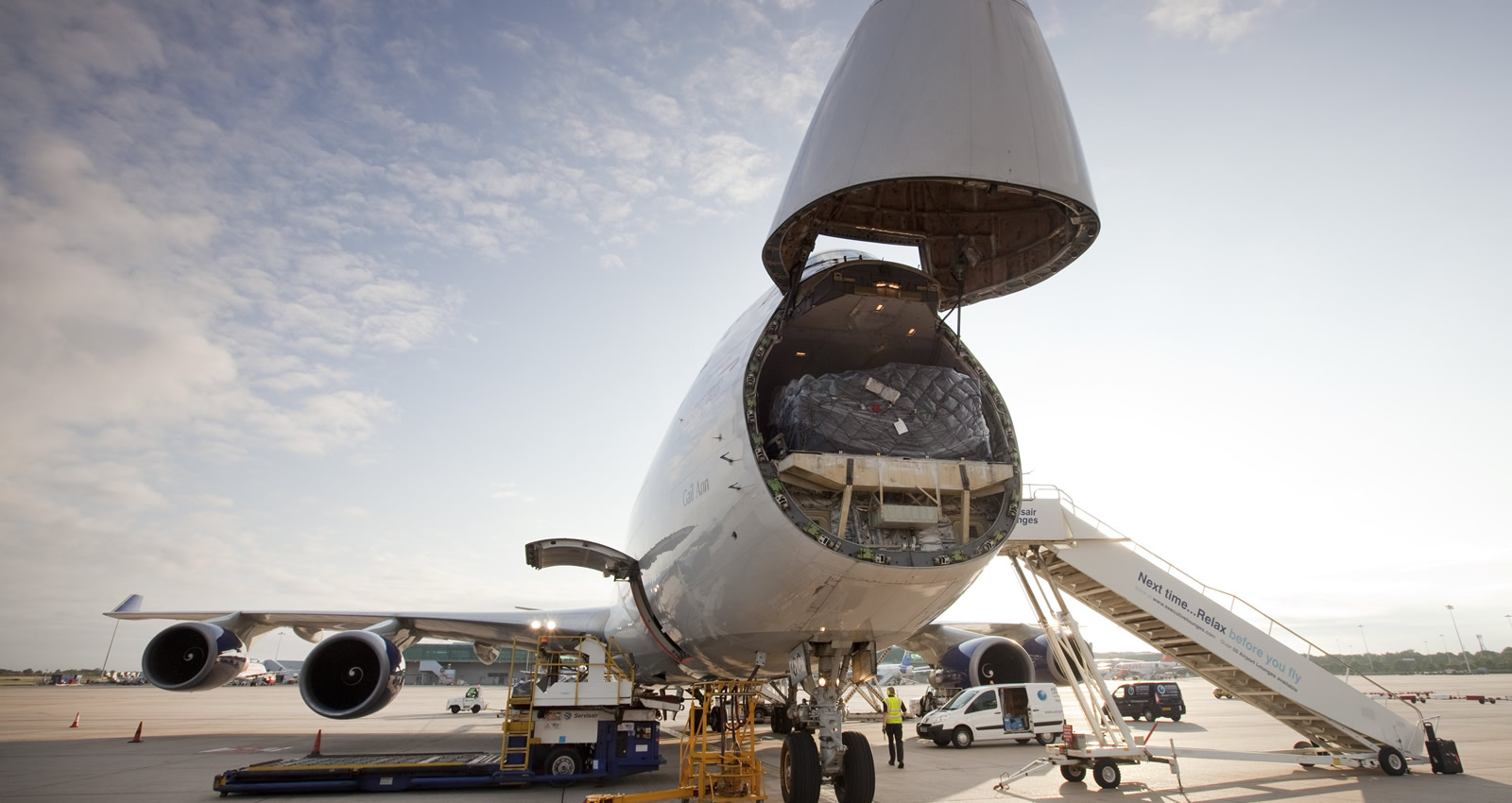
    Local IPP Air Cargo has axed plans to become Vietnam’s first cargo airline, but Germany’s Lufthansa Cargo has expanded operations.

    In late October, IPP Air Cargo canceled its application to launch what would have been the nation’s first cargo airline. However, the company had already completed the procedures to lease four Boeing Converted Freighters 737 800BCF.

    Jonathan Hanh Nguyen, chairman of the airline’s parent company Imex Pan Pacific Group (IPPG), said that global air cargo demand was declining due to current turmoil.

    “We have decided to end our plan to avoid causing more damage to carriers that are already incurring losses,” he said, adding that the company aimed to reinstate the plan when the market stabilizes.

    Last month, Lufthansa launched its first direct flight from Frankfurt to Hanoi.

    The carrier had previously run two weekly flights from Germany to HCMC before diverting operations to Thailand.

    CCO Ashwin Bhat said his airline could not ignore the Vietnamese market, where 30% of exported items are electronics and high-tech goods.

    Vietnam’s plentiful bilateral trade agreements with major markets, especially Europe, were attractive to Luftnasa, said Bhat.

    He added that the country’s rapid economic recovery from the Covid-19 pandemic had also interested the dominant European airline.

    According to government statistics, the total volume of goods transported by air in Vietnam has increased 2.5 times over the last ten years. The number is forecasted to surge to 4.1 million tons by 2030.

    According to the Vietnam Logistics Business Association (VLA), Vietnamese airlines hold an international freight forwarding market share of only 12%, while nearly 30 foreign carriers hold the rest.

    VLA president Le Duy Hiep said the withdrawal of IPP Air Cargo from the market was a pity because domestic logistics enterprises are in dire need of Vietnamese cargo airlines.

    According to Hiep, Vietnam’s massive amount of total imports and exports were worth over $700 billion in 2022, with over half being exports. Over two million tons of goods are exported by air from Vietnam each year.

    Analysts have said that these factors have made the potential of the Vietnamese cargo market plain to see for Lufthansa Cargo.

    Hiep said Vietnam should be home to cargo airlines with larger market shares, but noted that this would require much more investment and a wider network of agents and customers.

  • Unilever Vietnam implements approaches towards net zero future

    Unilever Vietnam implements approaches towards net zero future

    Unilever has started a range of programs and initiatives for a net zero value chain by 2039, contributing to Vietnam government’s net zero carbon emissions vision by 2050.

    In 2021, Unilever published its Climate Transition Action Plan, an ambitious and transparent roadmap to help reduce its operational emissions by 100% by 2030 and reach net zero emissions across its value chain by 2039.

    First, Unilever Vietnam is replacing all fossil fuel use in the factories’ boilers with renewable energy source – biomass recycled from damaged pallets, shredded wood, etc. The company is also committed to using entirely renewable electricity at all factories and offices in Vietnam.

    Secondly, Unilever aims to halve its use of virgin plastic by 2025 to help lower the value chain emissions. Unilever Vietnam has reduced 55% virgin plastic in its packaging production, three years earlier than the global target, through absolute reduction and post-consumer recycled plastic use.

    Thirdly, the company is now replacing fossil fuel-derived chemicals with renewable or recycled carbon. In Home Care, Unilever estimates this will reduce its product’s greenhouse gas emissions by up to 20%.

    In Vietnam, Unilever implemented “Clean Future” campaign for Home Care product line early this year, aiming to develop product formulation with water efficiency and biodegradability, and utilize 100% renewable or circular feedstocks. Currently, a number of products from Omo, Comfort, Sunlight, Cif, Lifebuoy have met the criteria of product formulation driving water efficiency and biodegradability.

    Next, Unilever Vietnam is working with their partners and suppliers in the value chain to cut down the GHG emissions as more than 75% of the carbon footprint in Unilever Vietnam’s supply chain derives from input materials and outsourced activities.

    Until now, the company has eliminated CO2 emissions and carton waste in packaging transportation from Dynaplast; converted to 100% electric forklifts, contributing to a reduction of 1,999 tons of CO2 emissions at all distribution centers by the end of 2021 in comparison with 2020; and implemented the circular economy model in the waste management, turning waste into sources of energy and fertilizers to serve manufacturing activities.

    Unilever globally will be calling on countries to deliver policies that accelerate energy and food system transitions at COP27 on the horizon.

  • Vietnam auto production ranks 4th in Southeast Asia

    Vietnam auto production ranks 4th in Southeast Asia

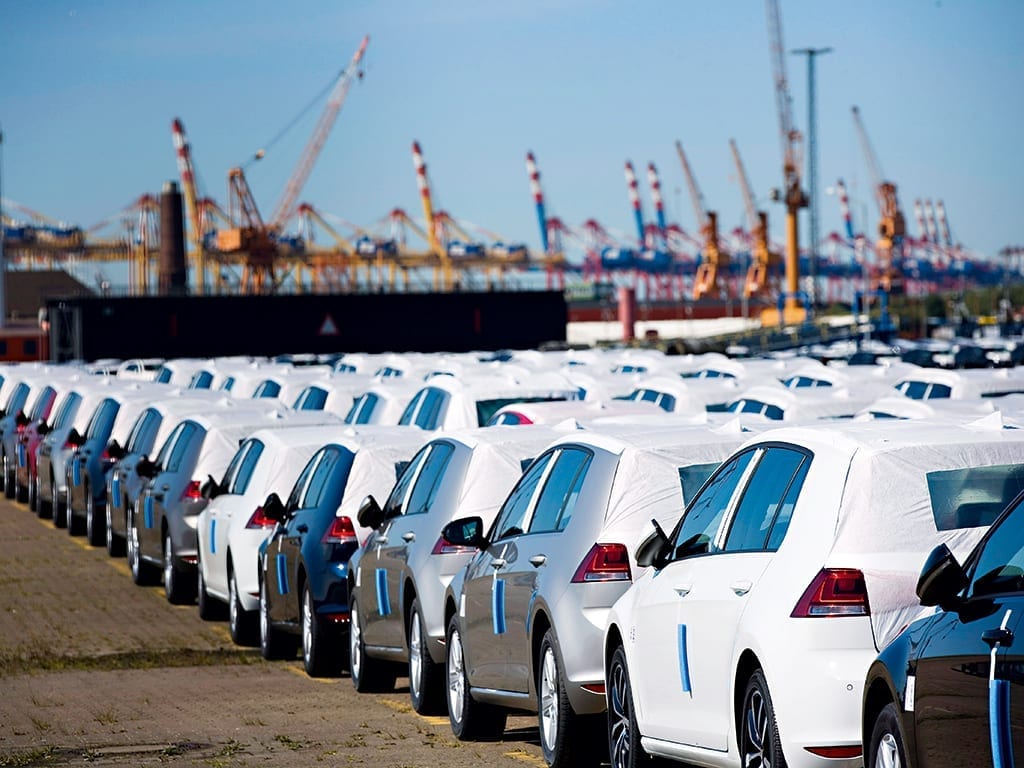
    Vietnam ranks fourth in Southeast Asia in auto production in the first 10 months at 362,000 units, up 16.4% year-on-year, according to the General Statistics Office.

    Thailand leads the region with nearly 1.6 million units made in the period, followed by Indonesia, 1.2 million, and Malaysia, 567,700, according to the ASEAN Automotive Federation.

    Many auto factories have recently been established in Vietnam, including Toyota, Honda, Ford, Kia, and Hyundai. Vietnam company VinFast has also been expanding with a focus on the global electric vehicle market.

    Some brands such as Skoda (Czech) and Chery (China) are planning to assemble cars in Vietnam through domestic partners in the next 1-2 years.

    Vietnam also imports cars from the regional leaders Thailand and Indonesia.

    Vietnam also ranked first in year-on-year auto sales growth in the first 10 months at 52.2%, followed by Malaysia at 50.7%.

    The country saw 322,963 units sold, against the leader Indonesia’s 851,413.

  • Agro exports hit new record high

    Agro exports hit new record high

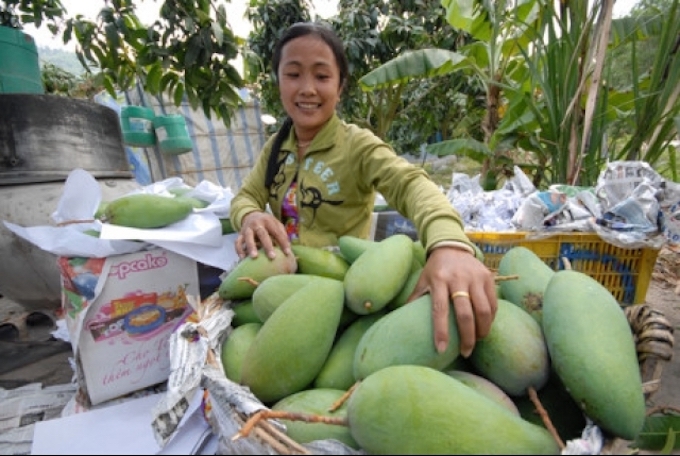
    Vietnamese agriculture, forestry and fishery exports climbed to a new record of over $49 billion in value through November this year, an 11.8% hike year-on-year.

    As Vietnam’s largest foreign agriculture market, the U.S. accounted for $12.3 billion in shipments, 25% of the total.

    Orders from the robust Chinese economy followed the U.S. market at $9.3 billion.

    Continentally, Asia accounted for 44.7% of the total, trailed by the Americas at 27.4%, and then finally, Europe at 11.3%.

    More Vietnamese agricultural products were exported this year than ever, with fresh pomelo officially added to U.S. shipments for the first time this November after six years of negotiation.

    Fresh durian was officially exported to China in September, along with passion fruit, yams and bird’s nest.

    Vietnam’s Ministry of Agriculture and Rural Development reported that it is negotiating with China, Japan, South Korea and other countries to continue expanding the list of local agro products shipped abroad.

  • Low-quality rice imports to be restricted

    Low-quality rice imports to be restricted

    The Ministry of Industry and Trade is drafting a decree on rice trade to limit the import of low-quality grain.

    The volume of low-grade rice imported from India has surged due to low vietnaprices and zero import tax under the ASEAN-India Free Trade Area, potentially affecting Vietnam’s own rice production and food security.

    Last year Vietnam imported a million tons of rice from various countries, including over 72% from India, according to ministry statistics.

    The low-quality grain, including broken, imported from India is mainly used to make noodles, cakes, animal feed, beer, and liquor.

    Vietnam, which exports 6-6.5 million tons of mainly high-grade rice annually to 156 countries and territories, had imported only around 5,000 tons of Indian rice in 2019, according to the ministry.

    Pham Thai Binh, general director of Trung An Hi-tech Farming Joint Stock Company, said “Vietnamese farmers’ income is still very precarious. Instead of importing low-quality rice, enterprises can buy rice in the domestic market, helping increase selling prices and farmers’ income.”

    According to the draft decree, if rice import volumes increase sharply, potentially affecting domestic production, they will be restricted. Besides, rice traders face stiffer penalties for failure to make quarterly and annual reports on exports and inventories as required.

  • Dollar nears 6-week low

    Dollar nears 6-week low

    The U.S. dollar plunged against the Vietnamese dong Thursday to a near six-week low at Vietcombank.

    The state-owned lender sold it at VND24,680 at 10 a.m., down 0.48% from Wednesday to the lowest since October 22.

    DongABank let the dollar slide by 0.44% to VND24,700. Eximbank sold it at VND24,670, down 0.36%.

    The State Bank of Vietnam (SBV) let the reference rate decline by 0.01% to VND23,662.

    Unofficial exchange points sold the dollar 0.44% lower at VND24,850.

    The USD Index, which measures the greenback’s strength against major currencies, dips to 105.69 points, lowest since mid-August.

  • Dollar plunges at banks

    Dollar plunges at banks

    The U.S. dollar plunges at commercial banks Wednesday morning, with Vietinbank selling it at VND24,785, down 0.26% from Tuesday.

    It dropped 0.20% to VND24,800 at Vietcombank, and 0.28% to VND24,770 at Eximbank.

    The State Bank of Vietnam set the reference rate 0.01% lower at VND23,665.

    The greenback is sold at VND24,960 on the black market, down 0.24%.

    The Dollar Index, which measures the greenback’s strength against major currencies, hovers around 106, down from a 20-year high of 114.78 on September 28 on expectations that its rally may have been overstretched and as the Fed looks to slow its pace of rate increases.

    Rising inflation and geopolitical tension have pushed the dollar up 8% over the dong by over 8% since the beginning of this year.