Tag: Vietnam

  • Dragon fruit prices triple

    Dragon fruit prices triple

    Dragon fruit prices have tripled year-on-year in southern farms after China resumed border trading.

    Farmers in Tien Giang Province are selling red-fleshed dragon fruit at VND38,000 ($1.62) per kilogram and white-fleshed for VND32,000, up 10% from before the Lunar New Year holiday and triple from the same time last year.

    Nguyen Thi Hanh, a farmer said that she sold five tons at VND32,000 per kilogram and earned a profit of VND110 million.

    In Binh Thuan Province, prices of white-fleshed dragon fruit have also tripled to VND25,000.

    Industry insiders say that the resumption of border trade with China after three years of restrictions has helped boost prices. China accounts for around 90% of Vietnam’s dragon fruit exports.

    Binh Thuan’s Department of Agriculture and Rural Development said that as trucks can pass the border easily without having to wait for days as they did during the pandemic, dragon fruit is being sent to China quickly, and farmers are set to report large profits as the main harvest season approaches.

    “We are working to connect farmers with possible export locations in China to help them sell their fruit with ease,” said Mai Kieu, director of the department.

    Since January Chinese customs no longer requires goods to be tested for Covid-19 at border gates with Vietnam and it has also lifted all other pandemic safety measures.

    Vietnam’s exports to China rose 8% to $119.3 billion in 2022 compared to a year earlier, while imports climbed 4.5% to $58.4 billion.

  • Gold prices increase

    Gold prices increase

    SJC gold price rose 0.15% to VND67.3 million ($2,859.27) per tael Tuesday morning.

    Gold ring price went up 0.18% to VND54.9 million per tael. A tael equals 37.5 grams or 1.2 ounces.

    Globally gold prices gained on Tuesday as the dollar pulled back slightly, with traders awaiting U.S. Federal Reserve Chair Jerome Powell’s speech later in the day for hints about future rate hikes after last week’s strong economic data.

    Spot gold was 0.4% higher at $1,873.96 per ounce, as of 0316 GMT, after hitting its lowest since Jan. 6 in the previous session.

    “Despite another round of upmove in the dollar and yields, the downside in gold prices is more limited, which points to some attempts to stabilise after recent sell-off,” said Yeap Jun Rong, a market analyst at IG.

    The dollar index was down 0.2% after touching its highest level in nearly a month on Monday. A weaker greenback makes dollar-priced gold more attractive for buyers holding other currencies.

  • Gold prices inch down

    Gold prices inch down

    SJC gold price dropped 0.15% to VND67.3 million ($2,865.05) per tael Monday morning. Gold ring price went up 0.46% to VND54.8 million per tael. A tael equals 37.5 grams or 1.2 ounces.

    Reuters reported that global gold prices hit a more than four-week low on Monday, as the U.S. dollar firmed after stronger-than-expected jobs data fanned concerns that the Federal Reserve might keep hiking interest rates.

    Spot gold was little changed at $1,865.88 per ounce, as of 0045 GMT, after hitting its lowest level since January 6 earlier in the session.

    The dollar index was 0.2% higher, making gold less attractive for buyers holding other currencies.

    Data on Friday showed U.S. job growth accelerated sharply last month, with nonfarm payrolls surging by 517,000 jobs – well above an estimated 185,000. The unemployment rate hit more than a 53-1/2-year low of 3.4%.

  • Airports serve more than 9.8 million passengers in January

    Airports serve more than 9.8 million passengers in January

    Airports across Vietnam handled more than 9.8 million passengers in January, an increase of 13.8% compared to the previous month, according to the Civil Aviation Authority of Vietnam (CAAV).

    Of the total, the number of international passengers reached 2.3 million, a 10% rise month on month, while the number of domestic passengers was 7.5 million, an increase of 15% month on month.

    Domestic airlines carried 4.85 million passengers, up 13.4% including 1.1 million international passengers and 3.75 million domestic ones.

    About 112,000 tonnes of cargo were handled at the airports in the first month of 2023, up 11.6% compared to December 2022.

    During the 7-day Lunar New Year (Tet) holiday, airports across the country served more than 1.9 million passengers, an increase of 58%, and more than 7,600 tonnes of cargo, down 11.6% compared to the same period of the Lunar New Year in 2022.

    Particularly, Vietnamese airlines transported more than 967,000 passengers and 1,550 tonnes of cargo, an increase of 60.7% and 28.4% respectively compared to the same period last year.

    Tan Son Nhat International Airport in Ho Chi Minh City saw 20,975 flights, an increase of about 26.5% over the same period in 2022, and 3,147,014 passengers, up 61%.

    Noi Bai International Airport from January 19 to 29 (or the 28th day of the 12th lunar month to the 8th day of the first lunar month) saw 5,618 flights, an increase of 49% compared to the same period of last year. Nearly 900,000 passengers traversed the airport during the festive time, up 71%.

    According to the CAAV, although the number of passengers increased during the Tet holiday, there were no congestions at airports, especially Noi Bai and Tan Son Nhat airports.

    “Airports proactively prepared for the festive time and worked closely with airlines and ground service units to provide maximum support for passengers, especially large groups and last-minute guests,” said the agency.

  • Gold prices fall

    Gold prices fall

    SJC gold price dropped 0.44% to VND67.5 million ($2,878.46) per tael Friday afternoon.

    Gold ring price fell 0.54% to VND55.2 million per tael. A tael equals 37.5 grams or 1.2 ounces.

    Global gold prices steadied on Friday after a sharp sell-off in the previous session, as traders digested rate-hike remarks from global central banks, but the metal was set for its first weekly drop in seven amid a strong dollar.

    Spot gold was up 0.1% at $1,914.33 per ounce.

    “With gold prices delivering a stellar performance of more than 20% over the past three months, some positioning for softer rate-hike bets could already have been at play and having found the much-needed validation from the recent FOMC meeting,” said Yeap Jun Rong, a market analyst at IG.

    Therefore, it may trigger some near-term profit-taking, “but for gold prices, a greater conviction for sellers could be a break below the $1,895 level, where dip-buyers were seen stepping in this week just before the meeting,” the analyst added.

  • Vietnamese tech workers high and dry amid layoffs in Silicon Valley

    Vietnamese tech workers high and dry amid layoffs in Silicon Valley

    Hoang Tu said his “American Dream” lasted only six months. He was let go from Google two days before the Lunar New Year.

    “This is the worst Tet (Lunar New Year) of my life,” he said.

    The 27-year-old joined Google’s new project development team in Silicon Valley last year after passing a series of rigorous interviews.

    This Tet, which began on January 22 this year, he took time off work to visit his family in Vietnam.

    On January 20, however, he received a shocking email dismissal letter.

    “Before I was fired, I didn’t hear a word from the management team. I didn’t have time to ask my coworkers what was going on because I was too busy with other things during Tet. I didn’t know what to tell my loved ones about this news,” he lamented.

    Since his H-1B visa, a work visa with a cumulative maximum duration of six years, is set to expire in 60 days, he cut short his vacation and came back to the U.S. to complete the paperwork and get ready to start looking for a new job.

    Similar frustrations were felt by former Meta employee Hong Anh, who was in the U.S. with only a few weeks left on her visa when she was let go by the company.

    She said the Vietnamese engineering community in Silicon Valley isn’t as worried about money as it is about finding work in order to keep visas valid.

    “Getting an H-1B visa is really hard now, especially for recent graduates,” she said, adding that she had recently applied for positions at more than twenty companies but hadn’t heard back from any of them.

    Tech workers from Vietnam face tough competition from their counterparts in China, India, and even within the U.S.’s own IT community.

    Anh, an IT professional with three years of experience, said she would accept lower pay at smaller companies in exchange for a sponsorship that would allow her to remain in the country.

    There are no official numbers yet on how many Vietnamese tech workers were laid off during Silicon Valley’s record downsizing, but experts estimate the figure to be in the thousands.

    Meta software engineer Tai Nguyen revealed that even those such as himself who haven’t been laid off are anxious and making plans for the worst.

    He said that in his more than 15 years living in the U.S., this is the worst job cut he has ever seen.

    Those who are already working in the U.S. on an H-1B visa and whose spouses are able to lawfully remain in the country with the help of the sponsorship program are under even more stress, he added.

    “If the sacked H-1B worker doesn’t find a new job within 60 days, the whole family will have to leave the U.S.,” he said.

    The great downsize

    Mass layoffs have hit the tech industry in Silicon Valley recently.

    Both small businesses and multinational conglomerates like Microsoft, Google, Meta, Amazon, etc., have announced job cuts.

    Around 150,000 tech workers in the U.S. may have lost their employment in January. Many engineers and skilled workers who entered the U.S. on H-1B visas are anxious they could lose both their jobs and their visas at the same time.

    From October 2020 through September 2021, United States Citizenship and Immigration Services (USCIS) reported that around 407,000 H-1B applications had been approved. Citizens of Asia submitted the vast majority of applications.

    Some 74.1% were of Indian descent, 12.4% were of Chinese descent, and the rest were citizens of other countries.

    Vietnamese tech workers who have been laid off now have three choices.

    Firstly, they need to start by rapidly securing new employment before their H-1B visas expire. In an effort to streamline the application process, they frequently target small and medium-sized companies. If they are not married to anyone, they can “prolong the American dream” by changing their visa status to that of a tourist and continuing to look for work in the U.S. under the B-2 category.

    Then there’s a second option for recent graduates like Hoang Tu.

    While waiting for an opportunity to present itself, he intends to return to school in order to renew his visa and further his education. He will be able to keep studying for over a year thanks to his savings and the severance pay he will receive from the company after being let go. However, he’ll have to apply and get into school first, which is no easy task, and also takes time.

    The third option is going back to Vietnam to look for jobs at home or elsewhere in Southeast Asia, like Singapore.

    If her visa deadline passes and Hong Anh still hasn’t landed the job she wants, she plans to return to Vietnam to take a break before looking for work again.


  • Vietcombank names new general director

    Vietcombank names new general director

    Vietcombank, Vietnam’s largest state-owned lender, named its current deputy general director Nguyen Thanh Tung as its new general director on Monday.

    Tung, 49, was the same day elected a member of Vietcombank’s board of management for the 2018-2023 term.

    He holds bachelor’s degrees in economics of international trade and English education, as well as a master’s degree in economics of Paris Dauphine University.

    His career at Vietcombank began 26 years ago in 1997. He became the office head of Vietcombank in 2008, then the deputy director of the bank’s operation center in 2013.

    He became the deputy general director of the sales division in April 2019, before becoming deputy general director of the board of management in August 2021.

  • Saigon Beer brewer sees revenue surge by a third

    Saigon Beer brewer sees revenue surge by a third

    Saigon Beer brewer Sabeco saw revenue jump 33% from 2021 to VND35.24 trillion ($1.5 billion) last year as consumption bounced back after two years of Covid-19.

    The brewer’s post-tax profit surged nearly 40% to VND5.5 trillion, the highest level since it was sold to ThaiBev in 2017.

    “The company has improved its production efficiency and implemented cost-saving measures to minimize the impact of higher input costs,” Sabeco said in a statement. “Many promotion and marketing campaigns also helped boost sales.”

    Before the pandemic, the company spent VND3 trillion on promotion and marketing last year, double that of 2019.

    Sabeco’s revenue last year was 8% shy of the 2019 level. However, its revenue quadrupled that of its major competitior in Vietnam, Habeco, which recorded a revenue of VND8.5 trillion.

    Thapana Sirivadhanabhakdi, CEO of ThaiBev, said last year that Sabeco was its “crown jewel” and rejected rumors that the Thai company would sell the brewer.

    Valued at $26 billion, Vietnam is the biggest beer market in Southeast Asia, and No. 3 in Asia behind China and Japan, according to 2021 figures.

  • Vietnam posts trade surplus of $3.6B in January

    Vietnam posts trade surplus of $3.6B in January

    Despite decreases in both imports and exports, the country still enjoyed a trade surplus of $3.6 billion in the first month of 2023, according to the General Statistics Office (GSO).

    The office reported that in the month, total import-export turnover reached $46.56 billion, with exports dropping 21.3% to $25.08 billion, and imports falling 28.9% to $21.48 billion.

    While the domestic sector saw a trade deficit of $1.04 billion, the foreign-invested sector (including crude oil) posted a surplus of $4.64 billion.

    Experts attributed the result to the long New Year and Lunar New Year (Tet) holidays, which were all in January, reducing the number of working days. Last year, the Tet holiday fell in February.

    The GSO reported that the manufacturing-processing sector earned the highest export revenue with 22.32 billion USD, accounting for 89% of the country’s total.

    Meanwhile, there were three goods groups with imports of over $1 billion.

    In January, the U.S. remained the biggest importer of Vietnamese goods with a revenue of about $7.6 billion, while China was the biggest exporter to Vietnam with $8.1 billion.

    The GSO held that many countries are facing the threat of inflation and economic recession, leading to reduction in global consumption, thus affecting Vietnam’s import-export activities.

    Export activities showed signs of slowing down from the fourth quarter of 2022 with fewer orders, it said, adding that 2023 is likely to be a tough year for Vietnam’s import-export.

    In 2023, the MoIT sets a target of a 6% rise in goods export revenue, with trade surplus maintained.

  • Taxi firm Vinasun payroll increases again after 6 years

    Taxi firm Vinasun payroll increases again after 6 years

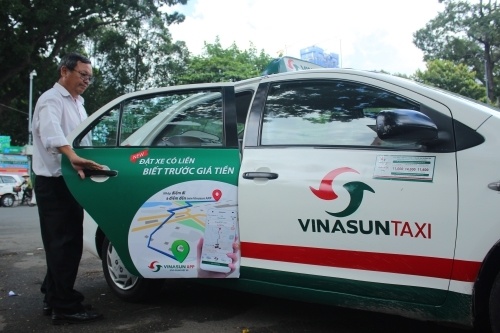
    Vinasun’s payroll increased by 10% last year, the first time since 2016 hires outnumbered layoffs.

    The leading taxi operator said it had 2,013 employees at the end of last year, 136 more than at the beginning of the year.

    General director Ta Long Hy said the figures do not fully reflect its recovery and expansion level because drivers who sign franchising contracts with the company are not counted as full-time employees.

    “In fact, between April and year-end last year, we recruited around 2,700 drivers,” he said.

    In 2016 Vinasun had the largest market share and payroll – 17,200 – in the taxi industry.

    A year later, when it switched to a franchising model and was affected by the boom in ride-hailing apps, the number fell to 7,100. Since then the number of employees kept decreasing.

    Hy said last year Vinasun adopted many new policies to attract drivers, bought 550 new cars, and launched a luxury service.

    “All of our taxis operated in the last two quarters of last year, while a year earlier half of them remained parked.”

    Last year, Vinasun earned revenues of VND1.1 trillion (US$46.6 million), double the 2021 figure and back to pre-pandemic levels, and pre-tax profits of VND187 billion.

    In 2021, it had incurred losses of VND277 billion.

    The Vinasun share has gained 35% since mid-November last year.

  • Vietnam fuel imports doubled in 2022

    Vietnam fuel imports doubled in 2022

    Vietnam’s fuel oil and gasoline imports almost doubled to US$9 billion last year from $4.9 billion in 2021.

    Volumes were 28% up to 8.9 million tons. Diesel accounted for 54% of the volume, gasoline for 19% and jet fuel for 16%.

    South Korea was the biggest supplier, providing 3.2 million tons, followed by Singapore and Malaysia.

    The fuel market saw major turbulence last year with many gas stations across the country shutting down in the second and third quarters as retail prices were too low for them to break even.

    The Ministry of Industry and Trade has instructed distributors to increase supply by 10-15% from last year to 25.9-26.7 million tons this year.

    The country’s largest refinery, Nghi Son, cut production by 25% earlier this month due to a technical issue, but fixed it by January 15 and promised to increase production during the rest of the month to make up.

    It will again have to shut down starting August 25, this time for 55 days, for major maintenance work.

    Some retailers said recently that since authorities did not fix new retail prices on January 21 as scheduled and instead put off the announcement to February 1 they are selling at low commissions and even making losses after global prices shot up during the Tet holidays which lasted from January 20-26.

  • Global smartphone shipment slowdown could hurt Vietnam

    Global smartphone shipment slowdown could hurt Vietnam

    Manufacturing hubs like Vietnam and South Korea could be hurt this year as global smartphone shipments suffered its worst quarterly drop on record, signaling a cool down in consumer demand.

    Shipments declined 18.3% year-on-year in the December quarter to a little over 300 million units, U.S.-based International Data Corporation said Thursday.

    Xiaomi’s shipment volume declined steepest at 26.3%, followed by vivo (down 18.9%) and OPPO (down 15.9%).

    For the year, global shipments fell 11.3% and marked the lowest total for a decade, the researchers said.

    “We have never seen shipments in the holiday quarter come in lower,” Nabila Popal, research director at IDC.

    Along with inflation and economic uncertainties, Covid lockdowns in China were another factor that hurt the industry, including Apple Inc.’s iPhone sales, she said. “Heavy sales and promotions during the quarter helped deplete existing inventory rather than drive shipment growth.”

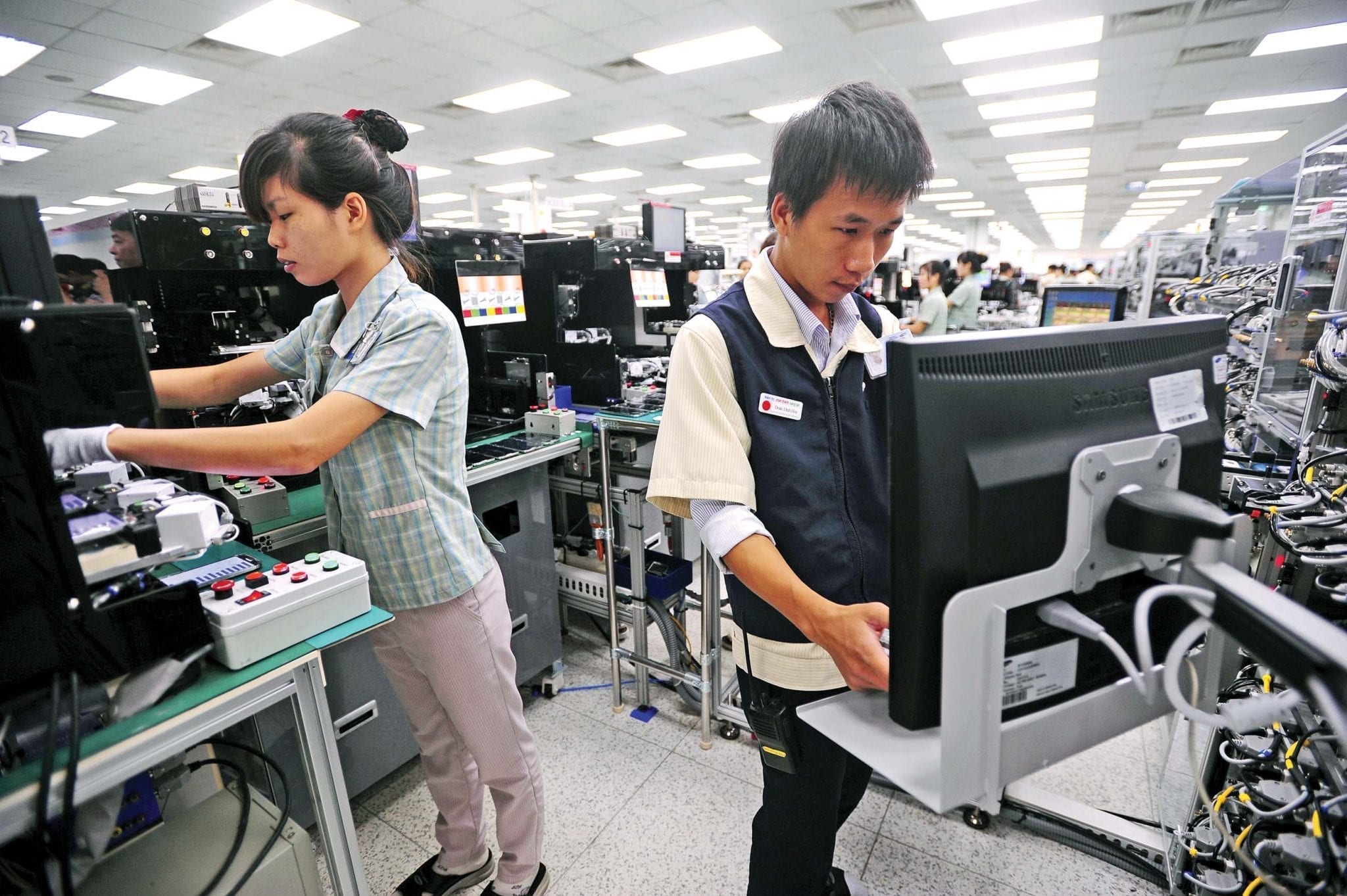
    Smartphones are among the largest exports for Korea and a key source of income for Vietnam as Samsung Electronics operates factories in both countries.

    Samsung last quarter reported its biggest profit fall in over a decade, primarily led by a drop in demand for semiconductors. The company’s exposure to smartphone sales is amplified by its role as the leading provider of memory and displays for the industry.

  • Steel giants report huge losses in Q4

    Steel giants report huge losses in Q4

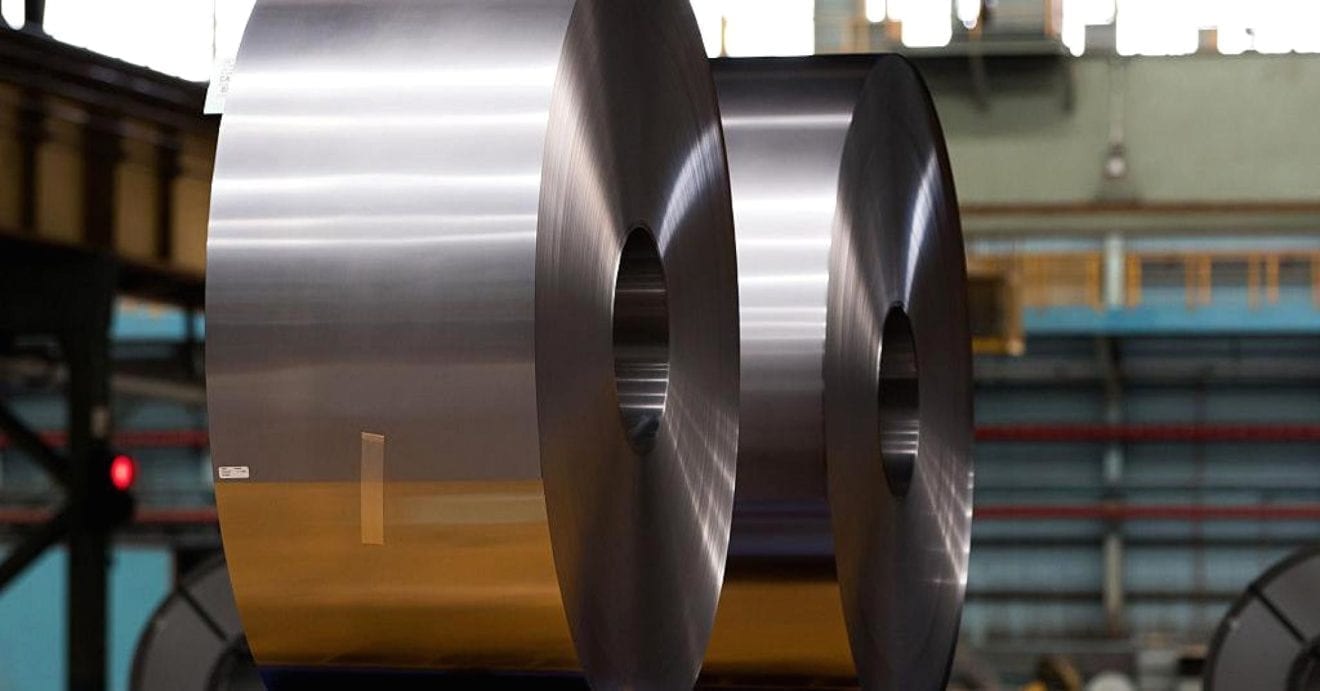
    A drop in prices and consumption put major steel businesses Hoa Phat, Nam Kim and VNSteel in the red in the fourth quarter of 2022, dragging their annual results to the lowest level in many years.

    Hoa Phat, which accounts for nearly 35% of Vietnam’s construction steel market, reported a nearly VND2 trillion (US$85 million) loss in the fourth quarter of 2022, after earning a profit of VND7.419 trillion in the same period of 2021. Losses in two consecutive quarters of Q3 and Q4 dragged the company’s profits down by around 75% compared to the first half of the year, to more than VND8.4 trillion.

    Vietnam Steel Corporation (VNSteel), accounting for 11.2% of the construction steel market, reported VND410.5 billion loss in the fourth quarter and a VND822.4 billion loss for the whole year, which was the company’s first loss since 2014 and its biggest loss since it started issuing financial statements in 2011.

    Nam Kim Steel, the leading coated steel manufacturer in Vietnam, lost VND356.3 billion in the fourth quarter, which resulted in a loss of VND67 billion for 2022, after more than 10 years of making huge profits, including VND2.225 trillion in profits in 2021.

    The steel market was gloomy last year.

    A Vietnam Steel Association report shows that steel production dropped nearly 12% from the previous year to 29.3 million tons, while steel consumption dropped more than 7% to 27.3 million tons.

    “For Vietnam’s steel industry, 2022 was a challenging year with falling consumption and complicated developments in material costs,” the report said. “Many businesses encountered difficulties and suffered losses.”

    Domestic steel prices have been falling since August 2022, hitting a two-year low of VND14 million a ton in the fourth quarter.

    The industry depends largely on public investment and the property market, the latter of which has been in a slump for months.

    VNDirect Securities Corp. projected that the industry will continue to face difficulties this year amid a low demand for construction and high manufacturing costs.

    The sector may see some upturn in the export market with China reopening and its real estate market recovering, the corporation said.

  • Vietnam cryptocurrency miners install more rigs as Bitcoin climbs

    Vietnam cryptocurrency miners install more rigs as Bitcoin climbs

    Cryptocurrency prices have surged this month, prompting Vietnamese to install mining rigs although it’s not yet a lucrative trade.

    The price of Bitcoin increased from $18,000 to $21,000 on Jan. 14 and has moved sideways since then. The prices of many other cryptocurrencies, including ETC, Aleo, Kat, and ERG have also risen this month.

    Thien Binh, a seller of cryptocurrency mining rigs in Vietnam, said that people had bought many second-hand Asic rigs to mine Doge over the past week.

    On average, an old Asic Baikal G28 model costs VND13 million ($550.8), one-third the cost of a new machine. If the current Doge price of $0.08 remains unchanged for months, miners will break even after 9-10 months.

    A veteran miner said: “We are buying more rigs because mining is still easy now. We will eventually make profits if the Bitcoin price maintains its current level ($21,000).”

    Binh Minh, who owns many rigs in the southern province of Dong Nai, said some people have heavily invested in installing big networks of rigs to mine ETC and Bitcoin.

    Some miners are depositing their rigs at solar farms to cut down electricity costs and increase profits. Most miners use grid electricity.

    According to Hoang Quan, the administrator of a cryptocurrency mining community with nearly 70,000 members, mining is not lucrative at the moment, thanks to the current price of electricity and cryptocurrencies. But he said the recent increase in cryptocurrency prices is still good news ahead of the Tet holiday (Lunar New Year), which falls in late January.

    Some experienced miners said that although the Bitcoin price is rising, the cryptocurrency market is inherently unpredictable, and miners may face more difficulties in the coming time.

    Vietnam had the second highest rate of cryptocurrency use among 74 economies surveyed in 2021, according to market data provider Statista.

    However, cryptocurrency has not been recognized as legitimate currency in Vietnam. Its central bank has warned that owning, trading and using cryptocurrency is risky and comes with no legal protection.

  • Vietnam Airlines reports $430M loss on fuel price

    Vietnam Airlines reports $430M loss on fuel price

    Vietnam Airlines reported a loss of VND10.09 trillion ($430.3 million) last year and blamed it on rises in fuel prices and exchange rate volatility.

    Its revenues were worth around VND71 trillion, equivalent to 70% of revenues in 2019 before the Covid-19 pandemic hit but higher than the combined figures of 2020 and 2021.

    As of last year the carrier had accumulated losses of VND34.2 trillion.

    Yet it remains optimistic about 2023 since global markets have been recovering since late 2022 and said it would take measures to address the losses issues.