Tag: Vietnam

  • HCMC lottery firm reports record H1 profits

    HCMC lottery firm reports record H1 profits

    The HCMC Lottery Company Ltd. earned profits of VND736 billion (over $31.46 million) in the first half of the year, an increase of 27% year-on-year.

    The company recorded H1 revenues of VND5.46 trillion, completing nearly 54% of the year’s target, the company said in its financial statement.

    The main source of income was the sale of traditional lottery tickets and scratch-off tickets; and the rest from office leasing and printing.

    The company leaders said that from the beginning of the year until mid-July, the company had paid out more than VND2.8 trillion to lottery winners

    After deducting all expenses, the company made a profit of VND736 billion. This was a record high in the company’s history.

    The company’s revenue and profits have been increasing steadily over the last 10 years.

    Current sales are twice as high as they were in the first half of the year 10 years ago, and profits have increased three-fold.

    The company’s management said demand for lottery tickets in the southern region has grown continuously, and the Ministry of Finance has increased the ticket volume by 10% to cover a larger area and expand its agent network.

    The scratch-off lottery, which has been in operation since the end of 2018, has also been successful, covering nine provinces and accounting for 4-5% of annual revenue.

    The company’s total assets exceed VND2.6 trillion, while its liabilities exceed VND900 billion. Cash and bank deposits account for a sizable portion of the asset structure.

    This year, the company expects revenues of VND10.15 trillion and pre-tax profits of VND1.17 trillion. Its payment to the state budget is estimated at around VND3.04 trillion.

  • Rice exports jump 20 pct

    Rice exports jump 20 pct

    Vietnam exported 4.2 million tons of rice in the first seven months, 20 percent up year-on-year, according to the Ministry of Agriculture and Rural Development.

    But earnings were only 9 percent higher at US$2 billion since global rice prices have fallen by over 10 percent to $489 a ton.

    Exports to the U.S. grew fastest at 65.3 percent, followed by the Philippines, Vietnam’s top market, at 48.6 percent.

    Domestic prices also fell as adverse weather affected rice quality and demand was low compared to previous months.

    Exporters have slowed down purchases from farmers and await the peak harvest season.

  • Vietnam imposes anti dumping duty on Thai-origin sugar

    Vietnam imposes anti dumping duty on Thai-origin sugar

    Vietnam has imposed an anti-dumping and anti-circumvention levy on Thai sugar imported via 5 ASEAN nations.

    The final verdict was made Monday, and the duty of 47.64 percent will become effective between Aug. 9 and June 15, 2026.

    The probe was launched last September after local firms reported sugar products imported from Laos, Cambodia, Indonesia, Malaysia, and Myanmar did not originate in those countries.

    Sugar imports in Vietnam jumped five times year-on-year to 527,200 tons in the period between October 2020 and June 2021, according to the Ministry of Industry and Trade.

    Imports from Thailand, however, slumped 38 percent in the same period.

    This was the period that Vietnam was investigating Thai sugar for dumping and subsidizing.

    “The sugar industry has provided evidence showing signs of Thai sugar’s trade remedies evasion through five countries mentioned above, especially the sudden jump in sugar imports,” the trade ministry said in a statement.

    Last June, Vietnam imposed an anti-dumping levy of 47.64 percent on some sugar products from Thailand for five years.

    Around 3,300 Vietnamese farmers lost their jobs, and 93,225 farming households were affected due to difficulties in the domestic sugar industry, according to the trade ministry.

  • Tourism recovery dogged by lack of staff

    Tourism recovery dogged by lack of staff

    The number of new hospitality businesses is rising, but a shortage of staff and tourists from pre-Covid major markets are hampering the tourism industry’s revival.

    The number of foreign tourists rose 582 percent year-on-year to 602,000, while over 3,000 new accommodation and hospitality businesses were registered, up nearly 28 percent year-on-year, according to the General Statistics Office.

    However, as 60.8 million domestic tourists started to travel after two years of Covid-19 constraints, businesses are struggling to recruit enough staff to cater to the surging demand in many localities.

    “Recruitment is difficult for the whole industry. In our hotel chain, each staff has to undertake several different jobs,” said Vo Thi Thien Huong, director of business and marketing at Fleur De Lys Hospitality hotel chain.

    Jakob Helgen, Marriott International area vice president for Thailand, Vietnam, Cambodia and Myanmar, said many companies are experiencing a labor crisis as employees were forced to quit in droves during the Covid-19 restrictions.

    Other hotels have reported staff shortage in the reception, housekeeping and food and beverage departments.

    The reason for the shortage is erstwhile staff had left for other jobs over the last two years, said Le Thi Ngoc Cuong, director of business and marketing at The Secret Con Dao hotel.

    “Many former tourism staff have found other stable jobs and so it is unlikely that they will return.”

    Phan Trong in Ho Chi Minh City is one of the former tourism staff who is unlikely to return.

    The 33-year-old had worked as a tour guide for five years before leaving for a new job last year, when most tourism activities were shut down.

    He now works as a group leader for a call center with a salary of VND13 million ($556) a month.

    “My salary is the same as before. Even though the new job is a little bit more demanding, I have settled down with it and do not want to go back.”

    Le Nguyen Ngoc Thanh, country director at headhunting platform Adecco Vietnam, said that demand for tourism, hospitality and accommodation staff has increased since the first quarter, but many companies were struggling to fill the empty positions.

    Adding to the shortage is the lack of skill among workers, with many receiving no training or the last two years and fresh graduates having no experience, she added.

    In addition, many workers who left for their hometowns are reluctant to return to major cities because of high living costs and inadequate salary offers, she said.

    Missing tourists

    Another key problem for the industry is the lack of foreign tourists.

    The 602,000 foreign tourist arrivals in the first six months marked a decline of nearly 93 percent over the same period in 2019, when the pandemic had yet to hit the world.

    The four major markets of China, South Korea, Japan and Taiwan together accounted for 66 percent of foreign tourists in the first six months of 2019, but as these countries and territories still maintained quarantine policies for returning tourists, people were not eager to fly.

    The Russia-Ukraine crisis has also blocked Russian tourists, who used to pack Nha Trang and Mui Ne beaches.

    The Russia-Ukraine tension and China’s ‘zero Covid’ policy has had a major impact on Vietnam’s tourism recovery, said HSBC’s country head of markets and securities services Ngo Dang Khoa.

    Inflation and Covid-19 are other factors that keeps tourists from traveling globally, he added.

    One of the solutions the Vietnam National Administration of Tourism has proposed is better utilization of the markets that Vietnam has resumed air travel with, such as South Korea, Japan, Western Europe, Australia and ASEAN.

    New markets that should be focused are India, U.S. and the Middle East, it has said.

    Thanh suggested that tourism companies provide trading for college graduates and employ part-term workers.

    “Businesses should conduct surveys on workers’ expectations in terms of salary and benefits and make necessary changes.”

    Thanh also proposed that companies try to reach out to former employees and convince them to come back.

    Trong said scenario was unlikely, at least for now.

    “There are still so many global issues like geopolitical tensions, diseases and natural disasters. If I go back and the industry freezes again, that would be a tragedy.”


  • Grocery chain Bach Hoa Xanh revenues drop on store closures

    Grocery chain Bach Hoa Xanh revenues drop on store closures

    Grocery chain Bach Hoa Xanh suffered an 8 percent fall in sales year-on-year in the second quarter to VND6.76 trillion (US$289.47 million) following its closure of hundreds of outlets.

    The subsidiary of electronics retailer Mobile World closed 251 unprofitable outlets in May and June as it restructured and also changed the layout of the remaining stores.

    It has so far renovated nearly 1,500 outlets and it plans to close down more this quarter, keeping only 1,700-1,800 stores open.

    Nguyen Duc Tai, its chairman, has said there will be no expansion this year to focus on improving efficiency and customer service.

    The company is preparing for nationwide expansion in 2023 from its current predominant presence in the south.

    Bach Hoa Xanh reported revenues of VND12.8 trillion for the first half, accounting for 18 percent of Mobile World’s revenue.

    Mobile World’s revenues rose 13 percent to VND70.8 trillion, while profits were up 1 percent at VND2.68 trillion.

  • Used O2O motorbike trade debuts in Vietnam

    Used O2O motorbike trade debuts in Vietnam

    OKXE has pioneered the online to offline (O2O) sale of used motorbikes, rejuvenating the market.

    The inadequacies and bad experience of users when buying used motorbikes are the reason why Wooseok Kim, CEO of OKXE launched an online platform trading used motorbikes in Vietnam.

    “We want to solve the inconvenience of users when trading used motorbikes, providing an easier, safer and more enjoyable online platform,” said the OKXE CEO.

    Founded in August 2018, the initial goal of this start-up is to create a more explicit and secure second-hand motorbike market for users. At the time, OKXE was one of the first mobile platforms in Vietnam in the field. However, a lot of Vietnamese still consider motorbikes to be assets of great value, and online transactions can be problematic due to fraud, subpar autos, and inaccurate prices. The company’s CEO admitted his online platform has only met about 50-60 percent of the original target.

    Operational for more than five years, OKXE Vietnam opened a motorbike service station, put into operation at the end of May 2022, creating a complete O2O model.

    This was a bold strategy, because the O2O model has not been applied by many in the field, said a company representative. “While focusing on the new model, OKXE maintains investment in expanding the market. This is a dual goal that we want to achieve in future.”

    The OKXE service station is expected to provide users with a more comprehensive experience based on the expanding and evolving ecosystem. The service station offers extra services in addition to its online offerings, including quality checks on used motorbikes, price recommendations, consignment acceptance, and sales negotiations.

    The first OKXE Station covers 500 square meters, including: service reception, motorbike wash, refurbishment repair, quality inspection, consignment display, cafe counter…

    This company’s research indicates the majority of Vietnamese frequently pick traditional motorcycle marketplaces or secondhand motorbike shops. By cooperating with this trading approach, OKXE opted to create a national network of collaboration rather than viewing it as a rival.

    To be more precise, this business leverages a plentiful source of clients and used vehicles from its partners, gradually enhancing and perfecting its service chain. On the other hand, OKXE uses a platform with millions of users to assist partners in selling motorbikes more quickly. Additionally, the service center aims to help partners with financial assistance packages for motorbike purchases, warranties, after-sales, photography support, and online sales.

    According to an OKXE representative, the company’s platform has experienced steady growth from the time of launch until now and is always improving. “Currently, the OKXE app has reached seven million downloads on iOS and Android platforms. More than 500,000 motorbikes have been registered and sold successfully through the application”, it was added. “As of July 2022, OKXE Vietnam has nearly 2,000 partner stores nationwide.”

  • Gasoline prices fall fourth consecutive time

    Gasoline prices fall fourth consecutive time

    Vietnam gasoline prices on Monday dropped 1.8 percent to the lowest since Feb. 21 as global rates declined.

    A liter of popular RON 95 gasoline now costs VND25,600 ($1.10), while that of biofuel RON 92 E5 costs VND24,620.

    This means prices have fallen 21.3-22.1 percent since this year’s peak on June 21.

    On the global market, gasoline prices have decreased by 1.22-1.54 percent in the last 10 days, according to data from the Ministry of Industry and Trade and the Ministry of Finance.

    WTI crude futures fell over 2 percent to below $98 barrel Monday as fears of a global slowdown outweighed continued supply disruptions and market tightness.
  • Vinamilk profits continue to fall

    Vinamilk profits continue to fall

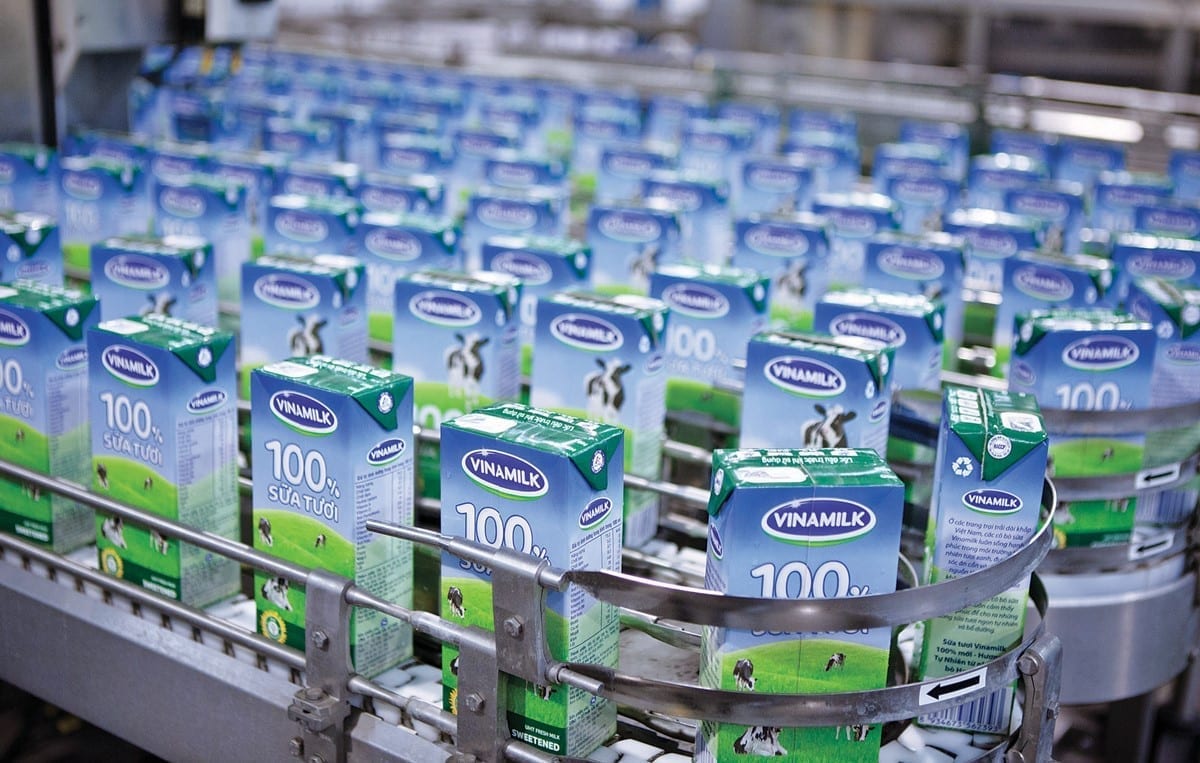
    Vinamilk reported a 26-percent year-on-year fall in second-quarter profits to VND2.1 trillion (US$89.97 million), and blamed it on inflation driving demand down and costs up.

    The dairy giant’s revenues fell by 5 percent to VND14.93 trillion.

    In the first five months sales of fast moving consumer goods fell by 2 percent, according to data from market research firm Nielsen.

    Vinamilk also struggled to maintain its dominance in the domestic market and saw exports drop by 12 percent due to lower global demand and higher transport costs.

    However, its profit margin rose by 0.2 percentage points from Q1, the first increase since 2020.

    Besides, its U.S. and Cambodian subsidiaries, Driftwood and Angkormilk, reported sales growth of 40 and 20 percent.

    This year it expects profits to decline by 7 percent, a second straight year of falling profits, due to rising costs of raw materials and transportation.

    But securities brokerages said lower milk powder prices would increase the profit margins for the dairy industry this year, including for Vinamilk.

    SSI Securities expects the company’s net profits to rise by 11 percent, while VnDirect Securities forecast a 7.5-percent increase.

  • Nowhere to hide for online sellers as taxman catches up

    Nowhere to hide for online sellers as taxman catches up

    Many individuals who have been earning thousands of dollars from Facebook, Google, YouTube, and other online platforms have been taxed in recent years, officials said.

    The HCMC Tax Department for instance said at a forum Friday that it collected over VND8 billion ($342,759) each from two individuals last year and this year on their earnings from YouTube and TikTok.

    In 2018 it collected VND4 billion from a man who earned VND41 billion from Google, it said.

    It also found a person in Quang Nam Province earning nearly VND17 billion from Google and passed on his details to authorities there.

    In 2017 it discovered a woman had sold cosmetics worth over VND499 billion through live streams between 2013 and 2016.

    She had to pay over VND9 billion in taxes and fines.

    An individual who supplied the goods to her had to pay over VND1.7 billion.

    The Hanoi Tax Department said it has discovered at least 1,194 people with incomes from foreign entities like Google and Facebook and collected VND129.3 billion last year and VND134 billion in 2020 from them.

    Last year it set up a database, which now has 32,084 online shops and 2,307 online property landlords, for collecting taxes.

    There are 139 companies operating e-commerce platforms in Vietnam, and they record an average of 3.5 million visits a day, according to the General Department of Taxation.

  • Vietnam Airlines cuts losses by nearly half

    Vietnam Airlines cuts losses by nearly half

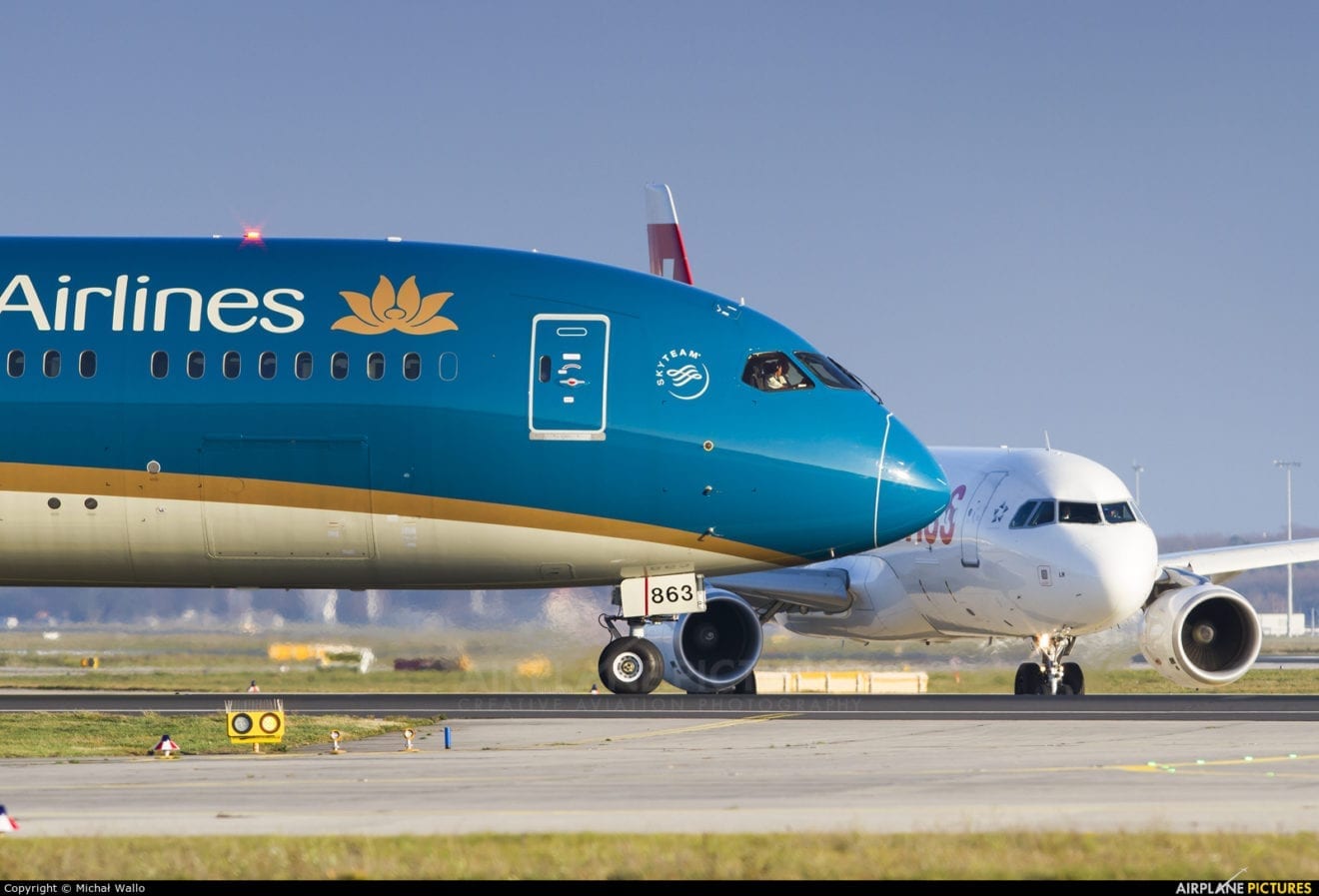
    Vietnam Airlines managed to cut its losses by 44 percent year-on-year in the second quarter to VND2.48 trillion ($106.25 million), thanks to soaring summer travel demand.

    Its revenues nearly tripled to VND18.43 trillion, exceeding its target by 35 percent.

    This was the highest quarterly revenue since 2020 when travel was yet to be affected by Covid-19. But the high fuel prices remain a sore point for the carrier.

    At the end of June, JetA1 fuel was above US$160 per barrel, double the average price last year.

    International travel demand has not fully picked up, especially in Northeast Asian countries, which were a major source of tourists for Vietnam pre-pandemic.

    The airline also saw sales expenses double to VND660 billion.

    First half losses were down 39 percent to VND5.1 trillion.

    Its accumulated losses have climbed to VND28.9 trillion. The airline expects the summer travel season to last until the end of August and the relaxed entry restrictions in other countries to help boost its revenues.

    Vietnam Airlines and its low-cost subsidiaries Pacific Airlines and Vietnam Air Services Company together transported nearly 9.5 million passengers in the first six months, 24.6 percent higher than targeted.

    Vietnam Airlines accounted for eight million.

  • Bamboo Airways appoints new general director after predecessor quits

    Bamboo Airways appoints new general director after predecessor quits

    Bamboo Airways appointed new general director Friday night after Dang Tat Thang, who helped set up the airline in the early days, resigned as its chairman and general director.

    Nguyen Manh Quan took the new position after having served as the carrier’s deputy general director.

    Quan joined Bamboo Airways in July 2020 and has 30 years of experience in aviation, service, and commerce. He used to work for the Ministry of Industry and Trade, Vietnam Airlines, Noi Bai Airport Services Company, and Vinpearl.

    Bamboo Airways said in a statement Friday: “The transition of the general director position is part of the work to consolidate the high-ranking management system to speed up the process of restructuring of and selecting strategic investors for FLC and Bamboo Airways.

    After leaders of property group FLC, the parent company of Bamboo Airways, got into legal trouble earlier this year, the airline has been in the process of looking for new investors to accompany and serve its future development needs.

    Thang said in his resignation letter that for some personal reasons, there were many things that he needs to sort out, therefore he could not arrange to continue his current positions. He also resigned as FLC’s vice chairman.

    Thang, 41, was appointed chairman of FLC and Bamboo Airways after former chairman Trinh Van Quyet was arrested at the end of March for allegedly manipulating the stock market.

    He served as FLC’s vice chairman from early this month after the group elected Le Ba Nguyen as its new chairman for until 2026 at an extraordinary shareholders’ meeting.

    Thang started working at FLC in 2014 as deputy general director, in charge of investment and project development. He was the leader of Bamboo Airways from the early days of its establishment in 2018.

    Under his management, Bamboo Airways has generated rapid development with a roster of 30 aircraft and became the first private airline in Vietnam to operate wide-body aircraft. After over three years, Bamboo Airways is operating nearly 60 domestic routes and 12 international routes, including routes to the U.K., Germany and Australia.

    In his most recent public appearance in July, Thang said that Bamboo Airways aims to increase its roster to 100 aircraft by 2028.

  • 7 days left to register for Startup Viet 2022

    7 days left to register for Startup Viet 2022

    Startup Viet 2022, an annual event hosted by VnExpress to promote entrepreneurship, closes registration in seven days.

    The sixth edition of the competition, themed “the New Era of Innovation,” has received dozens of registrations since it opened June 13.

    The startups are from various sectors including e-commerce, logistics, fashion, manufacturing, agriculture, customer service, business management and software development.

    The contestants will be evaluated based on revenue growth, organization, sustainability and international prospects by startup experts, investors, venture fund representatives and other successful businesspeople.

    To register, click the link below:

    Startup Viet 2022 Registration

  • Sabeco posts biggest quarterly profit since acquisition by Thai firm

    Sabeco posts biggest quarterly profit since acquisition by Thai firm

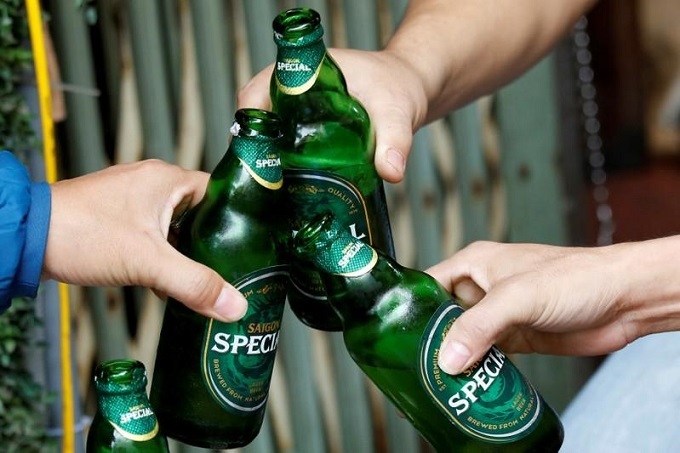
    Vietnam’s largest brewer Sabeco reported post-tax profits of VND1.79 trillion ($76.6 million) for the second quarter, the highest since ThaiBev acquired it in 2017.

    It represented a 67 percent increase year-on-year, while revenues were up 25 percent to VND9 trillion.

    The management said the lifting of social distancing restrictions, resumption of tourism and a general rise in consumption helped boost sales.

    Profits for the first six months were VND3.03 trillion, 66 percent of the full-year target.

    Thailand’s largest beverage company bought a 54 percent stake in Sabeco, the maker of Saigon Beer, five years ago.

  • Remove 14,100 MW of coal plants from plan

    Remove 14,100 MW of coal plants from plan

    The Ministry of Industry and Trade wants coal-fired plants with a capacity of 14,120 megawatts scrapped from electricity production plans for Vietnam to achieve net-zero emissions by 2050.

    The plants were included in Power Development Plan 7 (for 2011-20) and have not been built due to delays. Now, the ministry does not want them to be part of Power Development Plan 8 (for 2021-30), which is being drafted.

    The ministry also wants to reduce the ratio of coal-fired power sources from 25-31 percent in 2030 to around 10 percent in 2045.

    No new coal-fired plant should be built after 2030, it said.

    It wants to increase output from LNG-fueled and renewable plants to offset the cut in coal use.

    It targets having 12,000-15,000 MW of renewables and 14,000 MW of liquefied natural gas plants in PDP 8.

  • Vietnam main securities exchange continues to use FPT trading system

    Vietnam main securities exchange continues to use FPT trading system

    The Ho Chi Minh Stock Exchange will continue to use the trading system developed by FPT while waiting for a replacement from South Korea, Ministry of Finance and bourse officials said.

    The system developed by FPT Information System, a subsidiary of the tech giant, in July last year helped cope with the trading load that had become unsustainable for around half a year.

    It increased the capacity of Vietnam’s main exchange from 900,000 transactions a day to five million.

    On November 19 last year the largest ever number of transactions of 1.84 million was recorded, or just a third of what the system could handle, Dang Truong Thach, deputy director of FPT IS, pointed out.

    Deputy Minister of Finance Nguyen Duc Chi said its replacement, KRX, is being developed in South Korea and seen rapid progress.

    “It will be ready within months.”

    It is being developed under a VND600-billion (US$25.69 million) deal signed in 2012 between HoSE and the Korea Exchange.

    It will allow odd-lot trading and a T+0 settlement cycle (meaning investors will receive their shares or money on the day of trade instead of two days later).

    For the last 10 years HoSE has repeatedly been missing deadlines for installing a new system.