Tag: Vietnam

  • Vietnam textbook publisher reports record net profit

    Vietnam textbook publisher reports record net profit

    State-owned Vietnam Education Publishing House experienced its most profitable year in 2021, earning VND287 billion ($12.3 million) in after-tax profit. The profit was 2.5 times higher than the target set by the Ministry of Education and Training and the highest earnings in the publisher’s history.

    In previous years, the publisher’s after-tax profit hovered between VND120-150 billion a year. A recently released business report says the publisher printed more than 164 million textbooks last year, exceeding the annual target by about 40 percent. Its earned total revenues of VND1.8 trillion, over 97 percent of which came from book publishing.

    The company had a return on equity (ROE) of 39.9 percent and a return on total assets (ROA) of 17.9 percent. The publisher’s seven subsidiaries also reported profits totaling VND46 billion. Another factor in the improved performance was the increase in textbook prices.

    In the 2020-2021 school year, the prices of textbooks were two to four times higher under the new general education program.

    The publishing house explained that prices went up because the cost of all four components – the number of books in one set for each grades, the cost of organizing the manuscript, the cost of materials and the cost of marketing – increased significantly.

    Textbooks are not currently on the list of items priced by the State, but by enterprises that have to declare their prices to the Ministry of Finance. Publishers are solely responsible by law for the correctness and suitability of their pricing structures.

    The education ministry had asked the publisher to review the entire process of compilation, printing and distribution to reduce the prices of textbooks. Following this, a 3-9 percent reduction was made over the original declaration.

  • Vietnamese fork out less for pork

    Vietnamese fork out less for pork

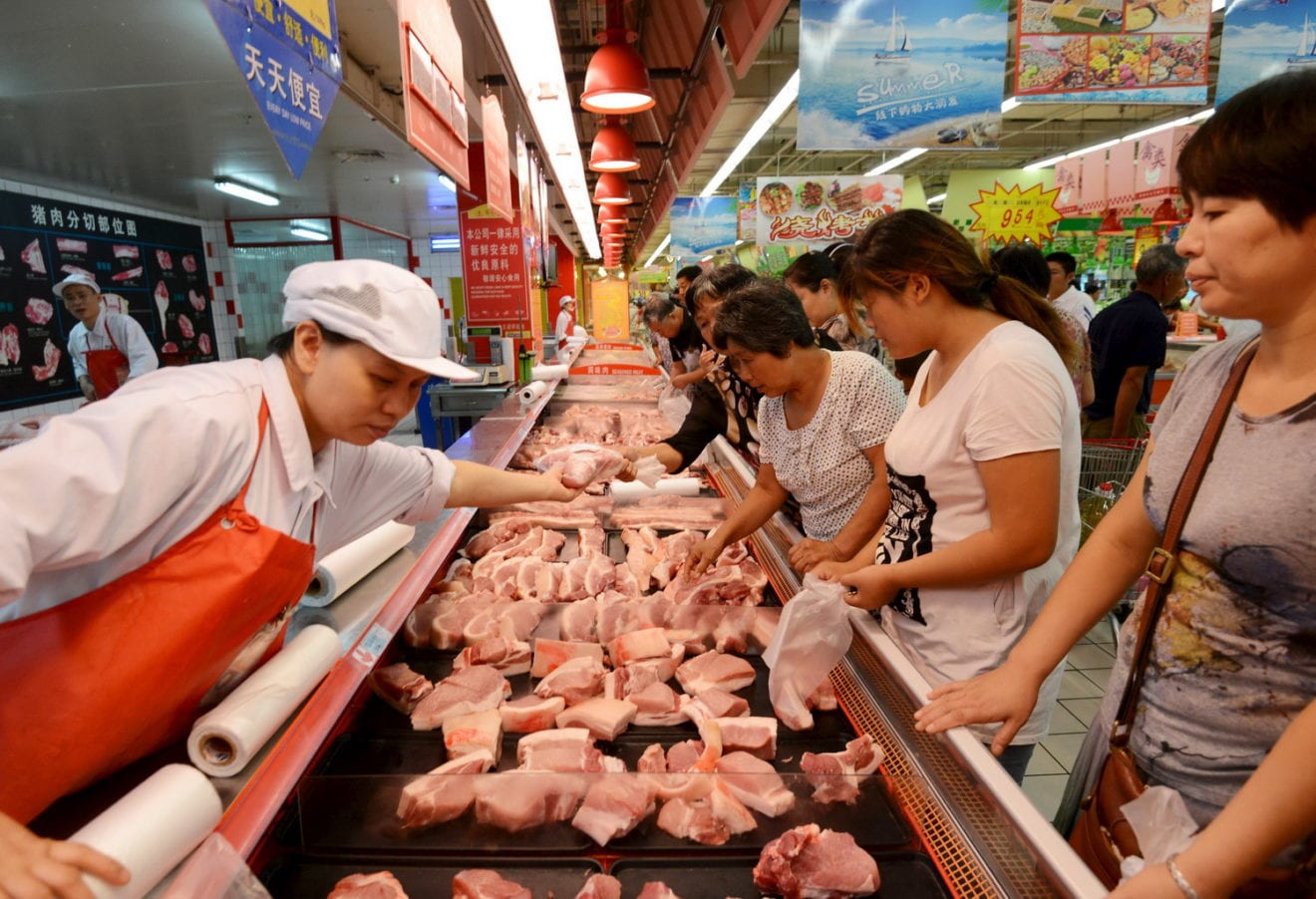
    Vietnamese families have been consuming less pork in recent months as prices increased, switching to other sources of protein like chicken and eggs.

    Ngoc Thao from HCMC, 32, said that one kilogram of bacon now costs between VND150,000-180,000 ($6.43-7.72), depending on whether it is purchased at a traditional wet market or a supermarket.

    Cheaper cuts of pork, such as cutlet and thigh, range from VND100,000-130,000 per kilogram, which is twice or thrice the price of chicken.

    “The prices of vegetables, spices and many other things have skyrocketed, but my salary remains unchanged, so I must cut back on my spending on expensive stuff,” she said, sighing.

    “Now our family has meat only for one or two meals per week.”

    A survey of livestock farms at the end of June found that the price of live pigs had crossed VND60,000 per kg, a slight increase from previous days.

    The majority of farmers said the price has increased because the cost of animal feed has increased. Prices of new born pigs have also increased by 20 percent compared to two months ago.

    According to the Organization for Economic Cooperation and Development (OECD), the majority of Vietnamese people have been eating less pork, like Thao’s family.

    From 2016-2018, Vietnam had one of the highest average pork consumption rates in the world at 30-31 kg per person per year. However, during the first two years of the pandemic, this fell to 26 kg.

    Data from Ipsos, a multinational market research firm based in France, showed similar results by compiling statistics on the entire supply of cattle and poultry farms in 10 key livestock provinces and cities, in conjunction with official import and export volume, quotas, and meat products.

    It calculated that each Vietnamese person used to consume about 30 kg of pork per year, but by 2021, this had dropped to 23.5 kg.

    According to Phong Quach, director of Ipsos Vietnam, per capita meat consumption in Vietnam has been increasing as living standards improve, and consumers have more meat sources to choose from.

    He said there were three reasons why pork was no longer the top priority.

    First, the African swine fever got people worried and also severely impacted global supply.

    Second, the price of pork kept rising sharply, albeit intermittently, as input costs like that of logistics rose significantly.

    Third, people were cutting back on spending in the post-Covid period and seeking cheaper animal protein sources than pork.

    For several years now, per capita consumption of poultry (primarily chicken) has increased rapidly – from 12 kg in 2016 to 20 kg now.

    Seafood has surpassed pork as the most important source of protein for Vietnamese people, accounting for per capita consumption of 29 kg per year.

    Per capita consumption of beef, which is more expensive than other meat, has increased slightly from 4.3 kg to 5 kg per year.

    The VNDirect Securities Company said in a meat industry analysis published at the end of May: “We believe that demand for meat is likely to increase when kids are on their summer break while restaurants and industrial kitchens continue to consume at the same rate as the first quarter of this year.”

    Quach said the fact that some local pig farms have sold their complete stock after the African swine fever outbreak will further decrease supply and increase prices in the coming months.

    The price of live pigs for slaughter is expected to remain at above VND60,000 per kg, higher than the VND51,000-54,000 range recorded between October 2021 and April 2022.

    The pressure to balance spending amidst rising prices makes short-term consumption recovery difficult, market observers say. But they add that despite the current situation, the pork market has a lot of room for future growth.

    According to the CEO of a publicly traded food company, the pork market is worth about $10 billion, but 90 percent of the products sold are unbranded.

    Meanwhile, consumers are becoming more health-conscious, and demand for branded, traceable meat products will rise once the price storm passes.

    According to the OECD, each Vietnamese person will consume approximately 27.7 kg of pork by 2023, a 7 percent increase over last year.

    By 2029, this figure could rise to 32.7 kg, higher than the pre-pandemic period, and surpass South Korea and China to take the lead in global per capita consumption.

  • Finance ministry proposes tax cuts on gasoline

    Finance ministry proposes tax cuts on gasoline

    The Ministry of Finance has apprised the government of its plan to reduce special consumption tax and value-added tax on gasoline to bring its prices down.

    The plan was announced Thursday by a ministry official without disclosing further details.

    Currently special consumption tax is at 8-10 percent and value-added tax is at 10 percent.

    Gasoline prices rose to an all-time high of VND32,870 ($1.41) per liter last Tuesday.

    VND/literVietnam’s gasoline pricesRON 95E5 RON 92Dec 25 2022Jan 11 2022Jan 21 2022Feb 11 2022Feb 21 2022Jan 3 2022Nov 3 2022Mar 21 2022Jan 4 2022Dec 4 2022Apr 21 2022Apr 5 2022Nov 5 2022May 23 2022Jun 1 2022Jun 13 2022Jun 21 202220k22.5k25k27.5k30k32.5k35kApr 21 2022● E5 RON 92: 27 130

    Prices have surged by 65-70 percent since the end of 2021, burdening both consumers and businesses.

    Earlier this month, the ministry had considered halving the environment tax on fuel, but critics said a cut of VND500-1,000 is too little to have an effect and called for reduction in other taxes.

    Taxes and fees account for 35 percent of gasoline prices.

  • Pi miners anxiously await monetization

    Pi miners anxiously await monetization

    Vietnamese people are expecting good money from cryptocurrency Pi following developer’s promise of a mainnet launch on June 28.

    The system is making steady progress towards transiting to launch by around Pi2 Day – June 28, the development team announced on the Pi Network app last Tuesday.

    Since Monday night, Pi miners in Vietnam have started to wait for the transition. Many claimed to be business owners and said they will accept the token as a payment method as soon as the coin can be exchanged.

    Pi and other cryptocurrencies are not legal tender in Vietnam, Dao Minh Tu, the deputy governor of the State Bank of Vietnam, has said.

    Huynh Tan of HCMC said he has signed in the app to earn rewards every day for the last three years.

    “I have joined the project since its beta stage. Now it is about to enter the mainnet stage, so I hope to be able to exchange Pi for money or something.”

    He said prices of thousands dollars is “very unlikely” as there are 100 billion tokens, but the ‘consensus price’ may be of any number.

    A poll on a Pi group found 75 percent of nearly 3,400 users believing in a ‘consensus price’ of US$6,700.

    “What will you buy first once each Pi token is worth thousands of dollars?”, a member asked on a Pi group with 100,000 members and attracted over 300 comments.

    Many said they intended to buy a house, a car or give away the money after selling the token.

    But investors will have to wait until developers allow them to transfer the token.

    Last year, Pi announced it had entered mainnet, but that will be split into two phases: closed and open network — the former allows user-to-user transactions, and the latter allows exchanging with other cryptocurrencies.

    Doubts

    Meanwhile, many are skeptical about the developer’s pledges.

    “There is no certainty in the statement, just a general announcement of mainnet launch around the Pi2 Day. They did the same thing last year, but there has yet been any development,” Anh Minh, a Pi miner said.

    Pi Network also made no announcement on its social media accounts on June 28 — an unusual move as most crypto projects constantly provide users new information during key phases.

    Over the last six months, the project has reduced mining rate, required users to lock up part of their token, and started the KYC (know-your-customer) process.

    Some users were allowed to exchange the token internally, but only as a demo.

    Up to date, the token cannot be exchanged with other cryptocurrencies, and mostly remain worthless.

  • Samsung starts building 3nm smartphone chips in Korea

    Samsung starts building 3nm smartphone chips in Korea

    We’re slowly moving toward the size limitations of our Universe but before we reach that Planck volume, there’s still some wiggle room. This means smaller, faster, and more efficient chips in our smartphones of tomorrow.

    Let’s leave quantum physics behind, and go straight to the news (feel free to discuss Planck constants in the comment section below). After TSMC published its roadmap, shedding light on when we can expect 3nm and 2nm chips, now Samsung has announced the production start of its 3nm semiconductor chips in Hwaseong factory in South Korea.

    Samsung is moving to a new architecture, swapping FinFET (fin field-effect transistor) for GAA (Gate All Around). And if you’re worried that more physics is coming your way, just breathe. GAA offers several advantages over FinFET – the main one being higher power efficiency.

    Another new technology involved in Samsung’s 3nm manufacturing node is the nanosheet transistor manufacturing. It replaces the nanowire technology, again boosting efficiency and also performance in this case. Using nanosheets gives the ability to very easily adjust this efficiency and performance parameters by simply altering the size of the nanosheet.

    Samsung is quoting some impressive numbers, comparing the new 3nm node with the old 5nm manufacturing process. The new chips should come with 23% improved performance, a 45% reduction in power usage, and an area reduction of 16%, and this is just the first generation of 3nm silicon.

    The second generation will bring a hefty 50% increase in power efficiency, 30% better performance, and 35% less area. Here’s a little inspirational quote from Dr. Siyoung Choi, President and Head of Foundry Business at Samsung Electronics:

    “Samsung has grown rapidly as we continue to demonstrate leadership in applying next-generation technologies to manufacturing, such as foundry industry’s first High-K Metal Gate, FinFET, as well as EUV. We seek to continue this leadership with the world’s first 3nm process with the MBCFETTM. We will continue active innovation in competitive technology development and build processes that help expedite achieving maturity of technology.”

    The Korean company is also working to allow clients to design their chips faster and easier. Samsung’s SAFE ((Samsung Advanced Foundry Ecosystem) will be taking care of partners who want to design their 3nm chips using the new technology.
    The first 3nm smartphone processor leaving the factory will most likely be the next generation Exynos 2300 (S5E9935 codename Quadra). The jump to GAA and 3nm could rehabilitate the Exynos processors, which are not very popular among smartphone enthusiasts, and are lagging behind their Qualcomm counterparts. Samsung teamed up with AMD to try and turn things around (the Exynos 2200 is armed with the new Xclipse GPU based on AMD RDNA 2 architecture) but this partnership has yielded mixed results so far.
    With TSMC hiking the prices of its manufacturing processes, it’s also very interesting to see how would Samsung play its cards on that front. If the new 3nm node turns out to be cheaper at Samsung’s factories, it can swing the pendulum once again. On the other hand, don’t expect the next Galaxy S23 with Exynos onboard to be cheaper than the Qualcomm variant, as it won’t make any marketing sense.
  • Covid causes more turbulence for Pacific Airlines

    Covid causes more turbulence for Pacific Airlines

    The Covid-19 pandemic stopped Pacific Airlines’ recovery and worsened its financial situation, which is “extremely serious,” its parent company, Vietnam Airlines, informed shareholders last week.

    “The shortfall in cash flow and large overdue debts pose the possibilities of insolvency and termination of operations,” the carrier said, adding that it is seeking investors to restructure Pacific.

    In 2018 and 2019, the airlines was on course to recover with profits of VND34.3 billion ($1.48 million) and VND48.6 billion against losses of VND346 billion and VND907 billion the previous two years.

    Its revenues peaked at VND8-9 trillion during the period.

    It posted profits of VND150 billion in January 2020, a monthly record, before Covid-19 hit the aviation industry.

    “If it weren’t for Covid-19, we would have made a big profit,” its chairman and Vietnam Airlines’ deputy director, Trinh Hong Quang, had said in mid-2020.

    That year the budget carrier ended up with a record loss of VND2.14 trillion as revenues plummeted to VND2.6 trillion, a fourth of the previous year’s figure.

    At the end of 2020 it had total assets of over VND6.6 trillion, but its equity had eroded and was in the red.

    In 2021, it lost nearly VND2.31 trillion. Speaking about plans to restructure its subsidiary, Vietnam Airlines said the investor selection process faced legal and other obstacles due to the fact it is a state-owned enterprise.

    If no agreement is reached, its own situation would be at risk, it warned.

    It plans to seek shareholders’ approval to amend a clause in its charter to allow sale of its equity to third parties at the upcoming annual general meeting.

    Pacific Airlines was founded over 30 years ago after authorities approved foreign investment in the aviation industry. As a budget airline, it was expected to increase Vietnam Airlines’ penetration and competitiveness.

    Vietnam Airlines owns 98 percent of the carrier, including 30 percent it got back from Australian airline Qantas in 2020.

  • Blue chip stocks hit weekly high

    Blue chip stocks hit weekly high

    Vietnam’s benchmark VN-Index rose 1.46 percent to 1,202.82 points Monday with most blue chip ending in the green. The index closed 17.34 points higher after losing 3.4 points Friday.

    Trading on the Ho Chi Minh Stock Exchange increased by nearly 21 percent to VND12.32 trillion ($529.7 million).

    The VN-30 basket, comprising the 30 largest capped stocks, surged to the highest in a week with 26 tickers gaining.

    SSI of leading brokerage SSI Securities rose 6.7 percent, extending its gaining streak to the fourth session in a row.

    NVL of real estate developer Novaland closed 6.5 percent higher, with trading value highest since last December.

    Other winners included PNJ of Phu Nhuan Jewelry, up 6.1 percent, and HPG of steelmaker Hoa Phat, up 5 percent.

    Four bucked the trend, led by VIC of Vietnam’s biggest conglomerate Vingroup JSC with a 1.1 percent drop. The ticker is now at a 27-month low, having fallen 42 percent from its peak last April.

    VNM of dairy giant Vinamilk, and MWG of electronics retailer Mobile World both lost 0.6 percent.

    VCB of the largest state-owned lender Vietcombank closed 0.1 percent lower.

    Foreign investors were net buyers to the tune of VND250.6 billion, focusing on VND of brokerage VNDirect Securities, CTG of VietinBank and GEX of Gelex Group.

    The HNX-Index at the Hanoi Stock Exchange, where mid and small caps list, was up 1.63 percent while the UPCoM-Index at the Unlisted Public Companies Market was up by 1.15 percent.

  • Starbucks closes third Vietnam outlet

    Starbucks closes third Vietnam outlet

    Starbucks Vietnam will close its Hanoi outlet after eight years, following the closure of two locations in Vietnam last year. The Starbucks Lan Vien outlet in Hoan Kiem District will operate until June 30, the company said in a Facebook post. Last year, the coffee chain had closed another outlet in Hoan Kiem District and one in Ho Chi Minh City’s District 1.

    Patricia Marques, CEO of Starbucks Vietnam, said earlier this year that the company was finding it challenging to expand the number of outlets in Vietnam due to difficulties in negotiating rent prices.

    The company, however, will continue to expand in Vietnam by focusing on new urban areas where there is a lack of services, she added.

    She also said that in central districts, Starbucks has observed that customers tended to order more takeaways, so it was considering opening small takeaway outlets where customers can pick up their drink right away.

    Starbucks has 78 outlets nationwide, while its competitor Highlands Coffee’s has 500 and The Coffee House has 156.

    The Covid-19 pandemic has forced several food and beverage chains to close outlets amid plunging revenue.

    The Coffee House closed over 20 outlets last year, while Soya Garden shut down its last one in HCMC. Soya Garden still has eight outlets in Hanoi.

  • Pay TV firm AVG appoints new CEO

    Pay TV firm AVG appoints new CEO

    Vu Minh Tri, former CEO of Microsoft Vietnam, is the new CEO of pay TV firm AVG. Tri, 49, replaces Mai Duy Long, also 49, who helmed AVG for nearly two years. Tri, who became the CEO of Sony Ericsson Vietnam in 2006, has since taking top positions in the Vietnam operations of Yahoo, Qualcomm and Microsoft.

    He is now the CEO of telecom firm Asim Group and two other companies.

    State-owned MobiFone, the country’s third largest telecommunications firm, had made headlines early in 2016 when it announced it was breaking into the pay TV market with the acquisition of a 95 percent stake in AVG.

    But government inspectors concluded that the deal had violated public investment laws and caused an estimated loss of about VND7 trillion ($307 million) to the state budget.

    In 2019, several senior officials implicated in the MobiFone case were arrested and sentenced to varying jail terms.

  • Mood Tea offers unique flavours with a purpose

    Mood Tea offers unique flavours with a purpose

    In times of stress or crisis, when things tend to go wrong, it’s important you let your mind relax and take it easy. So when time gets tough, may we suggest tea to rescue? It’s believed that in times of stress, a cup of tea can work wonders for your nerves. In countries like Japan and India, brewing and bonding over cups of tea is a usual practice and it ensures general well being of the family.

    It’s been quite a long journey for tea as a beverage. What started as a humble cup of regular chai has now ended up in elegantly packed designer boxes of flavored teas. Tea has become more of a lifestyle now. There’s a tea for every mood, flavor for every season. While your workout regime is incomplete without wellness and detox green teas, your winter evenings just cannot happen without a hot steaming cup of Kashmiri Kahwa or Darjeeling.

    Don’t you remember Mad Hatter from ‘Alice in Wonderland’? Even he seemed to agree that “it’s always tea-time”. A hearty breakfast with a cup of earl grey and late nights with Masala chai or Vanilla tea pretty much sums the day up. However, many of us aren’t much aware of the options of teas available. Here’s a comprehensive list of teas for all moods available with exclusive makers of flavored single origin teas.

    Tea for Moods:

    Kick-start flavours: For the times we drag ourselves out of bed and still don’t seem to be fully awake, let our good old strong black Assam tea wake you up every morning. With or without milk, it is a perfect good cup to start your day.

    Herbal De-stress: A long day at work, the fever and fret, leave you tired and stressed. Nothing can be more refreshing than a hot shower followed by a cup of warm de-stress relaxing tea. Jasmine tea and refreshing lemon -ginger herbal infusion work on stress and calm your nerves like magic!

    Mood Lifters: Didn’t have a good day at work? Upset over a job not done? Rejuvenate with tea and start anew! Spicy chilli tea, lemon tea and masala chai are great mood lifters. They give you just the right push to get things done.

    Weekend Detox: After a long hard week, a crazy weekend is the least you can ask for. But what about the Sunday morning hangover? Nevermind because we do have a tea solution for that as well. The goodness of organic green tea not only detoxes you but also increases your metabolism. The antioxidants found in herbal green tea play an important role in keeping your natural immunity in place.

    Post Workout: And ofcourse, for the fitness freaks. How can we forget that your workout ain’t complete without a cup of weight-loss tea to mark the finish! A cup of green tea with a tinge of honey can work wonders for your weight loss program.

    Sleep well: Last but not the least, when you go to bed, teas that ensure you sleep well. Try out sleepwell carrot orange multivitamin herbal infusion or relaxing pomegranate orange herbal infusion to relax you before going to bed.

    When nothing else seems to work, keep calm and settle down with a cup of steaming tea and let your mind figure out a way.

  • Vietnamese regain hope in ‘next Bitcoin’

    Vietnamese regain hope in ‘next Bitcoin’

    People are rushing to mine cryptocurrency Pi prompted by news of new developments including an open mainnet launch.

    Open mainnet, which is said to allow users to trade the token for other cryptocurrencies, “will begin on 2022 Pi Day (14/3) or Pi2 Day (28/6)” depending on “the maturity of the Enclosed Network economy and the progress of KYC (know-your-customer),” its developer announced last year.

    “My two-year wait will finally pay off if everything happens as planned,” Thanh Lam, a Pi investor in HCMC said.

    Like many amateur investors in Vietnam, Lam started investing in the cryptocurrency in 2020 and now has over a thousand tokens. He quit logging into the app daily a while ago after he was disappointed with the delay by the developer.

    But he returned recently after many users were asked for KYC and the fact Pi2 Day was imminent.

    “If Pi can reach the target price of a few hundreds or thousands of dollars, my 1,000 tokens will be enough.”

    He is eagerly waiting for his KYC process, a minimum requirement for most cryptocurrencies to verify users’ legality and prevent money laundering.

    “If I am not verified, my tokens will be useless.”

    Other users take a harsher approach to the cryptocurrency. “If nothing happens by the end of June, I’ll delete the [Pi Network] app,” Ngoc Nhu, 28, from the central province of Binh Dinh said.

    “I don’t expect prices to hit thousands of dollars like others, but hope it will be of some value so that my two years of efforts are not wasted.”

    Pi Browser, the mobile app meant for the KYC, recently became the fourth most downloaded non-gaming app in Vietnam on Apple App Store, and sixth most downloaded on Google Play store.

    The search for ‘KYC Pi’ has also doubled from last December, according to analysis tool Google Trend.

    Phien Vo, an administrator of a Pi group with over 130,000 members, said: “KYC is the most important step. Next steps can only be carried out once the authentication process succeeds.”

    On Monday Pi Network’s developer said the KYC process has been completed for over half the users. There were an estimated 35 million users as of May, and up to 90,000 can be authenticated in a day.

    The developer’s promises have sparked great expectations. A poll on a Pi group found 75 percent of nearly 3,400 users believing in a ‘consensus price’ of US$6,700.

    But it is now worth nothing since it has not been listed on any exchange. Pi and other cryptocurrencies are not legal tender in Vietnam, Dao Minh Tu, the deputy governor of the State Bank of Vietnam, has said.

    “Currently, most forecasts of Pi’s value are baseless,” Vo said, adding that prices would only be determined once it enters the open mainnet phase.

  • Financial startup Anfin raises $4.8 mln

    Financial startup Anfin raises $4.8 mln

    Financial startup Anfin, which seeks to make stock investment easy for any user, has raised funding of $4.8 million in a Pre-Series A round from a consortium of investors.

    It was led by angel investor Clement Benoit and U.S.-based startup accelerator Y Combinator. The money will be used to improve its app by building a social network in it so users can share their investment knowledge.

    Anfin was launched in October last year and has raised around $7 million to date.

    Its app allows users to invest as little as VND10,000.

    Its CEO, Phuoc Tran, said the app has over 100,000 active accounts with a total transaction value of $10 million.

    Benoit said creating a product that serves many groups of people in society is the right move in a big market such as Asia.

    He hoped the company would branch out to other countries and succeed in its social investing business model.

    Interest in stocks remains sky-high in Vietnam, with 476,300 new accounts opened in May, a new record.

    Phuoc said despite the volatility in the market, stocks remain an asset class with great prospects.

    Data from investment fund Dragon Capital Vietnam shows that in the last five years, stocks have given investors an average return of 16 percent a year, higher than real estate, bonds or gold.

  • Electricity consumption hits new record amid heatwave

    Electricity consumption hits new record amid heatwave

    Power consumption soared to an all-time high of 45,528 megawatts at noon Tuesday as people turned on air-conditioners and other devices to beat the searing heat.

    It was 6,000 MW higher than last week’s average, Nguyen Duc Ninh, director of the National Load Despatch Center, said at a conference Wednesday.

    The north led with demand of 22,330 MW.

    In Hanoi, consumption was 3 percent up on what was the fourth day of a heatwave.

    The temperature rose to 39 degrees Celsius on Tuesday, according to the National Center for Hydrometeorological Forecasting.

  • Vietnam cannot bank solely on renewable energy for net-zero emissions

    Vietnam cannot bank solely on renewable energy for net-zero emissions

    Experts say an exclusive focus on renewable energy, accounting for 27 percent of total power supply, will not be enough to help Vietnam reach its “net-zero” emissions target by 2050.

    Wind and solar power are not the sources of energy that will help Vietnam ensure national security, says Sean Lawlor, an energy expert at the U.S. Embassy in Vietnam.

    To achieve the net-zero target, which means to have the amount of carbon added to the atmosphere not exceed the amount removed, Vietnam needs to speed up its energy transition process, which began in 2019, he said.

    This means the country needs to transition from coal-fired power sources to liquefied natural gas, biomass, ammoniac or hydrogen power sources, he added.

    As of last year, wind and solar power accounted for nearly 27 percent of Vietnam’s total energy supply, and their production was nearly 12.3 percent of the total, according to the Ministry of Industry and Trade.

    In the first six months of this year, the production ratio increased to 14.8 percent.

    While there is agreement that transitioning to cleaner energy is needed, there are hurdles in this path, officials say.

    Nguyen Ngoc Hung, head of the energy economics department under the industry ministry’s Institute of Energy, said Vietnam has great potential for transitioning from traditional energy sources because there is a variety of renewable energy sources on hand.

    However, the country lacks an efficient legal framework to boost the transitioning process and localization of energy technology is low, he said, adding that competition in the market was still at an early stage and lacked synchronization.

    Hung said Vietnam badly needs the energy transition as the country faces the major challenges of declining traditional sources like coal and hydropower, but it was not easy to raise the funds needed.

    Nguyen Tai Anh, deputy director of Vietnam Electricity (EVN) said he was concerned about the very high costs of transitioning to newer technologies like biomass, ammoniac or hydrogen power.

    “There are also many policy challenges for a successful energy transitioning, but cost remains the most important factor.”

    Deepak Maloo, Asia Pacific regional head with GE Renewable Energy, said every country struggles with the cost of transitioning to cleaner energy.

    But technology can help solve the problem, he added.

    For instance, Vietnam can partner with companies that have hundreds of years of experience in transitioning from coal-fired power plants to gas-fired ones, he said.

  • Vietnam to speed up foreign currency selling

    Vietnam to speed up foreign currency selling

    The State Bank of Vietnam is set to increase the frequency of currency selling amid rising U.S. interest rates, which have strengthened the greenback.

    With a foreign exchange reserve of over $100 billion, the central bank will continue to sell its foreign currency to stabilize the market, Pham Chi Quang, deputy head of the bank’s currency policy department, said Monday.

    “The State Bank of Vietnam will increase its sale of foreign currency to increase market supply.”

    The central bank’s decision came after the U.S. Federal Reserve on May 16 increased its interest rate by 0.75 percentage point, the biggest increase in 28 years and the third time this year.

    The increases boosted the U.S. Dollar Index, which measures the value of the greenback against a basket of foreign currencies, by 10 percent compared to the start of the year.

    But Quang said the Vietnamese dong had only weakened against the U.S. dollar by around 2 percent so far this year, which shows the dong is stable.

    Demand for foreign currency is met on time, especially for businesses who need to import essential items amid rising energy and commodity prices, he added.

    The State Bank will continue to manage the currency exchange rate with flexibility to absorb external shocks, help stabilize the macro economy and control inflation.