Tag: Vietnam

  • Vietnam to promote electronic bills via lottery

    Vietnam to promote electronic bills via lottery

    Vietnam is set to use lottery prizes to promote the use of electronic bills as the country seeks to boost digital transformation.

    Since April, seven billion electronic bills, or 93 percent of the total, have been recorded, and starting July 1 all businesses in the country will have to utilize electronic billing, Minister of Finance Ho Duc Phoc told the National Assembly on Wednesday.

    To promote electronic bills, the ministry will use lottery service Vietlott to award random people using the electronic billing code submitted to the national database whenever a customer purchases a product or service.

    Promoting electronic bills is among Vietnam’s latest efforts to create an e-government as its leaders have vocalized the need to digitally transform the country to boost economic growth.

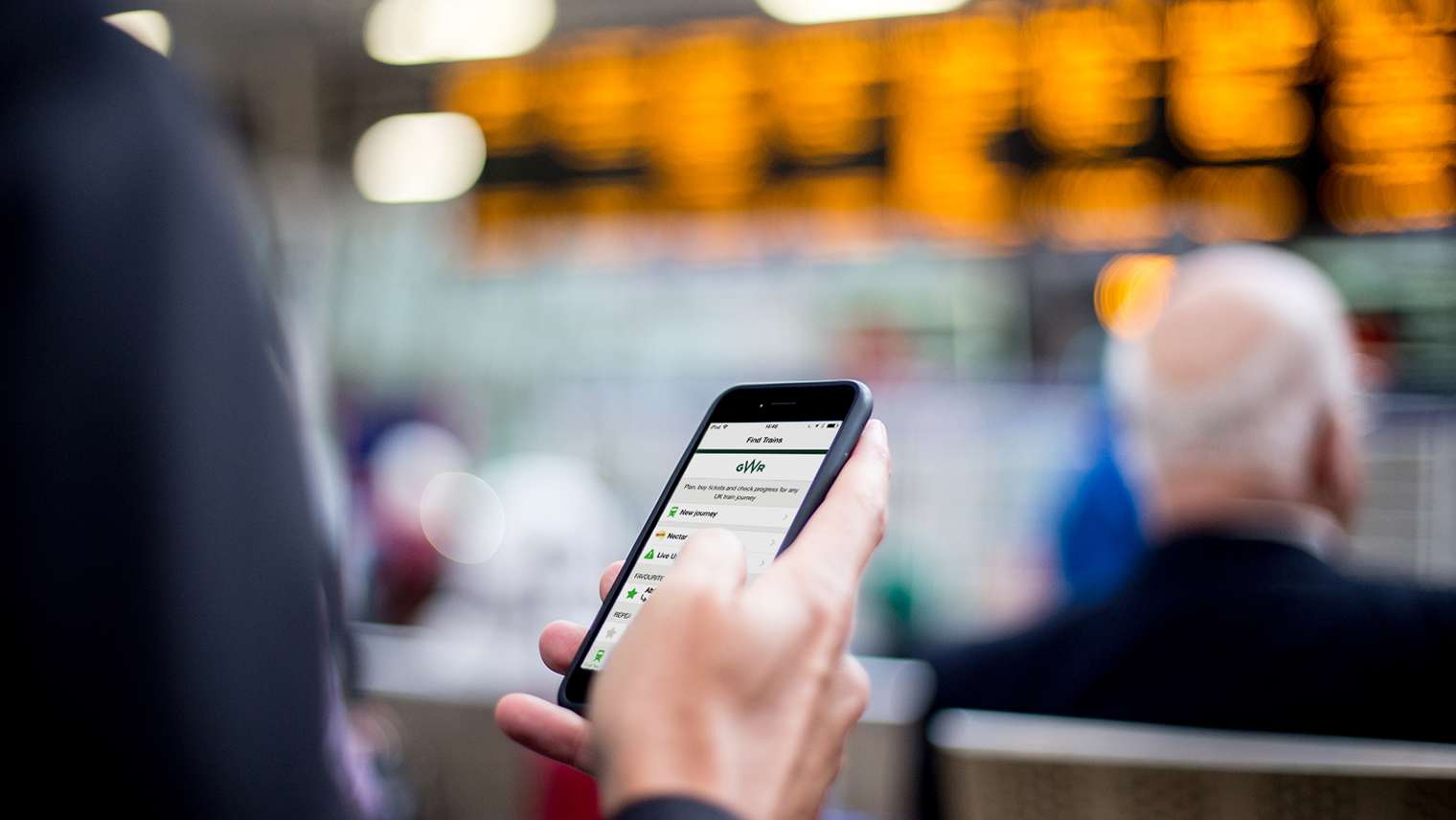
    Deputy Head of the General Department of Taxation Dang Ngoc Minh said earlier this month that tax payers can now scan a QR code to have tax bills delivered to their smartphone within 10 seconds.

  • US waives tariffs on Vietnam solar panels

    US waives tariffs on Vietnam solar panels

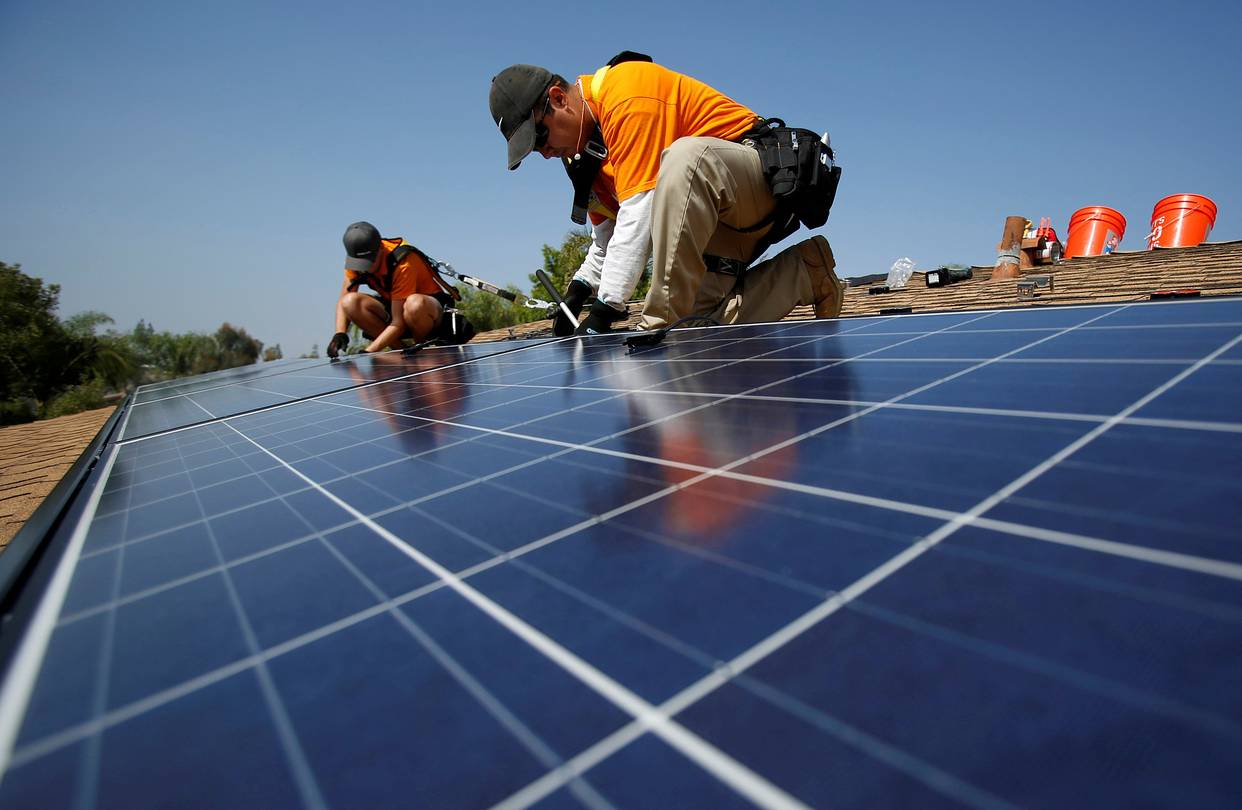
    Joe Biden has waived tariffs on solar panels exported from Vietnam and three other Southeast Asian countries for two years amid rising demand for renewable energy in the U.S.

    The tariff exemption will also apply to panels from Cambodia, Malaysia and Thailand and serve as a “bridge” while U.S. manufacturing ramps up, the White House stated Monday.

    Solar energy is among the fastest growing sources of new electric generation in the United States, and Southeast Asia made up around three-quarters of solar modules imported to the U.S. in 2020, the White House said.

    Vietnam has risen as a solar power hotspot in recent years thanks to the government’s incentive feed-in tariffs to attract investors.

    In the first four months this year, solar plants accounted for 10.9 percent of total power production, according to state-owned utility Vietnam Electricity.

    Hong Kong-based Jinko Solar, one of the largest solar panel manufacturers in the world, received an investment license for its $498 million project in northern Vietnam last year and launched its plant in January.

  • Rumors, manipulation plague Vietnam markets

    Rumors, manipulation plague Vietnam markets

    Vietnam’s stock and corporate bond markets are heavily affected by rumors and sophisticated manipulation, which pose the need for more transparent and thorough regulations, a minister has said.

    Many tickers have been pushed up to new peaks without improvement in business results, with many companies failing to submit their earnings in time, Minister of Finance Ho Duc Phoc informed the National Assembly in a recent report.

    “The stock market is still in an early stage of development and is therefore heavily affected by investor sentiment. Rumors, fears of cash flow and inflation pressure have caused the market to plunge recently.”

    Vietnam’s benchmark VN-Index hit this year’s bottom on May 16, the lowest in 11 months. The plunge came after VN-Index increased by nearly 36 percent last year as one of the best performers globally. The number of new stock accounts opened last year alone equaled that of the previous 10 years.

    But the market turned bearish in April and has struggled to recover since.

    Phoc is also concerned about risks faced by a speeding corporate bond market.

    Many amateurs who fail to meet government criteria have cheated to secure bonds, made possible by the violations of commercial banks and stock brokerages, he said.

    One typical example involves property developer Tan Hoang Minh, whose chairman Do Anh Dung was arrested in early April on suspicions of “fraudulent appropriation of assets,” he added.

    Governor of the State Bank of Vietnam Nguyen Thi Hong called for more thorough solutions to prevent future violations.

    In the long run, the government needs to make the corporate bond market a key capital mobilization channel for the economy, she added.

    Phoc said changes will be made to tighten regulations on bond issuances, listed on a dedicated market for corporate bonds.

  • Rice export prices continue to drop

    Rice export prices continue to drop

    Average rice export prices fell for a second straight month to US$415-420 a ton, resulting in a marginal year-on-year decline in revenues for Vietnam despite higher volumes.

    The country exported 2.86 million tons for $1.39 billion in the year to date, up 10.3 percent in volume but down 1 percent in value, according to data from the Ministry of Agriculture and Rural Development.

    Global prices have been falling due to abundant supply, with Thai 5 percent broken rice becoming $5 per ton cheaper at $445.

    The Philippines remained Vietnam’s top market, importing 915,000 tons for $422.2 million, up 28.3 percent and 11 percent.

    But domestic prices rose slightly in early June as there was a drop in supply between the winter-spring and summer-autumn crops.

  • Helicopter operator profits up 11 percent

    Helicopter operator profits up 11 percent

    Vietnam Helicopter Corporation’s profits rose by 11 percent to VND263 billion (US$11.3 million) last year despite the severe impact Covid-19 had on the aviation industry.

    It saw a 6.7 percent drop in revenues to VND2.08 trillion.

    The company transports cargo and people, trains pilots, imports aviation devices, and offers firefighting services.

    Owned by the Ministry of National Defense, it has seven affiliates and subsidiaries and a charter capital of VND3.98 trillion.

    It charges $3,650-7,300 for an hour of chartered flying.

  • Lazada appoints new group CEO

    Lazada appoints new group CEO

    Alibaba’s Southeast Asian e-commerce arm, Lazada, has named James Dong as its new group CEO as the region’s Shopee-dominated competition steps up.

    In his new role, Dong wil oversee Lazada’s expansion plan into Euroupe. The 42-year-old CEO will succeed Chun Li, who will continue serve as adviser to the group’s chairman Jiang Fan and member of Lazada’s board of directors.

    Formerly with McKinsey & Co, Dong was head of globalisation strategy and corporate development role at Alibaba Group before joining Lazada as CEO of Lazada Thailand and Vietnam in 2018.

    He has subsequently handed up the leadership of Vietnam unit to Kaya Qin, who has been chief operating officer of Lazada Vietnam since 2018, while remaining in his role as CEO of Thailand.

  • Mobifone names new chairman

    Mobifone names new chairman

    Telecom giant Mobifone has named Nguyen Hong Hien as its new chairman until 2027.

    Hien, 48, replaces Nguyen Manh Thang, who becomes a board member at the state-owned Vietnam Posts and Telecommunications Group (VNPT).

    Prior to joining Mobifone, he was head of the technology and infrastructure department at the Commission for Management of State Capital at Enterprises, and worked at State Capital Investment Corporation from 2007.

    In 2021, Mobifone posted pre-tax profits of VND4.96 trillion ($213.8 million) on revenues of VND31 trillion.

    It expects revenues to slightly increase to VND31.36 trillion this year, but profits to drop to VND4.7 trillion.

  • UOB appoints new Vietnam CEO

    UOB appoints new Vietnam CEO

    Singaporean bank UOB has named Victor Ngo its CEO in Vietnam.

    The 30-year banking veteran replaces Harry Loh, who returns to Singapore to lead group non-financial risk management, according to a statement.

    He started working for UOB in 2004 and has occupied several key positions, including head of group internal audit and head of group compliance.

    Since 2015 he has been active in Vietnam, including helping establish the bank’s first foreign subsidiary in 2017.

    “With Ngo’s extensive experience in the banking industry and within UOB Group, he is well placed to drive our Vietnam franchise to new heights,” UOB deputy chairman and CEO Wee Ee Cheong said.

    UOB, which opened a representative office in Vietnam in 1993 and a branch in HCMC two years later, is the sixth largest foreign-owned bank in the country by charter capital (VND5 trillion, US$215.5 million).

  • Vietjet eyes 10-fold jump in profits amid return to post-pandemic normalcy

    Vietjet eyes 10-fold jump in profits amid return to post-pandemic normalcy

    Budget airline Vietjet targets profits of VND1 trillion (US$43.14 million) this year, 10 times the 2021 figure, as it seeks to recover from a two-year slump caused by Covid-19.

    It eyes a 2.5-fold rise in revenues to VND32.72 trillion. At the company’s annual general meeting on Saturday, shareholders expressed concern over the rising oil prices, but the management was optimistic.

    To Viet Thang, deputy CEO, revealed that when oil prices reach $100 per barrel, operation costs increase by 50 percent.

    CEO Nguyen Thi Phuong Thao said the airline has flown when oil prices were above $100 and still made profits.

    “We are always ready to buy fuel at low price and store them to optimize costs.”

    She also said a surcharge is levied when fuel prices surge and this eases the burden on the company.

    Vietjet plans to return to its pre-pandemic schedule domestically and resume 70 percent of international flights.

    Shareholders approved a plan to issue up to 54 million new shares, or 10 percent of the company’s free float.

    Vietjet recently placed a $35-billion order for 200 Boeing 737 aircraft and engine maintenance services.

  • Vietnam Airline sells stake in Cambodian carrier

    Vietnam Airline sells stake in Cambodian carrier

    Vietnam Airlines has sold a 35 percent stake in Cambodia Angkor Air for US$35 million.

    It had bought a 49 percent stake in the Cambodian carrier in 2009 and promised to help it expand.

    But in 2020 it had expressed its intention to sell of its stake due to Covid-19. It is now set to divest the remaining 14 percent in by the end of this year.

    Vietnam Airlines’ accumulated losses climbed to VND21.98 trillion ($955.6 million) last year, roughly the same as its charter capital.

  • Gasoline pushes May inflation to 2.86 pct

    Gasoline pushes May inflation to 2.86 pct

    A surge in the prices of gasoline, food and some other goods has sent the consumer price index rising by 2.86 percent year-on-year in May.

    Global gasoline prices went up while the rising costs of raw materials and ingredients pushed up food prices, according to the General Statistics Office.

    The monthly rise in prices was 0.38 percent with culture, tourism and entertainment products rising by 0.74 percent as travel demand recovered.

    Inflation in the first five months was 2.25 percent as against 1.29 percent in the same period last year.

    Standard Chartered Bank expects full-year inflation of 4.2 percent in 2022 and 5.5 percent in 2023.

    Several economists have also said it would be difficult to contain inflation below the targeted 4 percent rate due to higher prices, especially of gasoline, caused by war in Ukraine.

    Inflation was 1.8 percent last year, the lowest in six years.

  • Vietnam runs out of luxury cars

    Vietnam runs out of luxury cars

    Many auto brands have no luxury cars to supply Vietnamese customers due to global semiconductor shortage.

    Trung Kien, 33, from the northern province of Bac Ninh, said he has been looking for a luxury car with a price tag of around VND7 billion ($300,000) for a month, but found nothing to buy.

    He said he would have to wait for three to six months to get a popular luxury car delivered, due to shortage of components, especially semiconductors and chips.

    Over the last two years, supply from the world’s largest producer, China, has been trickling due to impacts of Covid-19, resulting in a global shortage.

    Supply of luxury cars in Vietnam is hit the hardest, as brands focus on delivering orders to their major markets like the U.S. or European countries.

    Mercedes-Benz customers are said to wait for at least three months for some SUVs and S-class sedans, and up to a year for the ultra-luxury Maybach sedans and SUVs.

    Some locally made models, including E-class sedans and GLC SUVs, are also in short supply, so buyers will have to wait 1-2 months to get their unit delivered.

    Many auto dealers are accepting deposits but not promising when they can deliver cars.

    Vinh Nam, an experienced luxury car salesperson in HCMC, said customers have gotten used to the current shortage.

    “They prioritize getting a car rather than a color of choice and other options”.

    BMW used to have a fairly steady supply despite having to import vehicles, but in recent months supply has declined and buyers have to wait three to six months for delivery.

    Buyers of Porsche, Lexus and Land Rover have the longest waiting time of 12-14 months depending on their choice of color and options, up from the earlier six to nine months.

    Many buyers are impatient and as a result are not making deposits with dealers, while some are turning to the gray market.

    The shortage of auto parts is also hurting buyers, with some brands raising their prices and cutting promotions.

    Some models are being sold at above listed prices. A Land Cruiser LC300, for instance, is being offered at VND5.5 billion, 37.5 percent higher than the original price.


  • Apple could get AirPods Pro 2 made in Vietnam

    Apple could get AirPods Pro 2 made in Vietnam

    Apple could make its wireless earphone, AirPods Pro 2, in Vietnam this year as it seeks to expand production outside China amid strict Covid-19 policies there, according to reports.

    Supply chain analyst Ming-Chi Kuo tweeted Tuesday that the new AirPods would be mass produced in Vietnam from the second half of this year.

    “The shift in AirPods Pro 2 production can be attributed to the relatively uncomplicated supply chain and Vietnam’s better production environment (such as infrastructure and workforce) vs. most countries outside China.”

    But he said that since the product introduction process of the device is still on in China, it is not easy to establish a complete non-China production site.

    Apple has told some of its contract manufacturers that it wants to boost production outside China, citing Beijing’s strict anti-Covid policy among other reasons, the Wall Street Journal reported last week.

    India and Vietnam, already sites for a small portion of Apple’s global production, are among the countries getting a closer look from the company as alternatives to China, it said, citing people involved in the discussions.

    Apple had been seeking to diversify away from China before Covid-19 broke out in early 2020, but the plans were complicated by the pandemic, the report said.

    Current lockdowns in Shanghai and other cities as part of China’s anti-Covid policy have caused supply-chain bottlenecks for many western companies, it added.

  • Facebook to charge 5 pct tax on Vietnam ads

    Facebook to charge 5 pct tax on Vietnam ads

    Facebook parent Meta will charge a 5 percent value added tax on all Vietnamese advertisements starting June 1 after assuring the government it will fulfill its tax obligations.

    Meta executives last week told Prime Minister Pham Minh Chinh that the company would register and pay tax as a foreign contractor doing business in Vietnam.

    Authorities have been calling for properly taxing tech giants like Meta and Google, pointing out they account for around 70 percent of the online advertisement market but use various means to evade tax.

    They taxed cross-border platforms a total of VND5 trillion ($218.5 million) between 2018 and last year.

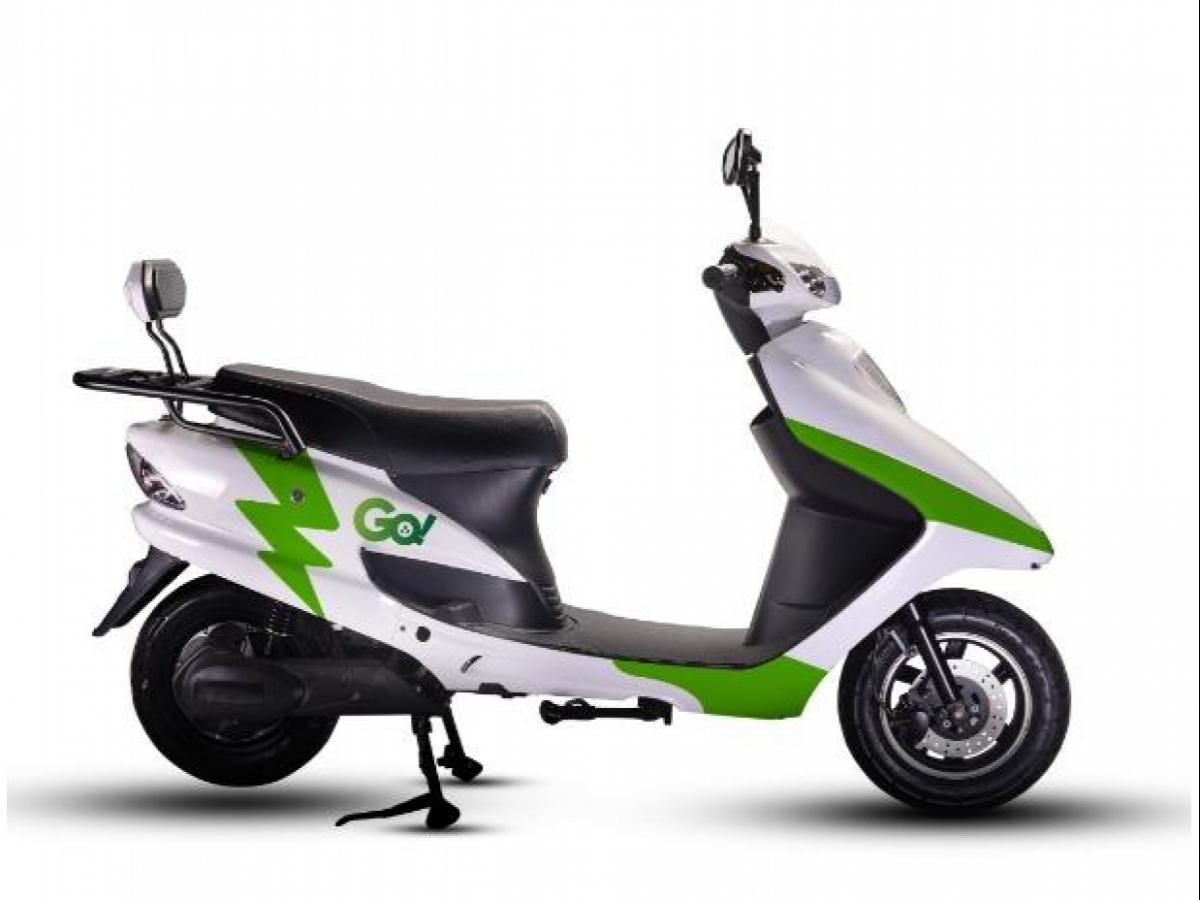
  • eBikeGo Completes $5 Million Funding Round, Aims To Raise $25 Million Further

    eBikeGo Completes $5 Million Funding Round, Aims To Raise $25 Million Further

    Electric mobility start-up, eBikeGo, has announced completing a $5 million, or over ₹ 38 crore, funding round. The company recently secured $3.5 million, or over ₹ 27 crore, in a fresh round of funding, which in addition to the $1.5 million, or over ₹ 12 crore, in pre-Series A funding from a combination of overseas and Indian investors, cumulatively standing at $5 million. In fact, the company has announced that it is aiming to raise $25 million, or over ₹ 194 crore, further.

    The latest round of funding comes from Kuwaiti investor Sivaram Juvva and his company Al Tebah for Telecommunications Materials Systems & Devices Company, as well as from Omani investor, Ivor Braganza, and his company Muscat International Project Management & Services LLC. Other investors include some High Net Worth Individuals from the industry.

    Commenting on the latest round of funding, Irfan Khan, Founder & CEO of eBikeGo said, “With this investment, we hope to launch our proven EVs such as Muvi and Velocipedo and have a significant influence on the present status of electric mobility. We as a company are working towards becoming a robust OEM and thus, we aspire to drastically reduce carbon footprint not just in India but on a worldwide scale”.

    Presently active in 7 cities in India, eBikeGo is an electric two-wheeler mobility platform that provides economical and environment-friendly travelling options. To better understand the market, the company says that over the last 3 years it has deployed around 2,000 Electric 2-Wheelers on the B2B platform which were equipped with an AI-based business intelligence unit eBG Matics. With that, the company has gathered 1 Petabyte of data and claims that currently there is no ideal vehicle that caters to the immediate needs of the Indian Market, and the recent fire incidents have led to a setback in the Indian EV space.

    The company claims the solution to this is using LFP batteries, which it claims are more dependable. In fact, eBikeGo is working on a new product line-up for India and has decided to acquire an EV portfolio from Torrot, a Spain-based 70 years old Electric Vehicle Manufacturing company, which owns brands like MUVI and Velocipedo. The company is working on localizing these vehicles as per Indian conditions to produce and market them in India and Europe.

    eBikeGo has meticulously laid out an expansion strategy to set up a massive manufacturing unit, simultaneously beginning production and launching these vehicles and impacting the existing condition of electric mobility, after obtaining funding. The company hopes to launch Velocipedo and MUVI in 2023 with this funding.