Tag: Vietnam

  • Seafood companies post profit surge as global demand recovers

    Seafood companies post profit surge as global demand recovers

    Many seafood firms have seen a year-on-year surge in profits in the first quarter this year thanks to surging prices and recovering demand.

    Vinh Hoan Corporation, the largest listed seafood company, posted after-tax profits of over VND550 billion ($23.9 million) in the first quarter, up 4.2 times year-on-year.

    Cuu Long Fish Joint Stock Company·also saw its profits surge over 5.7 times against the same period last year to VND63 billion, the highest quarterly profit since late 2018.

    IDI International Development & Investment also recorded after-tax profits of over VND200 billion, the highest quarterly profit since 2010 when it began releasing financial reports.

    Nam Viet Corporation reported a three-time year-on-year surge in profits to VND206 billion while Camimex Group saw its profits double to VND25.1 billion.

    Sao Ta Foods Joint Stock Company, another seafood firm, reported its profit surging nearly 1.5 times year-on-year to VND42.2 billion.

    The surge in profits among seafood companies in the first quarter was credited to surging prices and recovering global demand.

    Vietnam’s seafood exports grew by 40 percent year-on-year to $2.4 billion in Q1 despite direct impacts of the ongoing Russia-Ukraine crisis.

    Growth was led by pangasius catfish, whose exports increased by 88 percent to $646 million and accounted for 27 percent of overall exports, according to the Vietnam Association of Seafood Exporters and Producers.

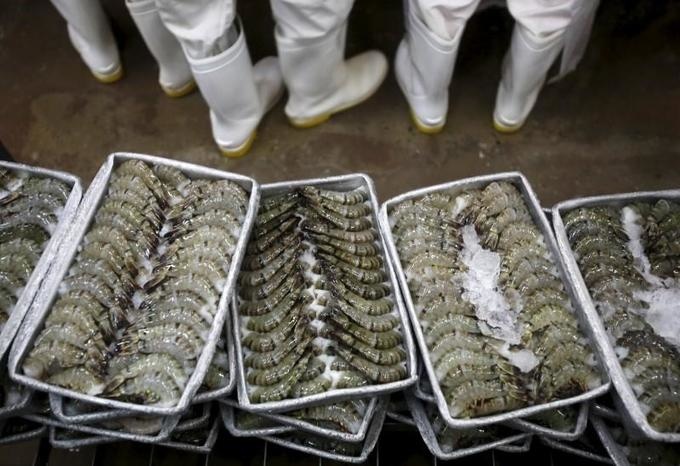
    Shrimp remained the top seafood export item, accounting for 37.5 percent of the total at over $900 million, up 37 percent.

    A recent report by Rong Viet Securities Corporation said that pangasius exports would record a strong recovery this year due to increased global demand and supply shortage from Russia. The high selling price will last until the end of the second quarter due to increase in raw material prices.

    An Binh Securities warned of downside risks like surging feed and logistics costs and fierce competition from other exporting countries like India, Ecuador and Indonesia.

    On the stock market, the seafood sector has posted gains over the past months, with some hitting the ceiling regardless of the overall gloomy market trend.

    On Friday, Vinh Hoan closed at around VND104,000, up 55 percent since January.

  • Vinhomes profits slips by 17 percent in Q1

    Vinhomes profits slips by 17 percent in Q1

    Property developer Vinhomes reported a 17-percent decline in profits in the first quarter to VND5.89 trillion (US$256.8 million).

    Net revenues were down 9 percent to VND14.28 trillion, according to its consolidated financial statement.

    Around 62.5 percent of its revenues, or VND8.92 trillion, came from the sale of three housing projects, Ocean Park, Smart City and Grand Park.

    Its selling expenses were down, but administrative expenses rose by over 60 percent.

    The company, a subsidiary of conglomerate Vingroup, eyes revenues of VND75 trillion and profits of VND30 trillion this year, according to a document it circulated among shareholders.

  • Gold consumption up

    Gold consumption up

    Vietnam’s gold consumption rose 6 percent year-on-year in the first quarter as inflation concerns pushed people to invest in safer assets. Gold consumption hit 19.6 tonnes, compared to 18.6 tonnes in the same quarter last year, according to the World Gold Council (WGC).

    Demand for gold bars and coins rose 4 percent to 14 tonnes in the period, while demand for jewelry rose 10 percent to 5.6 tonnes.

    Andrew Naylor, head of ASEAN and Public Policy at the World Gold Council, said rising demand for gold in Vietnam happened as the dong weakened and inflation rose.

    The nation’s economic recovery also helped demand to rise, especially during Tet, the Lunar New Year holiday, Valentine’s Day and the God of Wealth Day in February.

    Vietnam was the Southeast Asia’s largest gold bullion and coin market last year and among the top 10 globally.

    Geopolitical tensions sent global gold prices surged to $2,070 per ounce, near an all-time high, in March.

    Louise Street, senior analyst at the World Gold Council, said that the first quarter of 2022 has been a turbulent one, marked by geopolitical crises, supply chain difficulties and surging inflation.

    “These global events and market conditions have solidified gold’s status as a safe haven holding, not just for investors but also for retail consumers, thanks to its unique position as a dual-natured asset class.”

  • Digital transformation key to Vietnam’s ambitions of getting rich and clean

    Digital transformation key to Vietnam’s ambitions of getting rich and clean

    Digital transformation would be the key for Vietnam to achieve its targets of becoming a high-income country and a ‘net-zero’ emissions economy, an IFC vice president says.

    Vietnam has two big goals by the middle of this century. One is to become a high-income country by 2045 under the Resolution of the 13th National Party Congress and another is to reach net-zero carbon emissions by 2050 as committed by Prime Minister Pham Minh Chinh at the 2021 United Nations Climate Change Conference (COP 26).

    Alfonso Garcia Mora, the International Finance Corporation’s regional vice president for the Asia Pacific, told VnExpress that Vietnam now faces two major challenges as it has to manage to bring labor productivity to a new level in order to achieve the goal of becoming a rich country while learning to adapt to climate change.

    “From the above two challenges, we have a common key to solve it through technology and digital transformation. It is no longer an option, it is a must,” said Alfonso.

    He said Vietnam has lots of advantages for digital transformation.

    According to World Bank data, the digital sector in Vietnam has expanded by 10 percent per year and could reach over $200 billion by 2045, a huge figure compared to the size of Vietnam’s GDP, which was nearly $352 billion last year.

    The young population rate and high smartphone and Internet coverage are also favorable factors for Vietnam to accelerate digital transformation, Alfonso said.

    To enhance innovation and maximize development opportunities for the digital economy, there are four keys – digital entrepreneurship, digital infrastructure, digital skills and digital financial services, he added.

    “It’s necessary to improve digital skills among the workforce, a step to take the economy to a new level of development and achieving ambitions of high incomes and net-zero emissions,” he recommended.

    According to a World Bank report, only 40 percent of businesses in Vietnam said they have enough capabilities in terms of information and communication technology and it is estimated that the market would face a huge shortage of up to one million ICT engineers by 2023.

    Some large enterprises have already begun adopting digital transformation but the problem is that most of the country’s enterprises are small and medium sized and the top challenge is how to help this group go digital.

    Alfonso said there must be a clear and credible policy, investment in 4G and 5G technology infrastructure and improvement in digital and technology skills while the government should offer fiscal incentives for small and medium businesses so they are ready for digital transformation.

    The IFC expert said many Vietnamese companies have not used digital transformation tools, which poses opportunities for the potential market to develop.

    Besides, the Covid pandemic in the past two years has helped the Vietnamese economy make leaps in digital transformation that should have taken three to five years to achieve.

    He said it’s high time for Vietnam to push up digital transformation.

    In order to achieve successful digital transformation, there needs to be cooperation between the public and private sectors while the government should have a clear strategic vision as to how many percentages the economy would go digital by 2050.

    With specific localities in particular and Vietnam in general, digital transformation is only to help the country grow richer but also to reduce risks and boost adaptation to climate change. Therefore, digital transformation must also pay attention to sustainable development.

    “Today, we see 80 percent of greenhouse gas emissions coming from large cities. To achieve the goal of carbon neutrality by 2050 we will need changes like digitization and use of electric vehicles,” he said.

    In addition, he said the government should have encouraging policies to motivate businesses to join digital transformation.

    “We must open the market and allow innovative startups to develop to push the digital economy forward. We need to give them a safe environment,” said Alfonso.

    “Four years ago, no one trusted telemedicine but now people are familiar with the service. Similarly, online learning could have been an option before the pandemic but it was mandatory during the lockdown period. These new habits are very important in increasing accessibility for people in remote areas and ensuring inclusive development,” he said.

    Alfonso said the IFC, the largest global development organization focused on supporting the private sector in emerging economies, has invested $13.3 billion in more than 190 projects in Vietnam and will continue to invest in many activities to support Vietnam’s digital transformation.

    IFC would help local banks provide more digital financial services on mobile phones and optimize logistics, encourage the use of clean energy as w

  • Government rejects airlines’ demand for further tax cuts

    Government rejects airlines’ demand for further tax cuts

    The Ministry of Finance has turned down airlines’ requests for further tax breaks, saying they have received enough support from the government.

    In response to several airlines’ request to reduce value-added tax from 8 percent to 5 percent and fuel import tax from 7 percent to zero, the ministry said in a statement Friday that only the National Assembly can decide on VAT cuts.

    The current 8 percent VAT is already a reduction from the normal 10 percent, and aviation companies are also eligible for the lower rate, it said.

    It also pointed out that the aviation industry has already benefited from a lot of support in terms of taxes and fees since the pandemic began.

    Environment tax on jet fuel has been reduced by half to VND1,500 per liter until the end of this year.

    It is important to ensure a balance between the benefits companies and the government get, the ministry said.

    Vietnamese carriers served 14.5 million passengers in the first four months of this year, up 26.3 percent year-on-year, according to the General Statistics Office.

    Airlines resumed regular international services in March after a two-year hiatus due to Covid-19.

  • HCMC high-end office rents jump in Q1

    HCMC high-end office rents jump in Q1

    Grade A office rents in HCMC rose by 5.1 percent quarter-on-quarter to US$44.9 per square meter per month last quarter. The average rent was 5.3 percent up from a year earlier, according to real estate consultancy CBRE Vietnam.

    Grade B rents averaged $25.9, up 1.7 percent and 3.1 percent. Similar surveys by other consultancies Colliers and Savills showed grade A rents increasing by 1-3.8 percent.

    Net absorption during the quarter was 16,500 square meters compared to 15,000 in the last quarter of 2021, according to Savills.

    Two sectors that achieved growth during the pandemic, information technology and logistics, accounted for nearly 60 percent of all transactions and are likely to lead demand in the next two years.

    Office relocation accounted for 55 percent of transactions.

    Demand for office space would keep rising, especially in sectors that would see growth such as e-commerce, real estate, electronics, IT, and communications, deputy director of Colliers Vietnam, Nhung Vu, said.

    Savills added that HCMC would need around 140,000 square meters of office space for new workers this year, based on an estimate that each needs eight square meters.

  • The Coffee House operator posts $10 mln loss

    The Coffee House operator posts $10 mln loss

    Seedcom, the operator of The Coffee House beverage chain and June fashion outlets, posted a loss of nearly VND240 billion ($10.45 million) last year due to Covid-19 impacts. The loss increased by nearly 24 percent from 2020.

    Its debt-to-equity ratio rose by 26 to 69.5. It had nearly VND1.48 trillion in debt by the end of the year.

    Last year, it raised VND50 billion in bonds with a coupon rate of 12 percent per annum.

    The negative figures came as most of Seedcom’s business, including The Coffee House, Juno and another fashion brand Hnoss, had to shut down or operated with limited capacity for months due to social distancing.

    The Coffee House last year launched a kiosk model to focus on selling takeaways in crowded areas like supermarkets or main roads.

    But so far only two such kiosks have been opened in Ho Chi Minh City, despite CEO Le Ba Nam Anh’s plans to open a large number of such facilities.

    Seedcom, established in 2014, also owns delivery companies AhaMove, Giao Hang Nhanh and retail chain Kingfoodmart.

    Last year it branched into finance by partnering with Thai bank Kvision to provide payment and loan services to small and medium companies, focusing on cashless finance.

    It also sold farming unit Cau Dat Farm, which grows and processes coffee, to Nova Consumer under NovaGroup to focus more on retail.

  • Gold giant SJC sees sales slump to seven-year low

    Gold giant SJC sees sales slump to seven-year low

    The State-owned Saigon Jewelry Company has reported revenues of VND17.7 trillion ($770.3) in 2021, down 25 percent year-on-year to its lowest since 2014.

    It has attributed the decrease to Covid-19 restrictions and lockdowns last year, which brought sales from VND13 trillion in the first half down to just VND4.7 trillion in the third and fourth quarter, well below its target of VND23.5 trillion.

    The company posted pre-tax profits of VND56 billion last year, down 42.6 percent, and return on equity of 2.8 percent, short of the targeted 5 percent.

    At the end of 2021, the value of its total assets was VND1.7 trillion, 70 percent of it in inventory.

    Established in 1988, SJC is a wholly state-owned enterprise based in Ho Chi Minh City. It has been the sole producer of gold bullion in the country since 2012, and has around 90 percent of the bullion market.

  • Vietnam plans two-thirds cut in thermal power

    Vietnam plans two-thirds cut in thermal power

    Vietnam will reduce coal-fired power supply by two-thirds between 2025 and 2045 and increase renewable power supply to account for more than half of the total.

    All localities have expressed agreement with the Ministry of Industry and Trade’s latest version – Power Power Development Plan 8 – which was announced earlier this month. The ministry is required to complete its final draft of the plan and submit it to the government by the end of this month, Deputy Prime Minister Le Van Thanh has said.

    The plan includes targets to bring down the ratio of coal-fired power supply from 29.3 percent in 2025 to 9.6 percent in 2045, when the country is set to have a total supply of 401,556 megawatts from all sources.

    This means coal-fired projects under construction will still be completed, but no new plant will be approved. Hydropower will also see its ratio reduced from 27.2 percent in 2025 to 9 percent in 2045. Renewable energy, comprising mostly of wind and solar power, will see its ratio increase from 23.7 percent in 2025 to 59.5 percent by 2045.

    Offshore projects are set to account for zero percent of supply by 2025 but will rise to 17 percent by 2045.

    Solar power farms will see its ratio more than double from 8.9 percent to 19.4 percent.

    The industry ministry also eyes a gradual transition from liquefied natural gas (LNG) projects to hydrogen power over 20 years. By the 10th year of their operation, the government wants LNG plants to have 20 percent of their capacity coming from hydrogen power.

    The latest development plan aims to maximize the reduction of coal-fired power sources in order to meet the country’s commitment to achieve carbon neutrality by 2050, the industry ministry told the government in its report.

    Carbon emissions are set to hit 175 million tonnes by 2045 and fall to 42 million tonnes by 2050.

    The plan will also increase power independence and reduce the need for energy imports, the ministry said.

    Power imports are set to see their ratio decrease from 4.5 percent of total supply in 2025 to 2.8 percent in 2045.

    The industry ministry estimates an investment of $141.6 billion to implement this plant, with transmission accounting for nearly 10 percent.

    It wants to increase power transmission from the central and southern regions to the northern region starting 2030.

  • TPBank eyes 36-percent hike in profits

    TPBank eyes 36-percent hike in profits

    Private lender TPBank expects its pre-tax profits to top VND8.2 trillion ($358 million) this year, up 36 percent from 2021.

    It also targets a 20 percent increase in assets to VND350 trillion.

    The bank plans a rights issue of 527 million shares this year to raise VND5.3 trillion and increase its charter capital to VND21 trillion.

    VnDirect Securities has forecast 25 percent growth for TPBank this year, higher than the 20 percent expected for the sector.

    BaoViet Securities has forecast its compounded annual growth rate to top 31.4 percent in 2020-22 and return on average equity (ROAE) in the period of 24.8 percent.

  • Stocks plunge to 11-week low

    Stocks plunge to 11-week low

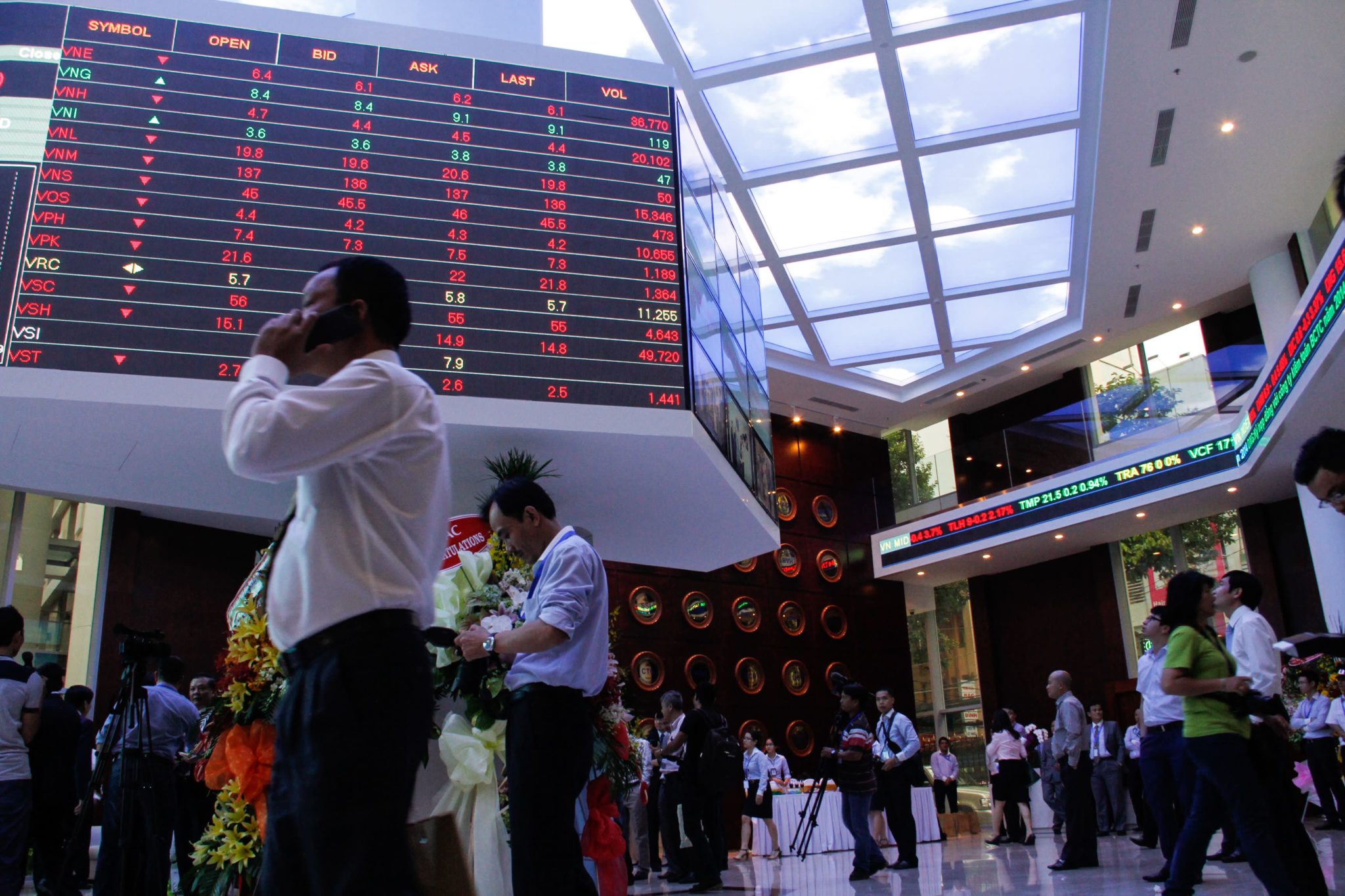
    Vietnam’s benchmark VN-Index started off the week in the red with a 1.25 percent drop to 1,440.23 points Monday morning, the lowest in 11 weeks.

    The index fell by 17 points as of 11:06 a.m. after ending in the red in four out of the last six sessions.

    The main bourse Ho Chi Minh Stock Exchange (HoSE) saw 361 tickers in the red and 107 in the green.

    Brokerages have forecast earlier that the market would drop in the short term.

    The VN30 basket, comprising the 30 largest capped stocks, saw 15 tickers in the red, with SSI of leading brokerage SSI Securities Corporation falling 4.5 percent to the lowest since August last year.

    VHM of real estate giant Vinhomes dropped 3.4 percent, the lowest in over a year.

    Other losers included CTG of state-owned lender VietinBank, down 3.5 percent, MBB of lender MB, down 2.7 percent, and VIC of biggest private conglomerate Vingroup, down 2.9 percent. Fourteen blue chips bucked the trend, with PNJ of Phu Nhuan Jewelry rising 3.2 percent and FPT of IT giant FPT Corporation gaining 2.2 percent. Both were at new peaks.

    They were followed by SAB of brewer Sabeco, up 2 percent, and TPB of private TPBank, up 1.6 percent.

    Foreign investors are buying the dips with a VND88 billion net purchase, focusing on DPM of Petrovietnam Fertilizer & Chemicals Corporation and NLG of real estate developer Nam Long Investment Corp.

    The HNX-Index for stocks on the Hanoi Stock Exchange, home to mid and small caps, was losing 2.51 percent, while the UPCoM-Index for the Unlisted Public Companies Market was losing 1.5 percent.

  • Auto sales recommence growth

    Auto sales recommence growth

    Vietnam’s auto sales in March returned to growth with a 17 percent increase year-on-year to 36,962 units after two consecutive months of decline, according to Vietnam Automobile Manufacturers Association (VAMA).

    The figure was highest this year and brought sales in the first quarter to 90,506 units, up 27 percent year-on-year, said VAMA, which does not incorporate data of VinFast and TC Motor (assembler of Hyundai cars).

    Most top-selling brands posted a double-digit increase in sales compared to March last year.

    Truong Hai Auto Corporation (Thaco) led with 13,295 units sold, up nearly 33 percent year-on-year.

    Toyota sold 7,977 units, up 22 percent.

    Mitsubishi and Honda followed with 3,675 units and 3,604 units respectively.

    Visuco (Suzuki) saw sales declining by 0.8 percent, while Ford’s sales plunged 45 percent.

    With data from all brands included, the hatchback VinFast Fadil was the top-selling model in Vietnam last month at 2,567 units. It was followed by the SUV Toyota Corolla Cross and the sedan Toyota Vios.


  • Vietnam Aviation under pressure

    Vietnam Aviation under pressure

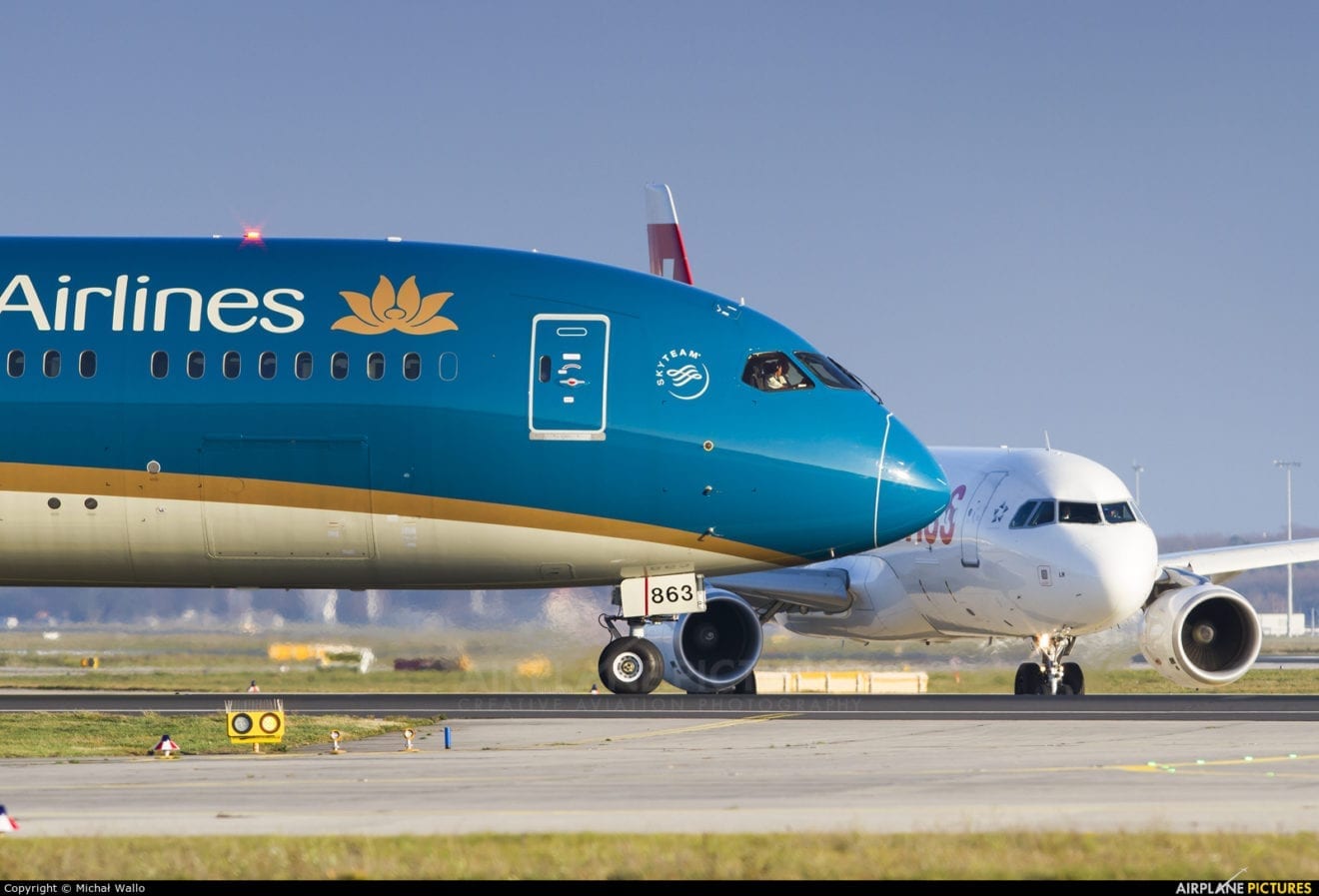
    The Civil Aviation Authority of Vietnam has recommended a 3.7-percent increase in domestic fare caps to enable airlines to cope with surging fuel prices.

    In a proposal it submitted to the Ministry of Transportation, it said fuel costs have risen by 84 percent since September 2015, when the current caps were introduceThe price of aviation fuel Jet A1 has doubled in the period from US$61.6 per barrel to $132.6, according to data from the International Air Transport Association.

    CAAV has proposed hikes ranging between 2.2 percent for routes of up to 850 kilometers and 6.6 percent for those above 1,280 km. Currently, these fares are capped at VND2.2 million ($96.1) and VND3.75 million ($163.8).

    In 2019, Vietnam Airlines had called for abolishing the domestic price caps altogether.

    Last month it called for raising the caps and fuel surcharges. Vietnam is one of the few countries in the world to still cap airfares.

  • Aviation yet to gain takeoff momentum

    Aviation yet to gain takeoff momentum

    On Mar. 15, Vietnam fully reopened its borders to foreign tourists, allowing quarantine-free entry and reinstated its pre-pandemic visa policies, including waivers for nationals of 24 countries.

    “These positive moves have contributed to strengthening confidence in a brighter picture for the aviation industry this year,” Nguyen Huu Nam, deputy director of the HCMC chapter of the Vietnam Chamber of Commerce and Industry (VCCI), said at an event held last week to present the Vietnam International Aviation Exhibition (VIAE 2022) set to take place in September.

    Regarding this year’s prospects, brokerage Bao Viet Securities (BVSC) has said in recent report that if new coronavirus variants are not too dangerous, international routes can recover strongly from the end of the second quarter onwards.

    It has forecast the number of domestic and international passengers in 2022 at 30 million and five million, up 89.9 percent and 4.6 percent respectively over last year.

    Meanwhile, Viet Capital Securities JSC (VCSC) estimates the number of domestic flights has reached 94 percent of the pre-pandemic period (2019).

    The company expects that the total number of domestic passengers for Vietnam Airlines and Vietjet Air this year will be 92 percent and 91 percent of 2019, respectively; and that of international passengers will be 44 percent.

    Nguyen Phuoc Thang, Head of Science – Technology and Environment Department of Civil Aviation Authority of Vietnam, said from now until the end of August, carriers will increase the number of flights to serve tourists and the market will recover “very quickly.”

    The industry is coming out of two quiet years, resuming international commercial flights about a month ago.

    As for international flights, Vietnam officially resumed services on nine routes on Jan. 1 before reopening flights to all markets starting mid-February with several Covid related restrictions.

    According to the General Statistics Office, 91,000 foreigners arrived in Vietnam in the first quarter, up 89.1 percent against the same period last year. Of these, 90.5 percent came on flights, up 165.2 percent.

    In 2021, the number of passengers dropped to the lowest ever level in history, to 15.9 million, with that of foreign and domestic passengers dropping by 96.5 percent and 50.5 percent against 2020, respectively.

    As the fourth Covid-19 wave hit the country in April last year, domestic flights were put on hold late August and only a limited number of flights resumed early October.

    Between Oct. 10-20, only one return flight was allowed on 19 domestic routes compared to 58 routes in 2019. and it was not until after that pilot period that domestic flights resumed gradually.

    The demand for flying in Vietnam entered the “new normal” phase during the latest Tet, or Lunar New Year holiday, which last nine days starting Jan. 29.

    According to the Vietnam Air Traffic Management Corporation (VATM), Vietnamese carriers operated 10,711 flights on domestic routes between Jan. 29 and Feb. 2, an increase by more than 69 percent against the previous Tet holiday.

    However, the aviation industry has several obstacles to contend with before it gains a strong recovery momentum. One major obstacle is access to its major feeder markets before the pandemic, namely, China, South Korea, Japan and Russia.

    For now, China is still pursuing a “zero Covid” policy and South Korea still maintains tight border control. The ongoing Russia-Ukraine crisis will also prevent Russian tourists from going on tours abroad.

    The VCSC has suggested that Vietnam diversify its markets while waiting for the traditional ones to recover.

    According to Destination Insights with Google, the U.S. and Europe are among markets with the highest search demand for information on accommodation and air travel to Vietnam since the reopening was announced.

    The other obstacle airlines could face in the near future is fuel prices, which accounted for 29 percent and 43 percent of the input costs for Vietnam Airlines and Vietjet Air in the 2015-2019 period.

    In January, the average price of jet fuel rose to about $101 per barrel, higher than the $77.8 forecast by the International Air Transpo

  • Ford dealer reports 36-fold profit increase

    Ford dealer reports 36-fold profit increase

    City Auto Corp, Vietnam’s largest Ford dealer, reported profits of VND51.8 billion (US$2.27 million) last year, a 36-fold rise from 2020.

    But it sold only 4,580 vehicles, 29 percent fewer than in 2020, and the increased profitability was due to the average price of each rising by 13 percent to VND915 million.

    The company attributed the decline in number of cars sold to last year’s Covid-19 outbreak and social distancing, but said business bounced back in the last quarter of 2021 thanks to post-pandemic economic recovery and the registration fee cut.

    It hopes to sell 8,820 units this year and double profits to VND104 billion, its highest ever.

    Opening new Ford dealerships and also distributing other car brands are part of its strategies to achieve the goals, it said.

    It did not exclude the possibility of acquiring other dealerships and selling electric vehicles.