Tag: Vietnam

  • Vietnamese co-living startup raises $1.7 mln from Singapore fund

    Vietnamese co-living startup raises $1.7 mln from Singapore fund

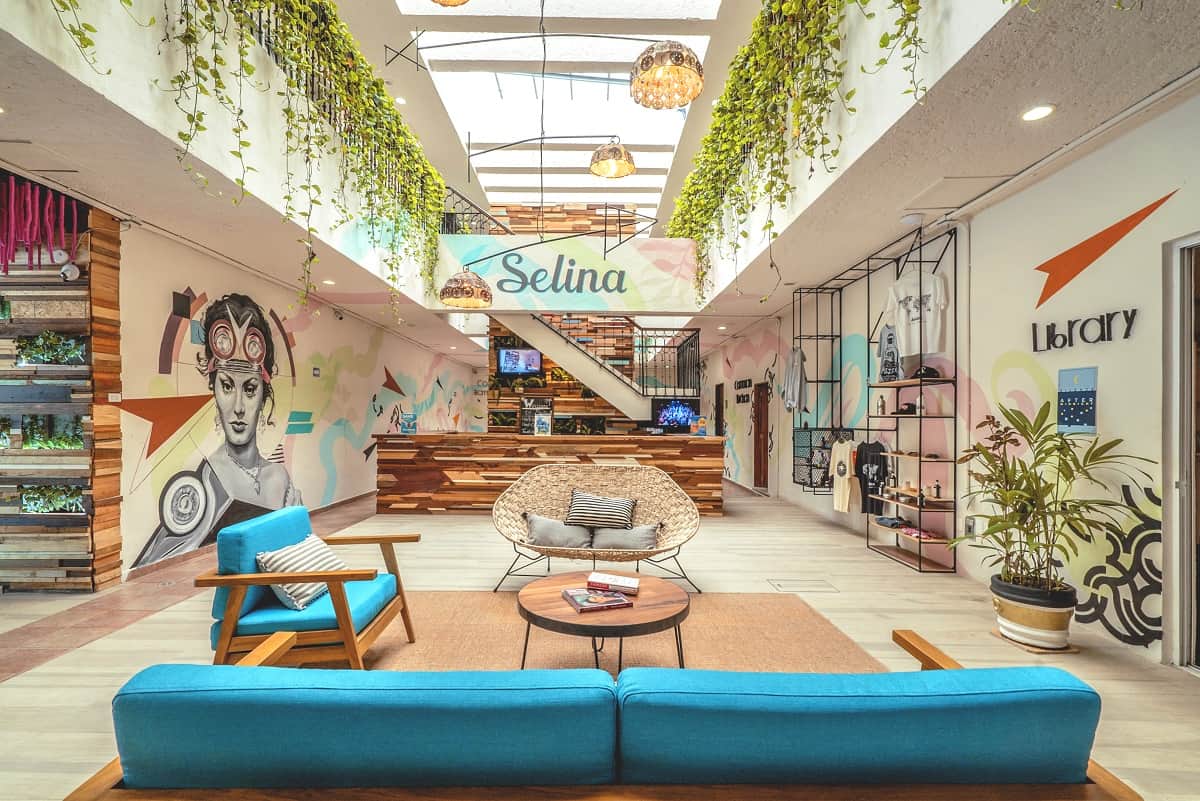
    M Village, an accommodation startup in co-living spaces, has received funding of US$1.7 million led by Singaporean venture fund Simple Tech Investment.

    The money will be used for expanding the number of rooms the startup has in Ho Chi Minh City from the current 300 to 1,000 this year.

    Its founder, Nguyen Hai Ninh, is also the founder and ex-CEO of The Coffee House, a HCMC-based coffee chain that has over 140 stores across Vietnam.

    He said: “The fund-raising process started late last year and it has worked out pretty well. Simple Tech Investment agreed on investing after a month of getting to know each other”.

    Simple Tech has previously invested in digital transformation by some Vietnamese businesses, including online advertiser 24h, human resources service SieuViet Group, and leading barbershop chain 30Shine.

    M Village has also received funding from Singapore’s Vulpes Venture, Japan’s Genesia Ventures, and some angel investors.

    Founded in October 2020, M Village operates five locations in Ho Chi Minh City with their occupancy rates exceeding 90 percent.

  • Fruits, meats buck trend of surging prices

    Fruits, meats buck trend of surging prices

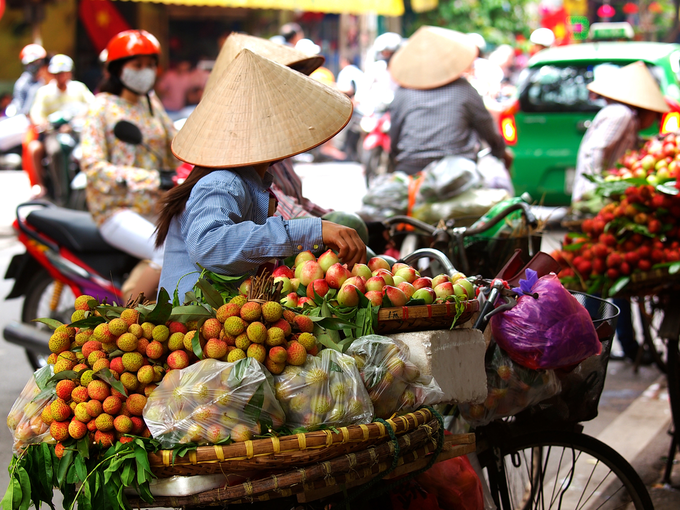
    While the prices of many consumer goods are rising sharply, some have bucked the trend as their supply remains strong while demand, especially for exports, is weak. Looking for a place to eat dinner at a traditional market, Huong, a garment worker in Tan Binh District, said it is fortunate that the price of pork, popular among most Vietnamese families, has fallen slightly.

    This has relieved some of the financial pressure on low-income workers like her as the prices of many goods have been rising.

    Imported beef prices are down 10-20 percent, and farmed fish prices have fallen even more sharply.

    A recent survey found that the prices of many agricultural, fishery and livestock products have dropped, with most of them seeing double-digit declines.

    “I suffered heavy losses as production costs doubled from last year but prices are lower”.An, who has a jackfruit orchard in the southern province of Long An, said merchants have halved their buying price and even stopped buying due to high transport costs and export challenges.

    Hung, a farmer in the central coastal province of Binh Thuan, said several tonnes of dragon fruits have ripened on his farm but there are no buyers.

    Citing export issues, merchants buy the fruit in small quantities at around VND2,000 per kilogram (8.7 US cents).

    Pham Thanh Mai, an agricultural products trader in the Central Highlands, said difficulties with exports are the main reason for the price drops.

    “Usually off-season fruits always fetch higher prices because of limited supply. Prices have now fallen sharply since demand is lower as fruits cannot be exported”.

    As of March 21, around 1,000 trucks remained stranded at at border gates with China in the northern province of Lang Son, 660 of them laden with fresh fruits. According to Vietnam Customs, 80 percent of the country’s dragon fruit is exported to China. But after that country imposed stringent Covid-19 safety measures, Vietnam’s exports have stalled, causing demand for many fruits to dry up.

    Le Xuan Huy, deputy director of leading pork producer CP Vietnam, said meat prices have dropped generally due to higher supply and fall in demand to 80 percent of pre-pandemic levels.

  • FujiMart to expand its footprint in Vietnam

    FujiMart to expand its footprint in Vietnam

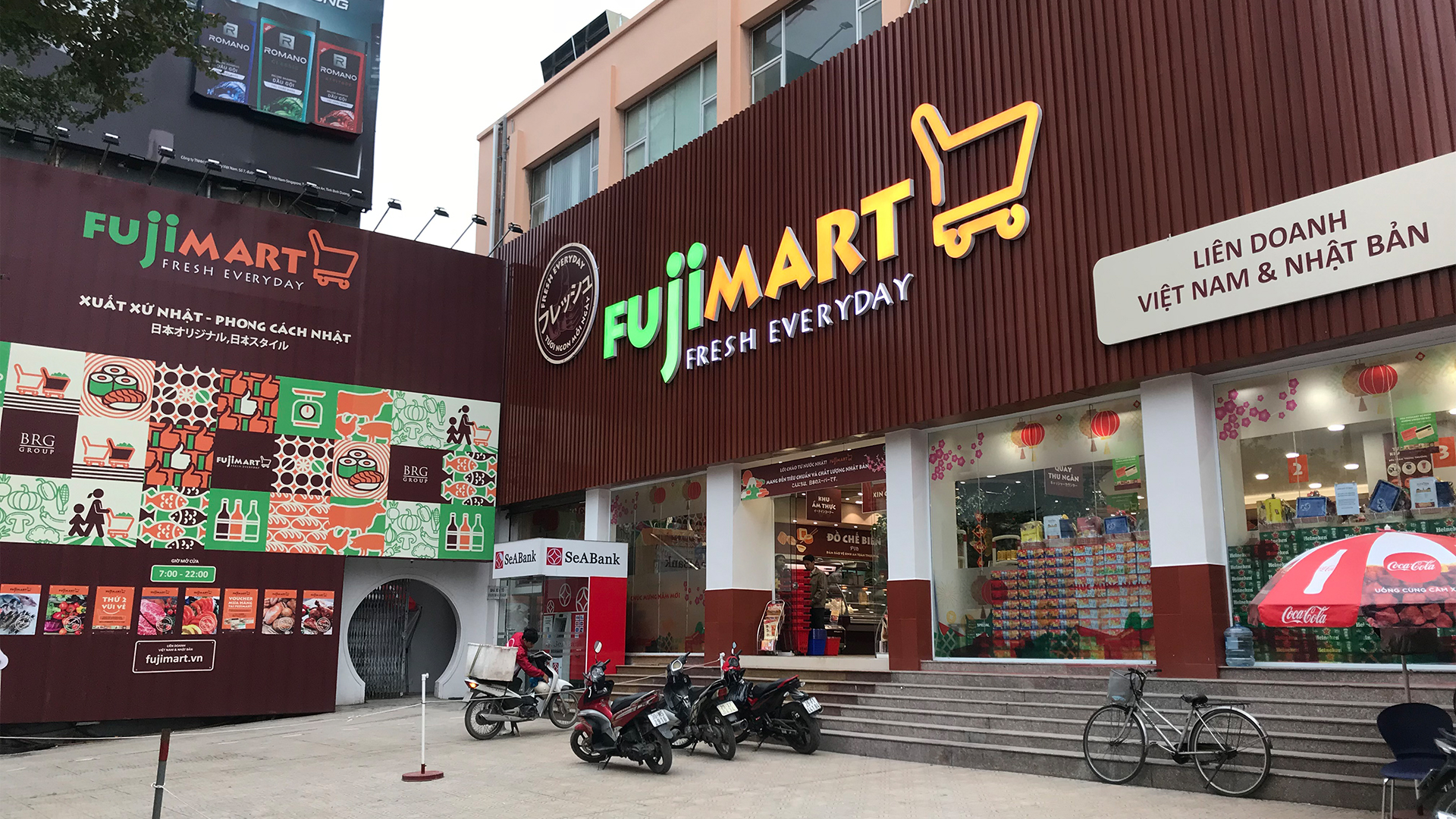
    Sumitomo Corporation is accelerating its expansion plan for its FujiMart grocery supermarket chain in Vietnam, eyeing about 50 new stores by 2028 through its extended partnership with BRG Group.

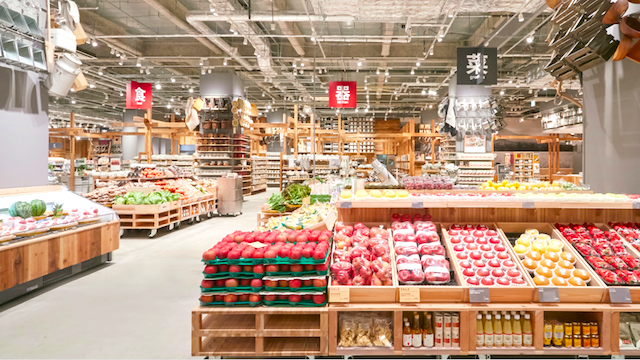
    The retail chain aims to open five to 10 stores per year from FY2022, including new stores in Ho Chi Minh City. FujiMart offers a product range, sales floor design, and freshness management tailored to local needs that are based on Japanese-style supermarket operations.

    “In recent years, the overall grocery retail market in Vietnam has been expanding rapidly due to rising personal incomes and improved living standards bolstered by economic growth,” Sumitomo said in a statement.

    “Growing consumer awareness in areas of food security and safety, including hygiene measures taken to fight Covid-19 infections, has led to a shift from traditional retail outlets run by individual proprietors to modern stores, such as supermarkets and convenience stores which offer superior levels of safety and convenience.”

    Launched in 2018 in Hanoi, FujiMart Vietnam currently operates three stores in the city. Under the partnership, BRG group owns 51 per cent of FujiMart while Sumitomo holds the remaining stake.

  • VN-Index slips after gaining streak

    VN-Index slips after gaining streak

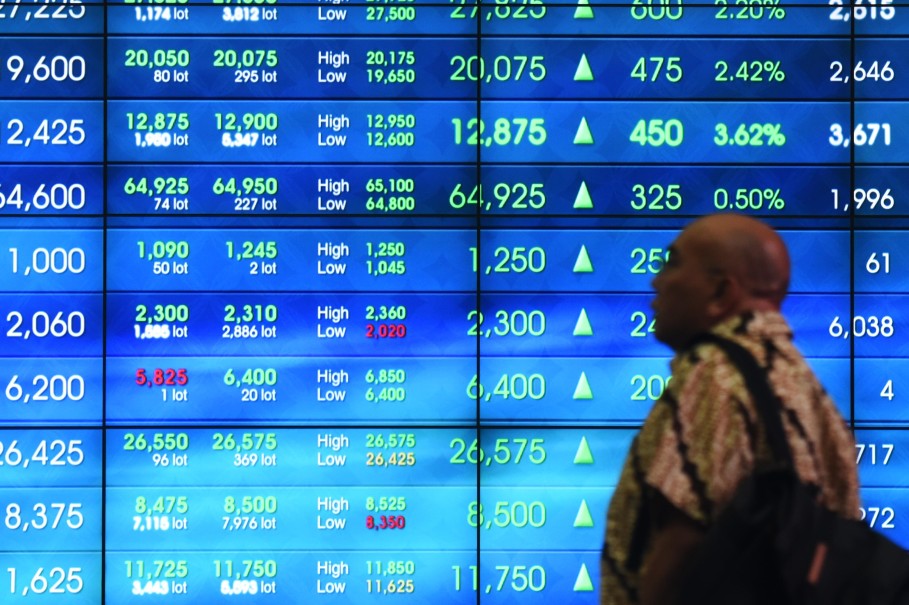
    Vietnam’s benchmark VN-Index dipped 0.1 percent to 1,502.34 points Wednesday after six gaining sessions.

    The index climbed by 10 points in the morning but strong selling pressure in the afternoon pulled it down by 1.4 points after rising nearly 58 points in the last six sessions.

    Trading value on the Ho Chi Minh Stock Exchange (HoSE), on which the index is based, declined marginally to VND28.04 trillion ($1.23 billion).

    The VN30 basket, comprising the 30 largest capped stocks, saw 22 tickers in the red, with GAS of state-owned Petrovietnam Gas falling 2.3 percent after three sessions in the red.

    PNJ of Phu Nhuan Jewelry dropped 1.8 percent, and PLX of fuel distributor Petrolimex, down 1.4 percent.

    Other losers included HDB of HDBank and PDR of Phat Dat Real Estate Development, both down 1.1 percent.

    Seven blue-chip tickers gained, with POW of electricity producer Petrovietnam Power Corporation rising 2.4 percent and SAB of brewer Sabeco gaining 2.3 percent.

    Foreign investors were net buyers to the tune of VND1.02 billion, with focus on DGC of Duc Giang Chemicals Group and MSN of conglomerate Masan Group.

    The HNX-Index for stocks on the Hanoi Stock Exchange, home to mid and small caps, rose 0.16 percent, while the UPCoM-Index for the Unlisted Public Companies Market fell 0.19 percent.

  • Leading miner fears coal shortage may affect power plants

    Leading miner fears coal shortage may affect power plants

    Vietnam’s biggest coal miner Vinacomin is struggling to provide enough coal to thermal power plants due to shortage of workers and surging costs.

    The state-owned company provided 6.3 million tons of coal to power plants from the beginning of the year to March 14, 31 percent short of what it promised.

    One of the reasons is that half of its miners contracted Covid-19 in the first two months, and some mines saw only 20 percent of workers showing up at the end of last month.

    Another reason is import value so far has met only 7 percent of that planned for the first three months, which has led to the company’s delivery of coal mixed between foreign and domestic sources falling 69 percent short of target.

    The delay of the national utility Vietnam Electricity (EVN) in approving price tags for mixed coal also made Vinacomin miss opportunities to import more coal.

    Now that EVN has approved the price tags, the miner has struggled to import due to surging prices globally amid the Russia-Ukraine crisis.

    Vinacomin also said that many thermal plants tend to buy coal from other sources when their prices are low, and only buy from it in surging amounts when its competitors raise prices, which make the miner struggle to fulfill its commitments.

    It requested the Ministry of Industry and Trade to order thermal plants to purchase according to contracts.

    The company also proposed that the government increase coal prices, as dwindling resources has made mining more costly, while coal prices for power plants have remained unchanged for the past two years, dragging the company’s profit down.

    Vinacomin estimates that it would lose VND1.39 trillion ($60.76 million) in coal mining this year.

    Coal-fired plants accounted for 43.6 percent of total power generation in February, according to EVN.

  • Vietnam launches website to tax foreign tech giants

    Vietnam launches website to tax foreign tech giants

    The tax department has set up a website for collecting tax from foreign companies to make it easier for tech giants like Facebook and Google to fulfill their duties.

    The Portal of the General Department of Taxation for Foreign Providers (etaxvn.gdt.gov.vn) came online Monday for companies to declare their tax and track their payments.

    Until now foreign companies were paying their taxes through a third party, but now they could pay directly, Nguyen Van Phung, head of the Large Enterprise Taxation Agency, said.

    By filling in their details on the website, businesses could see how much they need to pay and bank account details, he said.

    “Foreign companies can now pay tax at any time, even from an airplane”.

    Generally, foreign firms are required to pay value-added tax and corporate income tax every quarter. Phung said many foreign firms have been leaving their Vietnamese partners with the burden of their tax, he added. There are at least 64 foreign service providers active in Vietnam, according to tax authorities.

    Vietnam taxed cross-border platforms like Google and Facebook a total of VND5 trillion ($218.53 million) in 2018-21. Authorities have been calling for properly taxing tech giants like Facebook and Google, pointing out they account for around 70 percent of the online advertisement market but evade taxes.

  • Vietnam is Duolingo’s largest market in region

    Vietnam is Duolingo’s largest market in region

    Duolingo, the world’s leading language learning app, said Vietnam is its largest market in Southeast Asia but it is yet to monetize its products.

    Haina Xiang, its head of marketing for China and Southeast Asia, said the number of active users in Vietnam grew by 67 percent a month in the year since Jan. 2021.

    Vietnam “has far outpaced other markets in a short time,” she said, adding that the number of active users in the country in 2022 has doubled year-on-year.

    Around 6 percent of Duolingo’s 40 million monthly active users have signed up for it to download lessons and skip ads.

    The American company reported revenues of $250 million last year, up 55 percent from 2020, and said gross profits nearly tripled to $60 million.

    According to Duolingo’s statistics, English and Chinese are the most popular courses on its platform in Vietnam.

    Users spend an average of 17.6 minutes a day on the app, usually at 9-10 p.m.

  • VietinBank Securities eyes another record year

    VietinBank Securities eyes another record year

    VietinBank Securities eyes record profits again this year through the stock market itself is likely to be down.

    Its board has approved a profit target of VND505 billion ($22 million), 5 percent up from last year.

    Last year pre-tax profits tripled to VND480 billion on revenues of VND1.06 trillion.

    Tran Phuc Vinh, its chairman, said though the stock market is no longer booming like last year and growth is likely to be slower this year, he expected the number of new retail investors to keep rising.

    “We need to invest in technology, and increase salaries, bonuses, and commissions to attract more brokers and collaborators”.

    The brokerage is also set to enter corporate bond consultancy and distribution and step up financial activities by raising its margin rate to 200 percent of shares owned.

  • Vietnam unable to match minimum wages with living standards

    Vietnam unable to match minimum wages with living standards

    The minimum wage – minimum living standard gap has been widening for years, but there is no solution in sight as workers struggle to make ends meet.

    Vietnam first introduced the “minimum living standard” term in its 2012 Labor Law, which requires that the minimum wage must meet the minimum living standard.

    A decade later, the gap between the two has kept widening and the current minimum wage far is from matching the level needed for an average laborer to make ends meet.

    The minimum wage in Region 1, referring to the most developed areas of a province or city, has stayed unchanged at VND4.42 million ($194) since 2020, which is 5 percent shy of the official minimum living standard, according to a study by the Research Center for Employment Relations.

    When compared with the acceptable living standard, the figure is 41 percent lower, it said.

    One of the reasons for such a wide gap is that the starting point of the minimum wage was too low, said Mai Duc Chinh, former deputy chairman of the Vietnam General Confederation of Labor.

    In 2013, representatives of businesses and workers negotiated and agreed that the first minimum wage level would be VND2.35 million, 30 percent lower than the minimum living standard at the time.

    In 2014, the labor confederation proposed that the gap be eliminated, but the Vietnam Chamber of Commerce and Industry (VCCI) and the Ministry of Labor, Invalids and Social Affairs opposed it, saying a sudden surge would hurt businesses.

    They finally agreed to increase the wage by 15 percent to VND2.7 million.

    In the following years, the minimum wage level was increased mostly to make up for inflation, which means technically the “15 percent gap” is still there, Chinh said.

    Another reason that the gap still exists is the lack of an independent organization to determine the minimum living standard, said Vu Quang Tho, former head of the Institute of Workers and Trade Union.

    Labor representatives think that raising a child costs 70 percent of an adults’ living costs, but businesses think the ratio should be around 50 percent. The labor reps also say that the average daily amount of food a worker needs is 2,300 calories, but businesses think the figure should be 2,000 calories.

    Chinh said that current labor laws allow business owners to increase workers’ salaries “according to the ability of the business,” which is something that authorities cannot evaluate and manage.

    Therefore, if a company claims to continuous losses or plunging revenues, it can keep workers’ salaries unchanged for years, which is what happened over the last two years of Covid-19.

    Do Quynh Chi, director of the Research center For Employment Relations, said many countries have shown that a well-designed minimum wage set of policy will protect workers at the “bottom” of the labor market.

    He said: “Other countries have strong union organizations, and the wage there meets minimum living standards.”

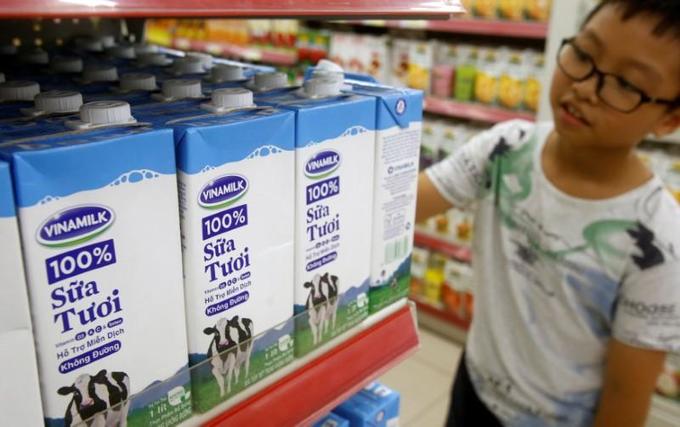
  • Vinamilk profits to decline for 2nd year in a row

    Vinamilk profits to decline for 2nd year in a row

    Vinamilk is set to see profits decline for a second straight year in 2022 due to rising costs of raw materials and transportation.

    Vietnam’s leading dairy company targets pre-tax profits of VND12 trillion ($524.70 million), down 7 percent from last year, though revenue is likely to grow by 5 percent to VND64 trillion. Last year, profits were down 4.4 percent from a record VND13.52 trillion in 2020.

    The company said that last year it faced many challenges including a shortage of raw materials and rising prices of animal feed and transportation.

    Animal feed prices jumped 30-40 percent last year and are set to continue to rise this year, it said. Transport costs rose by 20 percent domestically and 500 percent globally, it said. The Covid-19 pandemic also made milking difficult due to prolonged social distancing, while the rising costs of animal feed forced farmers to switch to other vocations, it added.

    But the dairy giant aims reach a profit of VND16 trillion in 2026, up 33 percent from 2022. It targets revenues of VND86.2 trillion in 2026. Vinamilk plans to achieve these targets by stepping up research into new products and using new technologies for sustainable livestock farming.

    It also eyes new growth opportunities through mergers and acquisitions and new investments. Last year its exports rose 18 percent to VND1.8 trillion and went to 57 countries and territories. Vietcombank Securities said in a recent note that Vinamilk does not have much potential for growth in the next two or three years. The segment with the most growth potential in the next two years is beef, and it plans to start importing the meat from Japan this year.

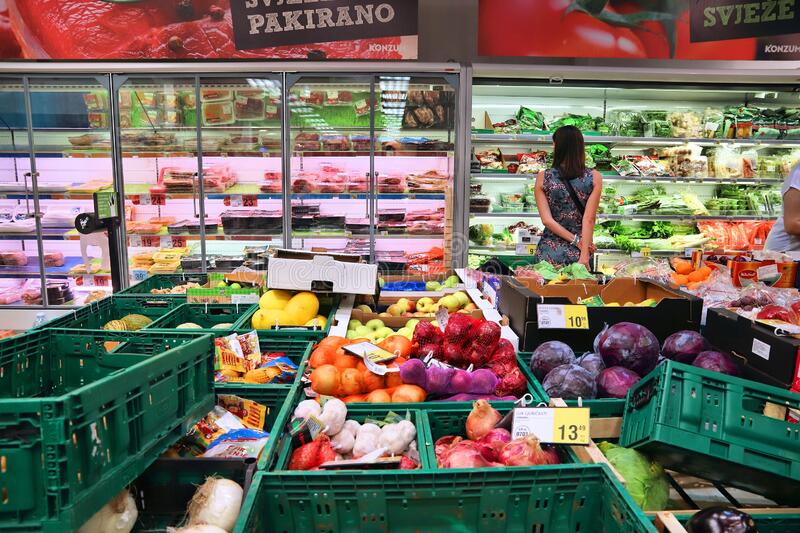
  • HCMC supermarkets roll out promotions amid rising prices

    HCMC supermarkets roll out promotions amid rising prices

    Supermarkets in HCMC are offering double-digit discounts as food and gasoline prices surge. Central Retail is offering discounts of up to 50 percent on 390 products before 10 a.m. from Monday to Thursday every week. The list of products includes pork, vegetables, and fast-moving consumer goods.

    Co.opmart has announced a cut in prices of 3,000 essential goods until the end of this month. Another promotion is scheduled for next month, a spokesperson said. An MM Mega Market store in Go Vap District has cut the prices of beef by 5 percent, fruits by up to 30 percent, and clothes by 50 percent. Big C, Top Market, and Saigon Co.op are selling beef, chicken wings, and fruits at 10-30 percent discounts.

    Cooking ingredients like oil, chili sauce, and sugar are priced 15-50 percent lower than before. Retail industry insiders say the discounts are being offered as consumers are tightening their purse strings amid a surge in prices. Gasoline prices are up 28 percent since the end of December to a record high of VND29,820 ($1.30) per liter.

    The prices of eight of the nine main consumer products have risen sharply, with seven of them seeing double-digit increases. 50 percent of them have been impacted by food price increases and 40 percent by the increase in gasoline prices.

    This has caused many people to cut spending. Hoa of Go Vap District used to go to the supermarket once a week, but now she only goes twice a month or just once.

    “Prices of everything have risen so I buy in bulk to reduce expenses”.

    Oanh of Tan Binh District recently bought dry products and spices for the next three months in the hope of avoiding further price rises. Though consumers expect further discounts, retail chains say this is unlikely. An executive at a supermarket chain in HCMC, who asked not be named, said the company is also under pressure due to the rising costs, and it has offered the best discounts it could.

  • Vietnam launches national pavilion on Alibaba

    Vietnam launches national pavilion on Alibaba

    The Vietnam Pavilion was launched on Chinese e-commerce platform Alibaba.com Friday to globally promote the country’s products and success stories.

    The Vietnam Trade Promotion Agency and the tech giant signed a deal for the purpose. Deputy Minister of Industry and Trade Do Thang Hai said the site would be used for advertising and taking Vietnamese products to customers around the world.

    The pavilion allows visitors to search for Vietnamese suppliers of agricultural and seafood products, furniture, packaging, and home and garden items.

    Vietnam has gained a reputation with global customers thanks to its production capacity, quality of products and competitive pricing, Alibaba deputy director Andrew Zhang said.

    The Trade Promotion Agency said it would coordinate with the platform to organize online advice sessions on exporting via e-commerce sites for over 2,500 Vietnamese small and medium-sized enterprises.

    A similar program was held last year also in partnership with Alibaba for around 2,000 businesses, it added.

    Tran Thi Yen Phi, CEO of Hanoi agribusiness DSW, said her firm’s revenues in the first year after joining Alibaba were US$260,000.

    The business was unaffected by the congestion at the Vietnam-China border thanks to expansion of its market to Japan, the EU and Southeast Asia. “This year we are boosting exports to China under the official quota. Deliveries are delayed by China’s ‘Zero Covid’ policy, but we still be able to operate there,” she said.

    Proline Vietnam, a packaging supplier, said its sales grew by 200 percent last year as it carried out all exports through e-commerce platforms.

  • Travel firm temporarily stops Russia tourist services

    Travel firm temporarily stops Russia tourist services

    The largest Vietnamese travel agency for Russian tourists has temporarily suspended its services for the market as a fallout of Western sanctions imposed on Russia.Anex Vietnam Travel and Trading announced the suspension after taking more than 300 Russian tourists home Thursday.

    Bui Quoc Dai, Deputy Director of Anex Vietnam, said they made the decision after Russian authorities advised the country’s airlines to halt all international flights (except from and to Belarus) following Western sanctions.

    “We will stop conducting tours for customers from Russia at least until March 28, when Russian authorities are scheduled to announce further changes,” Dai said.

    Earlier this month, the Russian federal agency for aviation transport FAVT told Russian airlines “which have planes registered abroad under leasing contracts with foreign partners” to halt most international flights between March 6-8. It cited the “high level of risk for planes to be detained abroad” as a reason for the recommendation.

    Dai noted that the number of Russian tourists had fallen sharply since the end of February after Russia launched its “special military operation” in Ukraine. He said his firm has racked up losses despite receiving nearly 6,000 Russian visitors since last December, as they were unable to fill charter flights.

    Vietnam tour operators specializing in Russian and Eastern European markets have also warned that the devaluation of the Russian ruble would affect the inbound market.

    In 2019, Vietnam received a record 646,000 tourists from Russia, making it the sixth-largest tourism market after mainland China, South Korea, Japan, Taiwan, and the U.S.

  • Vietnam promises adequate gasoline supply for Q2

    Vietnam promises adequate gasoline supply for Q2

    Vietnam has enough gasoline for the second quarter even without the supply from Nghi Son Refinery, the Ministry of Industry and Trade assured.

    The refinery, which accounts for around a third of domestic supply, has no plans to deliver products in April and May. It also has not made clear its production plan after that, the ministry reported to lawmakers Tuesday.

    For this reason, the ministry will not take into account Nghi Son’s supply for the second quarter, but would ensure enough supply “in every scenario”.

    It has tasked 10 gasoline distributors to increase its import quota by 2.4 million cubic meters for the second quarter.

    Vietnam’s gasoline supply has met with difficulties in the last two months, partly because a cash crunch forced Nghi Son Refinery, one of two such plants in the country, to reduce production from 105 percent to 80 percent, then 55 percent.

    The other refinery, Dung Quat, has increased its supply to 105 percent since earlier last month to bolster the market.

    With the Russia-Ukraine crisis sending oil prices up, Vietnam’s gasoline prices have risen by 28 percent since the end of December to an all-time high of VND29,820 ($1.30) now.

    The government has proposed to lawmakers that a 50 percent cut on environmental tax on gasoline and diesel be implemented to reduce prices.

  • High costs drive consumer prices up

    High costs drive consumer prices up

    The prices of many consumer goods, especially food and foodstuffs, have skyrocketed in the first quarter of this year driven by higher input costs and record gasoline prices. At her local retail store last weekend, Loan, a worker in a garment factory in HCMC’s District 12, could not hide her surprise at the sudden increase in the prices of many goods.

    “I estimated the prices of many consumer goods like sugar, milk, cooking oil, instant noodles, fish sauce, and beer had increased by 10-30 percent since the beginning of this year,” she said.

    She now has to pay VND500,000 ($22) to buy seasoning for half a month compared to VND400,000 earlier.

    “Other living expenses have also gone up.”

    The value-added tax was cut to 8 percent from 10 percent on Feb. 1, but many consumers said they “have yet to feel its impact” since the prices of many goods have risen sharply. Many retailers are also surprised by the price hikes. Ngoc, owner of a retail stall in HCMC’s Go Vap District, said the prices of beer, sugar, instant noodles, fish sauce, and cooking oil have increased by 10 percent this year.

    “Consumer goods prices rarely increase in the first quarter. After Lunar New Year (Tet) holidays in early February, businesses often reduce prices to stimulate demand since demand is weak”.

    Ngoc has yet to restock her stall, but the wholesaler who supplies her has announced a hike in prices during the next delivery because many manufacturers have already increased them. A survey found that the prices of eight of the nine main consumer products have surged, with seven of them seeing a double-digit increase. Saying input costs have increased by 120 percent in the last 12 months, a spokesperson for a cooking oil company added they had to raise prices by VND1,000-2,000.

    Breweries also cited costs as a reason to hike prices. Wheat prices have risen by 10-20 percent since the crisis between Russia and Ukraine, two of the world’s biggest wheat exporters, began. The chief of a HCMC-based consumer goods producer said labor and raw materials costs have soared by 40 percent since last year and they have been forced to adjust prices up.

    Acecook, the country’s leading instant noodles producer, said it has had to hike prices by 10 percent since input and transportation costs have risen. Other businesses said they have yet to raise their prices but it is “inevitable”. Truong Chi Thien, head of egg producer Vfood, said his company is losing VND100-200 on every egg it sells.

    It has yet to increase prices because of a commitment under HCMC’s price stabilization program to keep prices unchanged for a month before and after Tet, which this year fell on Feb. 1. Thien said his firm would have to seek approval from the city Department of Finance to hike prices in the next stabilization program starting April.

    The prices of other items like wood and steel also rose to new highs recently. Steel prices have gone up by nearly 8 percent in the last two weeks to over VND19 million per ton, which is higher than the VND18.3 million reached last year. Vietcombank Securities forecast its prices to keep rising as energy prices surge amid the Ukraine conflict.

    VnDirect Securities said global commodities prices are at a 14-year peak. The S&P GSCI Index, the benchmark for commodity prices, has gone up by 5.02 percent this month, it said. Rising oil prices have driven metal prices up, with aluminum rising by 3.6 percent to a new peak of US$3,850 per ton on the London Metal Exchange, it said. Iron ore futures are 15 percent up, the highest in over three months, it added. It said commodities prices will continue to increase, putting inflation risks on the global and Vietnam market.