Tag: Vietnam

  • Vietnam taxed tech giants $218 mln in four years

    Vietnam taxed tech giants $218 mln in four years

    Vietnam taxed cross-border platforms like Google and Facebook some VND5 trillion ($218.53 million) in 2008-2021, Finance Minister Ho Duc Phoc informed lawmakers Wednesday.

    During the four-year period, Facebook was taxed VND1.69 trillion, Google, VND1.62 trillion, and Microsoft, VND577 billion, Phoc said.

    Last year, Vietnam earned VND1.32 trillion from taxing cross-border platforms, up 15 percent from 2020, he added.

    Vietnamese authorities have been calling for properly taxing tech giants like Facebook and Google, saying these companies account for around 70 percent of the online advertisement market, but use different means to evade tax.

    The General Department of Taxation said last year that Facebook, Google, Netflix, YouTube and other cross-border platforms were not fulfilling their tax obligations in Vietnam.

    Vietnam is also looking to tax online sellers, both on e-commerce platforms and social media, as e-commerce sales have been surging by double-digits in recent years.

  • Vietnam Airlines eyes airfare cap hike, fuel surcharge

    Vietnam Airlines eyes airfare cap hike, fuel surcharge

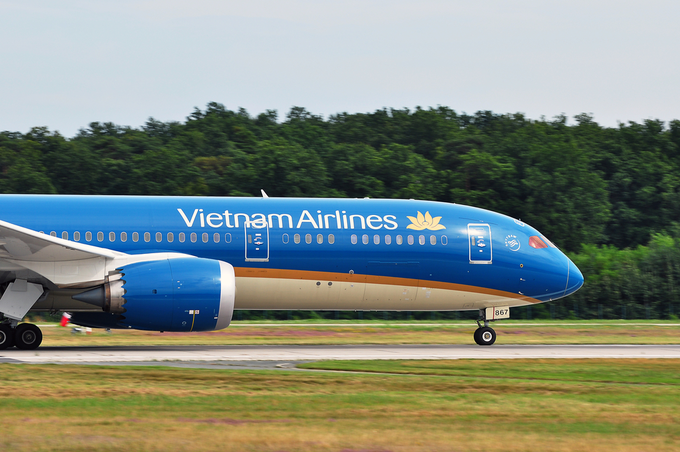
    Vietnam Airlines proposed to raise the price cap for domestic travel from April 1 and add a fuel surcharge for local routes.

    The current price cap of air transportation services is no longer suitable, the airline said in its proposal sent to the Ministry of Transportation and the Ministry of Finance on March 14.

    The current maximum fare is VND2.2 million ($96) for routes under 850 kilometers, and VND3.75 million for those above 1.280 kilometers.

    The higher cap would serve to offset costs of rising oil prices and improve service quality, the airline said.

    Its proposal also advocated for a fuel surcharge on domestic routes and full environmental tax exemption for aviation fuel in 2022, which would save the airline more than VND600 billion if approved.

    Previously, the Civil Aviation Authority of Vietnam had repeatedly requested the airfare cap be removed, but to no avail.

    Last year, the national carrier proposed to set price floors between VND560,000 and VND1.4 million for air tickets on domestic routes, but the Ministry of Transportation rejected the idea.

  • Contractors fret as Vietnam steel prices scale new peak

    Contractors fret as Vietnam steel prices scale new peak

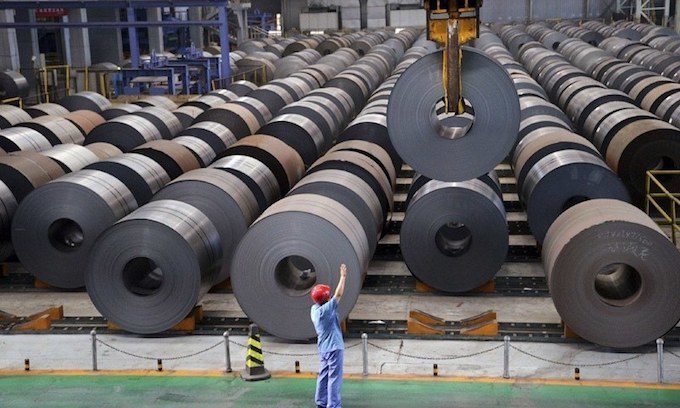
    With domestic steel prices up nearly 8 percent in 10 days, contractors are caught in a dilemma: continue work and suffer losses or suspend work and suffer fines. The Vietnam Steel Corporation (VNSTEEL) has upped its prices by 7.6 percent for both rolled and bar products.

    Its rolled steel prices reached VND18.57 million ($807) per ton, which is higher than the historic peak of VND18.3 million reached last year.

    Prices have been rising on the back of global price rises. Steelmaker Hoa Phat Group has increased its D10 bar prices to VND18.43 million per ton Mar. 11 from Mar. 1’s VND17.42 million.

    Friday’s was the third hike within over a week without a downward adjustment in between.

    The Vietnam Association of Construction Contractors (VACC) has warned that high construction steel prices will drag the industry down.

    It estimates that steel makes up 18-20 percent of the costs of building high-rise apartments, and the proportion is even higher for bridges and roads.

    Prices of other construction materials have also gone up. The association has asked the authorities to take price stabilization measures, but this has not happened yet.

    “The construction industry makes up for 8-9 percent of Vietnam’s GDP, thus any disruption can affect Vietnam’s growth target,” Nguyen Quoc Hiep, VACC chairman said.

    Many contractors are in a dilemma of whether to keep construction going at losses because of high material prices, or stop working and be penalized for slow progress, he said.

  • Vietnam gold prices keep rising

    Vietnam gold prices keep rising

    Gold prices scaled another new peak in Vietnam Monday morning as global rates climbed amid the continuing Russia-Ukraine crisis.

    Saigon Jewelry Company sold bullion at VND72.87 million per tael of 37.5 grams or 1.2 ounces, up 5.15 percent from Saturday.

    DOJI sold at VND71 million, and PNJ at VND71.1 million, all new highs.

    Some sellers expected prices to keep rising as long as the conflict continued.

    “Some people are holding on to gold and waiting for prices to rise even further,” Tran Minh To, a spokesperson for a jewelry store in HCMC’s District 8, said.

    Globally spot gold gained 1.5 percent to $1,998.37 per ounce Monday morning as the fighting entered its 11th day with both sides calling on the other to lay down arms.

    Vietnam was Southeast Asia’s largest gold bullion and coin market last year and among the top 10 globally.

    The demand in the country exceeded 31.1 metric tons compared to 28.7 tons in Thailand and 19.8 tons in Indonesia, according to the World Gold Council.

    Gold continued to be the top asset class for 72 percent of Vietnamese investors, the WGC said citing a study of 2,000 investors last year.

  • First cargo airline gets aviation authority green light

    First cargo airline gets aviation authority green light

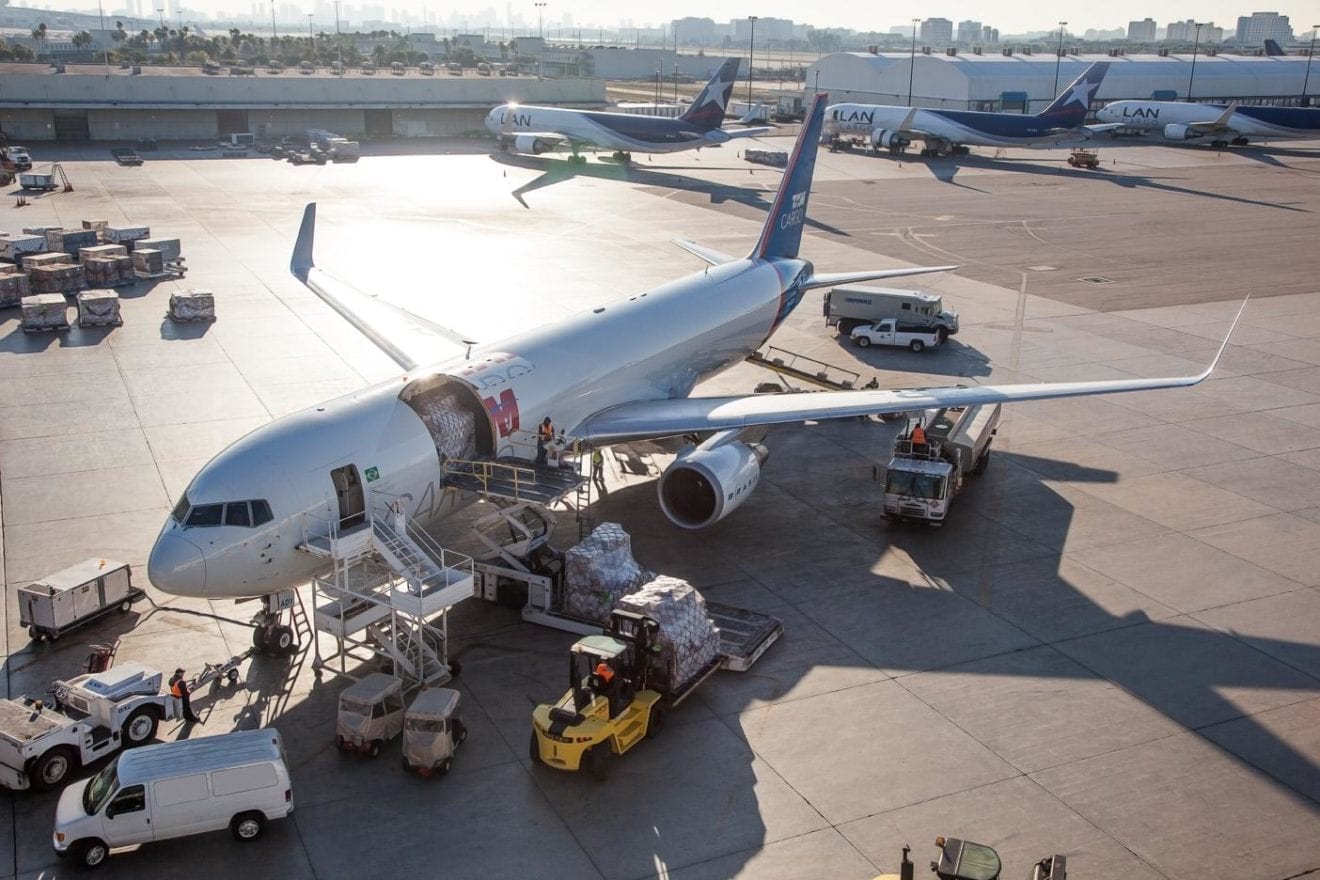
    The Civil Aviation Authority of Vietnam has recommended that the Ministry of Transport should issue an air transport license to Vietnam’s first proposed cargo carrier, IPP Air Cargo.

    It said the airline meets all requirements, including 100 percent funded ownership by Vietnamese entities.

    IPP Air Cargo has a charter capital of VND300 billion ($13.13 million), with Imex Pan Pacific Group holding a 70-percent stake and the family of Johnathan Hanh Nguyen, the company chairman, the rest.

    Nguyen had mooted the establishment of the airline last year, but the CAAV said it was not considering applications amid the Covid-19 outbreak.

    With Vietnam now resuming international flights, IPP Air Cargo is set to become its first full-fledged cargo airline.

    After the air transport license, the company has to get other permits to fly, including the aircraft operator certificate.

    IPP Air Cargo plans to start with five freighters (Boeing 737 or 777 or equivalent) and double the number in the fifth year.

    It targets revenues of $71 million in the first year of operation.

  • Airlines resume hiring as they embark on recovery

    Airlines resume hiring as they embark on recovery

    Bamboo Airways, Vietjet and Vietravel Airlines have started hiring again after an extended recruitment freeze due to Covid-19. Bamboo Airways has posted hiring announcements for many positions, including pilots, flight engineers and cabin crew aid plans to expand its fleet and destinations.

    The airline is offering captains a monthly salary of US$13,300 for flying wide-body Boeing 787s and $10,450 for narrow-body Airbus and Embraer jets, which are higher than pre-pandemic levels. Nguyen Ngoc Trong, its deputy general director, said the carrier is seeking permission to expand its 30-strong fleet by five to 10 aircraft each year.

    It operated at maximum capacity during the nine-day Tet, or Lunar New Year, holidays in early this month, and plans to launch new services to the US and Europe in the second quarter of this year, he added.

    Budget airlines Vietjet has also posted notices seeking captains and co-pilots for Airbus A320Fs and A330s.

    Vietravel Airlines is hiring pilots for its Airbus A320/A321 fleet as well as cabin crew.

    Representatives of Vietravel Airlines said the recruitment is to “ready for the expansion of the fleet” and “launch new routes to northeast and southeast Asian nations in the third quarter.”

    But human resources could be scarce this year as airlines resume hiring after their Covid-19 woes, they added.

    Vietnam has resumed commercial flights to 20 of 28 countries and territories that it operated direct flights to before the pandemic.

    The country also ended all restrictions on international flights on Feb. 15.

    From March 15, Vietnam will reopen inbound and outbound tourism under new normal conditions, with foreign tourists allowed to visit the country without booking tour packages.

    In the best case scenario, Vietnam’s aviation industry would transport 42-43 million passengers in 2022, or around 50 percent of pre-pandemic numbers, Bui Minh Dang, deputy head of the air transportation department at the Civil Aviation Authority of Vietnam, said.

  • Skoda to build plant in Vietnam

    Skoda to build plant in Vietnam

    Czech automaker Skoda is set to build a plant in the northern province of Quang Ninh and expects to begin production and exports of vehicles by 2023.
    Leaders of the company have worked with representatives of the Ministry of Industry and Trade on the plan of building the factory.

    Martin Jahn, a director of Skoda Auto, said the Vietnamese car market is relatively small but very promising.

    “The political and trade ties between the two countries represent extensive opportunities for cooperation.”

    There are 44 Czech projects in Vietnam with a total investment of $91 million, according to the Ministry of Planning and Investment.

    Mercedes-Benz and Peugeot are two European carmakers with plants in Vietnam, while BMW’s factory is expected to be completed this year.

    Skoda manufactured around 900,000 cars last year and sold nearly half in Western Europe.

    Established in 1925, it is a subsidiary of German auto giant Volkswagen.

  • Vietnam Electricity posts $207.6-mln profit

    Vietnam Electricity posts $207.6-mln profit

    State power utility Vietnam Electricity (EVN) made a profit of VND4.74 trillion ($207.6 million) from all activities in 2020.

    But, its core business of electricity production and trading reported VND1.3 trillion in losses due to price reduction and discounts. In 2020, EVN sold each kilowatt-hour for an average VND1,820.20, down 1.68 percent from 2019.

    Reduction in sales price, together with changes in electricity load and consumption due to Covid-19, and VND12.3-trillion bill discounts for pandemic-hit customers, are cited as reasons for the loss.

    The company reported more than VND6 trillion in revenue from its financial activities, capital transfers, and dividends profits in 2020.

  • Taxi firms eye fare surge amid gasoline price hike

    Taxi firms eye fare surge amid gasoline price hike

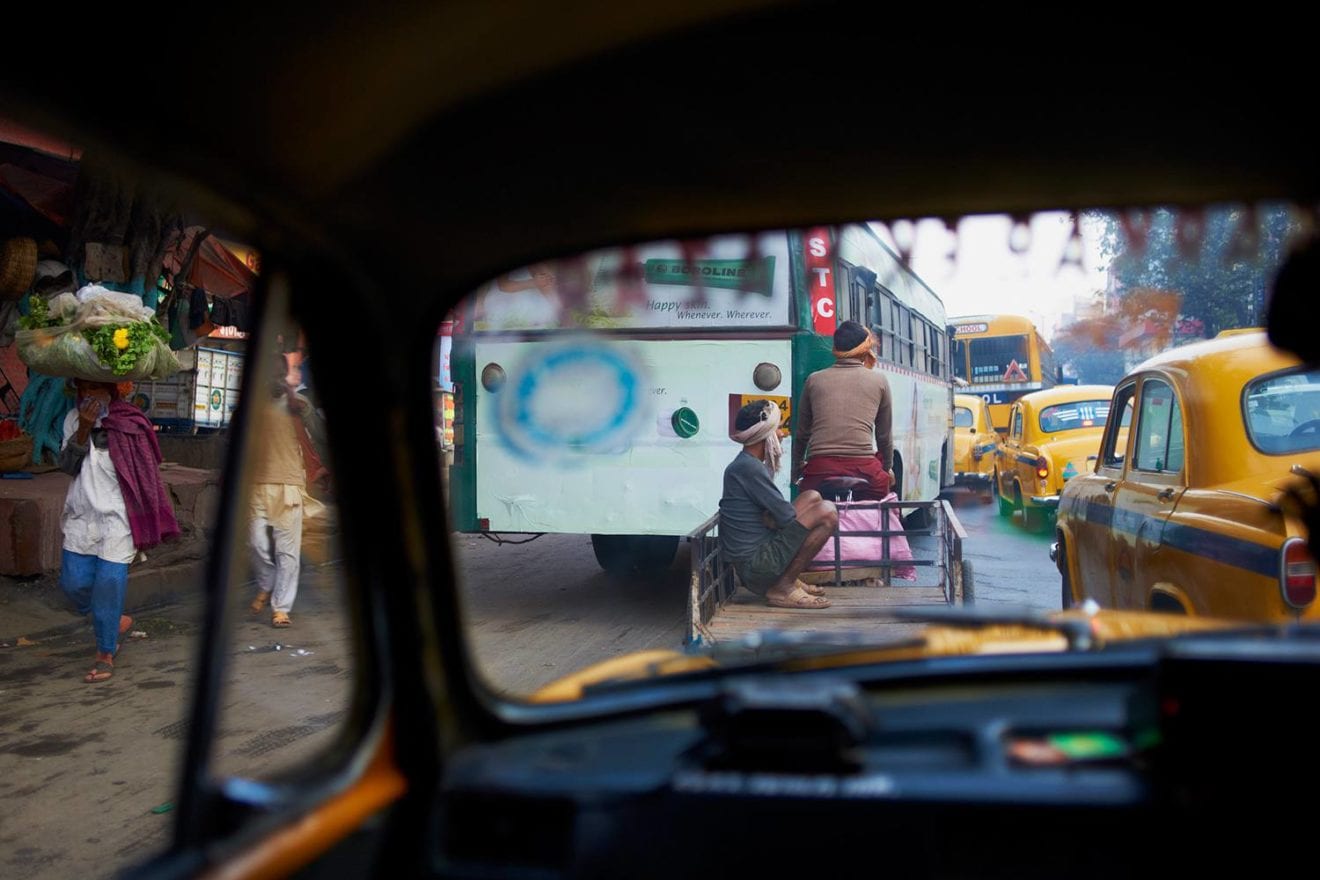
    Taxi firms expect to increase their fares as gasoline prices hit an all-time high.

    Nguyen Cong Hung, Chairman of the Hanoi Taxi Association, said taxi firms planned to increase fares by 5-8 percent, or VND500-800 per kilometer ($1 ≈ VND22,800).

    The gasoline price surge has increased taxi firm fuel costs by 13.8 percent, he added.

    “Most taxi firms in Ho Chi Minh City will be forced to increase their fares” if gasoline prices stay at the current all-time high, Ta Long Hy, Chairman of the HCMC Taxi Association said.

    Vietnam gasoline prices hit a new peak Monday, after authorities adjusted them upward for the fifth time in a row. The price of popular gasoline RON 95 rose 3.79 percent to VND26,280, while that of biofuel E5 RON 92 rose 3.9 percent to VND25,530. To reduce gasoline prices, taxi companies, which have been badly hit by Covid-19, recommended the environmental tax be cut as soon as possible.

    Environmental tax comprises the highest taxes on gasoline, accounting for around 15 percent of the retail price.

    Currently, the environmental tax on RON 95 gasoline is VND4,000 per liter, while that of biofuel E5 RON 92 is VND3,800.

    Taxes and fees add up to 42-43 percent of gasoline retail prices.

    All-time high gasoline prices and Covid-19 woes have placed many taxi firms in a financial dire strait.

    At the end of 2021, taxi giant Vinasun reported a 52 percent decrease in revenue year-on-year, and a net loss of nearly VND274 billion. It had to lay off 2,500 employees, including 1,800 drivers last year, to reduce operating costs.

    Mai Linh, another taxi giant, has yet to publish its 2021 report. However, in 2020, the company reported a loss of VND173 billion, and a total accumulated loss of VND1.21 trillion.

  • Vietnam continues to cut down on solar power

    The solar power capacity planned by Vietnam for 2031-2045 is “too high” should be reduced to give space for wind power, the government says.

    In a communiqué issued by the Government Office Saturday, Deputy Prime Minister Le Van Thanh said the capacity for solar power set in the Power Development Master Plan VIII for the 2021-2030 period with vision until 2045 was “too high.”

    As proposed by the Ministry of Industry and Trade on Feb. 21, the national power capacity from now until 2030 would be 146,000 megawatts (MW), 9,000 MW less than the plan announced last November. By 2045, the planned capacity would be 352,000 MW.

    In the 2031-2045 period, solar power will make up 25 percent of the total power capacity, the ministry said.

    Deputy PM Thanh has commented that the proportion of solar power capacity should be lowered while that of offshore wind power should be increased.

    According to state-owned Vietnam Electricity (EVN), as of 2021, Vietnam was among the top 10 countries with the highest solar power capacity at 16,504 MW, accounting for 2.3 percent worldwide.

    The Ministry of Industry and Trade submitted the first draft of the Power Development Master Plan VIII to the government last March. Since then the plan has been revised four times.

    The ministry has asked that the plan’s implementation be deferred to the second quarter this year.

  • Skoda to build plant in Vietnam

    Skoda to build plant in Vietnam

    Czech automaker Skoda is set to build a plant in the northern province of Quang Ninh and expects to begin production and exports of vehicles by 2023. Leaders of the company have worked with representatives of the Ministry of Industry and Trade on the plan of building the factory.

    Martin Jahn, a director of Skoda Auto, said the Vietnamese car market is relatively small but very promising.

    “The political and trade ties between the two countries represent extensive opportunities for cooperation.”

    There are 44 Czech projects in Vietnam with a total investment of $91 million, according to the Ministry of Planning and Investment. Mercedes-Benz and Peugeot are two European carmakers with plants in Vietnam, while BMW’s factory is expected to be completed this year.

    Skoda manufactured around 900,000 cars last year and sold nearly half in Western Europe.

    Established in 1925, it is a subsidiary of German auto giant Volkswagen.

  • E-commerce startup raises $7 mln

    E-commerce startup raises $7 mln

    Vietnam e-commerce startup OpenCommerce Group has raised $7 million in a Series A funding round led by internet company VNG and venture capital firm Do Ventures.

    The Hanoi-based company, which provides tech solutions for sellers to create and manage their online stores with no inventory costs required, said it has supported 86,700 small and medium enterprises in 195 economies after two years of establishment.

    The company, which also offers print-on-demand services for sellers to create and distribute unique clothing designs, has recorded a gross merchandise value of $670 million to date.

    Quan Truong, co-founder, and CEO, said the company would use the funding to reach new sellers, with a focus on Europe, the U.S., China, and Southeast Asia this year.

    Vietnamese startups attracted investments of over $1.3 billion in 2021, four times the previous year’s figure, according to the National Agency for Technology Entrepreneurship and Commercialization Development.

    The country is set to exceed Thailand by 2025 to become the second-biggest internet economy in Southeast Asia with a scale of $57 billion, behind Indonesia at $146 billion, according to the e-Conomy Southeast Asia 2021 report by Google, Temasek, and Bain & Co.

  • Gold prices soar to new peak

    Gold prices soar to new peak

    Vietnamese gold prices hit a new all-time high of VND64.8 million (US$2,838.4) per tael Thursday as global rates skyrocketed amid tensions over the Ukraine situation.

    Saigon Jewelry Company sold gold at VND64.8 million per tael of 37.5 grams or 1.2 ounces, up 1.4 percent from Wednesday afternoon.

    DOJI sold at VND64.7 million, also up 1.4 percent. The previous high in Vietnam was VND62.4 million in August 2020.

    In the global market, the metal rose by 1.7 percent to a nine-month high of $1,930.65 per ounce as geopolitical tensions supported demand for safe-haven bullion.

    Vietnamese prices are VND11.35 million, or 21.5 percent, higher than global rates.

    Gold continued to be the top asset class for 72 percent of Vietnamese investors, the WGC said citing a study of 2,000 investors last year.

  • Vietnam gold prices climb to new record

    Vietnam gold prices climb to new record

    Vietnam gold prices rose to a new high Tuesday on the back of global rates soaring because of rising international tensions over the Ukraine situation.

    The Saigon Jewelry Company (SJC) was selling its gold at VND63.85 million ($2,798) per tael at 3 p.m., up 1.03 percent from Monday. A tael equals 37.5 grams or 1.2 ounces. It then fell to VND63.6 million at the time of publishing.

    DOJI sold its gold at VND63.65 million, up 0.71 percent.

    In the global market, gold rose 0.2 percent to a near nine-month high of $1,909.33 per ounce, as tensions intensified in Eastern Europe intensified after Russia ordered troops into breakaway regions of eastern Ukraine, supporting demand for safe-haven bullion.

    “With the situation deteriorating seemingly by the day in Eastern Europe, there is very little reason to be negative on gold at the moment,” said Jeffrey Halley, a senior market analyst at OANDA.

  • Crab prices plunge over border trade jam

    Crab prices plunge over border trade jam

    Crab meat prices have dropped by nearly half as traders at the northern border gates with China limit purchases over export difficulties.

    The export of goods through border gates in the northern province of Lang Son has remained sluggish with many trucks having to turn around because of long customs clearance time after China tightened regulations over what it says are Covid-19 concerns.

    With China being a major buyer, the current situation has caused seafood prices in Vietnam to fall sharply.

    Bui Chi Lam, a crab-raising household in the southern province of Ca Mau, said that the selling price of top-tier crabs at the farm was just VND600,000 ($26.28) per kg , down 50 percent compared to the Lunar New Year season early this month. He has noticed a drastic fall in the number of traders looking to buy seafood.

    “Normally, when supply decreases, prices will increase. But the impact of border gate closures has caused crab prices to plummet,” Lam said, adding that crab farmers are forced to rely exclusively on domestic consumption.

    The price of regular crab meat at the farm is just VND300,000 per kg.

    Thanh, another crab farmer in Ca Mau, said prices of the crustacean will drop further if domestic consumption was low.

    Apart from crab meat, shrimp prices have also fallen to around VND150,000-200,000 per kg, depending on the variety.

    Hoa, a seafood trader in the southern region, said that prices have decreased by 10-45 percent compared to the Lunar New Year period, but purchasing power remains low.

    “I have temporarily stopped exporting and am only selling to domestic traders,” Hoa said.

    A survey of several seafood stores and markets in HCMC found that the price of grade 1 crab at stores was VND800,000 per kg and that of regular crab around half that.

    As for shrimp, though supply was lower compared to the same period last year, prices have also dropped by VND50,000 per kilo in the past two days to VND200,000 per kg (about 30 shrimps per kg).

    Hoa said both difficulties at the China border and lower purchasing power back home were major factors in the sharp drop in prices.

    Over the past week, more than 2,000 trucks of goods have been stuck at Lang Son border gates because of slow customs clearance.

    The delay in clearing container trucks at the border has been happening since the end of last year. During the Lunar New Year holiday from Jan. 19-Feb. 6, the issue was partly resolved thanks to intervention from senior officials, but it has resurfaced since.

    China was Vietnam’s second-largest export market for agricultural, forestry and fishery produce behind the U.S., with a turnover of $8.4 billion in the first 11 months of last year, accounting for 19.2 percent of Vietnam’s total agricultural exports.

    On February 17, China suspended trade through the Kim Thanh Border Gate in Vietnam’s Lao Cai Province after discovering Covid-19 cases on its side, leaving 350 container trucks stranded.

    With Chinese authorities placing the Hekou Yao Autonomous County under a lockdown, it is unclear when the trucks can cross the border.

    Four other border gates in the province: Huu Nghi International, Dong Dang, Tan Thanh and Chi Ma International Railway Stations have begun clearing goods again.

    However, China is continuing to strengthen pandemic prevention and quality control measures, so it takes 40-50 minutes to clear a truck. With a clearance capacity of 5-69 vehicles per day, the border trade congestion look set to continue.