Tag: zara

  • 6ixty8ight expansion plan to Korea

    6ixty8ight expansion plan to Korea

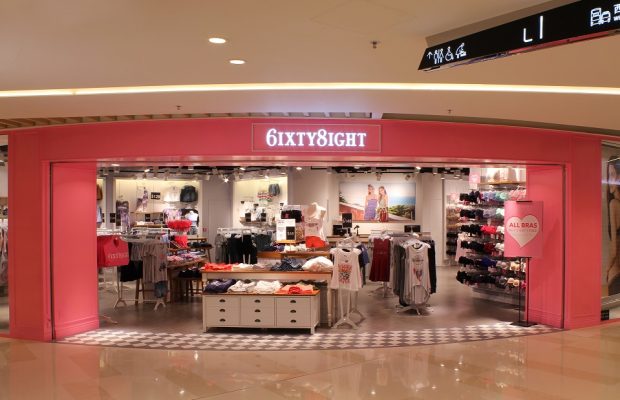
    Hong Kong-headquartered youth fashion brand 6ixty8ight has chosen South Korea for its first international foray outside Greater China.

    The company will open a flagship store in Myeongdong, downtown Seoul, at 992 sqm, its third largest footprint. A second store will follow on the fashion street of Garosu-gil in Sinsa-dong of southern Seoul.

    Owned by Hop Lun Group, which has for 25 years manufactured lingerie for many of the world’s largest brands, 6ixty8ight sells affordable, fashionable lingerie and casual wear designed specifically for the Asian female figure.

    Over the last two years, the retail brand has undergone a revamp and launched a major expansion, now numbering more than 130 stores through Hong Kong and Mainland China.

    Last year, in an exclusive interview, 6ixty8ight COO Anders Heikenfeldt said the secret to the brand’s new success has been a single-minded focus on who it is, what it stands for and who its customers are – a narrow band of 15 to 30 years.

    “We have a unique offer. Our value proposition is different to H&M, Zara, Forever 21 or Uniqlo – they go broad trying to cover menswear, women, kids – very mass – and they have something for everyone under the one roof.

    “Our strategy is to be very different and to be very true to our target. That’s our DNA. We are not going to divert into men or older customers.”

    At the time, Heikenfeldt said the company was in the final stages of planning to enter two international markets. It has not yet revealed the second.

  • Emerging markets like Vietnam help Inditex outpace H&M

    Emerging markets like Vietnam help Inditex outpace H&M

    Fashion retailer H&M’s sales fell unexpectedly in February while Inditex, which owns Zara, pulled further ahead of its Swedish rival, helped by its expansion online and a bigger emerging market presence.

    Inditex, the world’s biggest clothing retailer, has consistently outperformed H&M in the past few years as a result of online growth and its push into new markets. The Spanish company has also diversified more quickly into higher-priced brands, reducing exposure to the rise of discount chains like Primark.

    H&M has embarked on plans to roll out ecommerce in more markets this year and speed up expansion of newer brands such as the mid-market COS and & Other Stories.

    But on Wednesday H&M revealed that local-currency sales fell in February for the first time in four years, slipping 1 percent year-on-year, against a forecast in a poll of analysts for a 6 percent rise. H&M’s shares fell 5 percent.

    In contrast, Inditex’s local currency sales rose 13 percent from February 1 to March 12, as customers snapped up items from spring collections like double-breasted jackets, palazzo trousers and embroidered tulle tops.

    This was adjusted for an extra trading day in February 2016. H&M sales were up 3 percent in February, taking that calendar effect into account.

    Inditex results highlight the success of its strategy, with like-for-like sales up 10 percent in the year to end-January, helped by a shift towards opening bigger stores in prime locations that are then integrated with online operations.

    emerging-markets-like-vietnam-help-zara-owner-inditex-outpace-hm

    Inditex opened stores in 56 countries during the year, including its first opening in Ho Chi Minh City, Vietnam.

    Forex pressure

    Inditex’s gross profit margin missed analyst expectations, falling to 57.0 percent in its 2016 financial year from 57.8 percent in 2015. This weighed on the company’s shares which were down 1.4 percent by 1014 GMT.

    Inditex, known for speeding the latest trends from runway to stores in a matter of days, reports in euros but makes more than half its sales in other currencies, exposing it to falls in the likes of the Mexican peso and the Russian rouble.

    Chairman and Chief Executive Pablo Isla said this margin metric would have increased on the year had it not been for the negative currency effects.

    Analysts expect this effect to swing in Inditex’s favor over the next 12 months with a consequent boost to profit margins.

    “We are very keen buyers of Inditex for 2017,” Anne Critchlow, analyst at Societe Generale, said. She said Inditex trades on 26 times forward earnings, compared to H&M on 21 times.

    Inditex opened stores in 56 countries during the year, including first openings in New Zealand, Vietnam and Paraguay, bringing its total store count to over 7,200. It launched online sales across its stable of brands in Turkey and said on Wednesday it would start online sales in India in 2017.

    H&M is more reliant on Europe than Inditex. In Germany, for example, which is H&M’s biggest market, apparel sales fell 9 percent in February, according to trade journal Textilwirtschaft.

    “Market conditions are the main driver of the weak February number,” UBS analyst Adam Cochrane said. “There’s a fear that they are losing market share on a like-for-like basis.” UBS has a “buy” recommendation on H&M.

    H&M reported that sales in local currencies rose 4 percent in its fiscal first quarter to February 28. That compares with a new target for annual sales growth of 10-15 percent. H&M is due to publish its full fiscal first-quarter report on March 30

  • Zara Thailand launches online

    Zara Thailand launches online

    Zara Thailand is launching online sales in Thailand this month.

    Vietnam will follow, with the service already introduced in Malaysia and Singapore this month.

    Also this year, the brand will start selling online in India, where the Spanish fast-fashion chain is expected to reach sales of US$200 billion by 2025, according to a study by consulting firm Wazir Advisors.

    Additionally, Zara parent Inditex has said it will open a 5000 sqm flagship Zara store in Mumbai, which will be the largest of its 21 outlets in India.

    Inditex says its bottom-line profit rose by 10 per cent to €3.16 billion (US$3.3 billion) last year, beating out its main rival, Sweden’s H&M, which had a net profit of about US$2.1 billion.

    Opening 279 stores in its latest fiscal year, to the end of January, it has nearly 7300 outlets in 93 countries, with five new markets including New Zealand and Vietnam.

  • Uniqlo targets Zara in faster fashion move

    Uniqlo targets Zara in faster fashion move

    From fast fashion to faster fashion: speed is seen as the key by Uniqlo owner Fast Retailing in its bid to outrace apparel powerhouse Zara.

    Uniqlo founder Tadashi Yanai says Fast Retailing plans to shorten the time it takes from design to delivery to about 13 days, roughly the same as Zara, owned by clothes retailer Inditex.

    He says the company’s new design and delivery centre in Tokyo will also help Uniqlo expand direct-to-consumer, custom-clothing sales and improve the efficiency of its same-day delivery in the city.
    “We need to be fast,” he says. “We need to deliver products customers want quickly.”

    Japan’s biggest clothing retailer aims to increase total revenue by nearly 70 per cent to ¥3 trillion (US$26 billion) in the fiscal year ending August 2021. While that may still not be enough to overtake Inditex, which reported sales of $25 billion last year, Yanai says Fast Retailing’s focus on clothes that meet consumers’ daily needs will help propel its growth.

    “Zara sells fashion rather than catering to customers’ needs,” he says. “We will sell products that are rooted in people’s day-to-day lives, and we do so based on what we hear from customers.”

    Overseas markets, notably in Asia, will grow to contribute about two-thirds of Fast Retailing’s revenue in the next four years, up from about half currently. Uniqlo will open 100 stores in China and another 100 in Southeast Asia annually, says Yanai.

    Concentration for speed

    The company’s new complex, in the Ariake district along Tokyo’s waterfront, houses more than 1000 employees, including designers and marketing teams, and also has a warehouse and delivery department. Yanai says that concentrating resources into one location will help speed processes.

    “The ability to provide anybody, anywhere, anytime with the ultimate, high-quality day-to-day clothing will set us apart,” he says. “We want to deliver products that customers want quickly. That’s why it’s Fast Retailing.”

    After revenue growth of more than 20 per cent for three straight years, Uniqlo sales took a hit in the latest fiscal year. The growth rate slowed to 6 per cent after the brand raised prices because of higher raw-material costs.

    Following the slowdown, the company did a U-turn on its pricing strategy, saying it was committed to delivering the lowest price possible. However, it had to roll back its 2021 revenue target to ¥3 trillion from ¥5 trillion.

  • Inditex Group sales rise on new stores

    Inditex Group sales rise on new stores

    Zara parent Inditex Group sales rose by 12 per cent in its latest trading year, to January 31, reaching €23.3 billion.

    Growth was achieved in every geographic region where the group is present, and includes contributions from debut stores in Vietnam and New Zealand.

    Same-store sales rose by 10 per cent, up from 8.5 per cent the previous year, with positive same-store sales growth in all geographies and across all brands.

    Net profit was €3.2 billion, up 10 per cent year-on-year, while earnings before interest and tax grew 8 per cent to €5.1 billion.

    Chairman and CEO Pablo described the result as positive against a backdrop of strong prior-year performance.

    Inditex opened 279 stores, net of closures, in 56 markets, across all its brands, ending the year with 7292 stores in 93 countries, a large proportion of the new ones in Asia, including its first Zara in Vietnam, in Ho Chi Minh City.  Other Zara stores opened in China, Thailand, Indonesia and Japan and it refurbished it flagship in the Shinjuku district in Tokyo, one of Japan’s most important shopping districts, which reopened to the public in November.

    A flagship Pull&Bear store opened in Windsor House in Hong Kong and new stores were opened by Massimo Dutti in India and by Oysho in Indonesia. Bershka refurbished its flagship on Nanjing Road East in Shanghai and Zara Home opened a global flagship on Garosu de Seoul in South Korea.

    Since the financial year ended, it has opened online stores in Malaysia and Singapore, taking its online platform to 43 markets.

  • Emerging markets like Vietnam help Zara-owner Inditex outpace H&M

    Emerging markets like Vietnam help Zara-owner Inditex outpace H&M

    Indite has consistently outperformed H&M in the past few years as a result of online growth and its push into new markets. Fashion retailer H&M’s sales fell unexpectedly in February while Inditex, which owns Zara, pulled further ahead of its Swedish rival, helped by its expansion online and a bigger emerging market presence.

    Inditex, the world’s biggest clothing retailer, has consistently outperformed H&M in the past few years as a result of online growth and its push into new markets. The Spanish company has also diversified more quickly into higher-priced brands, reducing exposure to the rise of discount chains like Primark.

    H&M has embarked on plans to roll out ecommerce in more markets this year and speed up expansion of newer brands such as the mid-market COS and & Other Stories.

    But on Wednesday H&M revealed that local-currency sales fell in February for the first time in four years, slipping 1 percent year-on-year, against a forecast in poll of analysts for a 6 percent rise. H&M’s shares fell 5 percent.

    In contrast, Inditex’s local currency sales rose 13 percent from February 1 to March 12, as customers snapped up items from spring collections like double-breasted jackets, palazzo trousers and embroidered tulle tops.

    This was adjusted for an extra trading day in February 2016. H&M sales were up 3 percent in February, taking that calendar effect into account.

    Inditex results highlight the success of its strategy, with like-for-like sales up 10 percent in the year to end-January, helped by a shift towards opening bigger stores in prime locations that are then integrated with online operations.

    Inditex’s gross profit margin missed analyst expectations, falling to 57.0 percent in its 2016 financial year from 57.8 percent in 2015. This weighed on the company’s shares which were down 1.4 percent by 1014 GMT.

    Inditex, known for speeding the latest trends from runway to stores in a matter of days, reports in euros but makes more than half its sales in other currencies, exposing it to falls in the likes of the Mexican peso and the Russian rouble.

    Chairman and Chief Executive Pablo Isla said this margin metric would have increased on the year had it not been for the negative currency effects.

    Analysts expect this effect to swing in Inditex’s favor over the next 12 months with a consequent boost to profit margins.

    “We are very keen buyers of Inditex for 2017,” Anne Critchlow, analyst at Societe Generale, said. She said Inditex trades on 26 times forward earnings, compared to H&M on 21 times.

    Inditex opened stores in 56 countries during the year, including first openings in New Zealand, Vietnam and Paraguay, bringing its total store count to over 7,200. It launched online sales across its stable of brands in Turkey and said on Wednesday it would start online sales in India in 2017.

    H&M is more reliant on Europe than Inditex. In Germany, for example, which is H&M’s biggest market, apparel sales fell 9 percent in February, according to trade journal Textilwirtschaft.

    “Market conditions are the main driver of the weak February number,” UBS analyst Adam Cochrane said. “There’s a fear that they are losing market share on a like-for-like basis.” UBS has a “buy” recommendation on H&M.

    H&M reported that sales in local currencies rose 4 percent in its fiscal first quarter to February 28. That compares with a new target for annual sales growth of 10-15 percent. H&M is due to publish its full fiscal first-quarter report on March 30.

  • Retail woes a boost for Hong Kong indie fashion

    Retail woes a boost for Hong Kong indie fashion

    High-end international brands have long held court alongside local Hong Kong indie fashion designers – who are now enjoying greater visibility in the city’s vibrant retail market.

    The city’s deep-rooted love of luxury has seen names like Gucci and Hermes open multiple stores in the city – stores that have co-existed with a stable of local apparel brands, such as Giordano, Baleno, Bossini and Esprit.

    By 2014, consumers’ tastes had diversified and fast-fashion overseas brands began descending on Hong Kong. The arrival of names like Topshop, American Eagle, H&M, Zara and Mango added yet more to the mix in Asia’s favourite shopping destination. Now that shop rents are finally becoming more affordable, independent fashion retailers are increasingly making their presence felt.

    Structural change

    In a report by commercial real estate firm CBRE, Joe Lin, executive director, retail services at CBRE Hong Kong, said that the city is undergoing a period of structural change.

    “Over the previous decade, high-street shop landlords have reaped the benefits of strong demand from luxury retailers and massive rental growth.”

    Lin noted that in the past 12 months, luxury retailers have adjusted their leasing strategies to save costs. “Landlords have become more realistic on rental negotiations, enabling more mid-range brands to tap into prime locations at relatively affordable rental levels.”

    The trend has opened the door for mid-market brands to expand, and for the rise of independent labels.

    “More independent stores are coming back to the market, streets, malls, and even some up-and-coming revitalised buildings in the traditional industrial districts, such as Lai Chi Kok and Kwun Tong,” said Lin. “They modernise the decoration and with the decent F&B outlets that draw good foot-traffic to these areas, independent retailers also benefit from this new trend.”

    Refined taste

    British fashion designer Elizabeth Lau established The Refinery in 2014 after moving to Hong Kong with her husband. Lau said she saw an opportunity to “curate for individuals” in Hong Kong by introducing unique fashion, accessories and lifestyle brands from around the world.

    Her first store, at the creative and design hub PMQ in Central, found a steady following, and in January 2016, The Refinery opened a second retail outlet in Tai Koo.

    Fashion edit

    Partners in fashion Genevieve Chew and Jacqueline Chak, an accountant and architect respectively, launched Edit in Central in 2012 as a concept store stocking emerging brands. They later created their own in-house label, which is described as “one part eclectic femininity and the other relaxed ease.” Their collections are worn by fashion personalities such as Yasmin Sewell, Margaret Zhang and Amanda Strang. The partners have also designed uniforms for Hong Kong’s new boutique Tribute Hotel in Kowloon.

    Fé Valvekens is another career-change entrepreneur who found her fashion foothold in Hong Kong. German-born Valvekens is a qualified engineer who founded fashion label A Day with Fé, blending daywear with yoga wear. Her PMQ store in Central also holds yoga and fashion styling workshops

    Quality indie labels

    Building on her established career in fashion, US expat Jamie Dredge co-founded Polkadot Boutique on Hollywood Road, Central, in 2011. After moving to Hong Kong two years earlier, Dredge spotted a gap between high-end luxury designers and mass-market clothing in Hong Kong.

    Her idea was to offer quality, well-designed womenswear and accessories from indie labels in the US, as well as supporting upcoming local designers.

    “We still have our local-based designers, but are also working with hot new labels out of Los Angeles and New York,” she said. Examples include Yumi Kim and Blank NYC Denim from New York, Veronica M from Los Angeles, and Hong Kong’s What the Frock?!.

    Being an independent retailer in Hong Kong has its challenges, said Dredge. Rents remain high, especially for smaller operators who don’t have the negotiating leverage of a famous brand. The demise of free print lifestyle magazine HK Magazine, which folded last year after 25 years, closed one door for independents to build a profile – and paid advertising is expensive.

    “We now have to work harder on our social media channels – and be more creative in our promotions,” Dredge said.

    On the other hand, word-of-mouth networking is an advantage in a city as close knit as Hong Kong.

    Pop-ups and collaborations

    One of Polkadot’s strategies is to host events where customers can meet the designers for a social night out, which might involve hair and makeup as well as fashion. One of the “biggest perks of Hong Kong” is the willingness of businesses to collaborate with each other, Dredge said.

    “Hong Kong is great for doing pop-up events and collaborations, which get the customers involved,” she said.

    It also illustrates how a physical boutique can still be successful, despite the challenges of online shopping.

    “People still like to feel the clothes, to try them on, to talk to the designer,” she said.

    “A lot of our garments are unique, and many of them exclusive. Our customers aren’t walking around seeing other people dressed the same, and that’s why they come to us.”

    -HKTDC
  • Zalora Indonesia future under a cloud

    Zalora Indonesia future under a cloud

    Is Zalora Indonesia for sale? Fresh after selling off a chunk of the Philippines business, Rocket denies further Asian withdrawal.

    Last week, Ayala announced it will buy 43.3 per cent ownership in Zalora manager BF Jade E-Service Philippines for an undisclosed amount, taking its ownership to 49 per cent. The investment marks Ayala’s first foray in eCommerce.

    But what of Zalora Indonesia? Parent, German eCommerce investor Rocket Internet, is also said to be in negotiations with Indonesian retail conglomerate Map Group, according to a report by TechCrunch. Other reports say it is withdrawing entirely from Indonesia. But Zalora PR director Christopher Daguimol denies a retreat from Indonesia.

    “Southeast Asia is a diverse region, and we will always look at adapting our strategy to local country dynamics and opportunities. Our objective is to build the online fashion leader in each of our Southeast Asia markets,” Zalora said at the time it announced its Philippines divestment.

    Zalora sold off its businesses in Thailand and Vietnam last year.

    Map runs nearly 2000 retail outlets in Indonesia, including fashion outlets, and more in partnership with global firms like Marks and Spencer, and Zara. The publicly listed company has more than 22,000 employees.

    Fierce competition has started escalating in Indonesia, marked by layoffs by Berrybenka and SaleStock a few months ago, says Deal Street Asia. Giants like Lazada and MatahariMall.com are meanwhile steadily marching forward with both companies received major funding from global investors last year.

  • First phase of Europark Dalian complete

    First phase of Europark Dalian complete

    New York-based architecture and urban planning firm Laguarda.Low Architects has completed the first phase of Europark, a 3 million sqft (280,000 sqm) mixed-use complex in Dalian.

    Set on a landscaped park in the heart of Donggang’s CBD, Europark Dalian comprises the award-winning Galleria Mall, a tower of apartment suites, two SOHO office towers and two residential towers, which are planned for the second phase of construction starting late this year.

    “Now the first phase is complete, we are certain the cutting-edge architectural style, contemporary design and endless retail options in this complex will attract attention throughout the region,” says Laguarda.Low principal John Low.

    Officially opened in August 2015, the Galleria Mall is the first European-style shopping centre in Donggang. It is at the site’s centre, offering four levels of retail, including Adidas, H&M, Nike and Zara stores plus an Imax theatre – all arranged around a central skylight that permeates daylight to all levels.

    The Galleria Mall has won such accolades as the China Building Complex Award in 2011, the Design Innovation Award in 2013, a bronze award for retail development in 2014 and the New Media Service Marketing Award in 2015. Laguarda.Low also designed the mall’s interior.

    In partnership with international landscape design firm SWA, Europark has the biggest green park in Donggang. The development is within walking distance of Dalian Port and the Davos Conference Center.

  • H&M Vietnam to open first store in Hanoi

    H&M Vietnam to open first store in Hanoi

    H&M Vietnam has revealed it will open its first store in Hanoi, not Ho Chi Minh City, the nation’s largest population base.

    The Swedish-headquartered fast-fashion giant has already commenced recruiting staff.

    According to the recruitment ads, H&M will open its first store on a 2000 sqm in Hanoi with roughly 100 employees.

    The recruited employees will be trained overseas for three to five months before coming back to Vietnam to set up stores.

    The firm also plans to hire employees in Ho Chi Minh City where the second store is said to scheduled to open in Vincom Thao Dien, District 2.

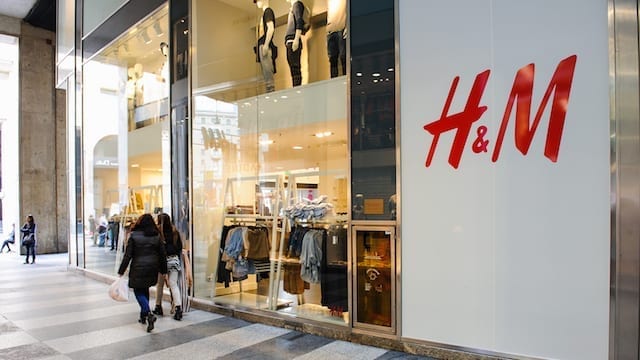
    MILAN ITALY – MARCH 18 2015: On the streets of the city. H&M store.

    H&M currently operates around 4300 stores across 64 markets. Last year, after the other fast-fashion empire Zara opened the first flagship Vietnam, H&M announced it would open a store here as part of its global expansion plan for 2017 which also includes Georgia, Colombia, Iceland and Kazakhstan.

  • Zara, Gap, Body Shop slash Indian retail prices

    Zara, Gap, Body Shop slash Indian retail prices

    Global brands like Gap, The Body Shop and Zara are slashing Indian retail prices to stay competitive in the heavily price-sensitive market.

    UK cosmetic brand The Body Shop slashed prices across categories in India by 20 to 30 per cent last week, and US fashion brand Gap is looking to have up to 40 per cent of its products made locally, which should allow prices to drop by 10 to 15 per cent.

    “The process has started,” says CEO J Suresh of Gap’s India franchisee Arvind Lifestyle Brands. The Indian-made items will be introduced next year.

    The Body Shop India COO Shriti Malhotra says its price cuts will make its products more accessible.

    Spanish fast-fashion brand Zara is also looking at slashing its prices to bring them closer to Swedish rival H&M.

    It quotes experts as saying price cutting is one of the most effective ways to boost sales and market share in India, particularly in highly competitive and fast-growing segments.

    “Most brands strategically lower prices for the value-conscious Indian consumer,” says CEO Devangshu Dutta of retail consultancy firm Third Eyesight.

    Inditex-owned fashion brand Zara reduced prices by up 15 per cent when H&M entered the Indian market in October 2015 with its global strategy of aggressive pricing. The move helped Zara record 17 per cent sales growth last year.

    When Arvind Lifestyle Brands took over the business of beauty and wellness retailer Sephora from former franchisee DLF Brands in September 2015, its first move was price correction. “We looked at pricing in Dubai and Singapore and kept it in the band of 5 to 10 per cent lower than that,” says Sephora India CEO Vivek Bali.

  • Zara China closes giant flagship

    Zara China closes giant flagship

    Zara China has shuttered its giant three-story, 3000 sqm Chengdu flagship store in what a retail commentator describes a “fine-tuning” of its retail network.

    The store, at Lesen Shopping Center, No.31, Zongfu Road, was previously occupied by luxury brands Louis Vuitton and Dior. It opened at the end of 2011 as Zara China’s single largest store and closed last weekend.

    Pascal Martin, partner with OC&C Strategy Consultants in Hong Kong, said the flagship was “probably a lower performing site”.

    “Zara recently opened another front nearby, in a trendier part of the city, which seems to be doing well. This move is probably just part of Zara’s ongoing normal fine-tuning of its store network strategy in China.”

    Martin said Zara has already built a strong brand in China and is thus now less dependent on large and expensive brick-and-mortar flagship stores to maintain their brand.

    “Also, Zara has built a powerful eCommerce capability in China. Therefore they can continue to be successful with fewer retail outlets than competitors H&M and Uniqlo.

    “The resulting lower fixed costs should serve them well during the continued retail slowdown and market saturation. We may see them selectively further reduce the size of their 190-store network or relocate some outlets to stronger locations,” he said.

    Zara China opened its first store in Hong Kong in 2004, before expanding onto the mainland two years later. It now has more than 190 stores in the country.

  • Christmas is over, but not the shopping

    Christmas is over, but not the shopping

    The shopping frenzy continues after Christmas as Orchard Road and neighbourhood malls lay on the post-Christmas sales to reel in the crowds.

    Mall tunes have been switched as well, as many people head out to shop for the Chinese New Year, on Jan 28 next year, or to stock up for the new school year.

    Ms Donna Tan, 33 , an administrative executive who was at the Nex shopping mall in Serangoon, said she was taking advantage of the current sales to get both Chinese New Year clothes and school shoes for her daughters, aged 10 and 14.

    She said: “There isn’t much time left for Chinese New Year shopping actually. The sales are also good now, so we took today and yesterday off to shop.”

    In total, she spent about $300 at Nex, Changi City Point and Tampines Mall over the past two days.

    Student Salwa Mayra, 19, waited for the post-Christmas sales to score better deals.

    Ms Salwa, who went shopping in Orchard Road and at Nex, said she bought clothes at Zara at half the usual price. Others, such as Ms Miki Chua, 40, a teacher, also decided to wait until after Christmas to beat the crowds.

    “I looked around during the Christmas period but it was too crowded, so I decided to come back now,” said Ms Chua, who had bags from Forever 21 and Etude House.

    Stores such as H&M and Robinsons continued to offer discounts of up to 70 per cent.

    Several malls and department stores reported healthy post-Christmas crowds and sales.

    A Tangs spokesman said the sales figures for Monday, the day after Christmas, were “quite encouraging”, without giving details. The sale at Tangs goes on till Jan 2.

    A spokesman for the orchardgateway shopping mall also said that the crowds on Monday were on the “positive side”.

    Takashimaya Singapore said that while there was just a 5 per cent increase in crowd figures on Boxing Day this year compared with last year, Takashimaya Department Store achieved a “double-digit increase in sales” over last year’s figures.

    Ms Stephanie Ho, general manager at Frasers Centrepoint Malls, said overall traffic at the company’s malls, which include Causeway Point and Waterway Point, was boosted by up to 20 per cent.

    “This may be attributed to promotions, including post-Christmas and back-to-school sales, over the long festive weekend,” she said.

    Despite healthy crowds, a survey conducted by e-commerce solutions company SAP Hybris that was released earlier this month found that only 39 per cent of shoppers still enjoy browsing in purely brick- and-mortar stores.

    More popular were stores with both a physical and digital presence, which 68 per cent of those surveyed cited as their top shopping option. Consumers were also less interested in more new-age services such as mobile payments through a digital wallet.

    Singapore Polytechnic senior retail lecturer Sarah Lim said that while an increase in transactions or crowds may not translate into an increase in sales due to marked- down prices, clearing stock is also important.

    “They have to make room for new stock, especially because Chinese New Year is coming soon. Also, crowds have the tendency to attract more crowds, who may end up buying,” she said.

  • Giant Zara Barcelona store opens

    Giant Zara Barcelona store opens

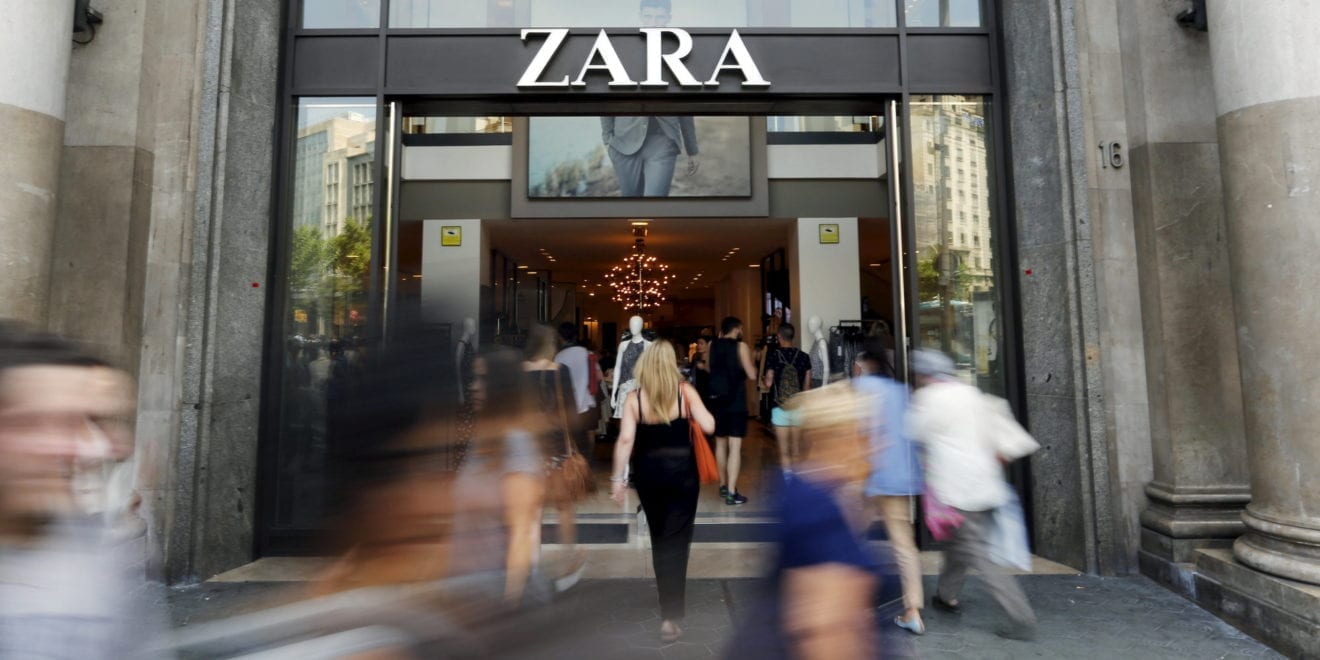
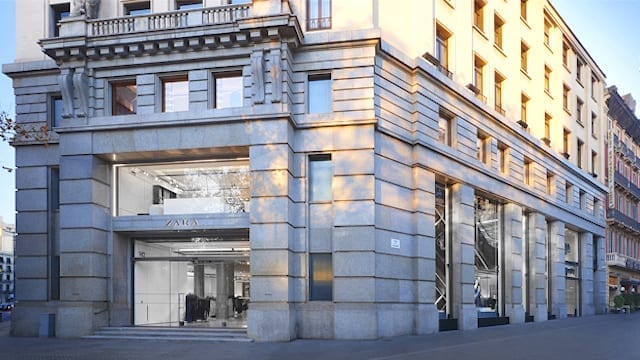
    A giant Zara Barcelona flagship store has opened its doors at Number 5, Plaça de Catalunya, Barcelona’s tourist and commercial epicentre.

    Zara describes the store as one of its “most emblematic”, housed in a 1930s property which has been fully refurbished and recovered for the city. It has more than 3600 sqm of space spread over three floors, housing the Zara Woman, Man and Kids collections.

    The new Zara Barcelona shop occupies a building designed in 1931 as the Barcelona head office of Banco de Bilbao by Basque architect Eugenio Pedro Cendoya, also responsible for the Montjuïc National Palace, built to accommodate the World Fair celebrated in the city in 1929.

    The architectural plans devised for this new store, spearheaded by Coruña-based architect Elsa Urquijo, focused on preserving the former bank’s original architectural treasures such as its impressive glass dome, the atrium flanked by columns and decked with the marble floors characteristic of the public buildings of the time and the murals decorating the pedestrian staircase. The interior is dominated by a pale colour palette and textures that tone down the spaces. The layout of the store fittings was articulated around free-standing units in neutral tones that place the spotlight on the brand’s collections and the building’s impressiveness.

    “The result is a diaphanous and uncluttered retail space with a ground floor open to the city and two upper floors demarcated by the majestic central space that is visible from anywhere in the store, bathed at all times by the daylight filtered in through its glass dome,” says Zara parent Inditex.

    In keeping with Inditex’s Environmental Plan, the new store has been built to stringent green building standards, sustainability criteria applying to its actual construction as well as ongoing operation and usage. Over half of Inditex’s worldwide stores are now eco-efficient, implying electricity and water savings of 30 per cent and 40 per cent respectively compared with conventional stores.

  • Mothercare recovery hits a bump

    Mothercare recovery hits a bump

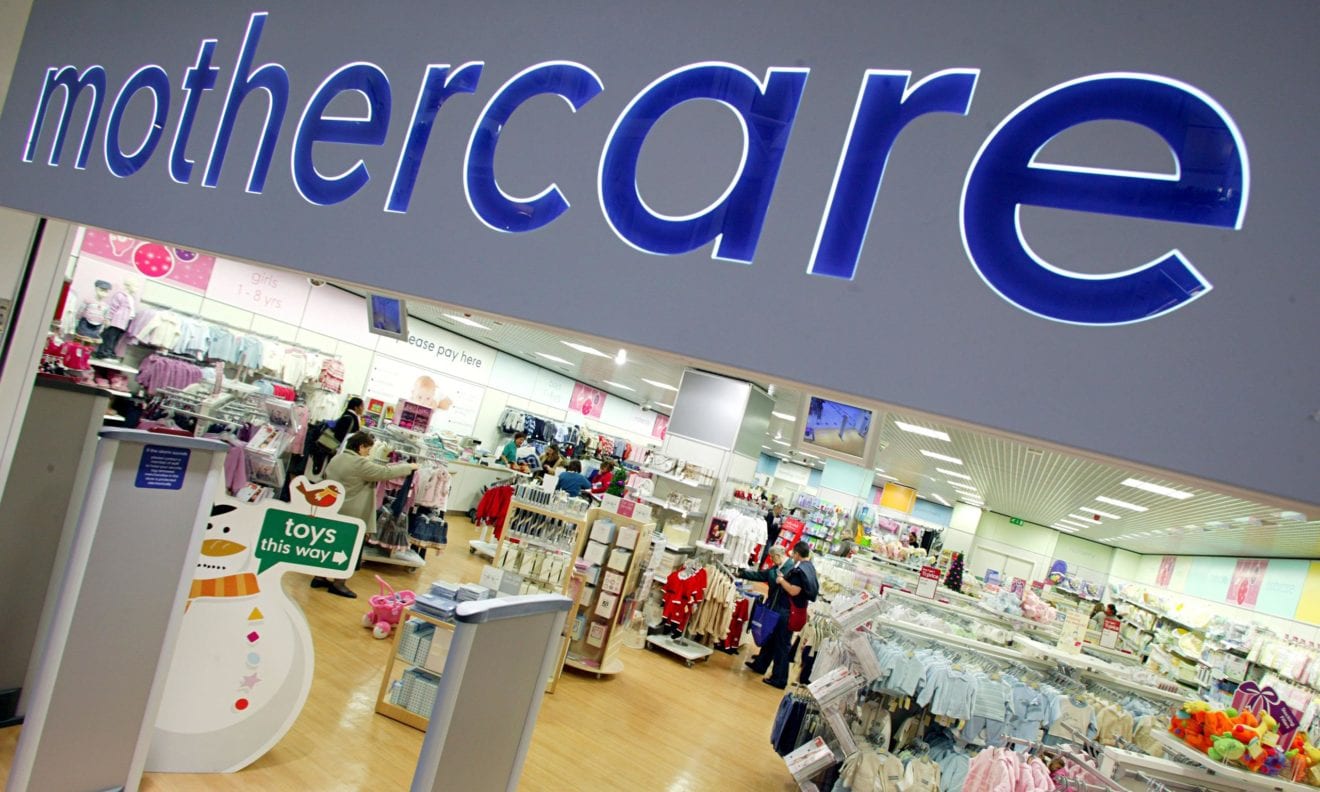
    Mothercare is in the process of a much needed turnaround strategy for its UK business that aims to bring the UK side of its proposition back to profit.

    After a reasonable first quarter result, the retailer has felt the effects of a tougher economic climate in the second, with like-for-likes dipping into negatives for the combined first half year.

    From March onwards expect to see Mothercare increase its prices, given that close to half its products are sourced in US dollars, which will likely be another blow to UK profits.

    Mothercare continues to focus on its digital business, with online sales now 40 per cent of total UK retail sales, compared to 36 per cent this time last year. However, a significant 44 per cent of online sales come from instore orders on staff iPads – which suggests consumers are visiting stores but due to limited floor space there’s poor product availability. Mothercare’s ‘online’ sales don’t look quite so impressive.

    Mothercare has other issues to contend with. While the retailer is popular for newborns, in the next couple of years, the business will need to focus on retaining these consumers with celebrity and fashion-led ranges as fast fashion retailers such as H&M, Zara and Next draw this customer base from its stores.

    International remains an area of success for Mothercare, boasting profits of £20.8 million. However, the volatile international market means the retailer must not rely on its international success to soften the losses it continues to make in the UK.