Tag: zara

  • Xidan Joy City’s new zone unveiled to mark 10 year anniversary

    Xidan Joy City’s new zone unveiled to mark 10 year anniversary

    Beijing’s iconic Xidan Joy City celebrated its 10 year anniversary today by unveiling its newly renovated Rose Garden relaxation zone. The celebration also marks the completion of the first phase of a significant upgrade of the mall’s interior and public areas that will continue until 2019.

    Mall owner COFCO has commissioned Woods Bagot to lead the interior design of renovation works as part of its wider strategy to deliver a new generation of Joy City malls that continue to stay ahead of changing lifestyles and interactive digital technology in China.

    Already a favourite destination among Beijing’s trend-setters and fashion-conscious youth, the 185,000 m2 mall is arranged over 12 floors in an established downtown shopping district and is home to a range of global brands including Apple, Kate Spade, Michael Kors, Sephora and Zara.
    When the renovation is complete in 2019 the mall’s leading brand portfolio will be showcased across eight diverse thematic areas, providing a change of pace and an engaging journey for visitors as they move through the space.

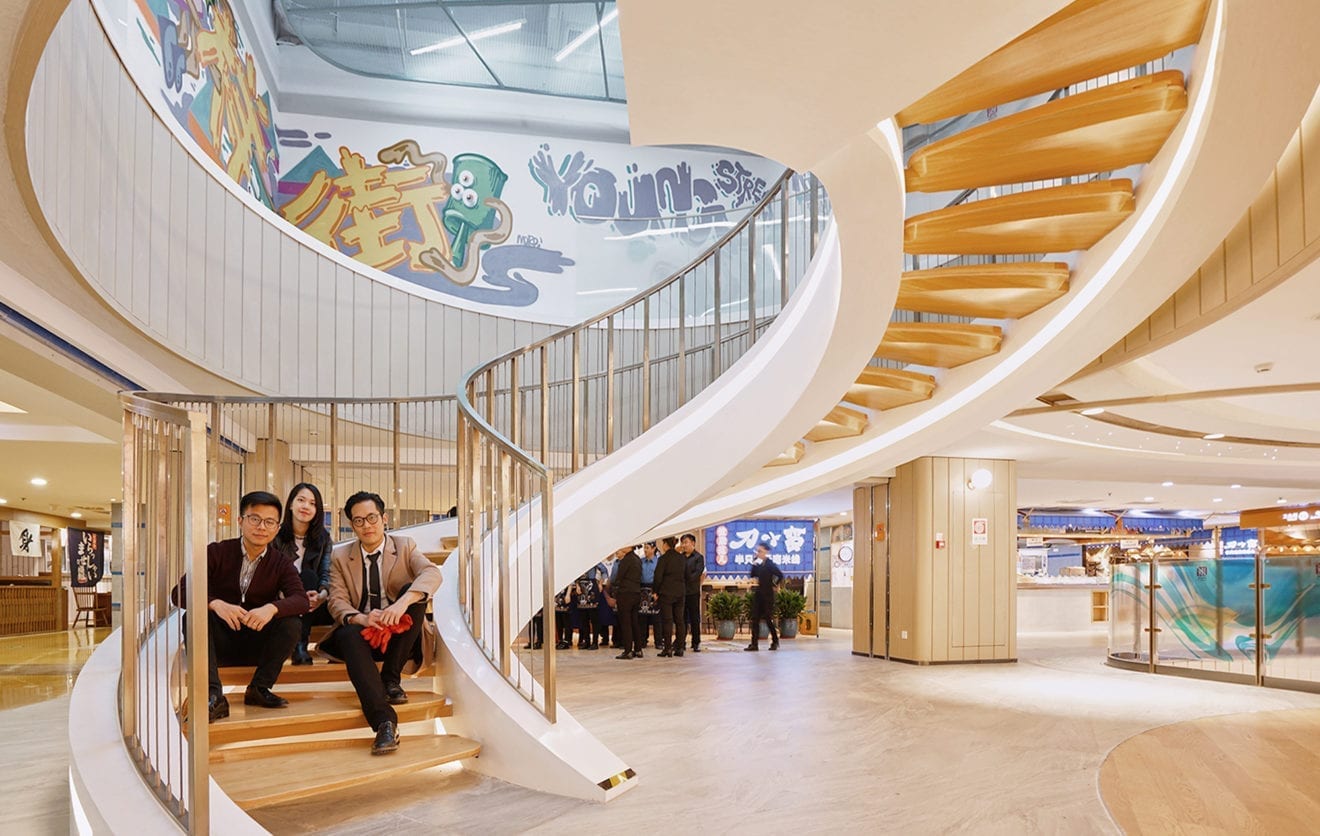
    Xidan Joy City’s reimagined Rose Garden is a spacious relaxation area within the F&B zone featuring a spectacular organic-form wood and glass spiral staircase as its focal point.

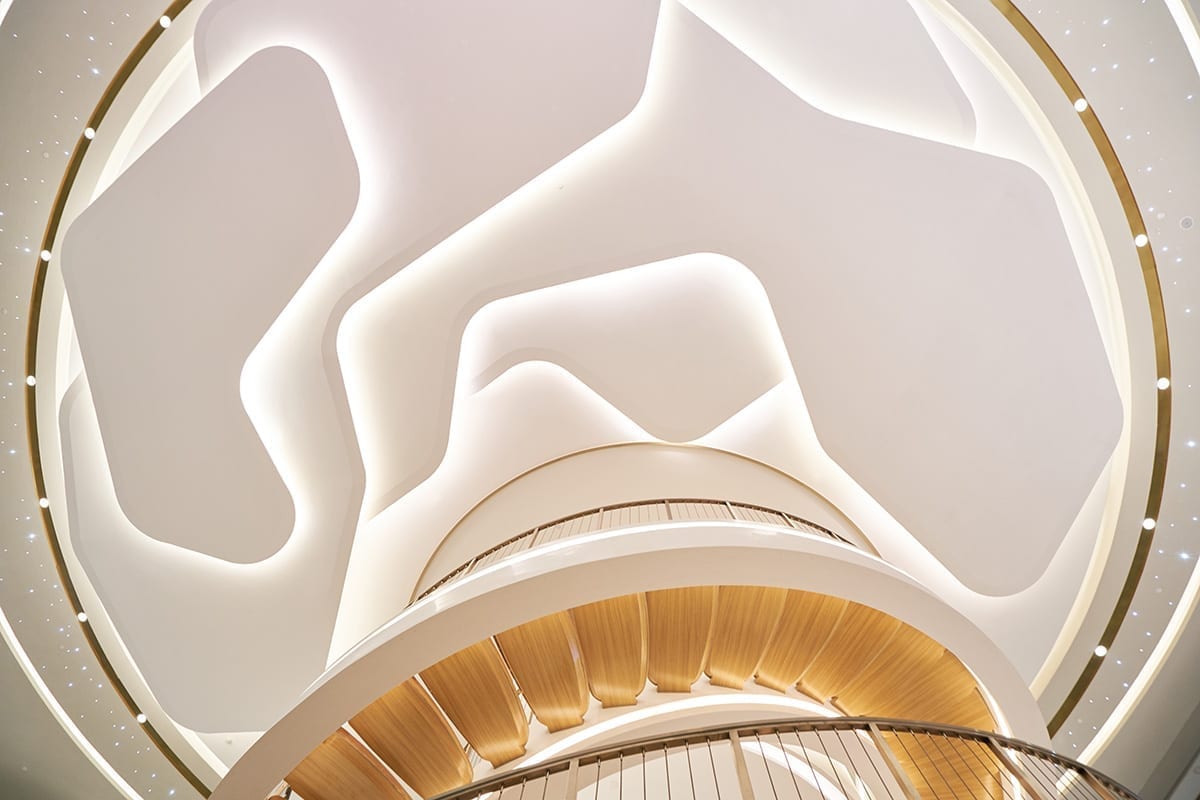
    The Rose Garden offers breathing space in an outdoor-themed environment, bathed in abundant natural light during the day and lit dramatically from above at night by an abstract rose ceiling light fixture. Different-height seating scattered with foliage and greenery gives shoppers a unique line of sight to enjoy a more natural and personal experience as they relax.

    Billy Ip, Woods Bagot, said:

    “Beijing’s youth market has evolved greatly over the last decade, with social, economic and technological developments driving new trends, desires and lifestyles. Visitor experience is the new battleground for this sophisticated audience who seek to spend time in unique, engaging environments.

    “For Xidan Joy City’s many fans, the Rose Garden is a space where many happy memories have been made. We have honoured this sentiment by creating a place for visitors old and new to both recall and build new memories.

    “Woods Bagot’s concept for the revived Rose Garden provides an avant-garde interpretation of an energising and peaceful ambience, and we look forward to sharing our creative direction for the other spaces as works progress over the next year.”

  • Fast Retailing to launch in India

    Fast Retailing to launch in India

    Uniqlo parent Fast Retailing has applied to open stores in India.

    The Japanese fast-fashion giant has filed an application with India’s Department of Industrial Policy & Promotion to do business in the country under the Uniqlo brand.

    “India is a market with great potential,” says Fast Retailing spokeswoman Pei-Chi Tung. The company has long been interested in entering India, but has been beaten by H&M and Zara which are already established in the apparel market Euromonitor International has predicted will grow 29 per cent to INR3.76 trillion (US$58 billion) by 2021.

    Zara owner Inditex opened a flagship in Mumbai in May, which CEO Pablo Isla says has had a strong reception. It has just started online sales as well in India.

    Fast Retailing last month reported its biggest jump in annual earnings in more than a decade, driven by a near doubling of operating profit at Uniqlo stores outside of Japan. Operating profit for the brand in China jumped 37 per cent for the year ended August 31, compared with a 6.4 per cent slump in Japan.

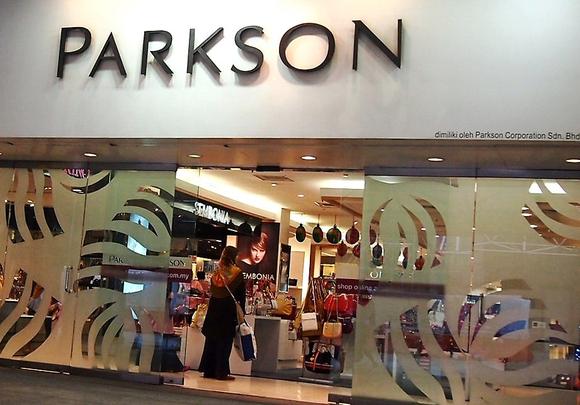
  • Parkson Retail Asia 1Q Net Loss Widens On Year As Sales Decline

    Parkson Retail Asia 1Q Net Loss Widens On Year As Sales Decline

    Parkson Retail Asia has had a lacklustre start to its fiscal year, its unaudited first-quarter figures show.

    Gross sales proceeds fell by 8.3 per cent year on year to S$202.4 million (US$148.9 million) for the quarter.

    Total merchandise sales generated $198.1 million, with concessionaire sales contributing 74.2 per cent, down from 77.9 per cent for the same period last year, and direct sales contributing the balance of 25.8 per cent.

    Attributable net losses to the owners of the company for the period, to September 30, reached $12.9 million. The group also had net current liabilities of $67.9 million at the end of September, the result of investments in new stores and ventures yet to reach optimal level. This was an increase of 22.5 per cent from its June 30 position.

    Same-store sales in Indonesia and Malaysia were impacted during the quarter by the absence of Lebaran/Hari Raya festival buying following a shift in the calendar.

    Malaysia remained challenging, with the country’s consumer sentiment index, at 77.1, continuing to register below the 100-point confidence threshold for the 13th consecutive quarter.

    Consumer spending appears to have also softened in Indonesia, where retail spending has been declining, while Parkson’s same-store sales in Vietnam dropped by 7.8 per cent. This is attributed to the “fading of novelty effects” arising from the entry into the market of such international players as H&M, Takashimaya and Zara.

    “Competition in Vietnam’s retail market remained intense,” says Parkson.

    In Myanmar, the group closed its store at FMI Centre, Yangon, in January with a new store at Junction Square in the city opening two months later.

    Parkson says its performance in the next quarter is expected to benefit from year-end school holidays and festive buying. However, it expects challenges with fragile consumer sentiment and stiff competition.

  • CapitaLand hits record with Suzhou Center Mall

    CapitaLand hits record with Suzhou Center Mall

    With the opening of its largest shopping centre yet, Suzhou Center Mall, Singapore retail-estate company CapitaLand has marked a record year of a million square metres of retail space.

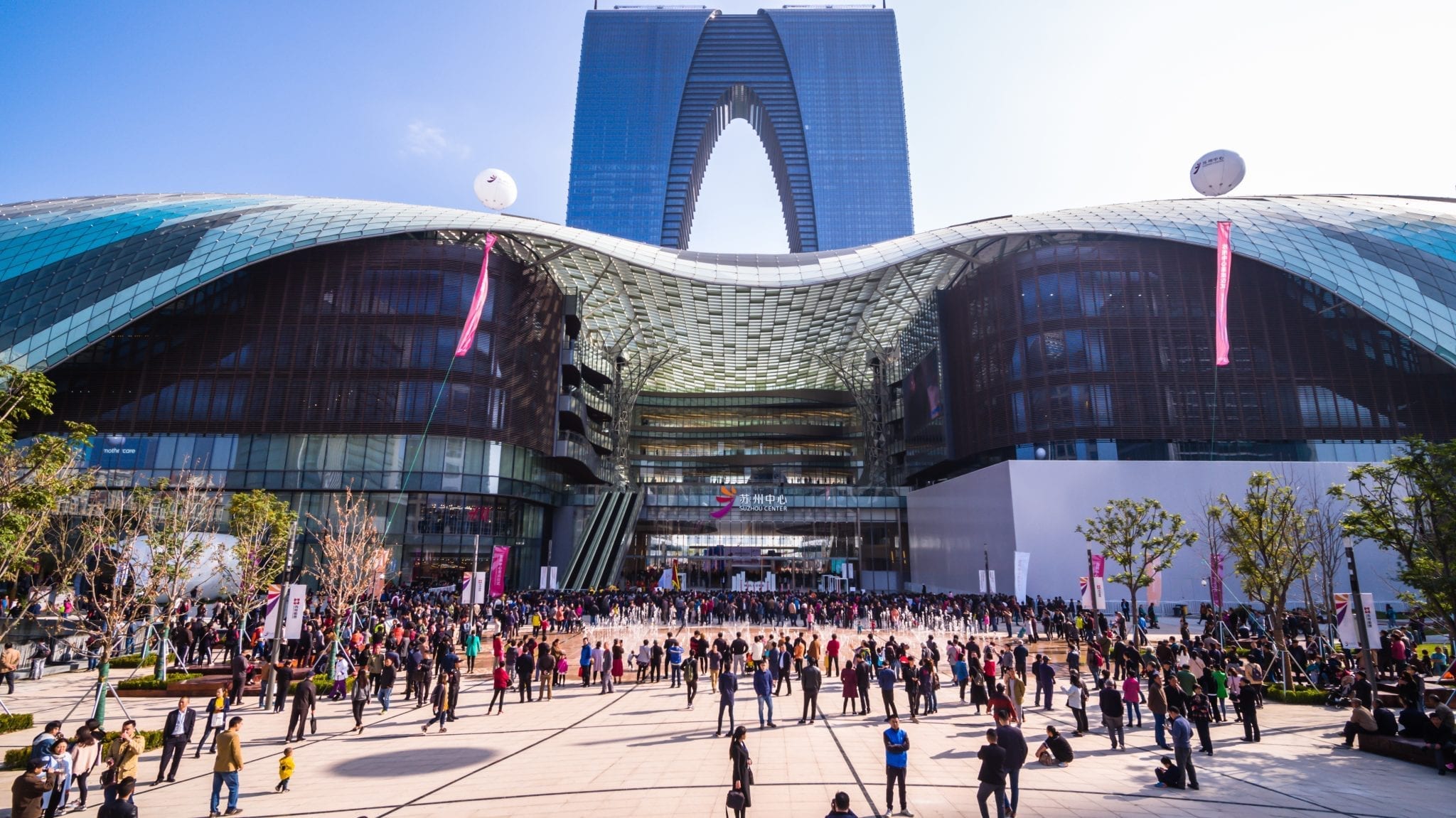
    More than three times the size of Ion Orchard in Singapore, the mall is also the largest shopping centre in the Chinese city. It spans nearly 300,000sqm in gross floor area (GFA), excluding car park.

    More than 600 retail brands are housed within the mall, in the heart of the western CBD of Suzhou Industrial Park, next to the historic Jinji Lake. It is the centrepiece of the Suzhou Center integrated development that also comprises four grade-A office towers, two luxury residential towers and the W Suzhou hotel tower, which are all interconnected.

    With a total GFA of 1.13 million square metres served by a 1570m tunnel leading to its basement car park and directly linked to two metro lines, Suzhou Center was master developed by Suzhou Hengtai Holding Group, owned by the Suzhou Industrial Park.

    CapitaLand, through its wholly owned shopping business CapitaLand Mall Asia, is co-owner and co-developer for the mall and two 21-storey office towers.

    World’s largest

    Designed by multiple award-winning architectural firm Benoy, the seven-storey Suzhou Center Mall has an undulating roof that is the world’s largest free-form monocoque roof at more than 36,000sqm. Shaped like a pair of phoenix wings to symbolise Suzhou’s growth taking flight, the multi-coloured roof comprises 6947 pieces of uniquely shaped glass.

    Suzhou Center Mall also boasts 60,000sqm of greenery across terraces, rooftops and the landscaped cantilever bridges that extend from two ends of the mall to the lakefront. A 45m-wide, 25m-high water curtain is a feature of the mall’s facade facing Jinji Lake.

    The mall opened with more than 90 per cent lease commitment for its net lettable area of about 152,000sqm. Anchor tenants include more than 600 brands including Suzhou’s first CGV cinemas, its first Fanpekka children’s theme park, first indoor simulated gaming centre, an Olympic-size ice rink, a gourmet supermarket and a food court.
    Nearly a third of the mall’s offerings are new to Suzhou, including Forever 21 and Victoria’s Secret. H&M and Zara will run triplex stores in the mall, their biggest outlets in the city.

    Suzhou center mall

    CapitaLand says that with the opening of Suzhou Center Mall, 61 of its total portfolio of 69 owned and managed malls in China are up and running.

    CapitaLand CEO Lim Ming Yan says the mall’s opening caps a record year for the company. “Nearly 1 million square metres of retail GFA across eight developments came on line this year, marking our largest-ever retail offering in a single year.”

    CapitaLand Mall Asia CEO Jason Leow says that about 85 per cent of the group’s total assets contribute to recurring income, of which shopping malls and integrated developments form the bulk. “As we increase CapitaLand’s recurring income base with mall openings, we will also continue to enhance our retail scale and network through acquisitions and management contracts, as well as reconstitute our portfolio to achieve an optimal asset mix.”

  • New store for Zara Vietnam

    New store for Zara Vietnam

    Zara Vietnam opens its first Hanoi store tomorrow in Vincom Centre Ba Trieu.

    According to an announcement on the Spanish fashion brand’s website, the three-storey store will face Doan Tran Nghiep street and offer styles for women, children, teens, and men. It will feature hoodies and coats as the capital faces winter.

    Zara arrived in Vietnam two months ago, launching at Vincom Centre Dong Khoi in Ho Chi Minh City, covering 2400sqm over two levels.

    Swedish fast-fashion brand H&M, which also entered Vietnam with a store in Vincom Centre Dong Khoi, will follow on Saturday with its first Hanoi store at Vincom Mega Mall Royal City Thanh Xuan.

  • Hong Kong retail start recovering

    Hong Kong retail start recovering

    A “steady if cautious” Hong Kong retail recovery is clearly underway, according to a report from Savills released today.

    “The retail sector is slowly coming to life after four years of painful adjustment which has seen the emergence of a ‘tenant’s market’, a rare occurrence in Hong Kong’s landlord-dominated retail scene,” observed Simon Smith, head of research and consultancy with Savills.

    Over recent months, he said, retailers have been taking the opportunity to upgrade for little or no extra cost and examples include Pandora which moved within IFC Mall and Hourglass, which runs Patek Philippe, relocating within Tsim Sha Tsui from the Imperial Hotel to a better site in the Holiday Inn.

    In further evidence of upgrade demand, Harry Winston has taken the space previously occupied by Ferragamo in the Mandarin Hotel and will open in early 2018. Alternatively, retailers are cutting overheads as they find that renewal negotiations are yielding significant savings as landlords discover a new pragmatism.As reported, Topshop has renewed the lease on its Queen’s Road Central store at a discount of about 50 per cent.

    While landlords of high street shops remain on the back foot, larger shopping centres, such as  Harbour City, IFC Mall and New Town Plaza, are proving relatively immune to the downtown, says Smith.

    In IFC Mall, Italian menswear brand Boggi opened recently while Brunello Cucinelli has launched a new flagship in the same mall.

    “As street-shop rents have fallen heavily while centre rents have only seen a minor adjustment, the gap between the two has narrowed considerably and tenants are now finding that a prime street front pitch can be a viable alternative to taking space in a nearby mall. This is the narrowest the gap has been since 2009 and represents a return to the norm after seven years of major gains in street shop rents.”

    Strength in regions

    Savills also notes that regional and district malls such as Popcorn in Tseung Kwan O and Tuen Mun Town Plaza are doing relatively well.

    “Hong Kong’s tight geography, excellent transport infrastructure and dense retail environment has helped this type of mall defend against the threat from online. The appeal of air conditioned spaces in the summer months and the lure of enhanced F&B offerings have also helped boost the appeal of local malls. We have also seen landlords putting more effort into marketing campaigns with better events, more pop-up stores and creative TV and online advertising,” said Smith.

    “Most malls now have a very well-established cyber-presence via websites and apps. Click-and-collect is making some limited headway locally, with brands such as Zara, Burberry, L’Occitane, Watson’s Wine, Chow Sang Sang and Starbucks all offering the service.

    “In a mixed market some trade categories are performing well and pharmacies in particular are expanding aggressively at the moment. Not every landlord wants them but they are often prepared to pay above-market rents. F&B is also out-performing, driven in part by a richly valued stock market and rising wages.”

    Nick Bradstreet, head of retail with Savills, said luxury fashion is turning around in Hong Kong even though brands have been closing stores in Macau and Mainland China over the past year or so. Luxury sales in China have actually surged over the past six to nine months.

    “Cosmetics retailers are reporting fairly stable business, but after a period of rapid expansion, many brands are still culling store numbers. Electrical goods retailers are consolidating in what is a very competitive marketplace,” he said.

    Savills prime street shop rental indices remained flat over the third quarter while rents in prime malls continued to drift off marginally. The latest September retail sales figures from government recorded a seventh consecutive month of rises attributable in part to a strong inbound tourist numbers. Jewellery, watches, clocks and valuable gift sales outperformed, rising by 14.7 per cent year-on-year, with strong growth also noted for medicines, cosmetics and Chinese drugs.

  • Zara’s parent records strong first half

    Zara’s parent records strong first half

    Zara’s parent company Inditex Group has seen its first half revenue rise 11.5 per cent, underpinned by growth across all markets and brands.

    First-half net profit amounted to €1.37 billion, seeing year-on-year growth of 9 per cent, while like-for-like sales growth was 6 per cent.

    Inditex´s chairman and CEO, Pablo Isla, said the result underlined the “strength and sustainability of the company´s integrated offline-online store model, which year after year continues to demonstrate its ability to deliver growth”.

    All of the Group´s brands including Pull&Bear and Massimo Dutti, expanded their international footprints, adding stores in 35 countries to take the global store count to 7,405, 113 more than at the start of the year.

    Inditex’s capital expenditure for the year was estimated at €1.5 billion, following its opening, refurbishing and renovating of stores as well as upgrading and modernising its facilities and logistics platforms.

    The Zara store in Marineda in A Coruña (Spain) saw the introduction of a prototype where an automated order delivery point allows shoppers to pick up orders placed online.

    The prototype is articulated around an optical barcode reader which scans the QR code or accepts the PIN codes received by customers when they place orders online.

    In a few seconds, the system delivers the order to a mailbox platform. Behind the platform, a dynamic robot moves through a shaft 8m tall by 2.5m wide with capacity to handle 700 packages simultaneously as seen here.

    Inditex said sales in local currencies in stores and online grew 12 per cent for the start of its second half.

  • Zara India going online next month

    Zara India going online next month

    Zara India is launching an online store on October 4, it has announced on its Facebook page.

    This follows the Spanish clothing retailer launching e-commerce sites this year for Malaysia, Singapore, Thailand and Vietnam.

    With a presence in 93 countries, the Inditex Group’s flagship brand added 279  stores last year to take its total to 7292 outlets.

    It plans to open up to 500 stores this year.

  • Zara to launch online sales platform in India this October

    Zara to launch online sales platform in India this October

    As part of the ongoing international expansion of its integrated store model, Zara will launch its online store in India this October. This was confirmed by Inditex’s Chairman and CEO Pablo Isla while reviewing the company’s performance in 2016.

    Isla highlighted ‘solid, sustainable and integrated growth’ as key to the Inditex of the future.

    Besides launching Zara’s online sales platform in India, this August the Group’s brands, including Zara, Pull&Bear, Massimo Dutti, Bershka, Stradivarius, Oysho and Zara Home will open their first stores in Belarus.

    Speaking at the company’s Annual General Meeting in Arteixo, Spain, Isla defined Inditex as a company “focused on its people, devoted to creative talent and underpinned by an integrated offline-online store model.”

    In 2016, Inditex Group’s points of sale surpassed the 7,200 mark in 93 countries and 41 online markets. Group revenue reached €23.31 billion, underpinned by growth in all the regions in which it does business, while net profit amounted to €3.16 billion.

    At the end of the year, Inditex had 162,450 employees representing 99 different nationalities worldwide.

  • Over 50 retailers eyeing New Zealand

    Over 50 retailers eyeing New Zealand

    International retailers are continuing to fuel a race for space in the Pacific region, with over 90 groups seeking to roll out stores in Australia and 50 retailers eyeing New Zealand, according to a new CBRE report.

    According to the property firms research, despite the pick-up in activity in recent years – international brand penetration rates in Australia and New Zealand remain low relative to other developed nations.

    The penetration rate in Australia is 28 per cent, which is low relative to other countries in the region including China, Singapore and Hong Kong, all of which have penetration rates in excess of 45 per cent.

    New Zealand’s penetration rate is even lower at 16 per cent, which CBRE said highlights significant catch-up potential in both countries.

    Alistair Palmer, national director of CBRE’s Retail Services Group, said the research also highlighted that international retailers were increasingly viewing the Pacific as one region.

    “Previously, international retailers focused on Australia followed by entry into New Zealand, usually after a few years,” Mr Palmer said.

    “Recent developments indicate that international retailers increasingly view the Pacific as one region, with an initial target of the three main gateway cities of Sydney, Melbourne and Auckland followed by secondary cities in both countries. This is evident by the international penetration rate of Auckland being on par with Brisbane but growing at a more significant pace, on par with Sydney, in the past year.”

    One of the downsides for domestic retailers has been a significant increase in competition for sites and a related increase in rents.

    However, CBRE said that displaced domestic retailers could increasingly seek secondary centres and this will have a positive impact on centres and locations that currently struggle as a result of low retailer demand.

    The report also tips that there will be a shift in the type of international retailers entering the region.

    The head of CBRE’s Pacific Retail Occupier team, Tim Starling, said luxury retailers were the largest group to enter Pacific last year and this trend was expected to continue for a further two to three years. However, a slow-down was then expected as these groups approach their store targets.

    “Over the next five years, we expect mid-range fashion and specialist clothing brands to show a rising contribution to brand entry rates in Australia and New Zealand,” Starling said.

    “These retailers will have a more wide-ranging impact than the luxury brands, as they tend to focus only on CBD or prime regional centre locations.”

    CBRE’s report highlights that the retail landscape in Australia and New Zealand has already undergone significant change, with the arrival of international brands having driven up CBD rents, leading to regional shopping centre redevelopments and the activation of new retail precincts in both countries.

    McNabb said a strong preference for international brands, food and beverage and retail-tainment from the younger demographic was supporting this change, as was an increase in tourist arrivals from China.

    Chinese tourist arrivals have tripled in Australia and quadrupled in New Zealand over the past decade, which is supporting retail trade, particularly in the major CBD markets.

    “Chinese tourists not only spend more per visit, but they also have a higher appetite for goods purchase to take home, as opposed to western tourists,” McNabb said.

    “Another market driver has been Australia and New Zealand’s consumption per capita, which has grown at twice the rate of the U.S. over the past decade. This has contributed to the sales productivity of some international brands being among the highest in the world which, coupled with low international brand penetration rates, is making this region highly attractive.”

  • Local fashion brands face fierce competition with foreign rivals

    Local fashion brands face fierce competition with foreign rivals

    The influx of foreign fast fashion brands into Vietnam is threatening local retailers’ market share, forcing the firms to move to keep their foothold in the market.

    Le Thi Quynh Trang, General Director of the Multimedia JSC – which runs many fashion programmes in Vietnam, said the country is becoming more popular in the global fashion industry as most fashion brands, from high-end to fast fashion ones like Chanel, Giovanni, Salvatore Ferragamo, Versace, Burberry, Topshop, Mango and Zara, have come to Vietnam. H&M and Uniqlo also plan to enter this market.

    “Vietnamese consumers’ demand is now ripe for them to make inroads into Vietnam,” she said.

    H&M is scheduled to open its first outlet in Ho Chi Minh City in the next few days. The Swedish brand said Vietnam is one of its five key future markets.

    There are nearly 200 foreign fashion brands in Vietnam, accounting for more than 60 percent of the market share. Mid-end brands like Giordano and Bossini and high-end ones such as Mango, Dolce & Gabbana, Topshop, Gap, Banana Republic and Tommy Hilfiger post the strongest sales.

    Competition pressure

    Foci, a domestic brand that debuted in 1999 and gained a strong foothold in the affordable segment, folded in 2014.

    Ngo Thi Bau, General Director of Nguyen Tam Textile & Garment Company – Foci’s owner – switched to opening a Japanese-style restaurant chain in HCM City. She said aside from high ground rent, Foci had to give up due to falling sales caused by cheap clothing from China and counterfeits.

    The Viet Fashion Joint Stock Company, which owns Ninomaxx and N&M brands, has been making strategic steps to develop. It has 62 retail outlets across the country at present and plans to increase store numbers soon.

    However, some insiders said Ninomaxx may lose its status to foreign rivals. They said in addition to cost-related problems, Vietnamese firms struggled as they were unable to grasp the latest fashion trends or change their promotion methods.

    Zara earned 5.5 billion VND (nearly 242,000 USD) on the opening day of its outlet at Vincom Dong Khoi shopping mall in HCM City on September 8, 2016. That reflects Vietnamese consumers’ interest in foreign fast fashion, which pressures domestic brands to make changes.

    The force to change

    Among Vietnamese brands, Canifa has emerged as an affordable fashion brand with the leading growth rate and store number in the country. The presence of Zara, H&M and Uniqlo has forced Canifa to change, especially with their target markets similar.

    Canifa has raised the number of its outlets to 96, many of which are based in major shopping malls or ideal locations in big provinces and cities. An advantage of this firm is that its factories are in Vietnam, helping cut time from design, production to sale.

    Nguyen Van Thoi, Chairman of TNG Investment and Trading Joint Stock Company, said the entrance into Vietnam by H&M, Zara and Uniqlo is a chance for Vietnamese brands to develop their designs but also a big challenge.

    TNG used to manufacture apparel ordered by Walmart, Zara, Levi’s, GAP, CK and Puma. However, it decided to abandon this and specialise in selling TNG-branded products. TNG outlets are expected to increase to about 100 this year, he said.

    The decisive factor is keeping up with consumers’ taste, thus Vietnamese firms need professional designers. TNG has partly satisfied the market’s demand and gained a market share, he noted.

    Thoi said TNG products are sold at competitive prices and will outpace foreign brands in this regard.

  • Zara looking to zip up fashion market with new store in Hanoi

    Zara looking to zip up fashion market with new store in Hanoi

    Fashion lovers will have yet another reason to go shopping with the brand’s first store opening in the Vietnamese capital. High street retailer Zara has announced plans to open its first store in Hanoi in October.

    The world’s leading clothing and accessories retailer has selected the Vincom complex on Ba Trieu Street for the location of its first store in Vietnam’s capital.

    Zara opened its first store in Vietnam in Ho Chi Minh City’s Vincom Dong Khoi commercial center back in September 2016.

    The source also said Zara has spent months preparing for the launch of its Hanoi store.

    Established in Spain in 1975, Zara now has 2,213 stores strategically located in leading cities across 93 countries. The brand is popular thanks to its diversified products and reasonable prices.

    Zara is following in the footsteps of Sweden’s H&M, which has also confirmed the opening of its first store in Ho Chi Minh City’s Vincom Dong Khoi center.

  • Zara stays strong in Australia despite profits slowdown

    Zara stays strong in Australia despite profits slowdown

    While some chains struggle in the Australian market, Inditex’s Zara is committed to the country and is seeing its operations growing although profit has fallen, according to local press reports.

    On Wednesday, the same day that rival Topshop’s local franchisee announced a voluntary administration filing, The Age reported that the Spanish chain by contrast has enjoyed another year of double-digit growth in the country.

    It saw A$256.36m in sales in the year to January 31 2017, boosted by the opening of three new stores in the Sydney suburb of Parramatta, the Gold Coast and Brisbane. That figure was up 15.5% year-on-year, although this was slower than the 24% rise seen in the previous year. And its profit was slower too with the company making A$10.3m compared to $15.26m in the prior year.

    Like Topshop, Zara arrived in Australia in 2011 and had 18 stores by the end of January this year. It had 1,700 employees, several hundred more than it had working for it in Australia a year earlier.

    The local operation is 90% owned by Inditex and 10% by Peter Lew through his International Brand Management unit. Lew is the son of retail entrepreneur Solomon Lew.

  • Korean fast fashion brand “8 Seconds” is catching up ZARA

    Korean fast fashion brand “8 Seconds” is catching up ZARA

    The fast fashion brand of the fashion division of Samsung C & T has been on the brink of exceeding 40, the number of stores in Korea. The firm geared up to catch up ZARA, the third-largest fash fashion brand in Korea.

    The number of domestic stores in 8 Seconds will increase from 39 to 41 by the end of this month. It increased by 5 from 36 at the end of last year.
    8 Seconds will open three stores in the metropolitan area, including Seoul, this month alone. It opened the store in Myund-dong branch of Lotte department store in May 1, followed by Lotte Premium outlet in Icheon on May 13. It is also planning to open Hyundai City Outlet Garden Five at the end of this month.

    EightSeconds, officially launched in 2012, has been known as ‘Lee Seo Hyun Brand’ because Lee Seo-hyun, president of Samsung C & T’s fashion division, has elaborated the brand for three years.

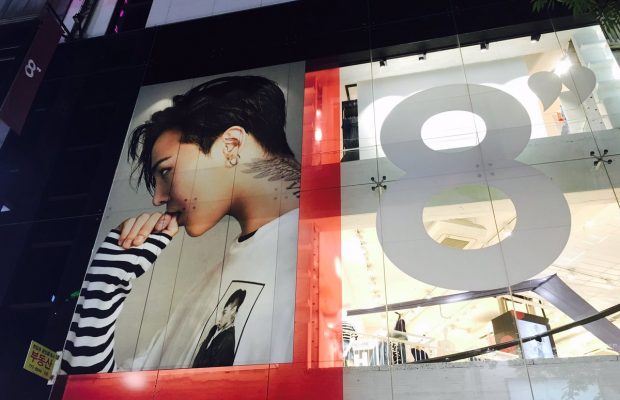
    She planned to enter the Chinese market with the goal of becoming the third fast fashion brand in Asia. Last year, it opened its first flagship store in the center of Huaihai Road in Shanghai, China. The brand gained a huge popularity in China by releasing products which collaborated with Big Bang’s GD who was a model of 8 Seconds. However, as the investment cost has been rising in the early stage of China, the two subsidiaries in Shanghai have suffered an operating loss of 7 billion won.

    8 Seconds will focus on stable operation of its existing Shanghai flagship, rather than aggressively expanding its business in China for the time being, and will aggressively boost its business by expanding distribution channels in Korea.

    The GD collection, which was first introduced in Korea and China last year and was hit by Chinese, will continue to be released. GD has been collaborating with 8 Seconds for the first time as a fast fashion brand in Korea. The third collection, released last month, featured items from the daily life of GD.

    An official from Samsung C & T 8 Seconds said, “We are pursuing a full-scale business with the release of 8 Seconds Summer Collection with model GD.” “We plan to expand distribution in China as well as domestic distribution”.

  • Community park to be settled in MyTown Kuala Lumpur

    Community park to be settled in MyTown Kuala Lumpur

    MyTown Shopping Centre has opened in the Kuala Lumpur CBD as a joint development by Boustead Holdings and retail banker Ikano.

    It features 1.6 million sqft (148,644 sqm) of retail space (more than 400 stores), an alfresco dining area and a park.

    Anchor tenants include the biggest Ikea and Zara stores in Malaysia, Malaysia’s first Best flagship, Food Empire, Golden Screen Cinemas, H&M, Parkson Department Store and Village Grocer.

    Biggest ZARA in Malaysia @ MyTOWN

    Its two-acre (0.8ha) Town Park has been set aside for community events. It includes ramps and tracks for rollerblading and skateboarding. A Sunken Garden features amphitheater-style.

    MyTown is the first shopping centre in Malaysia to feature Soundscapes – special compositions and custom designed sounds to offer an immersive environment in key locations.

    MyTOWN Launch

    Mr Christian Rojkjaer – Managing Director of Ikea Southeast Asia & Director of Boustead Ikano Sdn Bhd (3rd from left) & Tan Sri Dato’ Seri Lodin Wok Kamaruddin – Deputy Chairman / Group Managing Director, Boustead Holdings Berhad (4th from left) flanked by Directors from Boustead Ikano Sdn Bhd, Boustead Holdings Bhd & Ikano Ptd Ltd including (from left to right), Mr Lee Hartigan, Dato Sri’ Ghazali Mohd Ali, Datuk Koo Hock Fee, Ms. Cheah Swee Choo, Mr Sebastian Hylving, Mr Joakim Hogsander – General Manager of MyTOWN Shopping Centre & Mr Thomas Malmberg.

    GM Joakim Hogsander describes the centre as a lifestyle mall. “We have created a special customer journey through our choice of tenants, design and experience.”

    MyTown has been awarded green building status by the US Green Building Council (USGBC) and Malaysian Green Building Index.