Author: Mei Ling Tan

  • Everyone going omnichannel: but where’s the profit?

    Everyone going omnichannel: but where’s the profit?

    Retailers globally are investing “enormous” amounts of money in omnichannel business modes, according to a study from JDA.

    But alarmingly, just 16 per cent of 400 surveyed said they can fulfil omnichannel demand profitably.

    This finding, and others are highlighted in The Omni-Channel Fulfillment Imperative a new report prepared for JDA Software Group by PwC. The study is based on a global survey of more than 400 retail and consumer goods CEOs from around the world, conducted in late 2014.

    What is eroding retailers’ margins as they sell and deliver products across multiple channels? It’s simple: the high fulfilment cost. A full 67 per cent of respondents reported that these costs are growing as they increase their focus on selling across channels. Survey respondents reported their highest costs associated with omni-channel selling as:

    • Handling returns from online and store orders (cited by 71 per cent of respondents).
    • Shipping directly to the customer (67 per cent)
    • Shipping to the store for customer pick-up (59 per cent)

    The CEOs in the JDA study recognise that they need to continue investing in business improvements to enhance their omni-channel performance. However, reducing the associated logistics costs is not their primary focus.

    The respondents were interviewed in China, North and Central America, the UK, France, Germany, Japan and Australia

    When asked to rank their top initiatives for improving business operations, CEOs’ number-one choice (57 per cent) was spending capital on creating new customer experiences. Similarly, when asked to rank strategic growth enablers for the year, reducing/reformatting physical store footprints to focus on expanding the ecommerce business was the top choice at 53 per cent.

    “Every time retailers receive an online order, they have a number of options to fulfill that demand,” said Kevin Iaquinto, chief marketing officer at JDA.

    “They can pull the product from a local store, send it from a centralised warehouse or ship it directly from the supplier. JDA’s new study demonstrates that most retailers lack the insight to make these decisions in a profitable manner — and are not sufficiently focused on this critical capability gap,” said Iaquinto.

    “They need intelligent logistics and fulfillment solutions that can reveal the hidden costs, and the customer service trade-offs, associated with every delivery option. In addition, to truly win in the omni-channel marketplace, retailers need the upfront demand forecasting tools to make sure products arealready distributed across all locations in a manner that supports profitable delivery.”

    While they might not be focused on actions today to create profitable fulfillment and delivery schemes, the JDA study leaves no doubt that CEOs are aware of the importance of profitable omni-channel fulfillment to their future survival. Omni-channel fulfillment is either a high or a top priority for 71 per cent of respondents.

    And these CEOs are planning to invest an average of 29 per cent of their total capital expenditures for 2015 on improving their omni-channel fulfillment performance.

    The fulfillment capability most cited as needing attention was transportation and logistics, named by 88 per cent of CEOs as a priority for the future. The second capability CEOs will focus on is improving inventory availability to fill orders, cited by 85 per cent.

    “Having products available, then finding the most profitable way to deliver them —are critical activities that lie at the heart of supply chain excellence,” noted Iaquinto.

    “The CEOs in the JDA survey clearly understand the challenges they have ahead of them with regard to fulfillment, and they know they will have to innovate if they are to be profitable while meeting customer expectations across channels.

    “The good news is that advanced technology can help retailers and consumer goods manufacturers master omni-channel fulfillment. However, until companies fully leverage these solutions, they will fail to realize positive financial returns on their omni-channel investments.”

  • Tesco posts record loss

    Tesco posts record loss

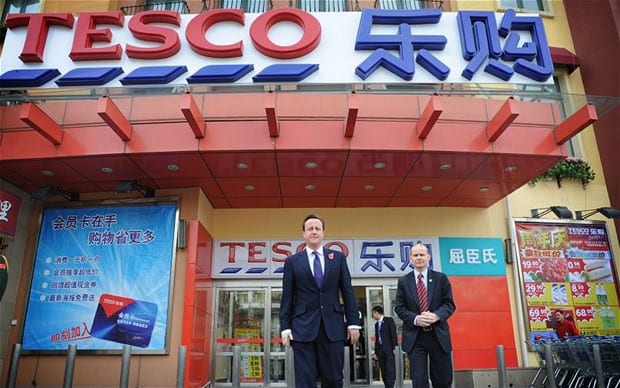
    Tesco has reported a £1.4 billion preliminary full year group trading profit on increased sales.

    But it lost a massive £7 billion in writedowns and one-off charges to create a record annual loss of about £6 billion.

    In Asia – where Tesco operates hypermarkets in China, Thailand, Malaysia and Korea – group profit fell 18.4 per cent in the year to March 31, to £565 million. But that was a far better performance than in the UK, where profit slumped 78.8 per cent to just £467 million, and in Europe, down 31.9 per cent to £164 million.

    In something of an understatement, CEO Dave Lewis described the year as “very difficult”.

    “The results we have published today reflect a deterioration in the market and, more significantly, an erosion of our competitiveness over recent years. We have faced into this reality, sought to draw a line under the past and begun to rebuild, and already we are beginning to see early encouraging signs from what we’ve done so far.”

    Indeed, if one could overlook such massive writedowns, the trading news was positive.

    UK like-for-like sales were up for first time in over four years, driven by better availability, service and pricing; like-for-like sales performance improved to one per cent in the fourth quarter which, by grocery retailing standards, is significant.

    Lewis highlighted “tough trading conditions overseas”, especially in Korea.

    But he said the transformation program outlined in January was progressing well, the portfolio review ongoing.

    “Over the last six months we have put customers back at the centre of everything we do. By focusing on the fundamentals of availability, service and targeted price reductions, we have seen a steady increase in footfall, transactions and, most significantly, volumes. More customers are buying more things at Tesco,” he said.

    “We are making deep changes to the way we organise and run our business, with a simpler, more agile office team, more colleagues serving customers and a new approach to the way we work with suppliers. I do not underestimate how difficult some of these changes have been for the team and I thank everyone for their professionalism and contribution at this time of great change.”

    Lewis said the market remained challenging and the company was not expecting any let up in the months ahead.

    “When you add to this the fundamental changes we are making to our business and our offer, it is likely to lead to an increased level of volatility in short-term performance. Our clear priority – and the one that will deliver sustainable value for our shareholders – is to improve consistently for customers. The changes we have made and will continue to make put us in a stronger position to do this.”

  • Fake beauty products overrun Chinese websites

    Fake beauty products overrun Chinese websites

    If you’ve bought more than a couple beauty products online in China, chances are you’ve purchased some fakes. Even if you bought imported ones.

    Fake products are a persistent problem across China’s eCommerce market but the beauty market may be particularly afflicted. According to a report from the 21st Century Business Herald (as cited in a recent National Business Daily article), an “absolute majority” of beauty products the company’s reporters tested were fakes. A separate test by a third party earlier this year found that 49 per cent of the Mary Kay products it purchased on Chinese eCommerce sites were fake. Just recently, a CCTV report revealed that some beauty masks being sold on WeChat were fakes that contained dangerously massive amounts of glucocorticosteroids. In the online beauty industry, fakes are everywhere.

    For consumers with the money, buying imported products to avoid fakes is growing in popularity, and many of China’s biggest eCommerce sites have rapidly expanded their foreign-imported offerings over the past year. But even foreign imports are not immune.

    Some Chinese suppliers will actually ship Chinese-produced fakes abroad, and then have them shipped back to China so that they can be certified as imported. The fakes are often mixed in with the genuine article to make finding them more difficult.

    “After they get through customs there’s no way all the documents can be inspected,” an industry source who wanted to remain anonymous told the National Business Daily. “Mixing fakes in with the genuine products is a favorite practice of suppliers, because at the current prices, if you don’t mix in fakes you can’t make any money.”

    Another issue is smuggled products – genuine imports that the eCommerce company doesn’t actually have the right to sell. That’s one of the issues at the heart of a recent spat between Chinese etailers Jumei and Vipshop, with Vipshop accused of selling a Korean-made product Jumei has an exclusive distribution contract on. When a desired brand has an exclusive contract with one eCommerce shop, it can be tempting for other shops to pick up smuggled imports to compete, and in some cases they may not even be aware the imports are smuggled.

    Because importing genuine beauty products to China is expensive, the problem of fakes isn’t likely to disappear anytime soon. As the NBD‘s source says, mixing fakes with genuine imports helps suppliers make the difficult import business profitable, and catching them in the act is difficult. As long as mixing fakes with genuine imports makes economic sense for suppliers, fake beauty products are likely to remain a big part of China’s eCommerce marketplace.

  • Starbucks cashes in on revamped offering

    Starbucks cashes in on revamped offering

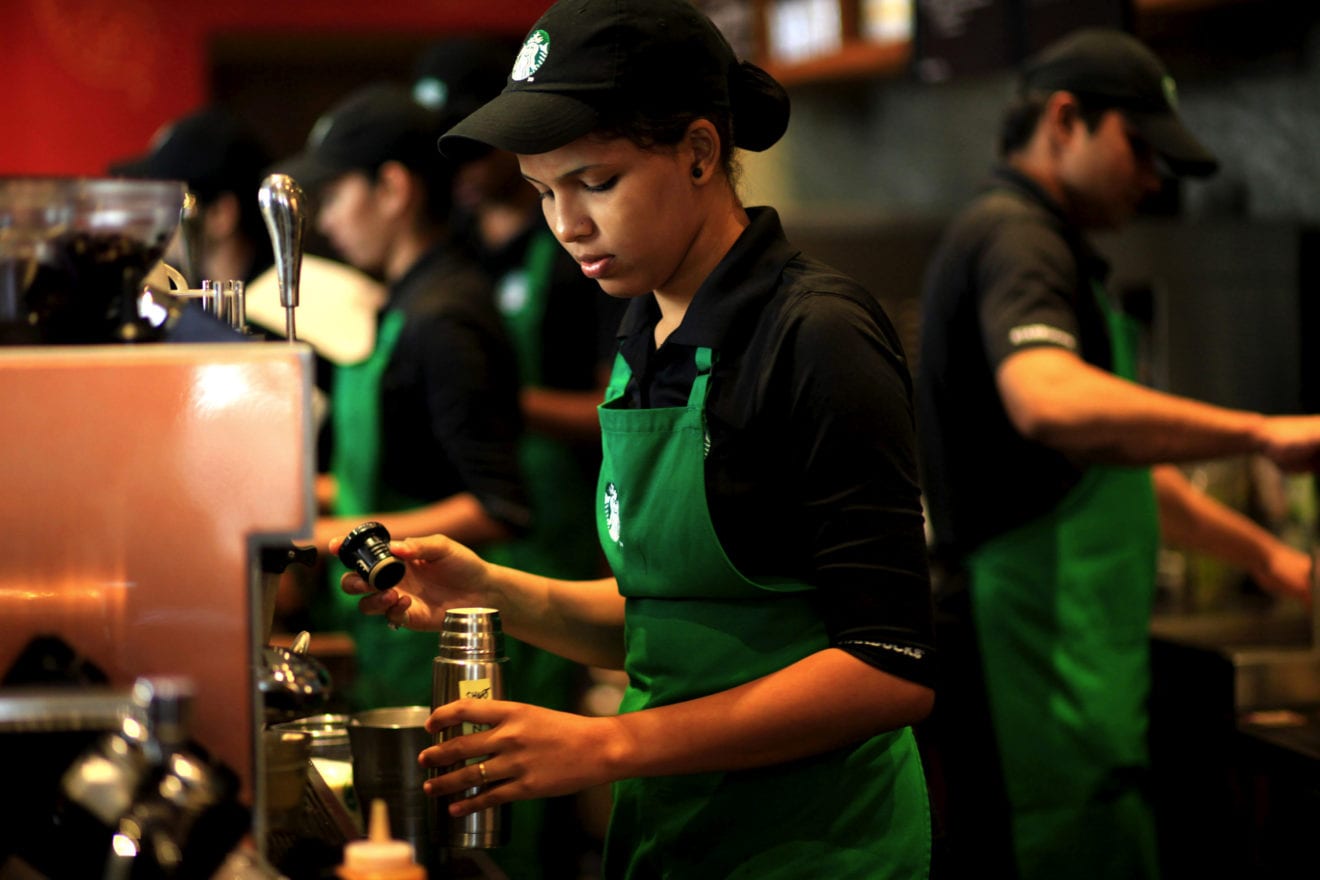
    Starbucks is extracting more money from customers with offerings like a flat white and revamped baked goods that cost a little more.

    The Seattle-based chain reported a higher quarterly profit on Thursday, with sales jumping seven per cent at established US stores.

    The company said much of the increase came from higher spending per visit.

    New drinks like the flat white and Teavana Shaken iced teas help drive up sales because they’re a little pricier than other drinks, Starbucks CFO, Scott Maw, said.

    He noted the company is also charging more for baked goods like croissants, which are being made with new recipes.

    “What we’re seeing is a premiumisation, a trade up,” Maw said.

    In a conference call with analysts, CEO Howard Schultz, said the flat white and new cold brewed iced coffees also help extend the company’s position as a “coffee authority”.

    During its second fiscal quarter, Starbucks said its US sales bump was also helped by a two per cent uptick in customer traffic, which translated into an additional 10 million visits.

    That was driven in part by people coming in to redeem the US$1.6 billion (A$2.06 billion) that was loaded onto gift cards during the holidays.

    The company is also convincing people to buy more food in general.

    Overall Starbucks food sales in the US were up 16 per cent from a year ago, while breakfast sandwich sales were up 35 per cent, the company said.

    A key part of Starbucks’ strategy for continuing to drive up sales is its expansion into the afternoons and evenings, when its stores tend to be less busy.

    Already, Starbucks says about a third of orders include a food item and that the figure has been ticking higher.

    The company is also testing a program in about 30 locations where it sells alcohol in its cafes in the evenings, and has said plans to expand that more broadly this year.

    Globally, sales at established locations rose seven per cent during the period.

    That included a 12 per cent increase in Asia, while the unit encompassing Europe, the Middle East, and Africa rose two per cent.

    For the period ended March 29, Starbucks’ profit jumped 16 per cent to US$494.9 million, or 33 US cents per share, which was in line with expectations.

    Total revenue rose 18 per cent to US$4.56 billion, more than the US$4.53 billion Wall Street expected.

    Shares of Starbucks Corp were up 4.3 per cent at US$51.54 in extended trading.


  • Metro Vietnam fined for tax evasion

    Metro Vietnam fined for tax evasion

    German multinational retailer Metro’s Vietnamese woes continue with a fine of almost US$3 million issued this week for tax evasion.

    Metro has for months being trying to offload its trouble Metro Vietnam subsidiary, initially via a sale to Thai business Berlei Jucker which was foiled by a shareholder revolt. A new deal was reached with BJ’s founder Charoen Sirivadhanabhakdi through his TCC Group, but it is not clear the status of that agreement, with Vietnamese authorities impeding the cross border investment.

    According to the English edition of the Tuoi Tre (Youth) newspaper in Vietnam, Metro first came under scrutiny over suspicions of transfer pricing back in 2012. Independent investigations cleared the company of wrongdoing. But the General Department of Taxation launched its own investigation and after two months concluded the company had “committed wrongdoings worth VND507 billion ($23.63 million) in a transfer pricing inspection that concluded Monday,” according to Tuoi Tre.

    Metro Vietnam has been ordered to pay VND62.64 billion ($2.92 million) in tax arrears, a deputy minister of finance confirmed to Tuoi Tre.

    Metro Vietnam opened in 2002, investing US$78 million in opening 19 stores in city centres. But it has reported a profit just once – of $5.41 million in 2010 – and last year decided to exit the market. In 2007 and 2008, it posted losses of $7.32 million and $8.85 million respectively.

  • Mongkok raid after Snake powder poisoning

    Mongkok raid after Snake powder poisoning

    Hong Kong’s Department of Health has urged the public not to buy or use a product, branded Snake Powder Capsules, as it was found to contain undeclared controlled drug ingredients.

    The warning follows the admission to hospital of a 58 year old male, poisoned by the tablets, and a subsequent raid of a retail store in Mong Kok, and the arrest of its two staff.

    The man was admitted to hospital with chest pain and swelling. He had a history of consuming Snake Powder Capsules, purchased locally. Preliminary test results from the HA’s laboratory revealed that the product may contain undeclared Part I poisons and antibiotics. The DH conducted investigation immediately.

    A Chinese medicine centre in Mong Kok was subsequently raided in a joint operation by the DH and the Police. During the operation, a woman aged 50 and a man aged 29 were arrested for suspected illegal sale and possession of Part I poisons, an unregistered pharmaceutical product and antibiotics. Snake Powder Capsules were found and seized for analysis. The Government Laboratory has now confirmed that the product contains dexamethasone, ibuprofen, chlorpheniramine, tetracycline and chloramphenicol.

    According to the Pharmacy and Poisons Ordinance, all pharmaceutical products must be registered with the Pharmacy and Poisons Board of Hong Kong before they can be sold legally in the market. Illegal sale or possession of unregistered pharmaceutical products and Part I poisons are criminal offences. The maximum penalty for each offence is a fine of $100,000 and two years’ imprisonment. In addition, the Antibiotics Ordinance prohibits illegal sale and possession of antibiotics. Offenders are liable to a maximum penalty of a $30,000 fine and one year’s imprisonment for each offence.

    A DH spokesperson strongly urged members of the public not to buy or use products of doubtful composition or from unknown sources. All registered pharmaceutical products should carry a Hong Kong registration number on the package in the format of “HK-XXXXX”. Safety, quality and efficacy of unregistered pharmaceutical products are not guaranteed.

  • New DC Superhero Girls target young females

    New DC Superhero Girls target young females

    A new generation of superheroes is set to create retail merchandising opportunities across Asia.

    From this coming Fall, DC Entertainment, Warner Bros Animation, Warner Bros Consumer Products and Mattel join forces to launch DC Super Hero Girls, “a new universe of Super Heroic storytelling that helps build character and confidence, and empowers girls to discover their true potential,” the companies promise.

    Developed for girls aged 6-12, DC Super Hero Girls centers on the female Super Heroes and Super-Villains of the DC Comics universe during their formative years – prior to discovering their full super power potential. Featuring a completely new artistic style and aesthetic, DC Comics’ icons such as Wonder Woman, Supergirl, Batgirl, Harley Quinn, Bumble Bee, Poison Ivy, Katana and many more make their teenaged introduction. Each character has her own storyline that explores what teen life is like as a Super Hero, including discovering her unique abilities, nurturing her remarkable powers and mastering the fundamentals of being a hero.

    DC Entertainment Girls Superheroes

    The characters are DC Comics’ most powerful and diverse female characters, presented in a new, younger generation. They will roll out across multiple entertainment content platforms and product categories to create “an immersive world”, says Warner Bros.

    “DC Entertainment is home to the most iconic and well-known Super Heroes including Wonder Woman, Supergirl and Batgirl,” said Diane Nelson, president of DC Entertainment. “DC Super Hero Girlsrepresents the embodiment of our long-term strategy to harness the power of our diverse female characters. I am so pleased that we are able to offer relatable and strong role models in a unique way, just for girls.”

    The initial launch of DC Super Hero Girls in Fall 2015 will include an immersive digital experience, original digital content and digital publishing – providing opportunities for girls to interact with characters, learn about the storylines, and engage in customisable play. TV specials, made-for-videos, toys, apparel, books and other product categories will begin to roll-out in retailers in 2016.

    “Developing a Super Hero franchise exclusively for girls that includes all of the key components of a comprehensive entertainment experience – from content to consumer products – is something we are excited to be doing in conjunction with our great partners,” said Brad Globe, president of Warner Bros Consumer Products.

    As master toy licensee, Mattel is collaborating with DC Entertainment, Warner Bros Animation and Warner Bros Consumer Products on DC Super Hero Girls’ narrative creation, interactive digital activations and ultimately a toy line launching in 2016.

    Mattel category-leading firsts include a line of characters for the action figure category, an area of the industry that has been primarily developed with boys in mind, and fashion dolls featuring strong, athletic bodies that stand on their own in heroic poses.

    The Random House Books for Young Readers imprint of Random House Children’s Books has been appointed the master publishing partner for the franchise and will be creating a portfolio of books that will bring the DC Super Hero Girls world to life, beginning in Spring 2016.

    The Lego Group will also be a key to building the DC Super Hero Girls franchise, leveraging its experience and success engaging girls in creative construction play to bolster this universe through an array of Lego building sets designed to inspire girls’ imaginations.

    Additionally, consumer products partners around the world will be engaged in creating a merchandise line dedicated to DC Super Hero Girls across all key categories.

  • Royal Selangor to open in Chelsea, London

    Royal Selangor to open in Chelsea, London

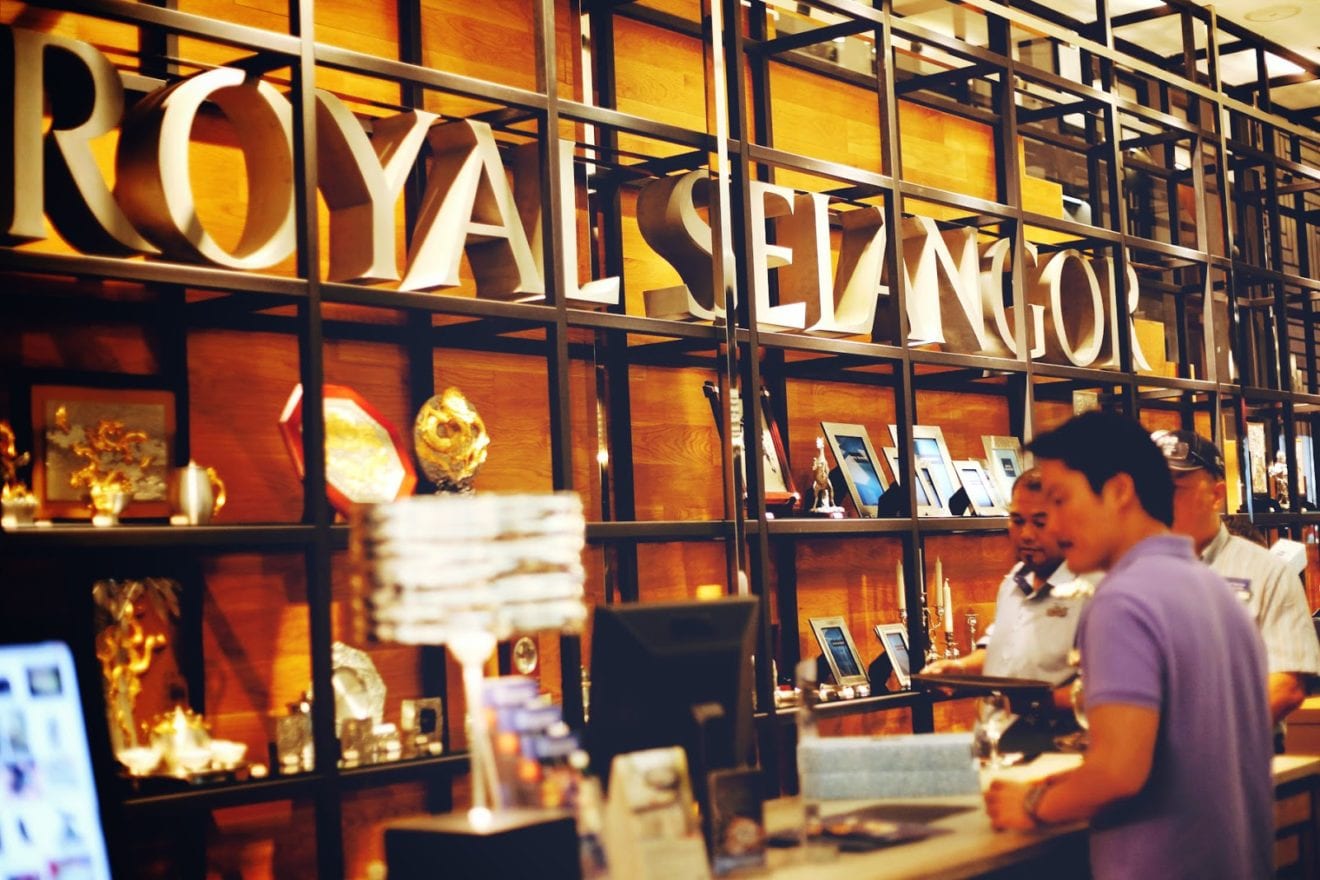
    Malaysia-based pewter brand Royal Selangor is to open its first standalone store in the UK.

    It chose the upmarket London suburb of Chelsea for its debut, a site adjacent to the Designer’s Guild at 261 Kings Rd.

    The 1317 sqft store is due to open as early as June.

    Established in Malaysia in 1885, Royal Selangor is now a global family business with stores in more than 20 countries.  Its UK flagship on King’s Rd will stock customised and designer homewares, as well as ornaments and personalised gifts, all made from pewter. In addition, Royal Selangor’s two complementary brands Selberan jewellery and the 350-year-old sterling silver brand Comyns will both be available in store.

    Royal Selangor is famous for its exclusive collaborations with international designers including Denmark’s Erik Magnussen, Freeman Lau from Hong Kong, and champagne houses Veuve Clicquot Ponsardin, Dom Perignon and Krug. Royal Selangor has also created trophies for numerous Formula One races, the Shanghai ATP 1000 Masters, as well as the Sime Darby LPGA Malaysia Golf Tournaments.

    Peter Coleman, MD of Royal Selangor UK, said the company wanted to launch its first store in a destination that reflects its quality and heritage.

    “The King’s Rd met our requirements perfectly due to the great mix of brands that share a similar ethos to our own and the cachet it holds as one of London’s most significant retail addresses.”

    Richard Everett, estate manager at Sloane Stanley, who brokered the lease deal, said the company is committed to creating a unique mix of retailers with a certain style on the King’s Rd, and the arrival of Royal Selangor is consistent with this strategy.

    “They will appeal to residents and visitors alike, reaffirming the King’s Rd’s position as one of the most important retail streets in London.”

  • Gucci China blamed for Kering slowdown

    Gucci China blamed for Kering slowdown

    Falling sales by Gucci China have been blamed for a higher than expected drop in Gucci parent Kering’s first quarter global sales.

    Sales at Gucci’s own 502 retail stores fell four per cent in the quarter and overall sales, on alike-for-like basis, fell eight per cent.

    The worst performing region was Asia-Pacific, where sales slumped a full 10 per cent. Sales in Greater China “deteriorated compared to earlier in the year”, France-based Kering said in an earnings statement.

    Sales rose six per cent in Western Europe and remained stable in North America.

    Kering has responded with a promise to give its flagship Gucci brand, which accounts for 60 per cent of its sales, a revamp.

    “Our priority is to give Gucci new impetus,” Kering finance director Jean-Marc Duplaix said.

    The company blamed the sales drop off as part of a transition period, following its sacking of the brand’s CEO and design director last December. It has since split the roles, naming Marco Bizzarri as CEO and in-house designer Alessandro Michele as creative head. Bizzarri is credited for having turned around Bottega Veneta.

    Michele’s strategy is to improve its entry-level offer, including small leathergoods and handbags.

    Gucci will also continue to invest in building its online business.

    Bottega Veneta, Kering’s second brand, also experienced slowing sales in the first quarter, but maintained growth at 3.1 per cent on a same store basis.

    The company cited poor trading in Hong Kong and Macao for the drop, specifically a change in the demographic of mainland Chinese tourists. Hong Kong achieved 19 per cent of its sales in Hong Kong and Macau.

  • Ted Baker Hong Kong flagship opens

    Ted Baker Hong Kong flagship opens

    Ted Baker has opened a new flagship in Hong Kong – inspired by the style of the territory.

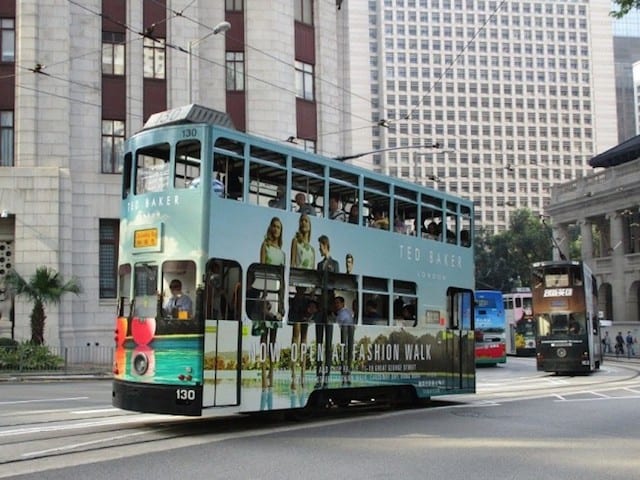
    The UK-based retailer has created a unique store design which incorporates famous Hong Kong themes such as the city’s skinny double decker trams.

    Ted Baker Causebay Hong Kong 415

    The end result is a mix of British and Hong Kong – tongue and groove timber ceilings with train carriage styled lights suspended on both sides give the feel of being inside a vintage Hong Kong tram.

    Ted Baker on tram - Hong Kong 415

    Timber panelling on the lower wall, with a blurred image sitting behind glass evoke the feeling of looking through the window of a speeding tram.

    The front of the Ted Baker Hong Kong store features vertical panels of glazed tiles, similar to those on the London Underground.

    Ted Baker Causebay Hong Kong 3-415

    And as shoppers climb the stairs to the store’s second floor, images of Hong Kong’s modern skyline convey the feel of a steep ascent on the territory’s popular Peak tram.

    Ted Baker Causebay Hong Kong 2-415

    There are rows of model trams at the cashier’s desk and custom designed wallpaper featuring old tram tickets in the fitting rooms.

    Ted Baker Causebay Hong Kong 1- 415

    The store is in the Fashion Walk Mall, Causeway Bay.

  • Japan convenience stores eat into supermarkets

    Japan convenience stores eat into supermarkets

    Established supermarket chains across Japan are feeling the pinch as consumers opt instead for smaller shops at more conveniently located Japan convenience stores.

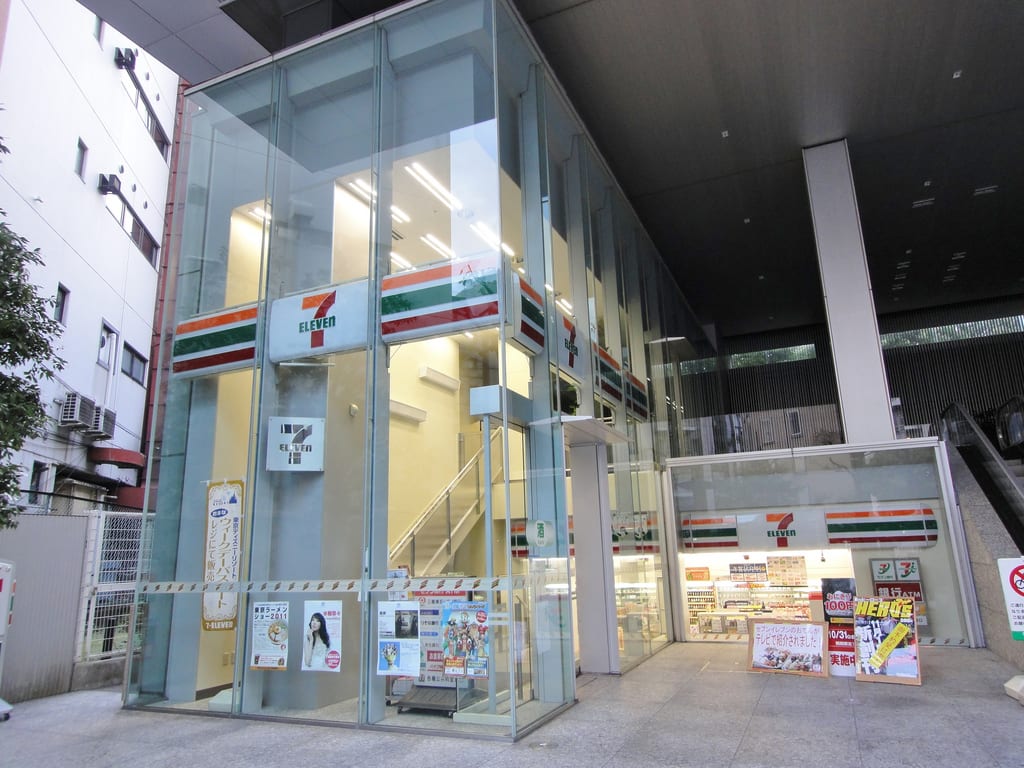
    A feature in The Japan News, an English language version of The Yomiuri Shimbun, says business performance is deteriorating at Ito-Yokado (not at all ironically part of the Seven & I group, which owns 7-Eleven as well) and Aeon.

    Aeon is actively building its shopping centre and retail reach in other Asian countries, such as Thailand, Malaysia, Vietnam – and most recently Indonesia, as it shores up its growth prospects in the wake of a declining Japanese population and stagnant economy.

    As The Japan News reports, while the supermarkets are reporting almost embarrassing results, sales and profits are booming for the convenience store chain giants, especially 7-Eleven, according to financial statements for the year to February 28.

    “This illustrates how the retail chain sector has been split into two contrasting segments. Such checkered business results are mainly attributed to ever-diversifying consumer preferences, which analysts say major supermarkets – have been struggling to keep up with.”

    The report says Aeon president Motoya Okada had “a grim look on his face” during a news conference last week when he announced his company’s business results for the year were “well below our expectations.”

    The largest supermarket chain operator under Aeon’s umbrella, Aeon Retail, saw its operating profits plunge 90.8 per cent from the previous year. Its supermarket business, including Daiei, posted a loss for the first time since 2008.

    Ito-Yokado’s profit slumped 83.4 per cent year-on-year.

    Seven & i Holdings president Noritoshi Murata told a press briefing earlier this month the Japanese market was “in the process of what you might call an increasingly conspicuous split into two disparate trends in consumer behavior”.

    Murata argued that consumer preferences can now be divided into two basic patterns: opting for big-ticket items or prioritising daily necessities.

  • Matahari Indonesia makes it 110

    Matahari Indonesia makes it 110

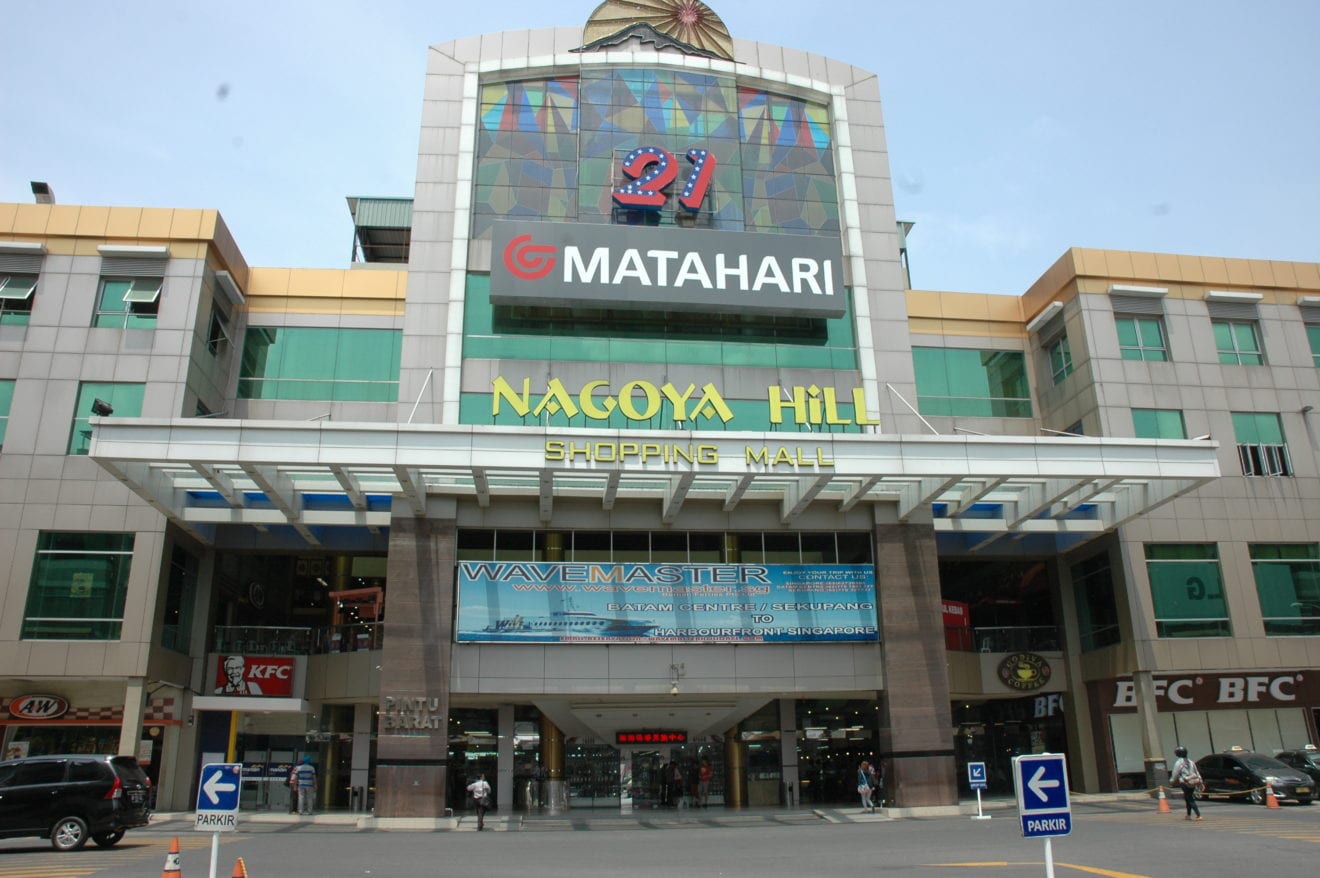
    Matahari Indonesia has opened its 110th Hypermart in Tanjung Uncang, Batam.

    The new store has an area of about 6200 sqm stocked with a variety of household goods. It is Matahari’s third hypermart in Batam province.

    Director of communications and PR with Matahari, Danny Kojongian, said that given its developed infrastructure, Batam city has become an attractive destination for investors.

    “This new hypermart strategically strengthens the presence of Matahari in Batam. Two previous hypermart stores are located in downtown and this new outlet is located in the south of Batam which has a huge potential in the future.”

    Kojongian said Hypermart Tanjung Uncang has adopted some of the latest features of Hypermart G7 concept which is expected to strengthen the hypermart brand’s modern concept, with convenient shopping and excellent service.

    Matahari Putra Prima operates Hypermart, Foodmart and Boston Health & Beauty stores in more than 60 cities across Indonesia.

  • Huawei plans 40,000 new stores in two years  April 24, 2015

    Huawei plans 40,000 new stores in two years April 24, 2015

    Chinese phone maker Huawei plans to more than double its global store network from 30,000 to 70,000 by 2017.

    Huawei sees building its retail network is the key to selling more mid-range and high-end smartphones, taking on Apple and Samsung headon.

    More than half its current retail outlets are in China, which means the brand so far has only a modest presence and brand awareness internationally.

    By definition, Huawei’s stores will range from stand alone outlets to concessions and “display zones” where its phones were demonstrated for sale.

    Glory Zhang, chief marketing officer for Huawei’s consumer business group, says the company plans to launch more ‘high-end’ smartphones in international markets by the end of this year.

    Huawei is in the midst of a rapid growth phase. In 2013 it shipped 52 million smartphones, a figure dwarfed last year by 75 million, which made it the world’s third largest phone manufacturer. It is on track to ship well over 100,000 handsets in 2015.

    Within its own product range, high end units comprised just five per cent of its sales last year, but in the first quarter of 2015, they accounted for 34 per cent of sales.

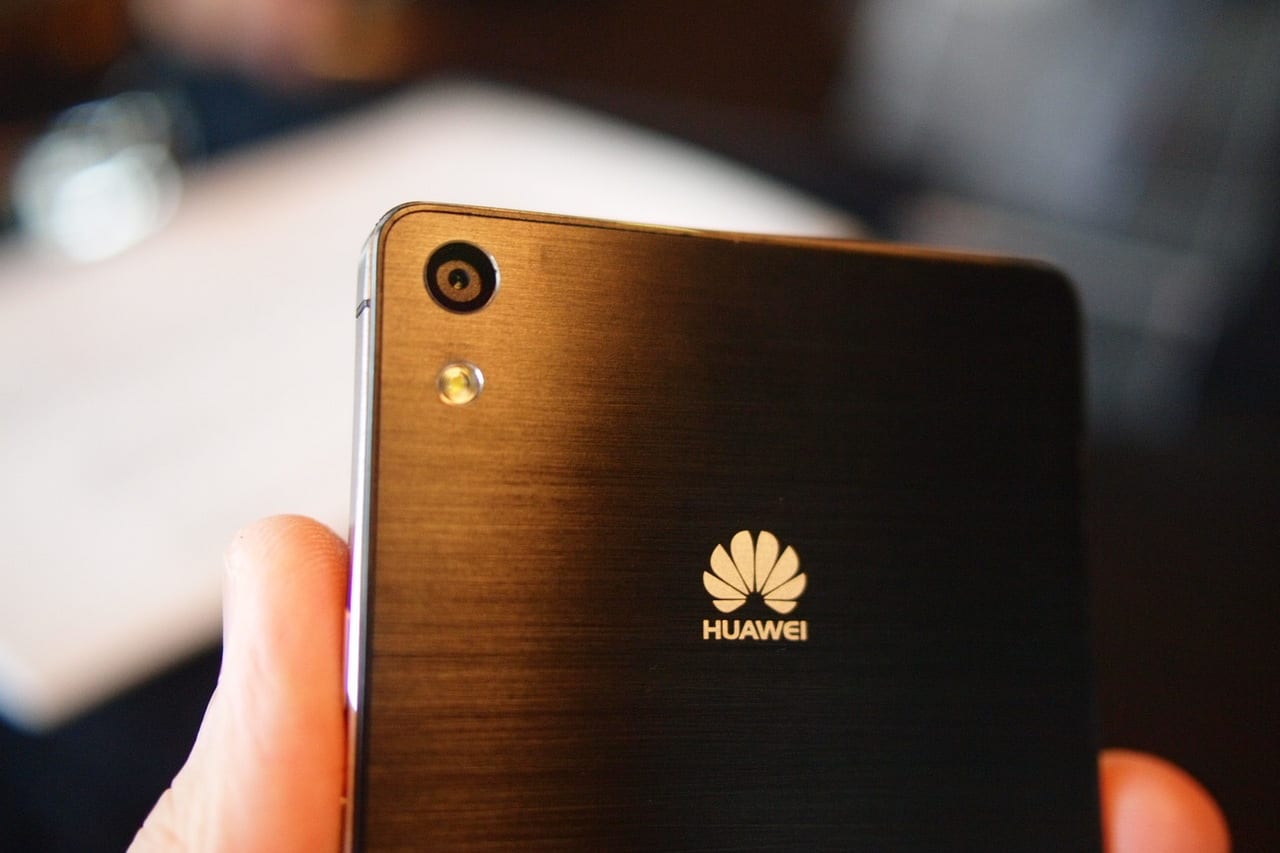
    Its newest showcase model is the P8, with a sleek metal body, (pictured above).

    Besides its retail network ambitions, Huawei has also revealed it plans to create a global service center network with urban customers no more than five kilometres from a repair shop.

    Zhang is confident about the brand’s international ambitions.

    “We’ve done this for a long time. We feel deeply that it’s easy to make a phone, but hard to make a good one.”

  • UNIQLO to expand Australia’s interstate in pursuit of growth

    UNIQLO to expand Australia’s interstate in pursuit of growth

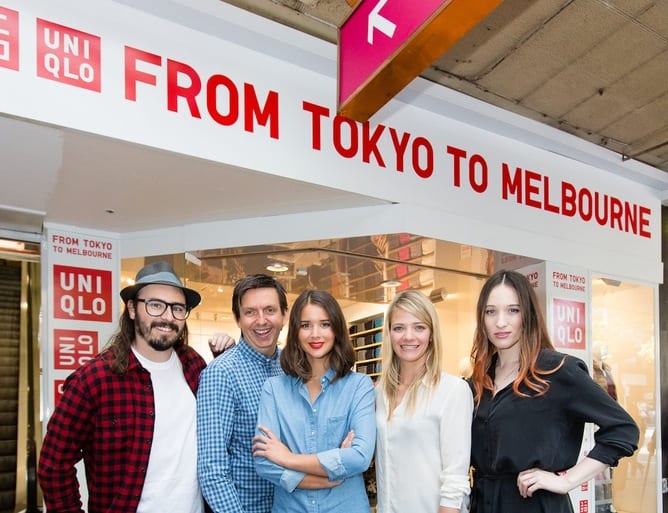
    Japanese retailer Fast Retailing may have to inject new capital into UNIQLO Australia to fund the next phase of growth as the casual clothing chain expands into new states and suburban markets, increasing pressure on department stores and specialty retailers.

    UNIQLO, which opened its first store in Australia a year ago, wants to become the market leader in casual wear by 2020, overtaking established brands such as Just Jeans, Sussan and General Pants, as part of its parent’s goal to become the world’s leading clothing company.

    UNIQLO’s founder, Fast Retailing president Tadashi Yanai, plans to open 200 new stores worldwide this year and Australia figures prominently in his growth ambitions.

  • Metro Cash & Carry to open 4th wholesale store in India’s Bengaluru

    Metro Cash & Carry to open 4th wholesale store in India’s Bengaluru

    Germany’s Metro Cash & Carry on Wednesday announced to open its fourth wholesale outlet in Bengaluru, taking its total count to 18 in India.

    The new store, which would come at Binnypet area of the city would start its operation by early July, Metro said in a statement.

    The company had announced last month its third store in Hyderabad which would now open at the same time as Binnypet outlet.