Category: Electronics

Retail News Asia is committed to providing both local and global retailers with the latest Electronics news throughout the Asian market. This on a daily base.

  • Alibaba backs virtual showroom startup Ordre

    Alibaba backs virtual showroom startup Ordre

    Alibaba Group has bought a minority stake in Ordre, a European online luxury wholesale platform.

    Ordre, launched in 2015, allows fashion designers to show off their collections via 360-degree photography and virtual reality to interested wholesale buyers. The technologies make it more convenient for buyers, who aren’t always able to travel due to time and distance constraints, to build inventory each season. The reduced travel translates into lower carbon emissions at a time when sustainability is increasingly important to the industry, said Ordre.

    Dianne Von Furstenberg, Vivienne Westwood and Jason Wu are among the world’s leading designers who have established digital showrooms on Ordre. They also work with fashion brands such as Joseph.

    For Alibaba, the investment is a further push into the luxury sector, which is among its top strategic priorities, given the rising spending power and increasingly sophisticated tastes of Chinese consumers. The Hangzhou, China-based company plans to leverage Ordre’s technologies for consumers, however, delivering a more-enhanced shopping experience on platforms such as B2C marketplace Tmall.

    “Matching Ordre’s technology with Alibaba’s unique data insights and capabilities – of which our recently launched Luxury Pavillion is a great illustration—we can provide our consumers with a personalised and differentiated experience, helping brands develop a deeper engagement with them,” said Jessica Liu, president of Tmall Fashion and Luxury.

    The Luxury Pavillion, which lives within Tmall, was launched last August to deliver to China’s high-end consumers the same kind of brand exclusivity and tailored shopping experience online that they would expect at a brick-and-mortar store. About 50 brands, including l, offer products ranging from apparel and cosmetics to watches and luxury cars.

    The pavillion is driven by Alibaba’s New Retail technologies, which blend online and offline commerce to deliver a better buying experience for consumers. Simon Lock, founder and CEO of Ordre, said the company’s digital assets, including 360-degree images, 360 video and VR fashion shows and designer interviews, are in line with this strategy and could serve Tmall shoppers and brands.

    “Our 360-view allows consumers to understand every aspect and every view of a garment,” he said. “When you’re purchasing online, as much detail as can be provided is going to make your purchasing decision much more confident,” which can help drive down the product return rates.

    The companies are currently discussing a number of potential initiatives that would expand on these technologies. One of which would create new direct-to-consumer channels for Ordre’s partner brands by leveraging content to communicate their brand story and provide more information about products. For example, Ordre’s VR technology was able to recreate Stella McCartney’s Coachella-inspired 2018 fall show and the theatrical experience of Thom Browne’s latest showcase in Paris, so that buyers could watch fashion shows from the front row.

    Other potential collaborations include “fit avatars,” which allow buyers to see collections on models in 360-view and technology that allows buyers to remotely feel fabrics on a touch pad.

    Lock said he was also interested in Alibaba’s “See Now, Buy Now” technology, as well as the company’s artificial intelligence and cloud-computing capabilities.

    “We can work together to create the ultimate global fashion cloud,” he said.
  • HHI, Naver to build cheap robots

    HHI, Naver to build cheap robots

    Industrial robot company Hyundai Heavy Industries Holdings (HHI Holdings) inked a partnership with tech giant Naver on Monday to develop customer service robots that will sell for a fraction of the price of existing models.

    HHI Holdings, the holding company of Korean shipbuilder Hyundai Heavy Industries, will handle the production, sales and quality control of the service robots while Naver’s research and development arm Naver Labs will lead technology and software development.

    The two companies plan on commercializing two types of service robots within the year.

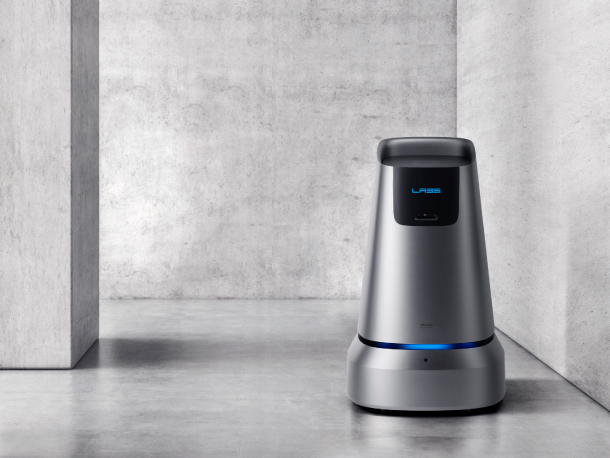
    One is a high-precision indoor mapping robot dubbed M1, and the other is a service robot called Around that can control its own movements around shops using a 3-D map created by M1.

    The two robots were initially developed by Naver Labs, but the industrial robot maker will help commercialize the products by producing them at its factory in Daegu.

    According to Naver, it was able to minimize the number of expensive sensors used for Around as the precise map data captured by M1 gives the self-driving robot a better sense of direction without including numerous sensors and cameras.

    “By cutting the use of sensors, we pulled down the manufacturing cost of our autonomous robot to about one-tenth that of competing robots in the market,” a Naver spokesperson said. “To commercialize the robots, one of our priorities was making them more affordable.”

    The spokesperson said that competing models cost over 100 million won ($93,132), largely due to their high-tech sensors and cameras.

    The robots will be deployed in a variety of commercial locations, like airports, shopping malls, gas stations, hotels and factories to guide customers and provide product information.

    In the future, the two companies will also work together on new robot concepts and take advantage of both companies’ affiliates and customer networks, HHI Holdings said in a statement.

    Service robots are becoming more common in Korea nowadays. Incheon International Airport started testing guiding robots and cleaning robots made by LG Electronics from last year, and it is preparing to officially launch them later this year. In January, local coffee shop chain Dal.komm Coffee released a coffee-making robot called b;eat.

  • Samsung’s IoT home comes with Jedi curtains

    Samsung’s IoT home comes with Jedi curtains

    Samsung C&T, the construction arm under the electronics giant, plans to make homes that are so smart they can recognize residents’ needs even before they call out for help.

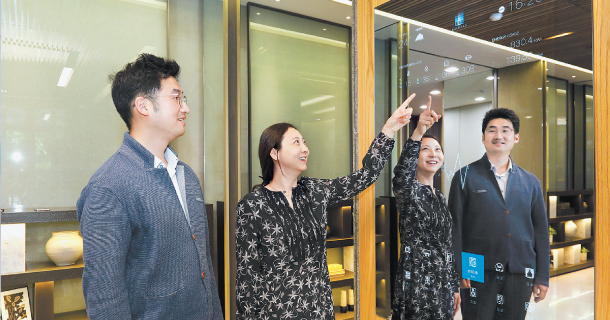
    When this guests stepped into the 54-pyeong (1,921 square-feet) model house of Samsung C&T’s Raemian apartment brand in Munjeong-dong, southern Seoul, on Monday, the house welcomed the guest with a cool “air shower” to blow away fine dust.

    “There is a sensor in the ceiling of the entrance that can detect the fine dust level,” a spokesperson from Samsung C&T said. “If people coming in from outside increases the fine dust level in the house, the air shower [air blown from the ceiling] will be activated.”

    The air shower was just the beginning of the high-tech features that the “Raemian IoT Homelab,” the model house to be opened to the public from June, had to show off.

    The demonstration went from strength to strength as an employee entered the next room and waved his hand to automatically open the curtains. This “Star Wars” style magic trick was actually achieved as the internet-connected curtains communicated with the smart watches the demonstrators were wearing. The movement picked up by the gyro sensor in the watch triggered the curtains.

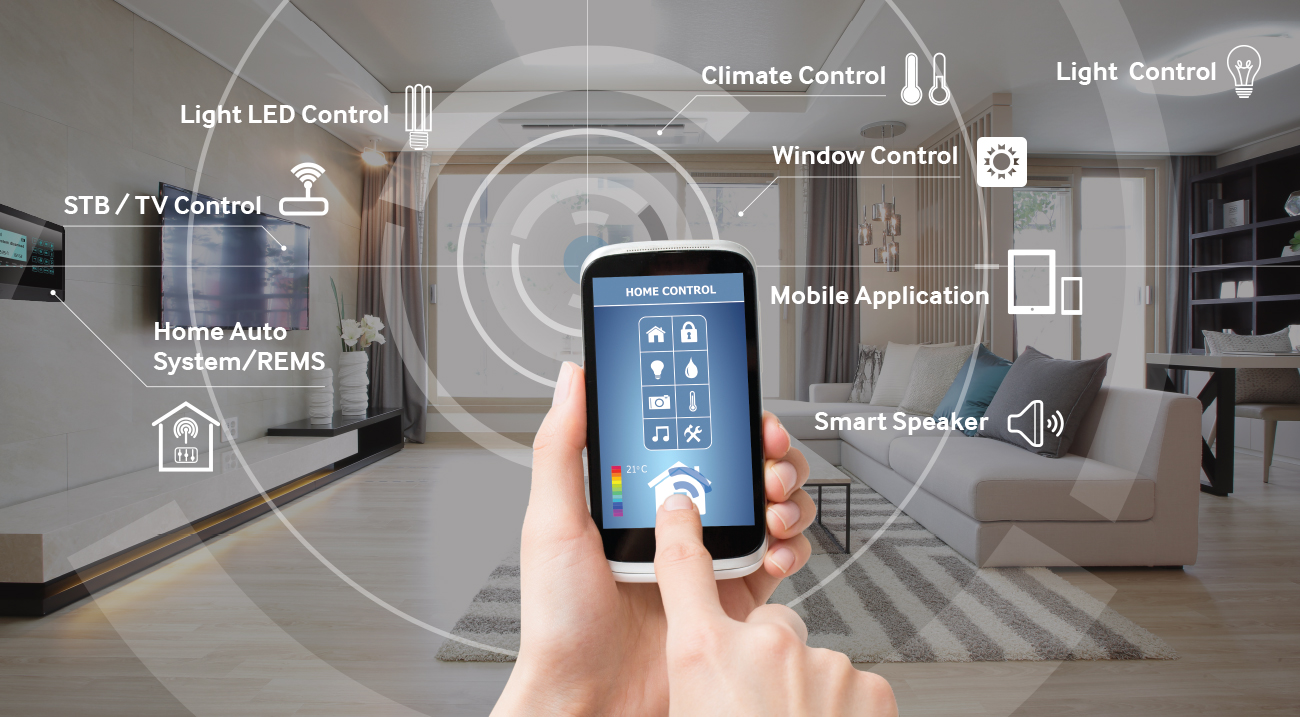
    Lazy home owners – or those who don’t like to wear watches – need not fear, as the smart curtains and other features in the house can also be controlled by voice command and a smartphone app.

    According to Baek Jong-taek, a senior vice president at Samsung C&T, most of the concepts will become reality by the end of this year and could be included in actual homes from next year. As the company is scheduled to begin presales of nine apartment complexes next year, they are the main targets for the latest Internet of Things (IoT) systems.

    “Whether all apartment units will be equipped with the system will depend on discussions with stakeholders such as apartment owners,” said Kim Myung-suk, vice president of the product design group at Samsung C&T. “The IoT system could be offered as a premium option only for residents that want extra smart home features.”

    To make the home – which includes 19 different IoT services and products – work, the company partnered with 12 other companies including speaker maker Harman International, electronic curtain provider Somfy, massage chair maker Bodyfriend, air quality management company Haatz and SK C&C, SK’s IT service unit with expertise in artificial intelligence.

    The constructor said it welcomes many more partners who would like to open up part of their software to make a richer smart home environment including Samsung rival LG Electronics.

    Monday’s event came as a surprise not only because top-notch IoT tech was introduced, but also because there have been rumors that Samsung plans to ditch its Raemian brand due to the low profitability of the reconstruction business. Last time it won a reconstruction order to build a Raemian apartment complex was in September 2015.

    Kim, however, made clear that Samsung has never said it would “not participate in reconstruction project bids” and added that the company “has been reviewing quality business opportunities.”

    Industry insiders said the event may be a sign that Samsung is back in the game with the upgraded Raemian brand.

  • Western Digital NAS device suffers from a potential Privacy issue

    Western Digital NAS device suffers from a potential Privacy issue

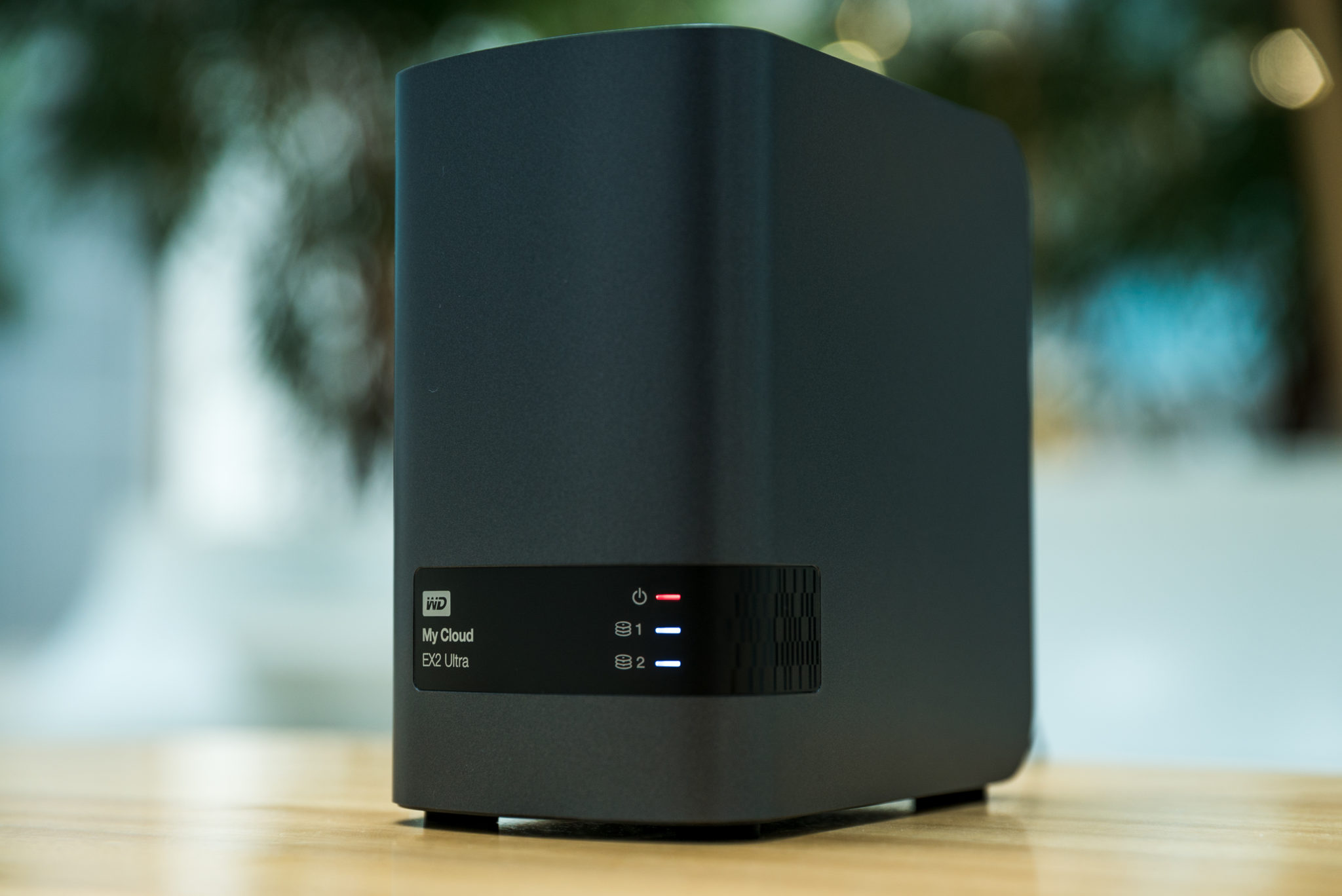
    The default configuration of Western Digital My Cloud EX2 network drives allows any unauthorised user on the local network to extract files by sending HTTP requests, according to security researchers. Western Digital’s My Cloud devices are storage/backup device that lets users backup and store important documents, photos and media files.
    In a security advisory, researchers at Trustwave said that when the device is switched on, the UPnP-media server automatically starts, which by default allows any user who can send HTTP requests to the device to extract any files. Thus, it is possible to bypass any permissions or restrictions set by the owner or administrator of the device.
    “It is possible to access files on the storage even when Public shares are disabled.  Specifically, anyone can issue HTTP requests to TMSContentDirectory/Control
    on port 9000 passing various actions. The Browse action returns XML with URLs to  individual files on the device,” said researchers.
    Researchers said that they had informed Western Digital about the problem in January of this year, but the manufacturer said that it will not release a patch. As a measure to prevent exploitation of the vulnerability, users are advised to disable DLNA if important data is stored on the device. Western Digital recommended that users follow this knowledge base article to turn off DLNA “if they do not wish to use the product feature.”
    Jason Garbis, vice president at Cyxtera, told that like all network-attached devices, organisations need to engage with their information security teams prior to deploying this drive onto their network.
    “Organisations of all sizes need to take a more proactive approach to network security and apply a zero-trust philosophy to their network. Once again, this vulnerability demonstrates that network access to a system – even without login credentials – is a privilege that must be managed. Today’s networks are far too open, which is a root cause of the many successful attacks and breaches affecting the IT industry,” he said.
    “With proper configuration, this device can be safely used. It should have the DLNA (UPnP) feature disabled, and ideally should have network access restricted to only authorised users. Deployed in its default configuration, this device exposes businesses to unnecessary risk of data breach, either to malicious insiders or external attackers.”
    Earlier this year, another security researcher found a plethora of vulnerabilities, such as pre auth remote root code execution, as well as a hardcoded backdoor admin account which cannot be changed. The backdoor also allows for pre auth remote root code execution on the affected device. The backdoor allowed anyone log in as user mydlinkBRionyg with the password abc12345cba. Western Digital has since issued a fix for this problem. It can be found here.
  • Bic Camera Inc.’s profits come from Chinese tourists

    Bic Camera Inc.’s profits come from Chinese tourists

    Japanese retail tycoon Ryuji Arai can thank a growing flock of Chinese spenders for his swelling fortune.

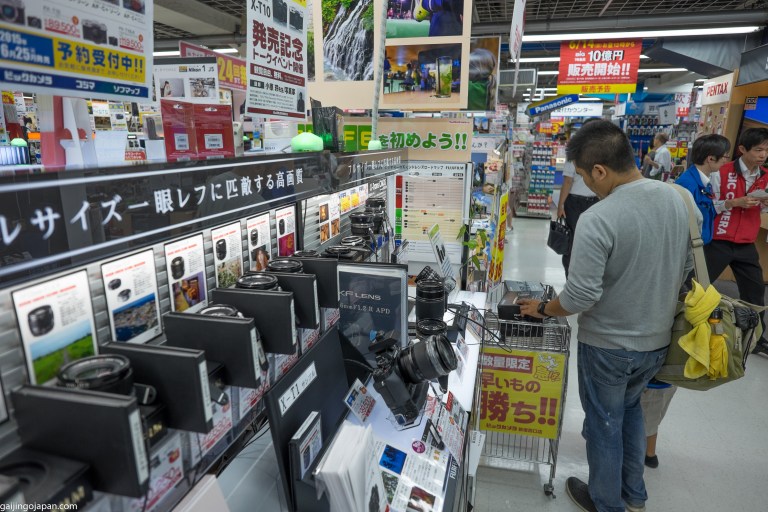
    Bic Camera Inc., the Tokyo-based consumer electronics retailer that sells everything from cosmetics to liquor at discounted prices, has become a sought-after destination for tourists shopping in Japan. Profit has jumped to a record, sending its shares up by more than 50 percent over the past year.

    The surge has given 71-year-old Arai a $1.8 billion fortune. Arai, who founded the retailer four decades ago and steered the company to its initial public offering in 2006, is now chairman at the company. He owns a 43 percent stake in the shares through a set of trusts and his asset management company La Holdings.

    Bic Camera has won tourists over with bargain prices offered in its stores along with duty-free desks, and by giving overseas shoppers the option to make online reservations for products they wish to purchase. The company is also trying to woo Chinese shoppers by accepting payment methods such as Alipay, Wechat and even Bitcoin — which is helping boost sales, said Bloomberg Intelligence Consumer Analyst Thomas Jastrzab.

    “Bic Camera’s early adoption of new payment options could give it an edge over more cautious rivals,” said Jastrzab.

    Not much is known about the reclusive businessman. Bic Camera declined to make him available for comment for this story. He started his first company in his early twenties and later spun out the camera sales division into its own company, according to local media reports. He then went on to form Bic Camera in his early thirties with the opening of a store in Tokyo’s Ikebukuro shopping district.

    Arai is an anti-nuclear advocate, and Bic Camera displayed huge banners in 1995 to protest France’s plan at the time to resume nuclear tests in the South Pacific.

    In 2009, Arai stepped down as chairman of Bic Camera after the company became embroiled in a scandal over false earnings reports. After the shares lost almost half their value in January that year, they rallied when the company was allowed to retain its listing on the Tokyo Stock Exchange and it restated earnings for the fiscal years 2006 to 2008. The company was fined $1.3 million. He retook the role of chairman, without any directors role, several years later. Since then, Bic Camera shares have climbed eight-fold.

    After relinquishing the chairman role, Arai remained the largest shareholder of Bic Camera.

    Bic Camera has teamed up with Haneda Airport’s terminal operator, Japan Airport Terminal Co., to launch stores in airport terminals as well as Tokyo’s Odaiba shopping and entertainment district, according to Masanari Matsumoto, a spokesman for the company. Those stores are stocked with goods popular with inbound tourists to let them quickly find what they want, Matsumoto said. Inbound tourists shoppers to the electronics retailer have more than tripled in three years, according to the company.

    In recent years, the company has also ramped up sales through its own website and stores on e-commerce sites such as Rakuten and Amazon.com. Online sales accounted for about 10 percent of overall revenue in the six-month period ended Feb. 28, according to company filings.

    Bic Camera’s net income jumps more than five-fold over past four years.

    The company’s net income climbed fivefold to a record 13.5 billion yen ($122.6 million) in the financial year ended Aug. 31, according to figures from the company. Bic Camera predicts profit will increase to 16.4 billion yen this fiscal year.

    That strategy has helped Bic Camera become Japan’s third-biggest electronics and appliance retailer while offsetting the impact of a declining population at home. Bic Camera will benefit more than other big-box electronics retailers such as its competitors Yamada Denki Co. and Edion Corp. from the recovery in demand for digital consumer electronics, according to a Nomura Holdings Inc. research note last month.

    Online sales, with an increase in the weighting of sales on the company’s own website, will drive growth over the longer term, according to Nomura. While customers using Bitcoin have yet to account for a significant portion of sales, the option could help attract more foreign customers, especially during the 2020 Tokyo Olympics.

    ‘‘Quickly adding additional payment options is a good way to achieve differentiation,’’ said Bloomberg Intelligence’s Jastrzab. ‘‘It also helps to boost brand equity by creating a buzz with potential customers.’’

  • Vietnam’s The Gioi Di Dong closed stores

    Vietnam’s The Gioi Di Dong closed stores

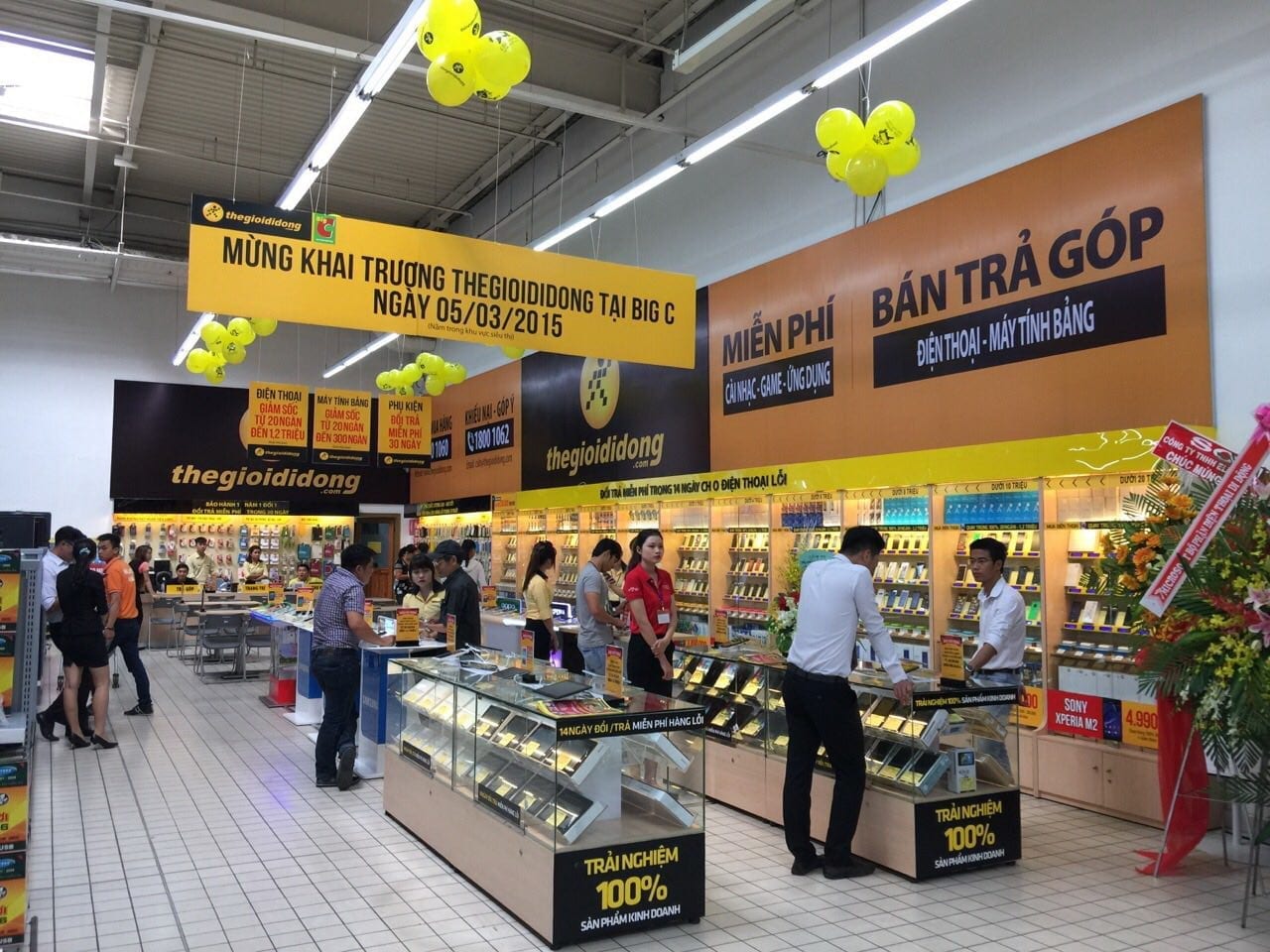
    Despite revenue growth, Vietnam retailer Mobile World has shuttered six The Gioi Di Dong stores.

    It closed the outlets last month following one earlier closure with a plan to maintain 1065 stores nationwide. The company says it has decided not to expand its store network to focus on revenue growth, but with the closing spree revenue for The Gioi Di Dong last month dropped 5 per cent from a year earlier to US$126.85 million.

    Now The Gioi Di Dong looks set to open only 500 locations by the end of this year instead of the previous goal of 1000 stores, according to chairman Nguyen Duc Tai.

    Mobile World is also struggling with its grocery business, Bach Hoa Xanh, which has added only 3 per cent to the company’s profit.

    In the first quarter of this year, revenue reached $1.31 billion, up 43 per cent year on year, to produce profit of $45.94 million, up 44 per cent.

  • China’s Xiaomi expands into France and Italy

    China’s Xiaomi expands into France and Italy

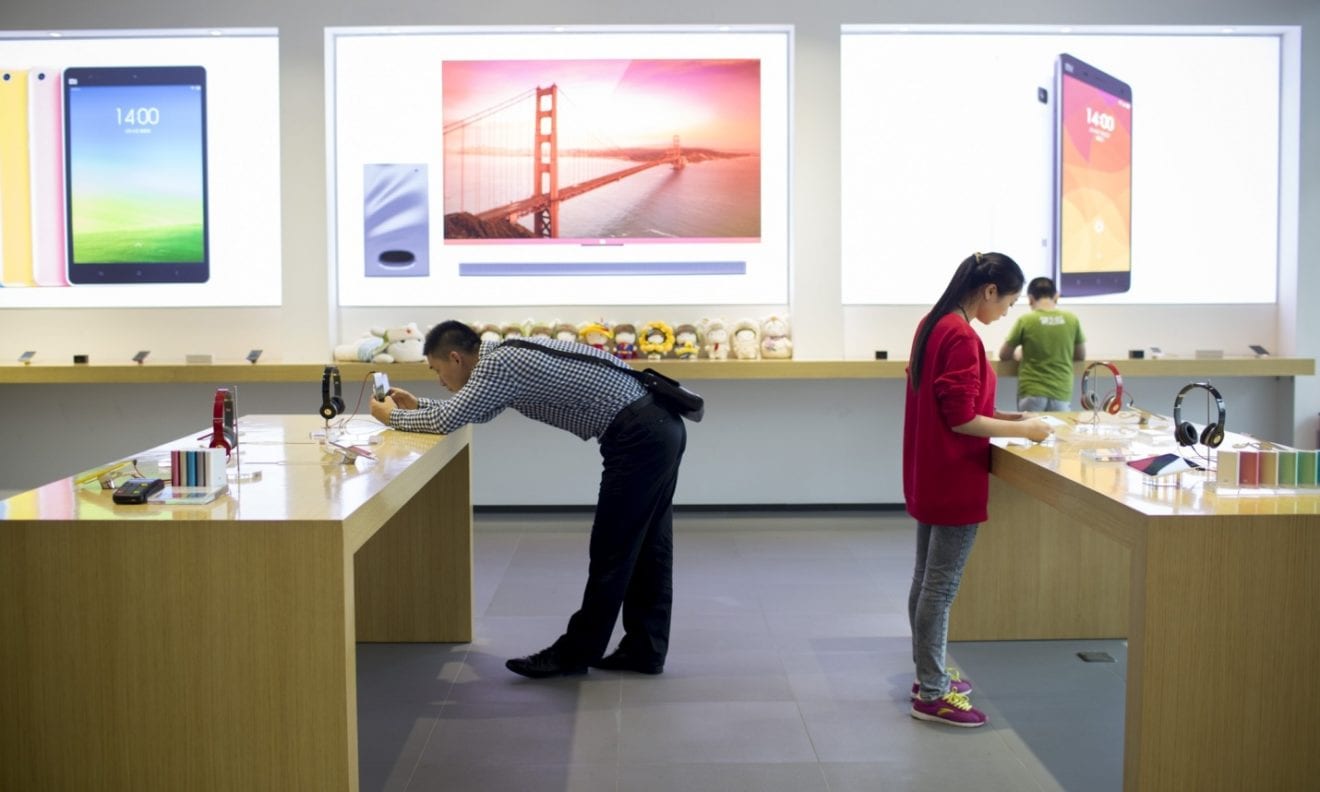
    Chinese smartphone maker Xiaomi Corp, which is planning to raise US$10 billion in a Hong Kong public listing, says it has launched sales in France and will enter the Italian market tomorrow.

    In France, Xiaomi is selling through its first Mi Store in Paris, via its own e-commerce platform Mi.com, and on other online and offline platforms including Amazon and Cdiscount. To date, the Beijing company has established a presence in 74 markets and has agreements with telecoms carriers in France, including Bouygues, Free, Orange and SFR.

    Smartphone shipments in western Europe fell 13.9 per cent in the first quarter, according to market research firm Canalys. Shipments to France dropped 23.2 per cent.

    However, Xiaomi shipments rose by more than 999 per cent, while Samsung and Apple saw 15.4 and 5.4 per cent declines respectively.

  • Samsung to open AI centers in three countries

    Samsung to open AI centers in three countries

    Samsung Electronics is opening research centers dedicated to artificial intelligence technology in the United Kingdom, Canada and Russia.

    That will bring the number of Samsung’s AI research centers to five, adding to existing ones in Korea and California.

    The Cambridge center in the U.K. opened yesterday, the Toronto center in Canada opens on Thursday and the Moscow center in Russia opens next Tuesday.

    In November, the electronics giant established an AI center under Samsung Research, a unit that heads development of future technology for the company. Two months later, a Samsung AI center was opened in Silicon Valley in the United States.

    The Korean center will function as headquarters for all five AI research centers, making it a global hub for AI research. Samsung has grand plans to expand the number of specialized researchers in the AI field to more than 1,000 by 2020, and some 40 percent will be foreigners.

    “[The AI center] will be a game-changer for Samsung to make a new world for the era of artificial intelligence,” said Kim Hyun-suk, president of Samsung’s consumer electronics unit at Tuesday’s inauguration ceremony of the AI center in Cambridge. Kim also heads Samsung Research.

    The Cambridge center will be led by Andrew Blake, who was director of the Microsoft Research Lab in Cambridge. Professor Maja Pantic of Imperial College London will also lead AI research as part of the unit. Her area of expertise is machine analysis of human emotions, for which she was chosen by the science journal Nature to speak at the 2016 World Economic Forum in Davos.

    Larry Heck was appointed to head the Toronto center. He is an expert in voice recognition and was a former leader of Samsung’s Silicon Valley center. The Moscow center will be led by Higher School of Economics Prof. Dmitry Vetrov and Skoltech Prof. Victor Lempitsky.

    Samsung Electronics has been active in artificial intelligence technology this year. It introduced its AI assistant Bixby in April 2017.

    At the Consumer Electronics Show in January, President Kim vowed to use the virtual assistant in all of its products, including home electronics, by 2020.

    Samsung Vice Chairman Lee Jae-yong reportedly intends to invest in future growth areas such as AI following his return to management this year after months in jail.

    With Lee back at the helm, there is anticipation that Samsung may be more aggressive about acquiring companies with promising research.

  • LG Group chairman dies at 73

    LG Group chairman dies at 73

    Koo, 73, had been ill for a year, LG Group said in a statement.

    Koo had been fighting a brain disease and had undergone surgery, said a group official who declined to be identified.

    “Becoming the third chairman of LG at the age of 50 in 1995, Koo established three key businesses – electronics, chemicals and telecommunications – led a global company LG, and contributed to driving (South Korea’s) industrial competitiveness and national economic development,” LG said.

    LG Group also established a holding company in order to streamline ownership structure and to begin the process of succession.

    The country’s powerful family-run conglomerates are implementing generational succession amid growing calls from the government and public to improve transparency and corporate governance.

    LG Corp (003550.KS), a holding company of the conglomerate, had said on Thursday its longtime chairman was unwell and it planned to nominate his son to its board of directors in preparation for a leadership succession.

    Heir apparent Koo Kwang-mo is from the fourth generation of LG Group’s controlling family. He owns 6 percent of LG Corp and currently heads LG Electronics’ information display unit.

    He joined the finance division of LG Electronics in 2006 and has been involved in several businesses such as appliances, home entertainment and group strategy, LG said.

    The late chairman adopted Koo in 2004 from his younger brother Koo Bon-neung after his only son died in a car accident.

    The change at the helm is not expected to be disruptive to the group’s business, one analyst said.

    “Although Koo passed away at a relatively early age, his son has already been in a senior position and I don’t think there will be a big change in governance structure or strategic decisions,” said Park Ju-gun, head of corporate analysis firm CEO Score.

    Under Koo’s leadership, the conglomerate changed its corporate brand to LG from Lucky Goldstar and sold LG’s semiconductor business to Hyundai, now SK Hynix Inc (000660.KS), under government-led restructuring in the wake of the Asia financial crisis in the late 1990s.

    Major affiliates are LG Electronics Inc (066570.KS), display maker LG Display (034220.KS) and electric car battery maker LG Chem (051910.KS).

    South Korean prosecutors said this month they raided LG Group’s head office as part of a probe into alleged tax evasion by family members controlling the conglomerate.

    The company said Koo’s funeral would be held privately with family members. Visitors including Samsung Group heir Jay Y. Lee have paid their condolences at his altar.

  • Apple AirPort Base Stations begin to get out-of-stock

    Apple AirPort Base Stations begin to get out-of-stock

    AirPort base stations are beginning to sell out or disappear entirely from Apple’s online and retail stores in select countries, a few weeks after Apple announced it has discontinued the lineup of routers.

    The first casualty is the AirPort Extreme, now listed as “sold out” on Apple’s online store in the United States, and unavailable for pickup at Apple’s retail stores across the country. The base station remains available in limited quantities in select other countries, including Australia, Canada, Japan, and Singapore.

    AirPort Express and AirPort Time Capsule models remain in stock on Apple’s online store in the United States, and select other countries, but they will eventually sell out too as inventory continues to dwindle.

    In addition, the entire AirPort lineup is no longer listed on Apple’s online store in several European countries, such as France, Germany, Italy, Spain, and the United Kingdom. It’s possible that some of Apple’s retail stores still have inventory remaining in those countries.

    Apple said that its AirPort products would only remain available while supplies last, so this was to be expected eventually.

    Prior to being discontinued, Apple hadn’t refreshed its lineup of AirPort base stations in five to six years. The high-end AirPort Extreme and AirPort Time Capsule were last updated at WWDC 2013, while the smaller AirPort Express was last updated in June 2012 and still uses the old 802.11n Wi-Fi standard.

    The end of the road for AirPort products comes roughly a year and a half after it isreported that Apple ceased development of the base stationsto “sharpen” its focus on other major products.

    While the AirPort lineup has been discontinued, Apple will be providing service and parts for the current-generation base stations for up to five more years. Apple also shared a new support document offering tips on choosing a router to use with its devices, and now sells the Linksys Velop mesh system.

  • Huawei Nova 3e (Huawei P20 Lite) coming on May 25 in Malaysia

    Huawei Nova 3e (Huawei P20 Lite) coming on May 25 in Malaysia

    After getting its official debut in China under the Nova 3e moniker, the Huawei P20 Lite is making a stop in Malaysia under the same name. The official date is May 25 with a starting price of RM1,399 ($352).

    Despite the change in the name, this is very much the same smartphone. The selfie camera sensor is the 24MP one from the Indian P20 lite version, rather than the 16MP from the international one, but more importantly, the 3e comes with a whopping 128GB of internal storage. That’s pretty impressive for a mid-ranger priced at less than $400. The rest is a standard P20 lite affair.

    Huawei is sweetening the deal with a free tripod/selfie stick until stock lasts, which will otherwise set you back MYR68 ($17). Those who get the phone by May 31 will also receive MYR79 ($20) discount.

  • Tencent Beats Forecasts as Revenue Surges 48% in First Quarter

    Tencent Beats Forecasts as Revenue Surges 48% in First Quarter

    WeChat parent Tencent Holdings has achieved a 48 per cent increase in revenue during the first quarter of this year.

    Revenue from Smartphone games, payment-related services, digital-content subscriptions and sales, and social advertising were key contributors overall growth in the three months to March 31.

    Operating profit grew by 59 per cent and operating margin was 42 per cent, up three percentage points year-on-year, while profit attributable to shareholders increased by 61 per cent.

    Tencent says the number of monthly active users (MAU) on smart devices was up by 2.4 per cent year-on-year to 694.1 million and smart-device MAU for users aged 21 years or below also increased year-on-year as it enriched chat features and entertainment-driven content appealing to young consumers.

    Tencent’s online advertising business achieved 55 per cent revenue growth.

    “For media advertising, revenues grew by 31 per cent year on year. Within that, video ad revenues increased 64 per cent due to more pre-roll ads benefiting from the growth in video views, and our enhanced capability to develop creative ad formats within original productions.”

    Other businesses grew revenues by 111 per cent, driven by its payment-solutions business and related financial services, as well as cloud services.

    “The growth in our payment solution business was mainly contributed by the rapidly increasing offline commercial transaction volumes and consumer cash withdrawal fees.”

    Digital content viewers grow

    Total fee-based value-added services subscriptions grew by 24 per cent to 147 million, primarily driven by video- and music-streaming services.

    “We strengthened user engagement of our video platform, where the number of daily active users and per-user time spent on mobile grew rapidly. Mobile daily video views increased by more than 60 per cent, driven by the premium-quality content from our self-commissioned and licensed productions. Total video revenues were up 75 per cent year on year.”

    Tencent said its investment in self-commissioned content enhanced Tencent Video’s user engagement, helping increase conversion-to-subscription rates and subscriber-retention rates. Video subscription revenues grew by 85 per cent year on year.

  • imageHOLDERS Showcased Innovative POS Solutions at RBTE 2018

    imageHOLDERS Showcased Innovative POS Solutions at RBTE 2018

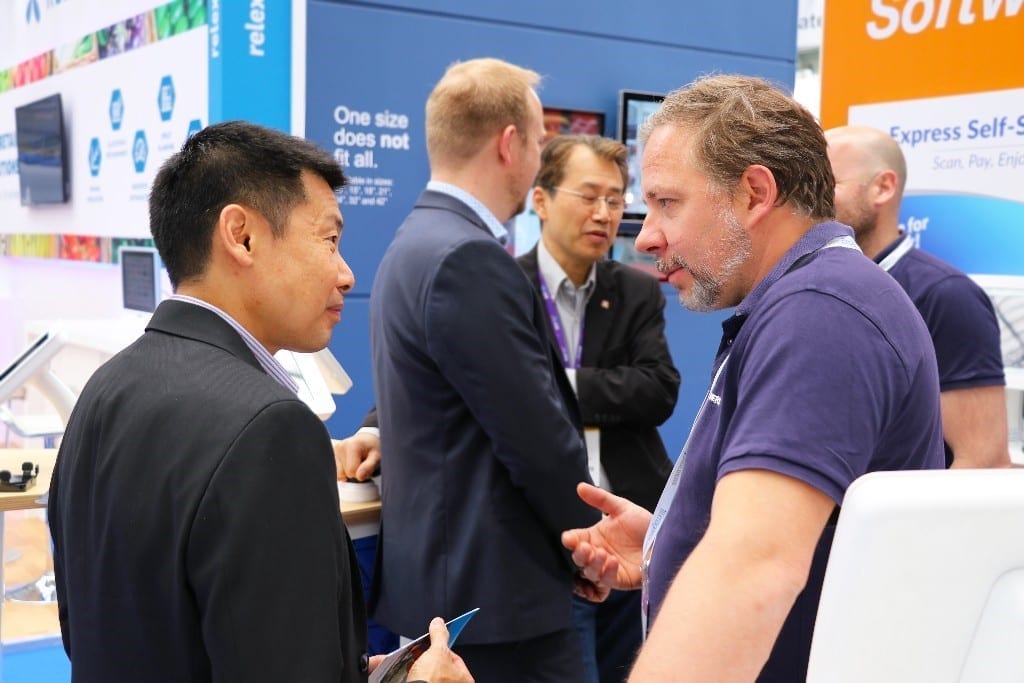
    imageHOLDERS showcased their innovative iPad tablet kiosks and retail POS systems at Retail Business Technology Exhibition 2018 at London Olympia.

    Attendees who visited imageHOLDERS at RBTE were able to experience the diverse range of POS, loyalty and employee management kiosks imageHOLDERS offer. imageHOLDERS launched their new Integrator Pro 15, an all in one POS self-service kiosk. The solution was one of the most popular kiosks on the imageHOLDERS stand, due to its versatility with enclosing multiple different devices to create a bespoke solution for each customer.

    Adrian Thompson, CEO, imageHOLDERS said: “RBTE 2018 was a really successful show for imageHOLDERS. We have invested time in understanding the customer journey, ensuring our self-service kiosks are designed with the end user in mind. Our newest product, the Integrator Pro 15 is our latest take on one of our favourite products. Taking the existing form and updating it to reflect the markets needs, we’ve already seen the interest in the all in one solution, and look forward to working with our current and future customers to transform the world of self-service.”

    imageHOLDERS demonstrated their ability to securely enclose any tablet by showcasing over 25 different tablets and touch screens within their tablet kiosk stands. Among the many tablets enclosed were Linx, Apple, Microsoft, Samsung, Aures and Flytech touch screens.

    imageHOLDERS have been working closely with clients to provide both front of house and back of house retail solutions, supporting businesses with everything from POS to staff check-in systems. Some of the ways in which tablet kiosks have already been successfully used within the retail industry are:

    • Digital catalogue extensions
    • Express self-service check-outs with POS
    • Staff check-in and time management kiosks
    • Digital loyalty and tokenisation programs
    • Digital signage and wayfinding
  • China said to restart review of Qualcomm-NXP deal

    China said to restart review of Qualcomm-NXP deal

    Chinese regulators have reportedly restarted their review into chipmaker Qualcomm’s planned $44 billion acquisition of NXP Semiconductor, after suspending the review due to the growing trade tensions between China and the US.

    Officials at China’s Ministry of Commerce have been asked to hasten the review into the acquisition, as well as Qualcomm’s proposed remedies to protect Chinese companies to soften the deal.

    According to the report, Chinese companies have expressed concerns that the combined entity would allow Qualcomm to extend its patent licensing business into areas including mobile payments and autonomous driving, which could threaten the viability of companies operating in this area.

    China is the last remaining required global regulator to approve the acquisition. Regulators have been stalling the takeover for some time amid growing trade tensions with the US.

    The decision to expedite the approval process may be related to the decision by US president Donald Trump to intervene to work out a solution to allow ZTE to get back in business.

    The Chinese vendor was forced to cease major operations last week in the wake on a ban on the company importing components from US providers.

  • Samsung starts selling 2018 QLED TVs in Singapore

    Samsung starts selling 2018 QLED TVs in Singapore

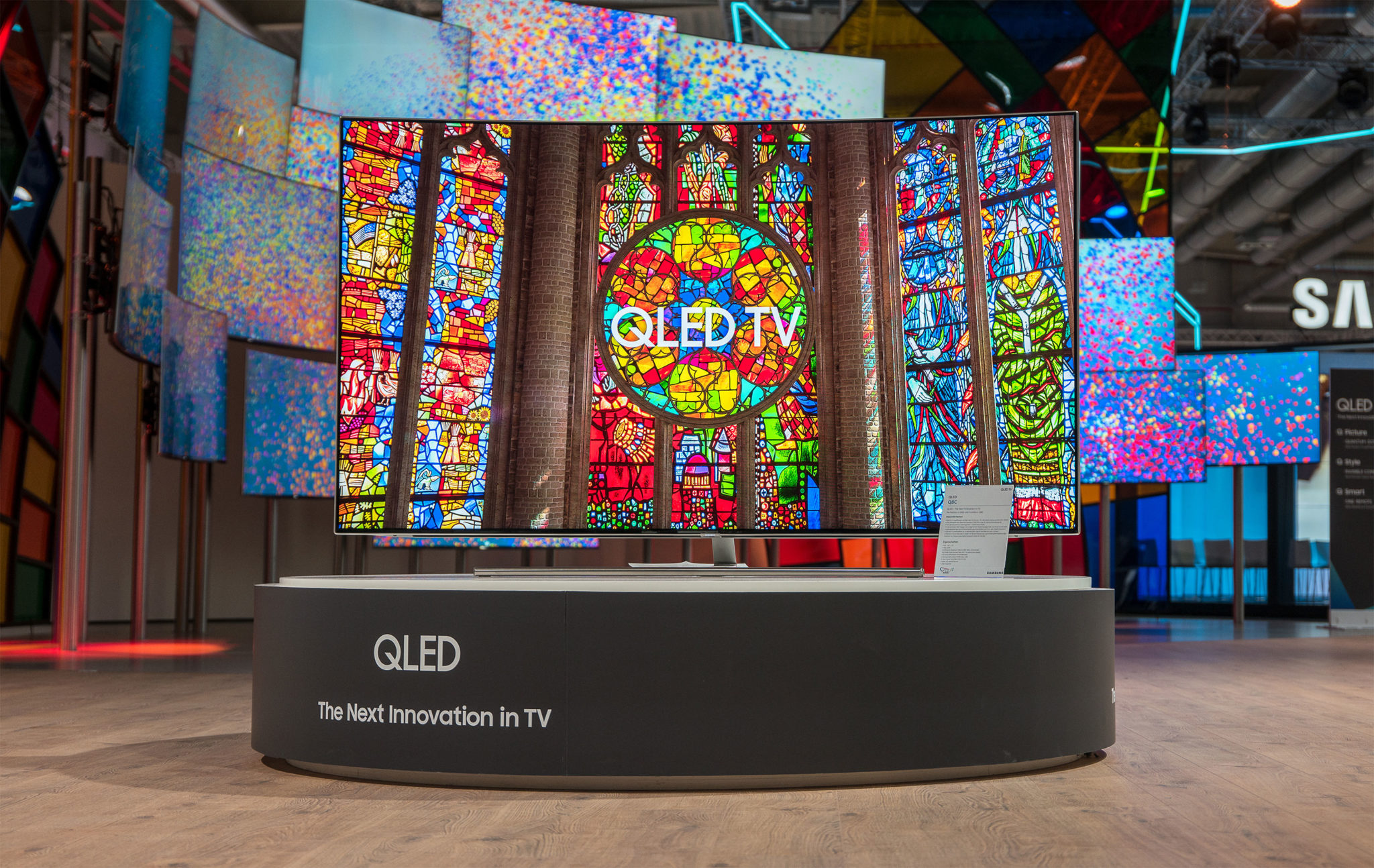
    Samsung showed off its 2018 range of QLED or quantum dot light-emitting diode TVs this week in Singapore, seeking to win over users with its technology as rival OLED TVs start gaining traction.

    The new TVs promise more vibrant colours and with a higher dynamic range by using the QLED technology that the Korean manufacturer has kept to in recent years.

    It relies on what are known as quantum dots, or individual diodes or dots on a screen, that are able to offer a wider range of colours and improve brightness over regular LED or LCD TVs.

    That said, Samsung’s QLED TVs are still LED TVs. They are just the very best or souped-up versions available. To many premium TV buyers, however, the rival technology OLED used by LG, Sony and Panasonic has become more attractive because it offers deeper blacks and smoother motion.

    I did not have a chance to compare the two technologies side by side at this week’s Samsung launch. Just by looking at the new QLED lineup, I can say they are impressive as well.

    I certainly can see details in the bright and dark areas in the demo footage. This is an improvement over traditional LCD or LED screens that require a layer of colour filters, back-lit by white LEDs. Perhaps the biggest draw for Samsung’s QLED TVs is being able to integrate well with the interior design of your home.

    The company has improved on its Invisible Connection solution with the use of a single fibre optic cable to send visual and audio signals to the TV from a single box.

    It gives you four HDMI inputs, one Ethernet port, component inputs and a coaxial cable port. There’s one fibre optic audio output to send audio signals to the living room’s speaker system.

    Having this single fibre optic cable certainly makes it easier to hide all the home AV components. With a 15-meter cable included, Samsung certainly increases the number of options when it comes to placing your AV devices.

    The other new feature is the Magic Screen where the TV can show the latest weather forecast and stream music with the on-screen wallpaper matching the wallpaper that TV has covered. This creates an illusion that it is a transparent screen instead of a black rectangular abyss if we switch off the TV.

    I feel this will be a useful screen for the reception of an office, a meeting room where you can leave the screen on the whole day.

    For those who are sensitive to electricity bills, switching off the TV is definitely a better idea. Besides I can just get a quick audio weather update or stream music from Google Home if there’s a need.

    The top-range Q9F starts goes up to S$12,999 for a 75-inch version. If you prefer QLED on the budget, there’s a Q7F version costing S$10,499 for a 75-incher, S$6,399 for 65 inches and S$4,499 for 55 inches.