Category: Electronics

Retail News Asia is committed to providing both local and global retailers with the latest Electronics news throughout the Asian market. This on a daily base.

  • The most expensive, in-demand phone in China right now isn’t the iPhone X

    The most expensive, in-demand phone in China right now isn’t the iPhone X

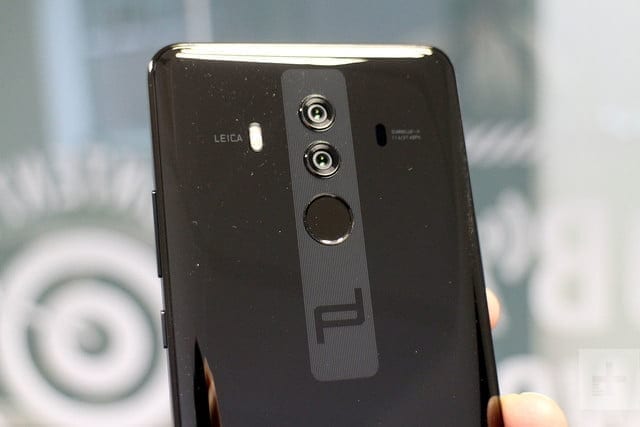
    Even if you don’t intend to buy one, there’s a good chance you know how much the iPhone X costs, due to its $1,000-plus price gaining plenty of attention. Despite being one of the most expensive phones you can buy, it’s apparently not the one that’s most expensive, in-demand phone in China right now. That dubious honor goes to Huawei, and its Porsche Design-branded spin-off of the Mate 10 Pro.

    Even at standard retail price the Huawei Mate 10 Pro Porsche Design is more expensive than the iPhone X, but a high degree of demand has seen prices double, as people clamor to get their hands on the phone. In China, the Porsche Design version costs 9,000 yuan, or about $1,370 at today’s exchange rate. That’s if you can find one for sale at all.

    The limited edition phone has found plenty of buyers, and its rarity is pushing prices on the resale market up. Online retailers are selling the phone for between 18,500 yuan and 27,000 yuan, or $2,800 and $4,100. By comparison, the iPhone X is readily available on Taobao and JD.com for around 9,000 yuan, only slightly more than its official, cheapest retail price.

    A retailer selling the Mate 10 Pro Porsche Design on Chinese online site Taobao said he has received many enquires for the device, but few have been able to actually buy it. A 38 year-old who tried, but ultimately failed, to buy the phone through the official Huawei sales channel said the phone sold out in seconds. Huawei and Porsche Design have never said how many of the phone will be produced.

    In addition to China, the Porsche Design phone is sold in Europe, where it’s priced at 1,395 euros and is expected to ship at the beginning of December if you pre-order now. The European Porsche Design store also sells a Chinese version of the device, and orders will ship in January if placed now.

    Is the Porsche Design Mate 10 Pro worth not only the trouble of finding one, but also paying considerably more than the regular price, or even the standard Huawei Mate 10 Pro? We’ve used the phone, and definitely concluded that you’re better off saving some cash and just buying the superb standard Mate 10 Pro.

  • South Korea eyes artificial intelligence partners in BC

    South Korea eyes artificial intelligence partners in BC

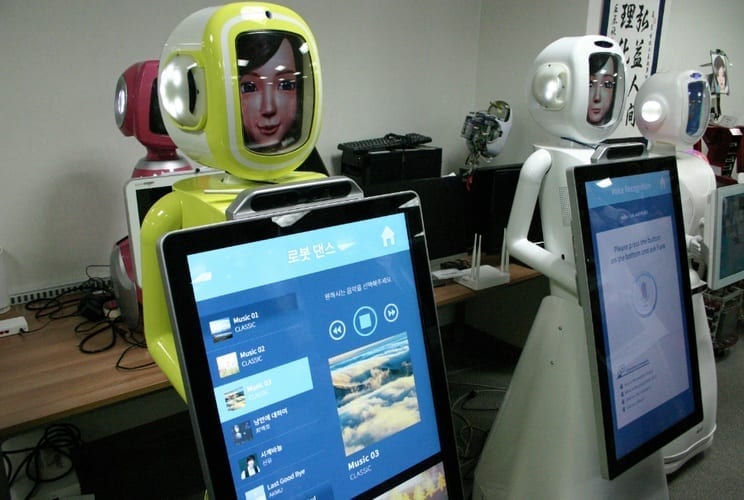
    Future Robot’s latest model at the company’s headquarters in Seongnam, near Seoul, South Korea. The company creates “social AI”: robots that interact with people by interpreting emotional responses, either through facial expressions or tone of speech, and then respond with emotive answers | Chuck Chiang

    At Seoul’s Incheon International Airport – one of the world’s largest international flight hubs – two new “stars” are capturing the attention of passengers who cross their paths.

    They’re not stars of “K-pop,” South Korea’s increasingly ubiquitous cultural exports of boy bands and girl groups that are now household names in most of Asia. Rather, they are robots – one that guides passengers to their flights by scanning their boarding passes, another a giant Roomba-like floor cleaner that asks politely, in Korean and English, to pass pedestrians in the machine’s cleaning path.

    “Where are you going? Have a nice flight!” the robot says cheerfully when a passenger leaves the view of its camera, while another group of travellers inevitably blocks the robot’s path and starts a new wave of photo-taking and hand-waving. (The scene bears a striking resemblance to one of the futuristic scenarios introduced in the Vancouver International Airport’s solicitation for public opinions for its 2037 master plan, although airport representatives said no robots are planned at this time.)

    This is the next industrial revolution as envisioned by leading observers around the world: the advent of artificial intelligence (AI) not only in people’s daily lives, but also in the overall global economy. And South Korea, deeming itself several years behind industry leaders like China and the United States, is looking for like-minded partners such as Canada to help it get back in the race.

    “It’s very hard for Canada and Korea to develop [large-scale] AI technologies in isolation from other markets,” said Kim Deogtae of the Korea Artificial Intelligence Association, who is also a university professor and president of his own AI tech firm DTWARE Inc. “But I do think that there’s an opportunity for companies on the two sides to co-operate, preferably with corresponding government support.”

    That partnership can happen in a number of ways, Kim said. Either Canadian investors can bring Korean-developed technologies like Incheon airport’s robots (made by conglomerate LG) to the North American and European markets through the North American Free Trade Agreement and the Canada-European Union Comprehensive Economic and Trade Agreement  or B.C.-based AI developers and startups can use South Korea’s market access to China, Japan and Southeast Asia to expand.

    B.C. and the rest of Canada can also be the answer for South Korea’s lack of AI-development talent. Kim said the East Asian nation struggles in that area because its traditional education system focuses on memorization rather than critical thinking.

    Canada, in turn, could be a partner in directly supplying AI developers or providing adequate space for Korean students to study the technology.

    “It is difficult to develop high-level AI in the Korean educational environment,” he said. “But Korean students are diligent and fast-learning; that is our strength. So if there’s an environment to learn AI, I believe Koreans will be fast to adopt and excel … and we have to look overseas.”

    The key, Kim said, would be to join forces to overcome each side’s smaller domestic market for sales, capital and talent when compared with the aforementioned “big two,” China and the U.S.

    There are already cases happening in other parts of Canada: a month ago, Korean conglomerate Samsung (KRX:005930) announced it will open its own AI research laboratory in Montreal after three years of working with Canadian teams.

    Major players from other countries have also started moving into Canada to mine its AI-technology talent. Google’s (Nasdaq:GOOGL) DeepMind research team – based in Great Britain – chose Edmonton as its first international lab in July. All this is happening with the backdrop of $125 million in earmarked Canadian federal funding for attracting AI development to Canada, as outlined in the federal Liberal government’s 2017 budget.

    Most of Ottawa’s effort is concentrated in three metropolitan areas: Edmonton, Montreal and Toronto-Waterloo. But one executive from a Vancouver financial technology (fintech) company that uses AI in its proprietary platform connecting lenders and borrowers said B.C. does have its niche in that sector, and it is up to B.C. companies to spearhead collaborations in markets like South Korea.

    “It’s important for anyone who’s not well known in the global market to go out and explain the model and its value proposition,” said Alex Mateesco, CEO of Lendery, which plans to open an office in South Korea to expand its lending platform to Asia.

    “I don’t think we should expect other people to know us more than what we know about ourselves. We have to do our own parts to be present internationally … because if we don’t take initiative on that market [fintech], someone else will go carve it out.”

    Focusing on a niche market to excel is a good idea for Vancouver’s AI sector, said the CEO of one of South Korea’s leading AI startups. Song Sekyong, who has built Future Robot Co. Ltd. from its launch in 2009 to a company with a market valuation of US$20 million this year, said it was able to succeed by carving out a space within AI that’s underserved by American and Chinese companies, which tend to focus on massive, cloud-storage-based systems that process an enormous amount of data over a wide network. Two examples of the latter are Google’s AlphaGo and Amazon’s (Nasdaq:AMZN) AWS.

    Song’s company, however, found its market in creating “social AI”: robots that interact with people by interpreting emotional responses, either through facial expressions or tone of speech, and then responding in kind with emotive answers. In some cases, these “soul-ware” robots even have animated faces to respond with their own emotive reactions.

    Up to 30 of these robots will be deployed at the 2018 Pyeongchang Winter Olympic Games. Other applications could include seniors care, personal organizer/living assistance and front-line customer service in various retail settings.

    “Most people think of AI as one thing,” Song said. “But that’s not true. It’s a lot more than just Amazon and Google, and there are a lot of variations within the potential market. What interests us is how we can apply AI so that people and AI live together and having the technology fill a very human need – a ‘warm’ technology, if you will.”

    Song, whose company employs approximately 35 people, is anticipating Future Robot’s valuation to double next year and hit US$100 million by 2025.

    He is also eyeing an initial public offering in a western market – again, an area that could bring Future Robot’s brand to Canada. But Song also noted that he and other AI developers are aware of some people’s fear of AI and its potential to eliminate human jobs. To those concerns, Song said it’s not that jobs will disappear with AI, but rather they will transform.

    “If you look at history, technology shifts and labour trends have always happened in tandem,” he said, noting AI will require a large number of programmers and technicians to maintain. “A robot can replace human labour, but it can’t replace a human being.”

    Lendery’s Mateesco added that any B.C. companies looking to jump into transpacific AI co-operation deals must always consider the human element to achieve market acceptance.

    “The mistake a lot of companies make is to push a technology and make it a top-down decision, which can be hard on consumers who are not ready. The point of technology is to serve people, to make lives more comfortable; so you have to let people decide what makes them comfortable.”

    [email protected]

    @BIVnews

    Note: Some interviews conducted for the story were completed at Invest Korea in Seoul, for which the reporter’s airfare and accommodations were provided by the Korea Trade-Investment Promotion Agency.
  • LG moving to acquire AI business

    LG moving to acquire AI business

    As part of efforts to expand its smart home business, LG Electronics will double its investment by 2020 including mergers and acquisitions of promising artificial intelligence tech firms, said Song Dae-hyun, head of the company’s home appliance and air solutions division.

    At a press conference held at a hotel in Berlin, Song said LG would spare no efforts to boost its smart home business and continue investing to acquire AI and Internet of Things technologies.

    “As for the AI business, inorganic growth would be more effective,” Song said.

    “LG officially seeks to acquire some AI companies. But so far, many acquisition projects fell apart due to market conditions,” he continued.

    “LG is aggressively looking for a good AI company,” he added.

    Song visited the German capital to meet with major European clients and check out latest tech trends at the IFA 2017.

    “LG was the first to add Wi-Fi to all of the home appliance lineups this year. Based on connectivity, the company will try to bring value to consumers by establishing a smart home ecosystem pivoting on AI, IoT and robotic technologies,” he said.

    Recently, LG has been increasing partnerships with Google and Amazon to apply the two IT moguls’ voice recognition platforms to LG products for global consumers.

    “We do have our exclusive voice technology, but we apply the Google and Amazon technologies in order to allow consumers to conveniently use LG products with what they prefer to use,” Song said.

    “We are now working with Google to take advantage of its database accumulated through its search engine. But we are also continuing to develop our DeepThinQ AI platform at the same time,” he added.

    The CEO added robots would be a major pillar of the smart home business.

    “We are nearing commercialization of robots. We receive orders for robots from various industries, such as shopping malls and libraries,” he concluded.

  • Korea retailers embracing self-checkout technology

    Korea retailers embracing self-checkout technology

    Unmanned convenience stores are slowly making their way in South Korea and may significantly change or eliminate jobs behind the counter.

    Due to a steep rise in the minimum hourly wage, which will come into force next year, and advancements in technology, local retailers are adopting unmanned operations.

    There are five unmanned convenience stores in the country, according to industry officials.

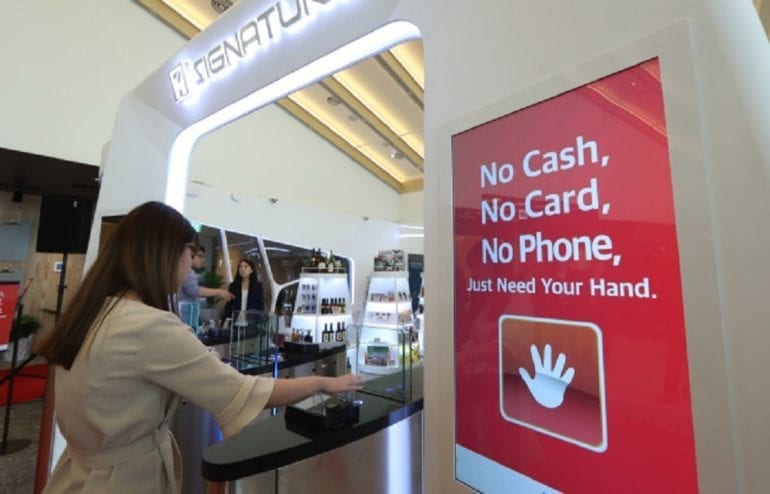
    Lotte Group‘s Korea Seven started operating its unmanned store 7-Eleven Signature at Lotte World Tower in May. Retail giant Shinsegae operates four unmanned E-mart 24 stores nationwide.

    At the unmanned stores, consumers can buy products by scanning them at auto-checkout counters.

    “Whenever there was a person behind counter, I instinctively felt like I had to pick products fast and go to the counter,” Lee Gil-yong told DongA News.

    “But now that there are no workers in the unmanned store, I feel like I can take my time to choose what I want to buy.”

    But some people have had difficulty adjusting to the stores and their security features.

    According to E-mart 24, three out of 13 people who visited its unmanned store in Seongsu-dong, Seoul, between 11 p.m. and 12:30 p.m. on Oct. 24 did not know how to get in. The store operates without workers from 11 p.m. to 6 a.m.

    To enter the unmanned E-mart 24 stores, shoppers must identify themselves with their credit cards. Also, they cannot buy alcoholic beverages ― a popular night-time product ― because unmanned stores cannot verify ages.

    E-mart 24’s unmanned stores suffered a decrease in sales, but cheaper labor costs meant the stores generated more profit.

    Concerns about the safety have also been raised because people entered without identifying themselves by waiting for the door to open for a shopper leaving the store.

    “We have not been able to operate the self-checkout machines in franchises because we have not yet found a way to prevent theft,” said an industry official.

    Only stores directly managed by headquarters operate unmanned checkout machines.

    “We are just checking the unmanned stores’ efficiency for now,” an E-mart 24 official said. “We have yet to decide whether to set up additional unmanned stores.”

    E-mart 24’s competitor 7-Eleven Signature has a HandPay system that identifies individuals by the pattern of their veins. Consumers can register their vein patterns on their Lotte Cards and the store will recognize the consumers.

    But shoppers have expressed discomfort because the store can only be accessed by those whose veins are registered.

    More retailers are expected to turn to automation due to the minimum wage hike next year, when the hourly minimum wage will rise to 7,530 won (US$6.67), up 16.4 percent from this year.

    Other major convenience stores such as GS Retail’s GS25 and BGF Retail’s CU also are preparing for unmanned stores.

  • Tiny Samsung Galaxy S9 Mini could be in the works

    Tiny Samsung Galaxy S9 Mini could be in the works

    Other than the iPhone 8, Sony Xperia XZ1 Compact and their predecessors there haven’t been many high-end compact phones in recent years, but Samsung could be about to add to the list with a Samsung Galaxy S9 Mini.

    Known leaker I ice universe has said as much on Weibo (a Chinese microblogging site), adding that the screen is less than 5 inches and that it has a “full screen”, which suggests that it will have minimal bezels and a super-widescreen 18.5:9 aspect ratio, just like the Samsung Galaxy S8 range.

    They don’t actually name the phone, but the mention of “full screen” suggests it will be using design language from the S series, so an S9 Mini is the obvious conclusion.

    Some sites are reporting that the Samsung Galaxy S9 Mini – or whatever it ends up being called – will also have a curved display, which would make sense if it uses the Galaxy S9 name, but the original information is in Chinese, and based on our own translation attempts we feel it could just as well be saying that the screen won’t curve.

    Coming soon… probably

    Similarly, there’s no suggestion that it will launch alongside the Samsung Galaxy S9 and Galaxy S9 Plus, despite what you might read elsewhere, though a launch in the first half of 2018 would seem likely if it’s going to arrive at all.

    And that’s a big if, I Ice Universe seems to say they’re not sure if it will be released or not (though this again is based on Google Translate).

    There’s reason to be skeptical, as Samsung hasn’t made a mini version of its flagships in years. But if the Samsung Galaxy S9 Mini is real we’d expect to hear more about it soon.

  • Apple’s Asia Suppliers Rise on Forecast of Strong Holiday Sales

    Apple’s Asia Suppliers Rise on Forecast of Strong Holiday Sales

    Apple Inc.’s suppliers in Asia, including Hon Hai Precision Industry Co. and Wistron Corp., rose after Apple forecast revenue for the quarter ending in December that topped estimates amid strong demand for its 10th anniversary iPhone.

    Hon Hai, the main assembler of the iPhone X, rose as much as 1.8 percent in Taipei trading, while Wistron, another Apple assembler, rose as much as 4.3 percent. Quanta Computer Inc., Pegatron Corp. and Genius Electronic Optical Co. also rose.

    After concerns about production volumes this year, Apple signaled it’s fixing supply problems with the iPhone X and setting itself up for a better-than-expected holiday period. Supported by resurgent iPad and Mac sales, the 10-year anniversary iPhone will help push revenue to a record high of $84 billion to $87 billion in the quarter ending in late December, Apple said in a statement. Analysts had predicted $84 billion, according to data compiled by Bloomberg.

    Apple shares rose about 4 percent in late U.S. trading after the earnings report. The Cupertino, California-based company is the most valuable in the world with a market valuation of more than $850 billion.

  • No-more-cashier at new Suning store

    No-more-cashier at new Suning store

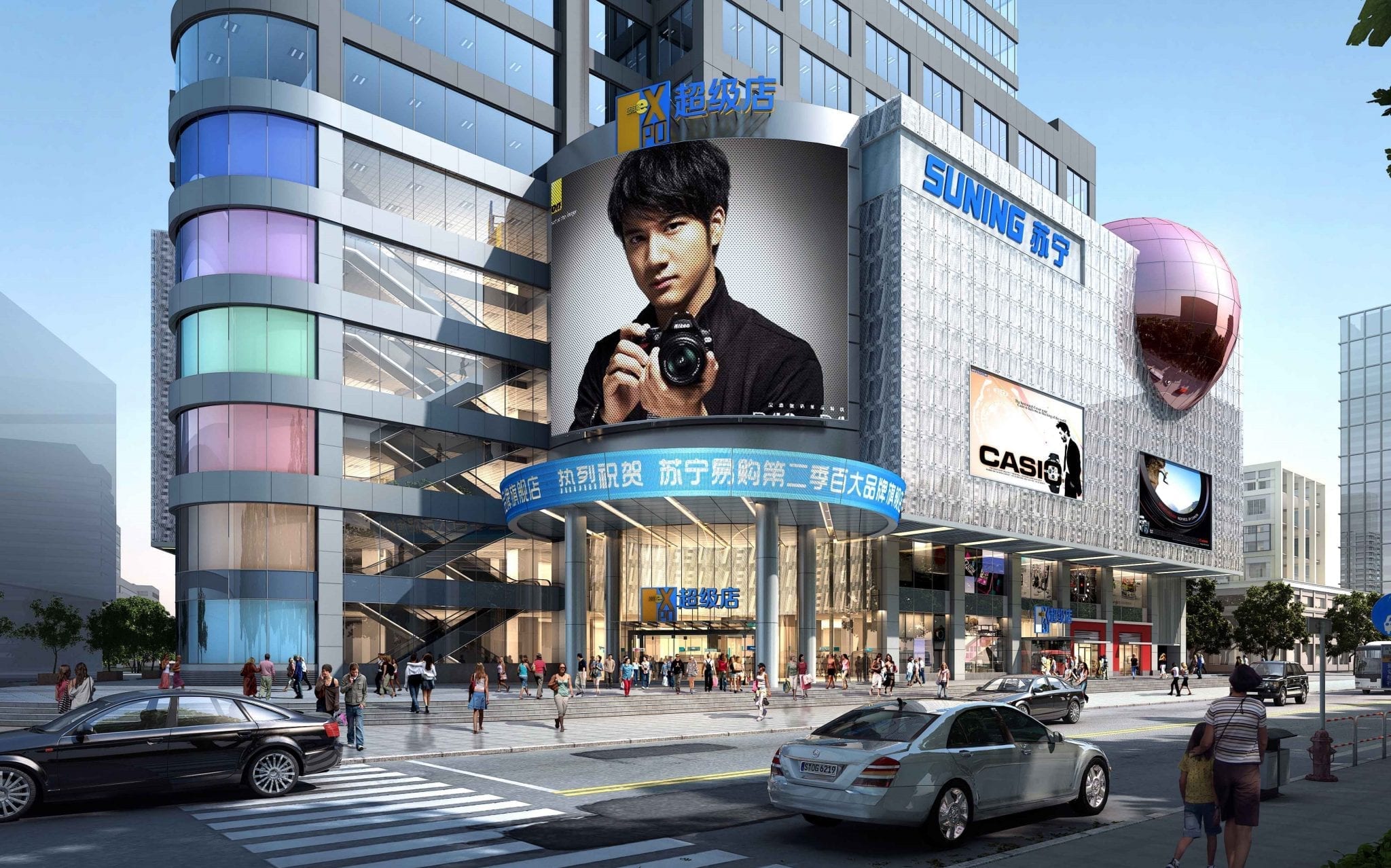
    A Suning store in Shanghai introduces an intelligent self-service checkout using facial-recognition technology for payments.

    Suning Biu is reportedly the retail giant’s second such store in China, reports China.org.

    Covering about 100sqm, the new Suning store is larger with more varied product categories than the company’s first unmanned shop in Nanjing, where Suning has its headquarters.

    Before shopping, customers need to download an app and upload their personal information including a photo of their face and a bank card. In the shop they scan their face to take advantage of the automatic payment process.

    Without having to scan QR codes or barcodes to calculate prices, clients just need to step into a “payment area” at the exit and look at an overhead camera. Their purchases will be listed on a screen, and payment completed automatically using their registered bank card. The few staff members in the store are there to offer technical instructions if necessary.

    Suning.com vice-CEO Fan Zhijun says self-service stores are expected to be introduced to other cities in China.

  • EU seeks details on Apple’s tax set-up

    EU seeks details on Apple’s tax set-up

    EU regulators have asked iPhone maker Apple for details of its recent tax structure following last year’s order to pay back taxes of up to €13 billion (A$20 billion) to Ireland, Europe’s anti-trust chief says.

    European Competition Commissioner Margrethe Vestager, who issued the record back-tax bill against Apple in August 2016, said she wanted to make sure the company now complies with the bloc’s rules which ban unfair state aid.

    “I have been asking for an update on the arrangement made by Apple, the recent way they have been organised, in order to get the feeling whether or not this is in accordance with our European rules but that remains to be seen,” Vestager told a news briefing on the sidelines of an international tech summit in Lisbon.

    “We are looking into this of course without any kind of prejudice, just to get the information,” she said.

    Vestager said her request preceded reports based on the “Paradise Papers” which showed that Apple shifted key parts of its business to Jersey as an offshore tax haven in a move to maintain a low tax rate. Apple has said no operations were moved from Ireland.

    “We have no contact after the Paradise Papers. We are in the process. There is no particular need,” she said.

    She also said it was too early to say whether the latest leaks on tax arrangements by companies would lead to any investigation.

    “That remains to be seen if we will open more cases after the Paradise Papers.”

    The European Commission last month sued Ireland for its tardiness in collecting the money from Apple.

  • Xiaomi Malaysia picks Kuala Lumpur to open its 2nd store

    Xiaomi Malaysia picks Kuala Lumpur to open its 2nd store

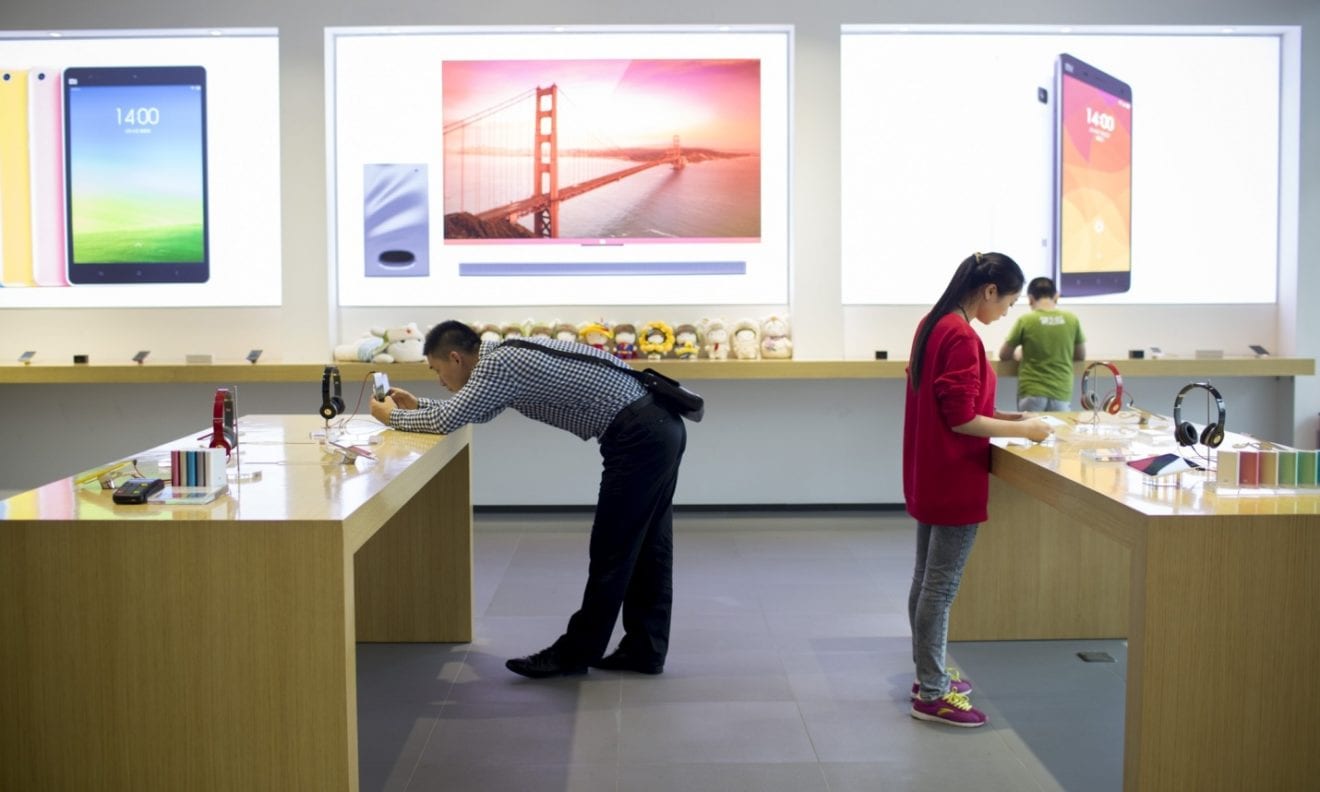
    Xiaomi Malaysia has opened its second retail store, offering Kuala Lumpur shoppers greater access to its Mi Ecosystem products.

    Originally the Chinese electronics company had sold its smartphones and other products exclusively online, but in its home territory has been introducing its Mi Home stores.

    At 940sqft (90sqm), its second authorised Mi Store is smaller than the debut store in Penang.  Xiaomi South Pacific head Steven Shi says the opening of a second store indicates the brand’s “great expectations” for growth in Malaysia.

    Two new smartphone models were released to coincide with the store’s opening, and Shi says Xiaomi will soon expand its Mi Ecosystem of products in Malaysia. These include IoT-ready products such as a smart rice cooker that can be pre-programmed for different recipes, a smart luggage bag than can be unlocked by phone, plus routers, TVs and drones.

    Meanwhile, Xiaomi is expanding across Southeast Asia, and has opened 15 Mi Stores and a factory in Indonesia. Xiaomi also has two Mi Stores in Singapore and one in Thailand. Its network in Malaysia is run by CG Computers.

    Its second concept phone, released with the KL store opening, was designed by Philippe Starck and features a curved ceramic back that that transitions to an aluminium frame. It will be available for pre-order on Saturday through online and offline channels including Lazada and authorised Mi Stores.

    Also showcased in the new store is the Redmi 5A Prime, the first Xiaomi phone that pairs a selfie light with a 16-megapixel front-facing camera. It has a fingerprint sensor on its back.

  • Apple closer as ever to trillion-dollar valuation

    Apple closer as ever to trillion-dollar valuation

    Apple has taken a step closer to becoming a trillion-dollar company after the tech giant reported a blowout third quarter and shrugged off concerns related to the iPhone X.

    Its shares rose almost four per cent in pre-market trading on Friday, on track to add nearly $US30 billion ($A42 billion) to its market capitalisation. The company is valued at $US868 billion.

    The California-based company also forecast a strong holiday quarter ahead, which will include the much-awaited iPhone X that started selling on November 3.

    “We see iPhone X unlocking pent-up iPhone upgrades, especially in China, driving more than 20 per cent iPhone unit growth and a revenue and earnings beat in 2018,” analyst Katy Huberty on Morgan Stanley said.

    Long lines had already started forming outside Apple stores in Asia as fans flocked to buy the new iPhone.

    At least five brokerages raised their price targets on the stock, with Canaccord Genuity making the most bullish move by raising its price target by $US15 to $US195.

    The median price target on the stock is $US180.

    With Canaccord’s move, five Wall Street analysts now have target prices for Apple that put its market value above $US1 trillion.

    Drexel Hamilton’s Brian White is still the most bullish among Apple analysts tracked by Thomson Reuters with a target price of $US208.

    Apple’s third-quarter results underscored the company’s ability to drive growth not just on iPhones, but across its range of products, analysts say.

    The company’s suite now includes five different iPhone models, the iPad, the Mac and the Apple Watch as well as its fast-growing services.

    Apple said it sold 46.7 million iPhones in the fourth quarter ended September 30, above analysts’ estimates of 46.4 million, according to financial data and analytics firm FactSet.

    Mac and Ipad sales were also above the estimates of most analysts.

  • Apple delivers higher profit as iPhone X launches

    Apple delivers higher profit as iPhone X launches

    Apple profits rose on the back of strong iPhone sales in the past quarter, with the U.S. tech giant on Thursday shrugging off the lofty price of its new flagship iPhone X and predicting a stellar holiday season.

    “The iPhone X orders are very strong; we couldn’t be more excited to get underway,” Apple chief executive Tim Cook said during a quarterly earnings call.

    “A few minutes ago the first sales started in Australia; several hundred people were waiting at the store in Sydney and there are similar reports across that region.”

    Cook added that Apple is working to increase iPhone X output to catch up to demand. The wait time for online orders stretched to an unprecedented six weeks shortly after Apple began taking orders last month, but it remained unclear whether demand or supply factors were the cause.

    Net profit rose 19 percent from a year ago to $10.7 billion in the fiscal fourth quarter to September 30, Apple said. Revenues were up 12 percent to $52.6 billion.

    Release of the earnings figures pushed Apple shares up more than two percent to $172.54.

    Apple sold more iPhones, iPads and Mac computers than it did in the same quarter a year earlier. Smartphones sales climbed by about a million units to 46.7 million in the three months winding up the California company’s fiscal year, according to the earnings report.

    “We’re happy to report a very strong finish to a great fiscal 2017, with record fourth quarter revenue, year-over-year growth for all our product categories, and our best quarter ever for services,” Cook said.

    “We’re looking forward to a great holiday season.”

    Apple closed out its fiscal year posting a full-year profit of $48.35 billion, up 5.8 percent, on revenues of $229 billion, a rise of 6.3 percent from the previous year.

    In the latest quarter Apple was able to reverse its fortunes in China, boosting overall sales by 12 percent in the “Greater China” region. Sales were up in other regions except for Japan, which saw an 11 percent revenue drop.

    Analyst Patrick Moorhead, of Moor Insights & Strategy, said “Apple crushed” with a strong quarterly report showing improvements in all product categories and a 34 percent jump in services revenue.

    Moorhead said concerns that iPhone sales would weaken as customers awaited the newest device were unfounded.

    “Apple managed to thread the needle on iPhone sales between the giant interest in the iPhone X and what the company had to ship, which was iPhone 7 and 8,” he said.

    Ambitious goal 

    With the iPhone X launching Friday in about 50 markets around the world, Apple is setting the ambitious goal of reinventing the smartphone as it strives to fend off fierce competition from rivals, especially in China.

    The flagship handset marks the 10th anniversary of the first iPhone release.

    The iPhone is the main profit driver for Apple, accounting for more than half its revenues, and is the cornerstone for the ecosystem of other devices and services.

    Apple upped the ante by boosting the starting price of the iPhone X to $999 for U.S. customers, a price which will be higher in other markets and with extra options.

    When asked about the high price during the earnings call, Cook pointed out that the iPhone line has models costing much less than the 10th-anniversary version.

    “We tried hard to have an iPhone that is as affordable as possible for people who want an iPhone but have a more limited budget,” Cook said.

    “This is the first time we have had three iPhones new at the top of the line at once, so see what happens. We are bullish.”

    Two iPhone 8 models were released in September.

    Cook has described the iPhone X as the future of the smartphone, packed with technology including facial recognition, cordless charging and an edge-to-edge screen made of organic light-emitting diodes used in high-end televisions.

    Analysts interviewed see signs of strong demand for iPhone X, perhaps fueled by the company’s famously devoted fans who have shunned freshly released iPhone 8 models to wait for the 10th anniversary device.

  • Fujitsu, Lenovo agree to PC merger

    Fujitsu, Lenovo agree to PC merger

    The deal should allow Fujitsu to pour more resources into its profitable IT services operations. Japan’s Fujitsu said on Thursday it had agreed to merge its struggling PC business with Lenovo, giving the Chinese computer giant a controlling share of the business.

    Tokyo-based Fujitsu said it had “decided to formally sign a deal” with Lenovo, the world’s largest PC maker, and the government-backed Development Bank of Japan (DBJ) on a “strategic partnership” to develop and sell PCs.

    Lenovo will hold 51 percent of the shares in Fujitsu’s PC subsidiary, while the DBJ will hold five percent, Fujitsu said in a statement.

    The deal should allow Fujitsu to pour more resources into its profitable IT services operations, while also pushing ahead with a sweeping restructuring program that will see 3,200 job cuts.

    The decision came after Fujitsu said last month it was in talks with Lenovo over a potential deal, which pushed Fujitsu shares up by 7.8 percent.

    After the announcement however, Fujitsu shares were trading down 2.44 percent at 874.1 yen.

    The company had been in talks with Toshiba and Vaio to merge their once high-flying personal computer businesses, but those negotiations failed to result in a deal.

    Once-mighty Japanese firms have struggled in the face of stiff competition from lower-cost rivals overseas, including in China and South Korea.

    Earlier this year, Taiwan’s Hon Hai, better known as Foxconn, took over struggling Japanese electronics maker Sharp after it faced huge losses and mounting debts.

  • Samsung Electronics profit nearly doubles

    Samsung Electronics profit nearly doubles

    Samsung Electronics profit nearly doubled in the third-quarter, mainly led by strong returns from its chip business amid an industry-wide boom.

    And it had a helping hand from rival Apple, for whom it makes screen for the iPhone X.

    Samsung Electronics profit reached 11.1 trillion won (US$9.87 billion), jumping from 4.53 trillion won posted a year earlier.

    Sales rose 29.7 per cent to reach 62 trillion won and operating profit came to 14.53 trillion won in the July-September period, also rising sharply from 5.2 trillion won posted last year.

    CNBC reported that Samsung is on track for record full-year profit, with analysts forecasting even better fourth-quarter on strong memory chip prices and organic light-emitting diode (OLED) screen sales for Apple’s iPhone X.

    The company’s operating margin reached 23.4 per cent in the third quarter, significantly rising from 10.9 per cent posted a year earlier.

    Samsung Electronics said its chip business raked in a record operating profit of 9.96 trillion won, helped by the rising seasonal demand. Its products’ prices increased due to limited supply in the market.

    For the fourth quarter, Samsung said the shipment of its products is expected to continue growing, as more mobile devices are adopting high-end memory chips and demand from data centres rising.

    “Looking to 2018, high demand from data center infrastructure expansion is forecast to continue while demand for contents growth in mobile products will rise on the widespread adoption of dual camera, 3D sensors and on-device AI offerings,” Samsung Electronics said.

    The tech giant added that the IT and Mobile Communications division, which covers smartphones, posted an operating profit of 3.29 trillion won, a huge turnaround from the meagre 100 billion won posted a year earlier, when the handset business was hurt by the suspended production of the Galaxy Note 7.

    The company, however, said while its shipment of smartphones in terms of units remained strong due to the release of the Galaxy Note 8 and robust sales of the Galaxy J series, the rising portion of budget models in the portfolio led to a decrease in earnings from 4.06 trillion won posted a quarter earlier.

    Industry watchers said the mobile arm’s performance is still better than expected, as the business was widely seen to remain sluggish due to increasing expenditure on marketing projects for the Galaxy Note 8.

    Preorders for the Galaxy Note 8 in South Korea came to 850,000 units, more than doubling the 400,000 units posted by its predecessor, the Galaxy Note 7.

    Experts said Samsung’s fourth-quarter performance is also anticipated to improve on the full-fledged sales of the Galaxy Note 8.

    The South Korean electronics company said it expects tougher competition in the market for the fourth quarter, saying it will release the new phablet in more countries in order to maintain sound returns.

    The consumer electronics division posted an operating profit of 440 billion won. Samsung said the performance falls behind the 790 billion won posted a year earlier due to changes in TV panel prices, although the increased shipments of premium products led to an on-quarter rise.

  • Apple says iPhone X pre-orders are ‘off the charts’

    Apple says iPhone X pre-orders are ‘off the charts’

    The company’s website showed delivery times pushed out to five to six weeks for the phone, compared to an initial plan of Nov. 3.Apple Inc quashed concerns of muted demand for its iPhone X on Friday, saying pre-orders for the 10th anniversary phone were “off the charts”.

    The company’s shares, which have fallen steadily since it announced in early September it would launch two iPhones within two months, rose nearly 3 percent in response.

    Pre-orders for the much-anticipated 10th anniversary phone started from 12.01 a.m. PT (0701 GMT) on Friday.

    “We can see from the initial response, customer demand is off the charts,” an Apple spokeswoman told.

    “We’re working hard to get this revolutionary new product into the hands of every customer who wants one, as quickly as possible.”

    The company’s website showed delivery times pushed out to five to six weeks for the phone, compared to an initial plan of Nov. 3.

    IPhone X’s launch follows weeks of concerns among analysts about the production of the new phone, which for the first time includes new facial identification software to replace the fingerprint used on previous phones.

    Analysts have cautioned that production of the phone was below target, due to difficulties in producing the TrueDepth camera system, which houses sophisticated cameras and sensors making it possible to unlock the phone using Face ID.

    Wireless carriers in the United States and Canada have reported slow third-quarter customer upgrades.

    Major promotions on the iPhone X from U.S. carriers have yet to materialize, and in some cases, the offers have been even less generous than what was available for the iPhone 8, said Walter Piecyk, an analyst at BTIG in a research note on Thursday. The base price for the phone is $999.

    He noted that Sprint Corp’s iPhone X promotion of $350 in savings for trading in an eligible device was the most aggressive but still lower than what it offered for last year’s launch of the iPhone 7.

    However, electronics retailer Best Buy Co is charging shoppers an extra $100, if they wish to buy an unactivated iPhone X outright.

    If customers order the phone on an installment billing plan, they will pay the same price charged by Apple and the carriers.

    “Our prices reflect the fact that no matter a customer’s desired plan or carrier, or whether a customer is on a business or personal plan, they are able to get a phone the way they want at Best Buy,” Best Buy spokeswoman Carly Charlson said.

    “Our customers have told us they want this flexibility and sometimes that has a cost.”

  • Apple, Samsung face new iPhone damages trial

    Apple, Samsung face new iPhone damages trial

    A U.S. judge has ordered a new trial to determine how much Samsung Electronics Co should pay Apple Inc for copying the look of the iPhone. U.S. District Judge Lucy Koh in San Jose, California issued her order late on Sunday, 10 months after the U.S. Supreme Court set aside a $399 million award against Samsung, whose devices include the Galaxy.

    The three Apple patents covered design elements of the iPhone such as its black rectangular front face, rounded corners, and colorful grid of icons for programs and apps.

    Koh’s order is a setback for Apple, which called a retrial unnecessary and said the award should be confirmed. The Cupertino, California-based company did not immediately respond on Monday to requests for comment.

    Silicon Valley has closely followed the 6-1/2-year-old case.

    Companies such as Facebook Inc and Alphabet Inc’s Google have said an Apple win would encourage owners of design patents to sue for huge, unfair awards on products containing hundreds of features that are costly to develop.

    The $399 million represented profit from Samsung’s sales of infringing smartphones, though the South Korean company has said it deserved reimbursement if it prevailed in the litigation.

    It was part of a $548 million payment that Samsung made to Apple in December 2015.

    The legal dispute concerned whether the “article of manufacture” for which Samsung owed damages included its entire smartphones, or only parts that infringed Apple patents.

    Without deciding that question, Justice Sonia Sotomayor wrote for the Supreme Court last Dec. 6 that “the term ‘article of manufacture’ is broad enough to embrace both a product sold to a consumer and a component of that product.”

    In Sunday’s order, Koh said the jury instructions at the original 2012 trial inaccurately stated the law on that issue.

    She said Samsung may have been prejudiced if jurors were prevented from considering whether any infringement covered “something other than the entire phone.”

    Apple contended that the jury instructions were “not erroneous,” and said it had proved that Samsung applied its patented designs to its “entire phones.”

    Jurors initially awarded $1.05 billion to Apple, which was later reduced.

    Samsung, in a statement, welcomed a new trial, calling it “a historic opportunity to determine how the U.S. Supreme Court’s guidance on design patent damages will be implemented.”

    The case is Apple Inc v Samsung Electronics Co et al, U.S. District Court, Northern District of California, No. 11-01846.