Category: Finance

Retail News Asia is committed to providing both local and global retailers with the latest Finance news throughout the Asian market. This on a daily base.

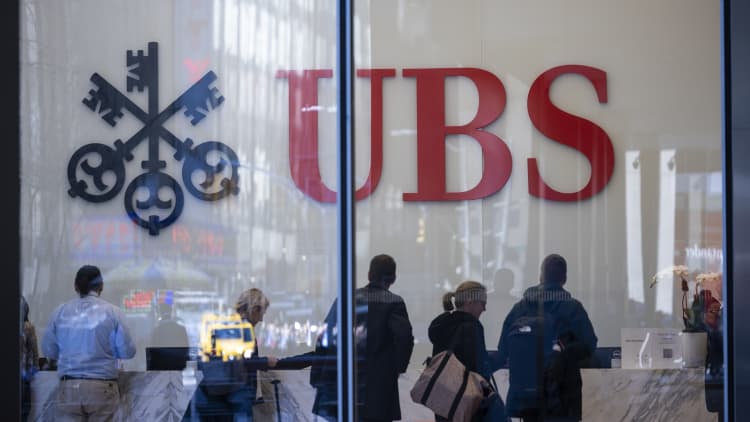
  • UBS Wins U.S. National Charter: Broadening Services for Wealth Management Clients

    UBS Wins U.S. National Charter: Broadening Services for Wealth Management Clients

    UBS is set to transform its U.S. entity, UBS Bank USA, into a nationally chartered bank following approval from U.S. regulatory bodies. The announcement was made via LinkedIn by Rob Karofsky, President of UBS Americas.

    A Significant Milestone for UBS

    Karofsky hailed this development as a significant achievement, reinforcing the bank’s enduring dedication to the U.S. market and its ongoing efforts to bolster the bank’s position as a global leader in wealth management.

    Expansion of Banking Services on The Horizon

    The new charter will empower UBS to broaden its banking services for its U.S. wealth management clientele. The bank plans to introduce payment services along with checking and savings accounts, among other offerings. The LinkedIn post emphasized that the new charter would reinforce the U.S. banking platform, improve client and financial advisor services, and put the bank in a favourable position for further expansion, all while upholding UBS’s high standards.

    The U.S. as a Crucial Market for Growth

    This move is part of a multi-year strategy by UBS to launch new products, systems, and technologies. The ambition is to create a state-of-the-art core banking platform with a focus on digitalization and artificial intelligence capabilities.

    UBS acknowledges the immense potential of the U.S. market. Despite U.S. clients having significant deposits, they often turn to other financial institutions for regular banking services. By enriching its service portfolio, UBS aims to deepen client relationships and fortify the position of its financial advisors.

    Questions & Answers

    What changes can UBS’s U.S. clients expect following this development?
    Clients can anticipate a wider array of banking services from UBS, including payment services and checking and saving accounts.

    What is UBS’s long-term goal with this transformation?
    UBS aims to fortify its position as a global wealth management leader, deepen client relationships, strengthen the role of its financial advisors, and establish a modern, digital, and AI-driven core banking platform.

    How does UBS view the U.S. market?
    UBS sees the U.S. market as crucial for its growth and plans to capitalize on its potential by expanding its service offerings to U.S. clients.

  • Young Malaysians Ensnared in Debt: The Rising Peril of ‘Buy Now, Pay Later’ Services

    Young Malaysians Ensnared in Debt: The Rising Peril of ‘Buy Now, Pay Later’ Services

    More young Malaysians are finding themselves caught in the cycle of debt as the burden of financial obligations – largely from credit card loans – weighs heavy on their incomes. Among them is 29-year-old Chan Jun Hong, who spends almost MYR3,000 (US$763) each month to service his debts, accounting for over 60% of his salary.

    The Debt Trap

    Chan Jun Hong shares that a significant portion of his income is allocated to repay personal loans he took out a year or two ago. It was a decision made out of convenience, as he was offered the loans, and used them to spend recklessly. Today, he regrets this decision. He also admits to having a sizable amount of debt from the use of “Buy Now, Pay Later” services and credit cards for everyday necessities. His situation deteriorated to the point where he sought help from a debt consolidation service provider, who advised him to take a single extensive loan to pay off all his various debts simultaneously.

    His predicament is not unique. Many young Malaysians are grappling with debts, primarily due to a lack of financial literacy in the face of a surge of credit services targeted at the youth. In Malaysia, about 40% of “Buy Now, Pay Later” transactions are made by those aged 30 and below. This statistic highlights an alarming trend of younger consumers becoming overly dependent on credit for daily expenses.

    Rise of “Buy Now, Pay Later” Services

    “Buy Now, Pay Later” is a financial service that allows consumers to purchase products either interest-free or with a certain percentage of interest, with payment due the following month. A survey involving over 21,000 active “Buy Now, Pay Later” users in 2024 revealed that 69% of users solely depend on this financial tool for their financial support.

    However, this reliance on credit purchases for daily needs has consequences, which many young Malaysians are now realizing. One 29-year-old, using the pseudonym Nixie, revealed that he typically starts the month with no more than MYR1,000 in his bank account, as most of his income goes towards debt repayment. Nixie often resorts to “Buy Now, Pay Later” services due to his tendency to make impulsive purchases of non-essential items, such as collectibles, when they are on sale.

    As an electrical engineer, Nixie can only afford to make minimum monthly payments of between MYR500 and MYR900 on his credit card debt. His outstanding balance has remained at around 90% of its limit for nearly a year, accruing more interest. Nixie shares his growing unease about his financial future, fearing he may be stuck paying the debt for years due to the increasing credit card interest.

    The Hidden Risks

    Financial analysts point out that while bank loans come with clearly documented commitments, the risks of a “Buy Now, Pay Later” scheme aren’t always apparent at the start.

    The number of “Buy Now, Pay Later” users rose from 2.6 million in 2023 to 7.5 million last year. This trend could be risky as financial obligations can often accumulate quietly. Alvin Tan Chin Cherng, Financial Planning Association of Malaysia president, mentioned that such collective repayments could consume a disproportionate share of one’s monthly income, and most people don’t see it coming.

    Many young Malaysians remain ignorant of their credit scores, and missed or late “Buy Now, Pay Later” payments could affect a person’s ability to secure a housing loan or car financing in the future.

    Easy Spending and Consequences

    Financial planner Gunaseelan Kannan also expressed concern over the rise of these services, citing its easy-spending design, which for many youths feels less like borrowing and more like delaying payment.

    The simple approval process, minimal checks, and the seemingly small installments make it very attractive. However, those small installments can quickly add up and affect monthly cash flow. Many young people are still building their financial habits, so without proper budgeting or financial literacy, it can slowly turn into a debt cycle.

    A 29-year-old customer service worker known as Chan admitted that he had never heard of financial strategies. He struggles to manage his spending habits which are affecting his financial stability. He is now juggling his finances while repaying a personal loan taken to settle previous debts.

    Questions & Answers

    What are the causes of the increasing debt among young Malaysians?
    The rise in debt among young Malaysians is mainly attributed to the ease of access to credit services, particularly “Buy Now, Pay Later” schemes, and a lack of financial literacy.

    What are the consequences of the growing reliance on “Buy Now, Pay Later” services?
    The consequences include the accumulation of debts that can consume a significant proportion of one’s income, causing financial instability. Missed or late payments can also negatively impact credit scores, which could affect a person’s ability to secure future loans.

    What is the solution to this growing problem?
    Better financial education is one solution to tackle this issue. Young people need to understand the importance of budgeting, managing their spending habits, and the implications of credit scores. It’s also important to consider the regulation of credit services to ensure they don’t exploit the lack of financial literacy among young people.

  • UOB CEO Faces 20% Salary Slash as Bank’s Profits Plummet

    UOB CEO Faces 20% Salary Slash as Bank’s Profits Plummet

    The Chief Executive Officer of Singapore’s UOB, Wee Ee Cheong, experienced a decrease in his total remuneration in a year that also witnessed a fall in the company’s profit. This comes as per the bank’s annual report, which highlighted his reduced earnings.

    Details of the Remuneration Package

    The CEO’s total compensation in 2025 amounted to S$12 million (equivalent to $9.4 million), indicating a downward trend of 20 percent on a yearly basis. The components of this remuneration package include a base salary of S$1.4 million, bonuses totaling S$10.6 million, and additional benefits worth S$42,629. It is noteworthy that 60 percent of the variable pay will be deferred and vested over the ensuing three years.

    A Reflection of the Company’s Performance

    The decrease in the CEO’s pay goes hand in hand with UOB’s overall performance. The bank recorded a 23 percent slump in its net profit in 2025, ending the year with a total of S$4.7 billion. This decrease in profit has been reflected in the reduced pay packet of the bank’s top executive.

    Questions & Answers

    What was the total compensation of UOB’s CEO in 2025?
    The total compensation of UOB’s CEO in 2025 was S$12 million, which translates to $9.4 million.

    What components made up the CEO’s remuneration package?
    The CEO’s remuneration package was made up of a base salary of S$1.4 million, bonuses amounting to S$10.6 million, and benefits worth S$42,629.

    How did UOB’s performance in 2025 relate to the CEO’s pay?
    UOB’s performance in 2025, which saw a 23 percent decrease in net profit, was reflected in the CEO’s reduced pay.

  • Citi Strengthens Healthcare Investment Banking with Former Goldman Sachs Executive in Australasia

    Citi Strengthens Healthcare Investment Banking with Former Goldman Sachs Executive in Australasia

    Ben Bartholomaeus, a former executive at Goldman Sachs, has been appointed by Citi as the Head of Healthcare for Australia and New Zealand within their Capital Markets and Advisory team. This key role will see Bartholomaeus drawing upon Citi’s global reach, industry knowledge, and execution proficiency to the benefit of its healthcare clientele in the Australasian region.

    Base of Operations

    Bartholomaeus will operate out of Sydney and report to Philippe Perzi and Ben Connolly, the co-heads of Capital Markets and Advisory for Australia and New Zealand. Additionally, he will report to Ling Zhang, the Head of Healthcare for the Asia Pacific region.

    Prior to this appointment, Bartholomaeus held the position of Head of Healthcare in the Corporate Advisory Division for Australia and New Zealand at Goldman Sachs.

    A Market Leader

    Citi has an established reputation as a leading force in healthcare investment banking. It has retained its top position as a global advisor for mergers and acquisitions within the healthcare sector from 2024 through 2026 year-to-date. During this period, Citi has led major transactions for clients in various healthcare sectors including biopharma, medtech, and life science tools and diagnostics.

    Questions & Answers

    Who has Citi appointed as the new Head of Healthcare for Australia and New Zealand?
    – Citi appointed Ben Bartholomaeus, a former Goldman Sachs executive, as the Head of Healthcare for Australia and New Zealand.

    What role will Bartholomaeus be playing at Citi?
    – Bartholomaeus will be responsible for bringing Citi’s global connectivity, sector insights, and execution expertise to healthcare clients in the Australasian region.

    What is Citi’s standing in healthcare investment banking?
    – Citi is a leader in healthcare investment banking. It has consistently secured the top rank as a global advisor for mergers and acquisitions in the healthcare sector from 2024 through 2026 year-to-date.

  • Vietnam Gold Prices Plunge Amid Record Global Bullion Weekly Losses

    Vietnam Gold Prices Plunge Amid Record Global Bullion Weekly Losses

    In Vietnam, the price of gold witnessed a decline on Friday morning, following the global trend where bullion rates are experiencing the steepest weekly fall in six years. The price of a gold bar from Saigon Jewelry Company fell by 0.34%, coming down to VND174.9 million ($6,645.9) per tael. This rate was echoed by other sellers in the market.

    Locally, bullion prices have seen a 9% decrease from the peak of VND191.3 million per tael, which was recorded in January. Despite the recent slip, the prices are still 10% higher on a year-on-year basis. Currently, the local rates are approximately VND26.5 million per tael more than the global rates.

    The price of gold rings followed a similar pattern, slipping to VND174 million per tael. It is important to note that a tael is equivalent to 37.5 grams or 1.2 ounces.

    On a global scale, spot gold rose by 0.8% to $4,686.97 an ounce on Friday. However, cumulatively for the week, it has fallen close to 7%, marking the largest weekly loss since March 2020. This trend has been attributed to the escalating conflict in the Middle East, which has increased energy prices and subsequently led to dampening expectations for rate cuts.

    Historically viewed as a safe haven, the precious metal has seen a decline every week since the conflict broke out last month. Factors contributing to this trend include strengthening Treasury yields and the U.S. dollar, investors selling bullion to offset losses elsewhere, and outflows from gold-backed exchange-traded funds.

    Daniel Ghali, a commodity strategist at TD Securities, commented on the situation. He noted that gold, a popular choice for institutional investors, has seen its position waver due to the ongoing debasement trade. Ghali further added that there is a significant potential for gold to experience further selling off, even while maintaining its bull market era trend support.

    Questions & Answers

    What is the current trend in global gold prices?
    Answer: Global gold prices are experiencing a significant fall, marking the largest weekly loss since March 2020.

    How has the conflict in the Middle East impacted gold prices?
    Answer: The escalating conflict in the Middle East has led to increased energy prices and dampened expectations for rate cuts, contributing to a decline in gold prices.

    What factors have contributed to the decline in gold prices?
    Answer: Several factors have contributed to this decline, including strengthening Treasury yields and the U.S. dollar, investors selling bullion to offset losses elsewhere, and outflows from gold-backed exchange-traded funds.

  • Vietnamese Dong Bolsters Against US Dollar Amid Easing Global Crude Oil Prices

    Vietnamese Dong Bolsters Against US Dollar Amid Easing Global Crude Oil Prices

    On Wednesday morning, the U.S. dollar saw a slight decrease against the Vietnamese dong, while maintaining a steady position against other major currencies. Vietcombank reported a 0.004% drop in the greenback’s value, selling it at VND26,320. Concurrently, the currency experienced a 0.44% decline to approximately VND26,993 in the informal currency market.

    Global Currency Developments

    Worldwide, the dollar paused for breath as a reduction in crude oil prices ignited a glimmer of risk appetite in markets prior to several crucial central bank decisions. The dollar index, which provides a measure of the U.S. currency’s strength against a selection of global currencies, experienced a slight increase of 0.06%, rising to 99.61 following a two-day decrease. Meanwhile, the euro experienced a slight decrease of 0.05%, trading at $1.1532.

    The Japanese yen also saw a minor weakening of 0.01% against the U.S. dollar, trading at 159.00 per dollar. In contrast, the British sterling maintained its value at $1.3355.

    Upswing for Antipodean Currencies

    Antipodean currencies, the Australian and New Zealand dollars, saw a slight increase in value against the greenback. The Australian dollar strengthened by 0.1%, trading at $0.7109. Similarly, New Zealand’s kiwi saw a 0.05% rise, trading at $0.586 against the U.S. dollar.

    Last week, the U.S dollar reached a 10-month high as conflicts in the Middle East and escalating oil prices pushed investors to seek the relative safety of U.S. assets.

    According to Hirofumi Suzuki, Chief FX Strategist at Sumitomo Mitsui Banking Corporation, although the rise in crude oil prices seems to have momentarily paused, the overall situation has not improved significantly. Nevertheless, markets appear to be demonstrating some recovery.

    Questions & Answers

    What was the exchange rate of the US dollar to the Vietnamese dong on Wednesday?
    The US dollar was sold at VND26,320 by Vietcombank on Wednesday.

    How did the US dollar perform against the Euro and the yen?
    The US dollar experienced a slight increase against the Euro, which traded at $1.1532, and against the yen, with the latter trading at 159.00 per dollar.

    What event last week caused the US dollar to reach a 10-month high?
    The conflicts in the Middle East and escalating oil prices prompted investors to seek the relative safety of U.S. assets, causing the US dollar to reach a 10-month high.

  • US Dollar Skyrockets Against Vietnamese Dong Amid Global Inflation Fears and Iran Conflict Developments

    US Dollar Skyrockets Against Vietnamese Dong Amid Global Inflation Fears and Iran Conflict Developments

    On Tuesday morning, the U.S. dollar experienced an unexpected surge against the Vietnamese dong in the black market trading. The greenback appreciated by 0.74%, hitting a record high of VND27,390 at unofficial exchange platforms.

    Maintaining the Rate

    Despite the fluctuation in the black market, Vietcombank decided to keep its exchange rate steady at VND26,321.

    Global Market Influence

    Globally, the behavior of the U.S. dollar was somewhat uncertain on Tuesday. Traders were contemplating the potential implications of the evolving conflict in Iran. Meanwhile, the Australian dollar weakened marginally in anticipation of a potential rate hike by the nation’s central bank later in the day.

    The euro dropped 0.12%, falling to $1.1492 during the Asian trading session. Sterling also declined slightly by 0.1%, trading at $1.33. This slight decrease offset the substantial gains earned during the previous trading session. The dollar index, a measure of the U.S. dollar relative to a basket of foreign currencies, remained relatively stable at 99.913.

    Impact of Surging Oil Prices

    The escalation of oil prices, triggered by the U.S. and Israel’s attack on Iran, has raised concerns about inflation among investors. This anxiety has led to a drastic reevaluation of rate outlooks worldwide. Consequently, the U.S. dollar has appreciated against a majority of global currencies.

    Questions & Answers

    What caused the surge in the U.S. dollar against the Vietnamese dong?
    The surge in the U.S. dollar against the Vietnamese dong was primarily driven by the uncertainty surrounding the Iran conflict and the expected rate hike from Australia’s central bank.

    What was the impact of the surging oil prices on the global currencies?
    The surging oil prices, due to the U.S. and Israel’s attack on Iran, have raised global inflation concerns among investors. This has triggered a significant reevaluation of rate outlooks, strengthening the U.S. dollar against most global currencies.

    How did the euro and sterling perform during the Asian trading session?
    During the Asian trading session, the euro fell 0.12% to $1.1492, and sterling also saw a slight decrease of 0.1%, trading at $1.33.

  • Vietnam’s Gold Market Rises Slightly Amidst Steady Global Rates: A Look at 2022’s Gold Price Trends

    Vietnam’s Gold Market Rises Slightly Amidst Steady Global Rates: A Look at 2022’s Gold Price Trends

    On Monday afternoon, there was a marginal increase in Vietnam’s gold prices, while international rates remained virtually unchanged. Gold bars offered by Saigon Jewelry Company witnessed a 0.27% rise, settling at VND183.1 million (US$6,964.49) per tael. Simultaneously, the cost of gold rings also saw a slight hike of 0.27%, reaching VND182.8 million per tael. So far this year, the gold prices in Vietnam have experienced an escalation of 19.8%.

    Global Gold Rates

    Internationally, gold prices maintained a steady position on Monday. After experiencing a nearly 1% drop earlier in the session, the rates recouped due to a softer dollar and the appeal of safe-haven investments. These factors effectively balanced the declining hope of immediate U.S. interest rate cuts, which was triggered by high energy prices.

    Spot gold saw a minor rise of 0.2%, standing at $5,027.98 per ounce. This marked a recovery from a more than three-week low experienced earlier in the session. On the other hand, U.S. gold futures for April delivery experienced a 0.6% decline, arriving at $5,031.60.

    A small decrease in the U.S. dollar paved the way for commodities priced in greenback, such as bullion, to become cheaper for holders of other currencies.

    Analyst’s Take

    “Gold prices are maintaining a broad stability as the market navigates through conflicting macro forces. The continuous geopolitical tensions are driving the safe-haven demand, thereby providing support. However, the surge in oil prices has rekindled concerns about inflation,” explained Christopher Wong, a strategist at OCBC.

    Questions & Answers

    What was the percentage increase in Vietnam’s gold prices?
    The gold prices in Vietnam saw a marginal increase of 0.27%.

    What factors contributed to the steady state of global gold prices?
    A softer dollar and the demand for safe-haven investments helped keep the global gold prices steady.

    What impact did the decline of the U.S. dollar have on commodities?
    The drop in the U.S. dollar made commodities priced in greenback, such as bullion, cheaper for holders of other currencies.

  • UBS Asset Management Bolsters China Equities Team with Former Invesco Pro, Raymond Ma

    UBS Asset Management Bolsters China Equities Team with Former Invesco Pro, Raymond Ma

    UBS Asset Management has recently augmented its China equities team with the addition of Raymond Ma, a veteran portfolio manager formerly linked to Invesco. Ma will be serving as deputy to Bin Shi, the head of China equities, and will be stationed in Hong Kong.

    Ma most recently held the position of Chief Investment Officer for mainland China and Hong Kong at Invesco. He was responsible for the management of several of the company’s China and Greater China funds during his tenure. Even before his stint at Invesco, Ma had a significant 15-year run at Fidelity in Hong Kong, where he made a substantial impact as a principal China portfolio manager.

    A Long-standing Professional Bond

    Bin Shi and Raymond Ma have shared more than just their professional pursuits. They have known each other for over two decades, serving as important figures in the industry. Additionally, they share a fundamental approach towards investing, which will likely foster a strong partnership in their roles at UBS.

    Questions & Answers

    Who has recently joined UBS Asset Management’s China equities team?
    Raymond Ma, a former portfolio manager from Invesco has recently joined UBS Asset Management’s China equities team.

    Who will Raymond Ma serve as deputy to at UBS?
    Raymond Ma will serve as deputy to Bin Shi, the head of China equities at UBS.

    What was Raymond Ma’s role at Invesco?
    At Invesco, Raymond Ma held the position of Chief Investment Officer for Mainland China and Hong Kong and managed several of the firm’s China and Greater China funds.

  • Citi Boosts ASEAN Real Estate Team with Ex-UBS Investment Banking Leader, Indran Thana

    Citi Boosts ASEAN Real Estate Team with Ex-UBS Investment Banking Leader, Indran Thana

    Indran Thana, an experienced investment banker, is set to join Citi as the managing director and head of real estate for the Association of Southeast Asian Nations (ASEAN) segment. The appointment, effective from June 2026, will see Thana, a former UBS employee, operating from Singapore.

    In his new role, Thana will report to Matthew Nimtz, the head of ASEAN investment banking, as well as Ben Connolly, the Asia head of real estate investment banking and co-head of capital markets and advisory for Australia and New Zealand.

    During his tenure at UBS, Thana held the position of managing director and head of real estate, lodging & leisure for Asia. His professional experience also includes stints at DBS, Maybank, and Amanah Capital.

    In an internal memo, Citi lauded Thana for his “deep client relationships, proven track record, and comprehensive expertise across traditional and emerging real estate sectors.” The corporation expressed confidence that his skills and experience will allow them to increase their market share and strengthen partnerships with critical institutional and corporate clients throughout Southeast Asia.

    Questions & Answers

    Who is Indran Thana?
    Indran Thana is an experienced investment banker who has previously worked for UBS, DBS, and Maybank, among others. In June 2026, he will join Citi as the managing director and head of their ASEAN real estate business.

    What will be Thana’s role at Citi?
    As the managing director and ASEAN head of real estate for Citi, Thana will be expected to use his extensive expertise in the real estate sector to increase Citi’s market share and strengthen existing partnerships with key clients across Southeast Asia.

    What previous positions has Thana held?
    Thana has held several high-ranking positions in financial industries. Notably, he was previously the managing director and head of real estate, lodging & leisure for Asia at UBS.

  • DBS Warns Investors: Traditional Stock Strategies May Falter Amid Ongoing Mideast Conflict

    DBS Warns Investors: Traditional Stock Strategies May Falter Amid Ongoing Mideast Conflict

    Historically, US equities have demonstrated strong performance following significant conflicts. However, DBS asserts that the current Middle East conflict may not follow this trend, warning investors against complacency in this situation.

    The Ongoing Conflict in Iran

    The war in Iran, now in its third week, has resulted in thousands of casualties with no definitive end in sight. DBS advises investors to exercise caution and avoid putting too much stock in historical trends concerning American equities.

    DBS states, “While history may suggest that US equities often yield positive returns after major conflicts, complacency is not advisable given the current Middle East conflict.”

    As the conflict continues to unfold, DBS encourages investors to implement risk management strategies in their portfolio construction. This could involve increasing their exposure to gold and partially substituting US equity exposure with the S&P 500 Low Volatility Index.

    Predicted Themes for Q2 2026

    DBS has identified three themes they believe will heavily influence narratives in the second quarter of 2026.

    Firstly, oil continues to be a significant factor due to the ongoing military crisis in the Middle East, especially considering Iran’s role as the fourth largest OPEC producer. Rising energy prices could pose problems for risk assets.

    Secondly, the policy stance of Kevin Warsh, the nominee for Fed chair, indicates a potential reset with an increased likelihood for “renewed quantitative tightening,” which could lead to a steepening of the yield curve.

    Finally, diversification beyond crowded trades is encouraged, with recent profit-taking seen as “transitory.” A “return to fundamentals” is expected, with a focus on pre-crisis themes like precious metals and technology. These are driven by “dollar debasement” and “AI supremacy”, respectively.

    Emerging Markets and Japanese Equities

    In terms of diversification, DBS suggests investors consider increasing their exposure to emerging markets (EM) and Japanese equities. EM equities are likely to benefit from Fed rate cuts, dollar weakness, robust earnings growth, and light positioning. Conversely, Japanese equities are set to gain from fiscal stimulus, governance reforms, and an attractive yield gap.

    DBS concludes, “Global markets are currently navigating through an unusual convergence of geopolitical challenges and technological opportunities. The paradoxical nature of this situation reflects the complex yet potentially rewarding market conditions investors are currently navigating—an era where traditional strategies may no longer apply.”

    Questions & Answers

    What is the advice from DBS regarding the current Middle East conflict?
    DBS advises investors not to rely excessively on the historical trends of stock market performances following major conflicts, warning that complacency is unwarranted in this instance.

    What are the three themes DBS identified for Q2 2026?
    The three themes are the role of oil in the military crisis in the Middle East, the potential policy reset implied by Fed Chair nominee Kevin Warsh, and the need for diversification beyond crowded trades.

    What are DBS’s recommendations for diversification?
    DBS suggests investors consider increasing their exposure to emerging markets and Japanese equities, which are set to benefit from several factors including Fed rate cuts, dollar weakness, robust earnings growth, light positioning, fiscal stimulus, and governance reforms.

  • Riding the Yuan Wave: Global Companies Amplify Chinese Currency Adoption, Says StanChart Report

    Riding the Yuan Wave: Global Companies Amplify Chinese Currency Adoption, Says StanChart Report

    Companies across the globe are progressively employing the Chinese yuan in an array of contexts, as noted in a recent study by Standard Chartered. These contexts range from settling trade transactions to financing supply chains.

    A growing number of international corporations are adopting the use of the Chinese renminbi (RMB). Statistics from a Standard Chartered study reveal that 23% of revenues and 25% of costs are subject to the influence of this currency. However, the report also points out that only 14% of debt is in RMB, indicating a discrepancy between operating exposure and the currency employed for financing.

    The study suggests that the uptake of RMB is increasingly motivated by operational necessities of corporations rather than currency positioning. The main factors encouraging its adoption are trade settlement, supply chain financing, alignment of balance sheets, and management of foreign exchange and interest rate exposure.

    Diverse Regions, Diverse Adoption Trends

    The adoption patterns of the RMB vary across different regions. For instance, corporations in Greater China and North Asia are extending their use of RMB beyond settlement to include funding and liquidity management. The uptake in Southeast Asia is primarily driven by supply chain needs, whereas in the Middle East and parts of Africa, the usage is concentrated in the energy and infrastructure trade sectors. In Europe and the Americas, the capital market issuances and selective funding diversification are emerging as significant starting points.

    Karen Ng, the head of China opening and RMB internationalization at Standard Chartered, stated, “Many corporations already have significant RMB exposure through trade, procurement, and supply chains. As the market infrastructure deepens and liquidity expands, the adoption is increasingly being driven by operational needs, including trade settlement and balance sheet alignment.”

    The report titled “Renminbi in Motion for Corporates” is based on a survey involving nearly 300 global corporations across 19 sectors.

    Questions & Answers

    Why are corporations worldwide increasingly using the Chinese yuan?
    The use of the Chinese yuan is growing due to operational needs including trade settlement, supply chain financing, balance sheet alignment, and managing foreign exchange and interest rate exposure.

    How does the adoption of the Chinese yuan vary across different regions?
    Adoption patterns differ by region. Corporations in Greater China and North Asia are expanding its use beyond settlements to include funding and liquidity management, while in Southeast Asia, adoption is largely driven by supply chain needs.

    What is the percentage of revenues and costs carrying exposure to the Chinese yuan, according to the report?
    The report indicates that 23% of revenues and 25% of costs are subject to the influence of the Chinese yuan.

  • U.S. Dollar Ascends to Year’s High Against Key Currencies Amid Oil Price Surge & Inflation Fears

    U.S. Dollar Ascends to Year’s High Against Key Currencies Amid Oil Price Surge & Inflation Fears

    The United States dollar achieved a rise against the Vietnamese dong on Thursday morning, while concurrently reaching peak levels this year against other major currencies. The Vietnamese bank, Vietcombank, increased the dollar’s rate by 0.01%, setting it at VND26,314.

    Greenback Performance in the Informal Market

    In contrast to its performance with Vietcombank, the US dollar, informally known as the greenback, recorded a slight decline of 0.18% on the informal market, bringing it down to VND27,910.

    The Dollar’s Global Strength

    On the international front, the greenback maintained its position as a safe-haven currency, staying close to its most robust levels of the year. This strength comes in the wake of rising oil prices, which threaten to trigger inflation and compel central banks worldwide to adopt a more bullish policy stance.

    Performance Against Other Currencies

    The euro experienced a minor fall of 0.1% against the greenback, with an early Asian trading rate of $1.1549, which is nearing its lowest level since November.

    Japan’s yen also saw a decline, dipping below the 159-per-dollar mark, with a decrease of up to 0.2% to 159.23. This trend brings the yen close to its weakest level since July 2024.

    Meanwhile, the Australian dollar and the New Zealand dollar each fell by 0.1%, recorded at $0.7148 and $0.5907 respectively.

    Questions & Answers

    What was the performance of the US dollar against the Vietnamese dong?
    The US dollar rose against the Vietnamese dong on Thursday morning.

    How did the greenback perform on the informal market?
    On the informal market, the greenback recorded a slight decline of 0.18%.

    How has the rise in oil prices affected the US dollar?
    The rising oil prices threaten to trigger inflation, which in turn has kept the US dollar close to its strongest levels this year as central banks worldwide may be compelled to adopt a more bullish policy stance.

  • US Dollar Soars to Year’s Peak Against Major Currencies, Dodging Inflation Threats”

    US Dollar Soars to Year’s Peak Against Major Currencies, Dodging Inflation Threats”

    The U.S. dollar experienced a surge against the Vietnamese dong on Thursday morning, while oscillating around its apex value against significant international currencies this year.

    Vietcombank, a prominent banking institution, reported a minor increase of 0.01% in the value of the dollar, selling it at a rate of VND26,314.

    Contrarily, the U.S. dollar dipped slightly by 0.18% to VND27,910 in the unofficial currency exchange market, also known as the black market.

    Thursday witnessed the U.S. dollar, a popular refuge during periods of financial instability, hovering near its most robust position for the year. This trend was driven by the rising oil prices, which are predicted to escalate inflation and compel central banks around the world to espouse more assertive monetary policies.

    In early Asian trading, the euro experienced a slight decline of 0.1% against the dollar, going down to $1.1549. This brought the euro close to its lowest value since November of the previous year.

    Similarly, the Japanese yen saw a momentary fall, surpassing the 159-per-dollar mark. It depreciated as much as 0.2%, reaching 159.23. This puts the yen on the brink of its most diminished value since July 2024.

    The Australian dollar and the New Zealand dollar also observed declines, both slipping by 0.1%, with the former valued at $0.7148 and the latter at $0.5907.

    Questions & Answers

    What factors influenced the rise in the value of the U.S. dollar?
    The uptick in the value of the U.S. dollar can be attributed to the increasing oil prices, which are expected to instigate inflation and cause global central banks to adopt a more aggressive policy stance.

    How did the rise in the U.S dollar affect other major international currencies?
    The rise of the U.S dollar resulted in a slight depreciation of several international currencies such as the Vietnamese dong, the euro, the Japanese yen, the Australian dollar, and the New Zealand dollar.

    What was the selling rate of the U.S. dollar in the black market?
    In the black market, the U.S. dollar saw a nominal decline, with its rate recorded at VND27,910.

  • Gold Prices in Vietnam Bounce Back: An Afternoon Recovery Amidst Global Economic Uncertainty

    Gold Prices in Vietnam Bounce Back: An Afternoon Recovery Amidst Global Economic Uncertainty

    On Monday afternoon, gold prices in Vietnam witnessed a minor recovery following a more than 1% decline earlier in the session. After a challenging morning period, the Saigon Jewelry Company reported a 0.55% rise in their gold bar price, bringing it to VND184.1 million (US$6,965.01) per tael and reducing the day’s losses to 0.49%. For reference, a tael is equivalent to 37.5 grams or 1.2 ounces.

    Despite the global price for gold, the cost of the precious metal in Vietnam remains significantly higher. In particular, local bullion prices exceed the global rates by more than VND21 million per tael.

    The price of gold rings also rebounded on Monday, returning to VND183.8 million per tael, marking a 0.49% decrease for the day.

    Global Gold Market Conditions

    Internationally, spot gold fell 1.3% to $5,104 per ounce after a more than 2% decrease earlier in the session. This shift comes as geopolitical tensions in Iran escalate, resulting in a squeeze on world energy supplies. These circumstances also caused a boost in the dollar and a dampening in expectations for interest-rate cuts.

    The dollar is currently near a three-month high, which makes bullion more expensive for those dealing in other currencies. Inflation fears fueled by oil prices and expectations of delayed rate cuts likely strengthened U.S. yields and the dollar. This scenario outweighed the demand for safe-haven assets, pushing the price of gold downwards.

    However, gold prices have still risen approximately 18% this year, despite choppy trading conditions and stalled upward momentum.

    Christopher Wong, an OCBC strategist, commented on the situation. He noted that during periods of high geopolitical market stress, investors often sell assets like gold to raise cash. However, once this phase passes, the uncertainty usually continues to underpin demand for safe havens such as gold.

    Questions & Answers

    What was the gold price situation in Vietnam on Monday?
    On Monday, gold prices in Vietnam partially recovered following a more than 1% decrease earlier in the day. By the afternoon, the Saigon Jewelry Company’s gold bar price had risen 0.55%, taking it to VND184.1 million (US$6,965.01) per tael and reducing the day’s losses to 0.49%.

    What is the difference between local bullion prices and global rates in Vietnam?
    Despite global prices for gold, the cost in Vietnam remains significantly higher. More specifically, local bullion prices are more than VND21 million per tael higher than the global rates.

    What factors contributed to the global decrease in gold prices?
    The global decrease in gold prices was largely due to escalating geopolitical tensions in Iran, which resulted in a squeeze on world energy supplies, a stronger dollar, and lessened expectations for interest-rate cuts. This shift pushed the price of gold downwards, despite it being a safe-haven asset.