Category: Finance

Retail News Asia is committed to providing both local and global retailers with the latest Finance news throughout the Asian market. This on a daily base.

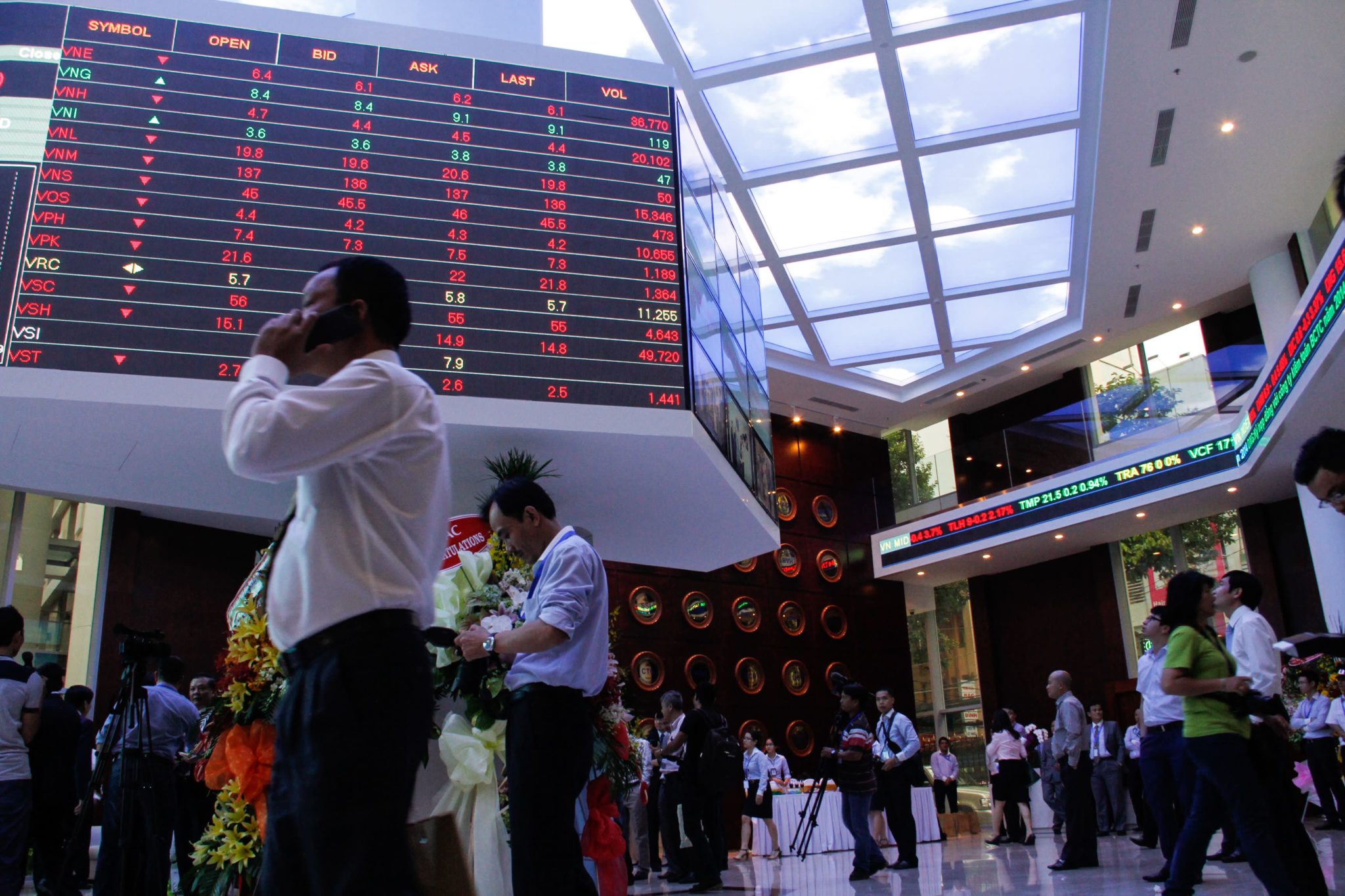
  • Vietnam’s VN-Index Takes Steepest Dive in a Year Amid Geopolitical Tensions and Skyrocketing Oil Prices

    Vietnam’s VN-Index Takes Steepest Dive in a Year Amid Geopolitical Tensions and Skyrocketing Oil Prices

    Vietnam’s primary stock index, the VN-Index, experienced a significant drop of 5.86% during Monday morning trading, as investors initiated a sell-off due to geopolitical uncertainties and rising oil prices.

    Steep Fall of VN-Index

    On Monday, the VN-Index experienced a 6.38% fall from its reference level, marking the sharpest dip in almost a year. The last substantial drop was seen on April 8, when the index declined by 6.43%. This was a result of a prolonged market correction after the announcement of reciprocal tariffs by the U.S. President.

    Despite pessimistic predictions regarding short-term market developments from many securities companies prior to Monday’s trading, a drastic drop in the VN-Index was not anticipated. Amidst pressure from negative events at home and abroad, MBS analysts predict that the index may drop to around 1,700–1,750 points, a decline of about 20–70 points compared to the previous week’s closing level.

    Similarly, Yuanta Securities Vietnam suggested that the index could decline to a support zone of 1,715–1,740 points before a potential technical rebound occurs.

    Various Factors Influencing the Index Drop

    An MBS analyst pointed out that the domestic stock market showed strong resilience to the pressure of slightly increasing deposit interest rates before the Middle East conflict. The VN-Index had reached the 1,900-point level. However, the market now faces risks related to inflation, exports, financial instability, and supply chain disruptions due to the interest-rate pressure and the Middle East conflict.

    Tyler Nguyen Manh Dung, Senior Director of Market Strategy Research at HSC Securities, attributed the sharp market correction to a sudden increase in margin calls from securities firms. Dung warned of a potential sharp market fall tomorrow if there is a lack of capital to absorb the volume of shares waiting for forced liquidation at floor prices.

    Le Vu Kim Tinh, branch director at Phu Hung Securities, echoed Dung’s thoughts, adding that the deeper cause of the market correction is a series of negative developments related to geopolitical tensions.

    Signs of Hope Amid the Market Decline

    Despite the shocking correction, there are still some positive market signals. Tinh noted that oil and gas stocks continue to act as a market pillar due to benefits from the escalating Middle East conflict.

    Dung also highlighted that shares of some banks and many securities companies have corrected to levels that present attractive buying opportunities.

    Despite the widespread decline, 16 stocks remained in positive territory after an hour of trading on the HoSE, with oil and gas shares accounting for most of these gainers. The rally in oil and gas stocks is expected to continue as Brent crude oil prices surged nearly 20% to $111 due to escalating conflict in the Middle East raising investor concerns that supply could tighten further.

    Questions & Answers

    What was the extent of the drop in the VN-Index?
    The VN-Index experienced a significant drop of 5.86% during Monday morning trading.

    What factors led to the drop in the VN-Index?
    The drop in the VN-Index was attributed to a series of negative developments related to geopolitical tensions and a sudden increase in margin calls from securities firms.

    Despite the market decline, what positive signals were identified?
    Despite the market correction, oil and gas stocks continue to act as a market pillar, and shares of some banks and many securities companies present attractive buying opportunities.
  • Revolutionizing Gold Investment: Singapore Launches First Local Physical Gold ETF After 20 Years

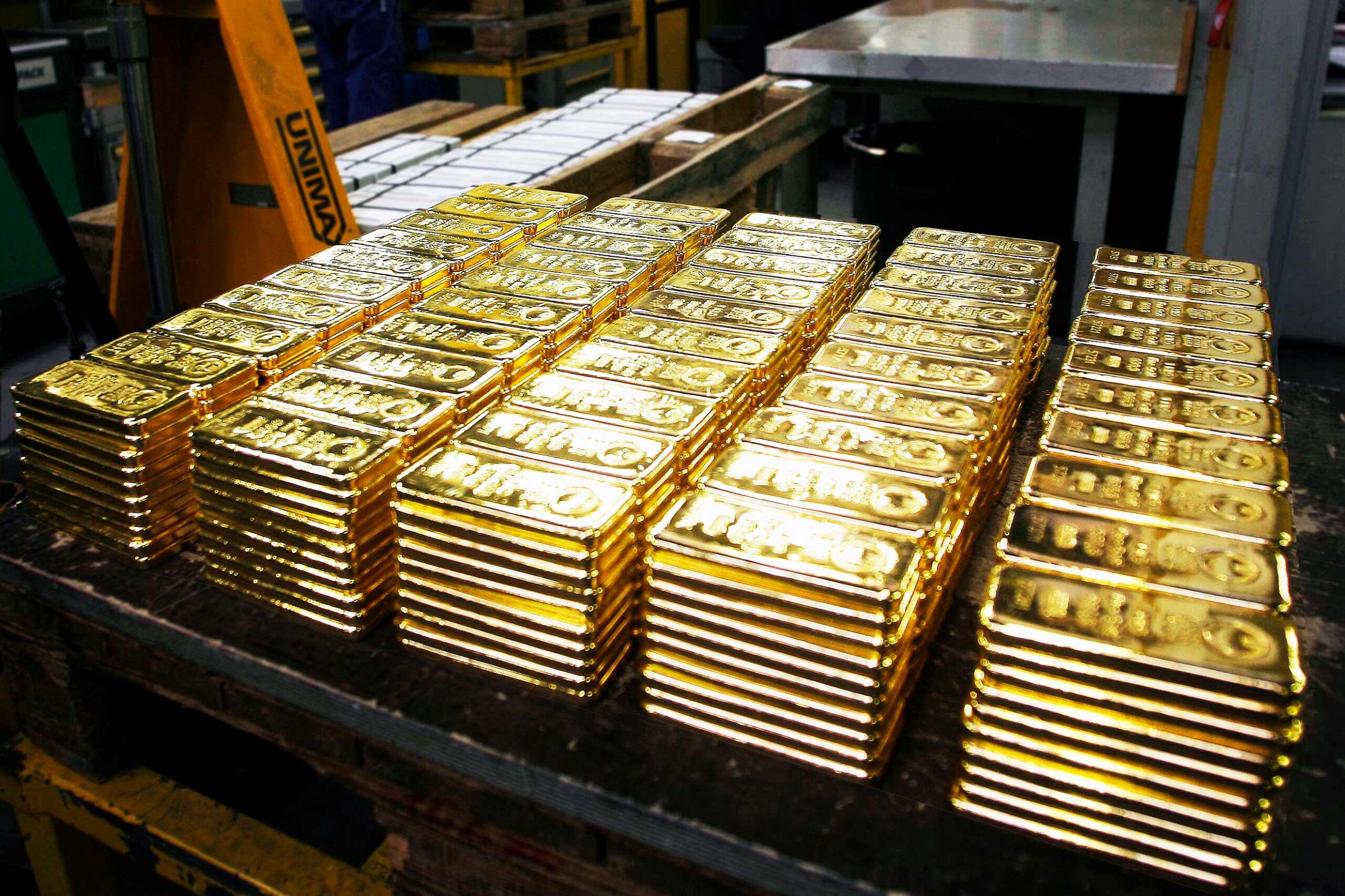
    Revolutionizing Gold Investment: Singapore Launches First Local Physical Gold ETF After 20 Years

    Singapore will soon see the launch of its first domestically developed physical gold exchange-traded fund (ETF) – the LionGlobal Singapore Physical Gold ETF. This noteworthy event is scheduled to take place on March 26th on the Singapore Exchange. This will also serve as the inaugural gold ETF listing on the local market in two decades. Lion Global Investors, a Singapore-based financial firm owned by banking institution OCBC, issued this information. The ETF’s trading will be facilitated in both Singaporean dollars and US dollars.

    Understanding ETFs

    An ETF can be described as an investment fund that owns an array of securities like commodities and stocks. Its operation is similar to that of an individual stock as it is traded on stock exchanges.

    Subscription and Benefits

    Investors will have the opportunity to subscribe to the ETF during the initial offering period, which is set to run from March 6th to 20th. Subscription is possible through participating dealers. The ETF is supported by physical gold, which is both insured and securely stored in Singaporean vaults. The primary goal of this ETF is to provide investors with cost-efficient exposure to the precious metal during a period where conventional asset allocations might encounter more significant hurdles, according to Lion Global’s CEO, Teo Joo Wah.

    Teo also noted that the LionGlobal Singapore Physical Gold ETF’s listing on the Singapore Exchange is a logical step forward in their mission to widen access to Singapore’s physical gold market.

    The Value of Gold

    Amid the current global macroeconomic uncertainty and the volatility of currencies, gold is often seen as a secure asset. Investors’ concerns and the surge in central bank acquisitions have contributed to an increase in gold prices. As evidence of this, gold prices hit a record high of US$5,597.23 per ounce on January 29th. As of the time this report was written, it was valued at $5,124.73 per ounce.

    Questions & Answers

    What is the LionGlobal Singapore Physical Gold ETF?
    The LionGlobal Singapore Physical Gold ETF is Singapore’s first domestically developed physical gold exchange-traded fund, set to launch on the Singapore Exchange on March 26th.

    What is the purpose of the LionGlobal Singapore Physical Gold ETF?
    The primary aim of this ETF is to provide investors cost-efficient exposure to the precious metal during a time when traditional asset allocations might face more significant hurdles.

    How does the current global economic situation affect the value of gold?
    In the face of global macroeconomic uncertainty and currency volatility, gold is often considered a safe haven asset. Factors like investor concerns and increased central bank purchases have helped drive prices higher, highlighting gold’s value during uncertain times.

  • DBS Broadens China Market Dominance: Secures Principal Bond Underwriting License

    DBS, a Singaporean financial institution, is expanding its operations in mainland China by acquiring a bond underwriting license. With this license, the bank’s China division is now permitted to function as a principal underwriter for non-financial corporate bonds in the mainland’s interbank bond market. This authorization has been granted by China’s National Association of Financial Market Institutional Investors (NAFMII). Consequently, DBS can now manage all onshore corporate bond deals, which involves coordinating syndicates.

    The Role of DBS in China’s Bond Market

    DBS is a substantial foreign participant in the issuance of panda bonds. These are yuan-denominated bonds that are sold onshore by issuers who are not Chinese. As of the close of the previous year, DBS held a 38 percent market share in panda bonds.

    In 2025, the issuance of panda bonds in China’s interbank market amounted to 173.3 billion yuan, or $25.1 billion. This represents a compound annual growth rate of 26 percent over the past five years, a clear sign of the bond market’s rapid expansion.

    Questions & Answers

    What is the recent development for DBS in mainland China?
    DBS’ China unit has received a principal underwriting license for non-financial corporate bonds in mainland China’s interbank bond market from the National Association of Financial Market Institutional Investors (NAFMII).

    What does this license allow DBS to do?
    This license allows DBS to handle all onshore corporate bond deals, including the coordination of syndicates.

    What is DBS’ current standing in the issuance of panda bonds?
    DBS is a significant foreign participant in the issuance of panda bonds with a market share of 38 percent as of the end of last year.

  • Swiss Financial Giant UBS Sparks Investment Insight at 14th ASEAN Summit in Singapore

    Swiss Financial Giant UBS Sparks Investment Insight at 14th ASEAN Summit in Singapore

    The global financial powerhouse UBS recently launched the 14th iteration of its Southeast Asia summit. The objective of the summit is to foster an exchange of insights and investment ideas for the upcoming year.

    The newly inaugurated UBS OneASEAN Summit has assembled in Singapore. The event has drawn an impressive crowd of over 850 individuals comprising institutional investors, influential policy makers, and industry leaders, the company revealed in a statement.

    The conference, spread over two days, is packed with panel discussions centered around various themes. These include global trade imbalances, investment prospects in China, Japan, and Europe, the future of gold and other precious metals, the rise of digital assets and artificial intelligence in the Association of Southeast Asian Nations (ASEAN), and the creation of new energy systems for the AI-driven economy.

    The distinguished panel of speakers at the summit includes Suahasil Nazara, Deputy Minister of Finance for Indonesia, Brad Setser from the Council on Foreign Relations, Alfred Schipke from the Lee Kuan Yew School of Public Policy, Ken Jimbo from the International House of Japan, Peter Conti-Brown from The Wharton School, University of Pennsylvania, and William Dalrymple, the acclaimed author.

    Robust Economic Growth

    As per Grace Lim, the Senior ASEAN and Asia Economist at UBS Investment Bank Global Research, the Gross Domestic Product (GDP) of the ASEAN-6 countries – Indonesia, Malaysia, Philippines, Singapore, Thailand, and Vietnam – is forecasted to grow by 4.9 percent in 2026.

    Lim explained that the region continues to benefit from strong integration into global manufacturing value chains, bolstered by a substantial domestic market. She stated, “The conditions for growth are still in place, with household consumption fueling momentum in Indonesia, a rise in private investment underway in Thailand and the Philippines, and a resilient tech-related export strength in Singapore and Malaysia.”

    Nicolo Magni, Head of UBS Global Banking South-East Asia & South Asia, added to this sentiment, saying, “Southeast Asia continues to be a strategic alternative for investors. We anticipate strong deal-making momentum to persist throughout 2026 and the capital markets will likely be more active in the healthcare, real estate, and consumer sectors.”

    Questions & Answers

    What is the objective of the UBS OneASEAN Summit?
    The objective of the summit is to foster an exchange of insights and investment ideas for the upcoming year.

    Who are the attendees of the UBS OneASEAN Summit?
    The event has drawn an impressive crowd of over 850 individuals comprising institutional investors, influential policy makers, and industry leaders.

    What is the predicted GDP growth for the ASEAN-6 countries in 2026?
    The Gross Domestic Product (GDP) of the ASEAN-6 countries – Indonesia, Malaysia, Philippines, Singapore, Thailand, and Vietnam – is forecasted to grow by 4.9 percent in 2026.

  • Standard Chartered Boosts Digital Assets Strategy, Appoints Karby Leggett as Asia Lead Amid Crypto Surge

    Standard Chartered Boosts Digital Assets Strategy, Appoints Karby Leggett as Asia Lead Amid Crypto Surge

    Standard Chartered, a leading UK-based financial institution, has recently announced the appointment of Karby Leggett as the regional head of digital assets. This move comes amidst the swift rise in the acceptance and adoption of digital currencies, tokenized assets, and stablecoins.

    Leadership in Digital Assets

    Karby Leggett’s new role will span across Greater China, North Asia, South Asia, and ASEAN as part of the Digital Assets Center of Excellence at Standard Chartered. This appointment is in addition to his existing position as the global head of the official institutions group, which is a part of the bank’s global research team.

    The expanded responsibilities have been introduced as digital assets and official sector engagement increasingly intersect across the bank’s markets. This trend is driven by clients who are exploring the transformative potential of these technologies for their business models and financial ecosystems.

    The Strategic Importance of Digital Assets

    Mr. Leggett’s vast experience in working with governments, multilateral organizations, and other official sector stakeholders will be critical in accelerating Standard Chartered’s digital assets strategy. His expertise will also contribute to reinforcing the bank’s leadership in this area and in delivering innovative solutions to its clients across Asia.

    This sentiment was echoed by Eric Robertsen, the global head of research and chief strategist, and Rene Michau, the global head of digital assets. They jointly stated, “Karby’s extensive experience positions him to accelerate our Digital Assets strategy, deepen our leadership, and support the delivery of innovative solutions for our clients across Asia.”

    Questions & Answers

    Who is the new regional head of digital assets at Standard Chartered?
    Karby Leggett was recently appointed as the new regional head of digital assets at Standard Chartered.

    What regions will Karby Leggett’s new role cover?
    Mr. Leggett’s role as the regional head will cover Greater China, North Asia, South Asia, and ASEAN.

    How will Karby Leggett’s appointment impact Standard Chartered’s digital assets strategy?
    Karby Leggett’s vast experience in working with governmental and official sector stakeholders is anticipated to accelerate Standard Chartered’s digital assets strategy, as well as strengthen its leadership and support the delivery of innovative solutions for its clients across Asia.

  • Great Eastern Unveils Exclusive High Net Worth Services: Tailored Insurance and Elite Lifestyle Perks

    Great Eastern Unveils Exclusive High Net Worth Services: Tailored Insurance and Elite Lifestyle Perks

    Great Eastern, the insurance division of OCBC, has introduced a new service tailored specifically for high net worth (HNW) individuals and families across Asia.

    Great Eastern Private: A Tailored Experience

    The newly unveiled proposition is named Great Eastern Private. This service aims to bring together custom-designed HNW insurance solutions with a curated panel of expert advice and services spanning seven spheres. These domains encompass next-generation leadership, family advisory and trust services, health and longevity, international tax advisory, legal advisory, philanthropy, and global lifestyle concierge.

    In collaboration with Singapore Management University Executive Development, Great Eastern will conduct a cross-generational family program. This initiative will provide a platform for founders and family members to delve into topics like values, enterprise continuity, leadership transition, and long-term legacy.

    The Hewton Fair Suite: An Exclusive Offering

    Great Eastern is also offering HNW clients access to an exclusive area dubbed the Hewton Fair Suite, a nod to the company’s founder Alfred Hewton Fair. This premium space will feature on-site medical services in collaboration with Raffles Medical Group.

    CEO of Great Eastern, Greg Hingston, commented on the new proposition. He noted that as clients successfully amass wealth, the focus is now shifting to the careful and effective preservation and transfer of wealth. Great Eastern Private, he said, is a strategic move to invest in capabilities and services that meet this evolving customer need. He also affirmed the company’s commitment to remain the trusted insurance partner of customers throughout all life stages and generations.

    Questions & Answers

    What is the Great Eastern Private proposition?
    Great Eastern Private is a new service introduced by Great Eastern, the insurance arm of OCBC, designed specifically for high net worth individuals and families. It offers tailored insurance solutions and curated expert services across various domains.

    What are some of the services offered as part of Great Eastern Private?
    Services offered under Great Eastern Private encompass next-generation leadership, family advisory and trust services, health and longevity, international tax advisory, legal advisory, philanthropy, and global lifestyle concierge.

    What is the Hewton Fair Suite?
    The Hewton Fair Suite is an exclusive area offered to high net worth clients utilizing the Great Eastern Private service. It includes on-site medical services provided in partnership with Raffles Medical Group.

  • HSBC Unveils Premier Elite Space in Singapore: The Largest Wealth Center Yet

    HSBC Unveils Premier Elite Space in Singapore: The Largest Wealth Center Yet

    HSBC has made a significant stride in expanding its footprint in Singapore by opening its fourth and largest wealth center in the city-state. Situated on the 33rd floor of the Singapore Land Tower, the wealth center spans 7,884 square feet and is equipped with 14 meeting rooms. These rooms include both private client advisory rooms and enclosed teller rooms, further enhancing the center’s capacity to serve its clientele.

    Catering to High Net Worth Clients

    The new wealth center is primarily dedicated to serving HSBC’s high net worth segment, specifically the HSBC Premier Elite. This segment, launched in 2024, caters to clients who maintain a minimum relationship balance of S$1.2 million ($1 million).

    Incorporating this wealth center into HSBC’s Singapore operations is a part of a larger plan to transform its business in the city-state. This plan includes a significant investment, with intentions to quintuple the bank’s local physical network.

    Ashmita Acharya, HSBC’s head of international wealth and premier banking in Singapore, spoke about the design and intent of the new wealth center. She noted that the center integrates the wealth and lifestyle aspirations of HSBC’s clients. By bringing together the best of the bank’s advisory, service, and hospitality expertise, the center aims to enhance the wealth journey of its clients in a meaningful way.

    Questions & Answers

    What is the purpose of the new wealth center established by HSBC in Singapore?
    The new wealth center is dedicated to serving HSBC’s high net worth segment, the HSBC Premier Elite. It aims to bring together the best of HSBC’s advisory, service, and hospitality expertise to enhance the wealth journey of its clients.

    Where is the wealth center located and what are its features?
    The wealth center is located on the 33rd floor of the Singapore Land Tower. It covers an area of 7,884 square feet and includes 14 meeting rooms, enclosed teller rooms, and private client advisory rooms.

    What wider plan is the opening of this wealth center a part of?
    The establishment of this wealth center is part of HSBC’s broader efforts to transform its business in Singapore. This includes plans to quintuple its investment towards increasing its local physical network.

  • UOB Defies Profit Dip to Bestow 6,000 Junior Staff with Surprise Half-Month Salary Bonus

    UOB Defies Profit Dip to Bestow 6,000 Junior Staff with Surprise Half-Month Salary Bonus

    Despite a dip in 2025 net profits, the United Overseas Bank (UOB) of Singapore plans to award approximately 6,000 junior staff members with a half-month base salary payout. This one-time payment aims to recognize their hard work and contributions amidst trying external circumstances.

    A Rewarding Gesture

    UOB intends to distribute these payouts in the second quarter of this year. The total sum of the payouts will amount to roughly S$4 million (US$3.16 million), as disclosed in the bank’s recently released earnings report.

    In the report, UOB also reaffirmed its dedication to uphold a competitive and equitable wage structure for all its employees.

    Financial Performance in 2025

    This generous gesture comes in spite of UOB’s net profit experiencing a 7% year-on-year decline in the fourth quarter, closing at S$1.41 billion. This decrease resulted from margin pressures counterbalancing loan growth.

    For the entire year, UOB’s net profit was recorded at S$4.7 billion, showing a decrease from S$6 billion in 2024. UOB identified the primary cause for this decline as the precautionary general allowances it had allocated in the third quarter, intended to fortify provision coverage in response to increasing macroeconomic uncertainties.

    A critical profitability indicator for the bank, its net interest margin, decreased to 1.89% in 2025, down from 2.03% in the previous year. Simultaneously, net interest income saw a 3% decline, amounting to S$9.36 billion.

    A Trend in Singaporean Banking

    UOB is not the only Singaporean bank showing appreciation for its employees in such a manner. Another prominent bank in the country, DBS, also declared a S$1,000 bonus for its numerous junior employees upon the disclosure of its 2025 earnings earlier this month.

    Questions & Answers

    What is the total amount UOB plans to distribute to its junior staff as a reward?
    UOB plans to distribute around S$4 million (US$3.16 million) among approximately 6,000 junior staff members.

    What caused UOB’s net profit to decrease in 2025?
    The decrease in UOB’s net profit for 2025 is largely attributed to the bank setting aside precautionary general allowances in the third quarter, aimed at bolstering provision coverage due to escalating macroeconomic uncertainties.

    Did other banks in Singapore also provide bonuses for their junior employees?
    Yes, DBS, another prominent bank in Singapore, also announced a S$1,000 bonus for its junior employees when it released its 2025 earnings.

  • “HSBC Eyes $1 Billion Windfall from Hang Seng Privatization: A Bold Step in Hong Kong’s Financial Future”

    “HSBC Eyes $1 Billion Windfall from Hang Seng Privatization: A Bold Step in Hong Kong’s Financial Future”

    HSBC, with headquarters in London, has expressed optimism following its decision to take Hang Seng, a Hong Kong bank, private, with projected cumulative benefits nearing $1 billion.

    Anticipated Financial Benefits

    According to the bank’s strategic report, HSBC anticipates that the privatization of Hang Seng Bank will yield a total of $900 million in benefits. This figure includes $500 million in synergy realization and an ambitious $400 million in added revenue and cost-saving opportunities by the year’s end in 2028. The bank also forecasts restructuring expenses amounting to approximately $600 million.

    Leadership’s Outlook

    HSBC’s CEO, Georges Elhedery, spoke positively of the decision to privatize Hang Seng Bank. He noted that the $13.7 billion privatization merges 255 years of history and heritage, uniting global reach with local depth. Elhedery stated that the move allows for the scaling of capabilities across both banks to the benefit of all customers. He went on to say that the decision to privatize Hang Seng Bank demonstrates the company’s confidence in and commitment to Hong Kong’s future growth.

    Prior Ownership and Recent Changes

    Before finalizing the privatization deal on January 26, the British bank already owned a 63% stake in Hang Seng. The privatization was completed following approval from both shareholders and the court.

    Questions & Answers

    What are the financial benefits anticipated by HSBC from the privatization of Hang Seng Bank?
    HSBC projects total benefits of $900 million from the privatization, including $500 million in synergies and an additional $400 million in revenue and cost-saving opportunities by the end of 2028.

    What costs does HSBC expect to incur due to the restructuring?
    The bank estimates that associated restructuring costs will be around $600 million.

    What was HSBC’s stake in Hang Seng Bank prior to privatization?
    Before the privatization, HSBC already held a 63% stake in Hang Seng Bank.

  • OCBC Overcomes Interest Income Dip with Diversified Revenue: Unveils ‘The Next Frontier’ Strategy

    OCBC Overcomes Interest Income Dip with Diversified Revenue: Unveils ‘The Next Frontier’ Strategy

    Despite experiencing a slight dip in interest income, Singapore’s OCBC managed to maintain a relatively static profit, thanks to diverse revenue sources.

    Financial Performance

    OCBC recorded a net profit of S$7.4 billion ($5.9 billion) in 2025, marking a 2 percent decrease compared to the previous year’s record of S$7.6 billion. The bank’s income, however, reached an unprecedented level of S$14.6 billion. This rise can be attributed to a 16 percent increase in non-interest income, which was seen across all sectors including fees, commissions, trades, and insurance (both life and general). Operating expenses saw a slight increase of 2 percent, rising to S$5.9 billion, primarily due to increases in staff and IT-related costs.

    The Next Frontier

    OCBC CEO Tan Teck Long, who took over from Helen Wong on January 1, acknowledged the bank’s completion of its previous three-year plan, which brought about “commendable progress.” Under this plan, the bank managed to unify its brand across its core markets, leading to enhanced synergies through a unified-group approach.

    OCBC has now initiated its new strategy, aptly named “The Next Frontier.” The bank aims to improve return on equity through a stronger focus on high-returning businesses, while maintaining cost discipline. The goal is to achieve a cost-income ratio in the low to mid 40 percent range.

    This strategy, according to CEO Tan, equips the bank with the necessary tools to compete and succeed in the next growth phase. This includes tapping into rising Asian markets, enhancing core market franchise, advancing technology-led and customer-centric capabilities through AI, Digital, and Data, and continuing to support green transitions.

    Despite geopolitical tensions, evolving trade dynamics, and interest rate uncertainties, Tan remains “cautiously optimistic” about the future. He believes that the bank’s robust balance sheet, prudent risk management, and diversified growth engines will allow it to successfully navigate these challenging conditions and deliver sustainable, long-term value.

    Questions & Answers

    What was OCBC’s net profit for 2025?
    OCBC recorded a net profit of S$7.4 billion ($5.9 billion) in 2025.

    What is OCBC’s new strategy and what does it aim to achieve?
    OCBC’s new strategy is titled “The Next Frontier.” It aims to improve return on equity through a stronger focus on high-returning businesses and maintaining cost discipline with a goal to attain a cost-income ratio in the low to mid 40 percent range.

    What are the bank’s views on the upcoming market conditions?
    CEO Tan Teck Long remains cautiously optimistic about the future. He believes that despite geopolitical tensions, evolving trade dynamics, and interest rate uncertainties, the bank, with its robust balance sheet, prudent risk management, and diversified growth engines, is well positioned to navigate these challenges and deliver sustainable, long-term value.

  • Gold Glitters High in Vietnam: Bullion Boosted by Global Rally and Wealth Day Purchases

    Gold Glitters High in Vietnam: Bullion Boosted by Global Rally and Wealth Day Purchases

    On Wednesday, the price of gold in Vietnam experienced a rise, mirroring the global surge in bullion rates after a decrease during the earlier session. Saigon Jewelry Company reported a rise of 0.38% in gold bar prices, reaching VND185.3 million ($7,090.80) per tael, a price match with other retailers.

    Rise in Gold Ring Prices

    Gold ring prices followed a similar trend, increasing by the same rate to VND184.8 million per tael. A tael is a weight measurement equivalent to approximately 37.5 grams or 1.2 ounces.

    God of Wealth Day Impact

    With the advent of the God of Wealth Day on Thursday, numerous jewelry shops in Hanoi witnessed long queues of customers eager to buy gold. It is a popular belief that buying gold during this event will invite prosperity throughout the year.

    Global Gold Trends

    Internationally, gold prices also went up on Wednesday as Asian traders sought refuge in the safe-haven metal amidst uncertainty over U.S. tariffs. This follows a ruling by the U.S. Supreme Court that annulled several of President Donald Trump’s measures. Spot gold saw an increase of 0.7%, reaching $5,181.95 per ounce. Despite ending the previous session with a decline of over 1% as investors capitalized on profits after gold reached a three-week peak earlier in the day, U.S. gold futures for April delivery saw an uptick of 0.5% at $5,200.40.

    According to a technical analyst, gold may find stability around a support of $5,140 per ounce and may retest the resistance at $5,244. They also noted that the immediate resistance is at $5,205; breaking above this may result in an increase in the range of $5,221 to $5,244.

    Questions & Answers

    Why did the price of gold increase in Vietnam?
    The price of gold increased in Vietnam due to a global surge in bullion rates and the upcoming God of Wealth Day, a time when people buy gold to invite prosperity.

    What factors are influencing global gold prices?
    Global gold prices are influenced by many factors, including geopolitical uncertainties such as the recent U.S. Supreme Court ruling on tariffs, which led investors to seek refuge in gold, seen as a safe-haven metal.

    What is the future outlook for gold prices?
    The future of gold prices may see some stability around a support of $5,140 per ounce and may retest the resistance at $5,244. If the price breaks above the immediate resistance of $5,205, it could lead to a gain in the range of $5,221 to $5,244.

  • US Dollar Gains Momentum against Vietnamese Dong Amid Global Currency Shifts

    US Dollar Gains Momentum against Vietnamese Dong Amid Global Currency Shifts

    On Wednesday morning, the US dollar experienced a surge against the Vietnamese dong while simultaneously witnessing a decline against several of its other major counterparts. In the currency exchange, Vietcombank sold the US dollar at VND26,309. This represented a marginal increase of 0.02% compared to the previous day’s rate. On the unofficial currency market, the US dollar saw a slightly larger gain of 0.1%, reaching around VND26,858.

    Monetary Policy Moves

    The State Bank of Vietnam responded to these fluctuations by increasing its reference rate by 0.02% to VND25,057. This move typically reflects the government’s effort to manage the value of the Vietnamese dong and ensure economic stability in the country.

    Global Currency Trends

    In broader international markets, Asian currencies made a recovery on Wednesday, bouncing back from losses sustained the previous day. Many investors are closely monitoring the US Supreme Court’s recent decision to block President Donald Trump’s tariffs that were imposed using emergency powers. They are also keenly observing his speeches for any potential indicators of future trade policy changes.

    The dollar index, a key benchmark used to gauge the value of the US dollar relative to a basket of other major currencies, including the yen and the euro, fell slightly by 0.05% to 97.84. In parallel, the euro saw a mild increase of 0.05%, reaching $1.1777.

    The value of the yen against the US dollar saw a modest uptick of 0.12%, reaching 155.7 per dollar. This comes after a significant drop of 0.8% on Tuesday.

    In other parts of the world, the Australian dollar experienced a rise of 0.3% to $0.7074. This followed a surge in inflation which has increased the likelihood of future rate hikes. Additionally, the New Zealand dollar saw a minor increase in its value, reaching $0.5971.

    Questions & Answers

    How did the US dollar perform against the Vietnamese dong on Wednesday?
    The US dollar saw a marginal increase against the Vietnamese dong on Wednesday, selling at VND26,309 in Vietcombank, which is a 0.02% increase from the previous day.

    How did other major currencies perform against the US dollar?
    The yen and the Australian and New Zealand dollars all strengthened against the US dollar. The yen increased 0.12%, while the Australian dollar rose by 0.3%. The New Zealand dollar also saw a minor increase.

    How did global events impact the currency market?
    Investors are closely monitoring recent decisions by the US Supreme Court and speeches from President Donald Trump for signals on future trade policy. These global events have an impact on currency movements and investors’ actions.

  • Citi Unveils New Chicago Desk to Bolster Support for Korean Corporates in the US Market

    Citi Unveils New Chicago Desk to Bolster Support for Korean Corporates in the US Market

    Citi, the American multinational investment bank, is set to enhance its service to Korean corporate clientele with the inauguration of a new desk in Chicago.

    Expanding Coverage of Korean Corporates

    The newly launched Korea desk in Chicago is part of Citi’s strategic plan to augment its local financial support for Korean corporate clients who are penetrating the North American market. This addition builds upon Citi’s existing US coverage of Korean corporations, which was initiated in New York in 1993.

    Currently, Citi operates Korea desks around the world, including in London, Prague, Dubai, Singapore, Warsaw, Chennai, Hong Kong, Atlanta, and Monterrey.

    Growth of Korean Corporates in North America

    Citi reports that Korean corporates are quickly spreading their influence across North America, spanning a broad range of industries such as manufacturing, power, semiconductors, and services. The expansion into the United States extends beyond specific regions as businesses set up production and sales bases throughout the country, making their operations progressively widespread.

    Kyoungho Kim, the head of the corporate banking group at Citi Korea, noted the bank’s history of aiding Korean corporates. He highlighted how Citi Korea has been instrumental in bridging the financial operations of these clients’ headquarters in Korea with their overseas subsidiaries through its Korea Desks in key global markets.

    Enhanced Support for Korean Corporates in the Midwest

    The Chicago Korea Desk’s introduction marks a step forward in extending this crucial service in North America. It aims to provide ample support for Korean corporates operating in the US Midwest, guiding them through their funding and financial transactions in alignment with the local financial environment.

    Questions & Answers

    What is the purpose of the new Korea desk in Chicago launched by Citi?

    The Korea desk in Chicago is intended to expand Citi’s local financial support for Korean corporate clients penetrating the North American market.

    What industries are Korean corporate clients involved in?

    Korean corporate clients are involved in a wide range of industries, including manufacturing, power, semiconductors, and services.

    What are Citi Korea’s efforts in supporting Korean corporate clients?

    Citi Korea has been pivotal in connecting the financial operations of Korean corporates’ headquarters with their overseas subsidiaries, providing consistent financial support in key global markets.

  • UBS China Joint Venture Faces Backlash Over Unexpected Benchmark Switch in Silver Fund

    UBS China Joint Venture Faces Backlash Over Unexpected Benchmark Switch in Silver Fund

    A silver fund run by UBS’s Chinese partner has drawn a wave of complaints from investors. The grievances have been sparked by a decision to change benchmarks, a move that has reportedly resulted in greater losses than investors had anticipated.

    Over 200,000 individuals have raised concerns against UBS’s domestic Chinese partnership with the state-controlled SDIC Group. The objections are primarily focused on UBS SDIC Fund Management’s decision to alter the valuation mark for the UBS SDIC Silver Futures Fund LOF. The company shifted from Shanghai Futures Exchange settlement prices to international market prices without giving investors prior notice. It is thought that this change transformed losses from an expected cap of 17 percent, due to a daily price limit, to over 31 percent.

    This alteration took place during a significant collapse in silver prices on January 30, which saw the value of the precious metal plummet by over 30 percent. In response to this situation, the company formed a task force and subsequently announced a compensation plan for investors who redeemed their investments on February 2.

    Questions & Answers

    What caused the wave of complaints against UBS’s Chinese partner?
    Investors were unhappy with UBS SDIC Fund Management’s decision to switch the valuation mark for the UBS SDIC Silver Futures Fund LOF from Shanghai Futures Exchange settlement prices to international market prices without any prior notice.

    What was the impact of the benchmark switch on investors?
    The change is believed to have amplified losses from an anticipated cap of 17 percent due to a daily price limit, to an actual loss of over 31 percent.

    What measures did the company take in response to the silver price crash?
    In response to the silver price crash and the resulting investor complaints, the company formed a task force and announced a compensation plan for investors who redeemed their investments on February 2.

  • Malaysian Ringgit on a Steady Rise: Expert Predicts Strong Appreciation Cycle by 2026

    Malaysian Ringgit on a Steady Rise: Expert Predicts Strong Appreciation Cycle by 2026

    MUFG Bank Ltd anticipates that the ringgit will fortify to 3.70 against the U.S. dollar by the end of 2026. This expectation is bolstered by an enduring appreciation cycle fueled by robust structural fundamentals.

    Predictions by Senior Currency Analyst

    Lloyd Chan, the bank’s senior currency analyst, claims that this forecast is rooted in the continuous inflow of investment in the Information and Communication Technology (ICT) sector. Other factors such as macroeconomic stability, supportive governmental policies, and enhanced capital flows also contribute to this prediction.

    Chan notes that there is a vigorous investment cycle currently taking place in Malaysia. This cycle, he believes, underpins the country’s prospects for medium-term economic growth.

    Rise in Investment Approvals

    Investment approvals in the manufacturing and services sectors have risen by 14.7% year-on-year during the first nine months of 2025. Foreign Direct Investment (FDI) has played a significant role in this upswing in capital expenditure.

    According to Chan, this increase signals a revived confidence in Malaysia’s policy framework, infrastructure, and role in regional supply chains.

    ICT as a Major Contributor

    The ICT sector has emerged as the primary contributor to the total approved investments within Malaysia. There has been a noticeable increase in foreign participation in this sector since 2022. Chan points out that the country’s ICT investment approvals experienced a year-on-year surge of about 32% in the first nine months of 2025.

    Macroeconomic Stability

    Chan observes that Malaysia’s macroeconomic stability has reduced risk premiums. Despite the rationalization of RON95 fuel subsidies and adjustments to sales and services tax, inflation has remained under control. This has allowed Bank Negara Malaysia (BNM) to maintain policy stability.

    On February 12, the ringgit ascended to a new high of 3.8995 against the U.S. dollar. This is its strongest level in nearly eight years. The last time it traded in this range was on April 23, 2018, when it was valued at 3.8965/8995 against the dollar.

    Questions & Answers

    What is the forecast for the ringgit against the U.S. dollar by the end of 2026?
    The MUFG Bank Ltd predicts that the ringgit will strengthen to 3.70 against the U.S. dollar by the close of 2026.

    Which sector has been the major contributor to total approved investments in Malaysia?
    The Information and Communication Technology (ICT) sector has been the primary contributor to the total approved investments in Malaysia.

    What factors have contributed to maintaining policy stability in Malaysia?
    The macroeconomic stability of Malaysia, reflected in their controlled inflation despite changes in fuel subsidies and sales and services tax, has allowed Bank Negara Malaysia to maintain policy stability.