Category: Finance

Retail News Asia is committed to providing both local and global retailers with the latest Finance news throughout the Asian market. This on a daily base.

  • Standard Chartered Revolutionizes Transaction Banking with New AI-powered Platform

    Standard Chartered Revolutionizes Transaction Banking with New AI-powered Platform

    Standard Chartered, a UK-based banking and financial services company, has announced the rollout of an artificial intelligence (AI) enabled platform aimed at accelerating and customizing transaction banking services for its clientele.

    The innovative platform is designed to aid relationship managers, sales teams, and proposal managers in swiftly accessing, customizing, and delivering transaction banking services to corporate and institutional clients, according to an official statement.

    Three primary features distinguish the newly launched platform. Initially, the platform automates and augments the process of accessing, selecting, and personalizing client solutions. Secondly, it functions as a unified access point for the most recent product and market capabilities. Finally, it is designed for continuous improvement and innovation, effortlessly integrating with other platforms and technologies to guarantee long-term value and impact.

    Mark Troutman, global head of transaction banking corporate sales at Standard Chartered, commented on the new development. He noted that fulfilling clients’ expectations for prompt, accurate, and highly personalized responses can be demanding on a large scale. However, by providing their teams with the advanced AI capabilities through this new digital platform, they can better comprehend client needs and deliver more pertinent, tailored solutions.

    Questions & Answers

    What is the purpose of Standard Chartered’s new AI-powered platform?
    The platform is aimed at accelerating and customizing transaction banking services for its corporate and institutional clients. It is designed to aid relationship managers, sales teams, and proposal managers in swiftly accessing, customizing, and delivering these services.

    What are the primary features of the new platform?
    The platform automates and enhances the process of accessing, selecting, and customizing client solutions. It also functions as a unified access point for the most recent product and market capabilities. Moreover, it is designed to enable continuous improvement and innovation.

    How does this new platform benefit Standard Chartered’s client services?
    By equipping Standard Chartered’s teams with advanced AI capabilities through this platform, they can better understand client needs and provide more relevant, tailored solutions. This is particularly valuable in an environment where clients expect fast, accurate, and highly personalized services.

  • Vietnam: The Lone Decline in Southeast Asia’s 2025 Gold Rush Amidst Supply Shortages

    Vietnam: The Lone Decline in Southeast Asia’s 2025 Gold Rush Amidst Supply Shortages

    In 2025, Vietnam stood out as the sole Southeast Asian nation to experience a decline in its sales of gold bars and coins. The volume experienced a 14% decrease from the previous year, falling to 36.1 metric tons, in spite of robust consumer interest.

    Gold Trading Contraction in Vietnam

    The World Gold Council has reported a consistent contraction in Vietnam’s gold trading for six consecutive quarters up until the end of 2025, landing at a near-five-year low. A primary factor contributing to this downward trend has been identified as short supply.

    Shortages in the supply of gold bars and a sudden surge in the demand for 24K rings induced a sharp increase in prices. This caused a significant divergence from global rates, with bullion prices experiencing a rise of 81% in the previous year and 25% in the current year.

    Comparison with Other ASEAN Countries

    Contrastingly, most of the ASEAN member countries experienced a surge in demand for bars and coins, reaching multi-year highs. Thailand was the regional leader in terms of gold bar and coin purchases, boasting a 29% increase at 51.4 tons. Indonesia, Malaysia, and Singapore also reported growth of 29%, 37%, and 48% respectively.

    The State Bank of Vietnam has highlighted the fact that Vietnam is not a gold-producing country and primarily relies on imports, which lends itself to a restricted supply given foreign currency is typically reserved for more pressing needs.

    In the previous year, the government made the decision to permit private gold producers who meet specific capital requirements to operate. However, up until now, no licenses have been issued.

    Global Gold Demand

    On a global scale, gold demand experienced a 1% rise to reach 5,002 tons, setting a new record. This is largely attributed to the continuous geopolitical and economic uncertainty, which has led investors to seek refuge in this safe-haven metal.

    Questions & Answers

    Why did Vietnam experience a drop in gold bar and coin sales in 2025?
    The significant decline in sales is attributed to supply shortages, despite strong consumer demand.

    How did other ASEAN member countries fare in comparison to Vietnam?
    Contrary to Vietnam, most ASEAN member countries, including Thailand, Indonesia, Malaysia, and Singapore, saw a surge in demand for gold bars and coins, reaching multi-year highs.

    What measures has the Vietnamese government taken to address the issue of gold supply?
    The government has granted permission to private gold producers meeting certain capital requirements to operate, in an effort to address the issue of gold supply. However, as of now, no licenses have been issued.

  • Vietnam’s VN-Index Plunges: Longest Losing Streak in Seven Years Sparks Market Concern

    Vietnam’s VN-Index Plunges: Longest Losing Streak in Seven Years Sparks Market Concern

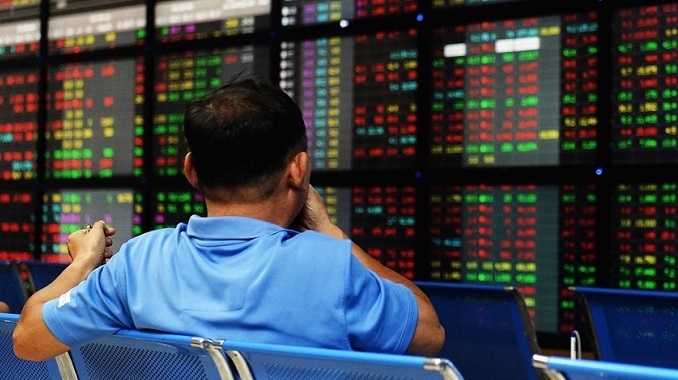
    The VN-Index of Vietnam, which is the country’s benchmark index, experienced a decline for the seventh consecutive session on Wednesday. This represents the most extended losing streak since 2018’s final quarter. The VN-Index wrapped up the session at 1,802.91, marking a decrease of 1.51% or 27.59 points. From the beginning of the previous week, the index underwent a loss of 100 points.

    Trade Volume Increase and Major Price Movements

    A significant increase of 34% was recorded in the trading volume on the Ho Chi Minh Stock Exchange, reaching VND33.7 trillion (equivalent to US$1.29 billion).

    The VN-30 basket, which is a compilation of the 30 most significant capped stocks, witnessed a fall in 16 tickers. The VIC ticker of the private conglomerate Vingroup reached its lowest price point.

    In the realm of retail real estate, Vincom Retail’s VRE experienced a decrease of 5.8%, while the VHM of property titan Vinhomes suffered a reduction of 5.7% in its closing price.

    On the more positive side, eleven blue-chip stocks recorded gains. Among them, MSN of the Masan Group conglomerate saw a rise of 3.7%, FPT of tech powerhouse FPT Corporation increased by 2.4%, and GAS of the state-owned Petrovietnam Gas experienced a boost of 2.3%.

    Foreign Investor Activity and Other Indexes

    Foreign investors ended up as net sellers, with a net selling volume reaching VND1.78 trillion. This selling activity mainly targeted HDB of HDBank and ACB of Asia Commercial Bank.

    Taking a look at other indexes, the HNX-Index, associated with stocks on the Hanoi Stock Exchange, which mainly includes mid and small cap stocks, recorded a fall of 0.15%. Meanwhile, the UPCoM-Index, representing the Unlisted Public Companies Market, saw an increase of 0.62%.

    Questions & Answers

    What is the VN-Index?
    The VN-Index is a benchmark index in Vietnam that represents the performance of the country’s stock market.

    Which stocks experienced a price decrease?
    The VIC of Vingroup, VRE of Vincom Retail, and VHM of Vinhomes were among the stocks that saw a decrease in price.

    Which stocks saw a price increase?
    Among the stocks that recorded a price increase were MSN of the Masan Group, FPT of FPT Corporation, and GAS of Petrovietnam Gas.

  • Record-Breaking Silver Prices in Vietnam Surge Amid Global Safe-Haven Demand

    Record-Breaking Silver Prices in Vietnam Surge Amid Global Safe-Haven Demand

    On Monday morning, silver prices in Vietnam hit an all-time high as global demand for safe-haven assets surged. The price of Phu Quy silver jumped 6% to VND4.24 million (US$162) per tael, equivalent to VND112.8 million per kilogram.

    Silver Prices Surge in Vietnam

    Since the start of the year, the cost of this white metal in Vietnam has seen an increase of 35%. This rise parallels a global trend, where the price of spot silver increased by 4.57% to $107.65 per ounce. This sharp increase comes after it hit an unprecedented high of $108.60 per ounce. The escalation can be attributed to investors seeking refuge in safe-haven assets due to escalating geopolitical uncertainties.

    Silver Crosses the $100 Mark

    On Friday, silver prices exceeded the $100 mark for the first time ever. This rise builds on last year’s significant increase of 147%. The astounding growth is a result of an influx of retail investors and momentum-driven purchases, exacerbating a longstanding period of scarcity in the physical markets for silver.

    Questions & Answers

    What is a safe-haven asset?
    A safe-haven asset is a type of investment that is expected to hold or increase its value during market turbulence. These assets are typically sought after by investors to limit their exposure to losses during market downturns.

    What caused the surge in silver prices in Vietnam?
    The surge in silver prices in Vietnam can be attributed to an increase in global demand for safe-haven assets, as well as geopolitical uncertainties.

    What factors contributed to silver prices crossing the $100 mark?
    The surge beyond the $100 mark was driven by an influx of retail investors and momentum-driven purchases, which intensified an already present scarcity in the physical markets for silver.

  • Revolut Gears Up for Swiss Expansion, Seeking Top-Tier Executives for Groundbreaking Move

    Revolut Gears Up for Swiss Expansion, Seeking Top-Tier Executives for Groundbreaking Move

    Revolut, the digital banking platform, has unveiled ambitious plans for expansion in the Swiss market. The company’s General Manager for Switzerland, Julian Biegmann, declared that Revolut is “building the future of Swiss banking” and announced an extensive recruitment drive aimed at elevating the company’s presence in Switzerland.

    Senior Positions Open for Recruitment

    The available roles currently being advertised by Revolut include Head of Risk, Head of Legal, Treasury Manager, Tax Manager, Business Risk Manager, and a Strategy & Operations Manager catering to both retail and business clients. This level of seniority and the range of positions available are unprecedented for Revolut within the Swiss market, marking a significant shift in the company’s approach.

    Focused on Regulatory Compliance

    Interestingly, many of the vacant roles are concentrated on regulatory, legal, and risk management functions. This emphasis is seen by industry insiders as an intentional move by Revolut, signalling that the company is establishing a solid foundation for a more independent operation in Switzerland.

    For years, there’s been ongoing speculation in the Swiss banking and fintech circles that Revolut may be considering applying for a Swiss banking license. While the company has not made any public confirmations, the current wave of recruitment lends more credibility to these rumours.

    Biegmann emphasized in his announcement that Revolut is seeking candidates who thrive in “fast-paced environments” and are eager to have a significant “impact at scale.” He further stated that all applications are being processed solely through Revolut’s official recruitment portal.

    Presently, Revolut services a substantial and expanding Swiss client base under its European license framework. The company’s long-rumored larger ambitions now seem to be materializing into tangible organizational steps within Switzerland.

    Questions & Answers

    What positions is Revolut currently hiring for in Switzerland?
    Revolut is recruiting for several senior roles, including Head of Risk, Head of Legal, Treasury Manager, Tax Manager, Business Risk Manager, and a Strategy & Operations Manager.

    Why is the emphasis on regulatory, legal, and risk management roles significant?
    The focus on these roles suggests that Revolut is laying the groundwork for a more self-governing operation in Switzerland, possibly indicating its intention to apply for a Swiss banking license.

    What kind of candidates is Revolut seeking for these roles?
    Revolut is looking for candidates who are comfortable in dynamic, fast-paced environments and are eager to make a significant impact at scale.

  • Maybank Unveils Ambitious ‘ROAR30’ Five-Year Strategy, Aims for 14% ROE

    Maybank Unveils Ambitious ‘ROAR30’ Five-Year Strategy, Aims for 14% ROE

    Maybank, a Malaysian-based banking corporation, has recently unveiled its ambitious five-year strategy plan, dubbed “ROAR30”. The roadmap, which extends until 2030, outlines significant financial targets, including a return on equity (ROE) aim of 13-14 percent, a net interest margin that exceeds 2.05 percent, a cost-to-income ratio of 47 percent or lower, and a CASA (current account and savings account) ratio above 41 percent.

    Dato’ Sri Khairussaleh Ramli, Maybank’s President and Group CEO, emphasized the importance of the bank’s core markets – Malaysia, Indonesia, and Singapore – as primary growth and profitability contributors. He commented, “Our regional network strategy will enable us to support our clients across various markets. We are committed to shaping a mobile workforce, fostering a transformative mindset and culture, encouraging continuous learning, implementing technology modernisation and optimising productivity and financial performance.”

    Three Strategic Pillars

    Maybank’s newly announced strategy rests on three strategic pillars.

    The first pillar involves redefining its services to provide exceptional customer experiences, positively impact society, and stimulate the real economy.

    The second pillar focuses on the expansion of four key business areas: global Islamic finance, regional wealth management, regional transactions and payments banking, and regional corporate and investment banking.

    The third and final pillar is the creation of a sustainable bank via three core strategies: nurturing an enviable workforce and organisational culture, harnessing the power of technology and artificial intelligence, and optimizing productivity and capital allocation to enhance performance.

    Khairussaleh concluded, “Through ROAR30, Maybank aims to generate meaningful impact and ensure sustainable value creation for all stakeholders, spanning our customers, communities, and the economies we serve.”

    Questions & Answers

    What is Maybank’s new strategic plan named?
    The new strategic plan is named “ROAR30”.

    What are the three strategic pillars outlined in the “ROAR30” plan?
    The three pillars are redefining services to provide exceptional customer experiences, expanding four key business areas, and creating a sustainable bank through staff development, technology use, and productivity optimization.

    What are some of the financial goals set by Maybank in the “ROAR30” plan?
    Some of the key financial targets include a return on equity aim of 13-14 percent, a net interest margin that exceeds 2.05 percent, a cost-to-income ratio of 47 percent or lower, and a CASA (current account and savings account) ratio above 41 percent.

  • OCBC Pioneers New Securities Financing Division to Optimize Lending Solutions

    OCBC Pioneers New Securities Financing Division to Optimize Lending Solutions

    Singapore’s OCBC Bank has established a new division that is committed to providing loans against idle securities in customer accounts.

    Enabling Efficient Use of Idle Securities

    OCBC Bank has introduced a dedicated securities financing unit that will operate within the global markets division. This unit’s main function will be to activate lendable securities like equities and fixed income, which are held by customers of OCBC Bank and its affiliate businesses OCBC Securities, Bank of Singapore, and Great Eastern.

    The financing unit will be under the leadership of Jansen Chua, the newly appointed head of securities finance. Chua, who officially joined the bank on January 2, will directly report to Kenneth Lai, the head of global markets.

    Chua brings to the table 25 years of international experience spanning across the United States, Europe, Middle East, Africa, and the Asia Pacific. His most recent role was at State Street Bank & Trust Company, where he was the senior managing director and head of financing solutions for the Asia Pacific region. He has led teams in trading, sales, customer management, and product development.

    The Increasing Demand for Securities Financing

    Globally, there has been a noticeable increase in the demand for securities financing. More and more buy-side firms are looking for ways to optimize liquidity, fulfill collateral requirements, and put in place hedging strategies in fluctuating markets.

    In 2025, global securities lending revenues hit an all-time high of $15.3 billion, according to EquiLend Data & Analytics.

    Accessing liquidity and effectively deploying capital has become crucial, especially given the current high market volatility. As a result, securities financing has become increasingly important, and there has been a correspondingly significant rise in demand from institutional customers, according to Lai.

    With Chua’s leadership, the bank is well-positioned to assist its customers as they implement trading and hedging strategies, meet settlement obligations, and optimize capital usage.

    Questions & Answers

    What is the purpose of the new securities financing unit?

    The new unit has been established to mobilize lendable securities such as equities and fixed income held by customers, allowing for lending against these idle securities.

    Who will lead the new securities financing unit?

    The unit will be under the leadership of Jansen Chua, the head of securities finance at OCBC.

    What factors have contributed to the increased demand for securities financing?

    The growing demand is largely due to buy-side firms seeking to optimize liquidity, meet collateral obligations, and implement effective hedging strategies amidst volatile market conditions.

  • Gold Prices Skyrocket Globally and in Vietnam: Impact of US Tariffs and Market Jitters

    Gold Prices Skyrocket Globally and in Vietnam: Impact of US Tariffs and Market Jitters

    On Tuesday afternoon, the price of gold in Vietnam hit a new historical high as global rates also achieved unprecedented levels. The price of a gold bar from Saigon Jewelry Company rose by 0.67%, reaching VND166.1 million (US$6,324.12) per tael, equivalent to approximately 37.5 grams or 1.2 ounces.

    The price of a gold ring similarly increased by 0.80%, costing VND163.5 million per tael. Since the start of the year, gold prices in Vietnam have seen an 8.7% increase.

    Internationally, the situation mirrored Vietnam’s, with gold surpassing $4,700 per ounce for the first time on Tuesday. Concurrently, silver traded near a record high. This sharp increase in precious metal prices can be attributed to the heightened global tension due to the threats by U.S. President Donald Trump of imposing additional tariffs on European allies. This political unrest has led to a surge in investment in safe-haven assets such as gold and silver.

    The spot price of gold rose by 1%, reaching $4,717.03 per ounce after achieving a record high of $4,721.91 earlier in the day. U.S. gold futures for February delivery also saw a significant increase, rising by 2.8% to $4,722.70 per ounce.

    Since the commencement of President Trump’s second term a year ago, gold prices have rallied more than 70%. Similarly, silver has seen a remarkable surge of more than 200%.

    Questions & Answers

    What caused the surge in gold prices?
    The surge in gold prices can be attributed to the heightened global tension due to U.S. President Donald Trump’s threats of imposing additional tariffs on European allies, sparking a rush into safe-haven assets like gold and silver.

    How much did gold prices in Vietnam increase?
    The price of a gold bar from Saigon Jewelry Company rose by 0.67%, reaching VND166.1 million (US$6,324.12) per tael. Since the start of the year, gold prices in Vietnam have seen an 8.7% increase.

    What has been the effect on silver prices?
    Similar to gold, silver has also seen a significant increase in value. It traded near a record high and has seen a surge of more than 200% since the start of President Trump’s second term a year ago.

  • US Dollar Takes a Dip: Vietnamese Dong Gains Amid Global Selloff

    US Dollar Takes a Dip: Vietnamese Dong Gains Amid Global Selloff

    On Tuesday morning, the U.S. dollar experienced a minor decrease in value against the Vietnamese dong. This occurred concurrently with a global sell-off. Vietcombank, an established bank in Vietnam, recorded a 0.007% drop in the greenback, selling it at VND26,386.

    The Dollar in Other Markets

    In contrast, on the black market, the U.S. dollar saw a considerable increase, jumping 0.95% to VND26,550.

    Global Impact

    The global impact was also noticeable. The U.S. dollar fell to its lowest level in a week during early trading on Tuesday. This decline was propelled by threats issued by the White House against the European Union concerning the future of Greenland. This situation led to a wide-ranging sell-off across U.S. stocks and government bonds.

    The dollar index, a measure of the U.S. dollar’s value against six major world currencies, also experienced a dip. The index dropped 0.1% to 99.004, marking its lowest level since January 14. This was due to investor concerns about potential exposure to the U.S. markets.

    The Dollar and the Yen

    Regarding the Japanese yen, the dollar remained steady, with an exchange rate of 158.175 yen. This stability came after Sanae Takaichi, the Japanese Prime Minister, announced snap elections scheduled for February 8. Takaichi’s promise to halt an 8% sales tax on food for two years has turned the spotlight on Japan’s precarious public finances.

    Questions & Answers

    What was the impact of the White House’s threats against the European Union?
    The threats triggered a broad sell-off across U.S. stocks and government bonds, which led to a decrease in the value of the U.S. dollar.

    How did the dollar fare against the Vietnamese dong?
    The U.S. dollar experienced a slight decrease against the Vietnamese dong, with Vietcombank selling the greenback 0.007% lower at VND26,386.

    What is the significance of the dollar index’s drop?
    The drop in the dollar index indicates a decrease in the value of the U.S. dollar compared to major world currencies. This dip reflects investor concerns about potential exposure to the U.S. markets.

  • Gold Prices Soar Globally and in Vietnam: Safe-Haven Asset Hits Record Highs amidst Trade War Uncertainty

    Gold Prices Soar Globally and in Vietnam: Safe-Haven Asset Hits Record Highs amidst Trade War Uncertainty

    Surge in Gold Prices

    On a recent Monday morning, both Vietnamese and global gold prices achieved unprecedented highs. The price of a gold bar from Saigon Jewelry Company escalated by 1.35%, reaching a high of VND165 million (US$6,280.68) per tael. This increase in price was mirrored by other vendors, who matched this rate.

    Over the course of this month, Vietnam’s local gold prices have experienced an almost 8% increase, with rates standing at VND16.5 million per tael higher than the global average.

    Elevation in Gold Ring Prices

    The cost of gold rings also experienced an upturn, with a 1.57% increase, pricing them at VND162.2 million per tael. To clarify, one tael is equivalent to 37.5 grams or 1.2 ounces.

    Global Market Reactions

    Internationally, both gold and silver reached their highest-ever prices on this Monday, while oil prices remained static due to concerns about the potential impact of a full-scale trade dispute between the U.S. and Europe on global growth and demand. Such worries have emerged from the unpredictability injected into global trade by President Donald Trump’s decision to impose tariffs on eight European countries, unless the U.S. is permitted to purchase Greenland. As stocks slip and the U.S. dollar weakens broadly, the market finds itself in a state of volatility.

    “Hopes that the tariff situation has calmed down for this year have been dashed for now – and we find ourselves in the same situation as last spring,” stated chief economist Holger Schmieding of Berenberg.

    Safe-Haven Gold

    In light of such circumstances, the safe-haven asset of gold has witnessed a significant surge, with a gain of over 1% on Monday, resulting in a new record of $4,689.39 per ounce. So far this January, the value of the precious metal has risen nearly 8%, following a substantial 64% gain last year.

    Questions & Answers

    What is the current surge in gold prices attributed to?
    The surge is attributed to escalating global trade uncertainties, particularly between the U.S. and Europe, which have fuelled market volatility and boosted demand for safe-haven assets like gold.

    How much has the price of gold increased in recent times?
    The price of gold has risen nearly 8% in January alone, following a 64% increase last year.

    How does the local gold price in Vietnam compare to the global rate?
    The local gold prices in Vietnam are currently VND16.5 million per tael higher than the global average.

  • From OCBC to BOS: Collins Chin Steps Up as New Chief Financial Officer

    From OCBC to BOS: Collins Chin Steps Up as New Chief Financial Officer

    The former OCBC investor relations head has taken on a new role as the chief financial officer at the Bank of Singapore.

    New Appointment

    Collins Chin has been appointed as the new global chief financial officer at the Bank of Singapore, taking effect immediately. In addition to this position, he will also join the bank’s global management committee. As the chief financial officer, he will report directly to the bank’s CEO, Jason Moo.

    Chin is no stranger to the banking sector. His most recent role was the head of investor relations at OCBC, which is also the parent company of the Bank of Singapore. Before joining the Singaporean bank in 2009, he occupied various leadership roles across finance, capital markets, and risk functions in multiple major banks. These include the Royal Bank of Scotland, Standard Chartered Bank, and Barclays Capital.

    Leadership Skills and Experience

    Chin is recognized as a strong leader who possesses an innovative and future-oriented mindset. His vast experience, along with his excellent people management skills, equips him well to lead the Bank of Singapore. As the bank strives towards its ambitious targets, Chin’s leadership will play a crucial role in steering the bank forward.

    CEO Jason Moo expressed his confidence in Chin’s abilities, praising him as a highly regarded and strong leader. Moo believes that Chin’s extensive experience, coupled with his remarkable people management skills, will be instrumental in pursuing the bank’s ambitious goals.

    Questions & Answers

    Who has been appointed as the new global chief financial officer at the Bank of Singapore?
    Collins Chin, the former head of investor relations at OCBC, has been appointed as the new global chief financial officer at the Bank of Singapore.

    What are some of the roles Collins Chin held before joining the Bank of Singapore?
    Before joining the Bank of Singapore, Collins Chin held various regional leadership roles at the Royal Bank of Scotland, Standard Chartered Bank, and Barclays Capital.

    What qualities does Collins Chin bring to his new role at the Bank of Singapore?
    Chin is recognized for his strong leadership, forward-looking mindset, and extensive experience in the banking sector. He also possesses strong people management skills. These qualities make him well-suited to steer the Bank of Singapore towards achieving its ambitious goals.

  • HSBC Private Bank Revamps Asian Leadership: Key Appointments in India, China, and Thailand

    HSBC Private Bank Revamps Asian Leadership: Key Appointments in India, China, and Thailand

    HSBC Private Bank, the private banking division of HSBC, has recently announced several significant leadership appointments across its Asian operations, with a particular focus on the India and China markets.

    Focus on India

    The global India team has welcomed Phaneendar Bhavaraju and Rangan Krishnan as senior relationship managers. Both report to Manoj Ramarao, who is the Senior Desk Head for global India, Singapore, and Hong Kong.

    Bhavaraju brings to the table more than 28 years of experience across several financial sectors, including foreign exchange, rates, derivatives, precious metals, private banking, and structured finance. He previously held the role of Chief Investment Officer at various asset management companies in the Dubai International Financial Centre. Bhavaraju’s past experience also includes nine years of serving in private banking roles at both RBS and Credit Suisse.

    Krishnan, on the other hand, has over 31 years of wealth management experience. He was previously at the Bank of Singapore where he spent nine years leading a team that managed ultra-high net worth clients, family offices, and institutional portfolios. His resume also includes roles at ANZ, Credit Suisse, ABN AMRO Bank, and DSP BlackRock Mutual Fund.

    China & Other Markets

    In China, Alex Liu has been appointed as the Market Head of Offshore China. His coverage now extends from Hong Kong to Singapore. Liu reports to Kanas Chan, the head of North Asia and Hong Kong.

    In addition to the appointments in India and China, Dawn Fung has assumed the role of Head of Wealth Planning for Southeast Asia. With over 25 years of experience in banking and trust, Fung reports to Ann Ling, the Regional Head of Wealth Planning and Advisory for Asia Pacific, and Tommy Leung, the Head of Private Bank for South Asia.

    Onshore Thailand

    In Thailand, William Fok has been named the Country Head of Private Bank. Fok, who is based in Bangkok, reports to Benjamin Wang, the Desk Head for Thailand and Vietnam. Fok has more than 20 years of experience in structured products and investment advisory. Before taking on this role, he was a Senior Investment Counsellor at LGT. Fok is returning to HSBC Private Bank after having worked there for almost five years earlier in his career. His past employers also include Julius Baer and Morgan Stanley.

    Questions & Answers

    Who are the new senior relationship managers for HSBC Private Bank’s global India team?
    Phaneendar Bhavaraju and Rangan Krishnan have been appointed as the senior relationship managers for the global India team at HSBC Private Bank.

    Who has been appointed as the Market Head of Offshore China for HSBC Private Bank?
    Alex Liu has been appointed as the Market Head of Offshore China, expanding his coverage from Hong Kong to Singapore.

    Who is the new Country Head of Private Bank for HSBC in Thailand?
    William Fok has been named the Country Head of Private Bank for HSBC in Thailand.

  • HSBC Empowers Staff with Innovative Wealth Academy in Singapore: A Game-changer in Wealth Management Training

    HSBC Empowers Staff with Innovative Wealth Academy in Singapore: A Game-changer in Wealth Management Training

    In a bid to bolster the skills of its customer-facing staff in the area of wealth management, HSBC has inaugurated a new learning initiative in Singapore, partnering with an academic institution and an aviation firm.

    HSBC has unveiled its Wealth Academy in Singapore, designed to enhance the advisory competencies and services of its frontline teams. The Academy will work together with London Business School for advanced learning, and through a freshly inked agreement, will also cooperate with Singapore Airlines Academy to cultivate service excellence and client experience.

    The bank has mandated all relationship managers and wealth advisors based in Singapore to complete training at the Wealth Academy by the end of the current year. This program is part of a larger global rollout that will span 16 markets.

    The Three Pillars

    The academy aims to facilitate career growth for frontline staff through three pillars of structured learning.

    The first pillar involves the establishment of a Wealth Knowledge Hub, a digital curriculum that ranges from basic to advanced wealth concepts. The second pillar includes both in-person and virtual sessions with global experts via Wealth Live Learning. This will concentrate on topics such as client engagement, product knowledge, and risk and controls. Lastly, the third pillar will provide development pathways to certain participants via Wealth Excellence.

    “In a complex and competitive wealth management landscape, our people will always be our key differentiators, and the launch of the Wealth Academy reflects our long-term commitment to developing a future-ready frontline that can support clients with confidence and insight,” stated Ashmita Acharya, head of International Wealth and Premier Banking, HSBC Singapore.

    Questions & Answers

    What is the purpose of HSBC’s Wealth Academy?
    The Wealth Academy is designed to enhance the advisory skills and services of HSBC’s frontline teams, preparing them for a complex and competitive wealth management landscape.

    What are the three pillars of learning at the Wealth Academy?
    The three pillars include the digital curriculum of the Wealth Knowledge Hub, in-person and virtual sessions with global experts via Wealth Live Learning, and development pathways offered through Wealth Excellence.

    Who is required to undergo training at the Wealth Academy?
    All relationship managers and wealth advisors based in Singapore are mandated to complete training at the Wealth Academy by the end of the current year.

  • United Overseas Bank Breaks Ground: First Foreign Institution to Headquarter at Vietnam’s International Financial Center

    United Overseas Bank Breaks Ground: First Foreign Institution to Headquarter at Vietnam’s International Financial Center

    United Overseas Bank (UOB), based in Singapore, is poised to become the inaugural foreign banking institution to establish its headquarters at the International Financial Center (IFC) in Ho Chi Minh City. This information surfaced during a meeting between Singapore’s Deputy Prime Minister Gan Kim Yong and his Vietnamese counterpart, Standing Deputy Prime Minister Nguyen Hoa Binh.

    UOB holds the distinction of being the first Singaporean bank to set up a representative office in Vietnam, a move that dates back to 1992. Following this, in 1995, the bank launched a wholly foreign-owned branch in Ho Chi Minh City.

    Expansion Plans

    Wee Ee Cheong, UOB’s Deputy Chairman and CEO, who previously met with Binh, disclosed that the bank is contemplating a 20% increase in the capital of its Vietnamese subsidiary to VND10 trillion (US$380 million). This move is intended to facilitate the expansion of the bank’s operations in Vietnam, a Southeast Asian market that UOB regards as strategically significant.

    The IFC, which received approval from the National Assembly last June, is set to be established in two locations, with Da Nang City being the second. Several domestic lenders and financial institutions, including MB Bank, Vietcombank, and VietinBank, have shown interest in establishing offices at the Ho Chi Minh City location of the center. Singaporean enterprises, banks, and funds have been invited by the government to establish bases at the financial center.

    Support from Singapore

    Yong expressed his support for Vietnam’s decision to establish an international financial center, deeming it a timely and appropriate policy move. He also affirmed Singapore’s commitment to share operational experiences and promote financial connectivity between financial centers in both nations.

    During Binh’s meeting with executives from approximately 20 esteemed Singaporean enterprises and investment funds, the consensus was that Vietnam should ensure policy stability and expedite the development of the legal framework for digital assets and financial technology.

    Singapore is the second largest investor in Vietnam, behind South Korea, out of 153 investing countries and territories. To date, Singapore has invested more than US$90 billion in over 4,400 active projects in Vietnam. The Vietnam-Singapore Industrial Park (VSIP) now comprises 21 parks within 14 provinces and cities. The two nations are enhancing their economic and investment cooperation efforts, in both new and promising sectors such as carbon credits, digital technology, agriculture, energy, and the upcoming VSIP 2.0.

    Questions & Answers

    What is the significance of UOB’s decision to set up its headquarters at the International Financial Center in Ho Chi Minh City?

    UOB’s decision marks a significant milestone as it becomes the first foreign bank to establish its headquarters at the newly approved International Financial Center.

    What is the proposed increase in UOB’s Vietnamese subsidiary’s capital and why?

    UOB plans to increase its Vietnamese subsidiary’s capital by 20% to VND10 trillion (US$380 million) to facilitate the expansion of the bank’s operations in Vietnam.

    What is the current status of investment between Singapore and Vietnam?

    Singapore is the second-largest investor in Vietnam, with investments exceeding US$90 billion in more than 4,400 active projects. The two nations are also enhancing economic and investment cooperation in various sectors.

  • Bank of Singapore’s 2026 Vision: Asia’s Rise, Dollar’s Dip, and the Power of AI

    Bank of Singapore’s 2026 Vision: Asia’s Rise, Dollar’s Dip, and the Power of AI

    The Bank of Singapore’s (BoS) most recent global outlook for 2026 indicates resilient growth, improved financial conditions, and a steady rebalancing of economic power. According to the BoS, success for investors does not lie in pursuing volatile investments but in preparing for a fundamentally different economic cycle.

    US Dollar: Downward Trend

    One of the most significant changes the BoS’s report highlights is a continuous decrease in the value of the US dollar. Investors are reevaluating the risk associated with the US due to constant twin deficits and institutional credibility concerns, reducing the appeal of its currency as a safe investment option.

    In the current market, gold continues to have a strategic role. The precious metal has seen substantial gains thanks to its status as a reliable investment during uncertain times, and it is likely to remain stable as global tensions persist.

    Conversely, energy markets are expected to remain well-supplied, keeping oil prices relatively low despite ongoing conflicts and the shift towards green energy.

    Asia: The Exception in the Narrative

    Asia is the standout region in the 2026 economic forecast. Lower interest rates, a weakening US dollar, and supportive fiscal policies are all contributing to the growth of Asian equities, especially outside of Japan. Additionally, the region’s inherent strengths are becoming increasingly obvious.

    Asia is leading the way in global clean energy production, from creating components for solar and wind energy to manufacturing lithium-ion batteries. It is also quickly developing the infrastructure necessary for the Artificial Intelligence ecosystem, including data centres, power networks, and advanced semiconductors.

    Artificial Intelligence: From Speculation to Profit

    Despite ongoing debates about whether AI is overvalued, the 2026 outlook suggests that its potential impact and duration are still underestimated. Large technology companies continue to report resilient profits, and AI-driven demand is pushing U.S. hyperscalers to increase capital expenditure.

    Importantly, the process of monetising AI is slowly taking shape, shifting the narrative from speculative excitement towards concrete revenue. For investors, the opportunities go far beyond the major players, extending to often overlooked suppliers across hardware, software, energy, and real estate sectors, particularly in Asia.

    Resilience: A New Perspective

    A key takeaway from the BoS’s presentation is the urgent need to move beyond traditional, benchmark-focused asset allocation. In a complex world that is frequently disrupted, portfolios that heavily concentrate on a limited set of U.S. equities and dollar exposure are becoming increasingly vulnerable.

    The BoS is promoting a comprehensive approach to portfolio resilience, combining diversified regional equity exposure, selective fixed income, alternatives, and non-USD assets. This diversified approach has historically performed better during downturns, outperforming when diversification is more critical than simple market exposure.

    Alternatives and Active Management in the Spotlight

    As the macroeconomic cycle matures, alternative investments are expected to play an increasingly prominent role. Private equity is seeing a slow recovery in exits, private credit is favouring high-quality senior exposures, and hedge funds are benefiting from market dispersion and volatility.

    Real assets and infrastructure continue to be supported by long-term trends such as digitalisation and energy transition.

    Active risk management strategies such as rebalancing, income diversification, and careful monitoring of concentration risk become crucial in navigating an environment where leadership regularly changes.

    The Future is Changing

    The primary challenge for 2026 is not predicting the next economic shock, but building portfolios that can withstand shocks while seizing structural opportunities.

    With central banks easing monetary policy, Asia on the rise, AI transforming industries, and the dollar losing some of its dominance, investors must rethink old assumptions. The Bank of Singapore’s message to investors is to remain invested, but do so with resilience, diversification, and a sharp focus on the trends that are shaping the world beyond 2026.
    Questions & Answers

    What is the Bank of Singapore’s perspective on the future of the US dollar?
    The Bank of Singapore predicts a continuous decrease in the value of the US dollar due to constant twin deficits and concerns about institutional credibility.

    What is the projected role of alternative investments in the future?
    As the macroeconomic cycle matures, alternative investments—such as private equity, private credit, and hedge funds—are expected to play an increasingly prominent role.

    How does the Bank of Singapore suggest investors prepare for the future?
    The Bank of Singapore advises investors to remain invested, but to do so with resilience, diversification, and a keen eye on the trends that are shaping the world beyond 2026.