Category: Finance

Retail News Asia is committed to providing both local and global retailers with the latest Finance news throughout the Asian market. This on a daily base.

  • Governement Aims to Protect Fintech Customers

    Governement Aims to Protect Fintech Customers

    Coordinating Minister for Economic Affairs Darmin Nasution wants to have an agency that protects customers of (financial technology/fintech) companies. The agency will also monitor and supervise fintech businesses to make sure they comply with existing laws and regulations.

    The agency, he said, will work in similar ways to the Central Securities Depository (KSEI) and the Clearing and Guarantee Corporation (KPEI) in supervising capital market transactions.

    “In the case of contract breaches, consumers must not incur losses. There must be an agency that covers the loss, he said at the Indonesia Fintech Festival, Tuesday, August 30.

    He said that the fintech industry offers an opportunity for entrepreneurs and the financial services sector. But fintechs have their negative impacts and risks as well, that’s why the OJK and Bank Indonesia (BI) must regulate the industry for the protection of its customers.

    BI Governor Agus Martowardojo supports the development of fintechs, saying it is an industry that allows faster, more efficient services for the financial industry in terms of payment system.

    Agus said he has three hopes for the fintech industry. First, for international fintechs to register as an Indonesian entity. Second, to have all payments denominated in rupiah, and third is for the industry to save their funds in the national banking system.

    President Joko Widodo, who attended the Fintech Festival, said that the business is a golden opportunity for people living in remote areas. Widodo believes that better access to financial services will crunch income gap.

    “I invite fintech businesses to innovate and spawn new breakthroughs in the use of digital technology that will fast-track financial inclusivity,” he said.
  • Many foreign banks have not complied with SMEs credit policy

    Many foreign banks have not complied with SMEs credit policy

    Bank Indonesia said many banks mainly branches of foreign banks have not complied with the call for setting aside at least 10 percent of their credits for micro, small and medium enterprises (SMEs) .

    Head of Bank Indonesias division for development of SMEs Yunita Resmi Sari in Jakarta said despite facility such linkage branches of foreign banks are still in difficulty in extending credits for SMEs as asked by the central bank.

    “We are aware that foreign banks have limited networks of branches and their capacity is not for SMEs,” Yunita said here on Thursday.

    In 2015, the central bank asked banks to increase the portion of their credits for SMEs by 5 percentage points a year to 20 percent in 2018.

    Yunita , the central bank is preparing a policy on SMEs credits from foreign bank branches.

    Until August, this year, more than 100 of the 119 banks in the country already set aside 10 percent of their credits for SMEs.

    Yunita said the SMEs credit market is still wide open , pointing out only 22 percent of 57.8 million units of SMEs have access to bank credits.

    SMEs account only 19.7 percent or Rp827.3 trillion of the total outstanding credits of banks in the country by the end of the second quarter of 2016.

    The SMEs credits grew 8.3 percent year-on-year in the second quarter of 2016.

  • RHB Bank to assess opportunities in Indonesia

    RHB Bank to assess opportunities in Indonesia

    RHB Bank Bhd, which saw its bid to acquire a stake in Indonesia’s PT Bank Mestika Dharma Tbk fall through, is optimistic about the prospects in that country and and will assess the opportunities.

    Group Managing Director, Datuk Khairussaleh Ramli, said the Indonesian market was good with banks recording stronger credit growth and higher return on equity compared to Malaysia’s.

    It has been reported that, on average, an Indonesian bank’s return on investment was between 15% and 20% compared with Malaysia’s 9) and 11%.

    “(However) at this point there is nothing on the table for us to look at and when it does we will have to evaluate the opportunity,” he said after announcing RHB Bank’s first-half 2016 financial results here on Wednesday.

    He said the recent bilateral agreement signed between Indonesia Financial Services Authority (IFSA) and Bank Negara Malaysia would pave the way for banks to have greater access in both countries.

    In 2009, RHB Bank, which was then the banking unit of RHB Capital Bhd had, proposed to acquire 80 per cent of PT. Bank Mestika Dharma Tbk for RM1.16 billion but IFSA’s move to limit the foreign ownership to 40 per cent emerged as a stumbling block for the deal to be signed.

    The second bid to acquire a 40% stake, also fell through after RHB Capital did not get the Indonesian authorities’ approval before the deadline of the sales and purchase agreement on June 30, 2014.

    Also under its own corporate exercise, on April 14, 2016, RHB Bank emerged as the new group’s holding company and it was listed on Bursa Securities on June 28, 2016.

    For the first half-year ended June 30, 2016, its pre-tax profit fell by 12.7% to RM1.22bil due to a one-off impairment on a corporate bond in Singapore. For the first-half of 2015, it reported a pre-tax profit of RM1.40bil.

    Revenue for the six months of 2016, however, rose to RM5.42bil from RM5.37bil.

    Khairussaleh said the financial market would remain challenging due to the macro-economic uncertainties in most parts of the world.

    “The risks of external demands and softer consumer sentiments are expected to moderate Malaysias gross domestic product growth in 2016 to 4% from 5% last year.

    “The banking sector growth too is expected to remain modest, attributable to a deceleration in corporate loans market and ongoing consolidation of household loans sector,” he said.

    He said although the bank’s performance in the second quarter was affected by one large impairment on securities, RHB was on track to achieve its long-term objectives set under the reframed strategy of focusing on performance.

    For the second quarter ended June 30, 2016, pre-tax profit stood at RM469.33mil, down from RM724.9mil a year ago. Revenue increased to RM2.68bil from RM2.65bil previously.

    “The group will stay on course in executing the various initiatives under its transformation programme, while continuing to be vigilant amid a challenging macro environment and volatility in the market place,” he said.

  • Allianz secures distribution rights with Malaysia’s Maybank

    Allianz secures distribution rights with Malaysia’s Maybank

    Allianz is hoping the agreement will give access to Maybank’s 4 million customers in Asia. The insurer said it has jointly developed three life insurance products with Maybank which includes a unit-linked life insurance product compliant with Islamic Shariah law, a single-premium investment product and a life policy which combine protect with investment. “This partnership demonstrates Allianz’s continued focus on growing in the Asia region, of which Indonesia is a key priority.

    We’re excited to bring our multi -channel approach, innovative products and digital expertise to serve the protection needs all Maybank customers,” said Allianz’s regional chief executive for Asia Pacific, George Sartorel, in a statement on Tuesday. Under the collaboration, a team of more than 150 insurance advisers will sell the products to Maybank clients via their retail branches. Joachim Wessling, chief exectuive of Allianz Life Indonesia said: “This cooperation between two outstanding companies combines our strengths in providing world-class services and solutions, to deliver insurance protection tailored to our customers’ needs. We look forward to working closely with Maybank to secure a safer future for our customers in Indonesia.”

    Last week, it emerged that Allianz and France’s Axa are locked in a bidding war to acquire the 15-year distribution rights to sell insurance products through Standard Chartered’s channels in Asia. Meanwhile, Hanwha Life, South Korea’s second largest life insurer, is set to pump KRW150bn (£102m, €121m, $134m) into its Indonesian arm in a bid to expand its foothold in the country’s booming insurance sector.

  • JCB Introduces Corporate Social Responsibility Initiatives

    JCB Introduces Corporate Social Responsibility Initiatives

    CB Co., Ltd. (JCB), the only international payments brand based in Japan, today announced the introduction of corporate social responsibility (CSR) initiatives.

    JCB selected four priority areas to address in response to the expectations of stakeholders and society: education, protection of the environment, international support and disaster recovery support. JCB is focusing its CSR activities especially on the Asia Pacific region in 2016.

    JCB has been conducting a wide variety of CSR activities for over 10 years. In 2011, JCB’s 50th anniversary, it established the JCB Employee Social Contribution Program that enables employee to participate in activities contributing to society, and also started financial support of NPOs working to revitalize areas stricken by the Great East Japan Earthquake.

    Major CSR activities in 2016

    – International support: Honolulu Museum of Art artwork preservation (March 2016)

    JCB is supporting the Honolulu Museum of Art, which has an extensive collection of Japanese traditional art, ukiyo-e, and other Asian artworks.

    – International support and protection of the environment: Indonesia forest conservation (May 2016)

    JCB is supporting the planting of mangrove trees to protect natural resources. Planting these trees also helps to preserve and improve the livelihood in Indonesia’s coastal regions.

    – International support and education: Myanmar school construction (February 2017)

    JCB is supporting the construction of schools in non-urban areas in order to help enhance education in this rapidly developing country. Construction is to be completed in December 2016 and presented to the community in February 2017.

    Hiroshi Terada, Executive Vice President of Corporate Communications Department said, “JCB started to enhance our efforts to promote international CSR activities from this year. The areas include the markets where are important for our business or have strong relationships with Japan. JCB will continue cooperating with NPOs and NGOs around the world and actively fulfilling its CSR in the future.”

  • BEI launches online investment-based simulation game

    BEI launches online investment-based simulation game

    The Indonesia Stock Exchange (BEI) launched an online investment-based simulation game “Nabung Saham Go” (Saving Stocks Go) as one of the measures to introduce the capital market industry to the public, especially to university students.

    “The game was one of the steps to introduce the capital market to the public. The Nabung Saham Go game can be played by anyone although it is aimed at university students as it is easier for them to play. The game is similar to Pokemon Go,” Development Director of BEI Nicky Hogan stated here on Tuesday.

    Hogan emphasized that the game falls under the education category and offers a fusion of the virtual and real worlds. Players will encounter small adventures bearing different themes and will get a series of interesting information.

    “The application encourages players to become more familiar with the capital market,” he remarked.

    Hogan elaborated that the “Nabung Saham Go” game invites players to collect points gained after answering the questions posed by the gaming application.

    “Players can visit certain places, such as the Financial Services Authority Building and Indonesia Stock Exchange Building to get information on how to gain points in the game. In each of the places visited, the player will have to answer a few questions on the stock market. Each correct answer will be given points,” he explained.

    In addition to “Nabung Saham Go,” Hogan said the users can play an analog game called “Stocklab,” which is associated with investment instruments, such as stocks and mutual funds.

    “The game Stocklab uses media cards and as an outline, the players will be guided on the strategy of investing and are invited to find out how the company made its initial public offering,” he added.

  • Indonesia launches master plan to breathe new life into Islamic finance sector

    Indonesia launches master plan to breathe new life into Islamic finance sector

    The Indonesian government has launched a national master plan to develop its Islamic finance industry, the latest effort aimed at awakening what is still a niche sector in the world’s most populous Muslim country, Reuters news service reported.

    Islamic finance was introduced in Southeast Asia’s largest economy more than two decades ago but it has managed only modest gains in the country of 250 million, despite multiple regulatory efforts and grassroots initiatives.

    Indonesian Islamic banks hold roughly 5 percent of total banking assets, compared with more than 20 percent in neighbouring Malaysia and about a third of total banking assets in several Gulf countries. The government aims to drive its planned breakthrough via a range of initiatives, from mobilising Islamic charitable funds to modernising investments made by Indonesia’s pilgrims’ fund.

    “This could finally awaken Islamic finance in Indonesia to allow the country to claim its true potential,” managing director of IFAAS Farrukh Raza said, an Islamic finance consultancy which designed the 10-year master plan. “We found that government efforts are very comprehensive but also very scattered. Regulations are there but there is no coordination, promotion is fragmented and those expenses are not always bearing fruit.”

    The initiatives include a government policy to increase use of Islamic bonds, or sukuk, by issuing debt instruments related to infrastructure development, agriculture and education. Under the policy, the government would increase its use of Islamic debt instruments to as much as 50 per cent of total issuance in 10 years time, Raza said.

    Currently, Islamic instruments represent around 13 percent of total outstanding government debt, according to Thomson Reuters data. Indonesia’s pilgrims’ fund would also see the establishment of a dedicated asset management arm to implement a more rigorous investment policy and attract external fund managers.

    The fund receives an estimated $800 million every year from Indonesians wishing to make the Hajj pilgrimage to Saudi Arabia, with new applicants facing a quota backlog of around 15 years, Raza said. “The industry is overconcentrated in retail but there is little in terms of wholesale banking. That is one of the big show-stoppers,” said Raza.

    The establishment of a national coordination committee, possibly chaired by Indonesia’s President Jokowi, Raza said, would help ensure implementation of longer-term objectives, potentially seeing Islamic finance take as much as a 20 per cent share of the financial sector in 10 years time. An additional layer of more complex measures, such as the merger of several state-owned Islamic banks, could help raise that figure to 30 per cent, Raza added.

  • UOB Indonesia and ITB join up to train SME bankers

    UOB Indonesia and ITB join up to train SME bankers

    UOB Indonesia and Bandung Institute of Technology (ITB) have joined forces to educate bankers with small and medium-sized enterprises (SMEs), a banker from UOB Indonesia has said.

    “A lot of these SMEs don’t have the right networks for distributors and suppliers and bookkeeping is essential,” UOB Indonesia business banking head Lawrence Loh said in Jakarta on Friday.

    The program, called the SME Bankers’ Executive Certification Program, was launched in March and already has 23 graduates, Loh said.

    The collaboration between the two institutions will inaugurate five new SME business centers in several cities across Indonesia such as Jakarta, Semarang and Surabaya next year, ITB school of business and management consultancy director Leo Aldianto said.

    “We have to help small businesses upgrade their level to medium,” Leo said.

  • Indonesia Stock Exchange Opens More ‘Go Public Information Centers”

    Indonesia Stock Exchange Opens More ‘Go Public Information Centers”

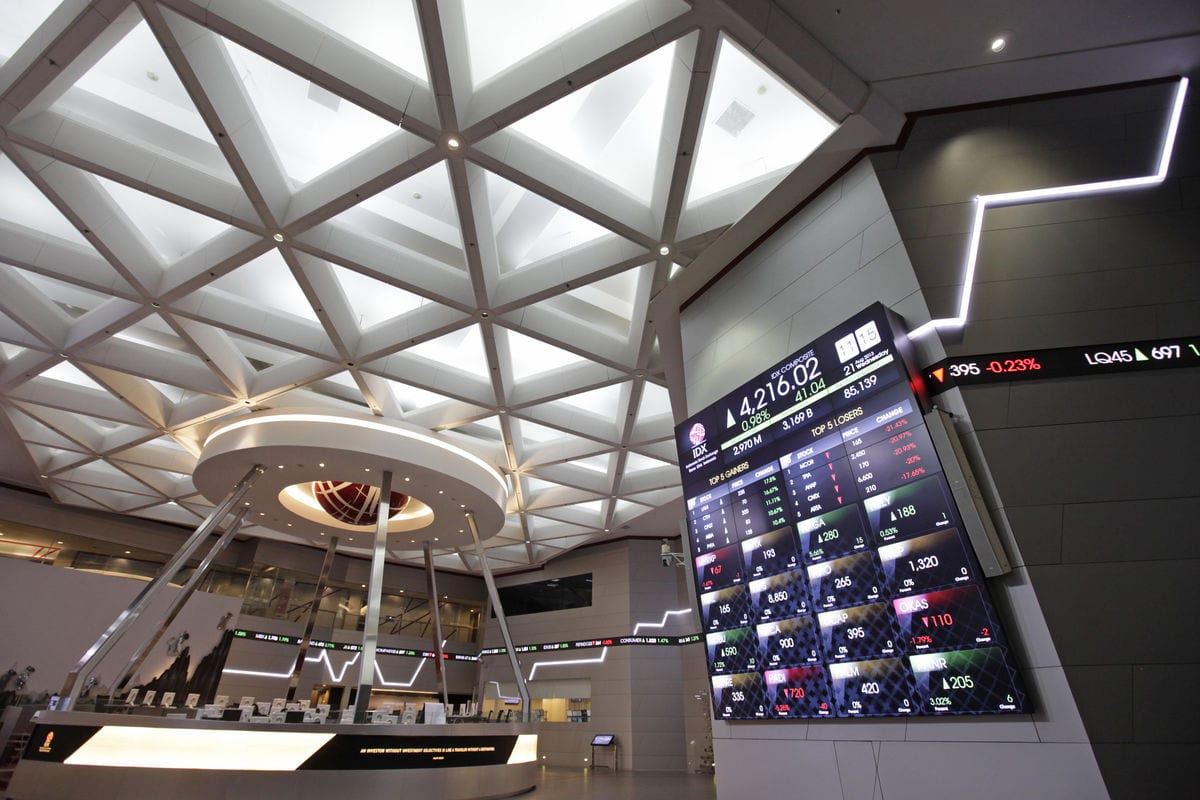
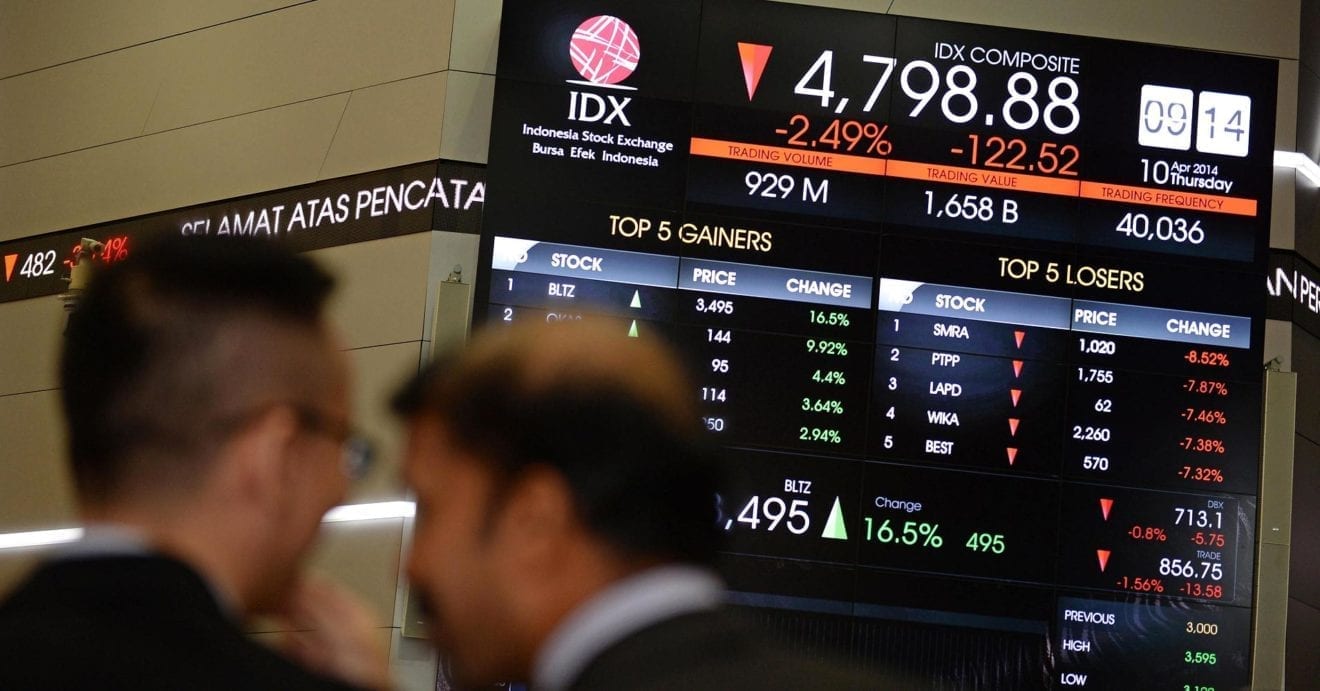
    The new information service – Go Public Information Center – will present all necessary information to private firms about the steps and processes required to become a listed company in Indonesia (including information about underwriters). The center was first opened in Indonesia’s capital city of Jakarta (in June 2016), located at the ground-floor of the Indonesia Stock Exchange Building. Over the next couple of years the IDX plans to open information centers in 15 more cities.

    The IDX targets to see 35 companies conduct on IPO on the local bourse in 2016. However, this probably is a too ambitious target. So far this year only eight companies have been added to the IDX.

    Only 529 companies are listed on the Indonesia Stock Exchange (while there may be more than 60 million business units active in Indonesia; mostly small and medium sized enterprises). This figure is much lower compared to listed companies in Thailand (644), Singapore (766) and Malaysia (904). Being Southeast Asia’s largest economy, Indonesia is eager to top this ranking somewhere in the future. Meanwhile, in the advanced Asian nations, the number of listed companies is much higher.

    According to the IDX, costs of an IPO (paid to the bourse, auditors, underwriters, independent appraisers and legal counselors) is approximately 3.16 percent of the total funds raised in the IPO. Those companies that have existed for at least a year and have a minimum of IDR 5 billion (approx. USD $373,340) in net assets can undertake an IPO on the IDX. To make it more attractive to conduct an IPO, companies are offered several tax incentives, including a discount of income tax up to 5 percent.

    Advantages for a company to go public:

    • Generate fresh funds that can be used for business expansion or to pay off debt
    • Raise public awareness of the company/adding a new group of potential customers
    • Increase the company’s market share
    • Lucrative exit strategy for founding individuals
    • Improved management due to mandatory higher degree of financial and corporate transparency to the public

    Disadvantages for a company to go public:

    • Higher costs of complying with regulatory requirements
    • Adjust to a higher degree of financial and corporate transparency
    • “Market pressure” causes companies to focus on short-term instead of long-term growth

  • Shenzhen-Hong Kong Connect project approved

    Shenzhen-Hong Kong Connect project approved

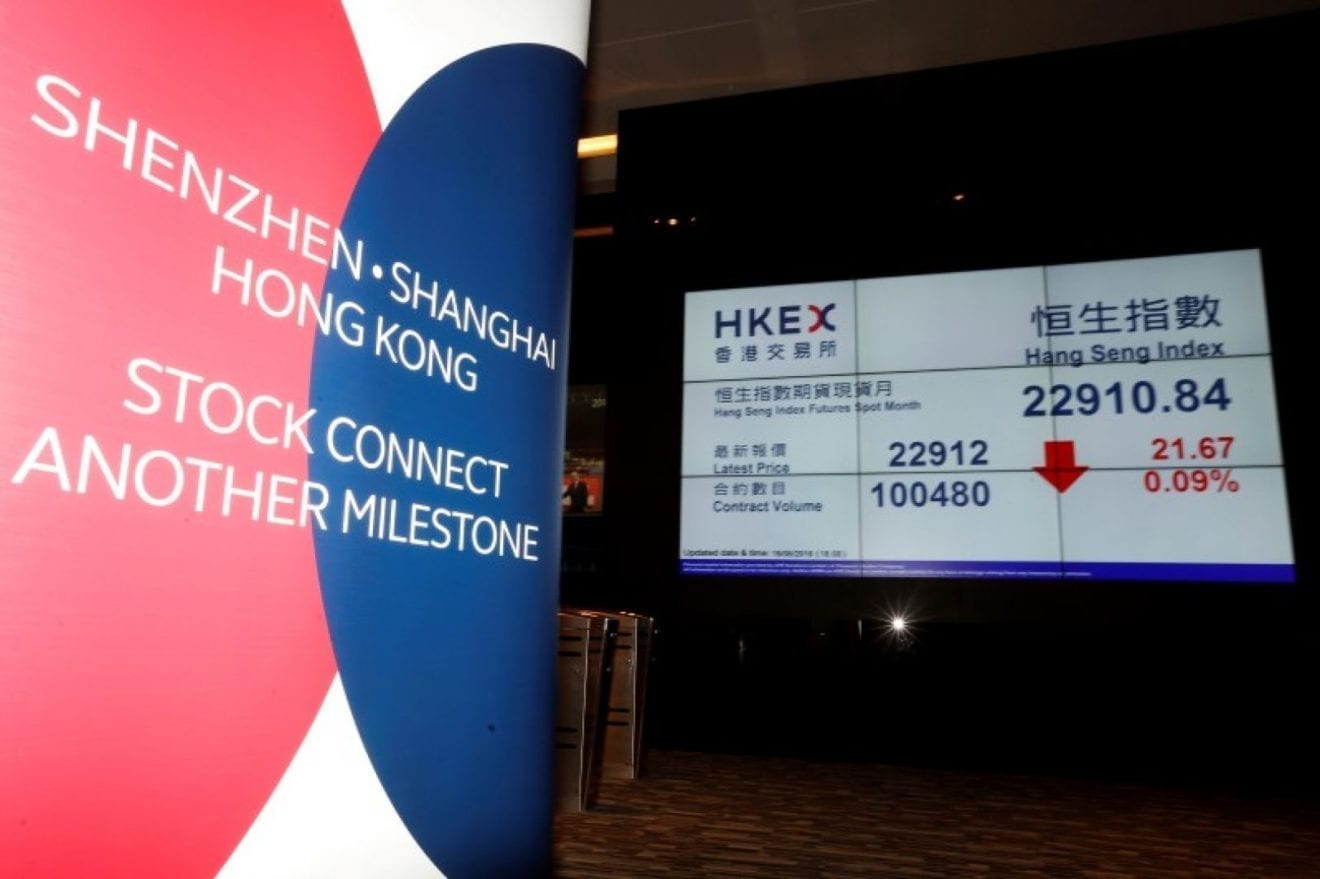
    The Securities and Futures Commission (SFC) and the China Securities Regulatory Commission (CSRC) today have given in-principle the approval of the structure of the proposed Shenzhen-Hong Kong Stock Connect.

    The project will provide mutual stock market access between Hong Kong and Shenzhen via a northbound trading link and a southbound trading link. There will be no aggregate quota under Shenzhen-Hong Kong Stock Connect.

    Today’s joint announcement issued by the SFC and the CSRC also abolishes the aggregate quota under Shanghai-Hong Kong Stock Connect with immediate effect.

    “The expansion of mutual stock market access represents yet another milestone towards strengthening the interconnectivity between the stock markets in Hong Kong and the Mainland as well as consolidating Hong Kong’s position as a major offshore renminbi centre,” said Mr Carlson Tong, the SFC’s chairman.

    The launch of Shenzhen-Hong Kong Stock Connect is subject to the finalization of all necessary regulatory approvals, market readiness and relevant operational arrangements.

    A separate announcement on the commencement of Shenzhen-Hong Kong Stock Connect will be made in due course.

  • Worldpay research uncovers an elite club of shopaholics in APAC with enormous spending power

    Worldpay research uncovers an elite club of shopaholics in APAC with enormous spending power

    A global survey of 20,000 consumers by Worldpay has discovered that buying power in the internet age is highly concentrated within a group of high spending, high frequency Super-Shoppers. In China, Super-Shoppers make up just 5% of the general population yet accounted for an incredible 92% of all the money spent buying physical goods online in China each month. Worldpay’s research into three Asia Pacific markets further reveals that APAC Super-Shoppers are some of the most likely to shop online via a mobile device and some of the most demanding when it comes to payment method.

    Worldpay polled 2,000 consumers in each of the 10 countries covered by the Why Do They Pay That Way? Study including China, Japan and Australia. Key findings include:

    1. Chinese Super-Shoppers are more likely to use a credit or debit card than the average Chinese shopper.
    2. More than 60% of Japan’s online shoppers will switch to another retailer if they can’t use their preferred payment option at checkout.
    3. Australian Super-Shoppers were the world’s second biggest buyers, spending on average more than £200 (US$260[1]) during their last online transaction.
    4. The Chinese are the biggest mobile shoppers in the world, with 33% of Super-Shoppers making their last online purchase via a mobile phone.
    5. Australian Super-Shoppers had the second highest levels of mobile shopping (19%).

    Phil Pomford, General Manager Asia Pacific, Global eCommerce at Worldpay, said: “With ecommerce markets developing at lightning speed across the Asia Pacific region, it’s no surprise that elite shoppers are taking their spending power online. The Super-Shopper trend is driven by a growing middle class, high mobile penetration and recent advancements in consumer technology. APAC Super-Shoppers are passionate about what they buy and sophisticated in how they shop. They do research to find the most competitive prices, and will turn elsewhere if they discover they can’t use their preferred payment method at checkout.”

    Around the world, 36% of Super-Shoppers said they had experienced the situation of reaching checkout and being unable to pay with any of the listed payment options. This was particularly the case in China, where 44% of Super-Shoppers said they were unable to make purchases using their preferred payment method.

    When faced with not being able to use their preferred payment option, Super-Shoppers may buy the same item from another website or abandon their purchase all together. A staggering 61% of Japanese Super-Shoppers said they would switch to another retailer if unable to use their preferred payment option at checkout. Worldpay estimates that for each lost sale globally, retailers are missing out on as much as £100 (US$130) – representing a significant amount of lost revenue from such frequent and high value shoppers.

    Super-Shoppers in APAC, as around the globe, overwhelmingly preferred credit cards, even in markets where card use is low. Although 41% of the general population in China prefer to pay online with Alipay, only 18% of China’s Super-Shoppers said they were likely to use their nation’s most popular eWallet. Instead, 54% of Chinese Super-Shoppers said they preferred to pay with a credit card.

    Pomford added: “Retailers should be looking at Super-Shoppers as a distinct group that often behaves very differently from other customers. In APAC, Super-Shoppers prefer credit cards even where these cards have little or no traction among the general population. Therefore, a retailer who doesn’t support the right range of payment methods could actually be losing major revenue without noticing.

    “The Super-Shopper phenomenon gives retailers much food for thought – in terms of not only what payment options are available, but in how to merchandise to these consumers to maximise basket size, or market to an audience who thinks of online shopping as a daily task, not just as an occasional treat. With so much buying power concentrated in this group in APAC and around the world, it’s essential that retailers innovate in such a way that they deliver what Super-Shoppers want, when they want it and let them pay for it in the way that suits them best.”

    APAC Super-Shoppers’ most frequent purchases vary from country to country. According to the Worldpay research:

    1. One in 5 (21%) Australian Super-Shoppers buy groceries online – 8% above the global average.
    2. 2. Australian Super-Shoppers are less likely to buy clothes online (21%) than the global average (28%) yet more likely to buy health and beauty products (15% vs global average of 10%).
    3. China leads the world in online meal purchases, with 13% of Chinese Super-Shoppers taking to the internet when they want to order a takeaway.
    4. Super-Shoppers in China also love fashion, with 40% of them buying clothes the last time they shopped online, compared to the global average of 28%.
    5. In Japan, Super-Shoppers are most likely to buy electronics (30%) and groceries (28%).
  • First JCB card in Myanmar Introduced by Ayeyarwady Bank

    First JCB card in Myanmar Introduced by Ayeyarwady Bank

    Ayeyarwady Bank (AYA Bank), a major commercial bank in the Republic of the Union of Myanmar (Myanmar), Myanmar Payment Union Public Co.,Ltd (MPU), and JCB International Co. Ltd. (JCBI), the international operations subsidiary of JCB Co., Ltd., today announced that AYA Bank has launched the first JCB credit and debit card as AYA Universal MPU-JCB Co-Brand cards in Myanmar. Myanmar is the 4th country in the Mekong region where JCB cards are issued, along with Thailand, Vietnam and Laos.

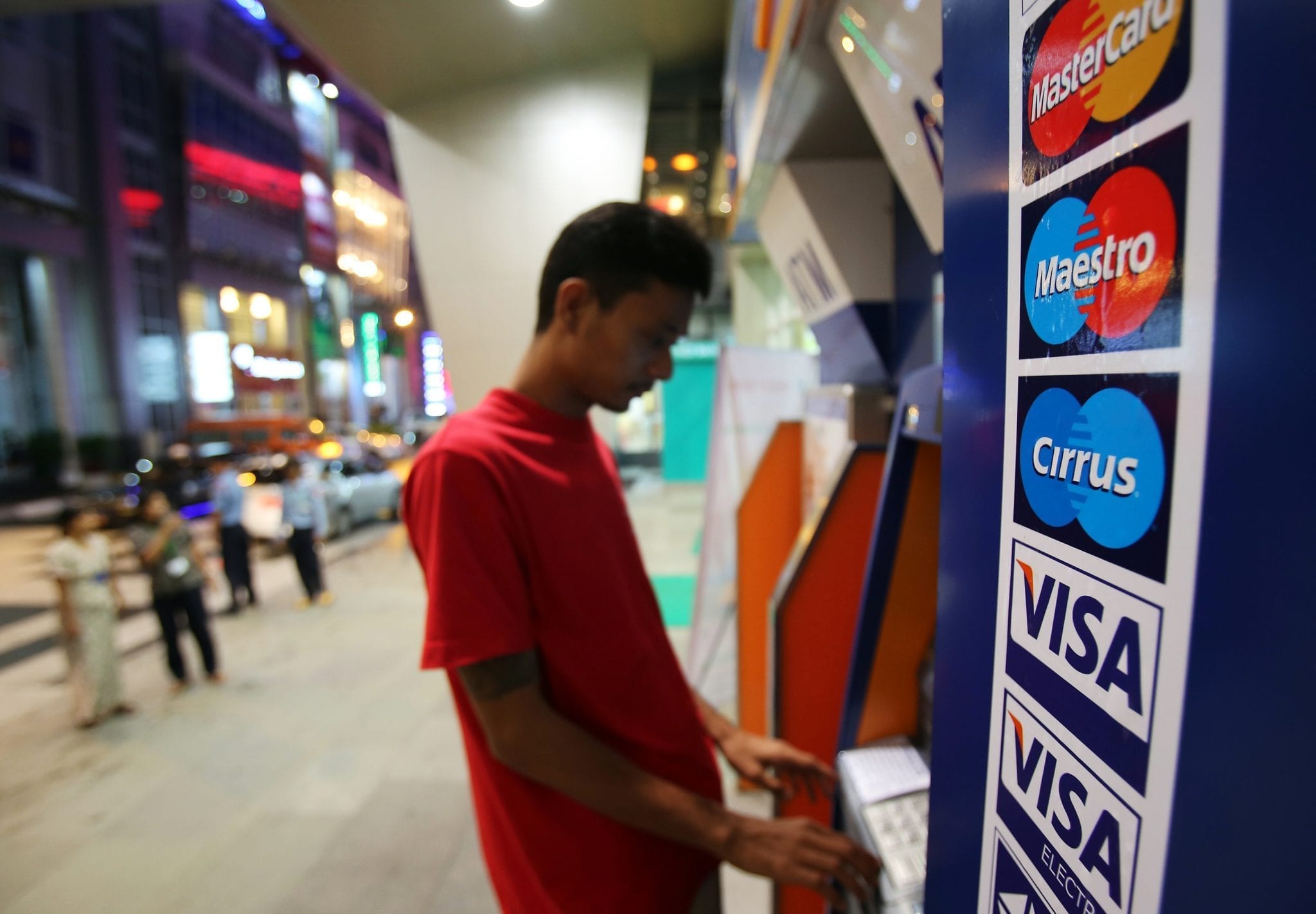
    The Universal AYA MPU-JCB Co-Brand Card combines the MPU brand and JCB brand. Cardmembers can use MPU’s nation-wide merchant network in Myanmar and JCB’s international merchant network with over 31 million locations globally.

    The card has 4 different kinds of product, Universal Platinum credit card, Universal Gold credit card, Universal Silver credit card, and Universal debit card. All the cardmembers can enjoy JCB privileges such as JCB Plaza, and special offers at selected merchants all over the world. JCB offers Platinum cardmembers exclusive JCB Platinum services, such as JCB Platinum airport lounge service, JCB Platinum Concierge Desk, and Special JCB Platinum Hotel Services.

    U Zaw Zaw, Founder and Chairman of AYA Bank commented, “The bank has always been committed to providing our customers higher quality service and experience. This co-brand arrangement will enable cardholders to have more flexible options for their payments in foreign countries. This is another milestone in Myanmar card payment market, to promote the country’s transition to a cashless economy.”

    Kimihisa Imada, Deputy President of JCB International said, “Myanmar is an important market for JCBI. With its growing economy and population, Myanmar has great potential for growth in the card payment market. With the start of JCB card issuing in Myanmar, cardmembers can have a new choice of payment and experience the convenience of shopping abroad with JCB’s worldwide merchant network.”

  • Worldpay expanding to Australia

    Worldpay expanding to Australia

    The company’s expansion in Australia comes at a time of sustained growth for Worldpay, which processed 13.1 billion transactions in 2015 with transaction value of £401.9 billion ($518.9 billion).

    A number of global companies, including ASOS, Expedia, Cathay Pacific Airlines, Digital World International and Freelancer already use Worldpay for payment processing in Australia, due primarily to the company’s international reach, as well as its ability to process a wide range of alternative payment methods such as eWallets and bank transfers.

    Australian e-commerce accounted for an estimated $42 billion of the country’s GDP in 2015, and the country’s consumers lead the world in terms of eWallet adoption, which is favoured by 21% of shoppers buying goods online.

    Shane Happach, Managing Director, Global eCommerce at Worldpay concluded: “We are delighted to extend our services into Australia, which is a tremendously exciting market with lots of growth opportunity,” Worldpay managing director for global e-commerce Shane Hapach said.

    “We have quickly found merchants trading in Australia are hungry for a payment solution that can help them drive up conversion rates and drive down the costs of running an online business across multiple markets.”

  • Asian stocks mostly up despite weak economic news from China

    Asian stocks mostly up despite weak economic news from China

    Asian shares traded in positive territory Tuesday as gains in commodity stocks helped offset weakness overnight in U.S. markets.

    The Nikkei Stock Average NIK, +0.69% rose 0.2% with the S&P/ASX 200 XJO, +0.27% up 0.2% and Korea’s Kospi SEU, +0.62% up 0.3%. Hong Kong’s Hang Seng Index HSI,-0.28% was down 0.1% while the Shanghai Composite SHCOMP, +0.65% was flat.

    Traders sent U.S. oil prices up 2.9% to $43.02 a barrel following news that the Organization of the Petroleum Exporting Countries planned to hold informal talks in September that could lead to production cuts.

  • Bursa Malaysia opens slightly higher

    Bursa Malaysia opens slightly higher

    Bursa Malaysia opened slightly higher on Tuesday, extending yesterday’s gains but mild profit-taking in selected heavyweights limited the gains, dealers said.

    At 9.10am, the benchmark FTSE Bursa Malaysia KLCI (FBM KLCI) was 0.40 point better at 1,673.08, after opening 1.84 points higher at 1,674.49.

    Gainers outpaced decliners 148 to 64, while 193 counters were unchanged, 1,281 untraded and 26 others suspended.

    Turnover stood at 119.87 million shares worth RM45.70 million.

    In a research note today, RHB Retail Research maintained its bearish short-term outlook for the index, saying buying interest was still weak.

    “The index has not climbed above the recent high of the 1,675.50-point resistance mentioned since two weeks ago.

    “On a technical basis, as long as the bearishness of July 21’s ‘Tower Top’ pattern is not negated, we believe that the sellers still have control of the market,” it said.

    The FBM Emas Index rose 4.97 points to 11,741.69 and the FBMT 100 Index was up 3.61 points at 11,440.04.

    The FBM Emas Syariah Index increased 17.87 points to 12,373.70, the FBM 70 rose 7.46 points to 13,466.39 but the FBM Ace slipped 14.89 points to 5,469.39.

    Sector-wise, the Industrial Index gained 10.13 points to 3,160.24, the Plantation Index rose 6.63 points to 7,680.66 but the Finance Index was 11.95 points lower at 14,335.64.

    Among heavyweights, TNB, Maybank and IHH Healthcare were flat at RM14.58, RM7.98 and RM6.59 respectively, while Public Bank shed two sen to RM19.62.

    Of the actives, MBSB and PDZ Holdings advanced one sen each to 93 sen and 9.5 sen respectively, Konsortium Transnasional went up two sen to 18 sen while Vivocom Intl was flat at 29 sen.

    The physical price of gold as at 9.30am stood at RM167.34 per gramme, up 21 sen from RM167.13 at 5pm yesterday.